भूतत्रिपुरधर्मवर्णनम् (Description of the Dharma/Conduct of the Bhūta-Tripura) — Chapter 3
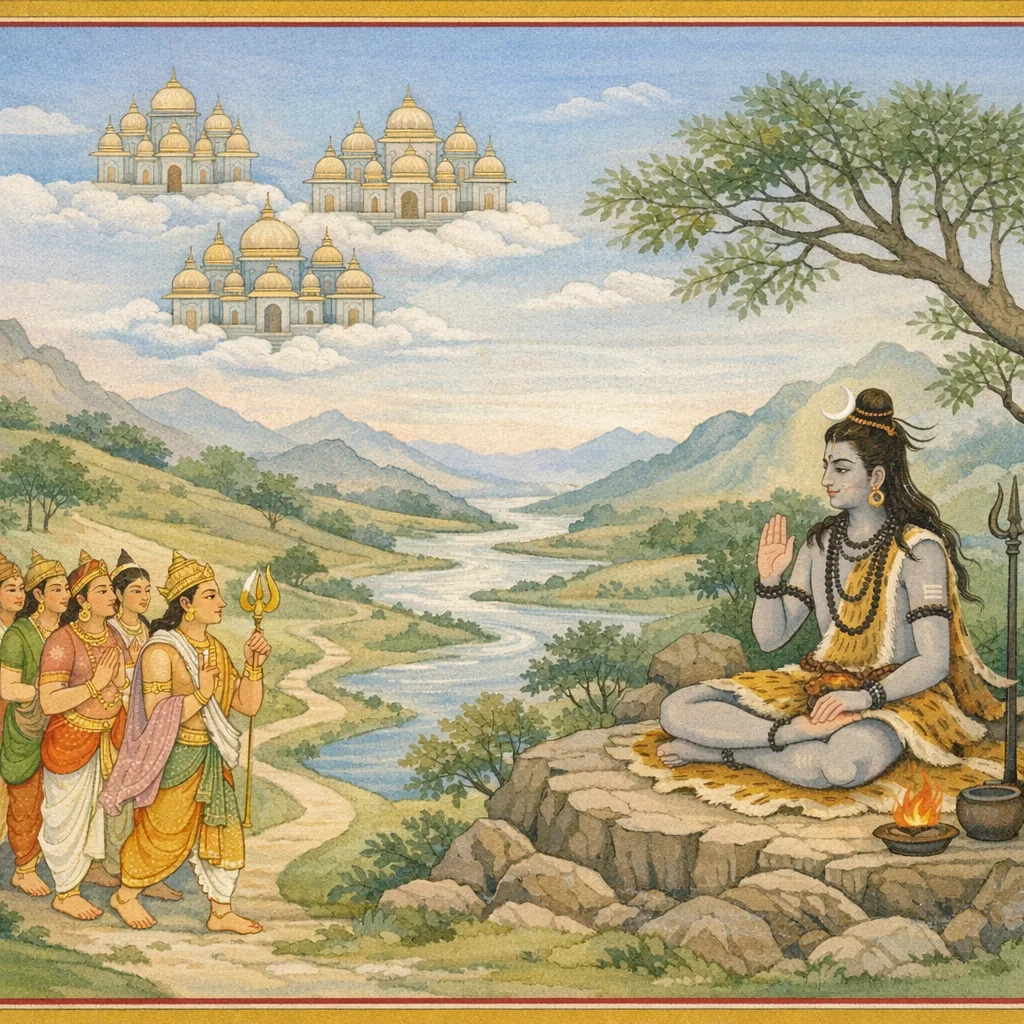
Adhyāya 3, within the Tripuravadhopākhyāna, considers whether Tripura’s rulers and people should be slain. Śiva speaks first, saying the Tripurādhyakṣa is presently puṇyavān (endowed with merit), and that where merit is active the wise do not kill without cause. He acknowledges the devas’ distress and the extraordinary strength of Tāraka’s sons and the inhabitants of the three cities, whose destruction is hard to accomplish. He then turns from power to dharma: how could he commit mitradroha (betrayal of a friend/ally), when betraying well-wishers brings great sin? He contrasts expiable faults with the inexpiability of kṛtaghnatā (ingratitude/treachery), and adds that the daityas are his devotees, making their killing morally fraught for the gods to demand. Yet he instructs the devas to present these reasons to Viṣṇu, indicating the need for higher counsel and coordination before action. Sanatkumāra narrates that Indra leads the devas to report first to Brahmā and then swiftly to Vaikuṇṭha, setting up the next stage of strategic-theological consultation. The chapter thus serves as an ethical hinge, reframing Tripuravadha as a dharma inquiry balancing puṇya, bhakti, friendship, and cosmic necessity.
Shlokas
Verse 1
शिव उवाच । अयं वै त्रिपुराध्यक्ष पुण्यवान्वर्ततेऽधुना । यत्र पुण्यं प्रवर्तेत न हंतव्यो बुधैः क्वचित्
Śiva said: “This lord of Tripura is, at present, endowed with merit and stands established in dharma. Wherever merit is actively manifest, the wise should never slay such a one in any circumstance.”
Verse 2
जानामि देवकष्टं च विबुधास्सकलं महत् । दैत्यास्ते प्रबला हंतुमशक्यास्तु सुरासुरैः
“I know, O gods, the great distress that has befallen you all. Those Dāityas are exceedingly powerful—indeed, they cannot be slain by either the Devas or the Asuras.”
Verse 3
इति श्रीशिवमहापुराणे द्वितीयायां रुद्रसंहितायां पञ्चमे युद्धखण्डे त्रिपुरवधोपाख्याने भूतत्रिपुरधर्मवर्णनं नाम तृतीयोऽध्यायः
Thus, in the Śrī Śiva Mahāpurāṇa—within the Second (Rudra) Saṃhitā, in the Fifth (Yuddha) Khaṇḍa, in the episode concerning the slaying of Tripura—ends the Third Chapter, entitled “The Description of the Dharma (conduct and order) of Bhūta Tripura.”
Verse 4
मित्रद्रोहं कथं जानन्करोमि रणकर्कशः । सुहृद्द्रोहे महत्पापं पूर्वमुक्तं स्वयंभुवा
How can I—though hardened by battle—knowingly commit treachery against a friend? For the Self-born (Brahmā) has already declared that betraying a well-wisher is a great sin.
Verse 5
ब्रह्मघ्नं च सुरापे च स्तेये भग्नव्रते तथा । निष्कृतिर्विहिता सद्भिः कृतघ्ने नास्ति निष्कृतिः
For the slayer of a brāhmaṇa, for the drinker of intoxicants, for the thief, and likewise for one who has broken sacred vows, the righteous have prescribed means of expiation. But for the ungrateful betrayer of one who has done him good, there is no expiation.
Verse 6
मम भक्तास्तु ते दैत्या मया वध्या कथं सुराः । विचार्यतां भवद्भिश्च धर्मज्ञैरेव धर्मतः
“Those Dāityas are truly My devotees; they are to be slain by Me—how then can the Devas do so? Consider this rightly, all of you who know dharma, in accordance with dharma alone.”
Verse 7
तावत्ते नैव हंतव्या यावद्भक्तिकृतश्च मे । तथापि विष्णवे देवा निवेद्यं कारणं त्विदम्
“So long as they act out of bhakti shown toward Me, they are not to be slain. Even so, O gods, the cause of this matter should be reported to Viṣṇu.”
Verse 8
सनत्कुमार उवाच । इत्येवं तद्वचः श्रुत्वा देवाश्शक्रपुरोगमाः । न्यवेदयन् द्रुतं सर्वे ब्रह्मणे प्रथमं मुने
Sanatkumāra said: Having thus heard those words, all the gods—led by Śakra (Indra)—quickly reported the matter first to Brahmā, the primordial sage.
Verse 9
ततो विधिं पुरस्कृत्य सर्वे देवास्सवासवाः । वैकुंठं प्रययुश्शीघ्रं सर्वे शोभासमन्वितम्
Then all the gods—together with Indra—placing Brahmā (the Ordainer) at their head, swiftly departed for Vaikuṇṭha, all of them resplendent with divine radiance.
Verse 10
तत्र गत्वा हरिं दृष्ट्वा प्रणेमुर्जातसंभ्रमाः । तुष्टुवुश्च महाभक्त्या कृतांजलिपुटास्सुराः
Going there and beholding Hari (Viṣṇu), the gods—filled with sudden awe—bowed down. With palms joined in reverent añjali, they praised Him with great devotion.
Verse 11
स्वदुःखकारणं सर्वं पूर्ववत्तदनंतरम् । न्यवेदयन्द्रुतं तस्मै विष्णवे प्रभविष्णवे
He swiftly reported to Lord Viṣṇu—mighty and all-pervading—everything exactly as it had happened before, fully explaining the entire cause of his own suffering.
Verse 12
देवदुःखं ततः श्रुत्वा दत्तं च त्रिपुरालये । ज्ञात्वा व्रतं च तेषां तद्विष्णुर्वचनमब्रवीत्
Then, having heard of the gods’ suffering, and learning what had been granted to the dwellers of Tripura, and understanding the vow (vrata) they had undertaken, Lord Viṣṇu spoke these words.
Verse 13
विष्णुरुवाच । इदं सत्यं वचश्चैव यत्र धर्मस्सनातनः । तत्र दुःखं न जायेत सूर्ये दृष्टे यथा तमः
Vishnu said: “This indeed is a true saying: where the eternal Dharma abides, sorrow does not arise—just as darkness vanishes when the sun is beheld.”
Verse 14
सनत्कुमार उवाच । इत्येतद्वचनं श्रुत्वा देवा दुःखमुपागताः । पुनरूचुस्तथा विष्णुं परिम्लानमुखाम्बुजाः
Sanatkumāra said: Hearing these words, the gods were overcome with sorrow. Then, their lotus-like faces drooping and faded, they again addressed Lord Viṣṇu.
Verse 15
देवा ऊचुः । कथं चैव प्रकर्त्तव्यं कथं दुःखं निरस्यते । कथं भवेम सुखिनः कथं स्थास्यामहे वयम्
The gods said: “How indeed should we act? How is sorrow to be driven away? How may we become happy, and how shall we remain steadfast and secure?”
Verse 16
कथं धर्मा भविष्यंति त्रिपुरे जीविते सति । देवदुःखप्रदा नूनं सर्वे त्रिपुरवासिनः
How can dharma prevail so long as Tripura remains alive? Indeed, all who dwell in Tripura are surely the cause of the gods’ suffering.
Verse 17
किं वा ते त्रिपुरस्येह वधश्चैव विधीयताम् । नोचेदकालिकी देवसंहतिः क्रियतां ध्रुवम्
Or else, let the slaying of Tripura be carried out here for you. If not, then surely an immediate mustering of the gods’ host should be arranged at once.
Verse 18
सनत्कुमार उवाच । इत्युक्त्वा ते तदा देवा दुःखं कृत्वा पुनः पुनः । स्थितिं नैव गतिं ते वै चक्रुर्देववरादिह
Sanatkumāra said: Having spoken thus, the gods, again and again falling into sorrow, found neither steadiness nor any course of action here—O best of the gods.
Verse 19
तान्वै तथाविधान्दृष्ट्वा हीनान्विनयसंयुतान् । सोपि नारायणः श्रीमांश्चिंतयेच्चेतसा तथा
Seeing them in that condition—though diminished, yet endowed with humility—the illustrious Nārāyaṇa too reflected deeply within his heart. From the Shaiva standpoint, even Viṣṇu’s inward turning here points to the recognition that true resolution in times of conflict rests upon alignment with Śiva’s higher will and dharma, not merely on outward power.
Verse 20
किं कार्यं देवकार्येषु मया देवसहा यिना । शिवभक्तास्तु ते दैत्यास्तारकस्य सुता इति
“What need is there for me to involve myself in the affairs of the gods, when I am their ally? Those Daityas are truly devotees of Śiva, and they are the sons of Tāraka.”
Verse 21
इति संचिन्त्य तत्काले विष्णुना प्रभविष्णुना । ततो यज्ञास्स्मृतास्तेन देवकार्यार्थमक्षयाः
Having thus reflected at that moment, Lord Viṣṇu—mighty in power—then called to mind the imperishable sacrificial rites (yajñas), intending thereby to accomplish the purpose of the gods.
Verse 22
तद्विष्णुस्मृतिमात्रेण यज्ञास्ते तत्क्षणं द्रुतम् । आगतास्तत्र यत्रास्ते श्रीपतिः पुरुषोत्तमः
By that mere recollection of Viṣṇu, those personified sacrifices (Yajñas) swiftly, in that very instant, came to the place where Śrīpati—the Supreme Person—was present.
Verse 23
ततो विष्णुं यज्ञपतिं पुराणं पुरुषं हरिम् । प्रणम्य तुष्टुवुस्ते वै कृतांजलिपुटास्तदा
Then they bowed to Viṣṇu—Lord of sacrifice, the primeval Person, Hari—and, with palms joined in reverence, they praised him with devotion.
Verse 24
भगवानपि तान्दृष्ट्वा यज्ञान्प्राह सनातनम् । सनातनस्तदा सेंद्रान्देवानालोक्य चाच्युतः
Seeing those sacrificial rites, the Blessed Lord addressed the Eternal One. Then that Eternal, infallible Lord, having looked upon the gods along with Indra, spoke as was fitting.
Verse 25
विष्णुरुवाच । अनेनैव सदा देवा यजध्वं परमेश्वरम् । पुरत्रयविनाशाय जगत्त्रयविभूतये
Viṣṇu said: “By this very means of worship alone, O gods, worship Parameśvara always—so that Tripura, the Triple City, may be destroyed, and the three worlds may be endowed with prosperity and divine sovereignty.”
Verse 26
सनत्कुमार उवाच । अच्युतस्य वचः श्रुत्वा देवदेवस्य धीमतः । प्रेम्णा ते प्रणतिं कृत्वा यज्ञेशं तेऽस्तुवन्सुराः
Sanatkumāra said: Having heard the words of Acyuta (Viṣṇu), the wise Lord of Lords, the gods bowed down in loving reverence and then praised Yajñeśa, the Master of sacrifice.
Verse 27
एवं स्तुत्वा ततो देवा अजयन्यज्ञपूरुषम् । यज्ञोक्तेन विधानेन संपूर्णविधयो मुने
Thus, having offered praise, the Devas then prevailed over the Yajña-Puruṣa. O sage, they did so by following the procedure enjoined in the sacrificial rite, completing every ordinance in full.
Verse 28
ततस्तस्माद्यज्ञकुंडात्समुत्पेतुस्सहस्रशः । भूतसंघा महाकायाः शूलशक्तिगदायुधाः
Then, from that sacrificial fire-pit, hosts of bhūtas sprang forth by the thousands—huge-bodied attendants, bearing as their weapons tridents, spears, and maces.
Verse 29
ददृशुस्ते सुरास्तान् वै भूतसंघान्सहस्रशः । शूल शक्तिगदाहस्तान्दण्डचापशिलायुधान्
Then the gods beheld those troops of Bhūtas—by the thousands—bearing tridents, spears, and maces in their hands, and armed with clubs, bows, and stones as weapons.
Verse 30
नानाप्रहरणोपेतान् नानावेषधरांस्तथा । कालाग्निरुद्रसदृशान्कालसूर्योपमांस्तदा
They bore many kinds of weapons and wore many kinds of disguises; then they appeared like Kālāgnirudra itself—the fire of Time—and like the sun of Time, overpowering and dreadful.
Verse 31
दृष्ट्वा तानब्रवीद्विष्णुः प्रणिपत्य पुरःस्थितान् । भूतान्यज्ञपतिः श्रीमानुद्राज्ञाप्रतिपालकः
Seeing them standing before him, Viṣṇu—the glorious lord of the sacrifice—bowed down and addressed those beings, for he was the faithful upholder of Rudra’s command.
Verse 32
विष्णुरुवाच । भूताः शृणुत मद्वाक्यं देवकार्यार्थमुद्यताः । गच्छन्तु त्रिपुरं सद्यस्सर्वे हि बलवत्तराः
Viṣṇu said: “O hosts of beings, listen to my words. Having risen for the purpose of the gods’ task, let all of you—the most powerful—go at once to Tripura.”
Verse 33
गत्वा दग्ध्वा च भित्त्वा च भङ्क्त्वा दैत्यपुरत्रयम् । पुनर्यथागता भूतागंतुमर्हथ भूतये
“Go forth, burn, pierce, and shatter the three demon-cities. Then, returning by the very path you came, you beings should come back again—for the welfare and restoration of all beings.”
Verse 34
सनत्कुमार उवाच । तच्छ्रुत्वा भगवद्वाक्यं ततो भूतगणाश्च ते । प्रणम्य देवदेवं तं ययुर्दैत्यपुरत्रयम्
Sanatkumāra said: Having heard the Lord’s command, those hosts of Śiva’s attendants bowed to that Deva of devas and set out for the three demon-cities, Tripura.
Verse 35
गत्वा तत्प्रविशंतश्च त्रिपुराधिपतेजसि । भस्मसादभवन्सद्यश्शलभा इव पावके
Having gone and entered the blazing splendor of the Lord who ruled Tripura, they were instantly reduced to ashes—like moths that rush into a fire.
Verse 36
अवशिष्टाश्च ये केचित्पलायनपरायणाः । निस्सृत्यारं समायाता हरेर्निकटमाकुलाः
And those few who still remained—intent only on fleeing—rushed out through the gateway and, in great agitation, came close to Hari (Viṣṇu) for refuge.
Verse 37
तान्दृष्ट्वा स हरिः श्रुत्वा तच्च वृत्तमशेषतः । चिंतयामास भगवान्मनसा पुरुषोत्तमः
Seeing them, and hearing that entire account in full, Lord Hari—the Supreme Person (Puruṣottama)—pondered deeply within his mind, considering what should be done in that conflict.
Verse 38
किं कृत्यमधुना कार्यमिति संतप्तमानसः । संतप्तानमरान्सर्वानाज्ञाय च सवासवान्
His mind aflame with anguish, he thought, “What must be done now—what course remains?” And, perceiving that all the immortals—Indra among them—were likewise distressed, he reflected upon their plight.
Verse 39
कथं तेषां च दैत्यानां बलाद्धत्वा पुरत्रयम् । देवकार्यं करिष्यामीत्यासीच्चिंतासमाकुलः
Overwhelmed with anxious thought, he pondered: “How shall I, by sheer force, destroy the triple city of those mighty Daityas, and thus accomplish the work of the devas?”
Verse 40
नाशोऽभिचारतो नास्ति धर्मिष्ठानां न संशयः । इति प्राह स्वयं चेशः श्रुत्याचारप्रमाणकृत्
“For those most steadfast in righteousness, there is no ruin wrought by sorcery—of this there is no doubt.” Thus spoke the Lord Himself, affirming Śruti and right conduct as the true authority and means of proof.
Verse 41
दैत्याश्च ते हि धर्मिष्ठास्सर्वे त्रिपुरवासिनः । तस्मादवध्यतां प्राप्ता नान्यथा सुरपुंगवाः
Those Daityas—indeed all the residents of Tripura—are steadfast in dharma. Therefore they have attained invulnerability; it cannot be otherwise, O foremost of the Devas.
Verse 42
कृत्वा तु सुमहत्पापं रुद्रमभ्यर्चयंति ते । मुच्यंते पातकैः सर्वैः पद्मपत्रमिवांभसा
Even those who have committed very great sins—if they worship Rudra—are released from all faults, just as a lotus leaf remains untouched by water.
Verse 43
रुद्राभ्यर्चनतो देवाः सर्वे कामा भवंति हि । नानोपभोगसंपत्तिर्वश्यतां याति वै भुवि
Indeed, by the worship of Rudra, all desired aims are fulfilled. On earth, the prosperity that enables many kinds of enjoyments—and even the power to bring circumstances under one’s sway—surely comes to the devotee.
Verse 44
तस्मात्तद्भोगिनो दैत्या लिंगार्चनपरायणाः । अनेकविधसंपत्तेर्मोक्षस्यापि परत्र च
Therefore, those Daityas—enjoyers of those very pleasures—being wholly devoted to the worship of the Liṅga, attain manifold prosperities and, in the hereafter as well, liberation.
Verse 45
ततः कृत्वा धर्मविघ्नं तेषामेवात्ममायया । दैत्यानां देवकार्यार्थं हरिष्ये त्रिपुरं क्षणात्
Then, by their own self-born deluding power, I shall create an obstruction to their dharma; and for the sake of the gods’ purpose against the Daityas, I will destroy Tripura in an instant.
Verse 46
विचार्येत्थं ततस्तेषां भगवान्पुरुषोत्तमः । कर्तुं व्यवस्थितः पश्चाद्धर्मविघ्नं सुरारिणाम्
Thus having reflected, the Blessed Supreme Person (Puruṣottama) resolved to place an obstruction in the dharma of the enemies of the gods, so that their unrighteous power might be checked.
Verse 47
यावच्च वेद धर्मास्तु यावद्वै शंकरार्चनम् । यावच्च शुचिकृत्यादि तावन्नाशो भवेन्न हि
So long as the Vedic duties are upheld, so long as the worship of Śaṅkara is performed, and so long as rites of purity and the like are observed—until then, indeed, there will be no spiritual ruin.
Verse 48
तस्मादेवं प्रकर्तव्यं वेदधर्मस्ततो व्रजेत् । त्यक्तलिंगार्चना दैत्या भविष्यंति न संशयः
“Therefore, it should be done exactly in this way, and then one should proceed according to the Vedic dharma. The Daityas will abandon the worship of the Śiva-liṅga—of this there is no doubt.”
Verse 49
इति निश्चित्य वै विष्णुर्विघ्नार्थमकरोत्तदा । तेषां धर्मस्य दैत्यानामुपायं श्रुति खण्डनम्
Having thus resolved, Viṣṇu then acted to create an obstacle. As a means to undermine the Daityas’ dharma, he set about the ‘breaking’—the disruption and distortion—of the authority of the Śruti, the Vedic revelation.
Verse 50
तदैवोवाच देवान्स विष्णुर्देवसहायकृत् । शिवाज्ञया शिवेनैवाज्ञप्तस्त्रैलोक्यरक्षणे
Just then Viṣṇu—helper of the gods—addressed the Devas, for Śiva himself, by Śiva’s command, had commissioned him for the protection of the three worlds.
Verse 51
विष्णुरुवाच । हे देवास्सकला यूयं गच्छत स्वगृहान्ध्रुवम् । देवकार्यं करिष्यामि यथामति न संशयः
Vishnu said: “O gods, all of you, go surely to your own abodes. I shall accomplish the devas’ task according to my best understanding; of this there is no doubt.”
Verse 52
तान्रुद्राद्विमुखान्नूनं करिष्यामि सुयत्नतः । स्वभक्तिरहिताञ्ज्ञात्वा तान्करिष्यति भस्मसात्
“Surely, with careful effort I shall turn back those who are averse to Rudra from their hostile intent. Knowing them to be devoid of true devotion, He will reduce them to ashes.”
Verse 53
सनत्कुमार उवाच । तदाज्ञां शिरसाधायश्वासितास्तेऽमरा मुने । स्वस्वधामानि विश्वस्ता ययुर्ब्रह्मापि मोदिताः
Sanatkumāra said: “O sage, those devas, placing that command upon their heads (accepting it with reverence) and being reassured, departed in trust to their own abodes; and Brahmā too was delighted.”
Verse 54
ततश्चैवाकरोद्विष्णुर्देवार्थं हितमुत्तमम् । तदेव श्रूयतां सम्यक्सर्वपापप्रणाशनम्
Thereupon Vishnu performed, for the welfare of the gods, a most excellent act. Let that very deed be heard with full attention, for it is the complete destroyer of all sins.
Frequently Asked Questions
A preparatory ethical deliberation within the Tripuravadha narrative: Śiva explains why Tripura’s leaders—though enemies—are not to be killed hastily due to their present puṇya and devotion, and the devas seek counsel from Brahmā and Viṣṇu.
It models a Shaiva doctrine where divine action is not arbitrary: the Lord weighs dharma, gratitude, friendship, and bhakti, showing that destruction occurs only when merit is exhausted and cosmic order requires it.
Puṇya (merit), bhakti (devotion), and the ethics of loyalty—especially the condemnation of mitradroha/suhṛddroha and the claim that kṛtaghna (ingratitude/treachery) lacks expiation.