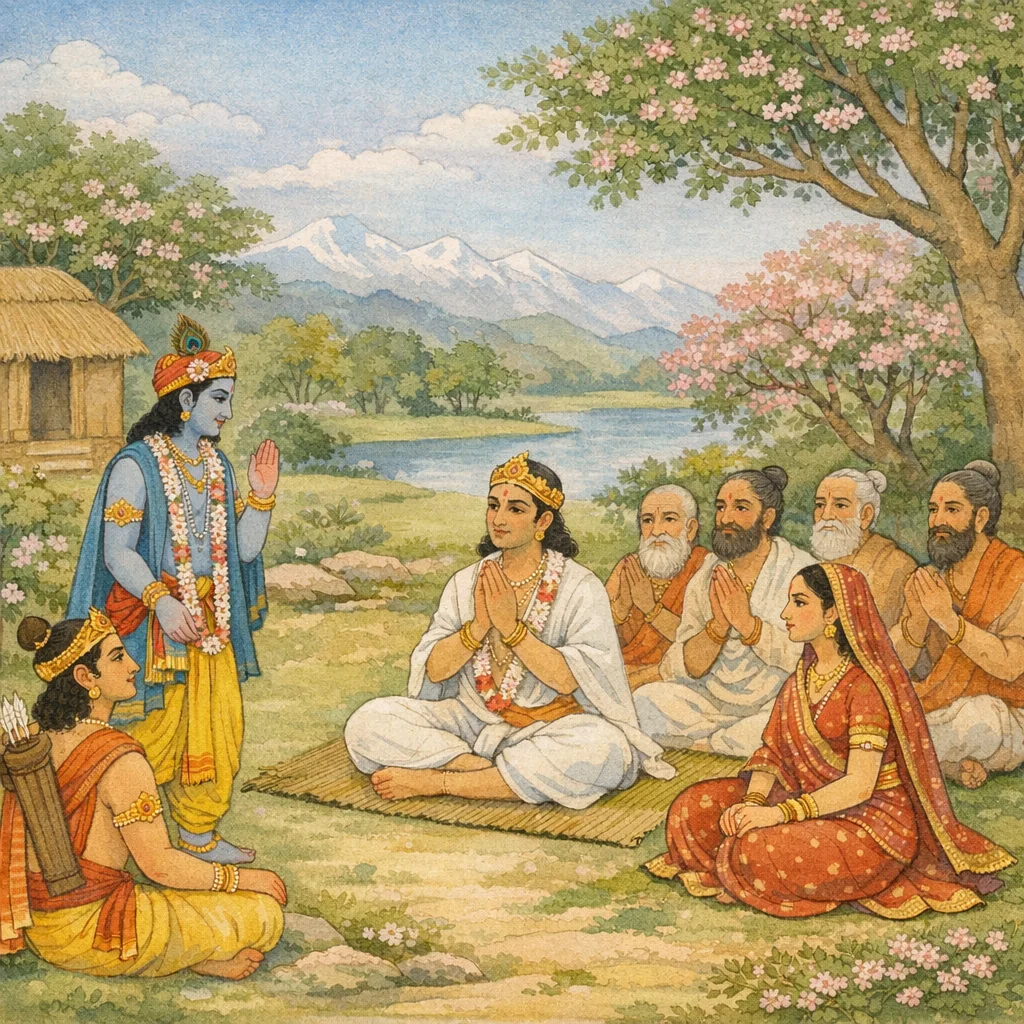
Adhyaya 184
Sarasvatī–Tārkṣya Saṃvāda: Agnihotra-vidhi, Dāna-phala, and Mokṣa-prasaṅga (सरस्वती–तार्क्ष्यसंवादः)
Upa-parva: Sarasvatī–Tārkṣya Saṃvāda (Agnihotra–Dāna–Mokṣa Instruction Episode)
Mārkaṇḍeya introduces a teaching associated with the Sarasvatī, addressed to ‘Parapuraṃjaya,’ and asks the listener to hear what the wise Tārkṣya had asked. Tārkṣya inquires into śreyas and the practical maintenance of svadharma: how to offer into fire, how to worship, and under what conditions dharma does not decline. Sarasvatī replies by first praising Vedic knowledge and disciplined self-study as a path toward divine proximity, then describes auspicious realms and enumerates dāna-results: gifting cows, a bull, garments, and gold correspond to distinct heavenly attainments. The discourse turns to agnihotra qualifications—purity, washed hands, brahma-knowledge, and especially śraddhā; offerings are said to be rejected when faith is absent, and employing an unqualified non-śrotriya in devahavya is criticized as futile. Merit from sustained oblations is framed as purifying ancestral lines. Tārkṣya then asks Sarasvatī’s identity; she states she has come from/for agnihotra to cut doubts of eminent brāhmaṇas and that ritual excellence nourishes her presence and efficacy. Finally, Tārkṣya asks for the highest, sorrowless mokṣa; Sarasvatī outlines it as known to Veda-knowers and ascetics through svādhyāya, dāna, vrata, and puṇya-yoga, concluding with visionary imagery of a supreme locus where gods perform excellent rites.
Chapter Arc: काम्यकवन में निर्वासित पाण्डवों के आश्रम पर ब्राह्मणों की भीड़ उमड़ पड़ती है; उसी जनसमूह के बीच एक द्विज अर्जुन का प्रिय सखा बनकर शुभ समाचार का संकेत देता है—शौर्यवान शौरि (श्रीकृष्ण) स्वयं आने वाले हैं। → युधिष्ठिर के मन में वनवास, राज्य-हरण और भविष्य की अनिश्चितता का भार है; ब्राह्मणों की उपस्थिति धर्म-पालन की कसौटी बनती है, और कृष्ण के आगमन की प्रतीक्षा आशा व चिंता—दोनों को तीव्र करती है। → भगवान मधुसूदन का आगमन: वे अर्जुन, द्रौपदी और पुरोहित का यथावत् पूजन कर युधिष्ठिर के पास बैठते हैं; युधिष्ठिर के मुख से निर्भय स्वीकार निकलता है—'केशव! पाण्डवों की गति आप ही हैं, आप ही शरण हैं; कालोदय पर कर्म-सम्पादन भी आप ही कराएंगे।' → कृष्ण की उपस्थिति से आश्रम का वातावरण आश्वस्त होता है; धर्म और कर्म के संदर्भ में युधिष्ठिर को धैर्य मिलता है—कर्मानुसार गति, पुण्य से स्वर्ग-प्राप्ति और क्लेश के पार सुख की संभावना का भरोसा स्थापित होता है। → कृष्ण और मुनिवर (मार्कण्डेय/नारद) के आगमन के बाद आगे होने वाले उपदेश/कथा-विस्तार की भूमिका बनती है—पाण्डवों के आगामी कर्म-पथ और समय-चक्र का संकेत देकर अध्याय अगले संवाद पर छोड़ देता है।
Shlokas
Verse 1
हि >> आय न हुक अत अप त्रयशीर्त्याधिकशततमोब< ध्याय: काम्यकवनमें पाण्डवोंके पास भगवान् श्रीकृष्ण, मुनिवर मार्कण्डेय तथा नारदजीका आगमन एवं युधिष्ठिरके पूछनेपर मार्कण्डेयजीके द्वारा कर्मफल-भोगका विवेचन वैशम्पायन उवाच काम्यकं प्राप्प कौरव्य युधिष्ठिरपुरोगमा: । कृतातिथ्या मुनिगणैर्निषेदु: सह कृष्णया,वैशम्पायनजी कहते हैं--कुरुनन्दन जनमेजय! काम्यकवनमें पहुँचनेपर वहाँके मुनियोंने युधिष्ठिर आदि पाण्डवोंका यथोचित आदर-सत्कार किया। फिर वे द्रौपदीके साथ वहाँ रहने लगे। जब वे विश्वासपात्र पाण्डव वहाँ निवास करने लगे, तब बहुत-से ब्राह्मणोंने आकर सब ओसरसे उन्हें घेर लिया (और उन्हींके साथ रहने लगे)। तदनन्तर एक दिन एक ब्राह्मण आया। उसने यह सूचना दी कि सबको वशमें रखनेवाले उदारबुद्धि महाबाहु भगवान् श्रीकृष्ण, जो अर्जुनके प्रिय सखा हैं, अभी यहाँ पधारेंगे
Vaiśampāyana said: O scion of the Kurus (Janamejaya), when Yudhiṣṭhira and the Pāṇḍavas, led by him, reached the Kāmyaka forest, the groups of sages received them with due hospitality. Thereafter, together with Kṛṣṇā (Draupadī), they settled there—marking a phase of exile in which righteous conduct is sustained through mutual respect between ascetics and kings, and where the moral consequences of action will soon become a subject of inquiry and instruction.
Verse 2
ततस्तान् परिविश्वस्तान् वसतः पाण्डुनन्दनान् | ब्राह्मणा बहवस्तत्र समन्तात् पर्यवारयन्,वैशम्पायनजी कहते हैं--कुरुनन्दन जनमेजय! काम्यकवनमें पहुँचनेपर वहाँके मुनियोंने युधिष्ठिर आदि पाण्डवोंका यथोचित आदर-सत्कार किया। फिर वे द्रौपदीके साथ वहाँ रहने लगे। जब वे विश्वासपात्र पाण्डव वहाँ निवास करने लगे, तब बहुत-से ब्राह्मणोंने आकर सब ओसरसे उन्हें घेर लिया (और उन्हींके साथ रहने लगे)। तदनन्तर एक दिन एक ब्राह्मण आया। उसने यह सूचना दी कि सबको वशमें रखनेवाले उदारबुद्धि महाबाहु भगवान् श्रीकृष्ण, जो अर्जुनके प्रिय सखा हैं, अभी यहाँ पधारेंगे
Vaiśampāyana said: Thereafter, as the sons of Pāṇḍu—now settled there in trust and security—were living in that place, many brāhmaṇas gathered around them on every side, surrounding them and remaining in their company. The scene underscores how the righteous, even in exile, become a refuge for the learned and the needy, and how a king’s dharma includes protecting and sustaining those who seek shelter.
Verse 3
अथाब्रवीद् द्विज: ककश्िदर्जुनस्य प्रियः सखा । स एष्यति महाबाहुर्वशी शौरिरुदारधी:,वैशम्पायनजी कहते हैं--कुरुनन्दन जनमेजय! काम्यकवनमें पहुँचनेपर वहाँके मुनियोंने युधिष्ठिर आदि पाण्डवोंका यथोचित आदर-सत्कार किया। फिर वे द्रौपदीके साथ वहाँ रहने लगे। जब वे विश्वासपात्र पाण्डव वहाँ निवास करने लगे, तब बहुत-से ब्राह्मणोंने आकर सब ओसरसे उन्हें घेर लिया (और उन्हींके साथ रहने लगे)। तदनन्तर एक दिन एक ब्राह्मण आया। उसने यह सूचना दी कि सबको वशमें रखनेवाले उदारबुद्धि महाबाहु भगवान् श्रीकृष्ण, जो अर्जुनके प्रिय सखा हैं, अभी यहाँ पधारेंगे
Vaiśampāyana said: Then a certain brāhmaṇa spoke—one who was a dear friend of Arjuna: “That mighty-armed Śauri, the self-controlled one of noble understanding, who can bring all under his sway, will soon come here.”
Verse 4
विदिता हि हरेयूयमिहायाता: कुरूद्वहा: । सदा हि दर्शनाकाडुक्षी श्रेयो5न्वेषी च वो हरि:,कुरुश्रेष्ठ पाण्डवो! आपलोगोंका यहाँ आना भगवान् श्रीकृष्णको ज्ञात हो चुका है। वे सदा आपलोगोंको देखनेके लिये उत्सुक रहते हैं और आपके कल्याणकी बात सोचते रहते हैं
Vaiśampāyana said: “O best of the Kurus, your arrival here has already become known to Hari (Śrī Kṛṣṇa). He is ever eager to see you and continually seeks what is truly beneficial for you, O foremost Pāṇḍava.”
Verse 5
बहुवत्सरजीवी च मार्कण्डेयो महातपा: । स्वाध्यायतपसा युक्तः क्षिप्रं युष्मान् समेष्यति,एक शुभ समाचार और है, चिरंजीवी महातपस्वी मार्कण्डेय मुनि, जो स्वाध्याय और तपस्यामें संलग्न रहा करते हैं, शीघ्र ही आपलोगोंसे मिलेंगे
Vaiśaṃpāyana said: “And there is further good news: the long-lived sage Mārkaṇḍeya, a great ascetic—ever devoted to sacred study and austerity—will soon come to meet you.”
Verse 6
तथैव ब्रुवतस्तस्य प्रत्यदृश्यत केशव: । शैब्यसुग्रीवयुक्तेन रथेन रथिनां वर:,ब्राह्मण इस प्रकारकी बातें कह ही रहा था कि शैब्य और सुग्रीव नामक अअश्रोंसे जुते हुए रथद्वारा रथियोंमें श्रेष्ठ भगवान् श्रीकृष्ण आते हुए दिखायी दिये। जैसे शचीके साथ इन्द्र आये हों, उसी प्रकार सत्यभामाके साथ देवकीनन्दन श्रीहरि उन कुरुकुलशिरोमणि पाण्डवोंसे मिलने वहाँ आये
As he was still speaking in that very manner, Keśava came into view—the foremost among charioteers—arriving in a chariot yoked with the horses named Śaibya and Sugrīva. His appearance signals timely divine support and reassurance: when the righteous are in distress, aid arrives not merely as power, but as guidance aligned with dharma.
Verse 7
मघवानिव पौलोम्या सहित: सत्यभामया । उपायाद् देवकीपूुत्रो दिदृक्षु: कुरुसत्तमान्,ब्राह्मण इस प्रकारकी बातें कह ही रहा था कि शैब्य और सुग्रीव नामक अअश्रोंसे जुते हुए रथद्वारा रथियोंमें श्रेष्ठ भगवान् श्रीकृष्ण आते हुए दिखायी दिये। जैसे शचीके साथ इन्द्र आये हों, उसी प्रकार सत्यभामाके साथ देवकीनन्दन श्रीहरि उन कुरुकुलशिरोमणि पाण्डवोंसे मिलने वहाँ आये
Vaiśampāyana said: Just as Indra (Maghavān) comes accompanied by Paulomī (Śacī), so did Devakī’s son, Śrī Kṛṣṇa, arrive with Satyabhāmā, eager to see the noblest of the Kurus. His coming signals timely support and affectionate regard for the Pāṇḍavas, reinforcing the ethic that righteous allies do not abandon the virtuous in their hardship.
Verse 8
अवतीर्य रथात् कृष्णो धर्मराजं यथाविधि । ववन्दे मुदितो धीमान् भीमं च बलिनां वरम्,परम बुद्धिमान श्रीकृष्णने रथसे उतरकर बड़ी प्रसन्नताके साथ धर्मराज युधिष्ठिर तथा बलवानोंमें श्रेष्ठ भीमको विधिपूर्वक प्रणाम किया
Having descended from his chariot, Krishna—wise and inwardly delighted—paid due, proper homage to Dharmaraja Yudhishthira according to prescribed etiquette, and also bowed to Bhima, the foremost among the strong. The scene underscores that true greatness expresses itself through disciplined respect for dharma and for those who embody rightful authority and strength.
Verse 9
पूजयामास धौम्यं च यमाभ्यामभिवादित: । परिष्वज्य गुडाकेशं द्रौपदी पर्यसान्त्वयत्,फिर धौम्य मुनिका पूजन किया। तत्पश्चात् नकुल-सहदेवने आकर उनके चरणोंमें मस्तक झुकाये। इसके बाद निद्राविजयी अर्जुनको हृदयसे लगाकर श्रीकृष्णने द्रौपदीको भलीभाँति सान्त्वना दी। परमप्रिय वीरवर अर्जुनको दीर्घकालके बाद आया देख शत्रुदमन श्रीकृष्णने उन्हें बार-बार हृदयसे लगाया
Vaiśaṃpāyana said: He duly honored the sage Dhaumya, who had been respectfully saluted by the twin brothers. Then, embracing Guḍākeśa (Arjuna), he comforted Draupadī thoroughly. Seeing the beloved hero Arjuna return after a long time, the subduer of foes repeatedly clasped him to his heart—an act of reverence, affection, and the restoration of morale after hardship.
Verse 10
स दृष्टवा फाल्गुनं वीरं चिरस्य प्रियमागतम् । पर्यष्वजत दाशार्ह: पुन: पुनररिंदम:,फिर धौम्य मुनिका पूजन किया। तत्पश्चात् नकुल-सहदेवने आकर उनके चरणोंमें मस्तक झुकाये। इसके बाद निद्राविजयी अर्जुनको हृदयसे लगाकर श्रीकृष्णने द्रौपदीको भलीभाँति सान्त्वना दी। परमप्रिय वीरवर अर्जुनको दीर्घकालके बाद आया देख शत्रुदमन श्रीकृष्णने उन्हें बार-बार हृदयसे लगाया
Seeing the heroic Phālguna (Arjuna), his beloved friend returned after a long time, Dāśārha (Śrī Kṛṣṇa)—the subduer of foes—embraced him again and again. The scene underscores the dharmic warmth of kinship and friendship: the righteous welcome of one who has endured hardship, and the restoration of morale and unity among allies.
Verse 11
तथैव सत्यभामापि द्रौपदी परिषस्वजे । पाण्डवानां प्रियां भार्या कृष्णस्य महिषी प्रिया,इसी प्रकार श्रीकृष्णकी प्यारी रानी सत्यभामाने भी पाण्डवोंकी प्रिय पत्नी पांचालीका आलिंगन किया
So too Satyabhāmā, Kṛṣṇa’s beloved queen, embraced Draupadī—the dear wife of the Pāṇḍavas.
Verse 12
ततस्ते पाण्डवा: सर्वे सभार्या: सपुरोहिता: । आनर्चु: पुण्डरीकाक्षं परिवद्रुश्चन सर्वश:,तदनन्तर पत्नी और पुरोहितसहित समस्त पाण्डवोंने कमलनयन भगवान् श्रीकृष्णका पूजन किया और सब-के-सब उन्हें घेरकर बैठ गये
Then all the Pāṇḍavas—together with their wives and their family priest—worshipped the lotus-eyed Lord Kṛṣṇa; and having paid him reverence, they all sat around him.
Verse 13
कृष्णस्तु पार्थेन समेत्य विद्वान् धनंजयेनासुरतर्जनेन । बभौ यथा भूतपतिर्महात्मा समेत्य साक्षाद् भगवान् गुहेन,सर्वज्ञ भगवान् श्रीकृष्ण असुरोंको भयभीत करनेवाले कुन्तीनन्दन अर्जुनसे मिलकर उसी प्रकार सुशोभित हुए, जैसे परम महात्मा साक्षात् भगवान् भूतनाथ शंकर कार्तिकेयसे मिलकर शोभा पाते हैं
Vaiśaṃpāyana said: Wise Śrī Kṛṣṇa, having met Pārtha Arjuna—Dhanaṃjaya, the intimidator of the asuras—shone with added splendor, as Śiva himself, the great-souled Lord of beings, shines when united with Guha (Kārttikeya).
Verse 14
ततः समस्तानि किरीटमाली वनेषु वृत्तानि गदाग्रजाय । उक्त्वा यथावत् पुनरन्वपृच्छत् कथं सुभद्रा च स चाभिमन्यु:,तदनन्तर किरीटधारी अर्जुनने गदके बड़े भाई भगवान् श्रीकृष्णकोी वनवासके सारे वत्तान्त यथार्थरूपसे बताकर पुनः उनसे पूछा--'सुभद्रा और अभिमन्यु कैसे हैं?
Then Arjuna, the diadem-crowned hero, told Kṛṣṇa—the elder brother of the wielder of the mace—all that had occurred in the forests, truthfully and in due order; and having thus reported the events of the exile, he again asked: “How are Subhadrā, and how is Abhimanyu?”
Verse 15
स पूजयित्वा मधुहा यथावत् पार्थ च कृष्णां च पुरोहितं च । उवाच राजानमभिप्रशंसन् युधिष्ठिरं तत्र सहोपविश्य,भगवान् मधुसूदनने अर्जुन, द्रौपदी तथा पुरोहित धौम्यका सम्मान करके सबके साथ बैठकर राजा युधिष्ठिरकी प्रशंसा करते हुए कहा--
Having duly honored Madhusūdana (Śrī Kṛṣṇa), as well as Pārtha (Arjuna), Kṛṣṇā (Draupadī), and the family priest, he sat there with them and, praising King Yudhiṣṭhira, spoke.
Verse 16
धर्म: पर: पाण्डव राज्यलाभात् तस्यार्थमाहुस्तप एव राजन् । सत्यार्जवाभ्यां चरता स्वधर्म जितस्त्वयायं च परश्च॒ लोक:,“राजन! पाण्डुनन्दन! राज्यलाभकी अपेक्षा धर्म महान् है। धर्मकी वृद्धिके लिये तपको ही प्रधान साधन बताया गया है। आप सत्य और सरलता आदि सदगुणोंके साथ-साथ स्वधर्मका पालन करते हैं, अतः आपने इस लोक और परलोक दोनोंको जीत लिया है
Vaiśampāyana said: “O king, O son of Pāṇḍu, dharma is higher even than the gaining of a kingdom. For the increase and fulfillment of dharma, they declare austerity (tapas) to be the foremost means. Since you live by your own duty, practicing truthfulness and straightforwardness, you have conquered both this world and the world beyond.”
Verse 17
अधीतमग्रे चरता व्रतानि सम्यग धनुर्वेदमवाप्यकृत्स्नम् । क्षात्रेण धर्मेण वसूनि लब्ध्वा सर्वे हमवाप्ता: क्रतव: पुराणा:,“आपने सबसे पहले ब्रह्मचर्य आदि व्रतोंका पालन करते हुए सम्पूर्ण वेदोंका अध्ययन किया है। तत्पश्चात् सम्पूर्ण धनुर्वेदकी शिक्षा प्राप्त की है। इसके बाद क्षत्रिय-धर्मके अनुसार धनका उपार्जन करके समस्त प्राचीन यज्ञोंका अनुष्ठान किया है। नरेश्वर! जिसमें गँवारोंकी आसक्ति हुआ करती है, उस स्त्री-सम्बन्धी भोगमें आपका अनुराग नहीं है। आप कामनासे प्रेरित होकर कुछ नहीं करते हैं और धनके लोभसे धर्मका त्याग नहीं करते हैं। इसी प्रभावसे धर्मराज कहलाते हैं
Vaiśampāyana said: “First, while observing disciplines such as brahmacarya, you studied the sacred learning in full. Thereafter you mastered the entire science of archery. Then, following the warrior’s code, you acquired wealth and performed all the ancient sacrificial rites. Thus your life shows a steady ascent—self-restraint, learning, martial competence, rightful prosperity, and the completion of venerable yajñas—marking you as one who acts from dharma rather than from craving or greed.”
Verse 18
नग्राम्यधर्मेषु रतिस्तवास्ति कामान्न किंचित् कुरुषे नरेन्द्र | न चार्थलोभात् प्रजहासि धर्म तस्मात् प्रभावादसि धर्मराज:,“आपने सबसे पहले ब्रह्मचर्य आदि व्रतोंका पालन करते हुए सम्पूर्ण वेदोंका अध्ययन किया है। तत्पश्चात् सम्पूर्ण धनुर्वेदकी शिक्षा प्राप्त की है। इसके बाद क्षत्रिय-धर्मके अनुसार धनका उपार्जन करके समस्त प्राचीन यज्ञोंका अनुष्ठान किया है। नरेश्वर! जिसमें गँवारोंकी आसक्ति हुआ करती है, उस स्त्री-सम्बन्धी भोगमें आपका अनुराग नहीं है। आप कामनासे प्रेरित होकर कुछ नहीं करते हैं और धनके लोभसे धर्मका त्याग नहीं करते हैं। इसी प्रभावसे धर्मराज कहलाते हैं
Vaiśampāyana said: “O king, you take no delight in coarse, worldly indulgences. Driven by desire you do nothing unworthy, and for greed of wealth you do not abandon dharma. It is by the force of this very character that you are known as ‘Dharma-rāja’.”
Verse 19
दानं च सत्यं च तपश्च राजन् श्रद्धा च बुद्धिश्न क्षमा धृतिश्न । अवाप्य राष्ट्राणि वसूनि भोगा- नेषा परा पार्थ सदा रतिस्ते,“राजन! आपने राज्य, धन और भोगोंको पाकर भी सदा दान, सत्य, तप, श्रद्धा, बुद्धि, क्षमा तथा धृति--इन सदगुणोंसे ही प्रेम किया है
Vaiśampāyana said: “O king, even after attaining kingdoms, wealth, and pleasures, your highest and constant delight, O Pārtha, has always been in these virtues alone—generosity, truthfulness, austerity, faith, discernment, forgiveness, and steadfastness.”
Verse 20
वनमें पाण्डवोंसे श्रीकृष्ण-सत्यभामाका मिलना यदा जनौघ: कुरुजाड्लानां कृष्णां सभायामवशामपश्यत् | अपेतधर्मव्यवहार वृत्तं सहेत तत् पाण्डव कस्त्वदन्य:,'पाण्डुनन्दन! कुरुजांगलदेशकी जनताने द्यूतसभामें द्रौयदीको जिस विवश-अवस्थामें देखा था और उस समय उसके साथ जो पापपूर्ण बर्ताव किया गया था, उसे आपके सिवा दूसरा कौन सह सकता था?
Vaiśampāyana said: When the multitude of the Kurujāṅgala people saw Kṛṣṇā (Draupadī) in the assembly, helpless, and witnessed the conduct that had fallen away from dharma—those sinful dealings—who other than you, O Pāṇḍava, could have endured it? O son of Pāṇḍu, who besides you could bear what was done to her in the dice-hall when she was seen in such utter powerlessness?
Verse 21
असंशयं सर्वसमृद्धकाम: क्षिप्रं प्रजा: पालयितासि सम्यक् । इमे वयं निग्रहणे कुरूणां यदि प्रतिज्ञा भवत: समाप्ता,“धर्मराज! अब शीघ्र ही आपके सारे मनोरथ पूर्ण होंगे और आप राजसिंहासनपर आरूढ़ होकर न्यायपूर्वक प्रजाका पालन करेंगे, इसमें तनिक भी संशय नहीं है। यदि आपकी वनवासविषयक प्रतिज्ञा पूरी हो जाय, तो हम सब लोग आपके विरोधी कौरवोंको दण्ड देनेके लिये उद्यत हैं!
Vaiśampāyana said: “Without doubt, all your aims will be fully accomplished. Soon you will ascend the royal throne and govern the people rightly. If your vow concerning forest-dwelling has reached its completion, then we are all ready to proceed to the punishment and restraint of the Kauravas who oppose you.”
Verse 22
धौम्यं च भीम॑ च युधिष्ठिरं च यमौ च कृष्णां च दशार्हसिंह: । उवाच दिष्ट्या भवतां शिवेन प्राप्त: किरीटी मुदितः कृतास्त्र:,तदनन्तर युदुकुलसिंह भगवान् श्रीकृष्णने धौम्य, युधिष्ठिर भीमसेन, नकुल, सहदेव और द्रौपदीकी ओर देखते हुए कहा--'सौभाग्यकी बात है कि आपलोगोंद्वारा की हुई मंगलकामनासे किरीटधारी अर्जुन अस्त्रविद्याके पारंगत विद्वान् होकर सानन्द लौट आये हैं
Vaiśampāyana said: Then Śrī Kṛṣṇa, the lion of the Daśārhas, looking toward Dhaumya, Bhīma, Yudhiṣṭhira, the twin brothers, and Kṛṣṇā (Draupadī), spoke: “It is indeed fortunate—by the auspicious blessings and good wishes of you all—that the diadem-wearing Arjuna has returned, joyful and accomplished in the science of weapons.”
Verse 23
प्रोवाच कृष्णामपि याज्ञसेनीं दशार्हभर्ता सहित: सुहृद्धिः । दिष्टया समग्रासि धनंजयेन समागतेत्येवमुवाच कृष्ण:,इसके बाद दशार्हकुलके स्वामी श्रीकृष्ण, जो अपने सुहृदोंसे घिरे हुए थे, यज्ञसेनकुमारी द्रौपदीसे बोले--“कृष्णे! अर्जुनसे मिलकर तेरी सारी कामना सफल हो गयी, यह बड़े आनन्दकी बात है। तेरे पुत्र बड़े सुशील हैं। धनुर्वेदमें उनका विशेष अनुराग है। वे अपने सुहृदोंसहित सत्पुरुषोंद्वारा आचरित सदाचार और धर्मका पालन करते हैं
Vaiśampāyana said: Surrounded by his well-wishers, Kṛṣṇa—the lord of the Dāśārhas—addressed Kṛṣṇā (Draupadī), the daughter of Yājñasena: “Blessed indeed are you, for you have met with Dhanañjaya (Arjuna); by this meeting your hopes are fulfilled.”
Verse 24
कृष्णे धरनुर्वेदरतिप्रधाना- स्तवात्मजास्ते शिशव: सुशीला: । सद्धिः सदैवाचरितं सुहृद्धि- श्वरन्ति पुत्रास्तव याज्ञसेनि,इसके बाद दशार्हकुलके स्वामी श्रीकृष्ण, जो अपने सुहृदोंसे घिरे हुए थे, यज्ञसेनकुमारी द्रौपदीसे बोले--“कृष्णे! अर्जुनसे मिलकर तेरी सारी कामना सफल हो गयी, यह बड़े आनन्दकी बात है। तेरे पुत्र बड़े सुशील हैं। धनुर्वेदमें उनका विशेष अनुराग है। वे अपने सुहृदोंसहित सत्पुरुषोंद्वारा आचरित सदाचार और धर्मका पालन करते हैं
Vaiśampāyana said: “O Kṛṣṇā! Your sons are well-mannered and of excellent character; their foremost delight is in the science of archery. Moving always in the company of friends, they follow the good conduct and dharma that are practiced by the virtuous.”
Verse 25
राज्येन राष्ट्रश्न निमन्त्रयमाणा: पित्रा च कृष्णे तव सोदरैश्न । न यज्ञसेनस्य न मातुलानां गृहेषु बाला रतिमाप्नुवन्ति,“कृष्णे! तुम्हारे पिता और भाइयोंने राज्य तथा राजकीय उपकरणों--यान-वाहन आदिकी सुविधा दिखाकर अनेक बार आमन्त्रित किया, तो भी तुम्हारे बच्चे अपने नाना यज्ञसेन और मामा धृष्टद्युम्न आदिके घरोंमें रहना पसंद नहीं करते हैं--वहाँ उनका मन नहीं लगता है
Vaiśampāyana said: “O Kṛṣṇā, though your father and your brothers have repeatedly invited them—offering the comforts of royal power and the resources of the kingdom—your children find no delight in staying in the houses of your father Yajñasena or of your maternal uncles. Their hearts do not settle there.”
Verse 26
आनर्तमेवाभिमुखा: शिवेन गत्वा धरनुर्वेदरतिप्रधाना: । तवात्मजा वृष्णिपुरं प्रविश्य न दैवतेभ्य: स्पृहयन्ति कृष्णे,“कृष्णे! उनका थभरनुर्वेदमें विशेष प्रेम है। वे आनर्त देशमें ही कुशलपूर्वक जाकर वृष्णिपुरी द्वारकामें रहते हैं। वहाँ रहकर उन्हें देवताओंके लोकमें भी जानेकी इच्छा नहीं होती
Vaiśampāyana said: Your sons, whose foremost delight is in the science of archery, set out under auspicious conditions and went straight toward Ānarṭa. Entering the city of the Vṛṣṇis, they took up residence in Kṛṣṇa’s realm; and living there, they no longer yearned even for the worlds of the gods—so complete was their satisfaction in that righteous and secure refuge.
Verse 27
यथा त्वमेवार्हसि तेषु वृत्तं प्रयोक्तुमार्या च तथैव कुन्ती । तेष्वप्रमादेन तथा करोति तथैव भूयश्व तथा सुभद्रा,“उन बालकोंको तुम सदाचारकी जैसी शिक्षा दे सकती हो, आर्या कुन्ती भी उन्हें जैसा सदाचार सिखा सकती हैं, वैसी शिक्षा देनेकी योग्यता सुभद्रामें भी है। वह बड़ी सावधानीके साथ वैसी ही शिक्षा देकर उन सब बालकोंको सदाचारमें प्रतिष्ठित करती है
Vaiśampāyana said: “Just as you are fit to instill proper conduct in those boys, so too is the noble Kuntī fit to do the same. And Subhadrā likewise—acting with vigilant care—trains them in that very discipline again and again, establishing all of them firmly in good conduct.”
Verse 28
यथानिरुद्धस्य यथाभिमन्यो- यथा सुनीथस्य यथैव भानो: । तथा विनेता च गतिश्व कृष्णे तवात्मजानामपि रौक्मिणेय:,“कृष्णे। रुक्मिणीनन्दन प्रद्युम्म जिस प्रकार अनिरुद्ध, अभिमन्यु, सुनीथ और भानुको धनुर्वेदकी शिक्षा देते हैं, उसी प्रकार वे तुम्हारे पुत्रोंके भी शिक्षक और संरक्षक हैं
Vaiśampāyana said: “O Kṛṣṇe, just as Raukmineya (Pradyumna) serves as the trainer and guide for Aniruddha, Abhimanyu, Sunītha, and Bhānu, so too is he the instructor and protector for your sons as well.”
Verse 29
गदासिचर्मग्रहणेषु शूरा- नस्त्रेषु शिक्षासु रथाश्वयाने । सम्यग् विनेता विनयत्यतन्तद्र- स्तांश्वाभिमन्यु: सततं कुमार:,'शिक्षा देनेमें नीेपूण और आलस्यरहित कुमार अभिमन्यु तुम्हारे शूर-वीर पुत्रोंको गदा और ढाल-तलवारके दाँव-पेंच सिखाते हैं। अन्यान्य अस्त्रोंकी भी शिक्षा देते हैं। साथ ही रथ चलाने और घोड़े हाँकनेकी कला भी सिखाते हैं। वे सदा उनकी शिक्षा-दीक्षामें संलग्न रहते हैं
Vaiśampāyana said: The young prince Abhimanyu—well-trained himself and never indolent—constantly applies himself to disciplining and instructing your valiant sons. He teaches them the handling of mace, sword, and shield, trains them in the practice of other weapons, and also instructs them in driving chariots and managing horses. Thus he remains continually engaged in their education and formation.
Verse 30
स चापि सम्यक् प्रणिधाय शिक्षां शस्त्राणि चैषां विधिवत् प्रदाय | तवात्मजानां च तथाभिमन्यो: पराक्रमैस्तुष्यति रौक्मिणेय:,“अस्त्र-शस्त्रोंके प्रयोगकी उत्तम शिक्षा दे उनके लिये उन्होंने विधिपूर्वक नाना प्रकारके शस्त्र भी दे रक्खे हैं। तुम्हारे पुत्रों और अभिमन्युके पराक्रम देखकर रुक्मिणीनन्दन प्रद्युम्न बहुत संतुष्ट रहते हैं
Vaiśampāyana said: Having applied himself properly to their training and having duly bestowed various weapons upon them according to rule, the son of Rukmiṇī (Pradyumna) remains greatly pleased, seeing the valor of your sons and of Abhimanyu.
Verse 31
यदा विहारं प्रसमीक्षमाणा: प्रयान्ति पुत्रास्तव याज्ञसेनि । एकैकमेषामनुयान्ति तत्र रथाक्ष यानानि च दन्तिनश्ष,'याज्ञसेनी! तुम्हारे पुत्र जब नगरकी शोभा देखनेके लिये घूमने निकलते हैं, उस समय उनमेंसे प्रत्येकके लिये रथ, घोड़े, हाथी और पालकी आदि सवारियाँ पीछे-पीछे जाती हैं!
Vaiśampāyana said: “O Yājñasenī, whenever your sons go out to take their recreation and behold the city’s splendor, each of them is followed from behind by a full retinue of conveyances—chariots and other vehicles, and even elephants—attending him.”
Verse 32
अथाब्रवीद् धर्मराजं तु कृष्णो दशार्हयोधा: कुकुरान्धकाश्न । एते निदेशं तव पालयन्त- स्तिष्ठन्तु यत्रेच्छसि तत्र राजन्,तत्पश्चात् भगवान् श्रीकृष्णने धर्मराज युधिष्ठिस्से कहा--“राजन्! दशार्ह, कुकुर और अंधकवंशके योद्धा जहाँ आप चाहें, वहीं आपकी आज्ञाका पालन करते हुए खड़े रह सकते हैं
Then Kṛṣṇa spoke to Dharmarāja Yudhiṣṭhira: “O King, the warriors of the Daśārha, Kukura, and Andhaka lineages stand ready to obey your command. Let them remain wherever you wish.”
Verse 33
आवर्ततां कार्मुकवेगवाता हलायुधप्रग्रहणा मधूनाम् । सेना तवार्थेषु नरेन्द्र यत्ता ससादिपत्त्यश्वरथा सनागा,“नरेन्द्र! जिसके धनुषका वेग वायुवेगके समान हैं, हल धारण करनेवाले बलरामजी जिसके सेनापति हैं, वह सवारोंसहित हाथी, घोड़े, रथ और पैदल सैनिकोंसे भरी हुई मथुरा- प्रान्तवासी गोपोंकी चतुरंगिणी सेना सदा युद्धके लिये संनद्ध हो आपकी अभीष्ट-सिद्धिके लिये निरन्तर तत्पर रहती है
Vaiśampāyana said: “O king, for your purposes there stands ever-ready the fourfold army of the Madhus of the Mathurā region—its bowmen swift as the wind, led by Baladeva who bears the plough as his weapon—complete with elephants, chariots, horses, and infantry, continually prepared for battle to accomplish what you desire.”
Verse 34
प्रस्थाप्यतां पाण्डव धार्तराष्ट्र: सुयोधन: पापकृतां वरिष्ठ: । स सानुबन्ध: ससुहृद्गण श्न भौमस्य सौभाधिपतेश्व मार्गम्,पाण्डुनन्दन! अब आप पापात्माओंके शिरोमणि धृतराष्ट्रपुत्र दुर्योधनको उसके सुहृदों और सम्बन्धियों-लहित उसी मार्गपर भेज दीजिये, जहाँ भौमासुर और शाल्व गये हैं
Vaiśampāyana said: “O Pāṇḍava, let Dhṛtarāṣṭra’s son Suyodhana—foremost among evildoers—be sent forth on that very path taken by Bhaumāsura and by the lord of Śaubha (Śālva), together with his associates and his circle of friends.”
Verse 35
काम॑ तथा तिष्ठ नरेन्द्र तस्मिन् यथा कृतस्ते समय: सभायाम् । दाशार्हयोधैस्तु हतारियोध॑ प्रतीक्षतां नागपुरं भवन्तम्,“महाराज! आप चाहें तो सभामें जो प्रतिज्ञा आपने की है, उसीके पालनमें लगे रहें। यदि आपकी आज्ञा हो तो यदुवंशी योद्धा आपके समस्त शत्रुओंको मार डालें और हस्तिनापुर नगर आपके शुभागमनकी प्रतीक्षा करता रहे
Vaiśaṃpāyana said: “O king, if you so desire, remain steadfast in that very course, honoring the pledge you made in the assembly. Or, if you command it, let the Dāśārha (Yādava) warriors strike down all your enemy fighters, while the city of Nāgapura (Hastināpura) waits for your auspicious return.”
Verse 36
व्यपेतमन्युर्व्यपनीतपाप्मा विहृत्य यत्रेच्छसि तत्र कामम् | ततः: प्रसिद्ध प्रथमं विशोक: प्रपत्स्यसे नागपुरं सुराष्ट्रम,“राजन! आप क्रोध, दीनता और दुःखसे दूर रहकर जहाँ-जहाँ आपकी इच्छा हो वहाँ- वहाँ घूम लीजिये। तत्पश्चात् शोकरहित हो अपनी प्रसिद्ध और उत्तम राजधानी हस्तिनापुरमें प्रवेश कीजियेगा”
Vaiśampāyana said: “With anger gone and the inner taint of sin removed, wander freely wherever your heart desires. Thereafter, foremost and free from grief, you shall enter your famed royal city—Nāgapura, the excellent realm, the celebrated capital.”
Verse 37
ततस्तदाज्ञाय मतं महात्मा यथाददुक्तं पुरुषोत्तमेन । प्रशस्य विप्रेक्ष्य च धर्मराज: कृताञ्जलि: केशवमित्युवाच,पुरुषोत्तम भगवान् श्रीकृष्णने अपना मत अच्छी तरह व्यक्त कर दिया था। उसे जानकर महात्मा धर्मराजने भगवान् केशवकी भूरि-भूरि प्रशंसा की और हाथ जोड़कर उनकी ओर देखते हुए कहा--
Then, having understood that intention just as Puruṣottama had stated it, the great-souled Dharmarāja praised Keśava greatly. With palms joined and his gaze fixed upon him, he spoke.
Verse 38
असंशयं केशव पाण्डवानां भवान् गतिस्त्वच्छरणा हि पार्था: | कालोदये तच्च ततश्व भूयः कर्ता भवान् कर्म न संशयोडस्ति,“केशव! इसमें संदेह नहीं कि आप ही पाण्डवोंके अवलम्ब हैं। कुन्तीके हम सभी पुत्र आपकी ही शरणमें हैं। जब समय आयेगा, तब आप पुनः अपने इस कथनके अनुसार सब कार्य करेंगे, इसमें संदेह नहीं है
Vaiśampāyana said: “O Keśava, there is no doubt that you are the refuge and sure support of the Pāṇḍavas; we, the sons of Pṛthā (Kuntī), truly abide under your protection. When the destined time arrives, you will again fulfill what you have promised and accomplish what must be done—of this there is no uncertainty.”
Verse 39
यथाप्रतिज्ञं विहतश्ष॒ काल: सर्वा: समा द्वादश निर्जनेषु । अज्ञातचर्या विधिवत् समाप्य भवद्गता: केशव पाण्डवेया:,“भगवन्! हमने अपनी प्रतिज्ञाके अनुसार बारह वर्षोका सारा समय निर्जन वनोंमें घूमकर बिता दिया है। अब अज्ञातवासकी अवधि भी विधिपूर्वक पूर्ण कर लेनेपर हम समस्त पाण्डव आपकी आज्ञाके अधीन हो जायूँगे। नाथ! आपकी भी बुद्धि सदा ऐसी ही बनी रहे। ये पाण्डव सदा सत्यके पालनमें संलग्न रहे हैं। प्रभो! दान-धर्मसे युक्त हम सभी कुन्तीपुत्र सेवक, परिजन, स्त्री, पुत्र तथा बन्धु-बान्धवोंसहित केवल आपकी ही शरणमें हैं!
Vaiśampāyana said: “In accordance with their vow, the allotted time has been spent—twelve full years in lonely wildernesses. Having duly completed the period of living unrecognized, the sons of Pāṇḍu, O Keśava, now come to you and place themselves under your direction.”
Verse 40
एषैव बुद्धिर्जुषतां सदा त्वां सत्ये स्थिता: केशव पाण्डवेया: । सदानधर्मा: सजना: सदारा: सबान्धवास्त्वच्छरणा हि पार्था:,“भगवन्! हमने अपनी प्रतिज्ञाके अनुसार बारह वर्षोका सारा समय निर्जन वनोंमें घूमकर बिता दिया है। अब अज्ञातवासकी अवधि भी विधिपूर्वक पूर्ण कर लेनेपर हम समस्त पाण्डव आपकी आज्ञाके अधीन हो जायूँगे। नाथ! आपकी भी बुद्धि सदा ऐसी ही बनी रहे। ये पाण्डव सदा सत्यके पालनमें संलग्न रहे हैं। प्रभो! दान-धर्मसे युक्त हम सभी कुन्तीपुत्र सेवक, परिजन, स्त्री, पुत्र तथा बन्धु-बान्धवोंसहित केवल आपकी ही शरणमें हैं!
Vaiśampāyana said: “May this very resolve ever abide in you. The Pāṇḍavas, O Keśava, stand firm in truth. Ever devoted to gifts and righteous conduct, good in character, together with their wives and all their kinsmen, the sons of Pṛthā (the Pārthas) have taken refuge in you alone.”
Verse 41
वैशम्पायन उवाच तथा वदति वार्ष्णेये धर्मराजे च भारत । अथ पश्चात् तपोवृद्धों बहुवर्षमहस्रधूकू
Vaiśampāyana said: While Vārṣṇeya (Kṛṣṇa) spoke thus, and while Dharmarāja (Yudhiṣṭhira) listened, O Bhārata, thereupon there appeared one made great by austerity—one who had endured and practiced tapas for many thousands of years.
Verse 42
प्रत्यदृश्यत धर्मात्मा मार्कण्डेयो महातपा: । अजरश्नामरश्नरैव रूपौदार्यगुणान्वित:
Then the righteous-souled sage Mārkaṇḍeya, a great ascetic, came into view—unaging and deathless, endowed with noble beauty and excellent virtues.
Verse 43
व्यदृश्यत तथा युक्तो यथा स्यात् पजचविंशक: । वैशम्पायनजी कहते हैं--भारत! भगवान् श्रीकृष्ण और धर्मराज युधिष्ठिर जब इस प्रकार बातें कर रहे थे, उसी समय अनेक सहसख्र वर्षोकी अवस्थावाले तपोवृद्ध धर्मात्मा महातपस्वी मार्कण्डेय मुनि आते दिखायी दिये। वे रूप और उदारता आदि गुणोंसे सम्पन्न तथा अजर-अमर थे। वैसे बड़े-बूढ़े होनेपर भी वे ऐसे दिखायी दे रहे थे, मानो पच्चीस वर्षकी अवस्थाके तरुण हों ।। तमागतमृषिं वृद्ध बहुवर्षमहस्रिणम्
Vaiśampāyana said: “O Bhārata, while Bhagavān Śrī Kṛṣṇa and Dharmarāja Yudhiṣṭhira were conversing in this manner, the great ascetic Mārkaṇḍeya came into view—an aged, righteous sage, matured by austerity and bearing the weight of many thousands of years. Endowed with beauty and noble qualities, and seemingly beyond decay and death, he appeared—despite his great age—as youthful as a man of twenty-five.”
Verse 44
आनर्चुब्रद्विणा: सर्वे कृष्णश्च॒ सह पाण्डवै: । तमर्चितं सुविश्वस्तमासीनमृषिसत्तमम् | ब्राह्मणानां मतेनाह पाण्डवानां च केशव:
Then all of them—together with Kṛṣṇa and the Pāṇḍavas—reverently worshipped that foremost of sages. When he had been duly honored, seated at ease and fully trusted among them, Keśava spoke, expressing the considered judgment of the Brāhmaṇas as well as of the Pāṇḍavas.
Verse 45
हजारों वर्षोकी अवस्थावाले उन वृद्ध महर्षिके पधारनेपर पाण्डवोंसहित भगवान् श्रीकृष्ण तथा समस्त ब्राह्मणोंने उनका पूजन किया। पूजित होनेपर जब वे अत्यन्त विश्वास करनेयोग्य मुनिश्रेष्ठ आसनपर विराजमान हो गये, तब वहाँ आये हुए ब्राह्मणों और पाण्डवोंकी सम्मतिसे भगवान् श्रीकृष्णने इस प्रकार कहा ।। श्रीकृष्ण उवाच शुश्रूषव: पाण्डवास्ते ब्राह्मणाश्व समागता: । द्रौपदी सत्यभामा च तथाहं परमं वच:,श्रीकृष्ण बोले--मार्कण्डेयजी! आपके उपदेश सुननेकी इच्छासे यहाँ पाण्डवोंके साथ-साथ बहुत-से ब्राह्मण भी पधारे हुए हैं। द्रौपदी, सत्यभामा तथा मैं, सब लोग आपकी उत्तम वाणीका रसास्वादन करना चाहते हैं। आप प्राचीनकालके नरेशों, नारियों तथा महर्षियोंकी पुरातन पुण्य कथाएँ सुनाइये और हमलोगोंसे सनातन सदाचारका वर्णन कीजिये
Śrī Kṛṣṇa said: “O Mārkaṇḍeya, the Pāṇḍavas have come here eager to listen, and many brāhmaṇas too have assembled. Draupadī, Satyabhāmā, and I as well long to taste your excellent speech. Please recount the ancient meritorious traditions—stories of kings, women, and great seers of old—and expound to us the timeless standards of righteous conduct.”
Verse 46
पुरावृत्ता: कथा: पुण्या: सदाचारान् सनातनान् | राज्ञां सत्रीणामृषीणां च मार्कण्डेय विचक्ष्व न:,श्रीकृष्ण बोले--मार्कण्डेयजी! आपके उपदेश सुननेकी इच्छासे यहाँ पाण्डवोंके साथ-साथ बहुत-से ब्राह्मण भी पधारे हुए हैं। द्रौपदी, सत्यभामा तथा मैं, सब लोग आपकी उत्तम वाणीका रसास्वादन करना चाहते हैं। आप प्राचीनकालके नरेशों, नारियों तथा महर्षियोंकी पुरातन पुण्य कथाएँ सुनाइये और हमलोगोंसे सनातन सदाचारका वर्णन कीजिये
Śrī Kṛṣṇa said: “O Mārkaṇḍeya, recount to us the holy tales of ancient times—stories of kings, of noble women, and of seers—and expound the timeless standards of right conduct. We wish to hear and learn the eternal ways of dharma through those exemplary narratives.”
Verse 47
वैशम्पायन उवाच तेषु तत्रोपविष्टेषु देवर्षिरपि नारद: । आजगाम विशुद्धात्मा पाण्डवानवलोकक:,वैशम्पायनजी कहते हैं-जनमेजय! वे सब लोग वहाँ बैठे ही थे कि विशुद्ध अन्तःकरणवाले देवर्षि नारद भी पाण्डवोंसे मिलनेके लिये वहाँ आये
Vaiśampāyana said: While they were seated there, the divine seer Nārada—pure in spirit—arrived as well, coming to see the Pāṇḍavas.
Verse 48
तमप्यथ महात्मानं सर्वे ते पुरुषर्षभा: । पाद्यार््यभ्यां यथान्यायमुपतस्थूर्मनीषिण:,तब उन सभी श्रेष्ठ मनीषी पुरुषोंने उन महात्मा नारदजीको भी पाद्य आदि देकर उनका यथायोग्य सत्कार किया
Then those eminent men, the best among persons and wise in conduct, also approached that great-souled Nārada and, in accordance with proper custom, honored him duly by offering the ceremonial water for washing the feet and the arghya offering.
Verse 49
] | (((2: ६ नारदस्त्वथ देवर्षिज्ञात्वा तांस्तु कृतक्षणान् । मार्कण्डेयस्य वदतस्तां कथामन्वमोदत,तब देवर्षि नारदने उन सबको कथा सुननेके लिये अवसर निकालकर तैयार हुआ जान वक्ता मार्कण्डेय मुनिकी उस कथा सुननेके विचारका अनुमोदन किया
Vaiśampāyana said: Then the divine seer Nārada, perceiving that they had made themselves ready and found the proper leisure to listen, approved of that narrative as it was being spoken by the sage Mārkaṇḍeya.
Verse 50
उवाच चैनं कालज्ञ: स्मयन्निव सनातन: । ब्रह्में कथ्यतां यत् ते पाण्डवेषु विवक्षितम्,उस समय उपर्युक्त अवसरके ज्ञाता सनातन भगवान् श्रीकृष्णने मार्कण्डेयजीसे मुसकराते हुए कहा--“'महर्ष!ी आप पाण्डवोंसे जो कुछ कहना चाहते थे, वह कहिये”
Vaiśampāyana said: Then the eternal Lord, who knew the right moment, spoke to him with a gentle smile: “O Brahman-sage, say whatever you wish to say concerning the Pāṇḍavas.”
Verse 51
एवमुक्त: प्रत्युवाच मार्कण्डेयो महातपा: । क्षणं कुरुध्वं विपुलमाख्यातव्यं भविष्यति,उनके ऐसा कहनेपर महातपस्वी मार्कण्डेय मुनिने कहा--'पाण्डवो! तुम सब लोग क्षणभरके लिये चुप हो जाओ; क्योंकि मुझे तुमसे बहुत कुछ कहना है”
Thus addressed, the great ascetic Mārkaṇḍeya replied: “Pāṇḍavas, be silent for a moment; for much—at length—must I narrate to you.”
Verse 52
एवमुक्ता: क्षणं चक्कु: पाण्डवा: सह तैर्दविजै: | मध्यन्दिने यथा55दित्यं प्रेक्षन्तस्ते महामुनिम्,उनके इस प्रकार आज्ञा देनेपर उन ब्राह्मणोंसहित पाण्डव मध्याह्नकालके सूर्यकी भाँति तेजस्वी उन महामुनिको देखते हुए उनके वक्तव्यको सुननेके लिये चुप हो गये
Thus addressed, the Pāṇḍavas, together with those brāhmaṇas, fell silent for a moment. Gazing upon the great sage—radiant like the midday sun—they became quiet, intent on hearing what he was about to say.
Verse 53
वैशम्पायन उवाच तं॑ विवक्षन्तमालक्ष्य कुरुगाजो महामुनिम् | कथासंजननार्थाय चोदयामास पाण्डव:,वैशम्पायनजी कहते हैं--जनमेजय! महामुनि मार्कण्डेयजीको बोलनेके लिये उद्यत देख कुरुराज पाण्बुपुत्र युधिष्ठिरने कथा प्रारम्भ करनेके लिये इस प्रकार प्रेरित किया --
Vaiśampāyana said: “O King Janamejaya, seeing the great sage Mārkaṇḍeya of the Kuru line poised to speak, the Kuru king Yudhiṣṭhira, son of Pāṇḍu, urged him to begin the tale, saying thus.”
Verse 54
भवान् दैवतदैत्यानामृषीणां च महात्मनाम् | राजर्षीणां च सर्वेषां चरितज्ञ: पुरातन:,“महामुने! आप देवताओं, दैत्यों, ऋषियों, महात्माओं तथा समस्त राजर्षियोंके चरित्रोंको जाननेवाले प्राचीन महर्षि हैं
“O great sage, you are an ancient seer, knower of the deeds and life-stories of the gods and the Dānavas, of the ṛṣis and great-souled ones, and indeed of all the royal sages.”
Verse 55
सेव्यश्नोपासतिव्यश्ष मतो न: कड्क्षितश्चिरम् अयं च देवकीपुत्र: प्राप्तोडः्मानवलोकक:,“हमारे मनमें दीर्घकालसे यह इच्छा थी कि हमें आपकी ये सेवा और सत्संगका शुभ अवसर मिले। ये देवकीनन्दन भगवान् श्रीकृष्ण भी हमसे मिलनेके लिये यहाँ पधारे हैं
“For a long time we have yearned for the blessed opportunity to serve you and to be in your holy company. And now this son of Devakī—Śrī Kṛṣṇa himself—has also come here to see us.”
Verse 56
भवत्येव हि मे बुद्धिर्दष्टवा55त्मानं सुखाच्च्युतम् धारीराष्टरं श्र दुर्वत्तानृध्यतः प्रेक्ष्य सर्वश:,“ब्रह्म! जब मैं अपनेको सुखसे वज्चित पाता हूँ और दुराचारी धृतराष्ट्रपुत्रोंकी सब प्रकारसे समृद्धिशाली होते देखता हूँ, तब स्वभावतः ही मेरे मनमें एक विचार उठता है
“O Brahmā! When I see myself fallen away from happiness, and behold the sons of Dhṛtarāṣṭra—wicked in conduct—prospering in every way, a thought naturally rises within my mind.”
Verse 57
कर्मण: पुरुष: कर्ता शुभस्याप्यशुभस्य वा । स फलं तदुपाश्नाति कथं कर्ता स्विदीश्वर:,“मैं सोचता हूँ, शुभ और अशुभ कर्म करनेवाला जो पुरुष है, वह अपने उन कर्मोंका फल कैसे भोगता है तथा ईश्वर उन कर्मफलोंका रचयिता कैसे होता है? ब्रह्मवेत्ताओंमें श्रेष्ठ मुनीश्वर! सुख और दु:खकी प्राप्ति करानेवाले कर्मोमें मनुष्योंकी प्रवृत्ति कैसे होती है? मनुष्यका किया कर्म इस लोकमें ही उसका अनुसरण करता है अथवा पारलौकिक शरीरमें भी
Vaiśampāyana said: “A person is the doer of actions—whether auspicious or inauspicious—and he himself partakes of their results. How, then, can the Lord be called the doer? O best of the knowers of Brahman, how do human beings come to engage in deeds that bring about pleasure and pain? Does a person’s action follow him only in this world, or does it accompany him into the body he takes in the next?”
Verse 58
कुतो वा सुखदु:खेषु नृणां ब्रह्म॒विदां वर । इह वा कृतमन्वेति परदेहेडथ वा पुन:,“मैं सोचता हूँ, शुभ और अशुभ कर्म करनेवाला जो पुरुष है, वह अपने उन कर्मोंका फल कैसे भोगता है तथा ईश्वर उन कर्मफलोंका रचयिता कैसे होता है? ब्रह्मवेत्ताओंमें श्रेष्ठ मुनीश्वर! सुख और दु:खकी प्राप्ति करानेवाले कर्मोमें मनुष्योंकी प्रवृत्ति कैसे होती है? मनुष्यका किया कर्म इस लोकमें ही उसका अनुसरण करता है अथवा पारलौकिक शरीरमें भी
Vaiśaṃpāyana said: “O best among the knowers of Brahman, from what source do pleasure and pain arise for human beings? Does a deed performed here follow a person only in this very world, or does it pursue one again in another body as well?”
Verse 59
देही च देहं संत्यज्य मृग्यमाण: शुभाशुभै: । कथं संयुज्यते प्रेत्य इह वा द्विजसत्तम,'द्विजश्रेष्ठ देहधारी जीव अपने शरीरका त्याग करके जब परलोकमें चला जाता है, तब उसके शुभ और अशुभ कर्म उसको कैसे प्राप्त करते हैं और इहलोक और परलोकमें जीवका उन कर्मोंके फलसे किस प्रकार संयोग होता है?
Vaiśampāyana said: “O best of twice-born ones, when the embodied self abandons the body and departs to the next world—being, as it were, pursued by its good and evil deeds—how do those auspicious and inauspicious actions reach it? And in this world and the next, in what manner does the living being become connected with the fruits of those deeds?”
Verse 60
ऐहलौकिकमेवेह उताहो पारलौकिकम् | क्व च कर्माणि तिष्ठन्ति जन्तो: प्रेतस्य भार्गव,'भृगुनन्दन! कर्मोका फल इसी लोकमें प्राप्त होता है या परलोकमें? प्राणीकी मृत्यु हो जानेपर उसके कर्म कहाँ रहते हैं?
Vaiśampāyana said: “O Bhārgava, delight of the Bhṛgus—does the fruit of action come to a being here in this very world, or in the world beyond? And when a creature has died and become a departed spirit, where do its deeds abide?”
Verse 61
मार्कण्डेय उवाच त्वद्युक्तोडयमनुप्रश्नो यथावद् वदतां वर । विदितं वेदितव्यं ते स्थित्यर्थ त्वं तु पृष्छसि,मार्कण्डेयजी बोले--वक्ताओंमें श्रेष्ठ युधिष्ठिर! तुम्हारा यह प्रश्न यथार्थ और युक्तिसंगत है। तुम्हें जाननेयोग्य सभी बातोंका ज्ञान है, तो भी तुम केवल लोक-मर्यादाकी रक्षाके लिये यह प्रश्न उपस्थित करते हो
Mārkaṇḍeya said: “O best among speakers, Yudhiṣṭhira, this follow-up question of yours is fitting and properly framed. You already know all that is worth knowing; yet you ask it for the sake of upholding right order and public propriety—so that dharma may stand firm in the world.”
Verse 62
अत्र ते कथयिष्यामि तदिहैकमना: शृणु । यथेहामुत्र च नर: सुखदुःखमुपाश्चुते,मनुष्य इहलोक या परलोकमें जिस प्रकार सुख और दुःख भोगता है, इसके विषयमें तुम्हें अपना विचार बताऊँगा। तुम एकाग्रचित्त होकर सुनो
“Here I shall explain it to you—listen with a single, focused mind. I will tell you how a person, both in this world and in the next, comes to experience pleasure and pain—how these results are encountered as the fruits of one’s conduct.”
Verse 63
निर्मलानि शरीराणि विशुद्धानि शरीरिणाम् । ससर्ज धर्मतन्त्राणि पूर्वोत्पन्न: प्रजापति:
Mārkaṇḍeya said: “For embodied beings, Prajāpati—who had arisen first—brought forth bodies that were spotless and pure, and he also established the ordered systems of dharma (the regulating frameworks of right conduct and cosmic law).”
Verse 64
सर्वप्रथम प्रजापति ब्रह्माजी उत्पन्न हुए। उन्होंने जीवोंके लिये निर्मल तथा विशुद्ध शरीर बनाये। साथ ही धर्मका ज्ञान करानेवाले धर्मशास्त्रोंको प्रकट किया ।। अमोघफलसंकल्पा: सुव्रता: सत्यवादिन: । ब्रह्मभूता नरा: पुण्या: पुराणा: कुरुसत्तम,उस समयके सब मनुष्य उत्तम व्रतका पालन करनेवाले तथा सत्यवादी थे। उनका अभीष्ट फलविषयक संकल्प कभी व्यर्थ नहीं होता था। कुरुश्रेष्ठ) वे सभी मनुष्य ब्रह्मस्वरूप, पुण्यात्मा और चिरजीवी थे
Mārkaṇḍeya said: In the very beginning Prajāpati Brahmā came into being. For the welfare of living creatures he fashioned bodies that were pure and stainless, and he also brought forth the Dharma-śāstras that impart knowledge of righteousness. In that early age, O best of the Kurus, all people were steadfast in excellent vows and spoke the truth. Their intentions aimed at worthy results never failed; they were as it were Brahman-like, virtuous in nature, and long-lived.
Verse 65
सर्वे देवै: समायान्ति स्वच्छन्देन नभस्तलम् | ततश्न पुनरायान्ति सर्वे स्वच्छन्दचारिण:,सभी स्वच्छन्दतापूर्वक आकाशमार्गसे उड़कर देवताओंसे मिलने जाते और स्वच्छन्दचारी होनेके कारण इच्छा होते ही पुनः वहाँसे लौट आते थे। वे अपनी इच्छा होनेपर ही मरते और इच्छाके अनुसार ही जीवित रहते थे। स्वतन्त्रतापूर्वक सर्वत्र विचरण करते थे। उनके मार्ममें बाधाएँ बहुत कम आती थीं। उन्हें कोई भय नहीं होता था। वे उपद्रवशून्य तथा पूर्णकाम थे
Mārkaṇḍeya said: “All of them would, at will, take to the sky-path and go to meet the gods; and then, being free-moving, they would return again whenever they wished. Their lives were governed by choice rather than compulsion—moving everywhere without restraint, meeting few obstacles, untouched by fear, free from affliction, and fulfilled in their desires.”
Verse 66
स्वच्छन्दमरणा श्चासन् नरा: स्वच्छन्दचारिण: । अल्पबाधा निरातज्ठा: सिद्धार्था निरुपद्रवा:,सभी स्वच्छन्दतापूर्वक आकाशमार्गसे उड़कर देवताओंसे मिलने जाते और स्वच्छन्दचारी होनेके कारण इच्छा होते ही पुनः वहाँसे लौट आते थे। वे अपनी इच्छा होनेपर ही मरते और इच्छाके अनुसार ही जीवित रहते थे। स्वतन्त्रतापूर्वक सर्वत्र विचरण करते थे। उनके मार्ममें बाधाएँ बहुत कम आती थीं। उन्हें कोई भय नहीं होता था। वे उपद्रवशून्य तथा पूर्णकाम थे
Mārkaṇḍeya said: In that age, people lived as free wanderers, moving according to their own will. They met death only when they chose, and lived on as long as they desired. With little affliction and no fear, they were fulfilled in their aims and untouched by disturbance—an image of a world where life was governed by inner freedom rather than compulsion or suffering.
Verse 67
द्रष्टारो देवसड्घानामृषीणां च महात्मनाम् | प्रत्यक्षा: सर्वधधर्माणां दान्ता विगतमत्सरा:,देवताओं तथा महात्मा ऋषियोंके समुदायका उन्हें प्रत्यक्ष दर्शन होता था। वे सभी धर्मोको प्रत्यक्ष करनेवाले, जितेन्द्रिय तथा ईष्यासि रहित होते थे
They were seers who beheld directly the assemblies of the gods and the great-souled sages. With all dharmas manifest before their eyes, they were self-restrained and free from jealousy—fit to witness the divine and to uphold righteousness without rivalry or spite.
Verse 68
आसन् वर्षसहस्त्रीयास्तथा पुत्रसहस्रिण: | उनकी आयु हजारों वर्षोकी होती थी और वे हजार-हजार पुत्र उत्पन्न करते थे ।। ६७ $ई || ततः कालान्तरे<न्यस्मिन् पथिवीतलचारिण:,तदनन्तर कुछ कालके पश्चात् भूतलपर विचरनेवाले मनुष्य काम और क्रोधके वशीभूत हो गये। वे छल-कपट और दम्भसे जीविका चलाने लगे। उनके मनको लोभ और मोहने दबा लिया। इन दोषोंके कारण उन्हें इच्छा न होते हुए भी अपना शरीर त्यागनेके लिये विवश होना पड़ा
Mārkaṇḍeya said: “In those days people lived for thousands of years, and they begot thousands of sons. But after a long passage of time, those who roamed upon the earth fell under the sway of desire and anger. They began to sustain themselves through deceit, fraud, and pretension; greed and delusion pressed down their minds. Because of these faults, they were compelled—though unwilling—to abandon their bodies.”
Verse 69
कामक्रोधाभिभूतास्ते मायाव्याजोपजीविन: । लोभमोहाभिकभूताश्ष त्यक्ता देहैस्ततो नरा:,तदनन्तर कुछ कालके पश्चात् भूतलपर विचरनेवाले मनुष्य काम और क्रोधके वशीभूत हो गये। वे छल-कपट और दम्भसे जीविका चलाने लगे। उनके मनको लोभ और मोहने दबा लिया। इन दोषोंके कारण उन्हें इच्छा न होते हुए भी अपना शरीर त्यागनेके लिये विवश होना पड़ा
Mārkaṇḍeya said: Thereafter, those men, overpowered by desire and anger, began to sustain themselves through illusion, deceit, and pretense. Their minds were crushed by greed and delusion; and because of these faults, they were compelled to abandon their bodies—though they did not wish to do so.
Verse 70
अशुभै: कर्मभि: पापास्तिर्यड्निरयगामिन: । संसारेषु विचित्रेषु पच्यमाना: पुनःपुन:,वे पापपरायण हो अपने अशुभ कर्मोंके फलस्वरूप पशु-पक्षी आदिकी योनियोंमें जाने और नरकमें गिरने लगे। विचित्र सांसारिक योनियोंमें बारंबार जन्म लेकर दुःखसे संतप्त होने लगे
By unwholesome deeds they became sinners; and as the fruit of those evil acts they fell into births among beasts, birds, and other such wombs, and they also sank into hell. Reborn again and again in the manifold courses of saṃsāra, they were repeatedly scorched by suffering.
Verse 71
मोघेष्टा मोघसंकल्पा मोघज्ञाना विचेतस: । सर्वाभिशड्किनश्वैव संवृत्ता: क्लेशदायिन:,उनकी कामनाएँ, उनके संकल्प और उनके ज्ञान सभी निष्फल थे। उनकी स्मरण-शक्ति क्षीण हो गयी थी। वे सभी परस्पर संदेह करते हुए एक-दूसरेके लिये क्लेशदायक बन गये
Mārkaṇḍeya said: “Their striving became futile, their resolves came to nothing, and even their knowledge proved barren. Their minds grew unsteady and their power of recollection waned. Suspicious of one another in every way, they turned into sources of distress for each other.”
Verse 72
अशुभै: कर्मभिश्चापि प्रायश: परिचिद्विता: । दौष्कुल्या व्याधिबहुला दुरात्मानो5प्रतापिन:,उनके शरीरमें प्रायः उनके अशुभ कर्मोंके चिह्न (कोढ़ आदि) प्रकट होने लगे। कोई अधम कुलमें जन्म लेते, कोई बहुत-से रोगोंके शिकार बने रहते और कोई दुष्ट स्वभावके हो जाते थे। उनमेंसे कोई भी प्रतापी नहीं होता था
Mārkaṇḍeya said: “Through inauspicious deeds, marks of their evil karma—such as leprosy and the like—began to appear upon their bodies. Some were born into low families, some were beset by many diseases, and some became wicked in nature. None among them was possessed of splendor or might.”
Verse 73
भवन्त्यल्पायुष: पापा रौद्रकर्मफलोदया: । नाथन्त: सर्वकामानां नास्तिका भिन्नचेतस:,इस प्रकार पापकर्मामें प्रवृत्त होनेवाले पापियोंकी आयु उनके कर्मानुसार बहुत कम हो गयी। उनके पापकर्मोंके भयंकर फल प्रकट होने लगे। वे अपनी सभी अभीष्ट वस्तुओंके लिये दूसरोंके सामने हाथ फैलाकर याचना करने लगे। कितने ही नास्तिक और विचलितचित्त हो गये
Mārkaṇḍeya said: “Those sinners, given to evil conduct, became short-lived in accordance with their deeds. The dreadful fruits of their wicked actions began to manifest. For the sake of every desired object, they started seeking support from others, begging with outstretched hands. Many turned into unbelievers, and many became unsettled and divided in mind.”
Verse 74
जन्तो: प्रेतस्प कौन्तेय गति: स्वैरिह कर्मभि: । प्राज्ञस्थ हीनबुद्धेश्न कर्मकोश: क्व तिष्ठति,कुन्तीनन्दन! इस संसारमें मृत्युके पश्चात् जीवकी गति उनके अपने-अपने कर्मोंके अनुसार ही होती है। परंतु मरनेके बाद ज्ञानी और अज्ञानीकी कर्मराशि कहाँ रहती है? कहाँ रहकर वह पुण्य अथवा पापका फल भोगता है? इस दृष्टिसे जो तुमने प्रश्न किया है, उसके उत्तरमें मैं सिद्धान्त बता रहा हूँ, सुनो
Mārkaṇḍeya said: “O son of Kuntī, the course a being takes after death is determined here by its own deeds. Yet where does the accumulated store of actions abide after one dies—whether of the wise or of the dull-witted—and from what locus does one undergo the experience of merit and sin? Since you have asked from this standpoint, I shall state the settled doctrine; listen.”
Verse 75
क्वस्थस्तत् समुपाश्चाति सुकृतं यदि वेतरत् । इति ते दर्शनं यच्च तत्राप्यनुनयं शृणु,कुन्तीनन्दन! इस संसारमें मृत्युके पश्चात् जीवकी गति उनके अपने-अपने कर्मोंके अनुसार ही होती है। परंतु मरनेके बाद ज्ञानी और अज्ञानीकी कर्मराशि कहाँ रहती है? कहाँ रहकर वह पुण्य अथवा पापका फल भोगता है? इस दृष्टिसे जो तुमने प्रश्न किया है, उसके उत्तरमें मैं सिद्धान्त बता रहा हूँ, सुनो
Mārkaṇḍeya said: “Where does one abide and experience the result—whether of merit or of its opposite? Since this is the point of view from which you have asked, listen, O son of Kuntī, to the settled conclusion even on that matter.”
Verse 76
अयमादिशरीरेण देवसूष्टेन मानव: । शुभानामशुभानां च कुरुते संचयं महत्,यह मनुष्य ईश्वरके रचे हुए पूर्वशरीरके द्वारा (अन्तःकरणमें) शुभ और अशुभ कर्मोंकी बहुत बड़ी राशि संचित कर लेता है। फिर आयु पूरी होनेपर वह इस जरा-जर्जर स्थूल शरीरका त्याग करके उसी क्षण किसी दूसरी योनि (शरीर)-में प्रकट होता है। एक शरीरको छोड़ने और दूसरेको ग्रहण करनेके बीचमें क्षणभरके लिये भी वह असंसारी नहीं होता
Mārkaṇḍeya said: By means of the primordial body fashioned by the Lord, a human being amasses a vast store of both wholesome and unwholesome deeds. Thus the inner instrument—mind and disposition—becomes laden with merit and demerit, shaping the next embodiment and the moral consequences that follow.
Verse 77
आयुषोबचन्ते प्रहायेदं क्षीणप्रायं कलेवरम् | सम्भवत्येव युगपद् योनौ नास्त्यन्तराभव:,यह मनुष्य ईश्वरके रचे हुए पूर्वशरीरके द्वारा (अन्तःकरणमें) शुभ और अशुभ कर्मोंकी बहुत बड़ी राशि संचित कर लेता है। फिर आयु पूरी होनेपर वह इस जरा-जर्जर स्थूल शरीरका त्याग करके उसी क्षण किसी दूसरी योनि (शरीर)-में प्रकट होता है। एक शरीरको छोड़ने और दूसरेको ग्रहण करनेके बीचमें क्षणभरके लिये भी वह असंसारी नहीं होता
Mārkaṇḍeya said: “When the allotted span of life is exhausted, one abandons this body, now almost worn away. In that very same instant one is born in another womb—another embodiment; there is no intermediate state in between. Thus beings, carrying forward the accumulated force of their auspicious and inauspicious deeds, do not become ‘non-worldly’ even for a moment—existence continues seamlessly from one body to the next.”
Verse 78
तत्रास्य स्वकृतं कर्म छायेवानुगतं सदा । फलत्यथ सुखाहें वा दुःखाहों वाथ जायते,वहाँ दूसरे स्थूल शरीरमें उसके पूर्वजन्मका किया हुआ कर्म छायाकी भाँति सदा उसके पीछे लगा रहता और यथासमय अपना फल देता है। इसलिये जीव सुख अथवा दुःख भोगनेके योग्य होकर जन्म लेता है। यमराजके विधान (पुण्य और पापके फल-भोग)-में नियुक्त हुआ जीव अपने शुभ अथवा अशुभ लक्षणोंद्वारा अपनेको मिले हुए सुख अथवा दुःखका निवारण करनेमें असमर्थ है। यह बात ज्ञान-दृष्टिवाले महात्मा पुरुषोंद्वारा देखी जाती है
There, in that new embodied state, a being’s own self-performed deeds follow him always like a shadow and, in due course, ripen into their results. Thus the living being is born fit to experience either happiness or suffering. Bound by the ordinance of Yama—the enjoyment of the fruits of merit and demerit—he is unable, by his own auspicious or inauspicious marks, to avert the pleasure or pain allotted to him. This is what the great-souled, clear-sighted knowers perceive.
Verse 79
कृतान्तविधिसंयुक्त: स जन्तुर्लक्षणै: शुभै: । अशुभेर्वा निरादानो लक्ष्यते ज्ञानदृष्टिभि:,वहाँ दूसरे स्थूल शरीरमें उसके पूर्वजन्मका किया हुआ कर्म छायाकी भाँति सदा उसके पीछे लगा रहता और यथासमय अपना फल देता है। इसलिये जीव सुख अथवा दुःख भोगनेके योग्य होकर जन्म लेता है। यमराजके विधान (पुण्य और पापके फल-भोग)-में नियुक्त हुआ जीव अपने शुभ अथवा अशुभ लक्षणोंद्वारा अपनेको मिले हुए सुख अथवा दुःखका निवारण करनेमें असमर्थ है। यह बात ज्ञान-दृष्टिवाले महात्मा पुरुषोंद्वारा देखी जाती है
Mārkaṇḍeya said: Bound to the ordinance of Kṛtānta—the inevitable law of destiny and karmic requital—a living being is seen by those endowed with true insight bearing auspicious or inauspicious marks, yet powerless to ward off what has been allotted. Thus the creature is born fit to experience pleasure or pain, and the fruits of prior action follow it like a shadow, ripening in due time.
Verse 80
एषा तावदबुद्धीनां गतिरुक्ता युधिष्ठिर । अतः: परं ज्ञानवतां निबोध गतिमुत्तमाम्,युधिष्ठिर! यह तत्त्वज्ञानशून्य मूढ़ मनुष्योंकी स्वर्ग-नरकरूप गति बतायी गयी है। अब इसके बाद विवेकी पुरुषोंको प्राप्त होनेवाली उत्तम गतिका वर्णन सुनो
Mārkaṇḍeya said: “O Yudhiṣṭhira, this much has been described—the destiny of those who lack true understanding. Now, hear from me the higher and nobler course that belongs to the wise, those endowed with knowledge.”
Verse 81
मनुष्यास्तप्ततपस: सर्वागमपरायणा: । स्थिरव्रता: सत्यपरा गुरुशुश्रूषणे रता:,ज्ञानी मनुष्य तपस्वी, सम्पूर्ण शास्त्रोंके स्वाध्यायमें तत्पर, स्थिरतापूर्वक व्रतका पालन करनेवाले, सत्यपरायण, गुरुसेवामें संलग्न, सुशील, शुक्ताजातीय (सात््विक), क्षमाशील, जितेन्द्रिय और अत्यन्त तेजस्वी होते हैं। वे शुद्ध योनिमें जन्म लेते और प्राय: शुभ लक्षणोंसे सुशोभित होते हैं
Mārkaṇḍeya said: “Such people—men who have undergone the heat of austerity, who are devoted to the whole body of sacred learning, who keep their vows with steadfastness, who are committed to truth, and who delight in serving their teacher—become wise and disciplined. They are born in pure lineages and are, for the most part, adorned with auspicious marks, shining with self-control, forbearance, and inner radiance.”
Verse 82
सुशीला: शुक्लजातीया: क्षान्ता दान्ता: सुतेजस: । शुचियोन्यन्तरगता: प्रायश: शुभलक्षणा:,ज्ञानी मनुष्य तपस्वी, सम्पूर्ण शास्त्रोंके स्वाध्यायमें तत्पर, स्थिरतापूर्वक व्रतका पालन करनेवाले, सत्यपरायण, गुरुसेवामें संलग्न, सुशील, शुक्ताजातीय (सात््विक), क्षमाशील, जितेन्द्रिय और अत्यन्त तेजस्वी होते हैं। वे शुद्ध योनिमें जन्म लेते और प्राय: शुभ लक्षणोंसे सुशोभित होते हैं
Mārkaṇḍeya said: “Those who are well-conducted and of a pure (sāttvika) disposition—patient, self-restrained, and radiant with inner vigor—are born in a clean and noble lineage, and for the most part are adorned with auspicious marks. The verse underscores that ethical discipline and inner purity naturally manifest as steadiness, restraint, and a life that bears wholesome signs.”
Verse 83
जितेन्द्रियत्वाद् वशिन: शुक्लत्वान्मन्दरोगिण: । अल्पाबाधपरित्रासाद भवन्ति निरुपद्रवा:,जितेन्द्रिय होनेके कारण वे मनको वशमें रखते हैं और सात््विक अन्त:करणके होनेके कारण नीरोग होते हैं। दुःख और त्रासके क्षीण होनेके कारण वे उपद्रवरहित होते हैं। विवेकी पुरुष गर्भसे गिरते, जन्म लेते अथवा गर्भमें ही रहते समय भी ज्ञानदृष्टिसे अपने-आपका और परमात्माका सर्वथा यथार्थ अनुभव करते हैं
Mārkaṇḍeya said: “Because they have conquered their senses, they keep the mind under control. Because their inner being is pure and lucid (sāttvika), they are free from illness. And because suffering and fear scarcely touch them, they remain untroubled by disturbances. Thus, the discerning person—whether falling from the womb, being born, or even abiding within the womb—can, through the eye of knowledge, directly realize both the self and the Supreme in complete truth.”
Verse 84
च्यवन्तं जायमानं च गर्भस्थं चैव सर्वश: । स्वमात्मान परं चैव बुध्यन्ते ज्ञानचक्षुषा,जितेन्द्रिय होनेके कारण वे मनको वशमें रखते हैं और सात््विक अन्त:करणके होनेके कारण नीरोग होते हैं। दुःख और त्रासके क्षीण होनेके कारण वे उपद्रवरहित होते हैं। विवेकी पुरुष गर्भसे गिरते, जन्म लेते अथवा गर्भमें ही रहते समय भी ज्ञानदृष्टिसे अपने-आपका और परमात्माका सर्वथा यथार्थ अनुभव करते हैं
Markandeya said: “Whether one is slipping from the womb, being born, or still abiding within the womb—at every stage—the discerning perceive, with the eye of knowledge, both their own Self and the Supreme in complete truth.”
Verse 85
ऋषयस्ते महात्मान: प्रत्यक्षागमबुद्धयः । कर्मभूमिमिमां प्राप्प पुनर्यान्ति सुरालयम्,लौकिक तथा शास्त्रीय ज्ञानको प्रत्यक्ष करनेवाले वे महामना ऋषि इस कर्मभूमिमें आकर फिर देवलोकमें चले जाते हैं
Mārkaṇḍeya said: “Those great-souled seers, whose understanding is grounded both in direct realization and in the authority of sacred tradition, come to this world—the field where deeds are performed—and, having fulfilled their purpose here, they depart once again to the abode of the gods.”
Verse 86
किंचिद् दैवाद्धठात् किंचित् किंचिदेव स्वकर्मभि: । प्राप्रुवन्ति नरा राजन् मा ते<स्त्वन्या विचारणा,राजन! विवेकी मनुष्य कर्मोंका कुछ फल प्रारब्धवश प्राप्त करते हैं, कुछ कर्मोका फल हठात् प्राप्त होता है और कुछ कर्मोंका फल अपने उद्योगसे ही प्राप्त होता है। इस विषयमें तुम्हें कोई अन्यथा विचार नहीं करना चाहिये
Mārkaṇḍeya said: “O King, people obtain some results by destiny, some results suddenly and unexpectedly, and some results through their own actions and effort. Therefore, you should not entertain any contrary notion about this matter.”
Verse 87
इमामत्रोपमां चापि निबोध वदतां वर । मनुष्यलोके यच्छेय: परं मन्ये युधिछिर,वक्ताओंमें श्रेष्ठ युधिष्ठिर! मनुष्यलोकमें मैं जिसे परम कल्याणकी बात समझता हूँ, उसके विषयमें यह उदाहरण सुनो। कोई मनुष्य इस लोकमें ही परम सुख पाता है, परलोकमें नहीं। किसीको परलोकमें ही परम कल्याणकी प्राप्ति होती है, इस लोकमें नहीं। किसीको इहलोक और परलोक दोनोंमें परम श्रेयकी प्राप्ति होती है; तथा किसीको न तो परलोकमें उत्तम सुख मिलता है और न इस लोकमें ही
Mārkaṇḍeya said: “O best of speakers, listen here to this illustrative comparison as well. O Yudhiṣṭhira, I shall state what I consider the highest good for human beings in this world.”
Verse 88
इह वैकस्य नामुत्र अमुत्रैकस्य नो इह । इह वामुत्र चैकस्य नामुत्रैकस्य नो इह,वक्ताओंमें श्रेष्ठ युधिष्ठिर! मनुष्यलोकमें मैं जिसे परम कल्याणकी बात समझता हूँ, उसके विषयमें यह उदाहरण सुनो। कोई मनुष्य इस लोकमें ही परम सुख पाता है, परलोकमें नहीं। किसीको परलोकमें ही परम कल्याणकी प्राप्ति होती है, इस लोकमें नहीं। किसीको इहलोक और परलोक दोनोंमें परम श्रेयकी प्राप्ति होती है; तथा किसीको न तो परलोकमें उत्तम सुख मिलता है और न इस लोकमें ही
Mārkaṇḍeya said: “In this world, one person may prosper, but not in the next; another may attain well-being in the next world, but not here. A third gains true good in both this world and the next; and a fourth gains neither here nor hereafter. O Yudhiṣṭhira, best of speakers, hear this illustration about what I understand to be the highest good for human beings.”
Verse 89
धनानि येषां विपुलानि सन्ति नित्यं रमन्ते सुविभूषिताड्गा: । तेषामयं शत्रुवरघ्न लोको नासौ सदा देहसुखे रतानाम्,जिनके पास बहुत धन होता है, वे अपने शरीरको हर तरहसे सजाकर नित्य विषयोंमें रमण करते अर्थात् विषय-सुख भोगते हैं। शुत्रुसूदन! सदा अपने शरीरके ही सुखमें आसक्त हुए उन मनुष्योंको केवल इसी लोकमें सुख मिलता है, परलोकमें उनके लिये सुखका सर्वथा अभाव है
Markandeya said: “Those who possess abundant wealth, adorning their bodies in every way, continually delight in sense-objects and live for enjoyment. O slayer of the best of foes, for people who are ever devoted to bodily pleasure, happiness belongs only to this world; in the other world there is no happiness for them at all.”
Verse 90
ये योगयुक्तास्तपसि प्रसक्ता: स्वाध्यायशीला जरयन्ति देहान् । जितेन्द्रिया: प्राणिवधे निवृत्ता- स्तेषामसौ नायमरिघ्न लोक:,शत्रुसूदन! जो लोग इस लोकमें योगसाधन करते हैं, तपस्यामें संलग्न होते हैं और स्वाध्यायमें तत्पर रहते हैं तथा इस प्रकार प्राणियोंकी हिंसासे दूर रहकर इन्द्रियोंको संयममें रखते हुए (तपस्याद्वारा) अपने शरीरको दुर्बल कर देते हैं, उनके लिये इस लोकमें सुख नहीं है। वे परलोकमें ही परम कल्याणके भागी होते हैं
Mārkaṇḍeya said: “Those who are disciplined in yoga, devoted to austerity, and steadfast in sacred study—who, having conquered their senses and withdrawn from harming living beings, wear down their bodies through ascetic practice—for such people, O slayer of foes, this world is not the place of (worldly) happiness. Their highest good is attained in the world beyond.”
Verse 91
ये धर्ममेव प्रथमं चरन्ति धर्मेण लब्ध्वा च धनानि काले | दारानवाप्य क्रतुभिर्यजन्ते तेषामयं चैव परश्षच लोक:,जो लोग कर्तव्य-बुद्धिसे पहले धर्मका ही आचरण करते हैं और उस धर्मसे ही (न्याययुक्त) धनका उपार्जन कर यथासमय स्त्रीसे विवाह करके उसके साथ यज्ञ-याग और ईश्वरभक्ति आदिका अनुष्ठान करते हैं, उनके लिये इहलोक और परलोक दोनों ही सुखद हैं
Mārkaṇḍeya said: Those who place dharma first in their conduct, who in due time acquire wealth by righteous means, and who, having taken a wife, perform sacrifices and acts of worship through the prescribed rites—for them both this world and the next become auspicious and happy.
Verse 92
ये नैव विद्यां न तपो न दानं न चापि मूढा: प्रजने यतन्ति | न चानुगच्छन्ति सुखानि भोगां- स्तेषामयं नैव परश्ष लोक:,जो मूढ़ न विद्याके लिये, न तपके लिये और न दानके लिये ही प्रयत्न करते हैं एवं न धर्मपूर्वक संतानोत्पादनके लिये ही यत्नशील होते हैं, वे न तो सुख पाते हैं और न भोग ही भोगते हैं। उनके लिये न तो इस लोकमें सुख है और न परलोकमें
Mārkaṇḍeya said: Those deluded people who strive neither for learning, nor for austerity, nor for charity, and who do not even make effort toward begetting offspring in a righteous manner—such persons neither attain happiness nor truly enjoy life’s pleasures. For them there is no well-being in this world, and none in the world beyond.
Verse 93
सर्वे भवन्तस्त्वतिवीर्यसत्त्वा दिव्यौजस: संहननोपपन्ना: । लोकादमुष्मादवनिं प्रपन्ना: स्वधीतविद्या: सुरकार्यहेतो:,राजा युधिष्ठिर! तुम सब लोग बड़े पराक्रमी और धैर्यवान् हो। तुममें अलौकिक ओज भरा है। तुम सुदृढ़ शरीरसे सम्पन्न हो और देवताओंका कार्य सिद्ध करनेके लिये परलोकसे इस पृथिवीपर अवतीर्ण हुए हो। यही कारण है कि तुमने सभी उत्तम विद्याएँ सीख ली हैं
Mārkaṇḍeya said: “All of you are endowed with extraordinary valor and steadfastness. A divine radiance fills you; you are possessed of strong, well-knit bodies. For the sake of accomplishing the gods’ purpose, you have come down to this earth from yonder world; therefore you have mastered every noble branch of learning.”
Verse 94
कृत्वैव कर्माणि महान्ति शूरा- स्तपोदमाचारविहारशीला: । देवानृषीन् प्रेतगणांश्व॒ सर्वान् संतर्पयित्वा विधिना परेण,तुम सभी शूर-वीर तथा तपस्या, इन्द्रियसंयम और उत्तम आचार-व्यवहारमें सदा ही तत्पर रहनेवाले हो। अतः (इस संसारमें बड़े-बड़े महत्त्वपूर्ण कार्य करके) देवताओं, ऋषियों और समस्त पितरोंको उत्तम विधिसे तृप्त करोगे। तत्पश्चात् अपने सत्कर्मोंके फलस्वरूप तुम सब लोग क्रमसे पुण्यात्माओंके निवास स्थान परम स्वर्गलोकको चले जाओगे। इसीलिये कौरवराज! तुम (अपने वर्तमान कष्टको देखकर) मनमें किसी प्रकारकी शंकाको स्थान न दो। यह क्लेश तो तुम्हारे भावी सुखका ही सूचक है
Mārkaṇḍeya said: “Having accomplished great deeds, you heroic men—ever devoted to austerity, self-restraint, and noble conduct—will duly satisfy the gods, the seers, and all the hosts of the departed with the highest prescribed rites. Thereafter, as the fruit of your righteous actions, you will in due course attain the supreme heaven, the abode of the virtuous. Therefore, O king of the Kurus, do not allow any doubt to arise in your mind on seeing your present hardship; this suffering is but a sign pointing toward your future happiness.”
Verse 95
स्वर्ग परं पुण्यकृतो निवासं क्रमेण सम्प्राप्स्यथ कर्मभि: स्वै: । मा भूद् विशड्का तव कौरवेन्द्र दृष्टवा55त्मन: क्लेशमिमं सुखाहम्,तुम सभी शूर-वीर तथा तपस्या, इन्द्रियसंयम और उत्तम आचार-व्यवहारमें सदा ही तत्पर रहनेवाले हो। अतः (इस संसारमें बड़े-बड़े महत्त्वपूर्ण कार्य करके) देवताओं, ऋषियों और समस्त पितरोंको उत्तम विधिसे तृप्त करोगे। तत्पश्चात् अपने सत्कर्मोंके फलस्वरूप तुम सब लोग क्रमसे पुण्यात्माओंके निवास स्थान परम स्वर्गलोकको चले जाओगे। इसीलिये कौरवराज! तुम (अपने वर्तमान कष्टको देखकर) मनमें किसी प्रकारकी शंकाको स्थान न दो। यह क्लेश तो तुम्हारे भावी सुखका ही सूचक है
Mārkaṇḍeya said: “By your own deeds you will, step by step, attain the supreme heaven—the dwelling of the righteous. Therefore, O king of the Kurus, let no doubt arise in your mind on seeing this present hardship. This suffering is a sign that foretells your future happiness.”
Verse 182
इस प्रकार श्रीमह्या भारत वनपवकि अन्तर्गत मार्कण्डेयसमास्यापर्वमें काम्यकवनगमनविषयक एक सौ बयासीवाँ अध्याय पूरा हुआ
Thus ends the one hundred and eighty-second chapter of the Vana Parva in the Śrī Mahābhārata, within the Mārkaṇḍeya-samāsya Parva, concerning the journey to the Kāmyaka forest. This closing colophon marks the completion of a narrative unit and a turning point in the Pāṇḍavas’ forest exile, setting their movement within the larger moral arc of endurance, restraint, and dharma amid adversity.
Verse 183
इति श्रीमहाभारते वनपर्वणि मार्कण्डेयसमास्यापर्वणि तयशीत्यधिकशततमो< ध्याय:,इस प्रकार श्रीमहाभारत वनपर्वके अन्तर्गत मार्कण्डेयसमास्यापर्वमें एक सौ तिरासीवाँ अध्याय पूरा हुआ
Thus, in the Śrī Mahābhārata, within the Vana Parva, in the sub-section known as the Mārkaṇḍeya-samāsya Parva, the one-hundred-and-eighty-third chapter concludes. This closing colophon marks the chapter’s completion and frames the teaching within the forest-exile narrative, where sages transmit dharmic reflection through remembered tradition.
Frequently Asked Questions
How a person can pursue śreyas through ritual action—offering into fire and worship—without ‘falling’ from svadharma, i.e., how correct practice, timing, and qualification prevent dharma from being undermined by improper performance.
Ritual and ethical action must be grounded in purity, knowledge/competence, and śraddhā; dāna and vrata yield graded results, yet the highest aim is the ‘parama, viśoka’ state approached by Veda-knowers through sustained disciplines (svādhyāya, dāna, vrata, puṇya-yoga).
Yes: it provides explicit outcome-linking (e.g., gifts of cow/bull/garments/gold to distinct attainments, and prolonged agnihotra to purification of ancestral lines), emphasizing that outcomes are conditioned by qualification and faith rather than by mechanical offering alone.