Adhyaya 159
Kubera’s Fivefold Nīti and Protection of the Pāṇḍavas (वैश्रवणोपदेशः)
Upa-parva: Yakṣa-Guhyaka-Āśraya (Kuberopadeśa) Episode
Vaiśravaṇa (Kubera) addresses Yudhiṣṭhira with a compact framework for sustaining social order: steadiness (dhṛti), competence (dākṣya), discernment of place and time (deśa-kāla), disciplined initiative (parākrama), and proper structuring of public administration (lokatantra-vidhāna). He contrasts this ideal with failure modes—sinful intent, inability to distinguish tasks, lack of timing, and reckless overreach—stating that such dispositions lead to ruin both in this life and after death. Kubera then applies the counsel to the immediate situation by urging Yudhiṣṭhira to restrain Bhīma’s fearless impulsiveness and to reside without grief or fear near the āśrama of the royal sage Ārṣṭiṣeṇa for a specified period. Kubera assigns yakṣas, gandharvas, and allied mountain-dwellers to protect the brothers and arrange provisions. He additionally reports Arjuna’s well-being in the divine realm, describing his honor among divine beings and his acquisition of weapons in Indra’s abode, and conveys greetings associated with ancestral prestige (Śaṃtanu). The narration returns to Vaiśaṃpāyana: Bhīma salutes Kubera with weapons laid aside; Kubera blesses him to be a humbler of enemies and a promoter of friends’ welfare; Kubera departs with attendants; and the Pāṇḍavas spend the night safely, honored and untroubled.
Chapter Arc: जटासुर-वधपर्व के समापन के बाद वन-जीवन की नई धारा खुलती है: युधिष्ठिर द्रौपदी सहित सब भाइयों को एकत्र कर अर्जुन (जय) की स्मृति और उसके संकेतित व्रत-काल का स्मरण कराते हैं। → चार वर्ष के वनवास की गणना और अर्जुन के पूर्व-निर्धारित ‘उद्देश’ (संकेत/प्रतिज्ञा) का उल्लेख पाण्डवों के भीतर प्रतीक्षा, अनिश्चितता और आगे की यात्रा की तीव्रता बढ़ाता है। इसके साथ ही कथा का भूगोल ऊँचाइयों की ओर उठता है—कैलास, किम्पुरुष-आवास और सिद्ध-चारण-सेवित गन्धमादन—जहाँ प्रकृति का वैभव भी है और अज्ञात का भय भी। → गन्धमादन का साक्षात् दर्शन—धातुओं से दीप्त शैल-शृंग, विविध पक्षियों का कलरव, और पर्वतसानुओं पर मोरों का मधुर निर्घोष—कथा का शिखर बनता है; यह दृश्य पाण्डवों के लिए केवल सौन्दर्य नहीं, बल्कि तप, यात्रा और नियति के निकट आने का संकेत है। → पाण्डव गन्धमादन की शोभा से तृप्त नहीं होते, फिर भी आगे बढ़ते हैं और अंततः राजर्षि आर्डिषेण के आश्रम का दर्शन करते हैं—जहाँ वन-यात्रा का बाह्य संघर्ष क्षण भर को आश्रम-शान्ति में रूपान्तरित होता है। → आर्डिषेण-आश्रम में प्रवेश के साथ प्रश्न खुला रह जाता है: ऋषि पाण्डवों को कौन-सा उपदेश/मार्गदर्शन देंगे, और अर्जुन के संकेतित प्रयोजन की पूर्ति की दिशा अब कैसे खुलेगी?
Shlokas
Verse 1
॥। समाप्तं जटासुरवधपर्व ।। #:+-* 7५. (9) #“--* #:+- (यक्षयुद्धपर्व) अष्टपपञज्चाशदधिकशततमो< ध्याय: नर-नारायण-आश्रमसे वृषपर्वाके यहाँ होते हुए राजर्षि आएिषिणके आश्रमपर जाना वैशम्पायन उवाच निहते राक्षसे तस्मिन् पुनर्नारायणाश्रमम् | अभ्येत्य राजा कौन्तेयो निवासमकरोत् प्रभु:,वैशम्पायनजी कहते हैं--उस राक्षसके मारे जानेपर कुन्तीकुमार शक्तिशाली राजा युधिष्ठिर पुन: नर-नारायण-आश्रममें आकर रहने लगे
Vaiśampāyana said: When that rākṣasa had been slain, King Yudhiṣṭhira—the mighty son of Kuntī—returned once more to the hermitage of Nara and Nārāyaṇa and took up residence there.
Verse 2
स समानीय तानू सर्वान् भ्रातृनित्यब्रवीद् वच: । द्रौपद्या सहितान् काले संस्मरन् भ्रातरं जयम्,एक दिन उन्होंने द्रौयदीसहित सब भाइयोंको एकत्र करके अपने प्रियबन्धु अर्जुनका स्मरण करते हुए कहा--
Having gathered all those brothers together, he addressed them. With Draupadī present, and at that moment recalling his victorious brother Arjuna—his dear kinsman—he spoke words meant to guide their course of action in accordance with duty and timely counsel.
Verse 3
समाक्षतस्रो5भिगता: शिवेन चरतां वने । कृतोद्देश: स बीभत्सु: पजचमीमभित: समाम्,“हमलोगोंको कुशलपूर्वक वनमें विचरते हुए चार वर्ष हो गये। अर्जुनने यह संकेत किया था कि मैं पाँचवें वर्षमें लौट आऊँगा
“As we have been roaming in the forest in safety and well-being, four years have now passed. That Bībhatsu (Arjuna), having fixed a clear sign and appointment, had indicated that he would return around the fifth year.”
Verse 4
प्राप्य पर्वतराजानं श्वेतं शिखरिणां वरम् । पुष्पितैर्टरमषण्डैश्व मत्तकोकिलषट्पदै:,'पर्वतोंमें श्रेष्ठ गेरिगशज कैलासपर आकर अर्जुनसे मिलनेके शुभ अवसरकी प्रतीक्षामें हमने यहाँ डेरा डाला है। (क्योंकि वहीं मिलनेका उनकी ओरसे संकेत प्राप्त हुआ था।) वह शत कैलास-शिखर पुष्पित वृक्षावलियोंसे सुशोभित है। वहाँ मतवाले कोकिलोंकी काकली, भ्रमरोंके गुंजारव तथा मोर और पपीहोंकी मीठी वाणीसे नित्य उत्सव-सा होता रहता है, जो उस पर्वतकी शोभाको बढ़ा देता है। वहाँ व्याप्र, वराह, महिष, गवय, हरिण, हिंसक जन्तु, सर्प तथा रुरुमृग निवास करते हैं। खिले हुए सहस्रदल, शतदल, उत्पल, प्रफुल्ल कमल तथा नीलोत्पल आदिसे उस पर्वतकी रमणीयता और भी बढ़ गयी है। वह परम पुण्यमय और पवित्र है। देवता और असुर दोनों ही उसका सेवन करते हैं
Vaiśampāyana said: Having reached the white king of mountains—foremost among peaks—they came to a place adorned with blossoming groves, resonant with the intoxicated calls of cuckoos and the hum of swarming bees. The scene set a sacred and auspicious stage for a destined meeting, where nature’s harmony and purity deepened the mood of restraint, reverence, and readiness for an encounter guided by the divine.
Verse 5
मयूरैश्वातकैश्वापि नित्योत्सवविभूषितम् । व्याप्रैर्वराहैर्महिषैर्गवयै्हरिणैस्तथा,'पर्वतोंमें श्रेष्ठ गेरिगशज कैलासपर आकर अर्जुनसे मिलनेके शुभ अवसरकी प्रतीक्षामें हमने यहाँ डेरा डाला है। (क्योंकि वहीं मिलनेका उनकी ओरसे संकेत प्राप्त हुआ था।) वह शत कैलास-शिखर पुष्पित वृक्षावलियोंसे सुशोभित है। वहाँ मतवाले कोकिलोंकी काकली, भ्रमरोंके गुंजारव तथा मोर और पपीहोंकी मीठी वाणीसे नित्य उत्सव-सा होता रहता है, जो उस पर्वतकी शोभाको बढ़ा देता है। वहाँ व्याप्र, वराह, महिष, गवय, हरिण, हिंसक जन्तु, सर्प तथा रुरुमृग निवास करते हैं। खिले हुए सहस्रदल, शतदल, उत्पल, प्रफुल्ल कमल तथा नीलोत्पल आदिसे उस पर्वतकी रमणीयता और भी बढ़ गयी है। वह परम पुण्यमय और पवित्र है। देवता और असुर दोनों ही उसका सेवन करते हैं
Vaiśaṃpāyana said: “That region was adorned as though a perpetual festival—resounding with peacocks and other birds—and it was also inhabited by tigers, boars, buffaloes, gayals, and deer.” In context, the verse heightens the sanctity and grandeur of the Kailāsa landscape where the party waits for the auspicious meeting with Arjuna, presenting nature’s abundance as both beauty and latent danger, and implying the disciplined vigilance required even in holy places.
Verse 6
श्वापदेव्यालरूपैश्न रुकुभिश्न निषेवितम् । फुल्लै: सहस्रपत्रैश्न शतपत्रैस्तथोत्पलै:,'पर्वतोंमें श्रेष्ठ गेरिगशज कैलासपर आकर अर्जुनसे मिलनेके शुभ अवसरकी प्रतीक्षामें हमने यहाँ डेरा डाला है। (क्योंकि वहीं मिलनेका उनकी ओरसे संकेत प्राप्त हुआ था।) वह शत कैलास-शिखर पुष्पित वृक्षावलियोंसे सुशोभित है। वहाँ मतवाले कोकिलोंकी काकली, भ्रमरोंके गुंजारव तथा मोर और पपीहोंकी मीठी वाणीसे नित्य उत्सव-सा होता रहता है, जो उस पर्वतकी शोभाको बढ़ा देता है। वहाँ व्याप्र, वराह, महिष, गवय, हरिण, हिंसक जन्तु, सर्प तथा रुरुमृग निवास करते हैं। खिले हुए सहस्रदल, शतदल, उत्पल, प्रफुल्ल कमल तथा नीलोत्पल आदिसे उस पर्वतकी रमणीयता और भी बढ़ गयी है। वह परम पुण्यमय और पवित्र है। देवता और असुर दोनों ही उसका सेवन करते हैं
Vaiśampāyana said: “That region was frequented by beasts and serpents, and also by bears; and it was adorned with blooming lotus-flowers—thousand-petalled and hundred-petalled lotuses, as well as water-lilies.” In the narrative context, the verse heightens the sense of a sacred yet untamed Himalayan landscape—beautiful, life-filled, and potentially perilous—suggesting that spiritual pursuit and destined meetings (such as Arjuna’s) occur amid both purity and danger, requiring steadiness and self-control.
Verse 7
प्रफुल्लै: कमलैश्वैव तथा नीलोत्पलैरपि । महापुण्यं पवित्र॑ च सुरासुरनिषेवितम्,'पर्वतोंमें श्रेष्ठ गेरिगशज कैलासपर आकर अर्जुनसे मिलनेके शुभ अवसरकी प्रतीक्षामें हमने यहाँ डेरा डाला है। (क्योंकि वहीं मिलनेका उनकी ओरसे संकेत प्राप्त हुआ था।) वह शत कैलास-शिखर पुष्पित वृक्षावलियोंसे सुशोभित है। वहाँ मतवाले कोकिलोंकी काकली, भ्रमरोंके गुंजारव तथा मोर और पपीहोंकी मीठी वाणीसे नित्य उत्सव-सा होता रहता है, जो उस पर्वतकी शोभाको बढ़ा देता है। वहाँ व्याप्र, वराह, महिष, गवय, हरिण, हिंसक जन्तु, सर्प तथा रुरुमृग निवास करते हैं। खिले हुए सहस्रदल, शतदल, उत्पल, प्रफुल्ल कमल तथा नीलोत्पल आदिसे उस पर्वतकी रमणीयता और भी बढ़ गयी है। वह परम पुण्यमय और पवित्र है। देवता और असुर दोनों ही उसका सेवन करते हैं
Vaiśampāyana said: “That region was adorned with fully blossomed lotuses and also with blue water-lilies. It was supremely meritorious and sanctifying—a holy place frequented and revered alike by gods and asuras.”
Verse 8
तत्रापि च कृतोद्देशः समागमदिदृक्षुभि: । कृतश्न समयस्तेन पार्थेनामिततेजसा
There too, arrangements were made for those who wished to witness the meeting; and a fixed agreement as to the time was established by that Pārtha of immeasurable splendor.
Verse 9
पज्चवर्षाणि वत्स्यामि विद्यार्थीति पुरा मयि । “अमिततेजस्वी अर्जुनने वहाँ भी अपना आगमन देखनेके लिये उत्सुक हुए हमलोगोंके साथ संकेतपूर्वक यह प्रतिज्ञा की थी कि मैं अस्त्रविद्याका अध्ययन करनेके लिये पाँच वर्षोतक देवलोकमें निवास करूँगा ।। अत्र गाण्डीवधन्वानमवाप्तास्त्रमरिन्दमम्,'शत्रुओंका दमन करनेवाले गाण्डीवधारी अर्जुन अस्त्रविद्या प्राप्त करके पुनः देवलोकसे इस मनुष्यलोकमें आनेवाले हैं। हमलोग शीघ्र ही उनसे मिलेंगे”! ऐसा कहकर पाण्डुनन्दन युधिष्ठिरने सब ब्राह्मणोंको आमन्त्रित किया
Vaiśampāyana said: “Formerly, in my presence, he signaled a vow: ‘For five years I shall dwell as a student, for the sake of learning.’ Now Arjuna, wielder of the Gāṇḍīva, has gained the science of weapons and is returning from the world of the gods to the human realm—he, the subduer of foes—we shall soon meet him.” Having said this, Yudhiṣṭhira, the son of Pāṇḍu, invited all the brāhmaṇas.
Verse 10
देवलोकादिमं लोकं द्रक्ष्याम: पुनरागतम् । इत्युक्त्वा ब्राह्म॒ुणान् सर्वानामन्त्रयत पाण्डव:,'शत्रुओंका दमन करनेवाले गाण्डीवधारी अर्जुन अस्त्रविद्या प्राप्त करके पुनः देवलोकसे इस मनुष्यलोकमें आनेवाले हैं। हमलोग शीघ्र ही उनसे मिलेंगे”! ऐसा कहकर पाण्डुनन्दन युधिष्ठिरने सब ब्राह्मणोंको आमन्त्रित किया
Vaiśampāyana said: “We shall see him again when he returns from the world of the gods to this human realm.” Having spoken thus, the Pāṇḍava (Yudhiṣṭhira) invited and summoned all the brāhmaṇas, confident that Arjuna, wielder of Gāṇḍīva and subduer of foes, would come back after mastering celestial weapons.
Verse 11
कारणं चैव तत् तेषामाचचक्षे तपस्विनाम् । तानुग्रतपस: प्रीतान् कृत्वा पार्था: प्रदक्षिणाम्,और उन तपस्वियोंके सामने उन्हें बुला भेजनेका कारण बताया। उन कठोर तपस्वियोंको प्रसन्न करके कुन्तीकुमारोंने उनकी परिक्रमा की
Vaiśampāyana said: The Pāṇḍava brothers explained to those ascetics the very reason for having summoned them. Having pleased the sages of severe austerities, the sons of Kuntī then circumambulated them in reverence.
Verse 12
ब्राह्मणास्ते5न्वमोदन्त शिवेन कुशलेन च | सुखोदर्कमिमं क्लेशमचिराद् भरतर्षभ,तब उन ब्राह्मणोंने कुशल-मंगलके साथ उन सबके अभीष्ट मनोरथकी पूर्तिका अनुमोदन किया और कहा--'भरतश्रेष्ठी] आजका यह क्लेश शीघ्र ही सुखद भविष्यके रूपमें परिणत हो जायगा
Vaiśampāyana said: Those brāhmaṇas expressed their approval, invoking auspiciousness and well-being. They declared, “O bull among the Bharatas, this present hardship will soon ripen into a future of happiness.”
Verse 13
क्षत्रधर्मेण धर्मज्ञ तीर्त्वा गां पालयिष्यसि । तत् तु राजा वचस्तेषां प्रतिगृह्य तपस्विनाम्,“धर्मज्ञ! तुम क्षत्रियरधर्मके अनुसार इस संकटसे पार होकर सारी पृथ्वीका पालन करोगे।” राजा युधिष्ठिरने उन तपस्वी ब्राह्मणोंका यह आशीर्वाद शिरोधार्य किया और वे परंतप नरेश उन ब्राह्मणों तथा भाइयोंके साथ वहाँसे प्रस्थित हुए। घटोत्कच आदि राक्षस भी उनकी सेवाके लिये पीछे-पीछे चले। राजा युधिष्ठिर महर्षि लोमशके द्वारा सर्वथा सुरक्षित थे
Vaiśampāyana said: “O knower of dharma, by adhering to the warrior’s duty you will cross over this crisis and then protect the earth.” King Yudhiṣṭhira accepted the ascetics’ words as a blessing, and the scorcher of foes set out from there together with those brāhmaṇa sages and his brothers; rākṣasas such as Ghaṭotkaca followed behind to serve. Yudhiṣṭhira remained fully safeguarded under the guidance of the great sage Lomaśa.
Verse 14
प्रतस्थे सह विप्रैस्तै््नातृभिश्व॒ परन्तप: । राक्षसैरनुयातो वै लोमशेनाभिरक्षित:,“धर्मज्ञ! तुम क्षत्रियरधर्मके अनुसार इस संकटसे पार होकर सारी पृथ्वीका पालन करोगे।” राजा युधिष्ठिरने उन तपस्वी ब्राह्मणोंका यह आशीर्वाद शिरोधार्य किया और वे परंतप नरेश उन ब्राह्मणों तथा भाइयोंके साथ वहाँसे प्रस्थित हुए। घटोत्कच आदि राक्षस भी उनकी सेवाके लिये पीछे-पीछे चले। राजा युधिष्ठिर महर्षि लोमशके द्वारा सर्वथा सुरक्षित थे
Vaiśampāyana said: Then the scorcher of foes set out from there together with those brāhmaṇa ascetics and with his brothers. The rākṣasas followed behind to render service, while the king remained completely protected under the guardianship of the sage Lomaśa. The scene underscores righteous kingship sustained by the blessings of the learned and safeguarded by disciplined companionship in adversity.
Verse 15
क्वचित् पद्धयां ततो5गच्छद् राक्षसैरुह्मुते क्वचित् । तत्र तत्र महातेजा भ्रातृभि: सह सुव्रत:,उत्तम व्रतका पालन करनेवाले वे महातेजस्वी भूपाल कहीं तो भाइयोंसहित पैदल चलते और कहीं राक्षसलोग उन्हें पीठपर बैठाकर ले जाते थे। इस प्रकार वे अनेक स्थानोंमें गये
At times he went on foot, and at times the rākṣasas lifted him up and carried him on their backs. Thus, the mighty king—steadfast in his excellent vows—traveled with his brothers through many places.
Verse 16
ततो युधिष्ठिरो राजा बहून् क्लेशान् विचिन्तयन् । सिंहव्याप्रगजाकीर्णामुदीचीं प्रययौ दिशम्,तदनन्तर राजा युधिष्ठिर अनेक क्लेशोंका चिन्तन करते हुए सिंह, व्याप्र और हाथियोंसे भरी हुई उत्तर-दिशाकी ओर चल दिये
Then King Yudhiṣṭhira, reflecting on the many hardships that had befallen them, set out toward the northern quarter—a region crowded with lions, tigers, and elephants. The verse underscores his steady resolve: even amid danger and suffering, he continues the journey with a mind engaged in sober deliberation rather than despair.
Verse 17
अवेक्षमाण: कैलासं मैनाकं चैव पर्वतम् । गन्धमादनपादांश्व श्वेत चापि शिलोच्चयम्,कैलास, मैनाकपर्वत, गन्धमादनकी घाटियों और श्वेत (हिमालय) पर्वतका दर्शन करते हुए उन्होंने पर्वतमालाओंके ऊपर-ऊपर बहुत-सी कल्याणमयी सरिताएँ देखीं तथा सत्रहवें दिन वे हिमालयके एक पावन पृष्ठभागपर जा पहुँचे
Vaiśampāyana said: As they journeyed on, they kept gazing upon Mount Kailāsa, the mountain Maināka, the slopes of Gandhamādana, and the white mountain-mass. Moving across the ranges, they beheld many auspicious rivers, and on the seventeenth day they reached a holy ridge of the Himālaya—an episode that frames their pilgrimage as a dharmic passage marked by reverence for sacred geography and self-purifying travel.
Verse 18
उपर्युपरि शैलस्य बद्दीश्व सरित: शिवा: । पृष्ठ हिमवत: पुण्यं ययौ सप्तदशेडहनि,कैलास, मैनाकपर्वत, गन्धमादनकी घाटियों और श्वेत (हिमालय) पर्वतका दर्शन करते हुए उन्होंने पर्वतमालाओंके ऊपर-ऊपर बहुत-सी कल्याणमयी सरिताएँ देखीं तथा सत्रहवें दिन वे हिमालयके एक पावन पृष्ठभागपर जा पहुँचे
Vaiśampāyana said: Moving along the upper ridges of the mountain, they beheld many auspicious rivers flowing in their courses; and on the seventeenth day they reached a sacred back-slope of Himavat (the Himalaya). The passage underscores the sanctity of the Himalayan landscape—rivers and peaks as purifying presences that support the travelers’ disciplined journey.
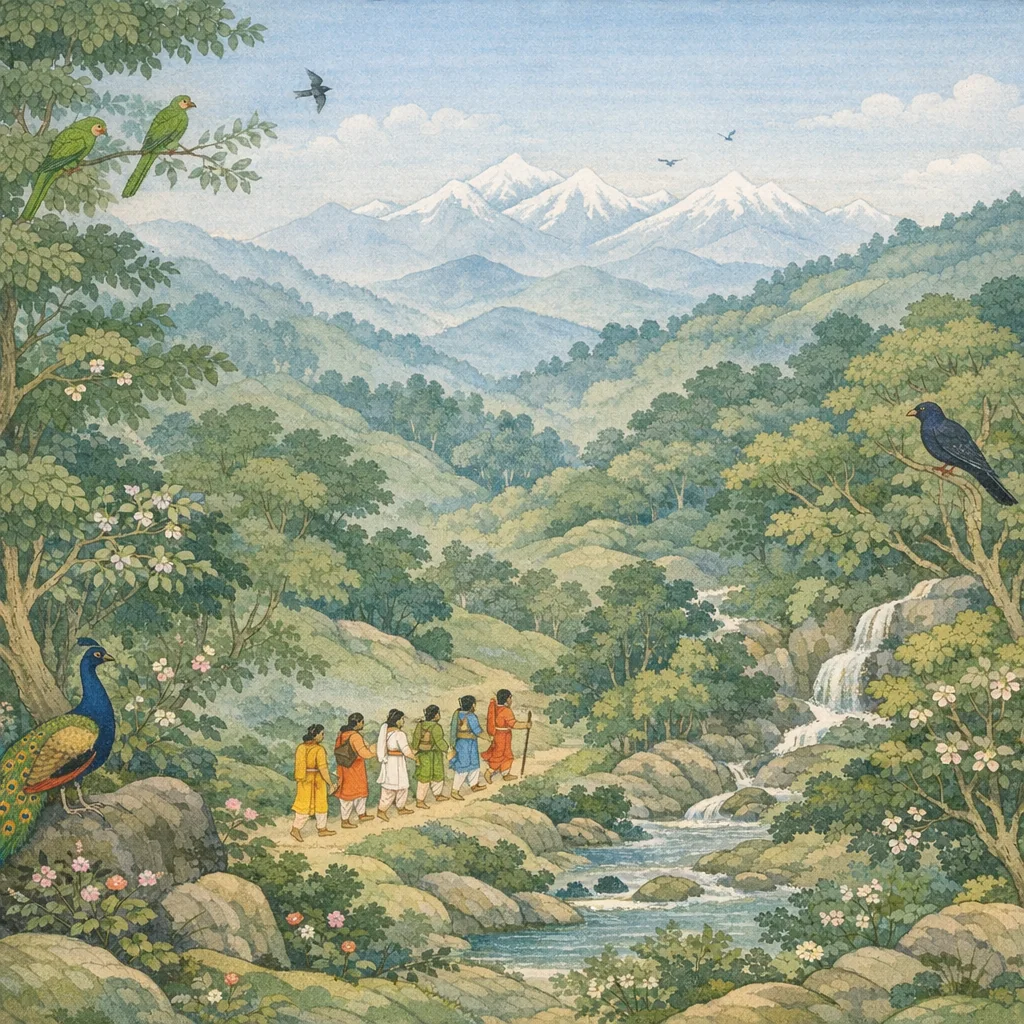
Verse 19
ददृशु: पाण्डवा राजन् गन्धमादनमन्तिकात् । पृष्ठे हिमवत: पुण्ये नानाद्रुमलतावृते,राजन! वहाँ पाण्डवोंने गन्धमादन पर्वतका निकटसे दर्शन किया। हिमालयका वह पावन पृष्ठभाग नाना प्रकारके वृक्षों और लताओंसे आवृत था। वहाँ जलके आवर्तोंसे सींचकर उत्पन्न हुए फूलवाले वृक्षोंसे घिरा हुआ वृषपर्वाका परम पवित्र आश्रम था। शत्रुदमन पाण्डवोंने उन धर्मात्मा राजर्षि वृषपर्वाके पास जाकर क्लेशरहित हो उन्हें प्रणाम किया
Vaiśampāyana said: O King, the Pāṇḍavas beheld Mount Gandhamādana from nearby, on the sacred northern slopes of the Himālaya, covered with many kinds of trees and creepers.
Verse 20
सलिलावर्तसंजातै: पुष्पितैश्न महीरुहै: । समावृतं पुण्यतममाश्रमं वृषपर्वण:,राजन! वहाँ पाण्डवोंने गन्धमादन पर्वतका निकटसे दर्शन किया। हिमालयका वह पावन पृष्ठभाग नाना प्रकारके वृक्षों और लताओंसे आवृत था। वहाँ जलके आवर्तोंसे सींचकर उत्पन्न हुए फूलवाले वृक्षोंसे घिरा हुआ वृषपर्वाका परम पवित्र आश्रम था। शत्रुदमन पाण्डवोंने उन धर्मात्मा राजर्षि वृषपर्वाके पास जाकर क्लेशरहित हो उन्हें प्रणाम किया
Vaiśampāyana said: The supremely holy hermitage of King Vṛṣaparvan was enclosed by flowering trees that had sprung up, nourished by the swirling eddies of the waters.
Verse 21
तमुपागम्य राजर्षि धर्मात्मानमरिन्दमा: । पाण्डवा वृषपर्वाणमवन्दन्त गतक्लमा:,राजन! वहाँ पाण्डवोंने गन्धमादन पर्वतका निकटसे दर्शन किया। हिमालयका वह पावन पृष्ठभाग नाना प्रकारके वृक्षों और लताओंसे आवृत था। वहाँ जलके आवर्तोंसे सींचकर उत्पन्न हुए फूलवाले वृक्षोंसे घिरा हुआ वृषपर्वाका परम पवित्र आश्रम था। शत्रुदमन पाण्डवोंने उन धर्मात्मा राजर्षि वृषपर्वाके पास जाकर क्लेशरहित हो उन्हें प्रणाम किया
Vaiśaṃpāyana said: Approaching the royal sage Vṛṣaparvan—righteous in spirit and a subduer of foes—the Pāṇḍavas, their fatigue dispelled, bowed to him in reverence.
Verse 22
अभ्यनन्दत् स राजर्षि: पुत्रवद् भरतर्षभान् । पूजिताश्चावसंस्तत्र सप्तरात्रमरिन्दमा:,उन राजर्षिने भरतकुलभूषण पाण्डवोंका पुत्रके समान अभिनन्दन किया और उनसे सम्मानित होकर वे शत्रुदमन पाण्डव वहाँ सात रात ठहरे रहे
Vaiśampāyana said: The royal sage welcomed the bull-like scions of Bharata’s line as if they were his own sons. Honoured by him, those foe-subduing Pāṇḍavas stayed there for seven nights.
Verse 23
अष्टमे5हनि सम्प्राप्ते तमृषिं लोकविश्रुतम् । आमन्त्रय वृषपर्वाणं प्रस्थान प्रत्यरोचयन्,आठवें दिन उन विश्वविख्यात राजर्षि वृषपर्वाकी आज्ञा ले उन्होंने वहाँसे प्रस्थान करनेका विचार किया
Vaiśampāyana said: When the eighth day had arrived, they took leave of that world-renowned royal sage Vṛṣaparvan, sought his permission, and resolved to depart from that place.
Verse 24
एकैकशकश्च तान् विप्रान् निवेद्य वृषपर्वणि । न्यासभूतान् यथाकालं बन्धूनिव सुसत्कृतान्,न्यदधुः पाण्डवा राजजन्नाश्रमे वृषपर्वण: । अपने साथ आये हुए ब्राह्मणोंको उन्होंने एक-एक करके वृषपर्वाके यहाँ धरोहरकी भाँति सौंपा। उन सबका पाण्डवोंने समय-समयपर सगे बन्धुकी भाँति सत्कार किया था। ब्राह्मणोंको सौंपनेके पश्चात् पाण्डवोंने अपनी शेष सामग्री भी उन्हीं महामनाको दे दी। तदनन्तर पाण्डुपुत्रोंने वृषपर्वाके ही आश्रममें अपने यज्ञपात्र तथा रत्नमय आभूषण भी रख दिये
Vaiśampāyana said: O king, the Pāṇḍavas presented those brāhmaṇas one by one to Vṛṣaparvan, entrusting them to him as a sacred deposit. Having honoured them at proper times like their own kinsmen, the Pāṇḍavas then settled them in the hermitage of Vṛṣaparvan. After handing over the brāhmaṇas, the sons of Pāṇḍu gave that great-souled man all that remained of their provisions, and they also placed there their sacrificial vessels and jewel-studded ornaments.
Verse 25
पारिब्ह च तं शेषं परिदाय महात्मने । ततस्ते यज्ञपात्राणि रत्नान्न्याभरणानि च
Vaiśampāyana said: Having also handed over in full whatever remained to that noble-souled man, they then presented the sacrificial vessels, along with jewels and other ornaments.
Verse 26
अतीतानागते विद्वान् कुशल: सर्वधर्मवित्,वृषपर्वा भूत और भविष्यके ज्ञाता, कार्यकुशल और सम्पूर्ण धर्मोके मर्मज्ञ थे। उन धर्मज्ञ नरेशने भरतश्रेष्ठ पाण्डवोंको पुत्रकी भाँति उपदेश दिया। उनकी आज्ञा पाकर महामना पाण्डव उत्तरदिशाकी ओर चले
Vaiśampāyana said: Vṛṣaparvā was wise in matters past and future, skilled in practical affairs, and a knower of all dharma. That righteous king instructed the Pāṇḍavas—best of the Bharatas—as though they were his own sons. Having received his command, the high-minded Pāṇḍavas set out toward the northern direction.
Verse 27
अन्वशासत् स धर्मज्ञ: पुत्रवद् भरतर्षभान् | तेडनुज्ञाता महात्मान: प्रययुर्दिशमुत्तराम्,वृषपर्वा भूत और भविष्यके ज्ञाता, कार्यकुशल और सम्पूर्ण धर्मोके मर्मज्ञ थे। उन धर्मज्ञ नरेशने भरतश्रेष्ठ पाण्डवोंको पुत्रकी भाँति उपदेश दिया। उनकी आज्ञा पाकर महामना पाण्डव उत्तरदिशाकी ओर चले
Vaiśampāyana said: The dharma-knowing king instructed the bull-like heroes of the Bharata line—the Pāṇḍavas—as a father would his sons. Having received his permission, those great-souled men set out toward the northern direction.
Verse 28
तान् प्रस्थितानभ्यगच्छद् वृषपर्वा महीपति: । उपन्यस्य महातेजा विप्रेभ्य: पाण्डवांस्तदा,उस समय उनके प्रस्थान करनेपर महातेजस्वी राजर्षि वृषपर्वाने पाण्डवोंको (उस देशके जानकार अन्य) ब्राह्मणोंके सुपुर्द कर दिया और कुछ दूर पीछे-पीछे जाकर उन कुन्तीकुमारोंको आशीर्वाद देकर प्रसन्न किया। तत्पश्चात् उन्हें रास्ता बताकर वृषपर्वा लौट आये
Vaiśampāyana said: When the Pāṇḍavas had set out, King Vṛṣaparvā approached them. That mighty and radiant ruler then entrusted the Pāṇḍavas to learned brāhmaṇas who knew the region. Walking some distance behind, he offered them blessings and gladdened the sons of Kuntī; thereafter, having indicated the route, Vṛṣaparvā returned.
Verse 29
अनुसंसार्य कौन्तेयानाशीर्भिरभिनन्द्य च । वृषपर्वा निववृते पन्थानमुपदिश्य च,उस समय उनके प्रस्थान करनेपर महातेजस्वी राजर्षि वृषपर्वाने पाण्डवोंको (उस देशके जानकार अन्य) ब्राह्मणोंके सुपुर्द कर दिया और कुछ दूर पीछे-पीछे जाकर उन कुन्तीकुमारोंको आशीर्वाद देकर प्रसन्न किया। तत्पश्चात् उन्हें रास्ता बताकर वृषपर्वा लौट आये
After seeing the sons of Kuntī safely set forth, King Vṛṣaparvā—having followed them for a short distance—gladdened them with blessings and words of approval. Then, having indicated the proper route, he turned back.
Verse 30
नानामृगगणैर्जुष्टं कौन्तेय: सत्यविक्रम: । पदाति भ्रत्िभि: सार्धथ प्रातिछतत युधिछिर:,फिर सत्यपराक्रमी कुन्तीनन्दन युधिष्ठिर अपने भाइयोंके साथ पैदल ही (वृषपर्वकि बताये हुए मार्गपर) चले, जो अनेक जातिके मृगोंके झुंडोंसे भरा हुआ था
Vaiśampāyana said: Then Yudhiṣṭhira, Kuntī’s son—steadfast in truth and proven in valor—set out on foot together with his brothers, proceeding along the route that had been indicated, through a region thronged with herds of many kinds of wild animals.
Verse 31
नानाद्रुमनिरोधेषु वसन््तः शैलसानुषु । पर्वतं विविशु: श्वेतं चतुर्थेडहनि पाण्डवा:,वे सभी पाण्डव नाना प्रकारके वृक्षोंसे हरे-भरे पर्वतीय शिखरोंपर डेरा डालते हुए चौथे दिन श्वेत (हिमालय) पर्वतपर जा पहुँचे, जो महामेघके समान शोभा पाता था। वह सुन्दर शैल शीतल सलिलराशिसे सम्पन्न था और मणि सुवर्ण, रजत तथा शिलाखण्डोंका समुदायरूप था। हिमालयका वह रमणीय प्रदेश अनेकानेक कन्दराओं और निर्डरोंसे सुशोभित शिलाखण्डोंके कारण दुर्गग तथा लताओं और वृक्षोंसे व्याप्त था। पाण्डव वृषपर्वाके बताये हुए मार्गका आश्रय ले नाना प्रकारके वृक्षोंका अवलोकन करते हुए अपने अभीष्ट स्थानकी ओर अग्रसर हो रहे थे
Vaiśampāyana said: Dwelling among many groves of trees on the mountain slopes, the Pāṇḍavas, on the fourth day, entered the White Mountain (the Himālaya). The verse highlights their disciplined onward journey through a demanding landscape—enduring exile with steadiness and purpose rather than complaint.
Verse 32
महाभ्रघनसंकाशं सलिलोपहितं शुभम् । मणिकाज्चनरूप्यस्य शिलानां च समुच्चयम्,वे सभी पाण्डव नाना प्रकारके वृक्षोंसे हरे-भरे पर्वतीय शिखरोंपर डेरा डालते हुए चौथे दिन श्वेत (हिमालय) पर्वतपर जा पहुँचे, जो महामेघके समान शोभा पाता था। वह सुन्दर शैल शीतल सलिलराशिसे सम्पन्न था और मणि सुवर्ण, रजत तथा शिलाखण्डोंका समुदायरूप था। हिमालयका वह रमणीय प्रदेश अनेकानेक कन्दराओं और निर्डरोंसे सुशोभित शिलाखण्डोंके कारण दुर्गग तथा लताओं और वृक्षोंसे व्याप्त था। पाण्डव वृषपर्वाके बताये हुए मार्गका आश्रय ले नाना प्रकारके वृक्षोंका अवलोकन करते हुए अपने अभीष्ट स्थानकी ओर अग्रसर हो रहे थे
Vaiśampāyana said: They reached a splendid mountain region, vast and cloud-like in appearance, graced with cool waters. It was beautiful and rich—an accumulation of gems, gold, silver, and great masses of stone.
Verse 33
(रूपं हिमवतः प्रस्थं बहुकन्दरनिर्सरम् । शिलाविभड्रविकटं लतापादपसंकुलम् ।।) ते समासाद्य पन्थानं यथोक्तं वृषपर्वणा । अनुसखुर्यथोद्देशं पश्यन्तो विविधान्नगान्,वे सभी पाण्डव नाना प्रकारके वृक्षोंसे हरे-भरे पर्वतीय शिखरोंपर डेरा डालते हुए चौथे दिन श्वेत (हिमालय) पर्वतपर जा पहुँचे, जो महामेघके समान शोभा पाता था। वह सुन्दर शैल शीतल सलिलराशिसे सम्पन्न था और मणि सुवर्ण, रजत तथा शिलाखण्डोंका समुदायरूप था। हिमालयका वह रमणीय प्रदेश अनेकानेक कन्दराओं और निर्डरोंसे सुशोभित शिलाखण्डोंके कारण दुर्गग तथा लताओं और वृक्षोंसे व्याप्त था। पाण्डव वृषपर्वाके बताये हुए मार्गका आश्रय ले नाना प्रकारके वृक्षोंका अवलोकन करते हुए अपने अभीष्ट स्थानकी ओर अग्रसर हो रहे थे
Vaiśampāyana said: They reached that tract of the Himavat—rich with many caves and cascading springs, rugged and formidable with uneven rocks and crags, and thickly overgrown with creepers and trees. Having come upon the route exactly as Vṛṣaparvan had described, the Pāṇḍavas proceeded toward the appointed place, observing along the way the many kinds of mountains and forested heights.
Verse 34
उपर्युपरि शैलस्य गुहा: परमदुर्गमा: । सुदुर्गमांस्ते सुबहूनू सुखेनैवाभिचक्रमु:
Vaiśampāyana said: High upon the mountain were caves exceedingly hard to reach. Yet they passed through many such perilous approaches with ease, pressing onward without faltering.
Verse 35
धौम्य: कृष्णा च पार्थाश्च॒ लोमशश्न महानृषि: । अगच्छन् सहितास्तत्र न कश्निदवहीयते
Vaiśampāyana said: Dhaumya, Kṛṣṇā (Draupadī), the Pārthas, and the great sage Lomasa all proceeded together to that place; no one was left behind.
Verse 36
उस पर्वतके ऊपर बहुत-सी अत्यन्त दुर्गम गुफाएँ थीं और अनेक दुर्गम्य प्रदेश थे। पाण्डव उन सबको सुखपूर्वक लाँचकर आगे बढ़ गये। पुरोहित धौम्य, द्रौपदी, चारों पाण्डव तथा महर्षि लोमश--ये सब लोग एक साथ चल रहे थे। कोई पीछे नहीं छूटता था ।। ते मृगद्धिजसंघुष्टं नानाद्रुमलतायुतम् | शाखामृगगणैश्वैव सेवितं सुमनोरमम्,आगे बढ़ते हुए वे महाभाग पाण्डव पुण्यमय माल्यवान् नामक महान पर्वतपर जा पहुँचे, जो अनेक प्रकारके वृक्षों और लताओंसे सुशोभित तथा अत्यन्त मनोरम था। वहाँ मृगोंके झुंड विचरते और भाँति-भाँतिके पक्षी कलरव कर रहे थे। बहुत-से वानर भी उस पर्वतका सेवन करते थे। उसके शिखरपर कमलमण्डित सरोवर, छोटे-छोटे जलकुण्ड और विशाल वन थे
There were many exceedingly hard-to-reach caves upon that mountain, and many regions difficult to traverse. The Pāṇḍavas passed through them all with ease and went forward. The priest Dhaumya, Draupadī, the four Pāṇḍavas, and the great sage Lomasa all walked together; none was left behind. Advancing thus, the blessed Pāṇḍavas reached the great and sacred mountain named Mālyavān, most delightful, adorned with many kinds of trees and climbing vines. There herds of deer roamed, birds of varied sorts filled the air with their calls, and many monkeys too frequented its slopes. Upon its heights were lotus-decked lakes, small pools of water, and expansive forests.
Verse 37
पुण्यं पद्मसरोयुक्ते सपल्वलमहावनम् । उपतस्थुर्महाभागा माल्यवन्तं महागिरिम्,आगे बढ़ते हुए वे महाभाग पाण्डव पुण्यमय माल्यवान् नामक महान पर्वतपर जा पहुँचे, जो अनेक प्रकारके वृक्षों और लताओंसे सुशोभित तथा अत्यन्त मनोरम था। वहाँ मृगोंके झुंड विचरते और भाँति-भाँतिके पक्षी कलरव कर रहे थे। बहुत-से वानर भी उस पर्वतका सेवन करते थे। उसके शिखरपर कमलमण्डित सरोवर, छोटे-छोटे जलकुण्ड और विशाल वन थे
Vaiśampāyana said: Advancing onward, the illustrious Pāṇḍavas reached the great mountain named Mālyavān—holy, with lotus-decked lakes, marshes, and expansive forests. It was exceedingly delightful, adorned with many kinds of trees and creepers; herds of deer roamed there, birds of varied sorts filled the air with calls, and many monkeys frequented its slopes.
Verse 38
ततः किम्पुरुषावासं सिद्धचारणसेवितम् । ददृशुर्ह्ष्टरोमाण: पर्वत॑ं गन्धमादनम्,वहाँसे उन्हें गन्धमादन पर्वत दिखायी दिया, जो किम्पुरुषोंका निवासस्थान है। सिद्ध और चारण उसका सेवन करते हैं। उसे देखकर पाण्डवोंका रोम-रोम हर्षसे खिल उठा
Vaiśampāyana said: Then they beheld Mount Gandhamādana—dwelling-place of the Kimpuruṣas, frequented by Siddhas and Cāraṇas. At the sight of that sacred mountain, the Pāṇḍavas’ very hairs stood on end in joy.
Verse 39
विद्याधरानुचरितं किन्नरीभिस्तथैव च । गजसड्घमावासं सिंहव्याप्रगणायुतम्,उस पर्वतपर विद्याधर विहार करते थे। किन्नरियाँ क्रीड़ा करती थीं। झुंड-के-झुंड हाथी, सिंह और व्याप्र निवास करते थे
Vaiśampāyana said: “That mountain was a haunt frequented by the Vidyādharas, and likewise a playground of the Kinnarīs. It was also a dwelling-place of herds of elephants, and it teemed with companies of lions and tigers.”
Verse 40
शरभोज्नादसंघुष्टं नानामृगनिषेवितम् | ते गन्धमादनवन तन्नन्दनवनोपमम्,शरभोंके सिंहनादसे वह पर्वत गूँजता रहता था। नाना प्रकारके मृग वहाँ निवास करते थे। गन्धमादन पर्वतका वह वन नन्दनवनके समान मन और हृदयको आनन्द देनेवाला था। वे वीर पाण्डुकुमार बड़े प्रसन्न होकर क्रमश: उस सुन्दर काननमें प्रविष्ट हुए, जो सबको शरण देनेवाला था
Vaiśaṃpāyana said: “That forest on Gandhamādana resounded with the cries of śarabhas and was frequented by many kinds of wild animals. The woodland there was like Nandana itself—delighting the mind and heart. Rejoicing, the heroic sons of Pāṇḍu gradually entered that beautiful grove, a refuge for all.”
Verse 41
मुदिता: पाण्डुतनया मनोहृददयनन्दनम् | विविशु: क्रमशो वीरा: शरण्यं शुभकाननम्,शरभोंके सिंहनादसे वह पर्वत गूँजता रहता था। नाना प्रकारके मृग वहाँ निवास करते थे। गन्धमादन पर्वतका वह वन नन्दनवनके समान मन और हृदयको आनन्द देनेवाला था। वे वीर पाण्डुकुमार बड़े प्रसन्न होकर क्रमश: उस सुन्दर काननमें प्रविष्ट हुए, जो सबको शरण देनेवाला था
Vaiśampāyana said: “Delighted, the sons of Pāṇḍu entered, one after another, that auspicious forest—an asylum for all—whose beauty gladdened both mind and heart.”
Verse 42
द्रौोपदीसहिता वीरास्तैश्न विप्रैर्महात्मभि: । शृण्वन्त: प्रीतिजननान् वल्गूनू मदकलाउछुभान्
Vaiśampāyana said: “The heroic men, with Draupadī in their company, and accompanied by those great-souled brāhmaṇas, listened to pleasing, heart-delighting words—graceful, sweet in tone, and auspicious—spoken in a gentle cadence that gladdened the mind.”
Verse 43
श्रोत्ररम्यान् सुमधुराज्छब्दान् खगमुखेरितान् । सर्वर्तुफलभाराब्यान् सर्वर्तुकुसुमोज्ज्वलान्
Vaiśampāyana said: “There were sounds delightful to the ear—exceedingly sweet notes—sent forth from the mouths of birds. The place was rich with the burden of fruits in every season, and radiant with blossoms of every season.”
Verse 44
पश्यन्त: पादपांश्वापि फलभारावनामितान् | आग्रानाम्रातकान् भव्यान् नारिकेलान् सतिन्दुकान्
Vaiśampāyana said: “As they went on, they saw even the trees bent low beneath the weight of their fruit—fine āmrātaka trees in the forefront, and coconut palms along with tinduka trees.”
Verse 45
मुञज्जातकांस्तथाञ्जीरान् दाडिमान् बीजपूरकान् । पनसॉल्लकुचान् मोचान् खर्जूरानम्लवेतसान्
Vaiśampāyana said: “There were various fruits and produce there—muñja shoots, figs, pomegranates, citron-like fruits, jackfruit, lakuca fruits, plantains, dates, and sour vetasa fruits.”
Verse 46
पारावतांस्तथा क्षौद्रान् नीपांश्वापि मनोरमान् । बिल्वान् कपित्थाज्जम्बूंश्व काश्मरीर्बदरीस्तथा
Vaiśampāyana said: “There were also pārvata trees and kṣaudra trees, and delightful nīpa trees as well; bilva trees, kapittha and jambū trees, and likewise kāśmarī and badarī trees.”
Verse 47
प्लक्षानुदुम्बरबटानश्वत्थान् क्षीरिकांस्तथा । भल्लातकानामलकी्हरीतकबिभीतकान्
Vaiśampāyana said: “(They saw/there were) plakṣa trees, udumbara figs, banyans, aśvattha (sacred fig) trees, and also the milky kṣīrikā; likewise bhallātaka, āmalakī, harītaka, and bibhītaka trees.”
Verse 48
इड्गुदान् करमर्दाश्व तिन्दुकांश्व महाफलान् | एतानन्यांश्व विविधान् गन्धमादनसानुषु
Vaiśampāyana said: “On the slopes of Gandhamādana there were iḍguda trees, karamarda shrubs, aśva (a kind of fruit-bearing plant), tinduka trees, and other trees with large fruits—along with many more varieties besides these.”
Verse 49
फलैरमृतकल्पैस्तानाचितान् स्वादुभिस्तरून् | तथैव चम्पकाशोकान् केतकान् बकुलांस्तथा
Vaiśampāyana said: The trees there were laden with sweet fruits, as though they were nectar itself; and likewise there were campaka and aśoka trees, ketaka plants, and bakula trees—an abundance of fragrant, auspicious growth that deepened the sense of a blessed, serene forest.
Verse 50
पुन्नागान् सप्तपर्णाश्व॒ कर्णिकारान् सकेतकान् | पाटलान् कुटजानू् रम्यान् मन्दारेन्दीवरांस्तथा
Vaiśampāyana said: “There were punnāga trees, saptaparṇa, aśva trees, karṇikāra, and saketaka; also lovely pāṭala and kuṭaja, and likewise mandāra and blue lotuses (indīvara).”
Verse 51
पारिजातान् कोविदारान् देवदारुद्रुमांस्तथा | शालांस्तालांस्तमालांश्व पिप्पलान् हिड्डुकांस्तथा
Vaiśampāyana said: “(He/they saw) pārijāta trees, kovidāras, and deodars; likewise śāla trees, palmyras, tamālas, pippalas, and hiḍḍuka trees as well.”
Verse 52
शाल्मली: किंशुकाशोकाञछिंशपा: सरलांस्तथा । उनके साथ द्रौपदी तथा पूर्वोक्त महामना ब्राह्मण भी थे। वे सब लोग विहंगोंके मुखसे निकले हुए अत्यन्त मधुर सुन्दर, श्रवण-सुखद मादक एवं मोदजनक शुभ शब्द सुनते हुए तथा सभी ऋतुओंके पुष्पों और फलोंसे सुशोभित एवं उनके भारसे झुके वृक्षोंको देखते हुए आगे बढ़ रहे थे। आम, आमड़ा, भव्य नारियल, तेंदू, मुंजातक, अंजीर, अनार, नीबू, कटहल, लकुच (बड़हर), मोच (केला), खजूर, अम्लवेंत, पारावत, क्षौद्र, सुन्दर कदम्ब, बेल, कैथ, जामुन, गम्भारी, बेर, पाकड़, गूलर, बरगद, पीपल, पिंड खजूर, भिलावा, आँवला, हरे, बहेड़ा, इंगुद, करौंदा तथा बड़े-बड़े फलवाले तिंदुक--ये और दूसरे भी नाना प्रकारके वृक्ष गन्धमादनके शिखरोंपर लहलहा रहे थे, जो अमृतके समान स्वादिष्ट फलोंसे लदे हुए थे। (इन सबको देखते हुए पाण्डवलोग आगे बढ़ने लगे।) इसी प्रकार चम्पा, अशोक, केतकी, बकुल (मौलशिरी), पुन्नाग (सुल्ताना चंपा), सप्तपर्ण (छितवन), कनेर, केवड़ा, पाटल (पाड़रि या गुलाब), कुटज, सुन्दर मन्दार, इन्दीवर (नीलकमल), पारिजात, कोविदार, देवदारु, शाल, ताल, तमाल, पिप्पल, हिंगुक (हींगका वृक्ष), सेमल, पलाश, अशोक, शीशम तथा सरल आदि वृक्षोंको देखते हुए पाण्डवलोग अग्रसर हो रहे थे ।। ४२ --५२३ || चकोरै: शतपन्रैश्व भुड़राजैस्तथा शुकै:,इन वृक्षोंपर निवास करनेवाले चकोर, मोर, भूृंगराज, तोते, कोयल, कलविंक (गौरैया- चिड़िया), हारीत (हारिल), चकवा, प्रियक, चातक तथा दूसरे नाना प्रकारके पक्षी, श्रवणसुखद मधुर शब्द बोल रहे थे। वहाँ चारों ओर जलचर जन्तुओंसे भरे हुए मनोहर सरोवर दृष्टिगोचर होते थे। जिनमें कुमुद, पुण्डरीक, कोकनद, उत्पल, कह्लार और कमल सब ओर व्याप्त थे। कादम्ब, चक्रवाक, कुरर, जलकुक्कुट, कारण्डव, प्लव, हंस, बक, मदगु तथा अन्य कितने ही जलचर पक्षी कमलोंके मकरन्दका पान करके मदसे मतवाले और हर्षसे मुग्ध हुए उन सरोवरोंमें सब ओर फैले थे
Vaiśampāyana said: They proceeded onward, beholding śālmalī trees, kiṁśuka, aśoka, chiṁśapā, and tall sarala pines. With Draupadī and the previously mentioned noble brāhmaṇa accompanying them, they moved through a landscape made auspicious by trees bowed down with the weight of blossoms and fruits in every season. As they listened to the exquisitely sweet, ear-delighting, intoxicating and joy-giving calls of birds, they saw the Gandhamādana heights flourishing with many kinds of fruit-bearing trees—laden with nectar-like produce—and with flowering trees of varied fragrance and beauty. The scene underscores a dhārmic mood of restraint and endurance: amid exile and hardship, the Pāṇḍavas are sustained by the order and generosity of nature, and their journey is framed not by conquest but by attentive, disciplined passage through a sacred, life-supporting environment.
Verse 53
कोकिलै: कलविड्कैश्न हारितैर्जीवजीविकै: । प्रियकैश्ातकैश्वैव तथान्यैरविविधै: खगै:,इन वृक्षोंपर निवास करनेवाले चकोर, मोर, भूृंगराज, तोते, कोयल, कलविंक (गौरैया- चिड़िया), हारीत (हारिल), चकवा, प्रियक, चातक तथा दूसरे नाना प्रकारके पक्षी, श्रवणसुखद मधुर शब्द बोल रहे थे। वहाँ चारों ओर जलचर जन्तुओंसे भरे हुए मनोहर सरोवर दृष्टिगोचर होते थे। जिनमें कुमुद, पुण्डरीक, कोकनद, उत्पल, कह्लार और कमल सब ओर व्याप्त थे। कादम्ब, चक्रवाक, कुरर, जलकुक्कुट, कारण्डव, प्लव, हंस, बक, मदगु तथा अन्य कितने ही जलचर पक्षी कमलोंके मकरन्दका पान करके मदसे मतवाले और हर्षसे मुग्ध हुए उन सरोवरोंमें सब ओर फैले थे
Vaiśampāyana said: “There were cuckoos, sparrows (kalaviṅkas), green parrots (hāritas), jīvajīvika-birds, as well as priyaka- and cātaka-birds, and many other kinds of winged creatures. Dwelling in the trees, they filled the place with sweet, ear-pleasing calls.”
Verse 54
श्रोत्ररम्यं सुमधुरं कूजद्धिश्चात्यधिष्ठितान् । सरांसि च मनोज्ञानि समन्ताज्जलचारिभि:,इन वृक्षोंपर निवास करनेवाले चकोर, मोर, भूृंगराज, तोते, कोयल, कलविंक (गौरैया- चिड़िया), हारीत (हारिल), चकवा, प्रियक, चातक तथा दूसरे नाना प्रकारके पक्षी, श्रवणसुखद मधुर शब्द बोल रहे थे। वहाँ चारों ओर जलचर जन्तुओंसे भरे हुए मनोहर सरोवर दृष्टिगोचर होते थे। जिनमें कुमुद, पुण्डरीक, कोकनद, उत्पल, कह्लार और कमल सब ओर व्याप्त थे। कादम्ब, चक्रवाक, कुरर, जलकुक्कुट, कारण्डव, प्लव, हंस, बक, मदगु तथा अन्य कितने ही जलचर पक्षी कमलोंके मकरन्दका पान करके मदसे मतवाले और हर्षसे मुग्ध हुए उन सरोवरोंमें सब ओर फैले थे
Vaiśampāyana said: “All around, the birds—settled in their chosen haunts—filled the air with calls that were pleasing to the ear and exceedingly sweet. And there appeared delightful lakes on every side, thronged with creatures that move in the waters.”
Verse 55
कुमुदै: पुण्डरीकैश्न तथा कोकनदोत्पलै: । कह्लारै:ः कमलैश्वैव आचितानि समन्तत:ः,इन वृक्षोंपर निवास करनेवाले चकोर, मोर, भूृंगराज, तोते, कोयल, कलविंक (गौरैया- चिड़िया), हारीत (हारिल), चकवा, प्रियक, चातक तथा दूसरे नाना प्रकारके पक्षी, श्रवणसुखद मधुर शब्द बोल रहे थे। वहाँ चारों ओर जलचर जन्तुओंसे भरे हुए मनोहर सरोवर दृष्टिगोचर होते थे। जिनमें कुमुद, पुण्डरीक, कोकनद, उत्पल, कह्लार और कमल सब ओर व्याप्त थे। कादम्ब, चक्रवाक, कुरर, जलकुक्कुट, कारण्डव, प्लव, हंस, बक, मदगु तथा अन्य कितने ही जलचर पक्षी कमलोंके मकरन्दका पान करके मदसे मतवाले और हर्षसे मुग्ध हुए उन सरोवरोंमें सब ओर फैले थे
Vaiśampāyana said: “The lovely lakes came into view on every side, thickly carpeted all around with water-lilies and lotuses—kumuda, puṇḍarīka, kokanada, utpala, kahlāra, and kamala. The scene is painted as a sanctuary of natural harmony, where life thrives without violence, suggesting a moment of respite and inward steadiness amid the larger hardships of exile.”
Verse 56
कायम्बैश्वक्रवाकैश्व कुररैर्जलकुक्कुटै: । कारण्डवै: प्लवै्सैर्बकैर्मद्गुभिरेव च,इन वृक्षोंपर निवास करनेवाले चकोर, मोर, भूृंगराज, तोते, कोयल, कलविंक (गौरैया- चिड़िया), हारीत (हारिल), चकवा, प्रियक, चातक तथा दूसरे नाना प्रकारके पक्षी, श्रवणसुखद मधुर शब्द बोल रहे थे। वहाँ चारों ओर जलचर जन्तुओंसे भरे हुए मनोहर सरोवर दृष्टिगोचर होते थे। जिनमें कुमुद, पुण्डरीक, कोकनद, उत्पल, कह्लार और कमल सब ओर व्याप्त थे। कादम्ब, चक्रवाक, कुरर, जलकुक्कुट, कारण्डव, प्लव, हंस, बक, मदगु तथा अन्य कितने ही जलचर पक्षी कमलोंके मकरन्दका पान करके मदसे मतवाले और हर्षसे मुग्ध हुए उन सरोवरोंमें सब ओर फैले थे
Vaiśampāyana said: “There were kāyamba-birds, cakravākas, kuraras, water-fowl, kāraṇḍavas, plavas, herons, and madgus as well. Spreading through those lovely lakes—intoxicated with the nectar of lotuses and delighted at heart—many kinds of water-birds filled the scene.”
Verse 57
एतैश्नान्यैश्न कीर्णानि समनन््ताज्जलचारिभि: । हृष्टैसतथा तामरसरसासवमदालसै:,इन वृक्षोंपर निवास करनेवाले चकोर, मोर, भूृंगराज, तोते, कोयल, कलविंक (गौरैया- चिड़िया), हारीत (हारिल), चकवा, प्रियक, चातक तथा दूसरे नाना प्रकारके पक्षी, श्रवणसुखद मधुर शब्द बोल रहे थे। वहाँ चारों ओर जलचर जन्तुओंसे भरे हुए मनोहर सरोवर दृष्टिगोचर होते थे। जिनमें कुमुद, पुण्डरीक, कोकनद, उत्पल, कह्लार और कमल सब ओर व्याप्त थे। कादम्ब, चक्रवाक, कुरर, जलकुक्कुट, कारण्डव, प्लव, हंस, बक, मदगु तथा अन्य कितने ही जलचर पक्षी कमलोंके मकरन्दका पान करके मदसे मतवाले और हर्षसे मुग्ध हुए उन सरोवरोंमें सब ओर फैले थे
Vaiśaṃpāyana said: “The lovely lakes were filled on every side with these and many other water-birds. Delighted, and made languid with the intoxication of drinking the honey-like essence of the lotus, they spread everywhere across the waters—painting the scene with a natural harmony that reflects the peace of the forest world in contrast to human strife.”
Verse 58
पद्मोदरच्युतरज:किंजल्कारुणरज्जितै: । मज्जुस्वरैर्मधुकरैविरुतान् कमलाकरान्,कमलोंसे भरे हुए तालाबोंमें मीठे स्वरसे बोलनेवाले भ्रमरोंके शब्द गूँज रहे थे। वे भ्रमर कमलके भीतरसे निकली हुई रज तथा केसरोंसे लाल रंगमें रँगे-से जान पड़ते थे
Vaiśampāyana said: “The lotus-ponds resounded with the humming of bees whose voices were sweet. Those bees seemed tinged red, dusted with the pollen and saffron-like filaments that had fallen from within the hearts of the lotuses—an image that heightens the scene’s calm beauty and the moral contrast between the forest’s serenity and the human suffering that drives the exiles onward.”
Verse 59
अपश्यंस्ते नरव्यापत्रा गन्धमादनसानुषु । तथैव पद्मषण्डैश्वू मण्डितांश्ष समन्ततः,इस प्रकार वे नरश्रेष्ठ गन्थमादनके शिखरोंपर पद्मषण्डमण्डित तालाबोंको सब ओर देखते हुए आगे बढ़ रहे थे
Vaiśampāyana said: Those tiger-like men, as they moved onward, beheld the slopes and peaks of Gandhamādana; and likewise, on every side, they saw ponds and waters adorned with clusters of lotuses.
Verse 60
शिखण्डिनीभि: सहिताँललतामण्डलकेषु च । मेघतूर्यरवोद्दाममदनाकुलितान् भृूशम्,वहाँ लता-मण्डपोंमें मोरिनियोंके साथ नाचते हुए मोर दिखायी देते थे। जो मेघोंकी मृदंगतुल्य गम्भीर गर्जना सुनकर उद्दाम कामसे अत्यन्त उन्मत्त हो रहे थे। वे अपनी मधुर केकाध्वनिका विस्तार करके मीठे स्वरमें संगीतकी रचना करते थे और अपनी विचित्र पाँखें फैलाकर विलासयुक्त मदालसभावसे वनविहारके लिये उत्सुक हो प्रसन्नताके साथ नाच रहे थे। कुछ मोर लतावल्लरियोंसे व्याप्त कुटजवृक्षोंके कुज्जोंमें स्थित हो अपनी प्यारी मोरिनियोंके साथ रमण करते थे और कुछ कुटजोंकी डालियोंपर मदमत्त होकर बैठे थे तथा अपनी सुन्दर पाँखोंके घटाटोपसे युक्त हो मुकुटके समान जान पड़ते थे। कितने ही सुन्दर मोर वृक्षोंके कोटरोंमें बैठे थे। पाण्डवोंने उन सबको देखा
Vaiśampāyana said: In the graceful vine-bowers, peacocks were seen dancing together with peahens—greatly stirred and made intensely restless by the deep, drum-like roar of the clouds. Spreading their sweet calls into extended, melodious notes, and unfurling their variegated plumage, they danced in delighted languor, eager for woodland sport. Some, hidden among kuṭaja trees thick with creepers, sported with their beloved mates; others sat intoxicated upon kuṭaja branches, their dense, beautiful feathers appearing like a crown; and many fine peacocks perched within hollows of trees. The Pāṇḍavas beheld them all.
Verse 61
कृत्वैव केकामधुरं संगीतं मधुरस्वरम् । चित्रान् कलापान् विस्तीर्य सविलासान् मदालसान्,वहाँ लता-मण्डपोंमें मोरिनियोंके साथ नाचते हुए मोर दिखायी देते थे। जो मेघोंकी मृदंगतुल्य गम्भीर गर्जना सुनकर उद्दाम कामसे अत्यन्त उन्मत्त हो रहे थे। वे अपनी मधुर केकाध्वनिका विस्तार करके मीठे स्वरमें संगीतकी रचना करते थे और अपनी विचित्र पाँखें फैलाकर विलासयुक्त मदालसभावसे वनविहारके लिये उत्सुक हो प्रसन्नताके साथ नाच रहे थे। कुछ मोर लतावल्लरियोंसे व्याप्त कुटजवृक्षोंके कुज्जोंमें स्थित हो अपनी प्यारी मोरिनियोंके साथ रमण करते थे और कुछ कुटजोंकी डालियोंपर मदमत्त होकर बैठे थे तथा अपनी सुन्दर पाँखोंके घटाटोपसे युक्त हो मुकुटके समान जान पड़ते थे। कितने ही सुन्दर मोर वृक्षोंके कोटरोंमें बैठे थे। पाण्डवोंने उन सबको देखा
Vaiśampāyana said: The peacocks, hearing the deep, drum-like rumble of the clouds, became wildly intoxicated with desire. They spread their many-hued tail-fans and, extending their sweet calls, fashioned melodious song in gentle tones. With playful grace and languid delight they danced in the forest bowers, eager for woodland sport—some sporting with their beloved peahens amid creeper-covered thickets, others perched in rapture on the branches, appearing crowned by the dense splendor of their plumes. The Pāṇḍavas beheld it.
Verse 62
मयूरान् ददृशुर्ह्वशन् नृत्यतो वनलालसान् । कांश्षित् प्रियाभि:सहितान् रममाणान् कलापिन:,वहाँ लता-मण्डपोंमें मोरिनियोंके साथ नाचते हुए मोर दिखायी देते थे। जो मेघोंकी मृदंगतुल्य गम्भीर गर्जना सुनकर उद्दाम कामसे अत्यन्त उन्मत्त हो रहे थे। वे अपनी मधुर केकाध्वनिका विस्तार करके मीठे स्वरमें संगीतकी रचना करते थे और अपनी विचित्र पाँखें फैलाकर विलासयुक्त मदालसभावसे वनविहारके लिये उत्सुक हो प्रसन्नताके साथ नाच रहे थे। कुछ मोर लतावल्लरियोंसे व्याप्त कुटजवृक्षोंके कुज्जोंमें स्थित हो अपनी प्यारी मोरिनियोंके साथ रमण करते थे और कुछ कुटजोंकी डालियोंपर मदमत्त होकर बैठे थे तथा अपनी सुन्दर पाँखोंके घटाटोपसे युक्त हो मुकुटके समान जान पड़ते थे। कितने ही सुन्दर मोर वृक्षोंके कोटरोंमें बैठे थे। पाण्डवोंने उन सबको देखा
Vaiśampāyana said: They saw peacocks, delighted and dancing, eager for the pleasures of the forest. Some, the crested birds, were sporting together with their beloved peahens.
Verse 63
वल्लीलतासंकटेषु कुटजेषु स्थितांस्तथा । कांश्चिच्च कुटजानां तु विटपेषूत्कटानिव,वहाँ लता-मण्डपोंमें मोरिनियोंके साथ नाचते हुए मोर दिखायी देते थे। जो मेघोंकी मृदंगतुल्य गम्भीर गर्जना सुनकर उद्दाम कामसे अत्यन्त उन्मत्त हो रहे थे। वे अपनी मधुर केकाध्वनिका विस्तार करके मीठे स्वरमें संगीतकी रचना करते थे और अपनी विचित्र पाँखें फैलाकर विलासयुक्त मदालसभावसे वनविहारके लिये उत्सुक हो प्रसन्नताके साथ नाच रहे थे। कुछ मोर लतावल्लरियोंसे व्याप्त कुटजवृक्षोंके कुज्जोंमें स्थित हो अपनी प्यारी मोरिनियोंके साथ रमण करते थे और कुछ कुटजोंकी डालियोंपर मदमत्त होकर बैठे थे तथा अपनी सुन्दर पाँखोंके घटाटोपसे युक्त हो मुकुटके समान जान पड़ते थे। कितने ही सुन्दर मोर वृक्षोंके कोटरोंमें बैठे थे। पाण्डवोंने उन सबको देखा
Vaiśampāyana said: In thickets choked with creepers and vines, among the kuṭaja trees, some peacocks were seen perched there; and some, as if exalted, sat upon the lofty branches of the kuṭajas. In that forest-scene the Pāṇḍavas beheld the peacocks.
Verse 64
कलापरुचिराटोपनिचितान् मुकुटानिव । विवरेषु तरूणां च रुचिरान् ददृशुश्ष ते,वहाँ लता-मण्डपोंमें मोरिनियोंके साथ नाचते हुए मोर दिखायी देते थे। जो मेघोंकी मृदंगतुल्य गम्भीर गर्जना सुनकर उद्दाम कामसे अत्यन्त उन्मत्त हो रहे थे। वे अपनी मधुर केकाध्वनिका विस्तार करके मीठे स्वरमें संगीतकी रचना करते थे और अपनी विचित्र पाँखें फैलाकर विलासयुक्त मदालसभावसे वनविहारके लिये उत्सुक हो प्रसन्नताके साथ नाच रहे थे। कुछ मोर लतावल्लरियोंसे व्याप्त कुटजवृक्षोंके कुज्जोंमें स्थित हो अपनी प्यारी मोरिनियोंके साथ रमण करते थे और कुछ कुटजोंकी डालियोंपर मदमत्त होकर बैठे थे तथा अपनी सुन्दर पाँखोंके घटाटोपसे युक्त हो मुकुटके समान जान पड़ते थे। कितने ही सुन्दर मोर वृक्षोंके कोटरोंमें बैठे थे। पाण्डवोंने उन सबको देखा
Vaiśampāyana said: They (the Pāṇḍavas) saw lovely peacocks—like crowns piled up in splendid, artful display—perched in the hollows and crevices of trees. The scene heightened the forest’s auspicious beauty and the travelers’ contemplative mood: even amid exile, nature’s ordered splendor offered a quiet counterpoint to human turmoil, inviting steadiness and restraint rather than agitation.
Verse 65
सिन्धुवारांस्तथोदारान् मन्मथस्येव तोमरान् । सुवर्णवर्णकुसुमान् गिरीणां शिखरेषु च,पर्वतवोंके शिखरोंपर अधिकाधिक संख्यामें सुनहरे कुसुमोंसे सुशोभित सुन्दर शेफालिकाके- “पौधे दिखायी देते थे, जो कामदेवके तोमर नामक बाण-से प्रतीत होते थे
Vaiśampāyana said: “And there were also noble, luxuriant sindhuvāra (shephālika) plants, whose golden-hued blossoms adorned the mountain peaks—appearing like the spears (tomaras), as it were, of Manmatha (the god of love).” The verse heightens the scene’s aesthetic mood: nature itself seems to participate in the stirring of desire and wonder, contrasting the forest’s beauty with the hardships of exile and reminding the listener how the mind can be moved—uplifted or unsettled—by sense-objects.
Verse 66
कर्णिकारान् विकसितान् कर्णपूरानिवोत्तमान् | तथापश्यन् कुरबकान् वनराजिषु पुष्यितान्,खिले हुए कनेरके फूल उत्तम कर्णपूरके समान प्रतीत होते थे। इसी प्रकार वन- श्रेणियोंमें विकसित कुरबक नामक वृक्ष भी उन्होंने देखे, जो कामासक्त पुरुषोंको उत्कण्ठित करनेवाले कामदेवके बाणसमूहोंके समान जान पड़ते थे। इसी प्रकार उन्हें तिलकके वृक्ष दृष्टिगोचर हुए, जो वनश्रेणियोंके ललाटमें रचित सुन्दर तिलकके समान शोभा पा रहे थे। कहीं मनोहर मंजरियोंसे विभूषित मनोरम आम्रवृक्ष दीख पड़ते थे, जो कामदेवके बाणोंकी-सी आकृति धारण करते थे। उनकी डालियोंपर भौंरोंकी भीड़ गूँजती रहती थी। उन पर्वतोंके शिखरोंपर कितने ही ऐसे वृक्ष थे, जिनमें सुवर्णके समान सुन्दर पुष्प खिले थे। कुछ वक्षोंके पुष्प देखनेमें दावानलका भ्रम उत्पन्न करते थे। किन्हीं वृक्षोंके फूल लाल, काले तथा वैदूर्यमणिके सदृश धूमिल थे। इस प्रकार पर्वतीय शिखरोंपर विभिन्न प्रकारके पुष्पोंसे विभूषित वृक्ष बड़ी शोभा पा रहे थे
Vaiśampāyana said: They beheld the karṇikāra trees in full bloom, their blossoms appearing like excellent ear-ornaments. In the same way, they saw kurabaka trees flowering along the forest-ridges—so alluring that they seemed like the clustered arrows of Kāma, stirring longing in those given to desire. (The passage continues this scenic catalogue, portraying the mountain-woods as richly adorned with varied blossoms, some golden, some flame-like, and some of mixed hues.)
Verse 67
कामवश्यौत्सुक्यकतन् कामस्येव शरोत्करान् | तथैव वनराजीनामुदारान् रचितानिव,खिले हुए कनेरके फूल उत्तम कर्णपूरके समान प्रतीत होते थे। इसी प्रकार वन- श्रेणियोंमें विकसित कुरबक नामक वृक्ष भी उन्होंने देखे, जो कामासक्त पुरुषोंको उत्कण्ठित करनेवाले कामदेवके बाणसमूहोंके समान जान पड़ते थे। इसी प्रकार उन्हें तिलकके वृक्ष दृष्टिगोचर हुए, जो वनश्रेणियोंके ललाटमें रचित सुन्दर तिलकके समान शोभा पा रहे थे। कहीं मनोहर मंजरियोंसे विभूषित मनोरम आम्रवृक्ष दीख पड़ते थे, जो कामदेवके बाणोंकी-सी आकृति धारण करते थे। उनकी डालियोंपर भौंरोंकी भीड़ गूँजती रहती थी। उन पर्वतोंके शिखरोंपर कितने ही ऐसे वृक्ष थे, जिनमें सुवर्णके समान सुन्दर पुष्प खिले थे। कुछ वक्षोंके पुष्प देखनेमें दावानलका भ्रम उत्पन्न करते थे। किन्हीं वृक्षोंके फूल लाल, काले तथा वैदूर्यमणिके सदृश धूमिल थे। इस प्रकार पर्वतीय शिखरोंपर विभिन्न प्रकारके पुष्पोंसे विभूषित वृक्ष बड़ी शोभा पा रहे थे
Vaiśampāyana said: Those splendid rows of forest-growth appeared like the clustered arrows of Kāma himself—stirring longing in hearts already swayed by desire. Thus the woodland avenues, richly arranged as if deliberately fashioned, seemed to embody the very provocations of passion, as the travelers beheld the mountain slopes adorned with varied blossoms and ornamented trees.
Verse 68
विराजमानांस्ते5पश्यंस्तिलकांस्तिलकानिव । तथानड्रशराकारान् सहकारान् मनोरमान्,खिले हुए कनेरके फूल उत्तम कर्णपूरके समान प्रतीत होते थे। इसी प्रकार वन- श्रेणियोंमें विकसित कुरबक नामक वृक्ष भी उन्होंने देखे, जो कामासक्त पुरुषोंको उत्कण्ठित करनेवाले कामदेवके बाणसमूहोंके समान जान पड़ते थे। इसी प्रकार उन्हें तिलकके वृक्ष दृष्टिगोचर हुए, जो वनश्रेणियोंके ललाटमें रचित सुन्दर तिलकके समान शोभा पा रहे थे। कहीं मनोहर मंजरियोंसे विभूषित मनोरम आम्रवृक्ष दीख पड़ते थे, जो कामदेवके बाणोंकी-सी आकृति धारण करते थे। उनकी डालियोंपर भौंरोंकी भीड़ गूँजती रहती थी। उन पर्वतोंके शिखरोंपर कितने ही ऐसे वृक्ष थे, जिनमें सुवर्णके समान सुन्दर पुष्प खिले थे। कुछ वक्षोंके पुष्प देखनेमें दावानलका भ्रम उत्पन्न करते थे। किन्हीं वृक्षोंके फूल लाल, काले तथा वैदूर्यमणिके सदृश धूमिल थे। इस प्रकार पर्वतीय शिखरोंपर विभिन्न प्रकारके पुष्पोंसे विभूषित वृक्ष बड़ी शोभा पा रहे थे
Vaiśampāyana said: They beheld the tilaka trees shining splendidly, as though they were tilakas set upon the forest’s brow; and likewise they saw delightful mango trees (sahakāras) whose form resembled clusters of arrows. The passage heightens the sense of the wilderness as a living, ornamented realm—beautiful yet stirring desire—showing how nature can mirror human emotion and the impulses that dharma must govern.
Verse 69
अपश्यन् भ्रमरारावान् मगज्जरीभिरविराजितान् | हिरण्यसदृशैः पुष्पैर्दावाग्निसदृशैरपि,खिले हुए कनेरके फूल उत्तम कर्णपूरके समान प्रतीत होते थे। इसी प्रकार वन- श्रेणियोंमें विकसित कुरबक नामक वृक्ष भी उन्होंने देखे, जो कामासक्त पुरुषोंको उत्कण्ठित करनेवाले कामदेवके बाणसमूहोंके समान जान पड़ते थे। इसी प्रकार उन्हें तिलकके वृक्ष दृष्टिगोचर हुए, जो वनश्रेणियोंके ललाटमें रचित सुन्दर तिलकके समान शोभा पा रहे थे। कहीं मनोहर मंजरियोंसे विभूषित मनोरम आम्रवृक्ष दीख पड़ते थे, जो कामदेवके बाणोंकी-सी आकृति धारण करते थे। उनकी डालियोंपर भौंरोंकी भीड़ गूँजती रहती थी। उन पर्वतोंके शिखरोंपर कितने ही ऐसे वृक्ष थे, जिनमें सुवर्णके समान सुन्दर पुष्प खिले थे। कुछ वक्षोंके पुष्प देखनेमें दावानलका भ्रम उत्पन्न करते थे। किन्हीं वृक्षोंके फूल लाल, काले तथा वैदूर्यमणिके सदृश धूमिल थे। इस प्रकार पर्वतीय शिखरोंपर विभिन्न प्रकारके पुष्पोंसे विभूषित वृक्ष बड़ी शोभा पा रहे थे
Vaiśampāyana said: They beheld trees and thickets alive with the humming of bees, made splendid by clusters of blossoms—some flowers gleaming like gold, others so fiery in hue that they seemed like a forest-conflagration itself. Thus, on the mountain ridges, many kinds of flowering trees adorned the peaks, intensifying the sense of nature’s abundance and the travelers’ wonder as they moved through the wilderness.
Verse 70
लोहितैरज्जनाभैश्ष वैदूर्यसदृशैरपि । अतीव वृक्षा राजन्ते पुष्पिता: शैलसानुषु,खिले हुए कनेरके फूल उत्तम कर्णपूरके समान प्रतीत होते थे। इसी प्रकार वन- श्रेणियोंमें विकसित कुरबक नामक वृक्ष भी उन्होंने देखे, जो कामासक्त पुरुषोंको उत्कण्ठित करनेवाले कामदेवके बाणसमूहोंके समान जान पड़ते थे। इसी प्रकार उन्हें तिलकके वृक्ष दृष्टिगोचर हुए, जो वनश्रेणियोंके ललाटमें रचित सुन्दर तिलकके समान शोभा पा रहे थे। कहीं मनोहर मंजरियोंसे विभूषित मनोरम आम्रवृक्ष दीख पड़ते थे, जो कामदेवके बाणोंकी-सी आकृति धारण करते थे। उनकी डालियोंपर भौंरोंकी भीड़ गूँजती रहती थी। उन पर्वतोंके शिखरोंपर कितने ही ऐसे वृक्ष थे, जिनमें सुवर्णके समान सुन्दर पुष्प खिले थे। कुछ वक्षोंके पुष्प देखनेमें दावानलका भ्रम उत्पन्न करते थे। किन्हीं वृक्षोंके फूल लाल, काले तथा वैदूर्यमणिके सदृश धूमिल थे। इस प्रकार पर्वतीय शिखरोंपर विभिन्न प्रकारके पुष्पोंसे विभूषित वृक्ष बड़ी शोभा पा रहे थे
Vaiśampāyana said: On the mountain slopes, the trees in full bloom shone exceedingly—some with flowers red, some dark like collyrium, and some with the dull lustre of vaidūrya (cat’s-eye gem). The scene emphasizes nature’s abundant variety and splendor as the travelers behold the mountain-forests, a calm interlude in the epic’s larger moral world where endurance and right conduct are tested amid hardship.
Verse 71
तथा शालांस्तमालांश्व पाटलान् बकुलानपि । माला इव समासक्ता: शैलानां शिखरेषु च,इसी तरह शाल, तमाल, पाटल और बकुल आदि वृक्ष उन शैलशिखरोंपर धारण की हुई मालाकी भाँति शोभा पा रहे थे
Vaiśampāyana said: “So too, śāla, tamāla, pāṭala, and bakula trees clung to the mountain peaks, adorning them like garlands.” The scene heightens the epic’s sense of the forest as a living, ordered realm—beauty and harmony persisting even amid the hardships of exile.
Verse 72
विमलस्फाटिकाभानि पाण्डुरच्छदनैर्दधिजै: । कलहंसैरुपेतानि सारसाभिरुतानि च,पाण्डवोंने पर्वतीय शिखरोंपर बहुत-से ऐसे सरोवर देखे, जो निर्मल स्फटिकमणिके समान सुशोभित थे। उनमें सफेद पाँखवाले पक्षी कलहंस आदि विचरते तथा सारस कलरव करते थे। कमल और उत्पल-पुष्पोंसे संयुक्त उन सरोवरोंमें सुखद एवं शीतल जल भरा था
Vaiśampāyana said: The Pāṇḍavas beheld many mountain-top lakes, gleaming like flawless crystal. They were frequented by white-winged birds such as the kalahamsa, and resounded with the calls of cranes (sārasa). Filled with cool, pleasant water and adorned with lotuses and blue water-lilies, these serene waters offered a moment of calm amid their arduous wandering—an image of purity and quiet restraint that mirrors the disciplined endurance of the exiled heroes.
Verse 73
सरांसि बहुशः पार्था: पश्यन्त: शैलसानुषु । पद्मोत्पलविमिश्राणि सुखशीतजलानि च,पाण्डवोंने पर्वतीय शिखरोंपर बहुत-से ऐसे सरोवर देखे, जो निर्मल स्फटिकमणिके समान सुशोभित थे। उनमें सफेद पाँखवाले पक्षी कलहंस आदि विचरते तथा सारस कलरव करते थे। कमल और उत्पल-पुष्पोंसे संयुक्त उन सरोवरोंमें सुखद एवं शीतल जल भरा था
Vaiśampāyana said: As they moved along the mountain slopes, the Pāṇḍavas repeatedly beheld many lakes—adorned with lotuses and blue water-lilies—filled with water that was both pleasing and cool. The scene underscores a pause of calm and purity within their forest exile, where nature’s serenity offers respite and steadies the mind for endurance and righteous conduct.
Verse 74
एवं क्रमेण ते वीरा वीक्षमाणा: समन्ततः । गन्धवन्त्यथ माल्यानि रसवन्ति फलानि च,इस प्रकार वे वीर पाण्डव चारों ओर सुगन्धित पुष्पमालाएँ, सरस फल, मनोहर सरोवर और मनोरम वृक्षावलियोंको क्रमश: देखते हुए गन्धमादन पर्वतके वनमें प्रविष्ट हुए। वहाँ पहुँचनेपर उन सबकी आँखें आश्वर्यसे खिल उठीं
Thus, in due sequence, those heroic Pāṇḍavas, looking all around, beheld fragrant garlands and sweet, juicy fruits. Proceeding in this manner, they entered the forest of Mount Gandhamādana; and on reaching it, their eyes opened wide in wonder at the marvels they saw.
Verse 75
सरांसि च मनोज्ञानि वृक्षांश्रवातिमनोरमान् । विविशु: पाण्डवा: सर्वे विस्मयोत्फुल्ललोचना:,इस प्रकार वे वीर पाण्डव चारों ओर सुगन्धित पुष्पमालाएँ, सरस फल, मनोहर सरोवर और मनोरम वृक्षावलियोंको क्रमश: देखते हुए गन्धमादन पर्वतके वनमें प्रविष्ट हुए। वहाँ पहुँचनेपर उन सबकी आँखें आश्वर्यसे खिल उठीं
Vaiśaṃpāyana said: The Pāṇḍavas all entered that region, beholding delightful lakes and exceedingly charming trees. Their eyes opened wide in wonder as they moved into the forest of Gandhamādana—taking in, step by step, the fragrant garlands of blossoms, luscious fruits, lovely ponds, and enchanting groves. The scene signals a pause in hardship: nature’s abundance becomes a quiet moral counterpoint to exile, sustaining resolve without indulgence.
Verse 76
कमलोत्पलकटछ्लारपुण्डरीकसुगन्धिना । सेव्यमाना वने तस्मिन् सुखस्पर्शेन वायुना,उस समय कमल, उत्पल, कह्नलार और पुण्डरीककी सुन्दर गन्ध लिये मन्द मधुर वायु उस वनमें मानो उन्हें व्यजन डुलाती थी
Vaiśampāyana said: In that forest, a gentle breeze—soft to the touch and fragrant with the scent of lotuses, blue lotuses, red lotuses, and white lotuses—seemed to attend upon them like a fan, offering comfort amid their life in the wilderness and underscoring how nature itself can become a quiet support to those enduring hardship with restraint.
Verse 77
ततो युधिष्ठटिरो भीममाहेदं प्रीतिमद् वच: । अहो श्रीमदिदं भीम गन्धमादनकाननम्,तदनन्तर युधिष्छिरने भीमसेनसे प्रसन्नतापूर्ण यह बात कही--“भीम! यह गन्धमादन- कानन कितना सुन्दर और कैसा अद्भुत है?
Vaiśampāyana said: Then Yudhiṣṭhira spoke to Bhīma these affectionate words: “Ah, Bhīma—how splendid is this Gandhamādana forest!” In this moment, Yudhiṣṭhira’s gentle admiration reflects a dharmic temperament: even amid hardship, he recognizes beauty, speaks kindly, and steadies the mind through appreciative, non-harmful speech.
Verse 78
वने हास्मिन् मनोरम्ये दिव्या: काननजा द्रुमा: । लताश्न विविधाकारा: पत्रपुष्पफलोपगा:,“इस मनोरम वनके वृक्ष और नाना प्रकारकी लताएँ दिव्य हैं। इन सबमें पत्र, पुष्प और फलोंकी बहुतायत है
Vaiśampāyana said: “In this delightful forest, the trees that grow in the woodland are wondrous, almost celestial; and the creepers, too, are of many forms—abounding in leaves, blossoms, and fruits.” The description frames the forest as a providential refuge, suggesting a moral order in which nature itself supports those who endure hardship with restraint and right conduct.
Verse 79
भान्त्येते पुष्पविकचा: पुंस्कोकिलकुलाकुला: । नात्र कण्टकिन: केचिन्न च विद्यन्त्यपुष्पिता:,'ये सभी वृक्ष फूलोंसे लदे हैं। कोकिल-कुलसे अलंकृत हैं। इस वनमें कोई भी वृक्ष ऐसे नहीं हैं, जिनमें काँटे हों और जो खिले न हों
Vaiśampāyana said: “Here the trees shine, their blossoms fully opened, and they are filled with flocks of male cuckoos. In this forest there are none that are thorny, and none are found that remain without flowers.”
Verse 80
स्निग्धपत्रफला वृक्षा गन्धमादनसानुषु । भ्रमरारावमधुरा नलिनी: फुल्लपड़कजा:,गन्धमादनके शिखरोंपर जितने वृक्ष हैं, उन सबके पत्र और फल चिकने हैं। सभी भ्रमरोंके मधुर गुंजारवसे मनोहर जान पड़ते हैं। यहाँके सरोवरोंमें कमल खिले हुए हैं
Vaiśampāyana said: “On the slopes of Gandhamādana stand trees whose leaves and fruits are smooth and lustrous. The place seems delightful with the sweet humming of bees, and its lakes are adorned with fully blossomed lotuses.”
Verse 81
विलोड्यमाना: पश्येमा: करिभि: सकरेणुभि: । पश्येमां नलिनीं चान्यां कमलोत्पलमालिनीम्,“देखो, हथिनियोंसहित हाथी इन तालाबोंमें घुसकर इन्हें मथे डालते हैं और इस दूसरी पुष्करिणीपर दृष्टिपात करो, जो कमल और उत्पलकी मालाओंसे अलंकृत है। यह कमलमालाधारिणी साक्षात् दूसरी लक्ष्मीके समान मानो साकार विग्रह धारण करके प्रकट हुई है। गन्धमादनके इस उत्तम वनमें नाना प्रकारके कुसुमोंकी सुगन्धसे सुवासित ये छोटी- छोटी वनश्रेणियाँ भ्रमरोंके गीतोंसे मुखरित हो कैसी शोभा पा रही हैं? भीमसेन! देखो, यहाँके सुन्दर प्रदेशोंमें चारों ओर देवताओंकी क्रीडास्थली है
Vaiśampāyana said: “Look—these lotus-ponds are being churned and stirred by elephants along with their dust and spray. And look at that other lotus-lake, adorned with garlands of lotuses and blue lotuses. In this excellent forest of Gandhamādana, the air is perfumed by the fragrance of many kinds of blossoms, and the small woodland ridges resound with the songs of bees, shining with beauty. Bhīmasena, behold: in these lovely regions all around lies a playground of the gods.”
Verse 82
स्रग्धरां विग्रहवतीं साक्षाच्छियमिवापराम् । नानाकुसुमगन्धाढ्यास्तस्येमा: काननोत्तमे,“देखो, हथिनियोंसहित हाथी इन तालाबोंमें घुसकर इन्हें मथे डालते हैं और इस दूसरी पुष्करिणीपर दृष्टिपात करो, जो कमल और उत्पलकी मालाओंसे अलंकृत है। यह कमलमालाधारिणी साक्षात् दूसरी लक्ष्मीके समान मानो साकार विग्रह धारण करके प्रकट हुई है। गन्धमादनके इस उत्तम वनमें नाना प्रकारके कुसुमोंकी सुगन्धसे सुवासित ये छोटी- छोटी वनश्रेणियाँ भ्रमरोंके गीतोंसे मुखरित हो कैसी शोभा पा रही हैं? भीमसेन! देखो, यहाँके सुन्दर प्रदेशोंमें चारों ओर देवताओंकी क्रीडास्थली है
Vaiśampāyana said: “In that finest of forests, these woodland tracts are rich with the fragrance of many kinds of flowers—like a garland-bearing, embodied presence, as though another Lakṣmī herself had appeared in visible form.”
Verse 83
उपगीयमाना भ्रमरै राजन्ते वनराजय: । पश्य भीम शुभान् देशान् देवाक्रीडान् समन््ततः,“देखो, हथिनियोंसहित हाथी इन तालाबोंमें घुसकर इन्हें मथे डालते हैं और इस दूसरी पुष्करिणीपर दृष्टिपात करो, जो कमल और उत्पलकी मालाओंसे अलंकृत है। यह कमलमालाधारिणी साक्षात् दूसरी लक्ष्मीके समान मानो साकार विग्रह धारण करके प्रकट हुई है। गन्धमादनके इस उत्तम वनमें नाना प्रकारके कुसुमोंकी सुगन्धसे सुवासित ये छोटी- छोटी वनश्रेणियाँ भ्रमरोंके गीतोंसे मुखरित हो कैसी शोभा पा रही हैं? भीमसेन! देखो, यहाँके सुन्दर प्रदेशोंमें चारों ओर देवताओंकी क्रीडास्थली है
Vaiśampāyana said: “Sung over by swarms of bees, these royal forest-groves shine with splendor. Look, Bhīma—behold these auspicious regions: on every side they are like the very playgrounds of the gods.”
Verse 84
अमानुषगतिं प्राप्ता: संसिद्धा: सम वृकोदर । लताभि: पुष्पिताग्राभि: पुष्पिता: पादपोत्तमा:
Vaiśampāyana said: “O Vṛkodara, those excellent trees had attained an unearthly state, as though perfected; adorned with creepers whose tips were in bloom, they themselves stood richly flowered.”
Verse 85
शिखण्डिनीभि श्षचरतां सहितानां शिखण्डिनाम्
Vaiśampāyana said: “They were accompanied by the śikhaṇḍinīs—female peafowl—moving about together with the śikhaṇḍins (male peafowl).”
Verse 86
चकोरा: शतपत्राशक्ष मत्तकोकिलसारिका:
Vaiśampāyana said: “There were cakora birds, śatapatra birds, and intoxicated (joyful) cuckoos and mynas.”
Verse 87
रक्तपीतारुणा: पार्थ पादपाग्रगता: खगा:
Vaiśampāyana said: “O Pārtha, birds of a blood-red and tawny hue are seen perched upon the very tips of the trees.”
Verse 88
हरितारुणवर्णानां शाद्धलानां समीपत:
Vaiśampāyana said: “Near the śāddhala trees, whose hues were a blend of fresh green and reddish-gold, the scene was marked by the quiet beauty of the forest.”
Verse 89
वदन्ति मधुरा वाच: सर्वभूतमनोरमा:
Vaiśampāyana said: “They say that sweet words—pleasing to the hearts of all beings—have a special power to win goodwill and calm minds.”
Verse 90
चतुर्विषाणा: पद्माभा: कुड्जरा: सकरेणव:
Vaiśampāyana said: “Elephants with four tusks, lotus-hued in appearance, and accompanied by their females were seen.”
Verse 91
बहुतालसमुत्सेधा: शैलशृज्गभपरिच्युता:
Vaiśampāyana said: “They were towering like great tāla-palms, as though fallen down from the mountain-peaks.”
Verse 92
नानाप्रस्रवणेभ्यश्ष वारिधारा: पतन्ति च । “अनेक झरनोंसे जलकी धाराएँ गिर रही हैं। जिनकी ऊँचाई कई ताड़के बराबर है और ये पर्वतके सर्वोच्च शिखरसे नीचे गिरती हैं ।। ९१ ह ।। भास्कराभा: प्रभाभिश्न शारदाभ्रघनोपमा:,“नाना प्रकारके रजतमय धातु इस महान् पर्वतकी शोभा बढ़ा रहे हैं। इनमेंसे कुछ तो अपनी प्रभाओंसे भगवान् भास्करके समान प्रकाशित होते हैं और कुछ शरद्-ऋतुके श्वेत बादलोंके समान सुशोभित हो रहे हैं। कहीं काजलके समान काले और सुवर्णके समान पीले रंगके धातु दीख पड़ते हैं
Vaiśampāyana said: “From many springs, streams of water cascade down. And there are also shining mineral-veins and ores that adorn that great mountain—some blazing with their own radiance like the sun, others beautiful like dense white autumn clouds.”
Verse 93
शोभयन्ति महाशैलं नानारजतधातव: । क्वचिदगञ्जनवर्णा भा: क्वचित् काउचनसन्निभा:,“नाना प्रकारके रजतमय धातु इस महान् पर्वतकी शोभा बढ़ा रहे हैं। इनमेंसे कुछ तो अपनी प्रभाओंसे भगवान् भास्करके समान प्रकाशित होते हैं और कुछ शरद्-ऋतुके श्वेत बादलोंके समान सुशोभित हो रहे हैं। कहीं काजलके समान काले और सुवर्णके समान पीले रंगके धातु दीख पड़ते हैं
Vaiśampāyana said: “Veins of many kinds of silvery minerals enhance the splendor of that great mountain. In some places their radiance appears dark like collyrium, while elsewhere it gleams like gold.”
Verse 94
धातवो हरितालस्य क्वचिद्धिड्गुलकस्य च । मन:शिलागुहाश्रैव सन्ध्या भ्रनिकरोपमा:,“कहीं हरितालसम्बन्धी धातु हैं और कहीं हिंगुलसम्बन्धी। कहीं मैनसिलकी गुफाएँ हैं, जो संध्याकालीन लाल बादलोंके समान जान पड़ती हैं
Vaiśampāyana said: “In that region, in some places there are mineral deposits of orpiment, and in others deposits of cinnabar. Elsewhere there are caves of red ochre, appearing like the crimson clouds of twilight.”
Verse 95
शशलोहितवर्णाभा: क्वचिद्गैरिकधातव: । सितासिताभ्रप्रतिमा बालसूर्यसमप्र भा:,“कहीं गेरु नामक धातु हैं, जिनकी कान्ति लाल खरगोशके समान दिखायी देती है। कोई धातु श्वेत बादलोंके समान हैं, तो कोई काले मेघोंके समान। कोई प्रातःकालके सूर्यकी भाँति लाल रंगके हैं
Vaiśampāyana said: “In some places there are mineral ores of red ochre, glowing like the reddish hue of a hare. Some resemble white clouds, others dark rain-clouds; and some shine with the ruddy brilliance of the early morning sun.”
Verse 96
एते बहुविधा: शैलं शोभयन्ति महाप्रभा: । गन्धर्वा: सह कान्ताभिर्यथोक्त वृषपर्वणा
Vaiśampāyana said: “These many kinds of radiant beings adorn the mountain—Gandharvas together with their beloved consorts—just as Vṛṣaparvan had described.”
Verse 97
गीतानां समतालानां तथा साम्नां च नि:ःस्वन:
Vaiśaṃpāyana said: “There arose a resonant sound—the measured rhythms of sung melodies, and likewise the deep-toned reverberation of Sāman chants.”
Verse 98
श्रूयते बहुधा भीम सर्वभूतमनोहर: । महागज्जामुदीक्षस्व पुण्यां देवनदीं शुभाम्
Vaiśampāyana said: “O Bhīma, it is heard in many ways (and widely proclaimed) that this river is delightful to the hearts of all beings. Behold this auspicious, holy river of the gods—radiant and blessed.”
Verse 99
'भीमसेन! यहाँ सम तालसे गाते हुए गीतों तथा साममन्त्रोंका विविध स्वर सुनायी पड़ता है, जो सम्पूर्ण भूतोंके चित्तको आकर्षित करनेवाला है। यह परम पवित्र एवं कल्याणमयी देवनदी महागंगा हैं, इनका दर्शन करो ।। कलहंसगणैर्जुष्टामृषिकिन्नरसेविताम् । धातुभिश्न सरिद्धिश्न किन्नरैर्मुगपक्षिभि:
Vaiśampāyana said: “Bhīmasena, here one hears a variety of tones—songs sung in even rhythm and the many notes of Sāman chants—whose music draws the minds of all living beings. Behold this supremely pure and auspicious divine river, the great Gaṅgā; take her darśana. She is frequented by flocks of wild swans, attended by sages and Kinnaras, adorned with mineral hues, the best of rivers, and graced by Kinnaras along with beasts and birds.”
Verse 100
गन्धर्वैरप्सरोभिश्व काननैश्ष मनोरमै: । व्यालैश्व विविधाकारै: शतशीर्षै: समनन्तत:ः
Vaiśampāyana said: “On every side it was thronged with Gandharvas and Apsarases, with delightful forest-groves, and with serpentine creatures of many forms—some imagined as hundred-headed—surrounding it all around.”
Verse 101
उपेतं पश्य कौन्तेय शैलराजमरिन्दम । “यहाँ हंसोंके समुदाय निवास करते हैं तथा ऋषि एवं किन्नरगण सदा इन (गंगाजी)-का सेवन करते हैं। शत्रुदमन भीम! भाँति-भाँतिके धातुओं, नदियों, किन्नरों, मृगों, पक्षियों, गन्धर्वों, अप्सराओं, मनोरम काननों तथा सौ मस्तकवाले भाँति-भाँतिके सर्पोसे सम्पन्न इस पर्वतराजका दर्शन करो” ।। ९९-१०० $ || वैशग्पायन उवाच ते प्रीतमनस: शूरा: प्राप्ता गतिमनुत्तमाम्,वैशम्पायनजी कहते हैं--इस प्रकार वे शूरवीर पाण्डव हर्षपूर्ण हृदयसे अपने परम उत्तम लक्ष्य स्थानको पहुँच गये
Vaiśampāyana said: “Come, O son of Kuntī—behold this king of mountains, O subduer of foes. Here dwell flocks of swans, and sages and Kinnaras continually partake of the waters of the Gaṅgā. O Bhīma, tamer of enemies, look upon this mountain-lord—adorned with many-hued minerals, rivers, Kinnaras, deer, birds, Gandharvas, Apsarases, delightful groves, and serpents of diverse kinds, including those famed as ‘hundred-headed.’”
Verse 102
नातृप्यन् पर्वतेन्द्रस्य दर्शनेन परन्तपा: । उपेतमथ माल्यैश्व फलवद्धिश्न पादपै:
Vaiśaṃpāyana said: The heroes, scorcher of foes, were not yet satisfied merely by the sight of that lord of mountains. Then they approached it further, finding it adorned with garlands and with trees laden with fruit.
Verse 103
ततस्ते तिग्मतपसं कृशं धमनिसंततम् | पारगं सर्वधर्माणामार्टिषिणमुपागमन्,फिर वे कठोर तपस्वी दुर्बलकाय तथा नस-नाड़ियोंसे ही व्याप्त राजर्षि आर्टिषेणके समीप गये, जो सम्पूर्ण धर्मोके पारंगत विद्वान थे
Then they approached Ārtiṣiṇa—the royal sage, austere with piercing penance, emaciated and sinewy with veins standing out—who was a master of all dharmas.
Verse 158
इति श्रीमहाभारते आरण्यके पर्वणि यक्षयुद्धपर्वणि गन्धमादनप्रवेशे अष्टपपञज्चाशदधिकशततमो< ध्याय:,इस प्रकार श्रीमह्याभारत वनपर्वके अन्तर्गत यक्षयुद्धपर्वमें गन््धमादनप्रवेशविषयक एक सौ अद्वावनवाँ अध्याय पूरा हुआ
Thus, in the Śrī Mahābhārata, within the Āraṇyaka section of the Vana Parva, in the sub-episode concerning the battle with the Yakṣas, the chapter on entering Gandhamādana comes to its close—thereby completing this adhyāya. This colophon marks a turn in the narrative, setting these events within a wider moral landscape, where encounters with non-human beings in the wilderness test restraint, courage, and steadfastness in dharma.
Verse 253
न्यदधुः पाण्डवा राजजन्नाश्रमे वृषपर्वण: । अपने साथ आये हुए ब्राह्मणोंको उन्होंने एक-एक करके वृषपर्वाके यहाँ धरोहरकी भाँति सौंपा। उन सबका पाण्डवोंने समय-समयपर सगे बन्धुकी भाँति सत्कार किया था। ब्राह्मणोंको सौंपनेके पश्चात् पाण्डवोंने अपनी शेष सामग्री भी उन्हीं महामनाको दे दी। तदनन्तर पाण्डुपुत्रोंने वृषपर्वाके ही आश्रममें अपने यज्ञपात्र तथा रत्नमय आभूषण भी रख दिये
Vaiśampāyana said: O King, the Pāṇḍavas took up their stay in the hermitage of Vṛṣaparvan. The Brāhmaṇas who had come with them they entrusted, one by one, to Vṛṣaparvan, as though placing a precious deposit in his keeping. In due season the Pāṇḍavas had honored them like their own kinsmen. After handing over the Brāhmaṇas, the Pāṇḍavas also gave their remaining provisions to that great-souled man. Thereafter, the sons of Pāṇḍu left in Vṛṣaparvan’s hermitage even their sacrificial vessels and their jewel-adorned ornaments.
Verse 843
संश्लिष्टा: पार्थ शोभन्ते गन्धमादनसानुषु । “वृकोदर! हमलोग ऐसे स्थानपर आ गये हैं, जो मानवोंके लिये अगम्य है। जान पड़ता है हम सिद्ध हो गये हैं। कुन्तीनन्दन! गन्धमादनके शिखरोंपर ये फ़ूलोंसे भरे हुए उत्तम वृक्ष इन पुष्पित लताओंसे अलंकृत होकर कैसी शोभा पा रहे हैं?
O Pārtha, the trees that cling close together shine upon the slopes of Gandhamādana. “Vṛkodara! We have come to a place beyond the reach of men. It seems we have become as siddhas. Son of Kuntī! Upon Gandhamādana’s peaks, how splendid are these noble trees, heavy with flowers, adorned with blossoming creepers!”
Verse 863
पत्रिण: पुष्पितानेतान् संपतन्ति महाद्रुमान् । “ये चकोर, शतपत्र, मदोन्मत्त कोकिल और सारिका आदि पक्षी इन पुष्पमण्डित विशाल वृक्षोंकी ओर कैसे उड़े जा रहे हैं?
Vaiśaṃpāyana said: “These winged birds are swooping down upon these great trees now in bloom.” “How is it that cakorā, śatapatra, the kokila drunk with delight, and sārika and other birds are flying toward these vast, flower-adorned trees?”
Verse 873
परस्परमुदी क्षन्ते बहवो जीवजीवका: । 'पार्थ! वृक्षोंकी ऊँची शिखाओंपर बैठे हुए लाल, गुलाबी और पीले रंगके चकोर पक्षी एक-दूसरेकी ओर देख रहे हैं
Vaiśampāyana said: “Many living creatures look at one another. O Pārtha, perched upon the lofty treetops, red, rose-hued, and yellow cakorā birds are gazing at each other.”
Verse 886
सारसा: प्रतिदृश्यन्ते शैलप्रस्रवणेष्वपि । उधर हरी और लाल घासोंके समीप पर्वतीय झरनोंके पास सारस दिखायी देते हैं
Vaiśampāyana said: “Even by the mountain springs, sāras (cranes) are seen.”
Verse 893
भूज़राजोपचक्राश्व लोहपृष्ठा: पतत्त्रिण: । 'भृंगराज, उपचक्र (चक्रवाक) और लोहपृष्ठ (कंक) नामक पक्षी ऐसी मीठी बोली बोलते हैं, जो समस्त प्राणियोंके मनको मोह लेती है
Vaiśampāyana said: “Birds such as the bhṛṅgarāja, the upacakra (cakravāka), and the lohapṛṣṭha utter a sweet, captivating speech that enchants the minds of all living beings.”
Verse 906
एते वैदूर्यवर्णाभं क्षोभयन्ति महत् सर: । “इधर देखो, ये कमलके समान कान्तिवाले गजराज, जिनके चार दाँत शोभा पा रहे हैं, हथिनियोंके साथ आकर वैदूर्यमणिके समान सुशोभित इस महान् सरोवरको मथे डालते हैं
Vaiśampāyana said: “These elephants, radiant like lotuses and gleaming like vaidūrya (cat’s-eye gem), churn and stir this vast lake.”
Verse 963
दृश्यन्ते शैलशड्रेषु पार्थ किम्पुरुषै: सह । 'ये नाना प्रकारकी परम कान्तिमान् धातु समूचे शैलकी शोभा बढाती हैं। पार्थ! जिस प्रकार वृषपर्वाने कहा था उसी प्रकार इन पर्वतीय शिखरोंपर अपनी प्रेयसी अप्सराओं तथा किम्पुरुषोंके साथ गन्धर्व दृष्टिगोचर होते हैं
“O Pārtha, upon those mountain peaks the Gandharvas are seen, together with the Kimpuruṣas; just as Vṛṣaparvan said, they appear there with their beloved Apsarās. And many kinds of supremely radiant minerals heighten the beauty of the whole mountain.”
Verse 1023
आर्डिषेणस्य राजर्षेराश्रमं ददृशुस्तदा | गिरिराज गन्धमादनका दर्शन करनेसे उन्हें तृप्ति नहीं होती थी। तदनन्तर परंतप पाण्डवोंने पुष्पमालाओं तथा फलवान् वृक्षोंसे सम्पन्न राजर्षि आर्दिषेणका आश्रम देखा
Vaiśampāyana said: Then they beheld the hermitage of the royal sage Ārdiṣeṇa. Even after repeatedly viewing the king of mountains, Gandhamādana, they did not feel satisfied. Thereafter, the Pāṇḍavas—subduers of foes—saw the hermitage of the royal sage Ārdiṣeṇa, rich with garlands of flowers and trees laden with fruit.
Verse 8536
नदतां शृणु निर्घोषं भीम पर्वतसानुषु । 'भीम! इन पर्वतशिखरोंपर मोरिनियोंके साथ विचरते बोलते हुए मोरोंका यह मधुर केकारव तो सुनो
Vaiśaṃpāyana said: “Bhīma, listen to the resounding calls on these mountain slopes—the sweet, ringing cry of peacocks, moving about and calling as they roam with peahens upon the peaks.”
Frequently Asked Questions
The chapter highlights the risk of ‘sāhasa’ (reckless overreach) and adharma-driven action—especially when a powerful agent lacks task-discrimination and timing—posing a leadership problem of restraining force with discernment.
Effective rulership and personal success depend on a coordinated set of virtues: steadiness, competence, contextual judgment of time and place, disciplined initiative, and orderly public administration; their absence results in social and personal collapse.
While not framed as a formal phalaśruti, the text explicitly states outcomes: one who acts accordingly gains fame in the world and a ‘sadgati’ after death, whereas those who act with sinful intent, poor discernment, and mistimed recklessness ‘perish’ here and hereafter.