Adhyaya 154
Bhīṣma’s Yogic Departure, Royal Cremation, and Gaṅgā’s Lament (भीष्मस्य योगयुक्त्या देहत्यागः, पितृमेधः, गङ्गाविलापः)
Upa-parva: Bhīṣma-svargārohaṇa (Bhīṣma’s ascent and funerary rites episode)
Vaiśaṃpāyana reports that after addressing the Kurus, Bhīṣma Śāṃtanava becomes silent and enters progressive dhāraṇā, restraining the prāṇas. Observers witness a marked transformation: as he releases the embedded shafts from his body, each wound becomes viśalya (free of pain/affliction), signaling yogic control over bodily conditions. His self, fully restrained across the sense-bases, exits by cleaving through the crown of the head and rises to the heavens like a great meteor, disappearing into the sky. The Pāṇḍavas, Vidura, and Yuyutsu organize the cremation: they gather woods and fragrances, prepare the pyre, adorn Bhīṣma with cloth and garlands, and perform royal honors (umbrella, fans, attendants). Priests conduct pitṛmedha with fire-offerings while Sāmagas chant Sāmans; fragrant woods (including sandal and other aromatics) are used. After cremation, the assembly proceeds to the Bhāgīrathī for udaka offerings. Gaṅgā emerges grieving, recounting Bhīṣma’s virtues, filial steadfastness, and unmatched martial prowess, expressing astonishment at his fall by Śikhaṇḍin’s instrumentality. Kṛṣṇa consoles her with a doctrinal reading: Bhīṣma attained the highest siddhi by choice, is essentially a Vasu under a curse-born human condition, and his end aligns with kṣatra-dharma; thus grief should subside. Pacified by Kṛṣṇa and Vyāsa, Gaṅgā returns to her waters, and the kings, honored and permitted, depart.
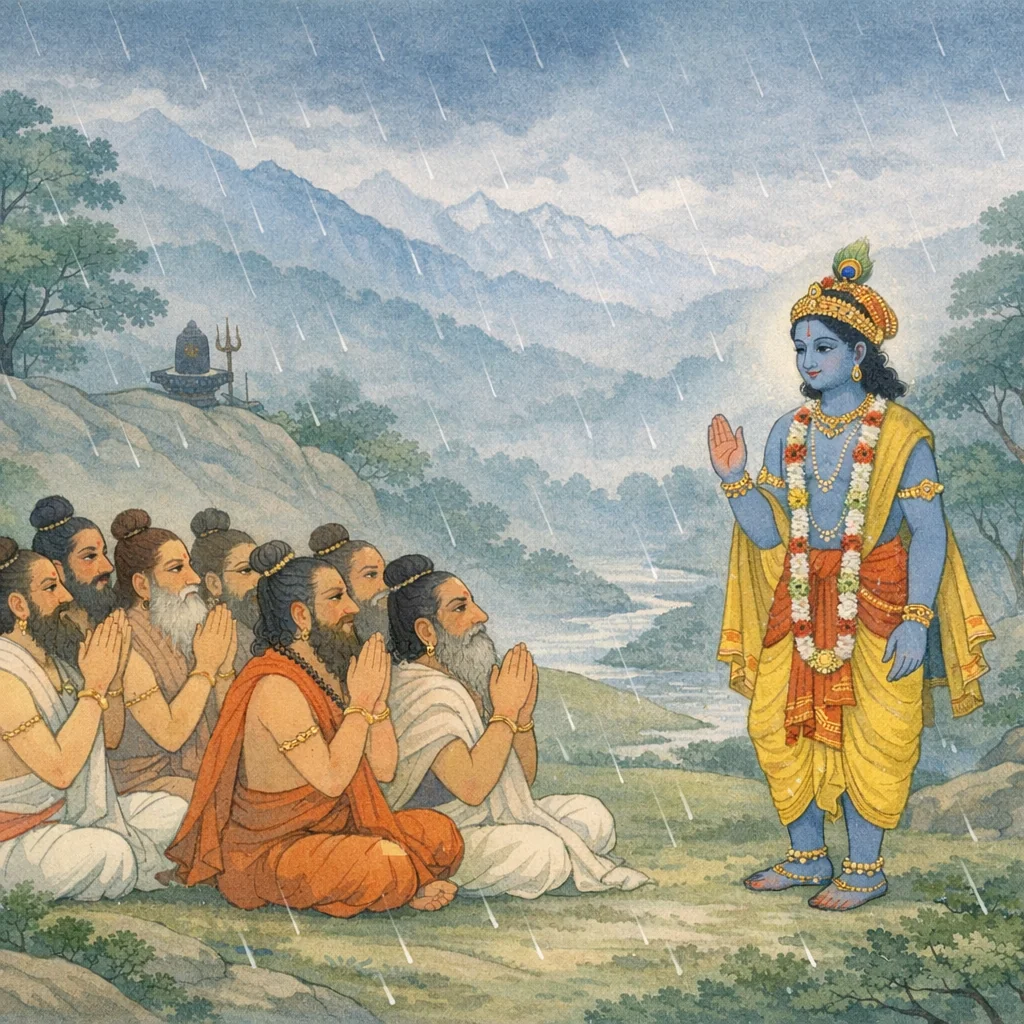
Chapter Arc: नारद के वचन से दृश्य देवगिरि पर खुलता है—वर्षाकाल-सा घनघोर अन्धकार, मेघों की निर्मल वर्षा, दिशाएँ बुझी-बुझी; और उसी रहस्यमय वातावरण में ऋषियों की दृष्टि किसी अलौकिक प्रसंग की ओर खिंचती है। → ऋषि-समूह देवगिरि पर जो देखते हैं, वह साधारण नहीं—वे ‘कारण’ पूछते हैं: प्रभो, यह मानव-देह में जन्म, यह अवतार-लीला, और इसके पीछे का रहस्य क्या है? अपनी अल्पबुद्धि, परतन्त्रता और मृत्यु-मार्ग की व्याकुलता स्वीकार कर वे ज्ञानपूर्वक शरणागति करते हैं और कृष्ण से बुद्धि-पुष्टि की याचना करते हैं। → महापुरुष-प्रस्ताव में भगवान् श्रीकृष्ण की महिमा का उत्कर्ष—मानव-रूप में प्रकट होकर भी सर्वज्ञ, दिवि-भुवि में सर्वविदित; और उसी आलोक में भीष्म का युधिष्ठिर को राज्य-धर्म के लिए दृढ़ आदेश: दान, नीति और शासन का भार अब तुम्हें धर्मपूर्वक उठाना है। → कृष्ण-स्तुति और शरणागति के बाद प्रसंग ‘पुराण-रहस्य’ की ओर स्थिर होता है—शंकर द्वारा हिमालय-शिखर पर मुनियों को कहे गए प्राचीन उपदेश का संकेत देकर कथा-धारा को धर्म-ज्ञान की परम्परा में बाँधा जाता है; उधर युधिष्ठिर, विश्रान्त भीष्म से पुनः प्रश्न कर शासन-धर्म को सुनने हेतु प्रस्तुत होते हैं। → वृषभध्वज शंकर द्वारा हिमवत्पृष्ठ पर मुनियों को कहे गए ‘पुराण’ का रहस्य अब विस्तार से कहा जाएगा—उस उपदेश में महापुरुष-तत्त्व और दान-धर्म का कौन-सा निर्णायक सूत्र छिपा है?
Shlokas
Verse 1
अफ--रू+ >> अष्टचत्वारिशंर्दाधिकशततमो< ध्याय: भगवान् श्रीकृष्णकी महिमाका वर्णन और भीष्मजीका युधिष्ठिरको राज्य करनेके लिये आदेश देना नारद उवाच अथ व्योम्नि महान् शब्द: सविद्युत्स्तनयित्नुमान् मेघैश्व गगनं नील॑ संरुद्धमभवद् घनै:,नारदजी कहते हैं--तदननन््तर आकाशमें बिजलीकी गड़गड़ाहट और मेघोंकी गम्भीर गर्जनाके साथ महान् शब्द होने लगा। मेघोंकी घनघोर घटासे घिरकर सारा आकाश नीला हो गया
Narada said: Then, in the sky, a great sound arose—accompanied by lightning and the deep rumbling of thunderclouds. Covered over by dense masses of clouds, the whole firmament became dark-blue and obscured.
Verse 2
प्रावषीव च पर्जन्यो ववृषे निर्मल पय: । तमश्वैवाभवद् घोरं दिशश्व॒ न चकाशिरे,वर्षाकालकी भाँति मेघसमूह निर्मल जलकी वर्षा करने लगा। सब ओर घोर अन्धकार छा गया। दिशाएँ नहीं सूझती थीं
Nārada said: “As in the rainy season, the rain-cloud poured down clear water. Yet a dreadful darkness spread everywhere, and the directions themselves did not shine forth—one could not make them out.”
Verse 3
ततो देवगिरौ तस्मिन् रम्ये पुण्ये सनातने । न शर्व भूतसंघं वा ददृशुर्मुन॒यस्तदा,उस समय उस रमणीय, पवित्र एवं सनातन देवगिरिपर ऋषियोंने जब दृष्टिपात किया, तब उन्हें वहाँ न तो भगवान् शंकर दिखायी दिये और न भूतोंके समुदायका ही दर्शन हुआ
Then, on that beautiful, holy, and timeless Devagiri, when the sages cast their gaze about, they saw neither Lord Śarva (Śiva) nor even the assemblage of his attendant beings.
Verse 4
व्यभ्रं च गगनं सद्यः क्षणेन समपद्यत । तीर्थयात्रां ततो विप्रा जग्मुश्नान्ये यथागतम्,फिर तो तत्काल एक ही क्षणमें सारा आसमान साफ हो गया। कहीं भी बादल नहीं रह गया। तब ब्राह्मणलोग वहाँसे तीर्थयात्राके लिये चल दिये और अन्य लोग भी जैसे आये थे, वैसे ही लौट गये
Nārada said: “And at once, in a single moment, the sky became clear—free of clouds. Then the brāhmaṇas set out from there on their pilgrimage to the sacred fords, while the others returned just as they had come.”
Verse 5
तददभुतमचिन्त्यं च दृष्टवा ते विस्मिता5भवन् | शड्करस्योमया सार्ध संवादं त्वत्कथाश्रयम्,यह अद्भुत और अचिन्त्य घटना देखकर सब लोग आश्वर्यचकित हो उठे। पुरुषसिंह देवकीनन्दन! भगवान् शंकरका पार्वतीजीके साथ जो आपके सम्बन्धमें संवाद हुआ, उसे सुनकर हम इस निश्चयपर पहुँच गये हैं कि वे ब्रह्मभूत सनातन पुरुष आप ही हैं। जिनके लिये हिमालयके शिखरपर महादेवजीने हमलोगोंको उपदेश दिया था
Nārada said: “Seeing that wondrous and inconceivable event, they were struck with amazement. And having heard the dialogue of Śaṅkara together with Umā—spoken with reference to you—we have come to the firm conclusion that you are that eternal Person, the Brahman-realized, primeval Being.”
Verse 6
स भवान् पुरुषव्याप्र ब्रह्मभूत:ः सनातन: । यदर्थमनुशिष्टा: स्मो गिरिपृष्ठे महात्मना,यह अद्भुत और अचिन्त्य घटना देखकर सब लोग आश्वर्यचकित हो उठे। पुरुषसिंह देवकीनन्दन! भगवान् शंकरका पार्वतीजीके साथ जो आपके सम्बन्धमें संवाद हुआ, उसे सुनकर हम इस निश्चयपर पहुँच गये हैं कि वे ब्रह्मभूत सनातन पुरुष आप ही हैं। जिनके लिये हिमालयके शिखरपर महादेवजीने हमलोगोंको उपदेश दिया था
Nārada said: “O tiger among men, you are that eternal Being who has become Brahman itself. For your sake the great Lord instructed us upon the heights of the Himalaya.”
Verse 7
द्वितीयं त्वद्भुतमिदं त्वत्तेज: कृतमद्य वै दृष्टवा च विस्मिता: कृष्ण सा च न: स्मृतिरागता,श्रीकृष्ण! आपके तेजसे दूसरी अद्भुत घटना आज यह घटित हुई है, जिसे देखकर हम चकित हो गये हैं और हमें पूर्वकालकी वह शंकरजीवाली बात पुनः स्मरण हो रही है
Nārada said: “O Kṛṣṇa, today a second wondrous event has occurred, brought about by your radiant power. Seeing it, we have been astonished, and it has brought back to our minds that earlier episode connected with Śaṅkara (Śiva).”
Verse 8
एतत् ते देवदेवस्य माहात्म्यं कथितं प्रभो । कपर्दिनो गिरीशस्य महाबाहो जनार्दन,प्रभो! महाबाहु जनार्दन! यह मैंने आपके समक्ष जटाजूटधारी देवाधिदेव गिरीशके माहात्म्यका वर्णन किया है
Nārada said: “O Lord, I have now related to you the greatness of the God of gods—Kapardin, Girīśa. O mighty-armed Janārdana, this is the sacred account of his majesty that I have set forth before you.”
Verse 9
इत्युक्त: स तदा कृष्णस्तपोवननिवासिभि: । मानयामास तान् सवनिषीन् देवकिनन्दन:,तपोवन-निवासी मुनियोंके ऐसा कहनेपर देवकीनन्दन भगवान् श्रीकृष्णने उस समय उन सबका विशेष सत्कार किया
Thus addressed by the sages dwelling in the forest of austerities, Kṛṣṇa—Devakī’s son—at that time honored them all with special respect as they sat assembled.
Verse 10
अथर्षय: सम्प्रहृष्टा: पुनस्ते कृष्णमब्रुवन् । पुन: पुन: दर्शयास्मान् सदैव मधुसूदन,तदनन्तर वे महर्षि पुनः हर्षमें भरकर श्रीकृष्णसे बोले--“मधुसूदन! आप सदा ही हमें बारंबार दर्शन देते रहें
Nārada said: Then those sages, filled with joy, spoke again to Kṛṣṇa: “O Madhusūdana, show Yourself to us again and again; may we always have Your darśana (vision and presence).”
Verse 11
नहि नः सा रति: स्वर्गे या च त्वद्दर्शने विभो । तदृतं च महाबाहो यदाह भगवान् भव:,'प्रभो! आपके दर्शनमें हमारा जितना अनुराग है, उतना स्वर्गमें भी नहीं है। महाबाहो! भगवान् शिवने जो कहा था, वह सर्वथा सत्य हुआ
Nārada said: “O Lord, the delight and devotion we feel upon beholding you is not found for us even in heaven. O mighty-armed one, what the Blessed Bhava (Śiva) had declared has indeed proved wholly true.”
Verse 12
एतत् ते सर्वमाख्यातं रहस्यमरिकर्शन । त्वमेव हार्थतत्त्वज्ञ: पृष्टोडस्मान् पृच्छसे यदा,'शत्रुसूदन! यह सारा रहस्य मैंने आपसे कहा है, आप ही अर्थ-तत्त्वके ज्ञाता हैं। हमने आपसे पूछा था, परंतु आप स्वयं ही जब हमसे प्रश्न करने लगे, तब हमलोगोंने आपकी प्रसन्नताके लिये इस गोपनीय रहस्यका वर्णन किया है। तीनों लोकोंमें कोई ऐसी बात नहीं है, जो आपको ज्ञात न हो
Narada said: “I have now disclosed to you this entire secret, O subduer of foes. Indeed, you yourself are the knower of the true purport of things. Though you had questioned us, when you in turn began to question us, we described this guarded mystery only to please you, O slayer of enemies. In the three worlds there is nothing that is unknown to you.”
Verse 13
तदस्माभिरिदं गुहां त्वत्प्रियार्थमुदाहतम् । न च ते<विदितं किंचित्त्रिषु लोकेषु विद्यते,'शत्रुसूदन! यह सारा रहस्य मैंने आपसे कहा है, आप ही अर्थ-तत्त्वके ज्ञाता हैं। हमने आपसे पूछा था, परंतु आप स्वयं ही जब हमसे प्रश्न करने लगे, तब हमलोगोंने आपकी प्रसन्नताके लिये इस गोपनीय रहस्यका वर्णन किया है। तीनों लोकोंमें कोई ऐसी बात नहीं है, जो आपको ज्ञात न हो
“Therefore we have spoken this secret to you for the sake of what is dear to you. And there is nothing at all, O slayer of foes, in the three worlds that is unknown to you.”
Verse 14
जन्म चैव प्रसूतिश्व॒ यच्चान्यत् कारणं विभो । वयं तु बहुचापल्यादशक्ता गुह्मधारणे,'प्रभो! आपका जो यह अवतार अर्थात् मानव-शरीरमें जन्म हुआ है तथा जो इसका गुप्त कारण है, यह सब तथा अन्य बातें आपसे छिपी नहीं हैं। हमलोग तो अपनी अत्यन्त चपलताके कारण इस गूढ़ विषयको अपने मनमें ही छिपाये रखनेमें असमर्थ हो गये हैं
Nārada said: “O Lord, neither Your birth in a human body nor the hidden cause behind it—nor anything else—can be concealed from You. But we, being exceedingly fickle by nature, have proved unable to keep this profound matter guarded within ourselves.”
Verse 15
ततः स्थिते त्वयि विभो लघुत्वात् प्रलपामहे । न हि किंचित् तदाश्चर्य यज्ञ वेज्षि भवानिह
Nārada said: “Now that you, O all-pervading Lord, are present here, we speak freely out of familiarity. Yet there is truly nothing astonishing in this, O Yajña—for here you know everything.”
Verse 16
साधयाम वयं कृष्ण बुद्धि पुष्टिमवाप्रुहि,“श्रीकृष्ण! अब आप हमें जानेकी आज्ञा दें, जिससे हम अपना कार्य साधन करें। आपको उत्तम बुद्धि और पुष्टि प्राप्त हो
Nārada said: “O Kṛṣṇa, we shall proceed to accomplish our purpose. O Śrī Kṛṣṇa, now grant us leave to depart, so that we may carry out our task. May you attain the highest clarity of understanding and strength.”
Verse 17
पुत्रस्ते सदृशस्तात विशिष्टो वा भविष्यति । महाप्रभावसंयुक्तो दीप्तिकीर्तिकर: प्रभु:,तात! आपको आपके समान अथवा आपसे भी बढ़कर पुत्र प्राप्त हो। वह महान् प्रभावसे युक्त, दीप्तिमान्, कीर्तिका विस्तार करनेवाला और सर्वसमर्थ हो”
Nārada said: “Dear one, you shall obtain a son who will be like you—or even superior to you. Endowed with great power and influence, radiant in presence, he will be a maker and spreader of fame, and fully capable in action.”
Verse 18
भीष्म उवाच तत:ः प्रणम्य देवेशं यादवं पुरुषोत्तमम् | प्रदक्षिणमुपावृत्य प्रजग्मुस्ते महर्षय:,भीष्मजी कहते हैं--युधिष्ठि!! तदनन्तर वे महर्षि उन यदुकुलरत्न देवेश्वर पुरुषोत्तमको प्रणाम और उनकी परिक्रमा करके चले गये
Bhishma said: “Thereafter, having bowed down to the Lord of the gods—Krishna of the Yadus, the Supreme Person—and having respectfully circumambulated Him, those great sages departed.”
Verse 19
सो<यं नारायण: श्रीमान् दीप्त्या परमया युत: । व्रतं यथावत् तच्चीरत्त्वा द्वारकां पुनरागमत्,तत्पश्चात् परम कान्तिसे युक्त ये श्रीमान् नारायण अपने व्रतको यथावत्रूपसे पूर्ण करके पुनः द्वारकापुरीमें चले आये
Bhīṣma said: “This illustrious Nārāyaṇa, endowed with supreme radiance, having duly observed and completed his vow, returned once again to Dvārakā.”
Verse 20
पूर्णे च दशमे मासि पुत्रो5स्य परमादभुत: । रुक्मिण्यां सम्मतो जज्ञे शूरो वंशधर: प्रभो,प्रभो! दसवाँ मास पूर्ण होनेपर इन भगवानके रुक्मिणी देवीके गर्भसे एक परम अद्भुत, मनोरम एवं शूरवीर पुत्र उत्पन्न हुआ, जो इनका वंश चलानेवाला है
Bhīṣma said: “When the tenth month was completed, a supremely wondrous son was born to him from Rukmiṇī—approved and welcomed by all, heroic, and destined to uphold and continue his lineage, O lord.”
Verse 21
स काम: सर्वभूतानां सर्वभावगतो नृप । असुराणां सुराणां च चरत्यन्तर्गतः सदा,नरेश्वर! जो सम्पूर्ण प्राणियोंके मानसिक संकल्पमें व्याप्त रहनेवाला है और देवताओं तथा असुरोंके भी अन्तःकरणमें सदा विचरता रहता है, वह कामदेव ही भगवान् श्रीकृष्णका वंशधर है
Bhishma said: “O king, that Desire (Kāma) which pervades the inner intentions and mental formations of all beings, and which ever moves within the hearts of both gods and demons—this very Kāma is declared to be a descendant of Bhagavān Śrī Kṛṣṇa.”
Verse 22
सो<यं पुरुषशार्दूलो मेघवर्णश्षतुर्भुज: । संश्रित:पाण्डवान् प्रेम्णा भवन्तश्वैनमाश्रिता:,वे ही ये चार भुजाधारी घनश्याम पुरुषसिंह श्रीकृष्ण प्रेमपूर्वक तुम पाण्डवोंके आश्रित हैं और तुमलोग भी इनके शरणागत हो
Bhīṣma said: “This very lion among men—dark as a rain-cloud and four-armed—has, out of love, taken refuge with the Pāṇḍavas; and you too have taken refuge in him. Thus the bond between Kṛṣṇa and the Pāṇḍavas is one of mutual shelter, grounded in affection and righteous reliance.”
Verse 23
कीर्तिलिक्ष्मीर्धतिश्वैव स्वर्गमार्गस्तथैव च । यत्रैष संस्थितस्तत्र देवो विष्णुस्त्रिविक्रम:,ये त्रिविक्रम विष्णुदेव जहाँ विद्यमान हैं, वहीं कीर्ति, लक्ष्मी, धृति तथा स्वर्गका मार्ग है
Bhīṣma said: “Wherever this Lord Viṣṇu, the Trivikrama, is firmly present, there too abide fame and prosperity, steadfastness of mind, and the very path that leads to heaven.”
Verse 24
सेन्द्रा देवास्त्रयस्त्रिंशदेष नात्र विचारणा । आदिदेवो महादेव: सर्वभूतप्रतिश्रय:,इन्द्र आदि तैंतीस देवता इन्हींके स्वरूप हैं, इसमें कोई अन्यथा विचार नहीं करना चाहिये। ये ही सम्पूर्ण प्राणियोंको आश्रय देनेवाले आदिदेव महादेव हैं
Bhīṣma said: “The thirty-three gods, together with Indra, are indeed this very Lord; there is no room for doubt. He is the primordial God, Mahādeva, the refuge and support of all beings.”
Verse 25
अनादिनिधनोडव्यक्तो महात्मा मधुसूदन: । अयं जातो महातेजा: सुराणामर्थसिद्धये,इनका न आदि है न अन्त। ये अव्यक्तस्वरूप, महातेजस्वी महात्मा मधुसूदन देवताओंका कार्य सिद्ध करनेके लिये यदुकुलमें उत्पन्न हुए हैं
Bhīṣma said: “Madhusūdana—the great-souled one—has neither beginning nor end and is of unmanifest nature. Yet this supremely radiant Lord has taken birth to accomplish the purpose of the gods, restoring the cosmic order that upholds dharma.”
Verse 26
सुदुस्तरार्थतत्त्वस्य वक्ता कर्ता च माधव: । तव पार्थ जय: कृत्स्नस्तव कीर्तिस्तथातुला,ये माधव दुर्बोध तत्त्वके वक्ता और कर्ता हैं। कुन्तीनन्दन! तुम्हारी सम्पूर्ण विजय, अनुपम कीर्ति और अखिल भूमण्डलका राज्य--ये सब भगवान् नारायणका आश्रय लेनेसे ही तुम्हें प्राप्त हुए हैं। ये अचिन्त्यस्वरूप नारायण ही तुम्हारे रक्षक और परमगति हैं
Bhīṣma said: “Mādhava alone is both the revealer and the accomplisher of the profound truth whose meaning is so hard to cross. O Pārtha, your complete victory and your incomparable fame have come to you through reliance on him. The teaching is clear: human effort bears its highest fruit when grounded in refuge in Nārāyaṇa—the unfathomable protector and the supreme goal.”
Verse 27
तवेयं पृथिवी देवी कृत्स्ना नारायणाश्रयात् | अयं नाथस्तवाचिन्त्यो यस्य नारायणो गति:,ये माधव दुर्बोध तत्त्वके वक्ता और कर्ता हैं। कुन्तीनन्दन! तुम्हारी सम्पूर्ण विजय, अनुपम कीर्ति और अखिल भूमण्डलका राज्य--ये सब भगवान् नारायणका आश्रय लेनेसे ही तुम्हें प्राप्त हुए हैं। ये अचिन्त्यस्वरूप नारायण ही तुम्हारे रक्षक और परमगति हैं
Bhīṣma said: “This entire divine earth is yours because you have taken refuge in Nārāyaṇa. He is your inconceivable Lord and protector—Nārāyaṇa is the very goal and final refuge of the one who relies on Him.”
Verse 28
स भवांस्त्वमुपाध्वर्यू रणाग्नौ हुतवान् नृपान् । कृष्णख्रुवेण महता युगान्ताग्निसमेन वै,तुमने स्वयं होता बनकर प्रलयकालीन अग्निके समान तेजस्वी श्रीकृष्णरूपी विशाल खुवाके द्वारा समराग्निकी ज्वालामें सम्पूर्ण रुजाओंकी आहुति दे डाली है
Bhīṣma said: “You, as it were, acted as the assistant priest at the sacrifice, offering kings into the fire of battle. Using the great ladle that was Kṛṣṇa—blazing like the conflagration at the end of an age—you poured them in as oblations.”
Verse 29
दुर्योधनश्व शोच्चो5सौ सपुत्र भ्रातृबान्धव: । कृतवान् यो<बुद्धि: क्रोधाद्धरिगाण्डीविविग्रहम्,आज वह दुर्योधन अपने पुत्र, भाई और सम्बन्धियोंसहित शोकका विषय हो गया है; क्योंकि उस मूर्खने क्रोधके आवेशमें आकर श्रीकृष्ण और अर्जुनसे युद्ध ठाना था
Bhishma said: “Duryodhana has become an object of lamentation—along with his sons, brothers, and kinsmen—because that foolish man, driven by the surge of anger, resolved to wage war against Krishna and Arjuna (the wielder of the Gandiva).”
Verse 30
दैतेया दानवेन्द्राश्ष महाकाया महाबला: । चक्राग्नौ क्षयमापन्ना दावाग्नौ शलभा इव,कितने ही विशाल शरीरवाले महाबली दैत्य और दानव दावानलमें दग्ध होनेवाले पतंगोंकी तरह श्रीकृष्णकी चक्राग्निमें स्वाहा हो चुके हैं
Bhishma said: “Many mighty Daityas and foremost Danavas—huge in form and great in strength—have met their destruction in the fiery blaze of Krishna’s discus, just as moths are consumed in a forest fire.”
Verse 31
प्रतियोद्धुं न शक््यो हि मानुषैरेष संयुगे । विहीनै: पुरुषव्याप्र सत्त्वशक्तिबलादिभि:,पुरुषसिंह! सत्त्व (धैर्य) शक्ति और बल आदिसे स्वभावतः हीन मनुष्य युद्धमें इन श्रीकृष्णका सामना नहीं कर सकते
Bhīṣma said: “In battle, this one cannot truly be fought against by ordinary men—especially by those who are by nature deficient, O tiger among men, in steadfastness (courage), power, strength, and the like.”
Verse 32
जयो योगी युगान्ताभ: सव्यसाची रणाग्रग: । तेजसा हतवान् सर्व सुयोधनबलं नूप,अर्जुन भी योगशक्तिसे सम्पन्न और युगान्तकालकी अग्निके समान तेजस्वी हैं। ये बायें हाथसे भी बाण चलाते हैं और रणभूमिमें सबसे आगे रहते हैं। नरेश्वर! इन्होंने अपने तेजसे दुर्योधनकी सारी सेनाका संहार कर डाला है
Bhishma said: “Arjuna is victorious—endowed with yogic mastery, blazing like the fire at the end of an age. He is Savyasācin, able to shoot with the left hand as well, and he stands foremost on the battlefield. O king, by the sheer force of his radiance and prowess he has destroyed the entire host of Suyodhana (Duryodhana).”
Verse 33
यत् तु गोवृषभांकेन मुनिभ्य: समुदाह्नतम् पुराणं हिमवत्पृष्ठे तन्मे निगदत: शूणु,वृषभध्वज भगवान् शंकरने हिमालयके शिखरपर मुनियोंसे जो पुरातन रहस्य बताया था, वह मेरे मुँहसे सुनो
Bhishma said: “Now listen from my lips to that ancient sacred account which the Blessed Shankara—he whose banner bears the bull—once proclaimed to the sages upon the heights of the Himalaya. I shall relate it to you as it was taught.”
Verse 34
यावत् तस्य भवेत् पुष्टिस्तेजो दीप्ति: पराक्रम: । प्रभाव: सन्नतिर्जन्म कृष्णे तन्त्रिगुणं विभो,विभो! अर्जुनमें जैसी पुष्टि है, जैसा तेज, दीप्ति, पराक्रम, प्रभाव, विनय और जन्मकी उत्तमता है, वह सब कुछ श्रीकृष्णमें अर्जुनसे तिगुना है
Bhishma said: “Whatever measure of strength and well-being, brilliance, radiance, valor, influence, humility, and nobility of birth is found in Arjuna—O mighty one—those very qualities exist in Kṛṣṇa threefold.”
Verse 35
कः शक्नोत्यन्यथाकर्तु तद् यदि स्यात् तथा शृणु । यत्र कृष्णो हि भगवांस्तत्र पुष्टिरनुत्तमा,संसारमें कौन ऐसा है जो मेरे इस कथनको अन्यथा सिद्ध कर सके। श्रीकृष्णका जैसा प्रभाव है, उसे सुनो--जहाँ भगवान् श्रीकृष्ण हैं, वहाँ सर्वोत्तम पुष्टि विद्यमान है
Bhishma said: “Who in this world could prove my statement otherwise? If such a one exists, then listen. Such is the power of Sri Krishna: wherever the Blessed Lord Krishna stands, there abides the unsurpassed fullness of strength and prosperity.”
Verse 36
वयं त्विहाल्पमतय: परतन्त्रा: सुविक्लवा: । ज्ञानपूर्व प्रपन्ना: स्मो मृत्यो: पन्थानमव्ययम्,हम इस जगतमें मन्दबुद्धि, परतन्त्र और व्याकुलचित्त मनुष्य हैं। हमने जान-बूझकर मृत्युके अटल मार्गपर पैर रखा है
Bhishma said: “Here we are men of little discernment—dependent on forces beyond our control and shaken in mind. Yet knowingly we have surrendered ourselves to the unerring, irreversible path that leads to death.”
Verse 37
भवांक्षाप्यार्जवपर: पूर्व कृत्वा प्रतिश्रयम् । राजवृत्तं न लभते प्रतिज्ञापालने रत:,युधिष्ठिर! तुम अत्यन्त सरल हो, इसीसे तुमने पहले ही भगवान् वासुदेवकी शरण ली और अपनी प्रतिज्ञाके पालनमें तत्पर रहकर राजोचित बर्तावको तुम ग्रहण नहीं कर रहे हो
Bhishma said: “Yudhishthira, because you are exceedingly straightforward and devoted to integrity, you earlier took refuge in Lord Vasudeva. And now, being intent on keeping your vow, you are not adopting the conduct and expedients considered proper to kingship.”
Verse 38
अप्येवात्मवध॑ लोके राजंस्त्वं बहु मन्यसे । न हि प्रतिज्ञा या दत्ता तां प्रहातुमरिंदम,राजन! तुम इस संसारमें अपनी हत्या कर लेनेको ही अधिक महत्त्व दे रहे हो। शत्रुदमन! जो प्रतिज्ञा तुमने कर ली है, उसे मिटा देना तुम्हारे लिये उचित नहीं है (तुमने शत्रुओंको जीतकर न्यायपूर्वक प्रजापालनका व्रत लिया है। अब शोकवश आत्महत्याका विचार मनमें लाकर तुम उस व्रतसे गिर रहे हो, यह ठीक नहीं है)
Bhishma said: “O King, do you truly regard self-destruction in this world as the greater course? A vow once given should not be abandoned, O subduer of foes. You have undertaken the duty of conquering your enemies and ruling your subjects with justice; to let grief drive you toward suicide is to fall away from that righteous resolve.”
Verse 39
कालेनायं जन: सर्वो निहतो रणमूर्धनि । वयं च कालेन हता: कालो हि परमेश्वर:,ये सब राजालोग युद्धके मुहानेपर कालके द्वारा मारे गये हैं, हम भी कालसे ही मारे गये हैं; क्योंकि काल ही परमेश्वर है
Bhishma said: “By Time alone this entire host of men has been struck down on the very forefront of battle. We too have been slain by Time; for Time indeed is the supreme Lord.”
Verse 40
न हि कालेन कालज्ञ: स्पृष्ट: शोचितुमर्हसि । कालो लोहितरक्ताक्ष: कृष्णो दण्डी सनातन:,जो कालके स्वरूपको जानता है, वह कालके थपेड़े खाकर भी शोक नहीं करता। श्रीकृष्ण ही लाल नेत्रोंवाले दण्डधारी सनातन काल हैं
Bhīṣma said: “One who truly understands Time should not grieve, even when struck by Time’s blows. For Time is the eternal, rod-bearing Kṛṣṇa, with blood-red eyes.”
Verse 41
तस्मात् कुन्तीसुत ज्ञातीन् नेह शोचितुमर्हसि । व्यपेतमन्युर्नित्यं त्वं भव कौरवनन्दन,अतः कुन्तीनन्दन! तुम्हें अपने भाई-बन्धुओं और सगे-सम्बन्धियोंके लिये यहाँ शोक नहीं करना चाहिये। कौरव-कुलका आनन्द बढ़ानेवाले युधिष्ठिर! तुम सदा क्रोधहीन एवं शान्त रहो। मैंने इन माधव श्रीकृष्णका माहात्म्य जैसा सुना था, वैसा कह सुनाया। इनकी महिमाको समझनेके लिये इतना ही पर्याप्त है। सज्जनके लिये दिग्दर्शन मात्र उपस्थित होता है
Bhishma said: “Therefore, O son of Kunti, you ought not to grieve here for your kinsmen and relatives. Ever free from anger, remain calm, O delight of the Kuru line.”
Verse 42
माधवस्यास्य माहात्म्यं श्रुतं यत् कथितं मया । तदेव तावत् पर्याप्तं सज्जनस्य निदर्शनम्,अतः कुन्तीनन्दन! तुम्हें अपने भाई-बन्धुओं और सगे-सम्बन्धियोंके लिये यहाँ शोक नहीं करना चाहिये। कौरव-कुलका आनन्द बढ़ानेवाले युधिष्ठिर! तुम सदा क्रोधहीन एवं शान्त रहो। मैंने इन माधव श्रीकृष्णका माहात्म्य जैसा सुना था, वैसा कह सुनाया। इनकी महिमाको समझनेके लिये इतना ही पर्याप्त है। सज्जनके लिये दिग्दर्शन मात्र उपस्थित होता है
Bhishma said: “I have recounted, just as I had heard, the greatness of this Madhava (Krishna). This much alone is sufficient as an indication for the noble. Therefore, O son of Kunti, you should not grieve here for your brothers, kinsmen, and relatives. O Yudhishthira, who increases the joy of the Kuru line, remain ever free from anger and abide in peace. What I have spoken of Madhava’s majesty is enough to awaken understanding; for the good, even a mere pointing-out becomes guidance.”
Verse 43
व्यासस्य वचन श्रुत्वा नारदस्य च धीमत: । स्वयं चैव महाराज कृष्णस्याहतमस्य वै,महाराज! व्यासजी तथा बुद्धिमान् नारदजीके वचन सुनकर मैंने परम पूज्य श्रीकृष्ण तथा महर्षियोंके महान् प्रभावका वर्णन किया है। भारत! गिरिराजनन्दिनी उमा और महेश्वरका जो संवाद हुआ था, उसका भी मैंने उल्लेख किया है
Bhishma said: “Having heard the words of Vyasa and of the wise Narada, and also having personally witnessed the unsurpassed greatness of Krishna, O great king, I have described the extraordinary power of the Lord and of the great sages. O Bharata, I also recalled the dialogue that took place between Uma, the daughter of the king of mountains, and Maheshvara.”
Verse 44
प्रभावश्चर्षिपूगस्य कथित: सुमहान् मया । महेश्वरस्य संवादं शैलपुत्र्याश्न भारत,महाराज! व्यासजी तथा बुद्धिमान् नारदजीके वचन सुनकर मैंने परम पूज्य श्रीकृष्ण तथा महर्षियोंके महान् प्रभावका वर्णन किया है। भारत! गिरिराजनन्दिनी उमा और महेश्वरका जो संवाद हुआ था, उसका भी मैंने उल्लेख किया है
Bhishma said: “O Bharata, I have described the exceedingly great spiritual power and influence of the multitude of sages. I have also recounted the dialogue of Maheshvara with the Daughter of the Mountain (Uma)—a sacred exchange held up as an ethical and devotional exemplar.”
Verse 45
धारयिष्यति यश्चैनं महापुरुषसम्भवम् | शृणुयात् कथयेद् वा यः स श्रेयो लभते परम्,जो महापुरुष श्रीकृष्णके इस प्रभावको सुनेगा, कहेगा और याद रखेगा, उसको परम कल्याणकी प्राप्ति होगी
Bhishma said: “Whoever preserves this account born of the Great Person, and whoever listens to it or recites it to others—such a person attains the highest good.”
Verse 46
भवितारश्न तस्याथ सर्वे कामा यथेप्सिता: । प्रेत्य स्वर्ग च लभते नरो नास्त्यत्र संशय:,उसके सारे अभीष्ट मनोरथ पूर्ण होंगे और वह मनुष्य मृत्युके पश्चात् स्वर्गलोक पाता है, इसमें संशय नहीं है
Bhishma said: “Then all the desires he has rightly wished for will surely be fulfilled; and after death that man attains heaven—of this there is no doubt.”
Verse 47
न्याय्यं श्रेयोडभिकामेन प्रतिपत्तुं जनार्दन: । एष एवाक्षयो विप्रै: स्तुतो राजन् जनार्दन:,अतः जिसे कल्याणकी इच्छा हो, उस पुरुषको जनार्दनकी शरण लेनी चाहिये। राजन! इन अविनाशी श्रीकृष्णकी ही ब्राह्मणोंने स्तुति की है
Bhishma said: “For one who seeks the highest good, it is right and fitting to take refuge in Janardana. O King, it is this very Janardana—imperishable—whom the Brahmins have praised.”
Verse 48
महेश्वरमुखोत्सृष्टा ये च धर्मगुणा: स्मृता: । ते त्वया मनसा धार्या: कुरुराज दिवानिशम्,कुरुराज! भगवान् शंकरके मुखसे जो धर्म-सम्बन्धी गुण प्रतिपादित हुए हैं, उन सबको तुम्हें दिन-रात अपने हृदयमें धारण करना चाहिये
Bhishma said: “O king of the Kurus, the virtues of dharma that have been taught as issuing from the very mouth of Maheshvara (Shiva) should be held firmly in your mind—kept within your heart day and night.”
Verse 49
एवं ते वर्तमानस्य सम्यग्दण्डधरस्य च | प्रजापालनदक्षस्य स्वर्गलोको भविष्यति,ऐसा बर्ताव करते हुए यदि तुम न्यायोचित रीतिसे दण्ड धारण करके प्रजापालनमें कुशलतापूर्वक लगे रहोगे तो तुम्हें स्वर्गलोक प्राप्त होगा
Bhishma said: “If you conduct yourself in this manner—upholding punishment and governance in a truly just way, and remaining skillful in protecting and maintaining your subjects—then the world of heaven will be your destined attainment. The ethical point is that a ruler’s merit arises not from power itself, but from disciplined, fair enforcement of law and competent care of the people.”
Verse 50
धर्मेणापि सदा राजन् प्रजा रक्षितुमरहसि । यस्तस्य विपुलो दण्ड: सम्यग्धर्म: स कीर्त्यते,राजन! तुम धर्मपूर्वक सदा प्रजाकी रक्षा करते रहो। प्रजापालनके लिये जो दण्डका उचित उपयोग किया जाता है, वह धर्म ही कहलाता है
Bhishma said: “O King, you must always protect the people, and do so in accordance with dharma. The strong and effective use of punishment that serves this purpose—when applied rightly—is itself what is called true dharma.”
Verse 51
य एष कथितो राजन् मया सज्जनसंनिधौ । शड्करस्योमया सार्ध संवादो धर्मसंहित:,नरेश्वर! भगवान् शंकरका पार्वतीजीके साथ जो धर्मविषयक संवाद हुआ था, उसे इन सत्पुरुषोंके निकट मैंने तुम्हें सुना दिया
Bhīṣma said: “O King, in the presence of these virtuous men I have now recounted to you that discourse on dharma which took place between the Blessed Śaṅkara and Umā.”
Verse 52
श्र॒त्वा वा श्रोतुकामो वाप्यर्चयेद् वृषभभध्वजम् । विशुद्धेनेह भावेन य इच्छेद् भूतिमात्मन:,जो अपना कल्याण चाहता हो, वह पुरुष यह संवाद सुनकर अथवा सुननेकी कामना रखकर विशुद्धभावसे भगवान् शंकरकी पूजा करे
Bhīṣma said: “Whether one has already heard this discourse or merely longs to hear it, if he seeks his own welfare and prosperity in this world, let him worship Śiva—he whose banner bears the bull—with a pure and sincere intention.”
Verse 53
एष तस्यानवद्यस्य नारदस्य महात्मन: । संदेशो देवपूजार्थ तं तथा कुरु पाण्डव,पाण्डुनन्दन! उन अनिन्द्य महात्मा देवर्षि नारदजीका ही यह संदेश है कि महादेवजीकी पूजा करनी चाहिये। इसलिये तुम भी ऐसा ही करो
Bhīṣma said: “This is the message of the blameless great-souled sage Nārada, given for the sake of worship of the Deity. Therefore, O Pāṇḍava—O son of Pāṇḍu—do exactly so.”
Verse 54
एतदत्यदभुतं वृत्तं पुण्ये हि भवति प्रभो । वासुदेवस्य कौन्तेय स्थाणोश्वैव स्वभावजम्,प्रभो! कुन्तीनन्दन! भगवान् श्रीकृष्ण और महादेवजीका यह अद्भुत एवं स्वाभाविक वृत्तान्त पूर्वकालमें पुण्यमय पर्वत हिमालयपर संघटित हुआ था
Bhīṣma said: “O lord, O son of Kuntī, this is a most wondrous account. It took place in ancient times at a holy setting, and it concerns the innate, natural greatness of Vāsudeva (Śrī Kṛṣṇa) and of Sthāṇu (Mahādeva).”
Verse 55
दशवर्षसहसत्राणि बदर्यामेष शाश्वत: । तपश्चचार विपुलं सह गाण्डीवधन्चना,इन सनातन श्रीकृष्णने गाण्डीवधारी अर्जुनके साथ (नर-नारायणरूपमें रहकर) बदरिकाश्रममें दस हजार वर्षोतक बड़ी भारी तपस्या की थी
Bhīṣma said: “In the eternal hermitage of Badarī, this everlasting Lord performed immense austerities for ten thousand years, together with the bearer of the Gāṇḍīva bow.”
Verse 56
त्रियुगौ पुण्डरीकाक्षौ वासुदेवधनञज्जयौ । विदितौ नारदादेतौ मम व्यासाच्च पार्थिव,पृथ्वीनाथ! कमलनयन! श्रीकृष्ण और अर्जुन--ये दोनों सत्ययुग आदि तीनों युगोंमें प्रकट होनेके कारण त्रियुग कहलाते हैं। देवर्षि नारद तथा व्यासजीने इन दोनोंके स्वरूपका परिचय दिया था
Bhīṣma said: “O lord of the earth, lotus-eyed Vāsudeva and Dhanañjaya (Arjuna) are known as ‘Triyuga’, for they manifest across three yugas. Nārada and Vyāsa made known to me the true nature of these two.”
Verse 57
बाल एव महाबाहुश्चकार कदनं महत् । कंसस्य पुण्डरीकाक्षो ज्ञातित्राणार्थकारणात्,महाबाहु कमलनयन श्रीकृष्णने बचपनमें ही अपने बन्धु-बान्धवोंकी रक्षाके लिये कंसका बड़ा भारी संहार किया था
Bhishma said: Even while still a child, Krishna—mighty-armed and lotus-eyed—wrought a great destruction upon Kamsa, undertaking that deed to protect his own kinsmen. Thus, force used to shield the innocent and uphold rightful order may be a dharmic necessity, not mere violence.
Verse 58
कर्मणामस्य कौन्तेय नानन््तं संख्यातुमुत्सहे । शाश्व॒तस्य पुराणस्य पुरुषस्य युधिष्ठिर,कुन्तीपुत्र युधिष्ठिर! इन सनातन पुराणपुरुष श्रीकृष्णके चरित्रोंकी कोई सीमा या संख्या नहीं बतायी जा सकती
Bhishma said: “O Yudhishthira, son of Kunti—I do not venture to count the innumerable deeds of that eternal, primeval Person. His exploits have no limit that can be measured or fully enumerated.”
Verse 59
ध्रुवं श्रेयः परं तात भविष्यति तवोत्तमम् | यस्य ते पुरुषव्याप्र: सखा चायं जनार्दन:,तात! तुम्हारा तो अवश्य ही परम उत्तम कल्याण होगा; क्योंकि ये पुरुषसिंह जनार्दन तुम्हारे मित्र हैं
Bhishma said: “Dear child, your highest and certain welfare will surely come to pass, for this Janardana—lion among men—is your friend.”
Verse 60
दुर्योधन तु शोचामि प्रेत्य लोके5पि दुर्मतिम् । यत्कृते पृथिवी सर्वा विनष्टा सहयद्विपा,दुर्बुद्धि दुर्योधन यद्यपि परलोकमें चला गया है, तो भी मुझे तो उसीके लिये अधिक शोक हो रहा है; क्योंकि उसीके कारण हाथी, घोड़े आदि वाहनोंसहित सारी पृथ्वीका नाश हुआ है
Bhishma said: “I grieve for Duryodhana—though he has gone to the world beyond—because of his perverse mind. For his sake the whole earth was ruined, along with its elephants (and the forces that depend on them).”
Verse 61
दुर्योधनापराधेन कर्णस्य शकुनेस्तथा । दुःशासनचतुर्थानां कुरवो निधनं गता:,दुर्योधन, दुःशासन, कर्ण और शकुनि--इन्हीं चारोंके अपराधसे सारे कौरव मारे गये हैं
Bhishma said: Because of the wrongdoing of Duryodhana—and likewise of Karna, Shakuni, and Duhshasana—the Kauravas met their destruction. He implies that the fall of an entire lineage can be traced to the culpable choices of a few who drove the community toward adharma and war.
Verse 62
वैशम्पायन उवाच एवं सम्भाषमाणे तु गाड़्ेये पुरुषर्षभे । तूष्णीं बभूव कौरव्यो मध्ये तेषां महात्मनाम्,वैशम्पायनजी कहते हैं--जनमेजय! पुरुषप्रवर गंगानन्दन भीष्मजीके ऐसा कहनेपर उन महामनस्वी पुरुषोंके बीचमें बैठे हुए कुरुकुलकुमार युधिष्ठिर चुप हो गये
Vaiśampāyana said: “O Janamejaya, when Bhīṣma—the son of the Gaṅgā, foremost among men—had spoken thus, Yudhiṣṭhira, the Kuru prince seated amid those great-souled ones, fell silent.”
Verse 63
तच्छुत्वा विस्मयं जम्मुर्धृतराष्ट्रादयो नूपा: । सम्पूज्य मनसा कृष्णं सर्वे प्राजजलयो5भवन्,भीष्मजीकी बात सुनकर धृतराष्ट्र आदि राजाओंको बड़ा विस्मय हुआ और वे सभी मन-ही-मन श्रीकृष्णकी पूजा करते हुए उन्हें हाथ जोड़ने लगे
Hearing this, Dhṛtarāṣṭra and the other kings were filled with astonishment. Inwardly honoring Kṛṣṇa with reverence, they all rose with folded hands, humbled by Bhīṣma’s words.
Verse 64
ऋषयश्नचापि ते सर्वे नारदप्रमुखास्तदा । प्रतिगृह्माभ्यनन्दन्त तद्वाक््यं प्रतिपूज्य च,नारद आदि सम्पूर्ण महर्षि भी भीष्मजीके वचन सुनकर उनकी प्रशंसा करते हुए बहुत प्रसन्न हुए
Then all those sages—led by Nārada—received Bhīṣma’s words with reverence. Honouring his statement, they praised it and rejoiced.
Verse 65
इत्येतदखिलं सर्वे: पाण्डवो भ्रातृभि: सह । श्रुतवान् सुमहाश्चर्य पुण्यं भीष्मानुशासनम्,इस प्रकार पाण्डुनन्दन युधिष्ठिने अपने सब भाइयोंके साथ यह भीष्मजीका सारा पवित्र अनुशासन सुना, जो अत्यन्त आश्चर्यजनक था
Thus did Yudhiṣṭhira, the son of Pāṇḍu, together with all his brothers, hear in full Bhīṣma’s sacred instruction—most wondrous and filled with merit.
Verse 66
युधिष्ठिरस्तु गाड़ेय॑ं विश्रान्तं भूरिदक्षिणम् । पुनरेव महाबुद्धि: पर्यपृच्छन््महीपति:,तदनन्तर बड़ी-बड़ी दक्षिणाओंका दान करनेवाले गंगानन्दन भीष्मजी जब विश्राम ले चुके, तब महाबुद्धिमान् राजा युधिष्छिर पुनः प्रश्न करने लगे
Then, after Bhīṣma—the son of the Gaṅgā, famed for bestowing abundant gifts—had taken rest, King Yudhiṣṭhira, of great understanding, questioned him once again.
Verse 148
इति श्रीमहाभारते अनुशासनपर्वणि दानधर्मपर्वणि महापुरुषप्रस्तावे अष्टचत्वारिंशदाधिकशततमो< ध्याय:,इस प्रकार श्रीमह्याभारत अनुशासनपर्वके अन्तर्गत दानधर्मपर्वमें महापुरुष श्रीकृष्णकी प्रशंशाविषयक एक सौ अड़तालीसवाँ अध्याय पूरा हुआ
Vaiśampāyana said: “Thus ends the one-hundred-and-forty-eighth chapter of the Anuśāsana Parva of the Śrī Mahābhārata, within the sub-section on the dharma of giving (dāna), in the context of introducing and praising the Supreme Person (Mahāpuruṣa), Śrī Kṛṣṇa.”
Verse 156
दिवि वा भुवि वा देव सर्व हि विदितं तव । “भगवन्! इसीलिये आपके रहते हुए भी हम अपने ओछेपनके कारण प्रलाप करते हैं ->छोटे मुँह बड़ी बात कर रहे हैं। देव! पृथ्वीपर या स्वर्गमें कोई भी ऐसी आश्वर्यकी बात नहीं है, जिसे आप नहीं जानते हों। आपको सब कुछ ज्ञात है
Nārada said: “O Deva, whether in heaven or on earth, everything is indeed known to you. There is no marvel or matter of wonder anywhere—on earth or in the celestial realms—that lies beyond your knowledge.”
Frequently Asked Questions
The dilemma is how to reconcile profound grief with dharmic meaning: Gaṅgā’s lament emphasizes loss and perceived injustice, while Kṛṣṇa reframes the event as voluntary yogic departure and cosmic identity (Vasu), redirecting emotion toward normative acceptance.
The chapter teaches that disciplined inner control (yoga) and correct ritual action can coexist: bodily conditions and death are portrayed as governable within dharma, and communal stability is maintained through rites and doctrinal interpretation.
While not a formal phalaśruti, the narrative implicitly valorizes understanding yogic restraint, righteous death, and funerary dharma as spiritually stabilizing knowledge that transforms grief into a structured, tradition-consistent response.