Adhyaya 1
Genealogies of Svāyambhuva Manu, the Appearance of Yajña, and Atri’s Sons (Brahmā–Viṣṇu–Śiva Expansions)
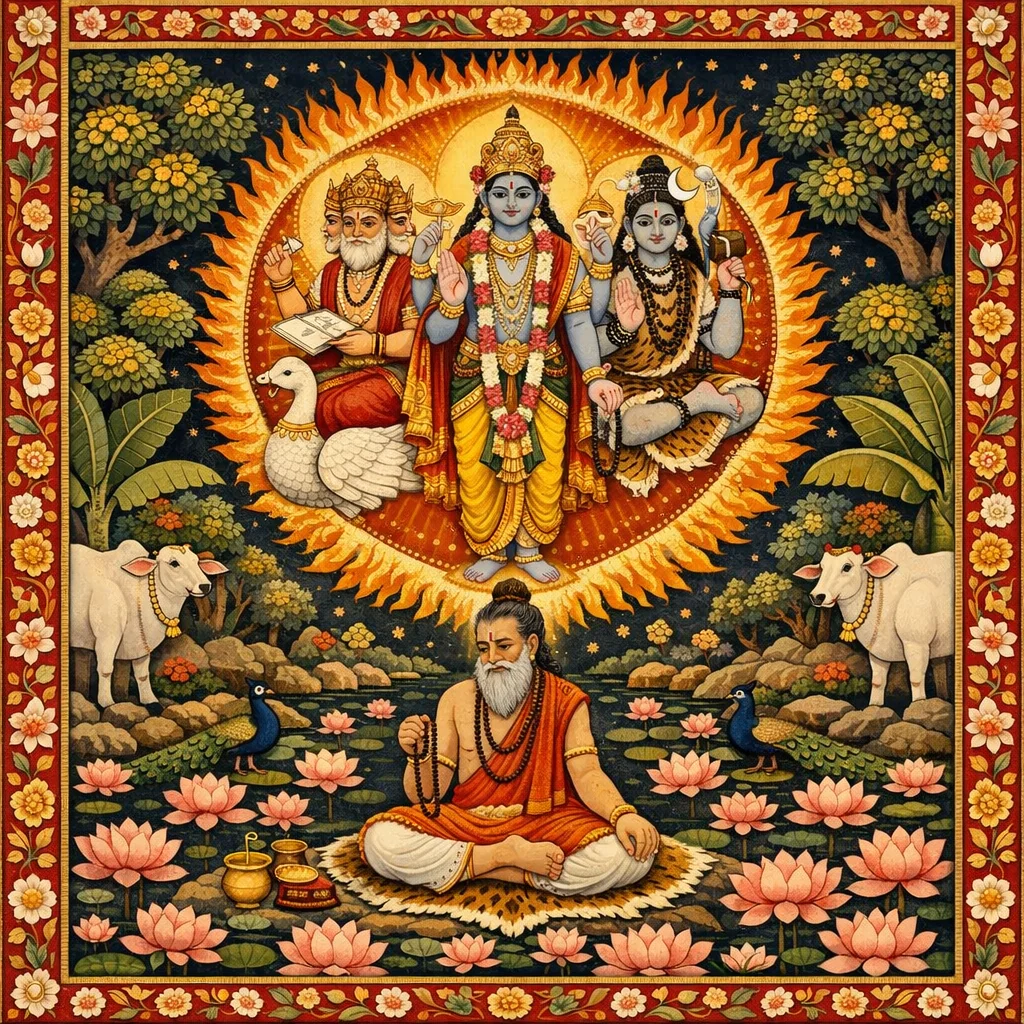
Maitreya continues instructing Vidura, moving from earlier accounts of Svāyambhuva Manu to the concrete spread of lineages (vaṁśa). Manu’s daughters—Ākūti, Devahūti, and Prasūti—marry into prajāpati lines, forming the social and cosmic network of progenitors. Ākūti and Ruci beget Yajña (Viṣṇu’s incarnation as Lord of sacrifice) and Dakṣiṇā; Yajña later becomes Indra in this Manvantara, and his sons become the Tuṣitas. The narration returns to the descendants of Kardama’s daughters, showing how sacred rivers and cosmic features (such as Devakulyā, source of the heavenly Gaṅgā) are linked to divine contact. Vidura’s theological question about Atri’s three sons leads to Atri’s austerities and the simultaneous appearance of Brahmā, Viṣṇu, and Śiva, who affirm their unity and grant partial expansions as Soma, Dattātreya, and Durvāsā. The chapter broadens into further ṛṣi genealogies (Aṅgirā, Pulastya, Pulaha, Kratu, Vasiṣṭha, Bhṛgu) and ends by returning to Dakṣa and Prasūti, setting up the coming Dakṣa–Śiva tension through Satī’s marriage and Dakṣa’s disrespect of Śiva, a direct bridge to the next events.
Shlokas
Verse 1
मैत्रेय उवाच मनोस्तु शतरूपायां तिस्र: कन्याश्च जज्ञिरे । आकूतिर्देवहूतिश्च प्रसूतिरिति विश्रुता: ॥ १ ॥
Śrī Maitreya said: Svāyambhuva Manu begot three daughters in his wife Śatarūpā, renowned as Ākūti, Devahūti, and Prasūti.
Verse 2
आकूतिं रुचये प्रादादपि भ्रातृमतीं नृप: । पुत्रिकाधर्ममाश्रित्य शतरूपानुमोदित: ॥ २ ॥
King Svāyambhuva Manu, with Śatarūpā’s consent, gave Ākūti to Prajāpati Ruci according to the putrikā-dharma, though she had brothers, on the condition that her son be returned to Manu as his own son.
Verse 3
प्रजापति: स भगवान् रुचिस्तस्यामजीजनत् । मिथुनं ब्रह्मवर्चस्वी परमेण समाधिना ॥ ३ ॥
Prajāpati Ruci, radiant with brahminical power, by supreme samādhi begot in Ākūti a pair—one son and one daughter.
Verse 4
यस्तयो: पुरुष: साक्षाद्विष्णुर्यज्ञस्वरूपधृक् । या स्त्री सा दक्षिणा भूतेरंशभूतानपायिनी ॥ ४ ॥
Of Ākūti’s two children, the son was directly Lord Viṣṇu Himself, bearing the form of Yajña; the daughter was Dakṣiṇā, a partial manifestation of Śrī Lakṣmī, the Lord’s eternal consort.
Verse 5
आनिन्ये स्वगृहं पुत्र्या: पुत्रं विततरोचिषम् । स्वायम्भुवो मुदा युक्तो रुचिर्जग्राह दक्षिणाम् ॥ ५ ॥
Svāyambhuva Manu, filled with joy, brought to his home the radiant boy Yajña, his daughter’s son; and his son-in-law Ruci kept Dakṣiṇā with him.
Verse 6
तां कामयानां भगवानुवाह यजुषां पति: । तुष्टायां तोषमापन्नोऽजनयद् द्वादशात्मजान् ॥ ६ ॥
Lord Yajña, master of the yajus rites, married Dakṣiṇā, who longed for the Lord as her husband; and being pleased with her, He begot twelve sons through her.
Verse 7
तोष: प्रतोष: सन्तोषो भद्र: शान्तिरिडस्पति: । इध्म: कविर्विभु: स्वह्न: सुदेवो रोचनो द्विषट् ॥ ७ ॥
The twelve sons born of Yajña and Dakṣiṇā were named Toṣa, Pratoṣa, Santoṣa, Bhadra, Śānti, Iḍaspati, Idhma, Kavi, Vibhu, Svahna, Sudeva, and Rocana.
Verse 8
तुषिता नाम ते देवा आसन्स्वायम्भुवान्तरे । मरीचिमिश्रा ऋषयो यज्ञ: सुरगणेश्वर: ॥ ८ ॥
In the reign of Svāyambhuva Manu, these sons became the devas known collectively as the Tuṣitas. Marīci became chief among the ṛṣis, and Yajña became the king of the demigods—Indra.
Verse 9
प्रियव्रतोत्तानपादौ मनुपुत्रौ महौजसौ । तत्पुत्रपौत्रनप्तृणामनुवृत्तं तदन्तरम् ॥ ९ ॥
Svāyambhuva Manu’s two sons, Priyavrata and Uttānapāda, became kings of great might, and in that time their sons, grandsons, and further descendants spread throughout the three worlds.
Verse 10
देवहूतिमदात्तात कर्दमायात्मजां मनु: । तत्सम्बन्धि श्रुतप्रायं भवता गदतो मम ॥ १० ॥
My dear son, Svāyambhuva Manu entrusted his most beloved daughter, Devahūti, to Kardama Muni. I have spoken of their connection before, and you have heard it almost in full.
Verse 11
दक्षाय ब्रह्मपुत्राय प्रसूतिं भगवान्मनु: । प्रायच्छद्यत्कृत: सर्गस्त्रिलोक्यां विततो महान् ॥ ११ ॥
Svāyambhuva Manu gave his daughter Prasūti to Dakṣa, the son of Brahmā; and through Dakṣa’s progeny the creation expanded, his descendants spreading throughout the three worlds.
Verse 12
या: कर्दमसुता: प्रोक्ता नव ब्रह्मर्षिपत्नय: । तासां प्रसूतिप्रसवं प्रोच्यमानं निबोध मे ॥ १२ ॥
The nine daughters of Kardama Muni, already spoken of, were given as wives to nine brahmarṣis. Now I shall describe the progeny born from those nine daughters; please hear from me.
Verse 13
पत्नी मरीचेस्तु कला सुषुवे कर्दमात्मजा । कश्यपं पूर्णिमानं च ययोरापूरितं जगत् ॥ १३ ॥
Kalā, the daughter of Kardama Muni and wife of Marīci, gave birth to two children—Kaśyapa and Pūrṇimā—whose descendants filled the world in every direction.
Verse 14
पूर्णिमासूत विरजं विश्वगं च परन्तप । देवकुल्यां हरे: पादशौचाद्याभूत्सरिद्दिव: ॥ १४ ॥
O Vidura, of the two sons, Kaśyapa and Pūrṇimā, Pūrṇimā begot three children—Viraja, Viśvaga, and Devakulyā. Among them, Devakulyā was the sacred water that washed the lotus feet of Śrī Hari, and later became the Gaṅgā River of the heavenly realms.
Verse 15
अत्रे: पत्न्यनसूया त्रीञ्जज्ञे सुयशस: सुतान् । दत्तं दुर्वाससं सोममात्मेशब्रह्मसम्भवान् ॥ १५ ॥
Anasūyā, the wife of Ṛṣi Atri, gave birth to three most renowned sons—Soma, Dattātreya, and Durvāsā—who were partial manifestations of Brahmā, Viṣṇu, and Śiva. Soma was a portion of Brahmā, Dattātreya a portion of Viṣṇu, and Durvāsā a portion of Śiva.
Verse 16
विदुर उवाच अत्रेर्गृहे सुरश्रेष्ठा: स्थित्युत्पत्त्यन्तहेतव: । किञ्चिच्चिकीर्षवो जाता एतदाख्याहि मे गुरो ॥ १६ ॥
Vidura said: O master, how is it that the three deities—Brahmā, Viṣṇu, and Śiva—who are the causes of creation, maintenance, and dissolution of the universe, became the sons born of Ṛṣi Atri’s wife? Please explain this to me.
Verse 17
मैत्रेय उवाच ब्रह्मणा चोदित: सृष्टावत्रिर्ब्रह्मविदां वर: । सह पत्न्या ययावृक्षं कुलाद्रिं तपसि स्थित: ॥ १७ ॥
Maitreya said: When Lord Brahmā instructed Atri Muni—foremost among the knowers of Brahman—to beget progeny after marrying Anasūyā, Atri and his wife went to the valley of Mount Ṛkṣa and there undertook severe austerities.
Verse 18
तस्मिन् प्रसूनस्तबकपलाशाशोककानने । वार्भि: स्रवद्भिरुद्घुष्टेनिर्विन्ध्याया: समन्तत: ॥ १८ ॥
In that mountain valley was a lovely grove, adorned with clusters of palāśa blossoms and aśoka trees. There flowed the river Nirvindhyā, and the sweet, resounding music of waters streaming from a waterfall filled all directions. The husband and wife arrived at that beautiful bank.
Verse 19
प्राणायामेन संयम्य मनो वर्षशतं मुनि: । अतिष्ठदेकपादेन निर्द्वन्द्वोऽनिलभोजन: ॥ १९ ॥
There the great sage Atri, by prāṇāyāma, restrained his mind and checked all attachment; free from duality, living only on air, he stood upon one leg and performed austerities for a hundred years.
Verse 20
शरणं तं प्रपद्येऽहं य एव जगदीश्वर: । प्रजामात्मसमां मह्यं प्रयच्छत्विति चिन्तयन् ॥ २० ॥
He thought within himself: “I take shelter of the Lord of the universe; may He be pleased to grant me a son exactly like Himself.”
Verse 21
तप्यमानं त्रिभुवनं प्राणायामैधसाग्निना । निर्गतेन मुनेर्मूर्ध्न: समीक्ष्य प्रभवस्त्रय: ॥ २१ ॥
As Atri Muni underwent those severe austerities, a blazing fire—fueled by his prāṇāyāma—issued from the top of his head; it was beheld by the three principal deities of the three worlds.
Verse 22
अप्सरोमुनिगन्धर्वसिद्धविद्याधरोरगै: । वितायमानयशसस्तदाश्रमपदं ययु: ॥ २२ ॥
At that time the three deities approached Atri Muni’s hermitage, accompanied by celestial beings—Apsarās, Gandharvas, Siddhas, Vidyādharas, and Nāgas—and thus entered the āśrama of the great sage, renowned for his austerities.
Verse 23
तत्प्रादुर्भावसंयोगविद्योतितमना मुनि: । उत्तिष्ठन्नेकपादेन ददर्श विबुधर्षभान् ॥ २३ ॥
When the three deities manifested together, the sage’s heart shone with delight. Though standing on one leg, upon seeing those foremost of the gods he nevertheless, with great difficulty, approached them on that single leg.
Verse 24
प्रणम्य दण्डवद्भूमावुपतस्थेऽर्हणाञ्जलि: । वृषहंससुपर्णस्थान् स्वै: स्वैश्चिह्नैश्च चिह्नितान् ॥ २४ ॥
Thereupon the sage bowed down flat upon the earth like a staff, hands joined in reverent offering, and worshiped the three deities seated upon the bull, the swan, and Garuḍa, each marked by His own divine emblems.
Verse 25
कृपावलोकेन हसद्वदनेनोपलम्भितान् । तद्रोचिषा प्रतिहते निमील्य मुनिरक्षिणी ॥ २५ ॥
Atri Muni rejoiced to behold their gracious glance and smiling faces; yet, dazzled by the effulgence of their forms, he closed his eyes for a time.
Verse 26
चेतस्तत्प्रवणं युञ्जन्नस्तावीत्संहताञ्जलि: । श्लक्ष्णया सूक्तया वाचा सर्वलोकगरीयस: ॥ २६ ॥ अत्रिरुवाच विश्वोद्भवस्थितिलयेषु विभज्यमानै- र्मायागुणैरनुयुगं विगृहीतदेहा: । ते ब्रह्मविष्णुगिरिशा: प्रणतोऽस्म्यहं व-स्तेभ्य: क एव भवतां म इहोपहूत: ॥ २७ ॥
Though his heart was drawn to them, the sage gathered his senses, folded his hands, and with gentle, well-spoken words began to praise the most venerable lords of all worlds.
Verse 27
चेतस्तत्प्रवणं युञ्जन्नस्तावीत्संहताञ्जलि: । श्लक्ष्णया सूक्तया वाचा सर्वलोकगरीयस: ॥ २६ ॥ अत्रिरुवाच विश्वोद्भवस्थितिलयेषु विभज्यमानै- र्मायागुणैरनुयुगं विगृहीतदेहा: । ते ब्रह्मविष्णुगिरिशा: प्रणतोऽस्म्यहं व-स्तेभ्य: क एव भवतां म इहोपहूत: ॥ २७ ॥
Atri said: “O Lord Brahmā, Lord Viṣṇu, and Lord Girīśa! For the creation, maintenance, and dissolution of the universe, you manifest three forms according to the guṇas of māyā in every age. I bow to you all; pray tell, which of you have I invoked by my prayer?”
Verse 28
एको मयेह भगवान्विविधप्रधानै- श्चित्तीकृत: प्रजननाय कथं नु यूयम् । अत्रागतास्तनुभृतां मनसोऽपि दूराद् ब्रूत प्रसीदत महानिह विस्मयो मे ॥ २८ ॥
I called upon the one Supreme Bhagavān, longing for a son like Him, and fixed my mind on Him alone. Yet He lies beyond all mental reach, and still all three of you have come here—kindly explain how, for my bewilderment is great.
Verse 29
मैत्रेय उवाच इति तस्य वच: श्रुत्वा त्रयस्ते विबुधर्षभा: । प्रत्याहु: श्लक्ष्णया वाचा प्रहस्य तमृषिं प्रभो ॥ २९ ॥
Maitreya said: Hearing Atri Muni speak thus, the three foremost deities smiled and replied to the sage in gentle, sweet words.
Verse 30
देवा ऊचु: यथा कृतस्ते सङ्कल्पो भाव्यं तेनैव नान्यथा । सत्सङ्कल्पस्य ते ब्रह्मन् यद्वै ध्यायति ते वयम् ॥ ३० ॥
The deities said: O brāhmaṇa, your holy resolve is perfect; as you have determined, so it shall be—never otherwise. The One upon whom you meditated is the very same Person as we; therefore we have all come to you.
Verse 31
अथास्मदंशभूतास्ते आत्मजा लोकविश्रुता: । भवितारोऽङ्ग भद्रं ते विस्रप्स्यन्ति च ते यश: ॥ ३१ ॥
O dear one, you will have sons—partial manifestations of our potency—renowned throughout the worlds. May auspiciousness be yours; they will spread your glory everywhere.
Verse 32
एवं कामवरं दत्त्वा प्रतिजग्मु: सुरेश्वरा: । सभाजितास्तयो: सम्यग्दम्पत्योर्मिषतोस्तत: ॥ ३२ ॥
Thus, after granting the desired boon, the three lords—Brahmā, Viṣṇu, and Maheśvara—vanished from that place as the couple looked on, having been duly honored by them.
Verse 33
सोमोऽभूद्ब्रह्मणोंऽशेन दत्तो विष्णोस्तु योगवित् । दुर्वासा: शङ्करस्यांशो निबोधाङ्गिरस: प्रजा: ॥ ३३ ॥
Thereafter, from Brahmā’s partial manifestation was born Soma, the moon-god; from Viṣṇu’s partial manifestation appeared Dattātreya, the great knower of yoga; and from Śaṅkara’s partial manifestation was born Durvāsā. Now hear from me of Aṅgirā’s many sons.
Verse 34
श्रद्धा त्वङ्गिरस: पत्नी चतस्रोऽसूत कन्यका: । सिनीवाली कुहू राका चतुर्थ्यनुमतिस्तथा ॥ ३४ ॥
Śraddhā, the wife of Aṅgirā, gave birth to four daughters—Sinīvālī, Kuhū, Rākā, and the fourth, Anumati.
Verse 35
तत्पुत्रावपरावास्तां ख्यातौ स्वारोचिषेऽन्तरे । उतथ्यो भगवान्साक्षाद् ब्रह्मिष्ठश्च बृहस्पति: ॥ ३५ ॥
Besides those four daughters, she also bore two sons, renowned in the Svārociṣa manvantara—Utathya and Bṛhaspati, foremost among the knowers of Brahman.
Verse 36
पुलस्त्योऽजनयत्पत्न्यामगस्त्यं च हविर्भुवि । सोऽन्यजन्मनि दह्राग्निर्विश्रवाश्च महातपा: ॥ ३६ ॥
Pulastya begot in his wife Havirbhū a son named Agastya, who in another birth became Dahrāgni. Besides him, Pulastya also had another son of great austerity, named Viśravā.
Verse 37
तस्य यक्षपतिर्देव: कुबेरस्त्विडविडासुत: । रावण: कुम्भकर्णश्च तथान्यस्यां विभीषण: ॥ ३७ ॥
Viśravā had two wives. From Iḍaviḍā was born Kuvera, the divine lord of the Yakṣas; and from the other wife were born Rāvaṇa, Kumbhakarṇa, and Vibhīṣaṇa.
Verse 38
पुलहस्य गतिर्भार्या त्रीनसूत सती सुतान् । कर्मश्रेष्ठं वरीयांसं सहिष्णुं च महामते ॥ ३८ ॥
Gati, the wife of the sage Pulaha, gave birth to three saintly sons—Karmaśreṣṭha, Varīyān, and Sahiṣṇu—and all of them were great sages of lofty wisdom.
Verse 39
क्रतोरपि क्रिया भार्या वालखिल्यानसूयत । ऋषीन्षष्टिसहस्राणि ज्वलतो ब्रह्मतेजसा ॥ ३९ ॥
Kratu’s wife Kriyā gave birth to sixty thousand great sages known as the Vālakhilyas. All were highly advanced in spiritual wisdom, their bodies radiant with brahma-tejas.
Verse 40
ऊर्जायां जज्ञिरे पुत्रा वसिष्ठस्य परन्तप । चित्रकेतुप्रधानास्ते सप्त ब्रह्मर्षयोऽमला: ॥ ४० ॥
O subduer of foes, Vasiṣṭha begot in his wife Ūrjā (Arundhatī) seven spotless brahmarṣis, headed by Citraketu.
Verse 41
चित्रकेतु: सुरोचिश्च विरजा मित्र एव च । उल्बणो वसुभृद्यानो द्युमान्शक्त्यादयोऽपरे ॥ ४१ ॥
The seven sages were named Citraketu, Suroci, Virajā, Mitra, Ulbaṇa, Vasubhṛdyāna, and Dyumān. From Vasiṣṭha’s other wife, other highly capable sons were also born.
Verse 42
चित्तिस्त्वथर्वण: पत्नी लेभे पुत्रं धृतव्रतम् । दध्यञ्चमश्वशिरसं भृगोर्वंशं निबोध मे ॥ ४२ ॥
Citti, the wife of the sage Atharvā, bore a son named Dhṛtavrata, known as Dadhyañca (Aśvaśirā). Now hear from me of the lineage of Bhṛgu.
Verse 43
भृगु: ख्यात्यां महाभाग: पत्न्यां पुत्रानजीजनत् । धातारं च विधातारं श्रियं च भगवत्पराम् ॥ ४३ ॥
The greatly fortunate sage Bhṛgu, through his wife Khyāti, begot two sons—Dhātā and Vidhātā—and a daughter named Śrī, endowed with supreme devotion to the Supreme Bhagavān.
Verse 44
आयतिं नियतिं चैव सुते मेरुस्तयोरदात् । ताभ्यां तयोरभवतां मृकण्ड: प्राण एव च ॥ ४४ ॥
The sage Meru had two daughters, Āyati and Niyati, whom he gave to Dhātā and Vidhātā. From them were born two sons, Mṛkaṇḍa and Prāṇa.
Verse 45
मार्कण्डेयो मृकण्डस्य प्राणाद्वेदशिरा मुनि: । कविश्च भार्गवो यस्य भगवानुशना सुत: ॥ ४५ ॥
From Mṛkaṇḍa was born Mārkaṇḍeya Muni, and from Prāṇa was born the sage Vedaśirā. Vedaśirā’s son was the venerable Uśanā (Śukrācārya), also known as Kavi, of the Bhṛgu line.
Verse 46
त एते मुनय: क्षत्तर्लोकान्सर्गैरभावयन् । एष कर्दमदौहित्रसन्तान: कथितस्तव ॥ ४६ ॥ शृण्वत: श्रद्दधानस्य सद्य: पापहर: पर: । प्रसूतिं मानवीं दक्ष उपयेमे ह्यजात्मज: ॥ ४७ ॥
My dear Vidura, these sages increased the population of the worlds through their respective progeny. Thus the line of descendants from Kardama’s daughters has been described to you.
Verse 47
त एते मुनय: क्षत्तर्लोकान्सर्गैरभावयन् । एष कर्दमदौहित्रसन्तान: कथितस्तव ॥ ४६ ॥ शृण्वत: श्रद्दधानस्य सद्य: पापहर: पर: । प्रसूतिं मानवीं दक्ष उपयेमे ह्यजात्मज: ॥ ४७ ॥
One who hears this dynastic account with faith is at once freed from sinful reactions. Prasūti, Manu’s daughter, was taken in marriage by Dakṣa, the son of Brahmā.
Verse 48
तस्यां ससर्ज दुहितृ: षोडशामललोचना: । त्रयोदशादाद्धर्माय तथैकामग्नये विभु: ॥ ४८ ॥
With Prasūti, Dakṣa begot sixteen exceedingly beautiful daughters with lotuslike eyes. Of them, thirteen were given in marriage to Dharma, and one daughter was given to Agni.
Verse 49
पितृभ्य एकां युक्तेभ्यो भवायैकां भवच्छिदे । श्रद्धा मैत्री दया शान्तिस्तुष्टि: पुष्टि: क्रियोन्नति: ॥ ४९ ॥ बुद्धिर्मेधा तितिक्षा ह्रीर्मूर्तिर्धर्मस्य पत्नय: । श्रद्धासूत शुभं मैत्री प्रसादमभयं दया ॥ ५० ॥ शान्ति: सुखं मुदं तुष्टि: स्मयं पुष्टिरसूयत । योगं क्रियोन्नतिर्दर्पमर्थं बुद्धिरसूयत ॥ ५१ ॥ मेधा स्मृतिं तितिक्षा तु क्षेमं ह्री: प्रश्रयं सुतम् । मूर्ति: सर्वगुणोत्पत्तिर्नरनारायणावृषी ॥ ५२ ॥
Of the two remaining daughters, one was bestowed in charity upon Pitṛloka, where she dwells in cordial harmony, and the other was offered to Lord Śiva, Bhavacchid, who cuts the bonds of sin and worldly entanglement. The thirteen daughters of Dakṣa given to Dharma are Śraddhā, Maitrī, Dayā, Śānti, Tuṣṭi, Puṣṭi, Kriyā, Unnati, Buddhi, Medhā, Titikṣā, Hrī, and Mūrti.
Verse 50
पितृभ्य एकां युक्तेभ्यो भवायैकां भवच्छिदे । श्रद्धा मैत्री दया शान्तिस्तुष्टि: पुष्टि: क्रियोन्नति: ॥ ४९ ॥ बुद्धिर्मेधा तितिक्षा ह्रीर्मूर्तिर्धर्मस्य पत्नय: । श्रद्धासूत शुभं मैत्री प्रसादमभयं दया ॥ ५० ॥ शान्ति: सुखं मुदं तुष्टि: स्मयं पुष्टिरसूयत । योगं क्रियोन्नतिर्दर्पमर्थं बुद्धिरसूयत ॥ ५१ ॥ मेधा स्मृतिं तितिक्षा तु क्षेमं ह्री: प्रश्रयं सुतम् । मूर्ति: सर्वगुणोत्पत्तिर्नरनारायणावृषी ॥ ५२ ॥
From Śraddhā was born Śubha, from Maitrī came Prasāda, and from Dayā was born Abhaya. Thus, sons embodying these virtues appeared for the welfare of the world.
Verse 51
पितृभ्य एकां युक्तेभ्यो भवायैकां भवच्छिदे । श्रद्धा मैत्री दया शान्तिस्तुष्टि: पुष्टि: क्रियोन्नति: ॥ ४९ ॥ बुद्धिर्मेधा तितिक्षा ह्रीर्मूर्तिर्धर्मस्य पत्नय: । श्रद्धासूत शुभं मैत्री प्रसादमभयं दया ॥ ५० ॥ शान्ति: सुखं मुदं तुष्टि: स्मयं पुष्टिरसूयत । योगं क्रियोन्नतिर्दर्पमर्थं बुद्धिरसूयत ॥ ५१ ॥ मेधा स्मृतिं तितिक्षा तु क्षेमं ह्री: प्रश्रयं सुतम् । मूर्ति: सर्वगुणोत्पत्तिर्नरनारायणावृषी ॥ ५२ ॥
From Śānti was born Sukha, from Tuṣṭi came Muda, and from Puṣṭi came Smaya; from Kriyā was born Yoga, from Unnati came Darpa, and from Buddhi was born Artha. All of them shone like lamps upon the path of dharma.
Verse 52
पितृभ्य एकां युक्तेभ्यो भवायैकां भवच्छिदे । श्रद्धा मैत्री दया शान्तिस्तुष्टि: पुष्टि: क्रियोन्नति: ॥ ४९ ॥ बुद्धिर्मेधा तितिक्षा ह्रीर्मूर्तिर्धर्मस्य पत्नय: । श्रद्धासूत शुभं मैत्री प्रसादमभयं दया ॥ ५० ॥ शान्ति: सुखं मुदं तुष्टि: स्मयं पुष्टिरसूयत । योगं क्रियोन्नतिर्दर्पमर्थं बुद्धिरसूयत ॥ ५१ ॥ मेधा स्मृतिं तितिक्षा तु क्षेमं ह्री: प्रश्रयं सुतम् । मूर्ति: सर्वगुणोत्पत्तिर्नरनारायणावृषी ॥ ५२ ॥
From Medhā was born Smṛti, from Titikṣā came Kṣema, and from Hrī was born Praśraya. Mūrti, a treasury of all noble qualities, gave birth to Śrī Nara-Nārāyaṇa—the Supreme Bhagavān—manifest as a pair of ṛṣis.
Verse 53
ययोर्जन्मन्यदो विश्वमभ्यनन्दत्सुनिर्वृतम् । मनांसि ककुभो वाता: प्रसेदु: सरितोऽद्रय: ॥ ५३ ॥
At the appearance of Nara-Nārāyaṇa, the whole world overflowed with joy. Everyone’s mind became serene, and in every direction the air, the rivers, and the mountains turned gentle and pleasing.
Verse 54
दिव्यवाद्यन्त तूर्याणि पेतु: कुसुमवृष्टय: । मुनयस्तुष्टुवुस्तुष्टा जगुर्गन्धर्वकिन्नरा: ॥ ५४ ॥ नृत्यन्ति स्म स्त्रियो देव्य आसीत्परममङ्गलम् । देवा ब्रह्मादय: सर्वे उपतस्थुरभिष्टवै: ॥ ५५ ॥
In the heavenly realms, celestial instruments resounded and showers of flowers fell from the sky. The satisfied sages recited Vedic praises, the Gandharvas and Kinnaras sang, and the divine maidens danced—thus, at the appearance of Nara-Nārāyaṇa, all signs of supreme auspiciousness were manifest everywhere.
Verse 55
दिव्यवाद्यन्त तूर्याणि पेतु: कुसुमवृष्टय: । मुनयस्तुष्टुवुस्तुष्टा जगुर्गन्धर्वकिन्नरा: ॥ ५४ ॥ नृत्यन्ति स्म स्त्रियो देव्य आसीत्परममङ्गलम् । देवा ब्रह्मादय: सर्वे उपतस्थुरभिष्टवै: ॥ ५५ ॥
At that very time the divine maidens danced, and supreme auspiciousness prevailed. All the devas, headed by Brahmā, came forward with their choicest hymns and stood offering reverent prayers to the Lord.
Verse 56
देवा ऊचु: यो मायया विरचितं निजयात्मनीदं खे रूपभेदमिव तत्प्रतिचक्षणाय । एतेन धर्मसदने ऋषिमूर्तिनाद्य प्रादुश्चकार पुरुषाय नम: परस्मै ॥ ५६ ॥
The demigods said: We offer our obeisances to the Supreme Purusha, the transcendental Personality of Godhead, who by His māyā has fashioned this cosmic manifestation and holds it within Himself, as air and clouds rest within space. Now He has appeared in the house of Dharma as the Ṛṣi Nara-Nārāyaṇa.
Verse 57
सोऽयं स्थितिव्यतिकरोपशमाय सृष्टान् सत्त्वेन न: सुरगणाननुमेयतत्त्व: । दृश्याददभ्रकरुणेन विलोकनेन यच्छ्रीनिकेतममलं क्षिपतारविन्दम् ॥ ५७ ॥
May that Supreme Personality of Godhead—whose truth is known through authorized Vedic revelation—by His sattva bring peace and prosperity, quelling the upheavals of creation. May He cast upon the demigods His boundless, compassionate glance, more beautiful than the spotless lotus that is the abode of Śrī, the goddess of fortune.
Verse 58
एवं सुरगणैस्तात भगवन्तावभिष्टुतौ । लब्धावलोकैर्ययतुरर्चितौ गन्धमादनम् ॥ ५८ ॥
Maitreya said: O Vidura, thus the demigods worshiped the Supreme Lord, who had appeared as the Ṛṣi Nara-Nārāyaṇa, with hymns of prayer. The Lord cast upon them a merciful glance and then—having been duly honored—departed for Gandhamādana Hill.
Verse 59
ताविमौ वै भगवतो हरेरंशाविहागतौ । भारव्ययाय च भुव: कृष्णौ यदुकुरूद्वहौ ॥ ५९ ॥
These two are partial expansions of Lord Hari; to relieve the earth’s burden they have appeared as Śrī Kṛṣṇa in the Yadu line and as Arjuna in the Kuru line.
Verse 60
स्वाहाभिमानिनश्चाग्नेरात्मजांस्त्रीनजीजनत् । पावकं पवमानं च शुचिं च हुतभोजनम् ॥ ६० ॥
The presiding deity of fire, lord of Svāhā, begot in his wife Svāhā three sons—Pāvaka, Pavamāna, and Śuci—who subsist by consuming the oblations offered into the sacrificial fire.
Verse 61
तेभ्योऽग्नय: समभवन्चत्वारिंशच्च पञ्च च । त एवैकोनपञ्चाशत्साकं पितृपितामहै: ॥ ६१ ॥
From those three sons arose another forty-five descendants, also fire-gods. Thus the fire-gods number forty-nine in all, including the fathers and the grandfather.
Verse 62
वैतानिके कर्मणि यन्नामभिर्ब्रह्मवादिभि: । आग्नेय्य इष्टयो यज्ञे निरूप्यन्तेऽग्नयस्तु ते ॥ ६२ ॥
In vaitānika Vedic rites, brahmavādī brāhmaṇas designate the fire-offerings in yajña by various names; those very names refer to these forty-nine fire-gods.
Verse 63
अग्निष्वात्ता बर्हिषद: सौम्या: पितर आज्यपा: । साग्नयोऽनग्नयस्तेषां पत्नी दाक्षायणी स्वधा ॥ ६३ ॥
The Agniṣvāttas, Barhiṣadas, Saumyas, and Ājyapas are the Pitṛs. They are either sāgnika or niragnika. The wife of all these Pitṛs is Svadhā, the daughter of Dakṣa.
Verse 64
तेभ्यो दधार कन्ये द्वे वयुनां धारिणीं स्वधा । उभे ते ब्रह्मवादिन्यौ ज्ञानविज्ञानपारगे ॥ ६४ ॥
Svadhā, offered unto the Pitṛs, bore two daughters named Vayunā and Dhāriṇī. Both were brahmavādinīs, fully versed in Vedic knowledge and realized transcendental wisdom.
Verse 65
भवस्य पत्नी तु सती भवं देवमनुव्रता । आत्मन: सदृशं पुत्रं न लेभे गुणशीलत: ॥ ६५ ॥
The sixteenth daughter, Satī, became the wife of Lord Śiva and faithfully followed him in devoted service. Yet she did not obtain a son equal to herself in virtue and character.
Verse 66
पितर्यप्रतिरूपे स्वे भवायानागसे रुषा । अप्रौढैवात्मनात्मानमजहाद्योगसंयुता ॥ ६६ ॥
Because her own father, Dakṣa, angrily reproached the faultless Lord Śiva, Satī—before reaching maturity—gave up her body by the mystic power of yoga.
Frequently Asked Questions
Yajña is directly identified as an avatāra of the Supreme Lord and specifically linked to Viṣṇu because yajña (sacrifice) is meant for Viṣṇu as the ultimate enjoyer and inner ruler of ritual. His role as Indra in Svāyambhuva Manu’s time shows that even the demigods’ administration is empowered through the Lord’s sacrificial principle.
The text presents them as the same Supreme reality approached through governance-functions of creation, maintenance, and dissolution, correlated with the guṇas. Atri meditated on the Supreme Lord for a son like Him; the three deities respond by affirming unity of the object of meditation while granting sons as partial manifestations of their potencies—Soma, Dattātreya, and Durvāsā.
Devakulyā is described as the water that washed the Lord’s lotus feet and later becomes the heavenly Gaṅgā. The point is theological: sacred geography is not accidental but arises from contact with the divine, and the Bhāgavatam embeds cosmology (rivers, realms) within devotional causality.
Nara-Nārāyaṇa Ṛṣi are identified as the Supreme Lord appearing in Dharma’s household through Mūrti. Their advent signals that dharma and tapas are ultimately fulfilled by the Lord’s descent, and it provides a template for ideal ascetic kingship and devotion; the text also links them typologically to Kṛṣṇa and Arjuna.
By noting Satī as Dakṣa’s daughter and Śiva’s wife, and explicitly stating Dakṣa’s habitual rebuking of faultless Śiva, the chapter plants the moral cause of the impending rupture. Satī’s inability to produce a child and her eventual self-abandonment are presented as consequences of Dakṣa’s offense, preparing the reader for the larger sacrificial controversy that follows.