Kanda 177 Sargas2261 Verses

Bāla Kāṇḍa — Book of Youth, Beginnings, and Origins

बालकाण्ड

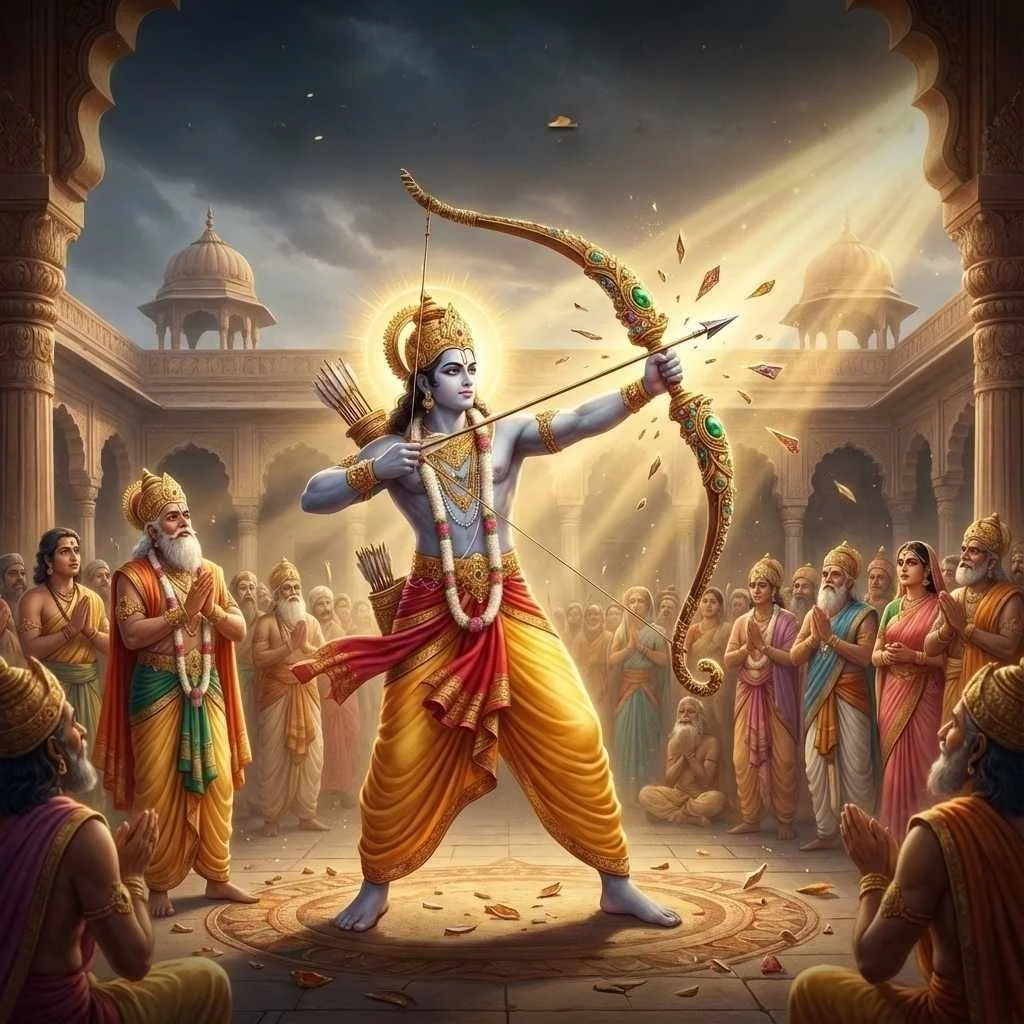
Bālakāṇḍa functions as the Ramayana’s architectural foundation: it frames the poem’s origin (kāvya-janma), establishes Rāma’s dharmic profile, and narrates the dynastic, ritual, and cosmological preconditions for the epic’s central conflict. The book opens with Vālmīki’s inquiry to Nārada, receiving a compressed “Rāmāyaṇa-kathā-saṅkṣepa,” and then dramatizes the poem’s first śloka through the pathos of the krauñca birds—an explicit poetics-of-compassion (karuṇā) moment that legitimizes the epic as moral-aesthetic instruction. Vālmīki composes the work and entrusts it to Kuśa and Lava, emphasizing performative dimensions (recitation, song, rasa, and musical structuring). Narratively, the book moves from Ayodhyā’s ideal polity under Daśaratha to the ritual crisis of heirlessness, resolved through Aśvamedha and Putreṣṭi, culminating in Rāma’s birth as Viṣṇu’s partial incarnation. The second major arc follows Viśvāmitra’s demand for Rāma’s assistance, initiating the hero into ascetic discipline and divine weaponry, and leading to emblematic episodes: Tātakā’s slaying, the protection of sacrifice from Mārīca and Subāhu, and a sequence of etiological narratives (Gaṅgā’s descent, Sagara’s sons, and Viśvāmitra’s own transformations). The book climaxes in Mithilā with the breaking of Śiva’s bow and the marriages of the four brothers, followed by the confrontation with Paraśurāma, which ritually and symbolically transfers martial-theological authority to Rāma. As preserved in the IIT Kanpur Southern Recension, Bālakāṇḍa also reflects a living transmission with additional traditional verses and expansions, foregrounding ritual detail, genealogy, and didactic framing within the broader 24,000-verse Ādikāvya.

Vālmīki learns Rāma’s story from Nārada; moved by the krauñca-bird tragedy, he utters the first śloka and composes the Ramayana, taught to Kuśa and Lava for public performance. In Ayodhyā, Daśaratha’s heirlessness leads to Aśvamedha/Putreṣṭi and the births of Rāma and his brothers. Viśvāmitra takes Rāma and Lakṣmaṇa to protect sacrifices; Rāma receives divine astras, kills Tātakā, and defeats Mārīca/Subāhu. Traveling through sacred landscapes, they reach Mithilā; Rāma breaks Śiva’s bow, wins Sītā, and the brothers marry. On return, Paraśurāma challenges Rāma but yields, affirming Rāma’s supremacy.

Sargas in Bala Kanda

Sarga 1

श्रीमद्रामायणकथासङ्क्षेपः / The Ramayana in Synopsis (Narada’s Summary to Valmiki)

Sarga 1 functions as a programmatic prologue. Vālmīki, portrayed as an ascetic devoted to tapas and svādhyāya, questions Nārada about the existence of an ideal human embodying comprehensive virtues (truthfulness, gratitude, self-restraint, courage, and benevolence). Nārada replies by identifying Rāma of the Ikṣvāku line and compresses the epic’s full narrative into a structured synopsis: Rāma’s exemplary qualities; Daśaratha’s intent to install him as heir; Kaikeyī’s boons leading to exile; Lakṣmaṇa and Sītā’s accompaniment; crossings and forest dwellings; Daśaratha’s death; Bharata’s refusal of kingship and the sandals as regnal proxy; the Dandaka arc with sages, Virādha’s slaying, Agastya’s divine weapons; Śūrpaṇakhā’s episode and the Janasthāna campaign; Rāvaṇa’s plot with Mārīca and Sītā’s abduction; Jatāyu’s death and rites; Kabandha and the guidance to Śabarī; alliance with Sugrīva via Hanumān; Vāli’s death and the vānara search; Hanumān’s ocean-leap, discovery of Sītā, and return; the sea-bridge via Nala; conquest of Laṅkā, Rāvaṇa’s death, Agni-testimony, Vibhīṣaṇa’s coronation; return to Ayodhyā and Rāma-rājya. The sarga closes with phalaśruti-style assurances: recitation confers learning, prosperity, and merit across social categories, emphasizing the text’s pedagogical and devotional reception in the Southern Recension colophon.

101 verses | वाल्मीकि (Vālmīki), नारद (Nārada)

Sarga 2

द्वितीयः सर्गः — श्लोकप्रादुर्भावः (The Manifestation of the Śloka)

After Nārada is respectfully received and departs to the heavens, Vālmīki proceeds to the Tamasa riverbank near the Gaṅgā for ritual bathing. Observing a serene tīrtha, he instructs his disciple Bharadvāja regarding the purity and beauty of the place. In the nearby forest, Vālmīki witnesses a pair of melodious krauñca birds moving in inseparable companionship; a niṣāda hunter, driven by sinful intent and cruelty, kills the male. The female’s lament becomes the catalyst for Vālmīki’s compassionate indignation, from which an utterance emerges spontaneously as a metrically organized curse—recognized as the first śloka. Reflecting on the nature of this speech, Vālmīki articulates its formal properties (four pādas, equal syllabic measure, rhythmic musicality). Returning to the āśrama, he remains absorbed in the incident; Brahmā appears, validates the śloka, and commissions Vālmīki to compose Rāma’s entire history in this meter, assuring truthfulness and revelatory knowledge (including hidden events). Brahmā predicts the enduring cultural life of the Rāmāyaṇa and Vālmīki’s abiding fame. After Brahmā vanishes, the disciples repeatedly recite the śloka, and Vālmīki resolves to compose the full epic in the newly manifested metrical form.

44 verses | वālmīki (Valmiki), नारद (Narada), ब्रह्मा (Brahma), भरद्वाज (Bharadvaja)

Sarga 3

तृतीयः सर्गः (Bālakāṇḍa 3): Vālmīki’s Yogic Verification and the Epic Synopsis

This sarga presents the methodological bridge between heard tradition and authorial composition. After receiving Nārada’s complete account, the dharmātmā Vālmīki seeks greater clarity (1.3.1) and performs ritual purification (ācamanam), seating himself upon kuśa with folded palms to investigate the course of events through tapas and dharma (1.3.2). Through yogic vision, he perceives the lives of Rāma, Sītā, Lakṣmaṇa, Daśaratha, and the kingdom in vivid, empirical detail—“like an āmalaka in the palm” (1.3.6), including speech, laughter, intentions, and consequences (1.3.3–1.3.5). Having ‘seen’ the narrative truth, Vālmīki readies himself to compose a work that integrates kāma and artha within an overarching dharma-centered telos, likened to an ocean rich in gems and pleasing to ear and mind (1.3.7–1.3.8). The sarga then offers a sweeping synopsis of the Ramayana’s major episodes—from Rāma’s birth and virtues to exile, alliances, the Laṅkā mission, war, coronation, and later events assigned to Uttarakāṇḍa (1.3.10–1.3.38)—thereby functioning as an internal table of contents and a statement of poetic scope in the Southern Recension context.

39 verses | Narrator (Vālmīki’s perspective), Nārada (as prior source referenced)

Sarga 4

कुशिलवगानप्रशंसा — The Commissioning and Public Performance of the Rāmāyaṇa

Sarga 4 formalizes the Rāmāyaṇa as an authored, teachable, and performable itihāsa-kāvya. Vālmīki, described as a divine sage, composes the complete life-story of Rāma who regains the kingdom, and the text explicitly situates the epic within a canonical scale (24,000 verses; six kāṇḍas with an additional Uttara). The poet then reflects on who can properly enact the work; Kuśa and Lava arrive in ascetic dress, are recognized as dharma-knowing royal sons, and are initiated so that the poem may ‘nourish the Vedas’ (vedopabṛṃhaṇa). Their performance is characterized with technical musical metadata—recitation and song, three tempo-measures, seven notes, string-instrument timing, and multiple rasas—presenting the epic as a multi-modal cultural artifact. In assemblies of sages and in public streets, their chanting elicits tears and acclaim; gifts are offered. Rāma later encounters them, hosts them at the palace, and urges a formal rendition in the royal assembly, where the performance produces aesthetic immediacy, as if past events were present.

32 verses | Vālmīki, Rāma, Assembled sages (munayaḥ)

Sarga 5

अयोध्यानगरवर्णनम् (Description of Ayodhya and the Ikshvaku Royal Setting)

Sarga 5 consolidates the epic’s dynastic and geographic grounding by linking the ancient sovereignty of victorious kings (beginning from Prajāpati/Manu) to the Ikṣvāku race and the celebrated rise of the Rāmāyaṇa narrative itself. It situates Kośala on the Sarayū and presents Ayodhyā—traditionally built by Manu—as a paradigmatic capital: measured in yojanas, structured by well-laid highways, and characterized by civic order, prosperity, and aesthetic refinement. The chapter’s urban poetics catalogs fortified defenses (moat and ramparts), gateways and markets, artisans and merchants, palaces and gem-adorned mansions, musical soundscapes, gardens and mango groves, and an abundance of provisions. It further emphasizes a disciplined martial ecology: thousands of mahārathas skilled in archery and forest combat, alongside a learned and ritual-performing populace (vedic and vedāṅga expertise, charity, truthfulness). The sarga culminates by placing King Daśaratha in this idealized civic-moral environment, making Ayodhyā a spatial expression of righteous governance.

24 verses | Vālmīki (narratorial voice)

Sarga 6

अयोध्यावर्णनम् — Description of Ayodhya under Daśaratha

Sarga 6 offers a civic-ethical portrait of Ayodhyā and a royal profile of King Daśaratha. The chapter begins by attributing to Daśaratha Vedic learning, administrative capacity (sarvasaṅgraha), farsightedness, popularity among town and countryside, martial excellence, sacrificial commitment, and self-mastery; his rule is likened to Manu’s protective governance. The narrative then shifts to Ayodhyā’s social prosperity and ritual cleanliness: citizens are described as ornamented, well-provisioned, and free from visible deprivation. A sequence of negations stresses the absence of theft, cruelty, atheism, falsehood, incompetence, and social disorder, while highlighting charitable habits, satisfaction in food, and restraint of passions. Brahmins are depicted as duty-bound, learned in Vedāṅgas, devoted to study and giving, and self-controlled in receiving gifts and in domestic life; varṇa relations are portrayed as orderly (kṣatriyas respectful to brahmins, vaiśyas aligned with kṣatriyas, śūdras serving the three). The sarga further maps Ayodhyā’s military and economic resources—warriors, superior horses from noted regions, and powerful elephants of famed lineages—culminating in the image of an invincible, well-fortified city ruled by a king compared to Indra.

29 verses | Vālmīki (narratorial voice)

Sarga 7

अमात्य-गुणवर्णनम् (The Virtues of Daśaratha’s Ministers and the Order of Governance)

Sarga 7 provides an institutional portrait of Ayodhyā under King Daśaratha by describing the caliber and ethical discipline of his ministers and advisers. The chapter first characterizes the amātyas as virtuous, skilled in counsel (mantra-jñā) and in reading intentions (iṅgita-jñā), consistently oriented toward what is both pleasing and beneficial to the king (1.7.1). It then specifies their number—eight—and names them: Dhṛṣṭi, Jayanta, Vijaya, Siddhārtha, Arthasādhaka, Aśoka, Mantrapāla, and Sumantra (1.7.2–1.7.3). Alongside them stand the highly esteemed royal priests Vasiṣṭha and Vāmadeva (1.7.4), reinforcing the synthesis of political prudence and Vedic-ritual authority. The ministers are depicted as educated, self-restrained, truthful, consistent between word and deed, and socially adept (1.7.5–1.7.8), while also competent in fiscal replenishment and military organization (1.7.9–1.7.11). Governance is portrayed as impartial: punishment is timely and proportionate—even toward one’s own sons—yet the innocent are not harmed, and brahmins and kṣatriyas are not pained in thought, speech, or action (1.7.8–1.7.11). The result is civic-moral order: no liars, no sexual misconduct, and general serenity in city and realm (1.7.12–1.7.13). The sarga culminates by attributing Daśaratha’s glory and effective rule to this ministerial ecosystem—secrecy in counsel, peace/war discernment, ethical expertise, and pleasing speech—likening his radiance to the rising sun (1.7.16–1.7.22), with additional emphasis on spies, righteousness, and peerless sovereignty (1.7.19–1.7.21).

23 verses | Vālmīki (narrator)

Sarga 8

अष्टमः सर्गः — Daśaratha Resolves on the Aśvamedha (Horse-Sacrifice) for Progeny

Sarga 8 presents a court-centered deliberation on dynastic continuity and śāstra-based remedy. Daśaratha, though majestic and dharma-knowing, remains without an heir (1.8.1), and reflection yields a decisive policy: to seek sons through the Aśvamedha (1.8.2). After consulting controlled and capable ministers, he orders Sumantra to summon his spiritual preceptors and officiating Brahmins (1.8.3–4). Sumantra gathers Vasiṣṭha and other Veda-versed authorities—Suyajña, Vāmadeva, Jābāli, and Kāśyapa (1.8.5–6). Daśaratha respectfully addresses them: the lack of a son is a source of suffering, hence his intent to perform the horse-sacrifice according to scripture, requesting their deliberation and procedural guidance (1.8.7–9). The Brahmins approve the decision (1.8.10), instructing preparation of requisites and the release of the sacrificial horse (1.8.11), and assure the king that his dhārmic resolve will yield desired sons (1.8.12). The king, delighted, commands ministers to procure materials, construct the yajñabhūmi on the northern bank of the Sarayū, and perform expiatory/auspicious rites per Kalpa ordinances (1.8.13–15). A caution follows: the best sacrifices must be flawless, as learned brahmarākṣasas seek ritual ‘chidra’ (defects), and a compromised rite destroys the performer (1.8.16–17). Daśaratha therefore demands expert, scripture-conforming arrangements (1.8.18–21). After dismissing ministers, he instructs his wives to enter dīkṣā (ritual discipline) for the intended rite; their faces brighten at the announcement (1.8.22–24). The sarga thus maps the intersection of governance, ritual technology, and ethical intention in the Southern Recension’s courtly-ritual register.

25 verses | Daśaratha, Brahmins led by Vasiṣṭha, Ministers (including Sumantra)

Sarga 9

ऋश्यशृङ्गानयनकथा — The Account of Bringing Ṛśyaśṛṅga (and the Remedy for Drought)

Sarga 9 is structured as courtly counsel framed by an embedded sacred report. Sumantra (the royal sūta/charioteer) privately informs King Daśaratha that he has heard an ancient precedent relayed through priestly instruction. The narrative attributes the precedent to Sanatkumāra’s earlier discourse among sages concerning royal progeny. The account outlines Ṛśyaśṛṅga’s secluded upbringing under Vibhaṇḍaka, emphasizing disciplined brahmacarya and ritual service. A parallel political-ethical crisis arises in Aṅga: King Romapāda’s breach of conduct triggers a severe drought, prompting him to consult learned Brahmins for prāyaścitta via niyama (religious observance). The Brahmins prescribe a specific remedy—bring Ṛśyaśṛṅga and honor him, then ritually offer Śāntā in marriage. Ministers initially fear the rishi’s power and negotiate conditions to avoid blame, then propose workable means. The precedent concludes: Ṛśyaśṛṅga is brought (with courtesans as intermediaries), rains return, Śāntā is given, and the sage becomes a source of progeny. Daśaratha, pleased, requests Sumantra to narrate in further detail the method of Ṛśyaśṛṅga’s bringing—linking this precedent to Daśaratha’s own dynastic aims.

20 verses | Sumantra (Sūta/charioteer), Daśaratha, Brahmins/Ṛtviks (collective counsel), Sanatkumāra (as cited authority)

Sarga 10

ऋश्यशृङ्ग-आनयनम् (Bringing Ṛśyaśṛṅga to Aṅga and His Marriage to Śāntā)

Sarga 10 is framed as a courtly recollection: prompted by King Daśaratha, Sumantra narrates to the king (with ministers present) the earlier episode of how Ṛśyaśṛṅga was brought to Romapāda’s realm. The chapter first presents a political-religious strategy: Romapāda’s priest and ministers propose a “nirapāya” (risk-minimizing) plan—sending well-adorned courtesans to attract the forest-raised ascetic who is wholly unacquainted with women and urban pleasures. The courtesans enter the forest near Vibhaṇḍaka’s hermitage and wait for an opportunity. Ṛśyaśṛṅga, encountering them by chance, is questioned about his identity and subsistence; he introduces himself as Vibhaṇḍaka’s son and offers them ritual hospitality (arghya, pādya, roots, fruits). Fearful of the father’s return, the women withdraw but leave gifts of sweetmeats and foods, which Ṛśyaśṛṅga misrecognizes as “fruits,” revealing his innocence and the persuasive power of sensory novelty. The next day he returns to the same place, is invited to the women’s “āśramapada,” and is led away toward Aṅga. As he is brought, Parjanya sends rain, signaling auspicious restoration. Romapāda welcomes him with prostration and offerings, seeks grace lest Vibhaṇḍaka’s anger arise, and then gives his daughter Śāntā to Ṛśyaśṛṅga in lawful marriage. The sarga thus links ascetic potency, royal policy, and social welfare (rain/fertility) through a morally complex instrumentality.

33 verses | सुमन्त्र (Sumantra), दशरथ (Dasharatha), पुरोहित (Priest of Romapada), ऋश्यशृङ्ग (Rsyasringa), वारमुख्याः/गणिकाः (Courtesans)

Sarga 11

ऋष्यशृङ्गानयनम् — Bringing Ṛśyaśṛṅga to Ayodhyā (Bālakāṇḍa, Sarga 11)

This sarga continues Sumantra’s courtly narration, invoking the authority of Sanatkumāra as an earlier transmitter of the tradition. The discourse forecasts Daśaratha’s dhārmic profile and the strategic alliance with the Aṅga lineage through Romapāda and Śāntā. The central action turns from prophecy to execution: Daśaratha, after consulting and securing Vasiṣṭha’s consent, travels with queens and ministers to Romapāda’s domain, crosses forests and rivers, and beholds Ṛśyaśṛṅga—depicted with ascetic radiance. Romapāda honors Daśaratha with special hospitality grounded in friendship; Ṛśyaśṛṅga reciprocates after hearing the relationship. After a week’s stay, Daśaratha requests that Śāntā and her husband come to Ayodhyā for a major sacrificial rite aimed at progeny and religious merit. Romapāda assents; Ṛśyaśṛṅga departs with Śāntā. Daśaratha returns, sends swift messengers to prepare Ayodhyā, and ceremonially enters the decorated city with conches and drums, placing the brahmin foremost. The inner apartments receive them with scriptural hospitality, and the arrival of Śāntā brings joy to the royal women—closing the chapter on a successful ritual-political procurement that initiates the path toward the putreṣṭi-yajña and the birth of four sons.

31 verses | Sumantra (sūta, narrator to Daśaratha), Sanatkumāra (cited traditional narrator), Daśaratha, Romapāda, Ṛśyaśṛṅga

Sarga 12

द्वादशः सर्गः — Aśvamedha-saṅkalpa (Daśaratha resolves on the Horse Sacrifice)

Sarga 12 records Daśaratha’s formal saṅkalpa to perform the Aśvamedha, motivated by dynastic continuity and the sorrow of childlessness. In springtime, the king articulates his intention to conduct the rite strictly by śāstra, emphasizing that fulfillment will arise through the spiritual efficacy associated with Ṛśyaśṛṅga. Court procedure follows: Sumantra is commanded to summon principal ṛtvij-s and learned brahmins (Vasiṣṭha, Suyajña, Vāmadeva, Jābāli, Kāśyapa, and others). The assembled priests endorse the decision (“sādhu”), instruct procurement of sacrificial materials, and the ceremonial release of the sacrificial horse. They promise four sons of immense prowess as the fruit of the king’s dhārmikī buddhi. Administrative directives then specify the yajnabhūmi on the northern bank of the Sarayū, with śānti rites and adherence to kalpa-vidhi. A cautionary note introduces ritual vulnerability: brahmarākṣasas seek flaws (chidra) and a damaged sacrifice imperils the patron. The chapter closes with ministers executing orders, brahmins departing, and the king returning to the palace—marking the transition from intention to institutional implementation.

22 verses | Daśaratha, Sumantra, Ṛśyaśṛṅga (as leading priestly voice), Vasiṣṭha and assembled brāhmaṇas

Sarga 13

हयमेध-यज्ञोपक्रमः — Commencement of the Aśvamedha Preparations

Sarga 13 details the operational and ethical organization of Daśaratha’s horse-sacrifice undertaken for progeny. With the return of spring after a full year, the king enters the sacrificial enclosure to begin worship directed toward begetting sons. Vasiṣṭha assumes the supervisory role and issues procedural directives: mobilizing expert Brahmins and skilled workers (architects, brick-makers, carpenters, diggers, artisans, accountants), as well as performers, to establish the yajña infrastructure. A major thematic emphasis is hospitality and non-contempt: residences are to be prepared in abundance for Brahmins and for visitors from towns and rural regions; food and entertainments must be offered according to custom, with respect extended to all varṇas and to those laboring in ritual tasks. Vasiṣṭha warns that gifts given with disregard harm the donor. He then instructs Sumantra to invite righteous kings across regions, naming prominent allies (Janaka of Mithilā, the king of Kāśī, the Kekaya king, Romapāda of Aṅga) and wider eastern, southern, Sindhu-Sauvīra, and Saurāṣṭra rulers. Emissaries are dispatched; kings arrive with gifts; Vasiṣṭha reports successful hospitality and readiness. On an auspicious day, Daśaratha proceeds to the yajña site, and the Brahmin assembly, led by Vasiṣṭha with Ṛśyaśṛṅga at the fore, formally begins the rites per śāstra and vidhi.

38 verses | Daśaratha, Vasiṣṭha, Sumantra, Ṛśyaśṛṅga, Ritual workers and officials (karmāntikāḥ)

Sarga 14

अश्वमेधप्रवृत्तिः — Commencement and Performance of Daśaratha’s Aśvamedha

Sarga 14 documents the operational ritual economy of Daśaratha’s Aśvamedha on the northern bank of the Sarayū after the sacrificial horse returns at the completion of one year. Led by Ṛśyaśṛṅga and executed by Veda-mastered priests, the rite proceeds without omission: daily pressings (savana), pravargya and upasad, and carefully sequenced offerings. The chapter emphasizes public welfare and royal generosity through abundant food distribution to all social groups—brāhmaṇas, ascetics, monks, dependents, women, children, the aged, and the sick—creating an image of an inclusive sacrificial commons. Technical ritual construction follows: erection of multiple yūpas (posts) of specified woods (bilva, khadira, parṇin, śleṣmātaka, devadāru), gold decoration, measured dimensions, and the brick-built fire-altar shaped like a golden-winged Garuḍa with eighteen fire-places. Animals, birds, serpents, and aquatic beings are prepared according to śāstra; Kauśalyā performs prescribed actions around the horse, and the officiants complete offerings with mantras. At conclusion, the king offers the earth as dakṣiṇā, but priests decline governance and request material gifts instead; Daśaratha bestows vast wealth and honors, and Ṛśyaśṛṅga blesses him with the promise of four sons—directly advancing the epic’s dynastic and theological trajectory.

58 verses | Daśaratha, Ṛśyaśṛṅga, Ṛtvij priests (collective)

Sarga 15

पञ्चदशः सर्गः — देवकृत-प्रार्थना, रावणवधोपायः, विष्णोः मानुषावतारनियोजनम् (Sarga 15: The Devas’ Petition, the Means to Slay Ravana, and Vishnu’s Commission to Incarnate as Man)

This sarga interleaves ritual narrative with cosmic deliberation. Ṛśyaśṛṅga, after reflection, assures Daśaratha of performing the putrīyeṣṭi according to Atharvaśiras mantras, and commences the rite by offering oblations into fire; devas and allied beings assemble to receive their sacrificial portions. In the divine council, the devas address Brahmā: Rāvaṇa, empowered by Brahmā’s boon, oppresses the three worlds and seeks to assault Indra; his pride makes him transgress against ṛṣis, yakṣas, gandharvas, asuras, and brāhmaṇas. Brahmā recalls the boon’s loophole—Rāvaṇa disdained humans (and, in the received translation, also monkeys and bears) and did not request invulnerability from them—therefore his death is possible only through a human agent. Viṣṇu arrives, receives hymnic homage, and is petitioned to divide himself fourfold and be born as Daśaratha’s sons through the king’s three queens. The devas further request that, in human form, Viṣṇu slay the increasingly arrogant world-tormentor Rāvaṇa. Viṣṇu grants assurance: fear should be abandoned; he will destroy Rāvaṇa along with his allies and then dwell in the human world as a righteous ruler, thereafter contemplating the appropriate human birthplace and accepting Daśaratha as father.

34 verses | ऋश्यशृङ्ग (Rsyasringa), देवाः / त्रिदशाः (the Devas), ब्रह्मा (Brahma), विष्णुः (Vishnu)

Sarga 16

पायसप्रादुर्भावः — The Manifestation of the Divine Payasa and the Avatara Resolution

Sarga 16 links cosmic strategy to ritual enactment. Viṣṇu/Nārāyaṇa, though omniscient, addresses the devas with measured speech regarding the means to destroy Rāvaṇa, whose boon from Brahmā excludes non-human beings and inadvertently leaves a human vulnerability. The devas counsel Viṣṇu to assume a human body; Viṣṇu elects Daśaratha as father, synchronizing divine intention with the king’s putrīyā-iṣṭi (progeny-sacrifice). At the sacrifice, a radiant prājāpatya being emerges from the fire bearing a golden vessel with a silver lid filled with divinely prepared payasa, explicitly framed as progeny-conferring, prosperity-bestowing, and health-promoting. Daśaratha receives it with reverence, circumambulates the being, and distributes the portions among Kauśalyā, Sumitrā, and Kaikeyī according to a deliberate allotment. After consuming the payasa, the queens soon conceive, and the king’s restored composure and joy are poetically compared to Viṣṇu honored in heaven—closing the chapter with ritual efficacy as the immediate narrative engine for the avatāra’s human birthline.

33 verses | नारायण/विष्णु (Narayana/Vishnu), देवाः (the devas), प्राजापत्यः नरः (the Prajapati-sent being), दशरथः (Dasaratha)

Sarga 17

सप्तदशः सर्गः — देवसंवादः तथा वानर-ऋक्ष-उत्पत्तिः (Divine Council and the Generation of Vanara Allies)

Sarga 17 articulates the epic’s strategic causality: once Viṣṇu resolves to be born as Daśaratha’s son, Brahmā addresses the assembled devas and instructs them to generate powerful companions for Viṣṇu/Rāma—beings capable of kāmarūpatva (voluntary form-change), exceptional speed, intelligence, and martial proficiency. The chapter then enumerates notable births among the vanara leadership: Indra fathers Vāli; Sūrya fathers Sugrīva; Vāyu fathers Hanumān; Agni fathers Nīla; Viśvakarmā fathers Nala; Bṛhaspati fathers Tārā; Varuṇa fathers Suṣeṇa; Parjanya fathers Śarabha; and the Aśvins beget Mainda and Dvivida. Brahmā also notes the prior creation of Jāmbavān, who emerges from Brahmā’s face during a yawn, marking an archaic cosmogonic motif. The sarga expands from individual progenitors to mass procreation by devas, ṛṣis, gandharvas, yakṣas, nāgas, siddhas, vidyādharas, and others through apsaras, nāga-kanyās, and gandharvī women—resulting in vast forest-dwelling forces. Finally, it characterizes these allies’ capabilities (rock- and tree-weapons, claws and teeth, mountain-shaking strength, ocean-leaping speed), and situates Vāli as a protector of bears, gopuccha-vanaras, and monkeys—explicitly linking this creation to the purpose of assisting Rāma in the future conflict with Daśagrīva (Rāvaṇa).

36 verses | ब्रह्मा (स्वयम्भू), देवगणाः (collective respondents)

Sarga 18

पुत्रजन्मोत्सवः — Birth of the Princes and Viśvāmitra’s Arrival (Bālakāṇḍa 18)

After the completion of Daśaratha’s great sacrifices, the devas receive their allotted havis and return to their abodes, while the king—having fulfilled dīkṣā-regulations—re-enters Ayodhyā with queens, attendants, and forces. Honoured visiting rulers depart, and Ṛśyaśṛṅga with Śāntā returns with Romapāda. When a full cycle of six seasons passes, the text provides a detailed calendrical and astrological configuration for Rāma’s birth: in Caitra, bright ninth, with Punarvasu under Aditi, five planets exalted, and Karkaṭa lagna; Kauśalyā bears Rāma, described as a facet of Viṣṇu. Kaikeyī bears Bharata (Viṣṇu’s fourth part), and Sumitrā bears Lakṣmaṇa and Śatrughna (facets of Viṣṇu), with additional star/lagna notes (Puṣya/Meena for Bharata; Āśleṣā/Karkaṭa for the twins). Ayodhyā celebrates with gandharva song, apsaras dance, celestial drums, and flower-rain; the king gives abundant gifts and performs naming rites through Vasiṣṭha. The princes’ virtues are summarized—Vedic learning, heroism, public welfare, archery—highlighting Lakṣmaṇa’s life-like attachment to Rāma and Śatrughna’s bond with Bharata. As Daśaratha begins considering marriages, the great sage Viśvāmitra arrives, is received with arghya and protocol, inquires after the kingdom’s welfare, and is greeted by the king with elaborate hospitality and a pledge of service, delighting the ascetic.

61 verses | Narrator (Vālmīki’s epic voice), Daśaratha, Viśvāmitra (Kauśika)

Sarga 19

विश्वामित्रस्य यज्ञरक्षा-याचना (Visvamitra Requests Rama for Yajna-Protection)

Sarga 19 is a tightly argued court-dialogue in which Viśvāmitra responds to Daśaratha’s respectful words and discloses the operational crisis: two shape-shifting rākṣasas, Mārīca and Subāhu, sabotage his rite by raining flesh and blood upon the altar as the observance nears completion. Bound by the sacrificial discipline, the sage refuses to vent anger through a curse, choosing instead a dharmically regulated remedy—royal assistance. He requests that Daśaratha entrust the eldest son Rāma, described as valiant and true to his prowess, for a limited period (ten nights) to protect the yajña without delaying its appointed time. Viśvāmitra strengthens the request with assurances: under his guardianship and Rāma’s own divine tejas, the demons cannot withstand him; he promises blessings that will bring Rāma fame across the three worlds. He also stipulates procedural legitimacy—release Rāma only with the consent of counselors and sages led by Vasiṣṭha. The sarga closes with Daśaratha’s fearful grief and physical agitation, dramatizing the tension between paternal affection and public dharma.

22 verses | Viśvāmitra, Daśaratha

Sarga 20

राज्ञः शङ्का–प्रत्याख्यानम् (Daśaratha’s Objections to Sending Rāma) — Bala Kanda, Sarga 20

Sarga 20 stages a juridical-ethical negotiation between royal sovereignty and ascetic mandate. After hearing Viśvāmitra’s request, King Daśaratha momentarily loses composure, then argues from paternal duty and pragmatic statecraft: Rāma is under sixteen, not yet fully trained for deceptive rākṣasa warfare, and the king cannot endure separation from him. Daśaratha offers alternatives—his full akṣauhiṇī, seasoned warriors, and even his own personal participation—insisting it is improper to take the prince. He further emphasizes his advanced age and the hardship through which Rāma was obtained, intensifying the emotional and dynastic stakes. Daśaratha asks for detailed intelligence: the rākṣasas’ power, lineage, size, protectors, and the proper counter-strategy. Viśvāmitra replies by contextualizing the threat within the Pulastya line: Rāvaṇa, empowered by Brahmā’s boon, torments the three worlds; though he does not directly obstruct the sacrifice, he incites Mārīca and Subāhu to do so. The sarga culminates in Viśvāmitra’s rising anger—likened to a sacrificial fire fed with ghee—signaling that refusal to cooperate with tapas-backed dharma has immediate moral and political consequences.

28 verses | Daśaratha, Viśvāmitra

Sarga 21

बालकाण्डे एकविंशः सर्गः — Daśaratha’s Promise, Vasiṣṭha’s Counsel, and Viśvāmitra’s Weapon-Lore

Sarga 21 is structured as a high-stakes ethical dispute (dharma-vicāra) around royal promise-keeping. Daśaratha’s affectionate plea—internally conflicted—provokes Viśvāmitra’s anger, producing cosmic tremors that signal the gravity of breached vows. Vasiṣṭha intervenes as a stabilizing jurist of dharma: he frames Daśaratha as the Ikṣvāku exemplar and argues that abandoning a pledged word destroys the merit of prior sacrifices and charities. The chapter then pivots from moral exhortation to credentialing Viśvāmitra’s protective capacity: he is praised as an embodiment of righteousness, unsurpassed in prowess and intellect, and uniquely knowledgeable of astras across the three worlds. The genealogy of weapons is narrated—Bhr̥śāśva’s virtuous sons, and the Dakṣa-daughters Jayā and Suprabhā who generate a hundred effulgent weapon-entities—culminating in the claim that Viśvāmitra both knows these weapons precisely and can generate new ones. The sarga closes with Daśaratha’s composed assent, granting Rāma’s departure with Viśvāmitra for the prince’s welfare and the preservation of royal integrity.

22 verses | Viśvāmitra (Kauśika), Vasiṣṭha, Daśaratha

Sarga 22

बलातिबलोपदेशः — The Instruction of Bala and Atibala

Sarga 22 narrates the formal transition of royal protection into ascetic guardianship and the first explicit transmission of mantra-knowledge to Rāma. After Vasiṣṭha’s counsel, Daśaratha summons Rāma together with Lakṣmaṇa and, following auspicious svastyayana rites performed by parents and the royal priest, entrusts the prince to Viśvāmitra. The departure is framed by cosmic approval—gentle, pollen-free winds, flower-rain, and celestial drum-and-conch sounds—marking the journey as ritually sanctioned. Viśvāmitra leads, while the two brothers follow armed and radiant, described through elevated similes (serpents with multiple hoods; Skanda and Viśākha following Śiva), emphasizing disciplined martial readiness under spiritual authority. On the southern bank of the Sarayū, after traveling over half a yojana, Viśvāmitra instructs Rāma to take water (ācamana-like ritual gesture) and confers the paired vidyās/mantras Bala and Atibala. Their promised effects are protective and ascetic: freedom from fatigue, fever, and bodily diminishment; invulnerability to rākṣasas even in sleep or distraction; and the removal of hunger and thirst upon recitation. The chapter concludes with Rāma’s purification and reception of the sciences, his increased radiance likened to the autumn sun, and the trio’s restful night on a grass-bed by the Sarayū, sustained by the sage’s gentle words and the preceptor-disciple service ethic.

24 verses | वसिष्ठ (Vasiṣṭha), दशरथ (Daśaratha), विश्वामित्र (Viśvāmitra)

Sarga 23

कामाश्रम-प्रवेशः / Entry into Kāma’s Hermitage at the Sarayū–Gaṅgā Confluence

At daybreak Viśvāmitra awakens Rāma and Lakṣmaṇa and directs them to complete sandhyā and daily rites. After bathing, offering water-oblations, and performing japa, the princes respectfully stand ready for travel. Proceeding onward, they behold the auspicious saṅgama of the Sarayū with the divine, three-streamed Gaṅgā and notice a venerable āśrama where long-practicing ascetics have performed severe tapas for millennia. Curious, the brothers inquire whose hermitage it is. Viśvāmitra explains that this place is associated with Kandarpa/Kāma, who once offended Śiva during the latter’s austere meditation; Śiva’s fierce eye burns Kāma, rendering him aśarīra (disembodied), hence the epithet Anaṅga, and the locale becomes famed as Aṅgadeśa/Ananga-associated terrain. The narrative then returns to āśrama protocol: the party stays the night between the sacred rivers, the resident munis recognize them through tapas-born vision, offer arghya and pādya, and extend formal hospitality; the evening sandhyā is observed, and Viśvāmitra delights the princes with instructive tales, emphasizing disciplined ritual, sacred geography, and the moral consequences of transgressive desire.

23 verses | Viśvāmitra, Rāma, Lakṣmaṇa

Sarga 24

गङ्गा–सरयू-सङ्गमः, मलद–करूश-देशकथा, ताटकावनप्रवेशोपदेशः (The Confluence of Gaṅgā and Sarayū; the Tale of Malada–Karūśa; Counsel on Tātakā’s Forest)

At a bright dawn, Rāma and Lakṣmaṇa complete their morning rites and proceed with Viśvāmitra to the riverbank. Ascetics provide an auspicious boat, and the party crosses the Gaṅgā. Midstream, Rāma hears a tumultuous sound; Viśvāmitra explains it as the roar produced at the confluence where Gaṅgā approaches Sarayū, and he instructs Rāma to offer concentrated salutations. The brothers reverently bow to both rivers and reach the southern bank. Seeing an untrodden, dreadful forest filled with ominous animal and bird cries and dense trees, Rāma questions the sage. Viśvāmitra narrates the region’s earlier prosperity—Malada and Karūśa—said to have been fashioned by celestial architects, and recounts Indra’s purification after the Vṛtra episode, whereby the land received a boon and its names. Over time, the yakṣī Tātakā, a formidable shape-shifter and mother of Mārīca, seizes the area and terrorizes its inhabitants, blocking the route. Viśvāmitra commands Rāma to rely on his own strength to remove this ‘thorn’ and restore the country’s safety, framing the task as a dharmic obligation under ascetic authorization.

33 verses | Viśvāmitra, Rāma

Sarga 25

ताटकावृत्तान्तः — The Account of Tāṭakā and the Royal Duty to Protect

Sarga 25 is structured as a didactic dialogue between Viśvāmitra and Rāma. Rāma first responds respectfully to the sage’s counsel and raises a rational doubt: yakṣas are said to be of limited prowess, so how can a woman possess the strength of a thousand elephants? Viśvāmitra answers with a genealogical and causal narrative: the yakṣa Suketu performs tapas; Brahmā grants him a daughter, Tāṭakā, and endows her with extraordinary elephant-like strength. She is married to Sunda and bears Mārīca, who later becomes rākṣasa due to a curse. After Sunda’s death, Tāṭakā and Mārīca attempt to attack Agastya; Agastya curses Mārīca to assume a demon-form and curses Tāṭakā to abandon her yakṣī form and become a terrifying man-eating rākṣasī. Viśvāmitra then frames the central ethical instruction: a prince must not hesitate to eliminate an adharmic threat even if the offender is female, because the eternal duty (sanātana-dharma) of kingship is protection of subjects and social order (cāturvarṇya, cows, and brāhmaṇas). Exempla are cited—Indra slaying Mantharā and Viṣṇu destroying Kāvya (Bhṛgu’s wife)—to normalize the principle that unrighteous women have been slain for the common good. The chapter thus maps a jurisprudential rationale for force within a protective royal mandate.

22 verses | विश्वामित्र (Viśvāmitra), राम (Rāma)

Sarga 26

ताटकावधः (The Slaying of Tāṭakā)

Sarga 26 presents a tightly staged ethical-action sequence in which Rāma, after hearing Viśvāmitra’s directive, articulates his rationale for compliance: honoring Daśaratha’s command, respecting Kauśika’s instruction, and acting for public welfare (go-brāhmaṇa-hita and national well-being). The episode then shifts into combat dramaturgy: Rāma’s bowstring twang signals readiness, terrifying the forest and drawing Tāṭakā. Rāma assesses her terrifying form and proposes a measured response—disabling rather than killing—citing her protection “by virtue of being a woman,” while intending to destroy her prowess and mobility. Tāṭakā escalates through magical tactics (dust-cloud confusion, boulder-rain, disappearance and shape-shifting). Viśvāmitra intervenes verbally, urging cessation of misplaced compassion and warning that dusk empowers rākṣasic forces. Rāma demonstrates śabda-vedhitva (sound-targeting skill), restrains her barrage, and finally kills her with a chest-piercing arrow as she charges like a thunderbolt. The devatās, led by Indra, praise Rāma and counsel Viśvāmitra to bestow divine weapons (Br̥śāśva’s sons) upon a worthy prince. With dusk set, the party camps in the now “curse-freed” forest, and Viśvāmitra affectionately blesses Rāma, planning departure to his āśrama at dawn.

36 verses | Rama (Rāghava, Kākutstha), Lakshmana (Saumitrī), Viswamitra (Viśvāmitra, Kauśika, Gādhi-suta), Indra (Sahasrākṣa, Purandara), Celestial beings (Surāḥ, Marudgaṇāḥ)

Sarga 27

अस्त्रप्रदानम् — Bestowal of Divine Astras to Rama

After the night’s rest, Viśvāmitra, pleased with Rāma, declares his intent to confer a complete arsenal of divya-astras out of affection and approval. The chapter is structured as a formal transmission: (1) the sage’s declaration of satisfaction and auspicious blessing; (2) a catalog-style enumeration of astras and associated implements (chakras, pāśas, gadās, thunderbolts, and named astras); (3) the ritualized delivery of anuttama mantra-collections while facing east after purification; and (4) the manifestation of the astras’ presiding powers, who present themselves as obedient attendants to Rāma. Rāma accepts them physically and then internalizes command—ordering them to remain ‘in his mind,’ signaling disciplined restraint and controlled recall rather than impulsive use. The sarga thus frames power as subordinated to dharma: weapon-knowledge is legitimate only when transmitted by ascetic authority, ritually installed through mantra, and governed by mental mastery. It closes with Rāma’s respectful salutation to Viśvāmitra and readiness to continue the journey.

26 verses | Viśvāmitra, Rāma, Astra-devatās (presiding deities of the weapons)

Sarga 28

अस्त्रग्रहणं संहारोपदेशश्च — Receiving the Astras and Instruction on Withdrawal

Sarga 28 documents a technical handover of divine weaponry (astras) from Mahāmuni Viśvāmitra to Rāma after purification rites. Rāma, now ‘unassailable even to the devas’ in narrative idiom, requests a crucial operational complement: the saṃhāra (withdrawal) procedure for astras, indicating ethical restraint and controlled power rather than mere acquisition. Viśvāmitra teaches the withdrawal-mantra and then transmits a catalog of effulgent, form-shifting astras described as the sons of Bhṛśāśva, presented through an enumerative register typical of ritual-epic listings. The astra-devatās assume embodied, radiant forms—some coal-dark, some smoke-like, some sun/moon-like—approach with folded palms, and offer service. Rāma commands them to reside ‘in the mind’ and assist when needed, then dismisses them; they circumambulate and depart. While proceeding onward, Rāma notices a cloud-like grove near a mountain, rich with animals and birdsong, and asks whose āśrama it is; he further inquires about the origin and location of the rākṣasa threats that obstruct Viśvāmitra’s sacrifice, framing the next protective action.

20 verses | Rama (काकुत्स्थ / रघुनन्दन), Visvamitra (विश्वामित्र महामुनि), Astra-devatas (अस्त्रदेवताः)

Sarga 29

सिद्धाश्रम-प्रसङ्गः (Siddhashrama and the Vāmana Narrative)

रामस्य ‘तद्वनम्’ इति जिज्ञासायां विश्वामित्रः सिद्धाश्रमस्य पुरावृत्तं व्याचष्टे। अस्मिन् अध्याये आश्रमस्य पवित्रता विष्णोः तपश्चर्यया प्रतिष्ठाप्यते—विष्णुः देववरः अत्र योग-तपः कृतवान्। तदनन्तरं वैरोचनिः बलिः देवान् जित्वा त्रैलोक्ये राज्यं कारयति; देवाः (अग्निपुरोगमाः) विष्णुम् उपगम्य सुरहितार्थं ‘मायायोगेन’ वामनत्वं गन्तुं प्रार्थयन्ति। कश्यप- अदिति-प्रसङ्गे सहस्रवर्ष-तपः, विष्णोः स्तुतिः, वरदानम्, तथा ‘अदित्या मम च पुत्रत्वं गच्छ’ इति याचनया वामनावतारस्य हेतु: प्रदर्श्यते। वामनः बलिं त्रिभिः क्रमैः आक्रम्य त्रैलोक्यं शक्राय पुनः ददाति; तेनैव आश्रमः ‘श्रमनाशनः’ इति विशेष्यते। अनन्तरं विश्वामित्रः रामलक्ष्मणौ सह सिद्धाश्रमं गच्छति; सिद्धाश्रम-निवासिनो मुनयः पूजां कुर्वन्ति; राजपुत्रौ विश्रान्त्यनन्तरं विश्वामित्रं दीक्षायै प्रेरयतः, स च नियतेन्द्रियः दीक्षां प्रविशति। प्रातःकाले रामलक्ष्मणौ सन्ध्योपासन-जप-अग्निहोत्र-संस्कारान् कृत्वा विश्वामित्रं वन्देते—अध्यायः आश्रम-रक्षण-धर्मस्य निकषेण समाप्तः।

31 verses | विश्वामित्रः, रामः, विष्णुः (हरिः), कश्यपः

Sarga 30

सिद्धाश्रम-यज्ञरक्षणम् — Protection of Viśvāmitra’s Sacrifice at Siddhāśrama

In this sarga, Rama and Lakshmana, described as discerning of proper time and place (deśa-kāla-jña) and skilled in speech, request Viśvāmitra to specify when the nocturnal rakṣasas will appear so the yajña can be protected. The sages instruct them to guard the rite for six nights while Viśvāmitra undertakes dīkṣā and silence. On the sixth day, ritual intensity heightens: the altar blazes amid priests, implements, kuśa, ladles, and offerings. A terrifying sound arises from the sky; Mārīca and Subāhu arrive with followers, using māyā to cover the heavens and defile the altar by raining blood. Rama immediately engages, instructing Lakshmana and deploying the Mānavāstra—portrayed as dharma-aligned and non-lethal in intent—casting Mārīca a hundred yojanas into the surging sea, unconscious yet alive. Rama then vows to destroy the remaining merciless yajña-ghnas, hurls the celestial Agneyāstra to strike Subāhu down, and uses the Vāyavyāstra to eliminate the rest. With the sacrifice completed and the directions cleared of harm, Viśvāmitra praises Rama: the guru’s command is fulfilled and “Siddhāśrama” is proven true to its name, while the sages honor Rama like Indra after victory.

25 verses | Rama, Lakshmana, Viśvāmitra, Āśrama sages/ṛṣis

Sarga 31

सिद्धाश्रमात् शोणातटं प्रस्थानम् — Departure from Siddhāśrama and the Invitation to Janaka’s Yajña (Bow of Mithilā)

Sarga 31 transitions the narrative from the successful completion of Viśvāmitra’s purpose at Siddhāśrama to a northward journey toward Mithilā. Rāma and Lakṣmaṇa spend the night fulfilled and joyful, perform dawn rites, and formally present themselves as willing agents of the sage’s command, emphasizing disciplined service within an ascetic-ritual order. The assembled sages then announce Janaka’s forthcoming, highly righteous yajña in Mithilā and invite Rāma to witness an extraordinary “jewel of a bow,” described as dreadful, immeasurably potent, and once granted by the devas in a sacrificial assembly. The text stresses the bow’s inaccessibility: devas, gandharvas, asuras, rākṣasas, and even mighty kings and princes cannot string or even lift it. Further, the bow is presented as the consecrated fruit of sacrifice, worshipped in Janaka’s palace with perfumes, sandal paste, incense, and agaru—marking it as both political insignia and ritual object. Viśvāmitra departs with ṛṣis after taking leave of forest deities; even birds and beasts follow until dismissed. The party halts at sunset on the bank of the Śoṇā river, where the sages bathe, kindle fires, and sit with Viśvāmitra, prompting Rāma’s curious inquiry into the luxuriant region—setting up the next etiological narration.

24 verses | Rama, Lakshmana, Viswamitra, Maharshis (assembly of sages)

Sarga 32

कुशवंशवर्णनम् — The Line of Kuśa and the Disfigurement of Kuśanābha’s Daughters by Vāyu

This sarga situates a dynastic micro-history within the broader ethical cartography of Bālakāṇḍa. The narration introduces Kuśa—Brahmā-born, ascetically steadfast, and devoted to honoring the virtuous—and details his four sons: Kuśāmba, Kuśanābha, Adhūrtarajas, and Vasu. Their righteous governance is expressed through city-foundations (Kauśāmbī, Mahodaya, Dharmāraṇya, Girivraja) and a geographic mapping of Vasu’s domain (Vasumatī) with the renowned Sumāgadhī/Māgadhī river amid five mountains. The discourse then pivots to Kuśanābha’s hundred daughters born of the apsaras Ghṛtācī, portrayed in ornate garden imagery. Vāyu, seeing their beauty and youth, proposes marriage and promises immortality and unfading youth; the maidens reject him, affirming their dharmic allegiance to paternal authority in marriage and warning of ascetic power. Enraged, Vāyu enters their limbs and twists them into hunchbacked forms. The daughters return weeping and ashamed; Kuśanābha questions the violation of virtue and enters a concentrated, inward state (samādhi), marking the episode as both moral case-study and narrative hinge.

26 verses | Narrator (Valmiki’s discourse as relayed in the frame narrative), Vāyu (Wind-god), Kuśanābha’s hundred daughters, King Kuśanābha

Sarga 33

कुशनाभकन्याशतविवाहः — The Marriage of Kuśanābha’s Hundred Daughters (and the Birth of Brahmadatta)

This sarga interweaves two linked ethical narratives. First, Kuśanābha’s hundred daughters report an assaultive attempt by the all-pervading Wind-god (Vāyu) and affirm their lack of autonomous choice in marriage, insisting that any proposal must be routed through paternal consent. Kuśanābha replies with a courtly-ethical discourse praising their unanimity and kṣamā (forbearance) as a dynastic safeguard and a cosmic support of dharma. Second, the text supplies a genealogical and providential solution: the celibate ascetic Cūlī, pleased by the devoted service of the gandharvī Somadā (daughter of Ūrmilā), grants her a mind-born son, Brahmadatta, who later rules at Kāṃpilya. Kuśanābha, after consulting ministers regarding proper time, place, and a suitable groom, decides to give all hundred daughters to Brahmadatta. Upon the orderly acceptance of their hands, the daughters are instantly cured of their deformity and distress, signaling restoration of social and bodily harmony through dharmic marriage. The sarga closes with the completed wedding rites and the pleased acknowledgment by Somadā of her son’s fitting conduct.

26 verses | Kuśanābha, Kuśanābha’s hundred daughters, Cūlī (the ascetic), Somadā (gandharvī)

Sarga 34

कुशिकवंश-प्रसङ्गः / Genealogy of the Kuśika Line and the Kausikī River

Sarga 34 concludes Viśvāmitra’s genealogical and regional account for Rāma. The chapter begins with the dynastic transition from King Kuśanābha’s putreṣṭi (a son-seeking rite) after Brahmadatta’s marriage and departure, leading to the birth of Gādhi. Viśvāmitra identifies Gādhi as his father and explains his own epithet “Kauśika,” rooted in the Kuśa lineage. He then narrates the sanctified history of his elder sister Satyavatī—married to Ṛcīka—who follows her husband to heaven and re-emerges as the great river Kausikī, flowing from the Himavat for the welfare of the world. The sarga transitions into a nocturnal tableau: still trees, resting animals, star-filled sky, and the moon rising—while nocturnal beings (yakṣas, rākṣasas, and flesh-eaters) roam. Viśvāmitra ends his discourse; the sages praise him, and Rāma and Lakṣmaṇa retire to sleep, marking a narrative pause after lineage, place, and moral provenance are established.

23 verses | Viśvāmitra (Kauśika), Rāma

Sarga 35

गङ्गाजन्मवर्णनम् / The Origin of the Ganga (Tripathagā Narrative)

At dawn on the bank of the Śoṇa (Sona) River, Viśvāmitra rouses Rāma for morning rites and onward travel. After ritual observances, Rāma asks how they will cross the deep, sandbank-adorned Śoṇa; Viśvāmitra directs them along the established path of earlier sages. Traveling for half a day through varied forests, the party reaches the Jahnavī (Ganga), revered by ascetics and enlivened by swans and cranes. They make camp on its bank, bathe, offer oblations to ancestors, perform agnihotra, and partake of the sanctified remnants, standing around Viśvāmitra in a purified riverside setting. Rāma then poses a focused cosmographical-theological question: why is the Ganga called tripathagā, and how did she traverse and purify the three worlds before entering the ocean. Prompted by this inquiry, Viśvāmitra begins the Ganga’s origin account: Himavān, king of mountains and a great mine of ores, and his wife Manoramā (daughter of Meru) have two daughters—Ganga (eldest) and Umā. The gods request Ganga for a divine purpose; Himavān, acting through dharma and for the welfare of the three worlds, gives her, and the gods depart fulfilled. The other daughter, Umā, undertakes severe austerities and is given in marriage to Rudra. Viśvāmitra concludes by affirming Ganga’s ascent to heaven as a sin-cleansing divine river.

24 verses | Viśvāmitra, Rāma

Sarga 36

बालकाण्ड सर्ग ३६ — गङ्गा-प्रभवप्रश्नः, शिवतेजोधारणं, कार्त्तिकेय-जन्म, उमाशापः

Sarga 36 is structured as a dialogue frame in which Rāma and Lakṣmaṇa, having heard Viśvāmitra’s account, praise it and request a more detailed explanation: why Gaṅgā is famed as Tripathagā (flowing across three realms) and what deeds established her sanctity. Viśvāmitra answers with an etiological narrative centered on Śiva and Umā. After their union endures for a hundred divine years without offspring, the devas—led by Brahmā—fear that the potency of any child born from Śiva’s tejas would be unbearable to the worlds. They petition Śiva to restrain and retain that energy for the welfare of the three worlds. Śiva consents, yet asks who can contain the tejas if it is displaced; the devas designate Earth (Dharā) as the receptacle. Śiva releases the tejas upon the earth; Agni, aided by Vāyu, enters and carries it, transforming it into Śvetaparvata and the blazing Śaravaṇa reed-forest, where the mighty Kārttikeya is born from fire. The devas and ṛṣis worship Śiva and Umā, but Umā—angered at the interruption—curses the devas that their wives will be childless, and curses Earth to take many forms and have many masters, deprived of the joy of bearing a son. The sarga closes with Viśvāmitra indicating that this completes the “mountain-daughter” episode and transitions to the promised account of Gaṅgā’s birth, maintaining the chapter’s function as a theological bridge between divine causality and sacred geography.

27 verses | विश्वामित्र, राम, लक्ष्मण, देवाः, महादेव (शिव), उमा (पार्वती)

Sarga 37

कुमारसम्भवः—गङ्गायां तेजोनिक्षेपः (The Birth of Kumāra/Skanda and the Deposition of Śiva’s Energy through Gaṅgā)

This sarga presents Viśvāmitra’s explanatory myth-history to Rāma: the gods, unable to obtain progeny through their wives due to Umā’s infallible pronouncement, petition Brahmā for a new commander (senāpati). Brahmā prescribes a lawful alternative: Agni will convey Śiva/Īśvara’s tejas and generate a son through the celestial Gaṅgā, with the arrangement being acceptable to Umā. The gods proceed to mineral-adorned Kailāsa and commission Agni to release the divine potency into Gaṅgā. Gaṅgā assumes a divine form yet cannot bear the ever-increasing fiery energy; upon Agni’s instruction she deposits the embryo on Himavat’s slopes and releases it through her streams. The contact with earth yields “jātarūpa” (gold) and other metals/minerals, mythically accounting for the mountain’s golden forest. Kumāra is then born; the Kṛttikās are appointed as nurses, leading to the names Kārttikeya and Skanda (from “skanna,” descended/flowed). Even with a tender body he displays innate prowess by overcoming hosts of demons, and the gods formally install him as commander of their forces. The sarga closes with a devotional assurance: reverence to Kārttikeya grants longevity, progeny, and attainment of Skanda’s world.

32 verses | Viśvāmitra, Brahmā, Devāḥ (the gods), Agni/Hutāśana/Pāvaka, Gaṅgā

Sarga 38

सगरस्य पुत्रलाभः — Sagara’s Boons, Progeny, and the Rise of the Sixty Thousand

After Viśvāmitra finishes recounting the prior episode, he continues by introducing an earlier Ayodhyā ruler, King Sagara—righteous yet childless—and his two queens: Keśinī (Vidarbha princess) and Sumati (daughter of Ariṣṭanemi, famed for beauty; also linked as Suparṇa/Garuḍa’s sister). Sagara undertakes prolonged austerities with his wives on Himavat at Bhṛguprasravaṇa, where the sage Bhṛgu grants boons: one queen will bear a single heir who perpetuates the dynasty, while the other will bear sixty thousand sons. The queens request clarification and are permitted to choose; Keśinī accepts the dynastic single son, and Sumati chooses the multitude. In time Keśinī bears Asamañjasa, who becomes notorious for cruel acts—throwing children into the Sarayū—and is banished for harming citizens. His son Aṁśumān, however, is portrayed as valiant and universally beloved. Sumati delivers a gourd-like embryo that bursts into sixty thousand sons, who are nurtured in ghee-filled jars until they reach youth. The sarga closes with Sagara’s resolve to commence a sacrifice, initiating the next causal chain in the epic’s genealogical and ritual history.

24 verses | Viśvāmitra (Kauśika), Bhṛgu, Keśinī, Sumati

Sarga 39

सगरयज्ञाश्वहरणम् — The Stolen Sacrificial Horse of Sagara

At the close of Viśvāmitra’s prior narration, Rāma—pleased and attentive—requests a fuller account of how his ancestors arranged the sacrifice. Viśvāmitra begins the Sagara-episode: in the region between Himavān and Vindhya, Sagara’s rite proceeds, with Aṃśumān appointed to guard the sacrificial horse. On the parvan (full-moon/concluding day), Indra (Vāsava), adopting a rākṣasa-form, steals the yajñīya horse. The officiating priests warn that a flaw in the sacrifice would be inauspicious and urge immediate recovery. Sagara, hearing the priests in the assembly, commands his sixty-thousand sons to search the ocean-girdled earth, excavating systematically until the horse and thief are found, while he remains initiated with Aṃśumān and the priestly retinue. The princes obey with zeal, digging vast tracts with diamond-sharp nails, ploughs, and lances; the churning of earth produces terrifying sounds and results in the killing of beings in the lower regions. Disturbed, gods, gandharvas, asuras, and serpents approach Brahmā to report that Sagara’s sons—suspecting a “sacrifice-destroyer”—are slaying creatures while the entire earth is being torn open.

25 verses | Rama, Visvamitra, Officiating priests (Upadhyaya-gana), King Sagara, Gods and allied beings (Devas, Gandharvas, Asuras, Pannagas) addressing Brahma

Sarga 40

सगरपुत्राणां रसातलगमनम् — The Descent of Sagara’s Sons and the Wrath of Kapila

This sarga interweaves divine counsel with a dynastic quest narrative. The frightened devas appeal to Brahmā, who explains a predestined sequence: the earth’s rending and the impending destruction of Sagara’s sons, since the earth is upheld by Vāsudeva assuming Kapila-form; their offense will meet Kapila’s wrath. Brahmā instructs that the horse-thief must be traced by renewed excavation. Sagara’s sixty thousand sons descend toward Rasātala, encountering the four diggajas—Virūpākṣa (east), Mahāpadma (south), Saumanasa (west), and Bhadra (north)—each described as mountain-like and bearing the earth; earthquakes are explained as the head-movement of such a bearer-elephant on sacred days. After honoring each guardian, they dig toward the northeast and find Kapila (identified with eternal Vāsudeva) and the sacrificial horse grazing nearby. Mistaking Kapila for the thief, they rush with tools and weapons, accuse him, and provoke his anger; Kapila’s utterance reduces them to ashes, closing the chapter with a stark lesson on misrecognition, sacrificial urgency, and the peril of adharma toward a realized being.

30 verses | Brahma (Pitamaha), Narrator (Vishvamitra recounting to Rama), Sagara, Sagara’s sons, Kapila

Sarga 41

अंशुमान्—अश्वान्वेषणम्, दिशागजसंवादः, कपिलदाहवृत्तान्तः, गङ्गोपदेशः (Anshuman’s Search for the Horse and the Counsel to Bring Ganga)

Sarga 41 advances the Sagara cycle through a tightly linked sequence of command, quest, discovery, and doctrinal instruction. King Sagara, realizing his sons have been absent long, commissions his grandson Anśumān—praised for valor, learning, and ancestral splendor—to trace both the missing princes and the thief who carried off the sacrificial horse; he is instructed to bear bow and weapons, honor the honorable, and remove ritual obstacles so the yajña may be completed. Anśumān follows the subterranean path dug by Sagara’s sons and encounters the diśāgajas (guardian elephants of the quarters), revered by various beings; he circumambulates them, inquires respectfully, and is assured he will return with the horse. Proceeding onward, he reaches the site where the sixty thousand sons of Sagara lie reduced to ashes, laments their destruction, and then sees the sacrificial horse grazing nearby. Seeking water to perform funeral libations, he finds none; with keen sight he beholds Garuḍa (Suparṇa/Vainateya), who explains that Kapila burned the princes and that ordinary water rites are improper—only Gaṅgā, Himavat’s eldest daughter, can sanctify the ashes and convey them to heaven. Garuḍa directs Anśumān to take the horse back; Anśumān returns swiftly, reports the events and counsel, and Sagara completes the sacrifice according to kalpa and tradition, though he cannot yet determine how to bring Gaṅgā down; after long rule he ascends to heaven.

26 verses | King Sagara, Anshuman, Disagaja(s) (guardian elephants of the quarters), Garuḍa (Suparṇa/Vainateya)

Sarga 42

गङ्गावतरण-प्रार्थना (Bhagīratha’s Petition for the Descent of Gaṅgā)

Sarga 42 continues the Ikṣvāku genealogical-ritual thread centered on the liberation of Sagara’s sons. After Sagara’s death, the subjects install the virtuous Aṁśumān as king (1.42.1), who later entrusts the kingdom to Dilīpa and undertakes severe austerities on Himavat’s sacred peak, ultimately attaining heaven without completing the objective (1.42.3–4). Dilīpa, grieving the ancestral calamity and unable to determine a means for Gaṅgā’s descent and the required water-rites (jalakriyā), remains absorbed in reflection; a righteous son, Bhagīratha, is born (1.42.5–7). Dilīpa rules for long years with sacrifices, coronates Bhagīratha, and departs to Indra’s realm by merit (1.42.8–10). Bhagīratha, childless yet intent on progeny and ancestral salvation, entrusts governance to ministers and performs prolonged panchatapa at Gokarṇa—arms raised, senses restrained, monthly sustenance—until Brahmā appears pleased (1.42.12–16). Bhagīratha petitions for Gaṅgā-water rites to liberate Sagara’s sons and for continuity of the Ikṣvāku line (1.42.18–20). Brahmā grants the wish but prescribes a theological-physical mediation: only Śiva can bear Gaṅgā’s force; thus Śiva must be entreated, after which Brahmā returns to heaven with the gods (1.42.21–25).

25 verses | Vālmīki (narrator), Brahmā, Bhagīratha

Sarga 43

गङ्गावतरणम् (The Descent of the Gaṅgā and Bhagiratha’s Fulfilment)

Sarga 43 continues Viśvāmitra’s instruction to Rāma by narrating Bhagiratha’s austerities and the controlled descent of Gaṅgā. After Brahmā departs, Bhagiratha performs severe tapas for a year, standing in a toe-supported posture, seeking Śiva’s mediation for Gaṅgā’s overwhelming force. Śiva, pleased, agrees to bear the mountain-born river upon his head; Gaṅgā, momentarily proud, attempts to seize Śiva and plunge to the netherworld, but is contained within the labyrinth of his matted locks until Bhagiratha renews austerity. Released drop by drop, Gaṅgā becomes Bindusaras and divides into seven streams, three flowing east (Hlādini, Pāvanī, Nalinī) and three west (Sucakṣu, Sītā, Sindhu), while a seventh follows Bhagiratha’s chariot. The descent is witnessed by gods, sages, gandharvas, yakṣas, siddhas, and aquatic beings amid imagery of foams, lightning-like brilliance, and cloudless radiance. Gaṅgā’s course then collides with the sacrifice of sage Jahnu; angered, he drinks her waters, and later releases her from his ears, establishing the epithet Jāhnavī (“daughter of Jahnu”). Finally, Gaṅgā follows Bhagiratha to the ocean and into the nether regions to wash the ashes of Sagara’s sons, granting them purification and ascent to heaven—an explicit linkage of ritual action, sacred water, and soteriological outcome.

41 verses | Viśvāmitra, Rāma

Sarga 44

गङ्गावतरण-समापनः (Conclusion of the Descent of Gaṅgā)

Sarga 44 closes the Gaṅgāvataraṇa cycle by narrating Bhagiratha’s arrival with Gaṅgā at the ocean and his descent into the earth’s lower regions where Sagara’s sons lie reduced to ashes (1.44.1). Once the ashes are inundated by Gaṅgā’s waters, Brahmā appears and confirms their liberation and ascent to heaven (1.44.2–4), linking ancestral salvation to ritual efficacy and cosmic sanction. Brahmā further formalizes Gaṅgā’s identity as Bhāgīrathī and Tripathagā—divine, world-purifying, and socially remembered through Bhagiratha’s vow (1.44.5–6). He instructs Bhagiratha to complete the salila-kriyā (water rites) for all forefathers and explicitly contrasts Bhagiratha’s success with the earlier inability of Sagara, Aṃśumat, and Dilīpa to accomplish the same vow (1.44.7–11). Brahmā praises Bhagiratha’s fulfilled promise, presenting it as an attainment of fame and a ‘great abode in dharma’ (1.44.12–13), and advises ritual bathing and purification in the sacred waters (1.44.14). After bidding farewell and returning to heaven (1.44.15–16), Bhagiratha performs the prescribed rites in due order, returns purified to his capital, and rules with his purpose achieved; the people rejoice, freed from sorrow and anxiety (1.44.17–19). The sarga ends with a phalaśruti: hearing/reciting this auspicious account grants merit, prosperity, longevity, progeny, and the pleasing of gods and ancestors, while destroying sins (1.44.20–23).

22 verses | ब्रह्मा (Brahmā), भगीरथ (Bhagiratha), वर्णक/आख्याता (Narrator, addressing Rāma)

Sarga 45

विशालानगरीप्रवेशः — Entry toward Viśālā and the Indra–Kṣīrodamathana Legend

Sarga 45 transitions from Rāma’s astonished reception of Viśvāmitra’s earlier narration (notably the descent of Gaṅgā) into a new itinerary and a new etiological discourse. After a night spent reflecting on the sage’s auspicious account, Rāma respectfully addresses Viśvāmitra at dawn, noting how the night passed ‘like a moment’ due to contemplative absorption. The party crosses the Tripathagā river Gaṅgā by a boat associated with pious ṛṣis, reaches the northern bank, honors the ascetic groups, and beholds the splendid city of Viśālā, described as heaven-like. Rāma, with folded palms, inquires about the ruling dynasty and origins of Viśālā, prompting Viśvāmitra to begin an ancient narrative centered on Śakra (Indra). The sage recounts the churning of the Ocean of Milk: the decision of Diti’s and Aditi’s sons to obtain amṛta, the use of Vāsuki as rope and Mandara as churning rod, the emergence of the hālāhala poison, the gods’ appeal to Rudra/Śaṅkara, Hari’s intervention and counsel, Śiva’s acceptance of the poison, Viṣṇu’s kūrma (tortoise) support of Mandara, and the subsequent emergence of Dhanvantari, apsaras, Vāruṇī, Uccaiḥśravā, Kaustubha, and finally amṛta—followed by conflict, Viṣṇu’s Mohinī stratagem, and Indra’s consolidation of rule. The chapter thus links geography (Gaṅgā bank, Viśālā) with mythic history, using respectful inquiry and authoritative narration as the pedagogical method.

44 verses | राम (Rama), विश्वामित्र (Viśvāmitra)

Sarga 46

दितितपः-शक्रपरिचर्या-गर्भभेदः (Diti’s Penance, Indra’s Service, and the Severing of the Embryo)

Sarga 46 frames a deva–asura ethical tension through Diti’s grief and vow. After her sons are slain by the devas, Diti petitions her husband Kaśyapa (son of Marīci) for a son powerful enough to slay Indra, promising severe tapas and requesting consent for such a birth (1.46.1–3). Kaśyapa grants the boon conditionally: sustained purity for a thousand years will yield a son destined to lordship over the three worlds (1.46.5–6). Diti undertakes intense austerities at Kuśaplavana (1.46.8). Indra, aware of the looming threat, chooses strategic service rather than open confrontation—supplying ritual necessities (fire, kuśa, water, fruits, roots) and personally attending to her fatigue (1.46.9–11). Ten years before completion, Diti, pleased, foretells Indra will gain a brother and share triumph (1.46.12–15). At midday she falls asleep in an impure posture, feet toward the head; Indra seizes this lapse, enters her womb, and splits the embryo into seven while repeating “mā rudaḥ” (“do not weep”)—aetiologically linked to the Maruts (1.46.16–20). Diti awakens, forbids the killing, and Indra withdraws, then confesses and seeks forgiveness, citing the opportunity created by ritual impurity (1.46.21–23). The chapter therefore juxtaposes tapas with śauca (purity), and service with self-preservation, presenting a moralized causality where small breaches in discipline can redirect cosmic outcomes.

23 verses | Diti, Kaśyapa (Mārīca), Indra (Śakra / Sahasrākṣa / Purandara / Vāsava), Narrator addressing Rāma

Sarga 47

दितेर्गर्भभङ्गो मरुत्प्रतिष्ठा च (Diti’s Severed Embryo and the स्थापना of the Maruts; Viśālā-nagara Lineage)

Sarga 47 interleaves a mythic-theological episode with a local-royal genealogy to anchor sacred geography in narrative memory. First, Diti, grieving that her embryo has been cut into seven parts, addresses the unassailable Indra with conciliatory humility, explicitly absolving him of fault and attributing the calamity to her own lapse. She then reframes loss into cosmic function by requesting that the seven pieces become seven Maruts—celestial guardians associated with divisions of wind and regional protection. Indra, with folded palms, assents and confirms their divine mobility across lokas and directions; the mother and sons are said to ascend fulfilled. The discourse then pivots to place-making: the country once inhabited by Indra is identified, and a dynastic chain is narrated—Ikṣvāku’s virtuous son Viśāla (born of Alambuṣā) founds the city Vaiśālī; successive rulers (Hemacandra, Sucandra, Dhūmrāśva, Sañjaya, Sahadeva, Kuśāśva, Somadatta, Kakutstha) culminate in the contemporary king Sumati. The chapter closes with hospitality logistics (overnight stay) and the forward narrative cue to meet Janaka, while Sumati comes out to receive Viśvāmitra and declares himself blessed by the sage’s visit.

23 verses | Diti, Indra (Sahasrākṣa, Purandara), Viśvāmitra, Sumati

Sarga 48

अहल्याशापवर्णनम् (The Account of Ahalyā’s Curse and the Deserted Hermitage near Mithilā)

Sarga 48 situates Rāma and Lakṣmaṇa within a network of ritual hospitality and sacred geography as they move toward Mithilā. After mutual enquiries of welfare, King Sumati honors the princes as distinguished guests; they stay one night and proceed to Janaka’s auspicious city, which the assembled sages praise reverentially. Near Mithilā, Rāma notices an ancient, beautiful, yet deserted hermitage and asks Viśvāmitra for its history. Viśvāmitra recounts that it once belonged to the illustrious sage Gautama, honored even by the devas, where Gautama and Ahalyā practiced austerities for many years. Indra, seizing an opportunity, disguises himself as Gautama and solicits union; Ahalyā, recognizing Indra yet consenting out of curiosity and inclination, participates. When Gautama returns—radiant with ascetic power—Indra’s fear is exposed; Gautama curses Indra with loss of virility and condemns Ahalyā to long, invisible penance in the āśrama, subsisting on air and lying in ashes. The curse contains a future-oriented ethical resolution: when Rāma enters the forest and receives her hospitality, she will be purified and restored. Gautama then abandons the hermitage for Himavat to continue tapas, establishing the site as a moral landmark where transgression, penance, and redemption are narratively mapped onto place.

33 verses | Sumati, Visvamitra, Rama, Indra, Gautama

Sarga 49

अहल्याशापमोक्षः — The Release of Ahalya and Indra’s Restoration

This sarga interweaves a divine-ritual episode with an ethical restoration narrative. Indra, having incurred Gautama’s wrath for obstructing the sage’s tapas and violating marital boundaries, laments his loss and appeals to the devas (with Agni in the lead) for remedial action. The pitṛdevas, responding to Agni’s directive, graft a ram’s testicles onto Indra, establishing a sacrificial convention in which emasculated rams are accepted as offerings thereafter. Viśvāmitra then instructs Rāma to enter Gautama’s hermitage and liberate Ahalyā, whose visibility has been suspended by the curse until Rāma’s advent. Rāma and Lakṣmaṇa, led by Viśvāmitra, behold Ahalyā described through layered similes (moonlight veiled by mist, sunlike brilliance), emphasizing tapas as a purifying radiance. With the curse-period ended, the brothers touch her feet; Ahalyā receives them with traditional hospitality (pādya, arghya, ātithya), and celestial celebration follows (flower-rain, drums, gandharvas and apsarases). Gautama, reunited with Ahalyā, honors Rāma and resumes austerities; Rāma proceeds toward Mithilā.

22 verses | Indra (Śakra), Agni, Viśvāmitra, Narrator (Vālmīki’s voice), Ahalyā (ritual hospitality context)

Sarga 50

यज्ञवाटप्रवेशः जनक-विश्वामित्रसंवादश्च (Arrival at the Sacrificial Ground and Janaka’s Reception)

Sarga 50 maps a formal reception sequence at Mithilā’s yajñavāṭa. Rama and Lakṣmaṇa proceed northeast with Viśvāmitra leading and reach the sacrificial precinct. Observing the vast assembly—thousands of Veda-trained brāhmaṇas, ascetic shelters, and cart-filled encampments—Rama requests an appropriate lodging site; Viśvāmitra selects a quiet place near water. King Janaka, informed of the sage’s arrival, advances promptly with his priest Śatānanda to welcome him, while officiating priests offer arghya with mantras. After mutual inquiries into welfare and the sacrifice’s progress, seating is arranged according to rank. Janaka proclaims the sacrifice successful by Viśvāmitra’s presence, notes that twelve days remain, and anticipates the devatās arriving for their shares. He then, with reverent curiosity, asks about the two radiant youths—armed, symmetrical in bearing, and seemingly celestial. Viśvāmitra identifies them as Daśaratha’s sons and summarizes their journey: Siddhāśrama stay, rākṣasa-slaying, viewing Viśālā, Ahalyā’s sighting and meeting Gautama, and their purpose of examining Śiva’s great bow—then he falls silent, closing the chapter’s court-ritual tableau.

23 verses | Rama, Janaka, Viswamitra

Sarga 51

शतानन्दोपदेशः — Śatānanda’s Welcome to Rāma and the Prelude to Viśvāmitra’s History

Sarga 51 centers on a hermitage-mediated dialogue that links personal restoration, hospitality ethics, and lineage-history as pedagogy. Śatānanda—Gautama’s eldest son, ascetically radiant—reacts with exhilaration and astonishment upon hearing Viśvāmitra and seeing Rāma (1.51.1–2). He questions Viśvāmitra about Ahalyā: whether she was shown to Rāma, whether she offered forest-oblations and honor, whether Rāma was told the ancient episode involving Indra’s wrongdoing, and whether Ahalyā was reunited with Gautama through Rāma’s presence (1.51.3–9). Viśvāmitra replies that nothing required was omitted and that Ahalyā has been reunited with Gautama, compared to Reṇukā’s union with Jamadagni (1.51.10–11). Śatānanda then formally welcomes Rāma, praises Viśvāmitra as a Brahmarṣi of unimaginable deeds, and frames him as Rāma’s protector—thereby grounding Rāma’s journey in authorized ascetic guidance (1.51.12–16). The sarga transitions into a structured historical account: Viśvāmitra’s earlier kingship, his righteous rule, and his genealogy from Kuśa → Kuśanābha → Gādhi → Viśvāmitra (1.51.17–21). The chapter culminates in a vivid topographical and cultural description of Vasiṣṭha’s āśrama—likened to a second Brahmaloka—populated by siddhas, cāraṇas, devarṣis, brahmarṣis, and diverse ascetic practices (water-, air-, leaf-, fruit-root subsistence), setting the stage for the forthcoming Vasiṣṭha–Viśvāmitra encounter (1.51.22–28).

28 verses | Śatānanda, Viśvāmitra

Sarga 52

वसिष्ठ-आतिथ्यं (Vasiṣṭha’s Hospitality to Viśvāmitra and the Summoning of Śabalā/Kāmadhenu)

Sarga 52 stages a formal encounter between royal power and ascetic authority through the etiquette of reception (ātithya). Viśvāmitra, described as mighty and heroic, approaches Vasiṣṭha with visible joy and respectful salutations; Vasiṣṭha welcomes him, offers a seat, and provides customary forest hospitality (fruits and roots). A reciprocal exchange of welfare inquiries follows, extending to tapas, agnihotra, disciples, and the hermitage’s trees, then Vasiṣṭha questions the king’s governance: the well-being of subjects, servants, treasury, army, allies, and heirs—an explicit audit of rājadharma. After extended cordial conversation, Vasiṣṭha proposes more elaborate hospitality for the king and his army. Viśvāmitra initially demurs, stating that the simple offerings and the sage’s darśana suffice, but Vasiṣṭha repeatedly आग्रह (insists). Upon acceptance, Vasiṣṭha summons the speckled cow Śabalā (Kāmadhenu) and commands the production of abundant, six-taste foods—liquid, solid, lickable, and sip-able—thereby dramatizing āśrama prosperity, ritual potency, and the moral economy of honoring a guest.

23 verses | वसिष्ठ (Vasiṣṭha), विश्वामित्र (Viśvāmitra)

Sarga 53

शबलाप्रार्थना–वसिष्ठप्रतिज्ञा (The Request for Śabalā and Vasiṣṭha’s Refusal)

Sarga 53 develops a ritual-economy dispute into a doctrinal argument about rightful possession, brahmarṣi autonomy, and the non-commodifiable status of sacred resources. After Vasiṣṭha’s hospitality—enabled by the wish-fulfilling cow Śabalā (Kāmadhenu)—Viśvāmitra praises the reception and asserts a king’s claim over “jewels,” proposing an exchange: first a hundred thousand cows, then escalating offers of wealth and power (fourteen thousand gold-adorned elephants, eight hundred golden chariots with four white horses, eleven thousand noble horses, and finally a crore of young cows plus unlimited jewels and gold). Vasiṣṭha repeatedly refuses, stating Śabalā is his jewel, wealth, and life, inseparable like fame from a righteous person. He grounds the refusal in sacrificial dependence: havya and kavya offerings, agnihotra maintenance, bali and homa, and even the efficacy of svāhā/vāṣaṭ and branches of learning are said to rely upon Śabalā. The chapter culminates in Viśvāmitra’s agitation, signaling an ethical clash between royal acquisition (artha-backed sovereignty) and ascetic-ritual authority (dharma-backed stewardship).

25 verses | Vasiṣṭha, Viśvāmitra, Narrator (Vālmīki tradition addressing Rāma)

Sarga 54

शबलाहरणम् — The Attempted Seizure of Sabalā (Kāmadhenu) and the Triumph of Brahmic Power

This sarga stages a juridical and spiritual contest between kṣātra-bala (the coercive power of kingship) and brahma-bala (the ascetic and ritual authority of a brahmarṣi). When Vasiṣṭha refuses to relinquish the wish-fulfilling cow Kāmadhenu (Sabalā), Viśvāmitra forcibly drags her away. Sabalā, distressed, reflects on whether she has been abandoned, then breaks free from the king’s attendants and appeals directly to Vasiṣṭha. Vasiṣṭha clarifies that he has not forsaken her; rather, the king is acting with force. He also acknowledges the asymmetry of worldly might—Viśvāmitra’s royal status and akṣauhiṇī—while implicitly pointing to a higher register of power. Sabalā responds with doctrinal clarity: brahminic power is held superior to kṣatriya strength, being ‘divine’ and immeasurable. At Vasiṣṭha’s command, she generates forces that rout Viśvāmitra’s army: first Paplavas arising from her “humbhā” lowing, then (when those are struck down) Śakas mixed with Yavanas, who burn through the remaining host. Viśvāmitra counters by releasing astras, scattering these created troops. The chapter thus articulates a layered power-theory—political force, miraculous generation, and weaponized mantra-astra—while sharpening Viśvāmitra’s motivation to seek brahmarṣi status.

23 verses | Sabalā (Kāmadhenu / Surabhi), Vasiṣṭha, Viśvāmitra (Kauśika) (action-focused presence), Narrator (to Rāma, via the frame of instruction)

Sarga 55

कामधेनुसैन्यप्रादुर्भावः — Kamadhenu’s Forces, Visvamitra’s Austerities, and Vasishta’s Wrath

Sarga 55 intensifies the contest between kṣātra force and brahma-tejas. Seeing Viśvāmitra’s forces overpowered by astras, Vasiṣṭha directs Kāmadhenu to generate fresh armies through yogic power; multiple groups arise from her body and sound, and Viśvāmitra’s host is rapidly destroyed. Viśvāmitra’s sons, armed and enraged, rush Vasiṣṭha but are reduced to ashes by the sage’s humkāra, leaving the king bereft of sons and military strength and plunged into despondency. He appoints a remaining son to rule according to kṣatriya custom and retreats to the Himavat slopes to undertake tapas aimed at propitiating Mahādeva. Śiva appears as boon-giver; Viśvāmitra requests mastery of Dhanurveda with its branches and secrets, and the revelation of all divine and non-human weapons. Granted the boons, Viśvāmitra’s pride swells; he assumes Vasiṣṭha already defeated and returns to the hermitage, discharging astras that burn the ascetic forest. As sages, disciples, animals, and birds flee, Vasiṣṭha reassures them and then, enraged, condemns Viśvāmitra’s misconduct and raises his staff like a second Yama-daṇḍa, marking the imminent escalation of spiritual power against arrogant violence.

28 verses | Vasishta, Visvamitra, Mahadeva (Shiva)

Sarga 56

बालकाण्ड ५६: विश्वामित्र–वसिष्ठ अस्त्रसंघर्षः (Visvamitra and Vasistha: Contest of Divine Weapons)

Sarga 56 presents a technical-theological confrontation between kṣatriya force (śastra/astra) and brahmanical tejas embodied in Vasiṣṭha’s brahmadaṇḍa. After being addressed by Vasiṣṭha, the mighty Viśvāmitra raises the Āgneyāstra and commands it to strike; Vasiṣṭha neutralizes it, illustrating the text’s hierarchy of powers. Viśvāmitra escalates by deploying a catalog of astras—Varuṇa, Raudra, Aindra, Pāśupata, and numerous specialized weapons (mohana, svāpana, dharmacakra, viṣṇucakra, etc.)—creating an “aweful” cosmic spectacle. Vasiṣṭha, identified as Brahmā’s son, ‘swallows’ these weapons with his staff, culminating in Viśvāmitra’s release of the Brahmāstra itself. The discharge distresses the three worlds; devas, ṛṣis, gandharvas, and great serpents react with alarm. Vasiṣṭha consumes even the Brahmāstra by brahmanical energy, assuming a fierce form with flames issuing from his pores; sages then praise him and request restraint for the welfare of worlds. The episode ends with Viśvāmitra’s humiliation and doctrinal realization: brahma-tejas surpasses kṣatriya-bala, prompting his resolve to undertake great tapas to attain brahmatva (brahminhood).

24 verses | Vasiṣṭha, Viśvāmitra, Munigaṇa (hosts of sages)

Sarga 57

विश्वामित्रस्य दक्षिणतपः तथा त्रिशङ्कोः स्वशरीरेण स्वर्गगमनाभिलाषः (Visvamitra’s Southern Austerity and Trisanku’s Bodily Ascent Aspiration)

Sarga 57 pivots from Viśvāmitra’s humiliation-driven resolve into the Trīśaṅku episode. First, Viśvāmitra—remembering his disgrace and the enmity formed with Vasiṣṭha—moves south with his chief queen and undertakes severe tapas, living on fruits and roots with controlled senses. After a millennium of austerity, Brahmā acknowledges him only as a rājaṛṣi, which intensifies Viśvāmitra’s dissatisfaction and prompts renewed, higher penance aimed at elevated spiritual status. In parallel, the Ikṣvāku king Trīśaṅku, truthful and self-restrained, conceives an unprecedented goal: to reach heaven with his physical body via a great sacrifice. Vasiṣṭha refuses the project as impossible; Trīśaṅku then approaches Vasiṣṭha’s hundred ascetic sons in the southern region, respectfully seeks refuge, and petitions them to officiate a yajña enabling embodied ascent. The chapter thus juxtaposes ascetic merit, ritual authority, and the limits of sanctioned religious ambition.

21 verses | Viśvāmitra, Brahmā, Trīśaṅku, Vasiṣṭha

Sarga 58

त्रिशङ्कुशापः — Trishanku’s Curse and Appeal to Viśvāmitra

Sarga 58 presents a tightly structured ethical dispute centered on ritual authority and the limits of bypassing one’s appointed preceptor. After King Triśaṅku’s request is refused by Vasiṣṭha, he approaches Vasiṣṭha’s hundred sons, who rebuke him for attempting to circumvent a truth-bound guru and for implicitly dishonouring the Ikṣvāku priestly order. When Triśaṅku declares he will seek another means, the enraged sons curse him to become a caṇḍāla; the curse manifests overnight in visible bodily and social markers, prompting ministers, citizens, and followers to flee. Isolated and distressed, Triśaṅku seeks Viśvāmitra, who responds with compassion and questions the cause of the transformation. Triśaṅku explains his vow-like intent to ascend to heaven with his body, his record of sacrifices and righteous rule, his commitment to truth, and his sense that destiny has struck his merit. He asks Viśvāmitra to counter fate through human effort, positioning the episode as a debate on dharma, authority, curse-efficacy, and the agency–destiny tension.

24 verses | Vasiṣṭha’s sons (ṛṣiputras), Triśaṅku, Viśvāmitra

Sarga 59

विश्वामित्रस्य शरणागति-प्रशंसा तथा वासिष्ठपुत्र-शापः (Visvamitra grants refuge; the curse upon Vasishta’s sons)

Sarga 59 presents a tightly structured discourse on refuge, ritual propriety, and the punitive potency of ascetic speech. Viśvāmitra, moved by compassion, addresses the king whose cursed chandāla-form confirms the truth of his predicament, offering reassurance and explicit śaraṇa (refuge). He then orders disciples to summon hosts of ṛṣis and brahmavādins to assist the forthcoming sacrifice, instructing that any disrespect toward his command be fully reported. The disciples return with the message that brahmins have arrived from many regions, with the notable exception (or complication) of Mahodaya. They relay the angry objections of Vasiṣṭha’s hundred sons, who question the legitimacy of a kṣatriya acting as priest—especially for a chandāla—and the ritual consequence of consuming offerings associated with such a patron. Hearing this, Viśvāmitra’s anger escalates into a curse: the offenders are condemned to degrading rebirths and harsh modes of subsistence, while Mahodaya is singled out for a prolonged wretched destiny as a niṣāda. The chapter closes with Viśvāmitra’s silence in the ṛṣi assembly, emphasizing dharma, social boundaries, and the dangers of contempt toward a tapasvin.

22 verses | Viśvāmitra, Disciples of Viśvāmitra, Sons of Vasiṣṭha (collective speech reported)

Sarga 60

त्रिशङ्कुस्वर्गारोহণम् — Trishanku’s Bodily Ascent and the New Constellations

Sarga 60 presents a tightly argued ritual-cosmological episode centered on Viśvāmitra’s ascetic potency (tapas) and the contested legitimacy of Trīśaṅku’s desire to reach heaven with a physical body. After earlier hostilities with the Vasiṣṭhas are recalled, Viśvāmitra conducts a sacrifice and formally invokes the devas for their oblations; when they refuse to appear, he redirects the ritual’s force through a vow to his client-king. He orders Trīśaṅku to ascend bodily; Indra rejects him as unfit due to the guru’s curse and commands him to fall head-down. Trīśaṅku appeals mid-fall, and Viśvāmitra halts him, then—angered—creates an alternate stellar order: new Saptarṣis in the southern quarter and additional star-garlands, even threatening to create a new Indra. Alarmed, assemblies of ṛṣis, suras, and asuras negotiate a settlement: Trīśaṅku will remain suspended, luminous yet inverted, within Viśvāmitra’s newly created celestial region, and the stars will endure as long as the worlds last. The chapter thus maps a moral tension between priestly curse, divine gatekeeping, and the binding power of a rishi’s pledged word.

34 verses | Viśvāmitra (Kauśika), Indra (Pākaśāsana), Ṛṣis (assembled maharṣis), Devas (collective reply)

Sarga 61

शुनःशेफविक्रयः — The Sale of Śunaḥśepa for the Sacrifice

This sarga interweaves ascetic relocation and royal ritual crisis. Viśvāmitra, observing forest-sages departing, redirects the group away from a southern obstruction and selects Puṣkara in the western expanse as an ideal tapovana for intense austerities. Parallelly, King Ambarīṣa of Ayodhyā initiates a yajña, but Indra removes the designated sacrificial animal, threatening ritual completion. The officiating priest frames the loss as a governance fault and demands urgent substitution—animal or human—so the rite may proceed. Ambarīṣa searches widely, offering vast cattle as price, and reaches Bhṛgutunda where the brahmarṣi Ṛcīka sits with family. The king requests a son as purchasable victim. Ṛcīka refuses to sell the eldest; the mother refuses to part with the youngest, Śunaka, citing parental partialities. The middle son, Śunaḥśepa, interprets their refusals as an implicit sale of the middle and volunteers himself. Ambarīṣa purchases Śunaḥśepa for a hundred thousand cows and departs swiftly, closing the episode with a stark view of vow-bound ritual, familial attachment, and the moral pressure created by sacrificial imperatives.

23 verses | Viśvāmitra, Ṛcīka, Ṛcīka’s wife (mother of the sons), Śunaḥśepa, Ambarīṣa, Royal priest (upādhyāya/vipra)

Sarga 62

शुनश्शेफरक्षा–विश्वामित्रशापः (Sunassepha’s Rescue and Visvamitra’s Curse)

Sarga 62 situates King Ambarīṣa’s sacrificial crisis within a ritual geography at Puṣkara. Having taken Śunaśśepha along, the king halts at noon; the distressed boy encounters his maternal uncle Viśvāmitra performing austerities with other sages. Śunaśśepha pleads for protection, framing his appeal in dharma-language: the sage as universal protector and the king’s rite as needing completion without adharma. Viśvāmitra consoles him and then addresses his own sons, urging them to offer themselves as sacrificial substitutes to satisfy Agni and preserve the yajña’s integrity. The sons refuse with self-regard, condemning the idea as morally repugnant; Viśvāmitra, angered, curses them to live for a thousand years as dog-flesh eaters, likened to degraded lineages. He then instructs Śunaśśepha in two divine gāthās/mantras to invoke Agni (and subsequently Indra and Upendra). Returned to the sacrificial arena, Śunaśśepha is bound to the Vaiṣṇava yūpa with sacred ropes and red adornments; his hymns please Indra, who grants him long life, while Ambarīṣa completes the sacrifice and gains multiplied rewards. Viśvāmitra resumes prolonged tapas at Puṣkara, reinforcing the chapter’s themes of ritual continuity, protective obligation, and the perilous edge of ascetic wrath.

28 verses | Narrator (to Rama), Sunassepha, Visvamitra, Visvamitra’s sons (Madhuchanda and others), King Ambarisha

Sarga 63

विश्वामित्रस्य तपोविघ्नः, मेनकाप्रसङ्गः, महर्षिपदप्रदानम् (Visvamitra’s Austerity Obstructed; Menaka Episode; Conferment of Maharshi Status)

This sarga presents a technical sequence of ascetic trial and divine response. After a thousand-year penance and the concluding ritual bath, the devas approach Viśvāmitra intending to “grant the fruit” of tapas; the narrative frames this as a test of spiritual maturity. The episode pivots to temptation through the apsaras Menakā at Puṣkara: Viśvāmitra, overpowered by kāma, invites her to dwell in his āśrama, and ten years pass “under the pretext of day and night,” producing remorse and the recognition of a vighna (hindrance) to tapas. He releases Menakā with sweet words and recommits to naiṣṭhikī-buddhi (lifelong celibacy), undertaking severe austerities on the Kauśikī riverbank and later the northern mountains, provoking fear among the gods. After consultations, Brahmā confers the title “Mahārṣi,” yet Viśvāmitra remains emotionally neutral and asserts that the title implies conquered senses; Brahmā corrects him—self-mastery is not complete—and departs. The sarga closes with Viśvāmitra intensifying ascetic practices (arms raised, air-subsistence, pañcatapā, exposure to seasons), prompting renewed divine anxiety and Indra’s plan to deploy Rambhā, continuing the theme that tapas must be matched by disciplined indriya-jaya (sense-conquest).

26 verses | Vishvamitra (Viśvāmitra), Brahma (Brahmā), Indra (Śakra/Vāsava)

Sarga 64

रम्भा-प्रलोभनम् — Rambhā’s Temptation and Viśvāmitra’s Curse

Sarga 64 presents a tightly structured episode on the fragility of tapas under provocation. Indra (Sahasrākṣa), acting for the devas, commissions the apsaras Rambhā to entice Viśvāmitra (Kauśika) with kāma-moha, promising support through the presence of Kandarpa and the heart-captivating cuckoo-song in spring. Rambhā, fearful of the sage’s wrath, nevertheless assumes an exquisite form and approaches. Viśvāmitra hears the cuckoo’s incomparable song, sees Rambhā, and doubt arises—he recognizes Indra’s stratagem. Seized by anger, he curses Rambhā to become a rock for ten thousand years, while also declaring that an effulgent brāhmaṇa endowed with tapas will later liberate her. After pronouncing the curse, Viśvāmitra experiences remorse and interprets the incident as a loss of ascetic merit through uncontrolled senses. He articulates a renewed vow: to avoid anger and speech, to suspend breath and abstain from food for vast durations until brahminhood is attained—an “unparalleled” thousand-year discipline. The chapter thus juxtaposes divine interference, ethical accountability, and the internal economy of ascetic power.

20 verses | Indra (Sahasrākṣa), Rambhā, Viśvāmitra (Kauśika)

Sarga 65

विश्वामित्रस्य ब्राह्मर्षित्वप्राप्तिः — Viśvāmitra Attains Brahmarṣi Status

This sarga presents Śatānanda’s learned account of Viśvāmitra’s final ascent from kṣatriya-ascetic to Brahmarṣi, emphasizing the mechanics of tapas, temptation, and cosmic consequence. Viśvāmitra leaves the Himavat region and undertakes severe austerities in the eastern quarter, including an extraordinary thousand-year vow of silence. When the vow concludes, Indra tests him by appearing as a brahmin and requesting the prepared food; Viśvāmitra gives it all without speech and resumes an even harsher regimen—another thousand years with breath suspended—causing smoke to rise from his head and unsettling the three worlds (darkness, trembling earth, agitated oceans, cracking mountains, and dimmed solar brilliance). Alarmed, the gods led by Brahmā resolve to appease him before his will turns destructive. They welcome him, declare their satisfaction, and acknowledge that he has attained brāhmaṇya through intense tapas. Viśvāmitra requests formal recognition by Vasiṣṭha; Vasiṣṭha, persuaded by the gods, affirms him as Brahmarṣi and establishes friendship. The frame returns to Mithilā: Śatānanda concludes; King Janaka, with folded hands before Rāma and Lakṣmaṇa, expresses gratitude to Viśvāmitra and requests leave for evening rites, after which the parties retire respectfully.

39 verses | Śatānanda, Brahmā (Pitāmaha), Devatāḥ (gods), Viśvāmitra, Vasiṣṭha, Janaka

Sarga 66

शिवधनुर्न्यासकथा तथा सीतोत्पत्तिविवाहशुल्क-निश्चयः (The Bow of Śiva: Its Deposit, Sītā’s Origin, and the Prowess-Brideprice Vow)

At dawn, King Janaka—having completed his rites—welcomes Viśvāmitra along with Rāma and Lakṣmaṇa and formally offers service (1.66.1–3). Viśvāmitra states the princes’ purpose: they wish to see the extraordinary bow kept in Janaka’s custody (1.66.5–6). Janaka then gives a custodial-history of the weapon: during the episode of Dakṣa’s sacrifice, Rudra brandishes the bow and threatens the gods for neglecting his sacrificial share; the frightened devas propitiate Śiva, who becomes pleased and ultimately the bow becomes entrusted through ancestral custody (1.66.9–12). Janaka next narrates Sītā’s emergence from the earth while he ploughed and purified the sacrificial field, emphasizing her ayoni-ja status (not womb-born) and her growth as his daughter (1.66.13–14). He establishes a strict marriage condition—only a suitor whose prowess is proven by lifting/stringing the bow may win her (1.66.14–16). Numerous kings arrive to test themselves but cannot even lift the bow; recognizing their inadequacy, Janaka rejects them (1.66.17–19). Humiliated, they besiege Mithilā for a year, exhausting the city’s resources; Janaka performs austerities, receives divine fourfold forces, and defeats the aggressors who flee (1.66.20–24). Concluding, Janaka promises to show the radiant bow to Rāma and Lakṣmaṇa and vows to give Sītā to Rāma if he can lift and string it (1.66.25–26).

26 verses | जनक (Janaka), विश्वामित्र (Viśvāmitra)

Sarga 67

शिवधनुर्दर्शनं—रामेण धनुर्भङ्गश्च (The Showing of Śiva’s Bow and Rama’s Breaking of It)

In Mithilā, Janaka—responding to Viśvāmitra’s request—orders the revered divine bow (Śiva-dhanus) to be brought forth, adorned and ceremonially presented. Ministers transport it with great difficulty in an iron casket on an eight-wheeled conveyance, underscoring its superhuman weight and sanctity. Janaka addresses Viśvāmitra and the princes, emphasizing that even powerful kings and non-human hosts (devas, asuras, rākṣasas, gandharvas, yakṣas, nāgas, kinnaras) could not string or wield it. At Viśvāmitra’s prompting, Rāma opens the casket, seeks permission to touch, lift, and string the bow, and then—before thousands—strings and draws it with apparent ease. The bow breaks in the middle, producing a thunder-like report and earth-tremor that causes most onlookers to faint, except Janaka, Viśvāmitra, and the two Rāghavas. When calm returns, Janaka acknowledges the unimaginable feat, declares his vow of vīrya-śulka fulfilled, and resolves to give Sītā to Rāma, dispatching envoys to Ayodhyā to summon Daśaratha and report the events in full.

27 verses | Janaka, Viśvāmitra, Rāma, Janaka’s ministers/counsellors

Sarga 68

जनकदूतागमनम् — The Arrival of Janaka’s Messengers in Ayodhya

Sarga 68 functions as a diplomatic and procedural bridge between Mithilā’s bow-event and Ayodhyā’s royal decision-making. Janaka’s messengers, fatigued after three days’ travel and three nights on the road, enter Ayodhyā and formally request audience through the palace gatekeepers. Admitted to the court, they address the aged Daśaratha with respectful, sweetly framed speech, first conveying Janaka’s repeated inquiries about the king’s welfare and the well-being of his preceptors and priests, with ritual propriety symbolized by the sacred fire placed foremost. They then report the decisive public fact: Rāma has broken the divine bow in the great assembly, fulfilling the criterion implicit in Janaka’s earlier vow that Sītā be given as vīrya-śulka (“reward for prowess”). Janaka seeks Daśaratha’s consent to complete his vow, invites him to come swiftly with preceptors and the family priest, and assures mutual joy in seeing the princes. After the messengers conclude, Daśaratha rejoices, consults Vasiṣṭha, Vāmadeva, other ministers, and the assembled sages; all agree, and the king declares departure for Mithilā on the next day—marking the transition from report to royal action.

21 verses | Janaka (via messengers), Janaka’s messengers (dūtāḥ), Daśaratha, Ministers and maharṣis (collective assent)

Sarga 69

एकोनसप्ततितमः सर्गः — Daśaratha’s Departure to Videha and Marriage Arrangements

Sarga 69 depicts the logistical and ethical choreography preceding the royal-sage alliance that will culminate in the marriage rites. After the night passes, King Daśaratha—accompanied by spiritual preceptors and relatives—issues directives to Sumantra: treasury officers are to proceed ahead with abundant wealth and varied jewels; the fourfold army is to mobilize promptly with conveyances; and eminent brahmin-sages (Vasiṣṭha, Vāmadeva, Jābāli, Kāśyapa, Mārkaṇḍeya, Kātyāyana) are to advance to prevent delay, since Janaka’s messengers urge haste. The entourage travels and reaches Videha in four days. Janaka, hearing of their arrival, prepares reverential hospitality, greets the aged Daśaratha with auspicious acclaim (diṣṭi), and frames the meeting as the fruition of the sons’ valor. Vasiṣṭha’s arrival is praised as Indra-like among gods, and Janaka articulates that obstacles are overcome and the lineage honored through alliance with the Raghus. He requests that at dawn, after the sacrifice’s completion, the sage-approved marriage be performed. Daśaratha replies in a measured, dharma-aware register, accepting the proposal and affirming compliance with righteous counsel. The sages and kings spend the night in mutual delight, with Janaka completing ritual acts for the sacrifice and for his daughters.

18 verses | Daśaratha, Sumantra, Janaka, Vasiṣṭha (referenced/commended)

Sarga 70

वंशवर्णनम् तथा विवाहप्रार्थना — Genealogy of the Ikshvaku Line and the Proposal for Marriage

Sarga 70 is a courtly-ritual hinge in Mithilā. At dawn, after daily sacrificial observances, King Janaka addresses his chief priest Śatānanda and initiates diplomatic coordination: messengers are sent to summon Janaka’s younger brother Kuśadhvaja from Sāṅkāśyā on the bank of the river Ikṣumatī. Kuśadhvaja arrives, pays respects, and is seated with royal honor. Parallel to this, the Mithilā court invites Daśaratha; Sudāman, the chief minister, is dispatched, and Daśaratha arrives with rishis, preceptors, priests, ministers, and kin. Daśaratha formally designates Vasiṣṭha as the authoritative spokesman for ceremonial matters, with Viśvāmitra’s assent. Vasiṣṭha then delivers a genealogical recital from Brahmā through Marīci, Kaśyapa, Vivasvān, Manu, and the Ikṣvāku dynasty down to Daśaratha and his sons. The lineage functions as a juridical-poetic credential establishing purity of descent, truthfulness, and royal virtue. The sarga culminates in Vasiṣṭha’s explicit request that Janaka bestow his two daughters in marriage to Rāma and Lakṣmaṇa, framing the union as a congruence of merit and dynastic propriety.

44 verses | Janaka, Sudaman (messenger/ministry role), Dasaratha, Vasishta, Chyavana (in the Sagara etiology segment), Kusadhvaja (arrives and is honored)

Sarga 71

जनककुलवर्णनम् तथा सीतोर्मिलादानम् (Janaka’s Genealogy and the Bestowal of Sita and Urmila)

Sarga 71 is a formal, courtly exchange in which King Janaka responds to Vasiṣṭha after hearing the Ikṣvāku genealogy. Janaka states a normative principle of marriage-giving (kanyā-pradāna): a noble house should recite its lineage fully at the time of bestowal. He then narrates the Videha line beginning with the renowned king Nimi, followed by Mithi (builder of Mithilā), and a succession of Janakas culminating in Hrasvaroma, whose sons are Janaka (the speaker) and his younger brother Kuśadhvaja. Janaka explains his accession, his father’s retirement to the forest, and his righteous governance with affectionate guardianship of Kuśadhvaja. A political crisis follows: Sudhanvā of Sāṅkāśya demands the Śaiva bow and Sītā; Janaka refuses, defeats and kills him in battle, and installs Kuśadhvaja as ruler in Sāṅkāśya. The chapter culminates in the public declaration of marriage: Janaka joyfully gives Sītā to Rāma and Ūrmilā to Lakṣmaṇa, proclaims the gift thrice for legal-ritual certainty, and instructs Daśaratha regarding go-dāna and pitṛ rites, specifying an auspicious timing (Makha rising; marriage on the third day under Uttara-Phalgunī).

24 verses | जनक (Janaka), वसिष्ठ (Vasishta)

Sarga 72

वैवाहिकसंबन्ध-निश्चयः / Fixing the Mithila–Ayodhya Marital Alliance

Sarga 72 formalizes the dynastic alliance between the Ikṣvāku princes and the Videha household through a sequence of courtly dialogue and ritual preparation. After Janaka’s genealogical account, Viśvāmitra—supported by Vasiṣṭha—frames the Ikṣvāku and Videha lineages as incomparable in glory and recommends a ‘sadṛśa’ (befitting) union: Sītā with Rāma and Ūrmilā with Lakṣmaṇa, alongside the proposal that Kuśadhvaja’s daughters be given to Bharata and Śatrughna. Janaka, with folded hands, accepts the counsel, declares his lineage blessed, and fixes the marriages to occur on an astrologically praised time associated with the Phalgunī asterisms and Bhaga as Prajāpati. He honors the sages with seats and affirms parity of royal authority between Mithilā and Ayodhyā, inviting appropriate governance of proceedings. Daśaratha responds with gratitude and praise, then withdraws to perform śrāddha rites and initiatory go-dāna on behalf of his sons, donating vast numbers of cows with ceremonial adornments and valuables to brāhmaṇas. The sarga closes with Daśaratha depicted as radiant, surrounded by his sons, like Prajāpati among the lokapālas—an image that sacralizes the political alliance through ritual generosity.

25 verses | Viśvāmitra, Janaka, Daśaratha

Sarga 73

त्रिसप्ततितमः सर्गः (Sarga 73): Mithilā Vivāha—Kanyādāna and the Fourfold Marriage Rites

This sarga narrates the formal execution of the Mithilā marriage rites. It opens with the arrival of Yudhājit, maternal uncle of Bharata, on the same day Daśaratha performs an exemplary go-dāna (gift of cows), linking royal generosity with auspicious timing. After hospitality and morning observances, Rāma and his brothers, fully ornamented and having completed preparatory marriage rites, approach Daśaratha with Vasiṣṭha and other maharṣis leading. Vasiṣṭha requests Janaka, as bride-bestower, to proceed; Janaka replies with confident welcome, declaring no hesitation is needed in one’s own house and that his daughters stand ready at the altar. Janaka commissions Vasiṣṭha to conduct the vaivāhika kriyā; Vasiṣṭha constructs and adorns the vedi, installs fire, and performs oblations with mantra. Janaka brings Sītā before Agni and Rāma and performs kanyādāna—placing her hand into Rāma’s while declaring sahadharmacāriṇī (partner in dharma). Divine approval is marked by “sādhu” acclaim, celestial drums, and flower-rain. Janaka then bestows Ūrmilā to Lakṣmaṇa, Māṇḍavī to Bharata, and Śrutakīrti to Śatrughna; the four princes accept the four hands with Vasiṣṭha’s consent, circumambulate fire and altar, and complete the marriage as music and apsaras–gandharva celebration fills the pavilion. The sarga ends with the couples retiring to their quarters as Daśaratha, sages, and kin accompany them.

41 verses | Yudhājit, Daśaratha, Vasiṣṭha, Janaka

Sarga 74

परशुरामप्रादुर्भावः — The Appearance of Parasurama on the Return from Mithila

After night passes, Viśvāmitra blesses the Raghu princes and departs toward the northern mountains (Himālaya directionality implied). Daśaratha then takes leave of Janaka and begins the return to Ayodhyā, with Janaka accompanying briefly and bestowing abundant kanyādhana: large herds of cows, fine textiles, precious metals and gems, servants, and the fourfold military components (elephants, horses, chariots, infantry). As Daśaratha proceeds with sages in the lead, ominous avian cries arise while deer move auspiciously to the right; the king, unsettled by mixed portents, questions Vasiṣṭha. Vasiṣṭha interprets the birds as foretelling a formidable, celestial-order event, while the deer indicate pacification—urging the king to abandon grief. A sudden storm and darkness cover the sun; ash-like dust envelops the army, many lose consciousness, while the king, his sons, and principal sages remain composed. In this fearful gloom they behold Bhārgava Jāmadagnya Paraśurāma—dreadful, radiant, matted-haired, bearing an axe and a lightning-like bow with a chief arrow—likened to Śiva as Tripuraghna. The assembled sages, anxious about his past kṣatriya-slaying rage, offer arghya and address him soothingly. Paraśurāma accepts the homage and then turns to speak directly to Rāma Dāśarathi, setting up the ensuing confrontation of ascetic authority, martial legitimacy, and dharmic restraint.

25 verses | Daśaratha, Vasiṣṭha, Ṛṣis (assembled sages), Paraśurāma (Rāma Jāmadagnya)

Sarga 75

जामदग्न्य-रामसंवादः — Parashurama Confronts Rama with the Vaishnava Bow

Sarga 75 presents a high-stakes discourse after Rāma’s breaking of Śiva’s bow. Jāmadagnya (Paraśurāma) arrives, acknowledging the marvellous report of Rāma’s feat and introducing a second, unassailable Vaiṣṇava bow crafted by Viśvakarmā. He recounts the mythic provenance of two famous celestial bows—one given to Rudra for the Tripura episode and the other entrusted to Viṣṇu—followed by a divine inquiry that leads Brahmā to instigate a contest between Śiva and Viṣṇu to assess relative strength. The narrative describes Viṣṇu’s ‘huṅkāra’ rendering Śiva’s bow inert, after which gods and sages deem Viṣṇu superior. Paraśurāma then traces the Vaiṣṇava bow’s human transmission (Viṣṇu → Ṛcīka → Jamadagni → Paraśurāma), links it to his father’s unjust killing by Kārtavīrya Arjuna, and recalls his retaliatory decimation of kṣatriyas and subsequent withdrawal. King Daśaratha pleads for his sons’ safety, but Paraśurāma disregards the request and challenges Rāma to string the Vaiṣṇava bow and fix an arrow, offering a duel if Rāma succeeds—testing kṣatriya dharma, restraint, and rightful power.

28 verses | जामदग्न्य (परशुराम), दशरथ, राम

Sarga 76

बालकाण्डे षट्सप्ततितमः सर्गः — Rāma Subdues Paraśurāma; the Vaiṣṇava Arrow Is Discharged

Sarga 76 presents a tightly argued dharma-inflected confrontation after Paraśurāma’s challenge. Rāma, hearing Paraśurāma’s words, deliberately curtails further escalation out of respect for his father (Daśaratha) while still answering the provocation. He asserts that Paraśurāma mistakes him as kṣatriya-incompetent, then swiftly seizes the Bhārgava bow and arrow, bends the bow, and strings it—an act that freezes the world in astonishment. Rāma explicitly refuses to kill Paraśurāma because of Paraśurāma’s brahmin status and his connection to Viśvāmitra, reframing the conflict as a choice of consequences rather than slaughter: he will either destroy Paraśurāma’s ‘mobility’ (pāda-gati) or the ascetically earned ‘worlds’ (lokas). The celestial Vaiṣṇava arrow must not fall in vain, so Paraśurāma requests that it be directed to his tapasyā-earned realms, preserving his vow to leave the earth at night after gifting it to Kaśyapa. Devas with Brahmā, along with gandharvas and other beings, assemble to witness the event. Paraśurāma recognizes Rāma as Viṣṇu, accepts defeat without shame, circumambulates Rāma, and departs to Mahendra; the directions clear of darkness as gods and sages extol Rāma’s wielding of the bow.

24 verses | राम (दाशरथि), जामदग्न्य राम (परशुराम)

Sarga 77

सप्तसप्ततितमः सर्गः — Ayodhya Return, Bridal Reception, and Bharata’s Departure

Sarga 77 transitions from the Paraśurāma episode to civic restoration and domestic consolidation. After Paraśurāma departs, Daśaratha’s anxiety resolves; Rāma reports the outcome, and the king embraces him, interpreting the moment as a symbolic rebirth for both father and son. The fourfold army proceeds toward Ayodhyā, and the capital is depicted in formal, processional imagery—banners, trumpets, sprinkled roads, and flower-strewn highways—marking royal legitimacy through public ritual. Within the palace sphere, the queens (Kauśalyā, Sumitrā, Kaikeyī, and other royal women) receive the new brides—Sītā, Ūrmilā, Māṇḍavī, and Śrutakīrti—who perform auspicious observances and worship at family shrines. The princesses offer homage, enter residences likened to Kubera’s palace, and satisfy brāhmaṇas through gifts (cows, wealth, grain), emphasizing the economy of merit and social reciprocity. The chapter then pivots to dynastic logistics: Yudhājit of Kekaya arrives to take Bharata; Daśaratha publicly requests Bharata to oblige him, and Bharata departs with Śatrughna after taking leave. In Bharata’s absence, Rāma and Lakṣmaṇa intensify service to their father and governance duties, while Rāma’s marital harmony with Sītā is described as a union of mutual interiority—hearts communicating silently—framing conjugal dharma as an extension of ethical order.

32 verses | Rama, Dasaratha