Sarga 30
सिद्धाश्रम-यज्ञरक्षणम् — Protection of Viśvāmitra’s Sacrifice at Siddhāśrama
बालकाण्ड
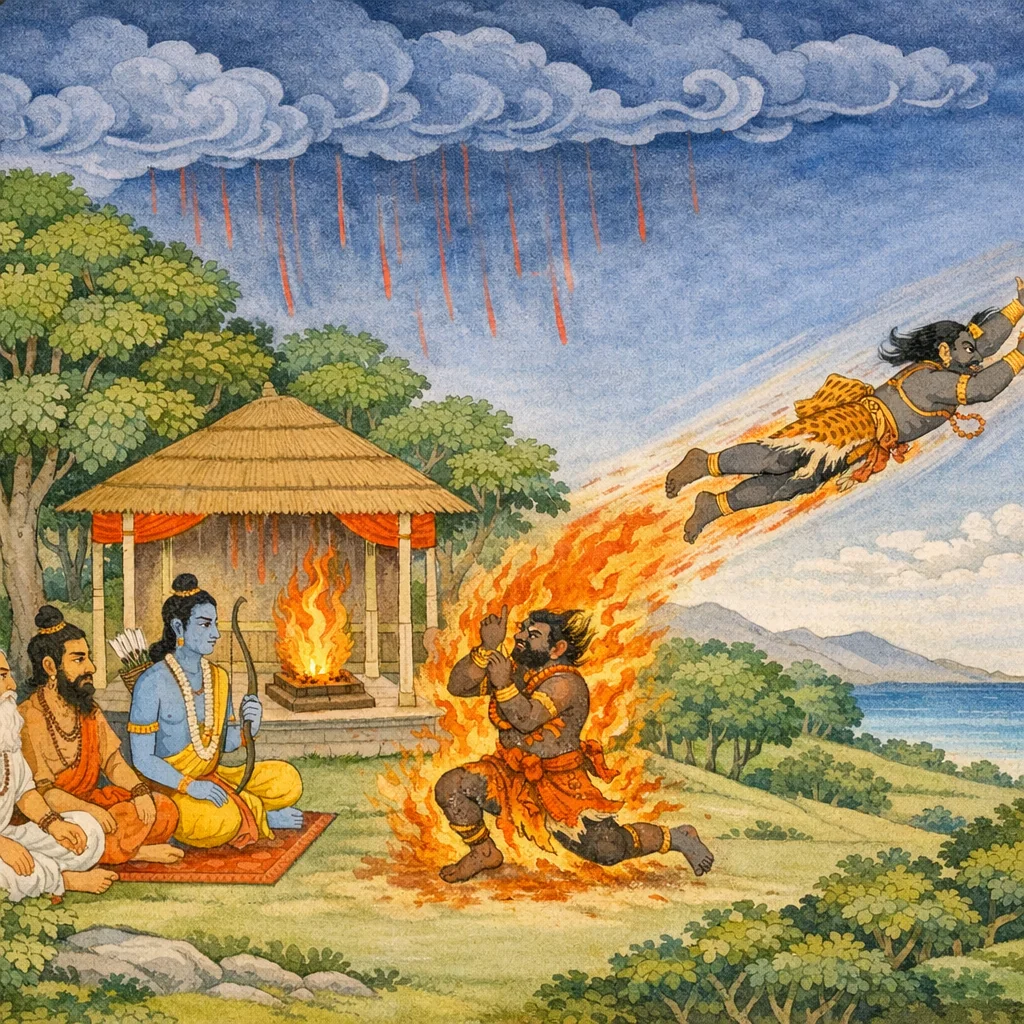
In this sarga, Rama and Lakshmana—discerning of proper time and place (deśa-kāla-jña) and skilled in speech—ask Viśvāmitra to state when the nocturnal rakṣasas will appear, so the yajña may be protected. The sages instruct them to guard the rite for six nights while Viśvāmitra undertakes dīkṣā and observes silence. On the sixth day the ritual power intensifies: the altar blazes amid priests, implements, kuśa, ladles, and offerings. A dreadful roar rises from the sky; Mārīca and Subāhu arrive with their followers, using māyā to shroud the heavens and defile the altar with a rain of blood. Rama responds at once, directing Lakshmana and releasing the Mānavāstra—dharma-aligned and non-lethal in intent—hurling Mārīca a hundred yojanas into the surging sea, unconscious yet alive. Vowing to destroy the remaining merciless foes of the sacrifice, Rama strikes down Subāhu with the celestial Agneyāstra and sweeps away the rest with the Vāyavyāstra. With the sacrifice completed and the quarters cleared of harm, Viśvāmitra praises Rama: the guru’s command is fulfilled, “Siddhāśrama” proves true to its name, and the sages honor Rama like Indra after victory.
Shlokas
Verse 1
अथ तौ देशकालज्ञौ राजापुत्रावरिन्दमौ।देशे काले च वाक्यज्ञावब्रूतां कौशिकं वच:।।।।
Then the two princes—knowing what befits place and time, skilled in speech, and subduers of foes—addressed Kauśika (Viśvāmitra) with their words.
Verse 2
भगवन् श्रोतुमिच्छावो यस्मिन् काले निशाचरौ।संरक्षणीयौ तौ ब्रह्मन्नातिवर्तेत तत्क्षणम्।।।।
Venerable one, we wish to hear at what time those two night-rangers will come, so that they may be guarded against; O Brahman, let that moment not pass us by.
Verse 3
एवं ब्रुवाणौ काकुत्स्थौ त्वरमाणौ युयुत्सया।सर्वे ते मुनय: प्रीता: प्रशशंसुर्नृपात्मजौ।।।।
As the two Kakutsthas spoke thus—hastening with the desire to fight—all those sages, delighted, praised the two princely sons.
Verse 4
अद्यप्रभृति षड्रात्रं रक्षतं राघवौ युवाम्।दीक्षां गतो ह्येष मुनिर्मौनित्वं च गमिष्यति।।।।
From this day onward, you two Rāghavas must guard the rite for six nights; for this sage has entered consecration (dīkṣā) and will also observe the vow of silence.
Verse 5
तौ तु तद्वचनं श्रुत्वा राजपुत्रौ यशस्विनौ।अनिद्रौ षडहोरात्रं तपोवनमरक्षताम्।।।।
Hearing those words, the illustrious royal sons stayed awake and guarded the ascetic grove for six days and nights.
Verse 6
उपासाञ्चक्रतुर्वीरौ यत्तौ परमधन्विनौ।ररक्षतुर्मुनिवरं विश्वामित्रमरिन्दमौ।।।।
Fully prepared, the two heroic master-archers attended upon the rite and protected the best of sages, Viśvāmitra—those two subduers of enemies.
Verse 7
अथ काले गते तस्मिन् षष्ठेऽहनि समागते।सौमित्रिमब्रवीद्रामो यत्तो भव समाहित:।।।।
Then, as that time passed and the sixth day arrived, Rāma said to Saumitri (Lakṣmaṇa), “Be ready; stay focused and alert.”
Verse 8
रामस्यैवं ब्रुवाणस्य त्वरितस्य युयुत्सया।प्रजज्वाल ततो वेदिस्सोपाध्यायपुरोहिता।।।।
As Rāma spoke thus—swift and eager for battle—the sacrificial altar suddenly flared up, attended by the teachers of the Veda and the officiating priests.
Verse 9
सदर्भचमसस्रुक्का ससमित्कुसुमोच्चया।विश्वामित्रेण सहिता वेदिर्जज्वाल सर्त्विजा।।।।
The altar blazed in radiant splendor—furnished with kuśa grass, cups and ladles, bundles of kindling and heaps of flowers—together with Viśvāmitra and the officiating priests.
Verse 10
मन्त्रवच्च यथान्यायं यज्ञोऽसौ सम्प्रवर्तते।आकाशे च महान् शब्द: प्रादुरासीद्भयानक:।।।।
As that sacrifice proceeded rightly, in accordance with the mantras and due rule, a great and terrifying sound suddenly arose in the sky.
Verse 11
आवार्य गगनं मेघो यथा प्रावृषि निर्गत:।तथामायां विकुर्वाणौ राक्षसावभ्यधावताम्।।।।
As clouds in the rainy season spread out and cover the sky, so the two rākṣasas, conjuring deceptive māyā, came rushing forward.
Verse 12
मारीचश्च सुबाहुश्च तयोरनुचराश्च ये।आगम्य भीमसङ्काशा रुधिरौघमवासृजन्।।।।
Mārīca and Subāhu, along with their attendants—terrifying in form—came there and poured down torrents of blood upon the sacred rite.
Verse 13
सा तेन रुधिरौघेण वेदिर्जज्वाल मण्डिता।सहसाऽभिद्रुतो रामस्तानपश्य त्ततो दिवि।।।।
Drenched by that torrent of blood, the altar blazed as though adorned; and Rāma, rushing forward at once, then beheld them high in the sky.
Verse 14
तावापतन्तौ सहसा दृष्ट्वा राजीवलोचन:।लक्ष्मणं त्वभिसम्प्रेक्ष्य रामो वचनमब्रवीत्।।।।
Seeing the two rushing in suddenly, lotus-eyed Rāma fixed his gaze on Lakṣmaṇa and spoke these words:
Verse 15
पश्य लक्ष्मण दुर्वृत्तान् राक्षसान् पिशिताशनान्।मानवास्त्रसमाधूताननिलेन यथा घनान्।।।।
“Look, Lakṣmaṇa—those rākṣasas of wicked conduct, eaters of flesh; I shall drive them off with the Mānava weapon, as the wind scatters clouds.”
Verse 16
मानवं परमोदारमस्त्रं परमभास्वरम्।चिक्षेप परमक्रुद्धो मारीचोरसि राघव:।।।।
Enraged, Rāghava hurled the supremely potent, brilliantly radiant Mānava weapon into Mārīca’s chest.
Verse 17
स तेन परमास्त्रेण मानवेन समाहित:।संपूर्णं योजनशतं क्षिप्तस्सागरसम्प्लवे।।।।
Struck by that supreme Mānava weapon, he was hurled a full hundred yojanas away, into the tumult of the ocean’s surge.
Verse 18
विचेतनं विघूर्णन्तं शीतेषु बलताडितम्।निरस्तं दृश्य मारीचं रामो लक्ष्मणमब्रवीत्।।।।
Seeing Mārīca cast far away—senseless, reeling, and beaten down by the force of the cool-arrowed weapon—Rāma spoke to Lakṣmaṇa.
Verse 19
पश्य लक्ष्मण शीतेषुं मानवं धर्मसंहितम्।मोहयित्वा नयत्येनं न च प्राणैर्व्ययुज्यत।।।।
See, Lakṣmaṇa—this cool-arrowed Mānava weapon, aligned with dharma: it stupefies him and carries him away, yet does not sever him from life.
Verse 20
इमानपि वधिष्यामि निर्घृणान् दुष्टचारिण:।राक्षसान् पापकर्मस्थान् यज्ञघ्नान् रुधिराशनान्।।।।
These rākṣasas too I shall slay—merciless, wicked in conduct, rooted in sinful deeds: destroyers of sacrifices, drinkers of blood.
Verse 21
सङ्गृह्यास्त्रं ततो रामो दिव्यमाग्नेयमद्भुतम्।सुबाहूरसि चिक्षेप सविद्ध: प्रापतद्भुवि।।।।
Then Rāma took up the wondrous, celestial Āgneya weapon and hurled it into Subāhu’s chest; struck down, Subāhu fell upon the ground.
Verse 22
शेषान् वायव्यमादाय निजघान महायशा:।राघव: परमोदारो मुनीनां मुदमावहन्।।।।
Then the illustrious Rāghava, noble and generous, took up the Vāyavya weapon and struck down the remaining rākṣasas, bringing joy to the sages.
Verse 23
स हत्वा राक्षसान् सर्वान् यज्ञघ्नान् रघुनन्दन:।ऋषिभि: पूजितस्तत्र यथेन्द्रो विजये पुरा।।।।
Having slain all the rākṣasas who were destroyers of sacrifice, Raghunandana was honored there by the ṛṣis—like Indra of old when victorious.
Verse 24
अथ यज्ञे समाप्ते तु विश्वामित्रो महामुनि:।निरीतिका दिशो दृष्टवा काकुत्स्थमिदमब्रवीत्।।।।
Then, when the sacrifice was completed, the great sage Viśvāmitra—seeing the directions free from harm—spoke these words to Kakutstha (Rāma).
Verse 25
कृतार्थोऽस्मि महाबाहो कृतं गुरुवचस्त्वया।सिद्धाश्रममिदं सत्यं कृतं राम महायश:।।।।
“I am fulfilled, O mighty-armed one; by you the command of your revered elder has been carried out. Truly this is ‘Siddhāśrama’ made real, O Rāma of great fame.”
Frequently Asked Questions
The chapter frames a dharmic use-of-force problem: how to neutralize yajña-defilers without collapsing into indiscriminate violence. Rama’s Mānavāstra incapacitates and removes Mārīca while explicitly not taking his life, distinguishing restraint from weakness and aligning martial action with ritual protection.
Dharma is enacted through vigilance and proportionality: sacred social order (yajña) requires protection; speech and action must fit deśa-kāla; and power (astra) is legitimate when governed by righteousness and directed toward restoring harmony rather than personal rage.
Siddhāśrama is the focal sacred site, presented as a ritually charged āśrama-space where Vedic implements (kuśa, sruk, camasa), officiants (ṛtvij, purohita), and dīkṣā/mauna observances define cultural practice; the narrative also references the sky as the arena of attack and the far-off surging sea into which Mārīca is cast.
Read Valmiki Ramayana in the Vedapath app
Scan the QR code to open this directly in the app, with audio, word-by-word meanings, and more.