Sarga 19
विश्वामित्रस्य यज्ञरक्षा-याचना (Visvamitra Requests Rama for Yajna-Protection)
बालकाण्ड
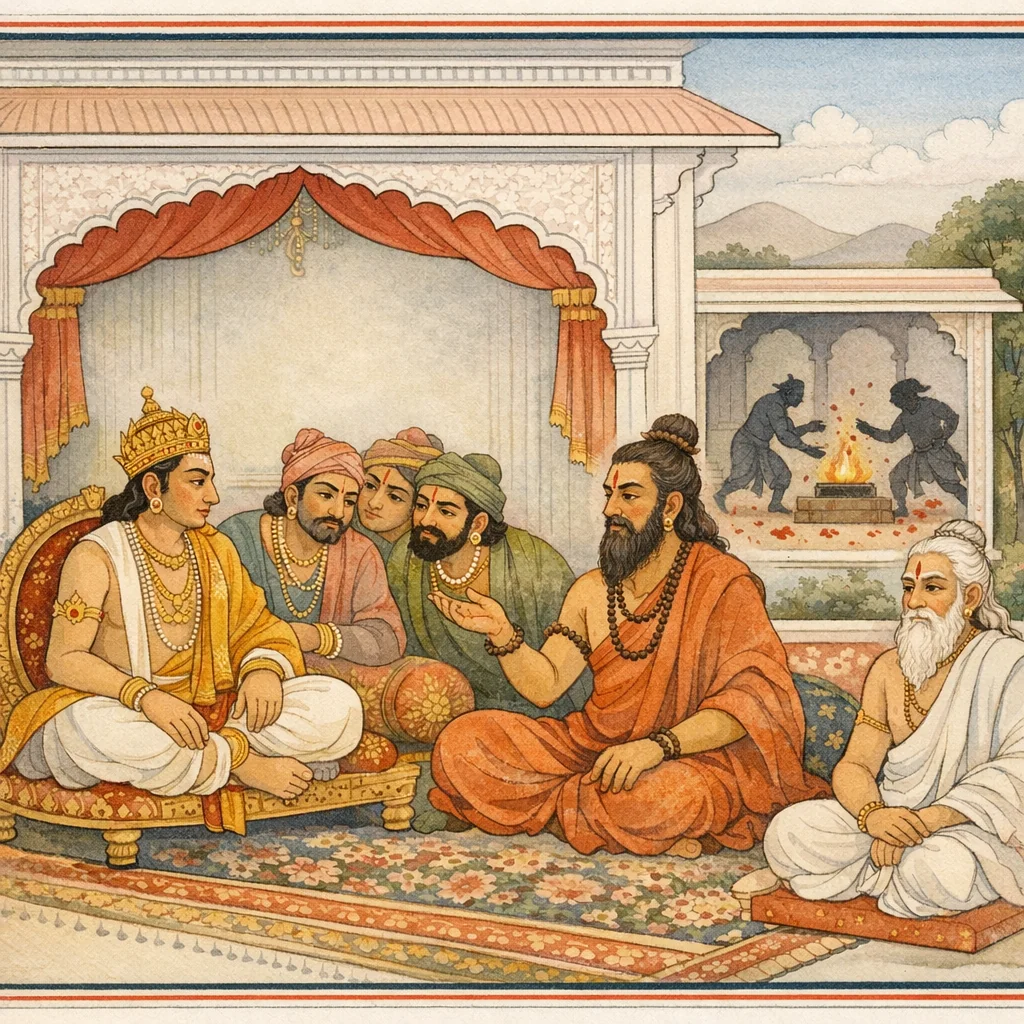
Sarga 19 unfolds as a tightly reasoned court dialogue. Viśvāmitra answers Daśaratha’s respectful words and reveals the crisis: two shape-shifting rākṣasas, Mārīca and Subāhu, are ruining his yajña by raining flesh and blood upon the altar as the rite nears completion. Bound by sacrificial discipline, the sage refuses to release his anger through a curse and chooses a remedy governed by dharma—royal aid. He asks Daśaratha to entrust him with Rāma, the valiant eldest son, for a limited term of ten nights, so the yajña may be protected without delaying its appointed time. Viśvāmitra strengthens the request with assurances: under his guardianship and by Rāma’s own divine tejas, the demons cannot withstand him; he promises blessings that will spread Rāma’s fame through the three worlds. He also insists on proper procedure—Rāma should be released only with the consent of the counselors and sages led by Vasiṣṭha. The sarga ends with Daśaratha’s fearful grief and physical agitation, highlighting the tension between paternal love and public dharma.
Shlokas
Verse 1
तच्छ्रुत्वा राजसिंहस्य वाक्यमद्भुतविस्तरम्।हृष्टरोमा महातेजा विश्वामित्रोऽभ्यभाषत।।।।
Hearing the lion-like king’s words—wonderful in their full detail—the mighty Viśvāmitra, thrilled with joy, spoke in reply.
Verse 2
सदृशं राजशार्दूल तवैतद्भुवि नान्यथा।महावंशप्रसूतस्य वसिष्ठव्यपदेशिन:।।।।
O tiger among kings, such conduct is fitting for you on this earth—born in a great lineage and guided under Vasiṣṭha’s discipline; it could not be otherwise.
Verse 3
यत्तु मे हृद्गतं वाक्यं तस्य कार्यस्य निश्चयम्।कुरूष्व राजशार्दूल भव सत्यप्रतिश्रव:।।।।
O tiger among kings, I shall speak what lies in my heart; decide upon that course of action, and remain true to your pledged word.
Verse 4
अहंनियममातिष्ठे सिध्यर्थं पुरुषर्षभ।तस्य विघ्नकरौ द्वौ तु राक्षसौ कामरूपिणौ।।।।
O best of men, I have undertaken a strict religious observance for the successful completion of my rite; but two rākṣasas, able to assume forms at will, are creating obstacles to it.
Verse 5
व्रते मे बहुशश्चीर्णे समाप्त्यां राक्षसाविमौ।मारीचश्च सुबाहुश्च वीर्यवन्तौ सुशिक्षितौ।।।।समांसरुधिरौघेण वेदिं तामभ्यवर्षताम्।
When my observance, repeatedly performed, was nearing completion, those two rākṣasas—Mārīca and Subāhu, powerful and well-trained—showered that altar with torrents of blood mixed with flesh.
Verse 6
अवधूते तथाभूते तस्मिन्नियमनिश्चये।।।।कृतश्रमो निरुत्साहस्तस्माद्देशादपाक्रमे।
When that firm resolve of observance was thus cast aside and brought to ruin, I—wearied by effort and stripped of zeal—withdrew from that region.
Verse 7
न च मे क्रोधमुत्स्रष्टुं बुद्धिर्भवति पार्थिव।।।।तथा भूता हि सा चर्या न शापस्तत्र मुच्यते।
O king, my mind does not permit me to unleash my anger; for such is the discipline of that rite—at that time no curse is to be released.
Verse 8
स्वपुत्रं राजशार्दूल रामं सत्यपराक्रमम्।।।।काकपक्षधरं शूरं ज्येष्ठं मे दातुमर्हसि।
O tiger among kings, it is fitting that you entrust to me your own son—Rāma, the eldest—valiant, wearing youthful side-locks, and steadfast in true prowess.
Verse 9
शक्तो ह्येष मया गुप्तो दिव्येन स्वेन तेजसा।।।।राक्षसा ये विकर्तारस्तेषामपि विनाशने।
For he is capable—protected by me and by his own divine splendor—even of destroying those rākṣasas who cause such disruptions.
Verse 10
श्रेयश्चास्मै प्रदास्यामि बहुरूपं न संशय:।।।।त्रयाणामपि लोकानां येन ख्यातिं गमिष्यति।
I shall bestow upon him manifold blessings for his welfare—without doubt—by which he will attain renown throughout the three worlds.
Verse 11
न च तौ राममासाद्य शक्तौ स्थातुं कथञ्चन।।।।न च तौ राघवादन्यो हन्तुमुत्सहते पुमान्।
Once they encounter Rāma, those two cannot stand their ground in any manner; and apart from Rāghava, no other man has the power to destroy them.
Verse 12
वीर्योत्सिक्तौ हि तौ पापौ कालपाशवशं गतौ।।।।रामस्य राजशार्दूल न पर्याप्तौ महात्मन:।
Those two wicked ones, intoxicated by their strength, have already fallen under the noose of Death. O tiger among kings, they are no match for the great-souled Rāma.
Verse 13
न च पुत्रकृतस्नेहं कर्तुमर्हसि पार्थिव।।।।अहं ते प्रतिजानामि हतौ तौ विद्धि राक्षसौ।
O king, you should not let paternal attachment stand in the way. I assure you—know for certain that those two rākṣasas will be slain.
Verse 14
अहं वेद्मि महात्मानं रामं सत्यपराक्रमम्।।।।वसिष्ठोऽपि महातेजा ये चेमे तपसि स्थिता:।
I know Rāma—the great-souled one whose valor is true and unwavering; and Vasiṣṭha of mighty radiance, along with these sages established in tapas, know him as well.
Verse 15
यदि ते धर्मलाभं च यशश्च परमं भुवि।।।।स्थितमिच्छसि राजेन्द्र रामं मे दातुमर्हसि।
O king of kings, if you seek the gain of dharma and the highest, enduring fame in this world, it is fitting that you entrust Rāma to me.
Verse 16
यदिह्यनुज्ञां काकुत्स्थ ददते तव मन्त्रिण:।।।।वसिष्ठप्रमुखा: सर्वे ततो रामं विसर्जय।
O Kakutstha, if your counselors—all headed by Vasiṣṭha—grant their consent, then send Rāma forth.
Verse 17
अभिप्रेतमसंसक्तमात्मजं दातुमर्हसि।।।।दशरात्रं हि यज्ञस्य रामं राजीवलोचनम्।
You should entrust your beloved son—lotus-eyed Rāma—without clinging attachment, for the yajña requires him for ten nights.
Verse 18
नात्येति कालो यज्ञस्य यथाऽयं मम राघव।।।।तथा कुरुष्व भद्रं ते मा च शोके मन: कृथा:।
O Rāghava, act so that the time of my yajña is not delayed. May good be yours; do not let your mind sink into grief.
Verse 19
इत्येवमुक्त्वा धर्मात्मा धर्मार्थसहितं वच:।।।।विरराम महातेजा विश्वामित्रो महामुनि:।
Having thus spoken words filled with dharma and right purpose, the great sage Viśvāmitra—radiant in power—fell silent.
Verse 20
स तन्निशम्य राजेन्द्रो विश्वामित्रवचश्शुभम्।।।।शोकमभ्यगमत्तीव्रं व्यषीदत भयान्वित:।
Hearing Viśvāmitra’s auspicious words, the king was seized by intense grief; overcome by fear, he became despondent.
Verse 21
इति हृदयमनोविदारणंमुनिवचनं तदतीव शुश्रुवान्।नरपतिरभवन्महांस्तदाव्यथितमना: प्रचचाल चासनात्।।।।
Hearing thus the sage’s words—words that tore at heart and mind—the great king became deeply agitated, and he shook, as though slipping from his throne.
Verse 22
O best of men, I have undertaken a strict religious observance for the successful completion of my rite; but two rākṣasas, able to assume forms at will, are creating obstacles to it.
Frequently Asked Questions
The pivotal action is Viśvāmitra’s demand that Daśaratha entrust Rāma for yajña-protection. The ethical dilemma is Daśaratha’s conflict between putrakṛta-sneha (paternal attachment) and the king’s obligation to support ascetic rites and uphold public dharma through timely, consent-backed decision-making.
Dharma is portrayed as disciplined action within constraints: Viśvāmitra does not curse because the sacrificial context requires restraint, so he seeks a lawful remedy through royal cooperation. The sarga teaches that righteous ends (protecting yajña) should be pursued through procedurally legitimate means (counsel and sage consent) and with detachment from private emotion.
The key cultural landmark is the yajña-vedi (altar), symbolizing ritual order and social stability. The imagery of trailokya (three worlds) frames fame as a cosmological measure of merit, while the courtly setting—ministers and sages led by Vasiṣṭha—highlights the governance tradition where royal decisions are validated by spiritual authority.