Sarga 34
कुशिकवंश-प्रसङ्गः / Genealogy of the Kuśika Line and the Kausikī River
बालकाण्ड
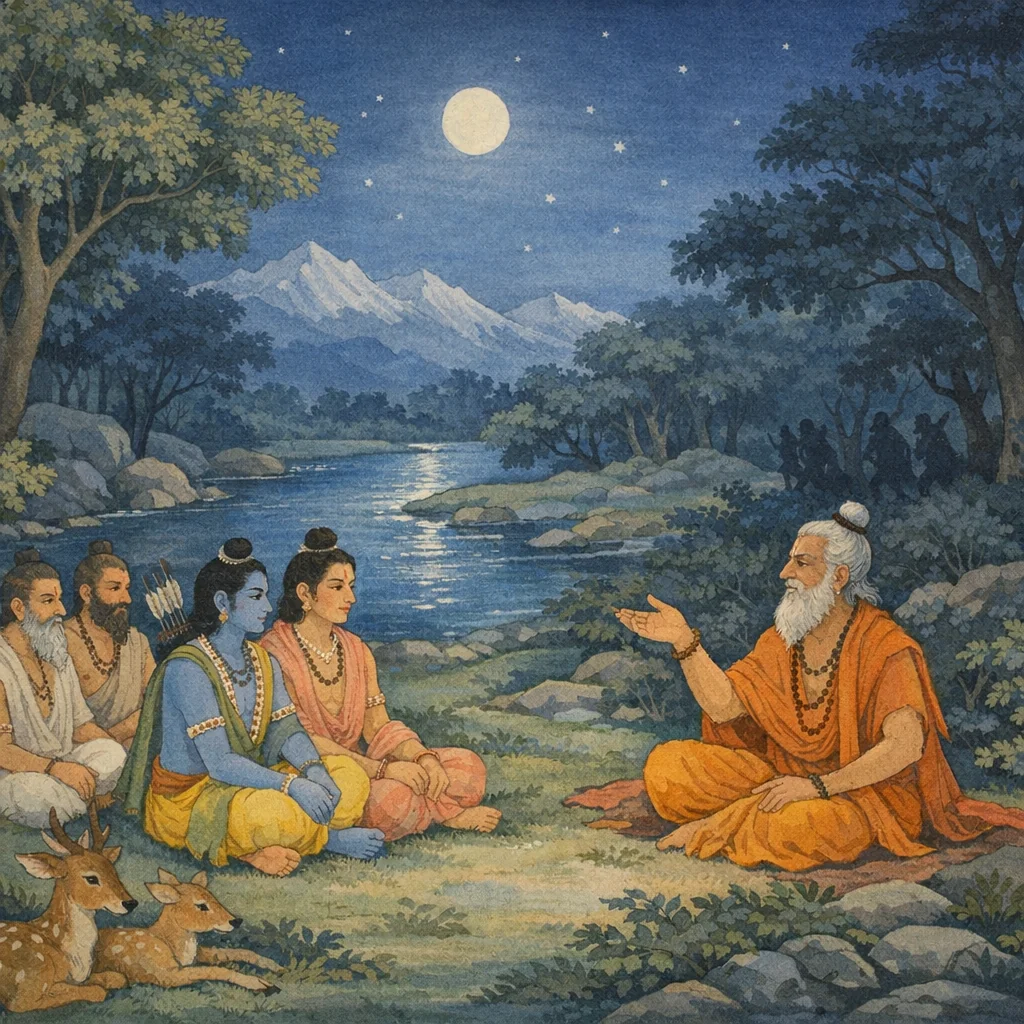
Sarga 34 concludes Viśvāmitra’s account of lineage and sacred geography for Rāma. It opens with the dynastic succession from King Kuśanābha: after the putreṣṭi (son-seeking rite) and after Brahmadatta’s marriage and departure, Gādhi is born. Viśvāmitra names Gādhi as his father and explains his epithet “Kauśika” as arising from the Kuśa lineage. He then recounts the sanctified story of his elder sister Satyavatī, wife of Ṛcīka: following her husband to heaven, she manifests again as the great river Kausikī, flowing from Himavat for the welfare of the world. The sarga shifts into a nocturnal tableau—still trees, resting animals, a star-filled sky, and the moon rising—while night-roaming beings (yakṣas, rākṣasas, and flesh-eaters) wander. Viśvāmitra ends his discourse; the sages praise him, and Rāma and Lakṣmaṇa retire to sleep, pausing the narrative after lineage, place, and moral provenance are established.
Shlokas
Verse 1
कृतोद्वाहे गते तस्मिन् ब्रह्मदत्ते च राघव।अपुत्र: पुत्रलाभाय पौत्रीमिष्टिमकल्पयत्।।।।
O Rāghava, when Brahmadatta’s marriage had been completed and he had departed, the king—being without a son—arranged the Putreṣṭi sacrifice in order to obtain a son.
Verse 2
इष्ट्यां तु वर्तमानायां कुशनाभं महीपतिम्।उवाच परमोदार: कुशो ब्रह्मसुतस्तदा।।।।
Then, while the sacrificial rite was in progress, Kuśa—the exceedingly generous son of Brahmā—addressed King Kuśanābha.
Verse 3
पुत्रस्ते सदृश: पुत्र भविष्यति सुधार्मिक:।गाधिं प्राप्स्यसि तेन त्वं कीर्तिं लोके च शाश्वतीम्।।।।
“A son will be born to you, like you in character—deeply righteous and established in dharma. He will be named Gādhi, and through him you will gain enduring fame in the world.”
Verse 4
एवमुक्त्वा कुशो राम कुशनाभं महीपतिम्।जगामाकाशमाविश्य ब्रह्मलोकं सनातनाम्।।।।
Having spoken thus to King Kūśanābha, O Rāma, Kūśa entered the sky and departed to the eternal Brahmaloka, the world of Brahmā.
Verse 5
कस्य चित्त्वथ कालस्य कुशनाभस्य धीमत:।जज्ञे परमधर्मिष्ठो गाधिरित्येव नामत:।।।।
After some time, to the wise King Kūśanābha there was born a son of supreme righteousness, known by the name Gādhi.
Verse 6
स पिता मम काकुत्स्थ गाधि: परमधार्मिक:।कुशवंशप्रसूतोऽस्मि कौशिको रघुनन्दन ।।।।
That supremely righteous Gādhi, O scion of Kakutstha, is my father. Born in the lineage of Kūśa, O delight of the Raghus, I am known as Kauśika.
Verse 7
पूर्वजा भगिनी चापि मम राघव सुव्रता।नाम्ना सत्यवती नाम ऋचीके प्रतिपादिता।।।।
I had an elder sister as well, O Rāghava, steadfast in noble vows; she was named Satyavatī and was given in marriage to Ṛcīka.
Verse 8
सशरीरा गता स्वर्गं भर्तारमनुवर्तिनी।कौशिकी परमोदारा प्रवृत्ता च महानदी।।।।
Following her husband, she went to heaven in her very body; and then, as the great river Kauśikī—most generous in her beneficence—she began to flow.
Verse 9
दिव्या पुण्योदका रम्या हिमवन्तमुपाश्रिता।लोकस्य हितकामार्थं प्रवृत्ता भगिनी मम।।।।
My sister—divine, lovely, and filled with sacred waters—took refuge in Himavān; and for the welfare and happiness of the world she set forth, flowing onward.
Verse 10
ततोऽहं हिमवत्पार्श्वे वसामि निरतस्सुखम्।भगिन्यां स्नेहसंयुक्त: कौशिक्यां रघुनन्दन।।।।
From then on, O delight of the Raghus, I have lived happily on the slopes of Himavat, bound by affection for my sister Kauśikī.
Verse 11
सा तु सत्यवती पुण्या सत्ये धर्मे प्रतिष्ठिता।पतिव्रता महाभागा कौशिकी सरितां वरा।।।।
Satyavatī was holy, firmly established in truth and dharma. Faithful to her husband and greatly blessed, she became the Kauśikī, foremost among rivers.
Verse 12
अहं हि नियमाद्राम हित्वा तां समुपागत:।सिद्धाश्रममनुप्राप्य सिद्धोऽस्मि तव तेजसा।।।।
Rāma, it was for the sake of my sacred observance that I left her and came here. Having reached Siddhāśrama, I have fulfilled my purpose through your splendour and prowess.
Verse 13
एषा राम ममोत्पत्तिस्स्वस्य वंशस्य कीर्तिता।देशस्य च महाबाहो यन्मां त्वं परिपृच्छसि।।।।
Rāma, mighty-armed one: since you asked me, I have recounted my origin, the account of my lineage, and also the history of this region.
Verse 14
गतोऽर्धरात्र: काकुत्स्थ कथा: कथयतो मम।निद्रामभ्येहि भद्रं ते मा भूद्विघ्नोऽध्वनीह न:।।।।
Kākutstha, midnight has passed as I have been telling these accounts. Now take rest; blessings be upon you. May no obstacle befall us on the road hereafter.
Verse 15
निष्पन्दास्तरवस्सर्वे निलीनमृगपक्षिण:।नैशेन तमसा व्याप्ता दिशश्च रघुनन्दन।।।।
Raghunandana, all the trees stood still; beasts and birds had settled into rest, and every direction was pervaded by the darkness of night.
Verse 16
शनैर्वियुज्यते सन्ध्या नभो नेत्रैरिवावृतम् ।नक्षत्रतारागहनं ज्योतिर्भिरिव भासते।।।।
Twilight slowly withdrew; the sky, as though covered with eyes, shone thick with constellations and stars—like a wide-spread field of lights.
Verse 17
उत्तिष्ठति च शीतांशुश्शशी लोकतमोनुद:।ह्लादयन् प्राणिनां लोके मनांसि प्रभया विभो।।।।
Then rose the moon, cool-rayed and driving away the world’s darkness; O mighty one, with its radiance it gladdened the hearts of living beings.
Verse 18
नैशानि सर्वभूतानि प्रचरन्ति ततस्तत:।यक्षराक्षससङ्घाश्च रौद्राश्च पिशिताशना:।।।।
Thereupon nocturnal beings began to roam here and there—bands of yakṣas and rākṣasas, fierce and dreadful, including flesh-eaters.
Verse 19
एवमुक्त्वा महातेजा विरराम महामुनि:।साधु साध्विति तं सर्वे ऋषयो ह्यभ्यपूजयन्।।।।
Having spoken thus, the great sage of mighty splendour fell silent. All the ṛṣis honoured him, saying, “Well said, well said.”
Verse 20
कुशिकानामयं वंशो महान् धर्मपरस्सदा।ब्रह्मोपमा महात्मान: कुशवंश्या नरोत्तमा:।।।।
This is the lineage of the Kuśikas: truly great, ever devoted to dharma—high-souled men of the line of Kūśa, foremost among humans, comparable in dignity to Brahmā.
Verse 21
विशेषेण भवानेव विश्वामित्रो महायशा:।कौशिकी सरितां श्रेष्ठा कुलोद्योतकरी तव।।।।
And above all, you yourself, illustrious Viśvāmitra—your Kauśikī is the finest among rivers, shining as an adornment that brings lustre to your lineage.
Verse 22
इति तैर्मुनिशार्दूलै: प्रशस्त: कुशिकात्मज: ।निद्रामुपागमच्छ्रीमान् अस्तंगत इवांशुमान्।।।।
Thus praised by those tiger-like sages, the illustrious son of the Kuśikas lay down to sleep—like the radiant sun when it has set.
Verse 23
रामोऽपि सहसौमित्रि: किञ्चिदागतविस्मय:।प्रशस्य मुनिशार्दूलं निद्रां समुपसेवते।।।।
Rāma too, along with Saumitri (Lakṣmaṇa), filled with a measure of wonder, praised that tiger-like sage and then took to sleep.
Frequently Asked Questions
The sarga centers on dharmic action through sanctioned means: Kuśanābha’s performance of putreṣṭi to secure legitimate succession, and Satyavatī’s pativratā commitment—following her husband—culminating in her sacral transformation into the Kausikī, linking personal virtue to public welfare.
Moral authority is shown as traceable: lineage (वंश), vow (व्रत), and disciplined observance (नियम) generate credibility for speech and action. The text frames geography itself as ethical memory—rivers and āśramas become living archives of virtue and sacrifice.
Key landmarks include Himavat as the river-source and sacred boundary, Siddhāśrama as the ascetic site of observance, and the Kausikī river as a sanctified cultural marker; the nocturnal cosmography (stars, moonlight) functions as an atmospheric “map layer” indicating time, travel, and liminal danger.