Sarga 69
एकोनसप्ततितमः सर्गः — Daśaratha’s Departure to Videha and Marriage Arrangements
बालकाण्ड
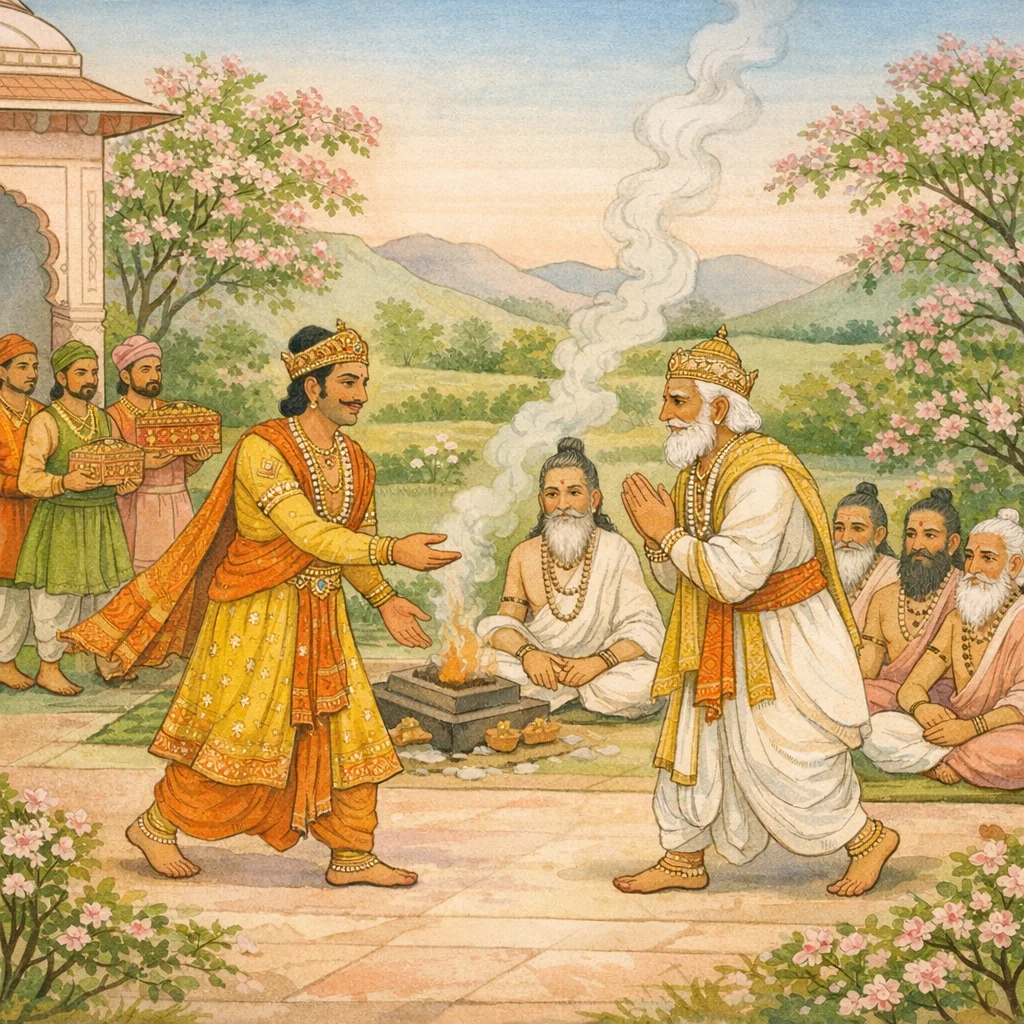
Sarga 69 portrays the careful, dharma-guided preparations that precede the royal–sage alliance culminating in the marriage rites. When night has passed, King Daśaratha—accompanied by spiritual preceptors and kinsmen—issues commands to Sumantra: treasury officers are to go ahead with abundant wealth and varied jewels; the fourfold army is to mobilize swiftly with conveyances; and eminent brahmin-sages (Vasiṣṭha, Vāmadeva, Jābāli, Kāśyapa, Mārkaṇḍeya, Kātyāyana) are to advance first to prevent delay, since Janaka’s messengers urge haste. The entourage travels and reaches Videha in four days. Hearing of their arrival, Janaka prepares reverential hospitality, greets the aged Daśaratha with the auspicious acclaim “diṣṭi,” and presents the meeting as the fruition of the princes’ valor. Vasiṣṭha’s coming is praised as Indra-like among the gods, and Janaka declares that obstacles have been overcome and the lineage honored through alliance with the Raghus. Janaka requests that at dawn, after the sacrifice is completed, the sage-approved marriage be performed. Daśaratha replies with measured, dharma-aware words, accepts the proposal, and affirms obedience to righteous counsel. The sages and kings spend the night in mutual delight, while Janaka completes the ritual acts for the yajña and the sacred preparations for his daughters.
Shlokas
Verse 1
ततो रात्र्यां व्यतीतायां सोपाध्याय: सबान्धव:।राजा दशरथो हृष्ट स्सुमन्त्रमिदमब्रवीत्।।।।
When the night had passed, King Daśaratha—accompanied by his preceptors and kinsmen—joyfully spoke these words to Sumantra.
Verse 2
अद्य सर्वे धनाध्यक्षा धनमादाय पुष्कलम्।व्रजन्त्वग्रे सुविहिता नानारत्नसमन्विता:।।।।
Today, let all the treasury officers—well prepared—go on ahead, bearing abundant wealth and supplies, adorned with many kinds of gems.
Verse 3
चतुरङ्गबलं चापि शीघ्रं निर्यातु सर्वश:।ममज्ञासमकालं च यानयुग्यमनुत्तमम्।।।।
Let the fourfold army also depart swiftly from every quarter; and at my command, let the finest vehicles be made ready at once.
Verse 4
वसिष्ठो वामदेवश्च जाबालिरथ काश्यप:।मार्कण्डेयश्च दीर्घायु:ऋषि: कात्यायनस्तथा।।।।एते द्विजा: प्रयान्त्वग्रे स्यन्दनं योजयस्व मे।यथा कालात्ययो न स्या द्दूता हि त्वरयन्ति माम्।।।।
Let these brahmins go ahead first—Vasiṣṭha, Vāmadeva, Jābāli, Kāśyapa, Mārkaṇḍeya of long life, and the sage Kātyāyana. Yoke my chariot. Let there be no delay, for the messengers are urging me onward.
Verse 5
वसिष्ठो वामदेवश्च जाबालिरथ काश्यप:।मार्कण्डेयश्च दीर्घायु:ऋषि: कात्यायनस्तथा।।1.69.4।।एते द्विजा: प्रयान्त्वग्रे स्यन्दनं योजयस्व मे।यथा कालात्ययो न स्या द्दूता हि त्वरयन्ति माम्।।1.69.5।।
Let these brahmins go ahead first—Vasiṣṭha, Vāmadeva, Jābāli, Kāśyapa, Mārkaṇḍeya of long life, and the sage Kātyāyana. Yoke my chariot. Let there be no delay, for the messengers are urging me onward.
Verse 6
वचनात्तु नरेन्द्रस्य सा सेना चतुरङ्गिणी।राजानमृषिभि स्सार्धं व्रजन्तं पृष्ठतोऽन्वगात्।।।।
At the command of the lord of men, the fourfold army followed behind the king as he proceeded together with the sages.
Verse 7
गत्वा चतुरहं मार्गं विदेहानभ्युपेयिवान्।राजा तु जनक श्श्रीमान् श्श्रुत्वा पूजामकल्पयत्।।।।
Having traveled the road for four days, they reached the land of the Videhas. Hearing of their arrival, the illustrious King Janaka arranged due honors and hospitality for them.
Verse 8
ततो राजानमासाद्य वृद्धं दशरथं नृपम्।जनको मुदितो राजा हर्षं च परमं ययौ।।।।
Then King Janaka approached the aged ruler Daśaratha, and the king, rejoicing, attained the highest joy.
Verse 9
उवाच च नरश्रेष्ठो नरश्रेष्ठं मुदाऽन्वित:।स्वागतं ते महाराज दिष्ट्या प्राप्तोऽसि राघव।।।।पुत्रयोरुभयो: प्रीतिं लप्स्यसे वीर्यनिर्जिताम्।
Filled with joy, that best of men spoke to the best of men: “Welcome to you, O great king, O Rāghava. By good fortune you have arrived; you shall receive glad fulfillment concerning both your sons—won by their valor.”
Verse 10
दिष्ट्या प्राप्तो महातेजा वसिष्ठो भगवानृषि:।।।।सह सर्वैर्द्विजश्रेष्ठैर्देवैरिव शतक्रतु:।
By good fortune, the radiant and venerable sage Vasiṣṭha has arrived, accompanied by all the foremost twice-born—like Śatakratu (Indra) surrounded by the gods.
Verse 11
दिष्ट्या मे निर्जिता विघ्ना दिष्ट्या मे पूजितं कुलम्।।।।राघवै स्सह सम्बन्धाद्वीर्यश्रेष्ठैर्महात्मभि:।
By good fortune my obstacles have been overcome; by good fortune my lineage has been honored through alliance with the Rāghavas—great-souled men, foremost in valor.
Verse 12
श्व: प्रभाते नरेन्द्रेन्द्र निर्वर्तयितुमर्हसि।।।।यज्ञस्यान्ते नरश्रेष्ठ विवाहमृषिसम्मतम्।
O best of kings, foremost of men—tomorrow at dawn, when the yajña is complete, you should duly solemnize the marriage, as approved by the sages.
Verse 13
तस्य तद्वचनं श्रुत्वा ऋषिमध्ये नराधिप:।।।।वाक्यं वाक्यविदां श्रेष्ठ: प्रत्युवाच महीपतिम्।
Hearing those words, the lord of men—foremost among the eloquent—replied to the king in the midst of the sages.
Verse 14
प्रतिग्रहो दातृवश श्श्रृतमेतन्मया पुरा।।।।यथा वक्ष्यसि धर्मज्ञ तत्करिष्यामहे वयम्।
I have long heard that acceptance rests upon the giver’s will. O knower of dharma, whatever you direct—we shall do exactly so.
Verse 15
धर्मिष्ठं च यशस्यं च वचनं सत्यवादिन:।।।।श्रुत्वा विदेहाधिपति: परं विस्मयमागत:।।
Hearing the words of that truth-speaker—so righteous and so glory-bestowing—the lord of Videha was filled with the greatest wonder and admiration.
Verse 16
तत स्सर्वे मुनिगणा: परस्परसमागमे।।हर्षेण महता युक्तास्तां निशामवसन् सुखम्।।
Thereafter all the companies of sages, rejoicing greatly in one another’s presence, spent that night in comfort and peace.
Verse 17
राजा च राघवौ पुत्रौ निशाम्य परिहर्षित:।।।।उवास परमप्रीतो जनकेन सुपूजित:।
And the king, seeing his sons—Rāma and Lakṣmaṇa—was filled with gladness. Greatly delighted, and honored well by Janaka, he stayed there that night in deep contentment.
Verse 18
जनकोऽपि महातेजा: क्रियां धर्मेण तत्त्ववित्।।।।यज्ञस्य च सुताभ्यां च कृत्वा रात्रिमुवास ह ।
Janaka too—radiant and discerning in the true principles of dharma—performed the proper rites in accordance with dharma, both for the sacrifice (yajña) and for his two daughters, and then spent the night there.
Frequently Asked Questions
The pivotal action is the dharma-governed coordination of a royal mission: Daśaratha must respond promptly to Janaka’s summons while ensuring ritual propriety—sending wealth and jewels, mobilizing the caturaṅga army, and placing brahmin-sages in the lead to secure auspicious, legitimate proceedings.
The chapter teaches that public decisions gain legitimacy through alignment with ṛṣi-approved dharma: auspicious outcomes are framed as diṣṭi (providential favor), but they are realized through disciplined readiness, truthful speech, and adherence to ritual sequence (yajña completion followed by marriage).
Videha is the primary geographic focus, presented as Janaka’s realm of formal hospitality and sacrificial culture; culturally, the landmarks are the yajña venue, the courtly reception protocol (pūjā), and the ṛṣi-sammata vivāha performed at dawn after ritual completion.