Sarga 10
ऋश्यशृङ्ग-आनयनम् (Bringing Ṛśyaśṛṅga to Aṅga and His Marriage to Śāntā)
बालकाण्ड
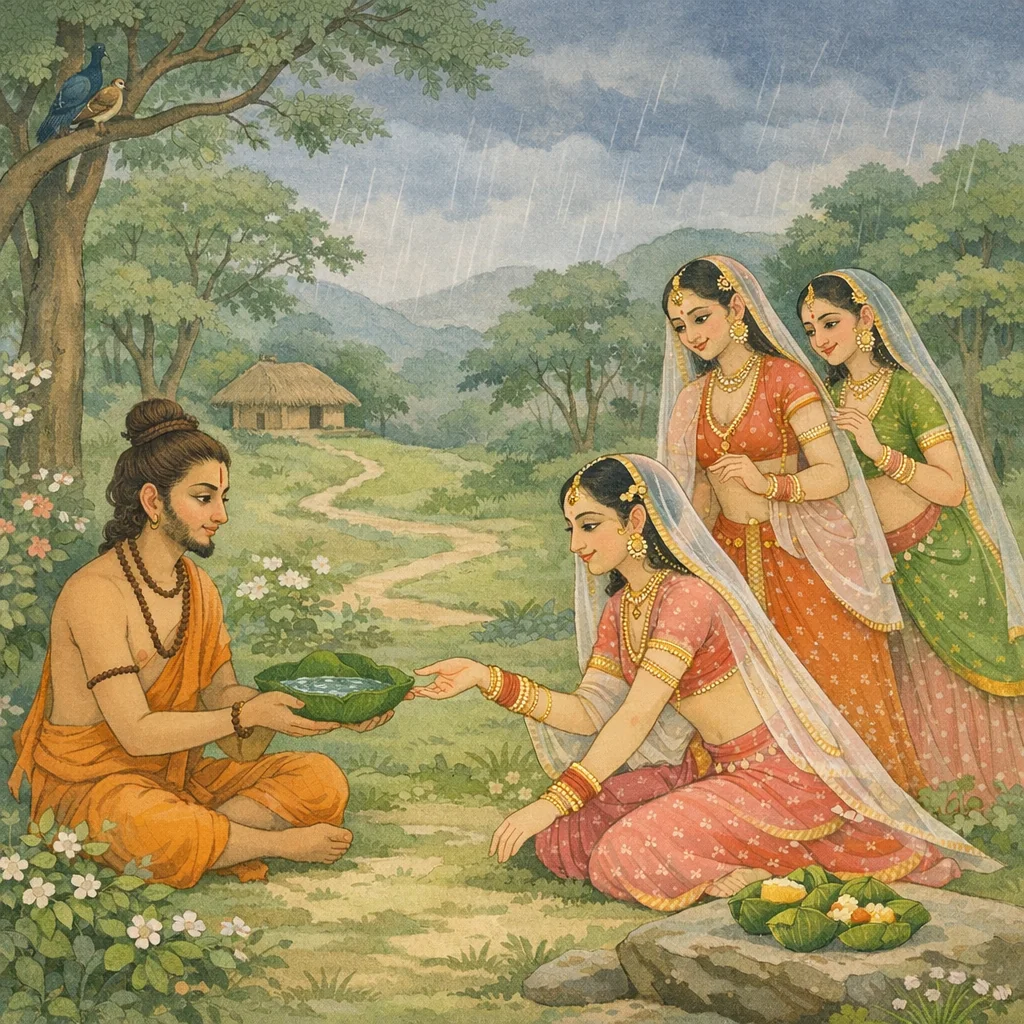
Sarga 10 is framed as a courtly recollection: at King Daśaratha’s prompting, Sumantra recounts before the king and his ministers how Ṛśyaśṛṅga was once brought into Romapāda’s realm. A political-religious strategy is set forth: Romapāda’s priest and counselors propose a “nirapāya” (risk-minimizing) plan—sending richly adorned courtesans to entice the forest-raised ascetic, wholly unacquainted with women and the pleasures of city life. The women enter the forest near Vibhaṇḍaka’s āśrama and wait for an opening. Ṛśyaśṛṅga meets them by chance; questioned about his identity and livelihood, he introduces himself as Vibhaṇḍaka’s son and offers ritual hospitality—arghya, pādya, roots, and fruits. Fearing the father’s return, the women withdraw but leave sweetmeats and foods behind; Ṛśyaśṛṅga mistakes them for “fruits,” revealing his innocence and the persuasive force of sensory novelty. On the next day he returns, is invited to the women’s “āśramapada,” and is led toward Aṅga. As he is brought, Parjanya sends rain, an auspicious sign of restored welfare. Romapāda welcomes him with prostration and offerings, seeks his grace lest Vibhaṇḍaka’s anger arise, and then gives his daughter Śāntā to Ṛśyaśṛṅga in lawful marriage according to dharma. Thus the sarga links ascetic potency, royal policy, and social well-being (rain and fertility) through a morally complex instrumentality.
Shlokas
Verse 1
सुमन्त्रश्चोदितो राज्ञा प्रोवाचेदं वचस्तदा।यथर्श्यशृङ्गस्त्वानीत श्श्रुणु मे मन्त्रिभिस्सह।।।।
Urged by the king, Sumantra then spoke: “Listen—together with your ministers—to how Ṛśyaśṛṅga was brought here.”
Verse 2
रोमपादमुवाचेदं सहामात्य: पुरोहित:।उपायो निरपायोऽयमस्माभिरभिचिन्तित:।। ।।
The royal priest, together with the ministers, addressed Romapāda: “We have deliberated upon a plan—one that is safe and without risk.”
Verse 3
ऋश्यशृङ्गो वनचरस्तपस्स्वाध्ययने रत:।अनभिज्ञस्स नारीणां विषयाणां सुखस्य च।।।
Ṛśyaśṛṅga lives in the forest, devoted to austerity and Vedic study; he is wholly unacquainted with women, sense-objects, and worldly pleasures.
Verse 4
इन्द्रियार्थैरभिमतैर्नरचित्तप्रमाथिभि: ।पुरमानाययिष्याम: क्षिप्रं चाध्यवसीयताम्।। ।।
“Using attractive sense-pleasures that can overpower a man’s mind, we will bring him to the city—let the decision be made quickly.”
Verse 5
गणिकास्तत्र गच्छन्तु रूपवत्यस्स्वलङ्कृता:।प्रलोभ्य विविधोपायैरानेष्यन्तीह सत्कृता:।।।।
“Let beautiful, well-adorned courtesans go there; by various enticements they will lure him and, treated with honour, bring him here.”
Verse 6
श्रुत्वा तथेति राजा च प्रत्युवाच पुरोहितम्।पुरोहितो मन्त्रिणश्च तथा चक्रुश्च ते तदा।।।।
After hearing him, the king replied to the royal priest, “So be it.” Then the priest and the ministers acted accordingly.
Verse 7
वारमुख्याश्च तच्छ्रुत्वा वनं प्रविविशुर्महत्।आश्रमस्याविदूरेऽस्मिन् यत्नं कुर्वन्ति दर्शने।।।।ऋषिपुत्रस्य धीरस्य नित्यमाश्रमवासिन:।
Hearing this, the foremost courtesans entered the great forest; staying not far from the hermitage, they strove to gain a sight of the sage’s son—steadfast in self-restraint and ever dwelling in the āśrama.
Verse 8
पितुस्सनित्यसन्तुष्टो नातिचक्राम चाश्रमात्।।।।न तेन जन्मप्रभृति दृष्टपूर्वं तपस्विना।स्त्री वा पुमान्वा यच्चान्यत्सर्वं नगरराष्ट्रजम्।। ।।
Ever content under his father’s care, he never once strayed beyond the āśrama.
Verse 9
पितुस्सनित्यसन्तुष्टो नातिचक्राम चाश्रमात्।।1.10.8।।न तेन जन्मप्रभृति दृष्टपूर्वं तपस्विना।स्त्री वा पुमान्वा यच्चान्यत्सर्वं नगरराष्ट्रजम्।। 1.10.9।।
From birth, that ascetic had never seen a woman or a man, nor anything else belonging to towns and kingdoms.
Verse 10
तत: कदाचित्तं देशमाजगाम यदृच्छया।विभण्डकसुतस्तत्र ताश्चापश्यद्वराङ्गना:।।।।
Then, one day, Vibhaṇḍaka’s son happened by chance to come to that place, and there he saw those lovely women.
Verse 11
ताश्चित्रवेषा: प्रमदा गायन्त्यो मधुरस्वरा:।ऋषिपुत्रमुपागम्य सर्वा वचनमब्रुवन्।। ।।
Those women, splendidly adorned and singing in sweet voices, approached the sage’s son, and all of them addressed him.
Verse 12
कस्त्वं किं वर्तसे ब्रह्मन् ज्ञातुमिच्छामहे वयम्।एकस्त्वं विजने घोरे वने चरसि शंस न:।। ।।
“Who are you, O brahman? How do you sustain yourself? We wish to know: why do you roam alone in this dreadful, lonely forest? Tell us.”
Verse 13
अदृष्टरूपास्तास्तेन काम्यरूपा वने स्त्रिय:।हार्दात्तस्य मतिर्जाता व्याख्यातुं पितरं स्वकम्।।।।
He had never before seen women of such charming form in the forest; and, moved by affection, a resolve arose in him to speak to them about his own father.
Verse 14
पिता विभण्डकोऽस्माकं तस्याहं सुत औरस:।ऋश्यशृङ्ग इति ख्यातं नाम कर्म च मे भुवि।।।।
“My father is Vibhaṇḍaka, and I am his own son. My name is famed on earth as ‘Ṛśyaśṛṅga,’ a name connected with my destiny and deed.”
Verse 15
इहाश्रमपदोऽस्माकं समीपे शुभदर्शना:।करिष्ये वोऽत्र पूजां वै सर्वेषां विधिपूर्वकम्।।।।
“Our hermitage is near here, O fair-looking ladies. There I will duly offer you hospitality—properly and according to rule—to all of you.”
Verse 16
ऋषिपुत्रवचश्श्रुत्वा सर्वासां मतिरास वै।तदाश्रमपदं द्रष्टुं जग्मुस्सर्वाश्च तेन ता:।। ।।
Hearing the sage’s son speak, all of them became eager indeed to see that hermitage; and all those women went there together with him.
Verse 17
आगतानां तत: पूजामृषिपुत्रश्चकार ह।इदमर्घ्यमिदं पाद्यमिदं मूलमिदं फलं च न:।।।।
Then the sage’s son offered them due hospitality: “Here is the arghya of reverence, here is water for washing the feet, and here are our roots and fruits.”
Verse 18
प्रतिगृह्य च तां पूजां सर्वा एव समुत्सुका:।ऋषेर्भीताश्च शीघ्रं ता गमनाय मतिं दधु:।।।।
Having accepted those offerings, all of them—eager yet anxious—grew fearful of the ascetic and quickly resolved to depart.
Verse 19
अस्माकमपि मुख्यानि फलानीमानि वै द्विज ।गृहाण प्रति भद्रं ते भक्षयस्व च मा चिरम्।।।।
“O twice-born one, accept these excellent fruits of ours. May good be yours—eat them, and do not delay.”
Verse 20
ततस्तास्तं समालिङ्ग्य सर्वा हर्षसमन्विता:।मोदकान्प्रददुस्तस्मै भक्ष्यांश्च विविधान् बहून्।।।।
Then all of them, filled with delight, embraced him and gave him many modakas—sweetmeats—and many kinds of food.
Verse 21
तानि चास्वाद्य तेजस्वी फलानीति स्म मन्यते।अनास्वादितपूर्वाणि वने नित्यनिवासिनाम्।।।।
Having tasted them, the radiant one thought, “These are fruits”—things never before tasted by those who dwell always in the forest.
Verse 22
आपृच्छ्य च तदा विप्रं व्रतचर्यां निवेद्य च।गच्छन्ति स्मापदेशात्ता भीतास्तस्य पितुस्स्त्रिय:।।।।
Then, after taking leave of the brāhmaṇa and citing the observance of their vows as a pretext, those women—fearful of his father—went away.
Verse 23
गतासु तासु सर्वासु काश्यपस्यात्मजो द्विज:।अस्वस्थहृदयश्चासीद्दु:खं स्म परिवर्तते।।।।
When they had all departed, the twice-born—Kāśyapa’s descendant—remained with a troubled heart, repeatedly turning over sorrow within himself.
Verse 24
ततोऽपरेद्युस्तं देशमाजगाम स वीर्यवान्।मनोज्ञा यत्र ता दृष्टा वारमुख्यास्स्वलङ्कृताः।।।।
Then, on the next day, the powerful ascetic came again to that place where he had seen those pleasing, well-adorned courtesans.
Verse 25
दृष्ट्वैव च तास्तदा विप्रमायान्तं हृष्टमानसा:।उपसृत्य ततस्सर्वास्तास्तमूचुरिदं वच:।।।।
As soon as they saw the brāhmaṇa approaching, they became glad at heart; then all of them went up to him and spoke these words.
Verse 26
एह्याश्रमपदं सौम्य ह्यस्माकमिति चाब्रुवन्।तत्राप्येष विधिश्श्रीमान् विशेषेण भविष्यति।।।।
They said, “Come, gentle one, to our hermitage; there too this gracious hospitality will be offered to you in a special way.”
Verse 27
श्रुत्वा तु वचनं तासां सर्वासां हृदयङ्गमम्।गमनाय मतिं चक्रे तं च निन्युस्तदा स्त्रिय:।।।।
Hearing the words of those women—so pleasing and persuasive—he resolved to go with them; and then the women led him away.
Verse 28
तत्र चानीयमाने तु विप्रे तस्मिन्महात्मनि।ववर्ष सहसा देवो जगत्प्रह्लादयंस्तदा।।।।
As that great-souled brahmin was being brought there, the rain-god suddenly poured down, gladdening the world.
Verse 29
वर्षेणैवागतं विप्रं विषयं स्वं नराधिप:।प्रत्युद्गम्य मुनिं प्रह्वश्शिरसा च महीं गत:।।।।
When the brahmin arrived in his realm together with the rain, the king went forth to receive the sage; bowing low, he touched the earth with his head in reverence.
Verse 30
अर्घ्यं च प्रददौ तस्मै न्यायतस्सुसमाहित:।वव्रे प्रसादं विप्रेन्द्रान्मा विप्रं मन्युराविशेत्।।।।
With collected mind he duly offered him arghya, and he sought the favour of that foremost brahmin—praying that no anger should seize the sage because of this act.
Verse 31
अन्त:पुरं प्रविश्यास्मै कन्यां दत्त्वा यथाविधि।शान्तां शान्तेन मनसा राजा हर्षमवाप स:।।।।एवं स न्यवसत्तत्र सर्वकामैस्सुपूजित:।
Entering the inner palace, the king duly gave him his daughter Śāntā in marriage; with a mind made peaceful, the king attained joy. Thus Ṛśyaśṛṅga dwelt there, honoured and provided with every comfort.
Verse 32
With collected mind he duly offered him arghya, and he sought the favour of that foremost brahmin—praying that no anger should seize the sage because of this act.
Verse 33
Entering the inner palace, the king duly gave him his daughter Śāntā in marriage; with a mind made peaceful, the king attained joy. Thus Ṛśyaśṛṅga dwelt there, honoured and provided with every comfort.
Frequently Asked Questions
The pivotal action is Romapāda’s ministerial plan to employ courtesans and sensory allure to relocate an innocent ascetic (Ṛśyaśṛṅga) from the forest to the kingdom. The sarga presents this as pragmatic statecraft aimed at public welfare (rain/fertility), yet it remains ethically complex because it leverages the sage’s inexperience rather than transparent consent.
Ascetic tapas is portrayed as a force with ecological and civic consequences: when Ṛśyaśṛṅga is brought, rain falls immediately, implying that inner discipline can manifest as outer prosperity. The chapter also cautions that sensory novelty can destabilize even disciplined persons when they lack experiential discernment.
Key markers include Vibhaṇḍaka’s forest hermitage (āśramapada) as the locus of austerity, Romapāda’s realm of Aṅga as the civic space seeking restoration, and courtly ritual culture—arghya/pādya hospitality, formal welcome with prostration, and marriage “yathā-vidhi”—as mechanisms for integrating ascetic authority into royal order.