Sarga 47
दितेर्गर्भभङ्गो मरुत्प्रतिष्ठा च (Diti’s Severed Embryo and the स्थापना of the Maruts; Viśālā-nagara Lineage)
बालकाण्ड
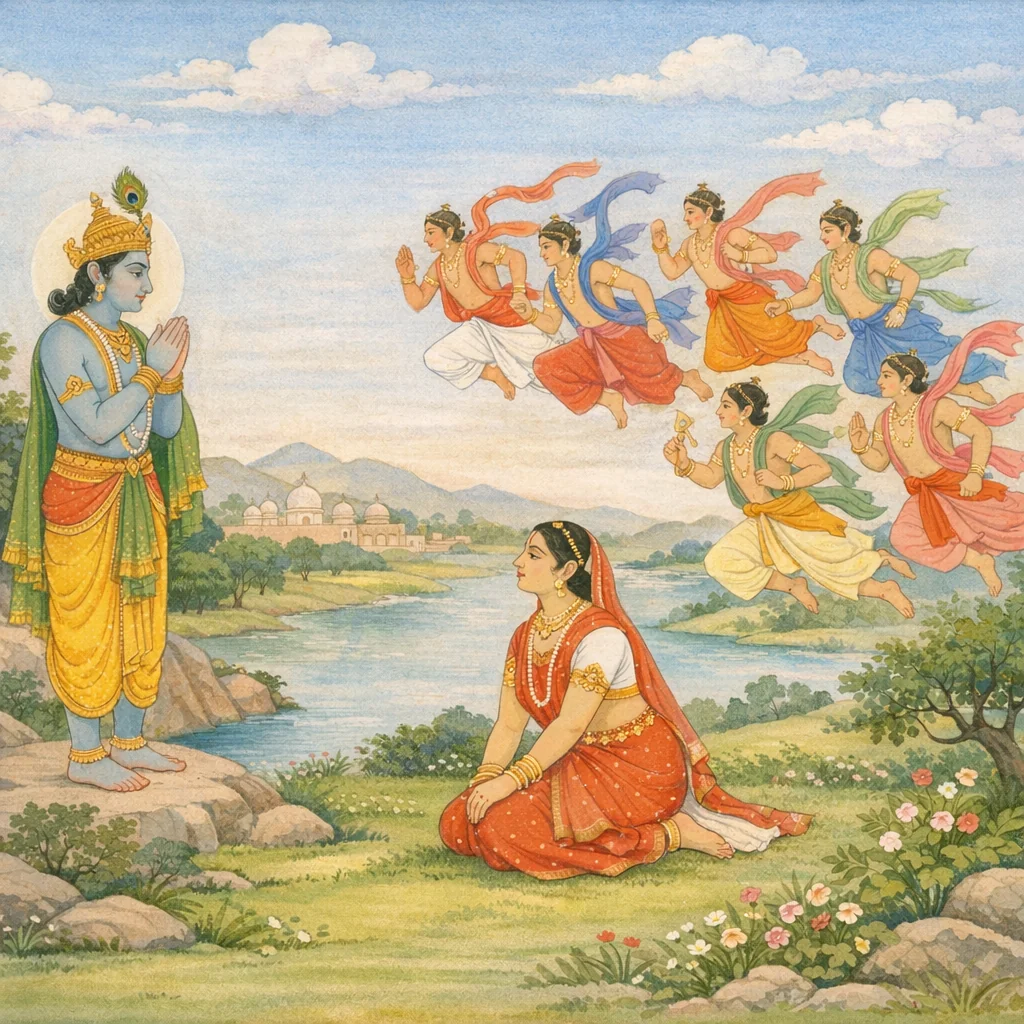
Sarga 47 weaves a mythic-theological episode together with a local royal genealogy, anchoring sacred geography in remembered story. Diti, grieving that her embryo has been cut into seven parts, addresses the unassailable Indra with conciliatory humility, explicitly freeing him from blame and attributing the calamity to her own lapse. She then turns loss into cosmic purpose, asking that the seven pieces become seven Maruts—celestial guardians linked with the divisions of wind and the protection of the regions. Indra, with folded palms, assents and confirms their divine freedom to move through the lokas and the directions; mother and sons are said to ascend fulfilled. The narrative then shifts to place-making: the land once inhabited by Indra is identified, and a dynastic line is recounted. Viśāla, the virtuous son of Ikṣvāku born of Alambuṣā, founds the city of Vaiśālī; Hemacandra, Sucandra, Dhūmrāśva, Sañjaya, Sahadeva, Kuśāśva, Somadatta, and Kakutstha follow, culminating in the present king Sumati. The chapter closes with arrangements for overnight hospitality and the cue that they will next meet Janaka. Sumati comes forth to receive Viśvāmitra and declares himself blessed by the visit of the great ṛṣi.
Shlokas
Verse 1
सप्तधातु कृते गर्भे दिति: परमदु:खिता।सहस्राक्षं दुराधर्षं वाक्यं सानुनयाऽब्रवीत्।।।।
When her embryo had been cut into seven parts, Diti—deeply distressed—spoke gentle, conciliatory words to the unassailable, thousand-eyed Indra.
Verse 2
ममापराधाद्गर्भोऽयं सप्तधा विफलीकृत:।नापराधोऽस्ति देवेश तवात्र बलसूदन।।।।
“Through my own fault, this embryo has been split into seven parts and rendered futile. In this matter, O lord of the gods—slayer of Bala—you bear no blame at all.”
Verse 3
प्रियं तु कर्तुमिच्छामि मम गर्भविपर्यये।मरुतां सप्तसप्तानां स्थानपाला भवन्त्विमे।।।।
Since this calamity has befallen my pregnancy against all expectation, I ask a boon: let these become the guardians of the regions as the Maruts—seven and seven.
Verse 4
वातस्कन्धा: इमे सप्त चरन्तु दिवि पुत्रक ।मारुता इति विख्याता दिव्यरूपा ममात्मजा:।।।।
O son, let these seven—my radiant sons—move in the heavens as the Vāta-skandhas, famed by the name ‘Maruts’.
Verse 5
ब्रह्मलोकं चरत्वेक इन्द्रलोकं तथाऽपर:।दिवि वायुरिति ख्यातस्तृतीयोऽपि महायशा:।।।।
Let one move in Brahmā’s world, another likewise in Indra’s world; and let the third—highly renowned—be famed as Vāyu, moving in the sky.
Verse 6
चत्वारस्तु सुरश्रेष्ठ दिशो वै तव शासनात्।सञ्चरिष्यन्तु भद्रं ते देवभूता ममात्मजा:।।।।
O best of the gods, by your command let the other four—my sons, now divine—range through the directions. Blessings be upon you.
Verse 7
तस्यास्तद्वचनं श्रुत्वा सहस्राक्ष: पुरन्दर:।उवाच प्राञ्जलिर्वाक्यं दितिं बलनिषूदन:।।।।
Hearing her words, Indra—Purandara, the thousand-eyed slayer of Bala—addressed Diti with folded hands and spoke.
Verse 8
सर्वमेतद्यथोक्तं ते भविष्यति न संशय:।विचरिष्यन्ति भद्रं ते देवभूतास्तवात्मजा:।।।।
All of this will happen exactly as you have said—there is no doubt. Your sons, becoming divine, will indeed roam; blessings be upon you.
Verse 9
एवं तौ निश्चयं कृत्वा मातापुत्रौ तपोवने।जग्मतुस्त्रिदिवं राम कृतार्थाविति नश्श्रुतम्।।।।
Thus, having reached this decision in the grove of austerities, the mother and son went to heaven, O Rāma, their purpose fulfilled—so we have heard.
Verse 10
एष देशस्स काकुत्स्थ महेन्द्राध्युषित: पुरा।दितिं यत्र तपस्सिद्धामेवं परिचचार स:।।।।
O Kakutstha, this is that very region once inhabited by great Indra, where he attended upon Diti when her austerities had borne fruit.
Verse 11
इक्ष्वाकोऽस्तु नरव्याघ्र पुत्र: परमधार्मिक:।।।।अलम्बुषायामुत्पन्नो विशाल इति विश्रुत:।तेन चासीदिह स्थाने विशालेति पुरी कृता।।।।
O tiger among men, Ikṣvāku had a supremely righteous son, renowned as Viśāla, born of Alambuṣā. By him, here on this very site, a city was founded called Viśālā.
Verse 12
इक्ष्वाकोऽस्तु नरव्याघ्र पुत्र: परमधार्मिक:।।1.47.11।। अलम्बुषायामुत्पन्नो विशाल इति विश्रुत:। तेन चासीदिह स्थाने विशालेति पुरी कृता।।1.47.12।।
O tiger among men, Ikṣvāku had a supremely righteous son, renowned as Viśāla, born of Alambuṣā. By him, here on this very site, a city was founded called Viśālā.
Verse 13
विशालस्य सुतो राम हेमचन्द्रो महाबल:।सुचन्द्र इति विख्यात: हेमचन्द्रादनन्तर:।।।।
O Rāma, mighty Hemacandra was the son of Viśāla; and after Hemacandra, his successor was the renowned Sucandra.
Verse 14
सुचन्द्रतनयो राम धूम्राश्व इति विश्रुत:।धूम्राश्वतनयश्चापि सञ्जयस्समपद्यत।।।।
O Rāma, Sucandra’s son was famed as Dhūmrāśva; and Dhūmrāśva too had a son—Sañjaya—who was born into that line.
Verse 15
सञ्जयस्य सुतश्श्रीमान् सहदेव: प्रतापवान्।कुशाश्वस्सहदेवस्य पुत्र: परमधार्मिक:।।।।
Sañjaya’s son was the prosperous and valiant Sahadeva; and Sahadeva’s son was Kuśāśva, a prince of exemplary righteousness.
Verse 16
कुशाश्वस्य महातेजा सोमदत्त: प्रतापवान्।सोमदत्तस्य पुत्रस्तु काकुत्स्थ इति विश्रुत:।।।।
Kuśāśva’s son was Somadatta, radiant and mighty; and Somadatta’s son was famed by the name Kakutstha.
Verse 17
तस्य पुत्रो महातेजा: सम्प्रत्येष पुरीमिमाम्।आवसत्यमरप्रख्यस्सुमतिर्नाम दुर्जय:।।।।
His son—radiant with great energy—now dwells in this very city: the invincible Sumati, famed as one like the gods.
Verse 18
इक्ष्वाकोस्तु प्रसादेन सर्वे वैशालिका नृपा:।दीर्घायुषो महात्मानो वीर्यवन्तस्सुधार्मिका:।।।।
By the grace of Ikṣvāku, all the kings of Vaiśālī became long-lived—high-souled, valorous, and steadfastly devoted to dharma.
Verse 19
इहाद्य रजनीं राम सुखं वत्स्यामहे वयम्।श्व: प्रभाते नरश्रेष्ठ जनकं द्रष्टुमर्हसि।।।।
O Rāma, tonight we shall rest here in comfort; and tomorrow at daybreak, O best of men, it is fitting that you go to see Janaka.
Verse 20
सुमतिस्तु महातेजा विश्वामित्रमुपागतम्।श्रुत्वा नरवरश्रेष्ठ: प्रत्युद्गच्छन्महायशा:।।।।
Hearing that Viśvāmitra had arrived, the illustrious Sumati—chief among kings and radiant with great energy—went forth to welcome him.
Verse 21
पूजां च परमां कृत्वा सोपाध्यायस्सबान्धव:।प्राञ्जलि: कुशलं पृष्ट्वा विश्वामित्रमथाब्रवीत्।।।।
Having offered him the highest honors—together with his preceptors and kinsmen—Sumati, with folded palms, asked Viśvāmitra of his welfare and then addressed him.
Verse 22
धन्योऽस्म्यनुगृहीतोऽस्मि यस्य मे विषयं मुनि:।सम्प्राप्तो दर्शनं चैव नास्ति धन्यतरो मम।।।।
O sage, I am blessed—indeed greatly favored—since you have come to my realm and granted me your sacred audience; none is more fortunate than I.
Verse 23
Having discovered that lapse in her vows, Śakra (Indra), the conqueror of enemy cities, entered Diti’s womb by resorting to his divine yogic power.
Frequently Asked Questions
The pivotal action is Diti’s moral reframing of a violent rupture (the embryo severed into seven) into a reconciliatory settlement: she accepts responsibility, absolves Indra of blame, and requests a constructive cosmic role for the fragments as Maruts. The ethical tension between harm and restitution is resolved through accountability, consent, and re-assignment into protective order.
The Upadeśa emphasizes that suffering can be redirected into dharmic function when paired with humility and right intention. Diti’s request and Indra’s respectful assent model reconciliation: power must respond with restraint and affirmation, while the aggrieved party can seek restoration that benefits the wider cosmos (guardianship, regulated movement across lokas and directions).
The chapter highlights the region associated with Indra’s former habitation and, more concretely, the founding of Vaiśālī (Viśālā-purī) by Viśāla, anchoring a political geography within Ikṣvāku lineage memory. It also marks a transitional itinerary point: the group stays the night locally and proceeds at dawn toward Janaka, connecting Vaiśālī’s courtly space to Mithilā’s royal-sacral setting.