Sarga 56
बालकाण्ड ५६: विश्वामित्र–वसिष्ठ अस्त्रसंघर्षः (Visvamitra and Vasistha: Contest of Divine Weapons)
बालकाण्ड
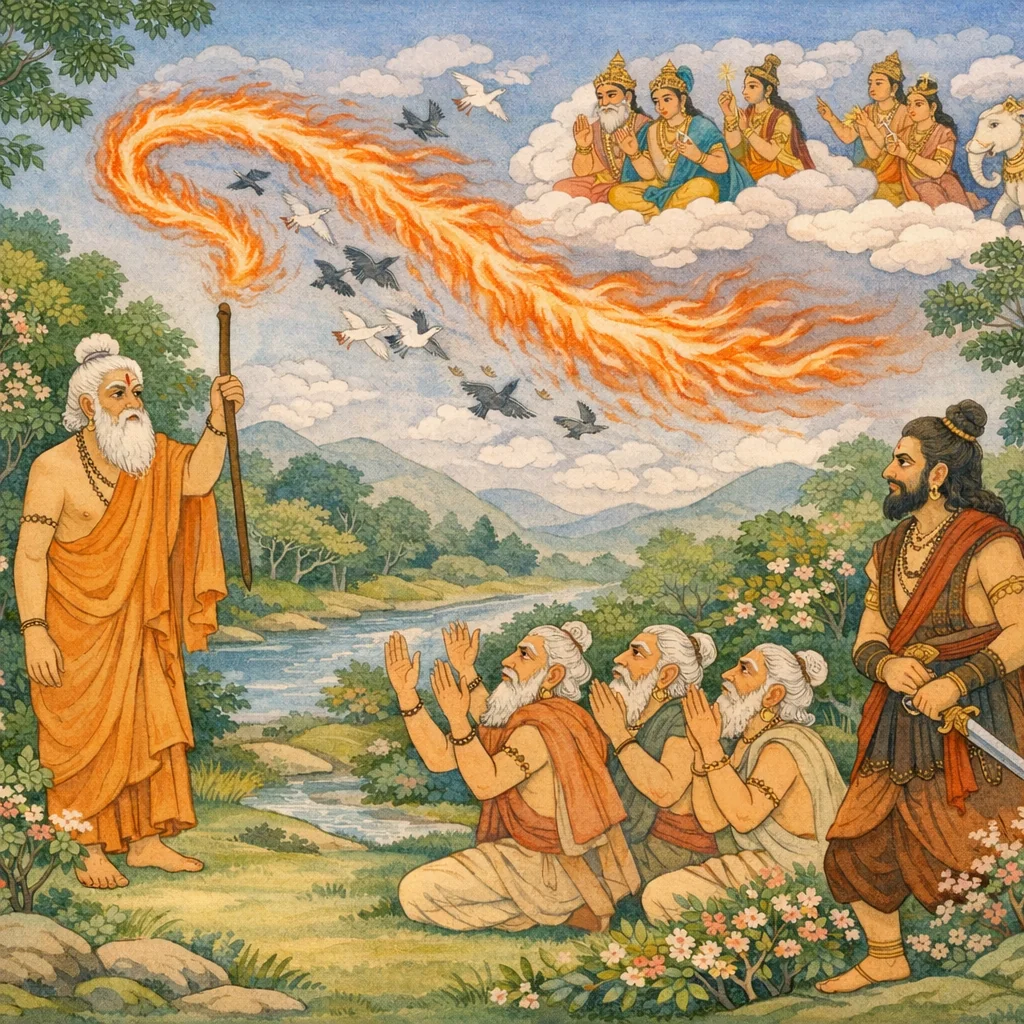
Sarga 56 stages a technical and theological confrontation between kṣatriya might expressed through śastra/astra and the brahmanical tejas embodied in Vasiṣṭha’s brahmadaṇḍa. Addressed by Vasiṣṭha, the powerful Viśvāmitra raises the Āgneyāstra and commands it to strike, but Vasiṣṭha nullifies it, revealing the hierarchy of powers. Viśvāmitra escalates, unleashing a long array of astras—Varuṇa, Raudra, Aindra, Pāśupata—and many specialized weapons (mohana, svāpana, dharmacakra, viṣṇucakra, and others), producing an awe-inspiring cosmic spectacle. Vasiṣṭha, hailed as Brahmā’s son, “swallows” them all with his staff. At last Viśvāmitra releases the Brahmāstra; the three worlds are distressed, and devas, ṛṣis, gandharvas, and great serpents react in alarm. Yet Vasiṣṭha consumes even the Brahmāstra by brahmanical energy, assuming a fierce form with flames issuing from his pores; the sages praise him and beg restraint for the welfare of the worlds. The episode ends with Viśvāmitra’s humiliation and realization that brahma-tejas surpasses kṣatriya-bala, prompting his resolve to undertake great tapas to attain brahmatva.
Shlokas
Verse 1
एवमुक्तो वसिष्ठेन विश्वामित्रो महाबल:।आग्नेयमस्त्रमुत्क्षिप्य तिष्ठ तिष्ठेति चाब्रवीत्।।।।
Thus addressed by Vasiṣṭha, the mighty Viśvāmitra lifted up the Agneya-weapon and, as he discharged it, cried, “Stand! Stand!”
Verse 2
ब्रह्मदण्डं समुत्क्षिप्य कालदण्डमिवाऽपरम्।वसिष्ठो भगवान् क्रोधादिदं वचनमब्रवीत्।।।।
Lifting up the Brahma-staff—like another rod of Death itself—the revered Vasiṣṭha, in anger, spoke these words.
Verse 3
क्षत्रबन्धो स्थितोस्म्येष यद्बलं तद्विदर्शय।नाशयाम्यद्य ते दर्पं शस्त्रस्य तव गाधिज।।।।
“O disgrace to the kṣatriya order, here I stand. Show whatever strength you have. Today I shall shatter the pride you place in your weapons, O son of Gādhi.”
Verse 4
क्व च ते क्षत्रियबलं क्व च ब्रह्मबलं महत्।पश्य ब्रह्मबलं दिव्यं मम क्षत्रियपांसन।।।।
“Where is your kṣatriya strength, and where is the great power of Brahman? Behold my divine brahma-power, O lowest among kṣatriyas.”
Verse 5
तस्यास्त्रं गाधिपुत्रस्य घोरमाग्नेयमुद्यतम्।ब्रह्मदण्डेन तच्छान्तमग्नेर्वेग इवाम्भसा।।।।
The dreadful Agneya weapon, launched by Gādhi’s son, was quelled by the Brahma-staff—just as the rush of fire is subdued by water.
Verse 6
वारुणं चैव रौद्रं च ऐन्द्रं पाशुपतं तथा।ऐषीकं चापि चिक्षेप कुपितो गाधिनन्दन:।।।।
Enraged, Gādhi’s son hurled the Vāruṇa, Raudra, Aindra, Pāśupata, and also the Aiṣīka weapons.
Verse 7
मानवं मोहनं चैव गान्धर्वं स्वापनं तथा।जृम्भणं मादनं चैव संतापनविलापने।।।।शोषणं दारणं चैव वज्रमस्त्रं सुदुर्जयम्।ब्रह्मपाशं कालपाशं वारुणं पाशमेव च।।।।पैनाकास्त्रं च दयितं शुष्कार्द्रे अशनी उभे।दण्डास्त्रमथ पैशाचं क्रौञ्चमस्त्रं तथैव च।।।।धर्मचक्रं कालचक्रं विष्णुचक्रं तथैव च।वायव्यं मथनं चैव अस्त्रं हयशिरस्तथा।।।।शक्तिद्वयं च चिक्षेप कङ्कालं मुसलं तथा। 560वैद्याधरं महास्त्रं च कालास्त्रमथ दारुणम्।।।।त्रिशूलमस्त्रं घोरं च कापालमथ कङ्कणम्।एतान्यस्त्राणि चिक्षेप सर्वाणि रघुनन्दन।।।।वसिष्ठे जपतां श्रेष्ठे तदद्भुतमिवाभवत्।
O Rāghava, Viśvāmitra hurled an overwhelming array of weapons—Mānava, Mohana, Gāndharva, Svāpana, Jṛmbhaṇa, Mādana, Saṃtāpana and Vilāpana; Śoṣaṇa and Dāraṇa; the hard-to-defeat Vajra; the Brahma- and Kāla-nooses and Varuṇa’s noose; the Paināka and the cherished Daita; the two thunderbolts, dry and wet; the Daṇḍa, Paiśāca, and Krauñca; the Dharma-, Kāla-, and Viṣṇu-cakras; the Vāyavya, Mathana, and Hayaśiras; the twin Śaktis, Kaṅkāla and Musala; the Vaidyādhara great weapon and the dreadful Kāla-weapon; the fearsome Triśūla, Kāpāla, and Kaṅkaṇa. All these he discharged against Vasiṣṭha, the foremost among those absorbed in japa—and it appeared utterly wondrous.
Verse 8
मानवं मोहनं चैव गान्धर्वं स्वापनं तथा।जृम्भणं मादनं चैव संतापनविलापने।।1.56.7।।शोषणं दारणं चैव वज्रमस्त्रं सुदुर्जयम्।ब्रह्मपाशं कालपाशं वारुणं पाशमेव च।।1.56.8।।पैनाकास्त्रं च दयितं शुष्कार्द्रे अशनी उभे।दण्डास्त्रमथ पैशाचं क्रौञ्चमस्त्रं तथैव च।।1.56.9।।धर्मचक्रं कालचक्रं विष्णुचक्रं तथैव च।वायव्यं मथनं चैव अस्त्रं हयशिरस्तथा।।1.56.10।।शक्तिद्वयं च चिक्षेप कङ्कालं मुसलं तथा। 560वैद्याधरं महास्त्रं च कालास्त्रमथ दारुणम्।।1.56.11।।त्रिशूलमस्त्रं घोरं च कापालमथ कङ्कणम्।एतान्यस्त्राणि चिक्षेप सर्वाणि रघुनन्दन।।1.56.12।। वसिष्ठे जपतां श्रेष्ठे तदद्भुतमिवाभवत्।
Then Viśvāmitra unleashed the emaciating and the rending weapons, and the hard-to-overcome Vajra-weapon; he also hurled the Brahmā-noose, the Kāla-noose, and the Varuṇa-noose as well—against Vasiṣṭha, the foremost of those engaged in japa.
Verse 9
मानवं मोहनं चैव गान्धर्वं स्वापनं तथा।जृम्भणं मादनं चैव संतापनविलापने।।1.56.7।।शोषणं दारणं चैव वज्रमस्त्रं सुदुर्जयम्।ब्रह्मपाशं कालपाशं वारुणं पाशमेव च।।1.56.8।।पैनाकास्त्रं च दयितं शुष्कार्द्रे अशनी उभे।दण्डास्त्रमथ पैशाचं क्रौञ्चमस्त्रं तथैव च।।1.56.9।।धर्मचक्रं कालचक्रं विष्णुचक्रं तथैव च।वायव्यं मथनं चैव अस्त्रं हयशिरस्तथा।।1.56.10।।शक्तिद्वयं च चिक्षेप कङ्कालं मुसलं तथा। 560वैद्याधरं महास्त्रं च कालास्त्रमथ दारुणम्।।1.56.11।।त्रिशूलमस्त्रं घोरं च कापालमथ कङ्कणम्।एतान्यस्त्राणि चिक्षेप सर्वाणि रघुनन्दन।।1.56.12।। वसिष्ठे जपतां श्रेष्ठे तदद्भुतमिवाभवत्।
He then hurled the Paināka weapon and the beloved Dayita weapon; he cast forth both thunderbolts—the “dry” and the “wet”—and thereafter the Daṇḍa weapon, the Paiśāca weapon, and likewise the Krauñca weapon.
Verse 10
मानवं मोहनं चैव गान्धर्वं स्वापनं तथा।जृम्भणं मादनं चैव संतापनविलापने।।1.56.7।।शोषणं दारणं चैव वज्रमस्त्रं सुदुर्जयम्।ब्रह्मपाशं कालपाशं वारुणं पाशमेव च।।1.56.8।।पैनाकास्त्रं च दयितं शुष्कार्द्रे अशनी उभे।दण्डास्त्रमथ पैशाचं क्रौञ्चमस्त्रं तथैव च।।1.56.9।।धर्मचक्रं कालचक्रं विष्णुचक्रं तथैव च।वायव्यं मथनं चैव अस्त्रं हयशिरस्तथा।।1.56.10।।शक्तिद्वयं च चिक्षेप कङ्कालं मुसलं तथा। 560वैद्याधरं महास्त्रं च कालास्त्रमथ दारुणम्।।1.56.11।।त्रिशूलमस्त्रं घोरं च कापालमथ कङ्कणम्।एतान्यस्त्राणि चिक्षेप सर्वाणि रघुनन्दन।।1.56.12।। वसिष्ठे जपतां श्रेष्ठे तदद्भुतमिवाभवत्।
He hurled the Dharma-disc, the Time-disc, and the Viṣṇu-disc; and also the Vāyavya weapon, the Mathana weapon, and likewise the Hayaśiras weapon.
Verse 11
मानवं मोहनं चैव गान्धर्वं स्वापनं तथा।जृम्भणं मादनं चैव संतापनविलापने।।1.56.7।।शोषणं दारणं चैव वज्रमस्त्रं सुदुर्जयम्।ब्रह्मपाशं कालपाशं वारुणं पाशमेव च।।1.56.8।।पैनाकास्त्रं च दयितं शुष्कार्द्रे अशनी उभे।दण्डास्त्रमथ पैशाचं क्रौञ्चमस्त्रं तथैव च।।1.56.9।।धर्मचक्रं कालचक्रं विष्णुचक्रं तथैव च।वायव्यं मथनं चैव अस्त्रं हयशिरस्तथा।।1.56.10।।शक्तिद्वयं च चिक्षेप कङ्कालं मुसलं तथा। 560वैद्याधरं महास्त्रं च कालास्त्रमथ दारुणम्।।1.56.11।।त्रिशूलमस्त्रं घोरं च कापालमथ कङ्कणम्।एतान्यस्त्राणि चिक्षेप सर्वाणि रघुनन्दन।।1.56.12।। वसिष्ठे जपतां श्रेष्ठे तदद्भुतमिवाभवत्।
He hurled a pair of Śakti-weapons, and also the Kaṅkāla and the Musala; he cast the great Vaidyādhara weapon too, and then the dreadful Kāla-weapon.
Verse 12
मानवं मोहनं चैव गान्धर्वं स्वापनं तथा।जृम्भणं मादनं चैव संतापनविलापने।।1.56.7।।शोषणं दारणं चैव वज्रमस्त्रं सुदुर्जयम्।ब्रह्मपाशं कालपाशं वारुणं पाशमेव च।।1.56.8।।पैनाकास्त्रं च दयितं शुष्कार्द्रे अशनी उभे।दण्डास्त्रमथ पैशाचं क्रौञ्चमस्त्रं तथैव च।।1.56.9।।धर्मचक्रं कालचक्रं विष्णुचक्रं तथैव च।वायव्यं मथनं चैव अस्त्रं हयशिरस्तथा।।1.56.10।।शक्तिद्वयं च चिक्षेप कङ्कालं मुसलं तथा। 560वैद्याधरं महास्त्रं च कालास्त्रमथ दारुणम्।।1.56.11।।त्रिशूलमस्त्रं घोरं च कापालमथ कङ्कणम्।एतान्यस्त्राणि चिक्षेप सर्वाणि रघुनन्दन।।1.56.12।। वसिष्ठे जपतां श्रेष्ठे तदद्भुतमिवाभवत्।
He discharged the dreadful Triśūla-weapon, and then the Kāpāla and the Kaṅkaṇa as well. All these weapons he released, O joy of the Raghu line, against Vasiṣṭha—the foremost among those devoted to sacred recitation; and it seemed a marvel.
Verse 13
तानि सर्वाणि दण्डेन ग्रसते ब्रह्मणस्सुत:।।।।तेषु शान्तेषु ब्रह्मास्त्रं क्षिप्तवान् गाधिनन्दन:।
Brahmā’s son (Vasiṣṭha) swallowed up all those weapons with his staff. When they were stilled, the son of Gādhi (Viśvāmitra) hurled the Brahmāstra.
Verse 14
तदस्त्रमुद्यतं दृष्ट्वा देवास्साग्निपुरोगमा:।।।।देवर्षयश्च सम्भ्रान्तागन्धर्वास्समहोरगा:।त्रैलोक्यमासीत्सन्तप्तं ब्रह्मास्त्रे समुदीरिते।।।
Seeing that weapon raised, the gods—with Agni at their head—along with the divine seers, the Gandharvas, and the great serpents, were thrown into alarm.
Verse 15
तदस्त्रमुद्यतं दृष्ट्वा देवास्साग्निपुरोगमा:।।1.56.14।।देवर्षयश्च सम्भ्रान्तागन्धर्वास्समहोरगा:।त्रैलोक्यमासीत्सन्तप्तं ब्रह्मास्त्रे समुदीरिते।।1.56.15।
When the Brahmāstra was released, the three worlds were scorched with anguish.
Verse 16
तदप्यस्त्रं महाघोरं ब्रह्मं ब्राह्मेण तेजसा ।वसिष्ठो ग्रसते सर्वं ब्रह्मदण्डेन राघव।।।।
O Rāghava, Vasiṣṭha—endowed with Brahmā’s own radiance—swallowed up entirely even that most dreadful Brahmāstra, by means of the Brahma-staff.
Verse 17
ब्रह्मास्त्रं ग्रसमानस्य वसिष्ठस्य महात्मन:।त्रैलोक्यमोहनं रौद्रं रूपमासीत्सुदारुणम्।।।।
As the great-souled Vasiṣṭha swallowed the Brahmāstra, his form became fiercely terrible—so overpowering that it stunned the three worlds.
Verse 18
रोमकूपेषु सर्वेषु वसिष्ठस्य महात्मन:।मरीच्य इव निष्पेतुरग्नेर्धूमाकुलार्चिष:।।।।
From every pore of the great-souled Vasiṣṭha, flames of fire—tangled with smoke—burst forth like rays of light.
Verse 19
प्राज्वलद्ब्रह्मदण्डश्च वसिष्ठस्य करोद्यत:।विधूम इव कालाग्निर्यमदण्ड इवापर:।।।।
And the Brahma-staff, raised in Vasiṣṭha’s hand, blazed forth—like the smokeless fire of the final dissolution, like another rod of Yama.
Verse 20
ततोऽस्तुवन् मुनिगणा वसिष्ठं जपतां वरम्।अमोघं ते बलं ब्रह्मन् तेजो धारय तेजसा।।।।
Then the gathered sages praised Vasiṣṭha, the foremost among those devoted to japa, saying: “O Brahmin, your power is unfailing—hold your radiance in check by your own radiance.”
Verse 21
निगृहीतस्त्वया ब्रह्मन् विश्वामित्रो महातपा:।प्रसीद जपतां श्रेष्ठ लोकास्सन्तु गतव्यथा:।।।।
O Brahmin, by you the great ascetic Viśvāmitra has been subdued. Be gracious, O best among those devoted to japa; let the worlds be free from distress.
Verse 22
एवमुक्तो महातेजाश्शमं चक्रे महातपा:।विश्वामित्रोऽपि निकृतो विनिश्वस्येदमब्रवीत्।।।।
Thus addressed, the great ascetic of mighty splendor grew calm. And Viśvāmitra too, humbled, heaved a sigh and spoke these words.
Verse 23
धिग्बलं क्षत्रियबलं ब्रह्मतेजो बलं बलम्।एकेन ब्रह्मदण्डेन सर्वास्त्राणि हतानि मे।।।।
Fie upon the strength called kṣatriya might! Brahmin splendor alone is true strength. By a single Brahma-staff all my weapons have been destroyed.
Verse 24
तदेतत्समवेक्ष्याहं प्रसन्नेन्द्रियमानस:।तपो महत्समास्थास्ये यद्वै ब्रह्मत्वकारणम्।।।।
Seeing this clearly, with mind and senses made serene, I shall undertake great austerity—indeed that which is the cause of attaining brahminhood.
Frequently Asked Questions
The pivotal action is Viśvāmitra’s escalation from conventional astras to the Brahmāstra against a sage, testing whether martial capability may override ascetic authority; the narrative judges this as a misuse of power when detached from dharma and restraint.
The sarga teaches that brahma-tejas—disciplined spiritual energy grounded in tapas and dharma—can neutralize even the most catastrophic weapons; true strength is ethical and ascetic, not merely technological or martial.
Rather than a named geography, the text highlights a cosmological landmark—trailokya (the three worlds)—and a cultural-ritual institution: brahmadaṇḍa and mantra-japa as symbols of brahmanical authority within epic-era ascetic culture.