Sarga 67
शिवधनुर्दर्शनं—रामेण धनुर्भङ्गश्च (The Showing of Śiva’s Bow and Rama’s Breaking of It)
बालकाण्ड
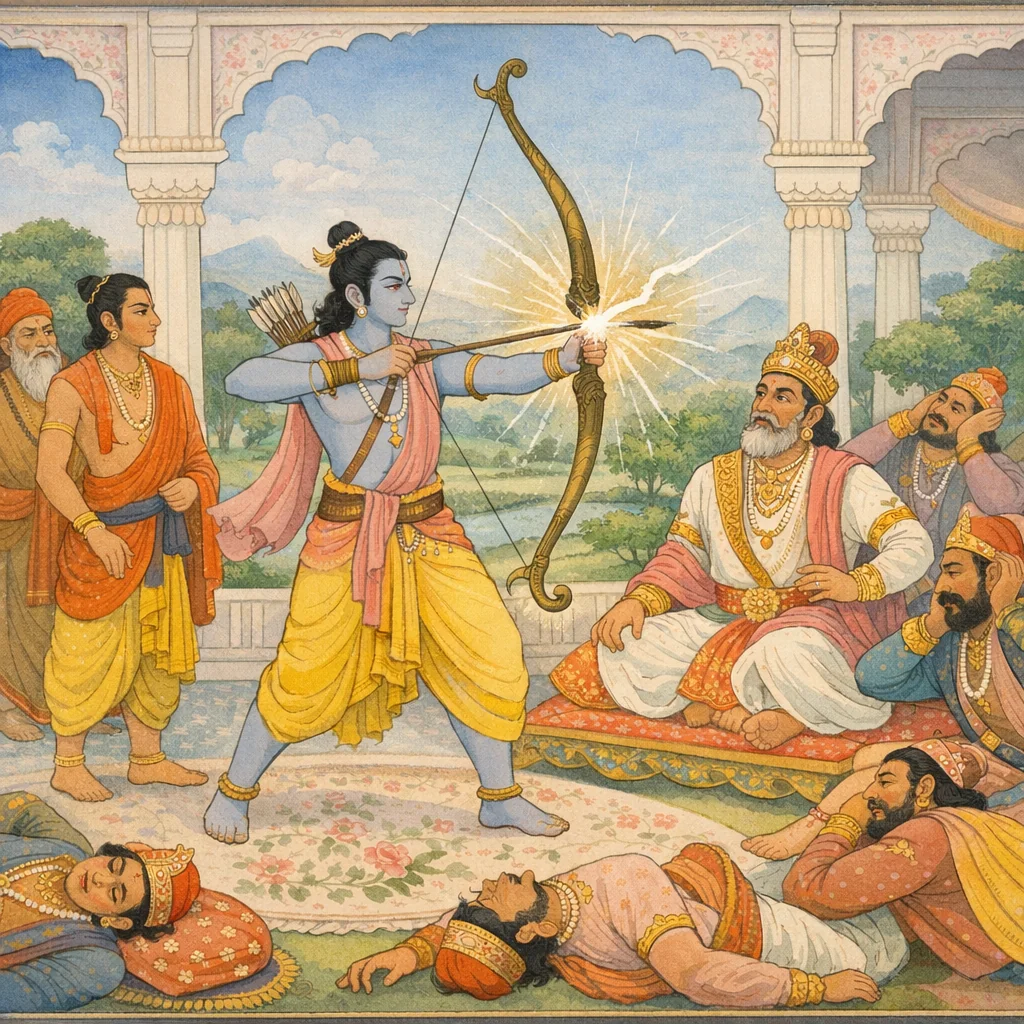
In Mithilā, answering Viśvāmitra’s request, King Janaka orders the revered divine bow of Śiva (Śiva-dhanus) to be brought forth, adorned, and ceremonially presented. Ministers carry it with great difficulty in an iron casket on an eight-wheeled conveyance, revealing its superhuman weight and sanctity. Janaka tells Viśvāmitra and the princes that neither mighty kings nor non-human hosts—devas, asuras, rākṣasas, gandharvas, yakṣas, nāgas, kinnaras—have ever been able to string or wield it. At Viśvāmitra’s prompting, Rāma opens the casket, asks leave to touch, lift, and string the bow, and before thousands strings and draws it with seeming ease. The bow breaks in the middle with a thunder-like crash and an earth-tremor; most onlookers faint, except Janaka, Viśvāmitra, and the two Rāghavas. When calm returns, Janaka acknowledges the unimaginable feat, declares his vow of vīrya-śulka fulfilled, resolves to give Sītā to Rāma, and sends envoys to Ayodhyā to summon Daśaratha and report all that has occurred.
Shlokas
Verse 1
.जनकस्य वचश्श्रुत्वा विश्वामित्रो महामुनि: ।धनुर्दर्शय रामाय इति होवाच पार्थिवम्।।।।
Hearing Janaka’s words, the great sage Viśvāmitra said to the king: “Show the bow to Rāma.”
Verse 2
ततस्स राजा जनक: सामन्तान्व्यादिदेश ह।धनुरानीयतां दिव्यं गन्धमाल्यविभूषितम्।।।।
Then King Janaka ordered his feudatory lords: “Bring the divine bow, adorned with fragrant sandal and garlands.”
Verse 3
जनकेन समादिष्टा: सचिवा प्राविशन् पुरीम्।तद्धनु: पुरत: कृत्वा निर्जग्मु: पार्थिवाज्ञया।।।।
Commanded by Janaka, the ministers entered the city; and, placing that bow at the fore, they set out in accordance with the king’s order.
Verse 4
नृणां शतानि पञ्चाशद्व्यायतानां महात्मनाम्।मञ्जूषामष्टचक्रां तां समूहुस्ते कथञ्चन।।।।
Five thousand great and powerful men hauled—only with great difficulty—that eight-wheeled chest-cart.
Verse 5
तामादाय तु मञ्जूषामायसीं यत्र तद्धनु:।सुरोपमं ते जनकमूचुर्नृपतिमन्त्रिण:।।।।
Having brought the iron casket in which that bow was kept, the king’s counsellors spoke to Janaka, whose majesty was like that of a god.
Verse 6
इदं धनुर्वरं राजन् पूजितं सर्वराजभि:।मिथिलाधिप राजेन्द्र दर्शनीयं यदिच्छसि।।।।
O King, lord of Mithilā, best of rulers—here is that excellent bow, honoured by all kings, which you wish to show.
Verse 7
तेषां नृपो वच: श्रुत्वा कृताञ्जलिरभाषत।विश्वामित्रं महात्मानं तौ चोभौ रामलक्ष्मणौ।।।।
Hearing their words, the king, with palms joined in reverence, addressed the great-souled Viśvāmitra, and the two princes—Rāma and Lakṣmaṇa.
Verse 8
इदं धनुर्वरं ब्रह्मन् जनकैरभिपूजितम्।राजभिश्च महावीर्यै: अशक्तै: पूरितुं पुरा।।।।
O Brahman, this excellent bow was revered by the Janakas of old; and even kings of great prowess were once unable to string it.
Verse 9
नैतत्सुरगणास्सर्वे नासुरा न च राक्षसा:।गन्धर्वयक्षप्रवरा: सकिन्नरमहोरगा:।।।।
Neither all the hosts of the gods, nor the asuras, nor the rākṣasas—nor even the foremost gandharvas and yakṣas together with the kinnaras and mighty serpents—were able to wield this bow.
Verse 10
क्व गतिर्मानुषाणां च धनुषोऽस्य प्रपूरणे।आरोपणे समायोगे वेपने तोलनेऽपि वा।।।।
“What chance have mere humans with this bow—whether to bend it, string it, set the arrow, draw it back, or even lift it at all?”
Verse 11
तदेतद्धनुषां श्रेष्ठमानीतं मुनिपुङ्गव।दर्शयैतन्महाभाग अनयो: राजपुत्रयो:।।।।
“Yet this best of bows has been brought here, O foremost of sages. O greatly blessed one, show it to these two princes.”
Verse 12
विश्वामित्रस्तु धर्मात्मा श्रुत्वा जनकभाषितम्।वत्स राम धनु: पश्य इति राघवमब्रवीत्।।।।
Hearing Janaka’s words, righteous Viśvāmitra said to Rāghava: “Dear child Rāma, look upon the bow.”
Verse 13
ब्रह्मर्षेर्वचनाद्रामो यत्र तिष्ठति तद्धनु:।मञ्जूषां तामपावृत्य दृष्ट्वा धनुरथाब्रवीत्।।।।
At the Brahmarṣi’s instruction, Rāma went to where the bow was kept; opening the casket, he beheld the bow and then spoke.
Verse 14
इदं धनुर्वरं ब्रह्मन् संस्पृशामीह पाणिना।यत्नवांश्च भविष्यामि तोलने पूरणेऽपि वा।।।।
“O revered Brahman, may I touch this excellent bow with my hand? I will exert myself—whether in lifting it or even in stringing it.”
Verse 15
बाढमित्येव तं राजा मुनिश्च समभाषत।लीलया स धनुर्मध्ये जग्राह वचनान्मुने:।।।
The king, and the sage as well, replied, “So be it.” Then, at the sage’s word, Rāma grasped the bow at its middle with effortless ease.
Verse 16
पश्यतां नृपसहस्राणां बहूनां रघुनन्दन: ।आरोपयत्स धर्मात्मा सलीलमिव तद्धनु:।।।।
While many thousands of kings looked on, Rāma—the joy of the Raghu line, steadfast in dharma—strung that bow as if it were a mere plaything.
Verse 17
आरोपयित्वा धर्मात्मा पूरयामास तद्धनु:।तद्बभञ्ज धनुर्मध्ये नरश्रेष्ठो महायशा:।।।।
Having strung it, righteous Rāma drew the bow to its full bend; and that best of men, of great renown, broke it apart at the middle.
Verse 18
तस्य शब्दो महानासीत् निर्घातसमनिस्वन:।भूमिकम्पश्च सुमहान् पर्वतस्येव दीर्यत:।।।।
From it arose a tremendous roar, like a thunderclap; and a mighty trembling of the earth followed, as though a mountain were splitting apart.
Verse 19
निपेतुश्च नरा स्सर्वे तेन शब्देन मोहिता:।वर्जयित्वा मुनिवरं राजानं तौ च राघवौ।।।।
Deluded by that sound, all the people fell down—except the foremost sage, the king, and the two Rāghavas.
Verse 20
प्रत्याश्वस्ते जने तस्मिन्राजा विगतसाध्वस:।उवाच प्राञ्जलिर्वाक्यं वाक्यज्ञो मुनिपुङ्गवम्।।।।
When the people had recovered, the king—free of fear—addressed the foremost of sages with folded hands, skilled as he was in fitting speech.
Verse 21
भगवन् दृष्टवीर्यो मे रामो दशरथात्मज:।अत्यद्भुतमचिन्त्यं च न तर्कितमिदं मया।।।।
“Revered sir, I have now witnessed the prowess of Rāma, Daśaratha’s son. This is utterly marvelous and beyond imagining—something I never even conjectured.”
Verse 22
जनकानां कुले कीर्तिमाहरिष्यति मे सुता।सीता भर्तारमासाद्य रामं दशरथात्मजम्।।।।
By gaining Rāma, Daśaratha’s son, as her husband, my daughter Sītā will bring glory to the lineage of the Janakas.
Verse 23
मम सत्या प्रतिज्ञा च वीर्यशुल्केति कौशिक।सीता प्राणैर्बहुमता देया रामाय मे सुता।।।।
O Kauśika, my truthful vow has been fulfilled: “Let her be the prize of prowess.” Sītā—dearer to me than life-breath—is to be given to Rāma, my daughter.
Verse 24
भवतोऽनुमते ब्रह्मन् शीघ्रं गच्छन्तु मन्त्रिण:।मम कौशिक भद्रं ते अयोध्यां त्वरिता रथै:।।।।
O Brahman, O Kauśika—may auspiciousness attend you. With your consent, let my ministers depart at once for Ayodhyā in swift chariots.
Verse 25
राजानं प्रश्रितैर्वाक्यैरानयन्तु पुरं मम।प्रदानं वीर्यशुल्काया: कथयन्तु च सर्वश:।।।।
Let them, with reverent words, bring the king to my city; and let them explain fully the offering of Sītā to Rāma—she who is the “bride-price of valor”.
Verse 26
मुनिगुप्तौ च काकुत्स्थौ कथयन्तु नृपाय वै।प्रीयमाणं तु राजानमानयन्तु सुशीघ्रगा:।।।।
Let them tell the king that the two Kakutsthas are under the sage’s protection; and let swift messengers bring the king here at once, delighted by the news.
Verse 27
कौशिकश्च तथेत्याह राजा चाभाष्य मन्त्रिण:।।।।अयोध्यां प्रेषयामास धर्मात्मा कृतशासनान्।यथावृत्तं समाख्यातुमानेतुं च नृपं तदा।।।।
Kauśika said, “So be it.” Then the righteous king, after consulting his ministers, sent duly instructed envoys to Ayodhyā to report exactly all that had occurred and to bring the king (Daśaratha) at that time.
Frequently Asked Questions
The pivotal action is Rāma’s decision to handle a sacral, king-guarded weapon only after explicit permission from both Janaka and Viśvāmitra—modeling disciplined power where capability is subordinated to ritual propriety and authority.
Prowess becomes ethically meaningful when anchored in satya (truthful vows) and maryādā (right conduct): Janaka’s vow is fulfilled without coercion, and Rāma’s strength is presented as calm, accountable, and publicly verifiable rather than merely forceful.
Mithilā is highlighted as the courtly-ritual center where the bow trial occurs, while Ayodhyā is invoked as the political home to be formally notified and from which Daśaratha is summoned—linking marital alliance to inter-kingdom protocol.