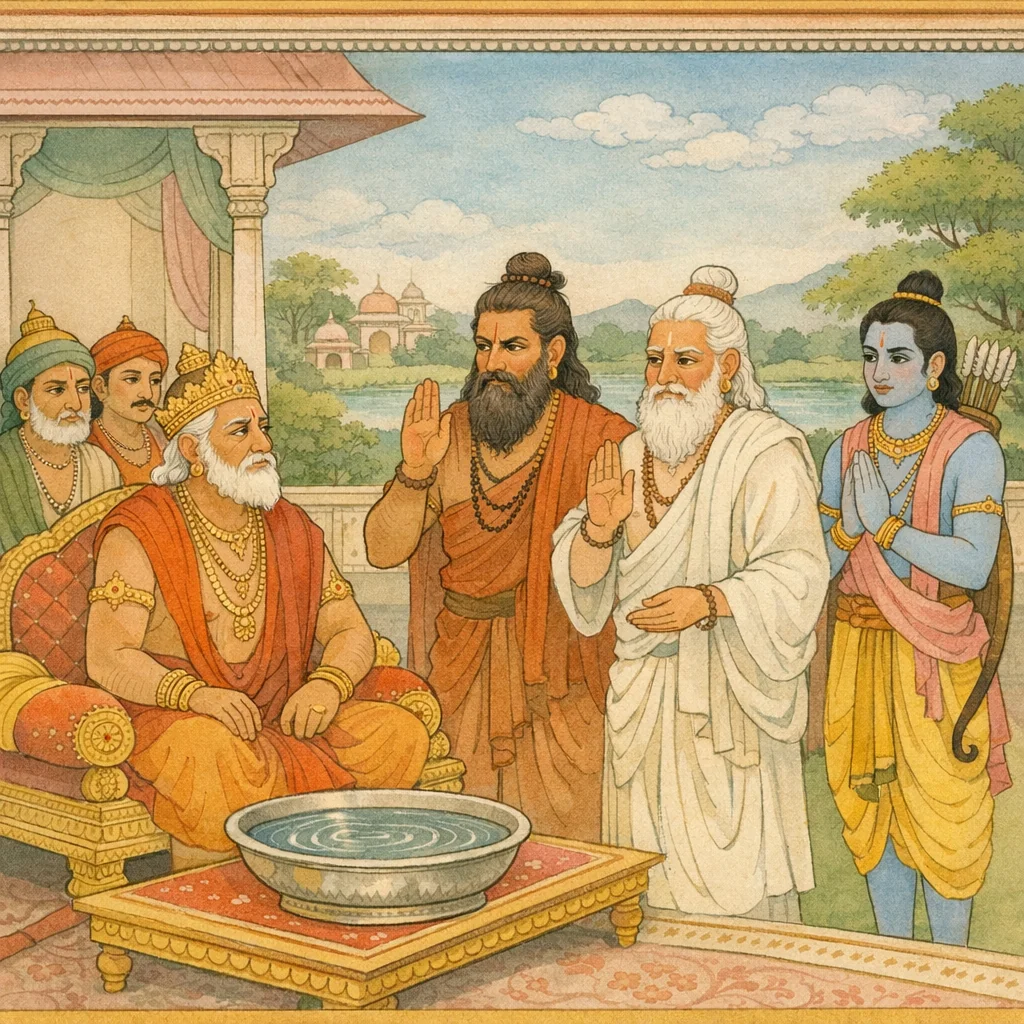
Sarga 21
बालकाण्डे एकविंशः सर्गः — Daśaratha’s Promise, Vasiṣṭha’s Counsel, and Viśvāmitra’s Weapon-Lore
बालकाण्ड
Sarga 21 unfolds as a grave dharma-vicāra on the royal duty of keeping one’s pledged word. Daśaratha, torn within yet speaking from fatherly love, pleads to withhold his son; Viśvāmitra’s wrath flares, and cosmic tremors proclaim the weight of a broken vow. Vasiṣṭha intervenes as a steady arbiter of dharma. He upholds Daśaratha as the exemplar of the Ikṣvāku line and declares that abandoning a promised word destroys the merit gained from past sacrifices (yajña) and gifts (dāna). The narrative then affirms Viśvāmitra’s power to protect: he is praised as righteousness embodied, unmatched in might and intellect, and uniquely learned in astras across the three worlds. The lineage of weapons is recounted—Bhr̥śāśva’s virtuous sons, and Dakṣa’s daughters Jayā and Suprabhā who bring forth a hundred radiant weapon-beings—culminating in the claim that Viśvāmitra knows them precisely and can even generate new ones. At last Daśaratha, composed, gives assent and grants Rāma’s departure with Viśvāmitra, for the prince’s welfare and for the preservation of royal integrity and honor.
Shlokas
Verse 1
तच्छ्रुत्वा वचनं तस्य स्नेहपर्याकुलाक्षरम्।समन्यु: कौशिको वाक्यं प्रत्युवाच महीपतिम्।।।।
Hearing the king’s words—spoken with paternal affection and therefore wavering in expression—Kauśika (Viśvāmitra), stirred to anger, replied to the lord of the earth.
Verse 2
पूर्वमर्थं प्रतिश्रुत्य प्रतिज्ञां हातुमिच्छसि।राघवाणामयुक्तोऽयं कुलस्यास्य विपर्यय:।।1.21.2।।
Having earlier promised this matter, you now wish to abandon that pledge. Such a breach is unworthy of the Rāghavas and would be a grave reversal for this royal lineage.
Verse 3
यदीदं ते क्षमं राजन् गमिष्यामि यथाऽगतम्।मिथ्याप्रतिज्ञ: काकुत्स्थ सुखीभव सबान्धव:।।।।
If this seems acceptable to you, O King, then I shall depart as I came. O scion of Kakutstha, having made your pledge false, remain happy—along with your kinsmen.
Verse 4
तस्य रोषपरीतस्य विश्वामित्रस्य धीमत:।चचाल वसुधा कृत्स्ना विवेश च भयं सुरान्।।।।
As the wise Viśvāmitra became enveloped in wrath, the whole earth trembled, and fear entered the gods.
Verse 5
त्रस्तरूपं तु विज्ञाय जगत्सर्वं महानृषि:।नृपतिं सुव्रतो धीरो वसिष्ठो वाक्यमब्रवीत्।।।।
Realizing that the entire world had taken on a frightened aspect, the great sage Vasiṣṭha—steadfast and devoted to vows—addressed the king with these words.
Verse 6
इक्ष्वाकूणां कुले जातस्साक्षाद्धर्म इवापर:।धृतिमान् सुव्रत: श्रीमान्नधर्मं हातुमर्हसि।।।।
Born in the Ikṣvāku line, you are like dharma itself embodied—another Dharma in visible form. Steadfast, devoted to vows, and illustrious, you must not abandon righteousness.
Verse 7
त्रिषु लोकेषु विख्यातो धर्मात्मा इति राघव।स्वधर्मं प्रतिपद्यस्व नाधर्मं वोढुमर्हसि।।।।
O Rāghava, you are renowned in the three worlds as a righteous man. Stand firm in your own duty; it is not fitting for you to bear or resort to unrighteousness.
Verse 8
संश्रुत्यैवं करिष्यामीत्यकुर्वाणस्य राघव।इष्टापूर्तवधो भूयात्तस्माद्रामं विसर्जय।।।।
O Rāghava, for one who, having promised ‘I will do so,’ does not fulfill it, the merit of sacrifices and charities is ruined; therefore, send Rāma (with the sage).
Verse 9
कृतास्त्रमकृतास्त्रं वा नैनं शक्ष्यन्ति राक्षसा:।गुप्तं कुशिकपुत्रेण ज्वलनेनामृतं यथा।।।।
Whether trained in weapons or not, the rākṣasas will not be able to overpower him; for Rāma is guarded by the son of Kuśika (Viśvāmitra), like amṛta protected by blazing fire.
Verse 10
एष विग्रहवान् धर्म एष वीर्यवतां वर:।एष बुध्याऽधिको लोके तपसश्च परायणम्।।।।
He is dharma embodied; he is the foremost among the mighty. In this world he surpasses all in intellect, and in the power of tapas he stands as the supreme refuge.
Verse 11
एषोऽस्त्रान् विविधान्वेत्ति त्रैलोक्ये सचराचरे।नैनमन्य: पुमान्वेत्ति न च वेत्स्यन्ति केचन।।।।
He knows the many kinds of divine weapons throughout the three worlds, among all beings moving and unmoving. No other man knows them as he does—nor will anyone in the future.
Verse 12
न देवा नर्षय: केचिन्नासुरा न च राक्षसा:।गन्धर्वयक्षप्रवरास्सकिन्नरमहोरगा:।।।।
Neither devas nor any rishis, neither asuras nor rākṣasas—nor gandharvas, nor the foremost yakṣas, nor kinnaras, nor great serpents—can match that knowledge.
Verse 13
सर्वास्त्राणि भृशाश्वस्य पुत्रा: परमधार्मिका:।कौशिकाय पुरा दत्ता यदा राज्यं प्रशासति।।।।
Long ago, when he was ruling the kingdom, all those weapons were bestowed upon Kauśika (Viśvāmitra) by the supremely righteous sons of Bhṛśāśva.
Verse 14
तेऽपि पुत्रा भृशाश्वस्य प्रजापतिसुतासुता:।नैकरूपा महावीर्या दीप्तिमन्तो जयावहा:।।।।
They too—Bhṛśāśva’s sons, grandsons through Prajāpati’s daughter—were of many forms, of great might, radiant, and bringers of victory.
Verse 15
जया च सुप्रभा चैव दक्षकन्ये सुमध्यमे।ते सुवातेऽस्त्रशस्त्राणि शतं परमभास्वरम्।।।।
Jaya and Suprabhā—two slender-waisted daughters of Dakṣa—brought forth a hundred astras and śastras, supremely radiant.
Verse 16
पञ्चाशतं सुतान् लेभे जया नाम परान् पुरा।वधायासुरसैन्यानाममेयान् कामरूपिण:।।।।
In former times Jaya bore fifty outstanding sons—immeasurable in power and able to assume forms at will—destined to destroy the armies of the asuras.
Verse 17
सुप्रभाऽजनयच्चापि पुत्रान्पञ्चाशतं पुन:।संहारान्नामदुर्धर्षान् दुराक्रामान् बलीयस:।।।।
Suprabhā too bore another fifty sons, called the Saṃhāras—unassailable, hard to overcome, and exceedingly powerful.
Verse 18
तानि चास्त्राणि वेत्त्येष यथावत्कुशिकात्मज:।अपूर्वाणां च जनने शक्तो भूयस्स धर्मवित्।।।।
This son of Kuśika knows those weapons in full and proper detail; and, being a knower of dharma, he is moreover capable of bringing forth even new, unprecedented weapons.
Verse 19
एवं वीर्यो महातेजा विश्वामित्रो महायशाः।न रामगमने राजन् संशयं कर्तुमर्हसि।।।।
Such is the prowess of the mighty and radiant Viśvāmitra, renowned far and wide. Therefore, O King, you should not entertain any doubt about Rāma’s going with him.
Verse 20
तेषां निग्रहणे शक्तस्स्वयं च कुशिकात्मज:।तव पुत्रहितार्थाय त्वामुपेत्याभियाचते।।।।
Though the son of Kuśika is himself capable of subduing them, he has come to you and requests this—for the welfare and greater good of your son.
Verse 21
इति मुनिवचनात्प्रसन्नचित्तोरघुवृषभस्तु मुमोद भास्वराङ्ग:।गमनमभिरुरोच राघवस्यप्रथितयशा: कुशिकात्मजाय बुध्या।।।।
Thus, by the sage’s words, the bull among the Raghus became tranquil and rejoiced, his body radiant. With discerning mind, the famed king consented to Rāghava’s departure with the son of Kuśika.
Verse 22
This son of Kuśika knows those weapons in full and proper detail; and, being a knower of dharma, he is moreover capable of bringing forth even new, unprecedented weapons.
Frequently Asked Questions
Daśaratha hesitates to fulfill his earlier promise to Viśvāmitra due to paternal attachment, creating a dharma-sankat: whether emotional concern can justify retracting a pledged commitment made by a king.
Vasiṣṭha articulates that royal righteousness is inseparable from truthfulness in action: a promise not enacted undermines accumulated merit and public moral order, whereas vow-keeping sustains both personal integrity and cosmic stability.
Rather than a travel setting, the sarga highlights cultural-cosmic domains—trailokya (three worlds) and the assembly of devas, ṛṣis, and other beings—used as an epic-scale register to validate Viśvāmitra’s weapon-knowledge and the universal stakes of dharma.