Sarga 8
अष्टमः सर्गः — Daśaratha Resolves on the Aśvamedha (Horse-Sacrifice) for Progeny
बालकाण्ड
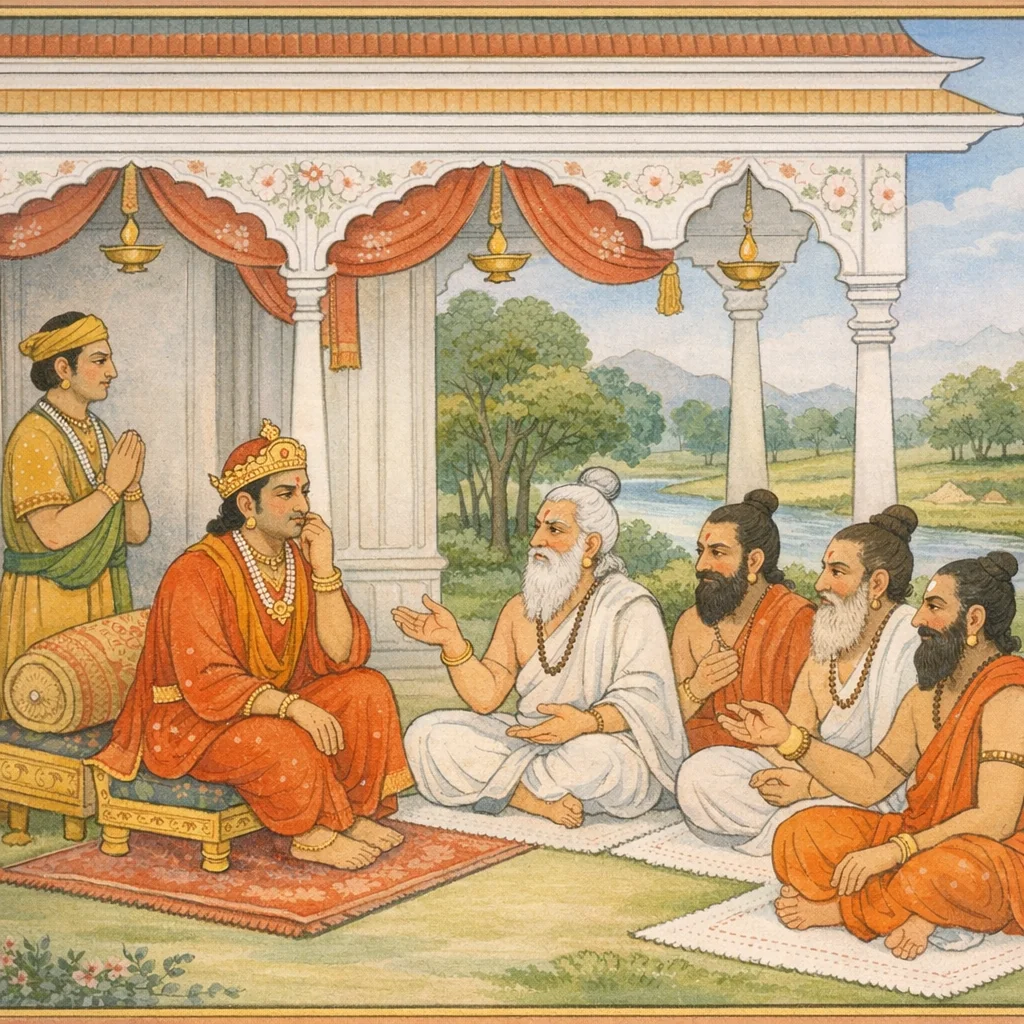
Sarga 8 centers on a royal deliberation about dynastic continuity and a śāstra-sanctioned remedy. Though majestic and well-versed in dharma, King Daśaratha remains without an heir, and after reflection he resolves to seek sons through the Aśvamedha, the sacred horse-sacrifice. Having consulted his disciplined and capable ministers, he orders Sumantra to summon his spiritual preceptors and the officiating Brahmins. Sumantra gathers Vasiṣṭha and other Veda-versed authorities—Suyajña, Vāmadeva, Jābāli, and Kāśyapa. Daśaratha respectfully confides that the lack of a son is a source of sorrow, and declares his intent to perform the Aśvamedha according to scripture, requesting their counsel and guidance in procedure. The Brahmins approve, instructing that the requisites be prepared and the sacrificial horse released, and they assure the king that his dhārmic resolve will yield the sons he desires. Delighted, the king commands his ministers to procure materials, establish the yajñabhūmi on the northern bank of the Sarayū, and carry out expiatory and auspicious rites in accordance with Kalpa ordinances. A warning is also voiced: the finest sacrifices must be flawless, for learned brahmarākṣasas seek ritual ‘chidra’ (defects), and a compromised rite destroys its performer. Therefore Daśaratha insists on expert, scripture-conforming arrangements; then he instructs his queens to enter dīkṣā for the intended rite, and their faces brighten at the announcement.
Shlokas
Verse 1
तस्य त्वेवं प्रभावस्य धर्मज्ञस्य महात्मन:।सुतार्थं तप्यमानस्य नासीद्वंशकरस्सुत:।।।।
Though he was so mighty, righteous, and great-souled, and though he undertook austerities for the sake of a son, he did not obtain an heir who could continue the dynasty.
Verse 2
चिन्तयानस्य तस्यैवं बुद्धिरासीन्महात्मन: ।सुतार्थं हयमेधेन किमर्थं न यजाम्यहम्।।।।
As that great-souled king reflected thus, a resolve arose within him: “For the sake of obtaining sons, why should I not perform the Aśvamedha, the horse-sacrifice?”
Verse 3
स निश्चितां मतिं कृत्वा यष्टव्यमिति बुद्धिमान्।मन्त्रिभिस्सह धर्मात्मा सर्वैरेव कृतात्मभि:।।।।ततोऽब्रवीदिदं राजा सुमन्त्रं मन्त्रिसत्तमम्।शीघ्रमानय मे सर्वान्गुरूंस्तान् सपुरोहितान्।।।।
Having firmly resolved—together with all his self-controlled ministers—that a sacrifice should be performed, the wise and righteous King Daśaratha addressed Sumantra, foremost of ministers: “Quickly bring to me all those revered teachers, together with the royal priests (purohita).”
Verse 4
स निश्चितां मतिं कृत्वा यष्टव्यमिति बुद्धिमान्।मन्त्रिभिस्सह धर्मात्मा सर्वैरेव कृतात्मभि:।।1.8.3।। ततोऽब्रवीदिदं राजा सुमन्त्रं मन्त्रिसत्तमम्।शीघ्रमानय मे सर्वान्गुरूंस्तान् सपुरोहितान्।।1.8.4।।
Then the king spoke to Sumantra, the best among ministers: “Quickly bring to me all those revered teachers, together with the royal priests (purohita).”
Verse 5
ततस्सुमन्त्रस्त्वरितं गत्वा त्वरितविक्रम:।समानयत्स तान् सर्वान् समस्तान्वेदपारगान् ।।।।सुयज्ञं वामदेवं च जाबालिमथ काश्यपम् ।परोहितं वसिष्ठं च ये चान्ये व्दिजसत्तमा: ।। ।।
Thereupon Sumantra—swift in action—went at once and brought back all those learned brahmins, masters of the Vedas.
Verse 6
ततस्सुमन्त्रस्त्वरितं गत्वा त्वरितविक्रम:। समानयत्स तान् सर्वान् समस्तान्वेदपारगान् ।।1.8.5।। सुयज्ञं वामदेवं च जाबालिमथ काश्यपम् । परोहितं वसिष्ठं च ये चान्ये व्दिजसत्तमा: ।। 1.8.6 ।।
He summoned Suyajña, Vāmadeva, Jābāli, Kāśyapa, and Vasiṣṭha the royal priest, along with other foremost Brahmins as well.
Verse 7
तान्पूजयित्वा धर्मात्मा राजा दशरथस्तदा।इदं धर्मार्थसहितं श्लक्ष्णंवचनमब्रवीत्।।।।
Then righteous King Daśaratha, having honored them, spoke these gentle words—sound in dharma and in purpose.
Verse 8
मम लालप्यमानस्य पुत्रार्थन्नास्ति वै सुखम्।तदर्थं हयमेधेन यक्ष्यामीति मतिर्मम।।।।
“For me, afflicted with longing for a son, there is truly no happiness. Therefore I have resolved: I shall perform the Aśvamedha sacrifice for that purpose.”
Verse 9
तदहं यष्टुमिच्छामि शास्त्रदृष्टेन कर्मणा।कथं प्राप्स्याम्यहं कामं बुद्धिरत्रविचार्यताम्।।।।
Therefore I wish to perform a sacrifice in the manner enjoined by the scriptures. How shall I attain my desired end in this matter? Let a wise course be deliberated here.
Verse 10
ततस्साध्विति तद्वाक्यं ब्राह्मणा: प्रत्यपूजयन्।वसिष्ठप्रमुखास्सर्वे पार्थिवस्य मुखाच्च्युतम्।।।।
Then all the brahmins, with Vasiṣṭha at their head, praised those words that had issued from the king’s mouth, saying, “Well spoken!”
Verse 11
ऊचुश्च परमप्रीतास्सर्वे दशरथं वच:।सम्भारास्सम्भ्रियन्तां ते तुरगश्च विमुच्यताम्।।।।
All of them, greatly delighted, spoke to Daśaratha: “Let the needed preparations be gathered, and let the sacrificial horse be released.”
Verse 12
सर्वथा प्राप्स्यसे पुत्रानभिप्रेतांश्च पार्थिव।यस्य ते धार्मिकी बुद्धिरियं पुत्रार्थमागता।।।।
O King, you will surely obtain the sons you desire, for this intention of yours—seeking offspring—has arisen as a righteous resolve in accord with dharma.
Verse 13
तत: प्रीतोऽभवद्राजा श्रुत्वा तद्विजभाषितम्।अमात्यांश्चाब्रवीद्राजा हर्षपर्याकुलेक्षण:।।।।
Then the king, pleased on hearing the words spoken by the brahmins, addressed his ministers—his eyes unsteady with joy.
Verse 14
सम्भारास्सम्भ्रियन्तां मे गुरूणां वचनादिह।समर्थाधिष्ठितश्चाश्वस्सोपाध्यायो विमुच्यताम्।।।।
“Let the requisites for the rite be gathered here for me, in accordance with my preceptors’ words; and let the sacrificial horse—together with the supervising priests—be released, guarded by capable men.”
Verse 15
सरय्वाश्चोत्तरे तीरे यज्ञभूमिर्विधीयताम्।शान्तयश्चाभिवर्धन्तां यथाकल्पं यथाविधि।।।।
Let the sacrificial ground be laid out on the northern bank of the Sarayū; and let the pacificatory rites be increased and performed according to the Kalpa rules and due ordinance.
Verse 16
शक्य: प्राप्तुमयं यज्ञस्सर्वेणापि महीक्षिता।नापराधो भवेत्कष्टो यद्यस्मिन्क्रतुसत्तमे।।।।
This sacrifice can indeed yield its intended fruit even to any king—provided that, in this best of rites, no grave omission or fault occurs.
Verse 17
छिद्रं हि मृगयन्तेऽत्र विद्वांसो ब्रह्मराक्षसा: ।निहतस्य च यज्ञस्य सद्य: कर्ता विनश्यति ।।।।
For here, the learned brahmarākṣasas search for a flaw; and if the sacrifice is struck down through such a fault, the sacrificer is destroyed at once.
Verse 18
तद्यथा विधिपूर्वं मे क्रतुरेष समाप्यते ।तथा विधानं क्रियतां समर्था: करणेष्विह।।।।
Therefore, make the arrangements so that this sacrifice of mine is completed fully in accordance with rule; you here are competent in carrying out the necessary actions.
Verse 19
तथेति चाब्रुवन्सर्वे मन्त्रिण:प्रत्यपूजयन्।पार्थिवेन्द्रस्य तद्वाक्यं यथाज्ञप्तं निशम्य ते।।।।
All the ministers, having heard the earth-lord’s command, honored his words and replied, “So be it—exactly as you have ordered.”
Verse 20
तथा द्विजास्ते धर्मज्ञा वर्धयन्तो नृपोत्तमम्।अनुज्ञातास्ततस्सर्वे पुनर्जग्मुर्यथागतम्।।।।
Thus those brahmins, knowers of dharma, having blessed the best of kings, took leave with his permission and returned by the way they had come.
Verse 21
विसर्जयित्वा तान्विप्रान्सचिवानिदमब्रवीत्।ऋत्विग्भिरुपदिष्टोऽयं यथावत्क्रतुराप्यताम्।।।।
After dismissing those brahmins, he said to his ministers: “Let this sacrifice be carried out properly, exactly as the officiating priests have prescribed.”
Verse 22
इत्युक्त्वा नृपशार्दूलस्सचिवान्समुपस्थितान्।विसर्जयित्वा स्वं वेश्म प्रविवेश महाद्युति:।।।।
Having thus spoken, the tiger among kings—radiant Daśaratha—dismissed the ministers who were in attendance and entered his own inner residence.
Verse 23
ततस्स गत्वा ता:पत्नीर्नरेन्द्रो हृदयप्रिया:।उवाच दीक्षां विशत यक्ष्येऽहं सुतकारणात्।।।।
Thereafter the lord of men went to his wives, dear to his heart, and said: “Enter upon the consecratory discipline (dīkṣā). I shall perform the sacrifice for the sake of obtaining sons.”
Verse 24
तासां तेनातिकान्तेन वचनेन सुवर्चसाम्।मुखपद्मान्यशोभन्त पद्मानीव हिमात्यये।।।।
By those exceedingly delightful words, the radiant queens’ lotus-like faces shone—like lotuses blooming when winter has passed.
Verse 25
He summoned Suyajña, Vāmadeva, Jābāli, Kāśyapa, and Vasiṣṭha the royal priest, along with other foremost Brahmins as well.
Frequently Asked Questions
The pivotal action is Daśaratha’s resolution to address dynastic discontinuity—lack of an heir—through a śāstra-sanctioned Aśvamedha. The ethical dimension lies in choosing a public, regulated remedy (ritual performed under Brahmin oversight) rather than impulsive or ad hoc measures, aligning personal desire (putrārtha) with rājadharma.
The sarga teaches that legitimate outcomes require right intention plus right method: dhārmic resolve must be executed through disciplined procedure, expert counsel, and meticulous avoidance of omissions. The warning about brahmarākṣasas seeking ‘chidra’ underscores a broader principle of integrity—small defects can destabilize even the most elevated undertaking.
The northern bank of the Sarayū is specified as the site for constructing the yajñabhūmi, anchoring the rite in Ayodhyā’s sacred geography. Culturally, the chapter highlights Kalpa-based ritual ordinance, the release and protection of the sacrificial horse, and the queens’ entry into dīkṣā as integral components of Vedic sacrificial protocol.