Sarga 48
अहल्याशापवर्णनम् (The Account of Ahalyā’s Curse and the Deserted Hermitage near Mithilā)
बालकाण्ड
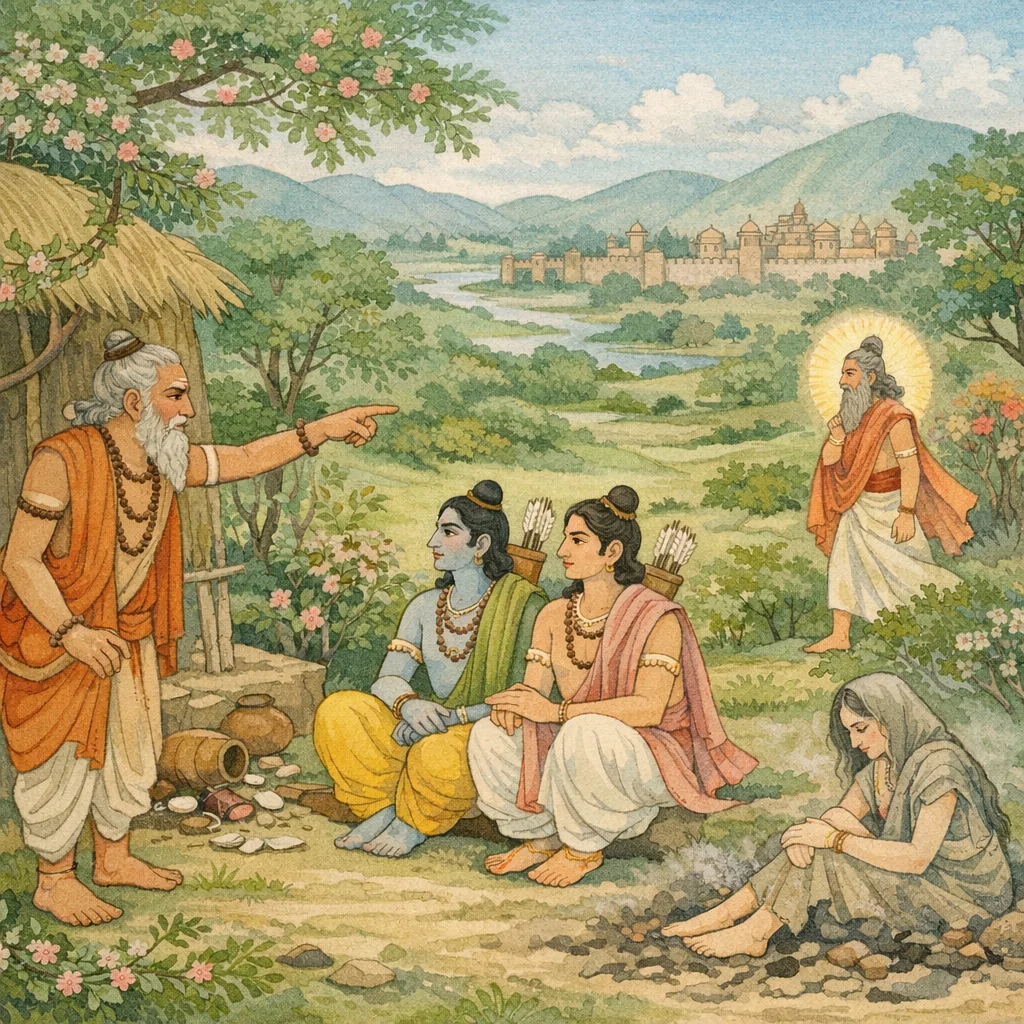
In Sarga 48, Rāma and Lakṣmaṇa continue toward Mithilā amid ritual hospitality and sacred geography. After courteous enquiries, King Sumati honors the princes as distinguished guests; they stay one night and then proceed to Janaka’s auspicious city, which the assembled sages praise with reverence. Near Mithilā, Rāma notices an ancient, beautiful, yet deserted hermitage and asks Viśvāmitra about it. Viśvāmitra explains that it once belonged to the illustrious sage Gautama, revered even by the devas, where Gautama and Ahalyā practiced tapas for many years. Indra seizes an opportunity, disguises himself as Gautama, and seeks union; Ahalyā, recognizing Indra, nevertheless consents out of curiosity and inclination. When Gautama returns, radiant with ascetic power, Indra’s fear is exposed; Gautama curses Indra with loss of virility and condemns Ahalyā to long, invisible penance in the āśrama—living on air and lying in ashes. Yet the curse holds a promise: when Rāma enters the forest and receives her hospitality, she will be purified and restored. Gautama then leaves for Himavat to continue his austerities, and the hermitage becomes a moral landmark of transgression, expiation, and redemption.
Shlokas
Verse 1
पृष्ट्वा तु कुशलं तत्र परस्परसमागमे।कथान्ते सुमतिर्वाक्यं व्याजहार महामुनिम्।।।।
There, after their mutual meeting and inquiries about one another’s well-being, at the close of the conversation Sumati spoke these words to the great sage.
Verse 2
इमौ कुमारौ भद्रं ते देवतुल्यपराक्रमौ।गजसिंहगती वीरौ शार्दूलवृषभोपमौ।।।।पद्मपत्रविशालाक्षौ खड्गतूणी धनुर्धरौ।अश्विनाविव रूपेण समुपस्थितयौवनौ।।।।यदृच्छयैव गां प्राप्तौ देवलोकादिवामरौ।कथं पद्भ्यामिह प्राप्तौ किमर्थं कस्य वा मुने।।।।
Blessings to you, O sage. Who are these two youths, whose prowess is like that of the gods? They move with the gait of an elephant or a lion—heroic, resembling a tiger or a bull. Their eyes are wide like lotus petals; they bear swords, quivers, and bows. In beauty they are like the Aśvins, newly arrived at youth, as though immortals come down from heaven. How have they come here on foot, O sage—whose sons are they, and for what purpose?
Verse 3
इमौ कुमारौ भद्रं ते देवतुल्यपराक्रमौ।गजसिंहगती वीरौ शार्दूलवृषभोपमौ।।1.48.2।।पद्मपत्रविशालाक्षौ खड्गतूणी धनुर्धरौ।अश्विनाविव रूपेण समुपस्थितयौवनौ।।1.48.3।।यदृच्छयैव गां प्राप्तौ देवलोकादिवामरौ।कथं पद्भ्यामिह प्राप्तौ किमर्थं कस्य वा मुने।।1.48.4।।
And when Rāma, the unassailable son of Daśaratha, comes into this dreadful forest, then you shall be purified.
Verse 4
इमौ कुमारौ भद्रं ते देवतुल्यपराक्रमौ।गजसिंहगती वीरौ शार्दूलवृषभोपमौ।।1.48.2।।पद्मपत्रविशालाक्षौ खड्गतूणी धनुर्धरौ।अश्विनाविव रूपेण समुपस्थितयौवनौ।।1.48.3।।यदृच्छयैव गां प्राप्तौ देवलोकादिवामरौ।कथं पद्भ्यामिह प्राप्तौ किमर्थं कस्य वा मुने।।1.48.4।।
Hearing those words, Viśvāmitra reported the events exactly as they had occurred—how they dwelt at Siddhāśrama and how the Rākṣasas were slain.
Verse 5
भूषयन्ताविमं देशं चन्द्रसूर्याविवाम्बरम्।परस्परस्य सदृशौ प्रमाणेङ्गितचेष्टितै:।।।।किमर्थं च मुनिश्रेष्ठ सम्प्राप्तौ दुर्गमे पथि।वरायुधधरौ वीरौ श्रोतुमिच्छामि तत्त्वत:।।।।
They adorn this land like the moon and the sun in the sky, alike to one another in stature, expression, and movement. O best of sages, for what purpose have these heroic bearers of excellent weapons come upon this difficult path? I wish to hear the truth of it clearly.
Verse 6
भूषयन्ताविमं देशं चन्द्रसूर्याविवाम्बरम्।परस्परस्य सदृशौ प्रमाणेङ्गितचेष्टितै:।।1.48.5।।किमर्थं च मुनिश्रेष्ठ सम्प्राप्तौ दुर्गमे पथि।वरायुधधरौ वीरौ श्रोतुमिच्छामि तत्त्वत:।।1.48.6।।
O best of sages, these two heroes—alike in stature, expression, and movement—adorn this land like the sun and the moon in the sky. Bearing excellent weapons, they have come by difficult paths; for what purpose have they arrived? I wish to hear the truth clearly.
Verse 7
तस्य तद्वचनं श्रुत्वा यथावृत्तं न्यवेदयत्।सिद्धाश्रमनिवासं च राक्षसानां वधं तथा।।।।
Hearing those words, Viśvāmitra reported the events exactly as they had occurred—how they dwelt at Siddhāśrama and how the Rākṣasas were slain.
Verse 8
विश्वामित्रवचश्श्रुत्वा राजा परमहर्षित:।अतिथी परमौ प्राप्तौ पुत्रौ दशरथस्य तौ।।।।पूजयामास विधिवत्सत्कारार्हौ महाबलौ।
Hearing Viśvāmitra’s words, King Sumati was filled with supreme delight. Seeing the two sons of Daśaratha arrive as honored guests—mighty and worthy of reverence—he received them and hosted them with worshipful hospitality according to proper custom.
Verse 9
तत: परमसत्कारं सुमते: प्राप्य राघवौ।।।।उष्य तत्र निशामेकां जग्मतुर्मिथिलां तत: ।
After receiving the highest honors from Sumati, the two Rāghavas stayed there for a single night; then they set out onward to Mithilā.
Verse 10
तान् दृष्ट्वा मुनयस्सर्वे जनकस्य पुरीं शुभाम्।।।।साधु साध्विति शंसन्तो मिथिलां समपूजयन्।
Seeing Janaka’s auspicious city, all the sages praised Mithilā with reverent admiration, exclaiming, “Excellent! Excellent!”
Verse 11
मिथिलोपवने शून्यमाश्रमं दृश्य राघव:।।।।पुराणं निर्जनं रम्यं पप्रच्छ मुनिपुङ्गवम्।
Near Mithilā, Rāghava beheld an ancient, lovely hermitage lying deserted, and he questioned the foremost of sages about it.
Verse 12
श्रीमदाश्रमसङ्काशं किन्न्विदं मुनिवर्जितम्।।।।ज्ञातुमिच्छामि भगवन् कस्यायं पूर्वमाश्रम:।
“Venerable sir, this place appears like a splendid hermitage—why then is it abandoned by sages? I wish to know: whose hermitage was this formerly?”
Verse 13
तच्छ्रुत्वा राघवेणोक्तं वाक्यं वाक्यविशारद:।।।।प्रत्युवाच महातेजा विश्वामित्रो महामुनि:।
Hearing Rāghava’s words, the great sage Viśvāmitra—eloquent and radiant—replied to him.
Verse 14
हन्त ते कथयिष्यामि श्रुणु तत्त्वेन राघव।।।।यस्येदमाश्रमपदं शप्तं कोपान्महात्मना।
“Well then, Rāghava, I shall tell you—listen in truth—whose hermitage-site this is, and how it came to be cursed in wrath by a great soul.”
Verse 15
गौतमस्य नरश्रेष्ठ पूर्वमासीन्महात्मन:।।।।आश्रमो दिव्यसङ्काशस्सुरैरपि सुपूजित:।
“Best of men, this hermitage—radiant like a celestial abode and honored even by the gods—once belonged to the great sage Gautama.”
Verse 16
स चेह तप आतिष्ठदहल्यासहित: पुरा।।।।वर्षपूगाननेकांश्च राजपुत्र महायश:।
Here, long ago, that illustrious one practiced austerities for many stretches of years, together with Ahalyā, O prince of great renown.
Verse 17
तस्यान्तरं विदित्वा तु सहस्राक्षश्शचीपति:।।।।मुनिवेषधरोऽहल्यामिदं वचनमब्रवीत्।
But Indra, the thousand-eyed lord of Śacī, finding his opportunity, took on the guise of a sage and spoke these words to Ahalyā.
Verse 18
ऋतुकालं प्रतीक्षन्ते नार्थिनस्सुसमाहिते।सङ्गमं त्वहमिच्छामि त्वया सह सुमध्यमे।।
O fair-limbed one, those driven by desire do not wait for the proper season; O slender-waisted lady, I desire union with you.
Verse 19
मुनिवेषं सहस्राक्षं विज्ञाय रघुनन्दन।मतिं चकार दुर्मेधा देवराजकुतूहलात्।।
O delight of the Raghus, Ahalyā—misguided in judgment—recognized the thousand-eyed one in a sage’s guise, and, out of fascination for the king of the gods, gave her consent.
Verse 20
अथाब्रवीत् नरश्रेष्ठ कृतार्थेनान्तरात्मना।।।कृतार्थाऽस्मि सुरश्रेष्ठ गच्छ शीघ्रमित: प्रभो।आत्मानं मां च देवेश सर्वदा रक्ष गौतमात्।।।
Then, her heart’s desire fulfilled within, she spoke: “O best of the gods, I am satisfied. Go quickly from here, O Lord. O ruler of the gods, ever protect yourself—and me as well—from Gautama.”
Verse 21
अथाब्रवीत् नरश्रेष्ठ कृतार्थेनान्तरात्मना।1.48.20।।कृतार्थाऽस्मि सुरश्रेष्ठ गच्छ शीघ्रमित: प्रभो।आत्मानं मां च देवेश सर्वदा रक्ष गौतमात्।1.48.21।।
Then, her heart’s desire fulfilled within, she said: “O best of the gods, I am satisfied. Go quickly from here, O Lord. O ruler of the gods, ever protect yourself—and me as well—from Gautama.”
Verse 22
इन्द्रस्तु प्रहसन् वाक्यमहल्यामिदमब्रवीत्।सुश्रोणि परितुष्टोऽस्मि गमिष्यामि यथाऽगतम्।।।
Indra, smiling, said to Ahalyā: “O fair-hipped one, I am gratified; I shall depart by the very way I came.”
Verse 23
एवं सङ्गम्य तु तया निश्चक्रामोटजात्तत:।।स सम्भ्रमात्त्वरन् राम शङ्कितो गौतमं प्रति।।।
Thus, having been with her, he hurried out from the leaf-hut; and in alarm, O Rāma, he hastened away, anxious about Gautama.
Verse 24
गौतमं तं ददर्शाथ प्रविशन्तं महामुनिम्।देवदानवदुर्धर्षं तपोबलसमन्वितम्।।।।तीर्थेंदकपरिक्लिन्नं दीप्यमानमिवानलम्।गृहीतसमिधं तत्र सकुशं मुनिपुङ्गवम्।।।।
Then he saw the great sage Gautama entering—unassailable even to gods and dānavas, endowed with the power of austerity. Drenched with the sacred bathing-water of the tīrtha, he blazed like fire, bearing fuel-sticks and kuśa-grass, that foremost of ascetics.
Verse 25
गौतमं तं ददर्शाथ प्रविशन्तं महामुनिम्।देवदानवदुर्धर्षं तपोबलसमन्वितम्।।1.48.24।।तीर्थेंदकपरिक्लिन्नं दीप्यमानमिवानलम्।गृहीतसमिधं तत्र सकुशं मुनिपुङ्गवम्।।1.48.25।।
Then he saw the great sage Gautama entering—unassailable even to gods and asuras, endowed with the power of austerity—drenched with sacred bathing-water, blazing like fire, carrying fuel-sticks and kuśa-grass, that foremost of ascetics.
Verse 26
दृष्ट्वा सुरपतिस्त्रस्तो विवर्णवदनोऽभवत्।अथ दृष्ट्वा सहस्राक्षं मुनिवेषधरं मुनि:।।।।दुर्वृत्तं वृत्तसम्पन्नो रोषाद्वचनमब्रवीत्।
Seeing him, the lord of the gods grew frightened, his face turning pale. Then the sage—upright in conduct—seeing the thousand-eyed one behaving wickedly while wearing an ascetic’s guise, spoke in anger.
Verse 27
मम रूपं समास्थाय कृतवानसि दुर्मते।।।।अकर्तव्यमिदं तस्माद्विफलस्त्वं भविष्यसि।
“O evil-minded one, you have assumed my form and done what must not be done. Therefore you shall become ‘fruitless’—deprived of manhood.”
Verse 28
गौतमेनैवमुक्तस्य सरोषेण महात्मना।।।।पेततुर्वृषणै भूमौ सहस्राक्षस्य तत्क्षणात्।
When the great-souled Gautama spoke thus in wrath, the thousand-eyed one’s testicles fell to the ground at that very moment.
Verse 29
तथा शप्त्वा स वै शक्रमहल्यामपि शप्तवान्।।।।इह वर्षसहस्राणि बहूनि त्वं निवत्स्यसि।वायुभक्षा निराहारा तप्यन्ती भस्मशायिनी।।।।अदृश्या सर्वभूतानां आश्रमेऽस्मिन्निवत्स्यसि।
Thus, having cursed Śakra, the sage also cursed Ahalyā: “Here you shall dwell for many thousands of years—living on air, without food, lying upon ashes, and enduring austerity; unseen by all beings, you shall remain in this hermitage.”
Verse 30
तथा शप्त्वा स वै शक्रमहल्यामपि शप्तवान्।।1.48.29।।इह वर्षसहस्राणि बहूनि त्वं निवत्स्यसि।वायुभक्षा निराहारा तप्यन्ती भस्मशायिनी।।1.48.30।।अदृश्या सर्वभूतानां आश्रमेऽस्मिन्निवत्स्यसि।
O you of misguided conduct: by offering him hospitality, freed from greed and delusion and filled with joy, you shall regain your own body and dwell near me.
Verse 31
यदा चैतद्वनं घोरं रामो दशरथात्मज:।।।।आगमिष्यति दुर्धर्षस्तदा पूता भविष्यसि।
And when Rāma, the unassailable son of Daśaratha, comes into this dreadful forest, then you shall be purified.
Verse 32
तस्यातिथ्येन दुर्वुत्ते लोभमोहविवर्जिता।।।।मत्सकाशे मुदा युक्ता स्वं वपुर्धारयिष्यसि।
O you of misguided conduct: by offering him hospitality, freed from greed and delusion and filled with joy, you shall regain your own body and dwell near me.
Verse 33
एवमुक्त्वा महातेजा गौतमो दुष्टचारिणीम्।।।।इममाश्रममुत्सृज्य सिद्धचारणसेविते।हिमवच्छिखरे पुण्ये तपस्तेपे महातपा:।।।।
Having spoken thus, the radiant sage Gautama—an ascetic of great austerity—abandoned this hermitage, frequented by Siddhas and Cāraṇas, and on the holy peaks of Himavat practiced penance.
Frequently Asked Questions
The central dharma-crisis is deception used to violate ascetic household integrity: Indra assumes Gautama’s form to pursue desire, and Ahalyā knowingly consents. The narrative frames this as a breach of restraint and truthfulness, triggering consequences administered through Gautama’s ascetic authority.
Sarga 48 teaches that moral disorder produces lasting imprint (śāpa) requiring disciplined remediation (tapas), yet redemption remains possible through right conduct—here symbolized by atithi-dharma offered to Rāma, which converts a cursed space into a site of purification.
Key landmarks include Janaka’s Mithilā (praised by sages), the Mithilā grove containing Gautama’s deserted āśrama, and Himavat where Gautama resumes austerities. Culturally, the sarga emphasizes formal hospitality, sacrificial paraphernalia (samidh, kuśa), and the sanctity of āśrama life as a civilizational institution.