Sarga 20
राज्ञः शङ्का–प्रत्याख्यानम् (Daśaratha’s Objections to Sending Rāma) — Bala Kanda, Sarga 20
बालकाण्ड
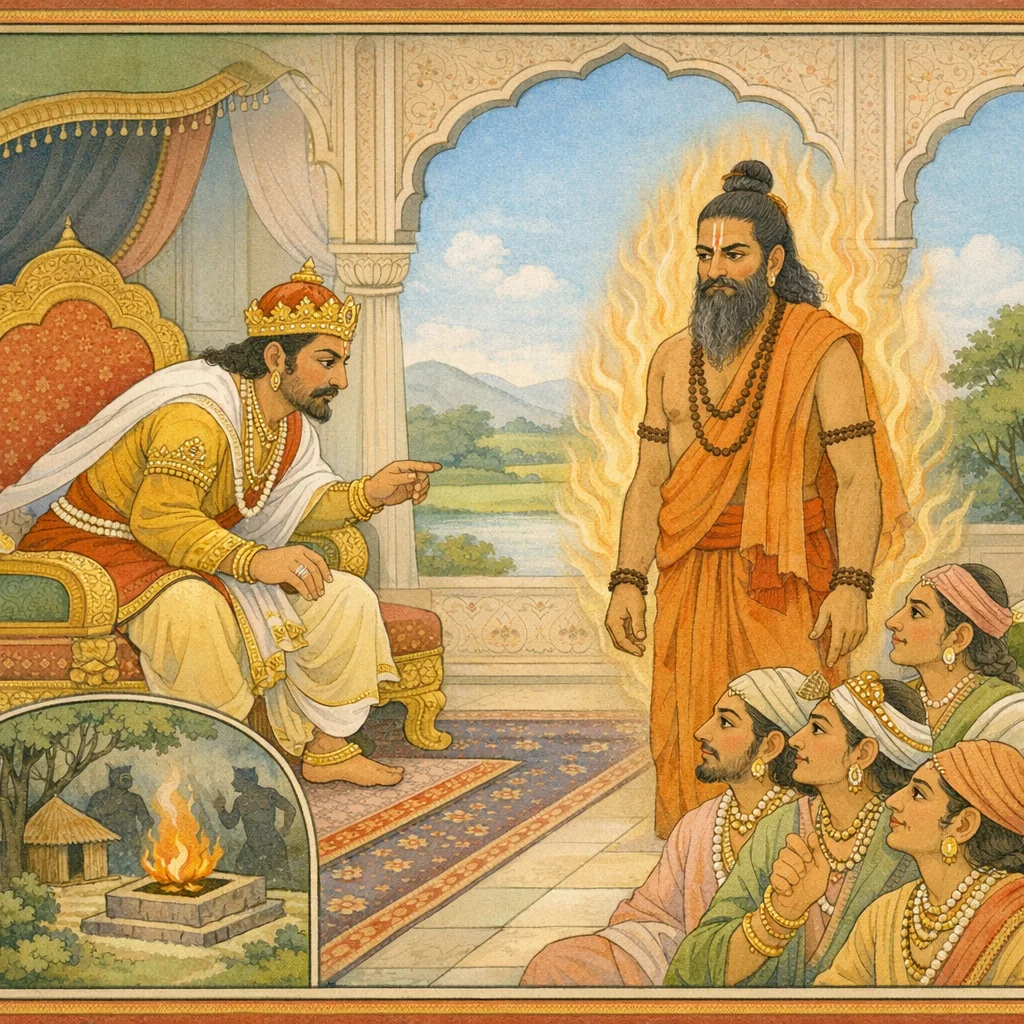
Sarga 20 unfolds as an ethical, quasi-juridical negotiation between royal sovereignty and an ascetic’s mandate. Hearing Viśvāmitra’s request, King Daśaratha briefly loses composure and argues from paternal duty and practical statecraft: Rāma is not yet sixteen, not fully trained for the rākṣasas’ deceptive mode of warfare, and the king cannot bear separation from his beloved son. Daśaratha offers substitutes—his entire akṣauhiṇī, seasoned warriors, even his own personal participation—insisting it is improper to take the prince. He stresses his advanced age and the hardship through which Rāma was obtained, heightening the emotional and dynastic stakes. He then asks for detailed intelligence: the rākṣasas’ power, lineage, stature, protectors, and the proper counter-strategy. Viśvāmitra replies by placing the threat within the Pulastya line: Rāvaṇa, empowered by Brahmā’s boon, torments the three worlds; though he does not directly obstruct the sacrifice, he incites Mārīca and Subāhu to do so. The sarga culminates in the rishi’s rising anger—likened to a sacrificial fire fed with ghee—warning that refusal to cooperate with tapas-backed dharma brings immediate moral and political consequences.
Shlokas
Verse 1
तच्छ्रुत्वा राजशार्दूलो विश्वामित्रस्य भाषितम्।मुहूर्तमिव निस्संज्ञस्संज्ञावानिदमब्रवीत्।।।।
Hearing Viśvāmitra’s words, the king—tiger among rulers—lost awareness for a moment; then, regaining composure, he spoke as follows.
Verse 2
ऊनषोडशवर्षो मे रामो राजीवलोचन:।न युद्धयोग्यतामस्य पश्यामि सह राक्षसै:।।।।
My lotus-eyed Rāma is not yet sixteen years of age. I do not see him as yet fit for battle against the rākṣasas.
Verse 3
इयमक्षौहिणी पूर्णा यस्याहं पतिरीश्वर:।अनया संवृतो गत्वा योद्धाऽहं तैर्निशाचरै:।।।।
This complete army—an akṣauhiṇī—is mine to command as its lord; surrounded by it, I will go forth and myself fight those night-roamers.
Verse 4
इमे शूराश्च विक्रान्ता भृत्या मेऽस्त्रविशारदा:।योग्या रक्षोगणैर्योद्धुं न रामं नेतुमर्हसि।।।।
These attendants of mine are heroic and powerful, skilled in weapons and fit to fight hosts of rākṣasas; it is not proper for you to take Rāma.
Verse 5
अहमेव धनुष्पाणिर्गोप्ता समरमूर्धनि।यावत्प्राणान्धरिष्यामि तावद्योत्स्ये निशाचरै:।।।।
I myself, bow in hand, will be the protector at the height of battle; so long as I bear the breath of life, I will fight the night-roamers.
Verse 6
निर्विघ्ना व्रतचर्या सा भविष्यति सुरक्षिता।अहं तत्रागमिष्यामि न रामं नेतुमर्हसि।।।।
That sacred observance will proceed unhindered and well-guarded. I will go there myself; therefore you should not take Rāma.
Verse 7
बालो ह्यकृतविद्यश्च न च वेत्ति बलाबलम्।न चास्त्रबलसंयुक्तो न च युद्धविशारद:।।।।न चासौ रक्षसां योग्य: कूटयुद्धा हि ते ध्रुवम् ।
He is but a child, untrained in the knowledge of war, and he does not discern strength from weakness. He is not yet endowed with the power of weapons nor skilled in battle; and he is not fit to face the rākṣasas, for they are surely deceitful in combat.
Verse 8
विप्रयुक्तो हि रामेण मुहूर्तमपि नोत्सहे।।।।जीवितुं मुनिशार्दूल न रामं नेतुमर्हसि।
If I am separated from Rāma, I cannot bear to live even for a moment. O tiger among sages, you should not take Rāma away.
Verse 9
यदि वा राघवं ब्रह्मन्नेतुमिच्छसि सुव्रत।।।।चतुरङ्गसमायुक्तं मया च सहितं नय।
O brahman-sage of excellent vows—if you truly intend to take Rāghava with you, then take me as well, together with my fourfold army.
Verse 10
षष्टिर्वर्षसहस्राणि जातस्य मम कौशिक।।।।दु:खेनोत्पादितश्चायं न रामं नेतुमर्हसि।
O Kauśika, sixty thousand years have passed since my birth; and this Rāma was obtained by me only through suffering—therefore it is not fitting for you to take him away.
Verse 11
चतुर्णामात्मजानां हि प्रीति:परमिका मम।।।।ज्येष्ठं धर्मप्रधानं च न रामं नेतुमर्हसि।
Indeed, among my four sons my love for Rāma is greatest; and since he is the eldest and foremost in dharma, it is not fitting for you to take Rāma away.
Verse 12
किंवीर्या राक्षसास्ते च कस्य पुत्राश्च ते च के।।।।कथं प्रमाणा: के चैतान्रक्षन्ति मुनिपुङ्गव।
O foremost of sages, what is the strength of those rākṣasas? Whose sons are they, and who are they? How large are they in form, and who protects them?
Verse 13
कथं च प्रतिकर्तव्यं तेषां रामेण रक्षसाम्।।।।मामकैर्वा बलैर्ब्रह्मन्मया वा कूटयोधिनाम्।3
O Brahman, how is retaliation to be carried out against those rākṣasas—those deceitful fighters—whether by Rāma, by my forces, or by me myself?
Verse 14
सर्वं मे शंस भगवन्कथं तेषां मया रणे।।।।स्थातव्यं दुष्टभावानां वीर्योत्सिक्ता हि राक्षसा:।4तस्य तद्वचनं श्रुत्वा विश्वामित्रोऽभ्यभाषत।।।।
Tell me everything, O venerable one: how am I to stand against them in battle? For those rākṣasas are wicked by nature and arrogant in their prowess. Hearing these words, Viśvāmitra replied.
Verse 15
सर्वं मे शंस भगवन्कथं तेषां मया रणे।।1.20.14।।स्थातव्यं दुष्टभावानां वीर्योत्सिक्ता हि राक्षसा:।4तस्य तद्वचनं श्रुत्वा विश्वामित्रोऽभ्यभाषत।।1.20.15।।
O venerable one, explain everything to me—how am I to face them in battle? Those rākṣasas are wicked by nature and swollen with pride in their strength. Hearing Daśaratha’s words, Viśvāmitra spoke in reply.
Verse 16
पौलस्त्यवंशप्रभवो रावणो नाम राक्षस:।स ब्रह्मणा दत्तवरस्त्रैलोक्यं बाधते भृशम्।।1.20.16।।महाबलो महावीर्यो राक्षसैर्बहुभिर्वृत:।
There is a rākṣasa named Rāvaṇa, born in the lineage of Pulastya. Strengthened by a boon granted by Brahmā, he grievously afflicts the three worlds; mighty in power and heroic in valor, he is surrounded by many rākṣasas.
Verse 17
श्रूयते हि महावीर्यो रावणो राक्षसाधिप:।।।।साक्षाद्वैश्रवणभ्राता पुत्रो विश्रवसो मुने:।
It is indeed renowned that Rāvaṇa, lord of the rākṣasas, is of tremendous prowess—truly the brother of Vaiśravaṇa (Kubera) and the son of the sage Viśravas.
Verse 18
यदा स्वयं न यज्ञस्य विघ्नकर्ता महाबल:।।।।तेन सञ्चोदितौ द्वौ तु राक्षसौ वै महाबलौ।मारीचश्च सुबाहुश्च यज्ञविघ्नं करिष्यत:।।।।
When that mighty one does not himself become the direct disturber of the sacrifice, he incites two powerful rākṣasas—Mārīca and Subāhu—to create obstacles to the yajña.
Verse 19
यदा स्वयं न यज्ञस्य विघ्नकर्ता महाबल:।।1.20.18।।तेन सञ्चोदितौ द्वौ तु राक्षसौ वै महाबलौ।मारीचश्च सुबाहुश्च यज्ञविघ्नं करिष्यत:।।1.20.19।।
When that mighty one does not himself disrupt the sacrifice, he sets two powerful rākṣasas—Mārīca and Subāhu—to obstruct the yajña.
Verse 20
इत्युक्तो मुनिना तेन राजोवाच मुनिं तदा।न हि शक्तोऽस्मि सङ्ग्रामे स्थातुं तस्य दुरात्मन:।।।।
Thus addressed by that sage, the king replied: “I am not able to stand against that evil-minded one in battle.”
Verse 21
स त्वं प्रसादं धर्मज्ञ कुरुष्व मम पुत्रके।मम चैवाल्पभाग्यस्य दैवतं हि भवान्गुरु:।।।।
Therefore, O knower of dharma, show your grace toward my young son—and toward me as well, for I am of scant good fortune. You, my guru, are truly my divine refuge.
Verse 22
देवदानवगन्धर्वा यक्षा:पतगपन्नगा:।न शक्ता रावणं सोढुं किं पुनर्मानवा युधि।।।।
Gods, Dānavas, Gandharvas, Yakṣas, birds, and serpents cannot endure Rāvaṇa in battle—how much less can human beings?
Verse 23
स हि वीर्यवतां वीर्यमादत्ते युधि राक्षस:।तेन चाहं न शक्तोऽस्मि संयोद्धुं तस्य वा बलै:।।।।सबलो वा मुनिश्रेष्ठ सहितो वा ममात्मजै:।
For that rākṣasa, in battle, drains away the prowess of the valiant. Therefore I am not capable of fighting him or his forces—whether I go with an army, O best of sages, or even together with my sons.
Verse 24
कथमप्यमरप्रख्यं सङ्ग्रामाणामकोविदम्।बालं मे तनयं ब्रह्मन् नैव दास्यामि पुत्रकम्।।।।
O Brahman, even if my son appears like a celestial, he is unskilled in warfare; he is still a child. I will not give up my young son—not under any pretext.
Verse 25
अथ कालोपमौ युध्दे सुतौ सुन्दोपसुन्दयो:।।।।यज्ञविघ्नकरौ तौ ते नैव दास्यामि पुत्रकम्।
Moreover, the two sons of Sunda and Upasunda—terrible in battle like Death itself—are the very ones who disrupt your sacrifice. Therefore, I will not give up my son.
Verse 26
मारीचश्च सुबाहुश्च वीर्यवन्तौ सुशिक्षितौ।तयोरन्यतरेणाहं योध्दा स्यां ससुहृद्गण:।।।।
Marīca and Subāhu are mighty and well-trained; with my trusted allies at my side, I could fight at least one of the two.
Verse 27
इति नरपतिजल्पनाद्द्विजेन्द्रंकुशिकसुतं सुमहान्विवेश मन्यु:।सुहुत इव मखेऽग्निराज्यसिक्तस्समभवदुज्ज्वलितो महर्षिवह्नि:।।।।
When the king spoke thus, great wrath entered the son of Kuśika, foremost among sages; like a sacrificial fire richly fed with ghee, the rishi blazed forth, radiant in fury.
Verse 28
This complete army—an akṣauhiṇī—is mine to command as its lord; surrounded by it, I will go forth and myself fight those night-roamers.
Frequently Asked Questions
The dilemma is whether a king may relinquish his underage heir to an ascetic mission for the sake of protecting a yajña. Daśaratha prioritizes paternal guardianship and dynastic security, while Viśvāmitra’s request frames participation as a dharmic obligation that supersedes private attachment.
The sarga teaches that dharma is often adjudicated at the boundary between emotion and duty: personal love does not automatically override obligations tied to the maintenance of ritual and social order. It also highlights that ascetic authority (tapas) can function as a legitimizing force that compels political cooperation when the public good is threatened.
The principal cultural landmark is the yajña setting itself—an institution requiring protection to remain nirvighna (unobstructed). The chapter also foregrounds the military-cultural unit of an akṣauhiṇī and the epic’s cosmological scope through references to the ‘three worlds’ (trailokya) afflicted by Rāvaṇa.