Adhyaya 321
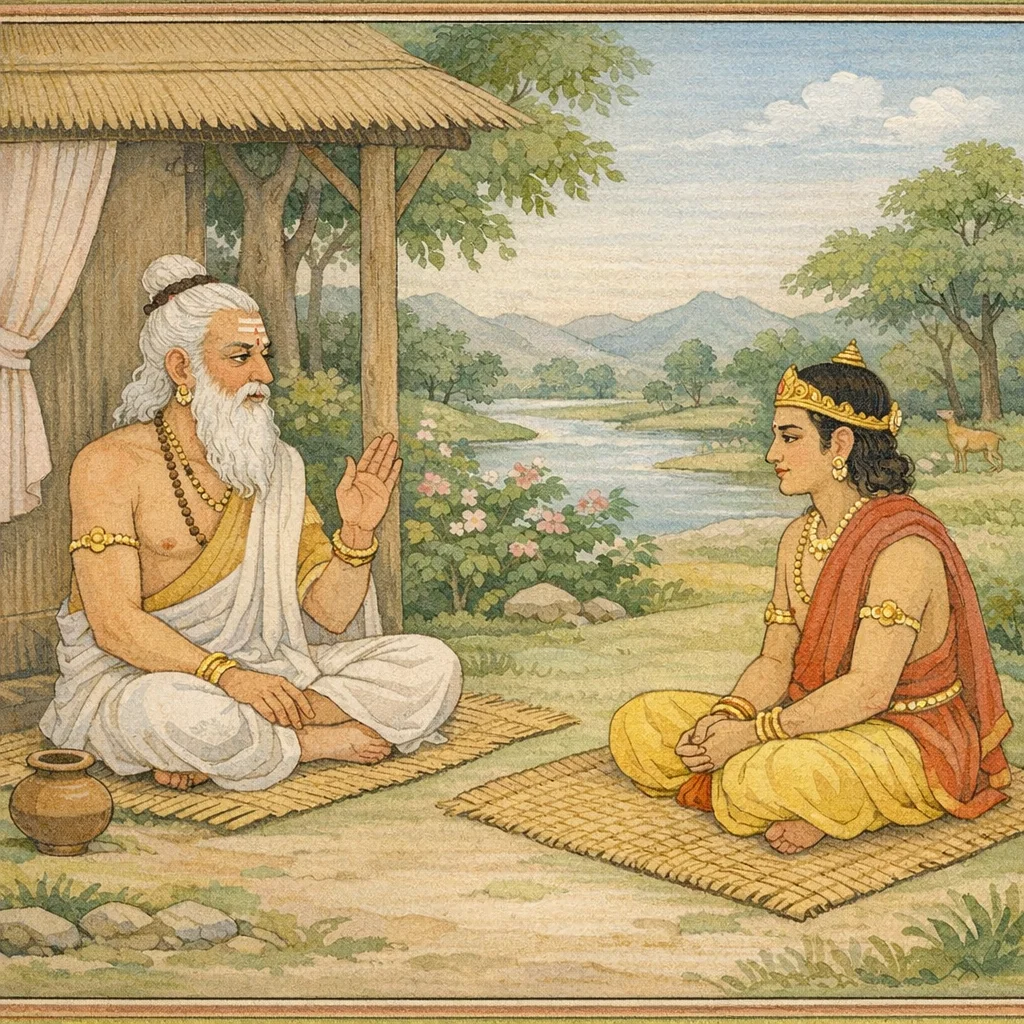
देवतापितृप्रश्नः — Nārada at Badarīāśrama: the ultimate referent of daiva and pitṛ worship
Upa-parva: Mokṣa-dharma (Mokṣadharma Parva) — Nārada–Nārāyaṇa Saṃvāda (episode context for Chapter 321)
Yudhiṣṭhira asks Bhīṣma which devatā should be worshipped by practitioners in any āśrama (gṛhastha, brahmacārin, vānaprastha, bhikṣu), how svarga can be certain, what constitutes the highest good (niḥśreyasa), what mokṣa is, and who stands above both gods and ancestors. Bhīṣma replies that the question is subtle and not resolvable by mere reasoning, then cites an ancient account: Nārada approaches Nara-Nārāyaṇa at Badarīāśrama and observes their disciplined ritual performance. Nārada praises Nārāyaṇa as the eternal support of the cosmos and asks whom such a supreme being worships. The Lord explains an esoteric doctrine: the ultimate, subtle, unmanifest, immovable principle—beyond senses and beings—is the inner Self, called antarātman and kṣetrajña, transcending the three guṇas. From that arises prakṛti with its manifest/unmanifest modalities; daiva and pitṛ rites are directed to that underlying reality, establishing a customary “maryādā” for the world. A lineage of progenitors is named as honoring this eternal ordinance. The chapter concludes by distinguishing the liberated trajectory: those freed from specified constituents are said to attain the kṣetrajña, described as all-pervading and nirguṇa, knowable through jñāna-yoga; devotion to this principle grants the appropriate gati, and exclusive contemplatives are described as entering into it.
Chapter Arc: जनक के समक्ष ‘सत्’ और ‘असत्’ के व्यवहार—“इह घटोऽस्ति/नास्ति”—से आरम्भ होकर, ज्ञान के सूक्ष्म द्वार पर प्रश्न खड़ा होता है: जो दिखता है, वही सत्य है या सत्य का केवल संकेत? → राजा (कौरव्य/कुरुनन्दन संबोधन के साथ) व्यक्त-अव्यक्त तत्त्वों के निश्चय और ‘अज देव’ की कृति (सृष्टि-व्यवस्था) का निर्णयात्मक विवेचन माँगता है। भीष्म की वाणी में उपदेश-परम्परा खुलती है—पिता द्वारा पुत्र शुकदेव को स्वाध्याय सहित शिक्षित करना, और साथ ही राजधर्म की कठोर चेतावनी: शत्रु जाग्रत हैं, अवसर खोजते हैं; ‘बाल’ बनकर अंतर न समझो। → अध्याय का शिखर आत्म-साक्षी के उद्घोष में आता है—परलोक-गमन के समय किए-अनकिए कर्म का साक्षी कोई बाह्य नहीं, स्वयं आत्मा है; और जो दर्शन-उपाय (परमात्म-साक्षात्कार का साधन) को जानकर स्वधर्म का सम्यक् आचरण करता है, वह इह-परत्र सुख पाता है। → वैराग्य का विस्तार होता है—संबंधों की अनित्यता (हजारों माता-पिता, सैकड़ों पुत्र-दार) स्मरण कराकर आसक्ति ढीली पड़ती है; और उपयोगहीन धन, निष्फल बल, तथा निष्क्रिय शास्त्र-ज्ञान की निस्सारता बताकर जीवन को ‘कर्म-योग + विवेक’ की दिशा में स्थिर किया जाता है। → null
Shlokas
Verse 1
>> श््जु अीसॉ_>स ३. “इह घटो अस्ति (यहाँ घड़ा है)'--इत्यादि रूपसे जो सत्तासूचक व्यवहार होता है, उसका नाम “सदभावयोग'” है। २. 'इह घटो नास्ति (यहाँ घड़ा नहीं है)/--इत्यादि रूपसे जो असत्तासूचक व्यवहार होता है, वही 'असदभावयोग” है। ३. यहाँ “विधि” शब्दसे वासनाके बीजभूत धर्म और अधर्म समझने चाहिये। ४. वासनाका उद्घोधक संस्कार ही 'शुक्र' है। ५. वासनाके अनुसार विषयकी प्राप्तिके अनुकूल जो यत्न है, वही “बल” है। एकविशर्त्याधिकत्रिशततमो< ध्याय: व्यासजीका अपने पुत्र शुकदेवको वैराग्य और धर्मपूर्ण उपदेश देते हुए सावधान करना युधिछिर उवाच कथ॑ निर्वेदमापन्न: शुको वैयासकि: पुरा । एतदिच्छाम्यहं श्रोतुं परं कौतूहलं हि मे,युधिष्ठिरने पूछा--पितामह! पूर्वकालमें व्यासपुत्र शुकदेवको किस प्रकार वैराग्य प्राप्त हुआ था? मैं यह सुनना चाहता हूँ। इस विषयमें मुझे बड़ा कौतूहल हो रहा है
Yudhiṣṭhira said: “Grandfather, how in former times did Śuka, the son of Vyāsa, attain dispassion (vairāgya)? I wish to hear it, for this matter fills me with great curiosity.”
Verse 2
अव्यक्तव्यक्ततत्त्वानां निश्चय बुद्धिनिश्चयम् । वक्तुमर्हसि कौरव्य देवस्याजस्य या कृति:,कुरुनन्दन! इसके सिवा आप मुझे व्यक्त और अव्यक्त तत्त्वोंका बुद्धिद्वारा निश्चित किया हुआ स्वरूप बतलाइये तथा अजन्मा भगवान् नारायणका जो चरित्र है, उसे भी सुनानेकी कृपा करें
Yudhiṣṭhira said: “O scion of the Kurus, please explain to me the settled understanding—arrived at through discerning intellect—of the principles called ‘unmanifest’ (avyakta) and ‘manifest’ (vyakta). And also be pleased to recount the deeds of the unborn Lord, Nārāyaṇa.”
Verse 3
भीष्म उवाच प्राकृतेन सुवृत्तेन चरन्तमकुतो भयम् । अध्याप्य कृत्स्नं स्वाध्यायमन्वशाद् वै पिता सुतम्,भीष्मजी कहते हैं--राजन! पुत्र शुकदेवको साधारण लोगोंकी भाँति आचरण करते और सर्वथा निर्भय विचरते देख पिता श्रीव्यासजीने उन्हें सम्पूर्ण वेदोंका अध्ययन कराया और फिर यह उपदेश दिया
Bhīṣma said: “O King, seeing his son Śukadeva living with simple, natural conduct like ordinary people and roaming about utterly fearless, his father Vyāsa first had him study the entire sacred learning (svādhyāya)—the Vedas in full. Having thus instructed him completely, the father then gave his son further counsel.”
Verse 4
व्यास उवाच धर्म पुत्र निषेवस्व सुतीक्ष्णौ च हिमातपौ । क्षुत्पिपासे च वायुं च जय नित्यं जितेन्द्रिय:,व्यासजीने कहा--बेटा! तुम सदा धर्मका सेवन करते रहो और जितेन्द्रिय होकर कड़ीसे कड़ी सर्दी, गर्मी, भूख-प्यासको सहन करते हुए प्राणवायुपर विजय प्राप्त करो
Vyāsa said: “O son of Dharma, continually practice righteousness. With your senses mastered, endure even the sharp extremes of cold and heat, and conquer hunger and thirst; and, ever self-controlled, gain mastery over the vital breath (prāṇa).”
Verse 5
सत्यमार्जवमक्रोधमनसूयां दमं तप: । अहिंसां चानृशंस्यं च विधिवत् परिपालय,सत्य, सरलता, अक्रोध, दोषदर्शनका अभाव, इन्द्रिय-संयम, तप, अहिंसा और दया आदि धर्मोंका विधिपूर्वक पालन करो
Vyāsa said: “Uphold, in the proper manner, the disciplines of truthfulness, straightforwardness, freedom from anger, absence of fault-finding envy, restraint of the senses, austerity (tapas), non-violence (ahiṃsā), and compassionate non-cruelty—these are the foundations of righteous conduct.”
Verse 6
सत्ये तिष्ठ रतो धर्मे हित्वा सर्वमनार्जवम् | देवतातिथिशेषेण मात्रां प्राणस्य संलिह,सत्यपर डटे रहो तथा सब प्रकारकी वक्रता छोड़कर धर्ममें अनुराग करो। देवताओं और अतिथियोंका सत्कार करके जो अन्न बचे, उसीका प्राणरक्षाके लिये आस्वादन करो
Vyāsa said: “Stand firm in truth; delight in dharma, abandoning all crookedness and deceit. After honoring the gods and welcoming guests, partake only of what remains—measuredly—so that life is sustained without greed.”
Verse 7
फेनमात्रोपमे देहे जीवे शकुनिवत् स्थिते । अनित्ये प्रियसंवासे कं स्वपिषि पुत्रक,बेटा! यह शरीर जलके फेनकी तरह क्षणभंगुर है। इसमें जीव पक्षीकी तरह बसा हुआ है और यह प्रियजनोंका सहवास भी सदा रहनेवाला नहीं है। फिर भी तुम क्यों सोये पड़े हो?
Vyāsa said: “O dear child, this body is as fleeting as a mere bubble of foam on water. Within it the living self abides like a bird lodging in a perch. Even the companionship of those we love is not lasting. Knowing this impermanence, why do you lie asleep—why remain heedless and inactive?”
Verse 8
अप्रमत्तेषु जाग्रत्सु नित्ययुक्तेषु शत्रुषु । अन्तरं लिप्समानेषु बालस्त्वं नावबुध्यसे,तुम्हारे शत्रु सर्ववा सावधान, जो हुए, सर्वथा उद्यत और तुम्हारे छिद्रोंको देखनेमें लगे हुए हैं; परंतु तुम अभी बालक हो, इसलिये समझ नहीं रहे हो
When your enemies are vigilant and never careless—ever alert, ever intent—constantly seeking an opening in you, you still do not understand. You are behaving like a child, failing to perceive the danger that surrounds you.
Verse 9
अहःसु गण्यमानेषु क्षीयमाणे तथा55युषि | जीविते लिख्यमाने च किमुत्थाय न धावसि,तुम्हारी आयुके दिन गिने जा रहे हैं। आयु क्षीण होती जा रही है और जीवन मानो कहीं लिखा जा रहा है (समाप्त हो रहा है)। फिर तुम उठकर भागते क्यों नहीं हो? (शीघ्रतापूर्वक कर्तव्यपालनमें लग क्यों नहीं जाते हो?)
Vyāsa said: “As the days are being counted and your lifespan is steadily being worn away—while your very life seems to be written down as if being tallied toward its end—why do you not rise up and run? Why do you not hasten to what must be done, before time is gone?”
Verse 10
ऐहलौकिकमीहन्ते मांसशोणितवर्धनम् | पारलौकिककार्येषु प्रसुप्ता भूशनास्तिका:,अत्यन्त नास्तिक मनुष्य केवल इस लोकके स्वार्थको चाहते हुए शरीरमें मांस और रक्तको बढ़ाने-वाली चेष्टा ही करते रहते हैं। पारलौकिक कार्योंकी ओरसे तो वे सदा सोये ही रहते हैं
Vyāsa said: “These people strive only for what belongs to this world—efforts that merely increase flesh and blood. Toward works meant for the other world, they remain as if asleep, being thoroughly unbelieving.”
Verse 11
धर्माय ये5भ्यसूयन्ति बुद्धिमोहान्विता नरा: । अपथा गच्छतां तेषामनुयाता5पि पीड्यते,जो बुद्धिके व्यामोहमें डूबे हुए मनुष्य धर्मसे द्वेष करते हैं, वे सदा कुमार्गसे ही चलते हैं। उनकी तो बात ही क्या है, उनके अनुयायियोंको भी कष्ट भोगना पड़ता है
Vyāsa said: Men whose intellect is clouded by delusion grow resentful toward dharma. Such people inevitably proceed along a wrong path; and not only they, but even those who follow in their wake are made to suffer.
Verse 12
ये तु तुष्टा: श्रुतिपरा महात्मानो महाबला: । धर्म्य पन्थानमारूढास्तानुपास्स्व च पृच्छ च,इसलिये जो महान् धर्मबलसे सम्पन्न महात्मा पुरुष संतुष्ट और श्रुतिपरायण होकर सर्वदा धर्मपथपर ही आरूढ़ रहते हैं, तुम उन्हींकी सेवामें रहो और उन्हींसे अपना कर्तव्य पूछो
Vyāsa said: “But those great-souled and mighty men who are contented, devoted to the Vedic revelation, and who remain ever established on the righteous path—stay in their service, and ask them about your proper duty.”
Verse 13
उपधार्य मतं तेषां बुधानां धर्मदर्शिनाम् । नियच्छ परया बुद्धया चित्तमुत्पथगामि वै,उन धर्मदर्शी विद्वानोंका मत जानकर तुम अपनी श्रेष्ठ बुद्धिके द्वारा अपने कुपथगामी मनको काबूमें करो
Having understood the considered view of those wise seers who perceive dharma, restrain—by your highest discernment—your mind, which is indeed straying onto a wrong path.
Verse 14
आद्यकालिकया बुद्धया दूरे श्व इति निर्भया: । सर्वभक्ष्या न पश्यन्ति कर्मभूमिमचेतस:,जिसकी केवल वर्तमान सुखपर ही दृष्टि रहती है, उस बुद्धिके द्वारा भावी परिणामको बहुत दूर जानकर जो निर्भय रहते और सब प्रकारके अभक्ष्य पदार्थोंको खाते रहते हैं, वे बुद्धिहीन मनुष्य इस कर्मभूमिके महत्त्वको नहीं देख पाते हैं
Vyāsa said: Those who, with a short-sighted intellect fixed only on the present moment, imagine the future consequences to be far away and therefore live without fear—indulging even in what ought not to be eaten—such senseless people fail to perceive the true significance of this field of action (human life), where deeds bear their fruits and moral responsibility operates.
Verse 15
धर्म नि:श्रेणिमास्थाय किंचित् किंचित् समारुह । कोषकारदवदात्मान वेष्टयन्नानुबुध्यसे,तुम धर्मरूपी सीढ़ीको पाकर धीरे-धीरे उसपर चढ़ते जाओ। अभी तो तुम रेशमके कीड़ेकी तरह अपने-आपको वासनाओंके जालसे ही लपेटते जा रहे हो, तुम्हें चेत नहीं हो रहा है
Having taken hold of the ladder of dharma, climb it step by step. Yet you do not awaken to what you are doing: like a silkworm spinning its cocoon, you keep wrapping your own self in the web of cravings and attachments.
Verse 16
नास्तिकं भिन्नमर्यादें कूलपातमिव स्थितम् | वामत: कुरु विस्रब्धो नरं वेणुमिवोद्धृतम्,जो नास्तिक हो, धर्मकी मर्यादा भंग कर रहा हो और किनारेको तोड़- फोड़कर गिरा देनेवाले नदीके महान् जल-प्रवाहकी भाँति स्थित हो, ऐसे मनुष्यको उखाड़े हुए बाँसकी तरह बिना किसी हिचकके त्याग दो
Vyāsa said: “Cast off without hesitation the unbeliever who has shattered the boundaries of dharma—like a violent river-current that breaks down the banks and causes collapse. Abandon such a man decisively, as one would discard a bamboo that has been uprooted.”
Verse 17
काम क्रोध॑ च मृत्युं च पञ्चेन्द्रियजलां नदीम् । नावं धृतिमयीं कृत्वा जन्मदुर्गाणि संतर,काम, क्रोध, मृत्यु और जिसमें पाँच इन्द्रियरूपी जल भरा हुआ है, ऐसी विषयासक्तिरूपी नदीको तुम सात्विकी धृतिरूप नौकाका आश्रय ले पार कर लो और इस प्रकार जन्म-मृत्युरूपी दुर्गण संकटसे पार हो जाओ
Vyāsa said: “Desire, anger, and death form a river whose waters are the five senses. Make steadfastness (dhṛti) your boat and cross it, thereby passing beyond the perilous strongholds of repeated birth.”
Verse 18
मृत्युनाभ्याहते लोके जरया परिपीडिते । अमोघासु पतन्न्तीषु धर्मपोतेन संतर
Vyāsa said: In this world, struck down by Death and oppressed by old age, while the unfailing arrows of time and fate keep falling, cross over by the boat of Dharma.
Verse 19
सारा संसार मृत्युके थपेड़े खाता हुआ वृद्धावस्थासे पीड़ित हो रहा है। ये रातें प्राणियोंकी आयुका अपहरण करके अपनेको सफल बनाती हुई बीत रही हैं। तुम धर्मरूपी नौकापर चढ़कर भवसागरसे पार हो जाओ ।। तिष्ठन्तं च शयानं च मृत्युरन्वेषते यदा । निर्वत्ति लभते कस्मादकस्मान्मृत्युनाशित:,मनुष्य खड़ा हो या सो रहा हो, मृत्यु निरन्तर उसे खोजती फिरती है। जब इस प्रकार तुम अकमस्मात् मृत्युके ग्रास बन जानेवाले हो, तब इस तरह निश्चिन्त एवं शान्त कैसे बैठे हो?
Vyāsa said: The whole world is battered by Death and afflicted by old age. Night after night passes by, making itself “successful” by stealing away the lifespan of living beings. Therefore, board the boat of Dharma and cross beyond the ocean of worldly becoming. For whether a person stands or lies down, Death keeps searching him out. When you are liable to be suddenly seized and destroyed by Death at any moment, how can you sit so carefree and at ease?
Verse 20
संचिन्वानकमेवैनं कामानामवितृप्तकम् । वृकीवोरणमासाद्य मृत्युरादाय गच्छति,मनुष्य भोगसामग्रियोंके संचयमें लगा ही रहता है और उनसे तृप्त भी नहीं होने पाता है कि भेड़के बच्चेको उठा ले जानेवाली बाघिनकी भाँति मौत उसे अपनी दाढ़में दबाकर चल देती है
Vyāsa said: A man keeps on hoarding the means of enjoyment, yet he never becomes satisfied. Then Death, like a she-wolf that seizes a lamb, comes upon him and carries him away—showing how craving and accumulation end not in fulfillment but in sudden loss.
Verse 21
क्रमश: संचितशिखो धर्मबुद्धिमयो महान् । अन्धकारे प्रवेष्टव्यं दीपो यत्नेन धार्यताम्,यदि तुम्हें इस संसाररूपी अन्धकारमें प्रवेश करना है तो हाथमें उस धर्म- बुद्धिमय महान् दीपकको यत्नपूर्वक धारण कर लो, जिसकी शिखा क्रमशः प्रज्वयलित हो रही हो
Vyāsa said: “A great lamp, whose flame has been steadily built up, made of dharma and right understanding—if one must enter into darkness, let that lamp be held carefully and with effort.” The teaching urges a deliberate cultivation of moral discernment so that one can move through the world’s obscurity without losing one’s way.
Verse 22
सम्पतन् देहजालानि कदाचिदिह मानुषे । ब्राह्म॒ण्यं लभते जन्तुस्तत् पुत्र परिपालय
Vyāsa said: “Wandering through the many meshes of embodied existence, a living being in the human world only rarely attains the state and discipline of a brāhmaṇa. Therefore, my son, guard and preserve that brāhmaṇahood—do not let it be lost.”
Verse 23
बेटा! जीव अनेक प्रकारके शरीरोंमें जन्मता-मरता हुआ कभी इस मानव- योनिमें आकर ब्राह्मणका शरीर पाता है, अतः तुम ब्राह्मणोचित कर्तव्यका पालन करो ।। ब्राह्मणस्य तु देहो5यं न कामार्थाय जायते । इह क्लेशाय तपसे प्रेत्य त्वनुपमं सुखम्,ब्राह्मणका यह शरीर भोग भोगनेके लिये नहीं पैदा होता है। यह तो यहाँ क्लेश उठाकर तपस्या करने और मृत्युके पश्चात् अनुपम सुख भोगनेके लिये रचा गया है
Vyāsa said: “My son, the living being is born and dies through many kinds of bodies; only sometimes does it reach the human state and obtain the body of a brāhmaṇa. Therefore, live according to the duties proper to a brāhmaṇa. For this brāhmaṇa body is not born for the pursuit of pleasure and desire; it is fashioned for austerity and disciplined effort here—enduring hardship for the sake of tapas—and, after death, for the attainment of incomparable happiness.”
Verse 24
ब्राह्मण्यं बहुभिरवाप्यते तपोभि- स्तल्लब्ध्वा न रतिपरेण हेलितव्यम् । स्वाध्याये तपसि दमे च नित्ययुक्तः क्षेमार्थी कुशलपर: सदा यतस्व,बहुत समयतक बड़ी भारी तपस्या करनेसे ब्राह्मणका शरीर मिलता है। उसे पाकर विषयानुरागमें फँसकर बरबाद नहीं करना चाहिये। अतः यदि तुम अपना कल्याण चाहते हो तो कुशलप्रद कर्ममें संलग्न हो सदा स्वाध्याय, तपस्या और इन्द्रियसंयममें पूर्णतः तत्पर रहनेका प्रयत्न करो
Vyāsa said: “The state of brahminhood is attained only through many austerities. Having obtained it, one should not squander it by being enslaved to sensual delight. Therefore, if you seek your true welfare, strive always for what is wholesome: remain constantly devoted to self-study, austerity, and restraint of the senses.”
Verse 25
अव्यक्तप्रकृतिरयं कलाशरीर: सूक्ष्मात्मा क्षणत्रुटिशो निमेषरोमा | ऋत्वास्थ: समबलशुक्क्लकृष्णनेत्रो मासाड्रे द्रवति वयोहयो नराणाम्,मनुष्योंका आयुरूप अश्व बड़े वेगसे दौड़ा जा रहा है। इसका स्वभाव अव्यक्त है। कला-काष्ठा आदि इसके शरीर हैं। इसका स्वरूप अत्यन्त सूक्ष्म है। क्षण, त्रुटि (चुटकी) और निमेष आदि इसके रोम हैं। ऋतुएँ मुख हैं। समान बलवाले शुक्ल और कृष्णपक्ष नेत्र हैं तथा महीने इसके विभिन्न अंग हैं। वह भयंकर वेगशाली अश्व यहाँकी किसी वस्तुकी अपेक्षा न रखकर निरन्तर अविराम गतिसे वेगपूर्वक भागा जा रहा है। उसे देखकर यदि तुम्हारी ज्ञानदृष्टि दूसरेके द्वारा चलानेपर चलनेवाली नहीं है; तो तुम्हारा मन धर्ममें ही लगना चाहिये। तुम दूसरे धर्मात्माओंपर भी दृष्टि डालो
Vyāsa said: This steed that is the lifespan of human beings rushes on with tremendous speed. Its nature is unmanifest; its body is made of kalā and kāṣṭhā (the measures of time). Its essence is exceedingly subtle; moments, instants, and blinks are its hairs. The seasons are its mouth; the bright and dark fortnights, equal in strength, are its two eyes; and the months are its limbs. Without waiting for anything here, it runs ceaselessly, unbroken, ever onward. Seeing this, if your insight is not something that moves only when driven by another, then let your mind be fixed in dharma, and look also to other righteous people as guides.
Verse 26
त॑ दृष्टवा प्रसूतमजसतमुग्रवेगं गच्छन्तं सततमिहाव्यपेक्षमाणम् । चक्षुस्ते यदि न परप्रणेत्नेयं धर्मे ते भवतु मन: परं निशाम्य,मनुष्योंका आयुरूप अश्व बड़े वेगसे दौड़ा जा रहा है। इसका स्वभाव अव्यक्त है। कला-काष्ठा आदि इसके शरीर हैं। इसका स्वरूप अत्यन्त सूक्ष्म है। क्षण, त्रुटि (चुटकी) और निमेष आदि इसके रोम हैं। ऋतुएँ मुख हैं। समान बलवाले शुक्ल और कृष्णपक्ष नेत्र हैं तथा महीने इसके विभिन्न अंग हैं। वह भयंकर वेगशाली अश्व यहाँकी किसी वस्तुकी अपेक्षा न रखकर निरन्तर अविराम गतिसे वेगपूर्वक भागा जा रहा है। उसे देखकर यदि तुम्हारी ज्ञानदृष्टि दूसरेके द्वारा चलानेपर चलनेवाली नहीं है; तो तुम्हारा मन धर्ममें ही लगना चाहिये। तुम दूसरे धर्मात्माओंपर भी दृष्टि डालो
Seeing that fearsome, ever-born and unceasing force—moving with tremendous speed, continually rushing on here without dependence on anything—if your inner eye of understanding is not one that must be driven by another’s guidance, then let your mind rest in dharma. Having discerned what is higher, look also upon other righteous persons and learn from their example.
Verse 27
ये चात्र प्रचलितधर्मकामवृत्ता: क्रोशन्त: सततमनिष्टसम्प्रयोगा: । क्लिश्यन्त: परिगतवेदनाशरीरा बह्दीभि: सुभृूशमधर्मकारणाभि:,जो लोग यहाँ धर्मसे विचलित हो स्वेच्छाचारमें लगे हुए हैं, दूसरोंको बुरा- भला कहते हुए सदा अनिष्टकारी अशुभ कर्माँमें ही लगे हुए हैं, वे मरनेके बाद यातनादेह पाकर अपने अनेक पापकर्मोके कारण अत्यन्त क्लेश भोगते हैं
Vyāsa said: Those who, in this world, have strayed from dharma and follow their own desire-driven conduct—who keep crying out in abuse and remain continually engaged in harmful, inauspicious actions—after death obtain bodies made for torment. There, because of their many sinful deeds, they suffer intense affliction again and again, through numerous causes born of unrighteousness.
Verse 28
राजा सदा धर्मपर: शुभाशुभस्य गोप्ता समीक्ष्य सुकृतिनां दधाति लोकान् | बहुविधमपि चरति प्रविशति सुखमनुपगतं निरवद्यम्,जो राजा सर्वदा धर्मपरायण रहकर उत्तम और अधम प्रजाका यथायोग्य विचारपूर्वक पालन करता है, वह पुण्यात्माओंके लोकोंको प्राप्त होता है। यदि वह स्वयं भी नाना प्रकारके शुभ कर्मोंका आचरण करता है तो उसके फलस्वरूप उसे अप्राप्त एवं निर्दोष सुख प्राप्त होता है
Vyāsa said: A king who is ever devoted to dharma—who, after due examination, protects his subjects in matters of good and evil—secures the worlds attained by the righteous. And if he himself also practices many kinds of auspicious deeds, then as their fruit he enters a happiness that is previously unattained and free from fault.
Verse 29
ध्वानो भीषणकाया अयोमुखानि वयांसि बलगृध्रकुलपक्षिणां च संघा: । नरकदने रुधिरपा गुरुवचन- नुदमुपरतं विशसन्ति,परंतु जो गुरुजनोंकी आज्ञाका उल्लंघन करते हैं, उनके मरणके पश्चात् नरकमें स्थित भयानक शरीरवाले कुत्ते, लौहमुख पक्षी, कौए-गीध आदि पक्षियोंके समुदाय तथा रक्त पीनेवाले कीट उनके यातना-शरीरपर आक्रमण करके उसे नोचते और काटते हैं
Vyāsa said: After death, those who violate the commands of their elders and teachers are seized in hell—terrifying, huge-bodied dogs; iron-beaked birds; flocks of crows, vultures, and other predatory birds; and blood-drinking worms. These assail the sinner’s body of torment, tearing, pecking, and cutting it.
Verse 30
मर्यादा नियता: स्वयम्भुवा य इहेमा: प्रभिनत्ति दशगुणा मनो<नुगत्वात् | निवसति भृशमसुखं पितृविषय- विपिनमवगाहा[ स पाप:,जो मनुष्य मनचाही करनेके कारण स्वायम्भुवमनुकी बाँधी हुई धर्मकी दस- प्रकारकी मर्यादाओंको तोड़ता है, वह पापात्मा पितृलोकके असिपत्रवनमें जाकर वहाँ अत्यन्त दुःख भोगता रहता है
Vyāsa said: Whoever, driven by the mind’s self-willed impulses, breaks here the tenfold boundaries of dharma fixed by Svayambhū (the Self-born), that sinner, entering the forest-region of the Fathers, dwells in extreme misery—suffering intensely in the Asipatravana.
Verse 31
यो लुब्ध: सुभुशं प्रियानृतश्न मनुष्य: सततनिकृतिवज्चनाभिरति: स्यात् । उपनिधिभिरसुखकृत्स परमनिरयगो भृशमसुखमनुभवति दुष्कृतकर्मा,जो पुरुष अत्यन्त लोभी, असत्यसे प्रेम करनेवाला और सर्वदा कपटभरी बातें बनानेवाला और ठगाईमें रत है तथा जो तरह-तरहके साधनोंसे दूसरोंको दुःख देता है, वह पापात्मा घोर नरकमें पड़कर अत्यन्त दुःख भोगता है
Vyāsa says: A person who is intensely greedy, who delights in pleasing falsehood, who is constantly devoted to deceit and cheating, and who by various contrivances causes suffering to others—such a sinner, because of his evil deeds, goes to the most dreadful hell and there experiences extreme misery.
Verse 32
उष्णां वैतरणीं महानदी- मवगाढो5सिपत्रवनभिन्नगात्र: | परशुवनशयो निपतितो वसति च महानिरये भृशार्त:,उसे अत्यन्त उष्ण महानदी वैतरणीमें गोता लगाना पड़ता है। असिपत्रवनमें उसका अंग-अंग छिजन्न-भिन्न हो जाता है और परशुवनमें उसे शयन करना पड़ता है। इस प्रकार महानरकमें पड़कर वह अत्यन्त आतुर हो उठता है और विवश होकर उसीमें निवास करता है
Vyāsa said: Plunged into the scorching great river Vaitaraṇī, his limbs are torn and mangled in the forest of sword-like leaves; cast down, he must lie upon the forest of axes. Thus fallen into the great hell, he becomes grievously tormented and, helpless, is forced to dwell there.
Verse 33
महापदानि कत्थसे न चाप्यवेक्षसे परम् । चिरस्य मृत्युकारिकामनागतां न बुध्यसे,तुम ब्रह्मलोक आदि बड़े-बड़े स्थानोंकी बातें तो बनाते हो, परंतु परमपदपर तुम्हारी दृष्टि नहीं है। भविष्यमें जो मृत्युकी परिचारिका वृद्धावस्था आनेवाली है, उसका तुम्हें पता ही नहीं है
You boast of lofty realms such as Brahmaloka and the like, yet your gaze is not set upon the supreme state, the Paramapada. And old age—the handmaid of death that will come in time—you do not even perceive.
Verse 34
प्रयायतां किमास्यते समुत्थितं महद् भयम् । अतिप्रमाथि दारुणं सुखस्य संविधीयताम्,वत्स! चुपचाप क्यों बैठे हो? जल्दीसे आगे बढ़ो। तुम्हारे ऊपर हृदयको अत्यन्त मथ डालनेवाला, भयंकर एवं महान् भय उठ खड़ा हुआ है; अतः परमानन्दकी प्राप्तिके लिये प्रयत्न करो
Why do you sit in silence? Rise and hasten onward. A great and dreadful fear, violently churning the heart, has arisen over you; therefore, my child, strive to attain the highest bliss.
Verse 35
पुरा मृतः प्रणीयते यमस्य राजशासनात् । त्वमन्तकाय दारुणै: प्रयत्नमार्जवे कुरु,तुम्हें मरनेपर यमराजकी आज्ञासे भयानक यमदूतोंद्वारा उनके सामने उपस्थित किया जाय, इसके पहले ही सरलतारूप धर्मके सम्पादनके लिये प्रयत्न करो
Vyāsa said: “From of old, when a man dies, he is led away under the royal command of Yama. Therefore, before the dreadful messengers of Death bring you into his presence, strive earnestly to cultivate straightforwardness—simple, honest righteousness.”
Verse 36
पुरा समूलबान्धवं प्रभुर्हरत्यदु:खवित् । तवेह जीवितं यमो न चास्ति तस्य वारक:,यमराज सबके स्वामी हैं। वे किसीका दुःख-दर्द नहीं समझते हैं। वे मूल और बन्धु-बान्धवोंसहित तुम्हारे प्राण हर लेंगे। उन्हें रोकनेवाला कोई नहीं है। वह समय आनेके पहले ही तुम अपनी रक्षाके लिये प्रबन्ध कर लो
Vyāsa said: “From of old, the Lord Yama—unmoved by another’s pain—carries away life, uprooting a person together with his very roots and relations. Here, your life too is in Yama’s hands, and there is no one who can restrain him. Therefore, before that appointed time arrives, make your arrangements for your own protection.”
Verse 37
पुराउभिवाति मारुतो यमस्य यः पुर:सर: । पुरैक एव नीयसे कुरुष्व साम्परायिकम्,जिस समय यमराजके आगे-आगे चलनेवाला प्रचण्ड कालरूपी पवन चल पड़ेगा, उस समय वह अकेले तुम्हींको वहाँ ले जायगा; अतः तुम पहलेसे ही परलोकमें सुख देनेवाले धर्मका आचरण करो
Vyāsa said: “When the fierce wind of Time—Yama’s forerunner—begins to blow, you will be taken onward alone. Therefore, practice from now itself that dharma which brings well-being in the world beyond.”
Verse 38
पुरा स हि क्व एव ते प्रवाति मारुतो5न्तक: । पुरा च विभ्रमन्ति ते दिशो महाभयागमे,पूर्वजन्ममें तुम्हारे सामने जो प्राणनणाशक पवन चल रहा था, आज वह कहाँ है? अब भी जब मृत्युरूप महान् भय उपस्थित होगा, तब तुम्हें सम्पूर्ण दिशाएँ घूमती दिखायी देंगी; अत: पहलेसे ही सावधान हो जाओ
Where now is that life-destroying wind—Antaka—that once blew before you? Yet when the great terror of Death draws near, all directions will seem to whirl and reel before your eyes; therefore, be vigilant beforehand.
Verse 39
श्रुतिश्व॒ संनिरुध्यते पुरा तवेह पुत्रक । समाकुलस्य गच्छत: समाधिमुत्तमं कुरु,बेटा! जब तुम इस शरीरको छोड़कर चलने लगोगे, उस समय व्याकुलताके कारण तुम्हारी श्रवणशक्ति भी नष्ट हो जायगी। इसलिये तुम सुदृढ़ समाधि प्राप्त कर लो
Vyāsa said: “Even your hearing will be cut off beforehand, my child, when you are departing from this world in a state of agitation. Therefore, cultivate the highest samādhi—steady, collected absorption—so that at the time of leaving the body your mind does not collapse into confusion.”
Verse 40
शुभाशुभे पुरा कृते प्रमादकर्मविप्लुते । स्मरन् पुरा न तप्यसे निधत्स्व केवलं निधिम्,तुम पहले असावधानतावश जो अनुचितरूपसे शुभाशुभ कर्म कर चुके हो, उसे स्मरण करके उनके फलभोगसे संतप्त होनेके पहले ही अपने लिये केवल ज्ञानका भण्डार भर लो
Vyāsa said: “In the past, through heedlessness, you have performed deeds that were both good and bad, and your conduct has been thrown into confusion. Do not burn with remorse by repeatedly recalling what is already done; before the fruits of those actions ripen into suffering, store up for yourself only the true treasure—knowledge.”
Verse 41
पुरा जरा कलेवरं विजर्जरीकरोति ते | बलाड्ररूपहारिणी निधत्स्व केवलं निधिम्,देखो, बल, अंग और रूपका विनाश करनेवाली वृद्धावस्था एक दिन तुम्हारे शरीरको जर्जर कर डालेगी, उसके पहले ही तुम अपने लिये ज्ञानका भण्डार भर लो
Vyāsa said: “In time, old age will surely make your body worn and broken. It steals strength and beauty. Therefore, before that day arrives, store up for yourself the only true treasure—the wealth of knowledge.”
Verse 42
पुरा शरीरमन्तको भिनत्ति रोगसारथि: । प्रसह्म जीवितक्षये तपो महत् समाचर,रोग जिसका सारथि है, वह काल हठात् तुम्हारे शरीरको विदीर्ण कर डालेगा, इसलिये इस जीवनका नाश होनेसे पूर्व ही तुम महान् तपका अनुष्ठान कर लो
Vyāsa said: “Before long, Death—driving the chariot of disease—will violently shatter your body. Therefore, before this life is cut off, undertake great austerity (tapas), so that your remaining time is turned toward inner discipline and the highest good.”
Verse 43
पुरा वृका भयंकरा मनुष्यदेहगोचरा: । अभिद्रवन्ति सर्वतो यतस्व पुण्यशीलने
Vyāsa said: “In former times there were dreadful wolves, preying upon human bodies; they would rush in from every side. Therefore strive with vigilance, O one of virtuous conduct.”
Verse 44
इस मानव-शरीरमें रहनेवाले काम-क्रोध आदि भयंकर व्याप्र तुमपर चारों ओरसे आक्रमण कर रहे हैं, इसलिये पहलेसे ही तुम पुण्यसंचयके लिये प्रयत्न करो ।। पुरान्धकारमेकको<नुपश्यसि त्वरस्व वै । पुरा हिरण्मयान् नगान् निरीक्षसेडद्रिमूर्धनि,मरनेके समय तुम्हें पहले घोर अन्धकार दिखलायी देगा। फिर पर्वतके शिखरपर सुनहरे वृक्ष दृष्टिगोचर होंगे। वह समय आनेसे पहले ही अपने कल्याणके लिये तुम शीघ्र प्रयत्न करो
Vyāsa said: In this human body, terrifying forces such as desire and anger, dwelling within, assail you from every side. Therefore, strive in advance to accumulate merit. Before long you will see a single, spreading darkness—so hasten. Before long you will behold golden trees upon the mountain’s crest. Before that time arrives, quickly exert yourself for your own welfare.
Verse 45
पुरा कुसड्भतानि ते सुहन्मुखाश्न शत्रव: । विचालयमन्ति दर्शनाद् घटस्व पुत्र यत्परम्
Vyāsa said: “Formerly, your enemies—though fierce and hard to subdue—were shaken merely by the sight of you. Therefore, my son, strive now for what is highest: the supreme good.”
Verse 46
इस संसारमें दुष्ट पुरुषोंक संग तथा ऊपरसे मित्रभाव एवं भीतरसे शत्रुता रखनेवाले लोग दर्शनमात्रसे तुम्हें कर्तव्यपथसे विचलित कर देंगे, इसलिये तुम पहलेसे ही परम उत्तम पुण्यसंचयके लिये प्रयत्न करो ।। धनस्य यस्य राजतो भयं न चास्ति चोरत: । मृतं च यन्न मुडचति समर्जयस्व तद् धनम्,जिस धनको न तो राजासे भय है और न चोरसे ही तथा जो मर जानेपर भी जीवका साथ नहीं छोड़ता है, उस धर्मरूपी धनका उपार्जन करो
Vyāsa said: In this world, the company of wicked men—and those who show friendship outwardly while harboring enmity within—can, by their very presence, shake you from the path of duty. Therefore, strive beforehand to build up the highest store of merit. Acquire that wealth which brings no fear from the king and none from thieves, and which does not abandon a person even after death—namely, the wealth of dharma.
Verse 47
न तत्र संवियुज्यते स्वकर्मभि: परस्परम् | यदेव यस्य यौतकं तदेव तत्र सो5श्ुते,अपने कर्मोंके अनुसार प्राप्त हुए उस धनको परलोकमें परस्पर बाँटना नहीं पड़ता है। वहाँ तो जो जिसकी निजी सम्पत्ति है, उसे ही वह भोगता है
Vyāsa said: In the other world, beings are not made to share out among one another the wealth obtained through their own deeds. There, each person enjoys only what is truly his or her own—what has been earned by one’s personal karma—without redistribution or claim by others.
Verse 48
परत्र येन जीव्यते तदेव पुत्र दीयताम् | धनं यदक्षरं ध्रुवं समर्जयस्व तत् स्वयम्,बेटा! जिससे परलोकमें भी जीवन-निर्वाह हो सकता है तथा जो अविनाशी और अटल धन है, उसीका दान करो एवं उसीका स्वयं भी उपार्जन करते रहो
Vyāsa said: “My son, give that alone by which one can truly sustain oneself in the world beyond. And as for wealth—seek for yourself that which is imperishable and steadfast, and keep acquiring it.”
Verse 49
न यावदेव पच्यते महाजनस्य यावकम् | अपक्व एव यावके पुरा प्रलीयसे त्वर,बेटा! घरपर आये हुए किसी समादरणीय अतिथिके लिये जितनी देरमें यावक (घृत और खाँड़ मिलाकर तैयार किया हुआ जौके आटेका पूआ) पकाया जाता है, उसके पकनेसे भी पहले तुम्हारी मृत्यु हो सकती है; अतः तुम ज्ञानरूपी धनके उपार्जनके लिये शीघ्रता करो
Vyāsa said: “Before the barley-cake prepared for a respected guest can even finish cooking, you may perish while it is still uncooked. Therefore, my son, hasten to acquire the wealth of knowledge.”
Verse 50
न मातृपुत्रबान्धवा न संस्तुतः प्रियो जन: । अनुव्रजन्ति संकटे व्रजन्तमेकपातिनम्,जीव जब अकेला ही परलोकके पथपर प्रस्थान करता है, उस संकटके समय माता, पुत्र, भाई-बन्धु तथा अन्यान्य प्रशंसित प्रियजन भी उसके साथ नहीं जाते हैं
Vyāsa said: “In the hour of crisis, neither mother nor son nor kinsmen—nor even those dear people who are praised and celebrated—follow a person who sets out alone on the road beyond. The teaching is that death and the passage to the next world must be faced individually; therefore one should rely on one’s own dharma and inner discipline rather than on worldly attachments.”
Verse 51
यदेव कर्म केवल पुरा कृतं शुभाशुभम् । तदेव पुत्र सार्थिकं भवत्यमुत्र गच्छत:,पुत्र! परलोकमें जाते समय अपना पहलेका किया हुआ जो शुभाशुभ कर्म होता है, केवल वही साथ रहता है
Vyāsa said: “My son, when one departs for the other world, only one’s own past deeds—whether auspicious or inauspicious—truly accompany and prove effective there. Nothing else goes with a person; it is karma alone that bears fruit beyond death.”
Verse 52
हिरण्यरत्नसंचया: शुभाशुभेन संचिता: । न तस्य देहसंक्षये भवन्ति कार्यसाधका:,मनुष्यके द्वारा अच्छे-बुरे सभी तरहके कर्म करके जो सुवर्ण और रत्नोंके ढेर इकट्ठे किये जाते हैं, वे भी उस मनुष्यके शरीरका नाश होनेपर उसके किसी काम नहीं आते हैं (क्योंकि वे सब यहीं रह जाते हैं)
Vyāsa said: “Heaps of gold and jewels that a person amasses—whether accumulated through good deeds or bad—do not accomplish anything for him when his body perishes, for all of it is left behind here.”
Verse 53
परत्रगामिकस्य ते कृताकृतस्य कर्मण: । न साक्षि आत्मना समो नृणामिहास्ति कश्नन,परलोककी यात्रा करते समय तुम्हारे किये और न किये हुए कर्मका साक्षी आत्माके समान मनुष्योंमें दूसरा कोई नहीं है
Vyāsa said: “As you set forth on the journey to the next world, for your deeds done and left undone there is no witness among human beings here equal to the Self. The inner Self alone stands as the true testimony to one’s moral account, beyond all external observers.”
Verse 54
मनुष्यदेहशून्यकं॑ भवत्यमुत्र गच्छत: । प्रविश्य बुद्धिचक्षुषा प्रदृश्यते हि सर्वश:,परलोकमें जाते समय इस मनुष्य-शरीरका अभाव हो जाता है अर्थात् यह यहीं छूट जाता है। जीव सूक्ष्म शरीरसे लोकान्तरमें प्रवेश करके अपने बुद्धिरूपी नेत्रसे वहाँ सब कुछ देखता है
Vyāsa said: When a being departs for the other world, it becomes bereft of the human body—this body is left behind here. Entering the next realm through the subtle vehicle (the subtle body), the self (jīva) perceives everything there by the eye of understanding (intellect), seeing all things on every side.
Verse 55
इहाग्निसूर्यवायव: शरीरमश्रितास्त्रय: | त एव तस्य साक्षिणो भवन्न्ति धर्मदर्शिन:,इस लोकमें अग्नि, वायु और सूर्य--ये तीन देवता जीवके शरीरका आश्रय करके रहते हैं। वे ही उसके धर्माचरणको देखनेवाले हैं और वे ही परलोकमें उसके साक्षी होते हैं
Here in this world, three deities—Fire (Agni), the Sun (Sūrya), and the Wind (Vāyu)—abide by taking refuge in a living being’s body. They behold one’s conduct in dharma, and they become that person’s witnesses in the world beyond.
Verse 56
अहर्निशिषु सर्वतः स्पृशत्सु सर्वचारिषु । प्रकाशगूढवृत्तिषु स्वधर्ममेव पालय,दिन सब पदार्थोंको प्रकाशित करता है और रात्रि उन्हें छिपा लेती है। ये सर्वत्र व्याप्त हैं और सभी वस्तुओंका स्पर्श करते हैं, अतः तुम इनकी वेलामें सर्वदा अपने धर्मका ही पालन करो
Day and night spread everywhere, touching all things and moving through all. Day makes all things manifest, and night conceals them. Therefore, whether in what is seen or what is hidden, always uphold your own dharma.
Verse 57
अनेकपारिपन्धथिके विरूपरौद्रमक्षिके | स्वमेव कर्म रक्ष्यतां स्वकर्म तत्र गच्छति,परलोकके मार्गपर बहुत-से लुटेरे और बटमार रहते हैं तथा विकराल एवं भयंकर डाँस एवं मक्खियाँ होती हैं। वहाँ केवल अपना किया हुआ कर्म ही साथ जाता है; अतः तुम्हें अपने सत्कर्मकी ही रक्षा करनी चाहिये
On the road to the next world there are many obstacles—robbers and bandits lie in wait, and there are hideous, terrifying gadflies and flies. There, nothing accompanies a person except one’s own deeds (karma); therefore one should guard and preserve one’s righteous actions alone.
Verse 58
न तत्र संविभज्यते स्वकर्मणा परस्परम् | तथा कृतं स्वकर्मजं तदेव भुज्यते फलम्,वहाँ अपने कर्मके अनुसार जो फल प्राप्त होता है, उसका किसीके साथ बँटवारा नहीं होता। वहाँ तो अपने किये हुए कर्मोका ही फल भोगना होता है
There, the fruit one obtains according to one’s own deeds is not shared with anyone else. In that realm, one experiences only the consequence born of one’s own actions—each being must taste the fruit of what one has done.
Verse 59
यथाप्सरोगणा: फलं सुखं महर्षिभि: सह | तथा<5प्रुवन्ति कर्मज॑ विमानकामगामिन:,जैसे महर्षियोंके साथ झुंड-करी-झुंड अप्सराएँ होती हैं और वे सब पुण्यके फलस्वरूप सुख भोगते हैं, उसी प्रकार वहाँ पुण्यात्मा लोग विमानोंपर चढ़कर इच्छानुसार विचरते और पुण्यकर्मजनित सुख भोगते हैं
Vyāsa said: “Just as companies of apsarases, together with the great seers, enjoy the happiness that is the fruit of merit, so too in that realm the righteous—moving as they wish in celestial chariots—experience the pleasures born of their virtuous deeds.”
Verse 60
यथेह यत् कृत॑ शुभं विपाप्मभि: कृतात्मभि: । तदाप्रुवन्ति मानवास्तथा विशुद्धयोनय:,निष्पाप पुण्यात्मा पुरुषोंद्वारा इस लोकमें जो शुभ कर्म सम्पादित होता है, जन्मान्तरमें विशुद्ध योनिमें जन्म लेकर उसका वैसा ही फल पाते हैं
Vyāsa said: “Just as, in this world, the pure-souled and sinless perform auspicious deeds, so do human beings obtain their corresponding results—being born again in purified wombs and higher, stainless conditions of life.”
Verse 61
प्रजापते: सलोकतां बृहस्पते: शतक्रतो: । व्रजन्ति ते परां गतिं गृहस्थधर्मसेतुभि:,गृहस्थ-धर्मकी मर्यादाका पालन करनेवाले लोग प्रजापति, बृहस्पति अथवा इन्द्रके लोकमें उत्तम गतिको प्राप्त होते हैं
Vyāsa says: “Those who uphold the boundaries of the householder’s dharma—treating it as a bridge that sustains society—attain the highest course after death, reaching the worlds of Prajāpati, Bṛhaspati, or Śatakratu (Indra).”
Verse 62
सहस््रशो5प्यनेकश: प्रवक्तुमुत्सहाम ते । अबुद्धिमोहनं पुन: प्रभुर्निनाय पावक:,वत्स! मैं तुम्हारे सामने हजारों तथा उससे भी अधिक बार यह बात जोर देकर कह सकता हूँ कि सर्वशक्तिमान् तथा सबको पवित्र करनेवाले धर्मने, जिसकी बुद्धिपर मोह नहीं छा गया है, उस धर्मात्मा पुरुषको सदा ही पुण्यलोकमें पहुँचाया है
Vyāsa said: “Even a thousand times, and again and again, I can declare this with emphasis: the Lord—purifying like fire—drives away the delusion that clouds the understanding. Therefore, the righteous person whose intellect is not overcome by such bewilderment is continually guided to the realm of merit.”
Verse 63
गता त्रिरष्टवर्षता ध्रुवोडसि पठचविंशक: । कुरुष्व धर्मसंचयं वयो हि तेडतिवर्तते,बेटा! तुम्हारी आयुके चौबीस वर्ष बीत गये। अब निश्चय ही तुम पचीस सालके हो गये; अतः धर्मका संचय करो। तुम्हारी सारी आयु यों ही बीती जा रही है
Vyāsa said: “Twenty-four years have passed; you are now certainly in your twenty-fifth year. Therefore, accumulate the wealth of dharma. Time does not wait—your life is steadily slipping away, my child.”
Verse 64
पुरा करोति सो5न्तक: प्रमादगोमुखां चमूम् । यथागृहीतमुत्थितस्त्वरस्व धर्मपालने,देखो, तुम्हारा जो प्रमाद है, उसमें निवास करनेवाला काल तुम्हारी इन्द्रियोंके समुदायको मुखरहित (भोगशक्तिसे हीन) कर रहा है। इनके असमर्थ हो जानेके पहले ही तुम खड़े हो जाओ और अपने शरीरसे धर्मका पालन करनेके लिये जल्दी करो
Vyāsa said: “Long ago, that Ender—Time/Death—through negligence makes the army of one’s senses ‘cow-faced,’ as though mouthless, stripped of the power to enjoy and to act. Therefore, before these faculties become helpless, rise up as you are, and hasten to uphold dharma through this very body.”
Verse 65
यथा त्वमेव पृष्ठतस्त्वमग्रतो गमिष्यसि । तथा गति गमिष्यत: किमात्मना परेण वा,जिस समय तुम शरीर छोड़कर परलोककी राह लोगे, उस समय तुम्हीं पीछे रहोगे और तुम्हीं आगे चलोगे--तुम्हारे सिवा दूसरा कोई वहाँ आगे-पीछे चलनेवाला न होगा। ऐसी दशामें किसी अपने या पराये व्यक्तिसे तुम्हारा क्या प्रयोजन है?
Vyāsa said: “When you leave the body and take the road to the next world, you alone will be behind and you alone will be in front—besides you, no one truly walks before or after. In such a state, what use are ‘one’s own’ or ‘another’ at all?”
Verse 66
यदेकपातिनां सतां भवत्यमुत्र गच्छताम् | भयेषु साम्परायिकं निधत्स्व केवल निधिम्,भय उपस्थित होनेपर अकेले यात्रा करनेवाले सत्पुरुषोंके लिये परलोकमें जो हितकर होता है, उस धर्म या ज्ञानकी निधिको शुद्धभावसे संचित करो
Vyāsa said: “Store up with pure intent that sole treasure—dharma and true knowledge—which becomes the real benefit in the next world for the virtuous who must journey alone, especially when the fears of the final passage arise.”
Verse 67
सकूलमूलबान्धवं प्रभुर्हरत्यसड्रवान् । न सन्ति यस्य वारका: कुरुष्व धर्मसंनिधिम्,सर्वसमर्थ काल किसीके प्रति भी स्नेह नहीं करता। वह कूल और मूल अर्थात् आदि-अन्तसहित समस्त बन्धु-बान्धवोंको हर ले जाता है। उसको रोकनेवाले कोई नहीं हैं; इसलिये तुम धर्मका संचय करो
Vyāsa said: “All-powerful Time bears affection for none. It carries off, without hesitation, one’s whole line and root—beginning and end—of kinsmen and companions. None can bar its course; therefore, store up dharma.”
Verse 68
इदं निदर्शनं मया तवेह पुत्र साम्प्रतम् स्वदर्शनानुमानत: प्रवर्णितं कुरुष्व तत्,बेटा! मैंने अपने शास्त्रज्ञान और अनुमानके द्वारा इस समय तुम्हें जिस ज्ञानका उपदेश किया है, तुम उसीके अनुसार आचरण करो
Vyāsa said: “My son, here and now I have set forth this illustrative teaching for you, drawn from my own insight and reasoned inference. Act in accordance with it.”
Verse 69
दधाति यः स्वकर्मणा ददाति यस्य कस्यचित् | अबुद्धिमोहजैर्गुणैः: स एक एव युज्यते,जो पुरुष अपने सत्कर्मोद्वारा धर्मको धारण करता है और जिस किसीको भी निष्कामभावसे दान देता है, वह अकेला ही मोहरहित बुद्धिसे प्राप्त होनेवाले गुणोंसे संयुक्त होता है
Vyāsa said: He who upholds dharma through his own rightful duties, and who gives selflessly to anyone at all, is the one person truly endowed with virtues that arise from a mind free of delusion and unclouded understanding.
Verse 70
श्रुतं समस्तमश्ञुते प्रकुर्वत: शुभा: क्रिया: । तदेतदर्थदर्शनं कृतज्ञमर्थसंहितम्,जो समस्त शास्त्रोंका ज्ञान प्राप्त करता और तदनुसार शुभ कर्मोंके अनुष्ठानमें लगा रहता है, उसीके लिये इस ज्ञानका उपदेश किया गया है; क्योंकि कृतज्ञ पुरुषको जो भी उपदेश दिया जाता है, वही सफल होता है
Vyāsa said: One who has truly absorbed the whole of what is heard (the teachings) and who actively performs auspicious duties gains its full fruit. Therefore this instruction—this vision of meaning, joined with practical benefit—is meant for the grateful and responsive person, for counsel given to such a one becomes effective and bears success.
Verse 71
निबन्धनी रज्जुरेषा या ग्रामे वसतो रति: । छित्त्वैतां सुकृतो यान्ति नैनां छिन्दन्ति दुष्कृत:,मनुष्य जब गाँवमें रहकर वहींके पदार्थोंसे प्रेम करने लगता है, वह उसे बाँधनेवाली रस्सी ही है। पुण्यात्मा लोग इसे काटकर उत्तम लोकोंमें चले जाते हैं, परंतु पापात्मा पुरुष इसे नहीं काट पाते हैं
Vyāsa said: “This is the binding rope: the attachment that arises in one who lives in a village and grows fond of the very things found there. The virtuous cut this rope and depart to higher realms; the sinful, however, do not succeed in cutting it.”
Verse 72
कि ते धनेन कि बन्धुभिस्ते कि ते पुत्रै: पुत्रक यो मरिष्यसि । आत्मानमन्विच्छ गुहां प्रविष्ट पितामहास्ते क्व गताश्ष सर्वे,बेटा! जब तुम्हें एक दिन मरना ही है, तब धन, बन्धु और पुत्र आदिसे तुम्हें क्या लेना है; अतः तुम हृदयरूपी गुफामें छिपे हुए आत्मतत्त्वका अनुसंधान करो। सोचो तो सही; आज तुम्हारे सारे पूर्वज--पितामह कहाँ चले गये?
Vyāsa said: “What use to you is wealth? What use are your kinsmen? What use are sons—dear child—when you must one day die? Seek out the Self that has entered the cave of the heart. Reflect: where have all your forefathers, your grandfathers, gone?”
Verse 73
श्वः कार्यमद्य कुर्वीत पूर्वाह्न चापराह्निकम् । न हि प्रतीक्षते मृत्यु: कृतं वास्य न वाकृतम्,जो काम कल करना हो, उसे आज ही कर लेना चाहिये और जो दोपहर- बाद करना हो, उसे पहले ही पहरमें पूरा कर डालना चाहिये; क्योंकि मौत यह नहीं देखती कि इसका काम पूरा हुआ है या नहीं
Vyāsa said: What you would do tomorrow, do today; and what you would do in the afternoon, complete in the morning. For death does not wait—it does not consider whether the work is done or left undone.
Verse 74
अनुगम्य विनाशान्ते निवर्तन्ते ह बान्धवा: । अग्नौ प्रक्षिप्य पुरुष ज्ञातय: सुहृदस्तथा,मृत्युके बाद भाई-बन्धु, कुटुम्बी और सुहृद् श्मशान-भूमितक पीछे-पीछे जाते हैं और मृत पुरुषके शरीरको चिताकी आगमें डालकर लौट आते हैं
Vyāsa said: When a man’s life has reached its end, his relatives do follow him—yet only as far as the place of destruction. After casting the dead body into the funeral fire, the kinsmen and friends turn back and return. Thus is the hard limit of worldly attachment made plain: companionship goes only to the cremation ground, while the soul must journey on alone, bearing the fruits of its own deeds.
Verse 75
नास्तिकान् निरनुक्रोशान् नरान् पापमते स्थितान् | वामत: कुरु विस्रब्धं पर प्रेप्सुरतन्द्रित:,अतः तुम परमात्मतत्त्वकी प्राप्तिके इच्छुक हो आलस्य छोड़कर नास्तिक, निर्दय तथा पापबुद्धि मनुष्योंको बिना किसी हिचकके बायें कर दो--कभी भूलकर भी उनका साथ न दो
Vyāsa said: “If you truly seek the highest reality of the Self, then cast aside laziness and, without hesitation, turn away—set to your left the atheistic, the merciless, and those fixed in sinful thinking. Do not associate with them, even by mistake.”
Verse 76
एवमभ्याहते लोके कालेनोपनिपीडिते । सुमहद् धैर्यमालम्ब्य धर्म सर्वात्मना कुरु,इस प्रकार जब सारा संसार कालसे आहत और पीड़ित हो रहा है, तब तुम महान् धैर्यका आश्रय ले सम्पूर्ण हृदयसे धर्मका आचरण करो
When the whole world is thus struck and oppressed by Time, take refuge in great steadfastness and practice dharma with your entire being—wholeheartedly and without reserve.
Verse 77
अथेमं दर्शनोपायं सम्यग् यो वेत्ति मानव: । सम्यक् स्वधर्म कृत्वेह परत्र सुखमश्लुते,जो मनुष्य परमात्माके साक्षात्कारके इस साधनको भलीभाँति जानता है, वह इस लोकमें स्वधर्मका ठीक-ठीक पालन करके परलोकमें सुख भोगता है
Vyāsa said: The person who truly understands this proper means to the vision (realization) of the Supreme Self, and who here in this world performs his own duty rightly, enjoys happiness in the world beyond.
Verse 78
न देहभेदे मरणं विजानतां न च प्रणाश: स्वनुपालिते पथि । धर्म हि यो वर्धयते स पण्डितो य एव धर्माच्च्यवते स मुह्ृति
Vyāsa said: “For those who truly understand, death is not found in the mere breaking up of the body; nor is there any real destruction for one who has faithfully followed the well-guarded path. The wise person is the one who increases dharma; but whoever falls away from dharma becomes deluded, even if only for a moment.”
Verse 79
जो ऐसा जानते हैं कि शरीरका नाश हो जानेपर भी अपनी मृत्यु नहीं होती है और शिष्ट पुरुषोंद्वारा पालित धर्म-मार्गपर चलनेवालोंका कभी नाश नहीं होता है, वे ही बुद्धिमान हैं। जो इन सब बातोंको सोच-विचारकर धर्मको बढ़ाता रहता है, वह विद्वान् है। जो धर्मसे गिर जाता है, वही मोहग्रस्त अथवा मूढ़ है ।। प्रयुक्तयो: कर्मपथि स्वकर्मणो: फल प्रयोक्ता लभते यथाकृतम् । निहीनकर्मा निरयं प्रपद्यते त्रिविष्टपं गच्छति धर्मपारग:,कर्मके मार्गपर प्रयोग (आचरण) में लाये गये जो अपने शुभाशुभ कर्म हैं, उनका फल कर्ताको उस कर्मके अनुसार प्राप्त होता है। नीच कर्म करनेवाला नरकमें पड़ता है और धर्माचरणमें पारड्गत पुरुष स्वर्गलोकको जाता है
Vyāsa said: Those are truly wise who understand that even when the body perishes, the self does not die, and that those who walk the path of dharma upheld by the cultured and disciplined are not destroyed. One who reflects on these truths and continually strengthens dharma is a learned person; but one who falls away from dharma is deluded—indeed, foolish. For actions performed on the path of karma, whether wholesome or unwholesome, yield their results to the doer exactly as they were done: the doer of base deeds falls into hell, while one who has mastered the practice of dharma goes to heaven.
Verse 80
सोपानभूतं स्वर्गस्य मानुष्य॑ प्राप्य दुर्लभम् | तथा55त्मानं समादध्याद् भ्रश्यते न पुनर्यथा,यह दुर्लभ मानव-शरीर स्वर्गलोकमें पहुँचनेके लिये सीढ़ीके समान है। इसे पाकर अपने-आपको इस प्रकार धर्ममें एकाग्र करे, जिससे फिर उसे स्वर्गसे नीचे न गिरना पड़े
Having attained the rare human condition—which serves as a ladder leading toward heaven—one should steady and concentrate oneself in dharma in such a way that one does not fall again from that higher state.
Verse 81
यस्य नोत्क्रामति मतिः स्वर्गमार्गानुसारिणी । तमाहु: पुण्यकर्माणमशोच्यं पुत्रबान्धवै:,स्वर्गलोकके मार्गका अनुसरण करनेवाली जिसकी बुद्धि धर्मका कभी उल्लंघन नहीं करती, उसको पुण्यात्मा कहते हैं। वह पुत्रों और बन्धु-बान्धवोंके लिये कदापि शोचनीय नहीं है
Vyāsa said: He whose understanding does not deviate from the path that leads to heaven—steadily following the righteous way—such a person is called a doer of meritorious deeds. For his sons and kinsmen he is not one to be lamented, for his life is aligned with dharma and its auspicious end.
Verse 82
यस्य नोपहता बुद्धिर्निश्चये हवलम्बते । स्वर्गे कृतावकाशस्य नास्ति तस्य महद् भयम्,जिसकी बुद्धि दूषित न होकर दृढ़ निश्चयका सहारा लेती है, उसने स्वर्गमें अपने लिये स्थान बना लिया है। उसे नरकका महान् भय नहीं प्राप्त होता
Vyāsa said: One whose intellect is not corrupted and who relies upon firm resolve has already secured a place for himself in heaven; for him there is no great fear of hell.
Verse 83
तपोवनेषु ये जातास्तत्रैव निधनं गता: । तेषामल्पतरो धर्म: कामभोगानजानताम्
Vyāsa said: Those who are born in forests of austerity and who also die there—never having known the enjoyments of desire—possess a dharma that is comparatively limited in scope, for it is not tested or shaped by engagement with worldly pleasures.
Verse 84
जो लोग तपोवनोंमें पैदा हुए और वहीं मृत्युको प्राप्त हो गये, उन्हें थोड़े-से ही धर्मकी प्राप्ति होती है; क्योंकि वे काम-भोगोंको जानते ही नहीं थे (अतः उन्हें त्यागनेके लिये उनको कष्ट सहन नहीं करना पड़ता) ।। यस्तु भोगान् परित्यज्य शरीरेण तपश्चरेत् । नतेन किंचिन्न प्राप्त तन्मे बहु मतं फलम्,जो भोगोंका परित्याग करके तपोवनमें जाकर शरीरसे तपस्या करता है, उसके लिये कोई ऐसी वस्तु नहीं, जो प्राप्त न हो। वही फल मुझे अधिक जान पड़ता है
Vyāsa said: Those who are born in forest hermitages and die there attain only a small measure of dharma, because they have never known sensual pleasures; therefore, in renouncing them they do not have to endure the hardship of real inner struggle. But the one who, having known enjoyments, deliberately abandons them and then practices bodily austerity in the forest—there is nothing unattainable for him. That, in my view, is the greater fruit.
Verse 85
मातापितृसहस््राणि पुत्रदारशतानि च । अनागतान्यतीतानि कस्य ते कस्य वा वयम्,हजारों माता-पिता और सैकड़ों स्त्री-पुत्र पहले जन्मोंमें हो चुके हैं और भविष्यमें होंगे। वे हममेंसे किसके हैं और हम उनमेंसे किसके हैं?
Vyāsa said: “Thousands of mothers and fathers, and hundreds of sons and wives, have belonged to us in lives already past—and will do so again in lives yet to come. Of whom, then, are they truly ‘ours’? And of whom are we truly ‘theirs’?”
Verse 86
अहमेको न मे कक्रिन्नाहमन्यस्य कस्यचित् | न तं पश्यामि यस्याहं तन्न पश्यामि यो मम,मैं अकेला हूँ। न तो दूसरा कोई मेरा है और न मैं दूसरे किसीका हूँ। मैं ऐसे किसी पुरुषको नहीं देखता, जिसका मैं होऊँ तथा ऐसा भी कोई नहीं दिखायी देता, जो मेरा हो
Vyāsa says: “I am alone. No one truly belongs to me, nor do I belong to anyone else. I do not see any person to whom I can be said to belong; nor do I see anyone who can be called mine.”
Verse 87
न तेषां भवता कार्य न कार्य तव तैरपि । स्वकृतैस्तानि यातानि भवांश्वैव गमिष्यति,न उनका तुम कुछ कर सकते हो और न वे तुम्हारे किसी काम आ सकते हैं। वे अपने कर्मोके साथ चले गये और तुम भी चले जाओगे
Vyāsa said: “You can do nothing for them now, nor can they be of any use to you. They have departed, carrying only the consequences of their own deeds; and you too will depart in the same way.”
Verse 88
इह लोके हि धनिनां स्वजन: स्वजनायते । स्वजनस्तु दरिद्राणां जीवतामपि नश्यति,इस संसारमें जो धनवान हैं, उन्हींके स््वजन उनके साथ स्वजनोचित बर्ताव करते हैं; दरिद्रोंके स््वजन तो उनके जीते-जी ही उन्हें छोड़कर उनकी आँखसे ओझल हो जाते हैं
Vyāsa said: Here in this world, it is for the wealthy that even ‘one’s own people’ truly behave like one’s own. But for the poor, their own kin vanish from them—disappearing from sight—even while they are still alive.
Verse 89
संचिनोत्यशुभं कर्म कलत्रापेक्षया नर: | ततः क्लेशमवाप्रोति परत्रेह तथैव च,मनुष्य अपनी स्त्रीके लिये अशुभ कर्मका संचय करता है, फिर उसके फलरूपमें इहलोक और परलोकमें भी कष्ट उठाता है
Vyāsa said: A man, out of attachment and dependence upon his wife, accumulates sinful deeds. From that he comes to grief—suffering the consequences both here in this world and likewise in the world beyond.
Verse 90
पश्यति च्छिन्नभूतं हि जीवलोकं स्वकर्मणा । तत् कुरुष्व तथा पुत्र कृत्स्नं यत् समुदाह्मतम्,मनुष्य अपने-अपने कर्मोंके अनुसार ही इस जीव-जगत्को छिजन्न-भिन्न हुआ देखता है, अत: बेटा! मैंने जो कुछ कहा है, वह सब काममें लाओ
Vyāsa said: “A person sees this world of living beings as fragmented and torn apart, shaped by each one’s own actions. Therefore, my son, put into practice in full everything that I have declared.”
Verse 91
तदेतत् सम्प्रदृश्यैव कर्म भूमिं प्रपश्यत: । शुभान्याचरितव्यानि परलोकमभीप्सता,इहलोक कर्मभूमि है--ऐसा समझकर इसकी ओर देखते हुए दिव्य लोकोंकी इच्छा रखनेवाले पुरुषको शुभ कर्मोंका ही आचरण करना चाहिये
Recognizing this world as the field of action and keeping one’s gaze fixed upon it in that light, a person who longs for the worlds beyond should practice only auspicious deeds. For it is here—on this earth of karma—that one shapes the moral causes whose fruits are reaped in the next life.
Verse 92
मासतुसंज्ञापरिवर्तकेण सूर्याग्निना रात्रिदिवेन्धनेन । स्वकर्मनिष्ठाफलसाक्षिकेण भूतानि काल: पचति प्रसह,यह कालरूपी रसोइया बलपूर्वक सब जीवोंको पका रहा है। मास और ऋतु नामक करछुलसे वह जीवोंको उलटता-पलटता रहता है। सूर्य उसके लिये आगका काम देते हैं और कर्मफलके साक्षी रात और दिन उसके लिये ईंधन बने हुए हैं
Vyāsa said: Time forcefully ‘cooks’ all beings, turning them over and over with the ladle of months and seasons. The sun serves as its fire, while day and night—witnesses to the fruits of one’s steadfast actions—become its fuel. Thus, every creature is ripened by Time, regardless of resistance, under the moral accounting of karma.
Verse 93
धनेन कि यन्न ददाति नाश्रुते बलेन कि येन रिपुं न बाधते । श्रुतेन कि येन न धर्ममाचरेत् किमात्मना यो न जितेन्द्रियो वशी
Vyāsa said: What is the use of wealth if one does not give? What is the use of learning if one does not listen and heed? What is the use of strength if one does not restrain and subdue the enemy? What is the use of scriptural knowledge if one does not practice dharma? And what is the use of the self in one who has not conquered the senses and attained self-mastery?
Verse 94
उस धनसे क्या लाभ, जिसे मनुष्य न तो किसीको दे सकता और न अपने उपभोगमें ही ला सकता है? उस बलसे क्या लाभ, जिससे शत्रुओंको बाधित न किया जा सके? उस शास्त्रज्ञानसे क्या लाभ, जिसके द्वारा मनुष्य धर्माचरण न कर सके? और उस जीवात्मासे क्या लाभ, जो न तो जितेन्द्रिय है और न मनको ही वशमें रख सकता है? ।। भीष्म उवाच इदं द्वैपायनवचो हितमुक्त निशम्य तु । शुको गत: परित्यज्य पितरं मोक्षदैशिकम्,भीष्मजी कहते हैं--राजन्! व्यासजीके कहे हुए ये हितकर वचन सुनकर शुकदेवजी अपने पिताको छोड़कर मोक्षतत्त्वके उपदेशक गुरुके पास चले गये
Bhishma said: “O King, having heard these beneficial words spoken by Dvaipāyana (Vyāsa), Śuka departed—leaving his father, the teacher who instructs in liberation—and went onward in pursuit of the path of mokṣa.” The teaching around it declares that wealth, strength, learning, and even embodied life are meaningful only when they serve right conduct: wealth for giving and worthy enjoyment, strength for restraining harm, knowledge for practicing dharma, and inner life for self-mastery.
Verse 320
इस प्रकार श्रीमहा भारत शान्तिपर्वके अन्तर्गत मोक्षधर्मपर्वमें युलभा और जनकका संवादविषयक तीन सौ बीसवाँ अध्याय पूरा हुआ
Thus, in the Śrī Mahābhārata, within the Śānti Parva—specifically in the Mokṣadharma section—the three hundred and twentieth chapter, dealing with the dialogue between Yulabhā and King Janaka, comes to an end. This closing formula marks the completion of a liberation-oriented teaching episode conveyed through reasoned discourse.
Verse 323
इति श्रीमहाभारते शान्तिपर्वणि मोक्षधर्मपर्वणि पावकाध्ययनं नामैकविंशत्यधिकत्रिशततमो<5ध्याय:
Thus, in the Śrī Mahābhārata, within the Śānti Parva and specifically the Mokṣa-dharma section, ends the chapter entitled “The Study/Recitation concerning Pāvaka (Fire),” being the three-hundred-and-twenty-first chapter. This colophon marks the close of a teaching sequence attributed to Bhīṣma, situating the discourse within the larger ethical and liberative inquiry of Mokṣa-dharma.
Frequently Asked Questions
The dilemma is how to determine the correct object of worship and the correct ritual orientation (daiva and pitṛ) across different āśramas, while also seeking certainty about svarga and the highest good beyond it.
Ritual worship of gods and ancestors can be retained as an established maryādā, yet its ultimate referent is the inner Self (antarātman/kṣetrajña), beyond the guṇas, realizable through jñāna-yoga and approached with devotion.
Yes. It differentiates graded outcomes: worship and reverence yield assigned “gati” by divine favor, while liberation is characterized as attainment of the kṣetrajña—described as all-pervading and nirguṇa—especially for those established in exclusive contemplative commitment.