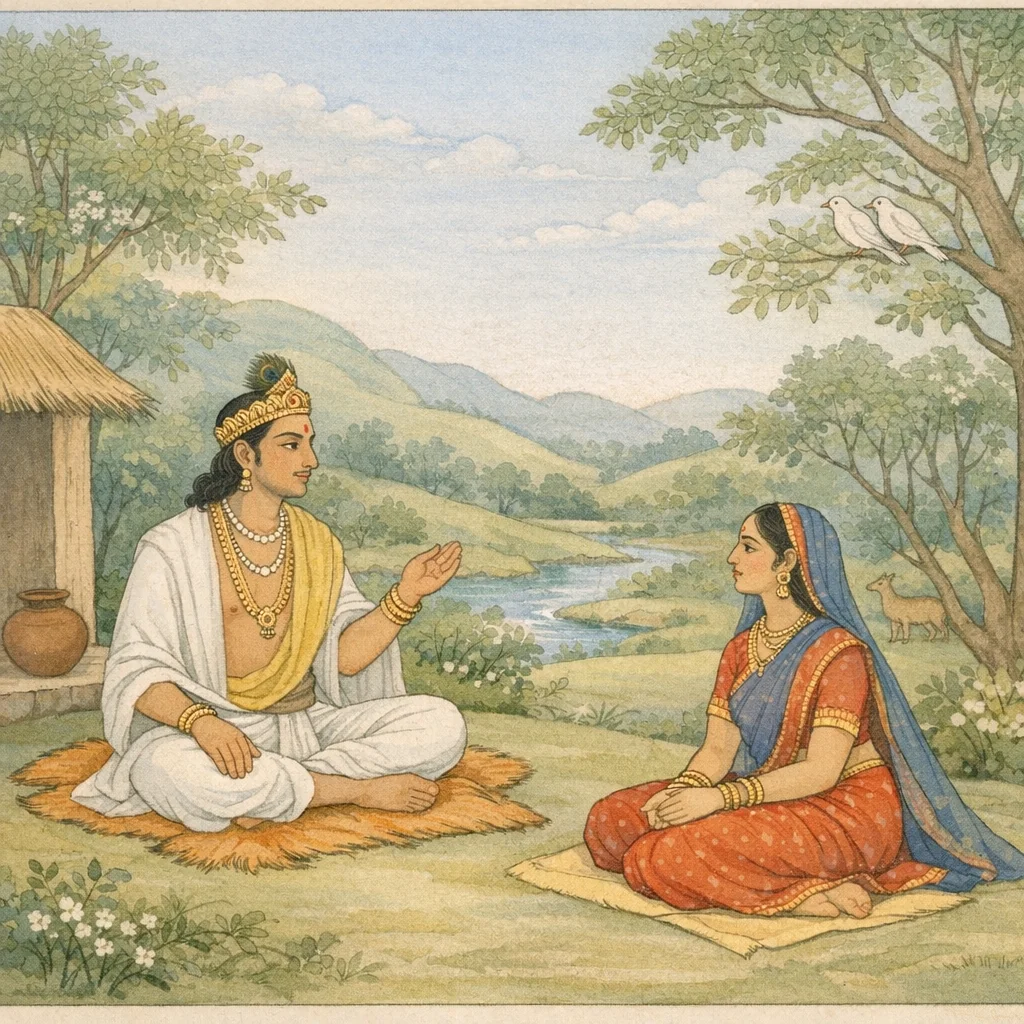
Adhyaya 29
Kṣānti–Tejas Viveka: Prahlāda’s Instruction to Bali (Draupadī’s Application)
Upa-parva: Draupadī–Yudhiṣṭhira Saṃvāda: Prahlāda–Bali Itihāsa (Kṣānti–Tejas Discourse)
Draupadī cites an ancient itihāsa: Bali Vairochana questions Prahlāda on whether kṣamā (forbearance) or tejas (assertive power) is superior. Prahlāda rejects absolutism—neither constant severity nor constant forbearance is always beneficial. He details the systemic risks of perpetual leniency: subordinates and dependents may disrespect authority, appropriate resources, disregard obligations, and destabilize household order. He then outlines risks of tejas when driven by rajas and anger: misapplied punishments, conflict with allies, social hatred, material loss, and eventual collapse of authority; people fear the harsh ruler as they would a dangerous presence. Prahlāda concludes with a rule of timing: be gentle when appropriate and severe when appropriate; such discernment yields well-being here and beyond. He enumerates ‘kṣamā-kālāḥ’—conditions warranting forgiveness (e.g., prior benefactors, the ignorant, first offenses, inadvertent harms, and prudential considerations of place/time/strength and public risk). Draupadī then interprets the present as a ‘tejas-time’ regarding the persistently harmful Dhārtarāṣṭras, asserting that no current occasion for forbearance remains, while acknowledging that both softness and sharpness have social consequences and that the wise ruler knows their proper timing.
Chapter Arc: वनवास के बीच युधिष्ठिर अपने ही मन के भीतर उठते ज्वार को पहचानते हैं—क्रोध को ‘मनुष्यों का हन्ता’ कहकर वे स्वयं से और अपने निकट जनों से प्रश्न करते हैं कि लोक-नाशक इस अग्नि को कोई धर्मात्मा कैसे आश्रय दे सकता है। → वे क्रोध के परिणामों का क्रमशः विस्तार करते हैं: क्रोध से प्रजा का विनाश, बुद्धि का क्षय, शान्ति का लोप और संबंधों का टूटना। फिर वे प्रतिपक्ष (सुयोधन) के वध तक की इच्छा को भी क्रोधजन्य प्रलोभन मानकर कठोर आत्मसंयम का आग्रह करते हैं—यहाँ नैतिक संघर्ष तीव्र होता है, क्योंकि अन्याय का प्रतिकार और क्षमा का व्रत आमने-सामने खड़े हैं। → युधिष्ठिर का निर्णायक कथन उभरता है: ‘संपूर्ण लोक के संकुपित होने पर भी शम (शान्ति) ही प्रजाओं के संधि-मूल है’—और ‘सर्व आपत्तियों में क्षमा’ को पुरुषार्थ का शिखर बताकर वे क्रोध-त्याग को ही सच्चा तेज घोषित करते हैं। → अध्याय का निष्कर्ष यह बनता है कि वास्तविक तेज वह है जिसमें भीतर क्रोध का निवास नहीं; जो उत्पन्न क्रोध को बुद्धि से दबा देता है, वही तत्त्वदर्शियों की दृष्टि में तेजस्वी है। युधिष्ठिर क्षमा को नीति, आत्मरक्षा और लोक-कल्याण—तीनों का आधार ठहराते हैं। → क्षमा का यह आदर्श-निर्णय आगे के व्यवहार में कैसे टिकेगा—विशेषतः सुयोधन के अन्याय और भविष्य के संघर्षों के सामने—यह प्रश्न अनुत्तरित रहकर अगले प्रसंगों की ओर संकेत करता है।
Shlokas
Verse 1
#:2:8 #:23:.7 () हि २ 7 एकोनत्रिशो< ध्याय: युधिष्ठिरके द्वारा क्रोधकी निन्दा और क्षमाभावकी विशेष प्रशंसा युधिछिर उवाच क्रोधो हन्ता मनुष्याणां क्रोधो भावयिता पुन: । इति विद्धि महाप्राज्ञे क्रोधमूली भवाभवौ,युधिछिर बोले--परम बुद्धिमती द्रौपदी! क्रोध ही मनुष्योंको मारनेवाला है और क्रोध ही यदि जीत लिया जाय तो अभ्युदय करनेवाला है। तुम यह जान लो कि उन्नति और अवनति दोनों क्रोधमूलक ही हैं (क्रोधको जीतनेसे उन्नति और उसके वशीभूत होनेसे अवनति होती है)
Yudhiṣṭhira said: “O supremely wise one, anger is the slayer of human beings; and yet that very anger, when mastered, becomes a cause of one’s flourishing. Know this well: both rise and ruin have anger as their root.”
Verse 2
यो हि संहरते क्रोधं भवस्तस्य सुशोभने । यः पुन: पुरुष: क्रोधं नित्यं न सहते शुभे । तस्याभावाय भवति क्रोध: परमदारुण:,सुशोभने! जो क्रोधको रोक लेता है, उसकी उन्नति होती है और जो मनुष्य क्रोधके वेगको कभी सहन नहीं कर पाता, उसके लिये वह परम भयंकर क्रोध विनाशकारी बन जाता है
Verse 3
क्रोधमूलो विनाशो हि प्रजानामिह दृश्यते । तत् कथं मादृश: क्रोधमुत्सूजेल्लोकनाशनम्,इस जगतमें क्रोधके कारण लोगोंका नाश होता दिखायी देता है; इसलिये मेरे-जैसा मनुष्य लोकविनाशक क्रोधका उपयोग दूसरोंपर कैसे करेगा?
Yudhiṣṭhira said: “Here in this world, the ruin of people is plainly seen to spring from anger. How, then, could a man like me give way to anger—an impulse that brings destruction upon the world?”
Verse 4
क्रुद्ध: पापं नर: कुर्यात् क्रुद्धों हन्याद् गुरूनपि । क्रुद्ध: परुषया वाचा श्रेयसो5प्यवमन्यते,क्रोधी मनुष्य पाप कर सकता है, क्रोधके वशीभूत मानव गुरुजनोंकी भी हत्या कर सकता है और क्रोधमें भरा हुआ पुरुष अपनी कठोर वाणीद्वारा श्रेष्ठ मनुष्योंका भी अपमान कर देता है
Verse 5
वाच्यावाच्ये हि कुपितो न प्रजानाति कहिचित् । नाकार्यमस्ति क्रुद्धस्य नावाच्यं विद्यते तथा,क्रोधी मनुष्य कभी यह नहीं समझ पाता कि क्या कहना चाहिये और क्या नहीं। क्रोधीके लिये कुछ भी अकार्य अथवा अवाच्य नहीं है
Yudhiṣṭhira said: “A person overcome by anger does not, at any time, discern what should be spoken and what should not. For one who is enraged, nothing remains ‘not to be done,’ and likewise nothing remains ‘not to be said.’”
Verse 6
हिंस्यात् क्रोधादवध्यांस्तु वध्यान् सम्पूजयीत च । आत्मानमपि च क्रुद्धः प्रेषयेद् यमसादनम्,क्रोधवश वह अवध्य पुरुषोंकी भी हत्या कर सकता है और वधके योग्य मनुष्योंकी भी पूजामें तत्पर हो सकता है। इतना ही नहीं, क्रोधी मानव (आत्महत्याद्वारा) अपने-आपको भी यमलोकका अतिथि बना सकता है
Yudhiṣṭhira said: ‘Driven by anger, a man may even harm those who ought not to be harmed, and may perversely honor those who deserve punishment. Indeed, when seized by wrath, he may even send his own self to Yama’s abode (through self-destruction).’
Verse 7
एतान् दोषान् प्रपश्यद्धिर्जित: क्रोधो मनीषिभि: । इच्छद्धि: परमं श्रेय इह चामुत्र चोत्तमम्,इन दोषोंको देखनेवाले मनस्वी पुरुषोंने, जो इहलोक और परलोकमें भी परम उत्तम कल्याणकी इच्छा रखते हैं, क्रोधको जीत लिया है
Yudhiṣṭhira said: Wise and reflective men, clearly perceiving these faults, have conquered anger—because they seek the highest good, the supreme welfare both in this world and in the next.
Verse 8
त॑ं क्रोध॑ वर्जितं धीरै: कथमस्मद्विधश्चरेत् । एतद् द्रौपदि संधाय न मे मन्यु: प्रवर्धते,अतः धीर पुरुषोंने जिसका परित्याग कर दिया है। उस क्रोधको मेरे-जैसा मनुष्य कैसे उपयोगमें ला सकता है? ट्रपदकुमारी! यही सोचकर मेरा क्रोध कभी बढ़ता नहीं है
Yudhiṣṭhira said: “How could a person like me make use of that anger which the steadfast and wise have renounced? Keeping this in mind, O Draupadī, my wrath does not grow.”
Verse 9
आत्मानं च परांश्चैव त्रायते महतो भयात् | क्रुध्यन्तमप्रतिक्रुध्यन् द्वयोरेष चिकित्सक:,क्रोध करनेवाले पुरुषके प्रति जो बदलेमें क्रोध नहीं करता, वह अपनेको और दूसरोंको भी महान् भयसे बचा लेता है। वह अपने और पराये दोनोंके दोषोंको दूर करनेके लिये चिकित्सक बन जाता है
Yudhiṣṭhira said: One who does not answer anger with anger—remaining unprovoked even when another is enraged—rescues both himself and others from great danger. Such a person becomes a healer, capable of remedying the faults on both sides, one’s own and another’s.
Verse 10
मूढो यदि क्लिश्यमान: क्रुध्यते5शक्तिमान् नर: । बलीयसां मनुष्याणां त्यजत्यात्मानमात्मना,यदि मूढ़ एवं असमर्थ मनुष्य दूसरोंके द्वारा क्लेश दिये जानेपर स्वयं भी बलिष्ठ मनुष्योंपर क्रोध करता है तो वह अपने ही द्वारा अपने-आपका विनाश कर देता है
Yudhiṣṭhira said: “If a deluded and powerless man, when afflicted by others, becomes angry at those who are stronger, he brings about his own ruin by his own doing.”
Verse 11
तस्यात्मानं संत्यजतो लोका नश्यन्त्यनात्मन: । तस्माद् द्रौपद्यशक्तस्य मन्योर्नियमनं स्मृतम्,अपने चित्तको वशमें न रखनेके कारण क्रोधवश देहत्याग करनेवाले उस मनुष्यके लोक और परलोक दोनों नष्ट हो जाते हैं। अतः द्रुपदकुमारी! असमर्थके लिये अपने क्रोधको रोकना ही अच्छा माना गया है
Yudhiṣṭhira said: “For a person who, lacking self-mastery, abandons his life under the force of anger, both his welfare in this world and his prospects in the next are ruined. Therefore, O Draupadī, for one who is not strong enough to bear and act rightly, it is held best to restrain anger.”
Verse 12
विद्वांस्तथैव य:ः शक्तः क्लिश्यमानो न कुप्यति | अनाशयित्वा कलेष्टारं परलोके च नन्दति,इसी प्रकार जो विद्वान् पुरुष शक्तिशाली होकर भी दूसरोंद्वारा क्लेश दिये जानेपर स्वयं क्रोध नहीं करता, वह क्लेश देनेवालेका नाश न करके परलोकमें भी आनन्दका भागी होता है
Yudhiṣṭhira said: A wise man who is also powerful, even when he is being afflicted by others, does not give way to anger. Without destroying the one who causes him suffering, he becomes a sharer of joy in the next world as well—because he chooses restraint and forbearance over retaliation.
Verse 13
तस्माद् बलवता चैव दुर्बलेन च नित्यदा । क्षन्तव्यं पुरुषेणाहुरापत्स्वपि विजानता,इसलिये बलवान् या निर्बल सभी विज्ञ मनुष्योंको सदा आपत्तिकालमें भी क्षमाभावका ही आश्रय लेना चाहिये
Therefore, whether one is strong or weak, a discerning person should always practice forbearance; even in times of calamity, the wise declare that one ought to choose the path of forgiveness.
Verse 14
मन्योहिं विजयं कृष्णे प्रशंसन््तीह साधव: । क्षमावतो जयो नित्यं साधोरिह सतां मतम्,कृष्णे! साधु पुरुष क्रोधको जीतनेकी ही प्रशंसा करते हैं। संतोंका यह मत है कि इस जगत्में क्षमाशील साधु पुरुषकी सदा जय होती है
Yudhiṣṭhira said: “Here, the good praise victory over anger. O Kṛṣṇa, it is the settled view of the virtuous that in this world the truly righteous and patient person is always the real victor.”
Verse 15
सत्यं चानृततः श्रेयो नृशंस्याच्चानृशंसता । तमेवं बहुदोषं तु क्रोधं साधुविवर्जितम्
Yudhiṣṭhira said: “Truth is better than falsehood, and compassion is better than cruelty. Therefore anger—so full of many faults, and shunned by the good—should be cast aside.”
Verse 16
तेजस्वीति यमाहुर्व पण्डिता दीर्घदर्शिन:
Yudhiṣṭhira said: “The wise, far-sighted sages indeed describe him as ‘tejasvī’—one endowed with radiant power and moral force.”
Verse 17
यस्तु क्रोधं समुत्पन्नं प्रज्ञया प्रतिबाधते
Yudhiṣṭhira said: “Whoever, when anger has arisen, checks and restrains it through discerning wisdom—he acts in the way of dharma, mastering himself rather than being mastered by passion.”
Verse 18
क्रुद्धों हि कार्य सुश्रोेणि न यथावत् प्रपश्यति । नाकार्य न च मर्यादां नर: क्रुद्धोडनुपश्यति,सुन्दरी! क्रोधी मनुष्य किसी कार्यको ठीक-ठीक नहीं समझ पाता। वह यह भी नहीं जानता कि मर्यादा क्या है (अर्थात् क्या करना चाहिये) और क्या नहीं करना चाहिये
When a person is seized by anger, O fair-hipped lady, he cannot see a matter as it truly is. In that state he fails to discern what ought not to be done, and he no longer perceives the bounds of proper conduct; an angry man loses sight of both restraint and right judgment.
Verse 19
हन्त्यवध्यानपि क्ुद्धो गुरून् क्रुद्धस्तुदत्यपि । तस्मात् तेजसि कर्तव्य: क्रोधो दूरे प्रतिष्ठित:,क्रोधी मनुष्य अवध्य पुरुषोंका वध कर देता है। क्रोधी मनुष्य गुरुजनोंको कटु वचनोंद्वारा पीड़ा पहुँचाता है। इसलिये जिसमें तेज हो, उस पुरुषको चाहिये कि वह क्रोधको अपनेसे दूर रखे
Yudhiṣṭhira said: “A man, when seized by anger, may even strike down those who ought not to be slain; and in anger he can wound even his elders and teachers with harsh words. Therefore, one who possesses inner strength should keep anger stationed far away from himself.”
Verse 20
दाक्ष्यं हमर्ष: शौर्य च शीघ्रत्वमिति तेजस: । गुणा! क्रोधाभिभूतेन न शक््या: प्राप्तुमजजसा,दक्षता, अमर्ष, शौर्य और शीघ्रता--ये तेजके गुण हैं। जो मनुष्य क्रोधसे दबा हुआ है, वह इन गुणोंको सहजमें ही नहीं पा सकता
Yudhiṣṭhira said: “Competence, forbearance in the face of insult, valor, and swiftness—these are the qualities born of inner fire and strength. But a person overpowered by anger cannot attain these virtues with ease.”
Verse 21
क्रोधं॑ त्यक्त्वा तु पुरुष: सम्यक् तेजो5भिपद्यते । कालयुक्तं महा प्राज्ञे क्रुद्धैेस््तेज: सुदुःसहम्,क्रोधका त्याग करके मनुष्य भलीभाँति तेज प्राप्त कर लेता है। महाप्राज्ञे! क्रोधी पुरुषोंके लिये समयके उपयुक्त तेज अत्यन्त दु:ःसह है
Yudhiṣṭhira said: “When a man abandons anger, he truly attains inner radiance and strength. O great sage, for those who are ruled by anger, the rightly timed and well-directed power of others becomes exceedingly hard to endure.”
Verse 22
क्रोधस्त्वपण्डितै: शश्वत् तेज इत्यभिनिश्चितम् । रजस्तु लोकनाशाय विहितं मानुषं प्रति,मूर्खलोग क्रोधको ही सदा तेज मानते हैं। परन्तु रजोगुणजनित क्रोधका यदि मनुष्योंके प्रति प्रयोग हो तो वह लोगोंके नाशका कारण होता है
Yudhiṣṭhira said: “The unwise constantly conclude that anger is the same as ‘splendor’ or ‘power.’ But when the passion-born impulse (rajas) is directed against human beings, it is ordained to bring about the ruin of people.”
Verse 23
तस्माच्छश्वत् त्यजेत् क्रोधं पुरुष: सम्यगाचरन् | श्रेयान् स्वधर्मानपगो न क्ुद्ध इति निश्चितम्,अतः सदाचारी पुरुष सदा क्रोधका परित्याग करे। अपने वर्णधर्मके अनुसार न चलनेवाला मनुष्य (अपेक्षाकृत) अच्छा, किंतु क्रोधी नहीं अच्छा--यह निश्चय है
Therefore, a man who strives to live rightly should always abandon anger. It is firmly concluded that even one who falls away from his own prescribed duty is preferable to an angry person; for anger destroys discernment and conduct, whereas a lapse in duty may still leave room for restraint and correction.
Verse 24
यदि सर्वमबुद्धीनामतिक्रान्तमचेतसाम् | अतिक्रमो मद्विधस्य कथंस्वित् स्यादनिन्दिते,साध्वी द्रौपदी! यदि मूर्ख और अविवेकी मनुष्य क्षमा आदि सद्गुणोंका उल्लंघन कर जाते हैं तो मेरे-जैसा विज्ञ पुरुष उनका अतिक्रमण कैसे कर सकता है?
Yudhiṣṭhira said: “If even the foolish and undiscerning—those whose minds lack steadiness—overstep the bounds of forbearance and other virtues, then how could one like me, who is expected to know what is right, ever commit such a transgression? O blameless one, noble Draupadī!”
Verse 25
यदि न स्युर्मानुषेषु क्षमिण: पृथिवीसमा: । न स्यात् संधिर्मनुष्याणां क्रोधमूलो हि विग्रह:,यदि मनुष्योंमें पृथ्वीके समान क्षमाशील पुरुष न हों तो मानवोंमें कभी सन्धि हो ही नहीं सकती; क्योंकि झगड़ेकी जड़ तो क्रोध ही है
Yudhiṣṭhira said: If, among human beings, there were no forgiving persons—steadfast like the earth itself—then reconciliation among people would never be possible. For the root of conflict is anger.
Verse 26
अभिषक्तो हाभिषजेदाहन्याद् गुरुणा हतः । एवं विनाशो भूतानामथधर्म: प्रथितो भवेत्,यदि कोई अपनेको सतावे तो स्वयं भी उसको सतावे। औरोंकी तो बात ही कया है, यदि गुरुजन अपनेको मारें तो उन्हें भी मारे बिना न छोड़े; ऐसी धारणा रखनेके कारण सब प्राणियोंका ही विनाश हो जाता है और अधर्म बढ़ जाता है
Yudhiṣṭhira said: “If one who is cursed were to retaliate with a curse, and if one struck were to strike back—even against a revered teacher who harms him—then such a principle would lead to the destruction of all beings. In that way, what is truly adharma would come to be celebrated as ‘dharma.’”
Verse 27
आद्ुष्ट: पुरुष: सर्व प्रत्याक्रोशेदनन्तरम् । प्रतिहन्याद्धतश्चलैव तथा हिंस्याच्च हिंसित:,यदि सभी क्रोधके वशीभूत हो जायँ तो एक मनुष्य दूसरेके द्वारा गाली खाकर स्वयं भी बदलेमें उसे गाली दे सकता है। मार खानेवाला मनुष्य बदलेमें मार सकता है। एकका अनिष्ट होनेपर वह दूसरेका भी अनिष्ट कर सकता है
Yudhiṣṭhira said: “If all people come under the sway of anger, then a blameless man, once abused, will immediately abuse in return. One who has been struck will strike back; and one who has been harmed will likewise harm in return. Thus, injury breeds injury in an unbroken chain.”
Verse 28
हन्युहिं पितर: पुत्रान् पुत्राश्ापि तथा पितृन् | हन्युश्व पतयो भार्या: पतीन् भार्यास्तथैव च,पिता पुत्रोंको मारेंगें और पुत्र पिताको, पति पत्नियोंकों मारेंगे और पत्नियाँ पतिको
Yudhiṣṭhira said: “Indeed, fathers would kill their sons, and sons likewise their fathers; husbands would kill their wives, and wives their husbands as well.” The statement evokes a collapse of familial dharma and social order, portraying a time when moral restraint is lost and even the closest bonds are violated.
Verse 29
एवं संकुपिते लोके शम: कृष्णे न विद्यते । प्रजानां संधिमूलं हि शमं विद्धि शुभानने,कृष्णे! इस प्रकार सम्पूर्ण जगतके क्रोधका शिकार हो जानेपर तो कहीं शान्ति नहीं रहती। शुभानने! तुम यह जान लो कि सम्पूर्ण प्रजाकी शान्ति सन्धिमूलक ही है इति श्रीमहा भारते वनपर्वणि अर्जुनाभिगमनपर्वणि द्रौपदीयुधिष्ठिरसंवादे एकोनत्रिंशो5ध्याय:
Yudhiṣṭhira said: “When the whole world has been thrown into agitation and anger, peace is not to be found, O Kṛṣṇā. O fair-faced one, understand this: the peace of the people is rooted in reconciliation—know that peace arises from making concord.”
Verse 30
ताः क्षिपेरन् प्रजा: सर्वाः क्षिप्रं द्रौपदि तादृशे । तस्मान्मन्युविनाशाय प्रजानामभवाय च,द्रौपदी! यदि राजा तुम्हारे कथनानुसार क्रोधी हो जाय तो सारी प्रजाओंका शीघ्र ही नाश हो जायगा। अत: यह समझ लो कि क्रोध प्रजावर्गके नाश और अवनतिका कारण है
Yudhiṣṭhira said: “O Draupadī, if a king becomes wrathful in the manner you describe, he would swiftly cast all his subjects into ruin. Therefore understand this: anger is a cause of the destruction and decline of the people.”
Verse 31
यस्मात् तु लोके दृश्यन्ते क्षमिण: पृथिवीसमा: । तस्माज्जन्म च भूतानां भवश्च प्रतिपद्यते,इस जगतमें पृथ्वीके समान क्षमाशील पुरुष भी देखे जाते हैं, इसीलिये प्राणियोंकी उत्पत्ति और वृद्धि होती रहती है
Because, in this world, there are seen forgiving men who are like the earth in their forbearance, therefore the birth of living beings and the continuance of their growth and becoming proceed without interruption. Forgiveness, steady and sustaining like the earth, is presented as a condition that allows life and society to endure.
Verse 32
क्षन्तव्यं पुरुषेणेह सर्वापत्सु सुशो भने । क्षमावतो हि भूतानां जन्म चैव प्रकीर्तितम्,सुशोभने! पुरुषको सभी आपत्तियोंमें क्षमाभाव रखना चाहिये। क्षमाशील पुरुषसे ही समस्त प्राणियोंका जीवन बताया गया है
Yudhiṣṭhira said: “O fair one, in this world a man should practice forbearance in every adversity. Indeed, it is proclaimed that the very continuance and well-being of living beings rests upon the one who is patient and forgiving.”
Verse 33
आक्रुष्टस्ताडित: क्रुद्धः क्षमते यो बलीयसा । यश्व नित्यं जितक्रोधो विद्वानुत्तमपूरुष:,जो बलवान पुरुषके गाली देने या कुपित होकर मारनेपर भी क्षमा कर जाता है तथा जो सदा अपने क्रोधको काबूमें रखता है, वही विद्वान् है और वही श्रेष्ठ पुरुष है
Yudhiṣṭhira said: The truly wise and the best of men is the one who, even when abused, struck, and provoked to anger by someone stronger, still forgives; and who constantly keeps his wrath conquered. Such self-mastery is upheld here as the mark of ethical excellence and inner strength.
Verse 34
प्रभाववानपि नरस्तस्य लोका: सनातना: । क्रोधनस्त्वल्पविज्ञान: प्रेत्य चेह च नश्यति,वही मनुष्य प्रभावशाली कहा जाता है। उसीको सनातन लोक प्राप्त होते हैं। क्रोधी मनुष्य अल्पज्ञ होता है। वह इस लोक और परलोक दोनोंमें विनाशका ही भागी होता है
Even a man who is powerful and influential is truly so only when he attains the eternal worlds through right conduct. But the wrathful man, being of little discernment, comes to ruin both here in this life and after death.
Verse 35
अत्राप्युदाहरन्तीमा गाथा नित्यं क्षमावताम् | गीता: क्षमावता कृष्णे काश्यपेन महात्मना,इस विषयमें जानकार लोग क्षमावान् पुरुषोंकी गाथाका उदाहरण देते हैं। कृष्णे! क्षमावान् महात्मा काश्यपने इस गाथाका गान किया है
Here too, those who understand the matter regularly cite this verse as an illustration of the conduct of the forbearing. O Kṛṣṇā, this gāthā was sung by the great-souled Kāśyapa, renowned for patience, to teach the power of forbearance.
Verse 36
क्षमा धर्म: क्षमा यज्ञ: क्षमा वेदा: क्षमा: श्रुतम् । य एतदेवं जानाति स सर्व क्षन्तुमहति,क्षमा धर्म है, क्षमा यज्ञ है, क्षमा वेद है और क्षमा शास्त्र है। जो इस प्रकार जानता है, वह सब कुछ क्षमा करनेके योग्य हो जाता है
Yudhiṣṭhira said: “Forbearance is dharma; forbearance is sacrifice; forbearance is the Vedas; forbearance is sacred learning. One who understands this truth becomes fit to forgive everything.”
Verse 37
क्षमा ब्रह्म क्षमा सत्यं क्षमा भूतं च भावि च । क्षमा तप: क्षमा शौचं क्षमयेदं धृतं जगत्,क्षमा ब्रह्म है, क्षमा सत्य है, क्षमा भूत है, क्षमा भविष्य है, क्षमा तप है और क्षमा शौच है। क्षमाने ही सम्पूर्ण जगत्को धारण कर रखा है
Yudhiṣṭhira said: “Forbearance is Brahman; forbearance is truth. Forbearance is what has been and what is yet to be. Forbearance is austerity; forbearance is purity. It is by forbearance that this entire world is upheld.”
Verse 38
अति यज्ञविदां लोकान् क्षमिण: प्राप्तुवन्ति च । अति ब्रह्मविदां लोकानति चापि तपस्विनाम्,क्षमाशील मनुष्य यजवेत्ता, ब्रह्मवेत्ता और तपस्वी पुरुषोंसे भी ऊँचे लोक प्राप्त करते हैं
Yudhiṣṭhira said: “Those who are forgiving attain worlds higher than even the realms reached by masters of sacrifice; higher than the worlds of knowers of Brahman; and higher still than those attained by ascetics. Forgiveness, as a lived virtue, surpasses ritual expertise, metaphysical knowledge, and austerity in its power to elevate a person.”
Verse 39
अन्ये वै यजुषां लोका: कर्मिणामपरे तथा । क्षमावतां ब्रह्मलोके लोका: परमपूजिता:,(सकामभावसे) यज्ञकर्मोंका अनुष्ठान करनेवाले पुरुषोंके लोक दूसरे हैं एवं (सकामभावसे) वापी, कूप, तडाग और दान आदि कर्म करनेवाले मनुष्योंके लोक दूसरे हैं। परंतु क्षमावानोंके लोक ब्रह्मलोकके अन्तर्गत हैं; जो अत्यन्त पूजित हैं
Yudhiṣṭhira said: “The worlds attained by those devoted to the rites of the Yajurveda are of one kind, and the worlds attained by other doers of meritorious works are of another. But the worlds of the forbearing—those endowed with kṣamā (patient forgiveness)—belong within Brahmaloka itself, and they are held in the highest honor.”
Verse 40
क्षमा तेजस्विनां तेज: क्षमा ब्रह्म तपस्विनाम् । क्षमा सत्यं सत्यवतां क्षमा यज्ञ: क्षमा शम:,क्षमा तेजस्वी पुरुषोंका तेज है, क्षमा तपस्वियोंका ब्रह्म है, क्षमा सत्यवादी पुरुषोंका सत्य है। क्षमा यज्ञ है और क्षमा शम (मनोनिग्रह) है
Yudhiṣṭhira said: “For the radiant, forgiveness itself is their true splendor; for ascetics, forgiveness is Brahman; for the truthful, forgiveness is their truth. Forgiveness is sacrifice, and forgiveness is self-restraint.”
Verse 41
तां क्षमां तादृशीं कृष्णे कथमस्मद्विधस्त्यजेत् । यस्यां ब्रह्म च सत्यं च यज्ञा लोकाश्न घिषछिता:,कृष्णे! जिसका महत्त्व ऐसा बताया गया है, जिसमें ब्रह्म, सत्य, यज्ञ और लोक सभी प्रतिष्ठित हैं, उस क्षमाको मेरे-जैसा मनुष्य कैसे छोड़ सकता है
O Kṛṣṇā, how could a person like me abandon such forbearance? For in that kṣamā are established Brahman (the sacred order), truth, sacrifice, and the worlds themselves. Therefore, to give up forgiveness would be to give up the very supports of dharma.
Verse 42
क्षन्तव्यमेव सततं पुरुषेण विजानता । यदा हि क्षमते सर्व ब्रह्म सम्पद्यते तदा,विद्वान पुरुषको सदा क्षमाका ही आश्रय लेना चाहिये। जब मनुष्य सब कुछ सहन कर लेता है, तब वह ब्रह्मभावको प्राप्त हो जाता है
Yudhiṣṭhira said: “For a discerning person, forgiveness must be practiced at all times. For when one truly endures and forgives everything, then one attains the state of Brahman.”
Verse 43
क्षमावतामयं लोक: परश्रैव क्षमावताम् | इह सम्मानमृच्छन्ति परत्र च शुभां गतिम्,क्षमावानोंके लिये ही यह लोक है। क्षमावानोंके लिये ही परलोक है। क्षमाशील पुरुष इस जगतमें सम्मान और परलोकमें उत्तम गति पाते हैं
Yudhiṣṭhira declares that this world belongs to those who are patient and forgiving—and so does the next. In this life, the forbearant earn honor and esteem; after death, they attain an auspicious destiny. The verse frames kṣamā (forgiveness/forbearance) not as weakness but as a dharmic strength that yields both social harmony here and spiritual welfare beyond.
Verse 44
येषां मन्युर्मनुष्याणां क्षमयाभिहत: सदा । तेषां परतरे लोकास्तस्मात् क्षान्ति: परा मता,जिन मनुष्योंका क्रोध सदा क्षमाभावसे दबा रहता है, उन्हें सर्वोत्तम लोक प्राप्त होते हैं। अत: क्षमा सबसे उत्कृष्ट मानी गयी है
Yudhiṣṭhira said: Those people whose anger is continually struck down and restrained by forgiveness attain higher and better worlds. Therefore, forgiveness is regarded as the supreme virtue.
Verse 45
इति गीता: काश्यपेन गाथा नित्यं क्षमावताम् | श्रुत्वा गाथा: क्षमायास्त्व॑ तुष्य द्रौपदि मा क्रुध:,इस प्रकार काश्यपजीने नित्य क्षमाशील पुरुषोंकी इस गाथाका गान किया है। द्रौपदी! क्षमाकी यह गाथा सुनकर संतुष्ट हो जाओ, क्रोध न करो
Yudhiṣṭhira said: “Thus has Kāśyapa continually sung this verse for those who are steadfast in forgiveness. Draupadī, having heard this teaching on forbearance, be at peace and do not give way to anger.”
Verse 46
पितामह: शान्तनव: शमं सम्पूजयिष्यति । कृष्णश्न देवकीपुत्र: शमं सम्पूजयिष्यति,मेरे पितामह शान्तनुनन्दन भीष्म शान्तिभावका ही आदर करेंगे। देवकीनन्दन श्रीकृष्ण भी शान्तिभावका ही आदर करेंगे
Yudhiṣṭhira said: “My grandsire, Bhīṣma—the son of Śāntanu—will honor the path of peace. Kṛṣṇa too, the son of Devakī, will likewise uphold and revere peace.” In this, Yudhiṣṭhira frames true greatness as reverence for restraint and reconciliation rather than the glorification of conflict.
Verse 47
आचार्यो विदुर: क्षत्ता शममेव वदिष्यत: । कृपश्च संजयश्चैव शममेव वदिष्यत:,आचार्य द्रोण और विदुर भी शान्तिको ही अच्छा कहेंगे। कृपाचार्य और संजय भी शान्त रहना ही अच्छा बतायेंगे
Yudhiṣṭhira said: “The revered teacher, Vidura the chamberlain, will surely counsel only peace. So too will Kṛpa and Saṃjaya—each will advise that peace alone is the better course.”
Verse 48
सोमदत्तो युयुत्सुश्न द्रोणपुत्रस्तथैव च । पितामहश्न नो व्यास: शमं वदति नित्यश:,सोमदत्त, युयुत्सु, अश्वत्थामा तथा हमारे पितामह व्यास भी सदा शान्तिका ही उपदेश देते हैं
Yudhiṣṭhira said: “Somadatta, Yuyutsu, and Droṇa’s son Aśvatthāmā as well—indeed even our grandsire Vyāsa—constantly speak to us of śama, the way of peace and self-restraint.”
Verse 49
एतैहिं राजा नियतं चोद्यमान: शमं प्रति | राज्यं दातेति मे बुद्धिर्न चेल्लोभान्नशिष्यति,ये सब लोग यदि राजा धुृतराष्ट्रको सदा शान्तिके लिये प्रेरित करते रहेंगे तो वे अवश्य मुझे राज्य दे देंगे, ऐसा मुझे विश्वास है। यदि नहीं देंगे तो लोभके कारण नष्ट हो जायँगे
Yudhiṣṭhira said: “If these people keep urging the king, again and again, toward peace, I am convinced he will grant me the kingdom. But if he does not, then he will not endure—he will be ruined by greed.”
Verse 50
कालो<यं दारुण: प्राप्तो भरतानामभूतये । निश्चितं मे सदैवैतत् पुरस्तादपि भाविनि
“A cruel time has now arrived, bringing ruin upon the Bharatas. This has always been certain in my mind—indeed, it was destined even from before, as something bound to come to pass.”
Verse 51
सुयोधनो नार्हतीति क्षमामेवं न विन्दति । अहहस्तत्राहमित्येवं तस्मान्मां विन्दते क्षमा
Yudhiṣṭhira said: “Thinking, ‘Suyodhana does not deserve forgiveness,’ I do not find the strength to forgive. Yet when I reflect, ‘Alas—there I stand, with my own hands (responsible),’ then forgiveness comes to me.”
Verse 52
इस समय भरतवंशके विनाशके लिये यह बड़ा भयंकर समय आ गया है। भामिनि! मेरा पहलेसे ही ऐसा निश्चित मत है कि सुयोधन कभी भी इस प्रकार क्षमा-भावको नहीं अपना सकता, वह इसके योग्य नहीं है। मैं इसके योग्य हूँ, इसलिये क्षमा मेरा ही आश्रय लेती है ।। एतदात्मवतां वृत्तमेष धर्म: सनातन: । क्षमा चैवानृशंस्यं च तत् कर्तास्म्यहमज्जसा,क्षमा और दया यही जितात्मा पुरुषोंका सदाचार है और यही सनातनधर्म है, अतः मैं यथार्थ रूपसे क्षमा और दयाको ही अपनाऊँगा
Yudhiṣṭhira said: “This is the conduct of the self-controlled; this is the eternal Dharma. Forgiveness and compassion—these I will truly adopt and practice without hesitation. For I am fit for forgiveness, and therefore forgiveness takes refuge in me; but Suyodhana is not capable of taking up such a disposition.”
Verse 153
मादृश: प्रसजेत् कस्मात् सुयोधनवधादपि । झूठसे सत्य श्रेष्ठ है। क्रूरतासे दयालुता श्रेष्ठ है, अतः दुर्योधन मेरा वध कर डाले तो भी इस प्रकार अनेक दोषोंसे भरे हुए और सत्पुरुषोंद्वारा परित्यक्त क्रोधका मेरे-जैसा पुरुष कैसे उपयोग कर सकता है?
Yudhiṣṭhira said: “Why should a man like me resort to anger—even for the killing of Suyodhana? Truth is superior to falsehood; compassion is superior to cruelty. Therefore, even if Duryodhana were to kill me, how could someone like me make use of anger—an impulse laden with many faults and rejected by the virtuous?”
Verse 163
न क्रोधो5भ्यन्तरस्तस्य भवतीति विनिश्चितम् । दूरदर्शी विद्वान जिसे तेजस्वी कहते हैं, उसके भीतर क्रोध नहीं होता; यह निश्चित बात है
Yudhiṣṭhira said: “It is firmly ascertained that anger does not arise within such a person. The truly far-seeing, learned, and radiant one—whom people call ‘tejasvī’—does not harbor inner wrath.”
Verse 173
तेजस्विनं त॑ विद्वांसो मन्यन्ते तत्त्वदर्शिन: । जो उत्पन्न हुए क्रोधको अपनी बुद्धिसे दबा देता है, उसे तत्त्वदर्शी विद्वान् तेजस्वी मानते हैं
Yudhiṣṭhira said: Those who truly discern reality regard that person as radiant and noble—one who, when anger arises, restrains it through his own clear intelligence. Such self-mastery is praised as the mark of a genuine knower of truth.
Frequently Asked Questions
The dilemma is governance under provocation: whether a leader should prioritize forbearance (kṣamā) to avoid escalation or assertive enforcement (tejas) to prevent exploitation—resolved by rejecting fixed rules and requiring contextual judgment.
Ethical action is conditional, not absolute: restraint without discernment invites disorder, while power without restraint invites fear and collapse; the stable path is calibrated response guided by time, place, capability, and the nature of the offense.
No explicit phalaśruti is stated; the chapter’s meta-claim is pragmatic-ethical: the ruler who knows when to be gentle and when to be severe attains well-being ‘here and hereafter,’ positioning discernment itself as the chapter’s implied soteriological and political value.