Adhyaya 11
मैत्रेयागमनम् — The Arrival of Maitreya and the Admonition to Duryodhana
Upa-parva: Maitreya–Dhṛtarāṣṭra Saṃvāda (Counsel and Curse Episode)
Dhṛtarāṣṭra acknowledges prior counsel (Vidura, Bhīṣma, Droṇa) and asks that his son Duryodhana be instructed toward peace. Vyāsa announces the approach of the sage Maitreya, who has followed the Pāṇḍavas after meeting Dharmarāja in Kāmyaka forest during a tīrtha-tour. Dhṛtarāṣṭra welcomes Maitreya with formal hospitality and questions him about the Pāṇḍavas’ welfare and whether Kuru fraternity can remain unbroken. Maitreya reports hearing of the Kauravas’ misjudgment and the destructive turn initiated through gambling, criticizing Dhṛtarāṣṭra’s passivity amid rising disorder. Turning to Duryodhana, Maitreya urges him not to harm the Pāṇḍavas and underscores their strength and alliances, citing prior feats (including Bhīma’s slaying of Kirmīra and Jarāsandha). Duryodhana responds with contemptuous silence and dismissive gestures. Interpreting this as refusal of counsel, Maitreya becomes angered, performs a ritual act of purification, and pronounces a conditional curse: a great conflict will arise in which Bhīma will break Duryodhana’s thigh. Dhṛtarāṣṭra seeks to avert the outcome; Maitreya states the curse will not mature if Duryodhana adopts restraint, but will manifest otherwise. When Dhṛtarāṣṭra requests further explanation, Maitreya declines, directing that Vidura can recount details after his departure, and leaves as Duryodhana withdraws, unsettled by the reference to Kirmīra’s death.
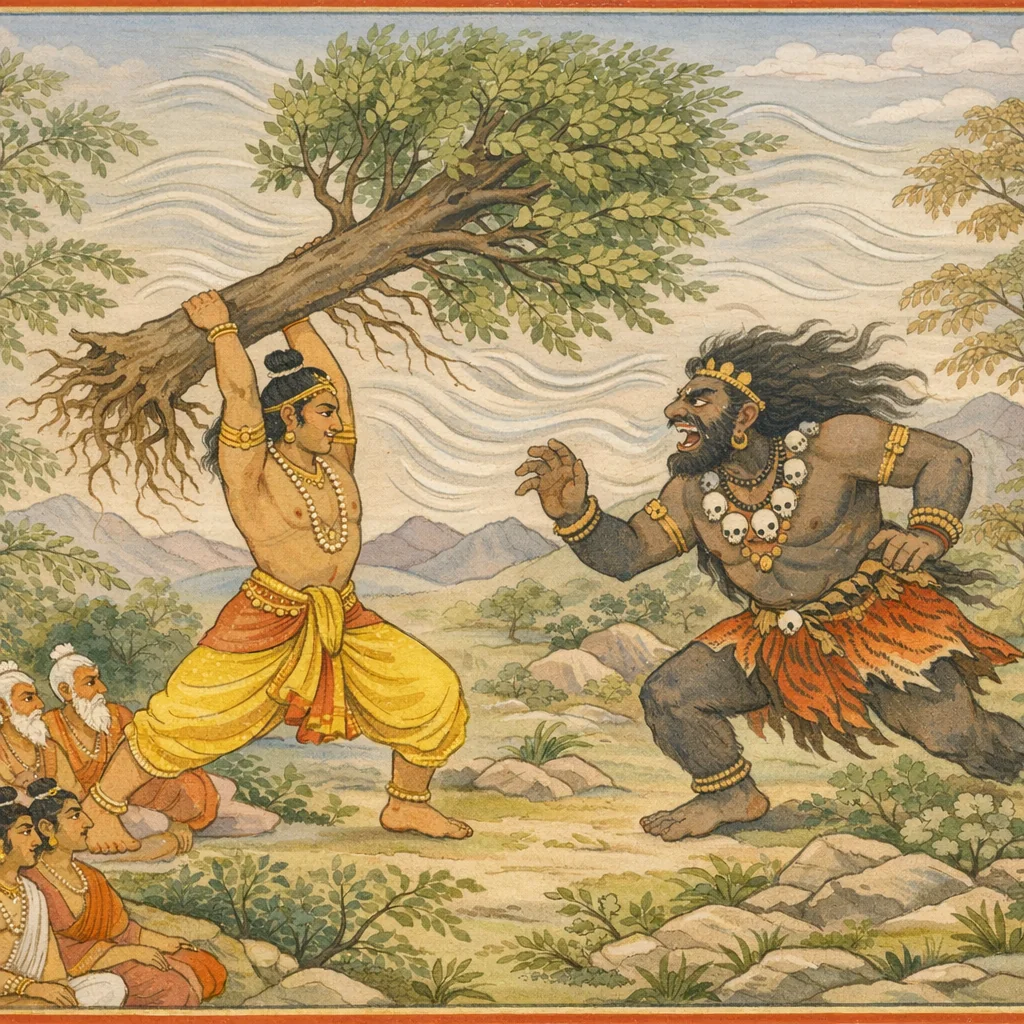
Chapter Arc: धृतराष्ट्र, वनवास में पाण्डवों पर आए एक और संकट—राक्षस किर्मीर—के वध का वृत्तान्त सुनने को व्याकुल होकर विदुर से पूछते हैं: ‘किर्मीर का वध कैसे हुआ?’ → विदुर पाण्डवों के द्यूतनिर्जित होकर काम्यक वन की ओर जाने का प्रसंग उठाते हैं; वन की निस्तब्धता को अचानक प्रचण्ड मारुत, धूल और अन्धकार-सा आवरण तोड़ देता है—किर्मीर के आगमन का अपशकुन। भीम, दुर्योधन के तिरस्कार और द्रौपदी-अपमान की स्मृति से भीतर-ही-भीतर दहकता, राक्षसी चुनौती को अपने ऊपर ले लेता है। → भीम और किर्मीर का ‘वृक्षयुद्ध’—दो उन्मत्त गजराजों की भाँति—उग्र रूप लेता है: भीम दस-व्याम लम्बा वृक्ष उखाड़कर प्रहार करता है, वन में चीर-वस्त्रों की तरह उछलते पत्ते-टहनियाँ बिखरते हैं; अंततः भीम अपनी अतिमानुष शक्ति से किर्मीर को संख्ये में विनिहत कर देता है। → किर्मीर के मारे जाने से पाण्डवों का मार्ग और शिविर सुरक्षित होता है; ब्राह्मणों के मुख से यह पराक्रम कथा बनकर फैलता है। धृतराष्ट्र यह सुनकर ध्यानमग्न-सा, भीतर से व्यथित भी होता है—क्योंकि पाण्डवों की शक्ति का यह प्रमाण भविष्य के अनिष्ट का संकेत है। → कौरव-पक्ष के लिए यह समाचार एक और चेतावनी बनता है—वन में भी पाण्डव अजेय होते जा रहे हैं; आगे कौन-सा संकट या षड्यन्त्र उन्हें घेरने आएगा?
Shlokas
Verse 1
#::2:7 #पड- (0) हि 2 7 (किर्मीरवधपर्व) एकादशो< ध्याय: भीमसेनके द्वारा किर्मीरके वधकी कथा धृतराष्ट उवाच किर्मीरस्य वध क्षत्त: श्रोतुमिच्छामि कथ्यताम् | रक्षसा भीमसेनस्य कथमासीत् समागम:,धृतराष्ट्रने पूछा--विदुर! मैं किर्मीरवधका वृत्तान्त सुनना चाहता हूँ, कहो। उस राक्षसके साथ भीमसेनकी मुठभेड़ कैसे हुई?
Dhṛtarāṣṭra said: “O Kṣattṛ (Vidura), I wish to hear of Kirmīra’s slaying—tell it to me. How did Bhīmasena come to encounter that rākṣasa?”
Verse 2
विदुर उवाच शृणु भीमस्य कर्मेदमतिमानुषकर्मण: । श्रुतपूर्व मया तेषां कथान्तेषु पुन: पुन:,विदुरजीने कहा--राजन! मानवशक्तिसे अतीत कर्म करनेवाले भीमसेनके इस भयानक कर्मको आप सुनिये, जिसे मैंने उन पाण्डवोंके कथाप्रसंगमें (ब्राह्मणोंसे) बार-बार सुना है
Vidura said: “O king, listen to this deed of Bhīma—an act beyond ordinary human measure. I have heard it before, again and again, in the closing portions of the tales told about those Pāṇḍavas.”
Verse 3
इत:ः प्रयाता राजेन्द्र पाण्डवा द्यूतनिर्जिता: । जम्मुस्त्रिभिरहोरात्रै: काम्यकं नाम तद् वनम्,राजेन्द्र! पाण्डव जूएमें पराजित होकर जब यहाँसे गये, तब तीन दिन और तीन रातमें काम्यकवनमें जा पहुँचे
Vidura said: “O king, the Pāṇḍavas, having been defeated in the game of dice, departed from here and, after three days and three nights, reached that forest called Kāmyaka.”
Verse 4
रात्रौ निशी्थे त्वाभीले गते<र्धसमये नृप । प्रचारे पुरुषादानां रक्षसां घोरकर्मणाम्,आधी रातके भयंकर समयमें, जब कि भयानक कर्म करनेवाले नरभक्षी राक्षस विचरते रहते हैं, तपस्वी मुनि और वनचारी गोपगण भी उस राक्षसके भयसे उस वनको दूरसे ही त्याग देते थे
Vidura said: “O king, at night—at the dead of night, when the fearful middle watch had come—terrible man-eating rākṣasas of dreadful deeds would roam about. Because of that terror, even ascetic sages and the cowherds who lived in the forest would abandon that woodland from afar.”
Verse 5
तद् वन॑ तापसा नित्यं गोपाश्न वनचारिण: । दूरात् परिहरन्ति सम पुरुषादभयात् किल,आधी रातके भयंकर समयमें, जब कि भयानक कर्म करनेवाले नरभक्षी राक्षस विचरते रहते हैं, तपस्वी मुनि और वनचारी गोपगण भी उस राक्षसके भयसे उस वनको दूरसे ही त्याग देते थे
Therefore that forest was continually avoided. Ascetics and the cowherds who lived by roaming the woods would keep away from it from a distance, it is said, out of fear of that man-eating being.
Verse 6
तेषां प्रविशतां तत्र मार्गमावृत्य भारत । दीप्ताक्ष॑ भीषण रक्ष: सोल्मुकं प्रत्यपद्यत,भारत! उस वनमें प्रवेश करते ही वह राक्षस उनका मार्ग रोककर खड़ा हो गया। उसकी आँखें चमक रही थीं। वह भयानक राक्षस मशाल लिये आया था
As they entered that forest, O Bhārata, a terrifying rākṣasa blocked their path. His eyes blazed, and he advanced toward them carrying a torch—an ominous sign that danger and moral testing were about to confront the travelers.
Verse 7
बाहू महान्तौ कृत्वा तु तथा55स्यं च भयानकम् | स्थितमावृत्य पन्थानं येन यान्ति कुरूद्वहा:,अपनी दोनों भुजाओंको बहुत बड़ी करके मुँहको भयानकरूपसे फैलाकर वह उसी मार्गको घेरकर खड़ा हो गया, जिससे वे कुरुवंशशिरोमणि पाण्डव यात्रा कर रहे थे
Having made his arms enormous and spreading his mouth into a terrifying gape, he stood there blocking the road—the very path along which the Pandavas, the foremost of the Kuru line, were traveling. The scene underscores how brute intimidation can obstruct the righteous, testing their resolve and discernment in the forest ordeal.
Verse 8
स्पष्टाष्टदंष्टं ताम्राक्ष॑ प्रदीप्तोर्ध्वशिरोरुहम् । सार्करश्मितडिच्चक्रं सबलाकमिवाम्बुदम्,उसकी आठ दाढ़ें स्पष्ट दिखायी देती थीं, आँखें क्रोधसे लाल हो रही थीं एवं सिरके बाल ऊपरकी ओर उठे हुए और प्रज्वलित-से जान पड़ते थे। उसे देखकर ऐसा मालूम होता था, मानो सूर्यकी किरणों, विद्युन्मण्डल और बकपंक्तियोंके साथ मेघ शोभा पा रहा हो
Vidura said: “He appeared with eight clearly visible fangs; his eyes were copper-red with wrath; and the hair on his head stood upright, seeming to blaze. Beholding him, one felt as though a cloud had taken on splendor—shot through with the sun’s rays, ringed with lightning, and accompanied by lines of cranes.”
Verse 9
सृजन्तं राक्षसीं मायां महानादनिनादितम् । मुज्चन्तं विपुलान्ू नादान् सतोयमिव तोयदम्,वह भयंकर गर्जनाके साथ राक्षसी मायाकी सृष्टि कर रहा था। सजल जलधरके समान जोर-जोरसे सिंहनाद करता था
Vidura describes a terrifying figure who was conjuring a demonic illusion and filling the surroundings with a great, thunderous din. Like a rain-laden cloud, he kept releasing immense roars, intensifying fear and confusion through sheer sound and spectacle.
Verse 10
इस प्रकार श्रीमह्या भारत वनपवके अन्तर्गत अरण्यपर्वमें मैत्रेयशापविषयक दसवाँ अध्याय पूरा हुआ,तस्य नादेन संत्रस्ता: पक्षिण: सर्वतोदिशम् | विमुक्तनादा: सम्पेतु: स्थलजा जलजै: सह उसकी गर्जनासे भयभीत हुए स्थलचर पक्षी जलचर पक्षियोंके साथ चीं-चीं करते हुए सब दिशाओंमें भाग चले
Vaiśampāyana said: Terrified by that resounding roar, the birds in every direction took flight. Crying out in alarm, the land-dwelling birds scattered together with the water-birds, fleeing on all sides—an image of how fear, once unleashed by a powerful disturbance, drives even diverse beings into the same instinctive rush for safety.
Verse 11
सम्प्रद्रुतमृगद्वीपिमहिषर्क्षममाकुलम् । तद् वन॑ तस्य नादेन सम्प्रस्थितमिवाभवत्,भागते हुए मृग, भेड़िये, भैंसे तथा रीछोंसे भरा हुआ वह वन उस राक्षसकी गर्जनासे ऐसा हो गया, मानो वह वन ही भाग रहा हो इति श्रीमहा भारते वनपर्वणि किर्मीरवधपर्वणि विदुरवाक्ये एकादशो<5ध्याय: ।। १३ || इस प्रकार श्रीमह्याभारत वनपर्वके अन्तर्गत किर्मीरवधपर्वमें विदुरवाक्यसम्बन्धी ग्यारहवाँ अध्याय पूरा हुआ
The forest became a scene of turmoil—filled with deer, leopards, buffaloes, and bears all fleeing in panic. At the roar of that rākṣasa, it seemed as though the very forest itself had started to run away, overwhelmed by terror.
Verse 12
तस्योरुवाताभिहतास्ताम्रपल्लवबाहव: । विदूरजाताश्न लता: समाश्लिष्यन्ति पादपान्,उसकी जाँघोंकी हवाके वेगसे आहत हो ताम्रवर्णके पल्लवरूपी बाँहोंद्वारा सुशोभित दूरकी लताएँ भी मानो वृक्षोंसे लिपटी जाती थीं
Struck by the powerful gusts raised by his thighs, the creepers that had sprung up at a distance—adorned as though with arms of copper-red tender leaves—seemed to clasp the trees tightly.
Verse 13
तस्मिन् क्षणेडथ प्रववो मारुतो भूशदारुण: । रजसा संवृतं तेन नष्टज्योतिरभून्नरभ:,इसी समय बड़ी प्रचण्ड वायु चलने लगी। उसकी उड़ायी हुई धूलसे आच्छादित हो आकाशके तारे भी अस्त हो गये-से जान पड़ते थे
At that very moment a violent wind began to blow, terrifying to the earth. Covered by the dust it hurled up, the sky seemed to lose its light, as though even the stars had been blotted out—an ominous sign accompanying the unfolding events.
Verse 14
पज्चानां पाण्डुपुत्राणामविज्ञातो महारिपु: । पञ्चानामिन्द्रियाणां तु शोकावेश इवातुल:,जैसे पाँचों इन्द्रियोंको अकस्मात् अतुलित शोकावेश प्राप्त हो जाय, उसी प्रकार पाँचों पाण्डवोंका वह तुलनारहित महान् शत्रु सहसा उनके पास आ पहुँचा; पर पाण्डवोंको उस राक्षसका पता नहीं था
Vidura said: An incomparable great enemy, unknown to the five sons of Pāṇḍu, suddenly came upon them—like an immeasurable surge of grief that unexpectedly overwhelms the five senses.
Verse 15
स दृष्टवा पाण्डवान् दूरात् कृष्णाजिनसमावृतान् | आवृणोत् तद्वनद्वारं मैनाक इव पर्वतः,उसने दूरसे ही पाण्डवोंको कृष्ण-मृगचर्म धारण किये आते देख मैनाक पर्वतकी भाँति उस वनके प्रवेश-द्धारको घेर लिया
Seeing the Pāṇḍavas from afar, clad in black antelope-skins, he blocked the entrance to that forest—like Mount Maināka standing firm—confronting them at the threshold and barring their way.
Verse 16
त॑ समासाद्य वित्रस्ता कृष्णा कमललोचना । अदृष्टपूर्व संत्रासान्न्यमीलयत लोचने,उस अदृष्टपूर्व राक्षषके निकट पहुँचकर कमल-लोचना कृष्णाने भयभीत हो अपने दोनों नेत्र बंद कर लिये
Drawing near to that being, Kṛṣṇā (Draupadī), lotus-eyed, was seized by fear; overwhelmed by a terror she had never known before, she shut both her eyes. The scene shows how sudden, unfamiliar danger can shake even the steadfast, and it calls upon protectors and rulers to uphold dharma by not exposing the vulnerable to भय (fear) and हिंसा (violence).
Verse 17
दुःशासनकरोत्सृष्टविप्रकीर्णशिरोरुहा । पज्चपर्वतमध्यस्था नदीवाकुलतां गता,दुःशासनके हाथोंसे खुले हुए उसके केश सब ओर बिखरे हुए थे। वह पाँच पर्वतोंके बीचमें पड़ी हुई नदीकी भाँति व्याकुल हो उठी
Vidura describes her humiliation: her hair, loosed by Duḥśāsana’s hands, lay scattered in disarray. She became frantic and shaken, like a river trapped between five mountains—hemmed in on all sides, with no free course—an image that underscores the violent breach of dharma and the moral outrage of the act.
Verse 18
मोमुहामानां तां तत्र जगृहुः पञ्च पाण्डवा: । इन्द्रियाणि प्रसक्तानि विषयेषु यथा रतिम्,उसे मूर्छित होती हुई देख पाँचों पाण्डवोंने सहारा देकर उसी तरह थाम लिया, जैसे विषयोंमें आसक्त हुई इन्द्रियाँ तत्सम्बन्धी अनुरक्तिको धारण किये रहती हैं
Seeing her there fainting and overcome by bewilderment, the five Pāṇḍavas supported and held her up. They held her as firmly as the senses—when attached to their objects—retain and cling to the delight that arises from them.
Verse 19
अथ तां राक्षसीं मायामुत्थितां घोरदर्शनाम् । रक्षोघ्नैविविधैर्मन्त्रैधौम्य: सम्यक्प्रयोजितै:
Then that terrifying, dreadful-looking rākṣasī-illusion arose; and Dhaumya, having properly employed various mantras that destroy rākṣasas, countered it effectively—showing how disciplined sacred knowledge is used to protect dharma against deceptive, harmful forces.
Verse 20
पश्यतां पाण्डुपुत्राणां नाशयामास वीर्यवान् । स नष्टमायो5तिबल: क्रोधविस्फारितेक्षण:
Before the very eyes of the sons of Pāṇḍu, the mighty one wrought destruction. His power of illusion spent, yet possessed of extraordinary strength, he stared with eyes widened by wrath—an image of uncontrolled anger turning strength into ruin.
Verse 21
काममूर्तिधर: क्रूर: कालकल्पो व्यदृश्यत । तमुवाच ततो राजा दीर्घप्रज्ञो युधिष्ठिर:
He appeared as a cruel being, assuming whatever form he wished—like Kāla, Time itself, in its destructive aspect. Then King Yudhiṣṭhira, famed for far-reaching wisdom, addressed him, meeting the moment with discernment rather than fear.
Verse 22
तदनन्तर वहाँ प्रकट हुई अत्यन्त भयानक राक्षसी मायाको देख शक्तिशाली धौम्य मुनिने अच्छी तरह प्रयोगमें लाये हुए राक्षसविनाशक विविध मन्त्रोंद्वारा पाण्डवोंके देखते- देखते उस मायाका नाश कर दिया। माया नष्ट होते ही वह अत्यन्त बलवान् एवं इच्छानुसार रूप धारण करनेवाला क्रूर राक्षस क्रोधसे आँखें फाड़-फाड़कर देखता हुआ कालके समान दिखायी देने लगा। उस समय परम बुद्धिमान् राजा युधिष्ठिरने उससे पूछा-- || १९-- २१ || को भवान् कस्य वा किं ते क्रियतां कार्यमुच्यताम् । प्रत्युवाचाथ तद् रक्षो धर्मराजं युधिष्ठिरम्,“तुम कौन हो, किसके पुत्र हो अथवा तुम्हारा कौन-सा कार्य सम्पादन किया जाय? यह सब बताओ।' तब उस राक्षसने धर्मराज युधिष्ठिरसे कहा--
Soon after, a terrifying demonic illusion manifested there. Seeing it, the powerful sage Dhaumya—using a range of well-applied, demon-destroying mantras—destroyed that illusion before the very eyes of the Pāṇḍavas. When the illusion was dispelled, the exceedingly strong and cruel rākṣasa, able to assume forms at will, glared in fury with eyes wide, appearing like Death itself. Then the supremely wise King Yudhiṣṭhira addressed him: “Who are you? Whose son are you? What do you seek—what task should be done for you? Speak.” Thereupon the rākṣasa replied to Dharmarāja Yudhiṣṭhira.
Verse 23
अहं बकस्य वै भ्राता किर्मीर इति विश्रुत: । वने5स्मिन् काम्यके शून्ये निवसामि गतज्वर:,“मैं बकका भाई हूँ, मेरा नाम किर्मीर है, इस निर्जन काम्यकवनमें निवास करता हूँ। यहाँ मुझे किसी प्रकारकी चिन्ता नहीं है
“I am indeed Baka’s brother, renowned by the name Kirmīra. I dwell in this lonely Kāmyaka forest, free from all anxiety and disturbance.”
Verse 24
युधि निर्जित्य पुरुषानाहारं नित्यमाचरन् | के यूयमभिसम्प्राप्ता भक्ष्यभूता ममान्तिकम् । युधि निर्जित्य व: सर्वान् भक्षयिष्ये गतज्वर:,“यहाँ आये हुए मनुष्योंको युद्धमें जीतकर सदा उन्हींको खाया करता हूँ। तुमलोग कौन हो? जो स्वयं ही मेरा आहार बननेके लिये मेरे निकट आ गये? मैं तुम सबको युद्धमें परास्त करके निश्चिन्त हो अपना आहार बनाऊँगा”
“Having defeated men in battle, I habitually make them my constant food. Who are you, who have come here—already as if turned into my prey—right into my presence? After conquering all of you in combat, I shall devour you, free from any fear or agitation.”
Verse 25
वैशम्पायन उवाच युधिष्ठिरस्तु तच्छुत्वा वचस्तस्य दुरात्मन: । आचचतक्षे ततः सर्व गोत्रनामादि भारत,वैशम्पायनजी कहते हैं--भारत! उस दुरात्माकी बात सुनकर धर्मराज युधिष्ठिरने उसे गोत्र एवं नाम आदि सब बातोंका परिचय दिया
Vaiśampāyana said: O Bhārata, having heard the words of that wicked-minded man, Yudhiṣṭhira then disclosed to him everything—his lineage (gotra), name, and the other identifying particulars.
Verse 26
युधिछिर उवाच पाण्डवो धर्मराजो<हं यदि ते श्रोत्रमागत: । सहितो भ्रातृभि: सर्वैर्भीमसेनार्जुनादिभि:,युधिष्ठिर बोले--मैं पाण्डुपुत्र युधिष्ठिर हूँ। सम्भव है, मेरा नाम तुम्हारे कानोंमें भी पड़ा हो। इस समय मेरा राज्य शत्रुओंने जूएमें हरण कर लिया है। अतः मैं भीमसेन, अर्जुन आदि सब भाइयोंके साथ वनमें रहनेका निश्चय करके तुम्हारे निवासस्थान इस घोर काम्यकवनमें आया हूँ
Yudhiṣṭhira said: “I am Yudhiṣṭhira, the son of Pāṇḍu, known as Dharmarāja—perhaps my name has reached your ears. I have come here with all my brothers, beginning with Bhīmasena and Arjuna.”
Verse 27
ह्ृतराज्यो वने वासं वस्तुं कृतमतिस्ततः । वनमभ्यागतो घोरमिदं तव परिग्रहम्,युधिष्ठिर बोले--मैं पाण्डुपुत्र युधिष्ठिर हूँ। सम्भव है, मेरा नाम तुम्हारे कानोंमें भी पड़ा हो। इस समय मेरा राज्य शत्रुओंने जूएमें हरण कर लिया है। अतः मैं भीमसेन, अर्जुन आदि सब भाइयोंके साथ वनमें रहनेका निश्चय करके तुम्हारे निवासस्थान इस घोर काम्यकवनमें आया हूँ
Yudhiṣṭhira said: “Bereft of my kingdom, I have resolved to dwell in the forest. Therefore I have come to this dreadful forest—this domain under your charge—seeking a place to live in exile.”
Verse 28
विदुर उवाच किर्मीरिस्त्वब्रवीदेनं दिष्ट्या देवैरिदं मम । उपपादितमद्येह चिरकालान्मनोगतम्,विदुरजी कहते हैं--राजन्! तब किर्मीरने युधिष्ठिससे कहा--'आज सौभाग्यवश देवताओं ने यहाँ मेरे बहुत दिनोंके मनोरथकी पूर्ति कर दी
Vidura said: Then Kirmīra addressed him, “By good fortune, the gods have today brought about here the fulfillment of a desire that has long been in my heart.”
Verse 29
भीमसेनवधार्थ हि नित्यमभ्युद्यतायुध: । चरामि पृथिवीं कृत्स्नां नैनं चासादयाम्यहम्,“मैं प्रतिदिन हथियार उठाये भीमसेनका वध करनेके लिये सारी पृथ्वीपर विचरता था; किंतु यह मुझे मिल नहीं रहा था
“Indeed, with weapons ever raised for the purpose of killing Bhīmasena, I roamed across the whole earth; yet I could not come upon him.”
Verse 30
सो<5यमासादितो दिष्ट्या भ्रातृहा काड्क्षितश्चिरम् । अनेन हि मम भ्राता बको विनिहत: प्रिय:,“आज सौभाग्यवश यह स्वयं मेरे यहाँ आ पहुँचा। भीम मेरे भाईका हत्यारा है, मैं बहुत दिनोंसे इसकी खोजमें था। राजन्! इसने (एकचक्रा नगरीके पास) वैत्रकीयवनमें ब्राह्मणका कपटवेष धारण करके वेदोक्त मन्त्ररूप विद्याबलका आश्रय ले मेरे प्यारे भाई बकासुरका वध किया था; वह इसका अपना बल नहीं था
“By good fortune, this very man has now come into my reach. He is the slayer of my brother—one I have long been seeking. For it was by him that my dear brother Baka was killed.”
Verse 31
वैत्रकीयवने राजन ब्राह्मणच्छह्मरूपिणा । विद्याबलमुपश्रित्य न हुस्त्यस्यौरसं बलम्,“आज सौभाग्यवश यह स्वयं मेरे यहाँ आ पहुँचा। भीम मेरे भाईका हत्यारा है, मैं बहुत दिनोंसे इसकी खोजमें था। राजन्! इसने (एकचक्रा नगरीके पास) वैत्रकीयवनमें ब्राह्मणका कपटवेष धारण करके वेदोक्त मन्त्ररूप विद्याबलका आश्रय ले मेरे प्यारे भाई बकासुरका वध किया था; वह इसका अपना बल नहीं था
O King, in the Vaitrakīya forest he took on the deceitful guise of a brahmin and, relying on the power of mantra-knowledge, slew my beloved brother Bakāsura. That was not his own innate strength.
Verse 32
हिडिम्बश्न सखा महां दयितो वनगोचर: । हतो दुरात्मनानेन स्वसा चास्य हृता पुरा,“इसी प्रकार वनमें रहनेवाले मेरे प्रिय मित्र हिडिम्बको भी इस दुरात्माने मार डाला और उसकी बहिनका अपहरण कर लिया। ये सब बहुत पहलेकी बातें हैं
In the same way, my dear and noble friend Hiḍimba, who dwelt in the forest, was slain by this wicked man; and long ago his sister too was carried off. These are matters of the past, yet they reveal his enduring pattern of wrongdoing.
Verse 33
सो<5यमभ्यागतो मूढो ममेदं गहनं वनम् । प्रचारसमये<5स्माकमर्धरात्रे स्थिते स मे,“वही यह मूढ़ भीमसेन हमलोगोंके घूमने-फिरनेकी बेलामें आधी रातके समय मेरे इस गहन वनमें आ गया है
This very fool—Bhīmasena—has come here, into my dense forest, at the time when we are out roaming, and when midnight has set in.
Verse 34
अद्यास्य यातयिष्यामि तद् वैरं चिरसम्भृतम् । तर्पयिष्यामि च बकं रुधिरेणास्य भूरिणा,“आज इससे मैं उस पुराने वैरका बदला लूँगा और इसके प्रचुर रक्तसे बकासुरका तर्पण करूँगा
Today I shall exact repayment for that long-harbored enmity. With this man’s abundant blood I will satisfy Baka (Bakāsura).
Verse 35
अद्याहमनृणो भूत्वा भ्रातु: सख्युस्तथैव च । शान्तिं लब्धास्मि परमां हत्वा राक्षषकण्टकम्,“आज मैं राक्षसोंके लिये कण्टकरूप इस भीमसेनको मारकर अपने भाई तथा मित्रके ऋणसे उऋण हो परम शान्ति प्राप्त करूँगा
Today I shall be free of my debt—both to my brother and to my friend. By slaying this Bhīmasena, who stands as a thorn and menace to the rākṣasas, I will attain supreme peace.
Verse 36
यदि तेन पुरा मुक्तो भीमसेनो बकेन वै । अद्यैनं भक्षयिष्यामि पश्यतस्ते युधिछ्िर,'युधिष्ठिर! यदि पहले बकासुरने भीमसेनको छोड़ दिया, तो आज मैं तुम्हारे देखते- देखते इसे खा जाऊँगा
“If, in former days, Bhīmasena was indeed spared by Baka, then today—while you look on, O Yudhiṣṭhira—I shall devour this very one.” The utterance underscores a fierce resolve to correct a past wrong and to protect the righteous by confronting predatory violence directly, even at the cost of escalating danger.
Verse 37
एनं हि विपुलप्राणमद्य हत्वा वृकोदरम् । सम्भक्ष्य जरयिष्यामि यथागस्त्यो महासुरम्,'जैसे महर्षि अगस्त्यने वातापि नामक महान् राक्षसको खाकर पचा लिया, उसी प्रकार मैं भी इस महाबली भीमको मारकर खा जाऊँगा और पचा लूँगा'
“Indeed, today I shall kill Bhīma—Vṛkodara of mighty life-force—and, having devoured him, I shall digest him, just as the sage Agastya digested the great demon.” The speaker boasts of violent power and frames cannibalistic intent as a feat comparable to a legendary act, revealing a mind driven by arrogance and adharma rather than restraint or righteous conduct.
Verse 38
एवमुक्तस्तु धर्मात्मा सत्यसंधो युधिष्ठिर: । नैतदस्तीति सक्रोधो भर्त्सयामास राक्षसम्,उसके ऐसा कहनेपर धर्मात्मा एवं सत्यप्रतिज्ञ युधिष्ठिरने कुपित हो उस राक्षसको फटकारते हुए कहा--'ऐसा कभी नहीं हो सकता”
When the rākṣasa had spoken thus, Yudhiṣṭhira—righteous at heart and steadfast in truth—grew angry and rebuked him, declaring, “That can never be so.”
Verse 39
ततो भीमो महाबाहुरारुज्य तरसा द्रुमम् । दशव्याममथोद्विद्धं निष्पत्रमकरोत् तदा,तदनन्तर महाबाहु भीमसेनने बड़े वेगसे हिलाकर एक दस व्याम- लम्बे वृक्षको उखाड़ लिया और उसके पत्ते झाड़ दिये
Then Bhīma, the mighty-armed, in a surge of force shook and tore up a tree—ten vyāmas in length—and at once stripped it of its leaves. The episode underscores how raw strength, when ungoverned by restraint, can become an instrument of intimidation; yet in the larger dharmic frame it also signals Bhīma’s role as the Pandavas’ protective power when circumstances turn hostile.
Verse 40
चकार सज्यं गाण्डीवं वज्ननिष्पेषगौरवम् | निमेषान्तरमात्रेण तथैव विजयोडर्जुन:,इधर विजयी अर्जुनने भी पलक मारते-मारते अपने उस गाण्डीव धनुषपर प्रत्यंचा चढ़ा दी, जिसे वज़को भी पीस डालनेका गौरव प्राप्त था
Vidura said: In the space of a single blink, victorious Arjuna strung the Gāṇḍīva bow—so mighty that it bears the famed glory of crushing even the thunderbolt. The verse highlights Arjuna’s disciplined readiness and the moral weight of power held under control, suggesting that true strength in dharma is not mere force but mastery and preparedness used for rightful ends.
Verse 41
निवार्य भीमो जिष्णुं तं॑ तद् रक्षो मेघनि:स्वनम् | अभिद्र॒त्याब्रवीद् वाक््यं तिष्ठ तिछठेति भारत,भारत! भीमसेनने अर्जुनको रोक दिया और मेघके समान गर्जना करनेवाले उस राक्षसपर आक्रमण करते हुए कहा--“अरे! खड़ा रह, खड़ा रह”
Bhīma restrained Arjuna (Jiṣṇu). Then, charging at that rākṣasa whose roar was like thunderclouds, he shouted a command: “Stand! Stand your ground, O Bhārata!”
Verse 42
इत्युक्त्वैनमतिक्रुद्धः कक्ष्यामुत्पीड्य पाण्डव: । निष्पिष्य पाणिना पार्णिं संदष्टौष्पपुटो बली,ऐसा कहकर अत्यन्त क्रोधमें भरे हुए बलवान् पाण्डुनन्दन भीमने वस्त्रसे अच्छी तरह अपनी कमर कस ली और हाथ-से-हाथ रगड़कर दाँतोंसे ओंठ चबाते हुए वृक्षको ही आयुध बनाकर बड़े वेगसे उसकी तरफ दौड़े और जैसे इन्द्र वज्जका प्रहार करते हैं, उसी प्रकार यमदण्डके समान उस भयंकर वृक्षको राक्षसके मस्तकपर उन्होंने बड़े जोरसे दे मारा। तो भी वह निशाचर युद्धमें अविचलभावसे खड़ा दिखायी दिया
Having spoken thus, the Pāṇḍava—mighty and inflamed with fierce anger—tightened his garment at the waist, rubbed his hands together, and bit down upon his lips. Then he seized a tree as his weapon and rushed at the foe with great speed.
Verse 43
तमभ्यधावद् वेगेन भीमो वृक्षायुधस्तदा । यमदण्डप्रतीकाशं ततस्तं तस्य मूर्थनि,ऐसा कहकर अत्यन्त क्रोधमें भरे हुए बलवान् पाण्डुनन्दन भीमने वस्त्रसे अच्छी तरह अपनी कमर कस ली और हाथ-से-हाथ रगड़कर दाँतोंसे ओंठ चबाते हुए वृक्षको ही आयुध बनाकर बड़े वेगसे उसकी तरफ दौड़े और जैसे इन्द्र वज्जका प्रहार करते हैं, उसी प्रकार यमदण्डके समान उस भयंकर वृक्षको राक्षसके मस्तकपर उन्होंने बड़े जोरसे दे मारा। तो भी वह निशाचर युद्धमें अविचलभावसे खड़ा दिखायी दिया
Then Bhīma, wielding a tree as his weapon, rushed forward with great speed. He struck the rākṣasa upon the head with that dreadful tree, which looked like Yama’s staff of punishment—like Indra hurling the thunderbolt. Yet the night-roaming foe still stood firm in battle, unmoved.
Verse 44
पातयामास वेगेन कुलिशं मघवानिव । असमभ्रान्तं तु तद् रक्ष: समरे प्रत्यदृश्यत,ऐसा कहकर अत्यन्त क्रोधमें भरे हुए बलवान् पाण्डुनन्दन भीमने वस्त्रसे अच्छी तरह अपनी कमर कस ली और हाथ-से-हाथ रगड़कर दाँतोंसे ओंठ चबाते हुए वृक्षको ही आयुध बनाकर बड़े वेगसे उसकी तरफ दौड़े और जैसे इन्द्र वज्जका प्रहार करते हैं, उसी प्रकार यमदण्डके समान उस भयंकर वृक्षको राक्षसके मस्तकपर उन्होंने बड़े जोरसे दे मारा। तो भी वह निशाचर युद्धमें अविचलभावसे खड़ा दिखायी दिया
With a sudden surge of force, he brought down the blow like Maghavān (Indra) hurling his thunderbolt. Yet that rākṣasa, unshaken and unconfused, was seen standing firm in the battle.
Verse 45
चिक्षेप चोल्मुकं दीप्तमशनिं ज्वलितामिव । तदुदस्तमलातं तु भीम: प्रहरतां वर:
He hurled a blazing firebrand, like a lightning-bolt aflame. But that cast-off, glowing brand was struck down by Bhīma—the foremost among those who smite.
Verse 46
पदा सव्येन चिक्षेप तद् रक्ष: पुनराव्रजत् किर्मीरश्वापि सहसा वृक्षमुत्पाट्य पाण्डवम्
With his left foot he struck and flung the rākṣasa away; yet the demon returned again. Then Kirmīra, in a sudden rush of fury, tore up a tree and charged at the Pāṇḍava—brute force meeting steadfast valor in the forest ordeal.
Verse 47
दण्डपाणिरिव क्ुद्ध: समरे प्रत्यधावत । तद् वृक्षयुद्धमभवन्महीरुहविनाशनम्
Like an enraged wielder of the rod of punishment, he rushed forward in the battle. Then that fight with uprooted trees became a scene of devastation, felling great trees and making the grove itself a casualty of wrathful combat—showing how anger in war destroys not only foes but also the very ground that sustains life.
Verse 48
वालिसुग्रीवयो भ्रंत्रोर्यथा स्त्रीकाड्क्षिणो: पुरा । तत्पश्चात् उसने भी प्रज्वलित वज़्के समान जलता हुआ काठ भीमके ऊपर फेंका, परंतु योद्धाओंमें श्रेष्ठ भीमने उस जलते काठको अपने बाँयें पैरसे मारकर इस तरह फेंका कि वह पुनः उस राक्षसपर ही जा गिरा। फिर तो किर्मीरने भी सहसा एक वृक्ष उखाड़ लिया और क्रोधमें भरे हुए दण्डपाणि यमराजकी भाँति उस युद्धमें पाण्डुकुमार भीमपर आक्रमण किया। जैसे पूर्वकालमें स्त्रीकी अभिलाषा रखनेवाले वाली और सुग्रीव दोनों भाइयोंमें भारी युद्ध हुआ था, उसी प्रकार उन दोनोंका वह वृक्षयुद्ध वनके वृक्षोंका विनाशक था ।। ४५-- ४७३ || शीर्षयो: पतिता वृक्षा बिभिदुर्नैकधा तयो:
Vidura said: As in former times the two brothers Vāli and Sugrīva, driven by desire for a woman, fought a great battle, so too did those two engage in a tree-fight that devastated the forest. After that, the rākṣasa hurled at Bhīma a blazing log, burning like a thunderbolt; but Bhīma, best of warriors, struck it away with his left foot and flung it back so that it fell upon the very rākṣasa himself. Then Kirmīra, in sudden fury, tore up a tree and, like Yama bearing his staff, rushed in that combat to attack Bhīma, the son of Pāṇḍu. Trees falling from their hands shattered in many ways.
Verse 49
मुज्जवज्जर्जरीभूता बहवस्तत्र पादपा:,वहाँ उस महान् वनमें बहुत-से वृक्ष मूँजकी भाँति जर्जर हो गये थे। वे फटे चीथड़ोंकी तरह इधर-उधर फैले हुए सुशोभित होते थे। भरतश्रेष्ठ! राक्षसराज किर्मीर और मनुष्योंमें श्रेष्ठ भीमसेनका वह वृक्षयुद्ध दो घड़ीतक चलता रहा
Vidura describes how, in that vast forest, many trees were battered and worn, frayed like muñja-grass. Split and scattered like torn rags, they lay strewn about, yet the scene was strangely vivid in its violence. O best of the Bharatas, the tree-fight between the rākṣasa-king Kirmīra and Bhīmasena, foremost among men, continued for two ghaṭikās.
Verse 50
चीराणीव व्युदस्तानि रेजुस्तत्र महावने । तद् वृक्षयुद्धम भवन्मुहूर्त भरतर्षभ । राक्षसानां च मुख्यस्य नराणामुत्तमस्य च,वहाँ उस महान् वनमें बहुत-से वृक्ष मूँजकी भाँति जर्जर हो गये थे। वे फटे चीथड़ोंकी तरह इधर-उधर फैले हुए सुशोभित होते थे। भरतश्रेष्ठ! राक्षसराज किर्मीर और मनुष्योंमें श्रेष्ठ भीमसेनका वह वृक्षयुद्ध दो घड़ीतक चलता रहा
In that vast forest, many trees lay strewn about, shining there like torn rags flung aside. O bull among the Bharatas, the combat with trees between the foremost of the Rākṣasas and the best of men continued for a while—between the Rākṣasa chief Kirmīra and Bhīmasena.
Verse 51
ततः शिलां समुत्क्षिप्प भीमस्य युधि तिष्ठत: । प्राहिणोद् राक्षस: क्रुद्धो भीमश्ष न चचाल ह,तदनन्तर राक्षसने कुपित हो एक पत्थरकी चट्टान लेकर युद्धमें खड़े हुए भीमसेनपर चलायी। भीम उसके प्रहारसे जडवत् हो गये
Then the enraged Rākṣasa lifted a great slab of stone and hurled it at Bhīma, who stood firm in the battle. Yet Bhīma did not budge—unmoved before the violent blow, steadfast amid peril.
Verse 52
तं शिलाताडनजडं पर्यधावत राक्षस: । बाहुविक्षिप्तकिरण: स्वर्भानुरिव भास्करम्,वे शिलाके आघातसे जडवत् हो रहे थे। उस अवस्थामें वह राक्षस भीमसेनकी ओर उसी तरह दौड़ा जैसे राहु अपनी भुजाओंसे सूर्यकी किरणोंका निवारण करते हुए उनपर आक्रमण करता है
Seeing him stunned and motionless from the stone-blows, the rākṣasa rushed straight at him—like Svarbhānu (Rāhu) charging the Sun, spreading his arms to obstruct the sunbeams.
Verse 53
तावन्योन्यं समा श्लिष्य प्रकर्षन्तौ परस्परम् | उभावपि चकाशे ते प्रवृद्धौ वृषभाविव,वे दोनों वीर परस्पर भिड़ गये और दोनों दोनोंको खींचने लगे। दो हृष्ट-पुष्ट साँड़ोंकी भाँति परस्पर भिड़े हुए उन दोनों योद्धाओंकी बड़ी शोभा हो रही थी
Clasping one another tightly, the two drew and dragged each other with force. Both warriors shone in that struggle—like two full-grown, powerful bulls locked in combat—each testing the other’s strength without yielding.
Verse 54
तयोरासीत् सुतुमुल: सम्प्रहार: सुदारुण: । नखदंष्टायुधवतोर्व्याच्रयोरिव दृप्तयो:,नख और दाढ़ोंसे ही आयुधका काम लेनेवाले दो उन्मत्त व्याप्रोंकी भाँति उन दोनोंमें अत्यन्त भयंकर एवं घमासान युद्ध छिड़ा हुआ था
Between those two there arose a fiercely tumultuous and exceedingly dreadful clash. Like two enraged tigers, proud and maddened, who make their very nails and fangs their weapons, they fell upon each other in a savage, close-quartered fight.
Verse 55
दुर्योधननिकाराच्च बाहुवीर्याच्च दर्पित: । कृष्णानयनदृष्टश्न व्यवर्धत वृकोदर:,दुर्योधनके द्वारा प्राप्त हुए तिरस्कारसे तथा अपने बाहुबलसे भीमसेनका शौर्य एवं अभिमान जाग उठा था। इधर द्रौपदी भी प्रेमपूर्ण दृष्टिसि उनकी ओर देख रही थी; अतः वे उस युद्धमें उत्तरोत्तर उत्साहित हो रहे थे
Stung by Duryodhana’s contempt and emboldened by his own arm-born strength, Vṛkodara (Bhīma) grew in pride and valor. And as Kṛṣṇā (Draupadī) looked toward him with affectionate, encouraging eyes, his ardor for that conflict rose ever more.
Verse 56
अभिपद्य च बाहुभ्यां प्रत्यगृह्नादमर्षित: । मातड़मिव मातड़ः प्रभिन्नकरटामुखम्,उन्होंने अमर्षमें भरकर सहसा आक्रमण करके दोनों भुजाओंसे उस राक्षसको उसी तरह पकड़ लिया, जैसे मतवाला गजराज गण्डस्थलसे मदकी धारा बहानेवाले दूसरे हाथीसे भिड़ जाता है
Then, inflamed with indignation, he rushed forward and seized the rākṣasa with both arms—just as a musth elephant grapples another elephant whose temples are streaming with rut.
Verse 57
स चाप्येनं ततो रक्ष: प्रतिजग्राह वीर्यवान् । तमाक्षिपद् भीमसेनो बलेन बलिनां वर:,उस बलवान राक्षसने भी भीमसेनको दोनों भुजाओंसे पकड़ लिया; तब बलवानोंमें श्रेष्ठ भीमसेनने उसे बलपूर्वक दूर फेंक दिया
Then that mighty rākṣasa seized him firmly; but Bhīmasena—foremost among the strong—wrenched free and hurled the demon away by sheer force.
Verse 58
तयोर्भुजविनिष्पेषादुभयोबलिनोस्तदा । शब्द: समभवद् घोरो वेणुस्फोटसमो युधि,युद्धमें उन दोनों बलवानोंकी भुजाओंकी रगड़से बाँसके फटनेके समान भयंकर शब्द हो रहा था। जैसे प्रचण्ड वायु अपने वेगसे वृक्षको झकझोर देती है, उसी प्रकार भीमसेनने बलपूर्वक उछलकर उसकी कमर पकड़ ली और उस राक्षसको बड़े वेगसे घुमाना आरम्भ किया
As those two mighty combatants grappled, the grinding and crushing of their arms produced a dreadful sound on the battlefield, like the cracking of split bamboo.
Verse 59
अथैनमाक्षिप्य बलाद् गृह मध्ये वृकोदर: । धूनयामास वेगेन वायुश्नण्ड इव द्रुमम्,युद्धमें उन दोनों बलवानोंकी भुजाओंकी रगड़से बाँसके फटनेके समान भयंकर शब्द हो रहा था। जैसे प्रचण्ड वायु अपने वेगसे वृक्षको झकझोर देती है, उसी प्रकार भीमसेनने बलपूर्वक उछलकर उसकी कमर पकड़ ली और उस राक्षसको बड़े वेगसे घुमाना आरम्भ किया
Then, seizing him by force in the middle of the house, Vṛkodara (Bhīma) shook the rākṣasa with tremendous speed, just as a violent gust of wind whirls and buffets a tree.
Verse 60
स भीमेन परामृष्टो दुर्बलो बलिना रणे | व्यस्पन्दत यथाप्राणं विचकर्ष च पाण्डवम्,बलवान् भीमकी पकड़में आकर वह दुर्बल राक्षस अपनी शक्तिके अनुसार उनसे छूटनेकी चेष्टा करने लगा। उसने भी पाण्डुनन्दन भीमसेनको इधर-उधर खींचा
Seized by the mighty Bhīma in the midst of battle, the weakened rākṣasa struggled with whatever life-force remained in him, trying to wrench himself free; and in that effort he dragged the Pāṇḍava (Bhīma) this way and that.
Verse 61
तदनन्तर उसे थका हुआ देख भीमसेनने अपनी दोनों भुजाओंसे उसे उसी तरह कस लिया, जैसे पशुको डोरीसे बाँध देते हैं
Thereafter, seeing him exhausted, Bhīmasena seized him tightly with both arms—just as one would bind an animal with a rope—showing the forceful turn of the encounter and the moral tension between restraint and overpowering violence.
Verse 62
विनदन्तं महानादं भिन्नभेरीस्वनं बली । भ्रामयामास सुचिरं विस्फुरन्तमचेतसम्,राक्षस किर्मीर फूटे हुए नगारेकी-सी आवाजमें बड़े जोर-जोरसे चीत्कार करने और छटपटाने लगा। बलवान भीम उसे देरतक घुमाते रहे, इससे वह मूर्छित हो गया
Vidura said: The mighty one (Bhīma) kept whirling him around for a long time—him who was shrieking with a great roar, sounding like a shattered kettle-drum, and convulsing without sense—until the rākṣasa Kirmīra became insensible. The scene underscores how brute force, when directed against violent wrongdoing, can swiftly neutralize a threat, yet it is portrayed as a controlled act within the larger duty of protecting the righteous.
Verse 63
तत एनं परिश्रान्तमुपलक्ष्य वृकोदर: । योक््त्रयामास बाहुभ्यां पशुं रशनया यथा,त॑ विषीदन्तमाज्ञाय राक्षसं पाण्डुनन्दन: । प्रगृह् तरसा दोर्भ्या पशुमारममारयत् उस राक्षसको विषादमें डूबा हुआ जान पाण्डुनन्दन भीमने दोनों भुजाओंसे वेगपूर्वक दबाते हुए पशुकी तरह उसे मारना आरम्भ किया
Then Vṛkodara (Bhīma), noticing that the rākṣasa had grown weary, bound and restrained him with his arms as one would tether an animal with a rope. Realizing that the demon was sinking into despair and losing strength, the Pāṇḍu’s son seized him with force in both arms and began to kill him as one would dispatch a beast—an act framed by the epic as the necessary subduing of violent, predatory power rather than cruelty for its own sake.
Verse 64
आक्रम्य च कटीदेशे जानुना राक्षसाधमम् | पीडयामास पाणिभ्यां कण्ठं तस्थ वृकोदर:,भीमने उस राक्षसके कटिप्रदेशको अपने घुटनेसे दबाकर दोनों हाथोंसे उसका गला मरोड़ दिया
Then Vṛkodara (Bhīma), planting his knee upon the demon’s waist, pressed him down and, with both hands, throttled his throat—an act of decisive force used to subdue a cruel aggressor and protect the righteous from harm.
Verse 65
अथ जर्जरसर्वाड्गं व्यावृत्तनयनोल्बणम् | भूतले भ्रामयामास वाक्यं चेदमुवाच ह,किर्मीरका सारा अंग जर्जर हो गया और उसकी आँखें घूमने लगीं, इससे वह और भी भयंकर प्रतीत होता था। भीमने उसी अवस्थामें उसे पृथ्वीपर घुमाया और यह बात कही --
Then, with all his limbs shattered and his eyes rolling wildly—making him appear even more terrifying—Bhīma whirled Kirmīra about upon the ground and spoke these words. The scene underscores the moral logic of the episode: violent arrogance and predation meet a fitting, immediate consequence at the hands of one who protects his own and restrains a menace to the innocent.
Verse 66
हिडिम्बबकयो: पाप न त्वमश्रुप्रमार्जनम् । करिष्यसि गतश्लापि यमस्य सदन प्रति,'“ओ पापी! अब तू यमलोकमें जाकर भी हिडिम्ब और बकासुरके आँसू न पोंछ सकेगा”
Vidura said: “O sinner! Even when you have gone to Yama’s abode, you will not be able to wipe away the tears of Hiḍimbā and Bakāsura.”
Verse 67
इत्येवमुक्त्वा पुरुषप्रवीर- स्तं राक्षसं क्रोधपरीतचेता: । विस्नस्तवस्त्राभरणं स्फुरन्त- मुद्भ्रान्तचित्तं व्यसुमुत्ससर्ज,ऐसा कहकर क्रोधसे भरे हृदयवाले नरवीर भीमने उस राक्षसको, जिसके वस्त्र और आभूषण खिसककर इधर-उधर गिर गये थे और चित्त भ्रान्त हो रहा था, प्राण निकल जानेपर छोड़ दिया
Having spoken thus, the heroic man—his mind engulfed in anger—released that rākṣasa only after his life had departed: his garments and ornaments had slipped loose and fallen awry, his limbs were twitching, and his mind had become bewildered.
Verse 68
तस्मिन् हते तोयदतुल्यरूपे कृष्णां पुरस्कृत्य नरेन्द्रपुत्रा: । भीम॑ प्रशस्थाथ गुणैरनेकै- हशस्ततो द्वैतवनाय जग्मु:,उस राक्षसका रूप-रंग मेघके समान काला था। उसके मारे जानेपर राजकुमार पाण्डव बड़े प्रसन्न हुए और भीमसेनके अनेक गुणोंकी प्रशंसा करते हुए द्रौपदीको आगे करके वहाँसे द्वैतववनकी ओर चल दिये
When that rākṣasa—dark as a rain-cloud in form—had been slain, the sons of the king, the Pāṇḍavas, rejoiced. Placing Kṛṣṇā (Draupadī) at their head, they extolled Bhīma with many praises for his virtues and prowess, and then set out from there toward the Dvaitavana forest.
Verse 69
विदुर उवाच एवं विनिहत: संख्ये किर्मीरो मनुजाधिप । भीमेन वचनात् तस्य धर्मराजस्य कौरव,विदुरजी कहते हैं--नरेश्वर! इस प्रकार धर्मराज युधिष्ठिरकी आज्ञासे भीमसेनने किर्मीरको युद्धमें मार गिराया
Vidura said: O lord of men, thus was Kirmīra slain in battle by Bhīma, acting in obedience to the command of that righteous king, Dharmarāja Yudhiṣṭhira—O scion of the Kuru line.
Verse 70
ततो निष्कण्टकं कृत्वा वनं तदपराजित: । द्रौपद्या सह धर्मज्ञो वसतिं तामुवास ह,तदनन्तर विजयी एवं धर्मज्ञ पाण्डुकुमार उस वनको निष्कण्टक (राक्षसरहित) बनाकर द्रौपदीके साथ वहाँ रहने लगे
Thereafter, the dharma-knowing son of Pāṇḍu—steadfast and unconquered—made that forest free of thorns and dangers, and dwelt in that habitation together with Draupadī.
Verse 71
समाश्चास्य च ते सर्वे द्रौपद्रीं भरतर्षभा: । प्रहृष्टमनस: प्रीत्या प्रशशंसुर्व॑कोदरम्,भरतकुलके भूषणरूप उन सभी वीरोंने द्रौधदीको आश्वासन देकर प्रसन्नचित्त हो प्रेमपूर्वक भीमसेनकी सराहना की
All those heroes, O bull among the Bharatas, consoled Draupadī; then, their hearts uplifted and moved by affection, they warmly praised Bhīmasena (Vṛkodara).
Verse 72
भीमबाहुबलोप्पिष्टे विनष्टे राक्षसे ततः । विविशुस्ते वन॑ वीरा: क्षेमं निहतकण्टकम्,भीमसेनके बाहुबलसे पिसकर जब वह राक्षस नष्ट हो गया, तब उस अकण्टक एवं कल्याणमय वनमें उन सभी वीरोंने प्रवेश किया
When the rākṣasa had been crushed and destroyed by the strength of Bhīma’s arms, then those heroes entered the forest—now safe and free of thorns (i.e., dangers), a place of well-being.
Verse 73
स मया गच्छता मार्गे विनिकीर्णो भयावह: । वने महति दुष्टात्मा दृष्टो भीमबलाद्धत:,मैंने महान् वनमें जाते और आते समय रास्तेमें मरकर गिरे हुए उस भयानक एवं दुष्टात्मा राक्षषके शवको अपनी आँखों देखा था, जो भीमसेनके बलसे मारा गया था
As I was travelling along the road, I saw with my own eyes—in that great forest—the corpse of the wicked and fearsome rākṣasa, cast down and slain by the might of Bhīma.
Verse 74
तत्राऔ्षमहं चैतत् कर्म भीमस्य भारत । ब्राह्मणानां कथयतां ये तत्रासन् समागता:,भारत! मैंने वनमें उन ब्राह्मणोंके मुखसे, जो वहाँ आये हुए थे, भीमसेनके इस महान् कर्मका वर्णन सुना
There, O Bhārata, I heard this very deed of Bhīma—this great act—recounted by the Brāhmaṇas who had gathered at that place.
Verse 75
वैशम्पायन उवाच एवं विनिहतं संख्ये किर्मीरें रक्षसां वरम् । श्रुत्वा ध्यानपरो राजा निशश्चासार्तवत् तदा,वैशम्पायनजी कहते हैं--जनमेजय! इस प्रकार राक्षसप्रवर किर्मीरिका युद्धमें मारा जाना सुनकर राजा धृतराष्ट्र किसी भारी चिन्तामें डूब गये और शोकातुर मनुष्यकी भाँति लंबी साँस खींचने लगे
Vaiśampāyana said: “When the king heard that Kirmīra—the foremost among the rākṣasas—had thus been slain in battle, he sank into anxious reflection and, like one stricken with grief, then heaved a long, pained sigh.”
Verse 483
यथैवौत्पलपत्राणि मत्तयोर्द्धिपयोस्तथा । जैसे दो मतवाले गजराजोंके मस्तकपर पड़े हुए कमलपत्र क्षणभरमें छिन्न-भिन्न होकर बिखर जाते हैं, वैसे ही उन दोनोंके मस्तकपर पड़े हुए वृक्षोंके अनेक टुकड़े हो जाते थे
Vidura said: Just as lotus leaves, falling upon the heads of two intoxicated, mighty elephants, are instantly torn to shreds and scattered, so too the trees that struck their heads were broken into many pieces.
Frequently Asked Questions
The dilemma is whether authority will prioritize reconciliation and lawful restraint or persist in factional hostility; Dhṛtarāṣṭra’s knowledge without enforcement and Duryodhana’s refusal to listen exemplify governance failure despite available guidance.
Non-hostility toward kin and disciplined receptivity to counsel are portrayed as pragmatic and ethical necessities; pride and contempt for admonition convert preventable tension into predictable, large-scale harm.
Rather than a devotional phalaśruti, the chapter offers a causal meta-statement: outcomes remain conditional upon conduct (śama vs. obstinacy), framing prophecy as an ethical warning that links present choices to future consequences.