Adhyaya 14
Śalya–Bhīma Gadāyuddham (मद्रराज-भीमसेन गदायुद्धम्)
Upa-parva: Gadā-yuddha Prakaraṇa (Śalya–Bhīma Saṃvāda/saṃgharṣa context)
Dhṛtarāṣṭra requests further description of exemplary duels, specifically the engagement involving Ārtāyani (Śalya) and Saubhadra (Abhimanyu) in proximity, prompting Sañjaya’s report. Sañjaya narrates Śalya’s enraged leap from his chariot after seeing his charioteer struck, lifting an all-iron mace; Bhīma advances with his own heavy mace, while Abhimanyu challenges Śalya but is restrained by Bhīma to maintain duel order. The two champions close, with instruments sounding and onlookers acclaiming the contest. The duel proceeds through circling patterns (maṇḍala), matched exchanges, and repeated heavy impacts likened to thunder; both maces flare metaphorically with fire-like imagery as they collide. After a simultaneous, forceful exchange, both combatants fall together; Śalya appears disoriented and repeatedly gasping. Kṛtavarmā rapidly intervenes, places Śalya with mace onto a chariot, and withdraws him from the immediate combat zone. The Kaurava forces, seeing the Madrādhipa turned away, waver, while the Pāṇḍavas press advantage and sound victory signals.
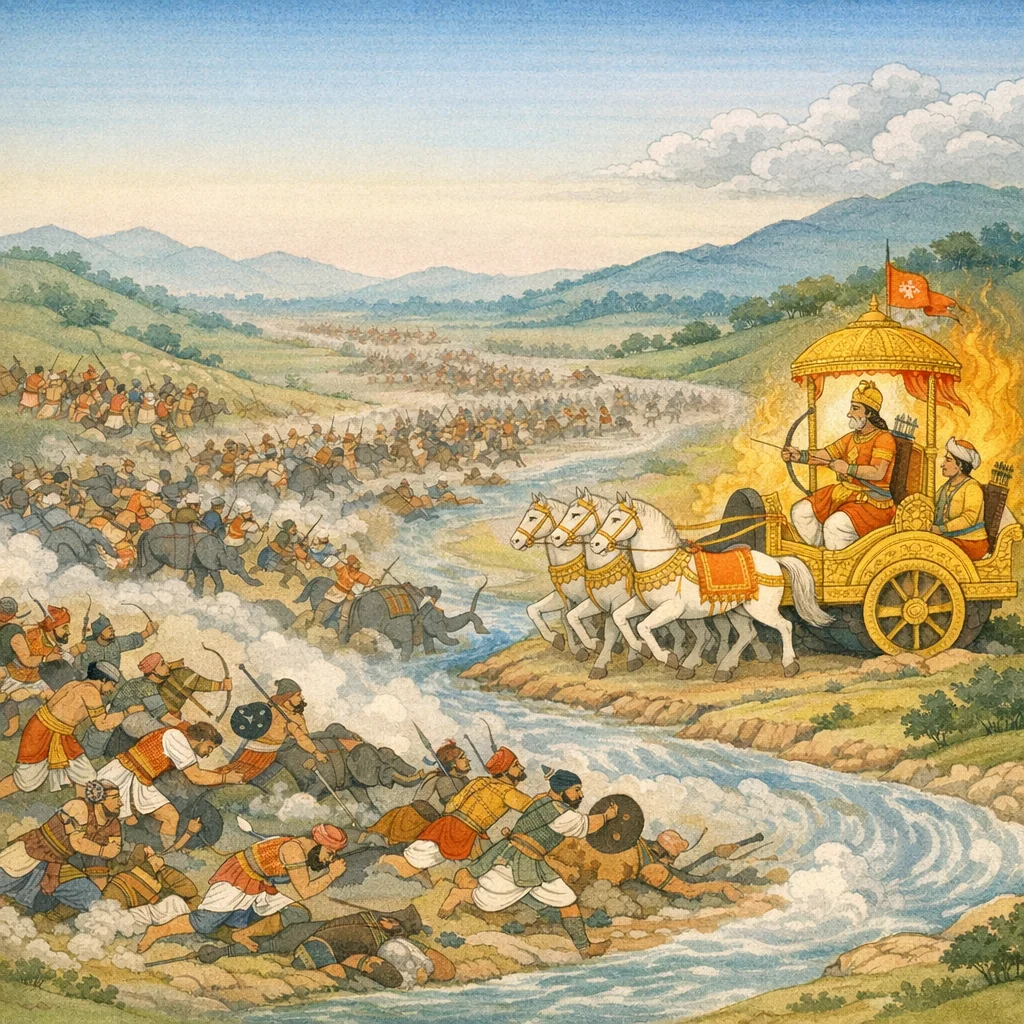
Chapter Arc: संजय धृतराष्ट्र को रणभूमि का दृश्य सुनाते हैं—सुवर्णमय रथ पर द्रोणाचार्य ऐसे प्रकट होते हैं मानो साक्षात् अग्नि उठ खड़ा हुआ हो; सृञ्जय-सेनाएँ उनके तेज से काँप उठती हैं। → द्रोण का धनुष निरन्तर खिंचता है; उसकी ज्याघोष-गर्जना वज्र-नाद-सी फैलती है। उनके बाणों से असंख्य योद्धा कटते हैं और रणभूमि ‘रणनदी’ बन जाती है—शत-शत प्राणियों को पितृलोक की ओर बहाती हुई। इसी उथल-पुथल में भीमसेन विविंशति को बीस तीखे बाणों से बेधकर भी उसे विचलित नहीं कर पाते—युद्ध की कठोरता और बढ़ती है। → महाबली अभिमन्यु युद्धाकांक्षी होकर वेग से प्रवेश करता है और तलवार-ढाल के निकट-युद्ध में ऐसा घमासान रचता है कि प्रहार-प्रतिप्रहार के बीच किसी को भी दोनों ‘नरसिंहों’ के बीच अंतराल दिखाई नहीं देता। उसके शौर्य से कौरव-पाण्डव दोनों ओर के दर्शक स्तब्ध होते हैं; अभिमन्यु के कौशल-जनित शब्द और सिंहनाद रणभूमि को भर देते हैं। → अभिमन्यु की अपलायिन-रहित वीरता से उसका उत्साह बढ़ता है, पर कौरव-पक्ष उसे चारों ओर से तीक्ष्ण बाणों की वर्षा से ढँक देता है—जैसे पर्वत पर मेघ जल बरसाएँ। इसी बीच अपने सारथी के पराभव/वध से क्रुद्ध आर्तायनि (कृतवर्मा) सौभद्र पर धावा बोलता है, और संघर्ष एक नये मोड़ पर पहुँचता है। → कृतवर्मा के क्रोधपूर्ण आक्रमण और चारों ओर से बाण-वृष्टि के बीच अभिमन्यु किस प्रकार मार्ग निकालेगा—यही अगले अध्याय की दहलीज़ है।
Shlokas
Verse 1
ऑऔपन--#रू< बक। ] अि्शशाड<म चतुर्दशो 5 ध्याय: द्रोणका पराक्रम, कौरव-पाण्डववीरोंका दन्डयुद्ध, रणनदीका वर्णन तथा अभिमन्युकी वीरता संजय उवाच ततः स पाण्डवानीके जनयन् सुमहद् भयम् | व्यचरत् पृतनां द्रोणो दहन् कक्षमिवानल:,संजय कहते हैं--राजन्! जैसे आग घास-फ़ूसके समूहको जला देती है, उसी प्रकार द्रोणाचार्य पाण्डव-दलमें महान् भय उत्पन्न करते और सारी सेनाको चलाते हुए सब ओर विचरने लगे
Sañjaya said: “Then Droṇa, moving through the Pandava host, stirred up tremendous fear. Roaming across the army, he blazed through their ranks like a fire consuming a thicket.”
Verse 2
निर्दहन्तमनीकानि साक्षादग्निमिवोत्थितम् । दृष्टवा रुक्मरथं क्रुद्धं समकम्पन्त सृञज्जया:,सुवर्णमय रथवाले द्रोणको वहाँ प्रकट हुए साक्षात् अग्निदेवके समान क्रोधमें भरकर सम्पूर्ण सेनाओंको दग्ध करते देख समस्त सूंजयवीर काँप उठे
Sañjaya said: “Seeing him—like the very Fire-god risen in person—burning down the battle-formations, and beholding the golden-charioted warrior inflamed with wrath, the Sṛñjaya heroes trembled.”
Verse 3
सतत कृष्यत: संख्ये धनुषो5स्थाशुकारिण: । ज्याघोष: शुश्रुवे5त्यर्थ विस्फूर्जितमिवाशने:,बाण चलानेमें शीघ्रता करनेवाले द्रोणाचार्यके युद्धमें निरन्तर खींचे जाते हुए धनुषकी प्रत्यंचाका टंकार-घोष वजद्रकी गड़गड़ाहटके समान बड़े जोर-जोरसे सुनायी दे रहा था
Sañjaya said: In the thick of battle, Droṇācārya—swift in setting and releasing his arrows—kept drawing his bow without pause, and the thunderous twang of its string rang out loudly, like the crackling roar of a lightning bolt.
Verse 4
रथिन: सादिनश्लैव नागानश्वान् पदातिन: । रौद्रा हस्तवता मुक्ता: सम्मृद्नन्ति सम सायका:,शीघ्रतापूर्वक हाथ चलानेवाले द्रोणाचार्यके छोड़े हुए भयंकर बाण पाण्डव-सेनाके रथियों, घुड़सवारों, हाथियों, घोड़ों और पैदल योद्धाओंको गर्दमें मिला रहे थे
Sañjaya said: The dreadful, well-aimed arrows released by Drona—shot with swift, masterful movement of the hand—were crushing the Pāṇḍava host, grinding into ruin its chariot-warriors, cavalry, elephants, horses, and foot-soldiers alike.
Verse 5
नानद्यमान: पर्जन्य: प्रवृद्ध: शुचिसंक्षये । अश्मवर्षमिवावर्षत् परेषामावहद् भयम्,आषाढ़ मास बीत जानेपर वर्षके प्रारम्भमें जैसे मेघ अत्यन्त गर्जन-तर्जनके साथ फैलकर आकाशमें छा जाता और पत्थरोंकी वर्षा करने लगता है, उसी प्रकार द्रोणाचार्य भी बाणोंकी वर्षा करके शत्रुओंके मनमें भय उत्पन्न करने लगे
Sañjaya said: Like a rain-cloud swelling at the end of the hot season, roaring loudly and then pouring down as if it were a shower of stones, he rained forth his missiles, bringing fear upon the enemy ranks.
Verse 6
विचरन् स तदा राजन सेनां संक्षो भयन् प्रभु: । वर्धयामास संत्रासं शात्रवाणाममानुषम्,राजन! शक्तिशाली द्रोणाचार्य उस समय रणभूमिमें विचरते और पाण्डव-सेनाको क्षुब्ध करते हुए शत्रुओंके मनमें लोकोत्तर भयकी वृद्धि करने लगे
Sañjaya said: O King, at that time the mighty Droṇācārya moved about on the battlefield, violently shaking the army; and he increased among his enemies a fear that seemed beyond human measure.
Verse 7
तस्य विद्युदिवा भ्रेषु चापं हेमपरिष्कृतम् । भ्रमद्रथाम्बुदे चास्मिन् दृष्यते सम पुन: पुन:
Sañjaya said: Amid that whirling cloud of chariots, his bow—adorned with gold—kept flashing again and again, like lightning in the sky.
Verse 8
उनके घूमते हुए रथरूपी मेघमण्डलमें सुवर्णभूषित धनुष विद्युतके समान बारंबार प्रकाशित दिखायी देता था ।। स वीर: सत्यवान् प्राज्ञो धर्मनित्य: सदा पुन: । युगान्तकालवद्ू घोरां रौद्रां प्रावर्तयन्नदीम्,उन सत्यपरायण परम बुद्धिमान् तथा नित्य धर्ममें तत्पर रहनेवाले वीर द्रोणाचार्यने उस रणक्षेत्रमें प्रलय-कालके समान अत्यन्त भयंकर रक्तकी नदी प्रवाहित कर दी
Sanjaya said: That heroic Droṇācārya—truthful, discerning, and ever steadfast in dharma—set in motion upon the battlefield a dreadful, furious river, like the flood of destruction at the end of an age, as blood flowed in the wake of his onslaught. The image underscores how even a dharma-minded warrior, when bound to his martial duty and allegiance, can become an instrument of catastrophic violence in war.
Verse 9
अमर्षवेगप्रभवां क्रव्यादगणसंकुलाम् । बलौघै: सर्वतः पूर्णा ध्वजवृक्षापहारिणीम्,उस नदीका प्राकट्य क्रोधके आवेगसे हुआ था। मांसभक्षी जन्तुओंसे वह घिरी हुई थी। सेनारूपी प्रवाहद्वारा वह सब ओरसे परिपूर्ण थी और ध्वजरूपी वृक्षोंको तोड़-फोड़कर बहा रही थी
Sañjaya said: “Its sudden appearance was born from a surge of intolerant wrath. It was crowded with packs of flesh-eating creatures. Filled on every side by torrents of armies, it swept onward, tearing down and carrying away the banner-like ‘trees’ (the standards) in its flood.”
Verse 10
शोणितोदां रथावर्ता हस्त्यश्वकृतरो धसम् । कवचोडुपसंयुक्तां मांसपड़कसमाकुलाम्,उस नदीमें जलकी जगह रक्तराशि भरी हुई थी, रथोंकी भँवरें उठ रही थीं, हाथी और घोड़ोंकी ऊँची-ऊँची लाशें उस नदीके ऊँचे किनारोंके समान प्रतीत होती थीं। उसमें कवच नावकी भाँति तैर रहे थे तथा वह मांसरूपी कीचड़से भरी हुई थी
Sañjaya said: “That river ran not with water but with torrents of blood. Whirlpools formed where chariots churned it; the piled bodies of elephants and horses rose like its high banks. Armor drifted upon it like boats, and it was thick with the mire of flesh.” The image underscores the moral horror of war: valor and strategy culminate in a landscape where life is reduced to debris, confronting the listener with the ethical cost of violence even amid a dharma-war.
Verse 11
मेदोमज्जास्थिसिकतामुष्णीषचयफेनिलाम् । संग्रामजलदापूर्णा प्रासमत्स्यसमाकुलाम्
Sañjaya said: “(That battlefield) was frothy with heaps of fat, marrow, bones, gravel-like fragments, and piled-up helmets; it was filled with the storm-clouds of war and teemed with ‘fish’ in the form of spears—an image of a world where violence turns the field into a dreadful, churning sea.”
Verse 12
मेद, मज्जा और हड़ियाँ वहाँ बालुकाराशिके समान प्रतीत होती थीं। पगड़ियोंका समूह उसमें फेनके समान जान पड़ता था। संग्रामरूपी मेघ उस नदीको रक्तकी वर्षद्वारा भर रहा था। वह नदी प्रासरूपी मत्स्योंसे भरी हुई थी ।। नरनागाश्वकलिलां शरवेगौघवाहिनीम् । शरीरदारुसंघट्टां रथकच्छपसंकुलाम्,वहाँ पैदल, हाथी और घोड़े ढेर-के-ढेर पड़े हुए थे। बाणोंका वेग ही उस नदीका प्रखर प्रवाह था, जिसके द्वारा वह प्रवाहित हो रही थी। शरीररूपी काष्ठसे ही मानो उसका घाट बनाया गया था। रथरूपी कछुओंसे वह नदी व्याप्त हो रही थी
Sanjaya said: That river of battle was choked with heaps of men, elephants, and horses. Its fierce current was the rushing flood of arrows; its banks seemed formed by logs of bodies, and it was crowded with chariots like turtles. The image underscores how war, when unrestrained by dharma, turns the field into a grotesque landscape where life is reduced to debris and instruments of violence become the very ‘waters’ that carry destruction onward.
Verse 13
इस प्रकार श्रीमहाभारत द्रोणपर्वके अन्तर्गत द्रोणाभिषेकपर्वमें अर्जुनके द्वारा युधिष्ठिरको आश्वासनविषयक तेरहवाँ अध्याय पूरा हुआ,उत्तमाजैः पड़कजिनी निस्त्रिंशझषसंकुलाम् । रथनागह्दोपेतां नानाभरणभूषिताम् योद्धओंके कटे हुए मस्तक कमल-पुष्पके समान जान पड़ते थे, जिनके कारण वह कमलवनसे सम्पन्न दिखायी देती थी। उसके भीतर असंख्य डूबती-बहती तलवारोंके कारण वह नदी मछलियोंसे भरी हुई-सी जान पड़ती थी। रथ और हाथियोंसे यत्र-तत्र घिरकर वह नदी गहरे कुण्डके रूपमें परिणत हो गयी थी। वह भाँति-भाँतिके आभूषणोंसे विभूषित-सी प्रतीत होती थी
Sañjaya said: The battlefield-stream appeared like a lotus-lake, for the severed heads of warriors looked like lotus blossoms. Countless swords, sinking and drifting, made it seem teeming with fish. Hemmed in here and there by chariots and elephants, it turned into deep pools; and with ornaments scattered everywhere, it looked as though adorned with many kinds of jewelry. The image underscores the moral horror of war: beauty is grotesquely mimicked by violence, and splendor is purchased at the cost of life.
Verse 14
महारथशतावर्ता भूमिरेणूमिमालिनीम् | महावीर्यवतां संख्ये सुतरां भीरुदुस्तराम्,सैकड़ों विशाल रथ उसके भीतर उठती हुई भँवरोंके समान प्रतीत होते थे। वह धरतीकी धूल और तरंगमालाओंसे व्याप्त हो रही थी। उस युद्धसस््थलमें वह नदी महापराक्रमी वीरोंके लिये सुगमतासे पार करने-योग्य और कायरोंके लिये दुस्तर थी इति श्रीमहाभारते द्रोणपर्वणि द्रोणाभिषेकपर्वणि अभिमन्युपराक्रमे चतुर्दशोध्याय:
Sañjaya said: The battlefield-ground appeared like a river whose whirlpools were formed by hundreds of great chariots, its surface wreathed in waves of dust. In that clash of mighty heroes it was, indeed, easy to cross for the truly valiant, yet for the faint-hearted it became a perilous, impassable flood—suggesting that courage and steadfastness are the ethical measure by which one meets the trials of war.
Verse 15
शरीरशतसम्बाधां गृध्रकड्कनिषेविताम् । महारथसहस्राणि नयन्तीं यमसादनम्,उसके भीतर सैकड़ों लाशें पड़ी हुई थीं। गीध और कंक उस नदीका सेवन करते थे। वह सहस्रों महारथियोंको यमराजके लोकमें ले जा रही थी
Sañjaya said: “That stream, choked with hundreds of corpses and frequented by vultures and herons feeding upon it, was carrying thousands of great chariot-warriors onward to the abode of Yama. The scene lays bare the moral cost of war: prowess and rank do not shield one from death, and the battlefield’s violence swiftly turns living heroes into offerings for scavengers and for the Lord of Death.”
Verse 16
शूलव्यालसमाकीर्णा प्राणिवाजिनिषेविताम् । छिन्नक्षत्रमहाहंसां मुकुटाण्डजसेविताम्,उसके भीतर शूल सर्पोके समान व्याप्त हो रहे थे। विभिन्न प्राणी ही वहाँ चल-पक्षीके रूपमें निवास करते थे। कटे हुए क्षत्रिय-समुदाय उसमें विचरनेवाले बड़े-बड़े हंसोंके समान प्रतीत होते थे। वह नदी राजाओंके मुकुटरूपी जलपक्षियोंसे सेवित दिखायी देती थी
Sañjaya said: That dreadful river was crowded with spears, like a channel infested with serpents. It was frequented by living creatures and horses, as though they were its moving birds. The severed Kṣatriya ranks appeared like great swans roaming upon it, and it seemed attended by the waterfowl of kings’ crowns—an image that turns royal splendor into a grim ornament of war.
Verse 17
चक्रकूर्मा गदानक्रां शरक्षुद्रमझषाकुलाम् । बकगृध्रसृगालानां घोरसंघैर्निषेविताम्,उसमें रथोंके पहिये कछुओंके समान, गदाएँ नाकोंके समान और बाण छोटी-छोटी मछलियोंके समान भरे हुए थे। बगलों, गीधों और गीदड़ोंके भयानक समुदाय उसके तटपर निवास करते थे
Sañjaya said: “It was like a dreadful river: its wheels were as tortoises, its maces as crocodiles, and it swarmed with arrows like shoals of tiny fish. Along its banks lurked terrifying flocks of herons, vultures, and jackals.” In this war-imagery, the battlefield is portrayed as a predatory ecosystem where weapons and scavengers together signify the moral horror and inevitable aftermath of violence.
Verse 18
निहतान् प्राणिन: संख्ये द्रोणेन बलिना रणे । वहन्तीं पितृलोकाय शतशो राजसत्तम
Sañjaya said: “O best of kings, in the press of battle the mighty Droṇa slew living beings by the hundreds, sending them onward toward the world of the Fathers (Pitṛloka).”
Verse 19
नृपश्रेष्ठट बलवान द्रोणाचार्यके द्वारा रणभूमिमें मारे गये सैकड़ों प्राणियोंको वह पितृलोकमें पहुँचा रही थी ।। शरीरशतसम्बाधां केशशैवलशाद्धलाम् | नदीं प्रावर्तयद् राजन् भीरूणां भयवर्धिनीम्,उसके भीतर सैकड़ों लाशें बह रही थीं। केश सेवार तथा घासोंके समान प्रतीत होते थे। राजन! इस प्रकार द्रोणाचार्यने वहाँ खूनकी नदी बहायी थी, जो कायरोंका भय बढ़ानेवाली थी
Sañjaya said: “O best of kings, Drona—mighty in battle—set flowing a river on the field, choked with hundreds of bodies, thick with hair like water-weeds and with grasses as it were; a dreadful stream that only increased the terror of the faint-hearted. Thus did Droṇācārya make a river of blood there.”
Verse 20
तर्जयन्तमनीकानि तानि तानि महारथम् । सर्वतो<भ्यद्रवन् द्रोणं युधिष्ठिरपुरोगमा:,उस समय समस्त सेनाओंको अपने गर्जन-तर्जनसे डराते हुए महारथी द्रोणाचार्यपर युधिष्ठिर आदि योद्धा सब ओरसे टूट पड़े
Sañjaya said: “As the great chariot-warrior Droṇa roared and threatened, striking fear into this division and that, the warriors led by Yudhiṣṭhira charged at him from every side.”
Verse 21
तानभिद्रवत: शूरांस्तावका दृढविक्रमा: । सर्वतः प्रत्यगृह्लन्त तदभूल्लोमहर्षणम्,उन आक्रमण करनेवाले पाण्डव वीरोंको आपके सुदृढ़ पराक्रमी सैनिकोंने सब ओरसे रोक दिया। उस समय दोनों दलोंमें रोमांचकारी युद्ध होने लगा
Sañjaya said: “As those heroic warriors charged forward, your own troops—firm in valor—checked them from every side. Then the clash between the two armies rose into a hair-raising battle.”
Verse 22
शतमायस्तु शकुनि: सहदेवं समाद्रवत् | सनियन्तृथ्वजरथं विव्याध निशितै: शरै:,सैकड़ों मायाओंको जाननेवाले शकुनिने सहदेवपर धावा किया और उनके सारथि, ध्वज एवं रथसहित उन्हें अपने पैने बाणोंसे घायल कर दिया
Sañjaya said: “Śakuni, famed for a hundred stratagems and illusions, charged straight at Sahadeva. With razor-sharp arrows he wounded him in battle—striking also his charioteer, his banner, and his chariot.”
Verse 23
तस्य माद्रीसुत: केतुं धनु: सूतं हयानपि । नातिक्रुद्ध:ः शरैश्छित्त्वा षष्टया विव्याध सौबलम्,तब माद्रीकुमार सहदेवने अधिक कुपित न होकर शकुनिके ध्वज, धनुष, सारथि और घोड़ोंको अपने बाणोंद्वारा छिन्न-भिन्न करके साठ बाणोंसे सुबलपुत्र शकुनिको भी बींध डाला
Then Sahadeva, Mādrī’s son, without yielding to excessive anger, cut down with his arrows Śakuni’s banner, bow, charioteer, and even the horses; and with sixty shafts he also pierced Śakuni, the son of Subala—showing controlled resolve amid the fury of battle.
Verse 24
सौबलस्तु गदां गृहा प्रचस्कन्द रथोत्तमात् | स तस्य गदया राजन् रथात् सूतमपातयत्,यह देख सुबलपुत्र शकुनि गदा हाथमें लेकर उस श्रेष्ठ रथसे कूद पड़ा। राजन्! उसने अपनी गदाद्वारा सहदेवके रथसे उनके सारथिको मार गिराया
Sañjaya said: Śakuni, the son of Subala, seizing his mace, leapt down from his excellent chariot. O King, with that mace he struck down the charioteer from Sahadeva’s chariot—an act that intensifies the battle’s cruelty by targeting the support that enables a warrior to fight, not merely the warrior himself.
Verse 25
ततस्तौ विरथौ राजन गदाहस्तौ महाबलौ । चिक्रीडतू रणे शूरौ सशृज्भाविव पर्वती,महाराज! उस समय वे दोनों महाबली शूरवीर रथहीन हो गदा हाथमें लेकर रणक्षेत्रमें खेल-सा करने लगे, मानो शिखरवाले दो पर्वत परस्पर टकरा रहे हों
Sañjaya said: Then, O King, those two mighty heroes—now without chariots—took up their maces and fought on the battlefield as if in sport, like two peak-crowned mountains crashing against each other. The image underscores not playfulness but fearless mastery in combat, where personal valor and martial duty drive the encounter even amid the ruin of war.
Verse 26
द्रोण: पाउ्चालराजानं विद्ध्वा दशभिराशुगै: । बहुभिस्तेन चाभ्यस्तस्तं विव्याध ततोडधिकै:,द्रोणाचार्यने पांचालराज ट्रुपदको दस शीघ्रगामी बाणोंसे बींध डाला। फिर द्रुपदने भी बहुत-से बाणोंद्वारा उन्हें घायल कर दिया। तब द्रोणने भी और अधिक सायकोंद्वारा ट्रपदको क्षत-विक्षत कर दिया
Sañjaya said: Having pierced the king of the Pāñcālas (Drupada) with ten swift arrows, Droṇa was in turn struck by him with many shafts. Thereupon Droṇa again wounded Drupada with still more arrows, intensifying the exchange. The passage underscores the grim reciprocity of battle—injury answered by injury—where personal enmity and martial duty drive an escalating cycle of violence within the larger dharmic crisis of the war.
Verse 27
विविंशतिं भीमसेनो विंशत्या निशितै: शरै: । विद्ध्वा नाकम्पयद् वीरस्तदद्भुतमिवाभवत्,वीर भीमसेन बीस तीखे बाणोंद्वारा विविंशतिको घायल करके भी उन्हें विचलित न कर सके। यह एक अद्भुत-सी बात हुई
Sañjaya said: Bhīmasena, striking Viviṁśati with twenty razor-sharp arrows, still could not make that warrior waver. It seemed almost wondrous—showing how, in the fury of battle, sheer force may fail before an opponent’s steadfastness and martial resolve.
Verse 28
विविंशतिस्तु सहसा व्यश्वकेतुशरासनम् । भीम॑ चक्रे महाराज ततः सैन्यान्यपूजयन्,महाराज! फिर विविंशतिने भी सहसा आक्रमण करके भीमसेनके घोड़े, ध्वज और धनुष काट डाले; यह देख सारी सेनाओंने उसकी भूरि-भूरि प्रशंसा की
Sañjaya said: O King, Viviṁśati suddenly struck down Bhīma’s horses and cut away his banner and his bow. Seeing this feat, the gathered armies praised him greatly.
Verse 29
स तन्न ममृषे वीर: शत्रोर्विक्रममाहवे । ततो<स्य गदया दान्तान् हयान् सर्वानपातयत्,वीर भीमसेन युद्धमें शत्रुके इस पराक्रमको न सह सके। उन्होंने अपनी गदाद्वारा उसके समस्त सुशिक्षित घोड़ोंको मार डाला
Sañjaya said: The hero could not endure the enemy’s prowess on the battlefield. Therefore, with his mace he struck down all of that warrior’s well-trained horses.
Verse 30
हताश्चात् सरथाद् राजन् गृह चर्म महाबल: । अभ्यायाद् भीमसेन तु मत्तो मत्तमिव द्विपम्,राजन! घोड़ोंके मारे जानेपर महाबली विविंशति ढाल और तलवार लिये रथसे कूद पड़ा और जैसे एक मतवाला हाथी दूसरे मदोन्मत्त गजराजपर आक्रमण करता है, उसी प्रकार उसने भीमसेनपर चढ़ाई की
Sañjaya said: O King, when his horses were slain, the mighty Viviṁśati leapt down from his chariot, bearing shield and sword. Then, like a maddened elephant charging another maddened lord of elephants, he rushed upon Bhīmasena.
Verse 31
शल्यस्तु नकुलं वीर: स्वस्त्रीयं प्रियमात्मन: । विव्याध प्रहसन् बाणैलॉालयन् कोपयन्निव,वीर राजा शल्यने अपने प्यारे भानजे नकुलको हँसकर लाड़ लड़ाते और कुपित करते हुए-से अनेक बाणोंद्वारा बींध डाला
Sañjaya said: The valiant Śalya, though Nakula was the beloved son of his own sister, pierced him with many arrows—smiling as he fought, as if indulging him in play and at the same time provoking him to anger.
Verse 32
तस्याश्वानातपत्र॑ च ध्वजं सूतमथो धनु: । निपात्य नकुलः संख्ये शड्खं दध्मौ प्रतापवान्,तब प्रतापी नकुलने उस युद्धस्थलमें शल्यके घोड़ों, छत्र, ध्वज, सारथि और धनुषको काट गिराया और विजयी होकर अपना शंख बजाया
Sañjaya said: In that battle, the valiant Nakula struck down his opponent’s horses, parasol, banner, charioteer, and bow; then he blew his conch, openly proclaiming victory.
Verse 33
धृष्टकेतु: कृपेणास्तान् छित्त्वा बहुविधाउ्छरान् । कृप॑ विव्याध सप्तत्या लक्ष्म चास्याहरत् त्रिभि:,धृष्टकेतुने कृपाचार्यके चलाये हुए अनेक बाणोंको काटकर उन्हें सत्तर बाणोंसे घायल कर दिया और तीन बाणोंद्वारा उनके चिह्नस्वरूप ध्वजको भी काट गिराया
Sañjaya said: Dhṛṣṭaketu, having cut down those many kinds of arrows shot by Kṛpa, then pierced Kṛpa with seventy shafts; and with three more arrows he struck down Kṛpa’s distinguishing emblem—his banner—thus publicly marking his momentary loss of advantage in the battle’s contest of skill and resolve.
Verse 34
त॑ं कृप: शरवर्षेण महता समवारयत् | विव्याध च रणे विप्रो धृष्टकेतुममर्षणम्,तब ब्राह्मण कृपाचार्यने भारी बाण-वर्षके द्वारा अमर्षशील धृष्टकेतुको युद्धमें आगे बढ़नेसे रोका और घायल कर दिया
Sañjaya said: Kṛpa checked him with a great shower of arrows. In the thick of battle, the Brahmin warrior pierced the fierce, unyielding Dhṛṣṭaketu as well—restraining his advance through disciplined martial skill rather than mere rage, showing how war turns on control and duty as much as on fury.
Verse 35
सात्यकि: कृतवर्माणं नाराचेन स्तनान्तरे । विद्ध्वा विव्याध सप्तत्या पुनरन्यै: स्मयन्निव,सात्यकिने मुसकराते हुए-से एक नाराचद्वारा कृतवर्माकी छातीमें चोट की और पुनः अन्य सत्तर बाणोंद्वारा उसे क्षत-विक्षत कर दिया
Sanjaya said: Satyaki, having pierced Kritavarman in the region of the chest with a sharp narāca-arrow, then again, as if smiling, struck him with seventy more arrows, tearing and wounding him further.
Verse 36
त॑ भोज: सप्तसप्तत्या विद्ध्वा55शु निशितै: शरैः । नाकम्पयत शैनेयं शीघ्रो वायुरिवाचलम्,तब भोजवंशी कृतवर्माने तुरंत ही सतहत्तर पैने बाणोंद्वारा सात्यकिको बींध डाला, तथापि वह उन्हें विचलित न कर सका। जैसे तेज चलनेवाली वायु पर्वतको नहीं हिला पाती है
Sanjaya said: The Bhoja warrior (Kṛtavarmā) swiftly pierced Sātyaki, the descendant of Śini, with seventy-seven sharp arrows; yet he could not shake him from his resolve—just as a fast-blowing wind cannot move an immovable mountain.
Verse 37
सेनापति: सुशर्माणं भृशं मर्मस्वताडयत् । स चापि तं तोमरेण जद्रुदेशे5भ्यताडयत्,दूसरी ओर सेनापति धृष्टद्युम्नने त्रिगर्तराज सुशर्माको उसके मर्मस्थानोंमें अत्यन्त चोट पहुँचायी। यह देख सुशर्माने भी तोमरद्वारा धृष्टद्युम्नके गलेकी हँसलीपर प्रहार किया
Sanjaya said: The commander-in-chief struck Susarman fiercely at his vital points. Susarman, in turn, retaliated by smiting him with a javelin at the region of the neck. The exchange shows the grim reciprocity of battlefield violence, where prowess and endurance are tested through targeted blows rather than restraint.
Verse 38
वैकर्तनं तु समरे विराट: प्रत्यवारयत् । सह मत्स्यैर्महावीर्यैस्तदद्भुतमिवा भवत्,समरभूमिमें महापराक्रमी मत्स्यदेशीय वीरोंके साथ विराटने विकर्तनपुत्र कर्णको रोका। वह अद्भुत-सी बात थी
Sañjaya said: In the thick of battle, Virāṭa checked Vaikartana (Karṇa). Supported by the mighty warriors of the Matsya country, this seemed almost wondrous—an unexpected stand against so formidable a foe.
Verse 39
तत् पौरुषमभूत् तत्र सूतपुत्रस्य दारुणम् । यत् सैन्यं वारयामास शरै: संनतपर्वभि:,वहाँ सूतपुत्र कर्णका भयंकर पुरुषार्थ प्रकट हुआ। उसने झुकी हुई गाँठवाले बाणोंद्वारा उनकी समस्त सेनाकी प्रगति रोक दी
Sañjaya said: There, the fierce prowess of Karṇa, the charioteer’s son, became manifest—when, with arrows whose joints were bent downward, he checked the advance of the opposing army.
Verse 40
द्रुपदस्तु स्वयं राजा भगदत्तेन संगत: । तयोर्युद्धं महाराज चित्ररूपमिवाभवत्,महाराज! तदनन्तर राजा द्रुपद स्वयं जाकर भगदत्तसे भिड़ गये। महाराज! फिर उन दोनोंमें विचित्र-सा युद्ध होने लगा
Sañjaya said: King Drupada himself engaged in combat with Bhagadatta. O great king, the battle between those two then appeared wondrous and variegated—an extraordinary contest of arms unfolding amid the larger war.
Verse 41
भगदत्तस्तु राजानं द्रुप्दं नतपर्वभि: । सनियन्तृध्वजरथं विव्याध पुरुषर्षभ:
Sañjaya said: Then Bhagadatta, that bull among men, struck King Drupada with arrows whose joints were bent; and he pierced Drupada’s chariot as well—its driver and its banner—bringing the king under fierce pressure in the thick of battle.
Verse 42
पुरुषश्रेष्ठ भगदत्तने झुकी हुई गाँठवाले बाणोंसे राजा द्रपदको उनके सारथि, रथ और ध्वजसहित बींध डाला ।। द्रपदस्तु ततः क्रुद्धों भगदत्तं महारथम् । आजपघानोससि क्षिप्रं शरेणानतपर्वणा,यह देख ट्रुपदने कुपित हो शीघ्र ही झुकी हुई गाँठवाले बाणके द्वारा महारथी भगदत्तकी छातीमें प्रहार किया
Sañjaya said: O best of men, Bhagadatta pierced King Drupada with arrows whose joints were bent, striking him along with his charioteer, chariot, and banner. Seeing this, Drupada, inflamed with anger, swiftly retaliated and smote the great chariot-warrior Bhagadatta in the chest with a bent-jointed arrow.
Verse 43
युद्ध योधवरौ लोके सौमदत्तिशिखण्डिनौ । भूतानां त्रासजननं चक्राते5स्त्रविशारदौ,भूरिश्रवा और शिखण्डी--ये दोनों संसारके श्रेष्ठ योद्धा और अस्त्रविद्याके विशेषज्ञ थे। उन दोनोंने सम्पूर्ण भूतोंको त्रास देनेवाला युद्ध किया
Sañjaya said: In that battle, Bhūriśravas, son of Somadatta, and Śikhaṇḍin—both famed as the foremost warriors in the world and masters of weapons—fought with such ferocity that terror seized all beings.
Verse 44
भूरिश्रवा रणे राजन् याज्ञसेनिं महारथम् | महता सायकौघेन छादयामास वीर्यवान्,राजन! पराक्रमी भूरिश्रवाने रणक्षेत्रमें ट्रपदपुत्र महारथी शिखण्डीको सायकसमूहोंकी भारी वर्षा करके आच्छादित कर दिया
Sañjaya said: O King, in the thick of battle the mighty Bhūriśravas covered Śikhaṇḍin, the great chariot-warrior, son of Drupada (Yājñaseni), with a vast torrent of arrows.
Verse 45
शिखण्डी तु ततः क्रुद्ध: सौमदत्तिं विशाम्पते । नवत्या सायकानां तु कम्पयामास भारत,प्रजानाथ! भरतनन्दन! तब क्रोधमें भरे हुए शिखण्डीने नब्बे बाण मारकर सोमदत्तकुमार भूरिश्रवाको कम्पित कर दिया
Sañjaya said: Then Śikhaṇḍī, inflamed with anger, struck Saumadatti (Bhūriśravas), O lord of men. With ninety arrows he made him reel—O Bhārata, O ruler of peoples, O glory of the Bharatas.
Verse 46
राक्षसौ रौद्रकर्माणौ हैडिम्बालम्बुषावुभौ । चक्राते>त्यद्भुतं युद्धं परस्परजयैषिणौ,भयंकर कर्म करनेवाले राक्षस घटोत्कव और अलम्बुष--ये दोनों एक-दूसरेको जीतनेकी इच्छासे अत्यन्त अद्भुत युद्ध करने लगे
Sañjaya said: The two rākṣasas, fierce in their deeds—Haiḍimba (Ghaṭotkaca) and Alambuṣa—each intent on overcoming the other, engaged in a most astonishing battle.
Verse 47
मायाशतसूजौ दृप्तौ मायाभिरितरेतरम् | अन्तर्हितौ चेरतुस्ती भृूशं॑ विस्मपकारिणौ,वे घमंडमें भरे हुए निशाचर सैकड़ों मायाओंकी सृष्टि करते और मायाद्वारा ही एक- दूसरेको परास्त करना चाहते थे। वे लोगोंको अत्यन्त आश्वर्यमें डालते हुए अदृश्यभावसे विचर रहे थे
Those two night-roaming beings, swollen with pride, conjured hundreds of māyās (illusions) and sought to overthrow each other by those very spells. Moving about unseen, they filled all who beheld the battle with profound astonishment.
Verse 48
चेकितानो<नुविन्देन युयुधे चातिभैरवम् । यथा देवासुरे युद्धे बलशक्रौ महाबलौ,चेकितान अनुविन्दके साथ अत्यन्त भयंकर युद्ध करने लगे, मानो देवासुर-संग्राममें महाबली बल और इन्द्र लड़ रहे हों
Sañjaya said: Cekitāna fought with Anuvinda in a battle of extreme terror and intensity—like the mighty Bala and Indra contending in the ancient war between gods and demons. The simile heightens the moral gravity of the scene: heroic prowess is displayed at its peak, yet it unfolds within the tragic momentum of fratricidal war.
Verse 49
लक्ष्मण: क्षत्रदेवेन विमर्दमकरोद् भृशम् | यथा विष्णु: पुरा राजन् हिरण्याक्षेण संयुगे,राजन! जैसे पूर्वकालमें भगवान् विष्णु हिरण्याक्षके साथ युद्ध करते थे, उसी प्रकार उस रफणक्षेत्रमें लक्ष्मण क्षत्रदेवके साथ भारी संग्राम कर रहा था
Sañjaya said: Lakshmana fought fiercely with Kshatradeva. O King, just as Lord Vishnu once battled Hiranyaksha in ancient times, so too did Lakshmana engage in a tremendous clash on that battlefield—an image meant to convey overwhelming valor and the terrifying intensity of war.
Verse 50
तत: प्रचलिताश्वेन विधिवत्कल्पितेन च । रथेनाभ्यपतद् राजन् सौभद्रं पौरवो नदन्,राजन! तदनन्तर विधिपूर्वक सजाये हुए चंचल घोड़ोंवाले रथपर आरूढ़ हो गर्जना करते हुए राजा पौरवने सुभद्राकुमार अभिमन्युपर आक्रमण किया
Sañjaya said: Then, O King, mounting a chariot properly equipped according to rule and drawn by spirited, restive horses, the Paurava prince charged at Saubhadra (Abhimanyu), roaring aloud. The scene underscores the disciplined preparation of war—skill and order harnessed to aggressive intent—as the battle’s fury closes in upon the young hero.
Verse 51
ततो<भ्ययात् सत्वरितो युद्धाकाड्क्षी महाबल: । तेन चक्रे महद् युद्धमभिमन्युररिंदम:,तब शत्रुओंका दमन और युद्धकी अभिलाषा करनेवाले महाबली अभिमन्यु भी तुरंत सामने आया और उनके साथ महान् युद्ध करने लगा
Sañjaya said: Then Abhimanyu—mighty in strength, eager for battle, and a subduer of foes—swiftly advanced. Meeting them, he engaged in a great combat, driven by the warrior’s resolve to confront aggression and uphold his side’s duty in the war.
Verse 52
पौरवस्त्वथ सौभद्रं शरब्रातैरवाकिरत् । तस्यार्जुनिर्ध्वजं छत्र॑ धनुश्वोव्यामपातयत्,पौरवने सुभद्राकुमारपर बाणसमूहोंकी वर्षा प्रारम्भ कर दी। यह देख अर्जुनपुत्र अभिमन्युने उनके ध्वज, छत्र और धनुषको काटकर धरतीपर गिरा दिया
Sañjaya said: Then the Kaurava warriors showered Subhadrā’s son (Abhimanyu) with volleys of arrows. Seeing this, Arjuna’s son struck down their banner, their parasol, and their bow, casting them to the ground—an act meant to break their martial pride and weaken their resolve amid the press of battle.
Verse 53
सौभद्र: पौरवं त्वन्यैर्विदूध्वा सप्तभिराशुगै: । पज्चभिस्तस्य विव्याध हयान् सूतं च सायकै:,फिर अन्य सात शीघ्रगामी बाणोंद्वारा पौरवको घायल करके अभिमन्युने पाँच बाणोंसे उनके घोड़ों और सारथिको भी क्षत-विक्षत कर दिया
Sañjaya said: Abhimanyu, the son of Subhadrā, first struck the Kaurava warrior with seven swift arrows, wounding him. Then, with five more shafts, he pierced his horses and his charioteer as well—showing the ruthless momentum of battle, where crippling an enemy’s mobility and support becomes a decisive, if grim, necessity.
Verse 54
ततः प्रहर्षयन् सेनां सिंहवद् विनदन् मुहुः । समादत्तार्जुनिस्तूर्ण पैरवान्तकरं शरम्,तत्पश्चात् अपनी सेनाका हर्ष बढ़ाते और बारंबार सिंहके समान गर्जना करते हुए अर्जुनकुमार अभिमन्युने तुरंत ही एक ऐसा बाण हाथमें लिया, जो राजा पौरवका अन्त कर डालनेमें समर्थ था
Then, gladdening his army and roaring again and again like a lion, Abhimanyu—Arjuna’s son—swiftly took up an arrow capable of bringing King Paurava to his end.
Verse 55
त॑ तु संधितमाज्ञाय सायकं घोरदर्शनम् । द्वाभ्यां शराभ्यां हार्दिक्यश्चिच्छेद सशरं धनु:,उस भयानक दिखायी देनेवाले सायकको धनुषपर चढ़ाया हुआ जान कृतवर्माने दो बाणोंद्वारा अभिमन्युके सायकसहित धनुषको काट डाला
Sañjaya said: Realizing that the dreadful-looking arrow had been set upon the bow, Kṛtavarmā—son of Hṛdīka—swiftly severed the bow together with the fitted arrow by means of two shafts. In the ruthless press of battle, this act shows the warriors’ constant vigilance and the tactical ethic of disabling an opponent’s weapon at the decisive instant rather than allowing a lethal shot to be released.
Verse 56
तदुत्सज्य धनुश्छिन्न॑ं सौभद्र: परवीरहा । उद्धबर्ह सितं खड्गमाददान: शरावरम्,तब शशत्रुवीरोंका संहार करनेवाले सुभद्राकुमारने उस कटे हुए धनुषको फेंककर चमचमाती हुई तलवार खींच ली और ढाल हाथमें ले ली
Sañjaya said: Casting aside his bow, now cut and useless, Saubhadra—slayer of enemy heroes—drew his keen, gleaming sword and took up his shield. Thus, in the press of battle, he shifted weapons without hesitation, maintaining his resolve to confront adharma with steadfast courage.
Verse 57
स तेनानेकतारेण चर्मणा कृतहस्तवत् | भ्रान्तासिवव्यचरन्मार्गान् दर्शयन् वीर्यमात्मन:,उसने अपनी शक्तिका परिचय देते हुए सुशिक्षित हाथोंवाले पुरुषकी भाँति अनेक ताराओंके चिह्नोंसे युक्त ढालके साथ अपनी तलवारको घुमाते और अनेक पैंतरे दिखाते हुए रणभूमिमें विचरना आरम्भ किया
Sañjaya said: With that shield marked by many star-like emblems, he moved about the battlefield like a man of well-trained hands—whirling his sword, displaying varied manoeuvres, and thereby making his own prowess manifest. The scene underscores the warrior’s cultivated skill and confidence, set within the grave moral atmosphere of a fratricidal war where such brilliance serves destructive ends.
Verse 58
भ्रामितं पुनरुद्भ्रान्तमाधूतं पुनरुत्थितम् । चर्मनिस्त्रिंशयो राजन् निर्विशेषमदृश्यत,राजन्! उस समय नीचे घुमाने, ऊपर घुमाने, अगल-बगलमें चारों ओर घुमाने और फिर ऊपर उठानेकी क्रियाएँ इतनी तेजीसे हो रही थीं कि ढाल और तलवारमें कोई अन्तर ही नहीं दिखायी देता था
O King, the downward whirls, the upward whirls, the sweeping turns to either side all around, and the sudden lift again were so swift that shield and sword appeared indistinguishable.
Verse 59
स पौरवरथस्येषामाप्लुत्य सहसा नदन् । पौरवं रथमास्थाय केशपक्षे परामृशत्,तब अभिमन्यु सहसा गर्जता हुआ उछलकर पौरवके रथके ईषादण्डपर चढ़ गया। फिर उसने पौरवकी चुटिया पकड़ ली
Then Abhimanyu, roaring all at once, sprang up onto the pole of Paurava’s chariot; mounting it, he seized Paurava by the hair-knot.
Verse 60
जघानास्य पदा सूतमसिनापातयद् ध्वजम् | विक्षोभ्याम्भोनिधिं ताक्ष्यस्तं नागमिव चाक्षिपत्,उसने पैरोंके आघातसे पौरवके सारथिको मार डाला और तलवारसे उनके ध्वजको काट गिराया। फिर जैसे गरुड़ समुद्रको क्षुब्ध करके नागको पकड़कर दे मारते हैं, उसी प्रकार उसने भी पौरवको रथसे नीचे पटक दिया
With a blow of his foot he struck down Paurava’s charioteer, and with his sword he cut and felled the banner. Then, like Garuḍa who churns the ocean, seizes a serpent, and hurls it down, he shook his foe and cast Paurava from the chariot.
Verse 61
तमागलितकेशान्तं ददृशुः सर्वपार्थिवा: । उक्षाणमिव सिंहेन पात्यमानमचेतसम्,उस समय सम्पूर्ण राजाओंने देखा, जैसे सिंहने किसी बैलको गिराकर अचेत कर दिया हो, उसी प्रकार अभिमन्युने पौरवको गिरा दिया है। वे अचेत पड़े हैं और उनके सिरके बाल कुछ उखड़ गये हैं
Then all the kings beheld him, the hair at his crown dishevelled and partly torn away, lying senseless—like a bull felled by a lion and left unconscious. Thus had Abhimanyu struck down Paurava; he lay insentient, with some of his hair wrenched out.
Verse 62
तमार्जुनिवशं प्राप्त कृष्पममाणमनाथवत् | पौरवं पातितं दष्ट्वा नामृष्यत जयद्रथ:,पौरव अभिमन्युके वशमें पड़कर अनाथकी भाँति खींचे जा रहे हैं और गिरा दिये गये हैं। यह देखकर जयद्रथ सहन न कर सका
Sañjaya said: Seeing Paurava cast down and brought under Abhimanyu’s power, dragged about like one without protection, Jayadratha could not endure the sight.
Verse 63
स ब्हिबहाॉवततं किंकिणीशतजालवत् | चर्म चादाय खड्गं च नदन् पर्यपतद् रथात्,वह मोरकी पाँखसे आच्छादित और सैकड़ों क्षुद्र घंटिकाओंके समूहसे अलंकृत ढाल और खड्ग लेकर गर्जता हुआ अपने रथसे कूद पड़ा
Sañjaya said: Bearing a shield adorned with a net of hundreds of tiny golden bells, and taking up his sword, he roared aloud and leapt down from his chariot—an image of fierce resolve as the battle’s fury pressed men to meet danger face to face, staking honor and duty on personal courage.
Verse 64
ततः सैन्धवमालोक्य कार्ष्णिरित्सृज्य पौरवम् । उत्पपात रथात् तूर्ण श्येनवन्निपपात च,तब अर्जुनपुत्र अभिमन्यु जयद्रथको आते देख पौरवको छोड़कर तुरंत ही पौरवके रथसे कूद पड़ा और बाजके समान जयद्रथपर झपटा
Sañjaya said: Then, seeing Jayadratha (the Sindhu king), Kārṣṇi (Abhimanyu) let go of the Paurava he had engaged and swiftly leapt down from his chariot, swooping upon Jayadratha like a hawk. The moment underscores the warrior’s single-minded resolve in battle—abandoning a lesser engagement to confront a decisive target.
Verse 65
प्रासपट्टिशनिस्त्रिंशाउछत्रुभि: सम्प्रचोदितान् । चिच्छेद चासिना कार्ष्णिक्ष्मणा संरुरोध च,अभिमन्यु शत्रुओंके चलाये हुए प्रास, पट्टिश और तलवारोंको अपनी तलवारसे काट देते और अपनी ढालपर भी रोक लेते थे
Sanjaya said: Urged on by his enemies, the spears, javelins, and swords that were hurled at him—Abhimanyu cut them down with his own sword, and also checked them by interposing his shield. In the midst of battle, his disciplined skill restrained the violence directed at him, showing steadfast courage without yielding to fear or confusion.
Verse 66
स दर्शयित्वा सैन्यानां स्वबाहुबलमात्मन: । तमुद्यम्य महाखड्गं चर्म चाथ पुनर्बली,शूर एवं बलवान् अभिमन्यु सैनिकोंको अपना बाहुबल दिखाकर पुनः विशाल खड़्ग और ढाल हाथमें ले अपने पिताके अत्यन्त वैरी वृद्धक्षत्रके पुत्र जयद्रथके सम्मुख उसी प्रकार चला, जैसे सिंह हाथीपर आक्रमण करता है
Sañjaya said: Having displayed to the troops the might of his own arms, the valiant and powerful Abhimanyu once again lifted his great sword and took up his shield. Then he advanced straight toward Jayadratha, son of Vṛddhakṣatra—an implacable enemy of his father—just as a lion charges an elephant. The scene underscores a warrior’s resolve and the perilous ethics of battle, where personal enmity and duty to one’s side drive decisive, often fatal, confrontations.
Verse 67
वृद्धक्षत्रस्य दायादं पितुरत्यन्तवैरिणम् । ससाराभिमुख: शूर: शार्दूल इव कुज्जरम्,शूर एवं बलवान् अभिमन्यु सैनिकोंको अपना बाहुबल दिखाकर पुनः विशाल खड़्ग और ढाल हाथमें ले अपने पिताके अत्यन्त वैरी वृद्धक्षत्रके पुत्र जयद्रथके सम्मुख उसी प्रकार चला, जैसे सिंह हाथीपर आक्रमण करता है
Sañjaya said: The heroic Abhimanyu rushed straight toward Jayadratha—the heir of Vṛddhakṣatra and the bitter enemy of his father—just as a tiger charges an elephant. Having displayed his might to the soldiers, he again took up his broad sword and shield and advanced to confront him, embodying fearless resolve amid the demands and perils of righteous war.
Verse 68
तौ परस्परमासाद्य खड्गदन्तनखायुधौ । हृष्टवत् सम्प्रजद्गवाते व्याप्रकेसरिणाविव,वे दोनों खड़ग, दन्त और नखका आयुधके रूपमें उपयोग करते थे और बाघ तथा सिंहोंके समान एक-दूसरेसे भिड़कर बड़े हर्ष और उत्साहके साथ परस्पर प्रहार कर रहे थे
Sañjaya said: Closing in upon one another, the two fought as though their weapons were sword, teeth, and claws. Like a tiger and a lion locked in combat, they struck each other again and again with exhilaration and fierce ardor—an image that underscores how war can inflame valor into a near-animal intensity, even as it drives men toward mutual destruction.
Verse 69
सम्पातेष्वभिघातेषु निपातेष्वसिचर्मणो: । न तयोरन्तरं कश्चिद् ददर्श नरसिंहयो:,ढाल और तलवारके सम्पात (प्रहार), अविघात (बदलेके लिये प्रहार) और निपात (ऊपर-नीचे तलवार चलाने)-की कलामें उन दोनों पुरुषसिंह अभिमन्यु और जयद्रथमें किसीको कोई अन्तर नहीं दिखायी देता था
In the clash of sword and shield—in the onrushing blows, the answering strikes, and the up-and-down cuts—no one could discern any difference between those two lions among men.
Verse 70
अवक्षेपो$सिनिर्ल्ाद: शस्त्रान्तरनिदर्शनम् | बाह्यान्तरनिपातश्च निर्विशेषमदृश्यत,खड्गका प्रहार, खड़्ग-संचालनके शब्द, अन्यान्य शस्त्रोंके प्रदर्शन तथा बाहर भीतरकी चोटें करनेमें उन दोनों वीरोंकी समान योग्यता दिखायी देती थी
Sañjaya said: “The downward sweep and the clang of the sword, the display of alternate weapons, and the blows struck from without and from within—all these were seen to be without distinction, for both heroes showed equal mastery in every aspect of the fight.”
Verse 71
बाह्[माभ्यन्तरं चैव चरन्तौ मार्गमुत्तमम् । ददृशाते महात्मानौ सपक्षाविव पर्वताौ,वे दोनों महामनस्वी वीर बाहर और भीतर चोट करनेके उत्तम पैंतरे बदलते हुए पंखयुक्त दो पर्वतोंके समान दृष्टिगोचर हो रहे थे
Sañjaya said: The two great-souled heroes were seen moving in the finest modes of combat—striking from without and from within—appearing like two winged mountains. The scene underscores how, in the fury of war, prowess and disciplined technique can make warriors seem almost elemental, even as the conflict continues to exact its moral cost.
Verse 72
ततो विक्षिपत: खड्ग॑ सौभद्रस्य यशस्विन: । शरावरणपफफक्षान्ते प्रजहार जयद्रथ:,इसी समय तलवार चलाते हुए यशस्वी सुभद्राकुमारकी ढालपर जयद्रथने प्रहार किया
Sañjaya said: Then, as the illustrious son of Subhadrā was brandishing his sword, Jayadratha struck at the end of his shield’s covering—an act of close-quarters aggression amid the chaos of battle, where skill and intent to disable the opponent momentarily override any gentler restraint.
Verse 73
रुक्मपत्रान्तरे सक्तस्तस्मिं क्षमणि भास्वरे | सिन्धुराजबलोद्धूत: सो5भज्यत महानसि:,उस चमकीली ढालपर सोनेका पत्र जड़ा हुआ था। उसके ऊपर जयद्रथने जब बलपूर्वक प्रहार किया, तब उससे टकराकर उसका वह विशाल खड्ग टूट गया
Sañjaya said: His great sword, striking against the shining shield inlaid with golden plates, was shattered—violently repelled by the forceful blow of the king of Sindhu (Jayadratha). In the grim law of battle, prowess and momentum can overturn advantage in an instant, reducing even a mighty weapon to ruin.
Verse 74
भग्नमाज्ञाय निस्त्रिंशमवप्लुत्य पदानि षट् । अदृश्यत निमेषेण स्वरथं पुनरास्थित:,अपनी तलवार टूटी हुई जानकर जयद्रथ छ: पग उछल पड़ा और पलक मारते-मारते पुनः अपने रथपर बैठा हुआ दिखायी दिया
Sañjaya said: Realizing that his sword had broken, Jayadratha sprang back six paces; and in the blink of an eye he was seen once again mounted upon his own chariot. The verse shows quick presence of mind in war—self-preservation and tactical withdrawal when a weapon fails—without any claim of moral victory, only the stark pragmatics of battle.
Verse 75
त॑ कार्ष्णि समरान्मुक्तमास्थितं रथमुत्तमम् । सहिता: सर्वराजान: परिवद्रु: समन््तत:,उस समय अर्जुनपुत्र अभिमन्यु युद्धसे मुक्त होकर अपने उत्तम रथपर जा बैठा। इतनेहीमें सब राजाओंने एक साथ आकर उसे सब ओरसे घेर लिया
Sañjaya said: Then Abhimanyu, the son of Arjuna, having disengaged from the press of battle, mounted his excellent chariot. At that very moment, all the kings, acting together, closed in and surrounded him on every side—an ominous turn showing how collective force can be marshalled against a single heroic warrior amid war’s chaos and moral strain.
Verse 76
ततश्चर्म च खड्गं च समुत्क्षिप्प महाबल: । ननादार्जुनदायाद: प्रेक्षमाणो जयद्रथम्,तब महाबली अर्जुनकुमारने ढाल और तलवार ऊपर उठाकर जयद्रथकी ओर देखते हुए बड़े चोरसे सिंहनाद किया
Sañjaya said: Then the mighty descendant of Arjuna lifted up his shield and sword, and, fixing his gaze upon Jayadratha, roared aloud like a lion—an open proclamation of resolve amid the fury of battle, where courage and duty are asserted through fearless challenge.
Verse 77
सिन्धुराजं परित्यज्य सौभद्र: परवीरहा । तापयामास तत् सैन्यं भुवनं भास्करो यथा,शत्रुवीरोंका संहार करनेवाले सुभद्राकुमारने सिन्धुराज जयद्रथको छोड़कर, जैसे सूर्य सम्पूर्ण जगत्को तपाते हैं, उसी प्रकार उस सेनाको संताप देना आरम्भ किया
Sañjaya said: Leaving aside Jayadratha, the king of Sindhu, Saubhadra—slayer of enemy heroes—began to scorch that host, just as the sun scorches the world. The verse highlights Abhimanyu’s tactical choice to press the wider battle rather than fixate on a single protected foe, intensifying war’s moral pressure where valor and duty collide with stratagem and collective responsibility.
Verse 78
तस्य सर्वायसीं शक्ति शल्य: कनकभूषणाम् | चिक्षेप समरे घोरां दीप्तामग्निेशिखामिव,तब शल्यने समरभूमिमें अभिमन्युपर सम्पूर्णतः लोहेकी बनी हुई एक स्वर्णभूषित भयंकर शक्ति छोड़ी, जो अग्निशिखाके समान प्रज्वलित हो रही थी
Sañjaya said: Then Śalya, in that dreadful battle, hurled at him a śakti spear wholly wrought of iron and adorned with gold—blazing like a tongue of fire. The deed marked the war’s rising ferocity, as martial skill and the will to destroy overwhelmed restraint, forcing the listener to face the moral cost of victory sought through ever-deadlier weapons.
Verse 79
तामवप्लुत्य जग्राह विकोशं चाकरोदसिम् | वैनतेयो यथा कार्ष्णि: पतन्तमुरगोत्तमम्,जैसे गरुड़ उड़ते हुए श्रेष्ठ नागको पकड़ लेते हैं, उसी प्रकार अभिमन्युने उछलकर उस शक्तिको पकड़ लिया और म्यानसे तलवार खींच ली
Sañjaya said: Leaping up, he seized that weapon and at once drew his sword from its scabbard. Just as Vainateya (Garuḍa) catches the foremost of serpents in flight, so did Abhimanyu snatch the onrushing śakti—showing fearless presence of mind amid the chaos of war and refusing to yield to a deadly assault.
Verse 80
तस्य लाघवमाज्ञाय सत्त्वं चामिततेजस: । सहिता: सर्वराजान: सिंहनादमथानदन्,अमिततेजस्वी अभिमन्युकी वह फुर्ती और शक्ति देखकर सब राजा एक साथ सिंहनाद करने लगे
Sañjaya said: Recognizing his swiftness and the courage of that warrior of immeasurable splendor, all the kings together raised a lion-like roar—an acclamation of martial valor that, in the midst of war, both exalts heroism and steels the will of allies.
Verse 81
ततस्तामेव शल्यस्य सौभद्र: परवीरहा । मुमोच भुजवीरयेण वैदूर्यविकृतां शिताम्,उस समय शत्रुवीरोंका संहार करनेवाले सुभद्रा-कुमारने वैदूर्यमणिकी बनी हुई तीखी धारवाली उसी शक्तिको अपने बाहुबलसे शल्यपर चला दिया
Sañjaya said: Then Abhimanyu, the slayer of hostile champions, hurled with the full force of his arms that very sharp spear—adorned with vaidūrya (cat’s-eye gem)—straight at Śalya. In the relentless ethics of battlefield duty, the young warrior answers weapon with weapon, meeting aggression with decisive valor.
Verse 82
सा तस्य रथमासाद्य निर्मुक्तभुजगोपमा । जघान सूतं शल्यस्य रथाच्चैनमपातयत्
Sañjaya said: Closing in upon his chariot, it—swift and unerring like a serpent released—struck down Śalya’s charioteer and caused him to fall from the car. In the ruthless logic of battle, disabling the driver is decisive: it breaks an opponent’s mobility and command, showing how war often targets the supports of power as much as the warrior himself.
Verse 83
केंचुलसे छूटकर निकले हुए सर्पके समान प्रतीत होनेवाली उस शक्तिने शल्यके रथपर पहुँचकर उनके सारथिको मार डाला और उसे रथसे नीचे गिरा दिया ।। ततो विराटद्रुपदौ धृष्टकेतुर्युधिष्ठिर: । सात्यकि: केकया भीमो धृष्टद्युम्मशिखण्डिनौ
Sañjaya said: That spear-weapon, seeming like a serpent that has slipped out of its slough, reached Śalya’s chariot, struck down his charioteer, and hurled him from the car. Then Virāṭa and Drupada, Dhṛṣṭaketu and Yudhiṣṭhira, Sātyaki, the Kekayas, Bhīma, and also Dhṛṣṭadyumna and Śikhaṇḍin advanced into the fray.
Verse 84
यमौ च द्रौपदेयाश्व साधु साधथ्विति चुक्रुशु: । यह देखकर विराट, ट्रुपद, धृष्टकेतु, युधिष्ठिर, सात्यकि, केकयराजकुमार, भीमसेन, धृष्टद्यम्न, शिखण्डी, नकुल, सहदेव तथा द्रौपदीके पाँचों पुत्र 'साधु, साधु" (बहुत अच्छा, बहुत अच्छा) कहकर कोलाहल करने लगे ।। बाणशब्दाश्न विविधा: सिंहनादाश्न पुष्कला:
Sañjaya said: “The twin sons of Mādrī (Nakula and Sahadeva) and the sons of Draupadī cried out, ‘Well done! Well done!’ Seeing this, Virāṭa, Drupada, Dhṛṣṭaketu, Yudhiṣṭhira, Sātyaki, the princes of Kekaya, Bhīmasena, Dhṛṣṭadyumna, Śikhaṇḍī, Nakula, Sahadeva, and Draupadī’s five sons raised a great clamor, repeating, ‘Well done! Well done!’ Then many kinds of arrow-sounds and abundant lion-roars arose.
Verse 85
प्रादुरासन् हर्षयन्त: सौभद्रमपलायिनम् । उस समय युद्धभूमिमें पीठ न दिखानेवाले सुभद्राकुमार अभिमन्युका हर्ष बढ़ाते हुए नाना प्रकारके बाण-संचालनजनित शब्द और महान सिंहनाद प्रकट होने लगे || ८४ $ ।। तन्नामृष्यन्त पुत्रास्ते शत्रोर्विजयलक्षणम्,महाराज! उस समय आपके पुत्र शत्रुकी विजयकी सूचना देनेवाले उस सिंहनादको नहीं सह सके। वे सब-के-सब सहसा सब ओरसे अभिमन्युपर पैने बाणोंकी वर्षा करने लगे, मानो मेघ पर्वतपर जलकी धाराएँ बरसा रहे हों
Sañjaya said: Sounds of many kinds—born of rapid volleys of arrows—and a great lion-roar arose, heartening Saubhadra (Abhimanyu), who did not turn his back and flee from the battlefield. But, O King, your sons could not endure that lion-roar which signaled the enemy’s success. All of them, at once and from every side, began to shower Abhimanyu with sharp arrows, like clouds pouring streams of water upon a mountain.
Verse 86
अथैनं सहसा सर्वे समन्तान्निशितै: शरै: । अभ्याकिरन् महाराज जलदा इव पर्वतम्,महाराज! उस समय आपके पुत्र शत्रुकी विजयकी सूचना देनेवाले उस सिंहनादको नहीं सह सके। वे सब-के-सब सहसा सब ओरसे अभिमन्युपर पैने बाणोंकी वर्षा करने लगे, मानो मेघ पर्वतपर जलकी धाराएँ बरसा रहे हों
Then, O King, all of them suddenly, from every side, overwhelmed him with sharp arrows, like rain-clouds drenching a mountain.
Verse 87
तेषां च प्रियमन्विच्छन् सूतस्य च पराभवरम् । आर्तायनिरमित्रघ्न: क्रुद्ध: सौभद्रमभ्ययात्,अपने सारथिको मारा गया देख कौरवोंका प्रिय करनेकी इच्छावाले शत्रुसूदन शल्यने कुपित होकर सुभद्राकुमारपर पुन: आक्रमण किया
Sañjaya said: Seeking to do what was pleasing to them (the Kauravas) and to avenge the humiliation of the charioteer, Śalya—slayer of foes—became enraged and once again charged at Saubhadra (Abhimanyu).
Frequently Asked Questions
The episode balances heroic impulse with regulated engagement: Abhimanyu’s desire to fight is checked by Bhīma’s restraint, reflecting the tension between individual valor and maintaining ordered combat roles to avoid destabilizing escalation.
Strength is depicted as incomplete without discipline: endurance, measured restraint, and situational judgment (when to engage, when to protect an ally, when to withdraw) are treated as integral to responsible agency under conflict conditions.
No explicit phalaśruti is stated in the provided passage; the chapter’s meta-function is archival—Sañjaya’s calibrated witnessing for Dhṛtarāṣṭra—emphasizing how understanding events depends on reliable narration and contextualized description.