Adhyaya 1
Śama-prāptiḥ — Gautamī–Lubdhaka–Pannaga–Mṛtyu–Kāla-saṃvāda (Restraint through the Analysis of Karma and Time)
Upa-parva: Śama–Karma–Kāla Saṃvāda (Didactic Episode on Restraint, Action, and Time)
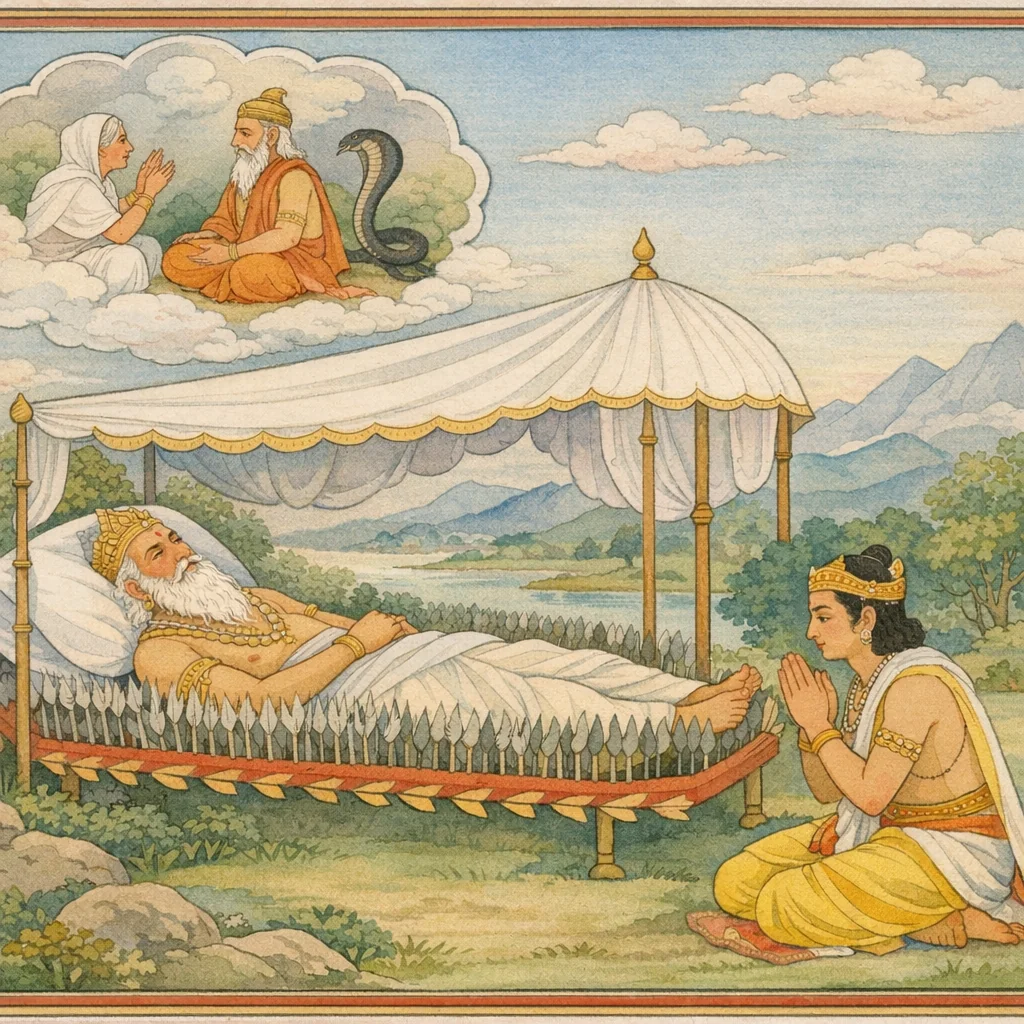
Yudhiṣṭhira confesses that despite teachings on śama (restraint/peace), he cannot attain inner calm after witnessing Bhīṣma’s arrow-wounded body and recalling the loss of kings and kin. Bhīṣma challenges the assumption of simple personal culpability and introduces an ancient itihāsa: Gautamī finds her son dead from a serpent’s bite; a hunter captures the serpent and urges immediate execution. Gautamī refuses retaliatory killing, arguing that violence cannot restore the child and that ethical weight belongs to one’s own conduct. The serpent claims it acted under compulsion; Mṛtyu states it acts under Kāla; Kāla finally asserts that the operative cause is the child’s own karma, with all other agents functioning as instrumental conditions. Gautamī accepts the karmic explanation, releases the serpent, and the episode is offered to Yudhiṣṭhira as a therapeutic-ethical model: understand suffering within karma and time, relinquish obsessive blame, and cultivate śama. Vaiśaṃpāyana concludes that Yudhiṣṭhira’s agitation subsides and he continues his dharmic inquiry.
Chapter Arc: नारायण-वन्दना के साथ कथा का द्वार खुलता है; शरशय्या पर पड़े भीष्म के पास युधिष्ठिर शान्ति का उपाय पूछते हैं—पर अपने ही कृत्य-शोक से उबर नहीं पाते। → युधिष्ठिर का आत्म-धिक्कार तीव्र होता है: ‘आपने अनेक शान्तियाँ बताईं, पर मेरे लिए कौन-सी?’ भीष्म उनके भीतर उठते अपराधबोध को लक्ष्य कर कर्म-फल की कठोरता और शोक-निवारण का उपाख्यान आरम्भ करते हैं—गौतमी, अर्जुनक, काल, मृत्यु और सर्प का प्रसंग। → उपाख्यान में गौतमी का क्षमा-स्वर और सर्प का स्वीकार—‘मैंने क्रोध या कामना से नहीं, आदेश से डँसा’—कर्म, नियति और उत्तरदायित्व की गाँठ खोल देता है; शोक का केन्द्र व्यक्ति से हटकर धर्म-तत्त्व पर टिकता है। → भीष्म निष्कर्ष देते हैं: काल-मृत्यु-सर्प जैसे आए वैसे चले गए; अर्जुनक और गौतमी का शोक दूर हुआ। युधिष्ठिर को उपदेश: शोक न करो—सब प्राणी अपने-अपने कर्मानुसार लोक पाते हैं। → युधिष्ठिर का ज्वर उतरता है और वे धर्म-विचार से प्रेरित होकर आगे प्रश्न करते हैं—भीष्म के दीर्घ अनुशासन-उपदेश का क्रम आरम्भ होने को है।
Shlokas
Verse 1
नारायणं नमस्कृत्य नरं चैव नरोत्तमम् | देवीं सरस्वतीं व्यासं ततो जयमुदीरयेत् ।। अन्तर्यामी नारायणस्वरूप भगवान् श्रीकृष्ण, (उनके नित्य सखा) नरस्वरूप नरश्रेष्ठ अर्जुन, (उनकी लीला प्रकट करनेवाली) भगवती सरस्वती और (उन लीलाओंका संकलन करनेवाले) महर्षि वेदव्यासको नमस्कार करके जय (महाभारत) का पाठ करना चाहिये ।। युधिछिर उवाच शमो बहुविधाकार: सूक्ष्म उक्त: पितामह । न च मे हृदये शान्तिरस्ति श्रुत्वेदमीदूशम्,युधिष्ठिरने कहा--पितामह! आपने नाना प्रकारसे शान्तिके सूक्ष्म स््वरूपका (शोकसे मुक्त होनेके विविध उपायोंका) वर्णन किया; परंतु आपका यह ऐसा उपदेश सुनकर भी मेरे हृदयमें शान्ति नहीं है इति श्रीमहाभारते अनुशासनपर्वणि दानधर्मपर्वणि गौतमीलुब्धकव्यालमृत्युकालसंवादे प्रथमो5ध्याय:
Having bowed to Nārāyaṇa, and also to Nara—the best of men—together with the goddess Sarasvatī and Vyāsa, one should then recite ‘Jaya’ (the Mahābhārata). Yudhiṣṭhira said: “Grandfather, you have described in many forms the subtle nature of śama—inner pacification and the means of becoming free from grief; yet even after hearing such instruction, peace does not arise in my heart.”
Verse 2
अस्मिन्नर्थे बहुविधा शान्तिरुक्ता पितामह । स्वकृते का नु शान्ति: स्थाच्छमाद् बहुविधादपि,दादाजी! आपने इस विषयमें शान्तिके बहुत-से उपाय बताये, परंतु इन नाना प्रकारके शान्तिदायक उपायोंको सुनकर भी स्वयं ही किये गये अपराधसे मनको शान्ति कैसे प्राप्त हो सकती है
Grandfather, in this matter you have spoken of many kinds of peace; yet even after hearing these varied means of śama, how can my mind attain calm when the offense was committed by my own hand?
Verse 3
शराचितशरीर हि तीव्रव्रणमुदीक्ष्य च । शर्म नोपलभे वीर दुष्कृतान्येव चिन्तयन्,वीरवर! बाणोंसे भरे हुए आपके शरीर और इसके गहरे घावको देखकर मैं बार-बार अपने पापोंका ही चिन्तन करता हूँ; अत: मुझे तनिक भी चैन नहीं मिलता है
O hero, seeing your body filled with arrows and beholding your deep, grievous wounds, my mind turns again and again to my own evil deeds. Therefore I find no peace at all.
Verse 4
रुधिरेणावसिक्ताडुं प्रस्रवन्तं यथाचलम् । त्वां दृष्टवा पुरुषव्याप्र सीदे वर्षास्विवाम्बुजम्,पुरुषसिंह! पर्वतसे गिरनेवाले झरनेकी तरह आपके शरीरसे रक्तकी धारा बह रही है-- आपके सारे अड़ खूनसे लथपथ हो रहे हैं | इस अवस्थामें आपको देखकर मैं वर्षाकालके कमलकी तरह गला (दुःखित होता) जाता हूँ
Yudhiṣṭhira said: “O tiger among men, your body is drenched in blood, and blood streams from you like a mountain waterfall. Seeing you in this condition, O lion among men, my heart sinks and I wither like a lotus in the rainy season.”
Verse 5
अतः कष्टतरं कि नु मत्कृते यत् पितामह: । इमामवस्थां गमितः: प्रत्यमित्रै रणाजिरे,मेरे ही कारण समराड्डणमें शत्रुओंने जो पितामहको इस अवस्थामें पहुँचा दिया, इससे बढ़कर कष्टकी बात और क्या हो सकती है?
Yudhiṣṭhira said: “What suffering could be greater than this—that because of me the Grandsire has been brought to such a condition by hostile foes on the battlefield?”
Verse 6
तथा चान्ये नृपतय: सहपुत्रा: सबान्धवा: । मत्कृते निधन प्राप्ता: कि नु कष्टतरं ततः,आपके सिवा और भी बहुत-से नरेश मेरे ही कारण अपने पुत्रों और बान्धवोंसहित युद्धमें मारे गये हैं। इससे बढ़कर दुःखकी बात और क्या होगी?
“And besides these, many other kings too—together with their sons and kinsmen—have met their death because of me. What sorrow could be more grievous than that?”
Verse 7
वयं हि धार्तराष्ट्रश्न कालमन्युवशंगता: । कृत्वेदं निन्दितं कर्म प्राप्स्याम: कां गतिं नूप ७ ।। नरेश्वर! हम पाण्डव और धूृतराष्ट्रके सभी पुत्र काल और क्रोधके वशीभूत हो यह निन्दित कर्म करके न जाने किस दुर्गतिको प्राप्त होंगे!
Yudhiṣṭhira said: “Indeed, we Pāṇḍavas and the sons of Dhṛtarāṣṭra alike, having fallen under the sway of Time and anger, have done this blameworthy deed. O king, to what fate shall we now attain?”
Verse 8
इदं तु धार्तराष्ट्रस्थ श्रेयो मन्ये जनाधिप । इमामवस्थां सम्प्राप्तं यदसौ त्वां न पश्यति,नरेश्वर! मैं राजा दुर्योधनके लिये उसकी मृत्युको श्रेष्ठ समझता हूँ, जिससे कि वह आपको इस अवस्थामें पड़ा हुआ नहीं देखता है
Yudhiṣṭhira said: “But, O lord of the people, I deem this to be for the good of Duryodhana, the son of Dhṛtarāṣṭra—that, having fallen into this condition, he does not have to see you thus.”
Verse 9
सो5हं तव हान्तकर: सुहृद्वधकरस्तथा । न शान्तिमधिगच्छामि पश्यंस्त्वां दुःखितं क्षितौ,मैं ही आपके जीवनका अन्त करनेवाला हूँ और मैं ही दूसरे-दूसरे सुहदोंका भी वध करनेवाला हूँ। आपको इस दुःखमयी दुरवस्थामें भूमिपर पड़ा देख मुझे शान्ति नहीं मिलती है
Yudhiṣṭhira said: “I am the one who has brought about your death, and likewise the slayer of other dear friends as well. Seeing you lying on the earth in such misery, I find no peace.”
Verse 10
दुर्योधनो हि समरे सहसैन्य: सहानुज: । निहतः क्षत्रधर्मेडस्मिन् दुरात्मा कुलपांसन:,दुरात्मा एवं कुलाड्ार दुर्योधन सेना और बन्धुओं सहित क्षत्रियधर्मके अनुसार होनेवाले इस युद्धमें मारा गया
For Duryodhana—wicked at heart, a stain upon his lineage—has been slain in this battle, together with his army and his younger brothers, in accordance with the warrior’s code that governs such warfare.
Verse 11
न स पश्यति दुष्टात्मा त्वामद्य पतितं क्षितौ । अतः: श्रेयो मृतं मन््ये नेह जीवितमात्मन:,वह दुष्टात्मा आज आपको इस तरह भूमिपर पड़ा हुआ नहीं देख रहा है, अतः उसकी मृत्युको ही मैं यहाँ श्रेष्ठ मानता हूँ; किन्तु अपने इस जीवनको नहीं
That wicked-souled one does not see you today lying fallen upon the earth. Therefore I judge death here to be the better course, not this continued life of mine—when such a sight has come to pass and the wrongdoer remains unshamed by witnessing it.
Verse 12
अहं हि समरे वीर गमित: शत्रुभि: क्षयम् । अभविष्यं यदि पुरा सह भ्रातृभिरच्युत,न त्वामेवं सुदुः:खार्तमद्राक्षं सायकार्दितम् । अपनी मर्यादासे कभी नीचे न गिरनेवाले वीरवर! यदि भाइयोंसहित मैं शत्रुओंद्वारा पहले ही युद्धमें मार डाला गया होता तो आपको इस प्रकार सायकोंसे पीड़ित और अत्यन्त दुःखसे आतुर अवस्थामें नहीं देखता
Yudhiṣṭhira said: “O hero, steadfast in your own bounds of honor! If, long ago, I had already been brought to destruction in battle by the enemy—together with my brothers—then I would not have had to see you in this state: pierced by arrows and overwhelmed by unbearable sorrow.”
Verse 13
।। नूनं हि पापकर्माणो धात्रा सृष्टा: सम हे नृप,नरेश्वर! निश्चय ही विधाताने हमें पापी ही रचा है। राजन! यदि आप मेरा प्रिय करना चाहते हैं तो मुझे ऐसा उपदेश दीजिये, जिससे परलोकमें भी मुझे इस पापसे छुटकारा मिल सके
Yudhiṣṭhira said: “Surely we are doers of sinful deeds—created so by the Ordainer, O king, O lord of men! It seems certain that the Creator has fashioned us as sinners. O ruler, if you wish to do what is dear to me, then instruct me in such a way that even in the next world I may be released from this sin.”
Verse 14
अन्यस्मिन्नपि लोके वै यथा मुच्येम किल्बिषात् | तथा प्रशाधि मां राजन् मम चेदिच्छसि प्रियम्,नरेश्वर! निश्चय ही विधाताने हमें पापी ही रचा है। राजन! यदि आप मेरा प्रिय करना चाहते हैं तो मुझे ऐसा उपदेश दीजिये, जिससे परलोकमें भी मुझे इस पापसे छुटकारा मिल सके
Yudhiṣṭhira said: “Tell me, O king, how in another world too we may be freed from sin. Instruct me in that way, if you wish to do what is dear to me, O lord of men. For it seems certain that the Creator has fashioned us as sinners. Therefore, O king, if you would grant me what I seek, give me such counsel that even in the hereafter I may obtain release from this wrongdoing.”
Verse 15
भीष्म उवाच परतन्त्रं कथं हेतुमात्मानमनुपश्यसि । कर्मणां हि महाभाग सूक्ष्म होतदतीन्द्रियम्,भीष्मजी कहते हैं--महाभाग! तुम तो सदा परतन्त्र हो (काल, अदृष्ट और ईश्वरके अधीन हो), फिर अपनेको शुभाशुभ कर्मोंका कारण क्यों समझते हो? वास्तवमें कर्मोंका कारण क्या है, यह विषय अत्यन्त सूक्ष्म तथा इन्द्रियोंकी पहुँचसे बाहर है
Bhishma said: “O noble one, since you are ever dependent—subject to Time, unseen destiny, and the Lord—how do you regard yourself as the cause of your auspicious and inauspicious deeds? For the true causality behind actions is exceedingly subtle and lies beyond the reach of the senses.”
Verse 16
अत्राप्युदाहरन्तीममितिहासं पुरातनम् । संवादं मृत्युगौतम्यो: काललुब्धकपन्नगै:,इस विषयमें विद्वान् पुरुष गौतमी ब्राह्मणी, व्याध, सर्प, मृत्यु और कालके संवादरूप इस प्राचीन इतिहासका उदाहरण दिया करते हैं
Bhishma said: “Here too, the learned cite an ancient precedent—an old narrative presented as a dialogue: the exchange involving Gautamī and Death, together with Time, the hunter, and the serpent. This traditional account is offered as an illustrative example for the matter at hand.”
Verse 17
गौतमी नाम कौन्तेय स्थविरा शमसंयुता । सर्पेण दष्ट॑ स्वं पुत्रमपश्यद्गतचेतनम्
Bhīṣma said: “O son of Kuntī, there was an aged woman named Gautamī, endowed with calm self-control. She saw her own son lying there, bitten by a snake and bereft of consciousness.”
Verse 18
कुन्तीनन्दन! पूर्वकालमें गौतमी नामवाली एक बूढ़ी ब्राह्मणी थी, जो शान्तिके साधनमें संलग्न रहती थी। एक दिन उसने देखा, उसके इकलौते बेटेको साँपने डेस लिया और उसकी चेतनाशक्ति लुप्त हो गयी ।। अथ त॑ स्नायुपाशेन बद्ध्वा सर्पममर्षित: । लुब्धको<र्जुनको नाम गौतम्या: समुपानयत्,इतनेहीमें अर्जुनक नामवाले एक व्याधने उस साँपको ताँतके फाँसमें बाँध लिया और अमर्षवश वह उसे गौतमीके पास ले आया
Bhishma said: “O son of Kunti, in former times there lived an aged Brahmin woman named Gautami, devoted to the disciplines of peace and self-control. One day she saw that her only son had been bitten by a snake and had lost consciousness. Then a hunter named Arjuna, enraged, bound that snake in a noose made of sinew and brought it before Gautami.”
Verse 19
सचाब्रवीदयं ते स पुत्रहा पन्नगाधम: । ब्रृहि क्षिप्रं महाभागे वध्यतां केन हेतुना,लाकर उसने कहा--“महाभागे! यही वह नीच सर्प है, जिसने तुम्हारे पुत्रको मार डाला है। जल्दी बताओ, मैं किस तरह इसका वध करूँ?
And he said, “O noble lady, this is that vile serpent—the slayer of your son. Tell me quickly: for what reason, and in what manner, should it be put to death?”
Verse 20
अग्नौ प्रक्षिप्पतामेष च्छिद्यतां खण्डशो5पि वा । न हायं बालहा पापश्चिरं जीवितुमहति
Bhīṣma said: “Throw this man into the fire, or even cut him to pieces. For this sinful killer of a child does not deserve to live long.”
Verse 21
“मैं इसे आगमें झोंक दूँ या इसके टुकड़े-टुकड़े कर डालूँ? बालककी हत्या करनेवाला यह पापी सर्प अब अधिक समयतक जीवित रहने योग्य नहीं है” ।। गौतम्युवाच विसृजैनमबुद्धिस्त्वमवध्यो<र्जुनक त्वया । को ह्वात्मानं गुरुं कुर्यात् प्राप्तव्यमविचिन्तयन्,गौतमी बोली--अर्जुनक! छोड़ दे इस सर्पको। तू अभी नादान है। तुझे इस सर्पको नहीं मारना चाहिये। होनहारको कोई टाल नहीं सकता--इस बातको जानते हुए भी इसकी उपेक्षा करके कौन अपने ऊपर पापका भारी बोझ लादेगा?
Bhishma said, “Shall I cast him into the fire, or shall I cut him to pieces? This sinful serpent, a killer of a child, does not deserve to live any longer.” Gautami replied, “Release him, Arjunaka. You are acting without discernment. You must not kill this serpent. Who, disregarding what must inevitably come to pass, would load himself with the heavy burden of sin?”
Verse 22
प्लवन्ते धर्मलघवो लोके5म्भसि यथा प्लवा: | मज्जन्ति पापगुरव: शस्त्र स्कन्नमिवोदके,संसारमें धर्माचरण करके जो अपनेको हलके रखते हैं (अपने ऊपर पापका भारी बोझ नहीं लादते हैं), वे पानीके ऊपर चलनेवाली नौकाके समान भवसागरसे पार हो जाते हैं; परंतु जो पापके बोझसे अपनेको बोझिल बना लेते हैं, वे जलमें फेंके हुए हथियारकी भाँति नरक-समुद्रमें डूब जाते हैं
Bhīṣma said: “In this world, those who keep themselves light through dharma—by not loading themselves with the heavy burden of sin—float across the ocean of worldly existence like boats upon water. But those made heavy by sin sink, like a weapon cast into water, plunging into the hellish sea.”
Verse 23
हत्वा चैनं नामृतः स्यादयं मे जीवत्यस्मिन् को>त्ययःस्यादयं ते । अस्योत्सर्गे प्राणयुक्तस्य जन्तो- मृत्योलोंक॑ को नु गच्छेदनन्तम्,इसको मार डालनेसे मेरा यह पुत्र जीवित नहीं हो सकता और इस सर्पके जीवित रहनेपर भी तुम्हारी क्या हानि हो सकती है? ऐसी दशामें इस जीवित प्राणीके प्राणोंका नाश करके कौन यमराजके अनन्त लोकमें जाय?
Bhishma said: “Even if you were to kill this one, my son would not come back to life. And if this serpent remains alive, what real harm would that be to you? In such a situation, who would destroy the life of a living creature and thereby go to Yama’s endless realm (the world of death)?”
Verse 24
लुब्धक उवाच जानाम्यहं देवि गुणागुणज्ञे सर्वार्तियुक्ता गुरवो भवन्ति । स्वस्थस्यैते तूपदेशा भवन्ति तस्मात क्षुद्रें सर्पमेनं हनिष्ये,व्याधने कहा--गुण और अवगुणको जाननेवाली देवि! मैं जानता हूँ कि बड़े-बूढ़े लोग किसी भी प्राणीको कष्टमें पड़ा देख इसी तरह दुःखी हो जाते हैं। परंतु ये उपदेश तो स्वस्थ पुरुषके लिये हैं (दुःखी मनुष्यके मनपर इनका कोई प्रभाव नहीं पड़ता)। अतः मैं इस नीच सर्पको अवश्य मार डालूँगा
The hunter said: “O goddess, knower of merit and fault, I understand that elders, seeing any creature in distress, become afflicted with compassion. Yet such counsel is meant for one who is at ease; it has little force upon a man overwhelmed by suffering. Therefore I will surely kill this vile serpent.”
Verse 25
शमार्थिन: कालगतिं वदन्ति सद्यः शुचं त्वर्थविदस्त्यजन्ति । श्रेय:क्षयं शोचति नित्यमोहात् तस्माच्छुचं मुज्च हते भुजड़े,शान्ति चाहनेवाले पुरुष कालकी गति बताते हैं (अर्थात् कालने ही इसका नाश कर दिया है, ऐसा कहते हुए शोकका त्याग करके संतोष धारण करते हैं)। परंतु जो अर्थवेत्ता हैं --बदला लेना जानते हैं, वे शत्रुका नाश करके तुरंत ही शोक छोड़ देते हैं। दूसरे लोग श्रेयका नाश होनेपर मोहवश सदा उसके लिये शोक करते रहते हैं; अत: इस शत्रुभूत सर्पके मारे जानेपर तुम भी तत्काल ही अपने पुत्र-शोकको त्याग देना
The hunter said: “Those who seek peace explain events as the course of Time, and thus at once relinquish grief. Those who are skilled in practical ends—who know how to secure their purpose—cast off sorrow immediately after destroying the enemy. Others, through constant delusion, keep lamenting when their welfare is lost. Therefore, now that this enemy-serpent has been slain, you too abandon your grief for your son at once.”
Verse 26
गौतम्युवाच आर्तिनिवं विद्यते3स्मद्विधानां धर्मात्मान: सर्वदा सज्जना हि । नित्यायस्तो बालको<प्यस्य तस्मा- दीशे नाहं पन्नगस्य प्रमाथे,गौतमी बोली--अर्जुनक! हम-जैसे लोगोंको कभी किसी तरहकी हानिसे भी पीड़ा नहीं होती। धर्मात्मा सज्जन पुरुष सदा धर्ममें ही लगे रहते हैं। मेरा यह बालक सर्वथा मरनेहीवाला था; इसलिये मैं इस सर्पको मारनेमें असमर्थ हूँ
Gautamī said: “For people like us, there is a freedom from anguish; for the righteous and the good are always steadfast in dharma. Even this child was bound to die in due course; therefore I am not able—nor do I deem it right—to destroy the serpent.”
Verse 27
न ब्राह्मणानां कोपो$स्ति कुत: कोपाच्च यातनाम् | मार्दवात् क्षम्यतां साथो मुच्यतामेष पन्नग:,ब्राह्मणोंको क्रोध नहीं होता; फिर वे क्रोधवश दूसरोंको पीड़ा कैसे दे सकते हैं; अतः साधो! तू भी कोमलताका आश्रय लेकर इस सर्पके अपराधको क्षमा कर और इसे छोड़ दे
The hunter said: “Brahmins are not given to anger; and if there is no anger, how could they inflict suffering out of wrath? Therefore, O virtuous one, take refuge in gentleness—forgive this serpent’s offense and set him free.”
Verse 28
लुब्धक उवाच हत्वा लाभ: श्रेय एवाव्यय: स्या- ल्लभ्यो लाभ्य: स्याद् बलिभ्य: प्रशस्त: । कालाल्लाभो यस्तु सत्यो भवेत श्रेयोलाभ: कुत्सिते5स्मिन्न ते स््थात्,व्याधने कहा--देवि! इस सर्पको मार डालनेसे जो बहुतोंका भला होगा, यही अक्षय लाभ है। बलवानोंसे बलपूर्वक लाभ उठाना ही उत्तम लाभ है। कालसे जो लाभ होता है वही सच्चा लाभ है। इस नीच सर्पके जीवित रहनेसे तुम्हें कोई श्रेय नहीं मिल सकता
The hunter said: “Killing it would be a gain—indeed an imperishable good—because it would bring benefit to many. To take profit by force from the strong is praised as the best kind of gain. The gain that comes from Time (fate) alone is the true gain. From letting this vile serpent live, no good can come to you.”
Verse 29
गौतग्युवाच का नु प्राप्ति्गहा शत्रुं निहत्य का कामाप्ति: प्राप्य शत्रुं न मुक्त्वा । कस्मात् सौम्याहं न क्षमे नो भुजड़े मोक्षार्थ वा कस्य हेतोर्न कुर्यामू,गौतमी बोली--अर्जुनक! शत्रुको कैद करके उसे मार डालनेसे क्या लाभ होता है; तथा शत्रुको अपने हाथमें पाकर उसे न छोड़नेसे किस अभीष्ट मनोरथकी प्राप्ति हो जाती है? सौम्य! क्या कारण है कि मैं इस सर्पके अपराधको क्षमा न करूँ? तथा किसलिये इसको छुटकारा दिलानेका प्रयत्न न करूँ?
Gautamī said: “What gain is there in capturing an enemy only to kill him? And what cherished aim is fulfilled by having an enemy in one’s power and yet not releasing him? Gentle one, for what reason should I not forgive this serpent’s offense? And for whose sake should I not strive to secure his release?”
Verse 30
लुब्धक उवाच अस्मादेकाद् बहवो रक्षितव्या नैको बहुभ्यो गौतमि रक्षितव्य: । कृतागसं धर्मविदस्त्यजन्ति सरीसूृपं पापमिमं जहि त्वम्,व्याधने कहा--गौतमी! इस एक सर्पसे बहुतेरे मनुष्योंके जीवनकी रक्षा करनी चाहिये। (क्योंकि यदि यह जीवित रहा तो बहुतोंको काटेगा।) अनेकोंकी जान लेकर एककी रक्षा करना कदापि उचित नहीं है। धर्मज्ञ पुरुष अपराधीको त्याग देते हैं; इसलिये तुम भी इस पापी सर्पको मार डालो
The hunter said: “O Gautamī, many lives should be protected even at the cost of this one. It is not right to save a single creature when it endangers the many. Those who know dharma abandon one who has committed wrongdoing; therefore, strike down this sinful creeping serpent.”
Verse 31
गौतम्युवाच नास्मिन् हते पन्नगे पुत्रको मे सम्प्राप्स्यते लुब्धक जीवित वै । गुणं चान्य॑ नास्य वधे प्रपश्ये तस्मात् सर्प लुब्धक मुज्च जीवम्,गौतमी बोली--व्याध! इस सर्पके मारे जानेपर मेरा पुत्र पुनः जीवन प्राप्त कर लेगा, ऐसी बात नहीं है। इसका वध करनेसे दूसरा कोई लाभ भी मुझे नहीं दिखायी देता है। इसलिये इस सर्पको तुम जीवित छोड़ दो
Gautamī said: “O hunter, even if this serpent is slain, my child will not regain life. Nor do I see any other benefit in killing it. Therefore, O hunter, release this snake alive.”
Verse 32
लुब्धक उवाच वृत्रं हत्वा देवराट् श्रेष्ठभाग् वै यज्ञ हत्वा भागमवाप चैव । शूली देवो देववृत्तं चर त्वं क्षिप्रं सर्प जहि मा भूत् ते विशड्का,व्याधने कहा--देवि! वृत्रासुरका वध करके देवराज इन्द्र श्रेष्ठ पदके भागी हुए और त्रिशूलधारी रुद्रदेवने दक्षके यज्ञका विध्वंस करके उसमें अपने लिये भाग प्राप्त किया। तुम भी देवताओंद्वारा किये गये इस बर्तावका ही पालन करो। इस सर्पको शीघ्र ही मार डालो। इस कार्यमें तुम्हें शंका नहीं करनी चाहिये
The hunter said: “Having slain Vṛtra, Indra—the king of the gods—won the foremost share and status. Likewise, the trident-bearing god (Rudra), after destroying Dakṣa’s sacrifice, obtained his portion there as well. You too should follow this precedent of divine conduct: kill this serpent quickly. Let there be no doubt in you about this act.”
Verse 33
भीष्य उवाच असकृत् प्रोच्यमानापि गौतमी भुजगं प्रति । लुब्धकेन महाभागा पापे नैवाकरोन्मतिम्,भीष्मजी कहते हैं--राजन्! व्याधके बार-बार कहने और उकसानेपर भी महाभागा गौतमीने सर्पको मारनेका विचार नहीं किया
Bhishma said: “O King, although the hunter repeatedly urged her on, the noble Gautamī did not form the intention to kill the serpent—despite the serpent’s wrongdoing.”
Verse 34
ईषदुच्छवसमानस्तु कृच्छात् संस्तभ्य पन्नग: । उत्ससर्ज गिरं मन्दां मानुषीं पाशपीडित:,उस समय बन्धनसे पीड़ित होकर धीरे-धीरे साँस लेता हुआ वह साँप बड़ी कठिनाईसे अपनेको सँभालकर मन्दस्वरसे मनुष्यकी वाणीमें बोला
Bhīṣma said: “Bound fast and tormented by the noose, the serpent, breathing only faintly, with great effort steadied himself and, in a low voice, spoke in human speech.”
Verse 35
सर्प उवाच को न्वर्जुनक दोषोअत्र विद्यते मम बालिश । अस्वतन्त्र हि मां मृत्युर्विवशं यदचूचुदत्,सर्पने कहा--ओ नादान अर्जुनक! इसमें मेरा क्या दोष है? मैं तो पराधीन हूँ। मृत्युने मुझे विवश करके इस कार्यके लिये प्रेरित किया था
The serpent said, “O foolish Arjunaka, what fault of mine is there in this matter? I am not my own master. Death compelled me against my will and impelled me to do this deed.”
Verse 36
तस्यायं वचनाद्ू दष्टो न कोपेन न काम्यया । तस्य तत्किल्बिषं लुब्ध विद्यते यदि किल्बिषम्,उसके कहनेसे ही मैंने इस बालकको डँसा है, क्रोधसे और कामनासे नहीं। व्याध! यदि इसमें कुछ अपराध है तो वह मेरा नहीं, मृत्युका है
The serpent said: “At his very word I bit this boy—neither out of anger nor out of desire. If there is any fault in this, O hunter, it is not mine; that blame, if blame there be, belongs to Death (fate).”
Verse 37
लुब्धक उवाच यद्यन्यवशगेनेदं कृतं ते पन्नगाशुभम् । कारणं वै त्वमप्यत्र तस्मात् त्वमपि किल्बिषी,व्याधने कहा--ओ सर्प! यद्यपि तूने दूसरेके अधीन होकर यह पाप किया है तथापि तू भी तो इसमें कारण है ही; इसलिये तू भी अपराधी है
The hunter said: “O serpent, even if you committed this evil deed under another’s control, you too are a contributing cause in it. Therefore, you also bear guilt.”
Verse 38
मृत्पात्रस्य क्रियायां हि दण्डचक्रादयो यथा । कारणत्वे प्रकल्प्यन्ते तथा त्वमपि पन्नग,सर्प! जैसे मिट्टीका बर्तन बनाते समय दण्ड और चाक आदिको भी उसमें कारण माना जाता है, उसी प्रकार तू भी इस बालकके वधमें कारण है
The hunter said: “Just as, in the making of an earthen pot, the stick, the wheel, and the other implements are all counted as contributing causes, so too, O serpent—O snake—you are also a cause in the killing of this boy.”
Verse 39
किल्बिषी चापि मे वध्य: किल्बिषी चासि पन्नग । आत्मानं कारणं द्वात्र त्वमाख्यासि भुजड्रम,भुजंगम! जो भी अपराधी हो, वह मेरे लिये वध्य है; पन्नग! तू भी अपराधी है ही; क्योंकि तू स्वयं अपने आपको इसके वधमें कारण बताता है
The hunter said: “Even a wrongdoer is to be slain by me; and you too are a wrongdoer, O serpent. For you yourself declare that you are the cause here—thus, O snake, you make yourself responsible for your own killing.”
Verse 40
सर्प उवाच सर्व एते हास्ववशा दण्डचक्रादयो यथा । तथाहमपि तस्मान्मे नैष दोषो मतस्तव,सर्पने कहा--व्याध! जैसे मिट्टीका बर्तन बनानेमें ये दण्ड-चक्र आदि सभी कारण पराधीन होते हैं, उसी प्रकार मैं भी मृत्युके अधीन हूँ। इसलिये तुमने जो मुझपर दोष लगाया है, वह ठीक नहीं है
The serpent said: “Just as all these implements—such as the staff and the wheel used in shaping a clay pot—act only under another’s control, so too am I under the control of Death. Therefore, the blame you place upon me is not, in my view, rightly mine.”
Verse 41
अथवा मततमेतत्ते ते5प्यन्योन्यप्रयोजका: । कार्यकारणसंदेहो भवत्यन्योन्यचोदनात्,अथवा यदि तुम्हारा यह मत हो कि ये दण्ड-चक्र आदि भी एक-दूसरेके प्रयोजक होते हैं; इसलिये कारण हैं ही। किंतु ऐसा माननेसे एक-दूसरेको प्रेरणा देनेवाला होनेके कारण कार्य-कारणभावके निर्णयमें संदेह हो जाता है
Or if this is your view—that even these (such as the wheel and the like) mutually impel one another and therefore do count as causes—then, by accepting such mutual instigation, uncertainty arises in determining what is cause and what is effect. When each is said to prompt the other, the very decision about causal priority becomes doubtful.
Verse 42
एवं सति न दोषो मे नास्मि वध्यो न किल्बिषी । किल्विषं समवाये स्यान्मन्यसे यदि किल्बिषम्,ऐसी दशामें न तो मेरा कोई दोष है और न मैं वध्य अथवा अपराधी ही हूँ। यदि तुम किसीका अपराध समझते हो तो वह सारे कारणोंके समूहपर ही लागू होता है
“If this is the case, then I bear no fault; I am neither to be slain nor am I a sinner. If you still regard there to be sin here, then that sin would belong to the entire complex of contributing causes.”
Verse 43
लुब्धक उवाच कारणं यदि न स्याद् वै न कर्ता स्यास्त्वमप्युत । विनाशकारणं त्वं च तस्माद् वध्योडसि मे मतः,व्याधने कहा--सर्प! यदि मान भी लें कि तू अपराधका न तो कारण है और न कर्ता ही है तो भी इस बालककी मृत्यु तो तेरे ही कारण हुई है, इसलिये मैं तुझे मारने योग्य समझता हूँ
The hunter said: “Serpent! Even if we grant that you are neither the cause nor the doer of wrongdoing, still the destruction—the death—of this child has come about through you. Therefore, in my view, you are fit to be slain.”
Verse 44
असत्यपि कृते कार्य नेह पन्नग लिप्यते । तस्मान्नात्रैव हेतु: स्याद् वध्य: कि बहु भाषसे
The hunter said: “Even if an untruth has been employed to accomplish a necessary end, the serpent here does not thereby incur guilt. Therefore, in this matter there is no valid ground for killing him. Why do you argue at such length?”
Verse 45
सर्प! तेरे मतके अनुसार यदि दुष्टतापूर्ण कार्य करके भी कर्ता उस दोषसे लिप्त नहीं होता है, तब तो चोर या हत्यारे आदि जो अपने अपराधोंके कारण राजाओंके यहाँ वध्य होते हैं, उन्हें भी वास्तवमें अपराधी या दोषका भागी नहीं होना चाहिये। (फिर तो पाप और उसका दण्ड भी व्यर्थ ही होगा) अतः तू क्यों बहुत बकवाद कर रहा है ।। सर्प उवाच कार्याभावे क्रिया न स्यात् सत्यसत्यपि कारणे । तस्मात् समे5स्मिन् हेतौ मे वाच्यो हेतुर्विशेषत:,सर्पने कहा--व्याध! प्रयोजक (प्रेरक) कर्ता रहे या न रहे, प्रयोज्य कर्ताके बिना क्रिया नहीं होती; इसलिये यहाँ यद्यपि हमलोग (मैं और मृत्यु) समानरूपसे हेतु हैं; तो भी प्रयोजक होनेके कारण मृत्युपर ही विशेषरूपसे यह अपराध लगाया जा सकता है। यदि तुम मुझे इस बालककी मृत्युका वस्तुतः कारण मानते हो तो यह तुम्हारी भूल है। वास्तवमें विचार करनेपर प्रेरणा करनेके कारण दूसरा ही (मृत्यु ही) अपराधी सिद्ध होगा; क्योंकि वही प्राणियोंके विनाशमें अपराधी है
The Serpent said: “Without an effect, no action can be said to occur, even if a cause is present. Therefore, although in this matter we appear to be equally ‘causes,’ the cause that truly deserves to be singled out for blame is the one that impels and directs the deed. If you take me to be the real cause of this child’s death, you are mistaken; on reflection, it is the instigator—Death—who is culpable, for he is the agent who drives the destruction of living beings.”
Verse 46
यद्य॒हं कारणत्वेन मतो लुब्धक तत्त्वतः । अन्य: प्रयोगे स्यादत्र किल्बिषी जन्तुनाशने,सर्पने कहा--व्याध! प्रयोजक (प्रेरक) कर्ता रहे या न रहे, प्रयोज्य कर्ताके बिना क्रिया नहीं होती; इसलिये यहाँ यद्यपि हमलोग (मैं और मृत्यु) समानरूपसे हेतु हैं; तो भी प्रयोजक होनेके कारण मृत्युपर ही विशेषरूपसे यह अपराध लगाया जा सकता है। यदि तुम मुझे इस बालककी मृत्युका वस्तुतः कारण मानते हो तो यह तुम्हारी भूल है। वास्तवमें विचार करनेपर प्रेरणा करनेके कारण दूसरा ही (मृत्यु ही) अपराधी सिद्ध होगा; क्योंकि वही प्राणियोंके विनाशमें अपराधी है
The serpent said: “If, O hunter, you truly regard me as the cause, then consider the matter rightly: in this act of killing a living being, another is the culpable one here—the one who impels the deed. Without the agent who is set in motion, no action occurs; thus, even if we are both in some sense causes, the blame falls especially on the instigator. If you think I am in truth the cause of this boy’s death, that is your error. On reflection, it is the other—Death itself—that stands guilty, for it is the destroyer of creatures.”
Verse 47
लुब्धक उवाच वध्यस्त्वं मम दुर्बुद्धे बालघाती नृशंसकृत् । भाषसे किं बहु पुनर्वध्य: सन् पन्नगाधम,व्याधने कहा--खोटी बुद्धिवाले नीच सर्प! तू बालहत्यारा और क्रूरतापूर्ण कर्म करनेवाला है; अतः निश्चय ही मेरे हाथसे वधके योग्य है। तू वध्य होकर भी अपनेको निर्दोष सिद्ध करनेके लिये क्यों बहुत बातें बना रहा है?
The hunter said: “You are fit to be slain by me, you wicked fool— a killer of the young and a doer of cruel deeds. Why do you speak so much again and again? Though you stand condemned to death, you base serpent, you keep arguing as if to prove yourself blameless.”
Verse 48
सर्प उवाच यथा हवींषि जुद्दाना मखे वै लुब्धकर्त्विज: । न फल प्राप्रुवन्त्यत्र फलयोगे तथा हाहम्,सर्पने कहा--व्याध! जैसे यजमानके यहाँ यज्ञमें ऋत्विज् लोग अग्निमें आहुति डालते हैं; किंतु उसका फल उन्हें नहीं मिलता। इसी प्रकार इस अपराधके फल या दण्डको भोगनेमें मुझे नहीं सम्मिलित करना चाहिये (क्योंकि वास्तवमें मृत्यु ही अपराधी है)
The serpent said: “Just as greedy officiating priests, though they pour oblations into the fire at a sacrifice, do not themselves obtain the fruit of that rite, so too should I not be made to share in the enjoyment of the fruit—namely the punishment—of this wrongdoing. The true agent of death is the real offender.”
Verse 49
भीष्म उवाच तथा ब्रुवति तस्मिंस्तु पन्नगे मृत्युचोदिते । आजगाम ततो मृत्यु: पन्नगं चाब्रवीदिदम्,भीष्मजी कहते हैं--राजन! मृत्युकी प्रेरणासे बालकको डँसनेवाला सर्प जब बारंबार अपनेको निर्दोष और मृत्युको दोषी बताने लगा तब मृत्यु देवता भी वहाँ आ पहुँचा और सर्पसे इस प्रकार बोला
Bhishma said: While that serpent—urged on by Death—kept speaking in this manner, repeatedly declaring himself blameless and placing the fault upon Death, the god Death arrived there and addressed the serpent as follows. The episode frames a moral inquiry into agency and accountability: when harm is done under another’s prompting, who bears the true responsibility?
Verse 50
मृत्युरुवाच प्रचोदितो5हं कालेन पन्नग त्वामचूचुदम् । विनाशहेतुर्नास्य त्वमहं न प्राणिन: शिशो:,मृत्युने कहा--सर्प! कालसे प्रेरित होकर ही मैंने तुओ इस बालकको डँसनेके लिये प्रेरणा दी थी; अतः इस शिशुप्राणीके विनाशमें न तो तू कारण है और न मैं ही कारण हूँ
Death said: “Urged on by Time, O serpent, I impelled you to bite. Therefore, in the destruction of this infant creature, neither you nor I are the true cause.”
Verse 51
यथा वायुर्जलधरान् विकर्षति ततस्तत: । तद्धज्जलदवत् सर्प कालस्याहं वशानुग:,सर्प! जैसे हवा बादलोंको इधर-उधर उड़ा ले जाती है, उन बादलोंकी ही भाँति मैं भी कालके वशमें हूँ
Bhīṣma said: “Just as the wind drives the rain-clouds this way and that, so too—like those clouds—I am carried along under the dominion of Time. I do not act in absolute independence; I move as Time impels.”
Verse 52
साच्विका राजसाश्षैव तामसा ये च केचन । भावा: कालात्मका: सर्वे प्रवर्तन्ते ह जन्तुषु,सात्विक, राजस और तामस जितने भी भाव हैं, वे सब कालात्मक हैं और कालकी ही प्रेरणासे प्राणियोंको प्राप्त होते हैं
Bhishma said: “Whatever dispositions arise in living beings—whether sāttvika, rājasika, or tāmasika, and any others besides—are all rooted in Time. It is Time’s own impulse that sets these inner states in motion within creatures.”
Verse 53
जड़मा: स्थावराश्नैव दिवि वा यदि वा भुवि | सर्वे कालात्मका: सर्प कालात्मकमिदं जगत्,सर्प! पृथ्वी अथवा स्वर्गलोकमें जितने भी स्थावर-जड़म पदार्थ हैं, वे सभी कालके अधीन हैं। यह सारा जगत् ही कालस्वरूप है
Bhishma said: “Whether in heaven or on earth, all inert and immovable things are, without exception, governed by Time. O Serpent, everything is of the nature of Time; indeed, this entire world is Time itself.”
Verse 54
प्रवृत्तयश्च लोके5स्मिंस्तथैव च निवृत्तय: । तासां विकृतयो याश्व् सर्व कालात्मकं स्मृतम्,इस लोकमें जितने प्रकारकी प्रवृत्ति-निवृत्ति तथा उनकी विकृतियाँ (फल) हैं, ये सब कालके ही स्वरूप हैं
Bhīṣma said: “In this world, all the various modes of engagement (pravṛtti) and withdrawal (nivṛtti), and whatever transformations and outcomes arise from them, are understood to be nothing other than manifestations of Time.”
Verse 55
आदित्यश्रन्द्रमा विष्णुरापो वायु: शतक्रतुः । अग्नि:खं पृथिवी मित्र: पर्जन्यो वसवो5दिति:
Bhīṣma said: “The Sun, the Moon, Viṣṇu, the Waters, the Wind, Śatakratu (Indra), Fire, Space, the Earth, Mitra, Parjanya (the rain-god), the Vasus, and Aditi—these are to be understood as the divine powers pervading the world.” In this teaching, Bhīṣma points to the many names and forms through which the one sacred order is known, urging reverence, restraint, and right conduct toward all beings and the life-sustaining elements.
Verse 56
सरित: सागराश्षैव भावाभावौ च पन्नग । सर्वे कालेन सृज्यन्ते द्वियन्ते च पुन: पुन:
Bhīṣma said: “O serpent, rivers and oceans alike, and even the states of existence and non-existence—everything is brought forth by Time, and again and again everything is diminished and worn away by Time.”
Verse 57
पन्नग! सूर्य, चन्द्रमा, जल, वायु, इन्द्र, अग्नि, आकाश, पृथ्वी, मित्र, पर्जन्य, वसु, अदिति, नदी, समुद्र तथा भाव और अभाव--ये सभी कालके द्वारा ही रचे जाते हैं और काल ही इनका संहार कर देता है ।। एवं ज्ञात्वा कथं मां त्वं सदोषं सर्प मन्यसे । अथ चैवंगते दोषे मयि त्वमपि दोषवान्
“O serpent! The Sun, the Moon, water, wind, Indra, fire, space, earth, Mitra, Parjanya, the Vasus, Aditi, rivers, the ocean, and existence and non-existence—all these are fashioned by Time alone, and Time itself brings their destruction. Knowing this, how do you deem me at fault, O serpent? And if, even in such a state of things, blame may be laid upon me, then you too are blameworthy.”
Verse 58
सर्प! यह सब जानकर भी तुम मुझे कैसे दोषी मानते हो? और यदि ऐसी स्थितिमें भी मुझपर दोषारोपण हो सकता है, तब तो तू भी दोषी ही है ।। सर्प उवाच निर्दोषं दोषवन्तं वा न त्वां मृत्यो ब्रवीम्यहम् । त्वयाहं चोदित इति ब्रवीम्येतावदेव तु,सर्पने कहा--मृत्यो! मैं तुम्हें न तो निर्दोष बताता हूँ और न दोषी ही। मैं तो इतना ही कह रहा हूँ कि इस बालकको डँसनेके लिये तूने ही मुझे प्रेरित किया था
“O serpent! Knowing all this, how do you still hold me to be at fault? And if, even in such a state of things, blame can be laid upon me, then you too are blameworthy.” The serpent said: “O Death, I do not declare you either blameless or blameworthy. I state only this much: it was you who impelled me to strike this boy.”
Verse 59
यदि काले तु दोषो<स्ति यदि तत्रापि नेष्यते । दोषो नैव परीक्ष्यो मे न ह्ृत्राधिकृता वयम्,इस विषयमें यदि कालका दोष है अथवा यदि वह भी निर्दोष है तो हो, मुझे किसीके दोषकी जाँच नहीं करनी है और जाँच करनेका मुझे कोई अधिकार भी नहीं है
“Even if there is fault in Time, or even if that too is not to be accepted as fault—so be it. I have no wish to investigate anyone’s blame; indeed, I have no authority here to sit in judgment.”
Verse 60
निर्मोक्षस्त्वस्य दोषस्य मया कार्या यथा तथा । मृत्योरपि न दोष: स्यादिति मे<त्र प्रयोजनम्,परंतु मेरे ऊपर जो दोष लगाया गया है, उसका निवारण तो मुझे जैसे-तैसे करना ही है। मेरे कहनेका यह प्रयोजन नहीं है कि मृत्युका भी दोष सिद्ध हो जाय
The Snake said: “I must, by whatever means possible, clear myself of the blame that has been laid upon me. My purpose in speaking is not to prove that even Death is at fault.”
Verse 61
भीष्म उवाच सर्पो3थार्जुनकं प्राह श्रुतं ते मृत्युभाषितम् । नानागसं मां पाशेन संतापयितुमरहसि,भीष्मजी कहते हैं--युधिष्ठिर! तदनन्तर सर्पने अर्जुनकसे कहा--“तुमने मृत्युकी बात तो सुन ली न? अब मुझ निरपराधको बन्धनमें बाँधकर कष्ट देना तुम्हारे लिये उचित नहीं है
Bhishma said: Then the Snake spoke to Arjunaka: “You have heard Death’s words, have you not? Therefore it is not right for you to bind me with a noose and torment me, for I am without guilt.”
Verse 62
लुब्धक उवाच मृत्यो: श्रुतं मे वचनं तव चैव भुजड़म । नैव तावददोषत्वं भवति त्वयि पन्नग,व्याधने कहा--पन्नग! मैंने मृत्युकी और तेरी--दोनोंकी बातें सुन लीं; किंतु भुजंगम! इससे तेरी निर्दोषता नहीं सिद्ध हो रही है
The hunter said: “I have heard the words of Death, and yours as well, O serpent. Yet, O snake, by that alone your blamelessness is not established.”
Verse 63
मृत्युस्त्वं चैव हेतुर्हि बालस्यास्य विनाशने । उभयं कारणं मन्ये न कारणमकारणम्,इस बालकके विनाभमें तू और मृत्यु--दोनों ही कारण हो; अतः मैं दोनोंको ही कारण या अपराधी मानता हूँ, किसी एकको अपराधी या निरपराध नहीं मानता
You and Death are indeed the causes of this child’s destruction. I regard both as responsible; I do not accept that one alone is to be blamed while the other is blameless or without causal involvement.
Verse 64
धिड़मृत्युं च दुरात्मानं क्रूरं दु:खकरं सताम् | त्वां चैवाहं वधिष्यामि पापं पापस्य कारणम्,श्रेष्ठ पुरुषोंको दुःख देनेवाले इस क्रूर एवं दुरात्मा मृत्युको धिक््कार है और तू तो इस पापका कारण है ही; इसलिये तुझ पापात्माका वध मैं अवश्य करूँगा
“Shame upon Death—cruel, wicked-souled, and a bringer of sorrow to the noble. And you too are the very cause of this sin; therefore I will surely kill you, O sinful one.”
Verse 65
मृत्युरुवाच विवशौ कालवशगावावां निर्दिष्टकारिणौ । नावां दोषेण गन्तव्यौ यदि सम्यक् प्रपश्यसि
Death said: “We are helpless, driven by Time (Kāla), and we act only as we are appointed to act. If you see clearly, you should not lay blame on us as though it were our fault.”
Verse 66
मृत्युने कहा--व्याध! हम दोनों कालके अधीन होनेके कारण विवश हैं। हम तो केवल उसके आदेशका पालनमात्र करते हैं। यदि तुम अच्छी तरह विचार करोगे तो हमलोगोंपर दोषारोपण नहीं करोगे ।। लुब्धक उवाच युवामुभी कालवशोौ यदि मे मृत्युपन्नगौ । हर्षक्रोधौ यथा स्यातामेतदिच्छामि वेदितुम्,व्याधने कहा--मृत्यु और सर्प! यदि तुम दोनों कालके अधीन हो तो मुझ तटस्थ व्यक्तिको परोपकारीके प्रति हर्ष और दूसरोंका अपकार करनेवाले तुम दोनोंपर क्रोध क्यों होता है, यह मैं जानना चाहता हूँ
The hunter said: “O Death and O Serpent, if you both act under the compulsion of Time (Kāla), then I wish to understand this: why does joy arise in me toward one who benefits others, and why does anger arise toward you two, who bring harm? If all are bound by Time’s ordinance, on what basis do praise and blame, delight and resentment, still take hold in the mind?”
Verse 67
मृत्युरुवाच या काचिदेव चेष्टा स्यात् सर्वा कालप्रचोदिता । पूर्वमेवैतदुक्त हि मया लुब्धक कालत:,मृत्युने कहा--व्याध! जगत्में जो कोई भी चेष्टा हो रही है, वह सब कालकी प्रेरणासे ही होती है। यह बात मैंने तुमसे पहले ही बता दी है
Death said: “Whatever action or movement occurs in this world—any effort whatsoever—is entirely impelled by Time. I have already told you this before, O hunter: it is Time that drives all things.”
Verse 68
तस्मादुभौ कालवशावावां निर्दिष्टकारिणौ । नावां दोषेण गन्तव्यौ त्वया लुब्धक कहिचित्,अतः व्याध! हम दोनोंको कालके अधीन और कालके ही आदेशका पालक समझकर तुम्हें कभी हमारे ऊपर दोषारोपण नहीं करना चाहिये
Therefore, both of us are under the sway of Time, acting only as Time has ordained. You, O hunter, should never lay blame upon us; understand that we are not to be condemned as if this were our personal fault.
Verse 69
भीष्म उवाच अथोपगम्य कालस्तु तस्मिन् धर्मार्थसंशये । अब्रवीत् पन्नगं मृत्युं लुब्धं चार्जुनकं तथा,भीष्मजी कहते हैं--युधिष्ठिर! तदनन्तर धार्मिक विषयमें संदेह उपस्थित होनेपर काल भी वहाँ आ पहुँचा; तथा सर्प, मृत्यु एवं अर्जुनक व्याधसे इस प्रकार बोला
Bhishma said: “O Yudhiṣṭhira, when a doubt arose concerning what is right (dharma) and what is beneficial (artha), Time itself arrived there. Then it addressed the serpent, Death, the greedy hunter, and Arjunaka as well.”
Verse 70
काल उवाच न हाहं नाप्ययं मृत्युर्नायं लुब्धक पन्नग: । किल्बिषी जन्तुमरणे न वयं हि प्रयोजका:,कालने कहा--व्याथ! न तो मैं, न यह मृत्यु और न यह सर्प ही इस जीवकी मृत्युमें अपराधी हैं। हमलोग किसीकी मृत्युमें प्रेरक या प्रयोजक भी नहीं हैं
Time said: “Neither I, nor this Death, nor this serpent is to blame, O hunter, for the death of this creature. We are not the instigators or agents who cause anyone’s death. The true cause lies elsewhere—in the being’s own deeds and the moral law that ripens their results.”
Verse 71
अकरोद् यदयं कर्म तन्नोडर्जुनक चोदकम् | विनाशहेतुर्नान्यो5स्य वध्यते5यं स्वकर्मणा,अर्जुनक! इस बालकने जो कर्म किया है वही इसकी मृत्युमें प्रेरक हुआ है, दूसरा कोई इसके विनाशका कारण नहीं है। यह जीव अपने कर्मसे ही मरता है
Kāla said: “Whatever deed this one has done—this alone has impelled the outcome, O Arjunaka. There is no other cause of his destruction. This being is brought to death by his own action.”
Verse 72
यदनेन कृतं कर्म तेनायं निधनं गतः । विनाशहेतु: कर्मास्य सर्वे कर्मवशा वयम्,इस बालकने जो कर्म किया है, उसीसे यह मृत्युको प्राप्त हुआ है। इसका कर्म ही इसके विनाशका कारण है। हम सब लोग कर्मके ही अधीन हैं
Kāla said: “By the very deed performed by this one, he has met with death. His own action is the cause of his destruction. All of us are, indeed, under the governance of karma.”
Verse 73
कर्मदायादवॉल्लोक: कर्मसम्बन्धलक्षण: । कर्माणि चोदयन्तीह यथान्योन्यं तथा वयम्,संसारमें कर्म ही मनुष्योंका पुत्र-पौत्रके समान अनुगमन करनेवाला है। कर्म ही दुःख- सुखके सम्बन्धका सूचक है। इस जगतमें कर्म ही जैसे परस्पर एक-दूसरेको प्रेरित करते हैं, वैसे ही हम भी कर्मोंसे ही प्रेरित हुए हैं
Time said: “In this world, karma follows a person like an heir—like a son or grandson continuing one’s line. Karma is the mark by which one’s connection to pleasure and pain is recognized. Here, actions impel one another in mutual sequence; in the same way, we too are set in motion only through karma.”
Verse 74
यथा मृत्पिण्डत: कर्ता कुरुते यद् यदिच्छति । एवमात्मकृतं कर्म मानव: प्रतिपद्यते,जैसे कुम्हार मिट्टीके लोंदेसे जो-जो बर्तन चाहता है वही बना लेता है। उसी प्रकार मनुष्य अपने किये हुए कर्मके अनुसार ही सब कुछ पाता है
“As a potter shapes from a lump of clay whatever vessel he wishes, so too a human being comes to experience the results fashioned by his own deeds.”
Verse 75
यथा च्छायातपौ नित्यं सुसम्बद्धौ निरन्तरम् । तथा कर्म च कर्ता च सम्बद्धावात्मकर्मभि:,जैसे धूप और छाया दोनों नित्य-निरन्तर एक-दूसरेसे मिले रहते हैं, उसी प्रकार कर्म और कर्ता दोनों अपने कर्मानुसार एक-दूसरेसे सम्बद्ध होते हैं
As sunlight and shadow remain perpetually and inseparably linked, so too the deed and the doer are bound together without break—each person joined to the consequences and moral texture of actions that arise from one’s own nature and conduct.
Verse 76
एवं नाहं न वै मृत्युने सर्पो न तथा भवान् । नचेयं ब्राह्मणी वृद्धा शिशुरेवात्र कारणम्,इस प्रकार विचार करनेसे न मैं, न मृत्यु, न सर्प, न तुम (व्याध) और न यह बूढ़ी ब्राह्यणी ही इस बालककी मृत्युमें कारण है। यह शिशु स्वयं ही कर्मके अनुसार अपनी मृत्युमें कारण हुआ है
Kāla said: “Thus, neither I, nor Death, nor the serpent, nor you (the hunter), nor even this aged brāhmaṇī is truly the cause of the boy’s death. In this matter, the child himself—through the force of his own past actions—has become the cause of his death.”
Verse 77
तस्मिंस्तथा ब्रुवाणे तु ब्राह्मणी गौतमी नृप । स्वकर्मप्रत्ययाँललोकान् मत्वार्जुनकमब्रवीत्
O king, while he was speaking in that manner, the Brahmin woman Gautamī—reflecting that beings attain their respective worlds according to the certainty of their own deeds—addressed Arjunaka.
Verse 78
नरेश्वरर कालके इस प्रकार कहनेपर गौतमी ब्राह्मणीको यह निश्चय हो गया कि मनुष्यको अपने कर्मोंके अनुसार ही फल मिलता है। फिर वह अर्जुनकसे बोली ।। गौतम्युवाच नैव कालो न भुजगो न मृत्युरिह कारणम् । स्वकर्मभिरयं बाल: कालेन निधनं गत:,गौतमीने कहा--व्याध! न यह काल, न सर्प और न मृत्यु ही यहाँ कारण हैं। यह बालक अपने कर्मोसे ही प्रेरित हो कालके द्वारा विनाशको प्राप्त हुआ है
Gautamī said: “Here, neither Time, nor the serpent, nor Death is truly the cause. This child, driven by his own deeds, has met destruction through the agency of Time.”
Verse 79
मया च तत् कृतं कर्म येनायं मे मृत: सुतः । यातु कालस्तथा मृत्युर्मुज्चार्जुनक पन्नगम्,अर्जुनक! मैंने भी वैसा कर्म किया था जिससे मेरा पुत्र मर गया है। अत: काल और मृत्यु अपने-अपने स्थानको पधारें; और तू इस सर्पको छोड़ दे
Kāla said: “I too once performed such an act, and by it my own son died. Therefore let Kāla and Mṛtyu return each to his proper sphere; and you, Arjunaka, release this serpent.”
Verse 80
भीष्म उवाच ततो यथागतं जम्मुर्मुत्यु: कालो5थ पन्नग: । अभूद् विशोकोअर्जुनको विशोका चैव गौतमी
Bhīṣma said: Then Death, Time, and the Serpent departed, returning the way they had come. Arjunaka became free from sorrow, and so too did Gautamī become free from sorrow.
Verse 81
भीष्मजी कहते हैं--राजन्! तदनन्तर काल, मृत्यु और सर्प जैसे आये थे वैसे ही चले गये; और अर्जुनक तथा गौतमी ब्राह्मणीका भी शोक दूर हो गया ।। एतत् श्र॒ुत्वा शमं गच्छ मा भू: शोकपरो नृप । स्वकर्मप्रत्ययॉल्लोकान् सर्वे गच्छन्ति वै नूप
Bhishma said: “O King, thereafter Time, Death, and the Serpent departed just as they had come; and the grief of Arjunaka and of the brahmin woman Gautami was dispelled. Having heard this, regain composure—do not be overwhelmed by sorrow, O ruler. All beings, bound to the consequences of their own actions, indeed go to their destined worlds.”
Verse 82
नरेश्वर! इस उपाख्यानको सुनकर तुम शान्ति धारण करो, शोकमें न पड़ो। सब मनुष्य अपने-अपने कर्मोके अनुसार प्राप्त होनेवाले लोकोंमें ही जाते हैं ।। नैव त्वया कृतं कर्म नापि दुर्योधनेन वै । कालेनैतत् कृतं विद्धि निहता येन पार्थिवा:,तुमने या दुर्योधनने कुछ नहीं किया है। कालकी ही यह सारी करतूत समझो, जिससे समस्त भूपाल मारे गये हैं
Bhishma said: “O king, having heard this ancient account, steady yourself in peace and do not sink into grief. All people depart only to those worlds that their own deeds bring about. Neither you nor Duryodhana truly ‘did’ this; know that Time has wrought it—by which the kings of the earth have been slain.”
Verse 83
वैशम्पायन उवाच इत्येतद् वचन श्रुत्व बभूव विगतज्वर: । युधिष्ठिरो महातेजा: पप्रच्छेद॑ च धर्मवित्,वैशम्पायनजी कहते हैं--जनमेजय! भीष्मकी यह बात सुनकर महातेजस्वी धर्मज्ञ राजा युधिष्ठिरकी चिन्ता दूर हो गयी; तथा उन्होंने पुनः इस प्रकार प्रश्न किया
Vaiśampāyana said: Hearing these words, the illustrious Yudhiṣṭhira—knower of dharma—became free from his inner fever of anxiety, and then questioned again.
Frequently Asked Questions
Whether retaliatory punishment of an immediate agent (the serpent) is ethically justified when the harm is irreversible, and when deeper causality may lie in karma and time rather than in a single proximate actor.
Cultivate śama by distinguishing instrumental conditions from ultimate moral causality: outcomes unfold through karma within kāla, so grief and blame should be processed through ethical discernment, restraint, and non-vengeance.
A brief narrative meta-effect functions as the closure: after hearing Bhīṣma’s exemplum, Yudhiṣṭhira becomes ‘vigatajvara’ (freed from feverish agitation) and proceeds with further dharma-questions, indicating the intended calming and instructional result rather than a formal phalaśruti.