Adhyaya 44
The Killing of Cāṇūra, Muṣṭika, and Kaṁsa; Liberation and Restoration of Dharma in Mathurā
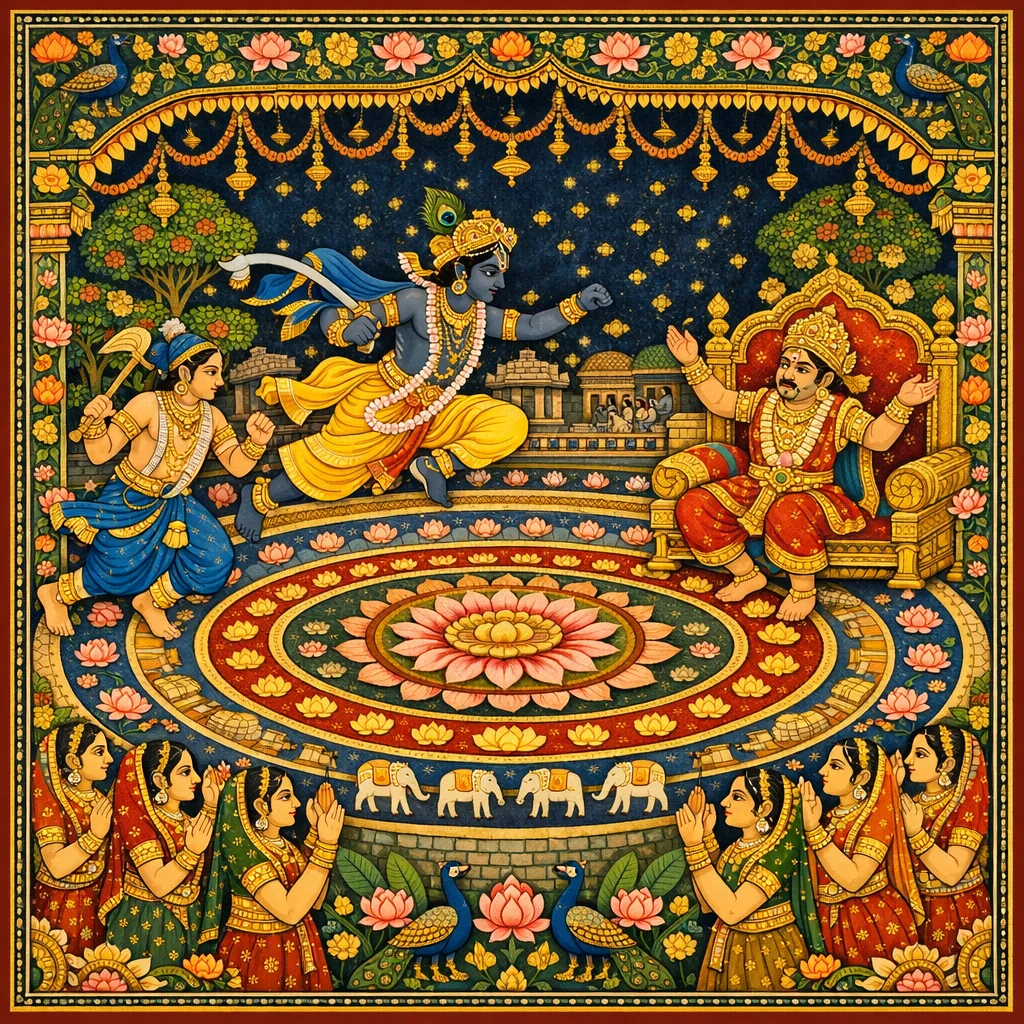
Krishna and Balarāma accept the challenge, fighting Cāṇūra and Muṣṭika respectively. While the women of Mathurā decry the unfair match between tender youths and giant wrestlers, praising Krishna's beauty, the brothers slay their opponents. Enraged, Kaṁsa orders violence against Krishna's family. Krishna leaps to the dais, drags Kaṁsa down, and kills him. Due to his constant absorption in fear of the Lord, Kaṁsa attains liberation. Krishna defeats Kaṁsa's brothers, consoles the royal women, and releases Vasudeva and Devakī, offering them humble obeisances.
Shlokas
Verse 1
श्रीशुक उवाच एवं चर्चितसङ्कल्पो भगवान् मधुसूदन: । आससादाथ चाणूरं मुष्टिकं रोहिणीसुत: ॥ १ ॥
Śukadeva Gosvāmī said: Thus addressed, Lord Madhusūdana resolved to accept the challenge. He faced Cāṇūra, and Balarāma, the son of Rohiṇī, faced Muṣṭika.
Verse 2
हस्ताभ्यां हस्तयोर्बद्ध्वा पद्भ्यामेव च पादयो: । विचकर्षतुरन्योन्यं प्रसह्य विजिगीषया ॥ २ ॥
Grasping each other’s hands and locking legs, the opponents strained mightily, pulling one another by force, eager for victory.
Verse 3
अरत्नी द्वे अरत्निभ्यां जानुभ्यां चैव जानुनी । शिर: शीर्ष्णोरसोरस्तावन्योन्यमभिजघ्नतु: ॥ ३ ॥
They struck one another—fist against fist, knee against knee, head against head, and chest against chest.
Verse 4
परिभ्रामणविक्षेपपरिरम्भावपातनै: । उत्सर्पणापसर्पणैश्चान्योन्यं प्रत्यरुन्धताम् ॥ ४ ॥
The two fighters vied with one another—whirling the other in circles, shoving and crushing, hurling him down, and running before and behind to block his every move.
Verse 5
उत्थापनैरुन्नयनैश्चालनै: स्थापनैरपि । परस्परं जिगीषन्तावपचक्रतुरात्मन: ॥ ५ ॥
Hoisting and carrying one another by force, shaking, thrusting away, and pinning down, in their hunger for victory they even battered their own bodies.
Verse 6
तद् बलाबलवद्युद्धं समेता: सर्वयोषित: । ऊचु: परस्परं राजन् सानुकम्पा वरूथश: ॥ ६ ॥
O King, all the women present, seeing this as an unfair contest between the strong and the weak, were seized with compassionate anxiety; gathering in groups around the arena, they spoke among themselves as follows.
Verse 7
महानयं बताधर्म एषां राजसभासदाम् । ये बलाबलवद्युद्धं राज्ञोऽन्विच्छन्ति पश्यत: ॥ ७ ॥
[The women said:] Alas! What a grievous breach of dharma these members of the royal assembly commit—while the King looks on, they too desire to watch this fight between the strong and the weak.
Verse 8
क्व वज्रसारसर्वाङ्गौ मल्लौ शैलेन्द्रसन्निभौ । क्व चातिसुकुमाराङ्गौ किशोरौ नाप्तयौवनौ ॥ ८ ॥
What comparison can there be between those two professional wrestlers—limbs hard as vajra and bodies like mighty mountains—and these two boys, so tender-limbed, not yet come to full youth?
Verse 9
धर्मव्यतिक्रमो ह्यस्य समाजस्य ध्रुवं भवेत् । यत्राधर्म: समुत्तिष्ठेन्न स्थेयं तत्र कर्हिचित् ॥ ९ ॥
In this assembly, dharma has surely been transgressed. Where irreligion rises and flourishes, one should not remain even for a moment.
Verse 10
न सभां प्रविशेत् प्राज्ञ: सभ्यदोषाननुस्मरन् । अब्रुवन् विब्रुवन्नज्ञो नर: किल्बिषमश्नुते ॥ १० ॥
A wise person should not enter an assembly when he knows its members are acting improperly. And if he enters and then does not speak the truth, speaks falsely, or feigns ignorance, he surely incurs sin.
Verse 11
वल्गत: शत्रुमभित: कृष्णस्य वदनाम्बुजम् । वीक्ष्यतां श्रमवार्युप्तं पद्मकोशमिवाम्बुभि: ॥ ११ ॥
Behold Kṛṣṇa’s lotus face as He darts about His foe! Covered with beads of sweat born of strenuous combat, it shines like a lotus bud bathed in dew.
Verse 12
किं न पश्यत रामस्य मुखमाताम्रलोचनम् । मुष्टिकं प्रति सामर्षं हाससंरम्भशोभितम् ॥ १२ ॥
Do you not see Lord Balarāma’s face? His eyes are copper-red with anger toward Muṣṭika, and His beauty is heightened by His laughter and His full absorption in the fight.
Verse 13
पुण्या बत व्रजभुवो यदयं नृलिङ्ग-गूढ: पुराणपुरुषो वनचित्रमाल्य: । गा: पालयन् सहबल: क्वणयंश्च वेणुंविक्रीडयाञ्चति गिरित्ररमार्चिताङ्घ्रि: ॥ १३ ॥
How blessed are the lands of Vraja! For there the primeval Supreme Person, the Purāṇa‑Puruṣa, moves about concealed in human guise, enacting His many līlās. Adorned with wondrous forest garlands, whose feet are worshiped by Giritra (Śiva) and Ramā (Lakṣmī), He herds the cows with Balarāma, making His flute resound as He sports in divine play.
Verse 14
गोप्यस्तप: किमचरन् यदमुष्य रूपंलावण्यसारमसमोर्ध्वमनन्यसिद्धम् । दृग्भि: पिबन्त्यनुसवाभिनवं दुराप-मेकान्तधाम यशस: श्रिय ऐश्वरस्य ॥ १४ ॥
What austerities must the gopīs have performed! With their eyes they ceaselessly drink the nectar of Lord Śrī Kṛṣṇa’s form—the very essence of loveliness, without equal or superior. That form is the sole abode of fame, Śrī, and opulence: self-perfect, ever fresh, and exceedingly rare.
Verse 15
या दोहनेऽवहनने मथनोपलेप-प्रेङ्खेङ्खनार्भरुदितोक्षणमार्जनादौ । गायन्ति चैनमनुरक्तधियोऽश्रुकण्ठ्योधन्या व्रजस्त्रिय उरुक्रमचित्तयाना: ॥ १५ ॥
The women of Vraja are truly blessed: their minds are lovingly attached to Urukrama, Lord Śrī Kṛṣṇa, and their throats often choke with tears. While milking, winnowing grain, churning butter, preparing cow-dung fuel, swinging, tending their crying infants, sprinkling water on the ground, cleaning their homes, and in all such tasks, they constantly sing of Him; by that exalted Kṛṣṇa consciousness, all desirable blessings come to them of their own accord.
Verse 16
प्रातर्व्रजाद् व्रजत आविशतश्च सायंगोभि: समं क्वणयतोऽस्य निशम्य वेणुम् । निर्गम्य तूर्णमबला: पथि भूरिपुण्या:पश्यन्ति सस्मितमुखं सदयावलोकम् ॥ १६ ॥
When, in the morning, Śrī Kṛṣṇa leaves Vraja with the cows, and when at sunset He returns with them, playing His flute, the young girls hear that sound and quickly come out from their homes. On the road they behold His smiling face and His merciful glance—surely they have performed abundant pious deeds to attain such darśana.
Verse 17
एवं प्रभाषमाणासु स्त्रीषु योगेश्वरो हरि: । शत्रुं हन्तुं मनश्चक्रे भगवान् भरतर्षभ ॥ १७ ॥
As the women spoke in this way, O hero of the Bhāratas, Bhagavān Hari—Lord Śrī Kṛṣṇa, master of all mystic power—resolved within Himself to slay His opponent.
Verse 18
सभया: स्त्रीगिर: श्रुत्वा पुत्रस्नेहशुचातुरौ । पितरावन्वतप्येतां पुत्रयोरबुधौ बलम् ॥ १८ ॥
Hearing the women’s fearful words, Vasudeva and Devakī, distressed by love for their sons, were overwhelmed with sorrow. Not knowing the true strength of their two Sons, they grieved deeply.
Verse 19
तैस्तैर्नियुद्धविधिभिर्विविधैरच्युतेतरौ । युयुधाते यथान्योन्यं तथैव बलमुष्टिकौ ॥ १९ ॥
Lord Balarāma and Muṣṭika, displaying many arts of wrestling, fought one another just as Lord Kṛṣṇa fought His own opponent.
Verse 20
भगवद्गात्रनिष्पातैर्वज्रनीष्पेषनिष्ठुरै: । चाणूरो भज्यमानाङ्गो मुहुर्ग्लानिमवाप ह ॥ २० ॥
The crushing, lightning-like blows from the Supreme Lord’s limbs shattered Cāṇūra’s body, and again and again he was overcome by pain and exhaustion.
Verse 21
स श्येनवेग उत्पत्य मुष्टीकृत्य करावुभौ । भगवन्तं वासुदेवं क्रुद्धो वक्षस्यबाधत ॥ २१ ॥
Enraged, Cāṇūra sprang with a hawk’s speed, clenched both fists, and struck Lord Vāsudeva upon the chest.
Verse 22
नाचलत्तत्प्रहारेण मालाहत इव द्विप: । बाह्वोर्निगृह्य चाणूरं बहुशो भ्रामयन् हरि: ॥ २२ ॥ भूपृष्ठे पोथयामास तरसा क्षीणजीवितम् । विस्रस्ताकल्पकेशस्रगिन्द्रध्वज इवापतत् ॥ २३ ॥
Unshaken by the demon’s blows, like an elephant struck by a mere flower garland, Lord Kṛṣṇa seized Cāṇūra by the arms, whirled him around many times, and hurled him forcefully to the ground. His clothes, hair, and garland flew apart, and the wrestler fell dead like a great festival Indradhvaja pillar collapsing.
Verse 23
नाचलत्तत्प्रहारेण मालाहत इव द्विप: । बाह्वोर्निगृह्य चाणूरं बहुशो भ्रामयन् हरि: ॥ २२ ॥ भूपृष्ठे पोथयामास तरसा क्षीणजीवितम् । विस्रस्ताकल्पकेशस्रगिन्द्रध्वज इवापतत् ॥ २३ ॥
Unshaken by the demon’s blows, like an elephant struck by a mere flower garland, Lord Kṛṣṇa seized Cāṇūra by the arms, whirled him around many times, and hurled him forcefully to the ground. His clothes, hair, and garland flew apart, and the wrestler fell dead like a great festival Indradhvaja pillar collapsing.
Verse 24
तथैव मुष्टिक: पूर्वं स्वमुष्ट्याभिहतेन वै । बलभद्रेण बलिना तलेनाभिहतो भृशम् ॥ २४ ॥ प्रवेपित: स रुधिरमुद्वमन् मुखतोऽर्दित: । व्यसु: पपातोर्व्युपस्थे वाताहत इवाङ्घ्रिप: ॥ २५ ॥
Similarly, Muṣṭika first struck Lord Balabhadra with his fist; but, smashed by the mighty Śrī Balarāma’s palm, he trembled in agony, spewed blood from his mouth, and fell lifeless to the ground like a tree felled by the wind.
Verse 25
तथैव मुष्टिक: पूर्वं स्वमुष्ट्याभिहतेन वै । बलभद्रेण बलिना तलेनाभिहतो भृशम् ॥ २४ ॥ प्रवेपित: स रुधिरमुद्वमन् मुखतोऽर्दित: । व्यसु: पपातोर्व्युपस्थे वाताहत इवाङ्घ्रिप: ॥ २५ ॥
Struck by Balarāma’s palm, the demon shuddered in torment, vomited blood, and died, collapsing to the earth like a tree toppled by the wind.
Verse 26
तत: कूटमनुप्राप्तं राम: प्रहरतां वर: । अवधील्लीलया राजन्सावज्ञं वाममुष्टिना ॥ २६ ॥
Next the wrestler Kūṭa came forward. O King, Rāma (Balarāma), the finest of fighters, playfully and with utter nonchalance killed him with His left fist.
Verse 27
तर्ह्येव हि शल: कृष्णप्रपदाहतशीर्षक: । द्विधा विदीर्णस्तोशलक उभावपि निपेततु: ॥ २७ ॥
Then Kṛṣṇa kicked Śala in the head and tore Tośalaka in two, and both wrestlers fell down dead.
Verse 28
चाणूरे मुष्टिके कूटे शले तोशलके हते । शेषा: प्रदुद्रुवुर्मल्ला: सर्वे प्राणपरीप्सव: ॥ २८ ॥
With Cāṇūra, Muṣṭika, Kūṭa, Śala, and Tośalaka slain, all the remaining wrestlers fled, each seeking to save his own life.
Verse 29
गोपान्वयस्यानाकृष्य तै: संसृज्य विजह्रतु: । वाद्यमानेषु तूर्येषु वल्गन्तौ रुतनूपुरौ ॥ २९ ॥
Kṛṣṇa and Balarāma then called Their young cowherd boyfriends to join Them, and in their company the Lords danced about and sported, Their ankle bells resounding as musical instruments played.
Verse 30
जना: प्रजहृषु: सर्वे कर्मणा रामकृष्णयो: । ऋते कंसं विप्रमुख्या: साधव: साधु साध्विति ॥ ३० ॥
Everyone except Kaṁsa rejoiced at the wonderful feat Kṛṣṇa and Balarāma had performed. The exalted brāhmaṇas and great saints exclaimed, “Excellent! Excellent!”
Verse 31
हतेषु मल्लवर्येषु विद्रुतेषु च भोजराट् । न्यवारयत् स्वतूर्याणि वाक्यं चेदमुवाच ह ॥ ३१ ॥
The Bhoja king, seeing that his best wrestlers had all been killed or had fled, stopped the musical performance originally meant for his pleasure and spoke the following words.
Verse 32
नि:सारयत दुर्वृत्तौ वसुदेवात्मजौ पुरात् । धनं हरत गोपानां नन्दं बध्नीत दुर्मतिम् ॥ ३२ ॥
[Kaṁsa said:] Drive the two wicked sons of Vasudeva out of the city! Confiscate the cowherds’ property and arrest that fool Nanda!
Verse 33
वसुदेवस्तु दुर्मेधा हन्यतामाश्वसत्तम: । उग्रसेन: पिता चापि सानुग: परपक्षग: ॥ ३३ ॥
Kill that most evil fool Vasudeva! And also kill my father, Ugrasena, along with his followers, who have all sided with our enemies!
Verse 34
एवं विकत्थमाने वै कंसे प्रकुपितोऽव्यय: । लघिम्नोत्पत्य तरसा मञ्चमुत्तुङ्गमारुहत् ॥ ३४ ॥
As Kaṁsa ranted in arrogant bravado, the infallible Lord Śrī Kṛṣṇa, blazing with wrath, swiftly and lightly leapt up onto the lofty royal dais.
Verse 35
तमाविशन्तमालोक्य मृत्युमात्मन आसनात् । मनस्वी सहसोत्थाय जगृहे सोऽसिचर्मणी ॥ ३५ ॥
Seeing Śrī Kṛṣṇa advancing toward his seat like death itself, the quick-witted Kaṁsa sprang up at once and seized his sword and shield.
Verse 36
तं खड्गपाणिं विचरन्तमाशुश्येनं यथा दक्षिणसव्यमम्बरे । समग्रहीद् दुर्विषहोग्रतेजायथोरगं तार्क्ष्यसुत: प्रसह्य ॥ ३६ ॥
With sword in hand, Kaṁsa darted right and left like a hawk in the sky, but Śrī Kṛṣṇa—whose fierce power none can resist—seized the demon by force, as Tārkṣya’s son would snatch up a serpent.
Verse 37
प्रगृह्य केशेषु चलत्किरीटंनिपात्य रङ्गोपरि तुङ्गमञ्चात् । तस्योपरिष्टात् स्वयमब्जनाभ:पपात विश्वाश्रय आत्मतन्त्र: ॥ ३७ ॥
Grabbing Kaṁsa by the hair and knocking off his crown, the lotus-naveled Lord hurled him from the lofty dais onto the wrestling ground; then the self-sufficient Support of the universe cast Himself upon the king.
Verse 38
तं सम्परेतं विचकर्ष भूमौहरिर्यथेभं जगतो विपश्यत: । हाहेति शब्द: सुमहांस्तदाभू-दुदीरित: सर्वजनैर्नरेन्द्र ॥ ३८ ॥
Before everyone’s eyes, the Lord Hari dragged Kaṁsa’s lifeless body across the ground like a lion dragging a dead elephant. O King, the entire arena erupted with a great cry: “Ha! Ha!”
Verse 39
स नित्यदोद्विग्नधिया तमीश्वरंपिबन्नदन्वा विचरन् स्वपन् श्वसन् । ददर्श चक्रायुधमग्रतो यत-स्तदेव रूपं दुरवापमाप ॥ ३९ ॥
Kaṁsa was perpetually disturbed by the thought that the Supreme Lord would kill him. Thus, whether drinking, eating, walking, sleeping, or even breathing, he always saw before him the Lord bearing the disc weapon, and in this way he attained the rare boon of a form like the Lord’s.
Verse 40
तस्यानुजा भ्रातरोऽष्टौ कङ्कन्यग्रोधकादय: । अभ्यधावन्नतिक्रुद्धा भ्रातुर्निर्वेशकारिण: ॥ ४० ॥
Kaṁsa’s eight younger brothers, led by Kaṅka and Nyagrodhaka, rushed at the two Lords in furious anger, intent on avenging their brother’s death.
Verse 41
तथातिरभसांस्तांस्तु संयत्तान्रोहिणीसुत: । अहन् परिघमुद्यम्य पशूनिव मृगाधिप: ॥ ४१ ॥
As they rushed swiftly toward the two Lords, poised to strike, the son of Rohiṇī (Balarāma) lifted his club and slew them, just as a lion, king of beasts, easily kills other animals.
Verse 42
नेदुर्दुन्दुभयो व्योम्नि ब्रह्मेशाद्या विभूतय: । पुष्पै: किरन्तस्तं प्रीता: शशंसुर्ननृतु: स्त्रिय: ॥ ४२ ॥
Kettledrums resounded in the sky as Brahmā, Śiva, and other demigods—manifestations of the Lord’s power—joyfully showered Him with flowers. They sang His praises, and their wives danced.
Verse 43
तेषां स्त्रियो महाराज सुहृन्मरणदु:खिता: । तत्राभीयुर्विनिघ्नन्त्य: शीर्षाण्यश्रुविलोचना: ॥ ४३ ॥
O King, the wives of Kaṁsa and his brothers, anguished by the death of their well-wishing husbands, came forward with tear-filled eyes, beating their heads in grief.
Verse 44
शयानान्वीरशयायां पतीनालिङ्ग्य शोचती: । विलेपु: सुस्वरं नार्यो विसृजन्त्यो मुहु: शुच: ॥ ४४ ॥
Embracing their husbands, who lay on a hero’s final bed, the sorrowful women loudly lamented while shedding constant tears.
Verse 45
हा नाथ प्रिय धर्मज्ञ करुणानाथवत्सल । त्वया हतेन निहता वयं ते सगृहप्रजा: ॥ ४५ ॥
Alas, O master, O dear one, O knower of religious principles! O kind and compassionate protector of the shelterless! By your being slain we have also been slain, together with your household and offspring.
Verse 46
त्वया विरहिता पत्या पुरीयं पुरुषर्षभ । न शोभते वयमिव निवृत्तोत्सवमङ्गला ॥ ४६ ॥
O great hero among men, bereft of you, its master, this city has lost its beauty, just as we have, and all festivity and good fortune within it have come to an end.
Verse 47
अनागसां त्वं भूतानां कृतवान्द्रोहमुल्बणम् । तेनेमां भो दशां नीतो भूतध्रुक्को लभेत शम् ॥ ४७ ॥
O dear one, you have been brought to this state because of the terrible violence you committed against innocent creatures. How can one who harms others attain happiness?
Verse 48
सर्वेषामिह भूतानामेष हि प्रभवाप्यय: । गोप्ता च तदवध्यायी न क्वचित्सुखमेधते ॥ ४८ ॥
Lord Kṛṣṇa causes the appearance and disappearance of all beings in this world, and He is their maintainer as well. One who disrespects Him can never prosper happily.
Verse 49
श्रीशुक उवाच राजयोषित आश्वास्य भगवाँल्लोकभावन: । यामाहुर्लौकिकीं संस्थां हतानां समकारयत् ॥ ४९ ॥
Śukadeva Gosvāmī said: After consoling the royal ladies, Lord Kṛṣṇa, the sustainer of all worlds, arranged that the prescribed funeral rites be duly performed for the slain.
Verse 50
मातरं पितरं चैव मोचयित्वाथ बन्धनात् । कृष्णरामौ ववन्दाते शिरसा स्पृश्य पादयो: ॥ ५० ॥
Then Kṛṣṇa and Balarāma freed Their mother and father from bondage and offered obeisances, touching their feet with Their heads.
Verse 51
देवकी वसुदेवश्च विज्ञाय जगदीश्वरौ । कृतसंवन्दनौ पुत्रौ सस्वजाते न शङ्कितौ ॥ ५१ ॥ नायं श्रियोऽङ्ग उ नितान्तरते: प्रसाद: स्वर्योषितां नलिनगन्धरुचां कुतोऽन्या: । रासोत्सवेऽस्य भुजदण्डगृहीतकण्ठ- लब्धाशिषां य उदगाद्व्रजवल्लभीनाम् ॥
Devakī and Vasudeva, realizing Kṛṣṇa and Balarāma to be the Lords of the universe, stood with folded palms; apprehensive, they did not embrace their sons.
Frequently Asked Questions
They interpret the event through sabhā-dharma (ethics of an assembly): rulers and elders should prevent adharma, especially violence that appears disproportionate. Seeing Kṛṣṇa and Balarāma as youthful and ‘tender-limbed’ compared to hardened professional wrestlers, they accuse the assembly of sanctioning injustice for entertainment. The Bhāgavata uses their critique to expose moral failure in Kaṁsa’s regime while also heightening bhakti—because their “compassionate anxiety” transforms into direct contemplation of the Lords’ beauty and supremacy.
Kṛṣṇa endures Cāṇūra’s attacks effortlessly, then grips him, whirls him repeatedly, and hurls him down so violently that the wrestler dies “like a festival column collapsing.” Theologically, the contrast—mighty demon versus the Lord who is “no more shaken than an elephant struck by a flower garland”—teaches Bhagavān’s aiśvarya (irresistible sovereignty) operating through humanlike līlā, affirming that dharma is restored not by human strength but by the Lord’s will.
Balarāma kills Muṣṭika (with a powerful palm blow) and then playfully kills Kūṭa with His left fist. Kṛṣṇa kills Śala (kicking in his head) and tears Tośala in half. The remaining wrestlers flee, marking the collapse of Kaṁsa’s coercive spectacle.
The text explains that Kaṁsa was perpetually absorbed in Kṛṣṇa out of fear—seeing Him while eating, drinking, sleeping, moving, and even breathing. In Bhāgavata theology, continuous absorption (even antagonistic) can produce a liberating result because the object of meditation is Bhagavān Himself. This does not glorify Kaṁsa’s cruelty; rather, it magnifies the Lord’s absolute purity and the transformative power of uninterrupted remembrance of Him.
Kṛṣṇa and Balarāma release Vasudeva and Devakī from imprisonment and offer obeisances by touching their parents’ feet with Their heads. Vasudeva and Devakī, now recognizing Their sons as the Lords of the universe, stand with folded hands in reverent awe and restraint, not yet embracing Them—highlighting the tension between parental affection (vātsalya) and overwhelming awareness of divinity (aiśvarya).