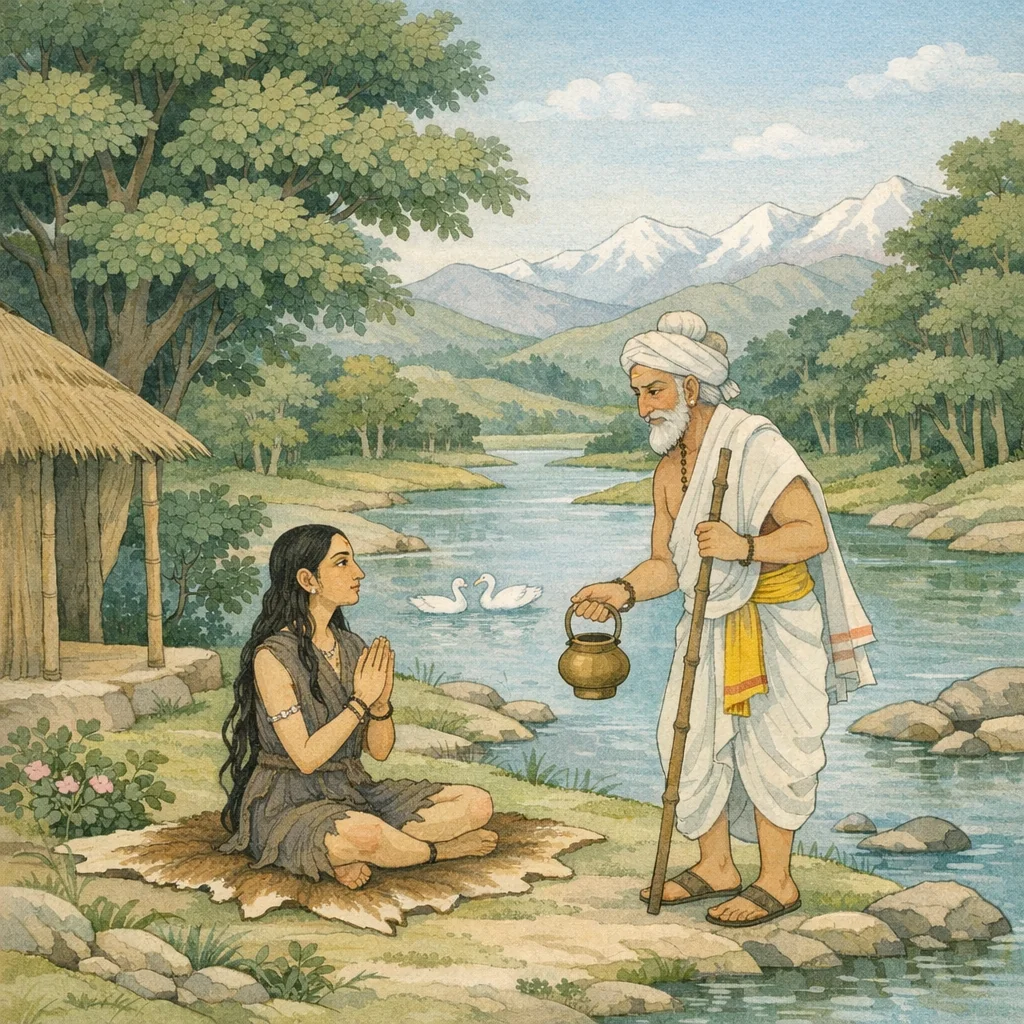
Adhyaya 48
Indratīrtha–Ādityatīrtha: Balarāma’s Ritual Bathing, Dāna, and Sacred-Historical Recollections
Upa-parva: Tīrtha-yātrā (Pilgrimage Catalogue) Episode — Indratīrtha to Ādityatīrtha (Sarasvatī bank)
Vaiśaṃpāyana reports that Balarāma, described as the foremost among the Yādavas, goes first to Indratīrtha, bathes according to prescribed procedure, and distributes wealth and jewels to brāhmaṇas. The chapter supplies an etiological account: Indra is said to have performed or completed a large cycle of sacrifices there, giving abundant wealth to Bṛhaspati; hence the ford’s enduring name and its characterization as a remover of sin. Balarāma then proceeds to Rāmatīrtha, associated with Bhārgava Rāma (Paraśurāma), who performed major sacrifices (including Vājapeya and many Aśvamedhas) under Kaśyapa’s priestly guidance and gave the earth as dakṣiṇā. Next, Balarāma reaches Yamunātīrtha, where Varuṇa is connected with a Rājasūya and a consequential cosmic-scale conflict narrative. Finally, he goes to Ādityatīrtha on the Sarasvatī, where Sūrya attains lordship among luminaries; the text lists a dense assembly of deities, semi-divine beings, and yogic sages. The chapter closes with exemplary precedents: Viṣṇu’s slaying of Madhu and Kaiṭabha and the attainment of high yogic states by Vyāsa (Dvaipāyana) and the ascetics Asita Devala, marking the site as a locus of purification and siddhi.
Chapter Arc: वैशम्पायन जनमेजय को बताते हैं कि तीर्थ-यात्रा में अग्रसर बलराम बदरपाचन नामक श्रेष्ठ तीर्थ पर पहुँचे—जहाँ तप और वरदानों की पुरानी गाथाएँ आज भी जल-धारा की तरह बहती हैं। → कथा श्रुतावती पर टिकती है—भरद्वाज-मुनि की अनुपम रूपवती, ब्रह्मचारिणी पुत्री, जो ‘देवराज इन्द्र ही मेरे पति हों’ यह निश्चय कर कठोर नियमों सहित उग्र तप करती है; तप की तीव्रता देवताओं तक को विचलित-आकर्षित कर देती है। → इन्द्र ब्राह्मण-रूप धारण कर उसके आश्रम में आते हैं, तप की महिमा का प्रतिपादन करते हैं और उसके मनोरथ को यथावत सिद्ध करने का आश्वासन देते हैं—यहाँ तप बनाम परीक्षा, वर बनाम पात्रता का निर्णायक क्षण उपस्थित होता है। → श्रुतावती की कथा के साथ तीर्थ-माहात्म्य उद्घाटित होता है—तप से दिव्य लोकों की प्राप्ति, बदरपाचन में स्नान-निवास से दुर्लभ फल, और अरुन्धती को शंकर-प्रदत्त वर से भी बढ़कर वरदान की चर्चा; भरद्वाज मुनि देवर्षि-सभा में उसका नाम ‘श्रुतावती’ रखते हैं और उसे आश्रम में स्थापित कर हिमवत् की ओर प्रस्थान करते हैं। → ऋषि के जप-प्रसंग में पर्णपुट (पत्ते के दोने) में वीर्य-पतन से कन्या-सम्भव का संकेत कथा को अगले रहस्य-प्रसंग की ओर धकेल देता है।
Shlokas
Verse 1
ऑपनआक्रा बछ। अं अष्टचत्वारिशो&् ध्याय: बदरपाचनतीर्थकी महिमाके प्रसंगमें श्रुतावती और अरुन्धतीके तपकी कथा वैशम्पायन उवाच ततस्तीर्थवरं रामो ययौ बदरपाचनम् | तपस्विसिद्धचरितं यत्र कन्या धृतव्रता,वैशम्पायनजी कहते हैं--राजन्! पहले कहा गया है कि वहाँसे बलरामजी बदरपाचन नामक श्रेष्ठ तीर्थमें गये, जहाँ तपस्वी और सिद्ध पुरुष विचरण करते हैं तथा जहाँ पूर्वकालमें उत्तम व्रत धारण करनेवाली भरद्वाजकी ब्रह्मचारिणी पुत्री कुमारी कन्या श्रुतावती, जिसके रूप और सौन्दर्यकी भूमण्डलमें कहीं तुलना नहीं थी, निवास करती थी
Vaiśampāyana said: Then Rāma (Balarāma) went to the excellent sacred ford called Badarapācana, a place frequented by ascetics and perfected beings. There dwelt a maiden of firm vows—Śrutāvatī, the brahmacāriṇī daughter of Bharadvāja—renowned in former times, whose beauty was said to be unmatched upon the earth. The narrative frames the tīrtha as a moral landscape: holiness is marked not by power or conquest, but by restraint, vows, and the presence of realized practitioners.
Verse 2
भरद्वाजस्य दुहिता रूपेणाप्रतिमा भुवि । श्रुतावती नाम विभो कुमारी ब्रह्म॒ाचारिणी,वैशम्पायनजी कहते हैं--राजन्! पहले कहा गया है कि वहाँसे बलरामजी बदरपाचन नामक श्रेष्ठ तीर्थमें गये, जहाँ तपस्वी और सिद्ध पुरुष विचरण करते हैं तथा जहाँ पूर्वकालमें उत्तम व्रत धारण करनेवाली भरद्वाजकी ब्रह्मचारिणी पुत्री कुमारी कन्या श्रुतावती, जिसके रूप और सौन्दर्यकी भूमण्डलमें कहीं तुलना नहीं थी, निवास करती थी
Vaiśampāyana said: O mighty one, Bharadvāja’s daughter—an unmarried maiden named Śrutāvatī—was a brahmacāriṇī, and in beauty she had no equal anywhere on earth.
Verse 3
तपश्चचार सात्युग्रं नियमैर्बहुभिर्वृता । भर्ता मे देवराज: स्यादिति निश्चित्य भामिनी,वह भामिनी बहुत-से नियमोंको धारण करके वहाँ अत्यन्त उग्र तपस्या कर रही थी। उसने अपनी तपस्याका यही उद्देश्य निश्चित कर लिया था कि देवराज इन्द्र मेरे पति हों
Vaiśampāyana said: Endowed with many strict observances, the passionate lady undertook exceedingly severe austerities. She fixed her resolve on a single aim: “May the king of the gods, Indra, become my husband.”
Verse 4
समास्तस्या व्यतिक्रान्ता बह्दयः कुरुकुलोद्वह । चरन्त्या नियमांस्तांस्तान् स्त्रीभिस्तीव्रान् सुदुश्षरान्
Vaiśampāyana said: Many days passed for her, O foremost of the Kuru line, as she continued to observe those various disciplines—severe and exceedingly hard to endure—together with the other women. The narrative underscores steadfastness in self-restraint and the moral weight of sustained vows even amid grief and upheaval.
Verse 5
कुरुकुलभूषण! स्त्रियोंके लिये जिनका पालन अत्यन्त दुष्कर और दुःसह है, उन-उन कठोर नियमोंका पालन करती हुई श्रुतावतीके वहाँ अनेक वर्ष व्यतीत हो गये ।। तस्यास्तु तेन वृत्तेन तमसा च विशाम्पते । भकक््त्या च भगवान् प्रीतः: परया पाकशासन:
Verse 6
प्रजानाथ! उसके उस आचरण, तपस्या तथा पराभक्तिसे भगवान् पाकशासन (इन्द्र) बड़े प्रसन्न हुए ।। आजगामाश्रमं तस्यास्त्रिदशाधिपति: प्रभु: । आस्थाय रूप विप्रर्षेवसिष्ठस्य महात्मन:,वे शक्तिशाली देवराज ब्रद्मर्षि महात्मा वसिष्ठका रूप धारण करके उसके आश्रमपर आये
Verse 7
सातं दृष्टवोग्रतपसं वसिष्ठ॑ तपतां वरम् । आचाोरैर्मुनिभिवद्दृष्ट: पूजयामास भारत,भरतनन्दन! उसने तपस्वी मुनियोंमें श्रेष्ठ और उग्र तपस्यापरायण वसिष्ठको देखकर मुनिजनोचित आचारोंद्वारा उनका पूजन किया
Vaiśampāyana said: Seeing Vasiṣṭha—of fierce austerity, the foremost among ascetics—he honored him, O Bhārata, O joy of the Bharatas, with the courtesies and observances approved among sages. The passage highlights reverence for spiritual excellence and the ethical duty of honoring the worthy through proper conduct.
Verse 8
उवाच नियमज्ञा च कल्याणी सा प्रियंवदा । भगवन् मुनिशार्दूल किमाज्ञापयसि प्रभो,फिर नियमोंका ज्ञान रखनेवाली और मधुर एवं प्रिय वचन बोलनेवाली कल्याणमयी श्रुतावतीने इस प्रकार कहा--'भगवन्! मुनिश्रेष्ठ! प्रभो! मेरे लिये क्या आज्ञा है? सुव्रत! आज मैं यथाशक्ति आपको सब कुछ दूँगी; परंतु इन्द्रके प्रति अनुराग रखनेके कारण अपना हाथ आपको किसी प्रकार नहीं दे सकूँगी
Vaiśampāyana said: Then that auspicious lady—versed in vows and disciplines, and sweet-spoken—addressed the sage with reverence: “Blessed one, tiger among seers, lord—what do you command of me?”
Verse 9
सर्वमद्य यथाशक्ति तव दास्यामि सुव्रत । शक्रभक्त्या च ते पाणिं न दास्यामि कथंचन,फिर नियमोंका ज्ञान रखनेवाली और मधुर एवं प्रिय वचन बोलनेवाली कल्याणमयी श्रुतावतीने इस प्रकार कहा--'भगवन्! मुनिश्रेष्ठ! प्रभो! मेरे लिये क्या आज्ञा है? सुव्रत! आज मैं यथाशक्ति आपको सब कुछ दूँगी; परंतु इन्द्रके प्रति अनुराग रखनेके कारण अपना हाथ आपको किसी प्रकार नहीं दे सकूँगी
Vaiśaṃpāyana said: “Today, to the best of my ability, I will give you everything, O man of excellent vows. Yet, out of devotion to Śakra (Indra), I will not give you my hand in marriage—by no means.”
Verse 10
व्रतैश्न नियमैश्नेव तपसा च तपोधन । शक्रस्तोषयितव्यो वै मया त्रिभुवने श्वर:,“तपोधन! मुझे अपने व्रतों, नियमों तथा तपस्याद्वारा त्रिभुवनसम्राट् भगवान् इन्द्रको ही संतुष्ट करना है'
Vaiśampāyana said: “O ascetic rich in austerity, by my vows, disciplined observances, and penance, I must indeed satisfy Śakra—the lord of the three worlds.” The line frames spiritual self-restraint as a deliberate ethical means to win divine favor, implying that inner discipline and right practice are sought not for display but to align oneself with a higher cosmic order.
Verse 11
इत्युक्तो भगवान् देव: स्मयन्निव निरीक्ष्य ताम् उवाच निय मं ज्ञात्वा सांत्वयन्निव भारत,भारत! श्रुतावतीके ऐसा कहनेपर भगवान् इन्द्रने मुसकराते हुए-से उसकी ओर देखा और उसके नियमको जानकर उसे सान्त्वना देते हुए-से कहा--
Thus addressed, the blessed god Indra looked at her as though smiling; understanding the discipline of her vow, he spoke—seeming to console her—O Bhārata.
Verse 12
उग्र॑ तपश्चरसि वै विदिता मे5सि सुव्ते । यदर्थमयमारम्भस्तव कल्याणि हृद्गत:
Vaiśampāyana said: “You are indeed practicing severe austerities; you are well known to me, O woman of noble vows. For what purpose has this undertaking arisen in your heart, O auspicious one?”
Verse 13
तपसा लकभ्यते सर्व यथाभूतं भविष्यति,'शुभानने! तपस्यासे सब कुछ प्राप्त होता है। तुम्हारा मनोरथ भी यथावत् रूपसे सिद्ध होगा। देवताओंके जो दिव्य स्थान हैं, वे तपस्यासे प्राप्त होनेवाले हैं। महान् सुखका मूल कारण तपस्या ही है
Vaiśampāyana said: “By austerity, everything is attained; what is to be will come to pass in its true form. O fair-faced one, through disciplined penance all can be gained, and your cherished aim too will be fulfilled exactly as intended. Even the gods’ radiant abodes are reached by austerity. Indeed, austerity alone is the root cause of the highest happiness.”
Verse 14
यथा स्थानानि दिव्यानि विबुधानां शुभानने । तपसा तानि प्राप्याणि तपोमूलं महत् सुखम्,'शुभानने! तपस्यासे सब कुछ प्राप्त होता है। तुम्हारा मनोरथ भी यथावत् रूपसे सिद्ध होगा। देवताओंके जो दिव्य स्थान हैं, वे तपस्यासे प्राप्त होनेवाले हैं। महान् सुखका मूल कारण तपस्या ही है
Vaiśampāyana said: “O fair-faced one, just as the gods attain their radiant celestial abodes through austerity, so too are such stations won by tapas. Great happiness has austerity as its very root.”
Verse 15
इति कृत्वा तपो घोरें देहं संन्यस्य मानवा: । देवत्वं यान्ति कल्याणि शृणुष्वैंके वचो मम,“कल्याणि! इस उद्देश्यसे मनुष्य घोर तपस्या करके अपने शरीरको त्यागकर देवत्व प्राप्त कर लेते हैं। अच्छा, अब तुम मेरी एक बात सुनो
Vaiśaṃpāyana said: “Thus, having undertaken severe austerities and renounced the body, people attain the state of the gods. O auspicious lady, now listen to this one statement of mine.”
Verse 16
पज्च चैतानि सुभगे बदराणि शुभव्रते । पचेत्युक्त्वा तु भगवाञज्जगाम बलसूदन:,“सुभगे! शुभव्रते! ये पाँच बेरके फल हैं। तुम इन्हें पका दो।” ऐसा कहकर भगवान् इन्द्र कल्याणी श्रुतावतीसे पूछकर उस आश्रमसे थोड़ी ही दूरपर स्थित उत्तम तीर्थमें गये और वहाँ स्नान करके जप करने लगे
Vaiśampāyana said: “O fortunate one, O woman of noble vows—here are these five jujube fruits; cook them.” Having spoken thus, the Blessed Lord, the slayer of Bala, departed. He went to an excellent sacred ford not far from that hermitage, bathed there, and engaged in recitation and meditation—acting with restraint and reverence even in the midst of the larger turmoil of events.
Verse 17
आमन्त्रयतां तु कल्याणीं ततो जप्यं जजाप सः । अविदूरे ततस्तस्मादाश्रमात् तीर्थमुत्तमम्,“सुभगे! शुभव्रते! ये पाँच बेरके फल हैं। तुम इन्हें पका दो।” ऐसा कहकर भगवान् इन्द्र कल्याणी श्रुतावतीसे पूछकर उस आश्रमसे थोड़ी ही दूरपर स्थित उत्तम तीर्थमें गये और वहाँ स्नान करके जप करने लगे
Vaiśampāyana said: Having first addressed the auspicious lady Kalyāṇī, he then began to recite the prescribed sacred formula. Not far from that hermitage there was an excellent holy ford; he went there, bathed, and continued his japa—acting with restraint and ritual propriety, and showing that spiritual discipline and purity of conduct accompany even extraordinary deeds.
Verse 18
इन्द्रतीर्थेति विख्यात॑ त्रिषु लोकेषु मानद । तस्या जिज्ञासनार्थ स भगवान् पाकशासन:
Vaiśampāyana said: “O bestower of honor, the sacred ford known as ‘Indratīrtha’ is renowned in all the three worlds. Wishing to learn about it in full, that divine Pākaśāsana (Indra) himself set out with the intent to inquire.”
Verse 19
ततः प्रतप्ता सा राजन् वाग्यता विगतक्लमा,राजन! तदनन्तर शौचाचारसे सम्पन्न उस तपस्विनीने थकावटसे रहित हो मौनभावसे उन फलोंको आगपर चढ़ा दिया। नृपश्रेष्ठ! फिर वह महाव्रता कुमारी बड़ी तत्परताके साथ उन बेरके फलोंको पकाने लगी
Vaiśampāyana said: Then that ascetic maiden, O King—disciplined in speech, free from fatigue, and steadfast in purity of conduct—silently placed those fruits upon the fire. O best of rulers, thereafter that great-vowed virgin, with focused diligence, set about cooking the jujube fruits. The scene underscores quiet self-control and ritual cleanliness as forms of dharma expressed through attentive action rather than display.
Verse 20
तत्परा शुचिसंवीता पावके समधिश्रयत् । अपचदू राजशार्दूल बदराणि महाव्रता,राजन! तदनन्तर शौचाचारसे सम्पन्न उस तपस्विनीने थकावटसे रहित हो मौनभावसे उन फलोंको आगपर चढ़ा दिया। नृपश्रेष्ठ! फिर वह महाव्रता कुमारी बड़ी तत्परताके साथ उन बेरके फलोंको पकाने लगी
Vaiśampāyana said: Intent on her task and wrapped in purity, she set the fruits upon the fire. O tiger among kings, that maiden of great vows then cooked the jujube fruits with steady diligence—acting in silence, disciplined in cleanliness, and free from weariness.
Verse 21
तस्या: पचन्त्या: सुमहान् कालो5गात् पुरुषर्षभ । न च सम तान्यपच्यन्त दिनं च क्षयमभ्यगात्,पुरुषप्रवर! उन फलोंको पकाते हुए उसका बहुत समय व्यतीत हो गया, परंतु वे फल पक न सके। इतनेमें ही दिन समाप्त हो गया
Vaiśampāyana said: “O bull among men, as she kept cooking them, a very long time passed; yet those fruits did not cook evenly. Meanwhile the day itself drew to its end.” The narrative underscores the pressure of time and the frustration of effort that yields no result—an atmosphere that often precedes difficult choices and tests of resolve in the war-books of the Mahābhārata.
Verse 22
हुताशनेन दग्धश्न यस्तस्या: काष्ठसंचय: । अकाष्ठमग्निं सा दृष्टवा स्वशरीरमथादहत्,उसने जो ईंधन जमा कर रखे थे, वे सब आगमें जल गये। तब अग्निको ईंधनरहित देख उसने अपने शरीरको जलाना आरम्भ किया
Vaiśampāyana said: The heap of firewood she had gathered was consumed by the blazing fire. Seeing the fire left without fuel, she then began to offer up her own body to it—an act that underscores the tragic extremity of grief and the peril of letting sorrow override discernment and dharma.
Verse 23
पादौ प्रक्षिप्प सा पूर्व पावके चारुदर्शना | दग्धौ दग्धौ पुन: पादावुपावर्तयतानघ,निष्पाप नरेश! मनोहर दिखायी देनेवाली उस कन्याने पहले अपने दोनों पैर आगमें डाल दिये। वे ज्यों-ज्यों जलने लगे, त्यों-ही-त्यों वह उन्हें आगके भीतर बढ़ाती गयी
Vaiśampāyana said: The lovely maiden first thrust both her feet into the fire. And as they began to burn, she kept turning them back again and again into the flames—O sinless king, O blameless ruler—steadfastly persisting in her act.
Verse 24
चरणौ दहामानौ च नाचिन्तयदनिन्दिता । कुर्वाणा दुष्करं कर्म महर्षिप्रियकाम्यया,उस साध्वीने अपने जलते हुए चरणोंकी कुछ भी परवा नहीं की। वह महर्षिका प्रिय करनेकी इच्छासे दुष्कर कार्य कर रही थी
Vaiśampāyana said: Though her feet were burning, the blameless woman did not give it a thought. Seeking to please the great sage, she undertook a deed that was exceedingly difficult—enduring pain without wavering in her resolve.
Verse 25
न वैमनस्यं तस्यास्तु मुखभेदो5थवाभवत् | शरीरमग्निना55दीप्य जलमध्ये यथा स्थिता,उसके मनमें तनिक भी उदासी नहीं आयी। मुखकी कान्तिमें भी कोई अन्तर नहीं पड़ा। वह अपने शरीरको आगमें जलाकर भी ऐसी प्रसन्न थी, मानो जलके भीतर खड़ी हो
Vaiśaṃpāyana said: In her there arose no dejection at all, nor did any change appear upon her face. Even as her body blazed in the fire, she remained serene—like one standing within water—unshaken in mind and outward radiance.
Verse 26
तच्चास्या वचन नित्यमवर्तद्धूदि भारत । सर्वथा बदराण्येव पक्तव्यानीति कन्यका
Vaiśampāyana said: O Bhārata, her statement kept recurring again and again in his mind: “In every way, only jujubes must be cooked,” said the maiden. The passage highlights how a seemingly small instruction, when tied to duty and careful conduct, can become a fixed ethical resolve—insistence on doing the prescribed act exactly as enjoined.
Verse 27
भारत! उसके मनमें निरन्तर इसी बातका चिन्तन होता रहता था कि “इन बेरके फलोंको हर तरहसे पकाना है! ।। सा तन्मनसि कृत्वैव महर्षेरवचनं शुभा । अपचद् बदराण्येव न चापच्यन्त भारत,भरतनन्दन! महर्षिके वचनको मनमें रखकर वह शुभलक्षणा कन्या उन बेरोंको पकाती ही रही, परंतु वे पक न सके
Vaiśampāyana said: O Bhārata, her mind was continually absorbed in a single thought: “These jujube fruits must be ripened by every means.” Keeping the great sage’s instruction firmly in her heart, that auspicious maiden went on cooking the jujubes again and again—yet, O Bhārata, they would not ripen. The episode underscores how mere effort, when set against a higher ordinance or a binding word, may fail; it also highlights steadfastness and the moral weight carried by a sage’s utterance.
Verse 28
तस्यास्तु चरणौ वद्रनिर्ददाह भगवान् स्वयम् | न च तस्या मनोदु:खं स्वल्पमप्यभवत् तदा,भगवान् अग्निने स्वयं ही उसके दोनों पैरोंको जला दिया, तथापि उस समय उसके मनमें थोड़ा-सा भी दुःख नहीं हुआ
Vaiśampāyana said: “The Blessed Lord Himself scorched her feet with a thunderbolt-like fire; yet at that moment not even the slightest mental anguish arose in her.” The verse underscores an ethical ideal of steadfastness: inner composure and devotion can render physical suffering powerless to disturb the mind.
Verse 29
अथ तत् कर्म दृष्ट्वास्या: प्रीतस्त्रिभुवने श्वर: । ततः संदर्शयामास कन्यायै रूपमात्मन:,उसका वह कर्म देखकर त्रिभुवनके स्वामी इन्द्र बड़े प्रसन्न हुए। फिर उन्होंने उस कन्याको अपना यथार्थ रूप दिखाया
Vaiśampāyana said: Seeing her deed, Indra—the lord of the three worlds—was greatly pleased. Thereupon he revealed to the maiden his own true form, making clear that sincere, righteous conduct draws forth divine recognition and protection.
Verse 30
उवाच च सुरश्रेष्ठस्तां कन्यां सुदृढव्रताम् प्रीतो5स्मि ते शुभे भकक्त्या तपसा नियमेन च,इसके बाद सुरश्रेष्ठ इन्द्रने दृढ़तापूर्वक उत्तम व्रतका पालन करनेवाली उस कन्यासे इस प्रकार कहा--'शुभे! मैं तुम्हारी तपस्या, नियमपालन और भक्तिसे बहुत संतुष्ट हूँ। अतः कल्याणि! तुम्हारे मनमें जो अभीष्ट मनोरथ है, वह पूर्ण होगा। महाभागे! तुम इस शरीरका परित्याग करके स्वर्गलोकमें मेरे पास रहोगी
Vaiśampāyana said: Then the foremost of the gods, Indra, pleased with the maiden who observed her vows with unwavering firmness, spoke to her: “Auspicious one, I am deeply satisfied with your devotion, your austerities, and your disciplined observances. Therefore, blessed lady, the cherished desire that rests in your heart shall be fulfilled. Fortunate one, casting off this body, you will dwell with me in the heavenly world.”
Verse 31
तस्माद् योडभिमत: काम: स ते सम्पत्स्यते शुभे । देहं त्यक्त्वा महा भागे त्रिदिवे मयि वत्स्यसि,इसके बाद सुरश्रेष्ठ इन्द्रने दृढ़तापूर्वक उत्तम व्रतका पालन करनेवाली उस कन्यासे इस प्रकार कहा--'शुभे! मैं तुम्हारी तपस्या, नियमपालन और भक्तिसे बहुत संतुष्ट हूँ। अतः कल्याणि! तुम्हारे मनमें जो अभीष्ट मनोरथ है, वह पूर्ण होगा। महाभागे! तुम इस शरीरका परित्याग करके स्वर्गलोकमें मेरे पास रहोगी
Therefore, O auspicious one, the desire you hold as dearest to your heart will surely be fulfilled. O greatly fortunate lady, when you relinquish this body, you will dwell with me in the heavenly world. (Thus Indra, pleased with her austerity, disciplined vows, and devotion, grants her boon and promises her a place in heaven.)
Verse 32
इदं च ते तीर्थवरं स्थिरं लोके भविष्यति । सर्वपापापहं सुभ्रु नाम्ना बदरपाचनम्,'सुभ्रु! तुम्हारा यह श्रेष्ठ तीर्थ इस जगत्में सुस्थिर होगा, बदरपाचन नामसे प्रसिद्ध होकर सम्पूर्ण पापोंका नाश करनेवाला होगा
Vaiśaṃpāyana said: “This excellent sacred ford of yours will endure firmly in the world. O fair one, it will be known by the name ‘Badarapācana’ and will remove all sins.”
Verse 33
विख्यातं त्रिषु लोकेषु ब्रह्मर्षिभिरभिप्लुतम् । अस्मिन् खलु महाभागे शुभे तीर्थवरेडनघे
Vaiśampāyana said: “This (sacred place) is renowned in all the three worlds and is hallowed by the presence and sanctity of the Brahmarṣis. Indeed, here—at this auspicious, illustrious, and supreme tīrtha, O sinless one—(its holiness is firmly established).”
Verse 34
ततस्ते वै महाभागा गत्वा तत्र सुसंशिता:
Then those illustrious persons—firmly resolved—went to that place, their purpose set and their minds steady, as the narrative moves toward the next decisive action in the unfolding war.
Verse 35
वृत्त्यर्थ फलमूलानि समाहर्तु ययु: किल । “वहाँ पहुँचकर कठोर व्रतका पालन करनेवाले वे महाभाग महर्षि जीवन-निर्वाहके निमित्त फल-मूल लानेके लिये वनमें गये ।। ३४ $ ।। तेषां वृत्त्यर्थिनां तत्र वसतां हिमवद्वने
Vaiśampāyana said: Seeking the means of subsistence, they indeed went to gather fruits and roots. Thus, while those ascetics—living there in the Himālaya forest and intent on mere livelihood—set about collecting simple forest fare, the narrative underscores a disciplined life of restraint, where survival is pursued without greed or harm.
Verse 36
ते कृत्वा चाश्रमं तत्र न्यवसन्त तपस्विन:
Vaiśampāyana said: Having established an ascetic hermitage there, the sages devoted to austerity took up residence, settling into a disciplined life of restraint and spiritual practice—an implicit turn from turmoil toward ordered dharma.
Verse 37
अरुन्धतीं ततो दृष्टवा तीव्रं नियममास्थिताम्
Then, seeing Arundhatī firmly established in a severe vow of self-discipline, Vaiśampāyana draws attention to her unwavering restraint—an emblem of dharma upheld through austerity and steadfast conduct.
Verse 38
ब्राह्मं रूपं ततः कृत्वा महादेवो महायशा:
Vaiśaṃpāyana said: Then the illustrious Mahādeva assumed a Brahman-like form—signaling a shift from overt divine power to a mode of action aligned with sacred authority and restraint.
Verse 39
प्रत्युवाच तत: सा त॑ ब्राह्म॒णं चारुदर्शना
Vaiśampāyana said: Then that fair-looking woman replied to the brāhmaṇa—marking a turn in the dialogue where her response begins to shape the moral and narrative direction of the episode.
Verse 40
ततो<ब्रवीन्महादेव: पचस्वैतानि सुव्रते,“तब महादेवजीने कहा--'सुव्रते! इन बेरोंको पका दो।” उनके इस प्रकार आदेश देनेपर यशस्विनी अरुन्धतीने ब्राह्मणका प्रिय करनेकी इच्छासे उन बेरोंको प्रज्वलित अग्निपर रखकर पकाना आरम्भ किया
Then Mahādeva said, “O virtuous one, cook these.” At his command, the illustrious Arundhatī—wishing to please the brāhmaṇa—placed the jujube fruits upon the kindled fire and began roasting them. The episode underscores attentive service and reverent obedience to a righteous request, performed with purity of intention.
Verse 41
इत्युक्ता सापचत् तानि ब्राह्मणप्रियकाम्यया । अधिभश्रित्य समिद्धे5ग्नौी बदराणि यशस्विनी,“तब महादेवजीने कहा--'सुव्रते! इन बेरोंको पका दो।” उनके इस प्रकार आदेश देनेपर यशस्विनी अरुन्धतीने ब्राह्मणका प्रिय करनेकी इच्छासे उन बेरोंको प्रज्वलित अग्निपर रखकर पकाना आरम्भ किया
Vaiśampāyana said: Thus instructed, the illustrious lady, desiring to please the brāhmaṇa, set those jujube fruits upon the well-kindled fire and began to cook them. The episode underscores attentive service and reverence toward the worthy, where hospitality is performed as a dharmic act rather than mere domestic labor.
Verse 42
दिव्या मनोरमा: पुण्या: कथा: शुआव सा तदा । अतीता सा त्वनावृष्टिर्घोरा द्वादशवार्षिकी,“उस समय उसे परम पवित्र मनोहर एवं दिव्य कथाएँ सुनायी देने लगीं। वह बिना खाये ही बेर पकाती और मंगलमयी कथाएँ सुनती रही। इतनेमें ही बारह वर्षोकी वह भयंकर अनावृष्टि समाप्त हो गयी। वह अत्यन्त दारुण समय उसके लिये एक दिनके समान व्यतीत हो गया
At that time she heard sacred, delightful, and heavenly tales. In the meantime, the dreadful drought that had lasted twelve years came to an end. Thus the harsh season of suffering passed away, as though it were but a single day—sustained by the purifying power of auspicious narration and patient endurance.
Verse 43
अनश्नन्त्या: पचन्त्याश्न शृण्वन्त्याश्व॒ कथा: शुभा: | दिनोपम: स तस्याथ कालो5तीत: सुदारुण:,“उस समय उसे परम पवित्र मनोहर एवं दिव्य कथाएँ सुनायी देने लगीं। वह बिना खाये ही बेर पकाती और मंगलमयी कथाएँ सुनती रही। इतनेमें ही बारह वर्षोकी वह भयंकर अनावृष्टि समाप्त हो गयी। वह अत्यन्त दारुण समय उसके लिये एक दिनके समान व्यतीत हो गया
Vaiśampāyana said: As she went without eating, cooked (the berries), and listened to auspicious tales, that exceedingly harsh stretch of time passed for her as though it were a single day—until the dreadful drought came to an end.
Verse 44
ततस्तु मुनयः प्राप्ता: फलान्यादाय पर्वतात् | ततः स भगवान् प्रीतः प्रोवाचारुन्धतीं ततः,“तदनन्तर सप्तर्षिगण हिमालय पर्वतसे फल लेकर वहाँ आये। उस समय भगवान् शंकरने प्रसन्न होकर अरुन्धतीसे कहा--:धर्मज्ञे! अब तुम पहलेके समान इन ऋषियोंके पास जाओ! धर्मको जाननेवाली देवि! मैं तुम्हारी तपस्या और नियमसे बहुत प्रसन्न हूँ
Then the sages arrived, bringing fruits from the mountain. Thereupon the Blessed Lord (Śaṅkara), pleased at heart, spoke to Arundhatī: “O knower of dharma, go now to these ṛṣis as you did before. O dharma-knowing lady, I am greatly satisfied with your austerity and disciplined observances.”
Verse 45
उपसर्पस्व धर्मज्ञे यथापूर्वमिमानृषीन् । प्रीतो5स्मि तव धर्मज्ञे तपसा नियमेन च,“तदनन्तर सप्तर्षिगण हिमालय पर्वतसे फल लेकर वहाँ आये। उस समय भगवान् शंकरने प्रसन्न होकर अरुन्धतीसे कहा--:धर्मज्ञे! अब तुम पहलेके समान इन ऋषियोंके पास जाओ! धर्मको जाननेवाली देवि! मैं तुम्हारी तपस्या और नियमसे बहुत प्रसन्न हूँ
Vaiśampāyana said: “O wise and righteous one, approach these sages again as you did before. O knower of dharma, I am pleased with you—pleased by your austerity and by your disciplined observances.”
Verse 46
ततः संदर्शयामास स्वरूपं भगवान् हर: । ततोअब्रवीत् तदा तेभ्यस्तस्याश्व चरितं महत्,"ऐसा कहकर भगवान् शंकरने अपने स्वरूपका दर्शन कराया और उन सप्तर्षियोंसे अरुन्धतीके महान् चरित्रका वर्णन किया
Thereupon the Blessed Hara revealed his own divine form. Then, at that time, he spoke to those sages, describing in full the great and exemplary conduct of Arundhatī—held up as a model of steadfast virtue and marital fidelity.
Verse 47
इस प्रकार श्रीमहाभारत शल्यपर्वके अन्तर्गत गदापव॑नमें बलदेवजीकी तीर्थयात्रा और सारस्वतोपाख्यानविषयक सैंतालीसवाँ अध्याय पूरा हुआ,भवद्धि्हिमवत्पष्ठे यत् तप: समुपार्जितम् । अस्याश्न यत् तपो विप्रा न सम॑ सन्मतं मम “वे बोले--“विप्रवरो! आपलोगोंने हिमालयके शिखरपर रहकर जो तपस्या की है और अरुन्धतीने यहीं रहकर जो तप किया है, इन दोनोंमें कोई समानता नहीं है (अरुन्धतीका ही तप श्रेष्ठ है)
He said: “O best of Brahmins, the austerity you have accumulated while dwelling upon the heights of the Himalaya, and the austerity that she (Arundhatī) has performed here—between these two, in my judgment, there is no equality. Her austerity is the greater.”
Verse 48
अनया हि तपस्विन्या तपस्तप्तं सुदुश्चरम् । अनश्नन्या पचन्त्या च समा द्वादश पारिता:,“इस तपस्विनीने बिना कुछ खाये-पीये बेर पकाते हुए बारह वर्ष बिता दिये हैं। इस प्रकार इसने दुष्कर तपका उपार्जन कर लिया है” इति श्रीमहाभारते शल्यपर्वणि गदापर्वणि बलदेवतीर्थयात्रायां सारस्वतोपाख्याने बदरपाचनतीर्थक थने अष्टचत्वारिंशो5ध्याय:
Vaiśampāyana said: “By this ascetic woman a most difficult austerity has indeed been performed. Without eating, and while continually cooking (the jujube fruits), she has passed twelve full years. Thus she has acquired the merit and spiritual power born of severe penance.”
Verse 49
ततः प्रोवाच भगवांस्तामेवारुन्धतीं पुन: । वरं वृणीष्व कल्याणि यत् तेडभिलषितं हृदि,“इसके बाद भगवान् शंकरने पुनः अरुन्धतीसे कहा--“कल्याणि! तुम्हारे मनमें जो अभिलाषा हो, उसके अनुसार कोई वर माँग लो”
Then the Blessed Lord (Śaṅkara) again addressed that very Arundhatī: “O auspicious lady, choose a boon—whatever desire you hold within your heart.” The moment underscores a dharmic ideal: divine power is offered not as coercion but as a compassionate response to a devotee’s inner, rightful longing.
Verse 50
साब्रवीत् पृथुताम्राक्षी देवं सप्तर्षिसंसदि । भगवान् यदि मे प्रीतस्तीर्थ स्पादिदमद्भुतम्
Vaiśampāyana said: Then the broad, copper-red–eyed lady addressed the god in the assembly of the Seven Ṛṣis: “O Blessed Lord, if you are pleased with me, then let this wondrous sacred ford (tīrtha) arise here at your touch.”
Verse 51
सिद्धदेवर्षिदयितं नाम्ना बदरपाचनम् | “तब विशाल एवं अरुण नेत्रोंवाली अरुन्धतीने सप्तर्षियोंकी सभामें महादेवजीसे कहा --“भगवान् यदि मुझपर प्रसन्न हैं तो यह स्थान बदरपाचन नामसे प्रसिद्ध होकर सिद्धों और देवर्षियोंका प्रिय एवं अद्भुत तीर्थ हो जाय ।। तथास्मिन् देवदेवेश त्रिरात्रमुषित: शुचि:
Vaiśampāyana said: That place became known by the name Badarapācana, beloved of the Siddhas and the divine seers. And there, O Lord of the gods, the pure one stayed for three nights—thus establishing the site’s sanctity and renown as a wondrous pilgrimage place, born of devotion and divine favor.
Verse 52
एवमस्त्विति तां देव: प्रत्युवाच तपस्विनीम्
Vaiśaṃpāyana said: “So be it,” replied the divine one to the ascetic woman—assenting to her request and affirming that her resolve and austerity would not go unanswered.
Verse 53
ऋषयो विस्मयं जम्मुस्तां दृष्टवा चाप्यरुन्धतीम्
Vaiśampāyana said: Seeing her—and also beholding Arundhatī—the sages were struck with wonder, their minds turning in astonishment at the sight of such exemplary presence and virtue.
Verse 54
अश्रान्तां चाविवर्णा च क्षुत्पिपासासमायुताम् । “अरुन्धती भूख-प्याससे युक्त होनेपर भी न तो थकी थी और न उसकी अंगकान्ति ही फीकी पड़ी थी। उसे देखकर ऋषियोंको बड़ा आश्चर्य हुआ || ५३ $ ।। एवं सिद्धि: परा प्राप्ता अरुन्धत्या विशुद्धया,“कठोर व्रतका पालन करनेवाली महाभागे! इस प्रकार विशुद्धहृदया अरुन्धती देवीने यहाँ परम सिद्धि प्राप्त की थी, जैसी कि तुमने मेरे लिये तप करके सिद्धि पायी है। भद्रे! तुमने इस व्रतमें विशेष आत्मसमर्पण किया है
Vaiśaṃpāyana said: “Though afflicted by hunger and thirst, Arundhatī was neither weary nor had her complexion faded. Seeing her, the sages were filled with wonder. Thus, the pure-hearted Arundhatī attained the highest spiritual accomplishment here—just as you too have attained success through austerity performed for my sake. O gentle one, in this vow you have shown exceptional self-surrender.”
Verse 55
यथा त्वया महाभागे मदर्थ संशितव्रते । विशेषो हि त्वया भद्ठे व्रते ह्स्मिन् समर्पित:,“कठोर व्रतका पालन करनेवाली महाभागे! इस प्रकार विशुद्धहृदया अरुन्धती देवीने यहाँ परम सिद्धि प्राप्त की थी, जैसी कि तुमने मेरे लिये तप करके सिद्धि पायी है। भद्रे! तुमने इस व्रतमें विशेष आत्मसमर्पण किया है
Vaiśampāyana said: “O fortunate lady, steadfast in a disciplined vow—just as you undertook austerity for my sake, so too did the pure-hearted goddess Arundhatī attain the highest perfection here. O gentle one, in this observance you have shown a special measure of self-surrender.”
Verse 56
तथा चेदं ददाम्यद्य नियमेन सुतोषित: । विशेष तव कल्याणि प्रयच्छामि वरं वरे,“सती कल्याणि! मैं तुम्हारे नियमसे संतुष्ट होकर यह विशेष वर प्रदान करता हूँ
Verse 57
अरुन्धत्या वरस्तस्या यो दत्तो वै महात्मना । तस्य चाहं प्रभावेण तव कल्याणि तेजसा
Vaiśaṃpāyana said: “O auspicious lady, by the power and radiance of that boon which the great-souled one granted to Arundhatī, I too am sustained and enabled (to speak/act) through your splendor.”
Verse 58
यस्त्वेकां रजनीं तीर्थ वत्स्यते सुसमाहित:
Vaiśampāyana said: “But whoever, with steady and collected mind, stays for a single night at the sacred ford (tīrtha)…”
Verse 59
इत्युक्त्वा भगवान् देव: सहस्राक्ष: प्रतापवान्
Vaiśampāyana said: Having spoken thus, the illustrious god—Indra of a thousand eyes, mighty in valor—(then proceeded onward), marking a decisive turn in the narrative after his counsel or declaration.
Verse 60
श्रुतावतीं ततः पुण्यां जगाम त्रिदिवं पुन: । पुण्यमयी श्रुतावतीसे ऐसा कहकर सहसख्र नेत्रधारी प्रतापी भगवान् इन्द्रदेव पुनः स्वर्गलोकमें चले गये ।। ५९ $ ।। गते वज्धरे राजंस्तत्र वर्ष पपात ह
Then, having spoken thus, the mighty Indra—lord of the gods and bearer of a thousand eyes—departed once more for Tridiva (heaven), leaving behind the sacred place called Śrutāvatī. The narration underscores how divine visitations sanctify places and how the gods, after fulfilling their purpose, return to their celestial realm.
Verse 61
पुष्पाणां भरतश्रेष्ठ दिव्यानां पुण्यगन्धिनाम् । देवदुन्दुभयश्चापि नेदुस्तत्र महास्वना:
Vaiśampāyana said: “O best of the Bharatas, showers of celestial flowers, fragrant with holy perfume, were cast down; and there too the divine kettledrums resounded with a mighty roar.” The scene signals a solemn, otherworldly approval of a moment of great consequence, as if the cosmos itself bears witness to the moral weight of what has just occurred.
Verse 62
राजन! भरतश्रेष्ठ! वज्रधारी इन्द्रके चले जानेपर वहाँ पवित्र सुगन्धवाले दिव्य पुष्पोंकी वर्षा होने लगी और महान् शब्द करनेवाली देवदुन्दुभियाँ बज उठीं ।। मारुतश्न ववीौ पुण्य: पुण्यगन्धो विशाम्पते । उत्सृज्य तु शुभा देहं जगामास्य च भार्यताम्
Vaiśampāyana said: O king, best of the Bharatas! As Indra, the wielder of the thunderbolt, moved away, a shower of divine flowers of pure fragrance fell there, and the celestial kettledrums resounded with a mighty sound. A holy wind, bearing auspicious perfume, began to blow, O lord of men. Then, casting off her fair body, she went to become his wife (in the heavenly realm).
Verse 63
तपसोग्रेण तं लब्ध्वा तेन रेमे सहाच्युत । प्रजानाथ! पावन सुगंधसे युक्त पवित्र वायु चलने लगी। शुभलक्षणा श्रुतावती अपने शरीरको त्यागकर इन्द्रकी भार्या हो गयी। अच्युत! वह अपनी उग्र तपस्यासे इन्द्रको पाकर उनके साथ रमण करने लगी ।। ६२ $ ।। जनमेजय उवाच का तस्या भगवन् माता क्व संवृद्धा च शो भना | श्रोतुमिच्छाम्यहं विप्र परं कौतूहलं हि मे
Janamejaya said: “O revered one, whose mother was she, and where did that beautiful woman grow up? O brāhmaṇa, I wish to hear it, for my curiosity is great.”
Verse 64
जनमेजयने पूछा--भगवन्! शोभामयी श्रुतावतीकी माता कौन थी और वह कहाँ पली थी? यह मैं सुनना चाहता हूँ। विप्रवर! इसके लिये मेरे मनमें बड़ी उत्कण्ठा हो रही है। वैशम्पायन उवाच भरद्वाजस्य विद्रष्षे: स्कन्ने रेतो महात्मन:
Janamejaya asked: “Revered sir, who was the mother of the radiant Śrutāvatī, and where was she brought up? I wish to hear this. O best of Brahmins, a great longing has arisen in my mind to know it.” Vaiśampāyana replied: “(Listen:) from the great-souled seer Bharadvāja, when his seed was emitted…”
Verse 65
दृष्टवाप्सरसमायान्तीं घृताचीं पृुथुलोचनाम् । वैशम्पायनजीने कहा--राजन्! एक दिन विशाल नेत्रोंवाली घृताची अप्सरा कहींसे आ रही थी। उसे देखकर महात्मा महर्षि भरद्वाजका वीर्य स्खलित हो गया ।। सतु जग्राह तद्रेत: करेण जपतां वर:
Vaiśampāyana said: “O King, once the wide-eyed apsaras Ghṛtācī was coming from somewhere. Seeing her, the great-souled sage Bharadvāja involuntarily emitted his seed. The foremost of those engaged in sacred recitation then gathered that semen in his hand.”
Verse 66
तस्यास्तु जातकर्मादि कृत्वा सर्व तपोधन:
Vaiśampāyana said: Having duly performed for her the birth-rites beginning with the jātakarma, that ascetic of accumulated merit completed all the prescribed sacraments—affirming that even amid turmoil, dharma is upheld through careful observance of life‑cycle duties.
Verse 67
नाम चास्या: स कृतवान् भरद्वाजो महामुनि: । श्रुतावतीति धर्मात्मा देवर्षिगणसंसदि । स्वे च तामाश्रमे न्यस्य जगाम हिमवद्धनम्
That great sage Bharadvāja, righteous at heart, bestowed a name upon her in the assembly of divine seers, calling her “Śrutāvatī.” Having then placed her in his own hermitage under proper care, he departed for the Himalayan region—acting with the restraint and responsibility expected of a sage.
Verse 68
तपस्याके धनी धर्मात्मा महामुनि भरद्वाजने उसके जातकर्म आदि सब संस्कार करके देवर्षियोंकी सभामें उसका नाम श्रुतावती रख दिया। फिर वे उस कन्याको अपने आश्रममें रखकर हिमालयके जंगलमें चले गये थे ।। तत्राप्युपस्पृश्य महानुभावो वसूनि दत्त्वा च महाद्विजेभ्य: । जगाम तीर्थ सुसमाहितात्मा शक्रस्य वृष्णिप्रवरस्तदानीम्,वृष्णिवंशावतंस महानुभाव बलरामजी उस तीर्थमें भी स्नान और श्रेष्ठ ब्राह्मणोंको धनका दान करके उस समय एकाग्रचित्त हो वहाँसे इन्द्र-तीर्थमें चले गये
There too, that illustrious one performed ritual bathing, and after giving wealth in charity to eminent Brahmins, the foremost of the Vṛṣṇis—his mind firmly collected—departed at that time for Śakra’s sacred ford (Indra-tīrtha). The passage underscores the ethic that even amid impending conflict, purity, self-control, and generous giving remain integral to righteous conduct.
Verse 126
तच्च सर्व यथाभूतं भविष्यति वरानने । 'सुव्रते! मैं जानता हूँ तुम बड़ी उग्र तपस्या कर रही हो। कल्याणि! सुमुखि! जिस उद्देश्यसे तुमने यह अनुष्ठान आरम्भ किया है और तुम्हारे हृदयमें जो संकल्प है, वह सब यथार्थरूपसे सफल होगा
Vaiśampāyana said: “All of this will come to pass exactly as it truly is, O fair-faced one. O woman of good vows, I know you are performing a fierce austerity. O auspicious one, O lovely-faced one—whatever purpose led you to begin this observance, and whatever resolve you carry in your heart, all of it will be fulfilled in truth.”
Verse 183
बदराणामपचनं चकार विबुधाधिप: । मानद! वह तीर्थ तीनों लोकोंमें इन्द्रतीर्थक नामसे विख्यात है। देवराज भगवान् पाकशासनने उस कन्याके मनोभावकी परीक्षा लेनेके लिये उन बेरके फलोंको पकने नहीं दिया
Vaiśampāyana said: The lord of the gods caused the jujube fruits not to ripen. O bestower of honor, that sacred ford is renowned in the three worlds by the name Indratīrthaka. There, the divine king Indra—Punisher of Pāka—kept those berries from ripening in order to test the inner disposition and sincerity of that maiden. The episode underscores that true virtue is measured not by outward acts alone but by steadfast intention when one’s hopes are delayed.
Verse 336
त्यक्त्वा सप्तर्षयो जम्मुर्हिमवन्तमरुन्धतीम् । “यह तीनों लोकोंमें विख्यात है। बहुत-से ब्रह्मर्षियोंने इसमें स्नान किया है। पापरहित महाभागे! एक समय सप्तर्षिगण इस मंगलमय श्रेष्ठ तीर्थमें अरुन्धतीको छोड़कर हिमालय पर्वतपर गये थे
Vaiśaṃpāyana said: The Seven Sages, leaving behind Arundhatī, went to the Himālaya. The passage evokes the sanctity of a renowned tīrtha—celebrated across the three worlds—where many brahmarṣis have bathed, underscoring the ethical ideal that holy places and the company of the righteous purify and elevate one’s conduct.
Verse 356
अनावृष्टिरनुप्राप्ता तदा द्वादशवार्षिकी | “जीविकाकी इच्छासे जब वे हिमालयके वनमें निवास करते थे, उन्हीं दिनों बारह वर्षोतक इस देशमें वर्षा ही नहीं हुई
Vaiśampāyana said: At that time a drought set in—one that lasted twelve years. The land, deprived of rain for so long, was driven into scarcity, reminding all that livelihood and social order depend upon the balance of nature and the responsible conduct of rulers and communities in times of calamity.
Verse 363
अरुन्धत्यपि कल्याणी तपोनित्याभवत् तदा । “वे तपस्वी मुनि वहीं आश्रम बनाकर रहने लगे। उस समय कल्याणी अरुन्धती भी प्रतिदिन तपस्यामें ही लगी रही
Vaiśampāyana said: At that time, the auspicious Arundhatī too became steadfastly devoted to austerity, living in a continual discipline of tapas—an ethical portrait of constancy and shared spiritual resolve alongside the sages’ hermitage life.
Verse 376
अथागमत् त्रिनयन: सुप्रीतो वरदस्तदा । “अरुन्धतीको कठोर नियमका आश्रय लेकर तपस्या करती देख नत्रिनेत्रधारी वरदायक भगवान् शंकर बड़े प्रसन्न हुए
Vaiśaṃpāyana said: Then the three-eyed Lord, the gracious giver of boons, came there, greatly pleased. Seeing Arundhatī engaged in austere penance, steadfastly supported by strict vows and self-discipline, the three-eyed Bhagavān Śaṅkara became deeply satisfied—affirming that sincere restraint and devoted practice, rather than mere power, draw divine favor.
Verse 383
तामभ्येत्याब्रवीद् देवो भिक्षामिच्छाम्यहं शुभे । 'फिर वे महायशस्वी महादेवजी ब्राह्मणका रूप धारण करके उनके पास गये और बोले --'शुभे! मैं भिक्षा चाहता हूँ"
Approaching her, the divine Lord spoke: “O auspicious lady, I seek alms.” In the narrative, Mahādeva, assuming the guise of a brāhmaṇa, comes near and asks for charity—an act that tests the recipient’s generosity and steadiness in dharma, showing how the divine may examine virtue through humble requests.
Verse 396
क्षीणो5न्नसंचयो विप्र बदराणीह भक्षय । “तब परम सुन्दरी अरुन्धतीने उन ब्राह्मण देवतासे कहा--'विप्रवर! अन्नका संग्रह तो समाप्त हो गया। अब यहाँ ये बेर हैं, इन्हींको खाइये”
Vaiśaṃpāyana said: Arundhatī, the supremely virtuous lady, addressed the Brahmin guest: “O venerable Brahmin, our stored provisions have been exhausted. Here there are jujube fruits—please partake of these.” The moment underscores the dharma of hospitality: even in scarcity, one offers what is available with respect and sincerity.
Verse 513
प्राप्रुयादुपवासेन फल द्वादशवार्षिकम् । 'देवदेवेश्वर! इस तीर्थमें तीन राततक पवित्र भावसे रहकर वास करनेसे मनुष्यको बारह वर्षोके उपवासका फल प्राप्त हो'
Vaiśaṃpāyana said: By observing a fast here, one attains the merit equivalent to a twelve-year vow. The passage extols the sanctity of the tīrtha: dwelling there for three nights with a purified, reverent mind is said to yield the same spiritual fruit as prolonged austerity, emphasizing inner purity and devoted conduct over mere duration of hardship.
Verse 526
सप्तर्षिभि: स्तुतो देवस्ततो लोक॑ ययौ तदा । “तब महादेवजीने उस तपस्विनीसे कहा--'एवमस्तु” (ऐसा ही हो)। फिर सप्तर्षियोंने उनकी स्तुति की। तत्पश्चात् महादेवजी अपने लोकमें चले गये
Praised by the Seven Sages, the Lord then departed at once to his own divine realm. Thus, after granting the ascetic woman’s request with the words “So be it,” Mahādeva received the sages’ hymns and withdrew—showing that boons are confirmed by divine assent, and that reverent praise follows the fulfillment of a righteous petition.
Verse 573
प्रवक्ष्यामि परं भूयो वरमत्र यथाविधि । “कल्याणि! महात्मा भगवान् शंकरने अरुन्धती देवीको जो वर दिया था, तुम्हारे तेज और प्रभावसे मैं उससे भी बढ़कर उत्तम वर देता हूँ
Vaiśampāyana said: “I shall now declare, once again, the highest boon here, in the proper manner. O auspicious lady! By your radiance and spiritual power, I grant you an even more excellent boon than the one the great-souled Lord Śaṅkara once bestowed upon the goddess Arundhatī.”
Verse 583
स स्नात्वा प्राप्स्यते लोकान् देहन्यासात् सुदुर्लभान् | “जो इस तीर्थमें एकाग्रचित्त होकर एक रात निवास करेगा, वह यहाँ स्नान करके देह- त्यागके पश्चात् उन पुण्यलोकोंमें जायगा, जो दूसरोंके लिये अत्यन्त दुर्लभ है”
Vaiśaṃpāyana said: “One who stays at this sacred ford for a single night with a focused mind will, after bathing here and then laying down the body (at death), attain those meritorious worlds—realms exceedingly difficult for others to reach.”
Verse 653
तदापतत् पर्णपुटे तत्र सा संभवत् सुता । जप करनेवालोंमें श्रेष्ठ ऋषिने उस वीर्यको अपने हाथमें ले लिया, परंतु वह तत्काल ही एक पफ्त्तेके दोनेमें गिर पड़ा। वहीं वह कन्या प्रकट हो गयी
Then it fell into a leaf-cup, and right there a daughter came into being. The foremost of the sages—preeminent among those devoted to sacred recitation—had taken that seed into his hand; yet at once it slipped and dropped into a small bowl made of leaves. From that very spot the maiden manifested. The passage underscores how unintended acts can still yield fated outcomes, and how ascetic restraint and ritual power frame the birth as extraordinary rather than ordinary.
Frequently Asked Questions
Procedural righteousness expressed as ritual correctness (vidhi), purification through bathing, and socially stabilizing generosity to brāhmaṇas—presented as a parallel ethical response to an era of destabilizing conflict.
The text encodes a practical ethic: sacred action is not only internal intention but also disciplined public practice—honoring institutions of learning/ritual, acknowledging sacred history, and treating wealth as a vehicle for merit and communal order.
Yes, implicitly and explicitly: Indratīrtha is characterized as “sarva-pāpa-pramocana” (remover of all sins), and Ādityatīrtha is framed as a locus where divine and yogic attainments occur, implying merit through understanding and observance of these tīrthas.