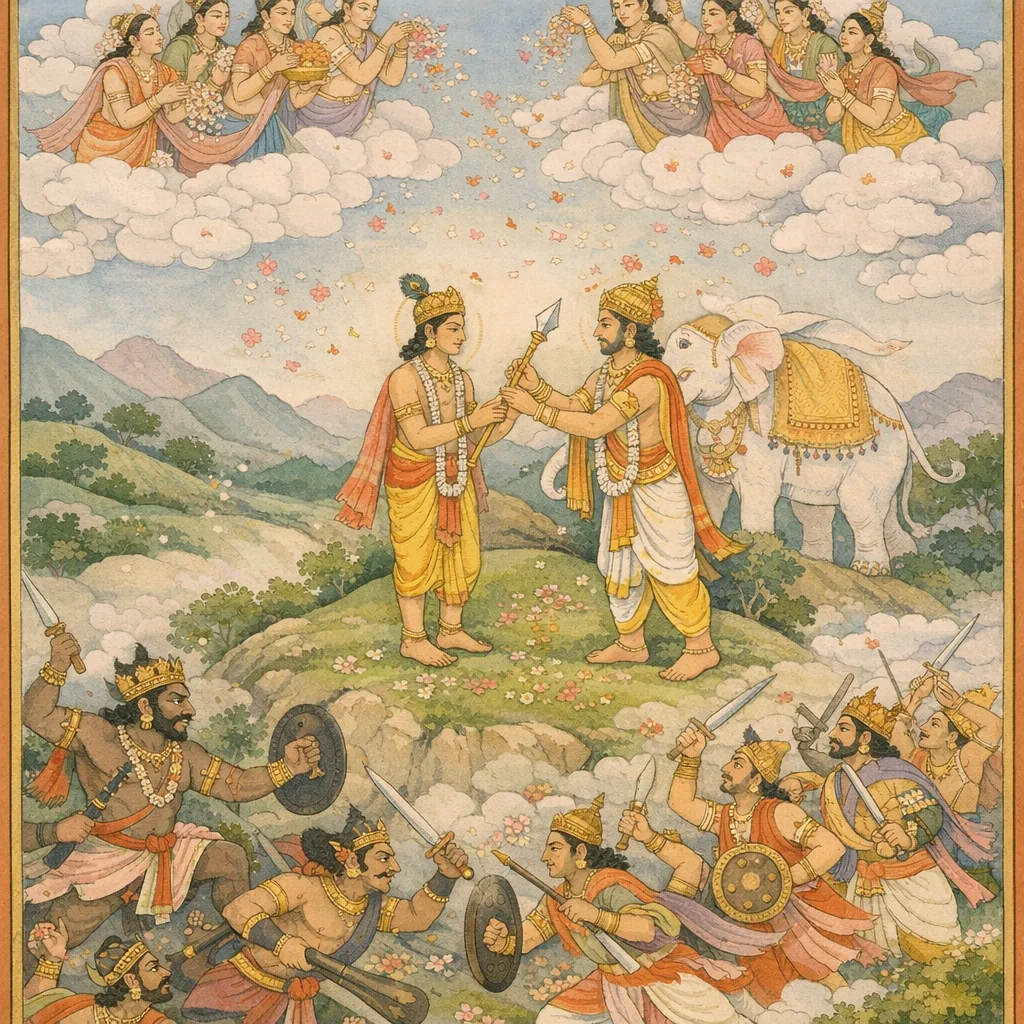
Adhyaya 46
Varuṇābhiṣeka–Agni-anveṣaṇa–Kaubera-tīrtha (Varuṇa’s Consecration; Search for Agni; Kaubera Sacred Site)
Upa-parva: Tīrtha–Kathā (Consecrations and Sacred-Ford Narratives)
Janamejaya states that hearing of the prince’s consecration and the slaying of daityas has produced joy and heightened curiosity, and he asks how Varuṇa (apāṃ pati) was consecrated by divine and non-divine beings. Vaiśaṃpāyana recounts an earlier cosmic age (Kṛta-yuga) in which the devas assemble and formally request Varuṇa to assume lordship over rivers and the ocean, paralleling Indra’s protective role; Varuṇa accepts, is consecrated according to observed rite (vidhidṛṣṭa karma), and thereafter governs waters in an orderly manner. The narration then transitions to Agni: a sacred locale (Agnitīrtha) is named where Agni is said to be hidden in a śamī tree; the devas, distressed at Agni’s disappearance, appeal to the creator (pitāmaha) and later discover Agni concealed due to fear arising from Bhṛgu’s curse, after which normal cosmic function resumes. The chapter continues with tīrtha movement and exempla: reference is made to Brahmā’s creative acts and provisioning, then to a Kaubera forest site where Kubera’s austerities yielded wealth-lordship, friendship with Rudra, and endowments (including the Puṣpaka vimāna); Balarāma’s tīrtha-journey is noted as proceeding onward toward Śvetānulepana and Badarapācana, with emphasis on bathing, offerings, and dāna as ritualized conduct.
Chapter Arc: कथावाचक युद्ध-परिवेश से हटकर एक दिव्य-आख्यान का द्वार खोलता है—‘यशस्विनी मातृकाओं’ के नाम और उनकी लोकव्याप्ति का स्मरण कराते हुए, मानो रणभूमि के ऊपर देव-शक्ति का परदा उठता हो। → मातृकाओं का परिचय बढ़ते-बढ़ते स्कन्द (कार्तिकेय) की रणयात्रा तक पहुँचता है; देवद्रोही दैत्यों का उन्माद और तारकासुर का आतंक पृष्ठभूमि में उभरता है, और इन्द्र (पाकशासन) स्वयं कुमार को ‘शक्ति’ अस्त्र प्रदान कर युद्ध का दैवीकरण कर देता है। → महासेन स्कन्द ‘शक्ति’ के प्रचण्ड प्रयोग से तारकासुर सहित दैत्य-समूहों का संहार करते हैं—अस्त्र बार-बार चलकर शत्रु-विनाश के बाद पुनः उनके हाथ लौट आता है; क्रौञ्च-भेदन और वृत्र-वध-तुल्य पराक्रम से रण का शिखर आता है। → देवशत्रुओं के विनाश के बाद स्कन्द देवताओं से सेवित होकर परम हर्ष पाते हैं; दुन्दुभियाँ बजती हैं, शंखनाद होता है, देवांगनाएँ पुष्पवर्षा करती हैं—विजय का उत्सव कथा को शांत करता है। → उत्सव-ध्वनि के बीच यह संकेत बना रहता है कि यह दिव्य-विजय महाभारत के वर्तमान युद्ध-धर्म पर एक छाया डालती है—क्या मनुष्य-रण में भी ऐसी ‘शक्ति’ का कोई नैतिक समकक्ष है?
Shlokas
Verse 1
/ नस्जमा न (0) आज अन+- - एक प्रयुत दस लाखके बराबर होता है। षट्चत्वारिशो< ध्याय: मातृकाओंका परिचय तथा स्कन्ददेवकी रणयात्रा और उनके द्वारा तारकासुर, महिषासुर आदि दैत्योंका सेनासहित संहार वैशम्पायन उवाच शृणु मातृगणान् राजन् कुमारानुचरानिमान् | कीर्त्यमानान् मया वीर सपत्नगणसूदनान्,वैशम्पायनजी कहते हैं--वीर नरेश! अब मैं उन मातृकाओंके नाम बता रहा हूँ, जो शत्रुओंका संहार करनेवाली तथा कुमार कार्तिकेयकी अनुचरी हैं
Vaiśampāyana said: “O king, listen as I recount these companies of the Mothers (Mātṛkās), attendants of Kumāra (Skanda/Kārttikeya). O hero, as I name them, know them to be destroyers of hostile hosts—powers invoked in the moral imagination of war to signify the subduing of arrogance and the protection of righteous order.”
Verse 2
यशस्विनीनां मातृणां शृणु नामानि भारत | याभिव्यप्तास्त्रयो लोका: कल्याणीभिश्न भागश:,भरतनन्दन! तुम उन यशस्वी मातृकाओंके नाम सुनो, जिन कल्याणकारिणी देवियोंने विभागपूर्वक तीनों लोकोंको व्याप्त कर रखा है
Vaiśampāyana said: “O Bhārata, listen to the names of those illustrious Mother-goddesses—auspicious in their power—by whom the three worlds are pervaded, each in its own allotted sphere.”
Verse 3
प्रभावती विशालाक्षी पालिता गोस्तनी तथा । श्रीमती बहुला चैव तथैव बहुपुत्रिका,एकचन्द्रा मेघकर्णा मेघमाला विरोचना । कुरुवंशी! भरतकुलनन्दन! राजेन्द्र! वे नाम इस प्रकार हैं--प्रभावती, विशालाक्षी, पालिता, गोस्तनी, श्रीमती, बहुला, बहुपुत्रिका, अप्सु जाता, गोपाली, बृहदम्बालिका, जयावती, मालतिका, ध्रुवरत्ना, भयंकरी, वसुदामा, दामा, विशोका, नन्दिनी, एकचूडा, महाचूडा, चक्रनेमि, उत्तेजनी, जयत्सेना, कमलाक्षी, शोभना, शत्रुंजया, क्रोधना, शलभी, खरी, माधवी, शुभवकत्रा, तीर्थनेमि, गीतप्रिया, कल्याणी, रुद्ररोमा, अमिताशना, मेघस्वना, भोगवती, सुभ्रू, कनकावती, अलाताक्षी, वीर्यवती, विद्युज्जिल्ना, पद्मावती, सुनक्षत्रा, कन्दरा, बहुयोजना, संतानिका, कमला, महाबला, सुदामा, बहुदामा, सुप्रभा, यशस्विनी, नृत्यप्रिया, शतोलूखलमेखला, शतघण्टा, शतानन्दा, भगनन्दा, भाविनी, वषुष्मती, चन्द्रसीता, भद्रकाली, ऋशक्षाम्बिका, निष्कुटिका, वामा, चत्वरवासिनी, सुमंगला, स्वस्तिमती, बुद्धिकामा, जयप्रिया, धनदा, सुप्रसादा, भवदा, जलेश्वरी, एडी, भेडी, समेडी, वेतालजननी, कण्डूतिकालिका, देवमित्रा, वसुश्री, कोटरा, चित्रसेना, अचला, कुक्कुटिका, शंखलिका, शकुनिका, कुण्डारिका, कौकुलिका, कुम्भिका, शतोदरी, उत्क्राथिनी, जलेला, महावेगा, कंकणा, मनोजवा, कण्टकिनी, प्रघसा, पूतना, केशयन्त्री, त्रुटि, वामा, क्रोशना तडित्प्रभा, मन्दोदरी, मुण्डी, कोटरा, मेघवाहिनी, सुभगा, लम्बिनी, लम्बा, ताम्रचूड़ा, विकाशिनी, ऊर्ध्ववेणीधरा, पिंगाक्षी, लोहमेखला, पृथुवस्त्रा, मधुलिका, मधुकुम्भा, पक्षालिका, मत्कुलिका, जरायु, जर्जरानना, ख्याता, दहदहा, धमधमा, खण्डखण्डा, पूषणा, मणिकुट्टिका, अमोला, लम्बपयोधरा, वेणुवीणाधरा, पिंगाक्षी, लोहमेखला, शशोलूकमुखी, कृष्णा, खरजंघा, महाजवा, शिशुमारमुखी, श्वेता, लोहिताक्षी, विभीषणा, जटालिका, कामचरी, दीर्घजिह्ना, बलोत्कटा, कालेहिका, वामनिका, मुकुटा, लोहिताक्षी, महाकाया, हरिपिण्डा, एकत्वचा, सुकुसुमा, कृष्णकर्णी, श्षुरकर्णी, चतुष्कर्णी, कर्णप्रावरणा, चतुष्पथनिकेता, गोकर्णी, महिषानना, खरकर्णी, महाकर्णी, भेरीस्वना, महास्वना, शंखश्रवा, कुम्भश्रवा, भगदा, महाबला, गणा, सुगणा, अभीति, कामदा, चतुष्पथरता, भूतितीर्था, अन्यगोचरी, पशुदा, वित्तदा, सुखदा, महायशा, पयोदा, गोदा, महिषदा, सुविशाला, प्रतिष्ठा, सुप्रतिष्ठा, रोचमाना, सुरोचना, नौकर्णी, मुखकर्णी, विशिरा, मन्थिनी, एकचन्द्रा, मेघकर्णा, मेघमाला और विरोचना
Vaiśampāyana said: “(Among them were) Prabhāvatī, Viśālākṣī, Pālitā, and Gostanī; also Śrīmatī, Bahulā, and likewise Bahuputrikā; Ekacandrā, Meghakarṇā, Meghamālā, and Virocanā.” In this passage the narrator continues a formal catalogue of named female beings, emphasizing their multitude and variety—an epic technique that conveys the vast, many-layered forces believed to surround and influence the battlefield and its moral atmosphere.
Verse 4
अप्सु जाता च गोपाली बृहदम्बालिका तथा । जयावती मालतिका ध्रुवरत्ना भयंकरी
Vaiśampāyana said: “Apsu-jātā, and also Gopālī; likewise Bṛhadambālikā; Jayāvatī, Mālatikā, Dhruvaratnā, and Bhayaṅkarī.” (These are names being enumerated in the narrative, indicating a cataloguing of notable women/figures within the episode’s account.)
Verse 5
वसुदामा च दामा च विशोका नन्दिनी तथा । एकचूडा महाचूडा चक्रनेमिश्न भारत
Vaiśampāyana said: “O Bhārata, (these were) Vasudāmā and Dāmā; also Viśokā and Nandinī; and likewise Ekacūḍā, Mahācūḍā, and Cakranemi.” In the war-narrative, this verse functions as a cataloguing of named figures (or beings), preserving memory and lineage through precise enumeration—an epic technique that underscores the vast scale of the conflict and its attendant retinues.
Verse 6
उत्तेजनी जयत्सेना कमलाक्ष्यथ शोभना | शत्रुंजया तथा चैव क्रोधना शलभी खरी
Vaiśampāyana said: “(There were) Uttejanī, Jayatsenā, Kamalākṣī, and also Śobhanā; likewise Śatruñjayā, and Krodhanā, Śalabhī, and Kharī.” In the war-narrative context, the verse functions as a catalog of named women, preserving memory and lineage by recording individual identities amid the larger violence of the Kurukṣetra events.
Verse 7
माधवी शुभवकत्रा च तीर्थनेमिश्व॒ भारत । गीतप्रिया च कल्याणी रुद्ररोमामिताशना
Vaiśaṃpāyana said: “O Bhārata, there was Mādhavī—radiant-faced and auspicious in appearance—along with (another) named Tīrthanemiśvā. Mādhavī was fond of song, blessed and virtuous, bearing hair like Rudra’s, and of immeasurable appetite.”
Verse 8
मेघस्वना भोगवती सुभ्रुक्ष कनकावती । अलाताक्षी वीर्यवती विद्युज्जिल्ला च भारत
Vaiśampāyana said: “O Bhārata, (there were women) named Meghasvanā, Bhogavatī, Subhrūkṣā, Kanakāvatī, Alātākṣī, Vīryavatī, and Vidyujjillā.” The verse functions as a catalog of notable figures, preserving memory and lineage within the war narrative and underscoring how the epic records even those who appear briefly amid the vast moral and human cost of conflict.
Verse 9
पद्मावती सुनक्षत्रा कन्दरा बहुयोजना । संतानिका च कौरव्य कमला च महाबला
Vaiśampāyana said: “O descendant of the Kurus, there were (also) these mighty (caves/regions): Padmāvatī, Sunakṣatrā, Kandarā—extending for many yojanas—Samtānikā, and Kamalā, all renowned for their great strength (vastness and formidable nature).”
Verse 10
सुदामा बहुदामा च सुप्रभा च यशस्विनी । नृत्यप्रिया च राजेन्द्र शतोलूखलमेखला
Vaiśampāyana said: “O king, (there were women named) Sudāmā, Bahudāmā, Suprabhā, and the renowned Yaśasvinī; and also Nṛtyapriyā—(all) wearing girdles adorned with a hundred small bells.”
Verse 11
शतघण्टा शतानन्दा भगनन्दा च भाविनी । वपुष्मती चन्द्रसीता भद्रकाली च भारत
Vaiśampāyana said: “O Bhārata, (she is praised by these names:) Śataghāṇṭā, Śatānandā, Bhaganandā, and Bhāvinī; Vapuṣmatī, Candrasītā, and Bhadrakālī as well.” In this passage, the epic invokes a cluster of divine epithets—names that emphasize awe, auspicious power, and protective ferocity—typical of wartime supplication where victory is sought through reverence and moral alignment with the sacred.
Verse 12
ऋक्षाम्बिका निष्कुटिका वामा चत्वरवासिनी । सुमड्ला स्वस्तिमती बुद्धिकामा जयप्रिया
Vaiśampāyana said: “(There were women named) Ṛkṣāmbikā, Niṣkuṭikā, Vāmā, and Catvaravāsinī; also Sumaḍlā, Svastimatī, Buddhikāmā, and Jaypriyā.” The verse functions as a catalog of named persons within the narrative, preserving lineage and memory amid the larger ethical and tragic setting of the war’s aftermath.
Verse 13
धनदा सुप्रसादा च भवदा च जलेश्वरी । एडी भेडी समेडी च वेतालजननी तथा
Vaiśampāyana said: “(They are) Dhanadā, Suprasādā, Bhavadā, and Jaleśvarī; also Eḍī, Bheḍī, Sameḍī, and likewise Vetālajananī.” Here the narration lists a set of named female powers/spirits, evoked as part of a larger description of ominous or supernatural forces surrounding the war’s climactic events, underscoring the moral and cosmic turbulence accompanying adharma and mass violence.
Verse 14
कण्डूति: कालिका चैव देवमित्रा च भारत । वसुश्री: कोटरा चैव चित्रसेना तथाचला
Vaiśampāyana said: “O Bhārata, (there were) Kaṇḍūti, Kālikā, and also Devamitrā; likewise Vasuśrī, Koṭarā, and also Citrasenā, as well as Acalā.” The verse continues a catalog of named women, preserving their identities within the war-narrative’s broader record of persons connected to the events and their consequences.
Verse 15
कुक्कुटिका शड्खलिका तथा शकुनिका नृप । कुण्डारिका कौकुलिका कुम्भिकाथ शतोदरी
Vaiśaṃpāyana said: “O king, (there were) Kukkutikā, Śaḍkhalikā, and also Śakunikā; Kuṇḍārikā, Kaukulikā, Kumbhikā, and Śatodarī.”
Verse 16
उत्क्राथिनी जलेला च महावेगा च कड़कणा । मनोजवा कण्टकिनी प्रधघसा पूतना तथा
Vaiśampāyana said: “(There were) Utkrāthinī, Jalelā, Mahāvegā, Kaḍakaṇā, Manojavā, Kaṇṭakinī, Pradhaghasā, and Pūtanā as well.” In the grim atmosphere of the war narrative, the text lists fierce, ominous female beings—names that evoke speed, violence, and terror—underscoring how adharma and slaughter are accompanied by dreadful portents and predatory forces.
Verse 17
केशयन्त्री ब्रुटिरवामा क्रोशनाथ तडित्प्रभा । मन्दोदरी च मुण्डी च कोटरा मेघवाहिनी
Vaiśampāyana said: “(There were) Keśayantī, Bruṭiravāmā, Krośanāthā, Taḍitprabhā; and also Mandodarī, Muṇḍī, Koṭarā, and Meghavāhinī.” In the grim atmosphere of the war, the narration lists fierce, ominous female figures—names that evoke dishevelment, wailing, lightning-like glare, baldness, hollowness, and cloud-bearing darkness—intensifying the ethical warning that adharma-driven violence culminates in terror, lamentation, and inauspicious portents.
Verse 18
सुभगा लम्बनी लम्बा ताम्रचूडा विकाशिनी । ऊर्ध्ववेणीधरा चैव पिड़ाक्षी लोहमेखला
Vaiśampāyana said: “She was auspicious and graceful—slender and tall; copper-crested and radiant; wearing her braid raised high; with striking eyes; and girded with an iron belt.”
Verse 19
पृथुवस्त्रा मधुलिका मधुकुम्भा तथैव च | पक्षालिका मत्कुलिका जरायुर्जर्जरानना
Vaiśampāyana said: “There were women named Pṛthuvastrā, Madhulikā, Madhukumbhā, Pakṣālikā, Matkulikā, Jarāyu, and Jarjarānanā.”
Verse 20
ख्याता दहदहा चैव तथा धमधमा नृप । खण्डखण्डा च राजेन्द्र पूषणा मणिकुट्टिका
Vaiśampāyana said: “O king, there were also (weapons and missiles) famed by the names Dahadahā and Dhamadhamā; and, O lord of kings, (others) called Khaṇḍakhaṇḍā, Pūṣaṇā, and Maṇikuṭṭikā.” In the grim setting of war, the narration catalogs fearsome implements whose very names evoke burning, pounding, and shattering—underscoring how violence, once unleashed, multiplies its forms and intensifies suffering.
Verse 21
अमोघा चैव कौरव्य तथा लम्बपयोधरा । वेणुवीणाधरा चैव पिड्क्षी लोहमेखला
Vaiśampāyana said: “O Kauravya, she was unerring in her aim, and she was also full-breasted. She bore a bamboo-staff and a vīṇā, and she was tawny-hued, wearing an iron girdle.”
Verse 22
शशोलूकमुखी कृष्णा खरजड्घा महाजवा । शिशुमारमुखी श्वेता लोहिताक्षी विभीषणा
Vaiśampāyana said: “One was dark, with a face like a hare or an owl, with harsh, ass-like jaws, and of tremendous speed. Another was white, with a face like a porpoise, red-eyed, and terrifying.”
Verse 23
जटालिका कामचरी दीर्घजिद्दा बलोत्कटा । कालेहिका वामनिका मुकुटा चैव भारत
Vaiśampāyana said: “O Bhārata, (there were beings) named Jaṭālikā, Kāmacarī, Dīrghajiddā, Balotkaṭā, Kālehikā, Vāmanikā, and Mukuṭā.”
Verse 24
लोहिताक्षी महाकाया हरिपिण्डा च भूमिप । एकत्वचा सुकुसुमा कृष्णकर्णी च भारत
Vaiśampāyana said: “O king, these were (seen/mentioned): one with reddish eyes, one of massive build, and one with a tawny-golden complexion; also one with a single, uniform skin, one exceedingly delicate and flower-like, and one with dark ears—O Bhārata.”
Verse 25
क्षुककर्णी चतुष्कर्णी कर्णप्रावरणा तथा । चतुष्यथनिकेता च गोकर्णी महिषानना
Vaiśampāyana said: “(There were beings) named Kṣukakarṇī, Catuṣkarṇī, and Karṇaprāvaraṇā; also Catuṣyathaniketā, Gokarṇī, and Mahiṣānanā.” The verse functions as a catalog of ominous or extraordinary figures, heightening the atmosphere of dread and moral disorder surrounding the war’s climactic events.
Verse 26
खरकर्णी महाकर्णी भेरीस्वनमहास्वना । शड्खकुम्भश्रवाश्वैव भगदा च महाबला
Vaiśaṃpāyana said: “There were mighty and powerful war-elephants—Kharakarṇī, Mahākarṇī, Bhērīsvanamahāsvanā, Śaṅkhakumbhaśravā, and Bhagadā.” In the grim moral atmosphere of the battlefield, the naming of these formidable beasts underscores the scale of martial force being assembled and the impersonal momentum of war, where strength and sound (trumpeting like drums and conches) become instruments driving the conflict forward.
Verse 27
गणा च सुगणा चैव तथा भीत्यथ कामदा । चतुष्पथरता चैव भूतितीर्थान्यगोचरी
Vaiśaṃpāyana said: “There were also (female beings) named Gaṇā and Sugaṇā; likewise Bhīti, and then Kāmadā. There was also Catuṣpatharatā, and Bhūtitīrthā—one who moves beyond ordinary reach.”
Verse 28
पशुदा वित्तदा चैव सुखदा च महायशा: । पयोदा गोमहिषदा सुविशाला च भारत
Vaiśampāyana said: “O Bhārata, (these cows) are givers of livestock, givers of wealth, and givers of comfort; they are of great renown. They yield milk, they bestow cows and buffaloes (i.e., increase one’s herds), and they are broad and well-built.”
Verse 29
प्रतिष्ठा सुप्रतिष्ठा च रोचमाना सुरोचना । नौकर्णी मुखकर्णी च विशिरा मन्थिनी तथा
Vaiśampāyana said: “(There were women named) Pratiṣṭhā and Supratiṣṭhā; Rocamānā and Surocanā; Naukarṇī and Mukhakarṇī; and likewise Viśirā and Manthinī.” In the midst of the war narrative, the text pauses to record these names, preserving memory and lineage—an ethical gesture of acknowledging persons rather than reducing events to mere violence.
Verse 30
एताक्षान्याक्ष बहवो मातरो भरतर्षभ
Vaiśampāyana said: “O bull among the Bharatas, many mothers have thus been made bereft of their sons.”
Verse 31
दीर्घनख्यो दीर्घदन्त्यो दीर्घतुण्ड्यश्व भारत,भरतनन्दन! इनके नख, दाँत और मुख सभी विशाल हैं। वे सबला, मधुरा (सुन्दरी), युवावस्थासे सम्पन्न तथा वस्त्राभूषणोंसे विभूषित हैं। इनकी बड़ी महिमा है। ये अपनी इच्छाके अनुसार रूप धारण करनेवाली हैं
Vaiśampāyana said: “O Bhārata, O joy of the Bharata line! These women have long nails, long teeth, and long mouths. Their nails, teeth, and faces are all immense. All of them are strong, lovely, endowed with the fullness of youth, and adorned with garments and ornaments. They possess great power and glory, and they can assume whatever form they desire.”
Verse 32
सबला मधुराश्चैव यौवनस्था: स्वलंकृता: । माहात्म्येन च संयुक्ता: कामरूपधरास्तथा,भरतनन्दन! इनके नख, दाँत और मुख सभी विशाल हैं। वे सबला, मधुरा (सुन्दरी), युवावस्थासे सम्पन्न तथा वस्त्राभूषणोंसे विभूषित हैं। इनकी बड़ी महिमा है। ये अपनी इच्छाके अनुसार रूप धारण करनेवाली हैं
Vaiśaṃpāyana said: “O delight of the Bharatas, they are of varied hues and charming, in the fullness of youth and adorned with their own ornaments. Endowed with extraordinary power and greatness, they can assume whatever form they desire.”
Verse 33
निर्मासगात्र्य: श्वेताक्ष तथा काउ्चनसंनिभा: । कृष्णमेघनिभाश्षान्या धूम्राश्ष भरतर्षभ,इनमेंसे कुछ मातृकाओंके शरीर केवल हडियोंके ढाँचे हैं। उनमें मांसका पता नहीं है। कुछ श्वेतवर्णकी हैं और कितनोंकी ही अंगकान्ति सुवर्णके समान है। भरतश्रेष्ठ। कुछ मातृकाएँ कृष्णमेघके समान काली तथा कुछ धूम्रवर्णकी हैं
Vaiśampāyana said: Some of those Mātṛkās had bodies that were mere frameworks of bone, with no flesh to be seen. Some had pale, white eyes; some shone with a radiance like gold. O bull among the Bharatas, others were dark like rain-clouds, and others again were smoke-hued. The scene underscores the terrifying, otherworldly diversity of these beings, evoking awe and dread amid the moral turbulence of war.
Verse 34
अरुणाभा महाभोगा दीर्घकेश्य: सिताम्बरा: । ऊर्ध्ववेणीधराश्नैव पिड्ाक्ष्यो लम्बमेखला:
Vaiśampāyana said: They appeared with a reddish radiance, endowed with great splendor and prosperity—long-haired, clad in white garments, their braids bound high. Their tawny eyes and long girdles marked them as extraordinary beings, described to convey an ominous, otherworldly presence within the war narrative.
Verse 35
कितनोंकी कान्ति अरुणवर्णकी है। वे सभी महान् भोगोंसे सम्पन्न हैं। उनके केश बड़े- बड़े और वस्त्र उज्ज्वल हैं। वे ऊपरकी ओर वेणी धारण करनेवाली, भूरी आँखोंसे सुशोभित तथा लम्बी मेखलासे अलंकृत हैं ।। लम्बोदर्यो लम्बकर्णास्तथा लम्बपयोधरा: । ताम्राक्ष्यस्ताम्रवर्णाश्च हर्यक्ष्यक्ष तथा परा:,उनमेंसे किन्हींके उदर, किन्हींके कान तथा किन्हींके दोनों स्तन लंबे हैं। कितनोंकी आँखें ताँबेके समान लाल रंगकी हैं। कुछ मातृकाओंके शरीरकी कान्ति भी ताम्रवर्णकी हैं। बहुतोंकी आँखें काले रंगकी हैं
Vaiśampāyana said: “Among those female beings, some had pendulous bellies, some had long ears, and others had heavy, elongated breasts. Some were copper-red eyed, some were copper-hued in complexion, and others again had greenish-dark eyes.” The verse heightens the ominous atmosphere by cataloguing striking, non-human bodily features—an aesthetic of the uncanny that signals the eruption of fearful forces amid the war narrative.
Verse 36
वरदा: कामचारिण्यो नित्य॑ प्रमुदितास्तथा । याम्या रौद्रास्तथा सौम्या: कौबेयों5थ महाबला:,वे वर देनेमें समर्थ, अपनी इच्छाके अनुसार चलनेवाली और सदा आनन्दमें निमग्न रहनेवाली हैं। शत्रुओंको संताप देनेवाले भरतश्रेष्ठ) उन मातृकाओंमेंसे कुछ यमकी शक्तियाँ हैं, कुछ रुद्रकी। कुछ सोमकी शक्तियाँ हैं और कुछ कुबेरकी। वे सब-की-सब महान् बलसे सम्पन्न हैं। इसी तरह कुछ वरुणकी, कुछ देवराज इन्द्रकी, कुछ अग्नि, वायु, कुमार, ब्रह्मा, विष्णु, सूर्य तथा भगवान् वराहकी महाबलशालिनी शक्तियाँ हैं, जो रूपमें अप्सराओंके समान मनोहारिणी और मनोरमा हैं
Vaiśaṃpāyana said: “Those Mother-goddess powers are bestowers of boons, moving as they will and ever rejoicing. Among them are forces belonging to Yama, to Rudra, to Soma, and to Kubera—each endowed with great might.”
Verse 37
वारुण्यो5थ च माहेन्द्रयस्तथा55ग्नेय्य: परंतप । वायव्यक्षाथ कौमार्यों ब्राह्मययश्व भरतर्षभ,वे वर देनेमें समर्थ, अपनी इच्छाके अनुसार चलनेवाली और सदा आनन्दमें निमग्न रहनेवाली हैं। शत्रुओंको संताप देनेवाले भरतश्रेष्ठ) उन मातृकाओंमेंसे कुछ यमकी शक्तियाँ हैं, कुछ रुद्रकी। कुछ सोमकी शक्तियाँ हैं और कुछ कुबेरकी। वे सब-की-सब महान् बलसे सम्पन्न हैं। इसी तरह कुछ वरुणकी, कुछ देवराज इन्द्रकी, कुछ अग्नि, वायु, कुमार, ब्रह्मा, विष्णु, सूर्य तथा भगवान् वराहकी महाबलशालिनी शक्तियाँ हैं, जो रूपमें अप्सराओंके समान मनोहारिणी और मनोरमा हैं
Vaiśampāyana said: “O scorcher of foes, O bull among the Bharatas, among those Mother-goddesses there are also powers belonging to Varuṇa, to Indra the lord of the gods, to Agni, to Vāyu, to Kumāra, and to Brahmā. All of them are mighty—divine energies moving according to their own will—capable of granting boons and ever abiding in joy.”
Verse 38
वैष्णव्यश्व तथा सौर्यों वाराह्म॒श्न महाबला: | रूपेणाप्सरसां तुल्या मनोहायों मनोरमा:,वे वर देनेमें समर्थ, अपनी इच्छाके अनुसार चलनेवाली और सदा आनन्दमें निमग्न रहनेवाली हैं। शत्रुओंको संताप देनेवाले भरतश्रेष्ठ) उन मातृकाओंमेंसे कुछ यमकी शक्तियाँ हैं, कुछ रुद्रकी। कुछ सोमकी शक्तियाँ हैं और कुछ कुबेरकी। वे सब-की-सब महान् बलसे सम्पन्न हैं। इसी तरह कुछ वरुणकी, कुछ देवराज इन्द्रकी, कुछ अग्नि, वायु, कुमार, ब्रह्मा, विष्णु, सूर्य तथा भगवान् वराहकी महाबलशालिनी शक्तियाँ हैं, जो रूपमें अप्सराओंके समान मनोहारिणी और मनोरमा हैं
Vaiśampāyana said: “Among those mighty Mother-goddess powers were also the energies of Viṣṇu, of Sūrya, and of the divine Boar (Varāha). All were endowed with great strength; in form they were like Apsarases—captivating to the mind and delightful to behold.”
Verse 39
परपुष्टोपमा वाक्ये तथद्धर्या धनदोपमा: । शक्रवीर्योपमा युद्धे दीप्त्या वह्विसमास्तथा,वे मीठी वाणी बोलनेमें कोयल और धनसमृद्धिमें कुबेरके समान हैं। युद्धमें इन्द्रके सदृश पराक्रम प्रकट करनेवाली तथा अग्निके समान तेजस्विनी हैं
Vaiśampāyana said: “In speech she is like the cuckoo—sweet and pleasing; in steadfast courage she is like Kubera, rich in resources and resolve. In battle she displays prowess like Indra, and in radiance she shines like fire.” The verse praises an exemplary figure by aligning her virtues with well-known divine and natural ideals, presenting a moral portrait in which gentleness of speech coexists with firmness, heroic energy, and blazing inner power.
Verse 40
शत्रूणां विग्रहे नित्यं भयदास्ता भवन्त्युत । कामरूपधराश्चैव जवे वायुसमास्तथा,युद्ध छिड़ जानेपर वे सदा शत्रुओंके लिये भयदायिनी होती हैं। वे इच्छानुसार रूप धारण करनेवाली तथा वायुके समान वेगशालिनी हैं
Vaiśampāyana said: “In the clash of battle they ever become a source of terror to the foes. They can assume forms at will, and in speed they are like the wind.”
Verse 41
अचिन्त्यबलवीर्याश्ष तथाचिन्त्यपराक्रमा: । वृक्षचत्वरवासिन्यश्चतुष्पथनिकेतना:,उनके बल, वीर्य और पराक्रम अचिन्त्य हैं। वे वृक्षों, चबूतरों और चौराहोंपर निवास करती हैं
Vaiśampāyana said: “Their strength and vital power are beyond imagining, and so too is their prowess. They dwell by trees, on raised platforms, and at crossroads—making such liminal places their habitual abodes.”
Verse 42
गुहाश्मशानवासिन्य: शैलप्रस्रवणालया: । नानाभरणधारिण्यो नानामाल्याम्बरास्तथा,गुफाएँ, श्मशान, पर्वत और झरने भी उनके निवासस्थान हैं। वे नाना प्रकारके आभूषण, पुष्पहार और वस्त्र धारण करती हैं
Vaiśampāyana said: They dwell in caves and cremation grounds, making their homes amid mountains and cascading springs. Adorned with many kinds of ornaments, they likewise wear varied garlands and garments—an image that underscores their liminal, awe-inspiring nature and the moral unease surrounding such beings in the war-torn landscape.
Verse 43
नानाविचित्रवेषाश्न नानाभाषास्तथैव च । एते चान्ये च बहवो गणा: शत्रुभयंकरा:
Vaiśampāyana said: “They wore many kinds of strange and varied disguises, and they spoke in many different tongues as well. These—and many other such bands—were terrifying to the enemy.”
Verse 44
ततः शक््त्यस्त्रमददद् भगवान् पाकशासन:,नृपश्रेष्ट! तदनन्तर भगवान् पाकशासनने देवद्रोहियोंके विनाशके लिये कुमार कार्तिकेयको शक्ति नामक अस्त्र प्रदान किया। साथ ही उन्होंने बड़े जोरसे आवाज करनेवाला एक विशाल घंटा भी दिया, जो अपनी उज्ज्वल प्रभासे प्रकाशित हो रहा था
Verse 45
इस प्रकार श्रीमहाभारत शल्यपर्वके अन्तर्गत गदापव॑में बलरामजीकी तीर्थयात्रा और सारस्वतोपाख्यानके प्रसंगरें स्कन््दका अभिषेकाविषयक पैतालीसवाँ अध्याय पूरा हुआ,गुहाय राजशार्दूल विनाशाय सुरद्विषाम् । महास्वनां महाघपण्टां द्योतमानां सितप्रभाम् नृपश्रेष्ट! तदनन्तर भगवान् पाकशासनने देवद्रोहियोंके विनाशके लिये कुमार कार्तिकेयको शक्ति नामक अस्त्र प्रदान किया। साथ ही उन्होंने बड़े जोरसे आवाज करनेवाला एक विशाल घंटा भी दिया, जो अपनी उज्ज्वल प्रभासे प्रकाशित हो रहा था
Vaishampayana said: “O tiger among kings, for the destruction of the enemies of the gods, the Lord Indra (the chastiser of Pāka) then bestowed upon the youth Kārtikeya a weapon called ‘Śakti’. Along with it he also gave a great bell of tremendous sound, vast in size, shining with a bright, white radiance.”
Verse 46
अरुणादित्यवर्णा च पताकां भरतर्षभ । ददौ पशुपतिस्तस्मै सर्वभूतमहाचमूम्,भरतश्रेष्ठ) भगवान् पशुपतिने उन्हें अरुण और सूर्यके समान प्रकाशमान एक पताका और अपने सम्पूर्ण भूतगणोंकी विशाल सेना भी प्रदान की (सेनानीश्व कृतो राजन् बाल एव महाबल: ।) राजन! तुम मुझसे जो कुछ पूछ रहे थे, वह सब प्रसंग मैंने तुम्हें कह सुनाया। समागत देवताओंद्वारा किस प्रकार भगवान् स्कन्दका अभिषेक हुआ और किस प्रकार बाल्यावस्थामें ही वे महाबली कुमार सेनापति बना दिये गये, यह सब कुछ बता दिया गया ।। इति श्रीमहाभारते शल्यपर्वणि गदापर्वणि बलदेवतीर्थयात्रायां सारस्वतोपाख्याने तारकवधे षट्चत्वारिंशो5ध्याय:
Vaiśaṃpāyana said: “O bull among the Bharatas, Paśupati bestowed upon him a banner radiant like the dawn and the sun, and also a vast host of all his attendant beings. And, O king, though still a mere child, that mighty one was appointed commander of the army. Thus I have recounted to you, in full context, everything you asked: how the assembled gods performed the consecration of Lord Skanda, and how, even in childhood, the powerful Kumāra was made the general.”
Verse 47
उग्रां नानाप्रहरणां तपोवीर्यबलान्विताम् । अजेयां स्वगणैर्युक्तां नाम्ना सेनां धनंजयाम्
Vaiśampāyana said: He beheld the army called “Dhanañjayā”—a fierce host equipped with many kinds of weapons, endowed with the strength born of austerity, heroism, and power, and rendered unconquerable by the companies allied to it. The verse underscores how disciplined force and righteous resolve, when joined with capable allies, can make a war-host seem invincible.
Verse 48
रुद्रतुल्यबलैर्युक्तां योधानामयुतैस्त्रिभि: । न सा विजानाति रणात् कदाचिद् विनिवर्तितुम्
Vaiśampāyana said: Endowed with strength equal to Rudra’s and supported by thirty thousand warriors, she does not know how to turn back from battle at any time—unyielding in the face of combat and steadfast in her chosen course.
Verse 49
वह भयंकर सेना धनंजय नामसे विख्यात थी। उसमें सभी सैनिक नाना प्रकारके अस्त्र, शस्त्र, तपस्या, बल और पराक्रमसे सम्पन्न थे। रुद्रके समान बलशाली तीस हजार रुद्रगणोंसे युक्त वह सेना शत्रुओंके लिये अजेय थी। वह कभी भी युद्धसे पीछे हटना जानती ही नहीं थी ।। विष्णुर्ददौ वैजयन्तीं मालां बलविवर्धिनीम् | उमा ददौ विरजसी वाससी रविसप्रभे,भगवान् विष्णुने कुमारको बल बढ़ानेवाली वैजयन्ती माला दी और उमाने सूर्यके समान चमकी ले दो निर्मल वस्त्र प्रदान किये
Vaiśampāyana said: That fearsome host, famed by the name Dhanañjaya, was renowned. In it, all the warriors were endowed with many kinds of missiles and weapons, and were accomplished in austerity, strength, and valor. Joined with thirty thousand Rudra-like attendants, powerful as Rudra himself, that army was unconquerable to its enemies. It never knew how to turn back from battle. Then Lord Viṣṇu bestowed the Vaijayantī garland that increases strength, and Umā granted two spotless garments, radiant like the sun—divine gifts meant to fortify the young hero for the demands of righteous war.
Verse 50
गड़ा कमण्डलुं दिव्यममृतोद्धवमुत्तमम् । ददौ प्रीत्या कुमाराय दण्डं चैव बृहस्पति:,गंगाने कुमारको प्रसन्नतापूर्वक एक दिव्य और उत्तम कमण्डलु दिया, जो अमृत प्रकट करनेवाला था। बृहस्पतिजीने दण्ड प्रदान किया
Vaiśampāyana said: Out of affection, he bestowed upon the young Kumāra a divine and excellent water-pot, famed for bringing forth nectar; and Bṛhaspati too granted him a staff. The episode underscores how worthy recipients are strengthened through sacred gifts—power is paired with discipline and right guidance.
Verse 51
गरुडो दयितं पुत्र मयूरं चित्रबर्हिणम् । अरुणस्ताम्रचूडं च प्रददौ चरणायुधम्
Vaiśampāyana said: “Garuḍa bestowed his beloved son—the peacock with its splendid, variegated plumage; and Aruṇa too granted the red-crested one, the ‘foot-weapon’ (the bird famed for striking with its feet).” The verse highlights a pattern of affectionate gifting and lineage-based endowment, where valued beings are entrusted or granted as prized possessions—an ethical reminder that power and privilege in epic narrative often move through bonds of kinship and favor, carrying responsibilities along with honor.
Verse 52
गरुडने विचित्र पंखोंसे सुशोभित अपना प्रिय पुत्र मयूर भेंट किया। अरुणने लाल शिखावाले अपने पुत्र ताम्रचूड (मुर्ग)-को समर्पित किया, जिसका पैर ही आयुध था ।। नागं तु वरुणो राजा बलवीर्यसमन्वितम् | कृष्णाजिन ततो ब्रद्मा ब्रह्मण्याय ददौ प्रभु:
Vaiśampāyana said: King Varuṇa presented a serpent endowed with great strength and valor. Then the Lord Brahmā bestowed a black antelope-skin upon the pious and Brahmin-devoted recipient—thus marking honor through sacred gifts and the recognition of dharmic disposition.
Verse 53
सैनापत्यमनुप्राप्य स्कन्दो देवगणस्थ ह
Vaiśampāyana said: Having attained the office of commander-in-chief, Skanda—stationed among the hosts of the gods—(thus stood/was present). The line evokes the ideal of divinely sanctioned leadership: command is not merely power, but a charged responsibility upheld in the company of higher beings and ordered forces.
Verse 54
शुशुभे ज्वलितोडर्चिष्मान् द्वितीय इव पावक: । देवताओंका सेनापतित्व पाकर तेजस्वी स्कन्द अपने तेजसे प्रज्वलित हो दूसरे अग्निदेवके समान सुशोभित होने लगे ।। ५३ $ ।। ततः पारिषदैश्वैव मातृभिश्न समन्वित:
Vaiśaṃpāyana said: Having obtained the command of the gods’ army, the radiant Skanda blazed with his own splendor and shone like a second fire. Then, attended by the divine attendants and accompanied by the Mother-goddesses, he proceeded—his presence embodying sanctioned power placed in the service of cosmic order.
Verse 55
ययौ दैत्यविनाशाय ह्वादयन् सुरपुड्गवान् । तदनन्तर अपने पार्षदों तथा मातृकागणोंके साथ कुमार कार्तिकेयने देवेश्वरोंको आनन्द प्रदान करते हुए दैत्योंके विनाशके लिये प्रस्थान किया ।। ५४ $ ।। सा सेना नैर्रती भीमा सघण्टोच्छितकेतना
Vaiśampāyana said: With the aim of destroying the Daityas, he set forth, gladdening the foremost of the gods. Thereafter Kumāra Kārtikeya—accompanied by his attendants and the hosts of the Mātṛkās—departed to bring joy to the divine lords and to accomplish the ruin of the Daitya forces. The passage frames the campaign as a protective, duty-bound act: the gods are strengthened in morale, and the destructive power is directed toward those who threaten cosmic order.
Verse 56
सभेरीशड्खमुरजा सायुधा सपताकिनी । शारदी द्यौरिवाभाति ज्योतिर्भिरिव शोभिता
Vaiśampāyana said: “With the blare of trumpets and conches and the thunder of war-drums, and with weapons in hand and banners raised, that host shone forth—like the clear autumn sky, adorned with lights.”
Verse 57
नैर््नतों (भूतगणों)-की वह भयंकर सेना घंटा, भेरी, शंख और मृदंगकी ध्वनिसे गूँज रही थी। उसकी ऊँचे उठी हुई पताकाएँ फहरा रही थीं। अस्त्र-शस्त्रों और पताकाओंसे सम्पन्न वह विशाल वाहिनी नक्षत्रोंसे सुशोभित शरत्कालके आकाशकी भाँति शोभा पा रही थी।। ततो देवनिकायास्ते नानाभूतगणास्तथा । वादयामासुरव्यग्रा भेरी: शड्खांश्व पुष्कलान्,तदनन्तर वे देवसमूह तथा नाना प्रकारके भूतगण शान्तचित्त हो भेरी, बहुत-से शंख, पटह, झाँझ, क्रकच, गोशृंग, आडम्बर, गोमुख और भारी आवाज करनेवाले नगाड़े बजाने लगे
Vaiśaṃpāyana said: Thereupon those companies of the gods, along with diverse hosts of supernatural beings, unperturbed and intent, began to sound their instruments—kettledrums and many conches—filling the quarters with a formidable martial resonance. The scene evokes a cosmic muster: not merely human armies, but powers beyond the human sphere lending their presence to the war, intensifying its moral weight and inevitability.
Verse 58
पटहान् झर्मरांश्वैव क्रकनचान् गोविषाणकान् । आडबम्बरान् गोमुखांश्व डिण्डिमांश्व महास्वनान्,तदनन्तर वे देवसमूह तथा नाना प्रकारके भूतगण शान्तचित्त हो भेरी, बहुत-से शंख, पटह, झाँझ, क्रकच, गोशृंग, आडम्बर, गोमुख और भारी आवाज करनेवाले नगाड़े बजाने लगे
Vaiśampāyana said: Then, in succession, they began to sound many kinds of war-instruments—kettledrums, clashing cymbals, saw-like rattles, horns made from cow-horn, resonant āḍambara drums, gomukha horns, and great-sounding kettledrums. The rising din marks the gathering and mobilization of forces, where collective resolve is expressed through ritualized martial music rather than private speech.
Verse 59
तुष्ठवुस्ते कुमारं तु सर्वे देवा: सवासवा: । जगुश्न देवगन्धर्वा ननृतुश्चाप्सरोगणा:,फिर इन्द्रसहित सम्पूर्ण देवता कुमारकी स्तुति करने लगे। देव-गन्धर्व गाने और अप्सराएँ नाचने लगीं
Vaiśampāyana said: Then all the gods—together with Indra—praised that youthful hero. The divine Gandharvas sang, and the companies of Apsarases danced, marking the moment as one of celestial approval and auspicious acclaim amid the grim setting of war.
Verse 60
ततः प्रीतो महासेनस्त्रिदशे भ्यो वरं ददौ । रिपून् हन्तास्मि समरे ये वो वधचिकीर्षव:,इससे प्रसन्न होकर कुमार महासेनने देवताओंको यह वर दिया कि “जो आपलोगोंका वध करना चाहते हैं, आपके उन समस्त शत्रुओंका मैं समरांगणमें संहार कर डालूँगा'
Then Mahāsena (Kumāra), pleased, granted a boon to the gods: “In battle I shall slay those enemies of yours who seek to kill you.” The verse frames divine favor as a pledged protection: satisfaction (prīti) leads to a vow that restrains harm to the righteous side and directs force toward aggressors.
Verse 61
प्रतिगृह वरं देवास्तस्माद् विबुधसत्तमात् । प्रीतात्मानो महात्मानो मेनिरे निहतान् रिपून्,उन सुरश्रेष्ठ कुमारसे वह वर पाकर महामनस्वी देवता बड़े प्रसन्न हुए और अपने शत्रुओंको मरा हुआ ही मानने लगे
Having received the boon from that foremost of the gods, the great-souled deities—hearts filled with joy—came to regard their enemies as already slain. The verse underscores how divine favor, when granted to the worthy, strengthens resolve and reshapes the moral certainty of victory in a righteous cause.
Verse 62
सर्वेषां भूतसंघानां हर्षान्नाद: समुत्थित: । अपूरयत लोकांस्त्रीन् वरे दत्ते महात्मना,महात्मा कुमारके वर देनेपर सम्पूर्ण भूतसमुदायोंने जो हर्षनाद किया, वह तीनों लोकोंमें गँँज उठा
Vaiśampāyana said: When that great-souled one granted the boon to the young prince, a roar of joy arose from the assembled hosts of beings, and it resounded through all the three worlds. The moment underscores how righteous generosity and the honoring of worthy requests are celebrated as acts that uphold cosmic order.
Verse 63
स निर्ययौ महासेनो महत्या सेनया वृतः । वधाय युधि दैत्यानां रक्षार्थ च दिवौकसाम्,तत्पश्चात् विशाल सेनासे घिरे हुए स्वामी महासेन युद्धमें दैत्योंका वध और देवताओंकी रक्षा करनेके लिये आगे बढ़े
Vaiśampāyana said: Then Mahāsena marched forth, surrounded by a vast army, entering the battlefield with a clear purpose— to destroy the Daityas in combat and to protect the dwellers of heaven. The verse frames warfare here as a duty-bound intervention: force is undertaken not for conquest, but for the safeguarding of the righteous order and the vulnerable.
Verse 64
व्यवसायो जयो धर्म: सिद्धिर्लक्ष्मीर्धृति: स्मृति: । महासेनस्य सैन्यानामग्रे जग्मुर्नराधिप
Vaiśampāyana said: Resolve, victory, righteousness, success, prosperity, steadfastness, and clear remembrance—these marched at the very front of the great army’s forces, O king. The narration frames the advance as not merely physical movement in war, but as an ethical and psychological momentum in which disciplined purpose and dharma are portrayed as leading powers that shape outcomes.
Verse 65
नरेश्वरर उस समय व्यवसाय (दृढ़ निश्चय), विजय, धर्म, सिद्धि, लक्ष्मी, धृति और स्मृति --ये सब-के-सब महासेनके सैनिकोंके आगे-आगे चलने लगे ।। स तया भीमया देव: शूलमुद्गरहस्तया । ज्वलितालातधारिण्या चित्राभरणवर्मया
Vaiśampāyana said: Then that formidable goddess—bearing a spear and a mace in her hands, holding a blazing firebrand, and clad in brilliant ornaments and armor—advanced, terrifying in aspect. The passage underscores how, in the crisis of war, divine and moral forces are imagined as moving before an army, shaping resolve, victory, and the perceived legitimacy (dharma) of the cause.
Verse 66
गदामुसलनाराचशक्तितोमरहस्तया । दृप्तसिंहनिनादिन्या विनद्य प्रययौ गृह:
Vaiśampāyana said: With hands bearing a mace, a pestle, iron arrows, a spear, and a javelin, and roaring with the proud cry of a lion, he set out and went home. The verse underscores the warrior’s fierce resolve and the ominous normalizing of violence—how instruments of war accompany even ordinary movement, reflecting the moral weight of a society consumed by conflict.
Verse 67
वह सेना बड़ी भयंकर थी। उसने हाथोंमें शूल, मुदू्गर, जलते हुए काठ, गदा, मुसल, नाराच, शक्ति और तोमर धारण कर रखे थे। सारी सेना विचित्र आभूषणों और कवचोंसे सुसज्जित थी तथा दर्पयुक्त सिंहके समान दहाड़ रही थी, उस सेनाके साथ सिंहनाद करके कुमार कार्तिकिय युद्धके लिये प्रस्थित हुए ।। त॑ दृष्टवा सर्वदैतेया राक्षसा दानवास्तथा | व्यद्रवन्त दिश: सर्वा भयोद्धिग्ना: समन््तत:,उन्हें देखकर सम्पूर्ण दैत्य, दानव और राक्षस भयसे उद्विग्न हो सारी दिशाओंमें सब ओर भाग गये
Seeing him, all the Daityas, the Rākṣasas, and the Dānavas—shaken by fear—fled in every direction on all sides. The scene underscores how overwhelming martial presence and disciplined force can break the morale of even formidable opponents, turning conflict by sheer intimidation rather than prolonged slaughter.
Verse 68
अभ्यद्रवन्त देवास्तान् विविधायुधपाणय: । दृष्टवा च स ततः क्रुद्ध: स्कन्दस्तेजोबलान्वित:
Vaiśaṃpāyana said: Then the gods, their hands bearing many kinds of weapons, rushed upon them. Seeing this, Skanda—endowed with blazing energy and strength—became enraged.
Verse 69
शकक््त्यस्त्रं भगवान् भीम॑ पुनः: पुनरवाकिरत् । आदथधच्चात्मनस्तेजो हविषेद्ध इवानल:
Vaiśaṃpāyana said: Mighty Bhīma again and again showered the Śakti-weapon. He then gathered and fixed his own inner energy, like a fire kindled and fed with oblations—intensifying his force for the next decisive act in battle.
Verse 70
देवता अपने हाथोंमें नाना प्रकारके अस्त्र-शस्त्र ले उन दैत्योंका पीछा करने लगे। यह सब देखकर तेज और बलसे सम्पन्न भगवान् स्कन्द कुपित हो उठे और शक्ति नामक भयानक अस्त्रका बारंबार प्रयोग करने लगे। उन्होंने उसमें अपना तेज स्थापित कर दिया था और वे उस समय घीसे प्रज्वलित हुई अग्निके समान प्रकाशित हो रहे थे ।। अभ्यस्यमाने शकक््त्यस्त्रे स्कन्देनामिततेजसा । उल्काज्वाला महाराज पपात वसुधातले
Vaiśampāyana said: As the mighty Skanda, blazing with immeasurable splendor, repeatedly employed the dreadful weapon called Śakti—into which he had infused his own fiery energy—its flame fell upon the earth like a meteor, O king. The scene underscores how divine power, when stirred by wrath in the midst of war, can become an overwhelming force that reshapes the battlefield and terrifies all who witness it.
Verse 71
महाराज! अमित तेजस्वी स्कन्दके द्वारा शक्तिका बारंबार प्रयोग होनेसे पृथ्वीपर प्रज्वलित उल्का गिरने लगी ।। संह्ादयन्तश्न तथा निर्घाताश्चापतन् क्षितौ । यथान्तकालसमये सुघोरा: स्युस्तथा नूप
O King, as the exceedingly radiant Skandhaka repeatedly hurled his spear, blazing meteors began to fall upon the earth. Thunderous roars and crashing detonations struck the ground, as if the dread signs of the world’s final hour had arrived. The scene intensifies the moral weight of the war: violence, when multiplied without restraint, makes the very world appear to reel toward dissolution.
Verse 72
नरेश्वर! जैसे प्रलयके समय अत्यन्त भयंकर वज्र भारी गड़गड़ाहटके साथ पृथ्वीपर गिरने लगते हैं, उसी प्रकार उस समय भी भीषण गर्जनाके साथ वज्रपात होने लगा ।। क्षिप्ता होका यदा शक्ति: सुघोरानलसूनुना । ततः कोट्यो विनिष्पेतु: शक्तीनां भरतर्षभ,भरतश्रेष्ठ! अग्निकुमारने जब एक बार अत्यन्त भयंकर शक्ति छोड़ी, तब उससे करोड़ों शक्तियाँ प्रकट होकर गिरने लगीं
Vaiśampāyana said: “O king, just as at the time of cosmic dissolution dreadful thunderbolts crash down upon the earth with a heavy, terrifying roar, so too then a storm of lightning strikes began amid fearsome peals of thunder. For when the son of Fire hurled a single exceedingly terrible spear-weapon, O bull of the Bharatas, from it there burst forth and fell a myriad—indeed, millions—of spears.”
Verse 73
ततः प्रीतो महासेनो जघान भगवान् प्रभु: । दैत्येन्द्रे तारकं नाम महाबलपराक्रमम्
Then the mighty war-god, pleased and sovereign in power, struck down the lord of the Dānavas—the demon-chief named Tāraka—renowned for immense strength and valor. The episode underscores a moral order in which overwhelming force, when aligned with rightful purpose, becomes the instrument for removing a destructive power.
Verse 74
वृतं दैत्यायुतैवरिबलिभिदीशभिनृप । इससे प्रभावशाली भगवान् महासेन बड़े प्रसन्न हुए और उन्होंने महान् बल एवं पराक्रमसे सम्पन्न उस दैत्यराज तारकको मार गिराया, जो एक लाख बलवान एवं वीर दैत्योंसे घिरा हुआ था ।। ७३ है ।। महिषं चाष्टभि: पद्मैर्वृतं संख्ये निजध्निवान्
Vaiśampāyana said: In the thick of battle, he struck down the buffalo-form foe, who was surrounded by eight ‘padma’ divisions. The episode underscores that overwhelming numbers and brute force do not prevail when confronted by disciplined valor aligned with righteous purpose.
Verse 75
त्रिपादं चायुतशतैर्जघान दशभिर्वृतम् । हृदोदरं नि्खर्वैश्व वृतं दशभिरीश्वर:
Vaiśampāyana said: The mighty lord struck down the one protected by ten, using hundreds of thousands; and he also smote the heart and belly—though guarded by ten—without arrogance. The scene underscores the relentless mechanics of battle, where even layered protection fails before overwhelming force, and where true mastery is marked by power exercised without pride.
Verse 76
जघानानुचरै: सार्थ विविधायुधपाणिशभि: । साथ ही उन्होंने युद्धस्थलमें आठ पद्म दैत्योंसे घिरे हुए महिषासुरका, दस लाख असुरोंसे सुरक्षित त्रिपादका और दस निखरव दैत्य-योद्धाओंसे घिरे हुए हदोदरका भी नाना प्रकारके आयुधधारी अनुचरोंसहित वध कर डाला ।। तथाकुर्वन्त विपुल॑ नादं वध्यत्सु शत्रुषु,राजन! जब शत्रु मारे जाने लगे, उस समय कुमारके अनुचर दसों दिशाओंको गुँजाते हुए बड़े जोर-जोरसे गर्जना करने लगे। इतना ही नहीं, वे आनन्दमग्न होकर नाचने, कूदने तथा जोर-जोरसे हँसने लगे
Vaiśaṃpāyana said: “O King, as the enemies were being cut down, the attendants of the divine Youth (Kumāra) raised a vast roar, making the ten directions resound. Exultant in victory, they danced, leapt about, and laughed loudly.”
Verse 77
कुमारानुचरा राजन् पूरयन्तो दिशो दश । ननृतुश्च ववल्गुश्न जहसुश्च मुदान्विता:,राजन! जब शत्रु मारे जाने लगे, उस समय कुमारके अनुचर दसों दिशाओंको गुँजाते हुए बड़े जोर-जोरसे गर्जना करने लगे। इतना ही नहीं, वे आनन्दमग्न होकर नाचने, कूदने तथा जोर-जोरसे हँसने लगे
Verse 78
शक्त्यस्त्रस्य तु राजेन्द्र ततोडर्चिर्भि: समन्ततः । त्रैलोक्यं त्रासितं सर्व जृम्भभाणाभिरेव च,राजेन्द्र! उस शक्तिनामक अस्त्रकी सब ओर फैलती हुई ज्वालाओंसे सारी त्रिलोकी थर्रा उठी
Vaiśaṃpāyana said: “O king, when the Śakti-weapon was released, flames spread out on every side. By its terrifying roar and sudden expansion, the whole threefold world seemed to tremble—so overwhelming was the force unleashed in the midst of war.”
Verse 79
दग्धा: सहस्रशो दैत्या नादै: स्कन्दस्य चापरे | पताकयावधूताश्न हता: केचित् सुरद्विष:,सहस्रों दैत्य उस शक्तिकी आगमें जलकर भस्म हो गये। कितने ही स्कन्दके सिंहनादोंसे ही डरकर अपने प्राण खो बैठे तथा कुछ देवद्रोही उनकी पताकासे ही कम्पित होकर मर गये
Vaiśampāyana said: Thousands of Dāityas were burned to ashes, while others perished merely from the thunderous battle-cries of Skanda. Some, enemies of the gods, were struck down as Skanda’s banner swept and shook them—so overwhelming was his martial presence that terror itself became a weapon.
Verse 80
केचिद् घण्टारवत्रस्ता निषेदुर्वसुधातले । केचित् प्रहरणैश्छिन्ना विनिष्पेतुर्गतायुष:,कुछ दैत्य उनके घंटानादसे संत्रस्त होकर धरतीपर बैठ गये और कुछ उनके आयुधोंसे छिन्न-भिन्न हो गतायु होकर पृथ्वीपर गिर पड़े
Vaiśampāyana said: Some, terrified by the clangor of the bell-like roar, sank down upon the ground; others, hewn apart by weapons, fell sprawling to the earth, their lives already spent. The scene underscores how, in the fury of battle, fear and violence alike reduce the proud to helplessness and death.
Verse 81
एवं सुरद्विषोडनेकान् बलवानाततायिन: । जघान समरे वीर: कार्तिकेयो महाबल:
Vaiśampāyana said: Thus, in the thick of battle, the mighty hero Kārtikeya—of great strength—slew many powerful aggressors who were enemies of the gods. The verse underscores the ethical framing of violence in war: force is directed against ātatāyins (criminal aggressors), presenting the act as protective rather than wanton.
Verse 82
इस प्रकार महाबली शक्तिशाली वीर कार्तिकेयने समरांगणमें अनेक आततायी देवद्रोहियोंका संहार कर डाला ।। बाणो नामाथ दैतेयो बले: पुत्रो महाबल: । क्रौज्च॑ पर्वतमाश्रित्य देवसंघानबाधत,राजा बलिका महाबली पुत्र बाणासुर क्रौंच पर्वतका आश्रय लेकर देवसमूहोंको कष्ट पहुँचाया करता था
Vaiśaṃpāyana said: There was a Daitya named Bāṇa, the mighty son of Bali. Taking refuge on Mount Krauñca, he continually harassed the hosts of the gods—an archetypal aggressor whose power, when turned against the divine order, becomes a cause for righteous counteraction in war.
Verse 83
तमभ्ययान्महासेन: सुरशत्रुमुदारधी: । स कार्तिकेयस्य भयात् क्रौज्चं शरणमीयिवान्
Vaiśaṃpāyana said: Then Mahāsena—of noble understanding—advanced against the foe of the gods. But, struck with fear of Kārtikeya, that enemy sought refuge in Krauncha (the mountain), choosing concealment over open confrontation. The episode underscores how even formidable power, when unmoored from dharma and courage, turns to flight before righteous divine force.
Verse 84
उदारबुद्धि महासेनने उस दैत्यपर भी आक्रमण किया। तब वह कार्तिकेयके भयसे क्रौंच पर्वतकी शरणमें जा छिपा ।। ततः क्रौजच॑ महामन्यु: क्रौज्चनादनिनादितम् | शक््त्या बिभेद भगवान् कार्तिकेयोडग्निदत्तया,इससे भगवान् कार्तिकेयको महान् क्रोध हुआ। उन्होंने अग्निकी दी हुई शक्तिसे क्रौंच पक्षियोंके कोलाहलसे गूँजते हुए क्रौंच पर्वतको विदीर्ण कर डाला
Then the Lord Kārtikeya, filled with mighty wrath, split open Mount Krauñca—echoing with the cries of krauñca-birds—using the spear (śakti) bestowed by Agni. The episode underscores how divine power, when directed by righteous purpose, removes even seemingly impregnable refuges that shelter destructive forces.
Verse 85
स शालस्कन्धशबलं त्रस्तवानरवारणम् | प्रोड्डीनोदभ्रान्तविहगं विनिष्पतितपन्नगम्
Vaiśampāyana said: It was mottled like the trunk of a śāla tree—so fearsome that it terrified monkeys and elephants alike; it sent birds whirling up in confusion and drove serpents to dart out in panic. The description underscores how the violence of the battlefield disturbs not only warriors but the entire natural world, making the cost of war visible in the suffering and disarray of innocent creatures.
Verse 86
गोलाड्गूलर्क्षसंघैश्व द्रवद्धिरनुनादितम् । कुरजड्भमविनिर्धोषनिनादितवनान्तरम्
Vaiśampāyana said: The forest-interior resounded on every side—echoing with the cries of rushing herds of bears and other wild beasts, and further filled with the harsh, tumultuous din of the Kurus’ confused and disorderly commotion—an ominous soundscape of war spilling into the wilderness.
Verse 87
विनिष्पतद्धिः शरभै: सिंहैश्न सहसा द्रुतैः । शोच्यामपि दशां प्राप्तो रराजेव स पर्वत:
Vaishampayana said: Though struck and torn by swift, suddenly attacking śarabhas and lions, that mountain—despite having fallen into a pitiable condition—still shone with a grim, undiminished splendor. The image underscores how even when battered by violent forces, a great presence may retain its radiance, evoking the tragic dignity of warriors in the devastation of war.
Verse 88
क्रौंच पर्वत शालवृक्षके तनोंसे भरा हुआ था। वहाँके वानर और हाथी संत्रस्त हो उठे थे, पक्षी भयसे व्याकुल होकर उड़ चले थे, सर्प धराशायी हो गये थे, गोलांगूल जातिके वानरों और रीछोंके समुदाय भाग रहे थे तथा उनके चीत्कारसे वह पर्वत गूँज उठा था, हरिणोंके आर्तनादसे उस पर्वतका वनप्रान्त प्रतिध्वनित हो रहा था, गुफासे निकलकर सहसा भागनेवाले सिंहों और शरभोंके कारण वह पर्वत बड़ी शोचनीय दशामें पड़ गया था तो भी वह सुशोभित-सा ही हो रहा था ।। विद्याधरा: समुत्पेतुस्तस्य शुड्शनिवासिन: । किन्नराश्न समुद्विग्ना: शक्तिपातरवोद्धता:,उस पर्वतके शिखरपर निवास करनेवाले विद्याधर और किन्नर शक्तिके आघातजनित शब्दसे उद्विग्न होकर आकाशमें उड़ गये
Vaiśampāyana said: The Krauñca mountain seemed packed with śāla trees, as if its very body were dense with them. There the monkeys and elephants were thrown into panic; birds, shaken by fear, took to the sky; serpents collapsed to the ground. Troops of long-tailed monkeys and bands of bears fled, and the mountain resounded with their cries. The forest tracts echoed with the distressed calls of deer. Lions and śarabhas, bursting suddenly from their caves and running in terror, made the mountain appear pitiable—yet even in that ruinous commotion it still looked strangely splendid. The Vidyādharas dwelling on its peaks, and the Kinnaras as well, alarmed by the roar produced by the impact of a śakti-weapon, rose up and flew into the air.
Verse 89
ततो दैत्या विनिष्पेतु: शतशो5थ सहस्रश: । प्रदीप्तात् पर्वतश्रेष्ठाद् विचित्राभरणस्रज:,तत्पश्चात् उस जलते हुए श्रेष्ठ पर्वतसे विचित्र आभूषण और माला धारण करनेवाले सैकड़ों और हजारों दैत्य निकल पड़े
Vaiśampāyana said: Then, from that blazing, foremost mountain, hundreds and even thousands of Daityas burst forth—adorned with wondrous ornaments and garlands. The scene intensifies the ominous atmosphere of the war narrative, suggesting the eruption of destructive, adharma-aligned forces into the field of human conflict.
Verse 90
तान् निजघ्नुरतिक्रम्य कुमारानुचरा मृथे । स चैव भगवान ब्रुद्धो दैत्येन्द्रस्य सुतं तदा
Vaiśampāyana said: In the thick of battle, they struck down those attendants after pushing past the young warriors. And at that very time, the venerable Br̥ddha (Kṛpa), too, felled the son of the lord of the Daityas. The verse underscores the ruthless momentum of war, where even the young and their followers are swept away, and seasoned elders act decisively amid the moral chaos of combat.
Verse 92
बहुधा चैकधा चैव कृत्वा$5त्मानं महाबल: । शत्रुवीरोंका संहार करनेवाले महाबली अग्निपुत्र कार्तिकेयने अपने-आपको एक और अनेक रूपोंमें प्रकट करके शक्तिद्वारा क्रौंच पर्वतको विदीर्ण कर डाला ।। शक्ति: क्षिप्ता रणे तस्य पाणिमेति पुन: पुनः:,क्रौज्चस्तेन विनिर्भिन्नो दैत्याश्ष शतशो हता: । रणभूमिमें बार-बार चलायी हुई उनकी शक्ति शत्रुका संहार करके पुनः उनके हाथमें लौट आती थी। अमग्निपुत्र कार्तिकेयका ऐसा ही प्रभाव है, बल्कि इससे भी बढ़कर है। वे शौर्यकी अपेक्षा उत्तरोत्तर दुगुने तेज, यश और श्रीसे सम्पन्न हैं। उन्होंने क्रौंच पर्वतको विदीर्ण करके सैकड़ों दैत्योंको मार गिराया
Vaiśampāyana said: The mighty one, having made himself appear in many forms and also in a single form, hurled his spear in battle; again and again, after striking down foes, it returned to his hand. With that spear he split the Krauñca mountain, and hundreds of Dāityas were slain. The passage underscores an exemplary, divinely sanctioned prowess: power is portrayed as disciplined and purposeful—directed toward the destruction of hostile forces rather than mere display—thereby reinforcing the epic’s theme that extraordinary strength, when aligned with rightful aims, becomes an instrument of order in war.
Verse 93
एवंप्रभावो भगवांस्ततो भूयश्न पावकि: । शौर्यादिगुणयोगेन तेजसा यशसा श्रिया
Vaiśaṃpāyana said: Thus endowed with such extraordinary power, that revered one—Pāvaki (Agni)—again shone forth, united with valor and other virtues, and resplendent with radiance, fame, and prosperity. The verse underscores how inner excellence (courage and allied qualities) naturally manifests outwardly as brilliance, reputation, and well-being.
Verse 94
ततः स भगवान् देवो निहत्य विबुधद्विष:
Then that blessed divine being, having slain the foe of the gods, continued onward—signaling the triumph of righteous power over hostile forces and the restoration of order after violent disruption.
Verse 95
सभाज्यमानो विबुधै: परं हर्षमवाप ह | तदनन्तर भगवान् स्कन्ददेव देवशत्रुओंका संहार करके देवताओंसे सेवित हो अत्यन्त आनन्दित हुए ।। ततो दुन्दुभयो राजन् नेदु: शड्खाश्न॒ भारत
Vaiśampāyana said: Honoured in the assembly by the gods, he attained supreme joy. Thereafter the blessed god Skanda—having destroyed the enemies of the gods—was attended upon by the deities and became exceedingly delighted. Then, O king, the kettledrums resounded, and the conch too, O Bhārata. Ethically, the passage frames victory as the restoration of divine order: the defeat of those who oppose the gods is followed not by arrogance but by communal recognition, service, and the ritual sounds that mark a re-established harmony.
Verse 96
मुमुचुर्देवयोषा श्च पुष्पवर्षमनुत्तमम् । योगिनामीश्वरं देवे शतशशो5थ सहस्रश:
Vaiśampāyana said: The celestial maidens released an unsurpassed shower of flowers. In hundreds and then in thousands, the gods honored the Lord of yogins—acknowledging his supreme mastery and offering reverent celebration at this decisive moment in the war narrative.
Verse 97
भरतवंशी नरेश! तत्पश्चात् दुन्दुभियाँ बज उठीं, शंखोंकी ध्वनि होने लगी, सैकड़ों और हजारों देवांगनाएँ योगीश्वर स्कन्ददेवपर उत्तम फूलोंकी वर्षा करने लगीं ।। दिव्यगन्धमुपादाय ववौ पुण्यश्च मारुत: । गन्धर्वस्तुष्टवुश्ैनं यज्वानश्व महर्षय:
Vaiśampāyana said: “O king of the Bharata line, thereafter auspicious signs arose: drums resounded and conches were blown. Hundreds and thousands of celestial maidens showered excellent flowers upon Skanda, the lord of yogins. Bearing a divine fragrance, a holy wind began to blow; and the Gandharvas, along with sacrificial sages (great ṛṣis), praised him in delight.”
Verse 98
दिव्य फूलोंकी सुगन्ध लेकर पवित्र वायु चलने लगी। गन्धर्व और यज्ञपरायण महर्षि उनकी स्तुति करने लगे ।। केचिदेनं व्यवस्यन्ति पितामहसुतं प्रभुम् सनत्कुमारं सर्वेषां ब्रह्म॒योनिं तमग्रजम्
Vaiśampāyana said: A pure breeze began to blow, carrying the fragrance of celestial flowers. Gandharvas and great seers devoted to sacrificial rites commenced his praise. Some identified him as the Lord Sanatkumāra—born of the Grandsire (Brahmā), the primordial source of sacred knowledge for all, the eldest among the first beings. The scene signals a moment of divine recognition: the atmosphere itself becomes sanctified, and the righteous acknowledge a higher spiritual authority amid the epic’s turmoil.
Verse 99
कोई उनके विषयमें यह निश्चय करने लगे कि “ये ब्रह्माजीके पुत्र, सबके अग्रज एवं ब्रह्मयोनि सनत्कुमार हैं' ।। केचिन्महेश्वरसुतं केचित् पुत्र विभावसो: । उमाया: कृत्तिकानां च गज़ायाश्न वदन्त्युत,कोई उन्हें महादेवजीका, कोई अग्निका, कोई पार्वतीका, कोई कृत्तिकाओंका और कोई गंगाजीका पुत्र बताने लगे
Vaiśampāyana said: Some people concluded one way and others another about his origin—some called him the son of Maheśvara (Śiva), some the son of Vibhāvasu (Agni), while others declared him to be the son of Umā (Pārvatī), of the Kṛttikās, and even of Gaṅgā. The passage underscores how a single extraordinary figure can be claimed by multiple divine lineages, reflecting the many-sidedness of sacred tradition rather than a single, exclusive account.
Verse 100
एकधा च द्विधा चैव चतुर्धा च महाबलम् | योगिनामीश्वरं देवे शतशशो5थ सहस्रश:
Vaiśampāyana said: That supremely mighty Lord—God of gods, the sovereign of yogins—manifests His power in many modes: as one, as two, and as four; and again in hundreds and in thousands of forms. The verse underscores the ethical vision that behind the turmoil of war stands a single divine sovereignty capable of appearing in countless ways, inviting reverence and steadiness of mind amid violence and uncertainty.
Verse 101
उन महाबली योगेश्वर स्कन्ददेवको लोग एक, दो, चार, सौ तथा सहस्ौरों रूपोंमें देखते और जानते हैं ।। एतत् ते कथितं राजन् कार्तिकेयाभिषेचनम् | शृणु चैव सरस्वत्यास्तीर्थवर्यस्य पुण्यताम्,राजन! यह मैंने तुम्हें कार्तिकेयके अभिषेकका प्रसंग सुनाया है। अब तुम सरस्वतीके उस श्रेष्ठ तीर्थकी पावनताका वर्णन सुनो
Vaiśampāyana said: People behold and recognize the mighty, divine master Skanda in one form, in two, in four, in hundreds, and even in thousands of manifestations. O King, I have thus related to you the account of Kārtikeya’s consecration. Now listen further as I describe the sanctity of the most excellent sacred ford of the river Sarasvatī—an account that turns the mind from mere marvel at divine power toward reverence for holy places and the purifying discipline of pilgrimage.
Verse 102
बभूव तीर्थप्रवरं हतेषु सुरशत्रुषु । कुमारेण महाराज त्रिविष्टपमिवापरम्,महाराज! कुमार कार्तिकेयके द्वारा देवशत्रुओंके मारे जानेपर वह श्रेष्ठ तीर्थ दूसरे स्वर्गके समान सुखदायक हो गया
Vaiśampāyana said: “O great king, when the enemies of the gods had been slain by the Kumāra, that foremost sacred ford became delightful—like a second heaven (Triviṣṭapa) itself.”
Verse 103
ऐश्वर्याणि च तत्रस्थो ददावीश: पृथक् पृथक् ददौ नैर्ऋतमुख्येभ्यस्त्रैलोक्यं पावकात्मज:,वहीं रहकर स्वामी स्कन्दने पृथक्-पृथक् ऐश्वर्य प्रदान किये। अग्निकुमारने अपनी सेनाके मुख्य-मुख्य अधिकारियोंको तीनों लोक सौंप दिये
Vaiśampāyana said: Remaining there, the Lord Skanda bestowed distinct sovereignties, each separately. The son of Fire entrusted the governance of the three worlds to the foremost among his commanders. The passage underscores ordered delegation of power: authority is not seized for vanity, but distributed with discernment to uphold cosmic and social stability.
Verse 104
एवं स भगवांस्तस्मिंस्तीर्थे दैत्यकुलान्तक: । अभिषिक्तो महाराज देवसेनापति: सुरै:,महाराज! इस प्रकार दैत्यकुलविनाशक देवसेनापति भगवान् स्कन्दका उस तीर्थमें देवताओंद्वारा अभिषेक किया गया
Vaiśampāyana said: “O great king, thus in that sacred ford the blessed Skanda—destroyer of the Daitya clans and commander of the gods’ army—was consecrated by the gods.”
Verse 105
तैजसं नाम तत् तीर्थ यत्र पूर्वमपां पति: । अभिषिक्त: सुरगणैर्वरुणो भरतर्षभ,भरतश्रेष्ठ)]ी वह तैजस नामका तीर्थ है, जहाँ पहले जलके स्वामी वरुणदेवका देवताओंद्वारा अभिषेक किया गया था
Vaiśampāyana said: “That sacred ford is called Taijasa. There, in ancient times, Varuṇa—the lord of the waters—was consecrated by the hosts of gods, O bull among the Bharatas.”
Verse 106
अमि्मिंस्तीर्थवरे स्नात्वा स्कन्द चाभ्यर्च्य लाड्ली । ब्राह्मणेभ्यो ददौ रुक्मं वासांस्याभरणानि च,उस श्रेष्ठ तीर्थमें हलधारी बलरामने स्नान करके स्कन्ददेवका पूजन किया और ब्राह्मणोंको सुवर्ण, वस्त्र एवं आभूषण दिये
Vaiśampāyana said: In that most excellent sacred ford, Haladhara Balarāma bathed, worshipped Skanda, and then bestowed upon the brāhmaṇas gold, garments, and ornaments. The episode highlights the dharmic pattern of pilgrimage—purification through bathing, devotion through worship, and social-ethical responsibility through generous gifting to the learned.
Verse 107
उषित्वा रजनीं तत्र माधव: परवीरहा । पूज्य तीर्थवरं तच्च स्पृष्टवा तोयं च लाड़ली
Vaiśampāyana said: Having spent the night there, Mādhava—slayer of hostile heroes—paid reverence to that excellent sacred ford; and after touching its waters, he proceeded onward. The passage underscores a warrior’s discipline: even amid the pressures of war, one honors holy places and seeks purification and right-mindedness before continuing one’s course.
Verse 108
एतत् ते सर्वमाख्यातं यन्मां त्वं परिमूच्छसि । यथाभिषिक्तो भगवान् स्कन्दो देवै: समागतै:
Vaiśampāyana said: “All this has been fully related to you—what you have been pressing me to explain—namely, how the blessed Skanda was consecrated when the assembled gods came together.”
Verse 293
एकचन्द्रा मेघकर्णा मेघमाला विरोचना । कुरुवंशी! भरतकुलनन्दन! राजेन्द्र! वे नाम इस प्रकार हैं--प्रभावती, विशालाक्षी, पालिता, गोस्तनी, श्रीमती, बहुला, बहुपुत्रिका, अप्सु जाता, गोपाली, बृहदम्बालिका, जयावती, मालतिका, ध्रुवरत्ना, भयंकरी, वसुदामा, दामा, विशोका, नन्दिनी, एकचूडा, महाचूडा, चक्रनेमि, उत्तेजनी, जयत्सेना, कमलाक्षी, शोभना, शत्रुंजया, क्रोधना, शलभी, खरी, माधवी, शुभवकत्रा, तीर्थनेमि, गीतप्रिया, कल्याणी, रुद्ररोमा, अमिताशना, मेघस्वना, भोगवती, सुभ्रू, कनकावती, अलाताक्षी, वीर्यवती, विद्युज्जिल्ना, पद्मावती, सुनक्षत्रा, कन्दरा, बहुयोजना, संतानिका, कमला, महाबला, सुदामा, बहुदामा, सुप्रभा, यशस्विनी, नृत्यप्रिया, शतोलूखलमेखला, शतघण्टा, शतानन्दा, भगनन्दा, भाविनी, वषुष्मती, चन्द्रसीता, भद्रकाली, ऋशक्षाम्बिका, निष्कुटिका, वामा, चत्वरवासिनी, सुमंगला, स्वस्तिमती, बुद्धिकामा, जयप्रिया, धनदा, सुप्रसादा, भवदा, जलेश्वरी, एडी, भेडी, समेडी, वेतालजननी, कण्डूतिकालिका, देवमित्रा, वसुश्री, कोटरा, चित्रसेना, अचला, कुक्कुटिका, शंखलिका, शकुनिका, कुण्डारिका, कौकुलिका, कुम्भिका, शतोदरी, उत्क्राथिनी, जलेला, महावेगा, कंकणा, मनोजवा, कण्टकिनी, प्रघसा, पूतना, केशयन्त्री, त्रुटि, वामा, क्रोशना तडित्प्रभा, मन्दोदरी, मुण्डी, कोटरा, मेघवाहिनी, सुभगा, लम्बिनी, लम्बा, ताम्रचूड़ा, विकाशिनी, ऊर्ध्ववेणीधरा, पिंगाक्षी, लोहमेखला, पृथुवस्त्रा, मधुलिका, मधुकुम्भा, पक्षालिका, मत्कुलिका, जरायु, जर्जरानना, ख्याता, दहदहा, धमधमा, खण्डखण्डा, पूषणा, मणिकुट्टिका, अमोला, लम्बपयोधरा, वेणुवीणाधरा, पिंगाक्षी, लोहमेखला, शशोलूकमुखी, कृष्णा, खरजंघा, महाजवा, शिशुमारमुखी, श्वेता, लोहिताक्षी, विभीषणा, जटालिका, कामचरी, दीर्घजिह्ना, बलोत्कटा, कालेहिका, वामनिका, मुकुटा, लोहिताक्षी, महाकाया, हरिपिण्डा, एकत्वचा, सुकुसुमा, कृष्णकर्णी, श्षुरकर्णी, चतुष्कर्णी, कर्णप्रावरणा, चतुष्पथनिकेता, गोकर्णी, महिषानना, खरकर्णी, महाकर्णी, भेरीस्वना, महास्वना, शंखश्रवा, कुम्भश्रवा, भगदा, महाबला, गणा, सुगणा, अभीति, कामदा, चतुष्पथरता, भूतितीर्था, अन्यगोचरी, पशुदा, वित्तदा, सुखदा, महायशा, पयोदा, गोदा, महिषदा, सुविशाला, प्रतिष्ठा, सुप्रतिष्ठा, रोचमाना, सुरोचना, नौकर्णी, मुखकर्णी, विशिरा, मन्थिनी, एकचन्द्रा, मेघकर्णा, मेघमाला और विरोचना
Vaiśampāyana said: “Their names are: Ekacandrā, Meghakarṇā, Meghamālā, and Virocanā.” In this passage, the narrator continues a formal catalogue of names—an epic device used to preserve memory, lineage, and the moral weight of association. Such lists underscore that even amid the violence and urgency of war, the tradition records identities with care, implying that persons and their deeds are not lost to time and that accountability (dharma) extends beyond the battlefield.
Verse 306
कार्तिकेयानुयायिन्यो नानारूपा: सहस्रशः । भरतश्रेष्ठ! ये तथा और भी नाना रूपधारिणी बहुत-सी सहस्रों मातृकाएँ हैं, जो कुमार कार्तिकेयका अनुसरण करती हैं
Vaiśampāyana said: “O best of the Bharatas, there are thousands upon thousands of attendants of Kārttikeya, assuming many different forms. Likewise, countless Mother-goddesses (Mātṛkās), taking diverse appearances, follow and accompany the youthful god Kārttikeya.”
Verse 433
अनुजममुर्महात्मानं त्रिदशेन्द्रस्य सम्मते । उनके वेश नाना प्रकारके और विचित्र हैं। वे अनेक प्रकारकी भाषाएँ बोलती हैं। ये तथा और भी बहुत-से शत्रुओंको भयभीत करनेवाले गण देवेन्द्रकी सम्मतिसे महात्मा स्कन्दका अनुसरण करने लगे
Vaiśaṃpāyana said: By the approval of Indra, lord of the gods, many fearsome bands began to follow the great-souled Skanda, the younger one. Their disguises were of many kinds and strange in appearance; they spoke in many different tongues. Thus, along with many others, these terrifying hosts—meant to strike fear into enemies—moved in attendance upon Skanda with the consent of the king of the gods.
Verse 526
समरेषु जयं चैव प्रददौ लोकभावन: । राजा वरुणने बल और वीर्यसे सम्पन्न एक नाग भेंट किया और लोकस्रष्टा भगवान् ब्रह्माने ब्राह्मणहितैषी कुमारको काला मृगचर्म तथा युद्धमें विजयका आशीर्वाद प्रदान किया
Vaiśampāyana said: In the context of battle, the world-sustainer also granted victory. King Varuṇa presented a powerful, valor-endowed serpent as a gift; and the world-creator, Lord Brahmā, favoring the welfare of the brāhmaṇas, bestowed upon the young boy a black antelope-skin and a blessing of triumph in war. The passage frames victory not merely as force, but as a sanctioned outcome tied to divine favor and the protection of dharma through reverence for the brāhmaṇa ideal.
Verse 931
सहानुजं जघानाशोु वृत्रं देवपतिर्यथा । कुमारके पार्षदोंने युद्धमें आक्रमण करके उन सब दैत्योंको मार गिराया। साथ ही भगवान् कार्तिकेयने कुपित होकर वृत्रासुरको मारनेवाले देवराज इन्द्रके समान दैत्यराजके उस पुत्रको उसके छोटे भाईसहित शीघ्र ही मार डाला ।। बिभेद क्रौज्चं शकक्त्या च पावकि: परवीरहा
Vaiśampāyana said: Like Indra, lord of the gods, who swiftly slew Vṛtra, the divine Kumāra (Kārttikeya), after charging into battle with his attendants, struck down those Dānavas. In wrath he quickly killed the Daitya-king’s son together with his younger brother, matching Indra’s famed deed of slaying Vṛtrāsura. Then Pāvaki, the slayer of enemy-heroes, also pierced Kraunca with his spear.
Verse 936
क्रौज्चस्तेन विनिर्भिन्नो दैत्याश्ष शतशो हता: । रणभूमिमें बार-बार चलायी हुई उनकी शक्ति शत्रुका संहार करके पुनः उनके हाथमें लौट आती थी। अमग्निपुत्र कार्तिकेयका ऐसा ही प्रभाव है, बल्कि इससे भी बढ़कर है। वे शौर्यकी अपेक्षा उत्तरोत्तर दुगुने तेज, यश और श्रीसे सम्पन्न हैं। उन्होंने क्रौंच पर्वतको विदीर्ण करके सैकड़ों दैत्योंको मार गिराया
Vaiśampāyana said: With that (weapon/force), Krauñca was split asunder, and hundreds of Dānavas (daityas) were slain. The passage recalls Kārttikeya’s overwhelming martial potency—his power returns after destroying foes, and his glory, fame, and splendor are described as ever-increasing—illustrating how divine might, when directed against adharma, becomes an irresistible instrument of protection and order even amid the violence of war.
Verse 1073
हृष्ट: प्रीतमनाश्चैव हृभवन्माधवोत्तम: । शत्रुवीरोंका संहार करनेवाले मधुवंशी हलधर वहाँ रातभर रहे और उस श्रेष्ठ तीर्थका पूजन एवं उसके जलमें स्नान करके हर्षसे खिल उठे। उन यदुश्रेष्ठ बलरामका मन वहाँ प्रसन्न हो गया था
Vaiśampāyana said: Rejoicing and filled with gladness, the foremost of the Mādhavas—Balarāma, the wielder of the plough and scion of the Madhu line, famed as a destroyer of hostile heroes—remained there through the night. Having worshipped that excellent sacred ford and bathed in its waters, he became radiant with joy. There, the mind of Balarāma, best among the Yadus, grew serene and content.
Frequently Asked Questions
The inquiry concerns legitimate authority: how Varuṇa’s jurisdiction as lord of waters is ritually established (abhiṣeka) and how cosmic order is maintained or disrupted (Agni’s disappearance) through causality and sanctioned procedure.
Authority and stability—whether royal or cosmic—are depicted as dependent on disciplined method (vidhi), accountable stewardship, and restorative action when order is disturbed; ritual practice and ethical exchange (dāna) serve as mechanisms of continuity.
No explicit phalaśruti formula is presented in the provided passage; the meta-function is archival and didactic, embedding ritual geography and office-legitimation narratives to contextualize dharma within cosmic administration.