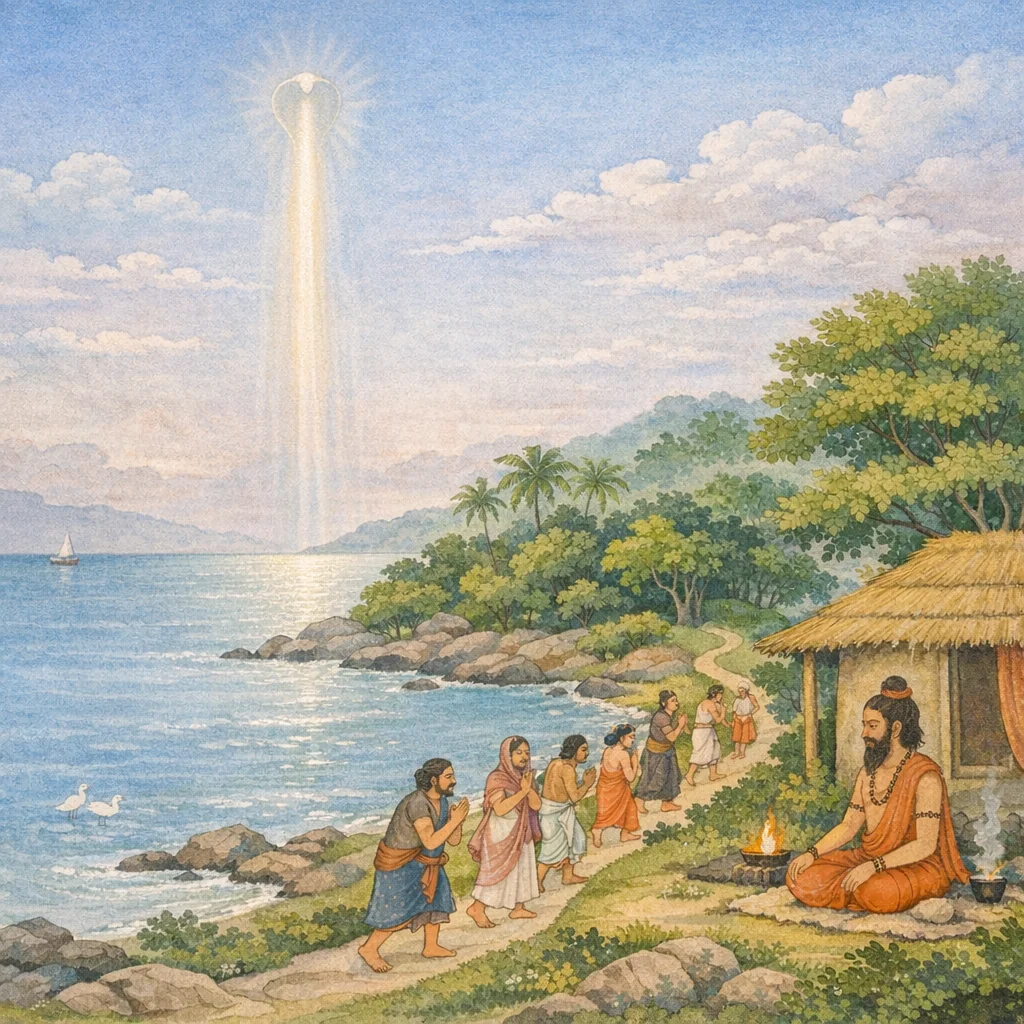
Nāgeśa-jyotirliṅga-prādurbhāvaḥ — The Manifestation of the Nāgeśa Jyotirliṅga
Introduced by Sūta, this chapter proclaims the account of the supreme liṅga arising as a form of light (jyoti-rūpa), specifically known as Nāgeśa. The narrative then turns to a crisis of origins: the rākṣasī Dārukā, empowered by a boon connected with Pārvatī, and her husband Dāruka become fiercely oppressive, destroying sacrifices (yajña) and unsettling dharma. Their power is centered in a richly endowed forest in the western ocean, its extent described in yojanas, anchoring the tale in sacred geography. Under persecution, afflicted beings together seek refuge with the sage Aurva, approaching with reverence and pleading for protection, for they find safety nowhere else. The inner Purāṇic teaching shows that adharma drives beings to a higher spiritual authority, leading (in the chapter’s larger arc) to Śiva’s revelatory intervention as the jyotirliṅga—uniting metaphysical radiance with a ritually approachable icon that restores cosmic order.
Shlokas
Verse 1
सूत उवाच । अथातः संप्रवक्ष्यामि नागेशाख्यं परात्मनः । ज्योतीरूपं यथा जातं परमं लिंगमुत्तमम्
Sūta said: Now I shall clearly narrate the Supreme Self’s manifestation known as Nāgeśa—how that unsurpassed, supreme Liṅga came to be as the very form of Light (jyoti).
Verse 2
दारुका राक्षसी काचित्पार्वती वरदर्पिता । दारुकश्च पतिस्तस्या बभूव बलवत्तरः
There was a rākṣasī named Dārukā, made proud by a boon bestowed by Pārvatī. Her husband Dāruka, too, became exceedingly powerful.
Verse 3
बहुभी राक्षसैस्तत्र चकार कदनं सताम् । यज्ञध्वंसं च लोकानां धर्मध्वंसं तदाकरोत्
There, together with many rākṣasas, he wrought slaughter among the righteous; he destroyed the people’s yajñas, and at that time brought ruin upon dharma itself.
Verse 4
पश्चिमे सागरे तस्य वनं सर्वसमृद्धिमत् । योजनानां षोडशभिर्विस्तृतं सर्वतो दिशम्
On the western ocean there was a forest of that sacred region, endowed with every kind of prosperity; it extended sixteen yojanas in all directions.
Verse 5
दारुका स्वविलासार्थं यत्र गच्छति तद्वनम् । भूम्या च तरुभिस्तत्र सर्वोपकरणैर्युतम्
That forest to which Dārukā goes for her own enjoyment is furnished in every way—blessed with fertile ground and trees, and supplied with all necessities and comforts.
Verse 6
दारुकायै ददौ देवी तद्वनस्यावलोकनम् । प्रयाति तद्वनं सा हि पत्या सह यदृच्छया
The Goddess (Devī) granted Dārukā the vision (and knowledge) of that sacred forest. Then, by divine happenstance, she set out for that very forest together with her husband.
Verse 7
तत्र स्थित्वा तदा सोपि सर्वेषां च भयं ददौ । दारुको राक्षसः पत्न्या तया दारुकया सह
Staying there, he too then spread fear among everyone—Daruka the rākṣasa—together with his wife, that Darukā.
Verse 8
ते सर्वे पीडिता लोका और्वस्य शरणं ययुः । नत्वा प्रीत्या विशेषेण तमूचुर्नतमस्तकाः
All those beings, tormented and distressed, went to Aurva for refuge. Bowing down with special devotion and affection, they addressed him with their heads bent in humility.
Verse 9
लोका ऊचुः । महर्षे शरणं देहि नो चेद्दुष्टैश्च मारिताः । सर्वं कर्तुं समर्थोसि तेजसा दीप्तिमानसि
The people said: “O great sage, grant us refuge; otherwise we shall be slain by the wicked. You can accomplish all things, for you shine with tejas, radiant spiritual power.”
Verse 10
पृथ्व्यां न वर्तते कश्चित्त्वां विना शरणं च नः । यामो यस्य समीपे तु स्थित्वा सुखमवाप्नुमः
On this earth there is none—apart from You—who can be our refuge. We go to Him, and by abiding near Him we attain peace and well-being.
Verse 11
त्वां दृष्ट्वा राश्रसास्सर्वे पला यंते विदूरतः । त्वयि शैवं सदा तेजो विभाति ज्वलनो यथा
On seeing you, all hostile forces flee far away. In you the Shaiva splendor ever shines—like a blazing fire.
Verse 12
सूत उवाच । इत्येवं प्रार्थितो लोकैरौर्वो हि मुनिसत्तमः । शोचमानः शरण्यश्च रक्षायै हि वचोऽब्रवीत्
Sūta said: Thus entreated by the people, the great sage Aurva—though grieving within—being a refuge to those who seek shelter, spoke words meant for their protection.
Verse 13
और्व उवाच । पृथिव्यां यदि रक्षांसि हिंस्युर्वै प्राणिनस्तदा । स्वयं प्राणैर्वियुज्येयू राक्षसा बलवत्तराः
Aurva said: “If on the earth the rākṣasas were indeed to harm living beings, then those rākṣasas—being the stronger—would themselves cause them to be separated from their life-breath (prāṇa).”
Verse 14
यदा यज्ञा न हन्येरंस्तदा प्राणैर्वियोजिताः । भवंतु राक्षसास्सर्वे सत्यमेतन्मयोच्यते
“If ever the sacrifices (yajñas) are not to be harmed, then let all those who obstruct them be severed from their life-breath. Let them all become rākṣasas—this is the truth that I declare.”
Verse 15
सूत उवाच । इत्युक्त्वा वचनं तेभ्यस्समाश्वास्य प्रजाः पुनः । तपश्चकार विविधमौर्वो लोकसुखावहः
Sūta said: Having thus spoken to them, and again reassuring the people, Aurva—whose presence brought welfare and happiness to the world—performed austerities of many kinds.
Verse 16
देवास्तदा ते विज्ञाय शापस्य कारणं हि तत् । युद्धाय च समुद्योगं चक्रुर्देवारिभिस्सह
Then those Devas, having understood the true cause of that curse, prepared themselves for battle—together with the enemies of the gods.
Verse 17
सर्वैश्चैव प्रयत्नैश्च नानायुधधरास्सुराः । सर्वे शक्रादयस्तत्र युद्धार्थं समुपागताः
Then the gods, bearing many kinds of weapons and exerting every effort, all assembled there—Indra and the others—having come for the purpose of battle.
Verse 18
तान्दृष्ट्वा राक्षसास्तत्र विचारे तत्पराः पुनः । बभूवुस्तेऽखिला दुष्टा मिथो ये यत्र संस्थिताः
Seeing them there, the rākṣasas once again became intent on deliberation and scrutiny; all those wicked ones—each stationed wherever he stood—turned toward one another in agitated consultation.
Verse 19
राक्षसा ऊचुः । किं कर्तव्यं क्व गंतव्यं संकटं समुपागताः । युद्ध्यते म्रियते चैव युद्ध्यते न विहन्यते
The Rākṣasas said: “What should we do, and where should we go? We have fallen into great peril. In battle one is struck and dies; yet here, though the fighting goes on, one is not able to slay the opponent.”
Verse 20
तथैव स्थीयते चेद्वै भक्ष्यते किं परस्परम् । दुःखं हि सर्वथा जातं क एनं विनिवारयेत्
And if things continue in just the same way, why should beings devour one another? For suffering has arisen on every side; who could possibly ward it off so long as this mutual harming persists?
Verse 21
सूत उवाच । विचार्येति च ते तत्र दारुकाद्याश्च राक्षसाः । उपायं न विजानन्तो दुःखं प्राप्तास्सदा हि वै
Sūta said: Having deliberated there, those rākṣasas headed by Dāruka—unable to discern any remedy—fell into continual distress indeed.
Verse 22
दारुका राक्षसी चापि ज्ञात्वा दुःखं समागतम् । भवान्याश्च वरं तञ्च कथयामास सा तदा
Then Dārukā, the rākṣasī, realizing that sorrow had come upon them, related at that time the boon (vara) granted by Bhavānī (Pārvatī) and what it was.
Verse 23
दारुकोवाच । मया ह्याराधिता पूर्वं भवपत्नी वरं ददौ । वनं गच्छ निजैः सार्धं यत्र गंतुं त्वमिच्छसि
Dāruka said: “Formerly I worshiped Bhava’s consort, the Goddess, and she granted me a boon: ‘Go to the forest together with your own people, to whatever place you wish to go.’”
Verse 24
तद्वरश्च मया प्राप्तः कथं दुःखं विषह्यते । जलं वनं च नीत्वा वै सुखं स्थेयं तु राक्षसैः
“I have obtained that boon; how, then, could suffering be endured any longer? Taking water and going into the forest, the rākṣasas should indeed remain at ease.”
Verse 25
भूत उवाच । तस्यास्तद्वचनं श्रुत्वा राक्षस्या हर्षमागताः । उचुस्सर्वे मिथस्ते हि राक्षसा निर्भयास्तदा
Bhūta said: Hearing those words of the rākṣasī, all the rākṣasas were filled with joy. Then, fearless at that moment, they all spoke among themselves.
Verse 26
धन्येयं कृतकृत्येयं राज्ञ्या वै जीवितास्स्वयम् । नत्वा तस्यै च तत्सर्वं कथयामासुरादरात्
“Truly blessed is this queen; truly her life has become fulfilled. Then, having bowed to her, they respectfully narrated to her everything in full.”
Verse 27
यदि गंतुं भवेच्छक्तिर्गम्यतां किं विचार्यते । तत्र गत्वा जले देवि सुखं स्थास्याम नित्यशः
If you have the strength to go, then let us go—what is there to deliberate? Having reached that place, O Devi, we shall remain there in the waters, abiding in comfort forever.
Verse 28
एतस्मिन्नंतरे लोका देवैस्सार्द्धं समागताः । युद्धाय विविधैर्दुःखैः पीडिता राक्षसैः पुरा
Meanwhile, the inhabitants of the worlds, together with the Devas, assembled. Long had they been tormented by the Rākṣasas with many kinds of sufferings, and they came intent upon battle.
Verse 29
इति श्रीशिवमहापुराणे चतुर्थ्यां कोटिरुद्र संहितायां नागेश्वरज्योतिर्लिंगमाहात्म्ये दारुकावनराक्षसोपद्रववर्णनंनामैकोनत्रिंशोऽध्यायः
Thus, in the Śrī Śiva Mahāpurāṇa, in the Fourth Book, within the Koṭirudra Saṃhitā—under the section on the greatness of the Nāgeśvara Jyotirliṅga—ends the twenty-ninth chapter entitled “The description of the oppression caused by the demons of Dārukāvana.”
Verse 30
जयजयेति देव्यास्तु स्तुतिमुच्चार्य राक्षसी । तत उड्डीयनं कृत्वा सपक्षो गिरिराड्यथा
Having uttered the Goddess’s praise, crying “Victory! Victory!”, the rākṣasī rose up and flew away, as the king of mountains would, were he winged.
Verse 31
समुद्रस्य च मध्ये सा संस्थिता निर्भया तदा । सकलैः परिवारैश्च मुमुदेति शिवानुगा
Then, stationed in the very midst of the ocean, she remained fearless; and accompanied by all her attendants, that devoted follower of Śiva rejoiced.
Verse 32
तत्र सिंधौ च ते स्थित्वा नगरे च विलासिनः । राक्षसाश्च सुखं प्रापु्र्निर्भयाश्च विजह्रिरे
There, having taken their stand by the Sindhu and within the city, those pleasure-seeking rākṣasas attained comfort; free from fear, they sported about at will.
Verse 33
राक्षसाश्च पृथिव्यां वै नाजग्मुश्च कदाचन । मुनेश्शापभयादेव बभ्रमुस्ते चले तदा
Out of fear of the sage’s curse, the rākṣasas never again came upon the earth; at that time they only wandered about in the moving realms.
Verse 34
नौषु स्थिताञ्जनान्नीत्वा नगरे तत्र तांस्तदा । चिक्षिपुर्बन्धनागारे कांश्चिज्जघ्नुस्तदा हि ते
Taking the people who were on the boats, they brought them into that city; then they hurled some into the prison-house, and at that time they killed some others.
Verse 35
यथायथा पुनः पीडां चक्रुस्ते राक्षसास्तदा । तत्रस्थिता भवान्याश्च वरदानाच्च निर्भयाः
And whenever those rākṣasas again inflicted torment, Bhavānī remained there; by the boon that had been granted, she was fearless.
Verse 36
यथापूर्वं स्थले लोके भयं चासीन्निरन्तरम् । तथा भयं जले तेषामासीन्नित्यं मुनीश्वराः
O best of sages, just as there had earlier been unceasing fear for the people on land, so too there was constant fear for them in the waters.
Verse 37
कदाचिद्राक्षसी सा च निस्सृता नगराज्जले । रुद्ध्वा मार्गं स्थिता लोकपीडार्थं धरणौ च हि
Once, that rākṣasī emerged from the watery region near the city. Blocking the way, she stood upon the earth, intent on tormenting the people.
Verse 38
एतस्मिन्नंतरे तत्र नावो बहुतराः शुभाः । आगता बहुधा तत्र सर्वतो लोकसंवृताः
Meanwhile, at that very place, many auspicious boats arrived in great numbers; coming again and again from every direction, they filled the whole area with people.
Verse 39
ता नावश्च तदा दृष्ट्वा हर्षं संप्राप्य राक्षसाः । द्रुतं गत्वा हि तत्रस्थान्वेगात्संदध्रिरे खलाः
Seeing those boats at that moment, the rākṣasas were filled with joy. Hastening quickly, those wicked ones rushed forward with speed and closed in upon the people who were there.
Verse 40
आजग्मुर्नगरं ते च तानादाय महाबलाः । चिक्षिपुर्बन्धनागारे बद्ध्वा हि निगडैर्दृढैः
Then those mighty men went to the city, seized them, and after binding them fast with strong iron fetters, threw them into the prison-house.
Verse 41
बद्धास्ते निगडैर्लोका संस्थिता बंधनालये । अतीव दुःखमाजग्मुर्भर्त्सितास्ते मुहुर्मुहुः
Those people were bound in fetters and kept confined in a prison-house. They fell into intense suffering, being repeatedly scolded and abused again and again.
Verse 42
तेषां मध्ये च योऽधीशस्स वैश्यस्सुप्रियाभिधः । शिवप्रियश्शुभाचारश्शैवश्चासीत्सदातनः
Among them, the leading man was a Vaiśya named Supriya. He was devoted to Śiva, established in auspicious conduct, and was ever a steadfast follower of the Śaiva path.
Verse 43
विना च शिवपूजां वै न तिष्ठति कदाचन । सर्वथा शिवधर्मा हि भस्मरुद्राक्षभूषणः
Without the worship of Lord Śiva, one never truly remains established (in the right path). In every way, the dharma of Śiva is indeed to be adorned with sacred ash (bhasma) and Rudrākṣa beads.
Verse 44
यदि पूजा न जाता चेन्न भुनक्ति तदा तु सः । अतस्तत्रापि वैश्योऽसौ चकार शिवपूजनम्
Thinking, “If the worship has not been performed, then he should not partake (of food),” that Vaiśya, therefore, even there, undertook the worship of Lord Śiva.
Verse 45
कारागृहगतस्सोपि बहूंश्चाशिक्षयत्तदा । शिवमंत्रं च पूजां च पार्थिवीमृषिसत्तमाः
O best of sages, even while confined in prison, he then instructed many people in the mantra of Śiva and in the worship of the earthen (Pārthiva) Liṅga.
Verse 46
ते सर्वे च तदा तत्र शिवपूजां स्वकामदाम् । चक्रिरे विधिवत्तत्र यथादृष्टं यथाश्रुतम्
Then all of them, right there and at that very time, performed the worship of Lord Śiva—bestower of the worshippers’ cherished aims—doing it properly according to the prescribed rule, exactly as they had seen and as they had heard in tradition.
Verse 47
केचित्तत्र स्थिता ध्याने बद्ध्वासनमनुत्तमम् । मानसीं शिवपूजां च केचिच्चक्रुर्मुदान्विताः
Some remained there absorbed in meditation, having assumed the most excellent, steady posture; and some, filled with joy, performed the mental worship of Lord Śiva.
Verse 48
तदधीशेन तत्रैव प्रत्यक्षं शिवपूजनम् । कृतं च पार्थिवस्यैव विधानेन मुनीश्वराः
O lords among sages, there itself the presiding ruler performed a direct, manifest worship of Śiva, following precisely the prescribed rite of the Pārthiva (earthen) Liṅga.
Verse 49
अन्ये च ये न जानन्ति विधानं स्मरणं परम् । नमश्शिवाय मंत्रेण ध्यायंतश्शंकरं स्थिताः
And there are others too who do not know the prescribed rites or the supreme discipline of remembrance; yet, through the mantra “Namaḥ Śivāya,” meditating on Śaṅkara, they remain steadfast in Him.
Verse 50
सुप्रियो नाम यश्चासीद्वैश्यवर्यश्शिवप्रियः । ध्यायंश्च मनसा तत्र चकार शिवपूजनम्
There was a foremost Vaiśya named Supriya, a dear devotee of Śiva. There, with his mind absorbed in meditation, he performed the worship of Lord Śiva.
Verse 51
यथोक्तरूपी शंभुश्च प्रत्यक्षं सर्वमाददे । सोपि स्वयं न जानाति गृह्यते न शिवेन वै
Śambhu, assuming the very form that had been described, manifested directly and took up everything before them. Yet He cannot truly be “known” as an object of the senses; for Śiva is never grasped or contained by anyone—indeed, not even by Śiva Himself as an object.
Verse 52
एवं च क्रियमाणस्य वैश्यस्य शिवपूजनम् । व्यतीयुस्तत्र षण्मासा निर्विघ्नेन मुनीश्वराः
Thus, as that Vaiśya continued performing the worship of Lord Śiva, six months passed there without any obstacle, O best of sages.
Verse 53
अतः परं च यज्जातं चरितं शशिमौलिनः । तच्छृणुध्वमृषिश्रेष्ठाः सावधानेन चेतसा
Therefore, O best of sages, now listen with a mind made fully attentive to the sacred account of Śiva—He whose crest is adorned with the moon—and to what took place thereafter.
Frequently Asked Questions
It sets up the Nāgeśa jyotirliṅga origin by narrating the rise of Dārukā–Dāruka’s adharma (yajña and dharma destruction), the localization of their power in a western-ocean forest, and the collective appeal of the afflicted to Aurva Ṛṣi for protection—preparing the ground for Śiva’s intervention.
The liṅga appearing as jyotis encodes a dual register: Śiva is formless, self-luminous reality (beyond attributes) while also becoming ritually accessible through an emblem anchored to a place. The forest-in-the-ocean motif functions as a liminal ‘outside dharma’ zone, where disorder concentrates until reabsorbed by divine luminosity and reordering.
Śiva is highlighted as the parātman manifested as the Nāgeśa jyotirliṅga (jyotīrūpaṃ paramaṃ liṅgam), while Pārvatī appears indirectly through the boon-context that emboldens Dārukā, underscoring how boons require dharmic containment and ultimate Śaiva oversight.