Adhyaya 71
Udyoga-parva Adhyāya 71 — Kṣatra-dharma Counsel, Public Legitimacy, and Mobilization
Upa-parva: Udyoga-parva — Strategic Counsel and War-Readiness Discourse (Chapter 71 context)
A senior authoritative voice addresses Yudhiṣṭhira after receiving Sañjaya’s report, stating that the speaker understands both parties’ intentions: Yudhiṣṭhira’s mind is dharma-oriented, whereas the Dhārtarāṣṭras are driven by hostility and acquisitiveness. The discourse argues that what can be obtained without conflict may be preferable, yet sustained compromise is not a stable duty for a kṣatriya; victory or death in sanctioned combat is presented as fate-allotted, and cowardice is rejected. The speaker warns that continued softness will invite further seizure of the kingdom and that the opposing party will not satisfy Yudhiṣṭhira’s aims out of compassion, fear, or dharmic reasoning. The text recalls the deception in the dice episode in the presence of elders, emphasizing Duryodhana’s shamelessness and the wider assembly’s disapproval; reputational condemnation is treated as politically decisive. The speaker proposes to remove ambiguity among kings by publicly stating Yudhiṣṭhira’s virtues and the adversary’s transgressions, including in civic gatherings. Finally, the chapter pivots to practical readiness: signs and omens are described as severe; armaments, armor, chariots, standards, elephants and horses are to be made ready; and it is asserted that Duryodhana will not return the previously seized kingdom while alive.
Chapter Arc: उद्योग-पर्व के निर्णायक मोड़ पर युधिष्ठिर श्रीकृष्ण से अपने हृदय का अभिप्राय निवेदित करते हैं—अब वही समय है जब मित्रों के मित्रवत्सल केशव को आगे बढ़कर संकट-तारण करना चाहिए। → युधिष्ठिर धृतराष्ट्र की पुत्र-गृद्धि और लोभ-ग्रस्त अंधता का चित्र खींचते हैं—राजा स्वधर्म नहीं देख पा रहा, और दुर्योधन के वश में होकर अनुचित शासन का अनुसरण कर रहा है। वे युद्ध के अनिवार्य परिणामों पर भी विचार रखते हैं: धन-सम्पत्ति का नाश मृत्यु से भी बड़ी आपदा बन जाता है; युद्ध में प्रायः वही धीर, दयालु, लज्जाशील श्रेष्ठ जन मारे जाते हैं; और विजय के बाद भी निर्वेद (जीवन से विरक्ति) घेर लेता है। → युधिष्ठिर केशव से स्पष्ट निवेदन करते हैं कि इस ‘अर्थकृच्छ’ (अत्यंत कठिन) स्थिति में वे पुरुषोत्तम के अतिरिक्त किसी और से पूछने योग्य नहीं—और कृष्ण को धर्म-संगत, युक्तियुक्त, हितकर वचन बोलने का अधिकार सौंपते हैं: चाहे सान्त्व (समझौता) हो या कठोर नीति, जो धर्म से संयुक्त हो वही कहें। → कृष्ण-शरणागति का स्वर दृढ़ होता है—पाण्डव माधव का आश्रय लेकर निर्भय हैं और यदि धर्म की रक्षा हेतु युद्ध अनिवार्य हो तो भी वे उसे स्वीकार करने को तैयार हैं; साथ ही कृष्ण को कौरव-सभा में दूत बनकर जाने का नैतिक-राजनीतिक दायित्व सौंपा जाता है। → कृष्ण के वचन और दूत-यात्रा की दिशा तय हो चुकी है—अब प्रश्न यह है कि धृतराष्ट्र-दुर्योधन की सभा धर्मयुक्त सलाह को स्वीकार करेगी या विनाश की ओर बढ़ेगी।
Shlokas
Verse 1
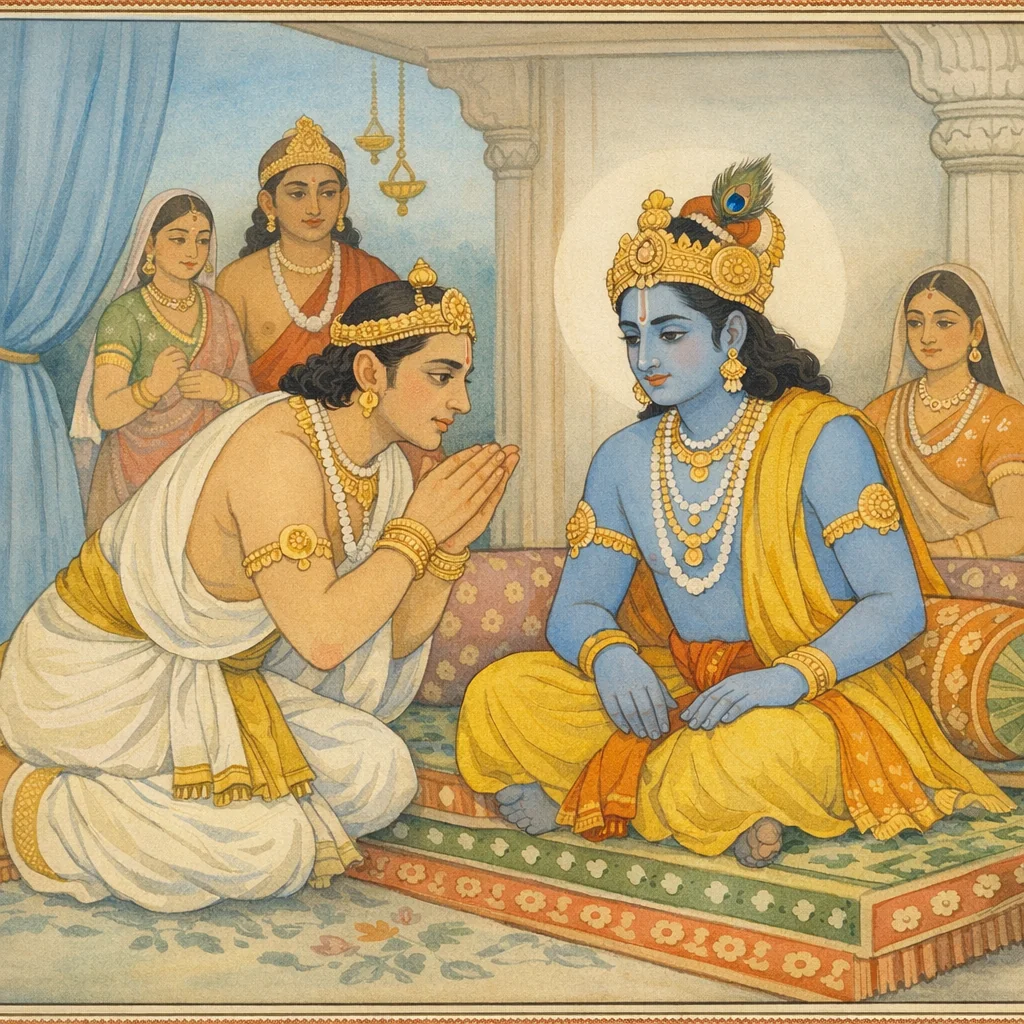
ऑपन--माजल बछ। अफ<-जआकऋज (भगवदयानपर्व) द्विसप्ततितमो< ध्याय: युधिष्ठटिरका बरस ष्णसे अपना अभिप्राय निवेदन करना, श्रीकृष्णका १ बनकर कौरवसभामें जानेके लिये उद्यत होना और इस विषयमें उन दोनोंका वार्तालाप वैशम्पायन उवाच संजये प्रतियाते तु धर्मराजो युधिष्ठिर: । (अर्जुनं भीमसेनं च माद्रीपुत्री च भारत । विराटद्रुपदौ चैव केकयानां महारथान् ।। अब्रवीदुपसड्रम्य शड्खचक्रगदाधरम् ।। अभियाचामहे गत्वा प्रयातुं कुरुसंसदम् । वैशम्पायनजी कहते हैं--भारत! इधर संजयके चले जानेपर धर्मराज युधिष्ठिरने भीमसेन, अर्जुन, माद्रीकुमार नकुल-सहदेव, विराट, द्रपद तथा केकयदेशीय महारथियोंके पास जाकर कहा--'हमलोग शंख, चक्र और गदा धारण करनेवाले भगवान् श्रीकृष्णके पास चलकर उनसे कौरवसभामें जानेके लिये प्रार्थना करें। यथा भीष्मेण द्रोणेन बाह्लीकेन च धीमता ।। अन्यैश्न कुरुभि: सार्ध न युध्येमहि संयुगे । “वे वहाँ जाकर ऐसा प्रयत्न करें, जिससे हमें भीष्म, ट्रोण, बुद्धिमान् बाह्नीक तथा अन्य कुरुवंशियोंके साथ रणक्षेत्रमें युद्ध न करना पड़े। एष न: प्रथम: कल्प एतन्न: श्रेय उत्तमम् ।। एवमुक्ता: सुमनसस्ते5भिजम्मुर्जनार्दनम् । “यही हमारा पहला ध्येय है और यही हमारे लिये परम कल्याणकी बात है।” राजा युधिष्ठिरके ऐसा कहनेपर वे सब लोग प्रसन्नचित्त होकर भगवान् श्रीकृष्णके समीप गये। पाण्डवै: सह राजानो मरुत्वन्तमिवामरा: ।। तदा च दुःसहा: सर्वे सदस्यास्ते नरर्षभा: । उस समय शत्रुओंके लिये दुःसह प्रतीत होनेवाले वे सभी नरश्रेष्ठ सभासद् भूपालगण पाण्डवोंके साथ श्रीकृष्णके निकट उसी प्रकार गये, जैसे देवता इन्द्रके पास जाते हैं। जनार्दनं समासाद्य कुन्तीपुत्रो युधिष्ठिर: ।। ) अभ्यभाषत दाशार्हमृषभं सर्वसात्वताम्,समस्त यदुवंशियोंमें श्रेष्ठ दशारहकुलनन्दन जनार्दन श्रीकृष्णके पास पहुँचकर कुन्तीपुत्र राजा युधिष्ठिरने इस प्रकार कहा--
Vaiśampāyana said: When Sañjaya had departed, King Yudhiṣṭhira, steadfast in dharma, approached Arjuna and Bhīmasena, the two sons of Mādrī (Nakula and Sahadeva), and also Virāṭa, Drupada, and the great chariot-warriors of the Kekayas. Drawing near to Janārdana—Śrī Kṛṣṇa, bearer of conch, discus, and mace—he said: “Let us go and earnestly request him to set out for the Kuru assembly. Let him strive there so that we may not have to fight in battle against Bhīṣma, Droṇa, the wise Bāhlīka, and the other Kurus. This is our first resolve; this is our highest good.” Thus addressed, they went with glad hearts to Janārdana. Those kings and foremost men, formidable to their foes, accompanied the Pāṇḍavas to Kṛṣṇa as the gods go to Indra. Reaching Janārdana, Kuntī’s son Yudhiṣṭhira spoke to Dāśārha Kṛṣṇa, the bull among all the Sātvatas.
Verse 2
अयं स काल: सम्प्राप्तो मित्राणां मित्रवत्सल | न च त्वदन्यं पश्यामि यो न आपत्सु तारयेत्,“मित्रवत्सल श्रीकृष्ण! मित्रोंकी सहायताके लिये यही उपयुक्त अवसर आया है। मैं आपके सिवा दूसरे किसीको ऐसा नहीं देखता, जो इस विपत्तिसे हमलोगोंका उद्धार करे
“O Kṛṣṇa, ever-affectionate to your friends, the decisive moment has now arrived for aiding one’s allies. I see no one other than you who can rescue us from this calamity.”
Verse 3
त्वां हि माधवमश्रित्य निर्भया मोघदर्पितम् । धार्तराष्ट्रं सहामात्यं स्वयं समनुयुड्क्ष्महे,“आप माधवकी शरणमें आकर हम सब लोग निर्भय हो गये हैं और व्यर्थ ही घमंड दिखानेवाले धृतराष्ट्रपुत्र दुर्योधन तथा उसके मन्त्रियोंको हम स्वयं युद्धके लिये ललकार रहे हैं
“For, having taken refuge in Mādhava, we have all become fearless; and we ourselves challenge to battle Dhṛtarāṣṭra’s son Duryodhana, vainly swollen with pride, together with his ministers.”
Verse 4
यथा हि सर्वास्वापत्सु पासि वृष्णीनरिंदम । तथा ते पाण्डवा रक्ष्या: पाह्ुस्मानू महतो भयात्,'शत्रुदमन! जैसे आप वृष्णिवंशियोंकी सब प्रकारकी आपत्तियोंसे रक्षा करते हैं, उसी प्रकार आपको पाण्डवोंकी भी रक्षा करनी चाहिये। प्रभो! इस महान् भयसे आप हमारी रक्षा कीजिये'
Vaiśampāyana said: “O subduer of foes, just as you protect the Vṛṣṇis in every kind of crisis, so too must the Pāṇḍavas be protected by you. Lord, save us from this great peril.”
Verse 5
श्रीभगवानुवाच अयमस्मि महाबाहो ब्रूहि यत् ते विवक्षितम् | करिष्यामि हि तत् सर्व यत् त्वं वक्ष्यसि भारत,श्रीभगवान् बोले--महाबाहो! यह मैं आपकी सेवाके लिये सर्वदा प्रस्तुत हूँ। आप जो कुछ कहना चाहते हों, कहें। भारत! आप जो-जो कहेंगे, वह सब कार्य मैं निश्चय ही पूर्ण करूँगा
The Blessed Lord said: “Mighty-armed one, here I stand ready. Speak whatever you wish to say. O Bhārata, whatever you command, I shall surely carry out in full.”
Verse 6
युधिछिर उवाच श्रुतं ते धृतराष्ट्रस्य सपुत्रस्य चिकीर्षितम् । एतद्धि सकलं॑ कृष्ण संजयो मां यदब्रवीत्,युधिष्ठिरने कहा--श्रीकृष्ण! पुत्रोंसहित राजा धृतराष्ट्र क्या करना चाहते हैं, यह सब तो आपने सुन ही लिया। संजयने मुझसे जो कुछ कहा है, वह धृतराष्ट्रका ही मत है। संजय धृतराष्ट्रका अभिन्नस्वरूप होकर आया था। उसने उन्हींके मनोभावको प्रकाशित किया है। दूत संजय स्वामीकी कही हुई बातको ही दुहराया है; क्योंकि यदि वह उसके विपरीत कुछ कहता तो वधके योग्य माना जाता
Yudhiṣṭhira said: “You have already heard, O Kṛṣṇa, what Dhṛtarāṣṭra—together with his sons—intends to do. Indeed, everything that Saṁjaya reported to me is nothing but Dhṛtarāṣṭra’s own view and resolve.”
Verse 7
तन्मतं धृतराष्ट्रस्य सो5स्यात्मा विवृतान्तर: । यथोक्त दूत आचहष्टे वध्य: स्यादन्यथा ब्रुवन्,युधिष्ठिरने कहा--श्रीकृष्ण! पुत्रोंसहित राजा धृतराष्ट्र क्या करना चाहते हैं, यह सब तो आपने सुन ही लिया। संजयने मुझसे जो कुछ कहा है, वह धृतराष्ट्रका ही मत है। संजय धृतराष्ट्रका अभिन्नस्वरूप होकर आया था। उसने उन्हींके मनोभावको प्रकाशित किया है। दूत संजय स्वामीकी कही हुई बातको ही दुहराया है; क्योंकि यदि वह उसके विपरीत कुछ कहता तो वधके योग्य माना जाता
Yudhiṣṭhira said: “This is indeed Dhṛtarāṣṭra’s intention. Sañjaya, as it were his very self, has come with his inner mind laid bare. As an envoy he has reported exactly what he was told; for if he were to speak otherwise, contradicting his master, he would be deemed fit for punishment.”
Verse 8
अप्रदानेन राज्यस्य शान्तिमस्मासु मार्गति । लुब्ध: पापेन मनसा चरन्नसममात्मन:,राजा धृतराष्ट्रको राज्यका बड़ा लोभ है। उनके मनमें पाप बस गया है। अतः वे अपने अनुरूप व्यवहार न करके राज्य दिये बिना ही हमारे साथ संधिका मार्ग ढूँढ़ रहे हैं
Yudhiṣṭhira said: “Without granting the kingdom, he seeks a settlement with us. Driven by greed and with a mind tainted by sin, he behaves in a manner unworthy of his own station—trying to find peace while refusing the rightful gift of sovereignty.”
Verse 9
यत् तद् द्वादश वर्षाणि वनेषु हुषिता वयम् । छटद्माना शरदं चैकां धृतराष्ट्रस्य शासनात्,प्रभो! हम तो यही समझकर कि धुृतराष्ट्र अपनी प्रतिज्ञापर स्थिर रहेंगे, उन्हींकी आज्ञासे बारह वर्ष वनमें रहे और एक वर्ष अज्ञातवास किया। श्रीकृष्ण! हमने अपनी प्रतिज्ञा भंग नहीं की है; इस बातको हमारे साथ रहनेवाले सभी ब्राह्मण जानते हैं
Yudhiṣṭhira said: “Those twelve years that we lived in the forests, and that single year we spent in concealment—these we endured under Dhṛtarāṣṭra’s command, O Lord. Trusting that Dhṛtarāṣṭra would stand firm by his pledged word, we obeyed his order. We have not violated our vow; all the Brahmins who lived with us know this to be true.”
Verse 10
स्थाता न: समये तस्मिन् धृतराष्ट्र इति प्रभो । नाहास्म समयं कृष्ण तद्धि नो ब्राह्मणा विदु:,प्रभो! हम तो यही समझकर कि धुृतराष्ट्र अपनी प्रतिज्ञापर स्थिर रहेंगे, उन्हींकी आज्ञासे बारह वर्ष वनमें रहे और एक वर्ष अज्ञातवास किया। श्रीकृष्ण! हमने अपनी प्रतिज्ञा भंग नहीं की है; इस बातको हमारे साथ रहनेवाले सभी ब्राह्मण जानते हैं
Yudhiṣṭhira said: “O lord, we lived through that appointed time with the conviction that Dhṛtarāṣṭra would stand firm by his pledged word. By his command we dwelt in the forest for twelve years and then passed one year in concealment. O Kṛṣṇa, we have not violated our agreement—this is known to the brāhmaṇas who lived with us.”
Verse 11
गृद्धों राजा धृतराष्ट्र: स्वधर्म नानुपश्यति । वश्यत्वात् पुत्रगृद्धित्वान्मन्दस्यान्वेति शासनम्,परंतु राजा धृतराष्ट्र तो लोभमें डूबे हुए हैं। वे अपने धर्मकी ओर नहीं देखते हैं। पुत्रोंमें आसक्त होकर सदा उन्हींके अधीन रहनेके कारण वे अपने मूर्ख पुत्र दुर्योधनकी ही आज्ञाका अनुसरण करते हैं
Yudhiṣṭhira said: “King Dhṛtarāṣṭra, consumed by greed, no longer perceives his own dharma. Enslaved by attachment to his sons, he continually follows the command of his foolish son Duryodhana.”
Verse 12
सुयोधनमते तिष्ठन् राजास्मासु जनार्दन । मिथ्या चरति लुब्ध: सन् चरन् हि प्रियमात्मन:,जनार्दन! उनका लोभ इतना बढ़ गया है कि वे दुर्योधनकी ही हाँ-में-हाँ मिलाते हैं और अपना ही प्रिय कार्य करते हुए हमारे साथ मिथ्या व्यवहार कर रहे हैं
Yudhiṣṭhira said: “O Janārdana, the king, standing by Suyodhana’s counsel, behaves falsely toward us. Driven by greed, he follows only what pleases himself—echoing Duryodhana’s will rather than upholding truth and rightful conduct.”
Verse 13
इतो दुःखतरं कि नु यदहं मातरं ततः । संविधातुं न शकनोमि मित्राणां वा जनार्दन,जनार्दन! इससे बढ़कर महान् दुःखकी बात और क्या हो सकती है कि मैं अपनी माता तथा मित्रोंका भी अच्छी तरह भरण-पोषणतक नहीं कर सकता
Yudhiṣṭhira said: “O Janārdana, what sorrow could be greater than this—that I am unable to provide properly even for my own mother, and likewise for my friends?”
Verse 14
काशिकभिश्रेदिपज्चालै मत्स्यैश्न मधुसूदन । भवता चैव नाथेन पज्च ग्रामा वृता मया,मधुसूदन! यद्यपि काशी, चेदि, पांचाल और मत्स्यदेशके वीर हमारे सहायक हैं और आप हमलोगोंके रक्षक और स्वामी हैं; (आपलोगोंकी सहायतासे हम सारा राज्य ले सकते हैं) तथापि मैंने केवल पाँच ही गाँव माँगे थे
Yudhiṣṭhira said: “O Madhusūdana, even though the heroes of Kāśī, Cedi, Pañcāla, and Matsya stand with us, and even though you yourself are our protector and lord—so that with such support we could press for the whole kingdom—still I asked for only five villages. This was my restrained and dharmic demand, made to avert needless bloodshed.”
Verse 15
अविस्थलं वृकस्थलं माकन्दी वारणावतम् | अवसानं च गोविन्द कज्चिदेवात्र पउचमम्,गोविन्द! मैंने धृतराष्ट्रसे यही कहा था कि तात! आप हमें अविस्थल, वृकस्थल, माकन्दी, वारणावत और अन्तिम पाँचवाँ कोई-सा भी गाँव जिसे आप देना चाहें, दे दें। इस प्रकार हमारे लिये पाँच गाँव या नगर दे दें; जिनमें हम पाँचों भाई एक साथ मिलकर रह सकें और हमारे कारण भरतवंशियोंका नाश न हो
Yudhiṣṭhira said: “O Govinda, I told Dhṛtarāṣṭra this: ‘Father, grant us Avi-sthala, Vṛka-sthala, Mākandī, Vāraṇāvata, and as the fifth, any one village you choose. Give us merely five villages or towns where the five brothers may live together, so that because of us the Bhārata lineage is not destroyed.’”
Verse 16
पज्च नस्तात दीयमन्तां ग्रामा वा नगराणि वा | वसेम सहिता येषु मा च नो भरता नशन्,गोविन्द! मैंने धृतराष्ट्रसे यही कहा था कि तात! आप हमें अविस्थल, वृकस्थल, माकन्दी, वारणावत और अन्तिम पाँचवाँ कोई-सा भी गाँव जिसे आप देना चाहें, दे दें। इस प्रकार हमारे लिये पाँच गाँव या नगर दे दें; जिनमें हम पाँचों भाई एक साथ मिलकर रह सकें और हमारे कारण भरतवंशियोंका नाश न हो
Yudhiṣṭhira said: “Father, grant us only five—whether villages or towns—where we five brothers may live together in peace. Let not the descendants of Bharata be destroyed because of us, O Govinda.”
Verse 17
न च तानपि दवुष्टात्मा धार्तराष्ट्रोडनुमन्यते । स्वाम्यमात्मनि मत्वासावतो दुःखतरं नु किम्,परंतु दुष्टात्मा दुर्योधन सबपर अपना ही अधिकार मानकर उन पाँच गाँवोंको भी देनेकी बात नहीं स्वीकार कर रहा है। इससे बढ़कर कष्टकी बात और क्या हो सकती है?
Yudhiṣṭhira said: “And that wicked-souled son of Dhṛtarāṣṭra does not consent even to those (villages). Claiming lordship as his own over everything, he refuses to grant even the five villages. What sorrow could be greater than this?”
Verse 18
कुले जातस्य वृद्धस्य परवित्तेषु गृद्धयत: । लोभ: प्रज्ञानमाहन्ति प्रज्ञा हन्ति हता द्वियम्,मनुष्य उत्तम कुलमें जन्म लेकर और वृद्ध होनेपर भी यदि दूसरोंके धनको लेना चाहता है तो वह लोभ उसकी विचारशक्तिको नष्ट कर देता है। विचारशक्ति नष्ट होनेपर उसकी लज्जाको भी नष्ट कर देती है
Yudhiṣṭhira said: “Even a man born in a noble lineage and advanced in years—if he still covets another’s wealth—greed strikes down his discernment. And when discernment is destroyed, it in turn destroys his sense of restraint and modest shame, leaving him unmoored from right conduct.”
Verse 19
ह्वीरहता बाधते धर्म धर्मो हन्ति हत: श्रियम् श्रीहता पुरुषं हन्ति पुरुषस्याधनं वध:,नष्ट हुई लज्जा धर्मको नष्ट कर देती है। नष्ट हुआ धर्म मनुष्यकी सम्पत्तिका नाश कर देता है और नष्ट हुई सम्पत्ति उस मनुष्यका विनाश कर देती है, क्योंकि धनका अभाव ही मनुष्यका वध है
Yudhiṣṭhira said: “When shame is lost, it destroys dharma. When dharma is destroyed, it destroys prosperity. And when prosperity is destroyed, it destroys the man himself—for the lack of wealth is, indeed, a kind of death for a man.”
Verse 20
अधनाद्धि निवर्तन्ते ज्ञातय: सुहृदो द्विजा: । अपुष्पादफलादू् वृक्षाद् यथा कृष्ण पतत्त्रिण:,श्रीकृष्ण! धनहीन पुरुषसे उसके भाई-बन्धु, सुहृद् और ब्राह्मणलोग भी उसी प्रकार मुँह मोड़ लेते हैं, जैसे पक्षी पुष्प और फलसे हीन वृक्षको छोड़कर उड़ जाते हैं
Yudhiṣṭhira said: “Indeed, when a man is without wealth, even his kinsmen, well-wishers, and Brahmins turn away from him—just as birds fly off from a tree that bears neither flowers nor fruit, O Kṛṣṇa.”
Verse 21
एतच्च मरणं तात यन्मत्त: पतितादिव । ज्ञातयो विनिवर्तन्ते प्रेतसत््वादिवासव:,तात! जैसे पतित मनुष्यके निकटसे लोग दूर भागते हैं और जैसे मृत शरीरसे प्राण निकल जाते हैं, उसी प्रकार मेरे कुटुम्बीजन भी जो मुझसे मुँह मोड़ रहे हैं, यही मेरे लिये मरण है
Dear child, this is death to me: that my own kinsmen turn away from me, as people recoil from one who has fallen, and as the vital breaths depart from a lifeless body. Their withdrawal and refusal to stand with me feels like the loss of life itself.
Verse 22
नात:ः पापीयसीं काज्चिदवस्थां शम्बरो<ब्रवीत् । यत्र नैवाद्य न प्रातर्भोजनं प्रतिदृश्यते,जहाँ आज और कल सबेरेके लिये भोजन नहीं दिखायी देता, उस दरिद्रतासे बढ़कर दूसरी कोई दुःखदायिनी अवस्था नहीं है; यह शम्बरका कथन है
Yudhiṣṭhira said: “Śambara has declared that there is no condition more wretched than this: where one sees no food for this day, nor even a morning meal for tomorrow. Beyond such poverty, there is no other state that brings greater suffering.”
Verse 23
धनमाहूु: परं धर्म धने सर्व प्रतिष्ठितम् । जीवन्ति धनिनो लोके मृता ये त्वधना नरा:,धनको उत्तम धर्मका साधक बताया गया है। धनमें सब कुछ प्रतिष्ठित है। संसारमें धनी मनुष्य ही जीवन धारण करते हैं। जो निर्धन हैं, वे तो मरे हुएके ही समान हैं
They say that wealth is the highest dharma; upon wealth all things are established. In this world, the wealthy alone truly live; those without wealth are as good as dead.
Verse 24
ये धनादपकर्षन्ति नरं स््वबलमास्थिता: । ते धर्ममर्थ कामं च प्रमथ्नन्ति नरं च तम्,जो लोग अपने बलमें स्थित होकर किसी मनुष्यको धनसे वंचित कर देते हैं, वे उसके धर्म, अर्थ और कामको तो नष्ट करते ही हैं, उस मनुष्यको भी नष्ट कर देते हैं
Yudhiṣṭhira said: Those who, relying on their own strength, deprive a person of his wealth do not merely ruin his dharma, his material well-being, and his rightful enjoyments—they also destroy that very person.
Verse 25
एतामवस्थां प्राप्यैके मरणं वव्रिरे जना: । ग्रामायैके वनायैके नाशायैके प्रवव्रजु:,इस निर्धन अवस्थाको पाकर कितने ही मनुष्योंने मृत्युका वरण किया है। कुछ लोग गाँव छोड़कर दूसरे गाँवमें जा बसे हैं, कितने ही जंगलोंमें चले गये हैं और कितने ही मनुष्य प्राण देनेके लिये घरसे निकल पड़े हैं
Yudhiṣṭhira said: “Having fallen into such a condition, some people choose death. Some abandon their village and settle elsewhere; some withdraw into the forest; and some, seeking their own ruin, depart from home as if to give up life itself.”
Verse 26
उन्मादमेके पुष्यन्ति यान्त्यन्ये द्विषतां वशम् । दास्यमेके च गच्छन्ति परेषामर्थहेतुना,कितने लोग पागल हो जाते हैं, बहुत-से शत्रुओंके वशमें पड़ जाते हैं और कितने ही मनुष्य धनके लिये दूसरोंकी दासता स्वीकार कर लेते हैं
Yudhiṣṭhira said: “Some people lapse into madness; others fall under the control of their enemies; and some, driven by the motive of wealth, even accept servitude under others.”
Verse 27
आपदेवास्य मरणात् पुरुषस्य गरीयसी । श्रियो विनाशस्तद्धयस्य निमित्तं धर्मकामयो:,धन-सम्पत्तिका नाश मनुष्यके लिये भारी विपत्ति ही है। वह मृत्युसे भी बढ़कर है, क्योंकि सम्पत्ति ही मनुष्यके धर्म और कामकी सिद्धिका कारण है
Yudhiṣṭhira said: “For a man, the loss of prosperity is a calamity even heavier than death itself. For wealth and well-being are the means by which one is able to accomplish dharma (right conduct and duty) and kāma (legitimate desires).”
Verse 28
यदस्य धर्म्य मरणं शाश्व॒तं लोकवर्त्म तत् । समन्तात् सर्वभूतानां न तदत्येति कश्चन,मनुष्यकी जो धर्मानुकूल मृत्यु है, वह परलोकके लिये सनातन मार्ग है। सम्पूर्ण प्राणियोंमेंसे कोई भी उस मृत्युका सब ओरसे उल्लंघन नहीं कर सकता
That death which is in accord with dharma is the eternal path leading to the other world. Among all living beings, no one can, from any side, overstep or evade that destiny.
Verse 29
न तथा बाध्यते कृष्ण प्रकृत्या निर्धनो जन: । यथा भद्रां श्रियं प्राप्प तया हीन: सुखैधित:,श्रीकृष्ण! जो जन्मसे ही निर्धन रहा है, उसे उस दरिद्रताके कारण उतना कष्ट नहीं पहुँचता, जितना कि कल्याणमयी सम्पत्तिको पाकर सुखमें ही पले हुए पुरुषको उस सम्पत्तिसे वंचित होनेपर होता है
Yudhiṣṭhira said: “O Kṛṣṇa, a man who has been poor by nature is not afflicted so severely by that poverty; but one who has attained auspicious prosperity and has been nurtured in comfort suffers far more when he is deprived of that very fortune.”
Verse 30
स तदा5>त्मापराधेन सम्प्राप्तो व्यसनं महत् | सेन्द्रान् गर्हयते देवान् नात्मानं च कथठ्चन,यद्यपि वह मनुष्य उस समय अपने ही अपराधसे भारी संकटमें पड़ता है, तथापि वह इसके लिये इन्द्र आदि देवताओंकी ही निन््दा करता है; अपनेको किसी प्रकार भी दोष नहीं देता है
Yudhiṣṭhira said: “When a man, through his own wrongdoing, falls into a great calamity, even then he censures the gods—Indra and the rest—yet in no way does he blame himself.”
Verse 31
न चास्य सर्वशास्त्राणि प्रभवन्ति निबर्हणे । सोऊभिक्रुध्यति भृत्यानां सुहृदश्चा भ्यसूयति,उस समय सम्पूर्ण शास्त्र भी उसके इस संकटको टालनेमें समर्थ नहीं होते। वह सेवकोंपर कुपित होता और सगे-सम्बन्धियोंके दोष देखने लगता है
Nor do all the scriptures prove capable of averting his calamity. In that state he grows angry with his servants and begins to look with envy and suspicion upon his well-wishers, fault-finding even with his own kin.
Verse 32
त॑ तदा मन्युरेवैति स भूय: सम्प्रमुह्ति । स मोहवशमापन्न:ः क्रूरं कर्म निषेवते,निर्धन अवस्थामें मनुष्यको केवल क्रोध आता है, जिससे वह पुनः मोहाच्छन्न हो जाता ->-विवेकशक्ति खो बैठता है। मोहके वशीभूत होकर वह क्रूरतापूर्ण कर्म करने लगता है
Then anger alone overtakes him; and again he falls into bewilderment. Overpowered by delusion, he resorts to cruel deeds—showing how poverty and distress can drive a person from clear judgment into destructive conduct.
Verse 33
पापकर्मतया चैव संकरं तेन पुष्यति । संकरो नरकायैव सा काष्ठा पापकर्मणाम्,इस प्रकार पापकर्मोमें प्रवृत्त होनेके कारण वह वर्णसंकर संतानोंका पोषक होता है और वर्णसंकर केवल नरककी ही प्राप्ति कराता है। पापियोंकी यही अन्तिम गति है
Driven by sinful conduct, a person thereby nourishes social and moral confusion (varṇa-saṅkara). Such confusion leads only to hell; this is the final end-point and bitter culmination of sinful deeds.
Verse 34
न चेत् प्रबुध्यते कृष्ण नरकायैव गच्छति । तस्य प्रबोध: प्रज्जैव प्रज्ञाचक्षुस्तरिष्पति,श्रीकृष्ण! यदि उसे फिरसे कर्तव्यका बोध नहीं होता, तो वह नरककी दिशामें ही बढ़ता जाता है। कर्तव्यका बोध करानेवाली प्रज्ञा ही है। जिसे प्रज्ञारूपी नेत्र प्राप्त हैं, वह निश्चय ही संकटसे पार हो जायगा
Yudhiṣṭhira said: “O Kṛṣṇa, if a man does not awaken to his duty, he moves only toward hell. For him, true awakening is nothing but discernment (prajñā) itself; and one who possesses the eye of wisdom will surely cross beyond peril.”
Verse 35
प्रज्ञालाभे हि पुरुष: शास्त्राण्येवान्ववेक्षते । शास्त्रनिष्ठ: पुनर्धर्म तस्य हीरड्रमुत्तमम्,प्रज्ञाकी प्राप्ति होनेपर पुरुष केवल शास्त्रवचनोंपर ही दृष्टि रखता है। शास्त्रमें निष्ठा होनेपर वह पुनः धर्म करता है। धर्मका उत्तम अंग है लज्जा, जो धर्मके साथ ही आ जाती है। लज्जाशील मनुष्य पापसे द्वेष रखकर उससे दूर हो जाता है। अतः उसकी धन-सम्पत्ति बढ़ने लगती है। जो जितना ही श्रीसम्पन्न है, वह उतना ही पुरुष माना जाता है
Yudhiṣṭhira said: “When a person attains true understanding, he looks to the śāstras alone for guidance. Established in the authority of śāstra, he again acts in accordance with dharma. For such a one, the finest ornament is modesty (lajjā): it naturally accompanies dharma, turns the mind away from sin with aversion, and thereby becomes a cause for the growth of one’s prosperity and standing.”
Verse 36
ह्वीमान् हि पापं प्रद्वेष्टि तस्य श्रीरभिवर्धते । श्रीमान् स यावत् भवति तावद् भवति पूरुष:,प्रज्ञाकी प्राप्ति होनेपर पुरुष केवल शास्त्रवचनोंपर ही दृष्टि रखता है। शास्त्रमें निष्ठा होनेपर वह पुनः धर्म करता है। धर्मका उत्तम अंग है लज्जा, जो धर्मके साथ ही आ जाती है। लज्जाशील मनुष्य पापसे द्वेष रखकर उससे दूर हो जाता है। अतः उसकी धन-सम्पत्ति बढ़ने लगती है। जो जितना ही श्रीसम्पन्न है, वह उतना ही पुरुष माना जाता है
A person endowed with modesty (hrī) comes to loathe sin and keeps away from it; therefore prosperity increases for him. And to the extent that one is possessed of prosperity, to that extent he is regarded as a “person of standing” in the world—so says Yudhiṣṭhira, linking ethical restraint with social esteem and material flourishing.
Verse 37
धर्मनित्य: प्रशान्तात्मा कार्ययोगवह: सदा । नाधर्मे कुरुते बुद्धि न च पापे प्रवर्तते,सदा धर्ममें तत्पर रहनेवाला पुरुष शान्तचित्त होकर नित्य-निरन्तर सत्कर्मोमें लगा रहता है। वह कभी अधर्ममें मन नहीं लगाता और न पापमें ही प्रवृत्त होता है
Yudhiṣṭhira said: “The person who is ever steadfast in dharma, whose inner self is tranquil, and who continually bears the discipline of rightful action remains constantly engaged in good works. Such a one never turns the mind toward unrighteousness, nor does he set himself in motion toward sin.”
Verse 38
अद्वीको वा विमूढो वा नैव स्त्री न पुन: पुमान् । नास्याधिकारो धर्मेडस्ति यथा शूद्रस्तथैव सः:,जो निर्लज्ज अथवा मूर्ख है, वह न तो स्त्री है और न पुरुष ही है। उसका धर्म-कर्ममें अधिकार नहीं है। वह शूद्रके समान है
Yudhiṣṭhira said: “Whether a man is shameless or deluded, he is neither truly woman nor truly man. He has no standing in matters of dharma; in eligibility for righteous conduct he is to be regarded as no better than a śūdra.”
Verse 39
ह्वीमानवति देवांश्व॒ पितृनात्मानमेव च । तेनामृतत्वं ब्रजति सा काष्ठा पुण्यकर्मणाम्,लज्जाशील पुरुष देवताओंकी, पितरोंकी तथा अपनी भी रक्षा करता है। इससे वह अमृतत्वको प्राप्त होता है। वही पुण्यात्मा पुरुषोंकी परम गति है
Yudhiṣṭhira said: “A person endowed with modesty (hrī) protects the gods, the ancestors, and even his own self. By that virtue he attains immortality; this is the highest culmination and supreme goal of those who perform righteous deeds.”
Verse 40
तदिदं मयि ते दृष्ट॑ प्रत्यक्ष मधुसूदन । यथा राज्यात् परिभ्रष्टो वसामि वसतीरिमा:,मधुसूदन! यह सब आपने मुझमें प्रत्यक्ष देखा है कि मैं किस प्रकार राज्यसे भ्रष्ट हुआ और कितने कष्टके साथ इन दिनों रह रहा हूँ
Yudhiṣṭhira said: “O Madhusūdana, you have seen all this directly in me—how I have been driven out from my kingdom and how I now live in these dwellings, enduring hardship. Let this visible truth of my fall and suffering be fully understood as you judge what is right to do.”
Verse 41
ते वयं न श्रियं हातुमलं न््यायेन केनचित् । अत्र नो यतमानानां वधश्चेदपि साधु तत्,अतः हमलोग किसी भी न्यायसे अपनी पैतृक सम्पत्तिका परित्याग करनेयोग्य नहीं हैं। इसके लिये प्रयत्न करते हुए यदि हमलोगोंका वध हो जाय तो वह भी अच्छा ही है
Yudhiṣṭhira said: “We are not fit to abandon our rightful prosperity and ancestral inheritance on the basis of any so‑called ‘justice’ that violates true right. If, while striving here to uphold our claim, we should even be slain, that too would be acceptable—for it is better to fall in the pursuit of dharma than to live by surrendering what is rightfully ours.”
Verse 42
तत्र नः प्रथम: कल्पो यद् वयं ते च माधव । प्रशान्ता: समभूताश्च श्रियं तामश्रुवीमहि,माधव! इस विषयमें हमारा पहला ध्येय यही है कि हम और कौरव आपसमें संधि करके शान्तभावसे रहकर उस सम्पत्तिका समानरूपसे उपभोग करें
“In this matter, our first resolve is this, O Mādhava: that we and they (the Kauravas) should come to a peaceful settlement, become calm and reconciled, and then enjoy that prosperity in common. The ethical priority is concord and shared welfare, not victory through conflict.”
Verse 43
तत्रैषा परमा काष्ठा रौद्रकर्मक्षयोदया । यद् वयं कौरवान् हत्वा तानि राष्ट्राण्यवाप्रुम:,दूसरा पक्ष यह है कि हम कौरवोंको मारकर सारा राज्य अपने अधिकारमें कर लें; परंतु यह भयंकर क्रूरतापूर्ण कर्मकी पराकाष्ठा होगी (क्योंकि इस दशामें कितने ही निरपराध मनुष्योंका संहार करनेके पश्चात् हमारी विजय होगी)
“In this matter, this would be the utmost extreme—the dreadful culmination and ‘success’ of a cruel deed: that we should kill the Kauravas and thereby obtain those kingdoms. Such victory would be bought at the price of terrible violence, for it would come only after the slaughter of many who are not truly at fault.”
Verse 44
ये पुनः स्युरसम्बद्धा अनार्या: कृष्ण शत्रव: । तेषामप्यवध: कार्य: किं पुनर्ये स्युरीदूशा:,श्रीकृष्ण! जिनका अपने साथ कोई सम्बन्ध न हो तथा जो सर्वथा नीच एवं शत्रुभाव रखनेवाले हों, उनका भी वध करना उचित नहीं है। फिर जो सगे-सम्बन्धी, श्रेष्ठ और सुहृद् हैं, ऐसे लोगोंका वध कैसे उचित हो सकता है?
Yudhiṣṭhira said: “O Kṛṣṇa, even if there are enemies who have no connection with us and are ignoble in conduct, is their killing truly to be undertaken? How much less, then, could it be right to kill those who are of our own kin—noble and well-disposed toward us?”
Verse 45
ज्ञातयश्वैव भूयिष्ठा: सहाया गुरवश्च न: । तेषां वधो5तिपापीयान् किं नो युद्धेडस्ति शो भनम्
Yudhiṣṭhira said: “Most of those standing with us are our own kinsmen—our allies and even our revered elders and teachers. To kill them would be a grievous sin. What good, then, can there be for us in this war?”
Verse 46
हमारे विरोधियोंमें अधिकांश हमारे भाई-बन्धु, सहायक और गुरुजन हैं। उनका वध तो बहुत बड़ा पाप है। युद्धमें अच्छी बात क्या है? (कुछ नहीं) ।। पाप: क्षत्रियधर्मो5यं वयं च क्षत्रबन्धव: । स नः स्वधर्मो<धर्मो वा वृत्तिरन्या विगर्हिता,क्षत्रियोंका यह (युद्धरूप) धर्म पापरूप ही है। हम भी क्षत्रिय ही हैं, अतः वह हमारा स्वधर्म पाप होनेपर भी हमें तो करना ही होगा, क्योंकि उसे छोड़कर दूसरी किसी वृत्तिको अपनाना भी निन्दाकी बात होगी
Yudhiṣṭhira said: “This kṣatriya-duty of war seems to me sinful, and we too are bound to the kṣatriya order. Yet for us it is our own ordained duty—even if it appears unrighteous—for adopting any other livelihood in its place would be a matter of reproach.”
Verse 47
शूद्र: करोति शुश्रूषां वैश्या वै पण्यजीविका: । वयं वधेन जीवाम: कपाल ब्राह्मुणैर्व॒तम्,शूद्र सेवाका कार्य करता है, वैश्य व्यापारसे जीविका चलाते हैं, हम क्षत्रिय युद्धमें दूसरोंका वध करके जीवन-निर्वाह करते हैं और ब्राह्मणोंने अपनी जीविकाके लिये भिक्षापात्र चुन लिया है
Yudhiṣṭhira said: “The Śūdra lives by service; the Vaiśyas live by trade. We, the Kṣatriyas, sustain ourselves by slaying others in battle; and the Brāhmaṇas have adopted the begging-bowl as their vowed means of livelihood.”
Verse 48
क्षत्रिय: क्षत्रियं हन्ति मत्स्यो मत्स्येन जीवति । थवा श्वानं हन्ति दाशार्ह पश्य धर्मो यथागत:,क्षत्रिय क्षत्रियको मारता है, मछली मछलीको खाकर जीती है और कुत्ता कुत्तेको काटता है। दशा्हनन्दन! देखिये; यही परम्परासे चला आनेवाला धर्म है
Yudhiṣṭhira said: “A kṣatriya slays a kṣatriya; a fish lives by consuming another fish; likewise a dog bites (and harms) a dog. O Dāśārha, behold—this is the dharma that has come down by tradition and is found in the world as it is.”
Verse 49
युद्धे कृष्ण कलिरनर्नित्यं प्राणा: सीदन्ति संयुगे । बल॑ तु नीतिमाधाय युध्ये जयपराजयौ,श्रीकृष्ण! युद्धमें सदा कलह ही होता है और उसीके कारण प्राणोंका नाश होता है। मैं तो नीतिबलका ही आश्रय लेकर युद्ध करूँगा। फिर ईश्वरकी इच्छाके अनुसार जय हो या पराजय
Yudhiṣṭhira said: “O Kṛṣṇa, in war there is always strife, and in the clash of battle lives are worn down and destroyed. Therefore I will fight relying only on the strength of righteous policy and moral discipline; then, O Śrī Kṛṣṇa, let victory or defeat come according to the Lord’s will.”
Verse 50
नात्मच्छन्देन भूतानां जीवितं मरणं तथा । नाप्यकाले सुखं प्राप्यं दु:खं वापि यदूत्तम,प्राणियोंक जीवन और मरण अपनी इच्छाके अनुसार नहीं होते हैं (यही दशा जय और पराजयकी भी है)। यदुश्रेष्ठी किसीको सुख अथवा दुःखकी प्राप्ति भी असमयमें नहीं होती है
Yudhiṣṭhira said: “The life and death of beings do not occur according to one’s personal wish; likewise, outcomes such as victory and defeat are not fully in one’s control. O best of the Yadus, neither happiness nor sorrow comes to anyone out of season—each arrives only when its proper time has ripened.”
Verse 51
एको हापि बहून् हन्ति घ्नन्त्येकं बहवो<प्युत । शूरं कापुरुषो हन्ति अयशस्वी यशस्विनम्,युद्धमें एक योद्धा भी बहुत-से सैनिकोंका संहार कर डालता है तथा बहुत-से योद्धा मिलकर भी किसी एकको ही मार पाते हैं। कभी कायर शूरवीरको मार देता है और अयशस्वी पुरुष यशस्वी वीरको पराजित कर देता है
Yudhiṣṭhira said: “At times a single warrior can cut down many, while at other times many together can scarcely bring down one. It even happens that a coward kills a hero, and a man without fame overcomes one who is renowned. In war, outcomes do not always follow merit or reputation; therefore one must judge with restraint and act with dharma rather than pride.”
Verse 52
जयो नैवोभयोर्दष्टो नोभयोश्व॒ पराजय: । तथैवापचयो दृष्टो व्यपयाने क्षयव्ययौ,न तो कहीं दोनों पक्षोंकी विजय होती देखी गयी है और न दोनोंकी पराजय ही दृष्टिगोचर हुई है। हाँ, दोनोंके धन-वैभवका नाश अवश्य देखा गया है। यदि कोई पक्ष पीठ दिखाकर भाग जाय, तो उसे भी धन और जन दोनोंकी हानि उठानी पड़ती है
Yudhiṣṭhira said: “In such conflicts, one does not truly see victory for both sides, nor does one see defeat for both together. What is certainly seen is decline—when the armies withdraw and disperse, there is loss and wasting away. Even if a side turns its back and flees, it still suffers the ruin of wealth and people.”
Verse 53
सर्वथा वृजिन युद्ध को घ्नन् न प्रतिहन्यते । हतस्य च हृषीकेश समौ जयपराजयौ,इससे सिद्ध होता है कि युद्ध सर्वथा पापरूप ही है। दूसरोंको मारनेवाला कौन ऐसा पुरुष है, जो बदलेमें स्वयं भी मारा न जाता हो? हृषीकेश! जो युद्धमें मारा गया, उसके लिये तो विजय और पराजय दोनों समान हैं
“Thus it is established that war is wholly of the nature of sin. Who is there that kills others and is not himself slain in return? O Hṛṣīkeśa, for one who is killed in battle, victory and defeat are the same.”
Verse 54
पराजयश्न मरणान्मन्ये नैव विशिष्यते । यस्य स्याद् विजय: कृष्ण तस्याप्यपचयो ध्रुवम्,श्रीकृष्ण! मैं तो ऐसा मानता हूँ कि पराजय मृत्युसे अच्छी वस्तु नहीं है। जिसकी विजय होती है, उसे भी निश्चय ही धन-जनकी भारी हानि उठानी पड़ती है
Yudhiṣṭhira said: “I consider defeat to be no better than death. For even the one who gains victory, O Kṛṣṇa, there is surely a decline—loss and diminishment—inevitably following.”
Verse 55
अन्ततो दयितं घ्नन्ति केचिदप्यपरे जना: । तस्याज़् बलहीनस्य पुत्रान् भ्रातृनपश्यत:
Yudhiṣṭhira said: “In the end, some people even strike down what is most dear to them; others do so as well—killing the beloved while he, powerless, can only look on, unable to protect his sons and brothers. Such is the cruelty that arises when strength fails and righteousness is abandoned.”
Verse 56
ये होव धीरा ह्वीमन्त आर्या: करुणवेदिन:,जो लोग धीर-वीर, लज्जाशील, श्रेष्ठ और दयालु हैं, वे ही प्राय: युद्धमें मारे जाते हैं और अधम श्रेणीके मनुष्य जीवित बच जाते हैं। जनार्दन! शत्रुओंको मारनेपर भी उनके लिये सदा मनमें पश्चात्ताप बना रहता है
Those who are steadfast, modest, noble, and compassionate—such people, it seems, are the ones most often slain in war, while men of a baser sort survive. O Janārdana, even after killing enemies, there remains an abiding remorse in the heart on their account.
Verse 57
त एव युद्धे हन्यन्ते यवीयान् मुच्यते जन: । हत्वाप्यनुशयो नित्यं परानपि जनार्दन,जो लोग धीर-वीर, लज्जाशील, श्रेष्ठ और दयालु हैं, वे ही प्राय: युद्धमें मारे जाते हैं और अधम श्रेणीके मनुष्य जीवित बच जाते हैं। जनार्दन! शत्रुओंको मारनेपर भी उनके लिये सदा मनमें पश्चात्ताप बना रहता है
Yudhiṣṭhira said: “It is those very men—steadfast and noble—who are slain in war, while the baser sort often escape alive. And even after killing one’s foes, O Janārdana, an unending remorse remains within the heart for those who have been struck down.”
Verse 58
अनुबन्धश्न पापोजअत्र शेषश्चाप्यवशिष्यते | शेषो हि बलमासाद्य न शेषमनुशेषयेत्
Yudhiṣṭhira said: “In this matter, the aftermath itself is sinful, and some remnant will still remain. For the survivor, once he has gained strength, does not leave any remnant behind—he goes on to eliminate what is left.”
Verse 59
जयो वैरं प्रसृजति दुःखमास्ते पराजित:
Yudhiṣṭhira said: “Victory gives rise to enmity, while the defeated one remains in sorrow.”
Verse 60
सुखं प्रशान्त: स्वपिति हित्वा जयपराजयौ । विजयकी प्राप्ति भी चिरस्थायी शत्रुताकी सृष्टि करती है। पराजित पक्ष बड़े दुःखसे समय बिताता है। जो किसीसे शत्रुता न रखकर शान्तिका आश्रय लेता है, वह जय- पराजयकी चिन्ता छोड़कर सुखसे सोता है ।। ५९ ह |। जातवैरश्न पुरुषो दुःखं स्वपिति नित्यदा
Yudhiṣṭhira said: “A person who is tranquil sleeps happily, having set aside both victory and defeat. But a man who has generated enmity sleeps in misery, always. For victory breeds lasting hostility, and the defeated side passes its time in great sorrow; therefore one who harbors no hatred and takes refuge in peace, free from anxiety over winning or losing, rests in contentment.”
Verse 61
अनिवृत्तेन मनसा ससर्प इव वेश्मनि | किसीसे वैर बाँधनेवाला पुरुष सर्पयुक्त गृहमें रहनेवालेकी भाँति उद्विग्नचित्त होकर सदा दुःखकी नींद सोता है || ६० ह ।। उत्सादयति य: सर्व यशसा स विमुच्यते
Yudhiṣṭhira said: “With a mind that cannot turn back from its fixation, a man who has bound himself in enmity lies down to sleep in constant misery—like one living in a house infested with serpents, ever anxious at heart. But he who destroys the roots of hostility entirely through true honour and good repute becomes freed.”
Verse 62
अकीर्ति सर्वभूतेषु शाश्वतीं सोडधिगच्छति । जो शत्रुके कुलमें आबालवृद्ध सभी पुरुषोंका उच्छेद कर डालता है, वह वीरोचित यशसे वंचित हो जाता है। वह समस्त प्राणियोंमें सदा बनी रहनेवाली अपकीर्ति (निन्दा)-का भागी होता है || ६१ है || न हि वैराणि शाम्यन्ति दीर्घकालधृतान्यपि
Yudhiṣṭhira said: “He incurs an enduring disgrace among all beings. The man who, in an enemy’s family, destroys every male—from children to the aged—loses the fame worthy of a hero; he becomes a perpetual object of blame in the eyes of all living creatures.”
Verse 63
आखयातारश्न विद्यन्ते पुमांश्चेद् विद्यते कुले दीर्घकालतक मनमें दबाये रखनेपर भी वैरकी आग सर्वथा बुझ नहीं पाती; क्योंकि यदि कोई उस कुलमें विद्यमान है, तो उससे पूर्वघटित वैर बढ़ानेवाली घटनाओंको बतानेवाले बहुत-से लोग मिल जाते हैं ।। न चापि वैरं वैरेण केशव व्युपशाम्यति
Yudhiṣṭhira said: “There are always narrators to be found—so long as even a single man remains in a lineage. Even if enmity is suppressed and kept hidden for a long time, I think the fire of hostility is never completely extinguished; for if anyone of that family still exists, many people will be found who recount the earlier incidents that inflame old grudges. And, O Keśava, enmity is not pacified by enmity.”
Verse 64
हविषाग्निर्यथा कृष्ण भूय एवाभिवर्धते | केशव! जैसे घी डालनेपर आग बुझनेके बजाय और अधिक प्रज्वलित हो उठती है, उसी प्रकार वैर करनेसे वैरकी आग शान्त नहीं होती, अधिकाधिक बढ़ती ही जाती है।। ६३ ई || अतोडन्यथा नास्ति शान्तिर्नित्यमन्तरमन्ततः
Yudhiṣṭhira said to Krishna: “Just as fire, when fed with oblations—especially ghee—does not die down but flares up all the more, so too the fire of enmity is not quenched by acts of enmity; it only grows ever stronger. Therefore peace cannot be secured by that path; true calm must be sought through an inner turning—through counsel and restraint rather than retaliation.”
Verse 65
अन्तरं लिप्समानानामयं दोषो निरन्तर: । (क्योंकि दोनों पक्षोंमें सदा कोई-न-कोई छिद्र मिलनेकी सम्भावना रहती है) इसलिये दोनों पक्षोंमेंसे एकका सर्वथा नाश हुए बिना पूर्णतः शान्ति नहीं प्राप्त होती है। जो लोग छिद्र ढूँढ़ते रहते हैं, उनके सामने यह दोष निरन्तर प्रस्तुत रहता है ।। ६४ इ ।। पौरुषे यो हि बलवानाधि्हंदयबाधन: । तस्य त्यागेन वा शान्तिर्मरणेनापि वा भवेत्
Yudhiṣṭhira said: “For those who keep seeking an opening—ever looking for a flaw or advantage—this fault persists without end. Where a powerful, man-made grievance presses upon the heart and torments it, peace may come only by relinquishing that cause, or else even by death. So long as both sides remain, each can always find some ‘gap’ in the other; therefore complete peace is not attained until one side is utterly removed.”
Verse 66
यदि अपनेमें पुरुषार्थ है, तो पूर्ववैरको याद करके जो हृदयको पीड़ा देनेवाली प्रबल चिन्ता सदा बनी रहती है, उसे वैराग्यपूर्वक त्याग देनेसे ही शान्ति मिल सकती है; अथवा मर जानेसे ही उस चिन्ताका निवारण हो सकता है ।। अथवा मूलघातेन द्विषतां मधुसूदन । फलनिर्व त्तिरिद्धा स्यात् तन्नृशंसतरं भवेत्,अथवा शत्रुओंको समूल नष्ट कर देनेसे ही अभीष्ट फलकी सिद्धि हो सकती है। परंतु मधुसूदन! यह बड़ी क्रूरताका कार्य होगा
Yudhiṣṭhira said: “If there is true human effort within oneself, then the fierce anxiety that constantly remains—painful to the heart—when one recalls former enmity, can be calmed only by renouncing it with detachment; otherwise, that anxiety is ended only by death. Or else, O Madhusūdana, the desired result may be achieved by striking the enemies at the root and destroying them utterly; but that would be an even more ruthless course.”
Verse 67
या तु त्यागेन शान्ति: स्थात् तदृते वध एव सः । संशयाच्च समुच्छेदाद् द्विषतामात्मनस्तथा,राज्यको त्याग देनेसे उसके बिना जो शान्ति मिलती है, वह भी वधके ही समान है। क्योंकि उस दशामें शत्रुओंसे सदा यह संदेह बना रहता है कि ये अवसर देखकर प्रहार करेंगे और धन-सम्पत्तिसे वंचित होनेके कारण अपने विनाशकी सम्भावना भी रहती ही है
Yudhiṣṭhira said: “The peace that is obtained by renouncing the kingdom—when one has no other means—is itself no better than death. For in such a condition there remains constant doubt about hostile men: ‘They will strike when they find an opening.’ And, being deprived of wealth and resources, one also faces the likelihood of one’s own ruin.”
Verse 68
नच त्यक्तुं तदिच्छामो न चेच्छाम: कुलक्षयम् | अत्र या प्रणिपातेन शान्ति: सैव गरीयसी
Yudhiṣṭhira said: “We do not wish to abandon that rightful claim, nor do we desire the destruction of our lineage. In this matter, the peace that is achieved through humble submission and respectful conciliation—that alone is the better course.”
Verse 69
अत: हमलोग न तो राज्य त्यागना चाहते हैं और न कुलके विनाशकी ही इच्छा रखते हैं। यदि नग्रता दिखानेसे भी शान्ति हो जाय तो वही सबसे बढ़कर है ।। सर्वथा यतमानानामयुद्धमभिकाड्क्षताम् । सान्त्वे प्रतिहते युद्ध प्रसिद्ध नापराक्रम:,यद्यपि हम युद्धकी इच्छा न रखकर साम, दान और भेद सभी उपायोंसे राज्यकी प्राप्तिके लिये प्रयत्न कर रहे हैं, तथापि यदि हमारी सामनीति असफल हुई तो युद्ध ही हमारा प्रधान कर्तव्य होगा, हम पराक्रम छोड़कर बैठ नहीं सकते
Yudhiṣṭhira said: “Therefore we do not wish to abandon the kingdom, nor do we desire the destruction of our own lineage. If peace can be secured even by showing humility, that is the highest course. We strive in every way, longing to avoid war; yet if conciliation is repulsed, then war becomes the acknowledged duty—one cannot simply sit back, renouncing valor and responsibility.”
Verse 70
प्रतिघातेन सान्त्वस्य दारुणं सम्प्रवर्तते । तच्छुनामिव सम्पाते पण्डितैरुपलक्षितम्,जब शान्तिके प्रयत्नोंमें बाधा आती है, तब भयंकर युद्ध स्वतः आरम्भ हो जाता है। पण्डितोंने इस युद्धकी उपमा कुत्तोंक कलहसे दी है
Yudhiṣṭhira said: “When efforts at conciliation are struck down and obstructed, a dreadful war begins of itself. The wise recognize this pattern—like the sudden clash of dogs—where a small provocation, once unchecked, rapidly turns into open fighting.”
Verse 71
इस प्रकार श्रीमह्याभारत उद्योगपर्वके अन्तर्गत यानसंधिपर्वमें धृतराष्ट्रवाक्यविषयक इकह्तत्तरवाँ अध्याय पूरा हुआ,लाड्गूलचालन क्ष्वेडा प्रतिवाचो विवर्तनम् । दन्तदर्शनमारावस्ततो युद्ध प्रवर्तते कुत्ते पहले पूँछ हिलाते हैं, फिर गुर्राते और गर्जते हैं। तत्पश्चात् एक-दूसरेके निकट पहुँचते हैं। फिर दाँत दिखाना और भूकना आरम्भ करते हैं। तत्पश्चात् उनमें युद्ध होने लगता है
Dhṛtarāṣṭra observes that conflict follows a familiar escalation: first there are conciliatory gestures like a wagging tail, then growls and loud challenges. As the opponents draw close, they bare their teeth and bark; from that point, battle is set in motion. The image warns how hostility ripens from small signals into open war when restraint and wise counsel fail.
Verse 72
तत्र यो बलवान् कृष्ण जित्वा सो>त्ति तदामिषम् | एवमेव मनुष्येषु विशेषो नास्ति कश्चन,श्रीकृष्ण! उनमें जो बलवान होता है, वही उस मांसको खाता है, जिसके लिये कि उनमें लड़ाई हुई थी। यही दशा मनुष्योंकी है। इनमें कोई विशेषता नहीं है- इति श्रीमहाभारते उलद्योगपर्वणि भगवद्यानपर्वणि युधिष्ठिरकृतकृष्णप्रेरणे द्विसप्ततितमो&5ध्याय:
“There, O Kṛṣṇa, whoever is strong—having conquered—he eats the meat for which they fought. Just so it is among human beings: there is no real distinction at all, O Śrī Kṛṣṇa.”
Verse 73
सर्वथा त्वेतदुचितं दुर्बलेषु बलीयसाम् । अनादरोडविरोधश्व प्रणिपाती हि दुर्बल:,यह सर्वथा उचित है कि बलवानोंकी दुर्बलोंके प्रति आदरबुद्धि न हो। वे उसका विरोध भी नहीं करते। दुर्बल वही है, जो सदा झुकनेके लिये तैयार रहे
“In every way this is what is deemed fitting among the strong in relation to the weak: they show no regard for them, and the weak do not even offer resistance. Indeed, the truly weak is the one who is always ready to bow down.”
Verse 74
पिता राजा च वृद्धश्न सर्वथा मानमर्हति | तस्मान्मान्यश्व पूज्यश्न धृतराष्ट्रो जनार्दन,जनार्दन! पिता, राजा और वृद्ध सर्वथा समादरके ही योग्य हैं। अतः धृतराष्ट्र हमारे लिये सदा माननीय एवं पूजनीय हैं
Yudhiṣṭhira said: “A father, a king, and an elder are in every way worthy of honor. Therefore, O Janārdana, Dhṛtarāṣṭra is always to be regarded by us as honorable and worthy of reverent respect.”
Verse 75
पुत्रस्नेहश्च बलवान् धृतराष्ट्रस्य माधव । स पुत्रवशमापन्न: प्रणिपातं प्रहास्यति,माधव! धृतराष्ट्रमें अपने पुत्रके प्रति प्रबल आसक्ति है। वे पुत्रके वशमें होनेके कारण कभी झुकना नहीं स्वीकार करेंगे
Yudhiṣṭhira said: “O Mādhava, Dhṛtarāṣṭra’s affection for his sons is overpowering. Having fallen under their sway, he will not accept the humility of bowing down (in submission or conciliation).”
Verse 76
तत्र कि मन्यसे कृष्ण प्राप्तकालमनन्तरम् | कथमर्थाच्च धर्माच्च न हीयेमहि माधव,माधव श्रीकृष्ण! ऐसे समयमें आप क्या उचित समझते हैं? हम कैसा बर्ताव करें, जिससे हमें अर्थ और धर्मसे भी वंचित न होना पड़े?
Yudhiṣṭhira said: “In this situation, Kṛṣṇa, now that the decisive moment has arrived, what do you judge to be the right course? O Mādhava, how should we conduct ourselves so that we are not deprived of either artha (material welfare) or dharma (righteousness)?”
Verse 77
ईदृशे>त्यर्थकृच्छे5स्मिन् कमन्यं मधुसूदन । उपसम्प्रष्टमर्हामि त्वामृते पुरुषोत्तम
Yudhiṣṭhira said: “In a crisis as extreme as this, O Madhusūdana, whom else could I rightly approach and question—apart from you, O Puruṣottama? When dharma is obscured and the path ahead is fraught with peril, you alone are fit to be consulted.”
Verse 78
पुरुषोत्तम मधुसूदन! ऐसे महान् संकटके समय हम आपको छोड़कर और किससे सलाह ले सकते हैं ।। प्रियश्न प्रियकामश्न गतिज्ञ: सर्वकर्मणाम् | को हि कृष्णास्ति नस्त्वादृक् सर्वनिश्चयवित् सुहत्,श्रीकृष्ण! आपके समान हमारा प्रिय, हितैषी, समस्त कर्मोंके परिणामको जाननेवाला और सभी बातोंमें एक निश्चित सिद्धान्त रखनेवाला सुहृद् कौन है?
Yudhiṣṭhira said: “O Puruṣottama, O Madhusūdana! In a time of such great peril, whom else could we consult, leaving you aside? O Kṛṣṇa, who among us has a friend like you—dear to us, seeking our good, knowing the true course and outcome of all actions, and firm in sound judgment on every matter?”
Verse 79
वैशम्पायन उवाच एवमुक्तः प्रत्युवाच धर्मराज॑ं जनार्दन: । उभयोरेव वामर्थ यास्यामि कुरुसंसदम्,वैशम्पायनजी कहते हैं--जनमेजय! धर्मराज युधिष्ठिरके ऐसा कहनेपर भगवान् श्रीकृष्णने उनसे कहा--'राजन! मैं दोनों पक्षोंके हितके लिये कौरवोंकी सभामें जाऊँगा
Vaiśampāyana said: When Dharmarāja Yudhiṣṭhira had spoken thus, Janārdana (Kṛṣṇa) replied to him: “O king, for the welfare of both sides, I shall go to the Kuru assembly.”
Verse 80
शमं तत्र लभेयं चेद् युष्मदर्थमहापयन् । पुण्यं मे सुमहद् राजंश्वरितं स्पान्महाफलम्,“वहाँ जाकर आपके लाभमें किसी प्रकारकी बाधा न पहुँचाते हुए यदि मैं दोनों पक्षोंमें संधि करा सका, तो समझूँगा कि मेरे द्वारा यह महान् फलदायक एवं बहुत बड़ा पुण्यकर्म सम्पन्न हो गया
“If, by going there, I can secure peace and bring about a settlement between both sides without in any way harming your interests, O king, then I shall deem that I have accomplished a very great act of merit, bearing mighty fruit.”
Verse 81
मोचयेयं मृत्युपाशात् संरब्धान् कुरुसृंजयान् । पाण्डवान् धार्तराष्ट्रांक्ष सर्वां च पृथिवीमिमाम्,'ऐसा होनेपर एक-दूसरेके प्रति रोषमें भरे हुए इन कौरवों, सूंजयों, पाण्डवों और धृतराष्ट्रपुत्रोंको तथा इस सारी पृथ्वीको भी मानो मैं मौतके फंदेसे छुड़ा लूँगा'
Vaiśampāyana said: “Thus, I would release from the noose of death these enraged Kurus and Sṛñjayas, the Pāṇḍavas and the sons of Dhṛtarāṣṭra—and indeed this entire earth as well.”
Verse 82
युधिछिर उवाच न ममैतन्मतं कृष्ण यत् त्वं याया: कुरून् प्रति । सुयोधन: सूक्तमपि न करिष्यति ते वच:,युधिष्ठिर बोले--श्रीकृष्ण! मेरा यह विचार नहीं है कि आप कौरवोंके यहाँ जायूँ; क्योंकि आपकी कही हुई अच्छी बातोंको भी दुर्योधन नहीं मानेगा
Yudhiṣṭhira said: “Kṛṣṇa, this is not my considered view—that you should go to the Kurus. For Suyodhana will not act upon your words, even if they are well-spoken and wholesome.”
Verse 83
समेत पार्थिव क्षत्र॑ दुर्योधनवशानुगम् । तेषां मध्यावतरणं तव कृष्ण न रोचये,इसके सिवा इस समय दुर्योधनके वशमें रहनेवाले भूमण्डलके सभी क्षत्रिय वहाँ एकत्र हुए हैं। उनके बीचमें आपका जाना मुझे अच्छा नहीं लगता
Yudhiṣṭhira said: “All the kings and warrior-lords of the earth, now gathered together, are following Duryodhana’s will. O Kṛṣṇa, I do not approve of your going down into their midst.”
Verse 84
नहि नः प्रीणयेद् द्रव्यं न देवत्वं कुत: सुखम् । न च स्मिरैश्वर्य तव द्रोहेण माधव,माधव! यदि दुर्योधनने द्रोहवश आपके साथ कोई अनुचित बर्ताव किया, तो धन, सुख, देवत्व तथा सम्पूर्ण देवताओंका ऐश्वर्य भी हमें प्रसन्न नहीं कर सकेगा
Yudhiṣṭhira said: “No wealth could ever gladden us—nor even godhood; how then could mere pleasure? And even the sovereignty of the gods would not satisfy us, O Mādhava, if it were gained through betrayal of you.”
Verse 85
श्रीभगवानुवाच जानाम्येतां महाराज धार्तराष्ट्रस्य पापताम् । अवाच्यास्तु भविष्याम: सर्वलोके महीक्षिताम्,श्रीभगवानने कहा--महाराज! धृतराष्ट्रपुत्र दुर्योधन कितना पापाचारी है, यह मैं जानता हूँ, तथापि वहाँ जाकर संधिके लिये प्रयत्न करनेपर हम सब लोग सम्पूर्ण जगत्के राजाओंकी दृष्टिमें निन््दाके पात्र न होंगे
The Blessed Lord said: “O great king, I know well the wickedness of the son of Dhṛtarāṣṭra. Yet, if we do not go and strive for a settlement, we shall become blameworthy in the eyes of all the kings of the world.”
Verse 86
न चापि मम पर्याप्ता: सहिता: सर्वपार्थिवा: । क्रुद्धस्य संयुगे स्थातुं सिंहस्येवेतरे मृगा:,(मेरे तिरस्कारके भयसे भी आप चिन्तित न हों, क्योंकि) जैसे क्रोधमें भरे हुए सिंहके सामने दूसरे पशु नहीं ठहर सकते हैं, उसी प्रकार यदि मैं कोप करूँ, तो संसारके सारे भूपाल मिलकर भी युद्धमें मेरे सामने खड़े नहीं हो सकते हैं
Yudhiṣṭhira said: “Even if all the kings of the earth were to unite, they would still not be sufficient to stand against me in battle when I am angered—just as other beasts cannot hold their ground before a lion in its fury.”
Verse 87
अथ चेत् ते प्रवर्तन्ते मयि किज्चिदसाम्प्रतम् । निर्दहेयं कुरून् सर्वानिति मे धीयते मति:,यदि वे मेरे साथ थोड़ा-सा भी अनुचित बर्ताव करेंगे, तो मैं उन समस्त कौरवोंको जलाकर भस्म कर डालूँगा; यह मेरा निश्चित विचार है
Yudhiṣṭhira said: “If they behave toward me in even the slightest improper way, then I am resolved to burn all the Kurus to ashes—such is the firm determination that has arisen in my mind.”
Verse 88
न जातु गमनं पार्थ भवेत् तत्र निरर्थकम् । अर्थप्राप्ति: कदाचित् स्यादन्ततो वाप्यवाच्यता,अतः कुन्तीनन्दन! मेरा वहाँ जाना कदापि निरर्थक नहीं होगा। सम्भव है, वहाँ अपने अभीष्ट अर्थकी सिद्धि हो जाय और यदि काम न बना, तो भी हम निन्दासे तो बच ही जायँगे
Yudhiṣṭhira said: “O Pārtha, my going there will never be pointless. It may be that the desired objective is achieved; and even if the effort does not succeed, at the very least we will be beyond reproach. Therefore, O son of Kuntī, my journey there can never be in vain.”
Verse 89
युधिछिर उवाच यत् तुभ्यं रोचते कृष्ण स्वस्ति प्राप्तुहि कौरवान् । कृतार्थ स्वस्तिमन्तं त्वां द्रक्ष्यामि पुनरागतम्,युधिष्ठिर बोले--श्रीकृष्ण! आपकी जैसी रुचि हो, वही कीजिये। आपका कल्याण हो। आप प्रसन्नतापूर्वक कौरवोंके पास जाइये। आशा है, मैं पुन: आपको अपने कार्यमें सफल होकर यहाँ सकुशल लौटा हुआ देखूँगा
Yudhiṣṭhira said: “Kṛṣṇa, do as you deem fit. May well-being attend you. Go to the Kauravas in good fortune and with a tranquil heart. I hope to see you return here again—safe and sound—having accomplished your purpose.”
Verse 90
विष्वक्सेन कुरून् गत्वा भरताञउ्छमय प्रभो । यथा सर्वे सुमनस: सह स्याम सुचेतस:,विष्वकूसेन प्रभो! आप कुरुदेशमें जाकर भरत-वंशियोंको शान्त कीजिये, जिससे हम सब लोग शुद्ध हृदयसे प्रसन्नचित्त होकर एक साथ रह सकें
Yudhiṣṭhira said: “O lord Viṣvaksena, go to the Kurus and pacify the Bharata kinsmen, so that all of us may live together—of one mind, with purified hearts and settled understanding.”
Verse 91
भ्राता चासि सखा चासि बीभत्सोर्मम च प्रिय: । सौहृदेनाविशड्क्यो<सि स्वस्ति प्राप्तुह्िि भूतये,आप हमलोगोंके भाई और मित्र हैं। अर्जुनके तथा मेरे भी प्रीतिभाजन हैं। आपके सौहार्दके विषयमें हमारे मनमें कोई शंका नहीं है। अतः आप उभय पक्षोंकी भलाईके लिये वहाँ जाइये। आपका कल्याण हो
Yudhiṣṭhira said: “You are our brother and our friend; you are dear both to Arjuna (Bībhatsu) and to me. We have no suspicion at all regarding your goodwill. Therefore, go there for the welfare of both parties. May you attain well-being and success.”
Verse 92
अस्मान् वेत्थ परान् वेत्थ वेत्थार्थान् वेत्थ भाषितुम् । यद् यदस्मद्धितं कृष्ण तत् तद् वाच्य: सुयोधन:,श्रीकृष्ण! आप हमको जानते हैं, कौरवोंको भी जानते हैं, हम दोनोंके स्वार्थोंसे भी आप अपरिचित नहीं हैं और बातचीत कैसे करनी चाहिये, यह भी आपको अच्छी तरह ज्ञात है। अतः जिस-जिस बातसे हमारा हित हो, वह सब आप दुर्योधनको बतावें
Yudhiṣṭhira said: “You know us, and you know the others as well; you understand our respective interests, and you also know how to speak in counsel. Therefore, O Kṛṣṇa, whatever you judge to be for our welfare—tell all of that to Suyodhana (Duryodhana).”
Verse 93
यद् यद् धर्मेण संयुक्तमुपपद्येद्धितं वच: । तत् तत् केशव भाषेथा: सान्त्वं वा यदि वेतरत्,केशव! जो-जो बात धर्मसंगत, युक्तियुक्त और हितकर हो, वह सब कोमल हो या कठोर, आप अवश्य कहें
Yudhiṣṭhira said: “Keśava, whatever words are in harmony with dharma—reasonable, fitting, and conducive to welfare—speak them all. Whether they are gentle words of conciliation or, if needed, their opposite (firm and stern), you should say what is right and beneficial.”
Verse 556
निर्वेदो जीविते कृष्ण सर्वतश्नोपजायते । युद्ध समाप्त होनेतक कितने ही विपक्षी सैनिक विजयी योद्धाके अनेक प्रियजनोंको मार डालते हैं। जो विजय पाता है, वह भी (कुटुम्ब और धनसम्बन्धी) बलसे शून्य हो जाता है और कृष्ण! जब वह युद्धमें मारे गये अपने पुत्रों और भाइयोंको नहीं देखता है, तो वह सब ओरसे विरक्त हो जाता है; उसे अपने जीवनसे भी वैराग्य हो जाता है
Yudhiṣṭhira said: “O Kṛṣṇa, disgust with life arises from every side. Until the war is brought to an end, countless opposing soldiers strike down many dear ones of even the victorious hero. And the one who wins is left bereft of strength—of family and of wealth. O Kṛṣṇa, when he no longer sees his sons and brothers slain in battle, he becomes detached from everything on all sides; he even grows weary of his own life.”
Verse 586
सर्वोच्छेदे च यतते वैरस्यान्तविधित्सया । भागे हुए शत्रुका पीछा करना अनुबन्ध कहलाता है, यह भी पापपूर्ण कार्य है। मारे जानेवाले शत्रुओंमेंसे कोई-कोई बचा रह जाता है। वह अवशिष्ट शत्रु शक्तिका संचय करके विजेताके पक्षमें जो लोग बचे हैं, उनमेंसे किसीको जीवित नहीं छोड़ना चाहता। वह शत्रुका अन्त कर डालनेकी इच्छासे विरोधी दलको सम्पूर्णरूपसे नष्ट कर देनेका प्रयत्न करता है
Yudhiṣṭhira said: “And, with the intention of bringing hostility to an end, one strives for total extermination. Yet even the pursuit of a routed enemy—what is called ‘anu-bandha’ (relentless follow-up)—is a sinful act. For among those marked for death, some may escape; and that remnant enemy, gathering strength again, seeks to leave none of the victor’s surviving supporters alive. Thus, desiring to finish the enemy, he attempts to destroy the opposing side completely.”
Frequently Asked Questions
The dilemma is whether dharma-oriented restraint should continue when the counterpart repeatedly acts in bad faith—forcing a choice between peace-seeking compromise and duty-bound assertion of lawful sovereignty through organized confrontation.
The chapter teaches that dharma includes context-sensitive firmness: compassion and humility are virtues, but for a ruler they must be integrated with responsibility to protect order, prevent further injustice, and act decisively when persuasion fails.
No explicit phalaśruti is stated here; the meta-function is archival and justificatory—recording ethical reasoning, public judgment, and preparedness logic that frame later events within the epic’s broader inquiry into dharma and accountability.