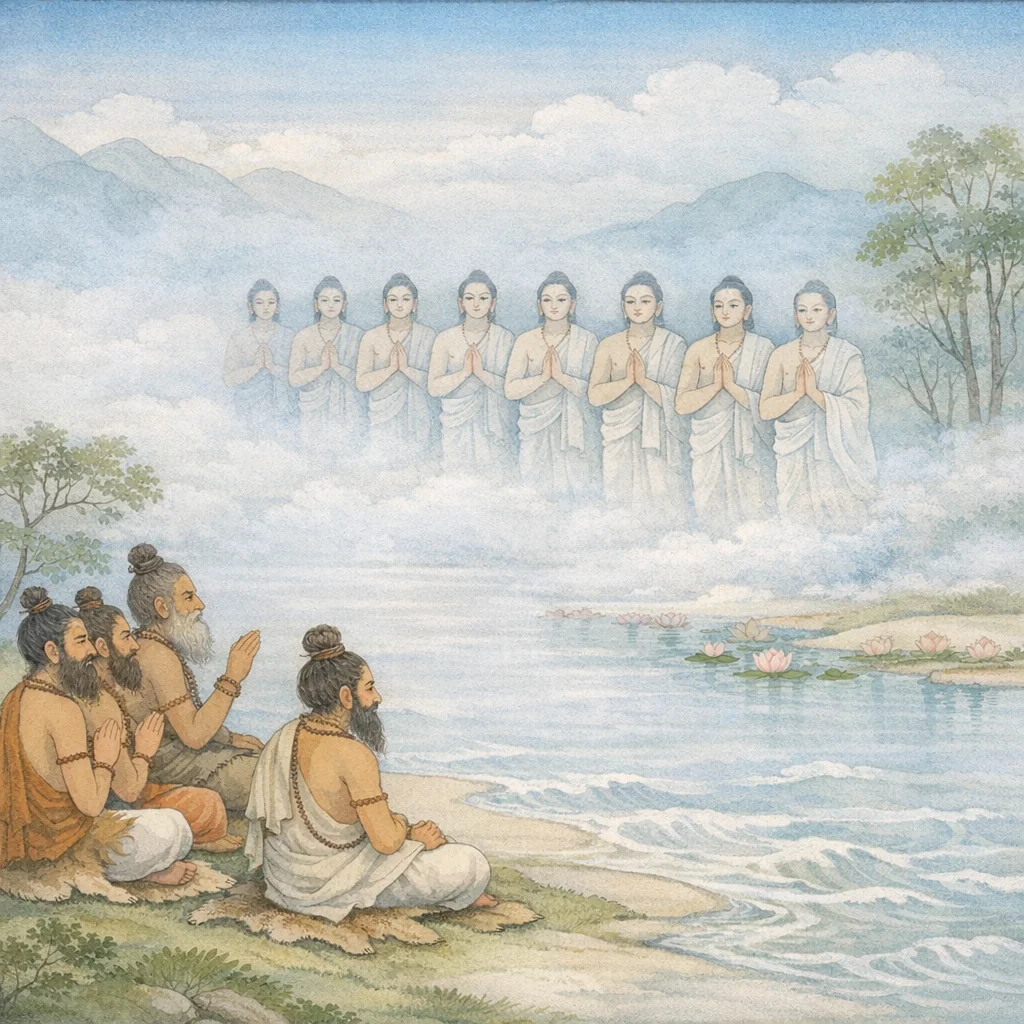
Adhyaya 337
अध्याय ३३७ — ज्ञानमार्ग-वैविध्यप्रश्नः तथा व्यासस्य नारायणोद्भवकथा (Systems of Knowledge and Vyāsa’s Nārāyaṇa-Origin)
Upa-parva: Mokṣa-dharma (Liberation Discourse) — Systems of Knowledge and Vyāsa’s Nārāyaṇa-Origin
Janamejaya opens by listing circulating knowledge-traditions—Sāṃkhya, Yoga, Pañcarātra, and Vedic/Āraṇyaka learning—and asks whether they share a single highest commitment or represent distinct ends, requesting an ordered account of their operation. Vaiśaṃpāyana first offers a reverential identification of Vyāsa as an extraordinary sage, described as Nārāyaṇa’s partial manifestation and a treasury of Vedic learning, then addresses Janamejaya’s follow-up on Vyāsa’s antecedent birth. The narration shifts to the Himalayan setting where Vyāsa, surrounded by principal disciples (Sumantu, Jaimini, Paila, Vaiśaṃpāyana, and Śuka), is queried about his Nārāyaṇa-derived origin. A cosmogonic sequence follows: Nārāyaṇa brings forth Brahmā, instructs him to create, supplies him with buddhi (intellect) for world-creation, and anticipates the burdened earth and future disruptive powers; divine manifestations are enumerated as corrective embodiments. The account introduces Apāntaratamā (Sārasvata), commissioned to arrange Vedic transmission and later destined to be Vyāsa, including prophetic statements about Veda-division and future epochs. The chapter returns to doctrinal indexing: Kapila is named as Sāṃkhya’s teacher, Hiraṇyagarbha as Yoga’s knower, Apāntaratamā as a Vedic ācārya, Śiva as revealer of Pāśupata knowledge, and Bhagavān as knower of Pañcarātra; the synthesis culminates in asserting Nārāyaṇa as the underlying niṣṭhā across these systems, with a caution against doubt-driven disputation.
Chapter Arc: युधिष्ठिर के शान्ति-प्रश्नों की पृष्ठभूमि में नारायण-महात्म्य का प्रसंग उठता है—देवगुरु बृहस्पति के नाम और स्वरूप के अर्थ से आरम्भ होकर कथा सीधे उस रहस्य की ओर बढ़ती है कि भगवान् को ‘देखना’ केवल तप से नहीं, अनुग्रह से होता है। → ऋषि-समूह दीर्घ तप, हव्य-कव्य द्वारा पूजन, और श्वेतद्वीप-गमन जैसे कठिन साधनों से भी प्रत्यक्ष दर्शन नहीं कर पाता; अदृश्य रूप से पुरोडाश-भाग का ग्रहण (हयग्रीव/हरिमेधस्) संकेत देता है कि भगवान् निकट हैं, पर इन्द्रियों की पकड़ से परे। श्वेतद्वीप पहुँचकर भी ‘दृष्टिविषय’ प्रतिहत हो जाता है—साधना की सीमा और अहं-आकांक्षा का संकट उभरता है। → निर्णायक वाक्य उभरता है: ‘अनन्य भक्ति के बिना देव का दर्शन कथंचन नहीं’—और साथ ही यह भी कि ‘जिस पर भगवान् प्रसाद करते हैं वही उन्हें देखने योग्य होता है’; ऋषि बृहस्पति से पूछते हैं कि जब हमने सब किया, तो तुम कैसे देख सकते हो? यहीं तप बनाम कृपा का द्वंद्व चरम पर पहुँचता है। → बृहस्पति का उत्तर-भाव स्पष्ट करता है कि दर्शन साध्य नहीं, प्रदत्त है—भगवान् स्वेच्छा से, प्रसन्न होकर ही अपने को प्रकट करते हैं; श्वेतद्वीप में नारायण-परायण, चन्द्रवर्चस् मानवों का संकेत ‘उपाय’ बनता है: अहं-रहित भक्ति, शरणागति और प्रसाद-प्राप्ति ही मार्ग है। → श्वेतद्वीप के नारायण-परायण जनों तक पहुँचने और उनके द्वारा ‘प्रसाद’ का उपाय क्या है—यह आगे के कथन के लिए द्वार खोल देता है।
Shlokas
Verse 1
इस प्रकार श्रीमहाभारत शान्तिपर्वके अन्तर्गत गोक्षधर्मपर्वमें नाययणका महत्त्वविषयक तीन सौ पैंतीसवाँ अध्याय पूरा हुआ ॥/ ३३५ ॥। (दाक्षिणात्य अधिक पाठका १ श्लोक मिलाकर कुल ५६ श्लोक हैं) ऑपन-- मा बक। अपर षट्त्रिशर्दाधिकत्रिशततमो< ध्याय: राजा उपरिचरके यज्ञमें भगवानपर बृहस्पतिका क्रोधित होना, एकत आदि मुनियोंका बृहस्पतिसे श्वेतद्वीप एवं भगवान्की महिमाका वर्णन करके उनको शान्त करना भीष्म उवाच ततो5तीते महाकल्पे उत्पन्नेडड्रिरस: सुते । बभूवुर्निर्वता देवा जाते देवपुरोहिते,भीष्मजी कहते हैं--युधिष्ठि!! तदनन्तर बीते हुए महान् कल्पके आरम्भमें जब अंगिराके पुत्र बृहस्पति उत्पन्न हुए और देवताओंके पुरोहित बन गये, तब देवताओंको बड़ा संतोष प्राप्त हुआ
Bhishma said: “O Yudhishthira, thereafter, at the beginning of a great aeon that had passed, when Brihaspati—the son of Angiras—was born and became the priest of the gods, the gods were filled with deep satisfaction.”
Verse 2
बृहद् ब्रह्म महच्चेति शब्दा: पर्यायवाचका: । एभि: समन्वितो राजन् गुणैर्विद्वान् बृहस्पति:
Bhīṣma said: “O King, the words ‘Bṛhat’, ‘Brahman’, and ‘Mahat’ are synonymous expressions. Endowed with the qualities signified by these terms, the wise Bṛhaspati stands as their living exemplar.”
Verse 3
राजन! बृहत, ब्रह्म और महत--ये तीनों शब्द एक अर्थके वाचक हैं। इन तीनों शब्दोंके गुण देवपुरोहितमें मौजूद थे; इसलिये वे विद्वान देवगुरु “बृहस्पति” कहलाते थे ।। तस्य शिष्यो बभूवाग्य्रो राजोपरिचरो वसु: । अधीततवांस्तदा शास्त्र सम्यक् चित्रशिखण्डिजम्
Bhishma said: “O king, the words bṛhat, brahman, and mahat all convey the same sense—‘the great.’ These very qualities were present in the divine priest; therefore that learned preceptor of the gods came to be known as ‘Bṛhaspati.’ His foremost disciple was King Vasu, famed as Uparicara. At that time Vasu had properly mastered the treatise known as Citraśikhaṇḍin.”
Verse 4
स राजा भावितः: पूर्व दैवेन विधिना वसु: । पालयामास पृथिवीं दिवमाखण्डलो यथा,वे राजा उपरिचर वसु पहले दैवविधानसे भावित हो इस पृथ्वीका उसी प्रकार पालन करने लगे, जैसे इन्द्र स्वर्गका
Bhishma said: That king Vasu, having been formerly shaped and empowered by destiny’s ordinance, began to protect and govern the earth in the very manner that Indra (Ākhāṇḍala) safeguards heaven—firmly upholding order and ensuring the welfare of his realm.
Verse 5
तस्य यज्ञों महानासीदश्चमेधो महात्मन: । बृहस्पतिरुपाध्यायस्तत्र होता बभूव ह,एक समय उन महात्मा नरेशने महान् अश्व-मेधयज्ञका आयोजन किया। उसमें उनके उपाध्याय बृहस्पति होता हुए
Bhishma said: For that great-souled king there was a grand sacrifice—an Aśvamedha. In that rite, his preceptor Bṛhaspati indeed served as the hotṛ-priest.
Verse 6
उनके श्रेष्ठ शिष्य हुए राजा उपरिचर वसु, जिन्होंने उनसे उन दिनों चित्रशिखण्डियोंके बनाये हुए तन्त्रशास्त्रका विधिवत् अध्ययन किया,प्रजापतिसुता श्चात्र सदस्याश्नाभवंस्त्रय: | एकतक्न द्वितश्वैव त्रितश्नैव महर्षय: प्रजापतिके तीन पुत्र एकत, द्वित और त्रित नामक महर्षि उस यज्ञमें सदस्य हुए
Bhishma said: Here, three sages—Ekata, Dvita, and Trita, the sons of Prajapati—served as officiating members (sadasyas) in that sacrificial rite.
Verse 7
धनुषाख्यो<थ रैभ्यश्व अर्वावसुपरावसू | ऋषिर्मेधातिथिश्वैव ताण्ड्यश्वैव महानृषि:,इनके सिवा (तेरह सदस्य और थे, जिनके नाम इस प्रकार हैं--) धनुष, रैभ्य, अर्वावसु, परावसु, मुनिवर मेधातिथि, महर्षि ताण्ड्य, महाभाग शान्तिमुनि, वेदशिरा, शालिहोत्रके पिता ऋषिश्रेष्ठ कपिल, आद्यकठ, वैशम्पायनके बड़े भाई तैत्तिरि, कण्व और देवहोत्र। ये कुल मिलाकर सोलह सदस्य बताये गये हैं
Bhishma said: “Among them were the one known as Dhanuṣ, and also Raibhyāśva; Arvāvasu and Parāvasu; the seer Medhātithi; and the great Ṛṣi Tāṇḍya.”
Verse 8
ऋषि: शान्तिर्महाभागस्तथा वेदशिराशक्ष यः । ऋषिश्रेष्ठक्ष कपिल: शालिहोत्रपिता स्मृत:,इनके सिवा (तेरह सदस्य और थे, जिनके नाम इस प्रकार हैं--) धनुष, रैभ्य, अर्वावसु, परावसु, मुनिवर मेधातिथि, महर्षि ताण्ड्य, महाभाग शान्तिमुनि, वेदशिरा, शालिहोत्रके पिता ऋषिश्रेष्ठ कपिल, आद्यकठ, वैशम्पायनके बड़े भाई तैत्तिरि, कण्व और देवहोत्र। ये कुल मिलाकर सोलह सदस्य बताये गये हैं
Bhishma said: “Among them were the great and fortunate sage Śānti, and also Vedaśiras. The foremost of seers, Kapila—remembered as the father of Śālihotra—was also included.”
Verse 9
आट्यः कठस्तैत्तिरिश्च वैशम्पायनपूर्वज: । कण्वो<थ देवहोत्रश्न एते षोडश कीर्तिता:,इनके सिवा (तेरह सदस्य और थे, जिनके नाम इस प्रकार हैं--) धनुष, रैभ्य, अर्वावसु, परावसु, मुनिवर मेधातिथि, महर्षि ताण्ड्य, महाभाग शान्तिमुनि, वेदशिरा, शालिहोत्रके पिता ऋषिश्रेष्ठ कपिल, आद्यकठ, वैशम्पायनके बड़े भाई तैत्तिरि, कण्व और देवहोत्र। ये कुल मिलाकर सोलह सदस्य बताये गये हैं
Bhishma said: “Āṭya, Kaṭha, Taittiri, and the elder brother of Vaiśampāyana; likewise Kaṇva and Devahotra—these are declared to be the sixteen.”
Verse 10
सम्भूता: सर्वसम्भारास्तस्मिन् राजन् महाक्रतौ । न तत्र पशुघातो5भूत् स राजैवं स्थितो5भवत्,राजन! उस महान् यज्ञमें सारे सामान एकत्र किये गये; परंतु उसमें किसी पशुका वध नहीं हुआ। वे राजा उपरिचर इसी भावसे उस यज्ञमें स्थित हुए थे
Bhīṣma said: “O king, in that great sacrifice all the requisite materials were assembled; yet no animal was slain there. King Uparicara remained established in the rite with this very intention—upholding a non-violent, dharmic form of sacrifice.”
Verse 11
अहिंस्न: शुचिरक्षुद्रो निराशी: कर्मसंस्तुत: । आरण्यकपदोदभूता भागास्तत्रोपकल्पिता:,वे हिंसाभावसे रहित, पवित्र, उदार तथा कामनाओंसे रहित थे और इसी भावसे कर्ममें प्रवृत्त हुए थे। जंगलमें उत्पन्न हुए फल-मूल आदि पदार्थोंसे ही उस यज्ञमें देवताओंके भाग निश्चित किये गये थे
Bhishma said: They were free from violence, pure, and generous in spirit; without personal craving, they engaged in action in a spirit worthy of praise. In that sacrifice, the portions due to the gods were arranged from forest-born offerings—fruits, roots, and the like—showing a dharmic ritual grounded in non-injury and simplicity rather than in harm or excess.
Verse 12
प्रीतस्ततो5स्य भगवान् देवदेव: पुरातन: । साक्षात् तं दर्शयामास सो<दृश्यो5न्येन केनचित्,उस समय पुराणपुरुष देवाधिदेव भगवान् नारायणने प्रसन्न होकर राजाको प्रत्यक्ष दर्शन दिया; परंतु दूसरे किसीको उनका दर्शन नहीं हुआ
Then the Blessed Lord—Nārāyaṇa, the ancient God of gods—being pleased with him, granted the king a direct vision of Himself. Yet to anyone else He remained unseen.
Verse 13
स्वयं भागमुपाप्राय पुरोडाशं गृहीतवान् | अदृश्येन हृतो भागो देवेन हरिमेधसा,भगवान् हयग्रीवने स्वयं अदृश्य रहकर ही अपने लिये अर्पित पुरोडाशको ग्रहण किया और उसे सूँघकर अपने अधीन कर लिया
Bhishma said: Having himself come to claim his rightful share, he took the sacrificial cake (puroḍāśa). That allotted portion was carried off invisibly by a divine being of keen, Hari-like intelligence—remaining unseen, he accepted what had been offered for him and, by merely smelling it, brought it under his control.
Verse 14
बृहस्पतिस्तत:ः क्रुद्धः ख्तुचमुद्यम्य वेगित: । आकाशं घ्नन् खुच: पातै रोषादश्रूण्यवर्तयत्,यह देख बृहस्पति क्रोधमें भर गये। उन्होंने बड़े वेगसे खुवा उठा लिया और आकाशभमें उसे दे मारा। साथ ही वे रोषवश अपने नेत्रोंसे आँसू बहाने लगे
Bhīṣma said: Then Bṛhaspati, inflamed with anger, swiftly lifted up the khvuca and struck it against the sky with repeated blows. Overcome by wrath, he even shed tears from his eyes.
Verse 15
उवाच चोपरिचरं मया भागोड्यमुद्यत: । ग्राह्मु: स्वयं हि देवेन मत्प्रत्यक्षं न संशय:,फिर वे राजा उपरिचरसे बोले--“मैंने जो यह भाग प्रस्तुत किया है, उसे भगवान्को मेरी आँखोंके सामने प्रकट होकर ग्रहण करना चाहिये, यही न्याय है, इसमें संशय नहीं है"!
Bhīṣma said: “And King Uparicara declared: ‘This share that I have now set forth should be accepted by the Lord Himself, manifesting before my very eyes—this is the proper course; there is no doubt about it.’”
Verse 16
युधिछिर उवाच उद्यता यज्ञभागा हि साक्षात् प्राप्ता: सुरैरिह । किमर्थमिह न प्राप्तो दर्शनं स हरिरविंभु:,युधिष्ठिरने पूछा--पितामह! जब सभी देवताओंने प्रत्यक्ष दर्शन देकर अपने-अपने भाग ग्रहण किये, तब भगवान् विष्णुने उस यज्ञमें पधारकर भी क्यों प्रत्यक्ष दर्शन नहीं दिया?
Yudhiṣṭhira said: “Here, the gods themselves visibly came and received their allotted shares of the sacrifice. For what reason, then, did that Hari—Vishnu, the self-existent Lord—not grant his direct appearance in this sacrifice?”
Verse 17
भीष्म उवाच ततः स तं समुद्धूतं भूमिपालो महान् वसुः । प्रसादयामास मुनि सदस्यास्ते च सर्वश:,भीष्मजीने कहा--युधिष्ठिर! इसका कारण बताता हूँ, सुनो। वे महान् भूपाल वसु तथा अन्य सम्पूर्ण सदस्य मिलकर उस समय रोषमें भरे हुए मुनि बृहस्पतिको मनाने लगे
Bhishma said: Then the great king Vasu sought to pacify that sage, who had been stirred into anger; and all the assembled members as well, in every way, joined in appeasing him.
Verse 18
ऊचुश्नैनमसम्भ्रान्ता न रोषं कर्तुमरहसि । नैष धर्म: कृतयुगे यस्त्वं रोषमचीकृथा:,सब लोग शान्तचित्त होकर उनसे बोले--“मुने! आप रोष न करें। आपने जो रोष किया है, यह सत्ययुगका धर्म नहीं है
Calm and unagitated, they addressed him gently: “O sage, you ought not to give way to anger. The anger you have displayed is not the way of dharma in the Kṛta (Satya) Yuga.”
Verse 19
अरोषणो हासौ देवो यस्य भागो<्यमुद्यत: । न शक्य: स त्वया द्रष्टमस्माभिर्वा बृहस्पते
Bhīṣma said: “That deity is indeed free from anger, and this portion of the offering has been set apart for him. O Bṛhaspati, he cannot be seen—neither by you nor by us.”
Verse 20
एकततद्वितत्रिताश्नोचुस्ततश्चित्रशिखण्डिन:,तदनन्तर एकत, द्वित और त्रितने तथा चित्रशिखण्डी नामवाले ऋषियोंने उनसे कहा --“बृहस्पते! हमलोग ब्रह्माजीके मानसपुत्र कहलाते हैं। एक बार अपने कल्याणकी इच्छासे हम सबने उत्तर दिशाकी यात्रा की
Bhishma said: Then the sages named Ekata, Dvita, Trita, and Chitrashikhandin addressed him: “O Brihaspati, we are known as the mind-born sons of Brahmā. Once, seeking our own spiritual welfare, we all set out on a journey toward the northern quarter …”
Verse 21
तदनन्तर एकत, द्वित और त्रितने तथा चित्रशिखण्डी नामवाले ऋषियोंने उनसे कहा --“बृहस्पते! हमलोग ब्रह्माजीके मानसपुत्र कहलाते हैं। एक बार अपने कल्याणकी इच्छासे हम सबने उत्तर दिशाकी यात्रा की
Thereafter, the sages named Ekata, Dvita, Trita, and Citraśikhaṇḍī addressed him: “O Bṛhaspati, we are known as the mind-born sons of Brahmā. Once, seeking our own spiritual welfare, we all set out on a journey toward the northern quarter …”
Verse 22
तप्त्वा वर्षसहस्त्राणि चरित्वा तप उत्तमम् | एकपादा: स्थिता: सम्यक् काष्ठ भूता: समाहिता:,“वहाँ मेरुके उत्तर और क्षीरसागरके किनारे एक पवित्र स्थान है, जहाँ हमलोगोंने हजार वर्षोतक एकाग्रचित्त हो काष्ठकी भाँति एक पैरसे खड़े होकर बड़ी कठोर तपस्या की थी। वह उत्तम तपस्या करके हम यही चाहते थे कि किसी तरह वरदायक सनातन देवाधिदेव वरणीय भगवान् नारायणका दर्शन कर लें
Bhishma said: “After enduring austerities for thousands of years and practicing the highest penance, we stood firmly on a single foot—motionless like pieces of wood, our minds perfectly collected. Having performed that supreme tapas, our sole longing was to obtain the vision of the eternal, boon-giving Lord of lords, the adorable Bhagavan Nārāyaṇa.”
Verse 23
मेरोरुत्तरभागे तु क्षीरोदस्यानुकूलतः । स देशो यत्र नस्तप्तं तप: परमदारुणम्,“वहाँ मेरुके उत्तर और क्षीरसागरके किनारे एक पवित्र स्थान है, जहाँ हमलोगोंने हजार वर्षोतक एकाग्रचित्त हो काष्ठकी भाँति एक पैरसे खड़े होकर बड़ी कठोर तपस्या की थी। वह उत्तम तपस्या करके हम यही चाहते थे कि किसी तरह वरदायक सनातन देवाधिदेव वरणीय भगवान् नारायणका दर्शन कर लें
Bhishma said: “On the northern flank of Mount Meru, along the shore of the Ocean of Milk, there is a sacred region where we once performed exceedingly severe austerities. There, with minds fixed in one-pointed concentration, we stood like a log upon a single foot for a thousand years, undertaking a most arduous penance—seeking only this: that we might somehow obtain the vision of the eternal, boon-bestowing Lord of lords, the venerable Narayana.”
Verse 24
कथं पश्येम हि वयं देव॑ नारायणात्मकम् । वरेण्यं वरदं तं वै देवदेवं सनातनम्,“वहाँ मेरुके उत्तर और क्षीरसागरके किनारे एक पवित्र स्थान है, जहाँ हमलोगोंने हजार वर्षोतक एकाग्रचित्त हो काष्ठकी भाँति एक पैरसे खड़े होकर बड़ी कठोर तपस्या की थी। वह उत्तम तपस्या करके हम यही चाहते थे कि किसी तरह वरदायक सनातन देवाधिदेव वरणीय भगवान् नारायणका दर्शन कर लें
Bhishma said: “O Deva, how indeed could we behold that eternal God of gods—Nārāyaṇa, whose very essence is divinity—worthy of all choosing and the giver of boons?”
Verse 25
कथं पश्येम हि वयं देवं नारायणं त्विति । अथ व्रतस्यावभूथे वागुवाचाशरीरिणी
Bhīṣma said: “How indeed can we behold the god Nārāyaṇa?” When the vow had reached its concluding rite—the ceremonial bath that marks completion—a bodiless voice spoke.
Verse 26
सुतप्तं वस्तपो विप्रा: प्रसन्नेनान्तरात्मना
Bhīṣma said: “O brāhmaṇas, the austerity you have undertaken is well-heated—truly well-performed—because it is carried out with an inwardly serene heart.”
Verse 27
यूयं जिज्ञासवो भक्ता: कथं द्रक्ष्यथ तं॑ विभुम् “ब्राह्मणो! तुमने प्रसन्न हृदयसे भलीभाँति तप किया है। तुम भगवानके भक्त हो और यह जानना चाहते हो कि उन सर्वव्यापी परमात्माका दर्शन कैसे हो? ।। क्षीरोदधेरुत्तरत: श्वेतद्वीपो महाप्रभ:
Bhīṣma said: “You are devoted seekers, eager to know—how will you behold that all-pervading Lord? To the north of the Ocean of Milk lies the radiant White Island (Śvetadvīpa), O mighty one.”
Verse 28
एकान्तभावोपगतास्ते भक्ता: पुरुषोत्तमम्,वे स्थूल इन्द्रियोंसे रहित, निराहार और निनश्वेष्ट होते हैं। उनके शरीरसे मनोहर सुगन्ध निकलती रहती है तथा वे भगवानके अनन्य भक्त होते हैं और सहस्रों किरणोंवाले उन सनातनदेव भगवान् पुरुषोत्तममें प्रवेश कर जाते हैं
Bhīṣma said: Those devotees who have entered single-pointed, exclusive devotion to the Supreme Person become free from gross sense-activity; they live without food and without restless movement. From their bodies a pleasing fragrance continually emanates. Being unwavering, one-pointed devotees of the Lord, they finally merge into—enter and abide in—the eternal God, Purushottama, radiant with a thousand rays.
Verse 29
ते सहस्रार्चिषं देवं प्रविशन्ति सनातनम् | अनिन्द्रिया निराहारा अनिष्पन्दा: सुगन्धिन:,वे स्थूल इन्द्रियोंसे रहित, निराहार और निनश्वेष्ट होते हैं। उनके शरीरसे मनोहर सुगन्ध निकलती रहती है तथा वे भगवानके अनन्य भक्त होते हैं और सहस्रों किरणोंवाले उन सनातनदेव भगवान् पुरुषोत्तममें प्रवेश कर जाते हैं
Bhīṣma said: Free from the pull of the senses, needing no food, and remaining utterly motionless, they become fragrant in body and being. Thus purified and steadfast, they enter the Eternal God, the thousand-rayed Divine—merging into the supreme, timeless reality as the culmination of disciplined life and devotion.
Verse 30
एकान्तिनस्ते पुरुषा: श्वेतद्वीपनिवासिन: । गच्छध्वं तत्र मुनयस्तत्रात्मा मे प्रकाशित:,“मुनियो! वे श्वेतद्वीपके निवासी मेरे एकान्त भक्त हैं, तुम वहीं जाओ। वहाँ मेरे स्वरूपका प्रत्यक्ष दर्शन होता है”
Bhishma said: “Those men who dwell in Śvetadvīpa are single-minded devotees. O sages, go there; for there my very Self is made manifest—there one gains direct vision of my true nature.”
Verse 31
अथ श्रुत्वा वयं सर्वे वाचं तामशरीरिणीम् । यथाख्यातेन मार्गेण तं॑ देशं प्रतिपेदिरे,“इस आकाशवाणीको सुनकर हमलोग उसके बताये हुए मार्गसे उस स्थानको गये
Bhishma said: “Then, after all of us heard that bodiless voice, we proceeded to that place by the route it had described.”
Verse 32
प्राप्य श्वेतं महाद्वीपं तच्चित्तास्तदूदिदृक्षव: । ततोअस्मद्दृष्टिविषयस्तदा प्रतिहतो5भवत्,'श्वेत नामक महाद्वीपमें पहुँचकर हमारा चित्त भगवानमें ही लगा रहा। हम उनके दर्शनकी इच्छासे उत्कण्ठित हो रहे थे। वहाँ जाते ही हमारी दृष्टिशक्ति प्रतिहत हो गयी
Bhishma said: “Having reached the great island called Śveta, our minds became wholly absorbed in the Lord, and we grew intensely eager to behold Him. But at that very moment, the object-range of our sight was checked—our power to see was obstructed.”
Verse 33
न च पश्याम पुरुष॑ तत्तेजोहतदर्शना: । ततो नः प्रादुरभवद् विज्ञानं देवयोगजम्
Bhishma said: “We could no longer perceive that Person, for our sight had been overwhelmed by His radiance. Then, within us, there arose a clear understanding born of divine communion—an insight granted through the gods’ yoga.”
Verse 34
ततः पुनर्वर्षशतं तप्त्वा तात्कालिकं महत्,“तदनन्तर हमने तत्काल पुनः सौ वर्षोंतक बड़ी भारी तपस्या की। उस तपोमय व्रतके पूर्ण होनेपर हमलोगोंको वहाँके शुभलक्षण पुरुषोंका दर्शन हुआ, जो चन्द्रमाके समान गौरवर्ण और सब प्रकारके उत्तम लक्षणोंसे सम्पन्न थे
Bhishma said: “Thereafter, we at once undertook a great austerity, practicing tapas for a full hundred years.”
Verse 35
व्रतावसाने च शुभान् नरान् ददृशिरे वयम् | श्वेतांश्रन्द्रप्रतिकाशान् सर्वलक्षणलक्षितान्,“तदनन्तर हमने तत्काल पुनः सौ वर्षोंतक बड़ी भारी तपस्या की। उस तपोमय व्रतके पूर्ण होनेपर हमलोगोंको वहाँके शुभलक्षण पुरुषोंका दर्शन हुआ, जो चन्द्रमाके समान गौरवर्ण और सब प्रकारके उत्तम लक्षणोंसे सम्पन्न थे
Bhīṣma said: “When our vow of austerity came to its completion, we beheld there auspicious men—radiant like the white beams of the moon and distinguished by every excellent mark. Their very appearance signaled the fruition of disciplined practice and the presence of dharmic attainment.”
Verse 36
नित्याज्जलिकृतान् ब्रह्म जपत: प्रागुदड्मुखान् । मानसो नाम स जपो जप्यते तैर्महात्मभि:,'वे प्रतिदिन ईशानकोणकी ओर मुँह करके हाथ जोड़े हुए ब्रह्मयका मानसजप करते थे
Bhīṣma said: “Every day, with hands joined in reverent posture and facing toward the auspicious northeastern direction, they would repeat the sacred Brahman-formula. That repetition was known as ‘mental japa’—a silent, inward recitation—practised by those great-souled men.”
Verse 37
तेनैकाग्रमनस्त्वेन प्रीतो भवति वै हरि: । या5भवन्मुनिशार्दूल भा: सूर्यस्य युगक्षये
Bhīṣma said: “By that single-pointedness of mind, Hari (Viṣṇu) is indeed pleased. O tiger among sages, such was the radiance that arose—like the sun’s splendour at the end of an age—signifying the overwhelming spiritual potency produced by concentrated devotion.”
Verse 38
एकैकस्य प्रभा तादूुकू साभवन्मानवस्य ह । “उनके मनकी इस एकाग्रतासे भगवान् श्रीहरि प्रसन्न होते थे। मुनिश्रेष्ठ! प्रलयकालमें सूर्यकी जैसी प्रभा होती है, वैसी ही उस द्वीपमें रहनेवाले प्रत्येक पुरुषकी थी ।। तेजोनिवास: स द्वीप इति वै मेनिरे वयम्
Bhishma said: “Each man there possessed a radiance of that very kind. Because of the one-pointed steadiness of their minds, Lord Śrī Hari was pleased with them. O best of sages, just as the sun blazes at the time of cosmic dissolution, so too was the splendor of every person dwelling on that island. Therefore we understood that island to be a ‘dwelling-place of light’—a realm where inner discipline and devotion manifest outwardly as brilliance.”
Verse 39
अथ सूर्यसहस्रस्य प्रभां युगपदुत्थिताम्
Bhīṣma said: “Then there arose all at once a radiance like that of a thousand suns.”
Verse 40
सहिताश्चाभ्यधावन्त ततस्ते मानवा द्रुतम्
Bhīṣma said: “Then those men, moving together in a united group, swiftly rushed forward.”
Verse 41
ततो हि वदतां तेषामश्रौष्म विपुलं ध्वनिम्
Then, as those people were speaking, we heard a great, swelling sound—an audible sign that their words had stirred a powerful commotion.
Verse 42
बलि: किलोपटह्वियते तस्य देवस्य तैनरि: । “इसके बाद जब वे स्तुति करने लगे, तब उनकी तुमुल ध्वनि हमारे कानोंमें पड़ी। वे सब लोग उन तेजोमय भगवान्को पूजाकी सामग्री अर्पण कर रहे थे ।। वयं तु तेजसा तस्य सहसा हृतचेतस:
Bhīṣma said: “That deity is indeed invoked by the name ‘Bali’. When those men began to chant hymns, their tumultuous sound reached our ears. They were all presenting offerings as articles of worship to that radiant Lord; and we, overwhelmed by his splendor, suddenly found our minds carried away.”
Verse 43
एकस्तु शब्दो वितत: श्रुतो5स्माभिरुदीरित:,'पंरतु एक शब्द जो उच्चस्वरसे उच्चारित होकर दूरतक फैल रहा था, हमने भी सुना। सब लोग कह रहे थे--:पुण्डरीकाक्ष! आपकी जय हो। विश्वभावन! आपको प्रणाम है। महापुरुषोंके भी पूर्वज हृषीकेश! आपको नमस्कार है”
Bhīṣma said: “We heard a single sound, loudly uttered and spreading far and wide. People were all proclaiming: ‘O Lotus-eyed One, victory to you! O Sustainer of the world, we bow to you. O Hrishikesha, ancestor even of the great ones, salutations to you!’”
Verse 44
जितं ते पुण्डरीकाक्ष नमस्ते विश्वभावन । नमस्ते<स्तु हृषीकेश महापुरुषपूर्वज,'पंरतु एक शब्द जो उच्चस्वरसे उच्चारित होकर दूरतक फैल रहा था, हमने भी सुना। सब लोग कह रहे थे--:पुण्डरीकाक्ष! आपकी जय हो। विश्वभावन! आपको प्रणाम है। महापुरुषोंके भी पूर्वज हृषीकेश! आपको नमस्कार है”
Bhīṣma said: “Victory to You, O lotus-eyed One. Salutations to You, O Sustainer of the universe. Salutations indeed to You, O Hrishikesha—prime ancestor and source of all great beings.”
Verse 45
इति शब्द: श्रुतो5स्माभि: शिक्षाक्षरसमन्वित: । एतस्मिन्नन्तरे वायु: सर्वगन्धवह: शुचि:,भक््त्या परमया युक्तैर्मनोवाक्कर्मभिस्तदा । 'शिक्षा और अक्षरसे युक्त यह वाक्य हमलोगोंको श्रवणगोचर हुआ। इतनेहीमें पवित्र और सुगन्धित वायु बहुत-से दिव्य पुष्प और कार्योपयोगी ओषधियाँ ले आयी, जिनसे वहाँके पंचकालवेत्ता अनन्य भक्तोंने बड़ी भक्तिके साथ मन, वाणी और क्रियाद्वारा उन श्रीहरिका पूजन किया
Bhishma said: “Thus a sound—formed with correct phonetic discipline and syllables—was heard by us. In that very interval, a pure breeze, bearing every fragrance, arrived; and then those who were devoted with supreme devotion worshipped (the Lord) with mind, speech, and deed, using the divine flowers and useful herbs that had been brought.”
Verse 46
दिव्यान्युवाह पुष्पाणि कर्मण्याश्नौषधीस्तथा । तैरिष्ट: पजचकाललज्ञैर्हरिरेकान्तिभिनरै:
Bhīṣma said: “They brought celestial flowers, and likewise the herbs prescribed for the rites. By those offerings—made at the proper junctions of the five daily times—Hari was worshipped by men of single-minded devotion.”
Verse 47
नूनं तत्रागतो देवो यथा तैर्वागुदीरिता
Bhīṣma said: “Surely, a divine presence has come there, for the speech uttered by them bears the unmistakable mark of the gods.”
Verse 48
मारुते संनिवृत्ते च बलौ च प्रतिपादिते
Bhīṣma said: “When the wind had subsided, and when strength and stability had been duly restored and established…”.
Verse 49
चिन्ताव्याकुलितात्मानो जाता: स्मोडड्विरसां वर । “बृहस्पते! जब उस सुगन्धित वायुका चलना बंद हो गया और भगवान्को बलिसमर्पणका कार्य पूर्ण हो गया तब हमलोग मन-ही-मन चिन्तासे व्याकुल हो उठे ।। मानवानां सहस्रेषु तेषु वै शुद्धयोनिषु
Bhishma said: “O Brihaspati, when the movement of that fragrant wind ceased and the offering of bali to the Lord had been completed, we became inwardly agitated, our minds troubled by anxious reflection. Among thousands of human beings—indeed, among those of pure birth …”
Verse 50
तेडपि स्वस्था मुनिगणा एकभावमनुव्रता:
Bhīṣma said: “Those groups of sages too, remaining composed and undisturbed, were steadfast in a single-minded disposition—faithfully adhering to one shared resolve.”
Verse 51
नास्मासु दधिरे भावं ब्रह्म॒भावमनुषिता: । वहाँ जो स्वस्थ मुनिगण थे, वे भी अनन्य भावसे भगवान्के भजनमें ही मन लगाये रहते थे। उन ब्रह्मभावमें स्थित मुनियोंने हमलोगोंकी ओर ध्यान नहीं दिया || ५० ई ।। ततोअस्मान् सुपरिश्रान्तांस्तपसा चातिकर्शितान्
Bhīṣma said: “Those ascetics, established in the contemplative state of Brahman, did not direct their attention toward us. Absorbed with single-minded devotion and inner steadiness, they remained intent on worship and realization rather than on external persons—showing that spiritual absorption can render worldly distinctions and interruptions insignificant.”
Verse 52
उवाच स्वस्थं किमपि भूतं तत्राशरीरकम् । “हमलोग तपस्यासे थककर अत्यन्त दुर्बल हो गये थे। उस समय हमलोगोंसे किसी शरीररहित स्वस्थ प्राणी (देवता) ने कहा ।। ५१ ई ।। देव उवाच दृष्टा व: पुरुषा: श्वेता: सर्वेन्द्रियविवर्जिता:
The Deity said: “You have beheld the white-hued persons, bereft of all sense-faculties.” In this passage, a bodiless, serene being addresses the ascetics, interpreting their vision as a sign of extreme austerity and warning that such experiences point toward a state beyond ordinary embodied perception, where sensory life is withdrawn and the seeker must discern the ethical and spiritual meaning rather than cling to marvels.
Verse 53
गच्छध्वं मुनय: सर्वे यथागतमितो5चिरात्
The Deity said: “All of you sages, depart—return the way you came, and do so without delay.”
Verse 54
न स शव्यस्त्वभक्तेन द्रष्टुं देवः कथंचन । मुनियो! तुम सब लोग जैसे आये हो, वैसे ही शीघ्र लौट जाओ। भगवान्में अनन्य भक्ति हुए बिना किसीको किसी तरह भी उनका साक्षात् दर्शन नहीं हो सकता ।। कामं॑ कालेन महता एकान्तित्वमुपागतै:
The Deity said: “Without devotion, this God cannot be seen in any way. O sages, return quickly just as you have come. For without exclusive, one-pointed devotion to the Lord, no one can attain His direct vision. Even if, in due course and after a long time, one comes to solitary, single-minded dedication—only then does such direct encounter become possible.”
Verse 55
महत् कार्य च कर्तव्यं युष्माभिद्विजसत्तमा:
The Deity said: “A great task lies before you, O best of the twice-born; it must indeed be undertaken by you.”
Verse 56
इतः कृतयुगे$तीते विपर्यासं गतेडपि च । वैवस्वते<न्तरे विप्रा: प्राप्ते त्रेतायुगे पुन:
The Deity said: “After the Kṛta Yuga had passed, and even when a reversal of the former order had set in, during the Manvantara of Vaivasvata, when the Tretā Yuga arrived again, the brāhmaṇas (sages) once more came forth (to act in accordance with that age).”
Verse 57
सुराणां कार्यसिद्धयर्थ सहाया वै भविष्यथ । विप्रवरो! इस समय तुम्हें अभी बहुत बड़ा काम करना है। इस सत्ययुगके बीतनेपर जब धर्ममें किंचित् व्यतिक्रम आ जायगा और वैवस्वत मन्वन्तरके त्रेतायुगका आरम्भ होगा, उस समय देवताओं के कार्यकी सिद्धिके लिये तुमलोग ही सहायक होगे ।। ५५-५६ $ ।। ततस्तदद्भुतं वाक्यं निशम्यैवामृतोपमम्
The Deva said: “For the successful accomplishment of the gods’ purposes, you will indeed become helpers. O best of Brahmins, at this very time you must undertake a great task. When this Satya Yuga has passed, and a slight deviation in dharma arises, and the Tretā Yuga of the Vaivasvata Manvantara begins, then you alone will be the assistants by whom the gods’ work is brought to completion.” Having heard that wondrous statement—nectar-like in its import—…
Verse 58
एवं सुतपसा चैव हव्यकव्यैस्तथैव च
“In the same way, by austere discipline as well, and likewise by offerings meant for the gods and for the ancestors.”
Verse 59
नारायणो महद्धूतं विश्वसृग्घव्यकव्यभुक्
The Deity said: “Nārāyaṇa is the great messenger—creator of the universe, and the one who partakes of the oblations offered to the gods and to the ancestors.”
Verse 60
अनादिनिधनोड्व्यक्तो देवदानवपूजित: । “भगवान् नारायण सबसे महान् देवता हैं। वे ही संसारके स्रष्टा और हव्य-कव्यके भोक्ता हैं। उनका आदि और अन्त नहीं है। उन अव्यक्त परमेश्वरकी देवता और दानव भी पूजा करते हैं! ।। ५९ $ ।। एवमेकतवाक्सयेन द्वितत्रितमतेन च,इस प्रकार एकतके कहनेसे, द्वित और त्रितकी सम्मतिसे तथा अन्य सदस्योंद्वारा अनुनय किये जानेसे उदारबुद्धि बृहस्पतिने उस यज्ञको समाप्त किया और भगवानकी पूजा की
The Devas said: “Nārāyaṇa, the Blessed Lord, is the greatest of the gods. He is the creator of the world and the enjoyer of the offerings made to the gods (havis) and to the ancestors (kavya). He has neither beginning nor end. Even the gods and the Dānavas worship that unmanifest Supreme Lord.”
Verse 61
अनुनीत: सदस्यैश्न बृहस्पतिरुदारधी: । समापयत्् ततो यज्ञं दैवतं समपूजयत्,इस प्रकार एकतके कहनेसे, द्वित और त्रितकी सम्मतिसे तथा अन्य सदस्योंद्वारा अनुनय किये जानेसे उदारबुद्धि बृहस्पतिने उस यज्ञको समाप्त किया और भगवानकी पूजा की
Persuaded by the assembled members, the noble-minded Bṛhaspati at last brought that sacrifice to its proper conclusion; thereafter he duly worshipped the Divine.
Verse 62
समाप्तयज्ञो राजापि प्रजां पालितवान् वसु: । ब्रह्मशापाद दिवो भ्रष्ट: प्रविवेश महीं तत:,राजा वसु भी यज्ञ पूरा करके प्रजाका पालन करने लगे। एक बार ब्रह्मशापसे उन्हें स्वर्गसे भ्रष्ट होना पड़ा था। उस समय वे पृथ्वीके भीतर रसातलमें समा गये थे
After completing his sacrifice, King Vasu continued to protect and govern his subjects. Yet, due to a brahminical curse, he fell from heaven; and then he entered the earth—sinking down into the subterranean realm.
Verse 63
स राजा राजशार्दूल सत्यधर्मपरायण: । अन्तर्भूमिगतश्वैव सततं धर्मवत्सल:,नृपश्रेष्ठी सदा धर्मपर अनुराग रखनेवाले सत्यधर्मपरायण राजा उपरिचर भूमिके भीतर प्रवेश करके भी निरन्तर नारायण-मन्त्रका जप करते हुए भी उन्हींकी आराधनामें तत्पर रहते थे। अतः उन्हींकी कृपासे वे पुन: ऊपरको उठे और भूतलसे ब्रह्मलोकमें जाकर उन्होंने परम गति प्राप्त कर ली। अनायास ही उन्हें निष्ठावानोंकी यह उत्तम गति प्राप्त हो गयी
The king—tiger among rulers—was wholly devoted to truth and dharma, ever affectionate toward righteousness. Even after entering beneath the earth, he remained constantly intent on dharma and continued his worship. Through divine grace he rose again, and departing from the earthly realm he attained Brahmaloka and the supreme goal—an excellent destiny that comes to the steadfast without strain.
Verse 64
नारायणपरो भूत्वा नारायणजयं जपन् | तस्यैव च प्रसादेन पुनरेवोत्थितस्तु सः,नृपश्रेष्ठी सदा धर्मपर अनुराग रखनेवाले सत्यधर्मपरायण राजा उपरिचर भूमिके भीतर प्रवेश करके भी निरन्तर नारायण-मन्त्रका जप करते हुए भी उन्हींकी आराधनामें तत्पर रहते थे। अतः उन्हींकी कृपासे वे पुन: ऊपरको उठे और भूतलसे ब्रह्मलोकमें जाकर उन्होंने परम गति प्राप्त कर ली। अनायास ही उन्हें निष्ठावानोंकी यह उत्तम गति प्राप्त हो गयी
“Having become wholly devoted to Nārāyaṇa, and continually reciting the ‘Nārāyaṇa-jaya’ formula, he—by that very Lord’s grace—rose up once again.”
Verse 65
महीतलादू गत: स्थान ब्रह्मण: समनन्तरम् । परां गतिमनुप्राप्त इति नैप्लेकमज्जसा,नृपश्रेष्ठी सदा धर्मपर अनुराग रखनेवाले सत्यधर्मपरायण राजा उपरिचर भूमिके भीतर प्रवेश करके भी निरन्तर नारायण-मन्त्रका जप करते हुए भी उन्हींकी आराधनामें तत्पर रहते थे। अतः उन्हींकी कृपासे वे पुन: ऊपरको उठे और भूतलसे ब्रह्मलोकमें जाकर उन्होंने परम गति प्राप्त कर ली। अनायास ही उन्हें निष्ठावानोंकी यह उत्तम गति प्राप्त हो गयी
The Deva said: “Having departed from the surface of the earth, he reached, immediately thereafter, the station of Brahmā; thus he attained the supreme goal—Naipleka—without strain.” In the narrative, the righteous king Uparicara, unwavering in dharma and ever intent on worship through the Nārāyaṇa-mantra even after entering the earth, is raised again by divine grace and proceeds from the earthly realm to Brahmaloka, attaining the highest state reserved for the steadfast.
Verse 231
वयं हि ब्रह्म॒ण: पुत्रा मानसा: परिकीर्तिता: । गता निः:श्रेयसार्थ हि कदाचिद् दिशमुत्तराम्
Bhīṣma said: “We are indeed celebrated as the mind-born sons of Brahmā. Once, seeking the highest good and final blessedness, we set out toward the northern direction.”
Verse 253
स्निग्धगम्भीरया वाचा प्रहर्षणकरी विभो । “हम बारंबार यही सोचते थे कि हमें श्रीनारायणदेवका दर्शन कैसे प्राप्त होगा? तदनन्तर व्रतकी समाप्ति होनेपर हमें हर्ष प्रदान करनेवाली किसी शरीररहित वाणीने स्नेहपूर्ण गम्भीर स्वरसे इस प्रकार कहा--
Bhīṣma said: “O mighty one, then a voice—tender yet profound, and gladdening to the heart—spoke. We had been thinking again and again: ‘How shall we obtain the vision (darśana) of Lord Nārāyaṇa?’ Thereafter, when the observance (vrata) came to its close, a bodiless voice, in an affectionate and deep tone, addressed us in this way—”
Verse 333
न किलातप्ततपसा शकक््यते द्रष्टमज्जसा । “वहाँके निवासियोंके तेजसे आँखें चौंधिया जानेके कारण हम वहाँ किसी पुरुषको देख नहीं पाते थे। तदनन्तर दैवयोगसे हमारे हृदयमें यह ज्ञान प्रकट हुआ कि तपस्या किये बिना हमलोग भगवानको सुगमतापूर्वक नहीं देख सकते
Bhīṣma said: “Truly, without the austerity of performed tapas, it is not possible to behold (the Lord) directly and with ease. Overpowered by the radiance of the inhabitants there, our eyes were dazzled and we could not discern any person; then, by the dispensation of fate, this understanding arose in our hearts—that without tapas we cannot readily see God.”
Verse 336
इति श्रीमहाभारते शान्तिपर्वणि मोक्षधर्मपर्वणि नारायणीये षट्त्रिंशदधिकत्रिशततमो<ध्याय:
Thus, in the Śrī Mahābhārata, within the Śānti Parva—specifically in the Mokṣa-dharma section, in the Nārāyaṇīya portion—ends the three-hundred-and-thirty-sixth chapter.
Verse 383
न तत्राभ्यधिक: कक्षित् सर्वे ते समतेजस: । “हमलोगोंने तो यही समझा कि यह द्वीप तेजका ही निवासस्थान है। वहाँ कोई किसीसे बढ़कर नहीं था। सबका तेज समान था
Bhīṣma said: “There, no one was superior to another; all of them possessed equal radiance. We understood that this island was, as it were, a dwelling-place of pure splendor—where none sought precedence, and all stood alike in inner power.”
Verse 393
सहसा दृष्टवन्त: सम पुनरेव बृहस्पते । “बृहस्पते! थोड़ी ही देरमें हमारे सामने एक ही साथ हजारों सूर्योके समान प्रभा प्रकट हुई। हमारी दृष्टि सहसा उस ओर खिंच गयी
Bhishma said: “O Bṛhaspati! In a very short time, right before our eyes, a single radiance appeared—like the brilliance of a thousand suns all at once. Our gaze was suddenly drawn irresistibly toward that direction.”
Verse 403
कृताञ्जलिपुटा हृष्टा नम इत्येव वादिन: । “तदनन्तर वहाँके निवासी पुरुष बड़ी प्रसन्नताके साथ दोनों हाथ जोड़े “नमो नमः: कहते हुए एक ही साथ तीव्र गतिसे उस तेजकी ओर दौड़े
Bhīṣma said: “With palms joined in reverence and hearts filled with joy, the local inhabitants kept uttering only ‘namaḥ’ (‘salutations’). In a single surge, they rushed swiftly toward that radiant splendor—an image of spontaneous devotion and collective humility before perceived divine or auspicious power.”
Verse 423
न किंचिदपि पश्यामो हतचक्षुर्बलेन्द्रिया: । “भगवान्के उस अनिर्वचनीय तेजने हमारे चित्तको सहसा खींच लिया था; परंतु हमारे नेत्र, बल और इन्द्रियाँ प्रतिहत हो गयी थीं, इसलिये हम स्पष्ट रूपसे कुछ देख नहीं पाते थे
Bhīṣma said: “We could not see anything at all. Our eyes were as if struck blind, and our strength and senses were overwhelmed; therefore, though that Lord’s indescribable radiance had suddenly drawn our minds toward itself, we were unable to perceive anything clearly.”
Verse 463
भक््त्या परमया युक्तैर्मनोवाक्कर्मभिस्तदा । 'शिक्षा और अक्षरसे युक्त यह वाक्य हमलोगोंको श्रवणगोचर हुआ। इतनेहीमें पवित्र और सुगन्धित वायु बहुत-से दिव्य पुष्प और कार्योपयोगी ओषधियाँ ले आयी, जिनसे वहाँके पंचकालवेत्ता अनन्य भक्तोंने बड़ी भक्तिके साथ मन, वाणी और क्रियाद्वारा उन श्रीहरिका पूजन किया
Bhīṣma said: “Then, endowed with supreme devotion, they worshipped—through mind, speech, and action.” At that time, a well-formed utterance, furnished with śikṣā (the discipline of correct recitation) and proper syllables, reached our ears. Just then, a pure and fragrant wind brought many divine flowers and useful healing herbs; with these, the devotees—knowers of the five appointed times of worship (pañcakāla) and steadfast in single-minded bhakti—reverently adored Śrī Hari with great devotion, by mind, word, and deed.
Verse 473
वयं त्वेनं न पश्यामो मोहितास्तस्य मायया । “जैसी बातचीत उन्होंने की थी, उससे हमें विश्वास हो गया था कि निश्चय ही यहाँ भगवान् पधारे हुए हैं, परंतु उन््हींकी मायासे मोहित होनेके कारण हम उन्हें देख नहीं पाते थे
Bhishma said: “Yet we do not see Him, for we have been deluded by His māyā. From the manner of His speech we became convinced that the Lord had indeed come here; but, bewildered by His own power of illusion, we were unable to behold Him.”
Verse 493
अस्मान् कश्रनिन्मनसा चक्षुषा वाप्पपूजयत् | “वहाँ शुद्ध कुलवाले सहस्रों पुरुष थे; परंतु उनमेंसे किसीने मनसे अथवा दृष्टिपातद्वारा भी हमलोगोंका सत्कार नहीं किया
Bhishma said: “Among those thousands of men of supposedly pure lineage, not a single person showed us any respect—not even in thought, nor even by a mere glance.”
Verse 523
दृष्टो भवति देवेश एभिरवदष्टेर्विजोत्तमै: । देवता बोले--मुनिवरो! तुमलोगोंने श्वेतद्वीपनिवासी श्वेतकाय इन्द्रियरहित पुरुषोंका दर्शन किया। इन श्रेष्ठ द्विजोंके दर्शन होनेसे साक्षात् देवेश्वर भगवानका ही दर्शन हो जाता है
The Deity said: “O best of sages! By the sight of these foremost Brahmins, the Lord of the gods is as though directly seen. You have beheld the white-bodied, sense-transcending persons who dwell in Śvetadvīpa; and in beholding such exalted twice-born ones, one attains the vision of the Supreme Lord Himself.”
Verse 543
शक्यो द्रष्ठं स भगवान् प्रभामण्डलदुर्दश: । हाँ, बहुत समयतक उनकी भक्ति करते-करते जब पूरी अनन्यता आ जायगी, तब ज्योति:पुंजेऊ कारण कठिनाईसे देखे जानेवाले भगवान्का दर्शन सम्भव हो सकता है
The Deity—difficult to behold because of the overwhelming circle of radiance—can indeed be seen. Yet such a vision becomes possible only after long devotion ripens into complete one-pointed exclusivity, when the seeker’s steadfast worship overcomes the natural difficulty of perceiving the Lord who shines as a concentrated mass of light.
Verse 576
तस्य प्रसादात् प्राप्ता: स््मो देशमीप्सितमञ्जसा । “यह अमृतके समान मधुर एवं अद्भुत वचन सुनकर हमलोग भगवानूकी कृपासे अनायास ही अपने अभीष्ट स्थानपर आ पहुँचे
By his gracious favor, we reached—without difficulty and with swift ease—the very place we had longed to attain. The verse underscores how divine grace, received through reverent listening and receptivity, removes obstacles and brings one to one’s rightful goal.
Verse 583
देवो<स्माभिरनन दृष्ट: स कथं त्वं द्रष्टमहसि । “बृहस्पते! इस प्रकार हमने बड़ी भारी तपस्या की, हव्य-कव्योंके द्वारा भगवान्का पूजन भी किया, तो भी हमें उनका दर्शन न हो सका। फिर तुम कैसे अनायास ही उनका दर्शन पा लोगे?
The Devas said: “We ourselves could not behold that God. How, then, can you be fit to see Him? Even after we undertook immense austerities and worshipped the Lord with oblations and sacrificial offerings, His vision did not come to us—so how could you, without effort, attain His direct sight, O Bṛhaspati?”
Verse 1963
यस्य प्रसाद कुरुते स वै त॑ द्रष्टमर्हति । “बृहस्पते! जिनको यह भाग समर्पित किया गया है वे भगवान् कभी क्रोध नहीं करते। हम और आप उन्हें स्वेच्छासे नहीं देख सकते हैं। जिसपर वे कृपा करते हैं वही उनका दर्शन कर पाता है”
Bhishma said: “Only the person upon whom the Lord bestows His grace is truly fit to behold Him. The Lord is not moved by anger toward those to whom this sacred share is offered. Neither you nor I can see Him by mere self-will. Only the one He favors attains His vision.”
Verse 2736
तत्र नारायणपरा मानवाश्चन्द्रवर्चस: । “इसका उपाय सुनो। क्षीरसागरके उत्तरभागमें अत्यन्त प्रकाशमान श्वेतद्वीप है। वहाँ भगवान् नारायणका भजन करनेवाले पुरुष रहते हैं, जो चन्द्रमाके समान कान्तिमान् हैं
Bhishma said: “There dwell men wholly devoted to Nārāyaṇa, radiant like the moon.”
Frequently Asked Questions
He asks whether these jñāna-traditions are ekaniṣṭha (convergent upon one highest commitment) or pṛthaṅniṣṭha (oriented to distinct final ends), and requests their pravṛtti (functional progression) in proper order.
He catalogs distinct teachers and transmissions while asserting that, according to āgama and knowledge, the ultimate niṣṭhā is Nārāyaṇa—positioning plurality at the level of method and pedagogy, and unity at the level of metaphysical center.
Yes. It states that Hari is said to abide in what is niḥsaṃśaya (free of doubt), while doubt sustained by mere dialectical force is not presented as a stable locus for realization; this functions as an internal hermeneutic guideline for reading competing doctrines.