Adhyaya 168
भीमसेन-धृष्टद्युम्नयोर्वाक्यं (Bhīmasena and Dhṛṣṭadyumna’s Speeches on Kṣātra-Dharma)
Upa-parva: Drauṇi-bhaya–nivāraṇa Saṃvāda (Dialogue on Fear of Aśvatthāmā and Kṣātra-Dharma)
Saṃjaya reports that, after hearing Arjuna, the assembled great chariot-warriors remain silent, offering neither pleasing nor displeasing words. Bhīma, angered, addresses Arjuna with pointed irony: he likens Arjuna’s speech to that of an ascetic brāhmaṇa who has laid down the staff, suggesting that such restraint is misplaced in a crisis of kṣatriya duty. Bhīma rehearses the accumulated injuries endured by the Pāṇḍavas—loss of kingdom, Draupadī’s humiliation, and exile—and argues that patient endurance has already been fully discharged as dharma; now, the removal of adharma and punishment of wrongdoers is required. He insists Arjuna should not fear Droṇa’s son (Aśvatthāmā), and even offers to face him alone with mace in a major engagement. Dhṛṣṭadyumna then addresses Arjuna, defending his role in Droṇa’s fall. He argues from varṇa-role ethics and wartime reciprocity: those who abandon their own role-based constraints and employ extraordinary means may be countered through effective stratagems. He rejects being labeled a “teacher-slayer” in a simplistic moral register, claims his action aligns with the demands of battle, and challenges Arjuna’s selective praise and blame. The chapter closes with Dhṛṣṭadyumna affirming that the act was dharmic within the battlefield frame and urging Arjuna to continue fighting with confidence in victory.
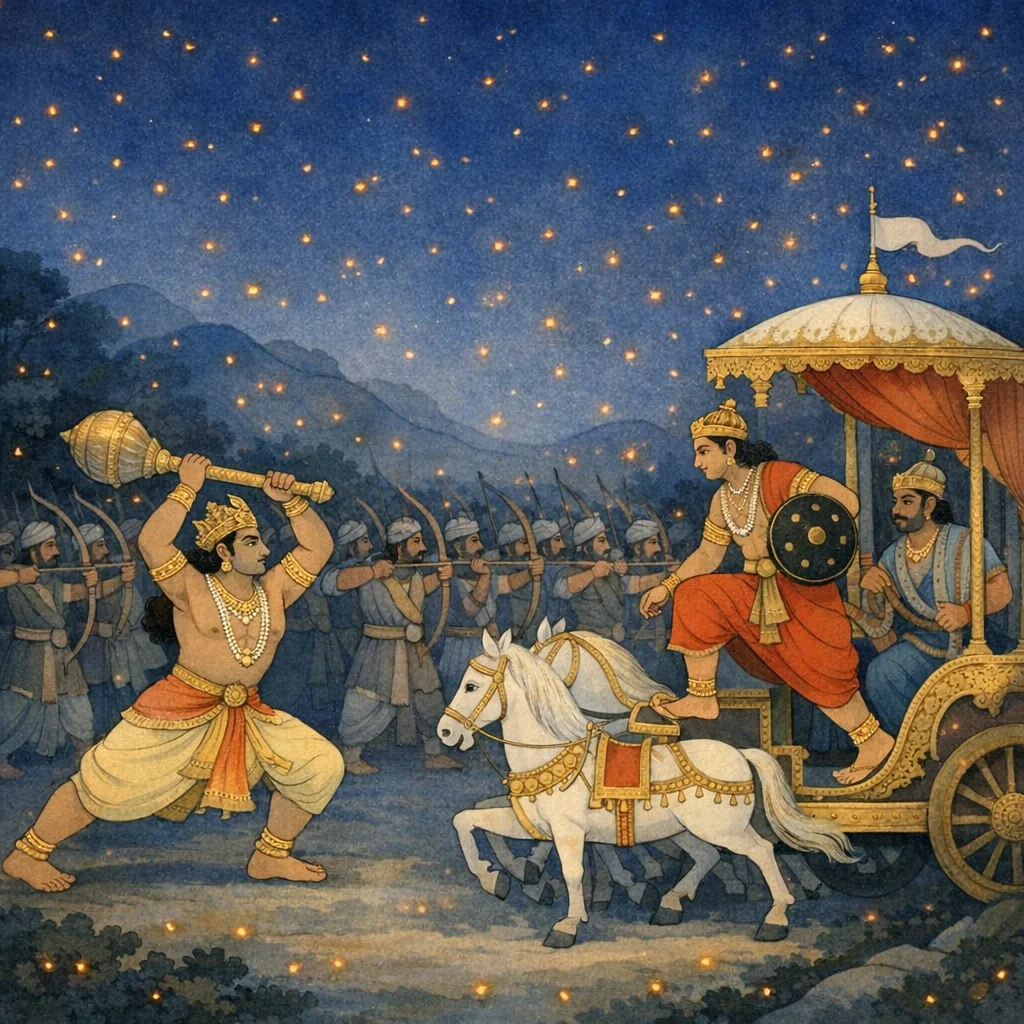
Chapter Arc: संध्या-सीमा पर रणभूमि में सात्यकि क्रोध से जल उठता है—भूरिश्रवा/भूरिका के साथ शर-वृष्टि का आदान-प्रदान आरम्भ होते ही रक्त बहने लगता है। → कौरव-पक्ष भीषण प्रत्युत्तर देता है: भूरिश्रवा शैनेय को तीक्ष्ण बाणों से भेदता है; चारों ओर क्षुरप्र, अर्धचन्द्र, नाराच और शिलीमुखों की वर्षा से रथ, ध्वज, कवच और अंग-प्रत्यंग कटने लगते हैं। इसी उन्माद में घटोत्कच द्रोणि (अश्वत्थामा) पर टूट पड़ता है और राक्षसी पराक्रम से युद्ध को और विकराल कर देता है। → रात्रि-रण का उग्र शिखर: अश्वत्थामा भीम का धनुष बार-बार काट देता है (द्वितीय, तृतीय, चतुर्थ, पंचम—एक के बाद एक), और उसी उथल-पुथल में भीम-दुर्योधन का सामना ऐसा भयंकर होता है कि दुर्योधन रणमुख में दूसरा विशाल धनुष उठा कर भी टिक नहीं पाता—अंततः भयभीत होकर नन्दक के रथ पर चढ़कर हट जाता है। → भीम रात्रि में सिंहनाद कर कौरवों को तर्जना देता है; युद्ध का शोर कुछ क्षणों को एक निष्कर्ष-सा पाता है—कौरव-पक्ष का मनोबल डगमगाता है, पर रण थमता नहीं। → अस्त्रों के टकराव से निकली चिनगारियाँ आकाश को जुगनुओं-सा भर देती हैं—रात्रि का यह अपशकुन-सा प्रकाश संकेत देता है कि अगला प्रहर और भी अनियंत्रित विनाश लेकर आएगा।
Shlokas
Verse 1
अत-#-रा- षट्षष्ट्याॉधिेकशततमो< ध्याय: सात्यकिके द्वारा भूरिका वध, घटोत्कच और अभ्चृत्थामाका घोर युद्ध तथा भीमके साथ दुर्योधनका युद्ध एवं दुर्योधनका पलायन संजय उवाच भूरिस्तु समरे राजन् शैनेयं रथिनां वरम् | आपतन्तमपासेधत् प्रयाणादिव कुज्जरम्,संजय कहते हैं--राजन्! जैसे कोई हाथीको उसके निकलनेके स्थानसे ही रोक दे, उसी प्रकार भूरिने आक्रमण करते हुए रथियोंमें श्रेष्ठ सात्यकिको समरभूमिमें आगे बढ़नेसे रोक दिया
Sañjaya said: O King, in the thick of battle Bhūri checked Śaineya—Sātyaki, the foremost among chariot-warriors—when he came charging on. He stopped his advance as one might halt an elephant right at the very point of its going forth.
Verse 2
अथीनं सात्यकि: क्रुद्ध: पञ्चभिन्निशितै: शरै: । विव्याध हृदये तस्य प्रास्रवत् तस्य शोणितम्,यह देख सात्यकि कुपित हो उठे और उन्होंने पाँच तीखे बाणोंसे भूरिकी छाती छेद डाली। उससे रक्तकी धारा बहने लगी
Sañjaya said: Then Sātyaki, inflamed with anger, pierced him in the region of the heart with five sharp arrows. From that wound his blood streamed forth.
Verse 3
तथैव कौरवो युद्धे शैनेयं युद्धदुर्मदम् । दशभिर्निशितैस्तीक्ष्णरविध्यत भुजान्तरे,इसी प्रकार युद्धस्थलमें कुरुवंशी भूरिने भी रणदुर्मद सात्यकिकी छातीमें दस तीखे बाणोंद्वारा गहरी चोट पहुँचायी
Sañjaya said: In the same manner, the Kaurava warrior struck Śaineya—Sātyaki, intoxicated with the fury of battle—piercing him between the arms with ten sharp, well-honed arrows.
Verse 4
तावन्योन्यं महाराज तततक्षाते शरैर्भुशम् । क्रोधसंरक्तनयनौ क्रोधाद् विस्फार्य कार्मुके,महाराज! उन दोनोंके नेत्र क्रोधसे लाल हो रहे थे। वे दोनों ही रोषसे अपने-अपने धनुष खींचकर बाणोंकी वर्षासे एक-दूसरेको अत्यन्त घायल कर रहे थे
Sañjaya said: O King, the two of them fiercely struck and pierced one another with volleys of arrows. Their eyes reddened with wrath; and, driven by anger, they drew their bows wide and grievously wounded each other.
Verse 5
तयोरासीन्महाराज श्त्रवृष्टि: सुदारुणा | क्रुद्धयो: सायकमुचोर्यमान्तकनिकाशयो:,राजेन्द्र! उन दोनोंपर अस्त्र-शस्त्रोंकी अत्यन्त भयंकर वर्षा हो रही थी। ये यम और अन्तकके समान कुपित हो परस्पर बाणोंका प्रहार कर रहे थे
Sañjaya said: O King, between those two there arose a most dreadful shower of weapons. Enraged, and resembling Yama and Antaka in their deadly power, the two archers rained arrows upon one another.
Verse 6
तावन्योन्यं शरै राजन् संछाद्य समवस्थितौ । मुहूर्त चैव तद् युद्धे समरूपमिवाभवत्,राजन! वे दोनों ही एक-दूसरेको बाणोंद्वारा आच्छादित करके खड़े थे। दो घड़ीतक उनमें समानरूपसे ही युद्ध चलता रहा
Sañjaya said: O King, the two stood facing one another, each shrouding the other with volleys of arrows. For a time in that battle, the fight seemed evenly matched—neither yielding nor gaining a clear advantage.
Verse 7
ततः क्रुद्धो महाराज शैनेय: प्रहसन्निव । धनुश्चिच्छेद समरे कौरव्यस्य महात्मन:,महाराज! तब क्रोधमें भरे हुए सात्यकिने हँसते हुए-से समरांगणमें महामना कुरुवंशी भूरिके धनुषको काट दिया
Sañjaya said: Then, O King, Śaineya (Sātyaki), inflamed with anger and seeming almost to smile, cut down in the thick of battle the bow of that high-souled Kaurava.
Verse 8
अथैनं छिन्नथन्वानं नवभिर्निशितै: शरै: । विव्याध हृदये तूर्ण तिष्ठ तिछेति चाब्रवीत्
Sañjaya said: Then, seeing him with his bow cut, he swiftly pierced him near the heart with nine razor-sharp arrows and cried out, “Stand! Stand!”
Verse 9
धनुष कट जानेपर उसकी छातीमें सात्यकिने तुरंत ही नौ तीखे बाण मारे और कहा --'खड़ा रह, खड़ा रह ।। सो5तिविद्धो बलवता शत्रुणा शत्रुतापन: । धनुरन्यत् समादाय सात्वतं प्रत्यविध्यत,बलवान शत्रुके आघातसे अत्यन्त घायल हुए शत्रुतापन भूरिने दूसरा धनुष हाथमें लेकर सात्यकिको भी गहरी चोट पहुँचायी
Sañjaya said: Struck hard by a powerful foe, the warrior known as Śatrutāpana, scorched by enmity, took up another bow and in return pierced Sātyaki.
Verse 10
स विद्ध्वा सात्वतं बाणैस्त्रिभिरेव विशाम्पते । धनुश्विच्छेद भल्लेन सुतीक्ष्णेन हसन्निव,प्रजानाथ! तीन बाणोंसे ही सात्यकिको घायल करके भूरिने हँसते हुए-से अत्यन्त तीखे भल्लद्वारा उनके धनुषको भी काट दिया
Sañjaya said: O lord of the people, having pierced Sātyaki of the Sātvata line with just three arrows, Bhūriśravas—almost as if smiling—then severed his bow with a razor-sharp bhalla.
Verse 11
छिन्नधन्वा महाराज सात्यकि: क्रोधमूर्च्छित: । प्रजहार महावेगां शक्ति तस्य महोरसि,महाराज! धनुष कट जानेपर क्रोधातुर हुए सात्यकिने भूरिके विशाल वक्ष:स्थलपर एक अत्यन्त वेगशालिनी शक्तिका प्रहार किया
Sañjaya said: “O King, Sātyaki—his bow cut and his mind overwhelmed by wrath—struck with tremendous force, hurling a swift spear (śakti) at his opponent’s broad chest.”
Verse 12
सतु शकक्त्या विभिन्नाज़ो निपपात रथोत्तमात् । लोहिताड़ इवाकाशाद् दीप्तरश्मिर्यद्च्छया,उस शक्तिसे भूरिके सारे अंग विदीर्ण हो गये और वह अपने उत्तम रथसे नीचे गिर पड़ा, मानो दैववश प्रदीप्त किरणोंवाला मंगलग्रह आकाशसे नीचे गिर गया हो
Sañjaya said: Struck by the spear, his limbs were torn and he fell down from his excellent chariot. It was as though, by the force of fate, the red-hued planet Mars—radiant with blazing rays—had dropped from the sky.
Verse 13
तंतु दृष्टवा हतं शूरमश्वत्थामा महारथ: । अभ्यधावत वेगेन शैनेयं प्रति संयुगे,शूरवीर भूरिको युद्धस्थलमें मारा गया देख महारथी अश्व॒त्थामा सात्यकिकी ओर बड़े वेगसे दौड़ा
Sañjaya said: Seeing that valiant warrior slain, Aśvatthāmā—the great chariot-fighter—rushed forward with speed in the thick of battle, charging straight toward Śaineya (Sātyaki).
Verse 14
तिष्ठ तिषछ्ठेति चाभाष्य शैनेयं स नराधिप । अभ्यवर्षच्छरौचधेण मेरुं वृष्ट्या यथाम्बुद:,नरेश्वर! वह सात्यकिसे “खड़ा रह, खड़ा रह” ऐसा कहकर उनके ऊपर उसी प्रकार बाणसमूहोंकी वर्षा करने लगा, जैसे बादल मेरु पर्वतपर जल बरसा रहा हो
Sañjaya said: Addressing Śaineya (Sātyaki) with the challenge, “Stand! Stand!”, the king then showered him with a dense torrent of arrows—just as a rain-cloud pours down upon Mount Meru.
Verse 15
तमापततन्तं संरब्धं शैनेयस्य रथं प्रति । घटोत्कचो<ब्रवीद् राजन नादं मुक्त्वा महारथ:,क्रोधमें भरे हुए अश्वत्थामाको सात्यकिके रथपर आक्रमण करते देख महारथी घटोत्कचने सिंहनाद करके कहा
Sañjaya said: O King, seeing the furious assailant rushing toward Śaineya’s chariot, the great warrior Ghaṭotkaca, after letting out a lion-like roar, spoke.
Verse 16
तिष्ठ तिष्ठ न मे जीवन द्रोणपुत्र गमिष्यसि । एष त्वां निहनिष्यामि महिषं षण्मुखो यथा,'द्रोणपुत्र! खड़ा रह, खड़ा रह, मेरे हाथसे जीवित छूटकर नहीं जा सकेगा। जैसे कार्तिकेयने महिषासुरका वध किया था, उसी प्रकार मैं भी तुझे मार डालूँगा
Sañjaya said: “Stand fast—stand fast! You will not escape me alive, O son of Droṇa. I shall strike you down, just as the six-faced Skanda slew the buffalo-demon.”
Verse 17
युद्धश्रद्धामहं तेड्द्य विनेष्यामि रणाजिरे । इत्युक्त्वा क्रोधताम्राक्षो राक्षस: परवीरहा
Sañjaya said: “Today, on the battlefield, I shall destroy your confidence and resolve for war.” Having spoken thus, the rākṣasa—his eyes reddened with anger, a slayer of enemy heroes—advanced with violent intent.
Verse 18
रथाक्षमात्रैरिषुभिर भ्यवर्षद् घटोत्कच:
Sañjaya said: Ghaṭotkaca showered arrows—each as thick as a chariot’s axle—upon the foe.
Verse 19
शरवृष्टिं तु तां प्राप्तां शरैराशीविषोपमै:
Sañjaya said: “Then that shower of arrows arrived—arrows likened to venomous serpents—falling with deadly force upon the battlefield.”
Verse 20
तत: शरशतैस्ती&णैर्मर्म भेदिभिराशुगै:
Sañjaya said: Then, with hundreds of sharp, swift arrows—piercing the vital points—he struck, intensifying the violence of the battle.
Verse 21
स शरैराचितस्तेन राक्षसो रणमूर्थनि
Sañjaya said: On the very forefront of the battlefield, that rākṣasa was covered over with arrows by him—an image of relentless martial pressure, where prowess and resolve manifest through disciplined, targeted force amid the chaos of war.
Verse 22
ततः क्रोधसमाविष्टो भैमसेनि: प्रतापवान्,वराहकर्णनलिीकैर्विकर्ण श्षा भ्यवीवृषत् । तत्पश्चात् भीमसेनके प्रतापी पुत्र घटोत्कचने क्रोधमें भरकर वज्र एवं बिजलीके समान चमकनेवाले भयंकर बाणोंद्वारा अश्वत्थामाको क्षत-विक्षत कर दिया तथा उसके ऊपर क्षुगप्र, अर्धचन्द्र, नाराच, शिलीमुख, वराहकर्ण, नालीक और विकर्ण आदि अस्त्रोंकी चारों ओरसे वर्षा आरम्भ कर दी
Sañjaya said: Then Bhīmasena, seized by wrath and blazing with prowess, showered Aśvatthāmā with arrows—varāhakarṇa, nālīka, vikarṇa and the like. After that, the mighty Bhīmasena and his son Ghaṭotkaca, their anger fully roused, tore Aśvatthāmā with dreadful shafts flashing like thunderbolt and lightning, and began a rain of missiles from every side—razor-headed arrows, crescent-headed arrows, nārācas, śilīmukhas, varāhakarṇas, nālīkas, vikarṇas, and others.
Verse 23
शरैरवचकर्तोंग्रैद्रार्णिं वज्ञाशनिप्रभै: । क्षुरप्रैरर्धचन्द्रैश्ष नाराचै: सशिलीमुखै:
Sañjaya said: With sharp, well-whetted arrows—gleaming like thunderbolts—along with razor-headed shafts, crescent-bladed missiles, heavy nārācas, and reed-like śilīmukhas, he struck down the enemy host.
Verse 24
तां शस्त्रवृष्टिमतुलां वज्ञाशनिसमस्वनाम्,व्यधमत् सुमहातेजा महाभ्राणीव मारुत: । जैसे वायु बड़े-बड़े बादलोंको छिलन्न-भिन्न कर देती है, उसी प्रकार व्यथारहित इन्द्रियोंवाले महातेजस्वी द्रोणपुत्र अश्वत्थामाने कुपित हो दिव्यास्त्रोंद्वारा अभिमन्त्रित भयंकर बाणोंसे अपने ऊपर पड़ती हुई उस अत्यन्त दुः:सह, अनुपम एवं वज्रपातके समान शब्द करनेवाली अस्त्र-शस्त्रोंकी वर्षाको नष्ट कर दिया
Sañjaya said: The mighty, blazing Aśvatthāman—Drona’s son, his senses unshaken—shattered that incomparable rain of weapons, roaring like a thunderbolt, just as the wind tears great masses of cloud to pieces.
Verse 25
पतन््तीमुपरि क्ुद्धो द्रौणिरव्यथितेन्द्रिय: । सुदुःसहां शरैघरिदिव्यास्त्रप्रतिमन्त्रिते:
Sañjaya said: Enraged, Droṇa’s son (Aśvatthāman), his senses unshaken, rained down from above a dreadful, almost unbearable shower of arrows—arrows empowered by the counter-mantras of divine weapons.
Verse 26
ततोडन््तरिक्षे बाणानां संग्रामो5न्य इवाभवत्
Then, in the open sky, the arrows themselves seemed to wage a separate battle—as if another war had arisen above the warriors—showing that the conflict had surged beyond human measure into a relentless exchange of missiles.
Verse 27
ततोअस्त्रसंघर्षकृतैर्विस्फुलिड्रैः समन्तत:
Sañjaya said: Then, on every side, sparks flew out—born from the violent clash of weapons—signaling that the battle’s fury was intensifying and that destruction was being generated by human resolve turned toward war.
Verse 28
स मार्गणगणैद्रौणिर्दिश: प्रच्छाद्य सर्वत:ः
Sañjaya said: Drauṇi (Aśvatthāman), with volleys of arrows in dense swarms, covered the directions on every side—filling the battlefield with a storm of missiles and pressing the combat toward ruthless intensity rather than restraint.
Verse 29
ततः प्रववृते युद्ध द्रौणिराक्षसयोर्मुधे
Sañjaya said: Thereupon, in that battlefield clash, the fight began in earnest between Droṇa’s son (Aśvatthāman) and the Rākṣasa. The narrative underscores how personal enmity and warrior pride drive combat forward, tightening the moral pressure of war where valor and wrath contend with restraint and dharma.
Verse 30
ततो घटोत्कचो बाणैर्दशभिद्रौणिमाहवे
Sañjaya said: Then, in the midst of battle, Ghaṭotkaca struck Droṇa’s son (Aśvatthāman) with ten arrows—an act that intensifies the night-fight’s ferocity and signals the relentless escalation of violence where prowess and wrath drive the combatants beyond restraint.
Verse 31
जघानोरसि संक्रुद्ध: कालज्वलनसंनिभै: । अत्यन्त क्रोधमें भरे हुए घटोत्कचने युद्धस्थलमें कालाग्निके समान दस तेजस्वी बाणोंद्वारा अश्वत्थामाकी छातीमें गहरी चोट पहुँचायी ।। ३० इ ।। स तैरभ्यायतैर्विद्धो राक्षसेन महाबल:,राक्षसद्वारा चलाये हुए उन विशाल बाणोंसे घायल हो महाबली अभश्वत्थामा समरांगणमें आँधीके हिलाये हुए वृक्षके समान काँपने लगा। वह ध्वजदण्डका सहारा ले मूर्च्छित हो गया
Sañjaya said: Enraged, Ghaṭotkaca struck Aśvatthāmā on the chest with ten blazing arrows, like the fire of Time itself, driving them deep amid the crush of battle. Pierced by those swiftly rushing shafts loosed by the mighty rākṣasa, the powerful Aśvatthāmā trembled on the field like a tree shaken by a storm; leaning on the staff of his banner, he swooned.
Verse 32
चचाल समरे द्रौणिर्वातनुन्न इव ट्रुम: । स मोहमनुसम्प्राप्तो ध्वजयष्टिं समाश्रित:,राक्षसद्वारा चलाये हुए उन विशाल बाणोंसे घायल हो महाबली अभश्वत्थामा समरांगणमें आँधीके हिलाये हुए वृक्षके समान काँपने लगा। वह ध्वजदण्डका सहारा ले मूर्च्छित हो गया
Sañjaya said: In the thick of battle, Droṇa’s son Aśvatthāmā, struck by those mighty arrows driven by the rākṣasa, reeled like a tree shaken by a gale. Overcome by faintness and confusion, he clung to the flagstaff for support and sank into a swoon.
Verse 33
ततो हाहाकृतं सैन्यं तव सर्व जनाधिप । हतं सम मेनिरे सर्वे तावकास्तं विशाम्पते,नरेश्वरर फिर तो आपकी सारी सेनामें हाहाकार मच गया। प्रजानाथ! आपके समस्त योद्धाओंने यह मान लिया कि अभश्वत्थामा मारा गया
Sañjaya said: Then your entire army broke into cries of alarm, O lord of men. All your warriors, O protector of the people, concluded that Aśvatthāmā had been slain.
Verse 34
त॑ तु दृष्टवा तथावस्थमश्चत्थामानमाहवे । पज्चाला: सृञ्जयाश्रैव सिंहनादं प्रचक्रिरे,रणभूमिमें अश्वत्थामाकी वैसी अवस्था देख पांचाल और सूंजय योद्धा सिंहनाद करने लगे
Sañjaya said: Seeing Aśvatthāmā in that condition on the battlefield, the Pāñcālas and the Sṛñjayas raised a lion-like roar.
Verse 35
प्रतिलभ्य तत: संज्ञामश्वत्थामा महाबल: । धनु: प्रपीड्य वामेन करेणामित्रकर्शन:,तदनन्तर सचेत हो महाबली शत्रुसूदन अश्वत्थामाने बायें हाथसे धनुषको दबाकर कानतक खींचे हुए धनुषसे घटोत्कचको लक्ष्य करके यमदण्डके समान एक भयंकर एवं उत्तम बाण शीघ्र छोड़ दिया
Sañjaya said: Regaining consciousness, the mighty Aśvatthāmā—crusher of foes—pressed his bow with his left hand, steadying himself to resume the grim work of battle.
Verse 36
मुमोचाकर्णपूर्णेन धनुषा शरमुत्तमम् | यमदण्डोपमं घोरमुद्दिश्याशु घटोत्कचम्,तदनन्तर सचेत हो महाबली शत्रुसूदन अश्वत्थामाने बायें हाथसे धनुषको दबाकर कानतक खींचे हुए धनुषसे घटोत्कचको लक्ष्य करके यमदण्डके समान एक भयंकर एवं उत्तम बाण शीघ्र छोड़ दिया
Sañjaya said: Drawing his bow back to the ear, he swiftly loosed a foremost arrow—terrifying, like Yama’s rod of punishment—aimed at Ghaṭotkaca. The scene lays bare the grim ethics of war: when fear and necessity rule the field, warriors resort to the most dreadful force to quell a formidable threat, even as the deed bears the weight of lethal intent and karmic consequence.
Verse 37
स भित्त्वा हृदयं तस्य राक्षसस्य शरोत्तम: | विवेश वसुधामुग्र: सपुड्ख: पृथिवीपते
Sañjaya said: That foremost arrow, having pierced the heart of that rākṣasa, plunged with fierce force—feathered and intact—into the earth, O lord of the land. The scene underscores the grim certainty of martial consequence: in war, violent intent culminates in irreversible results, and the earth itself receives the final imprint of human wrath.
Verse 38
पृथ्वीपते! वह उत्तम एवं भयंकर बाण उस राक्षसकी छाती छेदकर पंखसहित पृथ्वीमें समा गया ।। सो5तिविद्धो महाराज रथोपस्थ उपाविशत् । राक्षसेन्द्र: सुबलवान् द्रौणिना रणशालिना,महाराज! युद्धमें शोभा पानेवाले अअश्रवत्थामाद्वारा अत्यन्त घायल हुआ महाबली राक्षसराज घटोत्कच रथके पिछले भागमें बैठ गया
Sañjaya said: “O lord of the earth! That excellent yet dreadful arrow pierced the demon’s chest and, still bearing its feathers, sank into the ground. Severely wounded, O King, he sat down upon the chariot-seat. The mighty lord of the Rākṣasas—Ghaṭotkaca—struck down by Droṇa’s son, the battle-renowned Aśvatthāmā, and grievously hurt even as he sought glory in war, sat in the rear part of his chariot.”
Verse 39
दृष्टवा विमूढं हैडिम्बं सारथिस्तु रणाजिरात् | द्रौणे: सकाशात् सम्भ्रान्तस्त्वपनिन्ये त्वरान्वितः,हिडिम्बाकुमारको मूर्च्छित देख उसका सारथि घबरा गया और तुरंत ही उसे समरांगणसे, विशेषत: अश्वत्थामाके निकटसे दूर हटा ले गया
Sañjaya said: Seeing Haiḍimba’s son lying senseless, his charioteer—panic-stricken—quickly drove him away from the battlefield, pulling him back in haste, especially from the vicinity of Droṇa’s son (Aśvatthāmā). The scene underscores how, amid the moral chaos of war, fear and the instinct to preserve life can override pride and aggression, forcing even combatants to retreat when confronted with overwhelming danger.
Verse 40
तथा तु समरे विद्ृध्वा राक्षसेन्द्रं घटोत्कचम् । ननाद सुमहानादं द्रोणपुत्रो महारथ:
Sañjaya said: Then, in the midst of battle, having struck Ghaṭotkaca—the lord of the Rākṣasas—Droṇa’s son, the great chariot-warrior, let out a thunderous roar. The cry signals both martial resolve and the hardening of the conflict, where prowess and fury surge while the moral weight of violence continues to accumulate on the field.
Verse 41
इस प्रकार समरभूमिमें राक्षसराज घटोत्कचको घायल करके महारथी द्रोणपुत्रने बड़े जोरसे गर्जना की ।। पूजितस्तव पुत्रैश्न सर्वयोधैश्व भारत । वपुषातिप्रजज्वाल मध्याह्न इव भास्कर:,भरतनन्दन! उस समय सम्पूर्ण योद्धाओं तथा आपके पुत्रोंद्वारा पूजित हुआ अश्वत्थामा अपने शरीरसे मध्याह्न-कालके सूर्यकी भाँति अत्यन्त प्रकाशित हो रहा था
Sanjaya said: Thus, on the battlefield, after grievously wounding Ghaṭotkaca, the rākṣasa-king, Aśvatthāmā—Droṇa’s son, a mighty chariot-warrior—roared with tremendous force. Honoured by your sons and by all the warriors, O Bhārata, he blazed in his very person like the sun at midday. O delight of the Bharatas, in that moment Aśvatthāmā, acclaimed by the whole host and by your sons, shone with overpowering radiance—an image of martial pride and the intoxicating praise that war bestows.
Verse 42
भीमसेन तु युध्यन्तं भारद्वाजरथं प्रति । स्वयं दुर्योधनो राजा प्रत्यविध्यच्छितै: शरै:
Sañjaya said: As Bhīmasena fought against the chariot-warrior of Bhāradvāja (Droṇa), King Duryodhana himself countered him, striking back with keen, well-aimed arrows. The scene shows that amid war’s moral collapse, even the king enters the fray in person to shield his side and check a formidable foe.
Verse 43
द्रोणाचार्यके रथकी ओर आते हुए युद्धपरायण भीमसेनको स्वयं राजा दुर्योधनने पैने बाणोंसे बींध डाला ।। त॑ भीमसेनो दशक: शरैरविव्याध मारिष | दुर्योधनो5पि विंशत्या शराणां प्रत्यविध्यत,माननीय नरेश! तब भीमसेनने भी दुर्योधनको दस बाणोंसे घायल किया। फिर दुर्योधनने भी उन्हें बीस बाण मारे
Sañjaya said: O venerable king, as Bhīmasena, intent on battle, advanced toward Droṇācārya’s chariot, King Duryodhana himself pierced him with sharp arrows. Then Bhīmasena wounded Duryodhana with ten arrows, and Duryodhana in turn struck Bhīma with twenty. Thus, in the heat of combat, each answered the other with a measured yet escalating counterstroke, revealing both martial resolve and the hardening cycle of violence that war sustains.
Verse 44
तौ सायकैरवच्छिन्नावदृश्येतां रणाजिरे । मेघजालसमाच्छन्नौ नभसीवेन्दुभास्करौ,जैसे कभी-कभी चन्द्रमा और सूर्य आकाशमें मेघोंके समूहसे आच्छादित हुए देखे जाते हैं, उसी प्रकार समरांगणमें वे दोनों वीर सायकसमूहोंसे आच्छन्न दिखायी देते थे
Sañjaya said: On the battlefield those two warriors could scarcely be seen, cut off and covered over by volleys of arrows—like the moon and the sun in the sky when they are veiled by a mass of clouds. The image shows how the fury of war can obscure even the most radiant heroes, as if nature itself were momentarily eclipsed by violence.
Verse 45
अथ दुर्योधनो राजा भीम विव्याध पत्रिभि: | पज्चभिर्भरतश्रेष्ठ तिष्ठ तिछेति चाब्रवीत्,भरतश्रेष्ठ! राजा दुर्योधनने भीमसेनको पाँच बाणोंसे घायल कर दिया और कहा --खड़ा रह, खड़ा रह”
Sañjaya said: Then King Duryodhana struck Bhīma with five arrows and, addressing him as ‘best of the Bharatas,’ cried, “Stand your ground—stand!” In the heat of battle, the taunt invokes the warrior’s code of facing one’s foe without retreat, even as it reveals the pride and rivalry driving the combatants beyond mere strategy.
Verse 46
तस्य भीमो धनुश्छित्त्वा ध्वजं च दशभि: शरै: । विव्याध कौरवश्रेष्ठ नवत्या नतपर्वणाम्,तब भीमसेनने दस बाण मारकर उसके धनुष और ध्वज काट डाले और झुकी हुई गाँठवाले नब्बे बाणोंसे कौरवश्रेष्ठ दुर्योधनको गहरी चोट पहुँचायी
Sañjaya said: Bhīma cut down his bow and, with ten arrows, struck down his banner as well. Then, with ninety arrows whose joints were bent, he pierced the foremost of the Kurus—Duryodhana—inflicting a deep wound. The scene reveals the relentless escalation of violence in battle, where prowess and resolve eclipse restraint, even as the moral cost of such destruction hangs over the combatants.
Verse 47
ततो दुर्योधन: क्रुद्धों धनुरन्यन्महत्तरम् गृहीत्वा भरतश्रेष्ठो भीमसेनं शितै: शरै:
Sañjaya said: Then Duryodhana, blazing with anger, took up another bow, mightier than before; and that best of the Bharatas assailed Bhīmasena with sharp arrows. The scene shows how wrath in battle drives escalation—strength and skill become instruments of vengeance rather than restraint.
Verse 48
तान् निहत्य शरान् भीमो दुर्योधनधनुश्च्युतान्
Sañjaya said: Having struck down the arrows released from Duryodhana’s bow, Bhīma stood firm, meeting the assault with resolute force. The moment underscores the warrior’s duty in battle—countering aggression without yielding, while keeping his intent fixed on the larger cause of the war.
Verse 49
दुर्योधनस्तु संक्रुद्धो भीमसेनस्य मारिष
Sañjaya said: But Duryodhana, ever more enraged at Bhīmasena—O venerable one—acted in accordance with that wrath. The line signals how anger, when unchecked amid war, drives a leader toward rash and ethically fraught choices, intensifying the cycle of violence rather than restoring order.
Verse 50
अथान्यद् धनुरादाय भीमसेनो महाबल:
Sañjaya said: Then Bhīmasena, the mighty warrior, took up another bow—signaling renewed resolve and readiness to continue the fierce duties of battle.
Verse 51
विव्याध नृपतिं तूर्ण सप्तभिर्निशितै: शरै: । तब महाबली भीमसेनने दूसरा धनुष हाथमें लेकर तुरंत ही कौरवनरेशको सात तीखे बाणोंसे बींध डाला ।। तदप्यस्य धनुः क्षिप्रं चिच्छेद लघुहस्तवत्,तव पुत्रो महाराज जितकाशी मदोत्कट: । दुर्योधनने शीघ्रतापूर्वक हाथ चलानेवाले कुशल योद्धाकी भाँति भीमसेनके उस धनुषको भी शीघ्र ही काट दिया। महाराज! भीमसेनके हाथमें लिये हुए दूसरे, तीसरे, चौथे और पाँचवें धनुषको भी विजयसे उल्लसित होनेवाले आपके मदोनन््मत्त पुत्रने काट डाला
Sanjaya said: Bhimasena swiftly pierced the Kaurava king with seven sharp arrows. Yet your son, O King—exultant and fiercely intoxicated with pride—cut down Bhima’s bow at once, like a master of rapid hand. Thus the contest of skill and resolve mounted ever higher, as prowess and arrogance alike drove the warriors onward.
Verse 52
द्वितीयं च तृतीयं च चतुर्थ पठचमं तथा । आत्तमात्तं महाराज भीमस्य धनुराच्छिनत्
Sanjaya said: “O King, on the second, the third, the fourth, and the fifth time—whenever Bhima took up his bow—he cut it down each time. Thus, amid the crush of battle, Bhima’s weapon was shattered again and again, revealing how relentless and skillful the opposing assault had become.”
Verse 53
स तथा भियद्यमानेषु कार्मुकेषु पुन: पुन:,इस प्रकार जब बारंबार धनुष काटे जाने लगे, तब भीमसेनने समरभूमिमें सम्पूर्णतः लोहेकी बनी हुई एक सुन्दर शक्ति चलायी, जो मौतकी सगी बहिनके समान जान पड़ती थी। वह आगकी ज्वालाके समान प्रकाशित हो रही थी
Sanjaya said: Even as the bows were being cut down again and again, Bhimasena on the battlefield hurled a splendid śakti-spear, forged wholly of iron. It seemed like Death’s own sister, blazing forth like a tongue of fire—an image of war’s relentless, sobering inevitability.
Verse 54
शक्ति चिक्षेप समरे सर्वपारशवीं शुभाम् | मृत्योरिव स्वसारं हि दीप्तां वह्नमिशिखामिव,इस प्रकार जब बारंबार धनुष काटे जाने लगे, तब भीमसेनने समरभूमिमें सम्पूर्णतः लोहेकी बनी हुई एक सुन्दर शक्ति चलायी, जो मौतकी सगी बहिनके समान जान पड़ती थी। वह आगकी ज्वालाके समान प्रकाशित हो रही थी
Sanjaya said: In the thick of battle, Bhimasena hurled a splendid iron śakti-spear, wholly forged of metal. It blazed like a tongue of fire and seemed like Death’s own sister—an omen of inevitable destruction amid the relentless exchange of weapons.
Verse 55
सीमन्तमिव कुर्वन्ती नभसो5ग्निसमप्रभाम् । अप्राप्तामेव तां शक्तिं त्रिधा चिच्छेद कौरव:
Sanjaya said: The blazing spear, radiant like fire and seeming to cleave the very sky as it flew, had not yet reached its mark when the Kaurava cut it into three pieces. Thus, in war’s fury, even the most fearsome weapons may be checked by vigilance, skill, and timely counterstroke—reminding that power without true aim and effective execution fails of its intended end.
Verse 56
ततो भीमो महाराज गदां गुर्वी महाप्रभाम्
Sañjaya said: Then Bhīma, O King, took up his heavy mace, radiant with great splendor—signaling a decisive turn in the combat, where sheer strength is yoked to resolve amid the moral strain of war.
Verse 57
चिक्षेपाविध्य वेगेन दुर्योधनरथं प्रति । महाराज! तब भीमसेनने अपनी अत्यन्त तेजस्विनी गदाको बड़े वेगसे घुमाकर दुर्योधनके रथपर दे मारा ।। ततः सा सहसा वाहांस्तव पुत्रस्य संयुगे
Sañjaya said: Having whirled it with tremendous speed and taking sure aim, Bhimasena hurled his blazing mace straight at Duryodhana’s chariot. Then, in the thick of battle, that weapon suddenly struck down the steeds of your son, turning the moment into a grim reminder of how swiftly prowess and fortune can collapse amid the violence of war.
Verse 58
पुत्रस्तु तव राजेन्द्र भीमाद् भीत: प्रणश्य च
Sañjaya said: O king, your son—terrified of Bhīma—fled and disappeared from the scene, his fear overriding resolve amid the moral and physical pressures of war.
Verse 59
ततो भीमो हतं मत्वा तव पुत्र महारथम्
Sañjaya said: Then Bhīma, believing your son—the great chariot-warrior—to have been slain, reacted on that assumption amid the turmoil of battle, where perception and report can swiftly shape decisive action.
Verse 60
तावका: सैनिकाश्नापि मेनिरे निहतं नूपम् । ततो&तिचुक्रुशु: सर्वे ते हाहेति समन््ततः,आपके सैनिकोंने भी राजा दुर्योधनको मरा हुआ ही मान लिया था; अतः वे सब ओर जोर-जोरसे हाहाकार करने लगे
Sañjaya said: Even your own soldiers concluded that the king had been slain. Therefore, all of them, on every side, burst into loud cries of lamentation—shouting “Alas! Alas!” In the moral atmosphere of the war, this moment shows how quickly fear and grief spread when a leader is believed fallen, and how the fate of one ruler can shake an entire host, loosening resolve and order amid adharma-driven slaughter.
Verse 61
तेषां तु निनदं श्र॒त्वा त्रस्तानां सर्वयोधिनाम् | भीमसेनस्य नादं च श्रुत्वा राजन् महात्मन:,राजन्! उन भयभीत हुए सम्पूर्ण योद्धाओंका आर्तनाद तथा महामनस्वी भीमसेनकी गर्जना सुनकर दुर्योधनको मरा हुआ मान राजा युधिष्ठिर बड़े वेगसे उस स्थानपर आ पहुँचे, जहाँ कुन्तीकुमार भीमसेन दहाड़ रहे थे
Sañjaya said: O King, hearing the tumultuous outcry of all the warriors thrown into panic, and also hearing the thunderous roar of the great-souled Bhīmasena, King Yudhiṣṭhira—taking Duryodhana to be slain—rushed swiftly to the spot where Kuntī’s son Bhīma was bellowing.
Verse 62
ततो युधिषिरो राजा हतं मत्वा सुयोधनम् । अभ्यवर्तत वेगेन यत्र पार्थो वृकोदर:,राजन्! उन भयभीत हुए सम्पूर्ण योद्धाओंका आर्तनाद तथा महामनस्वी भीमसेनकी गर्जना सुनकर दुर्योधनको मरा हुआ मान राजा युधिष्ठिर बड़े वेगसे उस स्थानपर आ पहुँचे, जहाँ कुन्तीकुमार भीमसेन दहाड़ रहे थे
Sañjaya said: Then King Yudhiṣṭhira, believing Suyodhana (Duryodhana) to have been slain, rushed swiftly to the place where Pārtha and Vṛkodara were, where Bhīma’s roar and the anguished cries of the frightened warriors were resounding.
Verse 63
पज्चाला: केकया मत्स्या: सृञज्जयाश्न विशाम्पते | सर्वोद्योगेनाभिजम्मुद्रोणमेव युयुत्मया,प्रजानाथ! फिर तो पांचाल, मत्स्य, केकय और सूंजय योद्धा युद्धकी इच्छासे पूर्ण उद्योग करके द्रोणाचार्यपर ही टूट पड़े
Sañjaya said: O lord of men, the Pāñcālas, the Kekayas, the Matsyas, and the Sṛñjayas—fully resolved and exerting themselves with every effort—surged forward with the will to fight, directing their assault upon Droṇa alone.
Verse 64
तत्रासीत् सुमहद् युद्ध द्रोणस्थाथ परैः सह । घोरे तमसि मग्नानां निघध्नतामितरेतरम्,वहाँ शत्रुओंके साथ द्रोणाचार्यका बड़ा भारी संग्राम हुआ। सब लोग घोर अन्धकारमें डूबकर एक-दूसरेपर घातक प्रहार कर रहे थे
Sañjaya said: There, a very great battle took place, with Droṇa engaged against the enemy host. In the dreadful darkness, men, plunged into blindness and confusion, struck one another down with deadly blows.
Verse 165
इस प्रकार श्रीमह्ााभारत द्रोणपर्वके अन्तर्गत घटोत्कचवधपर्वमें यात्रियुद्धके अवसरपर युधिष्टिरका पलायनविषयक एक सौ पैंसठवाँ अध्याय पूरा हुआ
Thus ends the one hundred and sixty-fifth chapter of the Śrī Mahābhārata’s Droṇa Parva, within the section on the slaying of Ghaṭotkaca, describing—on the occasion of the marching battle—the episode concerning Yudhiṣṭhira’s retreat.
Verse 166
इति श्रीमहाभारते द्रोणपर्वणि घटोत्कचवधपर्वणि रात्रियुद्धे दुर्योधनापयाने षट्षष्ट्यधिकशततमो<ध्याय:
Thus, in the Śrī Mahābhārata, within the Droṇa Parva—specifically in the episode of the slaying of Ghaṭotkaca—amid the night-battle, in the section describing Duryodhana’s withdrawal, the 166th chapter comes to its close.
Verse 176
द्रौणिमभ्यद्रवत् क्रुद्धो गजेन्द्रमिव केसरी । “आज समरांगणमें मैं तेरी युद्धविषयक श्रद्धा दूर कर दूँगा।! ऐसा कहकर क्रोधसे लाल आँखें किये, शत्रुवीरोंका हनन करनेवाले कुपित राक्षस घटोत्कचने अश्वत्थामापर उसी प्रकार धावा किया, जैसे सिंह किसी गजराजपर आक्रमण करता है
Ghaṭotkaca, wrathful, charged at Droṇi (Aśvatthāmā) like a lion assailing the lord of elephants. “Today, upon this battlefield, I shall drive out your faith in war!” he cried; and with eyes reddened by rage, that furious Rākṣasa—slayer of enemy champions—rushed upon Aśvatthāmā as a lion falls upon a mighty elephant.
Verse 183
रथिनामृषभं द्रौणिं धाराभिरिव तोयद: । जैसे मेघ पर्वतपर जलकी धारा गिराता है, उसी प्रकार घटोत्कच रथियोंमें श्रेष्ठ अश्वत्थामापर रथके धुरेके समान मोटे-मोटे बाणोंकी वर्षा करने लगा
Sañjaya said: Like a rain-cloud pouring down streams of water upon a mountain, Ghaṭotkaca began to shower Aśvatthāmā—Droṇa’s son, foremost among chariot-warriors—with thick, axle-like arrows, until the field seemed a tempest of missiles.
Verse 193
शातयामास समरे तरसा द्रौणिरुत्स्मयन् । परंतु अश्वत्थामाने मुसकराते हुए समरभूमिमें अपने ऊपर आयी हुई उस बाण-वर्षाको विषधर सर्पोके समान भयंकर बाणोंद्वारा वेगपूर्वक नष्ट कर दिया
Sañjaya said: In the thick of battle, Droṇa’s son Aśvatthāmā, smiling with fierce confidence, swiftly shattered the arrow-storm that had descended upon him. With dreadful shafts like venomous serpents, he destroyed that onrushing barrage by sheer speed and martial mastery.
Verse 206
समाचिनोदू राक्षसेन्द्रं घटोत्कचमरिंदमम् । तत्पश्चात् मर्मस्थलको विदीर्ण कर देनेवाले सैकड़ों पैने बाणोंद्वारा उसने शत्रुदमन राक्षसराज घटोत्कचको बींध दिया
Sañjaya said: He struck Ghaṭotkaca, lord of the Rākṣasas and a formidable crusher of foes. Then, with hundreds of keen arrows that tore into vital points, he pierced the enemy-subduing Rākṣasa-king Ghaṭotkaca again and again.
Verse 213
व्यकाशत महाराज श्वाविच्छललतो यथा । महाराज! अभ्रृत्थामाद्वारा उन बाणोंसे बिंधा हुआ वह राक्षस काँटोंसे भरे हुए साहीके समान सुशोभित हो रहा था
Sañjaya said: O King, he shone like a porcupine bristling with quills. Pierced all over by those arrows, that rākṣasa looked fearsome—his very wounds becoming a grim ornament of the battlefield, revealing the terrible cost and relentless momentum of war.
Verse 233
वराहकर्णनलिीकैर्विकर्ण श्षा भ्यवीवृषत् । तत्पश्चात् भीमसेनके प्रतापी पुत्र घटोत्कचने क्रोधमें भरकर वज्र एवं बिजलीके समान चमकनेवाले भयंकर बाणोंद्वारा अश्वत्थामाको क्षत-विक्षत कर दिया तथा उसके ऊपर क्षुगप्र, अर्धचन्द्र, नाराच, शिलीमुख, वराहकर्ण, नालीक और विकर्ण आदि अस्त्रोंकी चारों ओरसे वर्षा आरम्भ कर दी
Sañjaya said: He showered him with varāhakarṇa and nālīka arrows, and with vikarṇa shafts. Thereafter the mighty Ghaṭotkaca, son of Bhīmasena, filled with wrath, tore Aśvatthāmā to pieces with dreadful arrows flashing like thunderbolt and lightning; and then he began a rain of weapons on him from every side—kṣurapras, half-moon blades, nārācas, śilīmukhas, varāhakarṇas, nālīkas, vikarṇas, and the like. In the epic’s ethical texture, the line heightens the tragic momentum of war: anger drives the deed, and martial prowess, though heroic, escalates violence rather than restoring dharma.
Verse 253
व्यधमत् सुमहातेजा महाभ्राणीव मारुत: । जैसे वायु बड़े-बड़े बादलोंको छिलन्न-भिन्न कर देती है, उसी प्रकार व्यथारहित इन्द्रियोंवाले महातेजस्वी द्रोणपुत्र अश्वत्थामाने कुपित हो दिव्यास्त्रोंद्वारा अभिमन्त्रित भयंकर बाणोंसे अपने ऊपर पड़ती हुई उस अत्यन्त दुः:सह, अनुपम एवं वज्रपातके समान शब्द करनेवाली अस्त्र-शस्त्रोंकी वर्षाको नष्ट कर दिया
Sañjaya said: The exceedingly radiant one shattered it—like the wind tearing apart great masses of cloud. In the same way, Droṇa’s son Aśvatthāmā, his senses steady and unshaken though inflamed with wrath, used divinely empowered missiles to break and disperse the dreadful shower of weapons falling upon him—an unbearable, unparalleled barrage that crashed with a sound like a thunderbolt. The scene underscores how disciplined control of one’s faculties can coexist with fierce resolve in war, even as such power intensifies the moral weight of violence.
Verse 263
घोररूपो महाराज योधानां हर्षवर्धन: । महाराज! तत्पश्चात् अन्तरिक्षमें बाणोंका दूसरा भयंकर संग्राम-सा होने लगा, जो योद्धाओंका हर्ष बढ़ा रहा था
Sañjaya said: O great king, thereafter a second dreadful battle of arrows seemed to arise in the sky—terrifying to behold, yet it heightened the warriors’ exhilaration. In the epic’s moral air, the line shows how combat can intoxicate fighters with thrill and pride even amid horror, exposing the tension between martial valor and the dehumanizing momentum of violence.
Verse 286
प्रियार्थ तव पुत्राणां राक्षसं समवाकिरत् । द्रोणपुत्रने आपके पुत्रोंका प्रिय करनेके लिये अपने बाणोंद्वारा सम्पूर्ण दिशाओंको आच्छादित करते हुए उस राक्षसको भी ढक दिया
Sañjaya said: To win the favor of your sons, Droṇa’s son showered his arrows in every direction, blanketing the quarters—and in that same overwhelming barrage he even covered the rākṣasa as well. The scene underscores how personal loyalty and the desire to please one’s patrons can drive a warrior to indiscriminate, all-encompassing violence on the battlefield.
Verse 293
विगाढे रजनीमध्ये शक्रप्रह्लादयोरिव । तदनन्तर गाढ़ अन्धकारसे भरी हुई आधीरातके समय रणभूमिमें इन्द्र और प्रह्नादके समान अभश्वत्थामा और घटोत्कचका घोर युद्ध आरम्भ हुआ
Sañjaya said: In the deep middle of the night, when darkness had grown dense, a dreadful battle began on the battlefield between Aśvatthāmā and Ghaṭotkaca—like the famed combat of Śakra (Indra) and Prahlāda. The simile underscores the superhuman ferocity of the encounter and the moral weight of night-fighting, where fear and confusion magnify the cruelty of war.
Verse 473
अपीडयद् रणमुखे पश्यतां सर्वधन्विनाम् । तत्पश्चात् भरतश्रेष्ठ दुर्योधनने कुपित हो दूसरा विशाल धनुष हाथमें लेकर युद्धके मुहानेपर सम्पूर्ण धनुर्धरोंके देखते-देखते पैने बाणोंद्वारा भीमसेनको पीड़ा देनी आरम्भ की
Sañjaya said: Then, on the very front of battle, before the eyes of all the bowmen, the enraged Duryodhana took up another great bow and began to harass Bhīmasena with sharp arrows. The scene underscores how wrath and rivalry drive warriors to escalate violence publicly, seeking both tactical advantage and the moral theatre of reputation in war.
Verse 486
कौरवं पज्चविंशत्या क्षुद्रकाणां समार्पयत् । दुर्योधनके धनुषसे छूटे हुए उन सभी बाणोंको नष्ट करके भीमसेनने उस कौरव- नरेशको पचीस बाण मारे
Sañjaya said: Bhīmasena, having neutralized all the arrows released from Duryodhana’s bow, struck that Kaurava king with twenty-five shafts. The scene underscores the relentless logic of battle: skill answers skill, and the warrior’s resolve is measured by restraint and precision even amid fury.
Verse 496
क्षुरप्रेण धनुश्छित्त्वा दशश्ि: प्रत्यविध्यत । आर्य! इससे दुर्योधन अत्यन्त कुपित हो उठा और उसने एक क्षुरप्रसे भीमसेनका धनुष काटकर उन्हें दस बाणोंसे घायल कर दिया
Sañjaya said: With a razor-edged arrow he cut Bhīmasena’s bow, and then struck him back with ten arrows. Enraged, Duryodhana answered force with force, intensifying the violence of the duel and showing how wrath in battle drives escalation rather than restraint.
Verse 523
तव पुत्रो महाराज जितकाशी मदोत्कट: । दुर्योधनने शीघ्रतापूर्वक हाथ चलानेवाले कुशल योद्धाकी भाँति भीमसेनके उस धनुषको भी शीघ्र ही काट दिया। महाराज! भीमसेनके हाथमें लिये हुए दूसरे, तीसरे, चौथे और पाँचवें धनुषको भी विजयसे उल्लसित होनेवाले आपके मदोनन््मत्त पुत्रने काट डाला
Sañjaya said: O King, your son Duryodhana—exultant, fiercely intoxicated with pride, and confident of victory—swiftly cut down Bhīmasena’s bow, moving his hands with the speed and skill of a seasoned warrior. Then, O Majesty, as Bhīma took up a second, a third, a fourth, and even a fifth bow, your son, elated by the prospect of triumph, severed each of them as well. The scene underscores how martial prowess, when fueled by arrogance and the hunger for victory, can intensify the violence of war and harden the combatants’ resolve.
Verse 556
पश्यत: सर्वलोकस्य भीमस्य च महात्मन: । आकाशमें सीमन्तकी रेखा-सी बनाती हुई अग्निके समान देदीप्यमान होनेवाली उस शक्तिके अपने पास आनेसे पहले ही कौरवनरेशने तीन टुकड़े कर दिये। सम्पूर्ण योद्धाओं तथा महामना भीमसेनके देखते-देखते यह कार्य हो गया
Sañjaya said: Before the blazing śakti-spear—shining like fire and seeming to draw a parting-line across the sky—could even reach him, the king of the Kurus cut it into three pieces. This happened in full view of all the warriors and of the great-souled Bhīmasena.
Verse 573
सारथिं च गदा गुर्वी ममर्दास्य रथं पुन: । युद्धस्थलमें उस भारी गदाने सहसा आपके पुत्रके चारों घोड़ों, सारथि और रथका भी मर्दन कर दिया
Sañjaya said: With a massive mace he again crushed the charioteer and smashed that chariot. On the battlefield, that heavy blow at once battered down your son’s four horses, his driver, and his car.
Verse 583
आरुरोह रथं चान्यं नन्न्दकस्य महात्मन: । राजेन्द्र! उस समय आपका पुत्र भीमसेनसे भयभीत हो पहले ही भागकर महामना नन््दकके रथपर जा बैठा था
Sañjaya said: “O best of kings, at that time your son too—terrified of Bhīmasena—fled in advance and mounted the chariot of the noble Nandaka.”
Verse 596
सिंहनादं महच्चक्रे तर्जयन् निशि कौरवान् । उस समय भीमसेनने आपके महारथी पुत्रको मारा गया मानकर रातके समय कौरवोंको डाँट बताते हुए बड़े जोर-जोरसे सिंहनाद किया
Sañjaya said: In the night, Bhīmasena let out a mighty lion-roar, taunting the Kauravas—proclaiming, in effect, that your great chariot-warrior son had been slain.
Verse 2736
बभौ निशामुखे व्योम खद्योतैरिव संवृतम् । अस्त्रोंके परस्पर टकरानेसे जो चारों ओर चिनगारियाँ छूट रही थीं, उनसे आकाश प्रदोषकालमें जुगनुओंसे व्याप्त-सा जान पड़ता था
Sañjaya said: At the onset of night, the sky appeared as though filled with fireflies—so many sparks were flung in every direction as weapons struck and clashed against one another.
Frequently Asked Questions
Whether restraint and self-effacing speech (appropriate to ascetic ideals) should yield to immediate kṣatriya obligation: confronting threats decisively and publicly validating contested wartime actions to preserve coalition integrity.
The chapter frames dharma as role- and context-sensitive: endurance has limits, and ethical reasoning in crisis often involves balancing ideals of restraint with the duty to remove adharma and protect the polity.
No explicit phalaśruti appears in this unit; its meta-function is integrative—reconciling internal dissent through ethical argument so the narrative can proceed toward renewed engagement.