Adhyaya 129
Droṇa Encircled at Night: Coalition Advance and Battlefield Omens (द्रोणपर्यावरणं रात्रियुद्धवर्णनम्)
Upa-parva: Night Engagements around Droṇa (Rātriyuddha-prasaṅga)
Dhṛtarāṣṭra questions Saṃjaya about the circumstances in which Droṇa—depicted as a supreme wielder of weapons moving with agility among chariot-paths—could be surrounded and brought toward death. Saṃjaya reports that after late-day developments, Arjuna and Sātyaki advance upon Droṇa; Yudhiṣṭhira and Bhīma also engage from separate formations; Nakula, Sahadeva, Dhṛṣṭadyumna, Virāṭa with Kekayas, Matsyas, Śālveyasena, Drupada with Pañcālas, the Draupadeyas, and Ghaṭotkaca converge with their forces. A night of heightened dread arises, marked by ominous animal cries and intensified soundscapes of drums, conches, elephants, horses, and weapon impacts. Darkness, dust, and blood obscure recognition; yet the armies appear luminous with gold, gems, weapons, and insignia, likened to a starry sky or storm-clouds with lightning. In this severe night battle, the Pāṇḍava–Sṛñjaya coalition rushes Droṇa; he repels those at the front, turns many back, and sends some to death, underscoring both tactical resilience and the war’s escalating brutality under low-visibility conditions.
Chapter Arc: भीमसेन युधिष्ठिर की आज्ञा को शिरोधार्य कर, धृष्टद्युम्न से बार-बार संकेत-विनिमय कर, द्रोण की अभेद्य-सी प्रतीत होती कौरव-सेना में घुसने का संकल्प करता है—यह प्रवेश ही अध्याय का द्वार है। → कौरव-पंक्तियाँ भीम के मार्ग को रोकती हैं; भीम का वेग, सिंहनाद और भुजाओं की ताल के साथ, एक-एक करके रथी-वीरों और दलों को चीरता चला जाता है। उधर द्रोण-पक्ष में यह आशंका उभरती है कि यह केवल रणकौशल नहीं, किसी बड़े लक्ष्य (द्रोण तक पहुँचने/रण-व्यवस्था तोड़ने) का अग्रदूत है। → द्रोण के प्रति भीम का तीखा उद्घोष—‘मैं अर्जुन नहीं, मैं भीमसेन हूँ, तुम्हारा शत्रु’—और उसके बाद कौरव-वीरों/राजकुमारों का क्रमशः संहार; रणभूमि में भीम का आतंक ऐसा कि कौरव दल घायल होकर पीछे हटने लगते हैं। → भीम अपने मार्ग में आए प्रतिरोध को रौंदकर पाण्डव-पक्ष का मनोबल ऊँचा करता है; धृष्टद्युम्न उसे निर्भय होकर आगे बढ़ने का आश्वासन देता है—‘तुम जाओ, इच्छित कार्य मैं करूँगा।’ → भीम का यह उन्मत्त प्रवेश द्रोण-व्यवस्था को हिला देता है, पर द्रोण स्वयं कैसे प्रत्युत्तर देगा और यह धावा किस निर्णायक लक्ष्य तक पहुँचेगा—अगले प्रसंग के लिए युद्धभूमि को अधर में छोड़ देता है।
Shlokas
Verse 1
(दाक्षिणात्य अधिक पाठके ३ श्लोक मिलाकर कुल ५२ श्लोक हैं।) अपन बक। ] अति्ऑशाए:< सप्तविशर्त्याधिकशततमो< ध्याय: भीमसेनका कौरव-सेनामें प्रवेश, द्रोणाचार्यके सारथिसहित रथका चूर्ण कर देना तथा उनके द्वारा धृतराष्ट्रके ग्यारह पुत्रोंका वध, अवशिष्ट पुत्रोंसहित सेनाका पलायन भीमसेन उवाच ब्रह्मेशानेन्द्रवरुणानवहद् य: पुरा रथ: । तमास्थाय गतौ कृष्णौ न तयोर्विद्यते भयम्,भीमसेनने कहा--महाराज! जो रथ पहले ब्रह्मा, महादेव, इन्द्र और वरुणकी सवारीमें आ चुका है, उसीपर बैठकर श्रीकृष्ण और अर्जुन युद्धके लिये गये हैं। अतः उनके लिये तनिक भी भय नहीं है इस प्रकार श्रीमहाभारत द्रोणपर्वके अन्तर्गत जयद्रथवधपर्वमें भीमसेनका प्रवेश और भयंकर पराक्रमविषयक एक सौ सत्ताईसवाँ अध्याय पूरा हुआ ॥/ १२७ ॥। 2 (७ “ अनलो गौरिरिण्यं च दूर्वागोरोचनामृतम् । अक्षतं दधि चेत्यष्टौ मड़लानि प्रचक्षते ।। अग्नि, गौ, सुवर्ण, दूर्वा, गोरोचन, अमृत (घी), अक्षत और दही--इन आठ वस्तुओंको मांगलिक कहते हैं। अष्टाविशत्यधिकशततमोब< ध्याय: भीमसेनका द्रोणाचार्य और अन्य कौरव योद्धा ओंको पराजित करते हुए द्रोणाचार्यके रथको आठ बार फेंक देना तथा श्रीकृष्ण और अर्जुनके समीप पहुँचकर गर्जना करना तथा युधिष्ठिरका प्रसन्न होकर अनेक प्रकारकी बातें सोचना संजय उवाच समुत्तीर्ण रथानीकं पाण्डवं विहसन् रणे । विवारयिषुराचार्य: शरवर्षरवाकिरत्
Bhīmasena said: “O King, the chariot that once bore Brahmā, Īśāna (Śiva), Indra, and Varuṇa—mounted upon that very chariot, Kṛṣṇa and Arjuna have gone forth to battle. Therefore, for those two there is no fear at all.”
Verse 2
आज्ञां तु शिरसा बि भ्रदेष गच्छामि मा शुच: । समेत्य तान् नरव्याघ्रांस्तव दास्यामि संविदम्,तथापि आपकी आज्ञा शिरोधार्य करके यह मैं जा रहा हूँ। आप शोक या चिन्ता न करें। मैं उन पुरुषसिंहोंसे मिलकर आपको सूचना दूँगा
Bhīmasena said: “Bearing your command upon my head, I am going now—do not grieve. After meeting those tiger-like men, I shall return and give you a full report.”
Verse 3
संजय उवाच एतावदुक्त्वा प्रययौ परिदाय युधिष्ठटिरम् । धृष्टद्युम्नाय बलवान् सुहृद्धयश्न पुन: पुनः:,संजय कहते हैं--राजन्! ऐसा कहकर बलवान भीमसेन राजा युधिष्ठिरको धृष्टद्युम्न तथा अन्य सुहृदोंकी देख-रेखमें सौंपकर वहाँसे चल दिये
Sañjaya said: “O King, having said only this much, the mighty Bhīmasena departed, after entrusting King Yudhiṣṭhira to Dhṛṣṭadyumna and to the other well-wishing friends again and again.”
Verse 4
धृष्टद्युम्नं चेदमाह भीमसेनो महाबल: । विदितं ते महाबाहो यथा द्रोणो महारथ:
Sañjaya said: Then mighty Bhīmasena spoke these words to Dhṛṣṭadyumna: “O strong-armed one, you already know well what kind of great chariot-warrior Droṇa is.”
Verse 5
न च मे गमने कृत्यं तादृक् पार्षत विद्यते
And, O son of Pṛṣata (Dhṛṣṭadyumna), I have no such pressing duty that would require me to depart.
Verse 6
एवमुक्तो5स्मि पार्थेन प्रतिवक्तुं न चोत्सहे,'परंतु जब कुन्तीनन्दन महाराजने इस प्रकार मुझे वहाँ जानेकी आज्ञा दे दी है, तब मैं उन्हें कोरा जवाब नहीं दे सकता--उनकी आज्ञा टाल नहीं सकता। अतः जहाँ मरणासन्न जयद्रथ खड़ा है, वहीं मैं जाऊँगा। मुझे बिना किसी संशयके धर्मराज युधिष्ठटिरकी आज्ञाके अधीन रहना चाहिये
Sanjaya said: “Though urged by Arjuna, I do not feel able to answer back. Yet when the Kunti-born king has commanded me to go there, I cannot return with an empty reply, nor can I set aside his order. Therefore I shall go to the very place where Jayadratha stands, close to death. Without doubt, it is right for me to remain under the command of Dharmaraja Yudhishthira.”
Verse 7
प्रयास्ये तत्र यत्रासौ मुमूर्ष: सैन्धव: स्थित: । धर्मराजस्य वचने स्थातव्यमविशड्गकया,'परंतु जब कुन्तीनन्दन महाराजने इस प्रकार मुझे वहाँ जानेकी आज्ञा दे दी है, तब मैं उन्हें कोरा जवाब नहीं दे सकता--उनकी आज्ञा टाल नहीं सकता। अतः जहाँ मरणासन्न जयद्रथ खड़ा है, वहीं मैं जाऊँगा। मुझे बिना किसी संशयके धर्मराज युधिष्ठटिरकी आज्ञाके अधीन रहना चाहिये
Sañjaya said: “I shall go there—where that Sindhu prince, Jayadratha, stands, poised on the brink of death. For when the Dharmarāja has spoken, one must abide by his command without hesitation or doubt.”
Verse 8
यास्यामि पदवीं भ्रातु: सात्वतस्य च धीमत:ः । सोड्द्य यत्तो रणे पार्थ परिरक्ष युधिष्ठिरम्
Sañjaya said: “I shall follow the very course taken by my brother—the wise Sātvata. Therefore, O Pārtha, be steadfast and endure in battle; protect Yudhiṣṭhira on every side.”
Verse 9
तमब्रवीन्महाराज धृष्टद्युम्नो वृकोदरम्
Sañjaya said: O King, Dhṛṣṭadyumna addressed Vṛkodara, speaking to him directly amid the press of battle.
Verse 10
नाहत्वा समरे द्रोणो धृष्टद्युम्नं कथठचन
Sañjaya said: “Droṇa will not, under any circumstances, refrain from slaying Dhṛṣṭadyumna in battle.”
Verse 11
ततो निक्षिप्य राजानं धृष्टझुम्ने च पाण्डवम्
Sañjaya said: Then, having set down the king, and also Dhṛṣṭadyumna—the Pāṇḍava ally—the action continued, marking a brief tactical pause amid the battle’s press.
Verse 12
अभिवाद्य गुरुं ज्येष्ठं प्रययौ येन फाल्गुन: । तब भीमसेन पाए्डुपुत्र राजा युधिष्छिरको धृष्टद्युम्नके हाथमें सौंपकर अपने बड़े भाईको प्रणाम करके जिस मार्गसे अर्जुन गये थे, उसीपर चल दिये ।। ११३६ || परिष्वक्तश्न कौन्तेयो धर्मराजेन भारत
Sañjaya said: Having paid reverent homage to his elder and revered superior, Bhīmasena set out by the very route that Phālguna (Arjuna) had taken. He entrusted King Yudhiṣṭhira, Pāṇḍu’s son, to Dhṛṣṭadyumna’s care; then, bowing to his eldest brother, he departed along that same path. And, O Bhārata, the son of Kuntī was embraced by Dharmarāja (Yudhiṣṭhira), a sign of fraternal duty amid war.
Verse 13
कृत्वा प्रदक्षिणान् विप्रानर्चितांस्तुष्टमानसान्,तदनन्तर पूजित एवं संतुष्टचित्त हुए ब्राह्मणोंकी परिक्रमा करके आठः प्रकारकी मांगलिक वस्तुओंका स्पर्श करनेके पश्चात् भीमसेनने कैरातक मधुका पान किया। फिर तो वीर भीमसेनका बल और उत्साह दुगुना हो गया, उनके नेत्र मदसे लाल हो गये थे
Sañjaya said: After honoring the brāhmaṇas and circumambulating them with gladdened minds, Bhīmasena—his heart satisfied—performed the auspicious rites and drank the Kirāta honey-liquor. Thereupon the mighty Bhīma’s strength and ardor doubled, and his eyes turned red with intoxication.
Verse 14
आलकभ्य मड़लान्यष्टौ पीत्वा कैरातकं मधु । द्विगुणद्रविणो वीरो मदरक्तान्तलोचन:,तदनन्तर पूजित एवं संतुष्टचित्त हुए ब्राह्मणोंकी परिक्रमा करके आठः प्रकारकी मांगलिक वस्तुओंका स्पर्श करनेके पश्चात् भीमसेनने कैरातक मधुका पान किया। फिर तो वीर भीमसेनका बल और उत्साह दुगुना हो गया, उनके नेत्र मदसे लाल हो गये थे
Sañjaya said: After duly touching the eight auspicious ritual emblems, Bhīmasena drank the Kairātaka honey-mead. Thereupon that hero’s strength and ardor doubled, and his eyes grew red within from intoxication, showing how rite and drink were invoked to heighten martial ferocity.
Verse 15
विप्रै: कृतस्वस्त्ययनो विजयोत्पादसूचित: । पश्यन्नेवात्मनो बुद्धिं विजयानन्दकारिणीम्,उस समय ब्राह्मणोंने स्वस्तिवाचन किया, जिससे विजय-लाभ सूचित होता था। उन्हें अपनी बुद्धि विजयानन्दका अनुभव करती-सी दिखायी दी
Sañjaya said: The brahmins performed auspicious benedictions, rites taken as omens foretelling the gaining of victory. As he watched, he seemed to perceive within himself a resolve—his own intelligence appearing to generate the gladness of anticipated triumph.
Verse 16
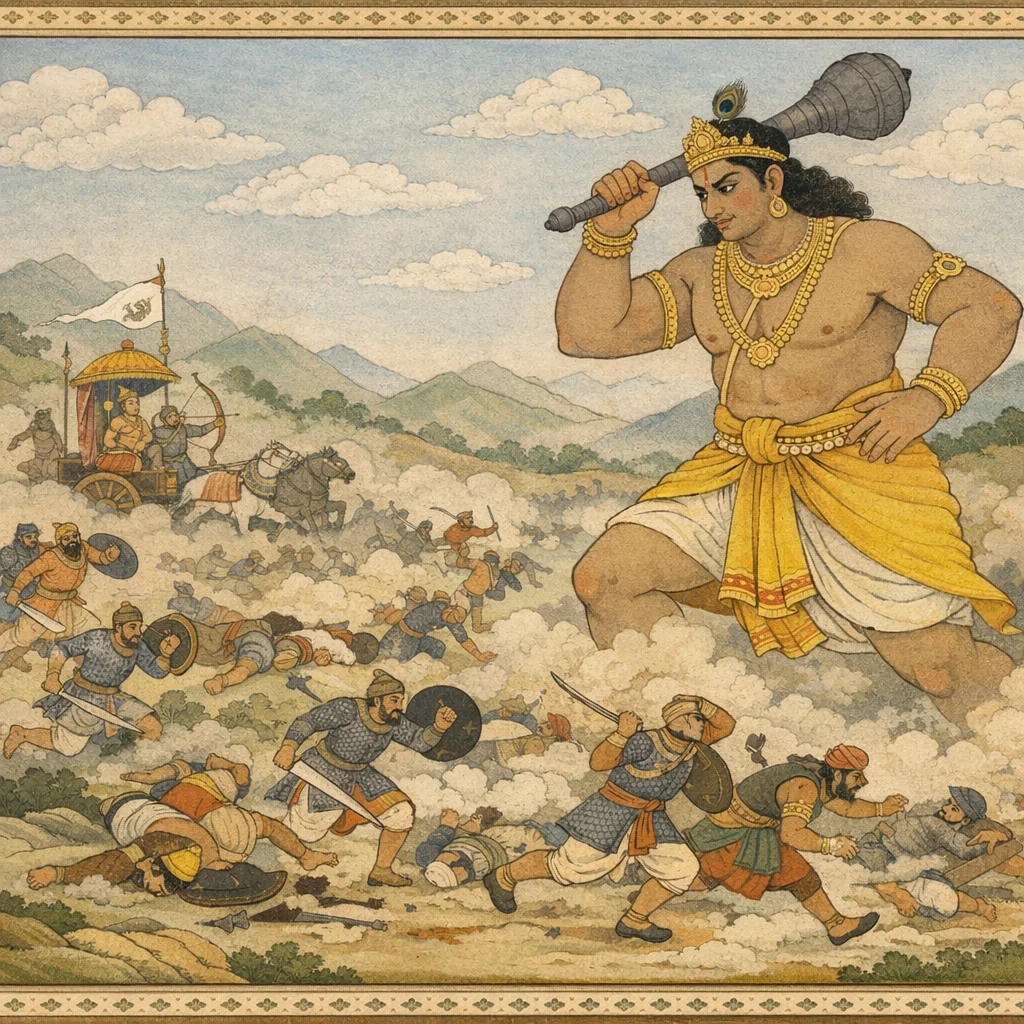
अनुलोमानिलै श्वाशु प्रदर्शितजयोदय: । भीमसेनो महाबाहु: कवची शुभकुण्डली
Sañjaya said: With his breath moving in a steady, regulated flow, Bhīmasena—mighty-armed, clad in armor and wearing auspicious earrings—stood forth, displaying the rise of victory, as if making triumph visibly imminent amid the press of war.
Verse 17
तस्य कार्ष्णायसं वर्म हेमचित्र॑ं महर्द्धिमत्
Sañjaya said: His armor, wrought of dark iron and richly inlaid with gold, was of great splendor—signifying both formidable protection in battle and the royal opulence that often accompanies the warrior’s duty.
Verse 18
पीतरक्तासितसितैरवासोभिश्न सुवेष्टित:
Sañjaya said: He was tightly wrapped in garments of yellow, red, black, and white—his appearance carefully arranged amid the grim theatre of war, where outward signs and colors often signal allegiance, resolve, or ritual intent.
Verse 19
प्रयाते भीमसेने तु तव सैन्यं युयुत्समया
Sañjaya said: When Bhīmasena had set forth, your army too, eager for battle, moved to engage—drawn onward by the momentum of war and the resolve to fight.
Verse 20
त॑ श्रुत्वा निनदं घोरें त्रैलेक्यत्रासनं महत्
Sañjaya said: Hearing that dreadful roar—mighty enough to strike terror through the three worlds—the warriors were shaken, as the battlefield’s violence surged and fear spread with the sound itself.
Verse 21
एष वृष्णिप्रवीरेण ध्मात: सलिलजो भृूशम्,कुरुभिरययुध्यते सार्थ सर्वैश्वक्रगदाधर: । “भीम! देखो, यह वृष्णिवंशके प्रमुख वीर भगवान् श्रीकृष्णने बड़े जोरसे शंख बजाया है। यह शंखराज इस समय पृथ्वी और आकाश दोनोंको अपनी ध्वनिसे परिपूर्ण किये देता है। निश्चय ही सव्यसाची अर्जुनके भारी संकटमें पड़ जानेपर चक्र और गदा धारण करनेवाले भगवान् श्रीकृष्ण समस्त कौरवोंके साथ युद्ध कर रहे हैं
Sañjaya said: “Behold—this conch, born of the waters, has been blown with great force by the foremost hero of the Vṛṣṇis. Its mighty sound now fills both earth and sky. Surely, seeing Arjuna (the ambidextrous archer, Savyasācin) pressed into grave peril, the Lord who bears the discus and the mace has entered the battle against all the Kurus.”
Verse 22
पृथिवीं चान्तरिक्षं च विनादयति शड्खराट् । नूनं व्यसनमापन्ने सुमहत् सव्यसाचिनि
Sañjaya said: “The king of conches is resounding, making both the earth and the mid-air ring. Surely a very great calamity has befallen Arjuna (Savyasācin).”
Verse 23
आह कुन्ती नूनमार्या पापमद्य निदर्शनम्
Sañjaya said: “Kuntī, that noble lady, has indeed spoken today of sin as a warning example—calling attention to wrongdoing so that it may be recognized and avoided.”
Verse 24
द्रौपदी च सुभद्रा च पश्यन्त्यौ सह बन्धुभि: | “आज अवश्य ही माता कुन्ती किसी दुःखद अपशकुनकी चर्चा करती होंगी। बन्धुओंसहित द्रौपदी और सुभद्रा भी कोई असगुन देख रही होंगी ।। २३ डक स भीम त्वरया युक्तो याहि यत्र धनंजय:,“अतः भीम! तुम तुरंत ही जहाँ अर्जुन हैं, वहाँ जाओ। आज अर्जुनको देखनेके लिये मेरी सारी दिशाएँ मोहाच्छन्न-सी हो रही हैं। सात्यकिको न देख पानेके कारण भी मेरे लिये सारी दिशाओंमें अँधेरा छा गया है”
Sañjaya said: “Draupadī and Subhadrā too, together with their kinsmen, are watching—perceiving ominous signs and anxieties that foretell suffering. In the moral atmosphere of the war, the women of the Kuru household sense impending calamity, their apprehension reflecting the human cost of adharma-driven conflict.”
Verse 25
मुहान्तीव हि मे सर्वा धनंजयदिदृक्षया । दिशश्व प्रदिश: पार्थ सात्वतस्य च कारणात्,“अतः भीम! तुम तुरंत ही जहाँ अर्जुन हैं, वहाँ जाओ। आज अर्जुनको देखनेके लिये मेरी सारी दिशाएँ मोहाच्छन्न-सी हो रही हैं। सात्यकिको न देख पानेके कारण भी मेरे लिये सारी दिशाओंमें अँधेरा छा गया है”
Sañjaya said: “All directions and sub-directions seem to reel before me, for I long to see Dhanañjaya (Arjuna). O Pārtha, and because I cannot see Sātvata (Sātyaki) as well, it is as though darkness has fallen on every quarter.”
Verse 26
गच्छ गच्छेति गुरुणा सो<नुज्ञातो वृकोदर: । ततः पाण्डुसुतो राजन् भीमसेन: प्रतापवान्,राजन! इस प्रकार 'जाओ, जाओ' कहकर बड़े भाईके आज्ञा देनेपर उदरमें वृक नामक अग्निको धारण करनेवाले प्रतापी पाण्डुपुत्र भीमसेन गोहके चमड़ेके बने हुए दस्ताने पहनकर हाथमें धनुष ले वहाँसे जानेके लिये तैयार हुए। वे भाईका प्रिय करनेवाले भाई थे और बड़े भाईके भेजनेसे ही वहाँसे जानेको उद्यत हुए थे
Sañjaya said: “Urged by his elder—‘Go, go!’—Vṛkodara received permission. Then, O King, the mighty Pāṇḍava Bhīmasena set out, ready to depart in obedience to his brother’s command—acting as a devoted younger brother who seeks to fulfill the elder’s will amid the pressures of war.”
Verse 27
बद्धगोधाडूगुलित्राण: प्रगृहीतशरासन: । ज्येछ्ेन प्रहितो क्रात्रा भ्राता भ्रातुः प्रियंकर:,राजन! इस प्रकार 'जाओ, जाओ' कहकर बड़े भाईके आज्ञा देनेपर उदरमें वृक नामक अग्निको धारण करनेवाले प्रतापी पाण्डुपुत्र भीमसेन गोहके चमड़ेके बने हुए दस्ताने पहनकर हाथमें धनुष ले वहाँसे जानेके लिये तैयार हुए। वे भाईका प्रिय करनेवाले भाई थे और बड़े भाईके भेजनेसे ही वहाँसे जानेको उद्यत हुए थे
Sañjaya said: Bhīmasena, the mighty son of Pāṇḍu—bearing within him the fire named Vṛka—fastened gloves made of iguana-hide and, taking up his bow, made ready to depart. Sent forth by his elder brother, he set out intent on fulfilling his brother’s wish—ever a brother who brings joy to his brother.
Verse 28
आहत्य दुन्दुर्भि भीम: शड्खं प्रथ्माप्पय चासकृत् | विनद्य सिंहनादेन ज्यां विकर्षन् पुन: पुन:,भीमसेनने बारंबार डंका पीटा और अनेक बार शंख बजाकर बारंबार धनुषकी प्रत्यंचा खींचते हुए सिंहके दहाड़नेके समान भयंकर गर्जना की
Sañjaya said: Bhīma, after striking the war-drum, repeatedly blew his conch. Then, again and again drawing back the bowstring, he let out a terrifying roar like a lion—an act meant to proclaim resolve, rally allies, and strike fear into the opposing host in the charged ethics of battlefield duty.
Verse 29
तेन शब्देन वीराणां पातयित्वा मनांस्युत | दर्शयन् घोरमात्मानममित्रान् सहसाभ्ययात्,उस तुमुल शब्दके द्वारा बड़े-बड़े वीरोंके दिल दहलाकर अपना भयंकर रूप दिखाते हुए उन्होंने सहसा शत्रुओंपर धावा बोल दिया
Sañjaya said: With that thunderous cry he struck terror into the hearts of the warriors; displaying his own dreadful form, he suddenly rushed upon the foes.
Verse 30
तमूहुर्जवना दान्ता विरुवन्तो हयोत्तमा: | विशोकेनाभिसम्पन्ना मनोमारुतरंहस:,उस समय विशोक नामक सारथिके द्वारा संचालित होनेवाले, मन और वायुके समान वेगशाली तीव्रगामी और सुशिक्षित सुन्दर घोड़े हर्षसूचक शब्द करते हुए उनका भार वहन करते थे
Sañjaya said: Then those excellent horses—swift, well-trained, and disciplined—neighing with spirited cries, bore the load of the chariot. Driven by the charioteer Viśoka, they surged forward with a speed like that of the mind and the wind.
Verse 31
आरुजन् विरुजन् पार्थो ज्यां विकर्षश्न॒ पाणिना । सम्प्रकर्षन् विमर्षश्न सेनाग्रं समलोडयत्,कुन्तीकुमार भीम अपने हाथसे धनुषकी डोरी खींचकर चढ़ाते, उसे भलीभाँति कानतक खींचते, बाणोंकी वर्षा करते तथा शत्रुओंको घायल करके उनके अंग-भंग करते हुए सेनाके अग्रभागको मथे डालते थे
Sañjaya said: Arjuna, the son of Pṛthā, kept drawing the bowstring back with his hand, pulling it taut to the full; and by striking, wounding, and breaking the enemy’s limbs, he churned and shattered the very front of the opposing army. The scene reveals the grim dharma of battle: disciplined force, directed without hesitation, becomes a decisive instrument beneath the moral weight of war.
Verse 32
त॑ं प्रयान््तं महाबाहुं पडचाला: सहसोमका: । पृष्ठतोडनुययु: शूरा मघवन्तमिवामरा:,इस प्रकार यात्रा करते हुए महाबाहु भीमसेनके पीछे पांचाल और सोमक वीर भी चले, मानो देवगण देवराज इन्द्रका अनुसरण कर रहे हों
Sañjaya said: As the mighty-armed Bhīmasena advanced, the valiant Pāñcālas together with the Somakas followed close behind him—just as the immortals follow Maghavat (Indra). The verse shows how exemplary leadership in a righteous cause draws willing support, even amid the moral strain of war.
Verse 33
त॑ समेत्य महाराज तावका: पर्यवारयन् | दुःशलभ्षित्रसेनश्व कुण्डभेदी विविंशति:,महाराज! उस समय आपके पुत्रोंने भीमसेनका सामना करके उन्हें रोका। दुःशल, चित्रसेन, कुण्डभेदी, विविंशति, दुर्मुख, दुःसह, विवर्ण, शल, विन्द, अनुविन्द, सुमुख, दीर्घबाहु, सुदर्शन, वृन्दारक, सुहस्त, सुषेण, दीर्घलोचन, अभय, रौद्रकर्मा, सुवर्मा और दुर्विमोचन--इन शोभाशाली रथिश्रेष्ठ वीरोंने अपने सैनिकों और सेवकोंके साथ सावधान एवं प्रयत्नशील होकर समरांगणमें भीमसेनपर धावा किया
Sañjaya said: O King, your sons, gathering together, surrounded Bhīmasena and checked his advance. Among them were Duḥśalā, Citrasena, Kuṇḍabhedī, and Viviṁśati—who, along with other Kaurava warriors, attacked Bhīma on the battlefield with alertness and determined effort. The scene shows the Kauravas’ collective resolve to restrain a single formidable foe, as the war’s momentum is driven more by loyalty to one’s side than by any clear ethical victory.
Verse 34
दुर्मुखो दुःसहश्वैव विकर्णश्र शलस्तथा । विन्दानुविन्दौ सुमुखो दीर्घबाहु: सुदर्शन:,महाराज! उस समय आपके पुत्रोंने भीमसेनका सामना करके उन्हें रोका। दुःशल, चित्रसेन, कुण्डभेदी, विविंशति, दुर्मुख, दुःसह, विवर्ण, शल, विन्द, अनुविन्द, सुमुख, दीर्घबाहु, सुदर्शन, वृन्दारक, सुहस्त, सुषेण, दीर्घलोचन, अभय, रौद्रकर्मा, सुवर्मा और दुर्विमोचन--इन शोभाशाली रथिश्रेष्ठ वीरोंने अपने सैनिकों और सेवकोंके साथ सावधान एवं प्रयत्नशील होकर समरांगणमें भीमसेनपर धावा किया
Sañjaya said: “Durmukha and Duḥsaha, and also Vikarṇa and Śala; Vindā and Anuvindā; Sumukha, Dīrghabāhu, and Sudarśana—O King—these too confronted Bhīmasena and held him back. In the press of battle, the Kaurava princes and their foremost chariot-warriors, alert and striving with their troops and attendants, surged together to strike down Bhīma.”
Verse 35
वृन्दारकः सुहस्तश्न सुषेणो दीर्घलोचन: । अभयो रौद्रकर्मा च सुवर्मा दुर्विमोचन:,महाराज! उस समय आपके पुत्रोंने भीमसेनका सामना करके उन्हें रोका। दुःशल, चित्रसेन, कुण्डभेदी, विविंशति, दुर्मुख, दुःसह, विवर्ण, शल, विन्द, अनुविन्द, सुमुख, दीर्घबाहु, सुदर्शन, वृन्दारक, सुहस्त, सुषेण, दीर्घलोचन, अभय, रौद्रकर्मा, सुवर्मा और दुर्विमोचन--इन शोभाशाली रथिश्रेष्ठ वीरोंने अपने सैनिकों और सेवकोंके साथ सावधान एवं प्रयत्नशील होकर समरांगणमें भीमसेनपर धावा किया
Sañjaya said: Vṛndāraka, Suhasta, Suṣeṇa, Dīrghalocana, Abhaya, Raudrakarmā, Suvarmā, and Durvimochana—these prominent Kaurava warriors, acting with alertness and concerted effort, advanced in battle to confront Bhīmasena and hold him back. The scene underscores a central ethic of the war narrative: when a formidable force surges forward, the opposing side responds through collective duty and disciplined resistance, even as the struggle intensifies toward greater violence.
Verse 36
शोभन्तो रथिनां श्रेष्ठा: सहसैन्यपदानुगा: । संयत्ता: समरे वीरा भीमसेनमुपाद्रवन्,महाराज! उस समय आपके पुत्रोंने भीमसेनका सामना करके उन्हें रोका। दुःशल, चित्रसेन, कुण्डभेदी, विविंशति, दुर्मुख, दुःसह, विवर्ण, शल, विन्द, अनुविन्द, सुमुख, दीर्घबाहु, सुदर्शन, वृन्दारक, सुहस्त, सुषेण, दीर्घलोचन, अभय, रौद्रकर्मा, सुवर्मा और दुर्विमोचन--इन शोभाशाली रथिश्रेष्ठ वीरोंने अपने सैनिकों और सेवकोंके साथ सावधान एवं प्रयत्नशील होकर समरांगणमें भीमसेनपर धावा किया
Sanjaya said: Splendid, foremost chariot-warriors—followed by many troops and attendants—fully prepared and intent upon the battle, charged at Bhimasena. O Maharaja, then your sons faced Bhimasena and held him in check. Duhshala, Chitrasena, Kundabhedi, Vivimshati, Durmukha, Duhsaha, Vivarna, Shala, Vinda, Anuvinda, Sumukha, Dirghabahu, Sudarshana, Vrindaraka, Suhasta, Sushena, Dirghalochana, Abhaya, Raudrakarma, Suvarma, and Durvimochana—these illustrious heroes, the best of chariot-fighters, with their soldiers and servants, vigilant and striving, fell upon Bhimasena in the field of war.
Verse 37
तैः समन्ताद् वृतः शूरै: समरेषु महारथ: । तान् समीक्ष्य तु कौन्तेयो भीमसेन: पराक्रमी । अभ्यवर्तत वेगेन सिंह: क्षुद्रमूगानिव,उन शूरवीरोंके द्वारा समरभूमिमें महारथी भीम सब ओरसे घिर गये थे। उन सबको सामने देखकर पराक्रमशाली कुन्तीकुमार भीमसेन उसी प्रकार वेगसे आगे बढ़े, जैसे सिंह क्षुद्र मूगोंकी ओर बढ़ता है
Sanjaya said: Surrounded on every side in the battlefield by those heroes, Bhima, the great chariot-warrior, was hemmed in. Seeing them all before him, Bhimasena, the mighty son of Kunti, surged forward with speed—like a lion charging at petty beasts.
Verse 38
ते महास्त्राणि दिव्यानि तत्र वीरा अदर्शयन् । छादयन्त: शरैर्भीम॑ मेघा: सूर्यमिवोदितम्,परंतु जैसे बादल उगे हुए सूर्यको ढक लेता है, उसी प्रकार वे वीरगण अपने बाणोंद्वारा भीमसेनको आच्छादित करते हुए वहाँ बड़े-बड़े दिव्यास्त्रोंका प्रदर्शन करने लगे
Sanjaya said: There the warriors displayed their great, celestial weapons, while covering Bhima with volleys of arrows—just as clouds veil the newly risen sun.
Verse 39
स तानतीत्य वेगेन द्रोणानीकमुपाद्रवत् । अग्रतश्न॒ गजानीकं शरवर्षरवाकिरत्,किंतु भीमसेन अपने वेगसे उन सबको लाँघकर द्रोणाचार्यकी सेनापर टूट पड़े और सामने खड़ी हुई गजसेनाको अपने बाणोंकी वर्षासे आच्छादित करने लगे
Sanjaya said: Surging forward with great speed, he leapt past them all and fell upon Droṇa’s battle-formation; and the elephant-corps standing in front he covered over with a roaring rain of arrows.
Verse 40
सो<चिरेणैव कालेन तद् गजानीकमाशुगै: । दिश: सर्वा: समभ्यस्य व्यधमत् पवनात्मज:,पवनपुत्र भीमने सम्पूर्ण दिशाओंमें बारंबार बाणोंकी वर्षा करके उनके द्वारा थोड़े ही समयमें उस गजसेनाको मार भगाया
Sanjaya said: In a very short time, Bhima, the son of the Wind, ranged over all directions and, with swift arrows showered again and again, struck and drove back that elephant-corps.
Verse 41
त्रासिता: शरभस्येव गर्जितेन वने मृगा: । प्राद्रवन् द्विरदा: सर्वे नदन््तो भैरवान् रवान्
Sañjaya said: Terrified—like deer in a forest shaken by the roar of a śarabha—all the elephants fled in panic, bellowing dreadful cries.
Verse 42
जैसे शरभकी गर्जनासे भयभीत हो वनके सारे मृग भाग जाते हैं, उसी प्रकार भीमसेनसे डरे हुए समस्त गजराज भैरव स्वरसे आर्तनाद करते हुए भाग निकले ।। पुनश्चातीव वेगेन द्रोणानीकमुपाद्रवत् । तमवारयदाचार्यों वेलोद्त्तमिवार्णवम्,फिर उन्होंने बड़े वेगसे द्रोणाचार्यकी सेनापर चढ़ाई की। उस समय उत्ताल तरंगोंके साथ उठे हुए महासागरको जैसे तटकी भूमि रोक देती है, उसी प्रकार द्रोणाचार्यने भीमसेनको रोका
Sañjaya said: Just as all the beasts of the forest flee in terror at the roar of the śarabha, so too the lordly elephants, frightened of Bhīmasena, ran off crying out with dreadful, anguished trumpeting. Then, once again, with tremendous speed he charged into Droṇa’s battle-array; but the Teacher (Droṇa) checked him—like the shoreline restraining the ocean when its waves surge up beyond their bounds.
Verse 43
ललाटे5ताडयच्चैनं नाराचेन स्मयन्निव । ऊर्ध्वरश्मिरिवादित्यो विबभौ तेन पाण्डव:,द्रोणने मुसकराते हुए-से नाराच चलाकर भीमसेनके ललाटमें चोट पहुँचायी। उस नाराचसे पाण्डुपुत्र भीमसेन ऊपर उठी किरणोंवाले सूर्यके समान सुशोभित होने लगे
Sañjaya said: Smiling as though in derision, he struck him on the forehead with a nārāca arrow. Wounded by that shaft, the Pāṇḍava (Bhīmasena) shone forth like the sun with its rays rising upward.
Verse 44
स मन्यमानस्त्वाचार्यो ममायं फाल्गुनो यथा । भीम: करिष्यते पूजामित्युवाच वृकोदरम्,द्रोणाचार्य यह समझकर कि यह भीम भी अर्जुनके समान मेरी पूजा करेगा, उनसे इस प्रकार बोले--
Sañjaya said: The preceptor, thinking, “This Bhīma too will honor me just as Phālguna (Arjuna) does,” spoke these words to Vṛkodara.
Verse 45
भीमसेन न ते शकया प्रवेष्टमरिवाहिनी । मामनिर्जित्य समरे शत्रुमद्य महाबल,“महाबली भीमसेन! तुम समरभूमिमें आज मुझ शत्रुको पराजित किये बिना इस शत्रुसेनामें प्रवेश नहीं कर सकोगे
Sañjaya said: “O mighty Bhīmasena, you will not be able to enter this enemy host today unless you first defeat me in battle. Without overcoming me on the field, you cannot break through to strike the foe.”
Verse 46
ग्रहणे धर्मराजस्य सर्वोपायेन वर्तते । जाते समय महाबली भीमसेनने धृष्टद्युम्नसे इस प्रकार कहा--“महाबाहो! तुम्हें तो यह मालूम ही है कि महारथी द्रोण सारे उपाय करके किस प्रकार धर्मराजको पकड़नेपर तुले हुए हैं,यदि ते सो5नुज: कृष्ण: प्रविष्टोडनुमते मम । अनीकं न तु शब्यं मे प्रवेष्टमिह वै त्वया “तुम्हारे छोटे भाई अर्जुन मेरी अनुमतिसे इस सेनाके भीतर घुस गये हैं। यदि इच्छा हो तो उसी तरह तुम भी जा सकते हो; अन्यथा मेरे इस सैन्यव्यूहमें प्रवेश नहीं करने पाओगे'
Sañjaya said: “At that time, the mighty Bhīmasena spoke to Dhṛṣṭadyumna: ‘O strong-armed one, you already know how the great chariot-warrior Droṇa is employing every stratagem to seize King Yudhiṣṭhira, the Dharmarāja. Your younger brother Kṛṣṇa (Arjuna) has entered this battle-array with my consent. If you wish, you may enter in the same way; otherwise, you will not be able to force your way into my formation here.’”
Verse 47
अथ भीमस्तु बुक त्वा गुरोर्वाक्यमपेतभी: । क्रुद्ध: प्रोवाच वै द्रोणं रक्तताम्रेक्षणस्त्वरन्,गुरुका यह वचन सुनकर भीमसेनके नेत्र क्रोधसे लाल हो गये, वे बड़ी उतावलीके साथ द्रोणाचार्यसे निर्भय होकर बोले
Then Bhīma, having answered the teacher’s words and casting off all fear, angrily addressed Droṇa. His eyes, copper-red with wrath, he spoke in haste—undaunted—signaling a decisive turn from restraint to open confrontation in the moral chaos of war.
Verse 48
तवार्जुनो नानुमते ब्रह्म॒बन्धो रणाजिरम् | प्रविष्ट: स हि दुर्धर्ष: शक्रस्पापि विशेद् बलम्,“ब्रह्मबन्धो! अर्जुन तुम्हारी अनुमतिसे इस समरांगणमें नहीं प्रविष्ट हुए हैं। वे तो दुर्जय हैं। देवराज इन्द्रकी सेनामें भी घुस सकते हैं
Sañjaya said: “O brahmabandhu, Arjuna has not entered this battlefield with your consent. He is truly irresistible—he could even force his way into the army of Śakra (Indra).”
Verse 49
तेन वै परमां पूजां कुर्वता मानितो हासि । नार्जुनो5हं घृणी द्रोण भीमसेनो5स्मि ते रिपु:,उन्होंने तुम्हारी बड़ी पूजा करके निश्चय ही तुम्हें सम्मान दिया है, परंतु द्रोण! मैं दयालु अर्जुन नहीं हूँ। मैं तो तुम्हारा शत्रु भीमसेन हूँ
By performing the highest honors toward you, he has indeed shown you respect. But, O Droṇa, I am not Arjuna, the compassionate one; I am Bhīmasena—your enemy.
Verse 50
पिता नस्त्वं गुरुब॑न्धुस्तथा पुत्रास्तु ते वयम् । इति मन्यामहे सर्वे भवन्तं प्रणता: स्थिता:,“तुम हमारे पिता, गुरु और बन्धु हो और हम तुम्हारे पुत्रके तुल्य हैं। हम सब लोग यही मानते हैं और सदा तुम्हारे सामने प्रणतभावसे खड़े होते हैं
Sañjaya said: “You are our father—our teacher and our kinsman—and we are as your sons. Thus do we all believe; and we stand before you always with bowed heads, in reverence.”
Verse 51
अद्य तद्विपरीतं ते वदतो<स्मासु दृश्यते । यदि त्वं शत्रुमात्मानं मन्यसे तत्तथास्त्विह
Sañjaya said: “Today, what you say appears to us as the very opposite of what you once maintained. If now you deem your own self an enemy, then let it be so here.”
Verse 52
अथोदश्राम्य गदां भीम: कालदण्डमिवान्तक:
Sañjaya said: Then Bhīma, unwearied, took up his mace—like Yama, the Lord of Death, lifting the staff of Time—signaling relentless resolve amid the grim duties of war.
Verse 53
साश्वसूतध्वजं यान॑ द्रोणस्यापोथयत् तदा
Sañjaya said: At that moment, he struck down Droṇa’s chariot—complete with its horses, charioteer, and banner—intensifying the ruthless momentum of the battle, where even the emblems of a great teacher’s command were being violently undone.
Verse 54
प्रामृदूनाच्च बहून् योधान् वायुर्वृक्षानिवौजसा । जैसे हवा अपने वेगसे वृक्षोंको उखाड़ फेंकती है, उसी प्रकार उस गदाने उस समय घोड़े, सारथि और ध्वजसहित द्रोणाचार्यके रथको चूर-चूर कर दिया और बहुत-से योद्धाओंको भी धूलमें मिला दिया ।। ५३ $ ।। त॑ पुनः परिवत्रुस्ते तव पुत्रा रथोत्तमम्,उस समय उस श्रेष्ठ महारथी वीरको आपके पुत्रोंने पुन- आकर चारों ओरसे घेर लिया। योद्धाओंमें श्रेष्ठ द्रोणाचार्य दूसरे रथपर बैठकर व्यूहके द्वारपर आ पहुँचे और युद्धके लिये उद्यत हो गये
Sañjaya said: With sheer force he crushed many warriors, just as the wind, by its own might, uproots trees. The image underscores the impersonal, sweeping violence of battle: once strength is unleashed, it does not discriminate, and many lives are reduced to dust in an instant.
Verse 55
अन्यं तु रथमास्थाय द्रोण: प्रहरतां वर: । व्यूहद्वारं समासाद्य युद्धाय समुपस्थित:,उस समय उस श्रेष्ठ महारथी वीरको आपके पुत्रोंने पुन- आकर चारों ओरसे घेर लिया। योद्धाओंमें श्रेष्ठ द्रोणाचार्य दूसरे रथपर बैठकर व्यूहके द्वारपर आ पहुँचे और युद्धके लिये उद्यत हो गये
Droṇa, foremost among those who strike, mounted another chariot; reaching the gate of the battle-array (vyūha), he stood ready for war.
Verse 56
यादृशं रक्षणे राज्ञ: कार्यमात्ययिकं हि नः । “अतः ट्रुपदनन्दन! मेरे लिये वहाँ जानेकी वैसी आवश्यकता नहीं है, जैसी यहाँ रहकर राजाकी रक्षा करनेकी है। यही हमलोगोंके लिये सबसे महान् कार्य है,ततः क्रुद्धो महाराज भीमसेन: पराक्रमी । अग्रतः स्यन्दनानीकं शरवर्षरवाकिरत्
“O son of Drupada! For me there is not such need to go there as there is to remain here and guard the king. This is the greatest duty for us.” Then the great king Bhimasena, mighty and wrathful, from the front poured a rain of arrows upon the chariot-division, the roar of shafts sounding like a storm.
Verse 57
महाराज! तब क्रोधमें भरे हुए पराक्रमी भीमसेनने सामने खड़ी हुई रथसेनापर बाणोंकी वर्षा आरम्भ कर दी ।। ते वध्यमाना: समरे तव पुत्रा महारथा: । भीम॑ भीमबला युद्धे योधयन्ति जयैषिण:,युद्धस्थलमें भयंकर बलशाली विजयाभिलाषी आपके महारथी पुत्र बाणोंकी मार खाकर भी समरांगणमें भीमसेनके साथ युद्ध करते रहे
Sanjaya said: O King, then the mighty Bhimasena, filled with wrath, began to shower arrows upon the chariot-division standing before him. Though being struck down in the battle, your sons—great chariot-warriors, fierce in strength and intent on victory—continued to engage Bhima on the battlefield.
Verse 58
ततो दुःशासन: क्रुद्धो रथशक्तिं समाक्षिपत् | सर्वपारसवीं तीक्ष्णां जिघांसु: पाण्डुनन्दनम्,उस समय कुपित हुए दुःशासनने पाण्डुनन्दन भीमसेनको मार डालनेकी इच्छासे उनके ऊपर एक तीखी रथशक्ति चलायी, जो सम्पूर्णतः लोहेकी बनी हुई थी
Sanjaya said: Then Duḥśāsana, inflamed with anger, hurled a sharp ratha-śakti—an iron missile forged wholly of metal—at the son of Pāṇḍu, intent on killing him.
Verse 59
आपतन्तीं महाशर्ति तव पुत्रप्रणोदिताम् । द्विधा चिच्छेद तां भीमस्तदद्भुतमिवाभवत्,आपके पुत्रकी चलायी हुई उस महाशक्तिको अपने ऊपर आती देख भीमसेनने उसके दो टुकड़े कर दिये। वह एक अद्भुत-सी बात हुई
Sanjaya said: Seeing that mighty spear, hurled at him at your son’s urging, rushing straight toward him, Bhima cut it into two. It seemed an astonishing feat.
Verse 60
अथान्यैरविशिखैस्ती&णै: संक़्रुद्ध: कुण्डभेदिनम् । सुषेणं दीर्घनेत्रं च त्रिभिस्त्रीनवधीद् बली,फिर अत्यन्त क्रोधमें भरे हुए बलवान भीमने दूसरे तीन तीखे बाणोंद्वारा कुण्डभेदी, सुषेण तथा दीर्घलोचन (दीर्घरोमा)--इन तीनोंको मार डाला (जो आपके पुत्र थे)
Sanjaya said: Then the mighty Bhima, inflamed with fierce anger, struck down with three other sharp arrows—one each—Kuṇḍabhedin, Suṣeṇa, and Dīrghanetra.
Verse 61
ततो वृन्दारकं वीरं कुरूणां कीर्तिवर्धनम् । पुत्राणां तव वीराणां युध्यतामवधीत् पुन:,तत्पश्चात् आपके (अन्य) वीर पुत्रोंके युद्ध करते रहनेपर भी उन्होंने पुनः कुरुकुलकी कीर्ति बढ़ानेवाले वीर वृन्दारकका वध कर दिया
Sañjaya said: Then, even as your valiant sons continued to fight on, he again slew the heroic Vṛndāraka—one who enhanced the fame of the Kurus.
Verse 62
अभयं रौद्रकर्माणं दुर्विमोचनमेव च । त्रिभिस्त्रीनवधीद् भीम: पुनरेव सुतांस्तव,इसके बाद भीमने पुनः तीन बाण मारकर अभय, रौद्रकर्मा तथा दुर्विमोचन (दुर्विरोचन)--आपके इन तीन पुत्रोंको भी मार गिराया
Sañjaya said: Bhima again struck down with three arrows—Abhaya, Raudrakarman, and Durvimochana—three more of your sons.
Verse 63
वध्यमाना महाराज पुत्रास्तव बलीयसा । भीम॑ प्रहरतां श्रेष्ठ समन््तात् पर्यवारयन्,महाराज! अत्यन्त बलवान् भीमसेनके बाणोंसे घायल होते हुए आपके पुत्रोंने योद्धाओंमें श्रेष्ठ भीमसेनको फिर चारों ओरसे घेर लिया
Sañjaya said: “O King, though your sons were being struck down and wounded by the mighty Bhīma, they nevertheless surrounded Bhīmasena—the foremost among those who smite—on all sides.”
Verse 64
ते शरैर्भीमकर्माणं ववर्षु: पाण्डवं युधि । मेघा इवातपापाये धाराभिर्धरणीधरम्
Sañjaya said: In the thick of battle they showered the Pāṇḍava of dreadful deeds with arrows, as rain-clouds at the end of the hot season pour down torrents upon a mountain.
Verse 65
जैसे वर्षा-ऋतुमें मेघ पर्वतपर जलधाराओंकी वर्षा करते हैं, उसी प्रकार वे आपके पुत्र युद्धस्थलमें भयंकर कर्म करनेवाले पाण्डुपुत्र भीमसेनपर बाणोंकी वर्षा करने लगे ।। स तद् बाणमयं वर्षमश्मवर्षमिवाचल: । प्रतीच्छन् पाण्डुदायादो न प्राव्यथत शत्रुहा
Sañjaya said: As rain-clouds in the wet season pour their streams upon a mountain, so did your sons on the battlefield rain arrows upon Bhīmasena, the son of Pāṇḍu of dreadful deeds. But the slayer of foes received that rain of arrows like a mountain enduring a shower of stones, and he did not waver.
Verse 66
जैसे पत्थरोंकी वर्षा ग्रहण करते हुए पर्वतको कोई पीड़ा नहीं होती, उसी प्रकार शत्रुसूदन पाण्डुपुत्र भीमसेन उस बाण-वर्षाको सहन करते हुए भी व्यथित नहीं हुए ।। विन्दानुविन्दौ सहितौ सुवर्माणं च ते सुतम् । प्रहसन्नेव कौन्तेय: शरैरनिन्ये यमक्षयम्
Sañjaya said: Just as a mountain feels no pain while receiving a shower of stones, so too Bhīmasena, the Pāṇḍava—slayer of foes—endured that rain of arrows without being shaken. Then the son of Kuntī, as though smiling, struck down Vindā and Anuvindā together, and also Suvarmā—your son—sending them by his arrows to Yama’s abode.
Verse 67
कुन्तीनन्दन भीमने हँसते हुए ही अपने बाणोंद्वारा एक साथ आये हुए दोनों भाई विन्द और अनुविन्दको तथा आपके पुत्र सुवर्माकों भी यमलोक पहुँचा दिया ।। ततः सुदर्शन वीर पुत्र ते भरतर्षभ । विव्याध समरे तूर्ण स पपात ममार च,भरतश्रेष्ठ) तदनन्तर उन्होंने समरभूमिमें आपके वीर पुत्र सुदर्शन (उर्णनाभ) को घायल कर दिया। इससे वह तुरंत ही गिरा और मर गया
Sañjaya said: Kuntī’s son Bhīma, even while laughing, with his arrows sent to Yama’s realm both brothers—Vinda and Anuvinda—who had come together, and also your son Suvarman. Then, O bull among the Bharatas, he swiftly struck your heroic son Sudarshana on the battlefield; he fell at once and died.
Verse 68
सो<चिरेणैव कालेन तद्रथानीकमाशुगै: । दिश: सर्वा: समालोक्य व्यधमत् पाण्डुनन्दन:,इस प्रकार पाण्डुनन्दन भीमसेनने सम्पूर्ण दिशाओंमें दृष्टिपात करके अपने बाणोंद्वारा थोड़े ही समयमें उस रथसेनाको नष्ट कर दिया
Sañjaya said: In no long time, the son of Pāṇḍu—Bhīmasena—surveyed all directions and, with his swift shafts, shattered that chariot-host.
Verse 69
ततो वै रथघोषेण गर्जितेन मृगा इव । भज्यमानाश्व समरे तव पुत्रा विशाम्पते,प्रजानाथ! तदनन्तर भीमसेनके रथकी घरघराहट और गर्जनासे समरांगणमें मृगोंके समान भयभीत हुए आपके पुत्रोंका उत्साह भंग हो गया
Sañjaya said: Then, at the thunderous roar and bellowing of the chariot, your sons—O lord of the people—were shaken in the battle like deer; their spirit broke as their horses were being struck and driven into disarray.
Verse 70
प्राद्रयन् सहसा सर्वे भीमसेन भयार्दिता: । अनुयायाच्च कौन्तेय: पुत्राणां ते महद् बलम्,वे सब-के-सब भीमसेनके भयसे पीड़ित हो सहसा भाग खड़े हुए। कुन्तीकुमार भीमसेनने आपके पुत्रोंकी विशाल सेनाका दूरतक पीछा किया
Sañjaya said: Struck with sudden terror of Bhīmasena, all of them fled at once. And the son of Kuntī—Bhīma—pursued your sons’ mighty host, driving it far in flight.
Verse 72
तांस्तु निर्जित्य समरे भीमसेनो महाबल:
Sañjaya said: Having overcome them in the thick of battle, Bhīmasena—mighty in strength—stood victorious.
Verse 73
विव्याध समरे राजन् कौरवेयान् समन्तत: । वध्यमाना महाराज भीमसेनेन तावका:,तलशब्दं च सुमहत् कृत्वा भीमो महाबल: बड़े जोरसे ताली बजाकर महाबली भीमने रथसेनाको डरा दिया और श्रेष्ठ- श्रेष्ठ योद्धाओंको चुन-चुनकर मारा। फिर समस्त रथियोंको लाँधचकर द्रोणाचार्यकी सेनापर धावा बोल दिया
Sañjaya said: O King, in the thick of battle Bhīma struck the Kaurava warriors on every side. Your troops, O great king, were being cut down by Bhīmasena. Then the mighty Bhīma, making a tremendous clapping sound, spread fear through the chariot-host.
Verse 74
भीषयित्वा रथानीकं हत्वा योधान् वरान् वरान् । व्यतीत्य रथिनश्चापि द्रोणानीकमुपाद्रवत्,बड़े जोरसे ताली बजाकर महाबली भीमने रथसेनाको डरा दिया और श्रेष्ठ- श्रेष्ठ योद्धाओंको चुन-चुनकर मारा। फिर समस्त रथियोंको लाँधचकर द्रोणाचार्यकी सेनापर धावा बोल दिया
Sañjaya said: Having struck terror into the chariot-host and having slain, one after another, many of the foremost warriors, Bhīma—after pushing past even the chariot-fighters—charged straight at Droṇa’s division.
Verse 86
एतद्धि सर्वकार्याणां परमं कृत्यमाहवे | “अतः अब मैं भाई अर्जुन तथा बुद्धिमान् सात्यकिके पथका अनुसरण करूँगा। अब तुम सावधान हो प्रयत्नपूर्वक रणभूमिमें कुन्तीकुमार राजा युधिष्ठिरकी रक्षा करो। इस युद्धस्थलमें यही हमारे लिये सब कार्योंसे बढ़कर महान् कार्य है!
“Therefore, now I shall follow the path of my brother Arjuna and the wise Sātyaki. Be vigilant, and with all effort protect Yudhiṣṭhira, Kuntī’s son, the Dharmarāja, upon this battlefield. Here, this is for us the greatest task, above all other tasks!”
Verse 106
निग्रहं धर्मराजस्य प्रकरिष्यति संयुगे । 'द्रोणाचार्य संग्राममें धृष्टद्यम्मका वध किये बिना किसी प्रकार धर्मराजको कैद नहीं कर सकेंगे”
Sañjaya said: “In the thick of battle, he will attempt to seize (and restrain) Dharmarāja.”
Verse 126
इस प्रकार श्रीमहाभारत द्रोणपर्वके अन्तर्गत जयद्रथवधपर्वमें युधिष्टिरकी चिन्ताविषयक एक सौ छब्बीसवाँ अध्याय पूरा हुआ,आध्रातश्न तथा मूर्थ्नि श्रावितश्वाशिष: शुभा: । भारत! उस समय धर्मराज युधिष्ठिरने कुन्तीकुमार भीमसेनको गलेसे लगाया, उसका सिर सूँघा और उन्हें शुभ आशीर्वाद सुनाये
Sanjaya said: Thus ends the one hundred and twenty-sixth chapter, dealing with Yudhishthira’s anxious reflections, within the Jayadratha-slaying section of the Drona Parva of the Mahabharata. O Bharata, at that time King Yudhishthira—steadfast in dharma—embraced Kunti’s son Bhimasena, smelled his head in affection, and pronounced auspicious blessings upon him. Even amid the violence of war, the narrative pauses to show the ethical heart of kinship: reassurance, gratitude, and the sustaining power of righteous goodwill.
Verse 127
इति श्रीमहा भारते द्रोणपर्वणि जयद्रथवधपर्वणि भीमसेनप्रवेशे भीमपराक्रमे सप्तविंशत्यधिकशततमो< ध्याय:
Thus, in the revered Mahābhārata, within the Droṇa Parva—specifically in the section concerning the slaying of Jayadratha—this concludes the one-hundred-and-twenty-seventh chapter, describing Bhīmasena’s entry and the display of Bhīma’s heroic prowess. The colophon signals a transition: the narrative has reached a marked milestone in the war, highlighting valor and the relentless momentum of duty-bound combat.
Verse 166
साज्भद: सतलत्राण: सरथो रथिनां वर: । अनुकूल हवा चलकर उन्हें शीघ्र ही अवश्यम्भावी विजयकी सूचना देने लगी। रथियोंमें श्रेष्ठ महाबाहु भीमसेन कवच, सुन्दर कुण्डल, बाजूबन्द और तलत्राण (दस्ताने) धारण करके रथपर आरूढ़ हो गये
Sañjaya said: Equipped with his weapons and protective gear, and mounted on his chariot, the foremost of chariot-warriors prepared for action. A favorable wind began to blow, as though swiftly announcing an inevitable victory. Then Bhīmasena, the mighty-armed best among the fighters, donned his armor, fine earrings, armlets, and hand-guards, and ascended his chariot—signs of resolute readiness in the grim demands of righteous war.
Verse 173
विबभौ सर्वतः श्लिष्टं सविद्युदिव तोयद: । उनका काले लोहेका बना हुआ सुवर्णजटित बहुमूल्य कवच उनके सारे अंगोंमें सटकर बिजलीसहित मेघके समान सुशोभित हो रहा था
Sañjaya said: The splendid, close-fitting armour clung to his entire body and shone on every side—like a rain-cloud lit up with lightning. In the midst of war’s terror, the image underscores both the warrior’s formidable presence and the moral weight of martial duty: outward brilliance and protection stand beside the inner peril and accountability of battle.
Verse 183
कण्ठत्राणेन च बभौ सेन्द्रायुध इवाम्बुद: । लाल, पीले, काले और सफेद वस्त्रोंस अपने शरीरको सुसज्जित करके कण्ठत्राण पहनकर वे इन्द्रधनुषयुक्त मेघके समान शोभा पा रहे थे
Sañjaya said: Wearing a neck-guard, he shone like a cloud adorned with Indra’s rainbow—his body arrayed in garments of red, yellow, black, and white. The image heightens the war-scene’s moral tension: even amid violence, martial splendor and disciplined protection are portrayed as signs of readiness and resolve.
Verse 196
पाञ्चजन्यरवो घोर: पुनरासीद् विशाम्पते । प्रजानाथ! जब भीमसेन युद्धकी इच्छासे आपकी सेनाकी ओर प्रस्थित हुए, उस समय पुन: पांचजन्य शंखकी भयंकर ध्वनि प्रकट हुई
Sanjaya said: “O lord of the people, O ruler of men! Once again the dreadful roar of the conch Pāñcajanya arose. For when Bhīmasena, driven by the will to fight, advanced toward your army, that fearsome blast of Pāñcajanya manifested again—an omen of renewed resolve and the moral pressure of battle upon the Kaurava host.”
Verse 203
पुनर्भीम॑ महाबाहुं धर्मपुत्रो5भ्यभाषत । त्रिलोकीको डरा देनेवाले उस घोर एवं महान् सिंहनादको सुनकर धर्मपुत्र युधिष्ठटिरने (जाते हुए) महाबाहु भीमसेनसे पुनः इस प्रकार कहा--
Sanjaya said: Hearing that dreadful, mighty lion-roar—one that seemed to shake the three worlds—Dharma’s son Yudhishthira, as he was moving on, addressed the strong-armed Bhima once again. The moment underscores Yudhishthira’s dharmic leadership: even amid terror and martial tumult, he steadies his companion through deliberate speech rather than panic.
Verse 223
कुरुभिरययुध्यते सार्थ सर्वैश्वक्रगदाधर: । “भीम! देखो, यह वृष्णिवंशके प्रमुख वीर भगवान् श्रीकृष्णने बड़े जोरसे शंख बजाया है। यह शंखराज इस समय पृथ्वी और आकाश दोनोंको अपनी ध्वनिसे परिपूर्ण किये देता है। निश्चय ही सव्यसाची अर्जुनके भारी संकटमें पड़ जानेपर चक्र और गदा धारण करनेवाले भगवान् श्रीकृष्ण समस्त कौरवोंके साथ युद्ध कर रहे हैं
Sañjaya said: The wielder of discus and mace—Śrī Kṛṣṇa, foremost hero of the Vṛṣṇis—has blown his conch with great force, filling earth and sky with its reverberation. Seeing Arjuna (Savyasācī) pressed into grave peril, the Lord who bears the discus and mace is now, in earnest, engaging in battle against all the Kauravas together—signaling that when righteousness and a devotee’s protection are at stake, even the divine charioteer may step beyond restraint to uphold dharma.
Verse 513
एष ते सदृशं शत्रो: कर्म भीम: करोम्यहम् | “परंतु आज तुम्हारे मुँहसे जो बात निकल रही है, उससे हमलोगोंपर तुम्हारा विपरीत भाव लक्षित होता है। यदि तुम अपने-आपको शत्रु मानते हो तो ऐसा ही सही। यह मैं भीमसेन तुम्हारे शत्रुके अनुरूप कर्म कर रहा हूँ"
Sanjaya said: “This is the kind of deed befitting you as an enemy; I—Bhima—am performing it. For the words now coming from your mouth reveal a hostile intent toward us. If you choose to regard yourself as an enemy, then let it be so; I will act toward you in the manner due to an enemy.”
Verse 526
द्रोणाय व्यसृजद् राजन् स रथादवपुप्लुवे । राजन! ऐसा कहकर भीमसेनने गदा उठा ली, मानो यमराजने कालदण्ड हाथमें ले लिया हो। उन्होंने उस गदाको घुमाकर द्रोणाचार्यपर दे मारा, किंतु द्रोणाचार्य शीघ्र ही रथसे कूद पड़े
Sañjaya said: “O King, he hurled it at Droṇa; and Droṇa swiftly leapt down from his chariot.” The moment captures the ruthless urgency of battle: a warrior’s forceful strike is met not by prideful resistance but by alert self-preservation, showing how even the greatest teachers must navigate the ethics and necessities of survival amid adharma-leaning chaos on the battlefield.
Verse 713
त्यक्त्वा भीम॑ रणाज्जग्मुश्नोदयन्तो हयोत्तमान् । राजन! उन्होंने रणक्षेत्रमें सब ओर कौरवोंको घायल किया। महाराज! भीमसेनके द्वारा मारे जाते हुए आपके सभी पुत्र उन्हें छोड़कर अपने उत्तम घोड़ोंको हाँकते हुए रणभूमिसे दूर चले गये
Sañjaya said: Abandoning Bhīma, they withdrew from the battlefield, spurring on their finest horses. O King, on every side the Kauravas were being wounded in the field of battle. O Mahārāja, as Bhīmasena cut them down, all your sons left him behind and, driving their excellent steeds hard, moved far away from the fighting.
Verse 726
सिंहनादरवं चक्रे बाहुशब्दं च पाण्डव: । उन सबको संग्राममें पराजित करके महाबली पाण्डुपुत्र भीमसेनने अपनी भुजाओंपर ताल ठोकी और सिंहके समान गर्जना की
Sañjaya said: Having defeated them all in the battle, the mighty Pāṇḍava—Bhīmasena, the son of Pāṇḍu—struck his own arms in challenge and let out a lion-like roar.
Verse 936
ईप्सितं ते करिष्यामि गच्छ पार्थाविचारयन् । महाराज! यह सुनकर धृष्टद्युम्नने भीमसेनसे कहा--“कुन्तीनन्दन! तुम कुछ भी सोच-विचार न करके जाओ । मैं तुम्हारी इच्छाके अनुसार सब कार्य करूँगा
Sañjaya said: “I will do what you desire. Go forth, O son of Pṛthā, without hesitation or over-deliberation.”
Frequently Asked Questions
The chapter frames a dharma-tension between heroic ideals and practical survival: in night combat, uncertainty and misrecognition challenge the ethics of engagement while commanders still pursue strategic necessity.
Power and mastery remain contingent: even the most accomplished agent operates within conditions (darkness, confusion, collective pressure) that expose impermanence and the limits of control, emphasizing disciplined judgment under uncertainty.
No explicit phalaśruti appears in this unit; its meta-function is archival and didactic—preserving how narrative description (omens, sound, visibility) communicates the epistemic limits of warfare and the ethical weight of command decisions.