Adhyaya 114
Droṇa-parva Adhyāya 114 — Karṇa–Bhīmasena Missile Exchange, Disarmament, and Arjuna’s Intervention
Upa-parva: Karna–Bhīmasena Saṃmukha-yuddha (Strategic Engagement Episode)
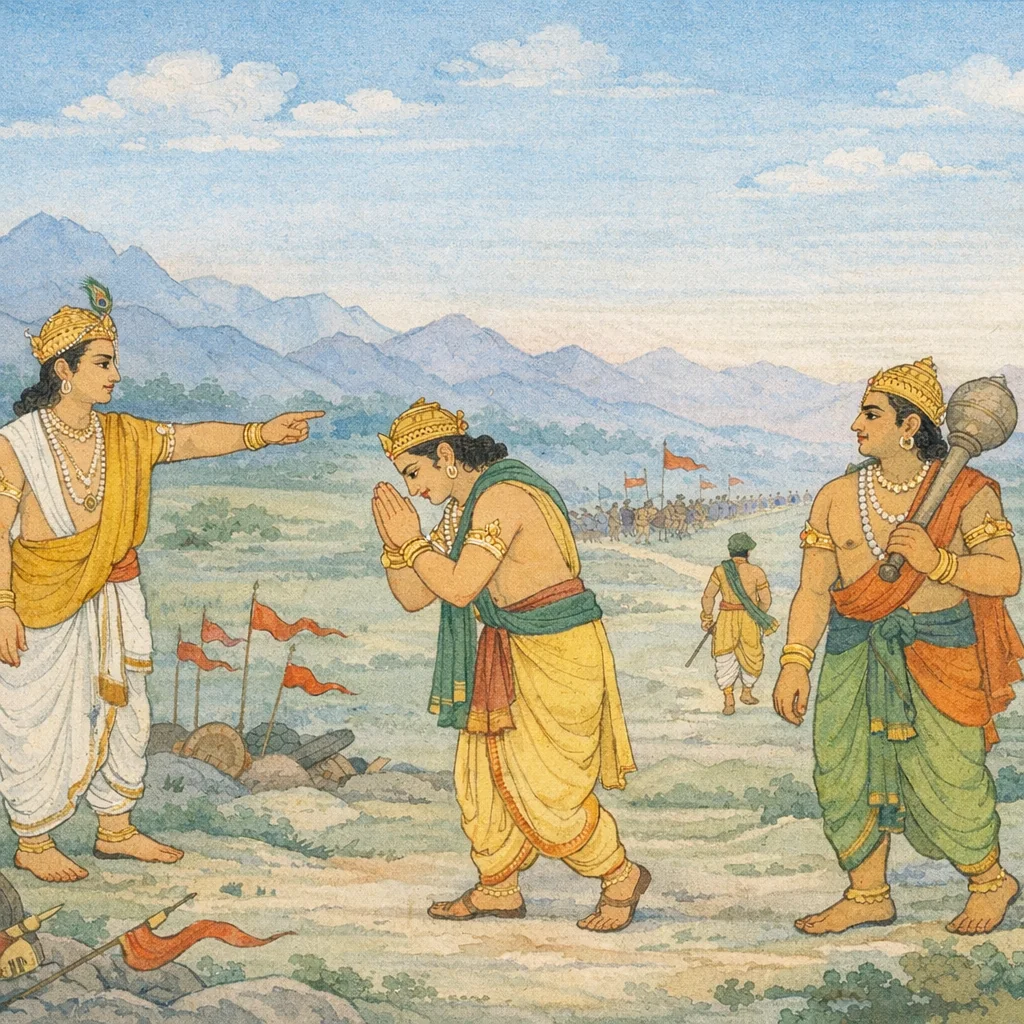
Sañjaya reports an escalating duel between Karṇa and Bhīmasena. Bhīma initially wounds Karṇa, notably striking and causing a prominent earring to fall, then presses with volleys that mark Karṇa’s forehead with embedded arrows. Karṇa responds with concentrated barrages described through solar and fire-wheel imagery, visually “covering” directions and light, emphasizing speed, density, and craftsmanship of missiles. The exchange shifts to tactical disablement: Karṇa cuts Bhīma’s quivers, bowstring, and horse-reins, kills or strikes horses and the charioteer, and severs Bhīma’s standard, forcing Bhīma into a dismounted (viratha) condition. Bhīma attempts improvised countermeasures—throwing a chariot-spear and later using shield and sword—both neutralized by Karṇa’s precision. Karṇa then uses verbal provocation to assert superiority and destabilize Bhīma’s morale. At this juncture, Arjuna (prompted by Kṛṣṇa) attacks Karṇa to relieve Bhīma, compelling Karṇa’s withdrawal. Arjuna then targets Drauṇi with a lethal nārāca; Drauṇi intercepts it, retreats into dense formations, and Arjuna continues pursuit, inflicting damage while maintaining operational pressure.
Chapter Arc: जयद्रथ-वध के लिए उद्यत अर्जुन दूर निकल चुके हैं; युधिष्ठिर की चिंता यह है कि कहीं अर्जुन अकेले शत्रु-चक्र में न घिर जाए—तभी सात्यकि को बुलाकर आदेश दिया जाता है कि वे तुरंत अर्जुन के पास पहुँचें। → सात्यकि भीतर-ही-भीतर दो निष्ठाओं का भार तौलते हैं—गुरु अर्जुन की आज्ञा और धर्मराज का शासन। वे स्पष्ट कहते हैं कि अर्जुन का वचन उनके लिए अत्यंत महत्त्व रखता है, पर युधिष्ठिर का आदेश उससे भी ‘विशिष्टतर’ है; फिर वे दूरी (तीन योजन) और समय की कसौटी पर प्रतिज्ञा करते हैं कि जयद्रथ-वध से पहले वे अर्जुन तक पहुँचेंगे। प्रस्थान के साथ ही भीम का साथ चलना और कौरव-सेना की ओर बढ़ना तनाव को युद्ध-तत्परता में बदल देता है। → सात्यकि सम्मानपूर्वक विदा लेकर, भीम की रक्षा-चिंता के बीच, कौरव-सेना को ऐसे देखते हैं जैसे व्याघ्र मृग-गण को—और अर्जुन-दर्शन की उत्कंठा तथा जयद्रथ-वध की प्रतिज्ञा के साथ वे शत्रु-व्यूह में वेगपूर्वक प्रवेश का संकल्प करते हैं। → धर्मराज की आज्ञा स्थिर हो जाती है, सात्यकि की प्रतिज्ञा बँध जाती है, और उनका प्रस्थान निर्णायक रूप से आरम्भ हो जाता है—लक्ष्य एक ही: अर्जुन तक पहुँचना और जयद्रथ-वध के प्रयत्न को सहारा देना। → सात्यकि कौरव-सेना के भीतर किस-किस रथी से टकराएँगे, और क्या वे समय रहते अर्जुन तक पहुँच पाएँगे—यही अगले प्रसंग का द्वार बनता है।
Shlokas
Verse 1
ऑपन--माजल बछ। अ<-छऋा दादशाधिकशततमो< ध्याय: सात्यकिकी अर्जुनके पास जानेकी तैयारी और सम्मानपूर्वक विदा होकर उनका प्रस्थान तथा साथ आते हुए भीमको कक रक्षाके लिये लौटा ना संजय उवाच धर्मराजस्य तद् वाक््यं निशम्य शिनिपुड्भव: । स पार्थाद् भयमाशंसन् _परित्यागान्महीपते:,संजय कहते हैं--राजन! धर्मराजका वह कथन सुनकर शिनिप्रवर सात्यकिके मनमें राजाको छोड़कर जानेसे अर्जुनके अप्रसन्न होनेकी आशंका उत्पन्न हुई। विशेषतः उन्हें अपने लिये लोकापवादका भय दिखायी देने लगा। वे सोचने लगे--मुझे अर्जुनकी ओर आते देख सब लोग यही कहेंगे कि यह डरकर भाग आया है
Sañjaya said: “O King, hearing that statement of Dharmaraja (Yudhiṣṭhira), Satyaki—the foremost of the Shinis—became anxious. He feared that Arjuna (Pārtha) might be displeased if he left the king’s side; and, above all, he foresaw the danger of public reproach. He thought, ‘If people see me going toward Arjuna, they will say that I fled out of fear.’”
Verse 2
अपवादं हाात्मनश्न लोकात् पश्यन् विशेषत: । ते मां भीतमिति ब्रूयुरायान्तं फाल्गुनं प्रति,संजय कहते हैं--राजन! धर्मराजका वह कथन सुनकर शिनिप्रवर सात्यकिके मनमें राजाको छोड़कर जानेसे अर्जुनके अप्रसन्न होनेकी आशंका उत्पन्न हुई। विशेषतः उन्हें अपने लिये लोकापवादका भय दिखायी देने लगा। वे सोचने लगे--मुझे अर्जुनकी ओर आते देख सब लोग यही कहेंगे कि यह डरकर भाग आया है
Sañjaya said: “O King, seeing—most particularly—the danger of public reproach against himself, he reflected: ‘If people see me going toward Phālguna, they will say, “He is coming in fear.”’ Thus the anxiety of blame and the need to preserve honour weighed upon him in this moment of war.”
Verse 3
निश्चित्य बहुधैवं स सात्यकिर्युद्धदुर्मद: । धर्मराजमिदं वाक्यमत्रवीत् पुरुषर्षभ:,युद्धमें दुर्जय वीर पुरुषरत्न सात्यकिने इस प्रकार भाँति-भाँतिसे विचार करके धर्मराजसे यह बात कही--
Sañjaya said: Having reflected in many ways and resolved upon his course, Sātyaki—proud and unshaken amid the fury of battle—addressed Dharmarāja with these words. The bull among men spoke, weighing duty and consequence in the midst of war.
Verse 4
कृतां चेन्मन्यसे रक्षां स्वस्ति ते5स्तु विशाम्पते । अनुयास्यामि बीभत्सुं करिष्ये वचनं तव,'प्रजानाथ! यदि आप अपनी रक्षाकी व्यवस्था की हुई मानते हैं तो आपका कल्याण हो। मैं अर्जुनके पास जाऊँगा और आपकी आज्ञाका पालन करूँगा
Sañjaya said: “If you consider your protective measures to be in place, then may well-being attend you, O lord of the people. I shall go after Bībhatsu (Arjuna) and carry out your command.”
Verse 5
न हि मे पाण्डवात् वक्ित् त्रिषु लोकेषु विद्यते । यो मे प्रियतरो राजन् सत्यमेतद् ब्रवीमि ते,'राजन्! मैं आपसे सच कहता हूँ कि तीनों लोकोंमें कोई ऐसा पुरुष नहीं है, जो मुझे पाण्डुनन्दन अर्जुनसे अधिक प्रिय हो
Sañjaya said: “O King, I tell you the truth: in the three worlds there is no man dearer to me than the Pāṇḍava Arjuna. This is my honest declaration to you.”
Verse 6
तस्याहं पदवीं यास्ये संदेशात् तव मानद । त्वत्कृते न च मे किंचिदकर्तव्यं कथंचन,“मानद! मैं आपके आदेश और संदेशसे अर्जुनके पथका अनुसरण करूँगा। आपके लिये कोई ऐसा कार्य नहीं है जिसे मैं किसी प्रकार न कर सकूँ
Sañjaya said: “Honored one, at your command and with your message, I shall follow the very path he has taken. For your sake, there is no task whatsoever that I would leave undone in any manner.”
Verse 7
यथा हि मे गुरोरवाक्यं विशिष्टं द्विपदां वर । तथा तवापि वचन विशिष्टतरमेव मे,“नरश्रेष्ठ! मेरे गुरु अर्जुनका वचन मेरे लिये जैसा महत्त्व रखता है, आपका वचन भी वैसा ही है, बल्कि उससे भी बढ़कर है
Sañjaya said: “O best of men, just as the word of my revered teacher carries special weight with me, so too does your word—indeed, to me it is even more distinguished than that.”
Verse 8
प्रिये हि तव वर्तेते भ्रातरौ कृष्णपाण्डवौ । तयो: प्रिये स्थितं चैव विद्धि मां राजपुड़व,“नृपश्रेष्ठ! दोनों भाई श्रीकृष्ण और अर्जुन आपके प्रिय साधनमें लगे हुए हैं और उन दोनोंके प्रिय कार्यमें आप मुझे तत्पर जानिये
Sañjaya said: “O bull among kings, the two brothers—Kṛṣṇa and the Pāṇḍava (Arjuna)—are engaged in what is dear to you. Know me too to be firmly devoted to what is dear to them.”
Verse 9
तवाज्ञां शिरसा गृह पाण्डवार्थमहं प्रभो । भिच््वेदं दुर्भिदं सैन्यं प्रयास्पे नरपुड़व,'प्रभो! नरश्रेष्ठ! मैं आपकी आज्ञा शिरोधार्य करके पाण्डुनन्दन अर्जुनके लिये इस दुर्भद्य सैन्यव्यूहका भेदनकर उनके पास जाऊँगा
Sañjaya said: “O lord, taking your command upon my head, for the sake of the Pāṇḍavas I shall go. Having broken through this hard-to-breach army-formation, I will make my way to Arjuna, best of men.”
Verse 10
द्रोणानीकं विशाम्येष क्रुद्धो झष इवार्णवम् । तत्र यास्यामि यत्रासौ राजन् राजा जयद्रथ:,'राजन्! जैसे महामत्स्य महासागरमें प्रवेश करता है, उसी प्रकार मैं भी कुपित होकर द्रोणाचार्यकी सेनामें घुसता हूँ। मैं वहीं जाऊँगा जहाँ राजा जयद्रथ है
Sañjaya said: “O King, like a great fish plunging into the ocean, so do I, in wrath, enter the battle-array of Droṇa. I shall go there—where that king Jayadratha is.”
Verse 11
यत्र सेनां समाश्रित्य भीतस्तिष्ठति पाण्डवात् । गुप्तो रथवरश्रेष्ठैद्रॉणिकर्णकृपादिभि:,'पाण्डुनन्दन अर्जुनसे भयभीत हो अपनी सेनाका आश्रय लेकर जयद्रथ जहाँ अश्व॒त्थामा, कर्ण और कृपाचार्य आदि श्रेष्ठ महारथियोंसे सुरक्षित होकर खड़ा है वहीं मुझे पहुँचना है
“Where Jayadratha, fearing Arjuna, son of Pāṇḍu, stands taking refuge in his army, guarded by the foremost chariot-warriors—Aśvatthāmā, Karṇa, Kṛpa, and others—there is where I must reach.”
Verse 12
इतस्त्रियोजनं मन्ये तमध्वानं विशाम्पते । यत्र तिष्ठति पार्थोडसौ जयद्रथवधोद्यत:,'प्रजापालक नरेश! इस समय जहाँ जयद्रथ-वधके लिये उद्यत हुए अर्जुन खड़े हैं, उस स्थानको मैं यहाँसे तीन योजन दूर मानता हूँ
Sañjaya said: “O lord of the people, I judge that place to be three yojanas from here—the very spot where that Pārtha (Arjuna) stands, intent upon the slaying of Jayadratha.”
Verse 13
त्रियोजनगतस्यापि तसस््य यास्याम्यहं पदम् । आसैन्धववधाद् राजन सुदृढेनान्तरात्मना,“राजन! अर्जुनके तीन योजन दूर चले जानेपर भी मैं जयद्रथ-वधके पहले ही सुदृढ़ हृदयसे अर्जुनके स्थानपर पहुँच जाऊँगा
Sañjaya said: “O King, even if he has gone three yojanas away, I shall still reach his very position—before the slaying of Saindhava—by the steadfast resolve of my inner spirit.”
Verse 14
अनादिष्टस्तु गुरुणा को नु युध्येत मानव: । आदिष्टस्तु यथा राजन् को न युध्येत मादृश:,“नरेश्वर! गुरुकी आज्ञा प्राप्त हुए बिना कौन मनुष्य युद्ध करेगा और गुरुकी आज्ञा मिल जानेपर मेरे-जैसा कौन वीर युद्ध नहीं करेगा?
Sañjaya said: “O king, what man would fight without being commanded by his teacher? But once commanded, who—especially one like me—would refuse to fight?”
Verse 15
अभिजानामि त॑ देशं यत्र यास्याम्यहं प्रभो । हलशक्तिगदाप्रासचर्मखड््गर्धितोमरम्
Sañjaya said: “O lord, I recognize that region to which I shall go—where the ground is strewn and bristling with weapons: plough-like blades, spears, maces, lances, shields, swords, and barbed javelins.”
Verse 16
यदेतत् कुञ्जरानीकं॑ साहस्रमनुपश्यसि,“महाराज! यह जो आप हजारों हाथियोंकी सेना देखते हैं, इसका नाम है आंजनककुल। इसमें पराक्रमशाली गजराज खड़े हैं, जिनके ऊपर प्रहारकुशल और युद्धनिपुण बहुत-से म्लेच्छ योद्धा सवार हैं
Sañjaya said: “O great king, the thousand-strong elephant corps that you see is called the Āñjanaka clan-division. Here stand mighty lordly elephants, and upon them are seated many foreign warriors—skilled in striking and trained in the arts of battle.”
Verse 17
कुलमाञ्जनकं नाम यत्रैते वीर्यशालिन: । आस्थिता बहुभिम्लेंच्छैर्युद्धशौण्डै: प्रहारिभि:,“महाराज! यह जो आप हजारों हाथियोंकी सेना देखते हैं, इसका नाम है आंजनककुल। इसमें पराक्रमशाली गजराज खड़े हैं, जिनके ऊपर प्रहारकुशल और युद्धनिपुण बहुत-से म्लेच्छ योद्धा सवार हैं
Sañjaya said: “O great King, this host of elephants that you behold in their thousands is called the Añjanaka clan. There stand mighty war-elephants, full of valor, and upon their backs ride many Mleccha warriors—skilled in striking and seasoned in battle.”
Verse 18
नागा मेघनिभा राजन् क्षरन्त इव तोयदा: । नैते जातु निवर्तेरन् प्रेषिता हस्तिसादिभि:
Sañjaya said: “O King, these elephants, dark as rain-clouds, seem as though they are pouring forth streams like water-bearing clouds. Once driven on by their mahouts and handlers, they will never turn back.”
Verse 19
अथ यान् रथिनो राजन् सहस्रमनुपश्यसि
Sañjaya said: “O King, those thousand chariot-warriors whom you now behold…”
Verse 20
एते रुक्मरथा नाम राजपुत्रा महारथा: । रथेष्वस्त्रेषु निपुणा नागेषु च विशाम्पते
Sañjaya said: “These are the royal princes known as the Rukmarathas—great chariot-warriors, O lord of the people. They are skilled in the handling of chariots and weapons, and are also adept in the use of war-elephants.”
Verse 21
“राजन! आप जिन सहस्रों रथियोंको देख रहे हैं, ये रुक्मरथ नामवाले महारथी राजकुमार हैं। प्रजानाथ! ये रथों, अस्त्रों और हाथियोंके संचालनमें भी निपुण हैं ।। धनुर्वेदे गता: पारं मुष्टियुद्धे च कोविदा: । गदायुद्धविशेषज्ञा नियुद्धकुशलास्तथा,'ये सब-के-सब थधरनुर्वेदके पारंगत दिद्वान् हैं। मुष्टियुद्धमें भी निपुण हैं, गदायुद्धके विशेषज्ञ हैं और मल्लयुद्धमें भी कुशल हैं
Sañjaya said: “O King, the thousands of chariot-warriors you see are royal princes—great champions known by the name Rukmaratha. O lord of the people, they are skilled not only in handling chariots and weapons but also in directing elephants. They have mastered the science of archery (Dhanurveda), are adept in fist-fighting, are specialists in mace-combat, and are likewise proficient in regulated wrestling (niyuddha).”
Verse 22
खड्गप्रहरणे युक्ता: सम्पाते चासिचर्मणो: । शूराश्व कृतविद्याश्च स्पर्थन्ते च परस्परम्,“तलवार चलानेका भी इन्हें अच्छा अभ्यास है। ये ढाल, तलवार लेकर विचरनेमें समर्थ हैं। शूर और अस्त्र-शस्त्रोंके विद्वान होनेके साथ ही परस्पर स्पर्धा रखते हैं
Sañjaya said: “They are well-trained in striking with the sword, and skilled in the close engagement of sword and shield. Brave and thoroughly instructed in the arts of weapons, they vie with one another in martial rivalry.”
Verse 23
नित्यं हि समरे राजन् विजिगीषन्ति मानवान् | कर्णेन विहिता राजन् दुःशासनमनुव्रता:,“नरेश्वर! ये सदा समरभूमिमें मनुष्योंको जीतनेकी इच्छा रखते हैं। महाराज! कर्णने इन्हें दःशासनका अनुगामी बना रखा है
Sañjaya said: “O King, in battle there are always men who burn with the desire to conquer others. And, O King, these warriors—directed by Karṇa—have been made followers of Duḥśāsana.”
Verse 24
एतांस््तु वासुदेवो5पि रथोदारान् प्रशंसति । सतत प्रियकामाश्ष् कर्णस्यैते वशे स्थिता:,भगवान् श्रीकृष्ण भी इन श्रेष्ठ महारथियोंकी प्रशंसा करते हैं, ये सब-के-सब कर्णके वशमें स्थित हैं और सदा उसका प्रिय करनेकी अभिलाषा रखते हैं
Sañjaya said: “Even Vāsudeva (Śrī Kṛṣṇa) praises these noble chariot-warriors. All of them remain under Karṇa’s control, ever intent on doing what pleases him.”
Verse 25
तस्यैव वचनाद् राजन निवृत्ता: श्वेतवाहनात् । ते न क्लान्ता न च श्रान्ता दृढावरणकार्मुका:,'राजन्! कर्णके ही कहनेसे ये अर्जुनकी ओरसे इधर लौट आये हैं। इनके कवच और धनुष अत्यन्त सुदृढ़ हैं। वे न तो थके हैं और न पीड़ित ही हुए हैं
Sañjaya said: “O King, at his very command they turned back from Śvetavāhana (Arjuna). Their armour and bows are exceedingly firm; they are neither weary nor distressed.”
Verse 26
मदर्थेड्धिछिता नून॑ धार्तराष्ट्रस्य शासनात् । एतान् प्रमथ्य संग्रामे प्रियार्थ तव कौरव
Sañjaya said: “Surely, O Kaurava, these men have been driven to ruin for my sake, under the command of Dhṛtarāṣṭra’s son. Having crushed them in battle, he seeks to accomplish what is dear to you.”
Verse 27
यांस्त्वेतानपरान् राजन् नागान् सप्त शतानिमान्,स्वलंकृतांस्तदा प्रेष्पानिच्छन् जीवितमात्मन: । “महाराज! जिन दूसरे इन सात सौ हाथियोंको आप देख रहे हैं, जो कवचसे आच्छादित हैं और जिनपर किरात योद्धा चढ़े हुए हैं, ये वे ही हाथी हैं, जिन्हें दिग्विजयके समय अपने प्राण बचानेकी इच्छा रखकर किरातराजने सव्यसाची अर्जुनको भेंट किया था। ये सजे-सजाये हाथी उन दिनों आपके सेवक थे
Sañjaya said: “O King, these other seven hundred elephants that you see—well adorned and equipped—are the very ones that, in former days, the Kirāta king presented to Savyasācī Arjuna, seeking to preserve his own life. Now those same richly caparisoned elephants stand here as your attendants and resources in this war.”
Verse 28
प्रेक्षसे वर्मसंछन्नानू किरातैः समधिष्ठितान् । किरातराजो यानू् प्रादाद् द्विरदान् सव्यसाचिन:
Sañjaya said: “You can see those elephants, covered in armor and fully manned by Kirāta warriors—elephants that the Kirāta king had bestowed upon Savyasācin (Arjuna).”
Verse 29
आनम्ेते पुरा राज॑स्तव कर्मकरा दृढम्
Sañjaya said: “Formerly, O King, your servants were firmly devoted—steadfast in carrying out your commands.”
Verse 30
एषामेते महामात्रा: किराता युद्धदुर्मदा:,'ये रणदुर्मद किरात इन हाथियोंके महावत और इन्हें शिक्षा देनेमें कुशल हैं। ये सब-के-सब अग्निसे उत्पन्न हुए हैं। सव्यसाची अर्जुनने इन सबको संग्रामभूमिमें पराजित कर दिया था
Sañjaya said: “These are their great officers—Kirāta warriors, intoxicated with the pride of battle.”
Verse 31
हस्तिशिक्षाविदश्नैव सर्वे चैवाग्नियोनय: । एते विनिर्जिता: संख्ये संग्रामे सव्यसाचिना,'ये रणदुर्मद किरात इन हाथियोंके महावत और इन्हें शिक्षा देनेमें कुशल हैं। ये सब-के-सब अग्निसे उत्पन्न हुए हैं। सव्यसाची अर्जुनने इन सबको संग्रामभूमिमें पराजित कर दिया था
Sañjaya said: “These men—skilled in the training and handling of elephants—are all of fiery origin. Yet in the press of battle, in the very reckoning of war, they were overcome by Arjuna, the ambidextrous archer.”
Verse 32
मदर्थमद्य संयत्ता दुर्योधनवशानुगा: । एतान् हत्वा शरै राजन् किरातान् युद्धदुर्मदान्
Sañjaya said: “For my sake, today they have taken up arms, acting under Duryodhana’s control. O King, when with your arrows you have slain these Kirāta warriors—made arrogant by battle—…”
Verse 33
ये त्वेते सुमहानागा अञ्जनस्य कुलोद्धवा:,'ये जो बड़े-बड़े गजराज दृष्टिगोचर हो रहे हैं, ये अंजन नामक दिग्गजके कुलमें उत्पन्न हुए हैं-। इनका स्वभाव बड़ा ही कठोर है। इन्हें युद्धकी अच्छी शिक्षा मिली है। इनके गण्डस्थल और मुखसे मदकी धारा बहती रहती है। वे सब-के-सब सुवर्णमय कवचोंसे विभूषित हैं। राजन्! ये पहले भी युद्धस्थलमें अपने लक्ष्यपर विजय पा चुके हैं और समरांगणमें ऐरावतके समान पराक्रम प्रकट करते हैं। उत्तर पर्वत (हिमालय-प्रदेश)-से आये हुए तीखे स्वभाववाले लुटेरे और डाकू इन हाथियोंपर सवार हैं
Sañjaya said: “O King, those very mighty elephants that you now see are born in the lineage of the great elephant Añjana. Their nature is exceedingly fierce, they are well trained for battle, and streams of rut flow from their temples and mouths. All of them are adorned with golden armor. They have already proved victorious over their targets in earlier battles, and on the field they display valor like Airāvata. Upon these elephants ride sharp-tempered plunderers and bandits who have come from the northern mountains (the Himalayan region).”
Verse 34
कर्कशाश्च विनीताश्च प्रभिन्नकरटामुखा: । जाम्बूनदमयै: सर्वे वर्मभि: सुविभूषिता:,'ये जो बड़े-बड़े गजराज दृष्टिगोचर हो रहे हैं, ये अंजन नामक दिग्गजके कुलमें उत्पन्न हुए हैं-। इनका स्वभाव बड़ा ही कठोर है। इन्हें युद्धकी अच्छी शिक्षा मिली है। इनके गण्डस्थल और मुखसे मदकी धारा बहती रहती है। वे सब-के-सब सुवर्णमय कवचोंसे विभूषित हैं। राजन्! ये पहले भी युद्धस्थलमें अपने लक्ष्यपर विजय पा चुके हैं और समरांगणमें ऐरावतके समान पराक्रम प्रकट करते हैं। उत्तर पर्वत (हिमालय-प्रदेश)-से आये हुए तीखे स्वभाववाले लुटेरे और डाकू इन हाथियोंपर सवार हैं
Sañjaya said: “These elephants that have come into view are both fierce by nature and well-trained for battle. Their temples and mouths are streaming with rut, and every one of them is splendidly adorned with armor made of pure gold.”
Verse 35
लब्धलक्ष्या रणे राजन्नैरावणसमा युधि । उत्तरात् पर्वतादेते ती4&णैर्दस्युभिरास्थिता:,'ये जो बड़े-बड़े गजराज दृष्टिगोचर हो रहे हैं, ये अंजन नामक दिग्गजके कुलमें उत्पन्न हुए हैं-। इनका स्वभाव बड़ा ही कठोर है। इन्हें युद्धकी अच्छी शिक्षा मिली है। इनके गण्डस्थल और मुखसे मदकी धारा बहती रहती है। वे सब-के-सब सुवर्णमय कवचोंसे विभूषित हैं। राजन्! ये पहले भी युद्धस्थलमें अपने लक्ष्यपर विजय पा चुके हैं और समरांगणमें ऐरावतके समान पराक्रम प्रकट करते हैं। उत्तर पर्वत (हिमालय-प्रदेश)-से आये हुए तीखे स्वभाववाले लुटेरे और डाकू इन हाथियोंपर सवार हैं
Sañjaya said: “O King, these elephants—already proven in battle, never missing their mark—display prowess in combat equal to Airāvata. They have come from the northern mountains, and they are mounted by fierce bandits and raiders.”
Verse 36
कर्कशै: प्रवरै्योधै: कार्ष्णायसतनुच्छदै: । सन्ति गोयोनयश्नात्र सन्ति वानरयोनय:
Sañjaya said: “Here are fierce and excellent warriors, clad in black-iron armour; and here too are those of bovine birth, and here too are those of simian birth.”
Verse 37
अनीकं समवेतानां धूम्रवर्णमुदीर्यते
Sañjaya said: From the massed ranks of the assembled warriors, a smoke-hued cloud rose up—an ominous sign of the battle’s gathering fury and the moral darkness that war inevitably stirs.
Verse 38
एतद् दुर्योधनो लब्ध्वा समग्र राजमण्डलम्,कृतार्थमथ चात्मानं मन््यते कालचोदित: । “कालसे प्रेरित हुआ दुर्योधन इन समस्त राजाओंके समुदायको तथा रथियोंमें श्रेष्ठ द्रोणाचार्य, कृपाचार्य, भूरिश्रवा, जयद्रथ और कर्णको पाकर पाण्डवोंका अपमान करता है तथा अपने-आपको कृतार्थ मान रहा है
Sañjaya said: Having thus obtained the entire circle of kings, Duryodhana—driven on by Time—now deems himself successful and fulfilled. In this confidence, he looks down upon the Pāṇḍavas, taking the gathered might of his allies as proof of his own accomplishment, even as the moral weight of his choices continues to ripen toward inevitable consequence.
Verse 39
कृपं च सौमदत्तिं च द्रोणं च रथिनां वरम् | सिन्धुराजं तथा कर्णमवमन्यत पाण्डवान्
Sañjaya said: He held the Pāṇḍavas in contempt—Kṛpa, Saumadatti (Bhūriśravas), Droṇa the foremost of chariot-warriors, the king of Sindhu, and Karṇa as well. The line underscores how pride in powerful allies can harden into moral blindness, feeding the arrogance that drives the war’s cruelty.
Verse 40
ते तु सर्वेड्द्य सम्प्राप्ता मम नाराचगोचरम्
Sañjaya said: “But today, all of them have come within the range of my sharp arrows.”
Verse 41
तेन सम्भाविता नित्यं परवीर्योपजीविना
Sañjaya said: Ever honored and sustained by him—one who lived by relying on the prowess of others—(they continued in that dependent relationship). The line underscores an ethically fraught dependence: prestige and livelihood gained not through one’s own merit, but through attachment to another’s strength, a pattern that war repeatedly exposes and punishes.
Verse 42
ये त्वेते रथिनो राजन् दृश्यन्ते काड्चनध्वजा:
Sañjaya said: “O King, those chariot-warriors who are seen there, bearing golden banners…”
Verse 43
शूराश्व कृतविद्याश्व धनुर्वेदे च निछ्ठिता:
Sañjaya said: “They were men of valor, trained in the arts of warfare, and firmly established in the science of archery.”
Verse 44
अक्षौहिण्यश्व संरब्धा धार्तराष्ट्स्य भारत,“भरतनन्दन! दुर्योधनकी क्रोधमें भरी हुई ये कई अक्षौहिणी सेनाएँ कौरववीरोंसे सुरक्षित हो मेरे लिये तैयार खड़ी हैं। महाराज! ये सब सावधान होकर मुझपर ही आक्रमण करनेवाली हैं
Sañjaya said: “O Bhārata, O joy of the Bharata line! Many akṣauhiṇīs of Dhṛtarāṣṭra’s host—bristling with horses and fully marshalled—stand ready for my sake, guarded by Kaurava heroes and filled with Duryodhana’s wrath. O King, all of them, alert and prepared, are set to fall upon me alone.”
Verse 45
यत्ता मदर्थे तिष्ठन्ति कुरुवीराभिरक्षिता: । अप्रमत्ता महाराज मामेव प्रत्युपस्थिता:,“भरतनन्दन! दुर्योधनकी क्रोधमें भरी हुई ये कई अक्षौहिणी सेनाएँ कौरववीरोंसे सुरक्षित हो मेरे लिये तैयार खड़ी हैं। महाराज! ये सब सावधान होकर मुझपर ही आक्रमण करनेवाली हैं
“They stand ready for my sake, guarded by Kuru heroes; O King, they are unheedful of no danger, and have come forth to confront me—me alone.”
Verse 46
तानहं प्रमथिष्यामि तृणानीव हुताशन: । तस्मात् सर्वानुपासंगान् सर्वोपकरणानि च
Sañjaya said: “I shall crush them like dry blades of grass before a blazing fire. Therefore, let all attachments and all implements (for action) be gathered and made ready.”
Verse 47
अस्मिंस्तु किल सम्मर्दे ग्राह्में विविधमायुधम्
Sañjaya said: In that very crush of battle, it is said, there was a village-like press of men, where weapons of many kinds were seized and wielded—an image of war’s chaotic density, where discernment is strained and the moral weight of violence stands starkly revealed.
Verse 48
काम्बोजै्हि समेष्यामि तीक्ष्णराशीविषोपमै:
Sañjaya said: “I shall advance together with the Kāmbojas—men like a sharp mass of poison—deadly in their onset.”
Verse 49
नानाशस्त्रसमावायैर्विविधायुधयोधिभि: । “आज मैं विषधर सर्पके समान क्रूर स्वभाववाले उन काम्बोज-सैनिकोंके साथ युद्ध करूँगा, जो नाना प्रकारके शस्त्रसमुदायोंसे सम्पन्न और भाँति- भाँतिके आयुधोंद्वारा युद्ध करनेमें कुशल हैं ।। ४८ ई ।। किरातैश्न समेष्यामि विषकल्पै: प्रहारिभि:
Sañjaya said: “I shall engage in battle with those Kirātas—fighters armed with many kinds of weapons and skilled in diverse modes of combat—whose blows are like poison.”
Verse 50
शकैश्नापि समेष्यामि शक्रतुल्यपराक्रमै:
Sañjaya said: “Even with the Śakas I shall engage in battle—those whose prowess is equal to Indra’s.”
Verse 51
तथान्यैरविविधैर्योचै: कालकल्पैर्दुरासदै:
Sañjaya said: “Likewise, by other means—varied and manifold—through swift-moving steeds and time-tested battle-arrangements that were hard to assail, the warriors pressed the fight in a manner difficult for the enemy to withstand.”
Verse 52
समेष्यामि रणे राजन् बहुभिरययुद्धदुर्मदै: । 'राजन्! इनके सिवा और भी जो नाना प्रकारके बहुसंख्यक युद्धदुर्मद, कालके तुल्य भयंकर तथा दुर्जय योद्धा हैं, रणक्षेत्रमें उन सबका सामना करूँगा || ५१ है || तस्माद् वै वाजिनो मुख्या विश्रान्ता: शुभलक्षणा:
Sañjaya said: “O King, on the battlefield I shall confront many warriors, maddened by the arrogance of combat.”
Verse 53
संजय उवाच तस्य सर्वानुपासंगान् सर्वोपकरणानि च
Sañjaya said: “All his attendant belongings, and all his equipment as well.”
Verse 54
ततस्तानू सर्वतो युक्तान् सदश्वां श्वतुरो जना:
Sañjaya said: Then those men, with their horses well-yoked and their forces fully prepared on every side, set themselves in readiness.
Verse 55
रसवत् पाययामासु: पान॑ मदसमीरणम् | तदनन्तर सब प्रकारसे सुशिक्षित उन चारों उत्तम घोड़ोंको सेवकोंने मदमत्त बना देनेवाला रसीला पेय पदार्थ पिलाया || ५४ $ ।। पीतोपवृत्तान् स्नातांश्व॒ जग्धान्नानू समलंकृतान्
Sañjaya said: Then the attendants gave the four excellent, well-trained horses a sweet, potent drink that stirs intoxication. After they had drunk, the horses—refreshed, bathed, fed, and fully adorned—were made ready.
Verse 56
विनीतशल्यांस्तुरगां श्षतुरो हेममालिन: । तान् युक्तान् रुक्मवर्णाभान् विनीतान् शीघ्रगामिन:
Sañjaya said: Four horses, their harness and trappings well-adjusted, adorned with golden garlands, and shining with a golden hue—disciplined and swift-moving—were yoked and made ready.
Verse 57
संहृष्टमनसो व्यग्रान् विधिवत्कल्पितान् रथे । महाध्वजेन सिंहेन हेमकेसरमालिना
Sañjaya said: “With minds exhilarated yet intent and alert, they were duly arrayed upon the chariot—marked by a great banner bearing a lion, and adorned with a garland of golden mane-like tassels.”
Verse 58
संवृते केतकैहेंमैर्मणिविद्रुमचित्रितै: । पाण्डुरा भ्रप्रकाशाभि: पताकाभिरलंकृते
Sañjaya said: “It was covered with golden ketaka-ornaments, inlaid with gems and coral, and adorned with banners gleaming like pale clouds—an image of royal splendor set amid the grim duties of war.”
Verse 59
हेमदण्डोच्छ्ितच्छत्रे बहुशस्त्रपरिच्छदे । योजयामास विधिवद्धेमभाण्डविभूषितान्
Sañjaya said: “With a parasol raised on a golden staff, and with abundant weapons and fittings, he duly harnessed and arrayed them, adorning them with golden trappings—an image of royal splendor set amid the grim orderliness of war.”
Verse 60
जब वे पी चुके तो उन्हें टहलाया और नहलाया गया। उसके बाद दाना और चारा खिलाया गया। फिर उन्हें सब प्रकारसे सुसज्जित किया गया। उनके अंगोंमें गड़े हुए बाण पहले ही निकाल दिये गये थे। वे चारों घोड़े सोनेकी मालाओंसे विभूषित थे। उन योग्य अश्वोंकी कान्ति सुवर्णके समान थी। वे सुशिक्षित और शीघ्रगामी थे। उनके मनमें हर्ष और उत्साह था। तनिक भी व्यग्रता नहीं थी। उन्हें विधिपूर्वक सजाया गया था। स्वर्णमय अलंकारोंसे अलंकृत उन अभश्वोंको सारथिने विधिपूर्वक रथमें जोता। वह रथ सुवर्णमय केशरोंसे सुशोभित सिंहके चिह्लवाले विशाल ध्वजसे सम्पन्न था। मणियों और मूँगोंसे चित्रित सोनेकी शलाकाओंसे शोभायमान एवं श्वेत पताकाओंसे अलंकृत था। उस रथके ऊपर स्वर्णमय दण्डसे विभूषित छत्र तना हुआ था तथा रथके भीतर नाना प्रकारके शस्त्र तथा अन्य आवश्यक सामान रखे गये थे ।। ५५-- ५९ || दारुकस्यानुजो भ्राता सूतस्तस्य प्रिय: सखा । न्यवेदयद् रथं युक्त वासवस्येव मातलि:,जैसे मातलि इन्द्रका सारथि और सखा भी है, उसी प्रकार दारुकका छोटा भाई सात्यकिका सारथि और प्रिय सखा था। उसने सात्यकिको यह सूचना दी कि रथ जोतकर तैयार है
Sañjaya said: “Dāruka’s younger brother—who served as Sātyaki’s charioteer and was also his dear companion—reported that the chariot had been properly yoked and made ready, just as Mātali, both charioteer and trusted friend of Vāsava (Indra), would do.”
Verse 61
ततः स्नात: शुचिर्भूत्वा कृतकौतुकमज़ल: । स््नातकानां सहस्रस्य स्वर्णनिष्कानथो ददौ,तदनन्तर सात्यकिने स्नान करके पवित्र हो यात्राकालिक मंगलकृत्य सम्पन्न करनेके पश्चात् एक सहसख्र स्नातकोंको सोनेकी मुद्राएँ दान कीं
Sañjaya said: “Then, having bathed and become pure, and having completed the auspicious rites customary for setting out, he bestowed gold niṣkas (coins/ornamental pieces) as gifts upon a thousand newly-graduated brahmacārins (snātakas).”
Verse 62
आशीवदि: परिष्वक्तः सात्यकि: श्रीमतां वर: । ततः स मधुपर्कार्ह: पीत्वा कैलातकं मधु,ब्राह्मणोंके आशीर्वाद पाकर तेजस्वी पुरुषोंमें श्रेष्ठ एवं मधुपर्कके अधिकारी सात्यकिने कैलातक नामक मधुका पान किया। उसे पीते ही उनकी आँखें लाल हो गयीं। मदसे नेत्र चंचल हो उठे, फिर उन्होंने अत्यन्त हर्षमें भरकर वीरकांस्यपात्रका स्पर्श किया। उस समय प्रज्वलित अग्निके समान रथियोंमें श्रेष्ठ सात्यकिका तेज दूना हो गया। उन्होंने बाणसहित धनुषको गोदमें लेकर ब्राह्मणोंके मुखसे स्वस्तिवाचनका कार्य सम्पन्न कराकर कवच एवं आभूषण धारण किये, फिर कुमारी कन्याओंने लावा, गन्ध तथा पुष्पमालाओंसे उनका पूजन एवं अभिनन्दन किया
Sañjaya said: Embraced and blessed by the brāhmaṇas, Sātyaki—foremost among the illustrious—then, being worthy of the ceremonial honey-mixture (madhuparka), drank the honey called Kailātaka. The rite signals auspicious sanction and social-ethical legitimacy: before entering perilous combat, the warrior receives brahminical benediction and consecration, aligning personal valor with dharma and communal order.
Verse 63
लोहिताक्षो बभौ तत्र मदविद्वललोचन: । आलकभ्य वीरकांस्यं च हर्षण महतान्वित:,ब्राह्मणोंके आशीर्वाद पाकर तेजस्वी पुरुषोंमें श्रेष्ठ एवं मधुपर्कके अधिकारी सात्यकिने कैलातक नामक मधुका पान किया। उसे पीते ही उनकी आँखें लाल हो गयीं। मदसे नेत्र चंचल हो उठे, फिर उन्होंने अत्यन्त हर्षमें भरकर वीरकांस्यपात्रका स्पर्श किया। उस समय प्रज्वलित अग्निके समान रथियोंमें श्रेष्ठ सात्यकिका तेज दूना हो गया। उन्होंने बाणसहित धनुषको गोदमें लेकर ब्राह्मणोंके मुखसे स्वस्तिवाचनका कार्य सम्पन्न कराकर कवच एवं आभूषण धारण किये, फिर कुमारी कन्याओंने लावा, गन्ध तथा पुष्पमालाओंसे उनका पूजन एवं अभिनन्दन किया
Sañjaya said: There, his eyes turned red, and his gaze became unsteady from intoxication. Filled with great exhilaration, he took up (touched/handled) the heroic bronze vessel; and in that moment, the warrior’s ardor and confidence surged—an auspicious, ritually sanctioned stirring of strength before battle, framed by blessings and ceremonial honor.
Verse 64
द्विगुणीकृततेजा हि प्रज्वलन्निव पावक: । उत्सड्गे धनुरादाय सशरं रथिनां वर:,ब्राह्मणोंके आशीर्वाद पाकर तेजस्वी पुरुषोंमें श्रेष्ठ एवं मधुपर्कके अधिकारी सात्यकिने कैलातक नामक मधुका पान किया। उसे पीते ही उनकी आँखें लाल हो गयीं। मदसे नेत्र चंचल हो उठे, फिर उन्होंने अत्यन्त हर्षमें भरकर वीरकांस्यपात्रका स्पर्श किया। उस समय प्रज्वलित अग्निके समान रथियोंमें श्रेष्ठ सात्यकिका तेज दूना हो गया। उन्होंने बाणसहित धनुषको गोदमें लेकर ब्राह्मणोंके मुखसे स्वस्तिवाचनका कार्य सम्पन्न कराकर कवच एवं आभूषण धारण किये, फिर कुमारी कन्याओंने लावा, गन्ध तथा पुष्पमालाओंसे उनका पूजन एवं अभिनन्दन किया
Sañjaya said: Sātyaki, the foremost of chariot-warriors, seemed like a blazing fire—his splendor doubled. Taking up his bow with arrows and holding it upon his lap, he sat ready, his presence radiating heightened martial energy. The scene underscores how ritual honor and communal blessings are understood to intensify a warrior’s resolve and power before battle, linking personal prowess with sanctioned duty.
Verse 65
कृतस्वस्त्ययनो विप्रै: कवची समलंकृतः । लाजैर्गन्धैस्तथा माल्यै: कन्याभिक्षाभिनन्दित:,ब्राह्मणोंके आशीर्वाद पाकर तेजस्वी पुरुषोंमें श्रेष्ठ एवं मधुपर्कके अधिकारी सात्यकिने कैलातक नामक मधुका पान किया। उसे पीते ही उनकी आँखें लाल हो गयीं। मदसे नेत्र चंचल हो उठे, फिर उन्होंने अत्यन्त हर्षमें भरकर वीरकांस्यपात्रका स्पर्श किया। उस समय प्रज्वलित अग्निके समान रथियोंमें श्रेष्ठ सात्यकिका तेज दूना हो गया। उन्होंने बाणसहित धनुषको गोदमें लेकर ब्राह्मणोंके मुखसे स्वस्तिवाचनका कार्य सम्पन्न कराकर कवच एवं आभूषण धारण किये, फिर कुमारी कन्याओंने लावा, गन्ध तथा पुष्पमालाओंसे उनका पूजन एवं अभिनन्दन किया
Sañjaya said: After the brahmins had completed the auspicious rites and recitations for his well-being, Sātyaki—armoured and fully adorned—was honoured and welcomed with offerings of parched grain, fragrant substances, and garlands, and was greeted with the ceremonial gifts presented by unmarried maidens. The scene underscores the ethical ideal that even on the eve of battle a warrior should begin with sanctifying rites, receive blessings, and accept honour in a disciplined, dharmic manner rather than rushing into violence unprepared in mind and conduct.
Verse 66
युधिष्ठटिरस्थ चरणावभिवाद्य कृताञ्जलि: । तेन मूर्थन्युपाप्रात आरुरोह महारथम्,इसके बाद सात्यकिने हाथ जोड़कर युधिष्ठिरके चरणोंमें प्रणाम किया और युधिष्ठिरने उनका मस्तक सूँघा। फिर वे उस विशाल रथपर आखरूढ़ हो गये
Sañjaya said: Then, with palms joined in reverence, he bowed at Yudhiṣṭhira’s feet. Yudhiṣṭhira, in turn, affectionately smelled his head in blessing; thereafter he mounted the great chariot. The scene underscores the persistence of dharma—humility, respect for rightful authority, and mutual regard—even amid the harsh necessities of war.
Verse 67
ततस्ते वाजिनो हृष्टा: सुपुष्टा: वातरंहस: । अजय्या जैत्रमूहुस्तं विकुर्वाणा: सम सैन्धवा:,तदनन्तर वे हृष्ट-पुष्ट वायुके समान वेगशाली एवं अजेय सिंधुदेशीय घोड़े मदमत्त हो उस विजयशील रथको लेकर चल दिये
Sañjaya said: Then those Sindhu-bred horses—exultant, well-fed, and swift as the wind—proudly bore along that victorious chariot, seeming unconquerable as they surged forward. The scene shows that triumph in war is carried not only by human resolve, but also by disciplined strength and well-trained instruments of battle.
Verse 68
तथैव भीमसेनो<पि धर्मराजेन पूजित: । प्रायात् सात्यकिना सार्थमभिवाद्य युधिष्टिरम्,इसी प्रकार धर्मराजसे सम्मानित भीमसेन भी युधिष्ठिरको प्रणाम करके सात्यकिके साथ चले
So too Bhīmasena, honored by Dharmarāja, departed together with Sātyaki after bowing in reverence to Yudhiṣṭhira. The scene underscores disciplined conduct amid war: even the mighty act within the bounds of respect, hierarchy, and dharma.
Verse 69
तौ दृष्टवा प्रविविक्षन्ती तव सेनामरिंदमौ । संयत्तास्तावका: सर्वे तस्थुद्रोणपुरोगमा:,उन दोनों शत्रुदमन वीरोंको आपकी सेनामें प्रवेश करनेके लिये इच्छुक देख ट्रोणाचार्य आदि आपके सारे सैनिक सावधान होकर खड़े हो गये
Sañjaya said: Seeing those two enemy-subduing heroes intent on forcing their way into your army, all your troops stood alert and ready for battle, with Droṇa at their head. The moment underscores how, in war, courage and resolve on one side immediately demand vigilance and disciplined preparedness on the other.
Verse 70
संनद्धमनुगच्छन्तं दृष्टवा भीमं स सात्यकि: । अभिनन्द्राब्रवीद् वीरस्तदा हर्षकरं वच:,उस समय भीमसेनको कवच आदिसे सुसज्जित होकर अपने पीछे आते देख उनका अभिनन्दन करके वीर सात्यकिने उनसे यह हर्षवर्धक वचन कहा --
Sañjaya said: Seeing Bhīma following behind, fully armed and armored, the warrior Sātyaki greeted him with approval and then spoke words that lifted the spirit—encouragement meant to strengthen resolve amid the pressures of battle and duty.
Verse 71
त्वं भीम रक्ष राजानमेतत् कार्यतमं हि ते । अहं भित्त्वा प्रवेक्ष्यामि कालपक्वमिदं बलम्,'भीमसेन! तुम राजा युधिष्ठिरकी रक्षा करो। यही तुम्हारे लिये सबसे महान् कार्य है। जिसे कालने राँधकर पका दिया है, इस कौरव-सेनाको चीरकर मैं भीतर प्रवेश कर जाऊँगा
Sañjaya said: “O Bhīma, protect the king; this indeed is the most important duty for you. As for me, I shall break through and enter this host—an army already ripened for destruction by Time.”
Verse 72
आयत्यां च तदात्वे च श्रेयो राज्ञोडभिरक्षणम् | जानीषे मम वीर्य त्वं तव चाहमरिंदम
Sañjaya said: “For the future and for this very moment, it is best that the king be protected by you. You know my prowess, and I know yours, O subduer of foes.”
Verse 73
तथोक्त: सात्यकिं प्राह व्रज त्वं कार्यसिद्धये
Sañjaya said: Thus addressed, he spoke to Sātyaki, “Go—so that the task may be successfully accomplished.”
Verse 74
अहं राज्ञ: करिष्यामि रक्षां पुरुषसत्तम | सात्यकिके ऐसा कहनेपर भीमसेनने उनसे कहा--'अच्छा भैया! तुम कार्यसिद्धिके लिये आगे बढ़ो। पुरुषप्रवर! मैं राजाकी रक्षा करूँगा” || ७३ $ ।। एवमुक्त: प्रत्युवाच भीमसेनं स माधव:
Sañjaya said: “O best of men, I will protect the king.” Even after Sātyaki spoke thus, Bhīmasena replied to him: “Very well, brother—advance in front for the accomplishment of the task. O foremost of men, I will guard the king.” Having been addressed in this way, that Mādhava (Kṛṣṇa) then answered Bhīmasena.
Verse 75
यन्मे गुणानुरक्तश्न त्वमद्य वशमास्थित:,परिष्वजिष्ये राजानं धर्मात्मानं युधिष्ठिरम् । 'भीमसेन! तुम जो मेरे गुणोंमें अनुरक्त होकर मेरे वशमें हो गये हो तथा इस समय दिखायी देनेवाले शुभ शकुन मुझे जैसी बात बता रहे हैं, इससे जान पड़ता है कि महात्मा अर्जुनके द्वारा पापी जयद्रथके मारे जानेपर मैं निश्चय ही लौटकर धर्मात्मा राजा युधिष्ठिरका आलिंगन करूँगा”
Sañjaya said: “Since you, moved by affection for my virtues, have today come under my influence—and since the auspicious omens now appearing indicate as much—it seems certain that, after the sinful Jayadratha is slain by the great-souled Arjuna, I shall return and embrace King Yudhiṣṭhira, steadfast in dharma.”
Verse 76
निमित्तानि च धन्यानि यथा भीम वदन्ति माम् । निहते सैन्धवे पापे पाण्डवेन महात्मना
Sañjaya said: “Just as Bhīma tells me, the omens are auspicious. For that sinful Saindhava has been slain by the great-souled Pāṇḍava.”
Verse 77
एतावदुक्त्वा भीम॑ तु विसृज्य च महायशा:
Sañjaya said: Having spoken only this much, the greatly renowned one then released Bhīma and let him go—ending the exchange with restraint amid the violence of war.
Verse 78
त॑ं दृष्टवा प्रविविक्षन्तं सैन्यं तव जनाधिप,भूय एवाभवन्मूढं सुभृशं चाप्यकम्पत । नरेश्वर! सात्यकिको अपने भीतर प्रवेश करनेके लिये उत्सुक देख आपकी सेनापर पुनः: मोह छा गया और वह बारंबार काँपने लगी
Sañjaya said: O lord of men, seeing Sātyaki eager to break into their ranks, your army once again fell into bewilderment, and it began to tremble violently.
Verse 79
।। ततः प्रयात: सहसा तव सैन्यं स सात्यकि:
Sañjaya said: Then Sātyaki, acting without delay, advanced swiftly against your army.
Verse 111
इस प्रकार श्रीमहाभारत द्रोणपर्वके अन्तर्गत जयद्रथवधपर्वमें युधिष्ठिर और सात्यकिका संवादविषयक एक सौ ग्यारहवाँ अध्याय पूरा हुआ
Thus, in the Śrī Mahābhārata, within the Droṇa Parva—under the section concerning the slaying of Jayadratha—the one hundred and eleventh chapter, dealing with the dialogue between Yudhiṣṭhira and Sātyaki, is concluded.
Verse 112
इति श्रीमहाभारते द्रोणपर्वणि जयद्रथवधपर्वणि सात्यकिक््रवेशे दादशाधिकशततमो<ध्याय:
Thus, in the Śrī Mahābhārata, within the Droṇa Parva—specifically in the sub-section concerning the slaying of Jayadratha—this concludes the one-hundred-and-twelfth chapter, themed around Sātyaki’s entry.
Verse 153
इष्वस्त्रवरसम्बाधं क्षोभयिष्ये बलार्णवम् | 'प्रभो! मुझे जहाँ जाना है, उस स्थानको मैं जानता हूँ। वह हल, शक्ति, गदा, प्रास, ढाल, तलवार, ऋष्टि और तोमरोंसे भरा है। श्रेष्ठ धनुष-बाणोंसे परिपूर्ण शत्रु-सैन्यरूपी महासागरको मैं मथ डालूँगा
Sañjaya said: “I shall churn and throw into turmoil that ocean of force—the enemy host—densely packed with excellent arrows and weapons.”
Verse 183
अन्यत्र हि वधादेषां नास्ति राजन् पराजय: । 'राजन्! ये हाथी मेघोंकी घटाके समान दिखायी देते हैं और पानी बरसानेवाले बादलोंके समान मदकी वर्षा करते हैं। हाथीसवारोंके हाँकनेपर ये कभी युद्धसे पीछे नहीं हटते हैं। महाराज! वधके अतिरिक्त और किसी उपायसे इनकी पराजय नहीं हो सकती
Sañjaya said: “O King, there is no way to defeat these warriors except by killing them. In the press of battle, their strength and resolve do not yield to intimidation or mere repulse; only their destruction can bring their defeat.”
Verse 266
प्रयास्यामि तत: पश्चात् पदवीं सव्यसाचिन: । 'दुर्योधनके आदेशसे ये निश्चय ही मुझसे युद्ध करनेके लिये खड़े हैं। कुरुनन्दन! मैं आपका प्रिय करनेके लिये इन सबको संग्राममें मथकर सव्यसाची अर्जुनके मार्गपर जाऊँगा
Sañjaya said: “Thereafter I shall proceed along the very path of Savyasācin (Arjuna). Those who, at Duryodhana’s command, stand resolved to fight me—I will churn them in battle to fulfill your desire, O scion of the Kurus, and then move on toward Arjuna’s track.”
Verse 283
स्वलंकृतांस्तदा प्रेष्पानिच्छन् जीवितमात्मन: । “महाराज! जिन दूसरे इन सात सौ हाथियोंको आप देख रहे हैं, जो कवचसे आच्छादित हैं और जिनपर किरात योद्धा चढ़े हुए हैं, ये वे ही हाथी हैं, जिन्हें दिग्विजयके समय अपने प्राण बचानेकी इच्छा रखकर किरातराजने सव्यसाची अर्जुनको भेंट किया था। ये सजे-सजाये हाथी उन दिनों आपके सेवक थे
Sañjaya said: “O King, those seven hundred elephants you now see—armoured and mounted by Kirāta warriors—are the very elephants that the Kirāta king once presented to Savyasācī Arjuna during the campaign of conquest, seeking thereby to preserve his own life. Those well-adorned elephants were, in those days, in your service.”
Verse 296
त्वामेवाद्य युयुत्सन्ते पश्य कालस्य पर्ययम् । “महाराज! यह कालचक्रका परिवर्तन तो देखिये--जो पूर्वकालमें दृढ़तापूर्वक आपकी सेवा करनेवाले थे, वे आज आपफसे ही युद्ध करना चाहते हैं
Sañjaya said: “It is you alone whom they now wish to fight. Behold the reversal wrought by Time: those who once served you with steadfast loyalty have today turned to face you in battle.”
Verse 366
अनेकयोनयश्चान्ये तथा मानुषयोनय: । 'वे कर्कश स्वभाववाले तथा श्रेष्ठ योद्धा हैं। उन्होंने काले लोहेके बने हुए कवच धारण कर रखे हैं। उनमेंसे बहुत-से दस्यु गायोंके पेटसे उत्पन्न हुए हैं। कितने ही बंदरियोंकी संतानें हैं। कुछ ऐसे भी हैं, जिनमें अनेक योनियोंका सम्मिश्रण है तथा कितने ही मानव-संतान भी हैं
Sañjaya continues to describe the strange and fearsome fighters in that host: some are of mixed and uncanny birth, as though sprung from many kinds of wombs, while others are of human birth. Harsh in nature, yet foremost among warriors, they wear armor of black iron. Among them are many dāsyus said to have been born from the bellies of cows; many are the offspring of she-monkeys; and some bear within them a mingling of many births—along with no few who are sons of men.
Verse 373
म्लेच्छानां पापकर्तुणां हिमदुर्गनिवासिनाम् । “यहाँ एकत्र हुए हिमदुर्गनिवासी पापाचारी म्लेच्छोंकी यह सेना धूएँके समान काली प्रतीत होती है
Sañjaya said: “This host of Mlecchas—sinful-doers who dwell in snow-bound mountain strongholds—has gathered here, and it appears dark, like a mass of smoke.”
Verse 396
कृतार्थमथ चात्मानं मन््यते कालचोदित: । “कालसे प्रेरित हुआ दुर्योधन इन समस्त राजाओंके समुदायको तथा रथियोंमें श्रेष्ठ द्रोणाचार्य, कृपाचार्य, भूरिश्रवा, जयद्रथ और कर्णको पाकर पाण्डवोंका अपमान करता है तथा अपने-आपको कृतार्थ मान रहा है
Sañjaya said: “Driven on by Time (fate), Duryodhana deems himself successful. Having obtained the support of this entire host of kings and the foremost of chariot-warriors—Droṇācārya, Kṛpācārya, Bhūriśravā, Jayadratha, and Karṇa—he now insults the Pāṇḍavas, imagining that his cause has been fulfilled.”
Verse 403
न विमोक्ष्यन्ति कौन्तेय यद्यपि स्युर्मनोजवा: । “कुन्तीनन्दन! वे सब लोग आज मेरे नाराचोंके लक्ष्य बने हुए हैं। वे मनके समान वेगशाली हों तो भी मेरे हाथोंसे छूट नहीं सकेंगे
Sañjaya said: “O son of Kuntī, they will not escape—though they be swift as the mind. Today they have become the targets of my sharp arrows; none will slip from my grasp.”
Verse 413
विनाशमुपयास्यन्ति मच्छरौघनिपीडिता: । 'दूसरोंके बलपर जीनेवाले दुर्योधनने इन सब लोगोंका सदा आदसरपूर्वक भरण-पोषण किया है; परंतु ये मेरे बाणसमूहोंसे पीड़ित होकर आज विनष्ट हो जायँगे
Sañjaya said: “Crushed by the press of my arrows, they will go to ruin. Duryodhana—one who lives by the strength of others—has long maintained all these men with outward honor and support; yet today, tormented by my volleys, they will be destroyed.”
Verse 423
एते दुर्वारणा नाम काम्बोजा यदि ते श्रुता: । “राजन! ये जो सोनेकी ध्वजावाले रथी दिखायी देते हैं, ये दुर्वारण नामवाले काम्बोज सैनिक हैं। आपने इनका नाम सुना होगा
Sañjaya said: “O King, these are the Kāmboja warriors known as the Durvāraṇas—men hard to restrain or overcome—whose name you have surely heard.”
Verse 433
संहताश्न भशं होते अन्योन्यस्य हितैषिण: । 'ये शूर, विद्वान् तथा धरनुर्वेदमें परिनिष्ठित हैं। इनमें परस्पर बड़ा संगठन है। ये एक-दूसरेका हित चाहनेवाले हैं
Sañjaya said: “They were closely united and exceedingly elated, each seeking the other’s welfare. They are heroes, learned men, and firmly accomplished in the science of archery.”
Verse 463
रथे कुर्वन्तु मे राजन् यथावद् रथकल्पका: । 'परंतु जैसे आग तिनकोंको जला डालती है, उसी प्रकार मैं उन समस्त कौरव-सैनिकोंको मथ डालूँगा। अतः राजन्! रथको सुसज्जित करनेवाले लोग आज मेरे रथपर यथावत् रूपसे भरे हुए तरकसों तथा अन्य सब आवश्यक उपकरणोंको रख दें
Sañjaya said: “O King, let the chariot-builders and attendants prepare my chariot properly and in due order.”
Verse 476
यथोपदिष्टमाचार्य: कार्य: पजचगुणो रथ: । “इस संग्राममें नाना प्रकारके आयुधोंका उसी प्रकार संग्रह कर लेना चाहिये, जैसा कि आचार्योने उपदेश किया है। रथपर रखी जानेवाली युद्धसामग्री पहलेसे पाँचगुनी कर देनी चाहिये
Sañjaya said: “The chariot should be prepared exactly as the teachers have instructed. In this battle, the various kinds of weapons are to be gathered and arranged accordingly, and the stock of fighting equipment kept upon the chariot should be made fivefold in advance.”
Verse 493
लालितै: सतत राज्ञा दुर्योधनहितैषिभि: । “दुर्योधनका हित चाहनेवाले और विषके समान घातक उन प्रहारकुशल किरात-योद्धाओंके साथ भी संग्राम करूँगा, जिनका राजा दुर्योधनने सदा ही लालन-पालन किया है
Sañjaya said: “I shall also engage in battle with those Kirāta warriors—ever cherished and maintained by the king—who are devoted to Duryodhana’s welfare, skilled in striking, and deadly like poison.”
Verse 506
अग्निकल्पैर्दरा धर्ष: प्रदीप्तिरिव पावकै: । 'प्रजलित अग्निके समान तेजस्वी, दुर्धर्ष एवं इन्द्रके समान पराक्रमी शकोंके साथ भी आज मैं भिड़ जाऊँगा
Sañjaya said: “He is like blazing fire—radiant with a flame-like brilliance, hard to assail. Even against the Śakas, fierce and Indra-like in prowess, today I would still join battle.”
Verse 523
उपावत्ताश्न पीताश्न पुनर्युज्यन्तु मे रथे । “इसलिये उत्तम लक्षणोंसे सम्पन्न श्रेष्ठ घोड़े, जो विश्राम कर चुके हों, जिन्हें ट॒हलाया गया हो और पानी भी पिला दिया गया हो, पुनः मेरे रथमें जोते जायूँ
Sañjaya said: “Let my horses be yoked again to the chariot—those of excellent marks, who have already been rested, walked about, and given water.”
Verse 536
रथे चास्थापयद् राजा शस्त्राणि विविधानि च | संजय कहते हैं--महाराज! तदनन्तर राजा युधिष्ठटिरने सात्यकिके रथपर भरे हुए तरकसों, समस्त उपकरणों तथा भाँति-भाँतिके शस्त्रोंको रखवा दिया
Sañjaya said: “Then the king had various kinds of weapons placed upon the chariot.”
Verse 726
तस्माद् भीम निवर्तस्व मम चेदिच्छसि प्रियम् । “शत्रुदमन वीर! इस समय और भविष्यमें भी राजाकी रक्षा करना ही श्रेयस्कर है। तुम मेरा बल जानते हो और मैं तुम्हारा। अतः भीमसेन! यदि तुम मेरा प्रिय करना चाहते हो तो लौट जाओ
Sañjaya said: “Therefore, O Bhīma, turn back—if you wish to do what is dear to me. In this moment, and looking to what lies ahead, the wiser course is to protect the king. You know my strength, and I know yours; so, Bhīmasena, if you would please me, withdraw.”
Verse 746
गच्छ गच्छ ध्रुवं पार्थ ध्रुवी हि विजयो मम । भीमसेनके ऐसा कहनेपर सात्यकिने उनसे कहा--“कुन्तीकुमार! तुम जाओ। निश्चय ही लौट जाओ। मेरी विजय अवश्य होगी
Sañjaya said: “Go, go, O Pārtha. Return with certainty; for victory, indeed, is assuredly mine.”
Verse 763
परिष्वजिष्ये राजानं धर्मात्मानं युधिष्ठिरम् । 'भीमसेन! तुम जो मेरे गुणोंमें अनुरक्त होकर मेरे वशमें हो गये हो तथा इस समय दिखायी देनेवाले शुभ शकुन मुझे जैसी बात बता रहे हैं, इससे जान पड़ता है कि महात्मा अर्जुनके द्वारा पापी जयद्रथके मारे जानेपर मैं निश्चय ही लौटकर धर्मात्मा राजा युधिष्ठिरका आलिंगन करूँगा”
Sanjaya said: “I shall embrace King Yudhishthira, that righteous-souled lord. O Bhimasena, since you have become devoted to my virtues and are now under my influence, and since the auspicious omens appearing at this moment speak to me in this way, it seems certain: when the sinful Jayadratha is slain by the great-souled Arjuna, I will surely return and clasp the righteous King Yudhishthira in my arms.”
Verse 773
सम्प्रैक्षत् तावकं सैन्यं व्याप्रो मृगगणानिव । भीमसेनसे ऐसा कहकर उन्हें विदा करनेके पश्चात् महायशस्वी सात्यकिने आपकी सेनाकी ओर उसी प्रकार देखा, जैसे बाघ मृगोंके झुंडकी ओर देखता है
Sañjaya said: Then Sātyaki, of great renown, after speaking thus to Bhimasena and taking his leave, fixed his gaze upon your army—like a tiger looking toward a herd of deer—signaling fearless resolve and the moral intensity of a warrior entering a decisive moment of battle.
Verse 793
दिदृक्षुरर्जुनं राजन् धर्मराजस्य शासनात् । राजन्! तदनन्तर धर्मराजकी आज्ञाके अनुसार अर्जुनसे मिलनेके लिये सात्यकि आपकी सेनाकी ओर वेगपूर्वक बढ़े
Sañjaya said: “O King, wishing to see Arjuna, and acting under the command of Dharmarāja (Yudhiṣṭhira), Sātyaki then swiftly advanced toward your army in order to meet Arjuna.”
Verse 3236
सैन्धवस्य वधे यत्तमनुयास्यामि पाण्डवम् | 'राजन्! आज दुर्योधनके वशीभूत होकर ये मेरे साथ युद्ध करनेको तैयार खड़े हैं। इन रणदुर्मद किरातोंका अपने बाणोंद्वारा संहार करके मैं सिंधुराजके वधके प्रयत्नमें लगे हुए पाण्डुनन्दन अर्जुनके पास जाऊँगा
Sañjaya said: “O King, I shall now go after that Pāṇḍava who is intent on the slaying of the Saindhava. Today these Kirātas, maddened by battle, stand ready to fight at my side, having come under Duryodhana’s sway. After destroying them with my arrows, I will proceed to Arjuna, the son of Pāṇḍu, who is striving to kill the king of Sindhu.”
Frequently Asked Questions
The implied dilemma concerns the boundary between fair contest and overpowering exploitation: once an opponent is rendered viratha through systematic disablement, the narrative tension shifts to whether pursuit should prioritize decisive elimination, restraint, or strategic withdrawal in view of wider obligations and reputational norms.
The chapter illustrates that outcomes in conflict are shaped as much by method and composure as by force: resolve must be paired with adaptability, and tactical intelligence (targeting mobility, supply, and signaling) can redirect a seemingly equal contest.
No explicit phalaśruti is presented in the cited passage; the chapter’s interpretive value lies in its narrative exemplification of duty, reputation-management, and the ethics of advantage within the broader Kurukṣetra framework.