Adhyaya 95
अध्याय ९५: चित्राङ्गदस्य गन्धर्वेण सह संग्रामः तथा विचित्रवीर्यस्य राज्याभिषेकः (Chitrāṅgada’s duel with the Gandharva and Vicitravīrya’s consecration)
Upa-parva: Śāntanu–Satyavatī–Kuru-vaṃśa Saṃdarbha (Dynastic Succession Episode)
Vaiśaṃpāyana reports that after Śāntanu’s marriage is concluded, Satyavatī is established in the royal household. Two sons are born: the elder, Citrāṅgada, and later Vicitravīrya. Before the younger reaches maturity, Śāntanu dies. Acting in alignment with Satyavatī’s counsel and dynastic duty, Bhīṣma installs Citrāṅgada as king. Citrāṅgada’s martial ambition and self-estimation lead to a confrontation with a powerful Gandharva king bearing the same name. A prolonged engagement occurs at Kurukṣetra on the bank of the Hiraṇvatī river; the Gandharva, described as superior in māyā (strategic illusion), kills the Kuru prince. Bhīṣma performs the funerary rites and then consecrates the underage Vicitravīrya as king. Vicitravīrya governs under Bhīṣma’s instruction, honoring him according to dharma, while Bhīṣma protects and administers the realm, emphasizing regency, legitimacy, and disciplined transmission of authority.
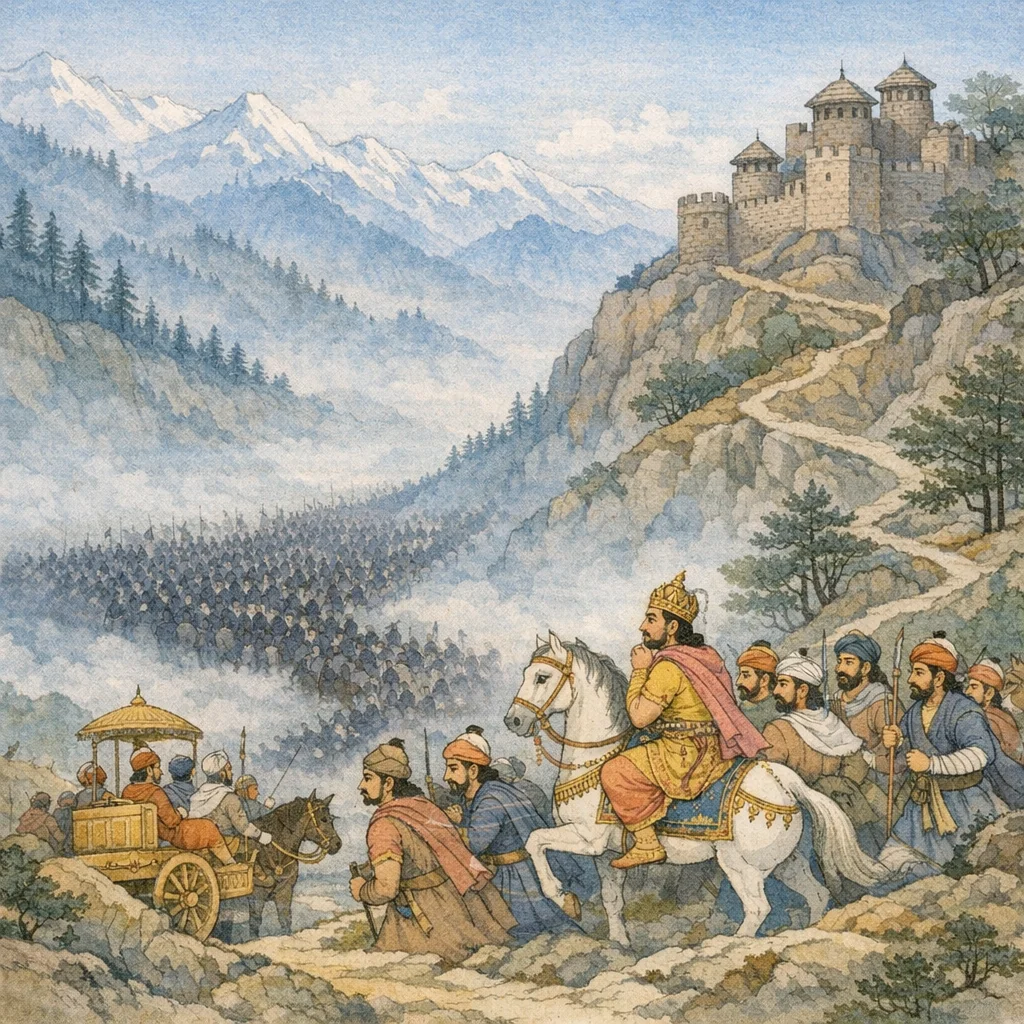
Chapter Arc: शौनक के यज्ञ-वन में जिज्ञासा उठती है—भरतवंश में क्या कभी कोई शीलहीन, निर्वीर्य या प्रजाहीन राजा हुआ है? और उन प्रसिद्ध, विवेकसम्पन्न राजाओं का विस्तृत चरित क्या है? → सूत्रधार-परंपरा में वंश-कीर्ति का विस्तार होता है—भरत के अन्वय में देवर्षि-तुल्य, धैर्यवान और पराक्रमी नरेशों की धारा बहती है। इसी क्रम में अनाधृष्टि/ऋचेयु जैसे तेजस्वी राजाओं का उल्लेख आता है, और फिर कथा एक ऐतिहासिक संकट की ओर मुड़ती है—पाञ्चाल नरेश का आक्रमण। → पाञ्चाल नरेश तरसा पृथ्वी जीतकर दस अक्षौहिणियों सहित समर में धावा बोलता है; भरतवंशी सेना का नाश होने लगता है और राजा संवरण स्त्री, पुत्र, सुहृद् और मंत्रियों सहित महान भय से पलायन करता है। → संवरण और भरतवंशी जन दुर्गम दुर्ग का आश्रय लेते हैं और दीर्घकाल तक वहीं टिके रहते हैं—यह शरणागति तत्काल विनाश से रक्षा करती है, पर राज्य-वैभव का ह्रास स्पष्ट रहता है। → दुर्ग में सहस्र वर्षों तक निवास का संकेत भविष्य की पुनर्स्थापना/प्रतिशोध की भूमिका रचता है—अब प्रश्न यह रह जाता है कि संवरण का वंश कैसे पुनः उठेगा और पाञ्चाल-आघात का उत्तर क्या होगा?
Shlokas
Verse 1
इस प्रकार श्रीमहाभारत आदिपरव्वके अन्तर्गत सम्भवपर्वमें उत्तरयगायातसमाप्तिविषयक तिरानबेवाँ अध्याय पूरा हुआ ॥/ ९३ ॥। (दाक्षिणात्य अधिक पाठके २०३ श्लोक मिलाकर कुल ४८ ३ “लोक हैं) नमन () अजआत+- - ये वसुमान् नामसे भी प्रसिद्ध थे। चतुर्नवतितमो< ध्याय: पूरुवंशका वर्णन जनमेजय उवाच भगवज्छोतुमिच्छामि पूरोर्वशकरान् नृपान् । यद्वीर्यान् यादृशांश्वापि यावतो यत्पराक्रमान्,जनमेजय बोले--भगवन! अब मैं पूरुके वंशका विस्तार करनेवाले राजाओंका परिचय सुनना चाहता हूँ। उनका बल और पराक्रम कैसा था? वे कैसे और कितने थे?
Janamejaya said: “Revered sir, I wish to hear about the kings who extended the lineage of Pūru. What was their prowess like—what kind of heroes were they, how many were there, and what deeds of valor did they accomplish?”
Verse 2
न हास्मिन् शीलहीनो वा निर्वीर्यो वा नराधिप: । प्रजाविरहितो वापि भूतपूर्व: कथंचन,मेरा विश्वास है कि इस वंशमें पहले कभी किसी प्रकार भी कोई ऐसा राजा नहीं हुआ है, जो शीलरहित, बल-पराक्रमसे शून्य अथवा संतानहीन रहा हो
Janamejaya said: “Surely, in this lineage there has never been—under any circumstance—a king who was devoid of good conduct, or lacking in valor, or even without progeny.”
Verse 3
तेषां प्रथितवृत्तानां राज्ञां विज्ञानशालिनाम् । चरितं श्रोतुमिच्छामि विस्तरेण तपोधन,तपोधन! जो अपने सदाचारके लिये प्रसिद्ध और विवेकसम्पन्न थे, उन सभी पूरुवंशी राजाओंके चरित्रको मुझे विस्तारपूर्वक सुननेकी इच्छा है
Janamejaya said: “O treasure of ascetic merit, I wish to hear in detail the life-stories of those kings of the Pūru lineage—renowned for their noble conduct and endowed with discerning wisdom.”
Verse 4
वैशम्पायन उवाच हन्त ते कथयिष्यामि यन्मां त्वं परिपृच्छसि । पूरोर्वशधरान् वीराछ्छक्रप्रतिमतेजस: । भूरिद्रविणविक्रान्तान् सर्वलक्षणपूजितान्,वैशम्पायनजीने कहा--जनमेजय! तुम मुझसे जो कुछ पूछ रहे हो, वह सब मैं तुम्हें बताऊँगा। पूरुके वंशमें उत्पन्न हुए वीर नरेश इन्द्रके समान तेजस्वी, अत्यन्त धनवान, परम पराक्रमी तथा समस्त शुभ लक्षणोंसे सम्मानित थे (उन सबका परिचय देता हूँ)
Vaiśampāyana said: “Very well—what you ask of me, I shall relate. I will describe the heroic kings born in the lineage of Pūru: men whose splendor was like Indra’s, abundant in wealth, mighty in valor, and honored for possessing every auspicious mark.”
Verse 5
प्रवीरेश्चररौद्राश्चास्त्रय: पुत्रा महारथा: । पूरो: पौष्ट्यामजायन्त प्रवीरो वंशकृत् ततः,पूरुके पौष्टी नामक पत्नीके गर्भसे प्रवीर, ईश्वर तथा रौद्राश्व नामक तीन महारथी पुत्र हुए। इनमेंसे प्रवीर अपनी वंश-परम्पराको आगे बढ़ानेवाले हुए
Vaiśampāyana said: From Pūru, through his wife Pauṣṭī, three sons were born—Pravīra, Īśvara, and Raudrāśva—each a great chariot-warrior. Among them, Pravīra became the continuer of the lineage, ensuring the dynastic succession moved forward.
Verse 6
मनस्युरभवत् तस्माच्छूरसेनीसुत: प्रभु: । पृथिव्याश्षतुरन्ताया गोप्ता राजीवलोचन:,प्रवीरके पुत्रका नाम मनस्यु था, जो शूरसेनीके पुत्र और शक्तिशाली थे। कमलके समान नेत्रवाले मनस्युने चारों समुद्रोंसे घिरी हुई समस्त पृथ्वीका पालन किया
Vaiśampāyana said: From him was born Manasyu, the mighty son of Śūrasenī. Lotus-eyed, Manasyu became the protector and ruler of the entire earth bounded by the four quarters (i.e., extending to the oceans), upholding sovereign order over the whole realm.
Verse 7
शक्त: संहननो वाग्मी सौवीरीतनयास्त्रय: । मनस्योरभवन् पुत्रा: शूरा: सर्वे महारथा:,मनस्युके सौवीरीके गर्भसे तीन पुत्र हुए--शक्त, संहनन और वाग्मी। वे सभी शूरवीर और महारथी थे
Vaiśampāyana said: From Manasyu, the son of Sauvīrī, three sons were born—Śakta, Saṁhanana, and Vāgmī. All of them were valiant heroes, each a great chariot-warrior.
Verse 8
अन्वग्भानुप्रभृतयो मिश्रकेश्यां मनस्विन: । रोद्राश्व॒स्य महेष्वासा दशाप्सरसि सूनव:,पूरुके तीसरे पुत्र मनस्वी रौद्राश्वके मिश्रकेशी अप्सराके गर्भसे अन्वग्भानु आदि दस महाथनुर्धर पुत्र हुए, जो सभी यज्ञकर्ता, शूरवीर, संतानवान, अनेक शास््त्रोंके विद्वान, सम्पूर्ण अस्त्रविद्याके ज्ञाता तथा धर्मपरायण थे
Vaiśampāyana said: From the apsaras Miśrakeśī were born ten high-minded sons of Raudrāśva—beginning with Anvagbhānu—mighty archers renowned for their prowess.
Verse 9
यज्वानो जज्ञिरे शूरा: प्रजावन्तो बहुश्रुता: । सर्वे सर्वास्त्रिविद्वांस: सर्वे धर्मपरायणा:,पूरुके तीसरे पुत्र मनस्वी रौद्राश्वके मिश्रकेशी अप्सराके गर्भसे अन्वग्भानु आदि दस महाथनुर्धर पुत्र हुए, जो सभी यज्ञकर्ता, शूरवीर, संतानवान, अनेक शास््त्रोंके विद्वान, सम्पूर्ण अस्त्रविद्याके ज्ञाता तथा धर्मपरायण थे
Vaiśampāyana said: From her were born heroic sons—performers of sacrifice, blessed with offspring, and widely learned. All of them were masters of every weapon-discipline, and all were steadfastly devoted to dharma.
Verse 10
ऋषेयुरथ कक्षेयु: कृकणेयुश्न वीर्यवान् । स्थण्डिलेयुर्वनेयुश्व जलेयुश्व महायशा:,(उन सबके नाम इस प्रकार हैं--) ऋचेयु-, कक्षेयु, पराक्रमी कृकणेयु, स्थण्डिलेयु, वनेयु, महायशस्वी जलेयु, बलवान् और बुद्धिमान तेजेयु, इन्द्रके समान पराक्रमी सत्येयु, धर्मेयु तथा दसवें देवतुल्य पराक्रमी संनतेयु
Vaiśampāyana said: “Their names were as follows—Ṛṣeyu, Kakṣeyu, the valiant Kṛkaṇeyu, Sthaṇḍileyu, Vaneyu, and the greatly renowned Jaleyu.”
Verse 11
तेजेयुर्बलवान् धीमान् सत्येयुश्रैन्द्रविक्रम: । धर्मेयु: संनतेयुश्व दशमो देवविक्रम:,(उन सबके नाम इस प्रकार हैं--) ऋचेयु-, कक्षेयु, पराक्रमी कृकणेयु, स्थण्डिलेयु, वनेयु, महायशस्वी जलेयु, बलवान् और बुद्धिमान तेजेयु, इन्द्रके समान पराक्रमी सत्येयु, धर्मेयु तथा दसवें देवतुल्य पराक्रमी संनतेयु
Vaiśampāyana said: Among them, Tejeyu was strong and intelligent; Satyeyu possessed valor like that of Indra; Dharmeyu was devoted to righteousness; and as the tenth, Sannateyu was godlike in prowess.
Verse 12
अनाधृष्टिरभूत् तेषां विद्वान् भुवि तथैकराटू । ऋषचेयुरथ विक्रान्तो देवानामिव वासव:,ऋचेयु जिनका एक नाम अनाधृष्टि भी है, अपने सब भाइयोंमें वैसे ही विद्वान् और पराक्रमी हुए, जैसे देवताओंमें इन्द्र। वे भूमण्डलके चक्रवर्ती राजा थे
Vaiśampāyana said: Among them, Ṛṣaceyu—also known by the epithet Anādṛṣṭi—became a learned and capable ruler on earth. He was a single, paramount sovereign (an emperor), and in valor he resembled Vāsava (Indra) among the gods, standing out among his brothers as Indra stands preeminent among the deities.
Verse 13
अनाधृष्टिसुतस्त्वासीद् राजसूयाश्वमेधकृत् । मतिनार इति ख्यातो राजा परमधार्मिक:,अनाधृष्टिके पुत्रका नाम मतिनार था। राजा मतिनार राजसूय तथा अश्वमेध यज्ञ करनेवाले एवं परम धर्मात्मा थे
Vaiśampāyana said: Anādṛṣṭi’s son was a king who performed the Rājasūya and the Aśvamedha sacrifices. He was renowned by the name Matināra, a ruler celebrated as supremely righteous—one whose authority was expressed through Vedic rites and whose kingship was grounded in dharma.
Verse 14
मतिनारसुता राजं॑श्नृत्वारो$मितविक्रमा: । तंसुर्महानतिरथो द्रह्मुश्चाप्रतिमद्युति:,राजन! मतिनारके चार पुत्र हुए, जो अत्यन्त पराक्रमी थे। उनके नाम ये हैं--तंसु, महान, अतिरथ और अनुपम तेजस्वी ट्रह्मु
Vaiśampāyana said: O King, Matināra had four sons, all of immeasurable prowess—Taṃsu, Mahān, Atiratha, and Druhyu, whose splendor was without equal.
Verse 15
तेषां तंसुर्महावीर्य: पौरवं वंशमुद्रहन् आजहार यशो दीप्तं जिगाय च वसुन्धराम्,इनमें महापराक्रमी तंसुने पौरव वंशका भार वहन करते हुए उज्ज्वल यशका उपार्जन किया और सारी पृथ्वीको जीत लिया
Vaiśampāyana said: Among them, the mighty Tansu, bearing the responsibility of the Paurava lineage, won radiant fame and brought the whole earth under his sway.
Verse 16
ईलिन तु सुतं तंसुर्जनयामास वीर्यवान् । सो<पि कृत्स्नामिमां भूमिं विजिग्ये जयतां वर:,पराक्रमी तंसुने ईलिन नामक पुत्र उत्पन्न किया, जो विजयी पुरुषोंमें श्रेष्ठ था। उसने भी सारी पृथ्वी जीत ली थी
Vaiśampāyana said: The mighty Tamsu begot a son named Īlin. That Īlin too—foremost among victors—went on to conquer this entire earth.
Verse 17
रथन्तर्या सुतान् पज्च पञज्चभूतोपमांस्तत: । ईलिनो जनयामास दुष्यन्तप्रभूृतीन् नृूपान्,ईलिनने रथन्तरी नामवाली अपनी पत्नीके गर्भसे पंच महाभूतोंके समान दुष्यन्त आदि पाँच राजपुत्रोंको पुत्ररूपमें उत्पन्न किया
Vaiśampāyana said: From Rathantarī, Ilina begot five sons—princes comparable to the five great elements—beginning with Duṣyanta.
Verse 18
दुष्यन्तं शूरभीमौ च प्रवसुं वसुमेव च । तेषां श्रेष्ठो5भवद् राजा दुष्यन्तो जनमेजय,(उनके नाम ये हैं--) दुष्यन्त, शूर, भीम, प्रवसु तथा वसु। जनमेजय! इनमें सबसे बड़े होनेके कारण दुष्यन्त राजा हुए
Vaiśampāyana said: “Their names were Duṣyanta, Śūra, Bhīma, Pravasu, and Vasu. O Janamejaya, Duṣyanta became king among them, being the foremost—the senior and most eminent.”
Verse 19
दुष्यन्ताद् भरतो जज्ञे विद्वाञउ्छाकुन्तलो नृप: । तस्माद् भरतवंशस्य विप्रतस्थे महद् यश:,दुष्यन्तसे विद्वान् राजा भरतका जन्म हुआ, जो शकुन्तलाके पुत्र थे। उन्हींसे भरतवंशका महान् यश फैला
Vaiśampāyana said: From Duṣyanta was born Bharata, the wise king, the son of Śakuntalā. From him the great fame of the Bharata lineage spread far and wide.
Verse 20
भरतस्तिसृषु स्त्रीषु नव पुत्रानजीजनत् । नाभ्यनन्दत तान् राजा नानुरूपा ममेत्युत,भरतने अपनी तीन रानियोंसे नौ पुत्र उत्पन्न किये। किंतु “ये मेरे अनुरूप नहीं हैं' ऐसा कहकर राजाने उन शिशुओंका अभिनन्दन नहीं किया
Vaiśampāyana said: Bharata begot nine sons through his three queens. Yet the king did not rejoice in them, saying, “They are not worthy of me,” for he found them not in keeping with his own royal ideal.
Verse 21
ततस्तान् मातर: क्रुद्धाः पुत्रान् निन्युर्यमक्षयम् । ततस्तस्य नरेन्द्रस्य वितथं पुत्रजन्म तत्,तब उन शिशुओंकी माताओंने कुपित होकर उनको मार डाला। इससे महाराज भरतका वह पुत्रोत्पादन व्यर्थ हो गया
Then those mothers, enraged, carried their sons to Yama’s abode (that is, caused their death). Thus, for that king, the begetting of sons proved futile—his hoped-for progeny came to nothing.
Verse 22
ततो महद्धिः क्रतु भिरीजानो भरतस्तदा । लेभे पुत्र भरद्वाजाद् भुमन्युं नाम भारत,भारत! तब महाराज भरतने बड़े-बड़े यज्ञोंका अनुष्ठान किया और महर्षि भरद्वाजकी कृपासे एक पुत्र प्राप्त किया, जिसका नाम भुमन्यु था
Then King Bharata, having performed great sacrificial rites, received a son through the grace of the sage Bharadvāja. That son, O descendant of Bharata, was named Bhūmanyu.
Verse 23
ततः पुत्रिणमात्मान ज्ञात्वा पौरवनन्दन: । भुमन्युं भरतश्रेष्ठ यौवराज्ये5भ्यषेचयत्,भरतश्रेष्ठ) तदनन्तर पौरवकुलका आनन्द बढ़ानेवाले भरतने अपनेको पुत्रवान् समझकर भुमन्युको युवराजके पदपर अभिषिक्त किया
Then, realizing himself to be blessed with a son, Bharata—the best of the Bharatas, the delight of the Paurava line—consecrated Bhūmanyu as heir-apparent (Yuvarāja).
Verse 24
ततो दिविरथो नाम भुमन्योरभवत् सुतः । सुहोत्रश्न सुहोता च सुहवि: सुयजुस्तथा,भुमन्युके दिविरथ नामक पुत्र हुआ। उसके सिवा सुहोत्र, सुहोता, सुहवि, सुयजु तथा ऋचीक भी भुमन्युके ही पुत्र थे। ये सब पुष्करिणीके गर्भसे उत्पन्न हुए थे। इन सब क्षत्रियोंमें सुहोत्र ही ज्येष्ठ थे। अत: उन्हींको राज्य मिला
Vaiśampāyana said: Thereafter, Bhūmanyu had a son named Diviratha; and he also had sons named Suhotra, Suhotā, Suhavi, and Suyajus. The narration continues the lineage, affirming that rightful succession rests upon birth-order—where the eldest holds the ethical claim to inherit the kingship.
Verse 25
पुष्करिण्यामृचीकश्न भुमन्योरभवन् सुता: । तेषां ज्येष्ठ: सुहोत्रस्तु राज्यमाप महीक्षिताम्,भुमन्युके दिविरथ नामक पुत्र हुआ। उसके सिवा सुहोत्र, सुहोता, सुहवि, सुयजु तथा ऋचीक भी भुमन्युके ही पुत्र थे। ये सब पुष्करिणीके गर्भसे उत्पन्न हुए थे। इन सब क्षत्रियोंमें सुहोत्र ही ज्येष्ठ थे। अत: उन्हींको राज्य मिला
Vaiśampāyana said: From Puṣkariṇī, sons were born to Bhūmanyu—Ṛcīka among them. Of these, Suhotra was the eldest; therefore he obtained the kingship among the rulers of the earth. Thus the custom of succession by seniority is affirmed: royal authority is received according to lineage-order, not seized by force.
Verse 26
राजसूयाश्चदमेधाद्यै: सोडयजद् बहुभि: सवैः । सुहोत्र: पृथिवीं कृत्स्नां बुभुजे सागराम्बराम्
Vaiśampāyana said: By performing many great sacrifices—such as the Rājasūya and the Aśvamedha—sixteen in all, Suhotra came to enjoy and rule the entire earth, girdled by the ocean. The narrative affirms that sovereignty is legitimized through Vedic rites and public acts of dharma, not by force alone.
Verse 27
पूर्णा हस्तिगजा श्वैश्व बहुरत्नसमाकुलाम् । ममज्जेव मही तस्य भूरिभारावपीडिता
Vaiśampāyana said: The earth, crowded with elephants and horses and teeming with many kinds of jewels, seemed to sink beneath his realm, as though pressed down by an immense weight—an image of prosperity so vast that it became a burden upon the world itself.
Verse 28
हस्त्यश्वरथसम्पूर्णा मनुष्यकलिला भृशम् । सुहोत्रे राजनि तदा धर्मत: शासति प्रजा:
Vaiśampāyana said: At that time, when King Suhotra governed in accordance with dharma, the people greatly flourished—abounding in elephants, horses, and chariots, and densely filling the land with men.
Verse 29
राजा सुहोत्रने राजसूय तथा अश्वमेध आदि अनेक यज्ञोंद्वारा यजन किया और समुद्रपर्यन्त सम्पूर्ण पृथ्वीका, जो हाथी-घोड़ोंसे परिपूर्ण तथा अनेक प्रकारके रत्नोंसे सम्पन्न थी, उपभोग किया। जब राजा सुहोत्र धर्मपूर्वक प्रजाका शासन कर रहे थे, उस समय सारी पृथ्वी हाथी, घोड़ों, रथ और मनुष्योंसे खचाखच भरी थी। उन पशु आदिके भारी भारसे पीड़ित होकर राजा सुहोत्रके शासनकालकी पृथ्वी मानो नीचे धँसी जाती थी ॥। २६-- २८ ।। चैत्ययूपाड्किता चासीद् भूमि: शतसहख्रशः । प्रवृद्धजनसस्या च सर्वदैव व्यरोचत,उनके राज्यकी भूमि लाखों चैत्यों (देव-मन्दिरों) और यज्ञयूपोंसे चिह्नित दिखायी देती थी। सब लोग हृष्ट-पुष्ट होते थे। खेतीकी उपज अधिक हुआ करती थी। इस प्रकार उस राज्यकी पृथ्वी सदा ही अपने वैभवसे सुशोभित होती थी
Vaiśampāyana said: In King Suhotra’s realm, the land appeared everywhere marked by hundreds of thousands of sacred shrines (caityas) and sacrificial posts (yūpas). The people were robust and flourishing, the crops were abundant, and thus the kingdom’s earth continually shone with prosperity—presented as the visible fruit of righteous rule and well-performed sacrifice.
Verse 30
ऐक्ष्वाकी जनयामास सुहोत्रात् पृथिवीपते: । अजमीढं सुमीढं च पुरुमीढं च भारत,भारत! राजा सुहोत्रसे ऐक्ष्वाकीने अजमीढ, सुमीढ तथा पुरुमीढ नामक तीन पुत्रोंकी जन्म दिया
Vaiśampāyana said: The lady Aikṣvākī bore to King Suhotra, lord of the earth, three sons—Ajamīḍha, Sumīḍha, and Purumīḍha, O Bhārata. The passage underscores the orderly transmission of royal lineage, a key support of kṣatriya duty and social stability.
Verse 31
अजमीढो वरस्तेषां तस्मिन् वंश: प्रतिष्ठित: । षट् पुत्रान् सो5प्यजनयत् तिसूृषु स्त्रीषु भारत,उनमें अजमीढ ज्येष्ठ थे। उन्हींपर वंशकी मर्यादा टिकी हुई थी। जनमेजय! उन्होंने भी तीन स्त्रियोंके गर्भसे छः पुत्रोंकों उत्पन्न किया
Vaiśampāyana said: “Among them, Ajamīḍha was the foremost, and upon him the stability and continuity of that lineage rested. O Bhārata (Janamejaya), he too begot six sons through three wives.”
Verse 32
ऋक्ष॑ धूमिन्यथो नीली दुष्यन्तपरमेष्ठिनौ । केशिन्यजनयज्जह्ुं सुतौ व्रजनरूपिणौ,उनकी धूमिनी नामवाली स्त्रीने ऋक्षको, नीलीने दुष्यन््त और परमेष्ठीको तथा केशिनीने जहु, व्रजन तथा रूपिण इन तीन पुत्रोंको जन्म दिया
Vaiśampāyana said: Dhūminī bore Ṛkṣa; Nīlī bore Duṣyanta and Parameṣṭhin; and Keśinī gave birth to Jahu, Vrajana, and Rūpiṇ. Thus the lineage is continued through these sons, marking the orderly transmission of family succession and responsibility.
Verse 33
तथेमे सर्वपञ्चाला दुष्यन्तपरमेष्िनो: । अन्वया: कुशिका राजन् जल्लोरमिततेजस:,इनमें दुष्यन्त और परमेष्ठीके सभी पुत्र पांचाल कहलाये। राजन्! अमिततेजस्वी जह्लुके वंशज कुशिक नामसे प्रसिद्ध हुए
Vaiśampāyana said: Thus, all these descendants of Duṣyanta and Parameṣṭhin came to be known as the Pañcālas. O King, the lineage of the mighty Jahlu was famed by the name Kuśika.
Verse 34
व्रजनरूपिणयोर्ज्येष्ठमृक्षमाहुर्जनाधिपम् । ऋक्षात् संवरणो जज्ञे राजन् वंशकर: सुतः,व्रजन तथा रूपिणके ज्येष्ठ भाई ऋक्षको राजा कहा गया है। ऋक्षसे संवरणका जन्म हुआ। राजन! वे वंशकी वृद्धि करनेवाले पुत्र थे
Vaiśampāyana said: “Among Vraja and Rūpiṇa, the elder was known as King Ṛkṣa, a lord of men. From Ṛkṣa was born Saṃvaraṇa, O king—a son who became a maker and increaser of the royal lineage.”
Verse 35
आरक्षे संवरणे राजन् प्रशासति वसुंधराम् । संक्षय: सुमहानासीत् प्रजानामिति न: श्रुतम्,जनमेजय! ऋक्षपुत्र संवरण जब इस पृथ्वीका शासन कर रहे थे, उस समय प्रजाका बहुत बड़ा संहार हुआ था, ऐसा हमने सुना है
Vaiśampāyana said: O King Janamejaya, we have heard that when Saṃvaraṇa, son of Ṛkṣa, was ruling and protecting the earth, a very great destruction befell the people.
Verse 36
व्यशीर्यत ततो राष्ट्र क्षयर्नानाविधैस्तदा । क्षुन्मृत्युभ्यामनावृष्ट्या व्याधिभिश्व॒ समाहतम्,इस तरह नाना प्रकारसे क्षय होनेके कारण वह सारा राज्य नष्ट-सा हो गया। सबको भूख, मृत्यु, अनावृष्टि और व्याधि आदिके कष्ट सताने लगे
Vaiśampāyana said: Thereafter the kingdom began to crumble, worn down by many kinds of ruin. Struck by famine and death, by the failure of rains, and by diseases, the realm became as though destroyed.
Verse 37
अभ्यघ्नन् भारतांश्रैव सपत्नानां बलानि च | चालयन् वसुधां चेमां बलेन चतुरद्धिणा,शत्रुओंकी सेनाएँ भरतवंशी योद्धाओंका नाश करने लगीं। पांचालनरेशने इस पृथ्वीको कम्पित करते हुए चतुरंगिणी सेनाके साथ संवरणपर आक्रमण किया और उनकी सारी भूमि वेगपूर्वक जीतकर दस अक्षौहिणी सेनाओंद्वारा संवरणको भी युद्धमें परास्त कर दिया
Vaiśampāyana said: The rival forces struck down the Bhārata warriors and shattered their armies. With a fourfold host, shaking the very earth, the king of Pañcāla advanced against Saṃvaraṇa; swiftly overrunning his territories, he defeated Saṃvaraṇa in battle with ten akṣauhiṇīs.
Verse 38
अभ्ययात् तं च पाज्चाल्यो विजित्य तरसा महीम् | अक्षौहिणीभिदर्दशभि: स एनं समरेडजयत्,शत्रुओंकी सेनाएँ भरतवंशी योद्धाओंका नाश करने लगीं। पांचालनरेशने इस पृथ्वीको कम्पित करते हुए चतुरंगिणी सेनाके साथ संवरणपर आक्रमण किया और उनकी सारी भूमि वेगपूर्वक जीतकर दस अक्षौहिणी सेनाओंद्वारा संवरणको भी युद्धमें परास्त कर दिया
Vaiśampāyana said: The king of the Pāñcālas advanced against him; having swiftly overrun and conquered the land, he attacked Saṃvaraṇa with a vast fourfold army, shaking the earth as it moved. With ten akṣauhiṇīs he defeated Saṃvaraṇa in battle.
Verse 39
ततः सदार: सामात्य: सपुत्र: ससुहृज्जन: । राजा संवरणस्तस्मात् पलायत महाभयात्,तदनन्तर स्त्री, पुत्र, सुहृद् और मन्त्रियोंक साथ राजा संवरण महान् भयके कारण वहाँसे भाग चले
Then King Saṃvaraṇa—accompanied by his wife, his ministers, his son, and his circle of well-wishing friends—fled from that place, driven by overwhelming fear.
Verse 40
सिन्धोर्नदस्य महतो निकुण्जे न्यवसत् तदा | नदीविषयपर्यन्ते पर्वतस्य समीपत:,उस समय उन्होंने सिंधु नामक महानदके तटवर्ती निकुंजमें, जो एक पर्वतके समीपसे लेकर नदीके तटतक फैला हुआ था, निवास किया
Vaiśampāyana said: At that time he took up residence in a secluded grove on the bank of the mighty river Sindhu—an area stretching from the mountain’s vicinity down to the river’s edge.
Verse 41
तत्रावसन् बहून् कालान् भारता दुर्गमाश्रिता: । तेषां निवसतां तत्र सहस्रं परिवत्सरान्,वहाँ उस दुर्गका आश्रय लेकर भरतवंशी क्षत्रिय बहुत वर्षोतक टिके रहे। उन सबको वहाँ रहते हुए एक हजार वर्ष बीत गये
Vaiśampāyana said: There, the Bharata warriors, having taken refuge in an inaccessible fort, dwelt for a long time. As they continued to live in that place, a full thousand years passed.
Verse 42
अथाभ्यगच्छद् भरतान् वसिष्ठो भगवानृषि: । तमागतं प्रयत्नेन प्रत्युदूगम्याभिवाद्य च,इसी समय उनके पास भगवान् महर्षि वसिष्ठ आये। उन्हें आया देख भरतवंशियोंने प्रयत्नपूर्वक उनकी अगवानी की और प्रणाम करके सबने उनके लिये अर्घ्य अर्पण किया। फिर उन तेजस्वी महर्षिको सत्कारपूर्वक अपना सर्वस्व समर्पण करके उत्तम आसनपर बिठाकर राजाने स्वयं उनका वरण करते हुए कहा--“भगवन्! हम पुनः राज्यके लिये प्रयत्न कर रहे हैं। आप हमारे पुरोहित हो जाइये'
Then the venerable sage Vasiṣṭha approached the Bharata princes. Seeing him arrive, they rose with due effort to receive him, went forth to meet him, and offered respectful salutations.
Verse 43
अर्घ्यमशभ्याहरंस्तस्मै ते सर्वे भारतास्तदा । निवेद्य सर्वमृषये सत्कारेण सुवर्चसे,इसी समय उनके पास भगवान् महर्षि वसिष्ठ आये। उन्हें आया देख भरतवंशियोंने प्रयत्नपूर्वक उनकी अगवानी की और प्रणाम करके सबने उनके लिये अर्घ्य अर्पण किया। फिर उन तेजस्वी महर्षिको सत्कारपूर्वक अपना सर्वस्व समर्पण करके उत्तम आसनपर बिठाकर राजाने स्वयं उनका वरण करते हुए कहा--“भगवन्! हम पुनः राज्यके लिये प्रयत्न कर रहे हैं। आप हमारे पुरोहित हो जाइये'
Vaiśampāyana said: Then all those scions of Bharata brought him the offering of honor (arghya). Having presented everything to the seer with due reverence, they received the radiant sage with formal hospitality—an act that upholds dharma by recognizing spiritual authority.
Verse 44
तमासने चोपविष्टं राजा वव्रे स्वयं तदा । पुरोहितो भवान् नोडस्तु राज्याय प्रयतेमहि,इसी समय उनके पास भगवान् महर्षि वसिष्ठ आये। उन्हें आया देख भरतवंशियोंने प्रयत्नपूर्वक उनकी अगवानी की और प्रणाम करके सबने उनके लिये अर्घ्य अर्पण किया। फिर उन तेजस्वी महर्षिको सत्कारपूर्वक अपना सर्वस्व समर्पण करके उत्तम आसनपर बिठाकर राजाने स्वयं उनका वरण करते हुए कहा--“भगवन्! हम पुनः राज्यके लिये प्रयत्न कर रहे हैं। आप हमारे पुरोहित हो जाइये'
Vaiśampāyana said: When the sage had been seated upon an honored seat, the king personally chose him and said, “O Bhagavān, be our royal priest (purohita), for we are once again striving to secure the kingdom.”
Verse 45
ओमित्येवं वसिष्ठोडपि भारतान् प्रत्यपद्यत । अथाशभ्यषिज्चत् साम्राज्ये सर्वक्षत्रस्य पौरवम्,तब “बहुत अच्छा” कहकर वसिष्ठजीने भी भरतवंशियोंकों अपनाया और समस्त भूमण्डलमें उत्कृष्ट पूरवंशी संवरणको समस्त क्षत्रियोंके सम्राट-पदपर अभिषिक्त कर दिया, ऐसा हमारे सुननेमें आया है। तत्पश्चात् महाराज संवरण, जहाँ प्राचीन भरतवंशी राजा रहते थे, उस श्रेष्ठ नगरमें निवास करने लगे
Vaiśampāyana said: Thus, with the utterance “Oṁ,” Vasiṣṭha too accepted the Bhāratas. Then, having performed the consecration (abhiṣeka), he anointed the Paurava king Saṁvaraṇa to imperial sovereignty over all the Kṣatriyas across the whole earth—so we have heard. Thereafter King Saṁvaraṇa took up residence in that excellent city where the ancient Bhārata kings had dwelt.
Verse 46
विषाण भूत॑ सर्वस्यां पृथिव्यामिति न: श्रुतम् । भरताध्युषितं पूर्व सो5ध्यतिष्ठत् पुरोत्तमम्,तब “बहुत अच्छा” कहकर वसिष्ठजीने भी भरतवंशियोंकों अपनाया और समस्त भूमण्डलमें उत्कृष्ट पूरवंशी संवरणको समस्त क्षत्रियोंके सम्राट-पदपर अभिषिक्त कर दिया, ऐसा हमारे सुननेमें आया है। तत्पश्चात् महाराज संवरण, जहाँ प्राचीन भरतवंशी राजा रहते थे, उस श्रेष्ठ नगरमें निवास करने लगे
Vaiśampāyana said: “We have heard that he became, as it were, the very ‘horn’ of the entire earth—its foremost crest and support. Formerly inhabited by the Bharatas, he then took up residence in that excellent city of the Pūrus.”
Verse 47
पुनर्बलिभृतश्चैव चक्रे सर्वमहीक्षित: । ततः स पृथिवीं प्राप्प पुनरीजे महाबल:,फिर उन्होंने सब राजाओंको जीतकर उन्हें करद बना लिया। तदनन्तर वे महाबली नरेश अजमीढवंशी संवरण पुनः पृथ्वीका राज्य पाकर बहुत दक्षिणावाले बहुसंख्यक महायज्ञोंद्वारा भगवान्का यजन करने लगे। कुछ कालके पश्चात् सूर्यकन्या तपतीने संवरणके वीर्यसे कुरु नामक पुत्रको जन्म दिया
Vaiśampāyana said: Once again the mighty ruler brought all kings under tribute, making the whole earth obedient to his sovereignty. Having thus regained dominion over the land, that powerful king again performed great sacrificial rites (yajñas), rich in gifts, worshipping the Lord through many grand offerings. In due course, Tapatī, the daughter of the Sun, bore to Saṃvaraṇa a son named Kuru, born of his heroic potency.
Verse 48
आजमीढो महायज्ैर्बहुभिर्भूरिदक्षिणै: । तत: संवरणात् सौरी तपती सुषुवे कुरुम्,फिर उन्होंने सब राजाओंको जीतकर उन्हें करद बना लिया। तदनन्तर वे महाबली नरेश अजमीढवंशी संवरण पुनः पृथ्वीका राज्य पाकर बहुत दक्षिणावाले बहुसंख्यक महायज्ञोंद्वारा भगवान्का यजन करने लगे। कुछ कालके पश्चात् सूर्यकन्या तपतीने संवरणके वीर्यसे कुरु नामक पुत्रको जन्म दिया
Vaiśampāyana said: Ajāmīḍha performed many great sacrifices (yajñas), each accompanied by abundant gifts. Thereafter, from Saṃvaraṇa, Saurī Tapatī—the Sun’s daughter—gave birth to a son named Kuru.
Verse 49
राजल्वे तं प्रजा: सर्वा धर्मज्ञ इति वव्रिरे । तस्य नाम्नाभिविख्यातं॑ पृथिव्यां कुरुजाज्लम्,कुरुको धर्मज्ञ मानकर सम्पूर्ण प्रजावर्गके लोगोंने स्वयं उनका राजाके पदपर वरण किया। उन्हींके नामसे पृथ्वीपर कुरुजांगलदेश प्रसिद्ध हुआ
All the subjects chose him as their king, acclaiming him as one who knew and upheld dharma. From his very name, the region on earth came to be widely known as Kurujāṅgala—showing how a ruler’s righteousness can shape the identity and memory of a land.
Verse 50
कुरुक्षेत्र स तपसा पुण्यं चक्रे महातपा: । अश्ववन्तमभिष्यन्तं तथा चैत्ररथं मुनिम्,उन महातपस्वी कुरुने अपनी तपस्याके बलसे कुरक्षेत्रको पवित्र बना दिया। उनके पाँच पुत्र सुने गये हैं--अश्ववान्, अभिष्यन्त, चैत्ररथ, मुनि तथा सुप्रसिद्ध जनमेजय। इन पाँचों पुत्रोंकी उनकी मनस्विनी पत्नी वाहिनीने जन्म दिया था
Vaiśampāyana said: That great ascetic Kuru, by the power of his austerities (tapas), made Kurukṣetra a sacred and meritorious land. From him were born sons such as Aśvavant, Abhiṣyant, Caitraratha, and Muni—names remembered in the lineage by which tapas and righteous continuity sanctified the Kuru country.
Verse 51
जनमेजयं च विख्यात॑ पुत्रांश्चास्यानुशुश्रुम । पज्चैतान् वाहिनी पुत्रान् व्यजायत मनस्विनी,उन महातपस्वी कुरुने अपनी तपस्याके बलसे कुरक्षेत्रको पवित्र बना दिया। उनके पाँच पुत्र सुने गये हैं--अश्ववान्, अभिष्यन्त, चैत्ररथ, मुनि तथा सुप्रसिद्ध जनमेजय। इन पाँचों पुत्रोंकी उनकी मनस्विनी पत्नी वाहिनीने जन्म दिया था
Vaiśampāyana said: “We have also heard of his renowned son Janamejaya, and of his other sons. That high-minded lady Vāhinī bore him these five sons.”
Verse 52
अविक्षित: परिक्षित् तु शबलाश्रस्तु वीर्यवान् । आदिराजो विराजश्न शाल्मलिक्ष महाबल:,अश्ववानका दूसरा नाम अविक्षित् था। उसके आठ पुत्र हुए, जिनके नाम इस प्रकार हैं --परिक्षित्, पराक्रमी शबलाश्व, आदिराज, विराज, महाबली शाल्मलि, उच्चै:श्रवा, भंगकार तथा आठवाँ जितारि। इनके वंशमें जनमेजय आदि अन्य सात महारथी भी हुए, जो अपने कर्मजनित गुणोंसे प्रसिद्ध हैं
Vaiśampāyana said: Avikṣit—also known as Aśvavānaka—had eight sons: Parīkṣit; the valiant Śabalāśva; Ādirāja; Virāja; the mighty Śālmalī; Uccaiḥśravā; Bhāṅgakāra; and, as the eighth, Jitāri. From this lineage were also born other renowned great chariot-warriors, including Janamejaya and seven more, celebrated for virtues earned through their deeds.
Verse 53
उच्चै:श्रवा भड़कारो जितारिश्वाष्टम: स्मृत: । एतेषामन्ववाये तु ख्यातास्ते कर्मजैर्गुणै: । जनमेजयादय: सप्त तथैवान्ये महारथा:,अश्ववानका दूसरा नाम अविक्षित् था। उसके आठ पुत्र हुए, जिनके नाम इस प्रकार हैं --परिक्षित्, पराक्रमी शबलाश्व, आदिराज, विराज, महाबली शाल्मलि, उच्चै:श्रवा, भंगकार तथा आठवाँ जितारि। इनके वंशमें जनमेजय आदि अन्य सात महारथी भी हुए, जो अपने कर्मजनित गुणोंसे प्रसिद्ध हैं
Vaiśampāyana said: “Ucchaiḥśravā, Bhaḍkāra, and Jitāri—remembered as the eighth—were among them. In the lineage descended from these sons, there arose men renowned for virtues born of their deeds; among them were Janamejaya and seven others, and likewise other great chariot-warriors.”
Verse 54
परिक्षितो5भवन्_पुत्रा: सर्वे धर्मार्थकोविदा: । कक्षसेनोग्रसेनौ तु चित्रसेनश्व वीर्यवान्,परिक्षितके सभी पुत्र धर्म और अर्थके ज्ञाता थे; जिनके नाम इस प्रकार हैं--कक्षसेन, उमग्रसेन, पराक्रमी, चित्रसेन, इन्द्रसेन, सुषेण और भीमसेन। जनमेजयके महाबली पुत्र भूमण्डलमें विख्यात थे। उनमें प्रथम पुत्रका नाम धृतराष्ट्र था। उनसे छोटे क्रमश: पाण्डु, बाह्नलीक, महातेजस्वी निषध, बलवान जाम्बूनद, कुण्डोदर, पदाति तथा वसाति थे। इनमें वसाति आठवाँ था। ये सभी धर्म और अर्थमें कुशल तथा समस्त प्राणियोंके हितमें संलग्न रहनेवाले थे
Vaiśampāyana said: Parīkṣit had sons, all well-versed in dharma and artha. Among them were Kakṣasena and Agrasena, and also the valiant Citrasena.
Verse 55
इन्द्रसेन: सुषेणश्ष भीमसेनश्व॒ नामतः । जनमेजयस्य तनया भुवि ख्याता महाबला:,परिक्षितके सभी पुत्र धर्म और अर्थके ज्ञाता थे; जिनके नाम इस प्रकार हैं--कक्षसेन, उमग्रसेन, पराक्रमी, चित्रसेन, इन्द्रसेन, सुषेण और भीमसेन। जनमेजयके महाबली पुत्र भूमण्डलमें विख्यात थे। उनमें प्रथम पुत्रका नाम धृतराष्ट्र था। उनसे छोटे क्रमश: पाण्डु, बाह्नलीक, महातेजस्वी निषध, बलवान जाम्बूनद, कुण्डोदर, पदाति तथा वसाति थे। इनमें वसाति आठवाँ था। ये सभी धर्म और अर्थमें कुशल तथा समस्त प्राणियोंके हितमें संलग्न रहनेवाले थे
Vaiśampāyana said: “By name they were Indrasena, Suṣeṇa, and Bhīmasena. These sons of Janamejaya were renowned upon the earth for their great strength.”
Verse 56
धृतराष्ट्र: प्रथमज: पाण्डु्बाह्लीक एव च । निषधश्च महातेजास्तथा जाम्बूनदो बली,परिक्षितके सभी पुत्र धर्म और अर्थके ज्ञाता थे; जिनके नाम इस प्रकार हैं--कक्षसेन, उमग्रसेन, पराक्रमी, चित्रसेन, इन्द्रसेन, सुषेण और भीमसेन। जनमेजयके महाबली पुत्र भूमण्डलमें विख्यात थे। उनमें प्रथम पुत्रका नाम धृतराष्ट्र था। उनसे छोटे क्रमश: पाण्डु, बाह्नलीक, महातेजस्वी निषध, बलवान जाम्बूनद, कुण्डोदर, पदाति तथा वसाति थे। इनमें वसाति आठवाँ था। ये सभी धर्म और अर्थमें कुशल तथा समस्त प्राणियोंके हितमें संलग्न रहनेवाले थे
Vaiśampāyana said: The eldest was named Dhṛtarāṣṭra; younger than him in order were Pāṇḍu and Bāhlīka, then the radiant Niṣadha, and the mighty Jāmbūnada.
Verse 57
कुण्डोदर: पदातिश्न वसातिद्चाष्टम: स्मृत: । सर्वे धर्मार्थकुशला: सर्वभूतहिते रता:,परिक्षितके सभी पुत्र धर्म और अर्थके ज्ञाता थे; जिनके नाम इस प्रकार हैं--कक्षसेन, उमग्रसेन, पराक्रमी, चित्रसेन, इन्द्रसेन, सुषेण और भीमसेन। जनमेजयके महाबली पुत्र भूमण्डलमें विख्यात थे। उनमें प्रथम पुत्रका नाम धृतराष्ट्र था। उनसे छोटे क्रमश: पाण्डु, बाह्नलीक, महातेजस्वी निषध, बलवान जाम्बूनद, कुण्डोदर, पदाति तथा वसाति थे। इनमें वसाति आठवाँ था। ये सभी धर्म और अर्थमें कुशल तथा समस्त प्राणियोंके हितमें संलग्न रहनेवाले थे
Vaiśampāyana said: “(Among them) were Kuṇḍodara, Padāti, and Vasāti—Vasāti being remembered as the eighth. All of these sons were skilled in dharma and artha, and were devoted to the welfare of all living beings.”
Verse 58
धृतराष्ट्रो5थ राजा55सीत् तस्य पुत्रो5थ कुण्डिक: । हस्ती वितर्क: क्राथश्व कुण्डिनश्वापि पडचम:
Vaiśampāyana said: Then Dhṛtarāṣṭra became king. He had a son named Kuṇḍika; and (there were also) Hastī, Vitarka, Krāthaśva, and Kuṇḍina as the fifth.
Verse 59
हवि:श्रवास्तथेन्द्रा भो भुमन्युश्चापराजित: । धृतराष्ट्रसुतानां तु त्रीनेतान् प्रथितान् भुवि
Vaiśampāyana said: “Haviḥśravā, and Indrā—O listener—and Bhumanyu, and Aparājita: these three among the sons of Dhṛtarāṣṭra were renowned upon the earth.”
Verse 60
प्रतीपं धर्मनेत्रं च सुनेत्रं चापि भारत । प्रतीप: प्रथितस्तेषां बभूवाप्रतिमो भुवि
Vaiśampāyana said: “O Bhārata, among them there were Pratīpa, Dharmanetra, and also Sunetra. Pratīpa became renowned in their line, unequalled upon the earth.”
Verse 61
इनमें धृतराष्ट्र राजा हुए। उनके पुत्र कुण्डिक, हस्ती, वितर्क, क्राथ, कुण्डिन, हवि:श्रवा, इन्द्राभ, भुमन््यु और अपराजित थे। भारत! इनके सिवा प्रतीप, धर्मनेत्र और सुनेत्र--ये तीन पुत्र और थे। धुृतराष्ट्रके पुत्रोंमें ये ही तीन इस भूतलपर अधिक विख्यात थे। इनमें भी प्रतीपकी प्रसिद्धि अधिक थी। भूमण्डलमें उनकी समानता करनेवाला कोई नहीं था ।। ५८ --5० || प्रतीपस्य त्रय: पुत्रा जज्ञिरे भरतर्षभ । देवापि: शान्तनुश्चैव बाह्नलीकश्चन महारथ:,भरतश्रेष्ठ! प्रतीपके तीन पुत्र हुए--देवापि, शान्तनु और महारथी बाह्नलीक। इनमेंसे देवापि धर्माचरणद्वारा कल्याण-प्राप्तिकी इच्छासे वनको चले गये, इसलिये शान्तनु एवं महारथी बाह्लीकने इस पृथ्वीका राज्य प्राप्त किया
Vaiśampāyana said: O bull among the Bharatas, Pratīpa had three sons—Devāpi, Śāntanu, and the great chariot-warrior Bāhlīka. Of these, Devāpi, desiring spiritual welfare through the practice of dharma, departed for the forest; therefore Śāntanu and the mighty Bāhlīka came to possess and govern the kingdom on this earth.
Verse 62
देवापिश्न प्रवव्राज तेषां धर्महितेप्सया । शान्तनुश्न महीं लेभे बाह्लीकश्न महारथ:,भरतश्रेष्ठ! प्रतीपके तीन पुत्र हुए--देवापि, शान्तनु और महारथी बाह्नलीक। इनमेंसे देवापि धर्माचरणद्वारा कल्याण-प्राप्तिकी इच्छासे वनको चले गये, इसलिये शान्तनु एवं महारथी बाह्लीकने इस पृथ्वीका राज्य प्राप्त किया
Vaiśaṃpāyana said: Seeking the welfare that comes from dharma, Devāpi departed for the forest as an ascetic. Therefore Śāntanu obtained sovereignty over the earth, and Bāhlīka too—renowned as a great chariot-warrior—came to possess royal authority.
Verse 63
भरतस्यान्वये जाता: सच्त्ववन्तो नराधिपा: । देवर्षिकल्पा नूपते बहवो राजसत्तमा:,राजन! भरतके वंशमें सभी नरेश धैर्यवान् एवं शक्तिशाली थे। उस वंशमें बहुत-से श्रेष्ठ नृपतिगण देवर्षियोंके समान थे
Vaiśampāyana said: In Bharata’s lineage were born kings endowed with courage and strength. O lord of men, many among those foremost rulers were comparable to divine seers—noble in character and exalted in conduct—thus ennobling the dynasty by their virtue.
Verse 64
एवंविधाश्षाप्यपरे देवकल्पा महारथा: । जाता मनोरन्ववाये ऐलवंशविवर्धना:,ऐसे ही और भी कितने ही देवतुल्य महारथी मनुवंशमें उत्पन्न हुए थे, जो महाराज पुरूरवाके वंशकी वृद्धि करनेवाले थे
Vaiśampāyana said: “Many other great chariot-warriors as well—godlike in prowess—were born in the lineage of Manu, and they became enhancers of the Aila (Pūruravas) dynasty.”
Verse 94
इति श्रीमहा भारते आदिपर्वणि सम्भवपर्वणि पूरुवंशानुकीर्तने चतुर्नवतितमो 5 ध्याय:,इस प्रकार श्रीमह्याभारत आदिपर्वके अन्तर्गत सम्भवपर्वमें प्रुवंशवर्णनविषयक चौरानबेवाँ अध्याय पूरा हुआ
Thus, in the revered Mahābhārata, within the Ādi Parva—specifically the Sambhava Parva—this concludes the ninety-fourth chapter, which is devoted to the recitation and account of the lineage of Pūru. The narrator marks the formal close of the chapter, signaling a transition in the genealogical and origin narrative that frames the epic’s moral and dynastic foundations.
Frequently Asked Questions
The tension between personal valor/self-assertion and prudent kingship: Citrāṅgada’s pursuit of superiority escalates into a high-risk confrontation, while Bhīṣma must prioritize dynastic stability after the loss.
Legitimacy is maintained through disciplined succession practices—guardianship, counsel, and ritual propriety—while power without restraint can destabilize both individual fate and institutional continuity.
No explicit phalaśruti is stated in these verses; the chapter functions as causal historiography, framing later Kuru crises as outcomes of succession fragility and the ethical demands placed on stewards like Bhīṣma.