Adhyaya 20
Secondary Creation Begins: Brahmā’s Productions, the Guṇas, and the Emergence of Orders of Beings
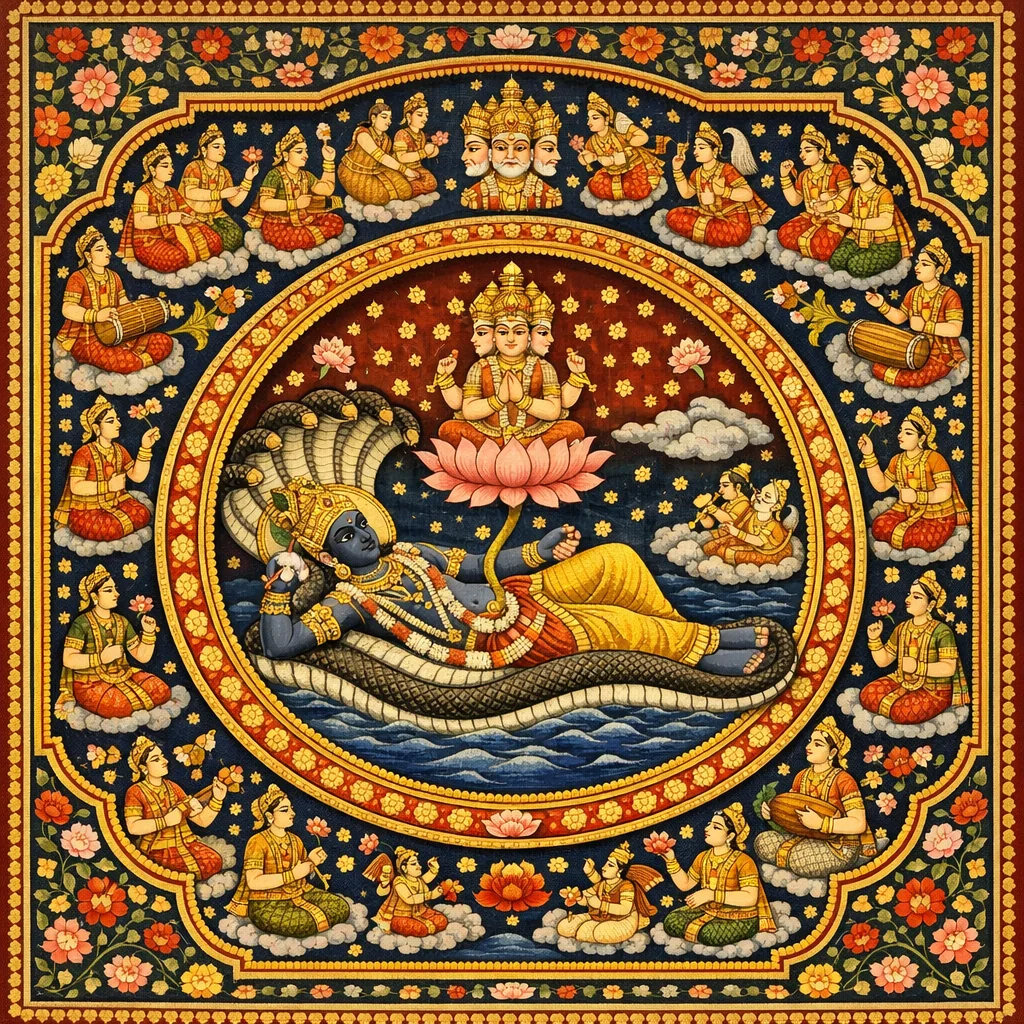
The chapter begins with Śaunaka urging Sūta to continue the Vidura–Maitreya dialogue, praising sacred hearing as purifying like bathing in the Gaṅgā. After hearing the Varāha-līlā, Vidura asks how creation proceeds once Brahmā has manifested the Prajāpatis—individually, with wives, or collectively. Maitreya explains the cosmic sequence: kāla agitates the guṇas, and with Mahā-Viṣṇu and the jīvas’ karma the elements arise; from mahat comes the threefold ahaṅkāra; the elements, joined by the Lord’s energy, form the cosmic egg; the Lord enters as Garbhodakaśāyī Viṣṇu; from His navel springs the lotus and Brahmā, who receives inner guidance to recreate. Brahmā’s later creations unfold as he casts off bodies that become night, twilight, and other conditions, while many orders of beings (Yakṣas/Rākṣasas, Devas, Asuras, Gandharvas/Apsarās, ghosts, Pitṛs, Siddhas, and more) appear according to guṇic tendencies. The chapter sets the stage for the next phase: the stabilization of human order (the Manus) and the rise of ṛṣis to hasten creation and dharma.
Shlokas
Verse 1
शौनक उवाच महीं प्रतिष्ठामध्यस्य सौते स्वायम्भुवो मनु: । कान्यन्वतिष्ठद् द्वाराणि मार्गायावरजन्मनाम् ॥ १ ॥
Śrī Śaunaka inquired: O Sūta Gosvāmī, after the earth was reestablished in its proper place, what measures—what “gateways”—did Svāyambhuva Manu institute to show the path of liberation for those who would be born in later times?
Verse 2
क्षत्ता महाभागवत: कृष्णस्यैकान्तिक: सुहृत् । यस्तत्याजाग्रजं कृष्णे सापत्यमघवानिति ॥ २ ॥
Vidura, the kṣattā, was a great bhāgavata—an exclusive devotee and dear friend of Śrī Kṛṣṇa. He abandoned the company of his elder brother Dhṛtarāṣṭra, for that brother, along with his sons, contrived deceptions against the Lord’s desire.
Verse 3
द्वैपायनादनवरो महित्वे तस्य देहज: । सर्वात्मना श्रित: कृष्णं तत्परांश्चाप्यनुव्रत: ॥ ३ ॥
Vidura was born from the body of Dvaipāyana Vyāsa and was not inferior to him in greatness. With his whole being he took shelter of Śrī Kṛṣṇa’s lotus feet and remained devotedly attached to the Lord’s bhaktas.
Verse 4
किमन्वपृच्छन्मैत्रेयं विरजास्तीर्थसेवया । उपगम्य कुशावर्त आसीनं तत्त्ववित्तमम् ॥ ४ ॥
Purified of rajas by serving holy places, Vidura finally reached Kuśāvarta (Hardwar). Approaching the seated sage Maitreya, the knower of spiritual truth, he inquired—what further did Vidura ask of Maitreya?
Verse 5
तयो: संवदतो: सूत प्रवृत्ता ह्यमला: कथा: । आपो गाङ्गा इवाघघ्नीर्हरे: पादाम्बुजाश्रया: ॥ ५ ॥
O Sūta, in the dialogue of Vidura and Maitreya there surely flowed spotless narrations sheltered at Hari’s lotus feet. Hearing them is like bathing in the waters of the Gaṅgā, for they destroy all sinful reactions.
Verse 6
ता न: कीर्तय भद्रं ते कीर्तन्योदारकर्मण: । रसज्ञ: को नु तृप्येत हरिलीलामृतं पिबन् ॥ ६ ॥
O Sūta Gosvāmī, all auspiciousness to you. Please recount the Lord’s magnanimous deeds, worthy of glorification. What devotee, a true knower of rasa, could ever be satiated while drinking the nectar of Hari’s līlās?
Verse 7
एवमुग्रश्रवा: पृष्ट ऋषिभिर्नैमिषायनै: । भगवत्यर्पिताध्यात्मस्तानाह श्रूयतामिति ॥ ७ ॥
Thus requested by the great sages of Naimiṣāraṇya, Ugraśravā Sūta Gosvāmī, son of Romaharṣaṇa, whose mind was offered to the Lord’s transcendental līlās, said to them: “Please hear what I shall now speak.”
Verse 8
सूत उवाच हरेर्धृतक्रोडतनो: स्वमायया निशम्य गोरुद्धरणं रसातलात् । लीलां हिरण्याक्षमवज्ञया हतं सञ्जातहर्षो मुनिमाह भारत: ॥ ८ ॥
Sūta said: By His own yogamāyā, Hari assumed the form of Varāha, lifted the earth from Rasātala, and in divine sport slew Hiraṇyākṣa without hesitation. Hearing this, Vidura, descendant of Bharata, rejoiced and then spoke to the sage.
Verse 9
विदुर उवाच प्रजापतिपति: सृष्ट्वा प्रजासर्गे प्रजापतीन् । किमारभत मे ब्रह्मन् प्रब्रूह्यव्यक्तमार्गवित् ॥ ९ ॥
Vidura said: O holy sage, you know the path of the unmanifest, beyond our grasp. After creating the Prajāpatis for the generation of beings, what did Brahmā undertake next? Please tell me.
Verse 10
ये मरीच्यादयो विप्रा यस्तु स्वायम्भुवो मनु: । ते वै ब्रह्मण आदेशात्कथमेतदभावयन् ॥ १० ॥
Vidura inquired: How did the Prajāpatis—such as Marīci and Svāyambhuva Manu—carry out creation according to Brahmā’s command, and how did they unfold this manifested universe?
Verse 11
सद्वितीया: किमसृजन् स्वतन्त्रा उत कर्मसु । आहोस्वित्संहता: सर्व इदं स्म समकल्पयन् ॥ ११ ॥
Did they create along with their respective wives, did they act independently in their works, or did they all unite and jointly bring forth this creation?
Verse 12
मैत्रेय उवाच दैवेन दुर्वितर्क्येण परेणानिमिषेण च । जातक्षोभाद्भगवतो महानासीद् गुणत्रयात् ॥ १२ ॥
Maitreya said: When the equilibrium of the three guṇas was stirred by inscrutable divine arrangement, by the impetus of Mahā-Viṣṇu, and by the unblinking force of Time, the mahat-tattva—the totality of material elements—came into being.
Verse 13
रज:प्रधानान्महतस्त्रिलिङ्गो दैवचोदितात् । जात: ससर्ज भूतादिर्वियदादीनि पञ्चश: ॥ १३ ॥
From the mahat-tattva, wherein rajas predominates, impelled by the destiny of the jīva, arose the threefold false ego. From that ego, in turn, manifested many sets of five principles, beginning with ether and the rest.
Verse 14
तानि चैकैकश: स्रष्टुमसमर्थानि भौतिकम् । संहत्य दैवयोगेन हैममण्डमवासृजन् ॥ १४ ॥
Those elements, separately, were unable to create the material universe. But, united by daiva-yoga—the energy of the Supreme Lord—they produced a radiant, golden egg.
Verse 15
सोऽशयिष्टाब्धिसलिले आण्डकोशो निरात्मक: । साग्रं वै वर्षसाहस्रमन्ववात्सीत्तमीश्वर: ॥ १५ ॥
For more than a thousand years the radiant egg lay upon the waters of the Causal Ocean in a lifeless state. Then the Lord entered it as Garbhodakaśāyī Viṣṇu.
Verse 16
तस्य नाभेरभूत्पद्मं सहस्रार्कोरुदीधिति । सर्वजीवनिकायौको यत्र स्वयमभूत्स्वराट् ॥ १६ ॥
From the navel of the Supreme Personality, Garbhodakaśāyī Viṣṇu, sprang a lotus, effulgent like a thousand blazing suns. That lotus is the abode of all conditioned souls, and from it appeared the first living being, the all-powerful Brahmā.
Verse 17
सोऽनुविष्टो भगवता य: शेते सलिलाशये । लोकसंस्थां यथापूर्वं निर्ममे संस्थया स्वया ॥ १७ ॥
When the Supreme Personality, lying upon the Garbhodaka Ocean, entered Brahmā’s heart, Brahmā applied the intelligence thus awakened; and by his own arrangement he began to create the universe as it had been before.
Verse 18
ससर्ज च्छाययाविद्यां पञ्चपर्वाणमग्रत: । तामिस्रमन्धतामिस्रं तमो मोहो महातम: ॥ १८ ॥
First, Brahmā created from his own shadow five coverings of ignorance for the conditioned souls: tāmisra, andha-tāmisra, tamas, moha, and mahā-moha.
Verse 19
विससर्जात्मन: कायं नाभिनन्दंस्तमोमयम् । जगृहुर्यक्षरक्षांसि रात्रिं क्षुत्तृट्समुद्भवाम् ॥ १९ ॥
Then, in disgust, Brahmā cast off that body of darkness. Seizing the chance, the Yakṣas and Rākṣasas sprang forth to claim it; that body endured as the form of night, and night is the source of hunger and thirst.
Verse 20
क्षुत्तृड्भ्यामुपसृष्टास्ते तं जग्धुमभिदुद्रुवु: । मा रक्षतैनं जक्षध्वमित्यूचु: क्षुत्तृडर्दिता: ॥ २० ॥
Overpowered by hunger and thirst, they rushed from all sides to devour Brahmā, crying, “Do not spare him—eat him up!”
Verse 21
देवस्तानाह संविग्नो मा मां जक्षत रक्षत । अहो मे यक्षरक्षांसि प्रजा यूयं बभूविथ ॥ २१ ॥
Brahmā, chief of the demigods, anxiously said to them, “Do not eat me—protect me. Alas, you have been born from me as my offspring, and thus you are Yakṣas and Rākṣasas.”
Verse 22
देवता: प्रभया या या दीव्यन् प्रमुखतोऽसृजत् । ते अहार्षुर्देवयन्तो विसृष्टां तां प्रभामह: ॥ २२ ॥
He then created the chief demigods, radiant with the glory of goodness (sattva). Before them he set down the effulgent form of daytime, and the demigods, in playful joy, took possession of it.
Verse 23
देवोऽदेवाञ्जघनत: सृजति स्मातिलोलुपान् । त एनं लोलुपतया मैथुनायाभिपेदिरे ॥ २३ ॥
Then the god Brahmā brought forth the asuras from his buttocks; they were exceedingly lustful, and in that lust they approached him seeking copulation.
Verse 24
ततो हसन् स भगवानसुरैर्निरपत्रपै: । अन्वीयमानस्तरसा क्रुद्धो भीत: परापतत् ॥ २४ ॥
Brahmā first laughed at their folly; but when the shameless asuras pressed close in swift pursuit, he grew indignant and, seized by fear, fled in great haste.
Verse 25
स उपव्रज्य वरदं प्रपन्नार्तिहरं हरिम् । अनुग्रहाय भक्तानामनुरूपात्मदर्शनम् ॥ २५ ॥
He approached Hari, the bestower of boons and the remover of the anguish of those who take shelter; to show grace to His devotees, the Lord reveals Himself in countless transcendental forms suited to them.
Verse 26
पाहि मां परमात्मंस्ते प्रेषणेनासृजं प्रजा: । ता इमा यभितुं पापा उपाक्रामन्ति मां प्रभो ॥ २६ ॥
Brahmā prayed: “O Paramātmā, my Lord! By Your command I created these beings, yet these sinful ones rush forward to violate/assault me. Please protect me, O Prabhu.”
Verse 27
त्वमेक: किल लोकानां क्लिष्टानां क्लेशनाशन: । त्वमेक: क्लेशदस्तेषामनासन्नपदां तव ॥ २७ ॥
My Lord, You alone can end the affliction of the distressed; and You alone bring suffering upon those who do not take refuge at Your feet.
Verse 28
सोऽवधार्यास्य कार्पण्यं विविक्ताध्यात्मदर्शन: । विमुञ्चात्मतनुं घोरामित्युक्तो विमुमोच ह ॥ २८ ॥
The Lord, who clearly perceives the hearts of all, understood Brahmā’s distress and said, “Cast off this dreadful, impure body of yours.” Thus commanded by the Lord, Brahmā abandoned that body.
Verse 29
तां क्वणच्चरणाम्भोजां मदविह्वललोचनाम् । काञ्चीकलापविलसद्दुकूलच्छन्नरोधसम् ॥ २९ ॥
The body Brahmā cast off became the form of evening twilight, the meeting of day and night that stirs desire. The asuras, passionate by nature and ruled by rajas, mistook it for a maiden: her lotus feet rang with anklets, her eyes were dazed with intoxication, and her hips, veiled in fine cloth, shone with a gleaming girdle.
Verse 30
अन्योन्यश्लेषयोत्तुङ्गनिरन्तरपयोधराम् । सुनासां सुद्विजां स्निग्धहासलीलावलोकनाम् ॥ ३० ॥
Her breasts rose high from clinging to one another, so close that no space lay between them. She had a shapely nose and lovely teeth; a tender smile played upon her lips, and she cast a sportive glance toward the asuras.
Verse 31
गूहन्तीं व्रीडयात्मानं नीलालकवरूथिनीम् । उपलभ्यासुरा धर्म सर्वे सम्मुमुहु: स्त्रियम् ॥ ३१ ॥
Adorned with dark tresses, she seemed to hide herself out of modesty. Seeing that woman, all the asuras were bewildered, overcome by lust.
Verse 32
अहो रूपमहो धैर्यमहो अस्या नवं वय: । मध्ये कामयमानानामकामेव विसर्पति ॥ ३२ ॥
The demons praised her: “Ah, what beauty! Ah, what steadfast self-control! Ah, what fresh youth!” Though we all burn with longing for her, she moves among us as if utterly free from desire.
Verse 33
वितर्कयन्तो बहुधा तां सन्ध्यां प्रमदाकृतिम् । अभिसम्भाव्य विश्रम्भात्पर्यपृच्छन् कुमेधस: ॥ ३३ ॥
Speculating in many ways about the evening twilight, which seemed to them to have assumed the form of a young woman, the dull-witted asuras showed her respect and, with familiar fondness, questioned her thus.
Verse 34
कासि कस्यासि रम्भोरु को वार्थस्तेऽत्र भामिनि । रूपद्रविणपण्येन दुर्भगान्नो विबाधसे ॥ ३४ ॥
Who are you, O maiden of graceful thighs? Whose wife or daughter are you, O enchanting one, and for what purpose have you appeared here? Why do you torment us unfortunate ones with the priceless treasure of your beauty?
Verse 35
या वा काचित्त्वमबले दिष्टया सन्दर्शनं तव । उत्सुनोषीक्षमाणानां कन्दुकक्रीडया मन: ॥ ३५ ॥
Whoever you may be, O beautiful maiden, we are blessed to behold you. By your play with the ball you have stirred the minds of all who look on.
Verse 36
नैकत्र ते जयति शालिनि पादपद्मं घ्नन्त्या मुहु: करतलेन पतत्पतङ्गम् । मध्यं विषीदति बृहत्स्तनभारभीतं शान्तेव दृष्टिरमला सुशिखासमूह: ॥ ३६ ॥
O graceful woman, as you strike the bouncing ball again and again with your palm, your lotus feet do not remain in one place. Burdened by the weight of your full breasts, your waist grows weary, and your clear gaze seems to dim. Pray, braid your lovely hair.
Verse 37
इति सायन्तनीं सन्ध्यामसुरा: प्रमदायतीम् । प्रलोभयन्तीं जगृहुर्मत्वा मूढधिय: स्त्रियम् ॥ ३७ ॥
Thus the asuras, their understanding clouded, mistook the evening twilight—appearing in an alluring feminine form—for a woman, and they seized her.
Verse 38
प्रहस्य भावगम्भीरं जिघ्रन्त्यात्मानमात्मना । कान्त्या ससर्ज भगवान् गन्धर्वाप्सरसां गणान् ॥ ३८ ॥
With a laugh of profound import, the Lord Brahmā, by his own radiant beauty as though delighting in itself, brought forth the hosts of Gandharvas and Apsarās.
Verse 39
विससर्ज तनुं तां वैज्योत्स्नां कान्तिमतीं प्रियाम् । त एव चाददु: प्रीत्या विश्वावसुपुरोगमा: ॥ ३९ ॥
Thereafter Brahmā cast off that beloved form, radiant like moonlight; Viśvāvasu and the other Gandharvas joyfully took it up.
Verse 40
सृष्ट्वा भूतपिशाचांश्च भगवानात्मतन्द्रिणा । दिग्वाससो मुक्तकेशान् वीक्ष्य चामीलयद् दृशौ ॥ ४० ॥
Next the glorious Brahmā, from his own sloth, brought forth ghosts and fiends; but seeing them naked with disheveled hair, he closed his eyes.
Verse 41
जगृहुस्तद्विसृष्टां तां जृम्भणाख्यां तनुं प्रभो: । निद्रामिन्द्रियविक्लेदो यया भूतेषु दृश्यते । येनोच्छिष्टान्धर्षयन्ति तमुन्मादं प्रचक्षते ॥ ४१ ॥
The ghosts and fiends seized the body that Lord Brahmā cast off as ‘yawning’ (jṛmbhaṇā). This is the sleep that moistens the senses and brings drooling. When they assail the impure, that affliction is called madness (unmāda).
Verse 42
ऊर्जस्वन्तं मन्यमान आत्मानं भगवानज: । साध्यान् गणान् पितृगणान् परोक्षेणासृजत्प्रभु: ॥ ४२ ॥
Knowing himself to be filled with desire and vigor, the venerable Aja Brahmā, from his unseen (parokṣa) form, brought forth the hosts of the Sādhyas and the Pitṛs.
Verse 43
त आत्मसर्गं तं कायं पितर: प्रतिपेदिरे । साध्येभ्यश्च पितृभ्यश्च कवयो यद्वितन्वते ॥ ४३ ॥
The Pitās (ancestral fathers) accepted that subtle, unseen body, the very source of their existence. Through this subtle form, at the time of śrāddha, those learned in sacred rites offer piṇḍa and water-oblations to the Sādhyas and to the Pitās, the departed ancestors.
Verse 44
सिद्धान् विद्याधरांश्चैव तिरोधानेन सोऽसृजत् । तेभ्योऽददात्तमात्मानमन्तर्धानाख्यमद्भुतम् ॥ ४४ ॥
Then Brahmā, by his power of vanishing from sight, created the Siddhas and the Vidyādharas, and bestowed upon them his wondrous form known as Antardhāna.
Verse 45
स किन्नरान किम्पुरुषान् प्रत्यात्म्येनासृजत्प्रभु: । मानयन्नात्मनात्मानमात्माभासं विलोकयन् ॥ ४५ ॥
One day Brahmā, the creator of living beings, beheld his own reflection in the water; admiring himself, he brought forth from that reflection the Kimpuruṣas and the Kinnaras.
Verse 46
ते तु तज्जगृहू रूपं त्यक्तं यत्परमेष्ठिना । मिथुनीभूय गायन्तस्तमेवोषसि कर्मभि: ॥ ४६ ॥
The Kimpuruṣas and Kinnaras took up that shadowy form left behind by Brahmā. Therefore, together with their spouses, at every dawn they sing his praises by recounting his deeds.
Verse 47
देहेन वै भोगवता शयानो बहुचिन्तया । सर्गेऽनुपचिते क्रोधादुत्ससर्ज ह तद्वपु: ॥ ४७ ॥
Once Brahmā lay stretched out in a body inclined toward enjoyment, burdened with many thoughts that creation was not advancing. Then, in a dark and angry mood, he abandoned that body as well.
Verse 48
येऽहीयन्तामुत: केशा अहयस्तेऽङ्ग जज्ञिरे । सर्पा: प्रसर्पत: क्रूरा नागा भोगोरुकन्धरा: ॥ ४८ ॥
O dear Vidura, the hairs that fell from that body became snakes; and as the body crawled with its hands and feet drawn in, there arose from it fierce serpents and Nāgas with expanded hoods.
Verse 49
स आत्मान् मन्यमान: कृतकृत्यमिवात्मभू: । तदा मनून् ससर्जान्ते मनसा लोकभावनान् ॥ ४९ ॥
One day Brahmā, the self-born, felt as though his purpose had been fulfilled; then, from his mind, he brought forth the Manus, who foster the welfare of the universe.
Verse 50
तेभ्य: सोऽसृजत्स्वीयं पुरं पुरुषमात्मवान् । तान् दृष्ट्वा ये पुरा सृष्टा: प्रशशंसु: प्रजापतिम् ॥ ५० ॥
The self-possessed creator bestowed upon them his own human form. Seeing the Manus, those created earlier—demigods, Gandharvas, and others—praised Brahmā, the lord of the universe.
Verse 51
अहो एतज्जगत्स्रष्ट: सुकृतं बत ते कृतम् । प्रतिष्ठिता: क्रिया यस्मिन् साकमन्नमदामहे ॥ ५१ ॥
They prayed: “O creator of the universe, we rejoice; what you have brought forth is truly well done. Since ritual acts are now firmly established in this human form, we shall all share in the sacrificial oblations.”
Verse 52
तपसा विद्यया युक्तो योगेन सुसमाधिना । ऋषीनृषिर्हृषीकेश: ससर्जाभिमता: प्रजा: ॥ ५२ ॥
Endowed with austerity, sacred knowledge, yoga, and deep samādhi, and having mastered the senses, Brahmā, the self-born, brought forth the great sages as his beloved progeny.
Verse 53
तेभ्यश्चैकैकश: स्वस्य देहस्यांशमदादज: । यत्तत्समाधियोगर्द्धितपोविद्याविरक्तिमत् ॥ ५३ ॥
To each of those sons, the unborn Creator (Aja) bestowed a portion of His own body—endowed with samādhi-yoga, austerity, sacred knowledge, and renunciation.
Frequently Asked Questions
The brahmāṇḍa marks the first coherent integration of the otherwise separate elements; it becomes viable only when empowered by the Lord’s śakti. The Lord’s entry as Garbhodakaśāyī Viṣṇu establishes that creation is not merely mechanical: divine immanence sustains order, enables Brahmā’s birth from the lotus, and provides the inner intelligence (buddhi-yoga in principle) by which Brahmā can ‘recreate as before.’ The theology safeguards transcendence (the Lord is beyond guṇas) while affirming governance (He animates and directs the cosmos).
The narrative links certain beings to guṇa-dominant conditions: when Brahmā first produces coverings of ignorance, the cast-off ‘body of ignorance’ becomes night, associated with hunger and thirst. Yakṣas and Rākṣasas, driven by consumption and agitation, seize that condition. Symbolically, ‘night’ represents tamas—confusion and compulsive appetite—showing how psychological states (hunger, thirst, delusion) are mapped onto cosmic functions and species-types in Visarga.
The Manus are progenitors and administrators who establish human social-religious order conducive to yajña and welfare (loka-saṅgraha). Other classes celebrate because the human form becomes the stable venue for ritual exchange—sacrificial offerings that nourish the devas and uphold cosmic reciprocity. In Bhāgavatam’s frame, this is not mere ritualism; it is a step toward regulated life that can mature into devotion and liberation.