Adhyaya 191
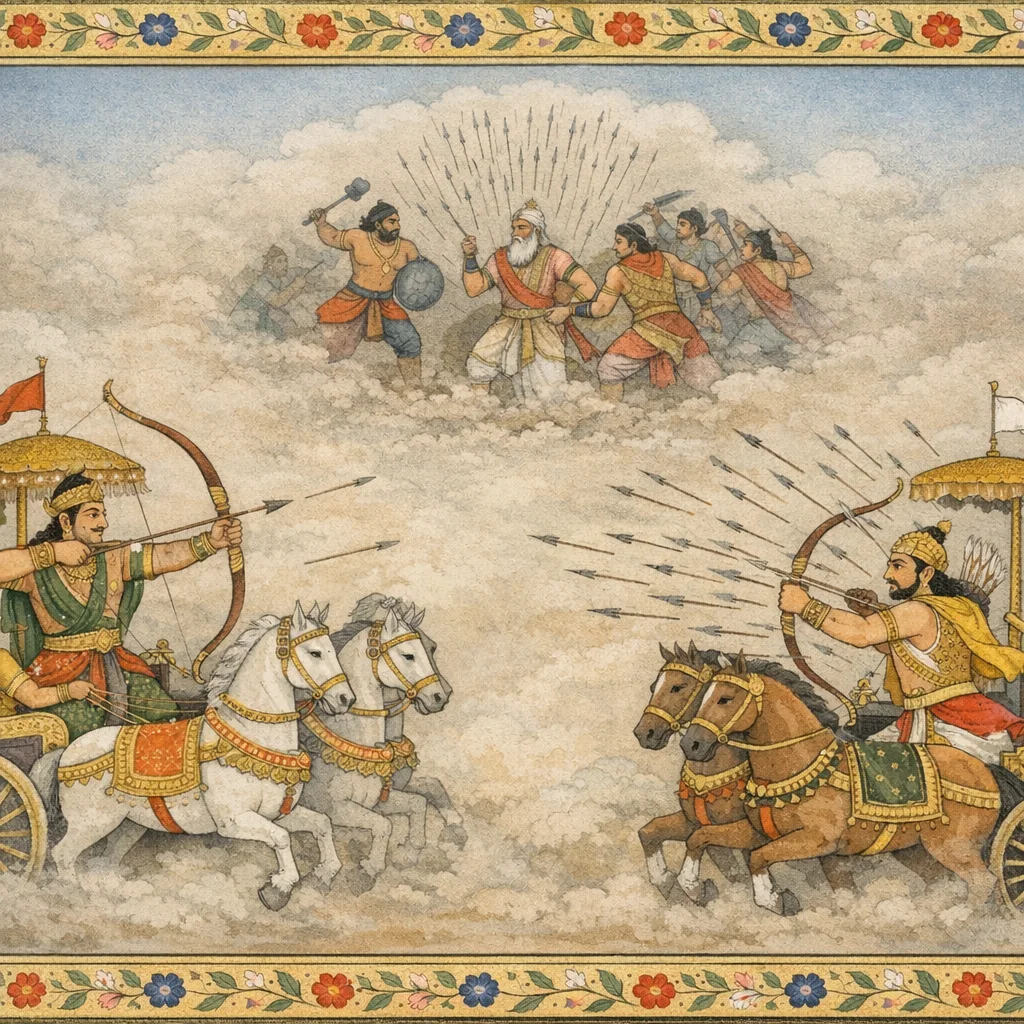
Chapter Arc: धृष्टद्युम्न द्रोणाचार्य के साथ उलझे हुए हैं, पर दुःशासन के तीखे बाण उनके रथ को छेदते हुए आते हैं—और क्रोध की ज्वाला अचानक दिशा बदल देती है। → दुःशासन के प्रहारों से पीड़ित धृष्टद्युम्न प्रतिशोध में दुर्योधन के घोड़ों पर बाण-वर्षा करते हैं; दुःशासन शरजाल से दबकर सामने टिक नहीं पाता। इसी बीच रणभूमि के दूसरे छोर पर सात्यकि और दुर्योधन के बीच क्षत्रिय-धर्म, युद्ध-नीति और क्रोध-लोभ की तीखी वाक्-प्रतिवाक् के साथ शस्त्र-प्रतिशस्त्र का संग्राम उठ खड़ा होता है। → हाथी और सिंह के समान क्रुद्ध होकर मधुवंशी सात्यकि और कुरुवंशी दुर्योधन का घोर द्वंद्व छिड़ता है; दुर्योधन हँसते हुए कान तक धनुष खींचकर तीस तीखे बाणों से सात्यकि को बेधता है, और युद्ध का ताप चरम पर पहुँचता है। → भीमसेन कर्ण के साथ घोर युद्ध में प्रवृत्त होते हैं; उधर पांचालों की तीखी बाण-वर्षा और भीमसेन आदि के घेराव से द्रोणाचार्य पर दबाव बढ़ता है—कौरव पक्ष की रक्षा-रेखा कई मोर्चों पर एक साथ खिंच जाती है। → द्रोण पर बढ़ता घेरा और दुर्योधन–सात्यकि का उग्र द्वंद्व अगले क्षण किस ओर पलटेगा—क्या द्रोण निकलेंगे, या पांडवों का दबाव निर्णायक बनेगा?
Shlokas
Verse 1
(दाक्षिणात्य अधिक पाठके २ श्लोक मिलाकर कुल ५६ श्लोक हैं।) ऑपन-आ प्रात बछ। अर: 2 एकोननवर्त्याधेकशततमो< ध्याय: धृष्टद्युम्नका दुःशासनको हराकर द्रोणाचार्यपर आक्रमण, नकुल-सहदेवद्वारा उनकी रक्षा, दुर्योधन तथा सात्यकिका संवाद तथा युद्ध, कर्ण और भीमसेनका संग्राम और अर्जुनका कौरवोंपर आक्रमण संजय उवाच तस्मिंस्तथा वर्तमाने गजाश्वनरसंक्षये । दुःशासनो महाराज धृष्टद्युम्ममयोधयत्,संजय कहते हैं--महाराज! इस प्रकार हाथी, घोड़ों और मनुष्योंका संहार करनेवाले उस वर्तमान युद्धमें दुःशासन धृष्टद्युम्नके साथ जूझने लगा
Sanjaya said: “O King, while that battle was unfolding—bringing slaughter among elephants, horses, and men—Duhshasana engaged Dhrishtadyumna in combat.”
Verse 2
स तु रुक्मरथासक्तो दुःशासनशरार्दित: । अमर्षात् तव पुत्रस्य शरैर्वाहानवाकिरत्
Sañjaya said: But he, pressed hard while engaged with the warrior on the golden chariot and wounded by Duḥśāsana’s arrows, could not bear it. In anger he showered your son’s horses with a hail of shafts—an act that shifts the violence from the rival fighter to the means of mobility, revealing how wrath in battle often seeks advantage by crippling what sustains the opponent rather than meeting him directly.
Verse 3
धृष्टद्युम्न पहले द्रोणाचार्यके साथ उलझे हुए थे, दुःशासनके बाणोंसे पीड़ित होकर उन्होंने आपके पुत्रके घोड़ोंपर रोषपूर्वक बाणोंकी वर्षा आरम्भ कर दी ।। क्षणेन स रथस्तस्य सध्वज: सहसारथि: । नादृश्यत महाराज पार्षतस्य शरैश्वित:,महाराज! एक ही क्षणमें धृष्टद्युम्नके बाणोंका ऐसा ढेर लग गया कि दुःशासनका रथ ध्वजा और सारथिसहित अदृश्य हो गया
Sañjaya said: O King, in a single moment Duhśāsana’s chariot—together with its banner and charioteer—could no longer be seen, so completely was it covered by the dense shower of arrows released by Dhṛṣṭadyumna, the son of Pṛṣata. The scene underscores how, in the fury of battle, skill and wrath can swiftly overwhelm even a well-equipped warrior, turning the field into a contest of endurance, restraint, and the consequences of aggression.
Verse 4
दुःशासनस्तु राजेन्द्र पाउ्चाल्यस्य महात्मन: । नाशकत् प्रमुखे स्थातुं शरजालप्रपीडित:,राजेन्द्र! महामना धृष्टद्युम्नके बाणसमूहोंसे अत्यन्त पीड़ित हो दुःशासन उनके सामने ठहर न सका
Sanjaya said: O king, Duhshasana, sorely oppressed by the dense net of arrows shot by the great-souled Panchala prince, could not hold his ground before him. The scene underscores how arrogance and wrongdoing, when met by disciplined valor and righteous resolve, lose the power to stand firm in the face of just resistance.
Verse 5
स तु दुःशासनं बाणैर्विमुखीकृत्य पार्षत: । किरन् शरसहस्राणि द्रोणमेवाभ्ययाद् रणे,इस प्रकार अपने बाणोंद्वारा दःशासनको सामनेसे भगाकर सहस्रों बाणोंकी वर्षा करते हुए धृष्टद्युम्नने रणभूमिमें पुनः द्रोणाचार्यपर ही आक्रमण किया
Sañjaya said: Having turned Duḥśāsana back with his arrows, Dṛṣṭadyumna—the son of Pṛṣata—advanced once more in the battle straight against Droṇa, showering him with thousands of shafts. The verse underscores the relentless momentum of combat: a warrior repels an immediate threat and then returns to his primary objective, intensifying the confrontation with the preeminent teacher-warrior.
Verse 6
अभ्यपद्यत हार्दिक्य: कृतवर्मा त्वनन्तरम् । सोदर्याणां त्रयश्चनैव त एनं पर्यवारयन् ६ ।। यह देख हृदिकपुत्र कृतवर्मा तथा दुःशासनके तीन भाई बीचमें आ धमके। वे चारों मिलकर धृष्टद्युम्नको रोकने लगे
Sañjaya said: Then Hārdikya Kṛtavarmā rushed forward, and immediately after him came three full brothers. Together those four closed in around him, seeking to check his advance—an image of comradeship in arms used in the service of obstructing a foe amid the moral chaos of war.
Verse 7
त॑ यमौ पृष्ठतो<न्चैतां रक्षन्तौ पुरुषर्षभौ । द्रोणायाभिमुखं यान्तं दीप्यमानमिवानलम्,प्रज्यलित अग्निके समान तेजस्वी धृष्टद्युम्नको द्रोणाचार्यके सम्मुख जाते देख नरश्रेष्ठ नकुल और सहदेव उनकी रक्षा करते हुए पीछे-पीछे चले
Sañjaya said: The twin brothers, those best of men, followed behind, guarding him as he advanced straight toward Droṇa—blazing like fire. The scene underscores the warrior’s duty of protection and loyal support in battle, even as the combat moves toward a formidable teacher and elder.
Verse 8
सम्प्रहारमकुर्वस्ते सर्वे च सुमहारथा: । अमर्षिता: सत्त्ववन्त: कृत्वा मरणमग्रत:,उस समय अमर्षसे भरे हुए उन सभी धैर्यशाली महारथियोंने मृत्युको सामने रखकर परस्पर युद्ध आरम्भ कर दिया
Sañjaya said: Then all those mighty chariot-warriors, filled with fierce indignation and steadfast in courage, began a mutual onslaught—having set death before them as the price of their resolve. The scene underscores the grim ethic of kṣatriya warfare: valor and endurance are exalted, even as life is knowingly wagered in the fury of battle.
Verse 9
शुद्धात्मान: शुद्धवृत्ता राजन् स्वर्गपुरस्कृता: । आर्य युद्धमकुर्वन्त परस्परजिगीषव:,राजन! उन सबके हृदय शुद्ध और आचार-व्यवहार निर्मल थे। वे सभी स्वर्गकी प्राप्तिरूप लक्ष्यको अपने सामने रखते थे; अतः परस्पर विजयकी अभिलाषासे वे आर्यजनोचित युद्ध करने लगे
Sañjaya said: “O King, their hearts were pure and their conduct stainless. With heaven set before them as the foremost aim, those noble men—each desiring victory over the other—engaged in battle in a manner befitting the Āryas, governed by accepted codes rather than mere cruelty.”
Verse 10
शुक्लाभिजनकर्माणो मतिमन्तो जनाधिप । धर्मयुद्धमयुध्यन्त प्रेप्सन्तो गतिमुत्तमाम्,जनेश्वर! उन सबके वंश शुद्ध और कर्म निष्कलंक थे; अतः वे बुद्धिमान् योद्धा उत्तम गति पानेकी इच्छासे धर्मयुद्धमें तत्पर हो गये
Sanjaya said: O king, those warriors were of pure lineage and their deeds were stainless; therefore, being discerning, they engaged in this righteous war, longing to attain the highest state. The verse frames their fighting not as mere violence but as duty-bound action pursued with an eye to moral consequence and ultimate destiny.
Verse 11
न तत्रासीदधर्मिष्ठमशस्तं युद्धमेव च । नात्र कर्णी न नालीको न लिप्तो न च बस्तिक:,वहाँ अधर्मपूर्ण और निन्दनीय युद्ध नहीं हो रहा था, उसमें कर्णी>, नालीकःठ, विष लगाये हुए बाण और वस्तिकः नामक अस्त्रका प्रयोग नहीं होता था
Sañjaya said: “There, the fighting was not of an unrighteous kind, nor was it a blameworthy battle. In that encounter, neither the karṇī nor the nālīka, nor poison-smeared arrows, nor the weapon called bastika was employed.”
Verse 12
न सूची कपिशो नैव न गवास्थिर्गजास्थिज: । इषुरासीन्न संश्लिष्टो न पूतिन्न च जिह्यग:,न सूची*, न कपिश”, न गायकी* हड्डीका बना हुआ, न हाथीकी* हड्डीका बना हुआ, न दो फलों या काँटोंवाला, न दुर्गन्न्धयुक्त और न जिह्ाग (टेढ़ा जानेवाला) बाण ही काममें लाया जाता था
Sañjaya said: In that battle, no arrow was employed that was needle-tipped, nor one made of monkey-bone, nor fashioned from cow-bone or elephant-bone; nor was any arrow used that was jointed or composite, foul-smelling, or crooked in its flight. The description underscores a restraint in the choice of weapons—rejecting cruel, deceptive, or impure missiles even amid the ferocity of war.
Verse 13
ऋजून्येव विशुद्धानि सर्वे शस्त्राण्यधारयन् । सुयुद्धेन परॉललोकानीप्सन्त: कीर्तिमेव च,वे सब योद्धा न्याययुक्त युद्धके द्वारा उत्तम लोक और कीर्ति पानेकी अभिलाषा रखकर सरल और शुद्ध शस्त्रोंको ही धारण करते थे
Sanjaya said: All those warriors bore only weapons that were straightforward and pure, desiring—through righteous and well-fought battle—to attain higher worlds hereafter, and also to win lasting fame. The verse frames their armament and intent as aligned with dharma: victory sought not by deceit, but by disciplined, fair combat aimed at honor and meritorious destiny.
Verse 14
तदा<5<सीत् तुमुल॑ युद्ध सर्वदोषविवर्जितम् । चतुर्णा तव योधानां तैस्त्रिभि: पाण्डवै: सह,आपके चार योद्धाओंका तीन पाण्डववीरोंके साथ जो घमासान युद्ध चल रहा था, वह सब प्रकारके दोषोंसे रहित था
Sañjaya said: Then there arose a tumultuous battle—free from every blemish of unfairness—between your four warriors and those three Pāṇḍava heroes, locked together in close combat. The narration underscores that, despite its ferocity, the fighting was conducted according to the accepted codes of righteous warfare.
Verse 15
धृष्टद्युम्नस्तु तान् दृष्टवा तव राजन् रथर्षभान् | यमाभ्यां वारितान् वीरान् शीघ्रास्त्रो द्रोणमभ्ययात्,राजन! धृष्टद्युम्न शीघ्रतापूर्वक अस्त्र चलानेवाले थे। वे नकुल और सहदेवके द्वारा कौरवपक्षके उन वीर महारथियोंको रोका गया देख स्वयं द्रोणाचार्युक्री ओर बढ़ गये
Sañjaya said: O King, seeing those bull-like warriors among chariot-fighters checked by the twin brothers (Nakula and Sahadeva), Dhṛṣṭadyumna—swift in the discharge of weapons—rushed straight toward Droṇa. The moment underscores how, in the press of war, a commander responds to a threatened formation by directly engaging the most formidable opposing teacher-general, driven by duty to his side and the urgent ethics of protection in battle.
Verse 16
निवारितास्तु ते वीरास्तयो: पुरुषसिंहयो: । समसज्जन्त चत्वारो वाता: पर्वतयोरिव,वहाँ रोके गये वे चारों वीर उन दोनों पुरुषसिंह पाण्डवोंके साथ इस प्रकार भिड़ गये मानो चौआई हवा दो पर्वतोंसे टकरा रही हो
Sañjaya said: Though checked and held back, those four heroes nevertheless closed in and grappled with the two lion-like men. Their clash with the Pāṇḍavas was like four fierce winds striking against two mountains—an image of irresistible force meeting unshakable resolve amid the moral strain of war.
Verse 17
द्वाभ्यां द्वाभ्यां यमौ सार्थ रथाभ्यां रथपुड़्वौ । समासक्तौ ततो द्रोणं धृष्टद्युम्नो 5 भ्यवर्तत,रथियोंमें श्रेष्ठ नकुल और सहदेव दो-दो कौरव रथियोंके साथ जूझने लगे। इतनेहीमें धृष्टद्युम्न द्रोणाचार्यके सामने जा पहुँचे
Sañjaya said: The twin brothers, Nakula and Sahadeva—foremost among chariot-warriors—engaged the Kaurava fighters two by two, each pair meeting them in chariot-combat. Meanwhile, Dhṛṣṭadyumna pressed forward and came face to face with Droṇācārya, driving the battle toward its decisive and morally charged confrontation between teacher and opposing commander.
Verse 18
दृष्टवा द्रोणाय पाज्चाल्यं व्रजन्तं युद्धदुर्मदम् । यमाभ्यां तांश्व संसक्तांस्तदन्तरमुपाद्रवत्
Sañjaya said: Seeing the Pāñcāla warrior rushing toward Droṇa, intoxicated with the frenzy of battle, and noticing those fighters locked in close combat between the twin Yamas, he swiftly charged into that gap. The scene underscores how, amid the moral weight of war, tactical openings are seized instantly, even as warriors are driven by wrath and martial pride.
Verse 19
त॑ सात्यकि: शीघ्रतरं पुनरेवाभ्यवर्तत,यह देख सात्यकि बड़ी शीघ्रताके साथ पुनः दुर्योधनके सम्मुख आ गये। वे दोनों मनुष्योंमें सिंहके समान पराक्रमी थे। कुरुवंशी दुर्योधन और मधुवंशी सात्यकि एक-दूसरेको समीप पाकर निर्भय हो हँसते हुए युद्ध करने लगे
Sañjaya said: Sātyaki swiftly turned back once more and came again before Duryodhana. Seeing him return with such speed, the two—lion-like in valor among men—closed in upon each other. Duryodhana of the Kuru line and Sātyaki of the Madhava line, meeting at close quarters, fought without fear, even smiling—an image of warriors who, in the heat of battle, treat peril as a test of prowess rather than a cause for hesitation.
Verse 20
तौ परस्परमासाद्य समीपे कुरुमाधवौ । हसमानीौ नृशार्दूलावभीतौ समसज्जताम्,यह देख सात्यकि बड़ी शीघ्रताके साथ पुनः दुर्योधनके सम्मुख आ गये। वे दोनों मनुष्योंमें सिंहके समान पराक्रमी थे। कुरुवंशी दुर्योधन और मधुवंशी सात्यकि एक-दूसरेको समीप पाकर निर्भय हो हँसते हुए युद्ध करने लगे
Sañjaya said: Having come face to face at close quarters, the Kuru and the Mādhava—Duryodhana and Sātyaki—both lion-like among men, fearless and smiling, engaged one another in combat. The scene underscores the warrior code of meeting an equal opponent directly, where courage and resolve are displayed even amid the moral darkness of fratricidal war.
Verse 21
बाल्यवृत्तानि सर्वाणि प्रीयमाणौ विचिन्त्य तौ । अन्योनयं प्रेक्षमाणी च स्मयमानौ पुन: पुन:,बचपनकी सारी बातें याद करके वे दोनों वीर एक-दूसरेकी ओर देखते हुए बारंबार प्रसन्नतापूर्वक मुसकरा उठते थे
Sañjaya said: Recalling with delight all the incidents of their childhood, the two heroes kept looking at one another, and again and again they smiled with gladness—momentarily letting old affection and shared memory rise even amid the harshness of war.
Verse 22
अथ दुर्योधनो राजा सात्यकि समभाषत | प्रियं सखायं सतत गर्हयन् वृत्तमात्मन:,तदनन्तर राजा दुर्योधनने अपने बर्तावकी निरन्तर निन्दा करते हुए वहाँ अपने प्रिय सखा सात्यकिसे इस प्रकार कहा--
Then King Duryodhana addressed Sātyaki. While continually censuring his own conduct, he spoke in this manner to his dear friend—revealing a moment of self-reproach amid the pressures of war and kingship.
Verse 23
धिक् क्रोधं धिक् सखे लोभं घिड्मोहं धिगमर्षितम् । धिगस्तु क्षात्रमाचारं धिगस्तु बलमौरसम्,'सखे! क्रोधको धिक्कार है, लोभको धिक्कार है, मोहको धिक्कार है, अमर्षको थिक्कार है, इस क्षत्रियोचित आचारको धिक्कार है तथा औरस बलको भी धिक्कार है
Sañjaya said: “Fie upon anger, my friend; fie upon greed; fie upon delusion; fie upon that unforbearing wrath. Fie upon the warrior’s code of conduct, and fie upon innate, hereditary might as well.” In the grim logic of war, he condemns the inner passions and the very martial ethos that unleash them, as they drive men toward ruinous deeds.
Verse 24
यत्र मामभिसंधत्से त्वां चाहं शिनिपुड्भव । त्वं हि प्राणै: प्रियतरो ममाहं च सदा तव,'शिनिप्रवर! इन क्रोध, लोभ आदिके ही अधीन होकर तुम मुझे अपने बाणोंका निशाना बनाते हो और तुम्हें मैं। वैसे तो तुम मुझे प्राणोंसे भी बढ़कर प्रिय रहे हो और मैं भी तुम्हारा सदा ही प्रीतिपात्र रहा हूँ
Sañjaya said: “O descendant of Śini, why do you take aim at me, and why do I at you? Driven by anger, greed, and the like, we have turned our arrows upon one another. Yet you have been dearer to me than my very life, and I too have always been an object of your affection.”
Verse 25
स्मरामि तानि सर्वाणि बाल्यवृत्तानि यानि नौ । तानि सर्वाणि जीर्णानि साम्प्रतं नो रणाजिरे,“हम दोनोंके बचपनमें परस्पर जो बर्ताव रहे हैं, उन सबको इस समय मैं याद कर रहा हूँ; परंतु अब इस समरांगणमें हमारे वे सभी सद्व्यवहार जीर्ण हो गये हैं
Sañjaya said: “I remember all those childhood ways of ours—every mutual act and habit we once shared. Yet now, here on this battlefield, all those former courtesies and bonds have grown worn away.”
Verse 26
किमन्यत्क्रोधलोभाशभ्यां युद्धमेवाद्य सात्वत । त॑ तथावादिन तत्र सात्यकि: प्रत्यभाषत
Sañjaya said: “What else can there be—driven by anger and greed—except battle today, O Sātvata?” Thus, in that place, Sātyaki replied to the one who spoke in this manner. The verse frames the day’s conflict as arising from moral failings (wrath and avarice), and shows Sātyaki answering a provocation or grim assessment with readiness to act within the harsh logic of war.
Verse 27
नेयं सभा राजपुत्र नाचार्यस्य निवेशनम्
Sañjaya said: “O prince, this is not a royal assembly hall, nor is it the dwelling of the Teacher. It is a place of war and peril—do not mistake it for a court of counsel or a sanctuary of learning.”
Verse 28
दुर्योधन उवाच क्व सा क्रीडा गतास्माकं बाल्ये वै शिनिपुड़व
Duryodhana said: “Where has that playfulness of ours gone—the games we shared in childhood, O bull among the Śinis?” In the midst of war, he recalls earlier intimacy and innocence, implicitly contrasting it with the present collapse of kinship and restraint, and appealing to memory as a moral reproach to the path that has led to fratricidal conflict.
Verse 29
कि नु नो विद्यते कृत्यं धनेन धनलिप्सया
Duryodhana said: “What duty of ours remains unfulfilled—driven as we are by wealth and the craving for wealth?”
Verse 30
संजय उवाच त॑ तथावादिन तत्र राजानं माधवो<ब्रवीत्,संजय कहते हैं--महाराज! ऐसी बात कहनेवाले राजा दुर्योधनसे सात्यकिने इस प्रकार कहा--'राजन! क्षत्रियोंका सनातन आचार ही ऐसा है कि वे यहाँ गुरुजनोंके साथ भी युद्ध करते हैं। यदि मैं तुम्हारा प्रिय हूँ तो तुम मुझे शीघ्र मार डालो, विलम्ब न करो
Sanjaya said: Then Mādhava addressed that king who was speaking thus. He declared that it is the ancient code of kṣatriyas to fight even against revered elders and teachers when duty in war demands it; and he pressed the king to act without delay—if he truly wished to please him, he should strike at once rather than hesitate.
Verse 31
एवंवृत्तं सदा क्षात्रं युध्यन्तीह गुरूनपि । यदि ते<हं प्रियो राजन् जहि मां मा चिरं कृथा:,संजय कहते हैं--महाराज! ऐसी बात कहनेवाले राजा दुर्योधनसे सात्यकिने इस प्रकार कहा--'राजन! क्षत्रियोंका सनातन आचार ही ऐसा है कि वे यहाँ गुरुजनोंके साथ भी युद्ध करते हैं। यदि मैं तुम्हारा प्रिय हूँ तो तुम मुझे शीघ्र मार डालो, विलम्ब न करो
Sanjaya said: “O King, such has ever been the warrior’s code: here, even revered elders and teachers are fought against in battle. If I am dear to you, O King, then strike me down at once—do not delay.”
Verse 32
त्वत्कृते सुकृताल्लॉँकान् गच्छेयं भरतर्षभ । या ते शक्तिर्बलं यच्च तत् क्षिप्रं मयि दर्शय
Sañjaya said: “O bull among the Bharatas, by the merit I have gained through serving you, may I attain the worlds earned by good deeds. Whatever power and strength are yours—show them to me at once.”
Verse 33
इत्येवं व्यक्तमा भाष्य प्रतिभाष्य च सात्यकि:
Sañjaya said: Having thus spoken clearly, and having replied in turn, Sātyaki (addressed the matter further). The line underscores the ethical weight of frank speech and responsible rebuttal amid the pressures of war—words are offered plainly, and answers are given without evasion.
Verse 34
तमायान्तं महाबाहें प्रत्यगृह्नलात् तवात्मज:
Sañjaya said: “O mighty-armed one, as he came forward, your son received him—meeting his advance and taking him in.”
Verse 35
ततः प्रववृते युद्ध कुरुमाधवर्सिहयो:
Then the battle commenced between the Kurus and Mādhava’s bull-like hero—an encounter set in motion by duty-bound resolve, where the clash of arms reflects the grave ethical weight of war and the inexorable unfolding of fate on the battlefield.
Verse 36
ततः पूर्णायतोत्सूष्टे: सात्वतं युद्धदुर्मदम्
Sañjaya said: Then, from the fully drawn and forcefully released shot, the Sātvata hero—intoxicated with the fierce ardor of battle—pressed on in his warlike fury.
Verse 37
त॑ सात्यकि: प्रत्यविध्यत् तथैवावाकिरच्छरै:
Sañjaya said: Sātyaki struck him back in return, and in the same manner showered him with arrows. The exchange reflects the relentless reciprocity of battle—answering violence with violence—where prowess and resolve, rather than moral persuasion, drive the moment forward.
Verse 38
पज्चाशता पुनश्चाजौ त्रिंशता दशभिश्न ह | इसी प्रकार सात्यकिने भी युद्धस्थलमें पहले पचास, फिर तीस और फिर दस बाणोंद्वारा दुर्योधनको बींध डाला और उसे भी अपने बाणोंकी वर्षासे ढक दिया ।। सात्यकिं तु रणे राजन् प्रहसंस्तनयस्तव
Sañjaya said: In that battle, he pierced him again—first with fifty arrows, then with thirty, and then with ten. And Sātyaki, laughing in the fight, showered your son with a dense rain of shafts, covering him over with arrows. The scene underscores the relentless momentum of war, where prowess and resolve drive warriors to press advantage without pause, even as the moral weight of violence hangs over the field.
Verse 39
ततो<स्य सशरं चापं क्षुरप्रेण द्विधाच्छिनत्,इसके बाद उसने क्षुरप्रसे सात्यकिके बाणसहित धनुषको काटकर उसके दो टुकड़े कर डाले। तब सात्यकिने दूसरा सुदृढ़ धनुष हाथमें लेकर शीघ्रतापूर्वक हाथ चलाते हुए वहाँ आपके पुत्रपर बाणोंकी श्रेणियाँ बरसानी आरम्भ कर दीं
Sañjaya said: Then he severed his bow—still strung with arrows—into two pieces with a razor-edged shaft. Thereupon Sātyaki swiftly took up another strong bow and, with rapid strokes, began to shower volleys of arrows upon your son, pressing the battle forward without pause.
Verse 40
सोअन्यत् कार्मुकमादाय लघुहस्तस्ततो दृढम् । सात्यकिरव्यसृजच्चापि शरश्रेणीं सुतस्य ते,इसके बाद उसने क्षुरप्रसे सात्यकिके बाणसहित धनुषको काटकर उसके दो टुकड़े कर डाले। तब सात्यकिने दूसरा सुदृढ़ धनुष हाथमें लेकर शीघ्रतापूर्वक हाथ चलाते हुए वहाँ आपके पुत्रपर बाणोंकी श्रेणियाँ बरसानी आरम्भ कर दीं
Sañjaya said: Then Sātyaki, quick of hand, took up another strong bow and swiftly let fly a continuous succession of arrows against your son. The scene underscores the relentless momentum of battle: when one weapon is cut down, resolve and skill immediately replace it, and the warrior’s duty is pursued without pause amid escalating violence.
Verse 41
तामापतन्तीं सहसा शरश्रेणीं जिघांसया । चिच्छेद बहुधा राजा तत उच्चुक्रुशुर्जना:,वधके लिये अपने ऊपर सहसा आती हुई उन बाण पंक्तियोंके राजा दुर्योधनने अनेक टुकड़े कर डाले; इससे सब लोग हर्षध्वनि करने लगे
Sañjaya said: With the intent to kill, a sudden volley of arrows rushed toward him. King Duryodhana cut that oncoming stream into many pieces; at this, the warriors and onlookers cried out in loud acclaim.
Verse 42
सात्यकिं च त्रिसप्तत्या पीडयामास वेगित: । स्वर्णपुड्खै: शिलाधौतैराकर्णापूर्णनि:सृतै:
Sañjaya said: Then, with swift force, he pressed hard upon Sātyaki by shooting seventy-three arrows—gold-fletched, stone-polished, and released from a bow drawn back to the ear. The verse underscores the relentless intensity of battle, where skill and resolve are tested, yet the ethical weight of violence remains implicit in the epic’s larger inquiry into righteous conduct amid war.
Verse 43
फिर शिलापर साफ किये हुए सुनहरी पाँखवाले तिहत्तर बाणोंसे, जो धनुषको कानतक खींचकर छोड़े गये थे, दुर्योधनने वेगपूर्वक सात्यकिको पीड़ित कर दिया ।। तस्य संदधतश्रैषुं संहितेषुं च कार्मुकम् । आच्चछिनत् सात्यकिस्तूर्ण शरैश्वैवाप्पवीविधत्,तब सात्यकिने संधान करते हुए दुर्योधनके बाणको और जिसपर वह बाण रखा गया था उस धनुषको तुरंत ही काट डाला तथा बहुत-से बाण मारकर दुर्योधनको भी घायल कर दिया
Sañjaya said: Then Duryodhana, drawing his bow back to the ear, released seventy‑three arrows with golden wings, their shafts polished like stone; with that swift volley he pressed Sātyaki hard in battle. But as Duryodhana was fitting another arrow and holding his bow ready, Sātyaki quickly cut down both the arrow being set and the bow that bore it, and then pierced Duryodhana with many shafts. The episode highlights the warrior’s duty (kṣātra-dharma) expressed as alertness, restraint, and skill: force is met not with rage but with timely, proportionate counteraction aimed at stopping the opponent’s immediate capacity to harm.
Verse 44
स गाढविद्धो व्यथित: प्रत्यपायाद् रथान्तरे | दुर्योधनो महाराज दाशाहशरपीडित:,महाराज! उस समय दुर्योधन सात्यकिके बाणोंसे गहरी चोट खाकर पीड़ित एवं व्यथित हो उठा और रथके भीतर चला गया
Sañjaya said: Struck deeply and shaken with pain, King Duryodhana—tormented by Sātyaki’s arrows—drew back and withdrew into the interior of his chariot. The moment underscores how even a proud ruler, when overwhelmed by the consequences of battle, is forced into retreat, revealing the human cost and moral pressure of the war.
Verse 45
समाश्चस्य तु पुत्रस्ते सात्यकिं पुनरभ्ययात् । विसृजन्निषुजालानि युयुधानरथं प्रति,फिर धीरे-धीरे कुछ आराम मिलनेपर आपका पुत्र पुनः सात्यकिपर चढ़ आया और उनके रथपर बाणोंके जाल बिछाने लगा
Sañjaya said: After regaining his breath and composure, your son once again charged at Sātyaki, showering a net of arrows toward the chariot of Yuyudhāna. The scene underscores the relentless momentum of battle—brief respite followed by renewed assault—where prowess and persistence drive the combatants onward, even as the moral weight of violence continues to loom over the field.
Verse 46
तथैव सात्यकिर्बाणान् दुर्योधनरथं प्रति । सततं विसृजन् राजंस्तत् संकुलमवर्तत,राजन! इसी प्रकार सात्यकि भी दुर्योधनके रथपर निरन्तर बाण-वर्षा करने लगे। इससे वह संग्राम संकुल (घमासान) युद्धके रूपमें परिणत हो गया
Sanjaya said: “In the same manner, Sātyaki too kept releasing a continuous shower of arrows toward Duryodhana’s chariot, O King. By that unbroken exchange, the battle there turned into a densely entangled, close-fought melee—an intensification of violence driven by relentless martial resolve rather than restraint.”
Verse 47
तत्रेषुभि: क्षिप्पमाणै: पतद्धिश्व॒ शरीरिषु । अग्नेरिव महाकक्षे शब्द: समभवन्महान्,वहाँ चलाये गये बाण जब देहधारियोंके ऊपर पड़ते थे, उस समय सूखे बाँस आदिके भारी ढेरमें लगी हुई आगके समान बड़े जोरसे शब्द होता था
Sañjaya said: There, as the swiftly hurled arrows fell upon living bodies, a tremendous roar arose—like the crackling blaze that flares up in a vast heap of dry reeds and bamboo. The verse underscores the brutal immediacy of battle: weapons, once released, become impersonal forces, and the sound itself testifies to the suffering inflicted on embodied beings.
Verse 48
तयो: शरसहसैश्न संछन्न॑ं वसुधातलम् | अगम्यरूपं च शरैराकाशं समपद्यत,उन दोनोंके हजारों बाणोंसे पृथ्वी ढक गयी और आकाशगमें भी बाणोंके कारण (पक्षियोंतकका) चलना-फिरना बंद हो गया
Sañjaya said: With the thousands of arrows shot by those two, the surface of the earth was completely covered; and the sky too, choked with shafts, became impassable—so that even birds could no longer move about. The scene underscores how unrestrained martial fury can turn the very elements into obstacles, eclipsing ordinary life in the press of war.
Verse 49
तत्राप्यधिकमालक्ष्य माधवं रथसत्तमम् | क्षिप्रमभ्यपतत् कर्ण: परीप्संस्तनयं तव
Sañjaya said: Even there, having clearly perceived Mādhava—foremost among chariot-warriors—Karna swiftly rushed forward, intent on reaching and striking down your son. The moment shows Karna’s tactical urgency and single-minded resolve in battle, where personal loyalty and the drive to secure advantage can override caution amid the chaos of war.
Verse 50
उस युद्धमें महारथी सात्यकिको प्रबल होते देख कर्ण आपके पुत्रकी रक्षाके लिये शीघ्र ही बीचमें कूद पड़ा ।। न तु तं मर्षयामास भीमसेनो महाबलः: । सो<भ्ययात्त्वरित: कर्ण विसृजन् सायकान् बहून्,परंतु महाबली भीमसेन उसका यह कार्य सहन न कर सके, अतः बहुत-से बाणोंकी वर्षा करते हुए उन्होंने तुरंत ही कर्णपर धावा किया
But the mighty Bhīmasena could not endure that act. Swiftly he rushed at Karṇa, releasing a great multitude of arrows—his indignation turning at once into decisive assault amid the chaos of battle.
Verse 51
तस्य कर्ण: शितान् बाणान् प्रतिहत्य हसन्निव । धनु: शरांश्व चिच्छेद सूतं चाभ्यहनच्छरै:,तब कर्णने हँसते हुए-से उनके तीखे बाणोंको नष्ट करके धनुष और बाण भी काट डाले; फिर अनेक बाणोंद्वारा उनके सारथिको भी मार डाला
Sañjaya said: Karṇa, as though laughing, beat back his opponent’s keen arrows. He then cut down the bow and the arrows, and with a shower of shafts struck down the charioteer as well—an act that displays ruthless battlefield efficiency, where victory is pursued by disabling the warrior’s means and support, even at the cost of escalating cruelty.
Verse 52
भीमसेनस्तु संक्रुद्धो गदामादाय पाण्डव: । ध्वजं धनुश्न सूतं च सम्ममर्दाहवे रिपो:,इससे अत्यन्त कुपित होकर पाण्डुनन्दन भीमसेनने गदा हाथमें ले ली और उसके द्वारा युद्धस्थलमें शत्रुके ध्वज, धनुष और सारथिको भी कुचल डाला
Sañjaya said: Enraged, Bhīmasena—the Pāṇḍava—seized his mace and, in the thick of battle, crushed the enemy’s banner, bow, and even his charioteer. The verse underscores the ferocity of war, where wrath can drive a warrior beyond merely disabling weapons to destroying the very supports of an opponent’s combat presence.
Verse 53
रथचक्रं च कर्णस्य बभञठ्ज स महाबल: । भग्नचक्रे रथेडतिष्ठदकम्प: शैलराडिव,इतना ही नहीं, महाबली भीमने कर्णके रथका एक पहिया भी तोड़ डाला तो भी कर्ण टूटे पहियेवाले उस रथपर गिरिराजके समान अविचलभावसे खड़ा रहा
Sañjaya said: The mighty Bhīma shattered one of Karṇa’s chariot-wheels. Yet even when his chariot’s wheel was broken, Karṇa stood firm upon that chariot—unshaken, like a king of mountains. The passage highlights the warrior’s steadiness under sudden loss and danger, where composure and resolve become as decisive as weapons in the moral pressure of battle.
Verse 54
एकचक्रं रथं तस्य तमूहुः सुचिरं हया: । एकचक्रमिवार्कस्य रथं सप्त हया यथा,कर्णके घोड़े उसके एक पहियेवाले रथको बहुत देरतक ढोते रहे, मानो सूर्यके सात अश्व उनके एक चक्रवाले रथको खींच रहे हैं
Sañjaya said: His chariot, having but a single wheel, was borne along for a long time by the horses—like the Sun’s one-wheeled car that is drawn by seven steeds. The simile heightens the scene’s intensity: even amid the ruin and strain of battle, the warrior’s onward motion is portrayed with a cosmic grandeur, suggesting relentless momentum and the awe such martial prowess inspires.
Verse 55
अमृष्यमाण: कर्णस्तु भीमसेनमयुध्यत । विविधैरिषुजालैश्न नानाशस्त्रैश्व संयुगे,कर्णको भीमसेनका यह पराक्रम सहन नहीं हुआ। वह नाना प्रकारके बाणसमूहों तथा अनेकानेक शस्त्रोंसे रणभूमिमें उनके साथ युद्ध करने लगा
Sañjaya said: Unable to endure (Bhīmasena’s prowess and challenge), Karṇa engaged Bhīmasena in battle. In the thick of combat he fought with varied nets of arrows and with many kinds of weapons, pressing the fight on the battlefield with relentless force.
Verse 56
भीमसेनस्तु संक़्रुद्ध: सूतपुत्रमयोधयत् । तस्मिंस्तथा वर्तमाने क्रुद्धो धर्मसुतो5ब्रवीत्
Sañjaya said: Bhīmasena, inflamed with wrath, engaged the Sūta’s son in battle. While this fierce encounter was unfolding, Dharmasuta (Yudhiṣṭhira), himself angered, spoke out—signaling a moral and strategic tension within the Pāṇḍava camp as righteous restraint strains under the pressures of war.
Verse 57
ये नः प्राणा: शिरो ये च ये नो योधा महारथा:,“जो पुरुषशिरोमणि महारथी योद्धा हमारे प्राण और मस्तक हैं, वे ही धृतराष्ट्रपुत्रोंके साथ जूझ रहे हैं, फिर तुम सब लोग मूर्ख और अचेत मनुष्योंके समान यहाँ क्यों खड़े हो?
Sañjaya said: “Those who are our very life-breath, and as it were our head—those foremost heroes, the great chariot-warriors—are locked in combat with the sons of Dhṛtarāṣṭra. Why then do you all stand here, like foolish and senseless men?”
Verse 58
त एते धार्तराष्ट्रेषु विषक्ता: पुरुषर्षभा: । कि तिष्ठत यथा मूढा: सर्वे विगतचेतस:,“जो पुरुषशिरोमणि महारथी योद्धा हमारे प्राण और मस्तक हैं, वे ही धृतराष्ट्रपुत्रोंके साथ जूझ रहे हैं, फिर तुम सब लोग मूर्ख और अचेत मनुष्योंके समान यहाँ क्यों खड़े हो?
Sañjaya said: “Those bull-like heroes among men—our very life and crown—are locked in combat with the sons of Dhṛtarāṣṭra. Why then do you all stand here like deluded men, every one of you bereft of resolve?”
Verse 59
तत्र गच्छत यज्रैते युध्यन्ते मामका रथा: । क्षात्रधर्म पुरस्कृत्य सर्व एव गतज्वरा:,“वहाँ जाओ, जहाँ ये मेरे सब रथी क्षत्रियधर्मको सामने रखकर निश्चिन्तभावसे युद्ध कर रहे हैं
Sañjaya said: “Go there—where these chariot-warriors of mine are fighting. With the kṣatriya code set foremost, all of them have cast off anxiety and are engaged in battle.”
Verse 60
जयन्तो वध्यमानाक्ष गतिमिष्टां गमिष्यथ । जित्वा वा बहुभिर्यज्ञैर्यजध्वं भूरिदक्षिणै:
Sañjaya said: “O Jayanta, O Vadhyamānākṣa, you shall attain the desired goal. Or else, having won, perform many sacrifices, rich in gifts. Thus, whether through the destined end in battle or through victory followed by generous rites, the path held up is one of honor, duty, and rightful recompense.”
Verse 61
हता वा देवसाद् भूत्वा लोकानू प्राप्स्थथ पुष्कलान् । “तुमलोग विजयी होओ अथवा मारे जाओ, दोनों ही दशाओंमें उत्तम गति प्राप्त करोगे। जीतकर तो तुम प्रचुर दक्षिणाओंसे युक्त बहुसंख्यक यज्ञोंद्वारा भगवान् यज्ञपुरुषकी आराधना करो अथवा मारे जानेपर देवरूप होकर बहुत-से पुण्यलोक प्राप्त करो” || ६० ई || ते राज्ञा चोदिता वीरा योत्स्यमाना महारथा:
Sañjaya said: “Whether you win or you are slain, in either condition you will attain the highest course. If you conquer, then worship the Lord, the Yajña-Puruṣa, through many sacrifices rich in priestly gifts; but if you fall, you will become godlike and reach abundant worlds of merit.” Thus urged by their king, those heroic great chariot-warriors prepared to fight.
Verse 62
क्षात्रधर्म पुरस्कृत्य त्वरिता द्रोणमभ्ययु: । राजा युधिष्ठिरसे इस प्रकार प्रेरित हो उन वीर महारथियोंने युद्धके लिये उद्यत होकर क्षत्रियधर्मको सामने रखते हुए बड़ी उतावलीके साथ द्रोणाचार्यपर आक्रमण किया ।। ६१ * पजञ्चालास्त्वेकतो द्रोणमभ्यघ्नन् निशितै: शरै:
Verse 63
आसंस्तु पाण्डुपुत्राणां त्रयो जिह्मा महारथा:,पाण्डवोंके तीन महारथी कुछ कुटिल स्वभावके थे--नकुल, सहदेव और भीमसेन। इन तीनोंने अर्जुनको पुकारा-'अर्जुन! दौड़ो, दौड़ो और शीघ्र ही द्रोणाचार्यके पाससे इन कौरवोंको भगाओ
Sañjaya said: Among the sons of Pāṇḍu there were three great chariot-warriors of crafty, indirect disposition. These three—Nakula, Sahadeva, and Bhīmasena—called out to Arjuna: “Arjuna, run—run quickly—and drive these Kauravas away from Droṇācārya.” The moment underscores the urgency of battlefield duty and the tactical pressure to protect their teacher’s position by decisive action.
Verse 64
यमौ च भीमसेनश्ष प्राक्रोशंस्ते धनंजयम् । अभिद्रवार्जुन क्षिप्रं कुरून् द्रोणादपानुद,पाण्डवोंके तीन महारथी कुछ कुटिल स्वभावके थे--नकुल, सहदेव और भीमसेन। इन तीनोंने अर्जुनको पुकारा-'अर्जुन! दौड़ो, दौड़ो और शीघ्र ही द्रोणाचार्यके पाससे इन कौरवोंको भगाओ
Sañjaya said: Nakula and Sahadeva, along with Bhīmasena, called out loudly to Dhanañjaya (Arjuna): “Charge forth, Arjuna—quickly! Drive these Kauravas away from Droṇa.” In the press of battle, the Pāṇḍava leaders urge Arjuna to act decisively against a formidable teacher-commander, framing swift intervention as a duty to protect their side and prevent further harm.
Verse 65
तत एनं हनिष्यन्ति पठ्चाला हतरक्षिणम् | कौरवेयांस्तत: पार्थ: सहसा समुपाद्रवत्,“जब इनके रक्षक मारे जायँगे, तभी पांचाल वीर इन्हें मार सकेंगे।! तब अर्जुनने सहसा कौरवयोद्धाओंपर आक्रमण किया
Sañjaya said: “Only when his protectors have been slain will the Pāñcāla warriors be able to kill him.” Thereupon Pārtha (Arjuna), acting with sudden resolve, swiftly charged against the Kaurava fighters—an urgent move shaped by the grim ethics of battlefield necessity, where removing a shield of defenders becomes the precondition for striking the protected target.
Verse 66
पज्चालानेव तु द्रोणो धृष्टद्युम्नपुरोगमान् । ममर्दुस्तरसा वीरा: पठचमे5हनि भारत,भारत! उधरसे द्रोणने धृष्टद्युम्म आदि पांचालोंपर ही धावा किया। उस पाँचवें दिनके युद्धमें वे सभी वीर वेगपूर्वक एक-दूसरेको रौंदने लगे
Sañjaya said: Drona, however, bore down upon the Pāñcālas—led in the van by Dhṛṣṭadyumna. On that fifth day of battle, O Bhārata, the heroes, driven by fierce momentum, crushed and trampled one another in the press of war—an image of how martial duty, once unleashed, turns into mutual devastation.
Verse 186
दुर्योधनो महाराज किर|ञष्छोणित भोजनान् । महाराज! रणदुर्मद धृष्टद्युम्नको द्रोणाचार्यकी ओर जाते और अपने दलके उन चारों वीरोंको नकुल-सहदेवके साथ युद्ध करते देख राजा दुर्योधन रक्त पीनेवाले बाणोंकी वर्षा करता हुआ उनके बीचमें आ धमका
Sanjaya said: O great king, seeing the battle-maddened Dhrishtadyumna advancing toward Drona and watching those four warriors of his own side engaged in combat together with Nakula and Sahadeva, King Duryodhana rushed into their midst, showering arrows as if they drank blood—driven by wrath and the desperate resolve to protect his cause in the chaos of war.
Verse 189
इति श्रीमहाभारते द्रोणपर्वणि द्रोणवधपर्वणि संकुलयुद्धे एकोननवत्यधिकशततमो<ध्याय:
Thus, in the Śrī Mahābhārata, within the Droṇa Parva—specifically in the section on the slaying of Droṇa—this concludes the one-hundred-and-ninety-first chapter, describing the confused and entangled battle. The colophon marks a transition in the narration, reminding the listener that the war’s moral order has become strained and chaotic as the conflict intensifies around Droṇa’s fall.
Verse 263
प्रहसन् विशिखांस्तीक्ष्णानुद्यम्य परमास्त्रवित् । 'सात्वत वीर! आजका यह युद्ध ही क्रोध और लोभके सिवा दूसरा क्या है?” उत्तम अस्त्रोंके ज्ञाता सात्यकिने हँसते हुए तीखे बाणोंको ऊपर उठाकर वहाँ पूर्वोक्त बातें करनेवाले दुर्योधनको इस प्रकार उत्तर दिया--
Sañjaya said: Smiling, the master of supreme weapons raised his sharp arrows. In response to Duryodhana—who had just spoken those words—Sātyaki, knower of excellent missiles, lifted his keen shafts and answered him in this manner, challenging the claim that the day’s battle was nothing but anger and greed.
Verse 276
यत्र क्रीडितमस्माभिस्तदा राजन् समागतै: । “राजकुमार! कौरवनरेश! न तो यह सभा है और न आचार्यका घर ही है जहाँ एकत्र होकर हम सब लोग खेला करते थे”
Sañjaya said: “O King, this is not that assembly hall, nor the teacher’s house, where we princes once gathered together and played in carefree companionship. The scene before us is of a different order—one where the bonds of youth and kinship have been eclipsed by the hard demands of conflict and duty.”
Verse 283
क्व च युद्धमिदं भूय: “कालो हि दुरतिक्रम:” । दुर्योधन बोला--शिनिप्रवर! हमारा बचपनका वह खेल कहाँ चला गया और फिर यह युद्ध कहाँसे आ धमका? हाय! कालका उल्लंघन करना अत्यन्त ही कठिन है
Duryodhana said: “Where has that childhood play gone, and how has this war come upon us again? Alas—Time is indeed exceedingly hard to overstep.” In the midst of devastation, he recognizes the moral tragedy of kin-slaying and the inexorable force of kāla that drives events beyond personal control.
Verse 293
यत्र युध्यामहे सर्वे धनलो भात् समागता: । हमें धनसे या धन पानेकी इच्छासे क्या प्रयोजन है? जो हम सब लोग यहाँ धनके लोभसे एकत्र होकर जूझ रहे हैं
Duryodhana said: “Here we are all engaged in battle, having assembled out of greed for wealth.” In context, the line exposes the moral corrosion of the conflict: the war is framed not as a righteous duty but as a struggle driven by acquisitiveness, implicitly questioning the ethical legitimacy of such motivation.
Verse 326
नेच्छामि तदहं द्रष्टं मित्राणां व्यसनं महत् । “भरतश्रेष्ठ! तुम्हारे ऐसा करनेपर मैं पुण्यवानोंके लोकोंमें जाऊँगा। तुममें जितनी शक्ति और बल है, वह सब शीघ्र मेरे ऊपर दिखाओ; क्योंकि मैं अपने मित्रोंका वह महान् संकट नहीं देखना चाहता हूँ
Sanjaya said: “I do not wish to witness that great calamity befalling my friends. Let the outcome be such that I need not stand by and see those dear to me plunged into ruin.”
Verse 336
अभ्ययात् तूर्णमव्यग्रो दयां नाकुरुतात्मनि । इस प्रकार स्पष्ट बोलकर दुर्योधनकी बातका उत्तर दे सात्यकि निःशंक होकर तुरंत आगे बढ़े, उन्होंने अपने ऊपर दया नहीं दिखायी
Sañjaya said: Sātyaki, unflustered and without hesitation, advanced at once. Having clearly spoken thus in reply to Duryodhana’s words, he showed no self-pity—choosing resolute action over indulgence in fear or softness toward himself amid the demands of righteous battle.
Verse 343
शरैश्वावाकिरद् राजन् शैनेयं तनयस्तव । राजन्! सामने आते हुए उन महाबाहु सात्यकिको आपके पुत्रने रोका और उन्हें बाणोंसे ढक दिया
Sañjaya said: O King, your son checked Śaineya as he advanced to the front, and showered him with arrows, covering the mighty-armed Sātyaki in a dense volley. The scene underscores how, in the heat of war, valor and duty are expressed through immediate resistance and relentless missile-exchange, even against renowned heroes.
Verse 356
अन्योनयं क्रुद्धयोर्घोरं यथा द्विरद्सिंहयो: । तदनन्तर हाथी और सिंहके समान क्रोधमें भरे हुए उन कुरुवंशी और मधुवंशी सिंहोंमें परस्पर घोर युद्ध होने लगा
Sañjaya said: Then, like a furious elephant and a lion locked in combat, those enraged champions of the Kuru line and the Madhu (Yādava) line began a dreadful fight against each other. The scene underscores how wrath on the battlefield can drive even the noblest warriors into terrifying mutual destruction, eclipsing restraint and dharma.
Verse 363
दुर्योधन: प्रत्यविध्यत् कुपितो दशभि: शरै: । तत्पश्चात् कुपित हुए दुर्योधनने धनुषको पूर्णतः खींचकर छोड़े गये दस बाणोंद्वारा रणदुर्मद सात्यकिको घायल कर दिया
Sañjaya said: Enraged, Duryodhana struck back, piercing (his foe) with ten arrows. In the fierce press of battle, his wrath found expression through disciplined archery, wounding the battle-intoxicated Sātyaki and driving the conflict onward through retaliation rather than restraint.
Verse 386
आकर्णपूर्णनिशितैर्विव्याध त्रिंशता शरै: । राजन! तब हँसते हुए आपके पुत्रने धनुषको कानतक खींचकर छोड़े हुए तीस तीखे बाणोंद्वारा रणभूमिमें सात्यकिको क्षत-विक्षत कर डाला
Sanjaya said: O King, then your son, smiling, drew his bow back to the ear and released thirty razor-sharp arrows. With those arrows he tore Satyaki on the battlefield, wounding and mangling him—an image of how, in war, skill and ferocity can eclipse compassion and turn prowess into ruthless harm.
Verse 563
पज्चालानां नरव्याप्रान् मत्स्यांश्व पुरुषर्षभान् । इससे भीमसेन अत्यन्त कुपित हो उठे और सुतपुत्र कर्णके साथ घोर युद्ध करने लगे। इस प्रकार जब वह युद्ध चल रहा था, उसी समय क्रोधमें भरे हुए धर्मपुत्र युधिष्ठिरने पांचालोंके नरव्याप्र वीरों और पुरुषरत्न मत्स्यदेशीय योद्धाओंसे कहा--
Sanjaya said: (Yudhishthira addressed) the Panchala heroes—lion-like among men—and the Matsya warriors—bulls among men. As the battle raged, Bhimasena, inflamed with anger, engaged Karna in a fierce duel; and at that very time, Dharma’s son Yudhishthira, himself filled with wrath, spoke to those valiant Panchala and Matsya champions—signaling a decisive turn in counsel and command amid the moral strain of war.
Verse 626
भीमसेनपुरोगाश्चाप्पेकत: पर्यवारयन् । एक ओरसे पांचाल वीर तीखे बाणोंसे द्रोणाचार्यको मारने लगे और दूसरी ओरसे भीमसेन आदि वीरोंने उन्हें घेर रखा था
Sanjaya said: With Bhimasena at their head, the warriors on one side closed in and hemmed Drona in. From another direction, the valiant Panchalas, loosing sharp arrows, pressed hard to strike down Dronacharya. Thus, amid the fury of battle, Drona was simultaneously assailed and surrounded—an episode that underscores how, in war, even a revered teacher becomes a target when the demands of allegiance and the momentum of conflict override personal reverence.