Adhyaya 226
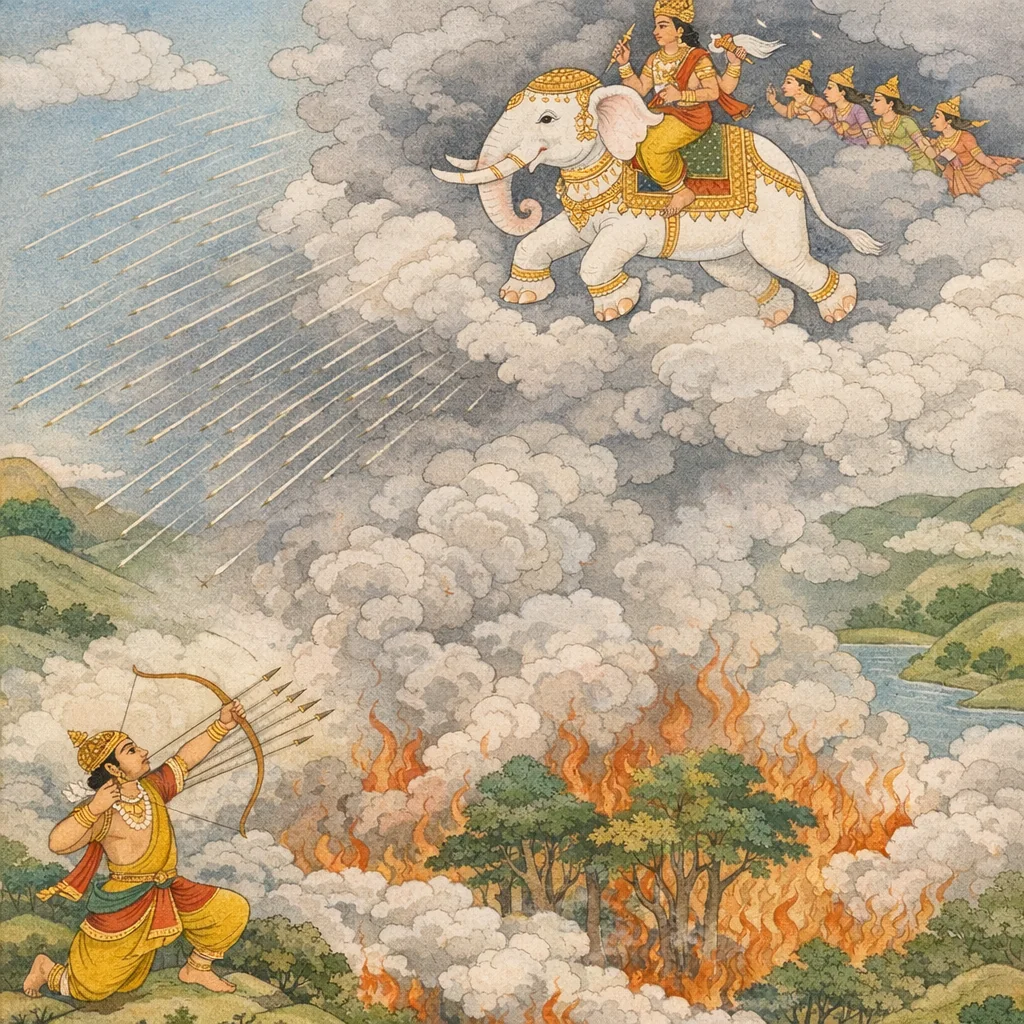
Chapter Arc: वैशम्पायन जनमेजय से कहते हैं—जब इन्द्र ने खाण्डववन पर जल-वर्षा आरम्भ की, तब पाण्डव अर्जुन ने उस वर्षा को अपने शर-वर्षा से रोक दिया, मानो चन्द्रमा को कुहरे ने ढक लिया हो। → अर्जुन के बाणों से आकाश ऐसा छा गया कि कोई भी प्राणी निर्भय होकर निकल न सका। देवगण, नाग-समूह और दिव्य अस्त्र-शस्त्र एक-एक कर अर्जुन के निकट आते हैं; विष उगलते नाग गिरते हैं, देवसेना के प्रयत्न विफल होते जाते हैं, और इन्द्र का क्रोध बढ़ता जाता है। → इन्द्र ऐरावत पर आरूढ़ होकर स्वयं धावा बोलते हैं; स्कन्द शक्ति लेकर मेरु-सा अचल खड़ा होता है; अश्विनीकुमार भी दिव्य औषधियों सहित उपस्थित होते हैं। इन्द्र अर्जुन की परीक्षा लेने हेतु पत्थरों की भीषण वर्षा करता है—पर सव्यसाची की प्रत्यंचा थमती नहीं; वह अपने साथ हुई ‘वंचना’ को स्मरण कर क्रुद्ध होकर इन्द्र से यथार्थ युद्ध करता है। → बहुत-से देवता भय से रण छोड़कर इन्द्र की शरण लेते हैं; फिर भी इन्द्र अर्जुन और कृष्ण के पराक्रम से परम प्रसन्न होकर बार-बार युद्ध में प्रवृत्त होता है—यह संघर्ष शत्रुता से अधिक ‘वीर्य-परीक्षा’ का रूप ले लेता है। → इन्द्र पुनः अर्जुन के सामर्थ्य को जाँचने के लिए भारी शिला-वर्षा आरम्भ करता है—अब देखना है कि यह परीक्षा किस निष्कर्ष तक पहुँचेगी और खाण्डव-दहन का मार्ग कैसे खुलेगा।
Shlokas
Verse 1
ऑपन--माज छा अल षड्विशर्त्याधिकद्विशततमो< ध्याय: देवताओं आदिके साथ श्रीकृष्ण और अर्जुनका युद्ध वैशम्पायन उवाच तस्याथ वर्षतो वारि पाण्डव: प्रत्यवारयत् । शरवर्षेण बीभत्सुरुत्तमास्त्राणि दर्शयन्,वैशम्पायनजी कहते हैं--जनमेजय! वर्षा करते हुए इन्द्रकी उस जलधाराको पाण्डुकुमार अर्जुनने अपने उत्तम अस्त्रका प्रदर्शन करते हुए बाणोंकी बौछारसे रोक दिया
Vaiśampāyana said: Then, as that torrent of rain was being poured down, the Pāṇḍava (Arjuna) checked it—Bībhatsu countering the downpour with a shower of arrows, while displaying the excellence of his supreme weapons. The episode frames martial skill as disciplined mastery: power is met not with panic or excess, but with controlled, purposeful response.
Verse 2
खाण्डवं च वन सर्व पाण्डवो बहुभि: शरै: । आच्छादयदमेयात्मा नीहारेणेव चन्द्रमा:,अमित आत्मबलसे सम्पन्न पाण्डव अर्जुनने बहुत-से बाणोंकी वर्षा करके सारे खाण्डववनको ढँक दिया, जैसे कुहरा चन्द्रमाको ढक देता है
Vaiśampāyana said: Then the Pāṇḍava—Arjuna, of immeasurable spirit—covered the entire Khāṇḍava forest with a dense shower of many arrows, just as mist veils the moon. The image underscores not only martial mastery but also the grave moral weight of force used to seal off escape and make an action irrevocable within the unfolding conflict.
Verse 3
न च सम किंचिच्छक्नोति भूत॑ निश्चरितुं ततः । संछाद्यमाने खे बाणैरस्थता सव्यसाचिना,सव्यसाची अर्जुनके चलाये हुए बाणोंसे सारा आकाश छा गया था; इसलिये कोई भी प्राणी उस वनसे निकल नहीं पाता था
Vaiśampāyana said: And no creature at all was able to escape from there, for the sky was being completely covered by the arrows released by the steady Savyasācin (Arjuna). The scene underscores how disciplined martial skill, when directed with resolve, can render flight impossible and decisively contain violence within a chosen field.
Verse 4
तक्षकस्तु न तत्रासीनज्नागराजो महाबल: । दहामाने वने तस्मिन् कुरुक्षेत्र गतो हि सः,जब खाण्डववन जलाया जा रहा था, उस समय महाबली नागराज तक्षक वहाँ नहीं था, कुरुक्षेत्र चला गया था
Vaiśampāyana said: The mighty serpent-king Takṣaka was not present there. For when that forest was being consumed by fire, he had in fact gone to Kurukṣetra—an absence that becomes morally significant, since it explains how one powerful being escaped the common fate that overtook the rest.
Verse 5
अश्वसेनो5भवत् तत्र तक्षकस्य सुतो बली । स यत्नमकरोतू तीव्रं मोक्षार्थ जातवेदस:,परंतु तक्षकका बलवान पुत्र अश्वसेन वहीं रह गया था। उसने उस आगसे अपनेको छुड़ानेके लिये बड़ा भारी प्रयत्न किया
Vaiśampāyana said: There, Aśvasena—the mighty son of Takṣaka—was caught up in the crisis. Struggling for his very survival, he made an intense effort to free himself from Jātavedas, the consuming fire. The episode underscores the instinct to preserve life amid catastrophe and the relentless consequences set in motion by destructive acts.
Verse 6
न शशाक स निर्गन्तुं निरुद्धो<र्जुनपत्रिभि: । मोक्षयामास त॑ माता निगीर्य भुजगात्मजा,किंतु अर्जुनके बाणोंसे रँध जानेके कारण वह बाहर निकल न सका। उसकी माता सर्पिणीने उसे निगलकर उस आगसे बचाया
Vaiśampāyana said: Unable to escape, for he was hemmed in by Arjuna’s arrows, he could not come out. Then his mother—the serpent-woman—saved him by swallowing him, thereby protecting her offspring from the danger. The episode highlights maternal protection and the limits imposed by a warrior’s prowess, where force is met not by counter-violence but by protective ingenuity.
Verse 7
तस्य पूर्व शिरो ग्रस्तं पुच्छमस्य निगीर्य च । निगीर्यमाणा साक्रामत् सुतं नागी मुमुक्षया,उसने पहले उसका मस्तक निगल लिया। फिर धीरे-धीरे पूँछतकका भाग निगल गयी। निगलते-निगलते ही उस नागिनने पुत्रको बचानेके लिये आकाशमें उड़कर निकल भागनेकी चेष्टा की
Vaiśampāyana said: She first swallowed his head; then, having also gulped down his tail, she began to move away while still swallowing him— the serpent-mother striving to escape in order to save her son. The scene underscores a mother’s fierce protective impulse, even when driven to desperate, morally fraught action.
Verse 8
तस्या: शरेण तीक्ष्णेन पृथुधारेण पाण्डव: । शिरक्षिच्छेद गच्छन्त्यास्तामपश्यच्छचीपति:,परंतु पाण्डुकुमार अर्जुनने मोटी धारवाले तीखे बाणसे उस भागती हुई सर्पिणीका मस्तक काट दिया। शचीपति इन्द्रने उसकी यह अवस्था अपनी आँखों देखी
Vaiśampāyana said: With a sharp arrow, broad-bladed and keen, the Pāṇḍava cut off the head of that fleeing serpent-woman. Śacī’s lord, Indra, witnessed her condition with his own eyes. The episode underscores the swift, decisive use of force to avert imminent danger, while also foreshadowing divine attention to human acts and their consequences.
Verse 9
त॑ मुमोचयिषुर्वज्जी वातवर्षेण पाण्डवम् । मोहयामास तत्कालमश्वसेनस्त्वमुच्यत,तब उसे छुड़ानेकी इच्छासे वज्रधारी इन्द्रने आँधी और वर्षा चलाकर पाण्डुकुमार अर्जुनको उस समय मोहित कर दिया। इतनेहीमें तक्षकका पुत्र अश्वसेन उस संकटसे मुक्त हो गया
Vaiśampāyana said: Wishing to set him free, Indra the wielder of the thunderbolt bewildered the Pāṇḍava (Arjuna) at that very moment by raising a storm and rain; and thus Aśvasena, the son of Takṣaka, was released from that peril. The episode underscores how divine intervention can obstruct even a righteous warrior’s aim, reminding the listener that outcomes in conflict are not governed by human effort alone but also by higher powers and hidden loyalties.
Verse 10
तां च मायां तदा दृष्टवा घोरां नागेन वज्चित: । द्विधा त्रिधा च खगतान् प्राणिन: पाण्डवो5च्छिनत्,तब उस भयानक मायाको देखकर नागसे ठगे गये पाण्डुपुत्र अर्जुनने आकाशमें उड़नेवाले प्राणियोंके दो-दो, तीन-तीन टुकड़े कर डाले
Vaiśaṃpāyana said: Seeing that dreadful illusion then, the Pāṇḍava (Arjuna), deceived by the serpent’s trickery, struck down the flying creatures in the sky, cutting them into two and even three pieces. The episode underscores how delusion can provoke rash violence, and how discernment is ethically crucial even for a mighty warrior.
Verse 11
शशाप तं च संक्रुद्धो बीभत्सुर्जिह्मगामिनम् । पावको वासुदेवश्चाप्यप्रतिष्ठो भविष्यसि,फिर क्रोधमें भरे हुए अर्जुनने टेढ़ी चालसे चलनेवाले उस नागको शाप दिया--'अरे! तू आश्रयहीन हो जायगा।' अग्नि और श्रीकृष्णने भी उसका अनुमोदन किया
Vaiśampāyana said: Enraged, Arjuna (Bībhatsu) cursed that serpent who moved with crooked intent: “You shall become without refuge and without standing.” Agni and Vāsudeva (Kṛṣṇa) also assented to his pronouncement, underscoring that deceitful, harmful conduct invites swift moral consequence.
Verse 12
ततो जिष्णु: सहस्राक्षं खं वितत्याशुगै: शरै: । योधयामास संक्रुद्धो वज्चनां तामनुस्मरन्,तदनन्तर अपने साथ की हुई वंचनाको बार-बार स्मरण करके क्रोधमें भरे हुए अर्जुनने शीघ्रगामी बाणोंद्वारा आकाशको आच्छादित करके इन्द्रके साथ युद्ध छेड़ दिया
Then Arjuna (Jiṣṇu), remembering again and again that act of deception, became inflamed with anger. Spreading a swift shower of arrows so that the sky itself seemed covered, he engaged in battle with Indra, the thousand-eyed lord—turning personal grievance into open combat even against a divine authority.
Verse 13
देवराजो5पि तं दृष्टवा संरब्ध॑ समरे<र्जुनम् । स्वमस्त्रमसृजत् तीव्रं छादयित्वाखिलं नभः,देवराजने भी अर्जुनको युद्धमें कुपित देख सम्पूर्ण आकाशको आच्छादित करते हुए अपने दुस्सह अस्त्र (ऐन्द्रास्त्र)-को प्रकट किया
Vaiśampāyana said: Seeing Arjuna inflamed with wrath in the midst of battle, even the king of the gods released his own fierce weapon, veiling the entire sky. The episode underscores how escalating anger in war can draw forth ever more overwhelming force, testing restraint and discernment (dharma) even among the mighty.
Verse 14
ततो वायुर्महाघोष: क्षोभयन् सर्वसागरान् । वियत्स्थो जनयन् मेघाज्जलधारासमाकुलान्,फिर तो बड़ी भारी आवाजके साथ प्रचण्ड वायु चलने लगी। उसने समस्त समुद्रोंको क्षुब्ध करते हुए आकाशमें स्थित हो मूसलाधार पानी बरसानेवाले मेघोंको उत्पन्न किया
Then a fierce wind, roaring mightily, began to blow. Stirring all the seas into turmoil, it rose through the sky and brought forth clouds dense with streaming sheets of rain, as if nature itself had been roused into a great upheaval.
Verse 15
ततो5शनिमुचो घोरांस्तडित्स्तनितनि:स्वनान् | तद्विघातार्थमसृजदर्जुनो 5प्यस्त्रमुत्तमम्,वे भयंकर मेघ बिजलीकी कड़कड़ाहटके साथ धरतीपर वज्र गिराने लगे। उस अस्त्रके प्रतीकारकी विद्यामें कुशल अर्जुनने उन मेघोंको नष्ट करनेके लिये अभिमन्त्रित करके वायव्य नामक उत्तम अस्त्रका प्रयोग किया। उस अस्त्रने इन्द्रके छोड़े हुए वज्ञ और मेघोंका ओज एवं बल नष्ट कर दिया
Then the thunderclouds, fierce with lightning and the roar of thunder, began to hurl down bolts upon the earth. To counter that assault, Arjuna—skilled in the science of neutralizing weapons—consecrated and released the excellent Vāyavya weapon, by which the force and potency of Indra’s thunderbolt and the storm-clouds were destroyed.
Verse 16
वायव्यमभिमन्त्रयाथ प्रतिपत्तिविशारद: । तेनेन्द्राशनिमेघानां वीयोौजस्तद् विनाशितम्,वे भयंकर मेघ बिजलीकी कड़कड़ाहटके साथ धरतीपर वज्र गिराने लगे। उस अस्त्रके प्रतीकारकी विद्यामें कुशल अर्जुनने उन मेघोंको नष्ट करनेके लिये अभिमन्त्रित करके वायव्य नामक उत्तम अस्त्रका प्रयोग किया। उस अस्त्रने इन्द्रके छोड़े हुए वज्ञ और मेघोंका ओज एवं बल नष्ट कर दिया
Vaiśampāyana said: Skilled in discerning the proper countermeasure, he then invoked the Vāyavya weapon. By it, the might and fiery force of Indra’s thunderbolt and the storm-clouds were neutralized and destroyed—showing that even overwhelming power must be met with disciplined knowledge rather than reckless violence.
Verse 17
जलधाराश्व ता: शोषं जम्मुर्नेशुश्न विद्युत: । क्षणेन चाभवद् व्योम सम्प्रशान्तरजस्तम:,जलकी वे सारी धाराएँ सूख गयीं और बिजलियाँ भी नष्ट हो गयीं। क्षणभरमें आकाश धूल और अन्धकारसे रहित हो गया
Vaiśampāyana said: “Then the streams of rainwater dried up, and the lightning flashes ceased. In a moment the sky became clear—its dust and darkness completely stilled.”
Verse 18
सुखशीतानिलवहं प्रकृतिस्थार्कमण्डलम् । निष्प्रतीकारद्ृष्टश्न हुतभुग् विविधाकृति:,सुखदायिनी शीतल हवा चलने लगी। सूर्यमण्डल स्वाभाविक स्थितिमें दिखायी देने लगा। अग्निदेव प्रतीकारशून्य होनेके कारण बहुत प्रसन्न हुए और अनेक रूपोंमें प्रकट हो प्राणियोंके शरीरसे निकली हुई वसाके समूहसे अभिषिक्त होकर बड़ी-बड़ी लपटोंके साथ प्रजजलित हो उठे। उस समय अपनी आवाजसे वे सम्पूर्ण जगत्को व्याप्त कर रहे थे
Vaiśampāyana said: A pleasant, cool breeze began to blow, and the circle of the sun appeared restored to its natural state. Agni, seeing no opposition, became greatly delighted; assuming many forms, he blazed up with vast tongues of flame, as though anointed by the masses of fat drawn from living bodies, and with his roaring sound he seemed to pervade the entire world. The scene underscores how unchecked destructive power, when unrestrained by counterforce, can expand rapidly and overwhelm all beings.
Verse 19
सिच्यमानो वसौधैस्तै: प्राणिनां देहनि:सृतैः । प्रजज्वालाथ सोडर्चिष्मान् स्वनादै: पूरयञज्जगत्,सुखदायिनी शीतल हवा चलने लगी। सूर्यमण्डल स्वाभाविक स्थितिमें दिखायी देने लगा। अग्निदेव प्रतीकारशून्य होनेके कारण बहुत प्रसन्न हुए और अनेक रूपोंमें प्रकट हो प्राणियोंके शरीरसे निकली हुई वसाके समूहसे अभिषिक्त होकर बड़ी-बड़ी लपटोंके साथ प्रजजलित हो उठे। उस समय अपनी आवाजसे वे सम्पूर्ण जगत्को व्याप्त कर रहे थे
Vaiśaṃpāyana said: Bathed in those streams of fat that had issued from the bodies of living beings, the radiant Fire blazed up fiercely. With his roaring sounds he filled the whole world—an image of unchecked destructive power when no countermeasure remains.
Verse 20
कृष्णाभ्यां रक्षितं दृष्टवा तं च दावमहंकृता: । खमुत्पेतुर्महाराज सुपर्णद्या: पतत्त्रिण:,महाराज! उस खाण्डववनको श्रीकृष्ण और अर्जुनसे सुरक्षित देख अहंकारसे युक्त सुन्दर पंख आदि अंगोंवाले पक्षी आकाशमें उड़ने लगे
Vaiśampāyana said: Seeing that forest-conflagration (Khāṇḍava) was being guarded by Kṛṣṇa and Arjuna, the birds—proud of their splendid wings and strength—rose up into the sky, O King. The scene underscores how even creatures driven by vanity and instinct respond to overwhelming protection and power, retreating from a force they cannot oppose.
Verse 21
गरुत्मान् वज़सदृशै: पक्षतुण्डनखैस्तथा । प्रहर्तुकामो न्यपतदाकाशात् कृष्णपाण्डवौ,एक गरुडजातीय पक्षी- वज्जके समान पाँख, चोंच और पंजोंसे प्रहार करनेकी इच्छा रखकर आकाशसे श्रीकृष्ण और अर्जुनकी ओर झपटा
Vaiśampāyana said: Garutmān, with wings, beak, and talons like a thunderbolt, swooped down from the sky upon Kṛṣṇa and the Pāṇḍava (Arjuna), intent on striking them. The scene underscores how even mighty beings, driven by sudden aggression or delusion, may rush toward violence—yet the presence of dharmic heroes frames the moment as a test of restraint, protection, and right response to unprovoked threat.
Verse 22
तथैवोरगसड्घाता: पाण्डवस्य समीपत: । उत्सृजन्तो विषं घोर निपेतुज्वलितानना:,इसी प्रकार प्रज्वलित मुखवाले नागोंके समुदाय भी पाण्डव अर्जुनके समीप भयानक जहर उगलते हुए उनकी ओर टूट पड़े
Vaiśaṃpāyana said: “Just so, a mass of serpents with blazing mouths rushed down upon the Pāṇḍava from close range, spewing forth dreadful poison.” The scene underscores how sudden, collective violence—driven by blind hostility—can surround even the righteous, testing steadiness and discernment amid peril.
Verse 23
तांश्कर्त शरैः पार्थ: सरोषाग्निसमुक्षितै: । विविशुश्नापि तं दीप्तं देहाभावाय पावकम्,यह देख अर्जुनने रोषाग्निप्रेरित बाणोंद्वारा उन सबके टुकड़े-टुकड़े कर डाले और वे सभी अपने शरीरको भस्म करनेके लिये उस जलती हुई आगमें समा गये
Vaiśampāyana said: Then Pārtha (Arjuna), his arrows driven by the fire of wrath, cut them all to pieces; and they too entered that blazing fire, seeking the destruction of their bodies. The scene underscores how uncontrolled anger turns martial skill into sheer annihilation, and how the victims, seeing no refuge, choose self-consuming surrender to the flames rather than continued suffering.
Verse 24
ततो5सुरा: सगन्धर्वा यक्षराक्षसपन्नगा: | उत्पेतुर्नादमतुलमुत्सूजन्तो रणार्थिन:,तत्पश्चात् असुर, गन्धर्व, यक्ष, राक्षस और नाग युद्धके लिये उत्सुक हो अनुपम गर्जना करते हुए वहाँ दौड़े आये
Then the Asuras—along with the Gandharvas, Yakṣas, Rākṣasas, and serpent-beings—leapt forward, eager for battle, releasing an incomparable roar. The scene signals the swelling of collective martial passion, where many non-human powers converge, driven by the impulse to fight rather than by deliberation on dharma.
Verse 25
अयःकणपचक्राश्मभुशुण्ड्युद्यतबाहव: । कृष्णपार्थो जिघांसन्त: क्रोधसम्मूर्छितीजस:,किन्हींके हाथमें लोहेकी गोली छोड़नेवाले यन्त्र (तोप, बंदूक आदि) थे और कुछ लोगोंने हाथोंमें चक्र, पत्थर एवं भुशुण्डी उठा रखी थी। क्रोधाग्निसे बढ़े हुए तेजवाले वे सब-के-सब श्रीकृष्ण और अर्जुनको मार डालना चाहते थे
Vaiśampāyana said: With arms raised, some wielded iron pellet–hurling devices, while others held aloft discs, stones, and bhūśuṇḍī weapons. Their vigor, overwhelmed and inflamed by anger, they all sought to kill Kṛṣṇa and Pārtha (Arjuna).
Verse 26
तेषामतिव्याहरतां शस्त्रवर्ष प्रमुकचताम् । प्रममाथोत्तमाड़्नि बीभत्सुर्निशितै: शरै:,वे लोग बड़ी-बड़ी डींग हाँकते हुए अस्त्र-शस्त्रोंकी वर्षा करने लगे। उस समय अर्जुनने अपने तीखे बाणोंसे उन सबके सिर उड़ा दिये
As they boasted loudly and began to shower weapons, Arjuna—terrible in battle—struck down their foremost heads with his razor-sharp arrows. The episode underscores how arrogant display and reckless violence meet swift, decisive retribution on the battlefield.
Verse 27
कृष्णश्व सुमहातेजा श्षक्रेणारिविनाशन: । दैत्यदानवसड्घानां चकार कदनं महत्,शत्रुविनाशन महातेजस्वी श्रीकृष्णने भी चक्रद्वारा दैत्यों और दानवोंके समुदायका महान् संहार कर दिया
Vaiśampāyana said: Kṛṣṇaśva, blazing with great splendor and a destroyer of foes, acting in concert with Śakra (Indra), wrought a mighty slaughter among the assembled hosts of Daityas and Dānavas. The passage underscores the restoration of cosmic order through the defeat of forces that threaten dharma.
Verse 28
अथापरे शरैरविंद्धा क्ष॒क्रवेगेरितास्तथा । वेलामिव समासाद्य व्यतिष्ठचन्नमितौजस:,फिर दूसरे-दूसरे अमित तेजस्वी दैत्य-दानव बाणोंसे घायल और चक्रवेगसे कम्पित हो तटपर आकर रुक जानेवाली समुद्रकी लहरोंके समान एक सीमातक ही ठहर गये--आगे न बढ़ सके
Vaiśampāyana said: Others too—pierced by arrows and shaken by the force of the discus’ rush—came up to the boundary like ocean-waves striking the shore, and there they halted. Their might was bent; they could not press forward any farther.
Verse 29
ततः शक्रो$तिसंक्रुद्धस्त्रिदशानां महेश्वर: । पाण्डुरं गजमास्थाय तायुभौ समुपाद्रवत्,तब देवताओंके महाराज इन्द्र श्वेत ऐरावतपर आरूढ़ हो अत्यन्त क्रोधपूर्वक उन दोनोंकी ओर दौड़े
Then Śakra (Indra), exceedingly enraged—the great lord of the thirty-three gods—mounted his pale elephant and charged straight at those two. The passage underscores how even divine power, when stirred by wrath, moves swiftly toward confrontation, setting the moral tension between righteous protection and anger-driven violence.
Verse 30
वेगेनाशनिमादाय वज्रमस्त्रं च सोडसृजत् । हतावेताविति प्राह सुरानसुरसूदन:,असुरसूदन इन्द्रने बड़े वेगसे अशनि-रूप अपना वच्ञास्त्र उठाकर चला दिया और देवताओंसे कहा--'/लो ये दोनों मारे गये”
Vaiśampāyana said: With great speed, Indra—the slayer of the Asuras—took up the thunderbolt in the form of a lightning-stone and released that weapon. Then he declared to the gods, “These two have been slain.” The moment underscores the decisive use of divine force to protect the cosmic order when hostile powers threaten it, while also highlighting the grave finality that accompanies the deployment of irresistible weapons.
Verse 31
ततः समुद्यतां दृष्टवा देवेन्द्रेण महाशनिम् । जगृहुः सर्वशस्त्राणि स्वानि स्वानि सुरास्तथा,देवराज इन्द्रको वह महान् वज्र उठाये देख देवताओंने भी अपने-अपने सम्पूर्ण अस्त्र- शस्त्र ले लिये
Then, seeing the mighty thunderbolt raised aloft by Devendra (Indra), the gods likewise seized each his own complete array of weapons. The scene underscores a collective readiness to uphold cosmic order: when leadership signals decisive action against disorder, the community of the righteous responds with disciplined preparedness rather than hesitation.
Verse 32
कालदण्डं यमो राजन् गदां चैव धनेश्वर: | पाशांश्व तत्र वरुणो विचित्रां च तथाशनिम्,राजन्! यमराजने कालदण्ड, कुबेरने गदा तथा वरुणने पाश और विचित्र वज्र हाथमें ले लिये
Vaiśaṃpāyana said: “O King, Yama took up his staff of Time and punishment; the Lord of wealth (Kubera) took up his mace; and Varuṇa there took up his nooses, along with a wondrous thunderbolt.” The passage underscores how cosmic guardians, each bearing a distinctive emblem of authority, ready themselves to uphold order and restrain wrongdoing.
Verse 33
स्कन्द: शक्ति समादाय तस्थौ मेरुरिवाचल: । ओषषधीर्दीप्यमानाश्व जगृहातेडश्विनावपि,देवताओंके सेनापति स्कन्द शक्ति हाथमें लेकर मेरु पर्वतकी भाँति अविचल भावसे खड़े हो गये। दोनों अश्विनीकुमारोंने भी चमकीली ओषधियाँ उठा लीं
Vaiśampāyana said: Skanda, taking up his spear, stood firm and unmoving like Mount Meru. The two Aśvin twins, for their part, also gathered radiant medicinal herbs—preparing their own means of protection and healing as the confrontation intensified.
Verse 34
जगृहे च धनुर्धाता मुसलं तु जयस्तथा । पर्वतं चापि जग्राह क्रुद्धस्त्वष्टा महाबल:,धाताने धनुष लिया और जयने मुसल, क्रोधमें भरे हुए महाबली त्वष्टाने पर्वत उठा लिया
Vaiśampāyana said: Dhātā seized his bow, and Jaya took up a mace. Then the mighty Tvaṣṭṛ, inflamed with anger, even lifted a mountain—showing how wrath can drive beings to extreme and destructive resolve when restraint and right judgment are abandoned.
Verse 35
अंशस्तु शक्ति जग्राह मृत्युर्देव: परश्वधम् । प्रगृह्य परिघं घोरं विचचारार्यमा अपि,अंशने शक्ति हाथमें ले ली और मृत्युदेवने फरसा। अर्यमा भी भयानक परिघ लेकर युद्धके लिये विचरने लगे
Vaiśaṃpāyana said: Aṃśa seized a spear, and the god of Death took up an axe. Aryamā too, grasping a dreadful iron club, moved about ready for battle—each deity arming himself as the conflict gathered force, signaling the grave, fated character of the impending war.
Verse 36
मित्रश्न क्षुरपर्यन्तं चक्रमादाय तस्थिवान् | पूषा भगश्न संक़्रुद्ध:/ सविता च विशाम्पते
Vaiśampāyana said: Mitra stood firm, taking up a discus whose rim was sharp as a razor. Pūṣan and Bhaga too became enraged, and Savitṛ as well, O lord of the people. The verse underscores how even divine powers, when provoked, can be driven into wrath—hinting at the moral tension between rightful indignation and the peril of uncontrolled anger.
Verse 37
रुद्राक्ष वसवश्चैव मरुतशक्ष महाबला:,कृष्णपार्थो जिघांसन्तः प्रतीयुर्विविधायुधा: । रुद्र, वसु, महाबली मरुदगण, विश्वेदेव तथा अपने तेजसे प्रकाशित होनेवाले साध्यगण --ये और दूसरे बहुत-से देवता नाना प्रकारके अस्त्र-शस्त्र लेकर उन पुरुषोतम श्रीकृष्ण और अर्जुनको मार डालनेकी इच्छासे उनकी ओर बढ़े
Vaiśampāyana said: The Rudras, the Vasus, and the mighty Maruts—bearing diverse weapons—advanced toward Kṛṣṇa and Arjuna, intent on killing them. The scene underscores how even exalted celestial powers, when swept into hostility and factional purpose, can turn their strength toward violence, setting the stage for a grave moral conflict where force is marshalled against the very embodiments of righteous resolve.
Verse 38
विश्वेदेवास्तथा साध्या दीप्यमाना: स्वतेजसा । एते चान्ये च बहवो देवास्तौ पुरुषोत्तमौ
Vaiśampāyana said: “The Viśvedevas and the Sādhyas, blazing with their own radiance—and many other gods besides—were present there, attending those two supreme persons.”
Verse 39
तत्राद्भुतान्यदृश्यन्त निमित्तानि महाहवे
There, in that great battle, wondrous portents were seen—ominous signs that signaled the gravity of the conflict and the moral weight of what was about to unfold.
Verse 40
युगान्तसमरूपाणि भूतसम्मोहनानि च । तथा दृष्टवा सुसंरब्धं शक्रं देवै: सहाच्युती
Vaiśampāyana said: Seeing those portents that resembled the end of an age—visions that bewildered all beings—and beholding Indra (Śakra) in fierce agitation along with the gods, Acyutī (Kṛṣṇa’s consort/queen) responded to the gravity of the moment, as the divine order itself seemed shaken by ominous signs.
Verse 41
अभीतीौ युधि दुर्धर्षा तस्थतु: सज्जकार्मुकौ । उस महासंग्राममें प्रलयकालके समान रूपवाले तथा प्राणियोंको मोहमें डाल देनेवाले अद्भुत अपशकुन दिखायी देने लगे। देवताओंसहित इन्द्रको रोषमें भरा देख अपनी महिमासे च्युत न होनेवाले निर्भय तथा दुर्धर्ष वीर श्रीकृष्ण और अर्जुन धनुष तानकर युद्धके लिये खड़े हो गये || ३९-४० $ ।। आगच्छतस्ततो देवानुभौ युद्धविशारदौ
Vaiśampāyana said: Fearless and hard to assail in battle, the two stood with bows strung and ready. Then, as the gods approached, those two masters of warfare—Kṛṣṇa and Arjuna—remained poised for combat, undaunted even amid the ominous portents that made the battlefield seem like the time of dissolution. The passage underscores steadfast courage and resolve in the face of cosmic dread and divine agitation.
Verse 42
असकृदू भग्नसंकल्पा: सुराश्च बहुश: कृता:
Vaiśampāyana said: Again and again their resolve was shattered, and many times the gods were compelled to act (anew).
Verse 43
दृष्टवा निवारितान् देवान् माधवेनार्जुनेन च
Vaiśampāyana said: Seeing that the gods had been restrained—checked in their course—by Mādhava and by Arjuna, the situation turned upon the power and resolve of these two, as even divine forces were made to yield before their united purpose.
Verse 44
आश्षूर्यमगमंस्तत्र मुनयो नभसि स्थिता: । श्रीकृष्ण और अर्जुनके द्वारा देवताओंकी गति कुण्ठित हुई देख आकाशमें खड़े हुए महर्षिगण बड़े आश्चर्यमें पड़ गये || ४३ $ ।। शक्रश्नापि तयोरवीर्यमुपलभ्यासकृद् रणे
Then the sages who were stationed in the sky were struck with astonishment, seeing that the course and power of the gods had been checked by Kṛṣṇa and Arjuna. Even Indra (Śakra), repeatedly witnessing their prowess in battle, was compelled to take note of their extraordinary might.
Verse 45
ततो<श्मवर्ष सुमहद् व्यसूजत् पाकशासन:
Then Pākaśāsana (Indra), the chastiser of the demon Pāka, unleashed a very great shower of stones—an overwhelming, punitive display of divine force meant to subdue and check the opposing side.
Verse 46
तच्छरैरर्जुनो वर्ष प्रतिजघ्नेडत्यमर्षित:,अर्जुनने अत्यन्त अमर्षमें भरकर अपने बार्णोद्वारा वह सारी वर्षा नष्ट कर दी। सौ यज्ञोंका अनुष्ठान करनेवाले पाकशासन इन्द्रने उस पत्थरोंकी वर्षाको विफल हुई देख पुनः पत्थरोंकी बड़ी भारी वर्षा की
Vaishampayana said: Enraged beyond measure, Arjuna countered that shower with his arrows and shattered it. Seeing his stony downpour rendered futile, Indra—lord of the gods and performer of a hundred sacrifices—again unleashed an even heavier rain of stones. The episode underscores steadfast resolve and disciplined prowess meeting divine force without surrendering to fear or confusion.
Verse 47
विफल क्रियमाणं तत् समवेक्ष्य शतक्रतुः । भूय: संवर्धयामास तद्वर्ष पाकशासन:,अर्जुनने अत्यन्त अमर्षमें भरकर अपने बार्णोद्वारा वह सारी वर्षा नष्ट कर दी। सौ यज्ञोंका अनुष्ठान करनेवाले पाकशासन इन्द्रने उस पत्थरोंकी वर्षाको विफल हुई देख पुनः पत्थरोंकी बड़ी भारी वर्षा की
Vaiśampāyana said: Seeing that attempt being rendered futile, Śatakratu (Indra), the chastiser of Pāka, intensified that very downpour once again. In the narrative context, Indra’s repeated escalation reflects the pride and anger of a powerful ruler when his force is checked, while the episode underscores the ethical idea that mere might, when driven by wrath, can be resisted by steadfast resolve and superior skill.
Verse 48
सो<श्मवर्ष महावेगैरिषुभि: पाकशासनि: । विलयं गमयामास हर्षयन् पितरं तथा,यह देख इन्द्रकुमार अर्जुनने अपने पिताका हर्ष बढ़ाते हुए महान् वेगशाली बाणोंद्वारा पत्थरोंकी उस वृष्टिको फिर विलीन कर दिया
Vaiśampāyana said: Then Pākaśāsani (Arjuna), with arrows of tremendous speed, caused that shower of stones to dissolve and vanish, thereby gladdening his father as well. The episode highlights disciplined martial skill used not for reckless destruction, but to meet a challenge decisively and uphold honor in the presence of one’s elders.
Verse 49
तत उत्पाट्य पाणिभ्यां मन्दराच्छिखरं महत् | सद्रुमं व्यसृजच्छक्रो जिघांसु: पाण्डुनन्दनम्,इसके बाद इन्द्रने पाण्डुनन्दन अर्जुनको मारनेके लिये अपने दोनों हाथोंसे मन्दर पर्वतका महान् शिखर वृक्षोंसहित उखाड़ लिया और उसे उनके ऊपर चलाया
Then Śakra (Indra), intent on killing Pāṇḍu’s son Arjuna, tore up with both hands a great peak of Mount Mandara, complete with its trees, and hurled it at him. The episode underscores how even a divine power, when driven by anger and the urge to harm, can resort to overwhelming force—setting the stage for the tested hero’s steadiness and the moral contrast between wrathful aggression and disciplined restraint.
Verse 50
ततोअर्जुनो वेगवद्धिज्वलिताग्रैरजिद्ागै: । शरैर्विध्वंसयामास गिरे: शृड़ं सहस्रधा,यह देख अर्जुनने प्रज्वलित नोकवाले वेगवान् एवं सीधे जानेवाले बाणोंद्वारा उस पर्वत-शिखरको हजारों टुकड़े करके गिरा दिया
Then Arjuna, with swift arrows whose tips blazed and flew straight to their mark, shattered the mountain-peak into a thousand fragments, bringing it crashing down—an emphatic display of irresistible martial prowess used to overcome an obstacle in the unfolding action.
Verse 51
गिरेविंशीर्यमाणस्य तस्य रूपं तदा बभौ । सार्कचन्द्रग्रहस्येव नभस: परिशीर्यत:,छिन्न-भिन्न होकर गिरता हुआ वह पर्वतशिखर ऐसा जान पड़ता था मानो सूर्य-चन्द्रमा आदि ग्रह आकाशसे टूटकर गिर रहे हों
Vaiśampāyana said: As that mountain was breaking apart and crashing down, its appearance then seemed like the very sky itself were splitting—like the sun, the moon, and the planets had been torn loose and were falling. The image heightens the sense of cosmic disorder caused by violent upheaval, suggesting that such force makes even the stable order of nature appear shaken.
Verse 52
तेनाभिपतिता दावं शैलेन महता भृशम् | शृद्रेण निहतास्तत्र प्राणिन: खाण्डवालया:,वहाँ गिरे हुए उस महान् पर्वतशिखरके द्वारा खाण्डववनमें निवास करनेवाले बहुतसे प्राणी मारे गये
Vaiśampāyana said: Struck down with great force by that massive mountain-peak as it crashed into the forest-fire, many living beings dwelling in the Khāṇḍava forest were killed there. The episode underscores how overwhelming acts of power and violence, even when directed at a larger aim, can bring indiscriminate suffering upon innocent creatures.
Verse 226
इति श्रीमहाभारते आदिपर्वणि खाण्डवदाहपर्वणि देवकृष्णार्जुनयुद्धे षड्विंशत्यधिकद्धिशततमो<ध्याय:
Thus ends the two-hundred-and-twenty-sixth chapter of the Ādi Parva of the Śrī Mahābhārata, within the section on the Burning of the Khāṇḍava forest, specifically the episode concerning the battle involving Devakṛṣṇa (Kṛṣṇa) and Arjuna.
Verse 366
आत्तकार्मुकनिस्त्रिंशा: कृष्णपार्थो प्रदुद्र॒व॒ु: । मित्र देवता जिसके किनारोंपर छुरे लगे हुए थे, वह चक्र लेकर खड़े हो गये। महाराज! पूषा, भग और क्रोधमें भरे हुए सविता धनुष और तलवार लेकर श्रीकृष्ण और अर्जुनपर टूट पड़े
Vaiśampāyana said: Armed with bows and swords, Kṛṣṇa and Pārtha (Arjuna) rushed forward. Mitra, taking up his discus whose rim was set with blades, stood ready. O King, Pūṣan, Bhaga, and Savitṛ—filled with wrath—seized bow and sword and fell upon Śrī Kṛṣṇa and Arjuna. The scene underscores how anger can drive even revered divine powers into violent confrontation, setting dharma to be tested amid escalating hostility.
Verse 383
कृष्णपार्थो जिघांसन्तः प्रतीयुर्विविधायुधा: । रुद्र, वसु, महाबली मरुदगण, विश्वेदेव तथा अपने तेजसे प्रकाशित होनेवाले साध्यगण --ये और दूसरे बहुत-से देवता नाना प्रकारके अस्त्र-शस्त्र लेकर उन पुरुषोतम श्रीकृष्ण और अर्जुनको मार डालनेकी इच्छासे उनकी ओर बढ़े
Verse 413
व्यताडयेतां संक्रुद्धौ शरैर्वज़ोपमैस्तदा । तदनन्तर वे दोनों युद्धकुशल वीर कुपित हो अपने वज्रोपम बाणोंद्वारा वहाँ आते हुए देवताओंको घायल करने लगे
Vaiśaṃpāyana said: Then, both of them—enraged and skilled in battle—struck with arrows like thunderbolts. Immediately thereafter, those two wrathful heroes, using their own thunderbolt-like shafts, began to wound the gods who were arriving there. The passage underscores how anger in war can drive even mighty warriors to transgress the usual reverence owed to divine beings, intensifying the moral tension of the conflict.
Verse 423
भयादू रणं परित्यज्य शक्रमेवाभिशिश्रियु: । बहुत-से देवता बार-बार प्रयत्न करनेपर भी कभी सफलमनोरथ न हो सके। उनकी आशा टूट गयी और वे भयके मारे युद्ध छोड़कर इन्द्रकी ही शरणमें चले गये
Vaiśampāyana said: Overcome by fear, they abandoned the battlefield and sought refuge in Śakra (Indra) alone. Though many deities had repeatedly exerted themselves, they could not accomplish their aim; their hopes were shattered, and in terror they withdrew from the fight and took shelter with Indra.
Verse 443
बभूव परमप्रीतो भूयश्वैतावयोधयत् | इन्द्र भी उस युद्धमें बार-बार उन दोनों वीरोंका पराक्रम देख बड़े प्रसन्न हुए और पुनः उन दोनोंके साथ युद्ध करने लगे
Vaiśampāyana said: Indra became exceedingly pleased; again and again he engaged those two heroes in combat, delighted to witness their valor repeatedly. The scene underscores a warrior-ethic in which prowess is tested through renewed challenge, and admiration is expressed not by withdrawal but by continued, fair contest.
Verse 453
भूय एव तदा वीर्य जिज्ञासु: सव्यसाचिन: । तदनन्तर इन्द्रने सव्यसाची अर्जुनके पराक्रमकी परीक्षा लेनेके लिये पुनः उनपर पत्थरोंकी बड़ी भारी वर्षा प्रारम्भ की
Vaiśampāyana said: Desiring once again to test the prowess of the ambidextrous Arjuna, Indra thereafter resumed a fierce trial—unleashing a heavy shower of stones upon him. The episode frames divine testing not as cruelty but as a measured proving of a hero’s steadiness, discipline, and worthiness for higher weapons and responsibilities.