Adhyaya 34
पौण्ड्रक-वधः, कृत्या-प्रशमनम्, वाराणसी-दाहः
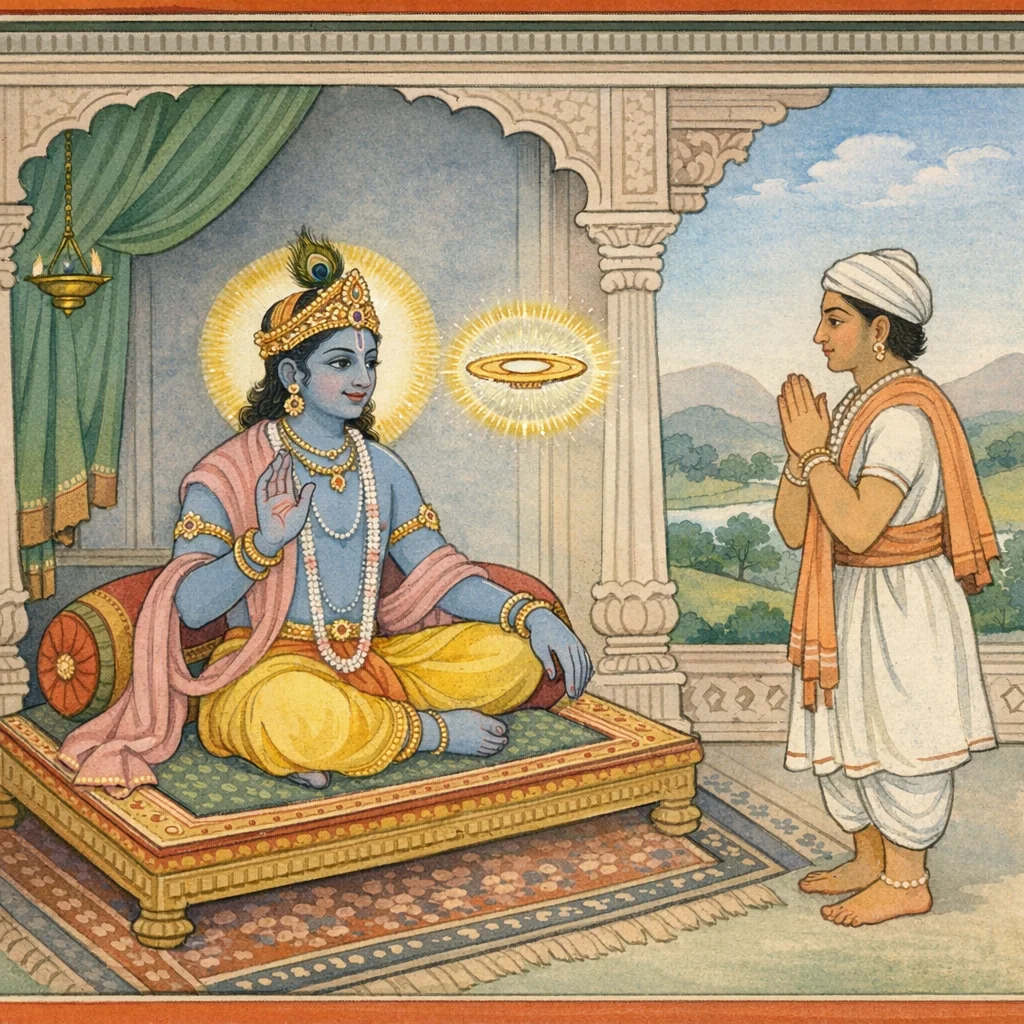
Maitreya asks Parashara about Krishna's deeds. Parashara narrates the story of Paundraka, who falsely claimed to be the avatar. Krishna killed him and the King of Kashi. The King's son invoked a deadly spirit (Kritya) through Shiva to kill Krishna. Krishna released the Sudarshana Chakra, which chased the spirit back, burned Varanasi to ashes, and returned to the Lord.
Shlokas
Verse 1
चक्रे कर्म महच् छौरिर् बिभ्राणो मानुषीं तनुम् जिगाय शक्रं शर्वं च सर्वान् देवांश् च लीलया
Assuming a human body, Śauri performed a mighty deed: in effortless divine play He surpassed Śakra (Indra), Śarva (Śiva), and all the gods—revealing that though He appears mortal, He remains the sovereign Lord over every divine power.
Verse 2
यच् चान्यद् अकरोत् कर्म दिव्यचेष्टाविधानकृत् तत् कथ्यतां महाभाग परं कौतूहलं हि मे
And whatever other deeds He performed—He who ordains the very pattern of divine acts—pray tell me those as well, O greatly fortunate one; for a deep and urgent curiosity has arisen in me.
Verse 3
गदतो मम विप्रर्षे श्रूयताम् इदम् आदरात् नरावतारे कृष्णेन दग्धा वाराणसी यथा
O best of Brahmin sages, listen with reverent attention as I speak—how, when the Supreme Lord appeared in human form, Kṛṣṇa burned Vārāṇasī (Kāśī).
Verse 4
पौण्ड्रको वासुदेवस् तु वासुदेवो ऽभवद् भुवि अवतीर्णस् त्वम् इत्य् उक्तो जनैर् अज्ञानमोहितैः
But Pauṇḍraka, who bore the name “Vāsudeva,” came to be hailed on earth as though he were Vāsudeva Himself—people, deluded by ignorance, proclaiming of him: “You are the descended one, the avatāra!”
Verse 5
स मेने वासुदेवो ऽहम् अवतीर्णो महीतले नष्टस्मृतिस् ततः सर्वं विष्णुचिह्नम् अचीकरत्
His memory being eclipsed, he imagined, “I am Vāsudeva, descended upon the earth,” and then proceeded to fashion upon himself every mark and insignia associated with Viṣṇu.
Verse 6
दूतं च प्रेषयाम् आस कृष्णाय सुमहात्मने त्यक्त्वा चक्रादिकं चिह्नं मदीयं नाम चात्मनः
Then he dispatched a messenger to Kṛṣṇa, that great-souled one; and, setting aside the royal insignia marked with the discus and the rest, he also relinquished the very name by which he had identified himself.
Verse 7
वासुदेवात्मकं मूढ मुक्त्वा गर्वं विशेषतः आत्मनो जीवितार्थाय ततो मे प्रणतिं व्रज
O fool—abandon your pride altogether, and recognize that your very self is grounded in Vāsudeva. Then, for the sake of your own life and well-being, come and bow to me in surrender.
Verse 8
इत्य् उक्तः संप्रहस्यैनं दूतं प्राह जनार्दनः निजचिह्नम् अहं चक्रं समुत्स्रक्ष्ये त्वयीति वै
Thus addressed, Janārdana smiled and, with a light laugh, spoke to that messenger: “Indeed—I shall hurl at you my own emblem, the discus (cakra).”
Verse 9
वाच्यश् च पौण्ड्रको गत्वा त्वया दूत वचो मम ज्ञातस् त्वद्वाक्यसद्भावो यत् कार्यं तद् विधीयताम्
“And you, messenger—go to Pauṇḍraka and convey my words. I have understood the purport and intent behind your statement; therefore, let whatever must be done in response be carried out accordingly.”
Verse 10
गृहीतचिह्न एवाहम् आगमिष्यामि ते पुरम् समुत्स्रक्ष्यामि ते चक्रं निजचिह्नम् असंशयम्
Bearing the agreed sign, I shall indeed come to your city; and without doubt I will bestow upon you my discus, the Chakra—my own unmistakable emblem.
Verse 11
आज्ञापूर्वं च यद् इदम् आगच्छेति त्वयोदितम् संपादयिष्ये श्वस् तुभ्यं तद् अप्य् एषो ऽविलम्बितम्
And the command you issued beforehand—“Come”—I shall fulfill for you tomorrow; this too shall not be delayed.
Verse 12
शरणं ते समभ्येत्य कर्तास्मि नृपते तथा यथा त्वत्तो भयं भूयो न मे किंचिद् भविष्यति
Having come to you for refuge, O King, I shall act so that from you no fear will ever again arise for me, not even in the least.
Verse 13
इत्य् उक्ते ऽपगते दूते संस्मृत्याभ्यागतं हरिः गरुत्मन्तम् अथारुह्य त्वरितं तत्पुरं ययौ
When this was spoken and the messenger had departed, Hari, recalling what had come to pass, mounted Garuḍa and swiftly set out for that city.
Verse 14
तस्यापि केशवोद्योगं श्रुत्वा काशिपतिस् तदा सर्वसैन्यपरीवारः पार्ष्णिग्राह उपाययौ
When the lord of Kāśī heard of Keśava’s mobilization, he at once advanced, surrounded by all his forces, like a relentless pursuer closing upon another’s heels.
Verse 15
ततो बलेन महता काशिराजबलेन च पौण्ड्रको वासुदेवो ऽसौ केशवाभिमुखं ययौ
Then Pauṇḍraka—who styled himself “Vāsudeva”—set out to face Keśava, advancing with a mighty host, strengthened also by the army of the king of Kāśī.
Verse 16
तं ददर्श हरिर् दूराद् उदारस्यन्दने स्थितम् चक्रहस्तं गदाखड्गबाहुं पाणिगताम्बुजम्
From afar, Hari beheld him—poised upon a splendid chariot—bearing the discus in his hand, with mace and sword as his arms, and with the lotus held ready in his palm.
Verse 17
स्रग्धरं धृतशार्ङ्गं च सुपर्णरचितध्वजम् वक्षःस्थले कृतं चास्य श्रीवत्सं ददृशे हरिः
He beheld him—garlanded, bearing the Śārṅga bow, with a banner marked by Suparṇa (Garuḍa), and with the Śrīvatsa sign set upon his chest.
Verse 18
किरीटकुण्डलधरं पीतवासःसमन्वितम् दृष्ट्वा तं भावगम्भीरं जहास गरुडध्वजः
Beholding him—adorned with crown and earrings, arrayed in yellow raiment, and profound in His inward majesty—Garuḍadhvaja smiled.
Verse 19
युयुधे च बलेनास्य हस्त्यश्वबलिना द्विज निस्त्रिंशर्ष्टिगदाशूलशक्तिकार्मुकशालिना
And, O twice-born one, he fought with his force—an army strong with elephants and horses—bristling with swords, spears, maces, tridents, lances, and bows.
Verse 20
क्षणेन शार्ङ्गनिर्मुक्तैः शरैर् अरिविदारणैः गदाचक्रनिपातैश् च सूदयाम् आस तद्बलम्
In a single instant, with enemy-rending arrows loosed from Śārṅga, and with the crashing blows of mace and discus besides, he utterly crushed that opposing host.
Verse 21
काशिराजबलं चैव क्षयं नीत्वा जनार्दनः उवाच पौण्ड्रकं मूढम् आत्मचिह्नोपलक्षणम्
Having also brought the forces of the King of Kāśī to destruction, Janārdana then addressed the deluded Pauṇḍraka—who paraded about with stolen “personal” emblems, mimicking the Lord’s own insignia.
Verse 22
पौण्ड्रकोक्तं त्वया यत् तु दूतवक्त्रेण मां प्रति समुत्सृजेति चिह्नानि तत् ते संपादयाम्य् अहम्
As for what you conveyed to me through the mouth of Pauṇḍraka’s messenger—“Cast away those insignia!”—I shall indeed set those insignia in order for you, bringing them to their rightful end.
Verse 23
चक्रम् एतत् समुत्सृष्टं गदेयं ते विसर्जिता गरुत्मान् एष निर्दिष्टः समारोहतु ते ध्वजम्
“This discus has been set in motion; this mace has been dispatched for you. And Garuḍa, thus appointed, is here—let him mount your banner, as your emblem of sovereign victory.”
Verse 24
इत्य् उच्चार्य विमुक्तेन चक्रेणासौ विदारितः पोथितो गदया भग्नो गरुत्मांश् च गरुत्मता
So saying, he was torn apart by the released discus; he was crushed and broken by the mace—and even the Garuḍa of the one who bore Garuḍa as his emblem was overpowered by Garuḍa himself.
Verse 25
ततो हाहाकृते लोके काशीनाम् अधिपो बली युयुधे वासुदेवेन मित्रस्यापचितौ स्थितः
Then, as the world rose in cries of alarm, the mighty lord of Kāśī—standing forth to avenge the outrage done to his ally—joined battle with Vāsudeva.
Verse 26
ततः शार्ङ्गधनुर्मुक्तैश् छित्त्वा तस्य शरैः शिरः काशिपुर्यां स चिक्षेप कुर्वंल् लोकस्य विस्मयम्
Then, with arrows loosed from Śārṅga—the Lord’s celestial bow—he severed the foe’s head and cast it into the city of Kāśī, astonishing the whole world.
Verse 27
हत्वा च पौण्ड्रकं शौरिः काशिराजं च सानुगम् पुनर् द्वारवतीं प्राप्तो रेमे स्वर्गगतो यथा
Having slain Pauṇḍraka and the king of Kāśī with all his followers, Śauri returned to Dvāravatī and rejoiced there in sovereign ease, like one who has attained heaven.
Verse 28
तच्छिरः पतितं दृष्ट्वा तत्र काशिपतेः पुरे जनः किम् एतद् इत्य् आह केनेत्य् अत्यन्तविस्मितः
Seeing that severed head lying in the city of the lord of Kāśī, the people, utterly astonished, cried out: “What is this? By whom has this been done?”
Verse 29
ज्ञात्वा तं वासुदेवेन हतं तस्य सुतस् ततः पुरोहितेन सहितस् तोषयाम् आस शंकरम्
When his son learned that he had been slain by Vāsudeva, he—together with the household priest—set about propitiating Śaṅkara.
Verse 30
अविमुक्ते महाक्षेत्रे तोषितस् तेन शंकरः वरं वृणीष्वेति तदा तं प्रोवाच नृपात्मजम्
In Avimukta, the great and holy kṣetra, Śaṅkara—pleased by him—then spoke to the prince: “Choose a boon.”
Verse 31
स वव्रे भगवन् कृत्या पितृहन्तुर् वधाय मे समुत्तिष्ठतु कृष्णस्य त्वत्प्रसादान् महेश्वर
He implored: “O Lord, let that kṛtyā rise up to slay Kṛṣṇa, the killer of my father. By your favor, O Maheśvara, let it be accomplished.”
Verse 32
एवं भविष्यतीत्य् उक्ते दक्षिणाग्नेर् अनन्तरम् महाकृत्या समुत्तस्थौ तस्यैवाग्निनिवेशनात्
When it was declared, “So it shall come to pass,” immediately thereafter—from the southern sacrificial fire itself, from the very place where it had been established—there rose a mighty, dread kṛtyā.
Verse 33
ततो ज्वालाकरालास्या ज्वलत्केशकलापिका कृष्ण कृष्णेति कुपिता कृत्या द्वारवतीं ययौ
Then that kṛtyā—her mouth gaping, dreadful with flames, her mass of hair ablaze—rushed in fury, crying again and again, “Krishna! Krishna!”, and made for Dvāravatī.
Verse 34
ताम् अवेक्ष्य जनस् त्रासविचलल्लोचनो मुने ययौ शरण्यं जगतां शरणं मधुसूदनम्
Seeing her, O sage, the people—eyes trembling with fear—hastened to Madhusūdana, the Refuge of all who seek refuge, the Shelter of the worlds.
Verse 35
काशिराजसुतेनेयम् आराध्य वृषभध्वजम् उत्पादिता महाकृत्येत्य् अवगम्याथ चक्रिणा
Then Cakrī, the wielder of the discus, understood: “This great calamity has been brought forth by the daughter of the King of Kāśī, after propitiating Vṛṣabhadhvaja (Śiva, whose banner bears the bull).”
Verse 36
जहि कृत्याम् इमाम् उग्रां वह्निज्वालाजटाकुलाम् चक्रम् उत्सृष्टम् अक्षेषु क्रीडासक्तेन लीलया
“Destroy this fierce kṛtyā—dreadful, matted with streaming tongues of fire. The discus, cast off in mere play by one absorbed in the dice-game, has been released among the dice.”
Verse 37
तदग्निमालाजटिलज्वालोद्गारातिभीषणाम् कृत्याम् अनुजगामाशु विष्णुचक्रं सुदर्शनम्
At once, Sudarśana—the discus of Lord Viṣṇu—swiftly pursued that kṛtyā, terrifying with its tangled garlands of fire and its erupting tongues of flame.
Verse 38
चक्रप्रतापविध्वस्ता कृत्या माहेश्वरी तदा ननाश वेगिनी वेगात् तद् अप्य् अनुजगाम ताम्
Then the Maheshvarī kṛtyā—shattered by the overpowering might of the Discus—fled at once, swift as a storm; yet that divine force pursued her without relenting.
Verse 39
कृत्या वाराणसीम् एव प्रविवेश त्वरान्विता विष्णुचक्रप्रतिहतप्रभावा मुनिसत्तम
O best of sages, the Kṛtyā—her power shattered by the discus of Lord Viṣṇu—hurriedly entered Vārāṇasī itself.
Verse 40
ततः काशिबलं भूरि प्रमथानां तथा बलम् समस्तशस्त्रास्त्रयुतं चक्रस्याभिमुखं ययौ
Then the vast forces of Kāśī, together with the hosts of the Pramathas, fully armed with every weapon and missile, advanced straight toward the Cakra.
Verse 41
शस्त्रास्त्रमोक्षचतुरं दग्ध्वा तद् बलम् ओजसा कृत्यागर्भाम् अशेषां तां तदा वाराणसीं पुरीम्
Then, by the sheer force of his own spiritual energy, he burned up that power—so deft in the discharge of weapons and missiles—and at that very time reduced the entire city of Vārāṇasī, filled with kṛtyā, to ashes.
Verse 42
सभूभृद्भृत्यपौरां तु साश्वमातङ्गमानवाम् अशेषकोशकोष्ठां तां दुर्निरीक्ष्यां सुरैर् अपि
That royal realm was filled with the king’s retainers and townsfolk, thronged with horses, elephants, and men; its treasuries and granaries were vast—so splendid that even the gods found it hard to behold.
Verse 43
ज्वालापरिष्कृताशेषगृहप्राकारचत्वराम् ददाह तद् धरेश् चक्रं सकलाम् एव तां पुरीम्
Forged into a single purifying blaze—its houses, ramparts, and crossroads all aflame—the Cakra of the Lord of the earth burned that entire city.
Verse 44
अक्षीणामर्षम् अत्यल्पसाध्यसाधनसस्पृहम् तच् चक्रं प्रस्फुरद्दीप्ति विष्णोर् अभ्याययौ करम्
Then that discus—its wrath unspent, eager even for the slightest task—flashing with a tremulous blaze, sped at once back to the hand of Lord Viṣṇu.
Frequently Asked Questions
Pauṇḍraka is a deluded king who imitates Viṣṇu’s emblems and claims avatāra-status. His error is ahaṅkāra rooted in moha: appropriating Bhagavān’s identity and symbols without realization, which the text frames as adharma and spiritual fraud.
It signifies the supremacy of Viṣṇu’s ordinance over all hostile forces: when a kṛtyā (abhicāra) is unleashed, Sudarśana reverses it and consumes the adharmic support-system that harbors it. The episode is less a geography-attack and more a dharma-enforcement narrative centered on Viṣṇu-śakti.
Śiva grants a boon within his sphere (kṛtyā-creation), yet the kṛtyā is ultimately powerless before Sudarśana. The narrative preserves Śiva’s divinity while subordinating outcomes to Viṣṇu’s higher sovereignty—consistent with Purāṇic Vaiṣṇava hierarchies.