Adhyaya 33
बाणयुद्धम्, हरिहरसंवादः, ज्वरप्रकरणम्, अनिरुद्धमोचनम् (Bāṇa’s War, the Jvara Episode, Hari–Hara Dialogue, and Aniruddha’s Release)
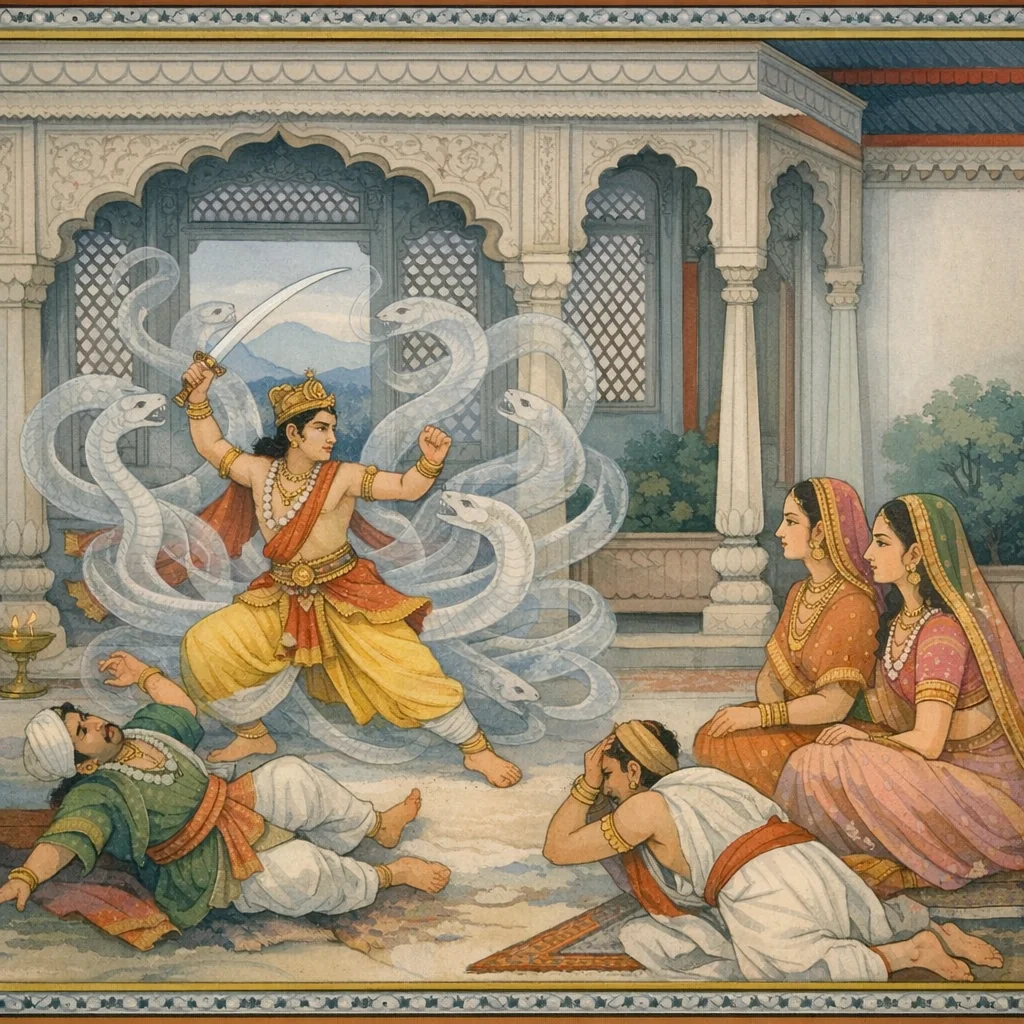
Parāśara describes Bāṇa’s thirst for battle and Śiva’s response. Citralekhā, by yogic power, brings Aniruddha into Uṣā’s chamber; when discovered he defeats the guards, but Bāṇa—on his ministers’ counsel—uses māyā and binds him with the serpent-weapon (nāgāstra). Nārada alerts the Yādavas; Hari rides Garuḍa with Balarāma and Pradyumna to attack Śoṇitapura, destroying the Pramathas. A Māheśvara Jvara confronts Kṛṣṇa, but the Vaiṣṇava Jvara drives it back; Brahmā begs forgiveness. Kṛṣṇa withdraws the Vaiṣṇava fever into Himself, and Jvara grants a boon: whoever remembers this battle becomes free from fever. The war intensifies as Śiva, Kārttikeya, and their hosts fight, yet Govinda’s Jṛmbhaṇa weapon stupefies Śiva and Guha retreats. When Kṛṣṇa readies Sudarśana, Koṭavī appears; nonetheless Bāṇa’s arms are severed. Śiva praises Kṛṣṇa as Purūṣottama and asks that his boon be protected; Kṛṣṇa honors it and teaches abheda—Śiva should see the Self as non-different from Him. Aniruddha and Uṣā are released and return to Dvārakā.
Shlokas
Verse 1
बाणो ऽपि प्रणिपत्याग्रे मैत्रेयाह त्रिलोचनम् देव बाहुसहस्रेण निर्विण्णो ऽहं विनाहवम्
Bāṇa too, having first bowed down in reverence, said to Maitreya of the Three‑eyed Lord: “O Deva, though I possess a thousand arms, I have grown weary; without battle my spirit finds no rest.”
Verse 2
कच्चिन् ममैषां बाहूनां साफल्यजनको रणः भविष्यति विना युद्धं भाराय मम किं भुजैः
Will there truly come a battle that makes these arms of mine meaningful? For without war, what are my arms to me but a burden?
Verse 3
मयूरध्वजभङ्गस् ते यदा बाण भविष्यति पिशिताशिजनानन्दं प्राप्स्यसे त्वं तदा रणम्
O Bāṇa, when the arrow that shatters the peacock‑banner is to be yours, then you shall attain that battlefield which delights the flesh‑eating hosts; when war ripens, you will enter the fray.
Verse 4
ततः प्रणम्य मुदितः शम्भुम् अभ्यागतो गृहम् भग्नं च ध्वजम् आलोक्य हृष्टो हर्षान्तरं ययौ
Then, with a gladdened heart, he bowed to Śambhu and returned to his home. Seeing the banner broken, he was filled with delight—his joy deepening into inward exultation.
Verse 5
एतस्मिन्न् एव काले तु योगविद्याबलेन तम् अनिरुद्धम् अथानिन्ये चित्रलेखा वराप्सराः
At that very time, the noble apsaras Citralekhā, by the power of her yogic knowledge, brought Aniruddha to that place.
Verse 6
कन्यान्तःपुरमध्ये तं रममाणं सहोषया विज्ञाय रक्षिणो गत्वा शशंसुर् दैत्यभूपतेः
Seeing him within the inner chambers of the maidens’ palace, sporting there together with Uṣā, the guards went at once and reported the matter to the Daitya king.
Verse 7
व्यादिष्टं किंकराणां तु सैन्यं तेन महात्मना जघान परिघं लोहम् आदाय परवीरहा
Then that host of attendants, dispatched on command, was struck down by that great-souled hero, slayer of enemy-champions, who seized an iron club and felled them.
Verse 8
हतेषु तेषु बाणो ऽपि रथस्थस् तद्वधोद्यतः युध्यमानो यथाशक्ति यदा वीर्येण निर्जितः
When those warriors had been slain, Bāṇa too, stationed upon his chariot and intent on their destruction, fought with all the strength he could muster; yet in the end he was overcome by superior valor.
Verse 9
मायया युयुधे तेन स तदा मन्त्रिचोदितः ततस् तं पन्नगास्त्रेण बबन्ध यदुनन्दनम्
Urged on at that moment by his counsellors, he engaged in battle through deceitful illusion; and then, by deploying the Serpent-Weapon, he bound fast the delight of the Yadus.
Verse 10
द्वारवत्यां क्व यातो ऽसाव् अनिरुद्धेति जल्पताम् यदूनाम् आचचक्षे तं बद्धं बाणेन नारदः
In Dvāravatī, as the Yādavas kept asking one another, “Where has Aniruddha gone?”, the sage Nārada told them that Bāṇa had seized him and bound him.
Verse 11
तं शोणितपुरे श्रुत्वा नीतं विद्याविदग्धया योषिता प्रत्ययं जग्मुर् यादवा नामरैर् इति
Hearing that a maiden skilled in mystic arts had taken him to Śoṇitapura, the Yādavas—so the report ran—came to a settled certainty about the matter.
Verse 12
ततो गरुडम् आरुह्य स्मृतमात्रागतं हरिः बलप्रद्युम्नसहितो बाणस्य प्रययौ पुरम्
Then Hari—who comes at the mere act of remembrance—mounted Garuḍa, and with Balarāma and Pradyumna set forth toward Bāṇa’s city.
Verse 13
पुरीप्रवेशे प्रमथैर् युद्धम् आसीन् महात्मनः ययौ बाणपुराभ्याशं नीत्वा तान् संक्षयं हरिः
At the city’s very gate, battle flared with the Pramathas against that great-souled One; Hari drove them to destruction and advanced to the vicinity of Bāṇapura.
Verse 14
ततस् त्रिपादस् त्रिशिरा ज्वरो माहेश्वरो महान् बाणरक्षार्थम् अत्यर्थं युयुधे शार्ङ्गधन्वना
Then arose the great Māheśvara Fever, three-footed and three-headed; and, intent on protecting Bāṇa, it fought with fierce resolve against the wielder of Śārṅga—Lord Viṣṇu (Kṛṣṇa) Himself.
Verse 15
तद्भस्मस्पर्शसंभूततापः कृष्णाङ्गसंगमात् अवाप बलदेवो ऽपि श्रमम् आमीलितेक्षणः
From the heat born of contact with those ashes—made fiercer by the nearness of Kṛṣṇa’s body—even Baladeva was overcome by weariness, his eyes growing heavy and half-closing.
Verse 16
ततः स युद्ध्यमानस् तु सहदेवेन शार्ङ्गिणा वैष्णवेन ज्वरेणाशु कृष्णदेहान् निराकृतः
Then, even as it fought on, it was swiftly driven away from Kṛṣṇa’s very presence; Sahadeva, bearer of Śārṅga, repelled it by the Vaiṣṇava Fever—the sovereign power that shields the Lord’s own body.
Verse 17
नारायणभुजाघातपरिपीडनविह्वलम् तं वीक्ष्य क्षम्यताम् अस्येत्य् आह देवः पितामहः
Seeing him reeling in anguish, crushed by the blow of Nārāyaṇa’s arm, the divine Grandfather Brahmā spoke: “May he be forgiven.”
Verse 18
ततश् च क्षान्तम् एवेति प्रोक्त्वा तं वैष्णवं ज्वरम् आत्मन्य् एव लयं निन्ये भगवान् मधुसूदनः
Then, declaring, “Let it be forgiven—so be it,” the Blessed Madhusūdana drew that Vaiṣṇava Fever back into Himself, causing it to dissolve into His own being.
Verse 19
मम त्वया समं युद्धं ये स्मरिष्यन्ति मानवाः विज्वरास् ते भविष्यन्तीत्य् उक्त्वा चैनं ययौ ज्वरः
“Those mortals who remember this battle fought between you and me shall be free from fever.” Having said this, Jvara departed from him.
Verse 20
ततो ऽग्नीन् भगवान् पञ्च जित्वा नीत्वा तथा क्षयम् दानवानां बलं विष्णुश् चूर्णयाम् आस लीलया
Thereafter, the Blessed Lord subdued the five fires and brought them to cessation; and Lord Viṣṇu, as if in effortless lila, crushed the might of the Dānavas to powder.
Verse 21
ततः समस्तसैन्येन दैतेयानां बलेः सुतः युयुधे शंकरश् चैव कार्तिकेयश् च शौरिणा
Then Bali’s son, foremost among the Daityas, advanced with his entire host to fight; and Śaṅkara himself, and Kārtikeya as well, battled against Śauri (Kṛṣṇa).
Verse 22
हरिशंकरयोर् युद्धम् अतीवासीत् सुदारुणम् चुक्षुभुः सकला लोकाः यत्रास्त्रांशुप्रतापिताः
The battle between Hari and Śaṅkara grew exceedingly fierce and dreadful; all the worlds were thrown into turmoil, scorched by the blazing radiance of the weapons unleashed there.
Verse 23
प्रलयो ऽयम् अशेषस्य जगतो नूनम् आगतः मेनिरे त्रिदशा यत्र वर्तमाने महाहवे
“Surely the dissolution of the entire universe has arrived,” thought the gods, as that vast and dreadful battle raged on.
Verse 24
जृम्भणास्त्रेण गोविन्दो जृम्भयाम् आस शंकरम् ततः प्रणेशुर् दैतेयाः प्रमथाश् च समन्ततः
Then Govinda, wielding the Jṛmbhaṇa weapon, made Śaṅkara himself yawn into stupefaction; and at once, on every side, the Daityas and the Pramathas fell senseless, overcome by the Lord’s sovereign might.
Verse 25
जृम्भाभिभूतस् तु हरो रथोपस्थ उपाविशत् न शशाक तदा योद्धुं कृष्णेनाक्लिष्टकर्मणा
Overcome by yawning and stupor, Hara (Śiva) sat down upon the seat of his chariot; and at that time he could not continue the combat against Kṛṣṇa, whose deeds are ever effortless and unwearied.
Verse 26
गरुडक्षतवाहश् च प्रद्युम्नास्त्रनिपीडितः कृष्णहुंकारनिर्धूतशक्तिश् चापययौ गुहः
And Guha—his mount scarred by Garuḍa, crushed by Pradyumna’s weapon, and his spear-force shaken off and scattered by Kṛṣṇa’s thunderous battle-cry—turned back and fled the field.
Verse 27
जृम्भिते शंकरे नष्टे दैत्यसैन्ये गुहे जिते नीते प्रमथसैन्ये च संक्षयं शार्ङ्गधन्वना
When Śaṅkara had been made to yawn and thus rendered powerless; when the Daitya host was shattered; when Guha was overcome; and when the Pramatha troops too were driven to utter ruin—so did the wielder of the Śārṅga bow bring every opposing force to destruction.
Verse 28
नन्दीशसंगृहीताश्वम् अधिरूढो महारथम् बाणस् तत्राययौ योद्धुं कृष्णकार्ष्णिबलैः सह
Mounting the great chariot whose horses had been harnessed by Nandīśa, Bāṇa came there ready to fight, advancing against Kṛṣṇa and the armies of the Vṛṣṇis.
Verse 29
बलभद्रो महावीर्यो बाणसैन्यम् अनेकधा विव्याध बाणैः प्रभ्रश्य धर्मतश् चापलायत
Then Balabhadra, of immense valor, pierced Bāṇa’s army in countless ways with his arrows; and that host—broken and scattered—fled, driven by the power of dharma.
Verse 30
आकृष्य लाङ्गलाग्रेण मुसलेनावपोथितम् बलं बलेन ददृशे बाणो बाणैश् च चक्रिणा
Dragging him in with the tip of his ploughshare and striking him down with the mace, Balarāma beheld the foe’s strength shattered by strength itself; while Kṛṣṇa, wielder of the discus, met Bāṇa with a rain of arrows—arrow answering arrow.
Verse 31
ततः कृष्णस्य बाणेन युद्धम् आसीत् समन्ततः
Then, by the force of Kṛṣṇa’s arrows, the battle flared up on every side, spreading in all directions.
Verse 32
परस्परम् इषून् दीप्तान् कायत्राणविभेदकान् कृष्णश् चिच्छेद बाणैस् तान् बाणेन प्रहितान् शरान् बिभेद केशवं बाणो बाणं विव्याध चक्रभृत्
They hurled blazing, armor-rending arrows at one another. Kṛṣṇa severed those missiles with his own shafts; yet Bāṇa’s arrows split through Keśava’s volleys, and the wielder of the discus pierced Bāṇa in return—weapon meeting weapon in a fierce, measured contest.
Verse 33
मुमुचाते तथास्त्राणि बाणकृष्णौ जिगीषया परस्परं क्षतिपरौ परमामर्षिणौ द्विज
Then Bāṇa and Kṛṣṇa, each intent on victory, loosed their missiles against one another—both relentless in dealing harm, both aflame with supreme wrath, O brāhmaṇa.
Verse 34
छिद्यमानेष्व् अशेषेषु शरेष्व् अस्त्रे च सीदति प्राचुर्येण हरिर् बाणं हन्तुं चक्रे ततो मनः
When all his missiles were being cut down, and even his divine weapons were failing under that onslaught, Hari—by sheer abundance of power and means—set his mind upon the resolve to strike down Bāṇa.
Verse 35
ततो ऽर्कशतसंघाततेजसः सदृशद्युतिः जग्राह दैत्यचक्रारिर् हरिश् चक्रं सुदर्शनम्
Then Hari—foe of the Daityas—radiant like the blazing splendor of a hundred suns, took up the Sudarśana discus, the divine wheel of sovereign power and perfect sight.
Verse 36
मुञ्चतो बाणनाशाय तच् चक्रं मधुविद्विषः नग्ना दैतेयविद्याभूत् कोटवी पुरतो हरेः
As the Slayer of Madhu hurled His discus to destroy Bāṇa, Koṭavī—by the power of Daitya sorcery—appeared naked before Hari, standing directly in His path.
Verse 37
ताम् अग्रतो हरिर् दृष्ट्वा मीलिताक्षः सुदर्शनम् मुमोच बाणम् उद्दिश्य छेत्तुं बाहुवनं रिपोः
Seeing her standing before him, Hari—his eyes half-closed in unwavering concentration—released the Sudarśana like a missile, aiming to sever the enemy’s forest-like multitude of arms.
Verse 38
क्रमेण तत् तु बाहूनां बाणस्याच्युतचोदितम् छेदं चक्रे ऽसुरापास्तशस्त्रौघक्षपणादृतम्
Then, urged on by Acyuta, the discus began cutting down Bāṇa’s arms in measured succession, to neutralize the torrent of weapons hurled by that asura.
Verse 39
छिन्ने बाहुवने तत् तु करस्थं मधुसूदनः मुमुक्षुर् बाणनाशाय विज्ञातस् त्रिपुरद्विषा
When the forest of his arms was hewn away, Madhusūdana held him fast in His grasp—intent on ending Bāṇa’s assault; and this was understood by the Foe of Tripura (Śiva).
Verse 40
स उपेत्याह गोविन्दं सामपूर्वम् उमापतिः विलोक्य बाणं दोर्दण्डच्छेदासृक्स्राववर्षिणम्
Then Umāpati (Śiva) approached Govinda and, first speaking in a conciliatory tone, looked upon Bāṇa—whose severed arm-stumps were pouring forth a rain of blood—and addressed him.
Verse 41
कृष्ण कृष्ण जगन्नाथ जाने त्वां पुरुषोत्तमम् परेशं परमात्मानम् अनादिनिधनं परम्
O Krishna, Krishna—Lord of the universe! I know You as the Supreme Person: the Lord of all lords, the Supreme Self, the highest Reality—without beginning and without end.
Verse 42
देवतिर्यङ्मनुष्येषु शरीरग्रहणात्मिका लीलेयं सर्वभूतस्य तव चेष्टोपलक्षणा
In gods, in animals, and in human beings, this taking on of bodies is but Your līlā—an outward sign of the free, sovereign activity of You who are the indwelling Self of all beings.
Verse 43
तत् प्रसीदाभयं दत्तं बाणस्यास्य मया प्रभो तत् त्वया नानृतं कार्यं यन् मया व्याहृतं वचः
Therefore, be gracious, O Lord. I have granted fearlessness to this Bāṇa; let not the word I have spoken be rendered untrue by You.
Verse 44
अस्मत्संश्रयवृद्धो ऽयं नापराध्यस् तवाव्यय मया दत्तवरो दैत्यस् ततस् त्वां क्षमयाम्य् अहम्
O Imperishable One, this Daitya has grown powerful under my shelter; therefore he should not be held at fault. Since the boon was granted by me, I myself seek your pardon.
Verse 45
इत्य् उक्तः प्राह गोविन्दः शूलपाणिम् उमापतिम् प्रसन्नवदनो भूत्वा गतामर्षो ऽसुरं प्रति
Thus addressed, Govinda spoke to Śūlapāṇi, the Lord of Umā. With a serene face, his displeasure dissolved, and he turned his attention toward the asura.
Verse 46
युष्मद्दत्तवरो बाणो जीवताम् एष शंकर त्वद्वाक्यगौरवाद् एतन् मया चक्रं निवर्तितम्
“O Śaṅkara, let this arrow—endowed with the boon granted by you—remain and preserve life. Out of reverence for your word, I have withdrawn this discus.”
Verse 47
त्वया यद् अभयं दत्तं तद् दत्तम् अखिलं मया मत्तो ऽविभिन्नम् आत्मानं द्रष्टुम् अर्हसि शंकर
Whatever fearlessness you have granted—know that it has, in truth, been granted wholly by Me. O Śaṅkara, you should behold your own Self as not separate from Me.
Verse 49
इत्य् उक्त्वा प्रययौ कृष्णः प्राद्युम्निर् यत्र तिष्ठति तद्बन्धफणिनो नेशुर् गरुडानिलशोषिताः
Having spoken thus, Śrī Kṛṣṇa set forth to the place where Pradyumna was staying. But the serpent-hoods that had served as his bonds could no longer hiss—parched as though dried by the wind stirred by Garuḍa.
Verse 50
ततो ऽनिरुद्धम् आरोप्य सपत्नीकं गरुत्मति आजग्मुर् द्वारकां रामकार्ष्णिदामोदराः पुरीम्
Then, placing Aniruddha together with his wife upon Garuḍa, they set out and arrived at Dvārakā, the splendid royal city of Rāma, Kārṣṇi (Kṛṣṇa), and Dāmodara.
Frequently Asked Questions
It dramatizes the hierarchy of powers: the Māheśvara fever is checked by the Vaiṣṇava fever, and Kṛṣṇa reabsorbs that power into Himself, implying that protective śakti ultimately rests in Viṣṇu. The promised benefit (smaraṇa-phala) frames the narrative as devotional remembrance with healing merit.
The episode asserts Viṣṇu’s supreme sovereignty in līlā while preserving Śiva’s dignity through explicit praise and reconciliation. The culminating teaching is metaphysical: Kṛṣṇa asks Śiva to see the Self as non-separate from Him, and Kṛṣṇa honors Śiva’s boon by sparing Bāṇa.