Adhyaya 1
मन्वन्तर-क्रमः (अतीत-सप्तमन्वन्तराः) तथा मन्वन्तरावताराः
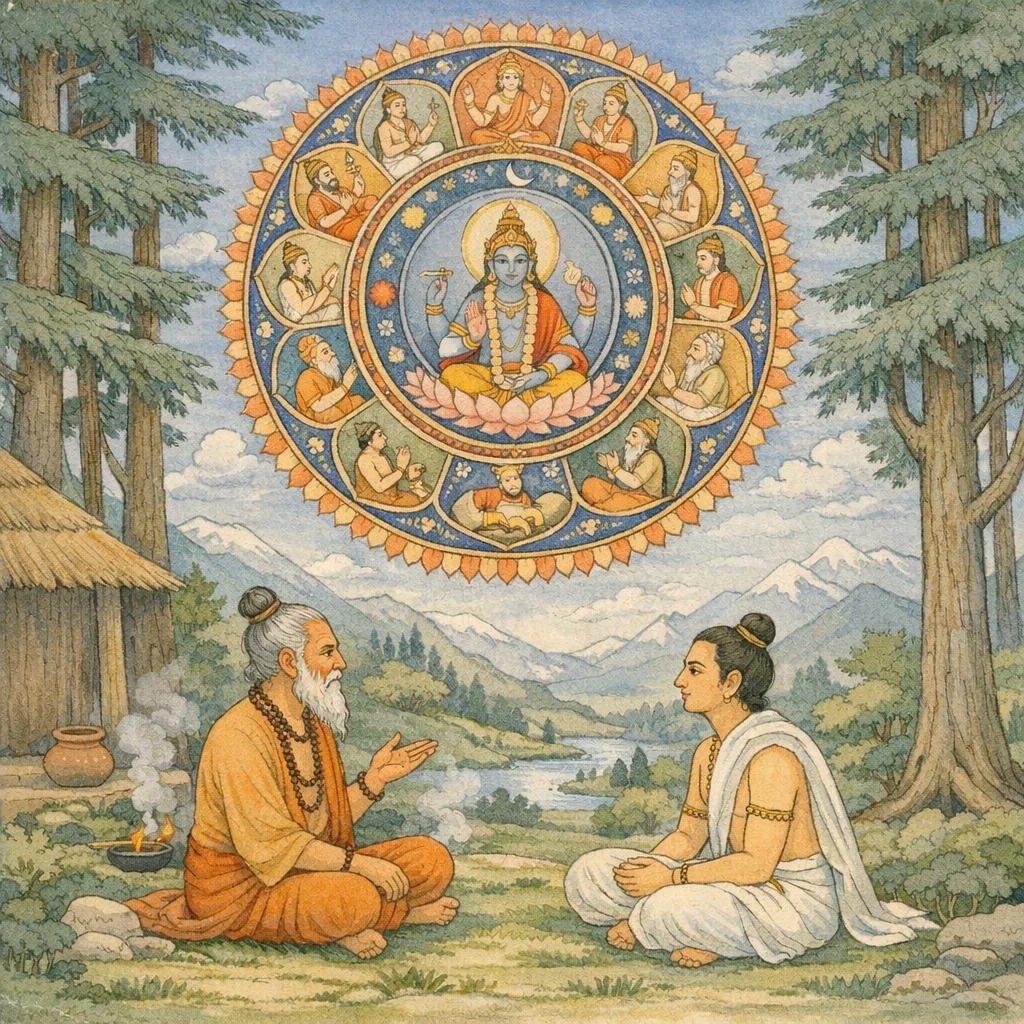
Maitreya, having heard the earlier accounts of cosmic order and the deeds of Dhruva and Prahlāda, asks Parāśara to teach the orderly succession of the Manvantaras, with their Manus and Indras. Parāśara names the first six Manus and confirms the present seventh as Vaivasvata (Śrāddhadeva), then for each Manvantara describes the deva hosts, the Indra-name, the Saptarṣis, and Manu’s sons and royal lines (especially from Svārociṣa to Vaivasvata). He then gives the doctrinal synthesis: Viṣṇu’s śakti, sattva-dominant, abides as the power of preservation through all Manvantaras. In every Manvantara the same Lord manifests with a particular name and form—Yajña, Ajita, Satya, Hari, Saṃbhūta, Vaikuṇṭha, Vāmana—to protect beings and restore cosmic governance, as when Vāmana’s three strides secure sovereignty for Indra. The chapter concludes by identifying all cosmic offices as Viṣṇu’s vibhūtis and explaining “Viṣṇu” from the root viś, emphasizing His all-pervasion and supreme causality.
Shlokas
Verse 1
कथिता गुरुणा सम्यग् भूसमुद्रादिसंस्थितिः सूर्यादीनां च संस्थानं ज्योतिषाम् अपि विस्तरात्
The revered Guru has already explained, rightly and in full, the ordered arrangement of the earth, the oceans, and their divisions, and has also described in detail the positions and system of the Sun and the other heavenly lights.
Verse 2
देवादीनां तथा सृष्टिर् ऋषीणां चापि वर्णिता चातुर्वर्ण्यस्य चोत्पत्तिस् तिर्यग्योनिगतस्य च
The creation of the gods and other celestial orders has been set forth, and the origin of the seers as well; likewise has been described the rise of the fourfold social order, and of beings born in animal and lower wombs.
Verse 3
ध्रुवप्रह्लादचरितं विस्तराच् च त्वयोदितम् मन्वन्तराण्य् अशेषाणि श्रोतुम् इच्छाम्य् अनुक्रमात्
You have already recounted to me in detail the sacred narratives of Dhruva and Prahlāda. Now I wish to hear, in due order, the complete succession of the Manvantaras, as they unfold.
Verse 4
मन्वन्तराधिपांश् चैव शक्रदेवपुरोगमान् भवता कथितान् एताञ् श्रोतुम् इच्छाम्य् अहं गुरो
O Guru, I wish to hear in full about the rulers of the Manvantaras, and about the assemblies of gods led by Śakra (Indra), which you have spoken of.
Verse 5
अतीतानागतानीह यानि मन्वन्तराणि वै तान्य् अहं भवते सम्यक् कथयामि यथाक्रमम्
I shall now relate to you—clearly and in their proper sequence—the Manvantara cycles that have passed, and those that are yet to come.
Verse 6
स्वायंभुवो मनुः पूर्वं मनुः स्वारोचिषस् तथा उत्तमस् तामसश् चैव रैवतश् चाक्षुषस् तथा
First is Svāyambhuva Manu; then Svārociṣa Manu; likewise Uttama and Tāmasa; and also Raivata and Cākṣuṣa—thus these Manus are remembered in their proper order, marking the successive cycles of cosmic governance by the ordinance of the Supreme Lord (Viṣṇu).
Verse 7
षड् एते मनवो ऽतीताः साम्प्रतं तु रवेः सुतः वैवस्वतो ऽयं यस्यैतत् सप्तमं वर्तते ऽन्तरम्
Six Manus have already passed. Now, in the present age, the son of the Sun—Vaivasvata Manu—presides; and this period of his is the seventh Manvantara now unfolding.
Verse 8
स्वायंभुवं तु कथितं कल्पादाव् अन्तरं मया देवास् तत्रर्षयश् चैव यथावत् कथिता मया
At the very beginning of this kalpa, I have already recounted to you the Svāyambhuva Manvantara; and in that same account, I have also duly described—just as they are—the gods and the sages who belong to it.
Verse 9
अत ऊर्ध्वं प्रवक्ष्यामि मनोः स्वारोचिषस्य तु मन्वन्तराधिपान् सम्यग् देवर्षींस् तत्सुतांस् तथा
Now, hereafter, I shall set forth in proper order the rulers of the Manvantara of Svārociṣa Manu—along with the divine seers (devarṣi), and likewise the sons born in that epoch.
Verse 10
पारावताः सतुषिता देवाः स्वारोचिषे ऽन्तरे विपश्चित् तत्र देवेन्द्रो मैत्रेयासीन् महाबलः
O wise Maitreya, in the Manvantara of Svārociṣa, the gods were the Pārāvatas and the Satuṣitas; and there, the mighty Devendra (Indra) was named Vipascit.
Verse 11
ऊर्जः स्तम्भस् तथा प्राणो दत्तोलिर् ऋषभस् तथा निश्चरश् चार्वरीवांश् च तत्र सप्तर्षयो ऽभवन्
In that Manvantara arose the Seven Seers—Ūrja, Stambha, Prāṇa, Dattoḷi, Ṛṣabha, Niścara, and Cārvarīvān—who, under the supreme rule of Viṣṇu, upheld the worlds by austerity and sacred vision.
Verse 12
चैत्रकिंपुरुषाद्याश् च सुताः स्वारोचिषस्य तु द्वितीयम् एतत् कथितम् अन्तरं शृणु चोत्तरम्
Caitra, Kiṃpuruṣa, and the others were indeed the sons of Svārociṣa. Thus the second Manvantara has been told; now hear of the one that follows.
Verse 13
तृतीये ऽप्य् अन्तरे ब्रह्मन्न् उत्तमो नाम यो मनुः सुशान्तिर् नाम देवेन्द्रो मैत्रेयाभूत् सुरेश्वरः
O Brahmin, in the third Manvantara too the Manu was named Uttama; and the lord of the gods, Indra, was Suśānti—O Maitreya—sovereign of the celestials.
Verse 14
सुधामानस् तथा सत्याः शिवाश् चासन् प्रतर्दनाः वशवर्तिनश् च पञ्चैते गणा द्वादशकाः स्मृताः
Then there were the Sudhāmānas, the Satyas, the Śivas, the Pratardanas, and the Vaśavartins—these five are remembered as the gaṇas that form the twelve divine orders, sustaining the rhythm of cosmic governance under Viṣṇu, the supreme Ordainer.
Verse 15
वसिष्ठतनयास् तत्र सप्त सप्तर्षयो ऽभवन् अजः परशुदिव्याद्यास् तथोत्तममनोः सुताः
There the Seven Sages came to be as the sons of Vasiṣṭha; and Aja, Paraśu, Divya, and the others were born as the sons of the noble Manu Uttama.
Verse 16
तामसस्यान्तरे देवाः सुरूपा हरयस् तथा सत्याश् च सुधियश् चैव सप्तविंशतिका गणाः
In the Manvantara of Tāmasa, the divine hosts were the Surūpas, the Haris, the Satyas, and the Sudhīs—together forming twenty-seven companies.
Verse 17
शिबिर् इन्द्रस् तथा चासीच् शतयज्ञोपलक्षणः सप्तर्षयश् च ये तेषां तत्र नामानि मे शृणु
In that same age, Śibir was indeed Indra, renowned by the mark of a hundred sacrifices. Now hear from me the names of the Seven Ṛṣis of that Manvantara.
Verse 18
ज्योतिर्धामा पृथुः काव्यश् चैत्रो ऽग्निर् वनकस् तथा पीवरश् चर्षयो ह्य् एते सप्त तत्रापि चान्तरे
Jyotirdhāman, Pṛthu, Kāvya, Caitra, Agni, Vanaka, and Pīvara—these indeed are the seven Ṛṣis within that Manvantara interval.
Verse 19
नरः ख्यातिः शान्तहयो जानुजङ्घादयस् तथा पुत्रास् तु तामसस्यासन् राजानः सुमहाबलाः
Nara, Khyāti, Śāntahaya, Jānujaṅgha and others were the sons of Tāmasa—kings of extraordinary might.
Verse 20
पञ्चमे चापि मैत्रेय रैवतो नाम नामतः मनुर् विभुश् च तत्रेन्द्रो देवांश् चैवान्तरे शृणु
In the fifth Manvantara, O Maitreya, the Manu is named Raivata; there, too, Vibhū is the Indra. Now hear from me of the gods who preside in that Manvantara.
Verse 21
अमिताभा भूतरया वैकुण्ठाः ससुमेधसः एते देवगणास् तत्र चतुर्दश चतुर्दश
There the divine hosts are known as the Amitābhās, the Bhūtarayās, the Vaikuṇṭhas, and the Sa-sumedhas; in that Manvantara they are counted as fourteen and fourteen, each in its proper order.
Verse 22
हिरण्यरोमा वेदश्रीर् ऊर्ध्वबाहुस् तथापरः वेदबाहुः सुधामा च पर्जन्यश् च महामुनिः एते सप्तर्षयो विप्र तत्रासन् रैवते ऽन्तरे
Hiraṇyaromā, Vedaśrī, Ūrdhvabāhu, and another besides; Vedabāhu, Sudhāmā, and Parjanya the great muni—O brāhmaṇa, these were the Seven Seers who dwelt there in the Raivata Manvantara.
Verse 23
बलबन्धुः सुसंभाव्यः सत्यकाद्याश् च तत्सुताः नरेन्द्राः सुमहावीर्या बभूवुर् मुनिसत्तम
O best of sages, from that line arose Balabandhu, renowned and worthy of honor; and Satyaka and the rest—his sons—became sovereign kings of extraordinary valor.
Verse 24
स्वारोचिषश् चोत्तमश् च तामसो रैवतस् तथा प्रियव्रतान्वया ह्य् एते चत्वारो मनवः स्मृताः
Svārociṣa, Uttama, Tāmasa, and likewise Raivata—these four are remembered as Manus, all belonging to the lineage of Priyavrata.
Verse 25
विष्णुम् आराध्य तपसा स राजर्षिः प्रियव्रतः मन्वन्तराधिपान् एतांल् लब्धवान् आत्मवंशजान्
That royal seer Priyavrata, having worshipped Lord Viṣṇu through austere devotion, obtained—by the Lord’s sovereign grace—those rulers of the Manvantaras who were born from his own lineage.
Verse 26
षष्ठे मन्वन्तरे चासीच् चाक्षुषाख्यस् तथा मनुः मनोजवस् तथैवेन्द्रो देवान् अपि निबोध मे
In the sixth Manvantara arose the Manu famed as Cākṣuṣa; and in that age Manojava was Indra. Hear from me as well the hosts of gods who served beneath that cosmic order.
Verse 27
आप्याः प्रसूता भव्याश् च पृथुगाश् च दिवौकसः महानुभावा लेखाश् च पञ्चैते ह्य् अष्टका गणाः
Āpyā, Prasūtā, Bhavyā, Pṛthugā, and the heaven-dwelling Divaukasa—together with the venerable Mahānubhāva and Lekhā: these five groupings are indeed counted among the Aṣṭakā hosts.
Verse 28
सुमेधा विरजाश् चैव हविष्मान् उत्तमो मधुः अतिनामा सहिष्णुश् च सप्तासन्न् इति चर्षयः
Sumedhā and Virajā, Haviṣmān, the excellent Madhu, Atināmā, and Sahiṣṇu—these were the seven Ṛṣis, thus are the sages remembered in this Manvantara’s sacred order.
Verse 29
ऊरुः पूरुः शतद्युम्नप्रमुखाः सुमहाबलाः चाक्षुषस्य मनोः पुत्राः पृथिवीपतयो ऽभवन्
Ūru, Pūru, and others led by Śatadyumna—men of immense might—were the sons of Manu Cākṣuṣa; and they became sovereign lords of the earth.
Verse 30
विवस्वतः सुतो विप्र श्राद्धदेवो महाद्युतिः मनुः संवर्तते धीमान् साम्प्रतं सप्तमे ऽन्तरे
O Brahmin, the wise Manu—Śrāddhadeva, the splendid son of Vivasvān—presides even now in the seventh Manvantara, sustaining the ordained order of the age.
Verse 31
आदित्यवसुरुद्राद्या देवाश् चात्र महामुने पुरंदरस् तथैवात्र मैत्रेय त्रिदशेश्वरः
O great sage, here are the deities—the Ādityas, the Vasus, the Rudras, and the rest; and here too, O Maitreya, Purandara is the lord of the Thirty (the gods).
Verse 32
वसिष्ठः काश्यपो ऽथात्रिर् जमदग्निः सगौतमः विश्वामित्रभरद्वाजौ सप्त सप्तर्षयो ऽत्र तु
Here, indeed, the Seven Seers are these: Vasiṣṭha, Kāśyapa, and Atri; Jamadagni together with Gautama; and Viśvāmitra and Bharadvāja—these are the seven Ṛṣis here.
Verse 33
इक्ष्वाकुश् च नृगश् चैव धृष्टः शर्यातिर् एव च नरिष्यन्तश् च विख्यातो नाभागो दिष्ट एव च
And from that royal stock were born Ikṣvāku and Nṛga; likewise Dhṛṣṭa and Śaryāti; the celebrated Nariṣyanta; as well as Nābhāga and Diṣṭa—names renowned in the royal order.
Verse 34
करूषश् च पृषध्रश् च वसुमांल् लोकविश्रुतः मनोर् वैवस्वतस्यैते नव पुत्राः सुधार्मिकाः
Karūṣa, Pṛṣadhra, and Vasumān—renowned throughout the worlds—are among the nine sons of Vaivasvata Manu, all established in righteous conduct.
Verse 35
विष्णुशक्तिर् अनौपम्या सत्त्वोद्रिक्ता स्थितौ स्थिता मन्वन्तरेष्व् अशेषेषु देवत्वेनाधितिष्ठति
The incomparable Power of Viṣṇu—predominant in sattva—abides in the state of preservation; and throughout all the Manvantara cycles without exception, she presides as divine sovereignty, sustaining the worlds.
Verse 36
अंशेन तस्या जज्ञे ऽसौ यज्ञः स्वायंभुवे ऽन्तरे आकूत्यां मानसो देव उत्पन्नः प्रथमे ऽन्तरे
From a portion of her divine potency, the Lord Yajña was born in the Svāyambhuva Manvantara; in Ākūti he manifested as a mind-born deity, appearing in that very first cycle of the ages.
Verse 37
ततः पुनः स वै देवः प्राप्ते स्वारोचिषे ऽन्तरे तुषितायां समुत्पन्नो ह्य् अजितस् तुषितैः सह
Thereafter, when the Svārociṣa Manvantara arrived, that very Lord manifested again as Ajita, taking birth in Tuṣitā together with the Tuṣita gods.
Verse 38
औत्तमे ह्य् अन्तरे चापि तुषितस् तु पुनः स वै सत्यायाम् अभवत् सत्यः सत्यैः सह सुरोत्तमैः
In the Uttama Manvantara too, that very Lord again became Tuṣita; and in the age of Satyā he appeared as Satya, together with the Satyas, foremost among the gods.
Verse 39
तामसस्यान्तरे चैव संप्राप्ते पुनर् एव हि हर्यायां हरिभिः सार्धं हरिर् एव बभूव ह
And when the Tāmāsa Manvantara arrived, in the cycle of Haryā, together with the Haris, Hari himself alone became manifest as the presiding Lord.
Verse 40
रैवते ऽप्य् अन्तरे देवः संभूत्यां मानसो ऽभवत् संभूतो राजसैः सार्धं देवैर् देववरो हरिः
Even in the Raivata Manvantara, Hari—the most excellent among the gods—manifested as Mānasā, born of Saṃbhūti; as Saṃbhūta he appeared together with the deities of the Rājasa class.
Verse 41
चाक्षुषे चान्तरे देवो वैकुण्ठः पुरुषोत्तमः विकुण्ठायाम् असौ जज्ञे वैकुण्ठैर् दैवतैः सह
In the Cākṣuṣa Manvantara, the Supreme Person, Lord Vaikuṇṭha, manifested from Vikuṇṭhā, together with the deities known as the Vaikuṇṭhas.
Verse 42
मन्वन्तरे तु संप्राप्ते तथा वैवस्वते द्विज वामनः कश्यपाद् विष्णुर् अदित्यां संबभूव ह
When the Vaivasvata Manvantara arrived, O twice-born one, Viṣṇu—assuming the form of Vāmana—was indeed born in Aditi through Kaśyapa.
Verse 43
त्रिभिः क्रमैर् इमांल् लोकाञ् जित्वा येन महात्मना पुरंदराय त्रैलोक्यं दत्तं निहतकण्टकम्
With three strides that great-souled Lord conquered these worlds and then bestowed the threefold cosmos upon Purandara (Indra), cleared of every thorn of affliction and obstruction.
Verse 44
इत्य् एतास् तनवस् तस्य सप्त मन्वन्तरेषु वै सप्तस्व् एवाभवन् विप्र याभिः संरक्षिताः प्रजाः
Thus, O brāhmaṇa, these were indeed His seven manifestations: in the seven Manvantaras they appeared—one in each—by which the generations of beings were preserved and kept in order.
Verse 45
यस्माद् विष्टम् इदं सर्वं तस्य शक्त्या महात्मनः तस्मात् स प्रोच्यते विष्णुर् विशेर् धातोः प्रवेशनात्
Because this entire universe is pervaded—entered into—by the power of that Great Soul, He is therefore called “Viṣṇu”, from the root viś, “to enter”, by His all-pervading presence.
Verse 46
सर्वे च देवा मनवः समस्ताः सप्तर्षयो ये मनुसूनवश् च इन्द्रश् च यो यस् त्रिदशेशभूतो विष्णोर् अशेषास् तु विभूतयस् ताः
All the gods, all the Manus, the Seven Sages, and the sons of Manu—and whatever Indra in each age rules as lord of the gods—are, without remainder, manifestations of Viṣṇu’s sovereign powers. Their offices, splendors, and glory arise from Him, rest upon Him, and proclaim His supremacy.
Frequently Asked Questions
The present epoch is the seventh Manvantara, ruled by Vaivasvata Manu (Śrāddhadeva), the son of Vivasvān (the Sun).
The list is not merely chronological; it functions as a vibhūti-map showing that the cosmic offices of governance and preservation arise from Viṣṇu’s power and are sustained by Him in every cycle.
Vāmana is presented as Viṣṇu’s manifestation in the Vaivasvata Manvantara, who by three strides reclaims the worlds and then establishes Indra’s sovereignty—symbolizing restoration of cosmic administration under dharma.