पितृसर्ग-श्राद्धमाहात्म्य-प्रश्नः (Pitṛ-sarga and the Greatness of Śrāddha: The Inquiry)
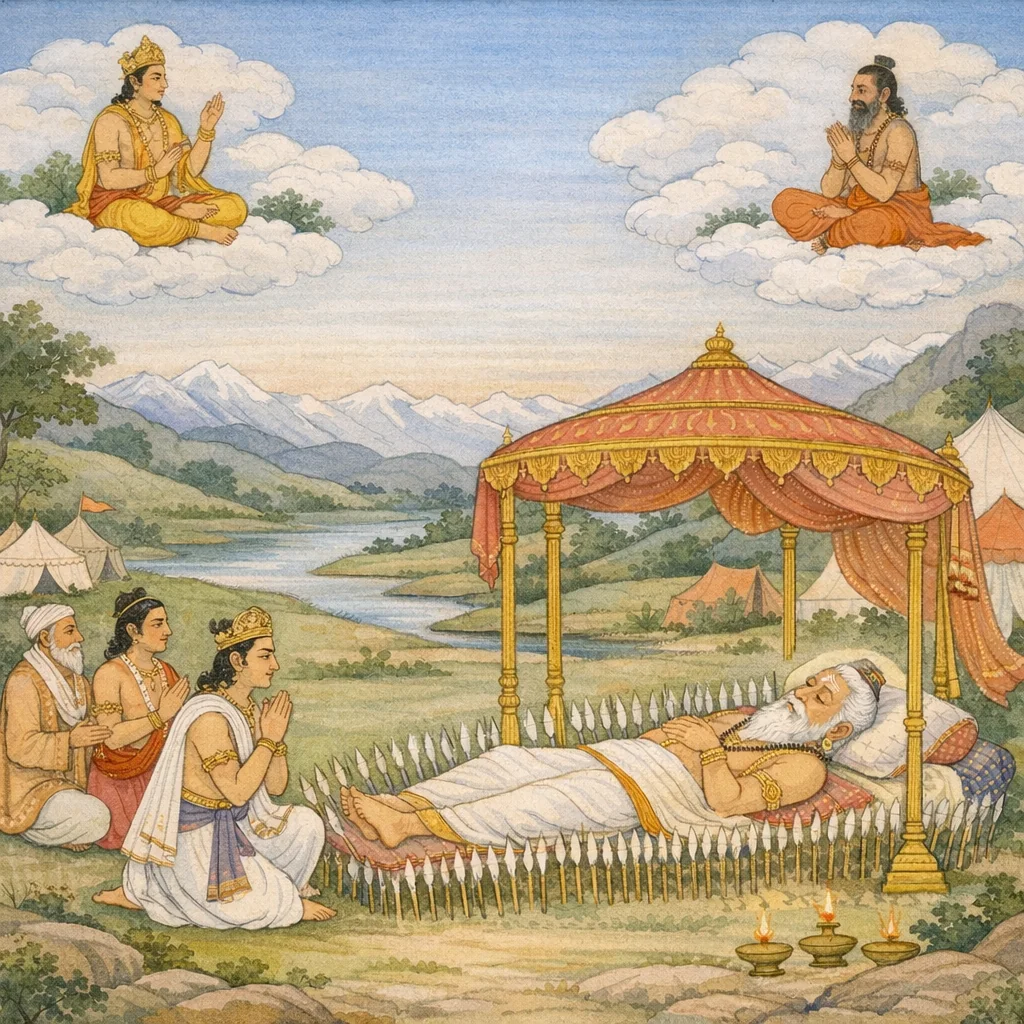
Adhyāya 40 begins with a layered Purāṇic chain of transmission that establishes authority and setting. Vyāsa relates that, after hearing an excellent account of the Sūrya lineage, Śaunaka respectfully questions Sūta on three precise ritual-theological points: why Āditya Vivasvān (Sūrya) is called “Śrāddhadeva,” what the māhātmya (sacred greatness) and phala (fruits) of śrāddha are, and the “pitṝṇāṃ sarga”—the origin and cosmic ordering of the Pitṛs—requested in detail. Sūta agrees to explain fully, grounding the teaching in earlier authorities: it was told by Mārkaṇḍeya to Bhīṣma when asked, and ultimately sung by Sanatkumāra to the wise Mārkaṇḍeya. The chapter then shifts to a Mahābhārata-like scene where Yudhiṣṭhira asks Bhīṣma (lying on the bed of arrows) how one seeking puṣṭi (nourishment and prosperity) attains it and avoids decline, thus linking śrāddha and Pitṛ-related rites with prosperity, continuity, and ritual causality within a Śaiva-Purāṇic frame.
Shlokas
Verse 1
व्यास उवाच । इत्याकर्ण्य श्राद्धदेवः सूर्यान्वयमनुत्तमम् । पर्य्यपृच्छन्मुनिश्रेष्ठश्शौनकस्सूतमादरात्
Vyāsa said: Having thus heard the unsurpassed lineage of the Sun, the foremost sage Śaunaka—also known as Śrāddhadeva—respectfully questioned Sūta with reverence.
Verse 2
शौनक उवाच । सूतसूत चिरंजीव व्यासशिष्य नमोस्तु ते । श्राविता परमा दिव्या कथा परमपावनी
Śaunaka said: “O Sūta, son of Sūta, long-lived one, disciple of Vyāsa—salutations to you. You have recited to us the supreme, divine narrative, most purifying in its power.”
Verse 3
त्वया प्रोक्तः श्राद्धदेवस्सूर्य्यः सद्वंशवर्द्धनः । संशयस्तत्र मे जातस्तं ब्रवीमि त्वदग्रतः
You have declared that Sūrya, the deity presiding over the śrāddha rites, increases and sustains the noble lineage. Yet a doubt has arisen in me about this; I shall state that doubt before you.
Verse 4
कुतो वै श्राद्धदेवत्वमादित्यस्य विवस्वतः । श्रोतुमिच्छामि तत्प्रीत्या छिंधि मे संशयं त्विमम्
From what cause did Vivasvān, the Āditya (Sun), attain the status of a deity to be invoked in the śrāddha rites? Desiring to hear it with devotion, please—out of kindness—cut away this doubt of mine.
Verse 5
श्राद्धस्यापि च माहात्म्यं तत्फलं च वद प्रभो । प्रीताश्च पितरो येन श्रेयसा योजयंति तम्
O Lord, please speak of the greatness of the Śrāddha rite and the fruit it bestows—by which the Pitṛs, the satisfied ancestors, rejoice and unite that person with the highest good (śreyas).
Verse 6
एतच्च श्रोतुमिच्छामि पितॄणां सर्गमुत्तमम् । कथय त्वं विशेषेण कृपां कुरु महामते
I wish to hear this—the excellent account of the origin of the Pitṛs. O great-minded one, explain it to me in detail and show me your grace.
Verse 7
सूत उवाच । वच्मि तत्तेऽखिलं प्रीत्या पितृसर्गं तु शौनक । मार्कण्डेयेन कथितं भीष्माय परिपृच्छते
Sūta said: O Śaunaka, with affection I shall tell you in full of the emanation of the Pitṛs—just as Mārkaṇḍeya narrated it to Bhīṣma when Bhīṣma questioned him.
Verse 8
गीतं सनत्कुमारेण मार्कण्डेय धीमते । तत्तेऽहं संप्रवक्ष्यामि सर्वकामफलपदम्
This teaching/hymn was sung by Sanatkumāra for the wise sage Mārkaṇḍeya. I shall now declare it to you—a discourse that bestows the fruits of all rightful desires, leading the seeker toward auspicious fulfillment in Śiva’s path.
Verse 9
युधिष्ठिरेण संपृष्टो भीष्मो धर्मभृतां वरः । शरशय्यास्थितः प्रोचे तच्छृणुष्व वदामि ते
Questioned by Yudhiṣṭhira, Bhīṣma—foremost among the upholders of dharma—lying upon his bed of arrows, spoke: “Therefore listen; I shall tell you.”
Verse 10
युधिष्ठिर उवाच । पुष्टिकामेन पुंसां वै कथं पुष्टिरवाप्यते । एतच्छ्रोतुं समिच्छामि किं कुर्वाणो न सीदति
Yudhiṣṭhira said: “For men who desire well-being and increase, how indeed is true prosperity attained? I wish to hear this—what should one do, by doing which one does not fall into distress?”
Verse 11
सूत उवाच । युधिष्ठिरेण संपृष्टं प्रश्नं श्रुत्वा स धर्मवित् । भीष्मः प्रोवाच सुप्रीत्या सर्वेषां शृण्वतां वचः
Sūta said: Having heard the question asked by Yudhiṣṭhira, that knower of dharma—Bhīṣma—spoke with great delight words for all who were listening.
Verse 12
भीष्म उवाच । ये कुर्वंति नराश्श्राद्धान्यपि प्रीत्या युधिष्ठिर । श्राद्धैः प्रीणाति तत्सर्वं पितॄणां हि प्रसादतः
Bhīṣma said: O Yudhiṣṭhira, those people who perform Śrāddha rites with sincere devotion—through those Śrāddhas, everything intended in the rite becomes fully gratifying, indeed by the grace and satisfaction of the Pitṛs, the ancestral spirits.
Verse 13
श्राद्धानि चैव कुर्वन्ति फलकामास्सदा नरा । अभिसंधाय पितरं पितुश्च पितरं तथा
Men, ever desirous of results, perform śrāddha rites, specifically intending their own father and likewise the father of their father (the paternal grandfather) as the recipients.
Verse 14
पितुः पितामहश्चैव त्रिषु पिंडेषु नित्यदा । पितरो धर्मकामस्य प्रजाकामस्य च प्रजाम्
Indeed, the father and the grandfather are ever present within the three piṇḍas (the three ancestral offerings). The Pitṛs bestow dharma and the fulfillment of desires; and for one who longs for progeny, they grant offspring.
Verse 15
पुष्टिकामस्य पुष्टिं च प्रयच्छन्ति युधिष्ठिर
O Yudhiṣṭhira, they bestow nourishment and prosperity upon the one who longs for well-being.
Verse 16
युधिष्ठिर उवाच । वर्तंते पितरः स्वर्गे केषांचिन्नरके पुनः । प्राणिनां नियतं चापि कर्मजं फलमुच्यते
Yudhiṣṭhira said: “Some ancestors (pitṛs) dwell in heaven, while others again are in hell. It is also said that for embodied beings the fruit arising from karma is certain and fixed.”
Verse 17
तानि श्राद्धानि दत्तानि कथं गच्छन्ति वै पितॄन् । कथं शक्तास्तमाहर्त्तुं नरकस्था फलं पुनः
“How do the Śrāddha offerings that are given truly reach the Pitṛs? And how, again, can the Pitṛs—if they dwell in hell—obtain and receive that fruit?”
Verse 18
देवा अपि पितॄन्स्वर्गे यजंत इति मे श्रुतम् । एतदिच्छाम्यहं श्रोतुं विस्तरेण ब्रवीहि मे
“I have heard that even the Devas in heaven worship the Pitṛs. I wish to hear about this—tell it to me in detail.”
Verse 19
भीष्म उवाच । अत्र ते कीर्तयिष्यामि यथा श्रुतमरिन्दम । पित्रा मम पुरा गीतं लोकान्तरगतेन वै
Bhīṣma said: Here I shall recount to you, O subduer of foes, exactly as I have heard it—what my father long ago sang to me, after he had departed to another world.
Verse 20
श्राद्धकाले मम पितुर्मया पिंडस्समुद्यतः । मत्पिता मम हस्तेन भित्त्वा भूमिमयाचत
At the time of the śrāddha for my father, I lifted up the piṇḍa (funerary offering). Then my father—breaking through the earth—begged it from my very hand.
Verse 21
नैष कल्पविधिर्दृष्ट इति निश्चित्य चाप्यहम् । कुशेष्वेव ततः पिंडं दत्तवानविचारयन्
Concluding, “This is not the procedure taught in the ritual manuals,” I too became certain of it; and then, without further deliberation, I placed the food-offering lump directly upon the kuśa grass.
Verse 22
ततः पिता मे संतुष्टो वाचा मधुरया तदा । उवाच भारतश्रेष्ठ प्रीयमाणो मयानघ
Then my father, being satisfied, spoke at that time in sweet words. O best of the Bhāratas, O sinless one—pleased with me, he addressed me.
Verse 23
त्वया दायादवानस्मि धर्मज्ञेन विपश्चिता । तारितोहं तु जिज्ञासा कृता मे पुरुषोत्तम
By you—wise and learned in dharma—I have been made an heir to righteous merit. Through you I have been delivered; my longing to know has been fulfilled, O Supreme Person.
Verse 24
प्रमाणं यद्धि कुरुते धर्माचारेण पार्थिवः । प्रजास्तदनु वर्तंते प्रमाणाचरितं सदा
Whatever standard of conduct a king establishes through righteous practice, the people invariably follow that very example; for the ways set by an authoritative model are always imitated.
Verse 25
शृणु त्वं भारतश्रेष्ठ वेदधर्मांश्च शाश्वतान् । प्रमाणं वेदधर्मस्य पुत्र निर्वर्त्तितं त्वया
Listen, O best of the Bhāratas, to these eternal ordinances of Vedic dharma. O son, you yourself have already established the proper standard and authoritative example of Vedic conduct.
Verse 26
तस्मात्तवाहं सुप्रीतः प्रीत्या वरमनुत्तमम् । ददामि त्वं प्रतीक्षस्व त्रिषु लोकेषु दुर्लभम्
Therefore, I am exceedingly pleased with you; out of love I grant you an unsurpassed boon. Wait and receive it—this boon is rare in all the three worlds.
Verse 27
न ते प्रभविता मृत्युर्यावज्जीवितुमिच्छसि । त्वत्तोभ्यनुज्ञां संप्राप्य मृत्युः प्रभविता पुनः
So long as you wish to live, Death shall have no power over you. Only after obtaining your permission will Death again become effective.
Verse 28
किं वा ते प्रार्थितं भूयो ददामि वरमुत्तमम् । तद् ब्रूहि भरतश्रेष्ठ यत्ते मनसि वर्तते
Or what more do you desire? I shall grant you an excellent boon. Tell me, O best of the Bharatas, whatever abides within your mind.
Verse 29
इत्युक्तवति तस्मिंस्तु अभिवाद्य कृताञ्जलिः । अवोचं कृतकृत्योऽहं प्रसन्ने त्वयि मानद । प्रश्नं पृच्छामि वै कंचिद्वाच्यस्स भवता स्वयम्
When he had thus spoken, I bowed in reverence with folded hands and said: “I am fulfilled, O bestower of honor, since you are gracious. I now ask a certain question—may you yourself declare what ought to be spoken.”
Verse 30
स मामुवाच तद् ब्रूहि यदीच्छसि ददामि ते । इत्युक्तेथ मया तत्र पृष्टः प्रोवाच तन्नृपः
He said to me, “Tell me what you desire; if you wish, I shall grant it to you.” Thus addressed, I questioned him thereupon, and that king replied.
Verse 31
शंतनुरुवाच । शृणु तात प्रवक्ष्यामि प्रश्नं तेऽहं यथार्थतः । पितृकल्पं च निखिलं मार्कण्डेयेन मे श्रुतम्
Śaṃtanu said: “Listen, dear child; I shall state to you my question exactly as it is. From Mārkaṇḍeya I have heard in full the entire sacred procedure concerning the Pitṛs, the ancestral rites.”
Verse 32
यत्त्वं पृच्छसि मां तात तदेवाहं महामुनिम् । मार्कण्डेयमपृच्छं हि स मां प्रोवाच धर्मवित्
O dear one, the very matter you ask me about—I myself asked the great sage Mārkaṇḍeya. That knower of dharma then explained it to me.
Verse 33
मार्कण्डेय उवाच । शृणु राजन्मया दृष्टं कदाचित्पश्यता दिवम् । विमानं महादायांतमन्तरेण गिरेस्तदा
Mārkaṇḍeya said: “Listen, O King, to what I once saw when I was gazing upon the heavens. At that time, a great celestial chariot (vimāna) was coming, passing through the space between the mountains.”
Verse 34
तस्मिन्विमाने पर्यक्षं ज्वलितांगारवर्चसम् । महातेजः प्रज्वलंतं निर्विशेषं मनोहरम्
Within that celestial vimāna, there appeared a wondrous Presence—radiant like blazing embers—of immense splendor, fiercely shining, without any distinguishing marks, yet utterly enchanting.
Verse 35
अपश्यं चैव तत्राहं शयानं दीप्ततेजसम् । अंगुष्ठमात्रं पुरुषमग्नावग्निमिवाहितम्
There indeed I beheld a radiant Being lying there—a Puruṣa of the measure of a thumb, set within the fire like a flame placed in flame itself.
Verse 36
सोऽहं तस्मै नमः कृत्वा प्रणम्य शिरसा प्रभुम् । अपृच्छं चैव तमहं विद्यामस्त्वां कथं विभो
Then I offered Him salutations and bowed with my head before the Lord, and I asked: “O Vibhu, all-pervading One, how may this true vidyā—this knowledge—be attained?”
Verse 37
मामुवाच धर्मात्मा तेन तद्विद्यते तपः । येन त्वं बुध्यसे मां हि मुने वै ब्रह्मणस्सुतम्
That righteous-souled One spoke to me: “By this, the true nature of tapas—holy austerity—becomes known; and by that tapas, O sage, you will indeed recognize and understand me as the son of Brahmā.”
Verse 38
सनत्कुमारमिति मां विद्धि किं करवाणि ते । ये त्वन्ये ब्रह्मणः पुत्राः कनीयांसस्तु ते मम
Know me as Sanatkumāra. What shall I do for you? And the other sons of Brahmā, being younger, are my juniors.
Verse 39
भ्रातरस्सप्त दुर्धर्षा येषां वंशाः प्रतिष्ठिताः । वयं तु यतिधर्माणस्संयम्यात्मानमात्मनि
There are seven brothers, unassailable, whose lineages are firmly established. But we follow the discipline of ascetics, restraining the self and inwardly absorbing it in the Self.
Verse 40
यथोत्पन्नस्तथैवाहं कुमार इति विश्रुतः । तस्मात्सनत्कुमारं मे नामैतत्कथितं मुने
Just as I was born, so indeed I became renowned as “Kumāra,” the ever-youthful one. Therefore, O sage, my name is declared to be Sanatkumāra.
Verse 41
यद्भक्त्या ते तपश्चीर्णं मम दर्शनकांक्षया । एष दृष्टोऽस्मि भद्रं ते कं कामं करवाणि ते
Because, with devotion, you have performed austerities longing for my darśana, I have now appeared before you. May auspiciousness be yours—what desire of yours shall I fulfill?
Verse 42
इत्युक्तवन्तं तं चाहं प्रावोचं त्वं शृणु प्रभो । पितॄणामादिसर्गं च कथयस्व यथातथम्
When he had spoken thus, I addressed him: “O Lord, listen. Please narrate, exactly as it happened, the primeval origination of the Pitṛs (ancestral Fathers).”
Verse 43
इत्युक्तस्स तु मां प्राह शृणु सर्वं यथातथम् । वच्मि ते तत्त्वतस्तात पितृसर्गं शुभावहम्
When I had thus spoken, he said to me: “Listen to everything exactly as it is. Dear one, I shall tell you truthfully the auspicious account of the emanation of the Pitṛs, which brings welfare.”
Verse 44
सनत्कुमार उवाच । देवान्पुरासृजद्ब्रह्मा मां यक्षध्वं स चाह तान् । तमुत्सृज्य तमात्मानमयजंस्ते फलार्थिनः
Sanatkumāra said: In former times Brahmā created the gods and instructed them, “Perform sacrifice to me.” But those gods, desiring results, set him aside and instead worshipped their own selves—taking the ego as the deity to be served.
Verse 45
ते शप्ता ब्रह्मणा मूढा नष्टसंज्ञा भविष्यथ । तस्मात्किंचिदजानंतो नष्टसंज्ञाः पितामहम्
“Cursed by Brahmā, you shall become deluded and bereft of right understanding. Therefore, knowing only a little, you will lose discernment and fail to recognize even the Grandfather (Pitāmaha—Brahmā) himself.”
Verse 46
प्रोचुस्तं प्रणतास्सर्वे कुरुष्वानुग्रहं हि नः । इत्युक्तस्तानुवाचेदं प्रायश्चित्तार्थमेव हि
Then all of them, bowing down, said to him, “Show us your grace indeed.” Thus addressed, he spoke to them this teaching—meant precisely for the purpose of prāyaścitta, sacred atonement.
Verse 47
पुत्रान्स्वान्परिपृच्छध्वं ततो ज्ञानमवाप्स्यथ । इत्युक्ता नष्टसंज्ञास्ते पुत्रान्पप्रच्छुरोजसा
“Question your own sons thoroughly; then you will attain knowledge.” Thus instructed, those who had lost their composure questioned their sons with forceful urgency.
Verse 48
प्रायश्चित्तार्थमेवाधिलब्धसंज्ञा दिवौकसः । गम्यतां पुत्रका एवं पुत्रैरुक्ताश्च तेऽनघ
“These celestial beings have indeed been specifically appointed for the purpose of expiation. Therefore, dear sons, proceed accordingly.” Thus, O sinless one, they were addressed by their sons.
Verse 49
अभिशप्तास्तु ते देवाः पुत्रकामेन वेधसम् । पप्रच्छुरुक्ताः पुत्रैस्ते गतास्ते पुत्रका इति
Those gods, having been cursed, approached Brahmā (the Creator), who longed for sons, and questioned him. Being addressed, they said: “Those sons of yours—where have they gone? What became of the sons?”
Verse 50
ततस्तानब्रवीद्देवो देवान्ब्रह्मा ससंशयान् । शृणुध्वं निर्जरास्सर्वे यूयं न ब्रह्मवादिनः
Then the god Brahmā addressed those gods, who were filled with doubt: “Listen, all you immortals—your words are not in accord with the truth of Brahman.”
Verse 51
तस्माद्यदुक्तं युष्माकं पुत्रैस्तैर्ज्ञानिसत्तमैः । मंतव्यं संशयं त्यक्त्वा तथा न च तदन्यथा
Therefore, what has been spoken to you by those sons—noblest among the knowers—should be accepted, casting aside all doubt; it is truly so, and not otherwise.
Verse 52
देवाश्च पितरश्चैव यजध्वं त्रिदिवौकसः । परस्परं महाप्रीत्या सर्वकामफलप्रदा
O dwellers of the three heavens, worship the Devas and the Pitṛs as well. With great mutual goodwill, they become bestowers of the fruits of all rightful desires.
Verse 53
सनत्कुमार उवाच । ततस्ते छिन्नसंदेहाः प्रीतिमंतः परस्परम् । बभूवुर्मुनिशार्दूल ब्रह्मवाक्यात्सुखप्रदाः
Sanatkumāra said: Then, O tiger among sages, their doubts were cut away; filled with mutual affection, they became serene and content, finding joy through Brahmā’s words.
Verse 54
ततो देवा हि प्रोचुस्तान्यदुक्ताः पुत्रका वयम् । तस्माद्भवंतः पितरो भविष्यथ न संशयः
Then the gods declared to them: “We are your sons; therefore you shall indeed become our fathers—of this there is no doubt.”
Verse 55
पितृश्राद्धे क्रियां कश्चित्करिष्यति न संशयः । श्राद्धैराप्यायितस्सोमो लोकानाप्याययिष्यति
In the śrāddha rite for the Pitṛs, someone will surely perform the prescribed act—there is no doubt. Soma, nourished by those śrāddha offerings, will in turn nourish the worlds.
Verse 56
समुद्रं पर्वतवनं जंगमाजंगमैर्वृतम् । श्राद्धानि पुष्टिकामैश्च ये करिष्यंति मानवाः
In this world, ringed by the ocean, filled with mountains and forests, and inhabited by moving and unmoving beings, those humans who, seeking nourishment and prosperity, perform the śrāddha rites attain—through dharma—the increase and wellbeing they desire.
Verse 57
तेभ्यः पुष्टिप्रदाश्चैव पितरः प्रीणितास्सदा । श्राद्धे ये च प्रदास्यंति त्रीन्पिंडान्नामगोत्रतः
From those offerings the Pitṛs (ancestral beings) are ever satisfied and, in return, bestow nourishment and well-being. Therefore, in the śrāddha rite one should duly offer the three piṇḍas, stating the ancestor’s name and gotra (lineage).
Verse 58
सर्वत्र वर्तमानास्ते पितरः प्रपितामहाः । भावयिष्यंति सततं श्राद्धदानेन तर्पिताः
Those Pitṛs—one’s fathers and forefathers—abide everywhere; and when satisfied through offerings given in śrāddha, they continually bestow support, nourishment, and blessing upon the family line.
Verse 59
इति तद्वचनं सत्यं भवत्वथ दिवौकसः । पुत्राश्च पितरश्चैव वयं सर्वे परस्परम्
“So be it—let those words be true, O dwellers of heaven. Indeed, we are all mutually related to one another—as sons and as fathers.”
Verse 60
एवं ते पितरो देवा धर्मतः पुत्रतां गताः । अन्योन्यं पितरो वै ते प्रथिताः क्षितिमण्डले
Thus those Pitṛs, who were indeed divine, by the ordinance of Dharma attained the state of sons; and, in mutual succession, they became renowned on the earth as one another’s fathers.
Frequently Asked Questions
The chapter’s central argument is framed as a formal inquiry: Śaunaka asks the rationale for Sūrya’s epithet ‘Śrāddhadeva’ and requests the doctrine of śrāddha’s fruits and the Pitṛs’ origin; the narrative legitimizes the teaching through a multi-tier paramparā (Sanatkumāra → Mārkaṇḍeya → Bhīṣma → Sūta → Śaunaka).
The rahasya lies less in iconography and more in structure: the transmission chain functions as a ‘ritual of authorization,’ while the Bhīṣma-on-śaraśayyā setting symbolizes dharma taught at the threshold of death—linking ancestral rites (śrāddha) to continuity across generations and to the management of karma beyond one lifespan.
In the sampled opening, the focus is not on a distinct Śiva/Umā form but on Śaiva-purāṇic ritual theology: Sūrya (as Śrāddhadeva) and the Pitṛs are foregrounded as recipients and guarantors of śrāddha’s efficacy within the broader Śaiva worldview.