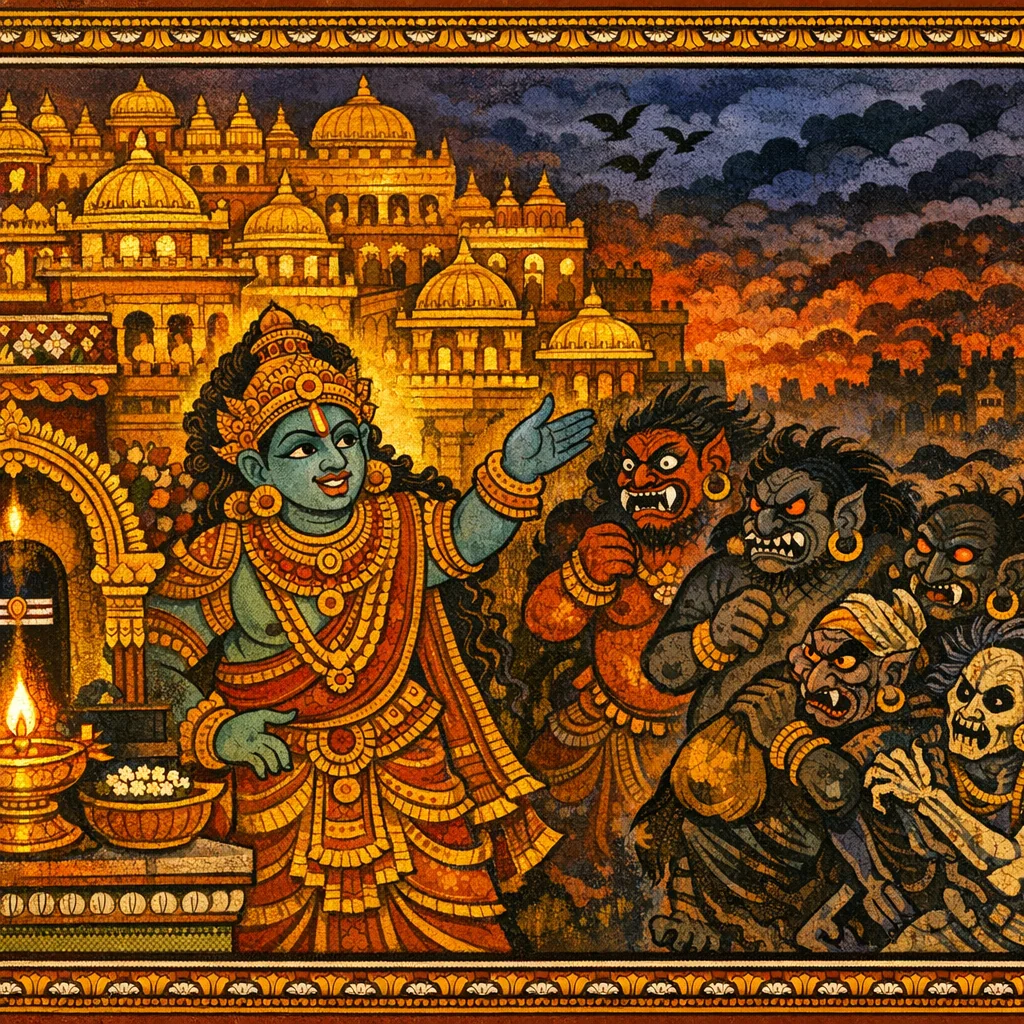
Adhyaya 131: Tripura’s Prosperity, Ominous Dream-Omens, and the Moral Collapse of the Asuras
त्रिपुरप्रवेशः स्वप्ननिमित्तं च
Speaker: Sūta, Maya (Danava architect-king figure addressing the Dānavas)
Sūta recounts how Maya completed Tripura and how Daityas/Dānavas settled there in great numbers, making it a thriving city of pleasures, music, and social concord. Though “enemies of the Devas,” the inhabitants for a time live in a dharma-minded way and worship Śiva in Tripura’s sanctuary. A turning point comes at twilight when personified afflictions—Alakṣmī, Asūyā, thirst, hunger, Kali, and quarrel—enter the city. Maya beholds a dreadful dream-omen, convenes the assembly, and reports signs of darkness, submersion, and abnormal figures, reading them as impending calamity. He urges them to abandon desire, jealousy, and anger; to practice truth, restraint, and heed the sages; and to perform śānti rites with worship of Maheśvara. The Dānavas instead grow enraged, fall into misfortune, forsake truth and dharma, dishonor Brāhmaṇas, gods, and guru, adopt impure ways, and begin destructive raids—devastating heaven’s groves and ascetics’ hermitages, harassing the world.
Key Concepts
Shlokas in Adhyaya 131
Verse 1
*सूत उवाच निर्मिते त्रिपुरे दुर्गे मयेनासुरशिल्पिना तद्दुर्गं दुर्गतां प्राप बद्धवैरैः सुरासुरैः //
Sūta said: When the fortified Triple City, Tripura, had been built by Maya, the Asuras’ master artisan, that very stronghold fell into dire straits, for Devas and Asuras had become bound in firm enmity.
Verse 2
सकलत्राः सपुत्राश्च शस्त्रवन्तो ऽन्तकोपमाः मयादिष्टानि विविशुर् गृहाणि हृषिताश्च ते //
Together with their wives and sons, armed and, in their fierce resolve, resembling Death itself, they entered the houses I had assigned—glad at heart.
Verse 3
सिंहा वनमिवानेके मकरा इव सागरम् रोषैश्चैवातिपारुष्यैः शरीरमिव संहतैः //
Like many lions filling a forest, like makaras crowding the ocean, so too—bound together as one body—men become formidable through wrath and excessive harshness.
Verse 4
तद्वद्बलिभिरध्यस्तं तत्पुरं देवतारिभिः त्रिपुरं संकुलं जातं दैत्यकोटिशताकुलम् //
Likewise, that city was occupied by the mighty Daityas, the enemies of the gods; Tripura became densely crowded—teeming with hundreds of crores of Daityas.
Verse 5
सुतलादपि निष्पत्य पातालाद्दानवालयात् उपतस्थुः पयोदाभा ये च गिर्युपजीविनः //
Bursting forth even from Sutala and from Pātāla—the dwelling-place of the Dānavas—there appeared cloud-hued beings, along with those who make their living upon the mountains.
Verse 6
यो यं प्रार्थयते कामं सम्प्राप्तस्त्रिपुराश्रयात् तस्य तस्य मयस्तत्र मायया विदधाति सः //
Whoever, having come to the refuge of Tripurā, prays for any particular desire—of that very desire he there fashions the fulfillment through his māyā (power of illusion).
Verse 7
सचन्द्रेषु प्रदोषेषु साम्बुजेषु सरःसु च आरामेषु सचूतेषु तपोधनवनेषु च //
Likewise, one should avoid disturbance or improper activity at moonlit twilight times, at lotus-filled lakes, in pleasure-groves with mango trees, and in forests belonging to ascetics rich in austerity.
Verse 8
स्वङ्गाश्चन्दनदिग्धाङ्गां मातंगाः समदा इव मृष्टाभरणवस्त्राश्च मृष्टस्रगनुलेपनाः //
Elephants, their bodies anointed with sandalwood paste, appeared as though in rut; they were elegantly arrayed with polished ornaments and garments, adorned with fine garlands and fragrant unguents.
Verse 9
प्रियाभिः प्रियक्रामाभिर् हावभावप्रसूतिभिः नारीभिः सततं रेमुर् मुदिताश्चैव दानवाः //
With beloved women—whose gait was charming and whose coquettish gestures and expressions stirred delight—the Dānavas sported constantly, remaining thoroughly joyous.
Verse 10
मयेन निर्मिते स्थाने मोदमाना महासुराः अर्थे धर्मे च कामे च निदधुस्ते मतीः स्वयम् //
Rejoicing in the place built by Māyā, those mighty Asuras, of their own accord, fixed their minds upon artha (power and prosperity), dharma (ordered conduct), and kāma (worldly enjoyment).
Verse 11
तेषां त्रिपुरयुक्तानां त्रिपुरे त्रिदशारिणाम् व्रजति स्म सुखं कालः स्वर्गस्थानां यथा तथा //
For those foes of the gods who were established in the three cities (Tripura), time passed pleasantly in Tripura—just as it does for those who dwell in heaven.
Verse 12
शुश्रूषन्ते पितॄन्पुत्राः पत्न्यश्चापि पतींस्तथा विमुक्तकलहाश्चापि प्रीतयः प्रचुराभवन् //
Sons diligently served their fathers, and wives likewise attended upon their husbands. Freed from quarrels, affection and harmony became abundant.
Verse 13
नाधर्मस्त्रिपुरस्थानां बाधते वीर्यवानपि अर्चयन्तो दितेः पुत्रास् त्रिपुरायतने हरम् //
Even a powerful man cannot overcome the adharma of those dwelling in Tripura; for the sons of Diti, while remaining in Tripura, were worshipping Hara (Śiva) in the sanctuary of Tripura.
Verse 14
पुण्याहशब्दानुच्चेरुर् आशीर्वादांश्च वेदगान् स्वनूपुररवोन्मिश्रान् वेणुवीणारवानपि //
They raised the auspicious cries of “puṇyāha,” uttered blessings and Vedic chants, and there were also the sounds of flutes and vīṇās, mingled with the ringing of anklets.
Verse 15
हासश्च वरनारीणां चित्तव्याकुलकारकः त्रिपुरे दानवेन्द्राणां रमतां श्रूयते सदा //
The laughter of exquisite women—stirring and unsettling the mind—is ever heard in Tripura, as the lordly Dānavas sport and revel.
Verse 16
तेषामर्चयतां देवान् ब्राह्मणांश्च नमस्यताम् धर्मार्थकाममन्त्राणां महान्कालो ऽभ्यवर्तत //
For those who worshipped the gods and bowed to the Brāhmaṇas, a long span of time passed in the practice and recitation of mantras directed toward dharma, prosperity (artha), and rightful enjoyment (kāma).
Verse 17
अथालक्ष्मीरसूया च तृड्बुभुक्षे तथैव च कलिश्च कलहश्चैव त्रिपुरं विविशुः सह //
Then Misfortune (Alakṣmī) and Envy (Asūyā), and likewise Thirst and Hunger, and also Kali and Quarrel—all together entered Tripura.
Verse 18
संध्याकालं प्रविष्टास्ते त्रिपुरं च भयावहाः समध्यासुः समं घोराः शरीराणि यथामयाः //
Entering at twilight, those fearsome beings entered Tripura; all alike—terrible in aspect—they assumed bodies, as though fashioned according to their own afflictive nature.
Verse 19
सर्व एते विशन्तस्तु मयेन त्रिपुरान्तरम् स्वप्ने भयावहा दृष्टा आविशन्तस्तु दानवान् //
In a dream I saw all those Dānavas entering the interior of Tripura with me; the vision was terrifying and ominous.
Verse 20
उदिते च सहस्रांशौ शुभभासाकरे रवौ मयः सभामाविवेश भास्कराभ्यामिवाम्बुदः //
When the thousand-rayed Sun had risen—maker of auspicious radiance—Maya entered the assembly hall, like a cloud approaching the two luminaries.
Verse 21
मेरुकूटनिभे रम्य आसने स्वर्णमण्डिते आसीनाः काञ्चनगिरेः शृङ्गे तोयमुचो यथा //
Seated upon a lovely throne resembling the summit of Mount Meru and adorned with gold, they appeared like rain-bearing clouds resting on the peak of a golden mountain.
Verse 22
पार्श्वयोस्तारकाख्यश्च विद्युन्माली च दानवः उपविष्टौ मयस्यान्ते हस्तिनः कलभाविव //
On either side sat the Dānava named Tāraka and Vidyunmālī, seated close beside Maya—like two young elephant-calves beside an elephant.
Verse 23
ततः सुरारयः सर्वे ऽशेषकोपा रणाजिरे उपविष्टा दृढं विद्धा दानवा देवशत्रवः //
Then all the enemies of the gods—the Dānavas, foes of the Devas—filled with unspent fury, sat down on the battlefield, firmly pierced by weapons and grievously wounded.
Verse 24
तेष्वासीनेषु सर्वेषु सुखासनगतेषु च मयो मायाविजनक इत्युवाच स दानवान् //
When all of them had taken their seats upon comfortable seats, that Dānava spoke: “I am Maya, the one who brings forth wondrous arts (māyā).”
Verse 25
खेचराः खेचरारावा भो भो दाक्षायणीसुताः निशामयध्वं स्वप्नो ऽयं मया दृष्टो भयावहः //
“O sky-roamers—O you who cry out as you move through the heavens! O sons of Dākṣāyaṇī (Diti), listen: I have seen this dream, and it is terrifying.”
Verse 26
चतस्रः प्रमदास्तत्र त्रयो मर्त्या भयावहाः कोपानलादीप्तमुखाः प्रविष्टास् त्रिपुरार्दिनः //
There, four celestial maidens and three dreadful mortals appeared—terrifying in aspect—entering before Tripurārdin (Śiva, the destroyer of the three cities) with faces blazing like the fire of wrath.
Verse 27
प्रविश्य रुषितास्ते च पुराण्यतुलविक्रमाः प्रविष्टाः स्म शरीराणि भूत्वा बहुशरीरिणः //
And those ancient ones, angered and of incomparable prowess, entered (others’ bodies); indeed they took possession of bodies, becoming beings of many bodies.
Verse 28
नगरं त्रिपुरं चेदं तमसा समवस्थितम् सगृहं सह युष्माभिः सागराम्भसि मज्जितम् //
This city—Tripura—has been enveloped in darkness; together with its houses, it has been plunged into the waters of the ocean, along with you all.
Verse 29
उलूकं रुचिरा नारी नग्नारूढा खरं तथा सह स्त्रीभिर्हसन्ती च चुम्बने प्रमदा यथा पुरुषः सिन्दुतिलकश् चतुरङ्घ्रिस् त्रिलोचनः //
A beautiful woman, naked, mounted upon a donkey—laughing together with other women, as if eager to kiss; and a man marked with a tilaka of sindūra, four-footed and three-eyed—such sights (especially as dream-omens) are to be understood as extraordinary and inauspicious portents.
Verse 30
येन सा प्रमदा नुन्ना अहं चैव विबोधितः ईदृशी प्रमदा दृष्टा मया चातिभयावहा //
By him that woman was driven on, and I too was awakened (warned). Such a woman I have seen—one that brings exceedingly great fear.
Verse 31
एष ईदृशकः स्वप्नो दृष्टो वै दितिनन्दनाः दृष्टः कथं हि कष्टाय असुराणां भविष्यति //
O sons of Diti, such a dream has indeed been seen. Having been seen, how could it not become a cause of calamity for the Asuras?
Verse 32
यदि वो ऽहं क्षमो राजा यदिदं वेत्थ चेद्धितम् निबोधध्वं सुमनसो न चासूयितुम् अर्हथ //
If I, your king, am competent to speak on this, and if you know that what is being said here is truly beneficial, then listen with a clear and kindly mind—and you ought not to cavil or find fault.
Verse 33
कामं चेर्ष्यां च कोपं च असूयां संविहाय च सत्ये दमे च धर्मे च मुनिवादे च तिष्ठत //
Casting aside desire, jealousy, anger, and spite, remain steadfast in truth, self-restraint, righteousness (dharma), and in the counsel of the sages.
Verse 34
शान्तयश्च प्रयुज्यन्तां पूज्यतां च महेश्वरः यदि नामास्य स्वप्नस्य ह्य् एवं चोपरमो भवेत् //
Let the prescribed pacificatory rites be performed, and let Maheśvara (Śiva) also be worshipped—so that, in this way, the troubling effect of this dream may indeed come to an end.
Verse 35
कुप्यते नो ध्रुवं रुद्रो देवदेवस्त्रिलोचनः भविष्याणि च दृश्यन्ते यतो नस्त्रिपुरे ऽसुराः //
Surely Rudra—the God of gods, the Three-eyed—has become angry with us. For ominous portents of what is to come are being seen, since we, the Asuras, dwell in Tripura.
Verse 36
कलहं वर्जयन्तश्च अर्जयन्तस् तथार्जवम् स्वप्नोदयं प्रतीक्षध्वं कालोदयमथापि च //
Avoiding quarrel and cultivating straightforwardness, wait for the right awakening and for the proper time to arise as well.
Verse 37
श्रुत्वा दाक्षायणीपुत्रा इत्येवं मयभाषितम् क्रोधेर्ष्यावस्थया युक्ता दृश्यन्ते च विनाशगाः //
Having heard what I have thus spoken, the sons of Dākṣāyaṇī are seen to be seized by anger and jealousy, and to move toward destruction.
Verse 38
विनाशम् उपपश्यन्तो ह्य् अलक्ष्म्या व्यापितासुराः तत्रैव दृष्ट्वा ते ऽन्योन्यं सक्रोधापूरितेक्षणाः //
Seeing their own destruction impending, the Asuras—overwhelmed by Alakṣmī (ill-fortune)—looked at one another there itself, their eyes filled with wrath.
Verse 39
अथ दैवपरिध्वस्ता दानवास्त्रिपुरालयाः हित्वा सत्यं च धर्मं च अकार्याण्युपचक्रमुः //
Then the Dānavas who dwelt in Tripura—shattered by the decree of the gods—abandoned truth and righteousness, and began to engage in forbidden deeds.
Verse 40
द्विषन्ति ब्राह्मणान्पुण्यान् न चार्चन्ति हि देवताः गुरुं चैव न मन्यन्ते ह्य् अन्योन्यं चापि चुक्रुधुः //
They hate the virtuous Brāhmaṇas; they do not worship the gods; they do not honor the guru; and they become mutually enraged with one another.
Verse 41
कलहेषु च सज्जन्ते स्वधर्मेषु हसन्ति च परस्परं च निन्दन्ति अहमित्येव वादिनः //
They become engrossed in quarrels; they mock their own duties; they disparage one another—and speak only in the language of ego, saying, “I alone.”
Verse 42
उच्चैर्गुरून्प्रभाषन्ते नाभिभाषन्ति पूजिताः अकस्मात्साश्रुनयना जायन्ते च समुत्सुकाः //
They speak loudly in the presence of their elders, yet do not speak to those who deserve honour. Suddenly their eyes fill with tears, and they become restless and over-eager—these are signs of inner disturbance and impending adversity.
Verse 43
दधिसक्तून्पयश्चैव कपित्थानि च रात्रिषु भक्षयन्ति च शेरन्त उच्छिष्टाः संवृतास्तथा //
At night they eat curds mixed with parched grain (saktu), and drink milk, and eat wood-apples (kapittha); and they lie down to sleep while still in a state of ucchiṣṭa—impurity from leftover food—remaining covered in that condition.
Verse 44
मूत्रं कृत्वोपस्पृशन्ति चाकृत्वा पादधावनम् संविशन्ति च शय्यासु शौचाचारविवर्जिताः //
Having urinated, they merely rinse with water and, without washing their feet, they lie down on beds—people who are devoid of the proper disciplines of cleanliness and conduct (śauca-ācāra).
Verse 45
संकुचन्ति भयाच्चैव मार्जाराणां यथाखुकः भार्यां गत्वा न शुध्यन्ति रहोवृत्तिषु निस्त्रपाः //
Out of fear they shrink back—like mice before cats. Even after going to their wives, the shameless are not purified, for their secret conduct remains base and unrestrained.
Verse 46
पुरा सुशीला भूत्वा च दुःशीलत्वमुपागताः देवांस्तपोधनांश्चैव बाधन्ते त्रिपुरालयाः //
Though formerly of good conduct, the inhabitants of Tripura have fallen into wicked ways; they now harass both the gods and the ascetic sages rich in austerity.
Verse 47
मयेन वार्यमाणा अपि ते विनाशमुपस्थिताः विप्रियाण्येव विप्राणां कुर्वाणाः कलहैषिणः //
Even though they were restrained by me, they still came to ruin—ever doing what is displeasing to the Brahmanas, driven by a thirst for quarrel.
Verse 48
वैभ्राजं नन्दनं चैव तथा चैत्ररथं वनम् अशोकं च वराशोकं सर्वर्तुकमथापि च //
There is also Vaibhrāja and Nandana; likewise the forest of Caitraratha—(the groves called) Aśoka and Varāśoka, and also Sarvartuka, the grove where all seasons are present.
Verse 49
स्वर्गं च देवतावासं पूर्वदेववशानुगाः विध्वंसयन्ति संक्रुद्धास् तपोधनवनानि च //
Enraged, those who are subservient to the power of the former gods lay waste to heaven—the dwelling of the deities—and they also devastate the forest-hermitages of the ascetic sages.
Verse 50
विध्वस्तदेवायतनाश्रमं च संभग्नदेवद्विजपूजकं तु जगद्बभूवामरराजदुष्टैर् अभिद्रुतं सस्यमिवालिवृन्दैः //
Temples and hermitages were laid waste, and the worship of the gods and of the twice-born (dvijas) was shattered; the whole world was harried by those corrupted through the lord of the gods, like a crop assailed by swarms of bees.
Frequently Asked Questions
The chapter teaches that prosperity and even outward ritual devotion cannot protect a society that abandons truth, restraint, reverence for Brāhmaṇas and guru, and basic purity disciplines. When Maya warns the Dānavas through a dream-omen, he prescribes śānti rites and Śiva-worship along with ethical reform (giving up desire, jealousy, anger, spite). Their refusal and turn to quarrel and adharma becomes the direct cause of Tripura’s impending catastrophe.
The dominant focus is Dharma/ethics and omenology within the Tripura narrative. Vastu appears indirectly through Tripura as a marvel built by Maya (a master artisan), but the chapter is less about measurements and more about how moral decline destroys even an idealized city. Genealogy is minimal; the key identity marker is the ‘sons of Dākṣāyaṇī (Diti),’ i.e., Daityas/Dānavas.
Maya reports Tripura enveloped in darkness and submerged in the ocean along with its inhabitants, plus abnormal, frightening figures (including a naked woman on a donkey and a strange marked man). These are presented as svapna-nimittas indicating divine displeasure (Rudra’s anger), the entry of misfortune, and an approaching collective downfall unless pacificatory rites and ethical correction are adopted.
They begin hating virtuous Brāhmaṇas, neglecting worship of the gods, dishonoring the guru, indulging in quarrels and egoistic speech, and violating śauca (cleanliness) norms—sleeping in an ucchiṣṭa state, neglecting foot-washing, and engaging in shameless secret conduct. These signs function as a Purāṇic checklist of social disintegration.