Adhyaya 281
अध्याय २८१ — दानधर्मः, न्यायागतधनम्, ऋणत्रय-परिशोधनं च (Dāna ethics, lawful wealth, and settling obligations)
Upa-parva: Dāna-Dharma and Ṛṇa (Debt/Obligation) Discourse (Śānti-parva instructional unit)
Parāśara articulates a pragmatic anthropology: beings typically act for self-interest, so one should exercise discernment in association—avoiding relations marked by contempt and emotional non-reciprocity (even among kin). He then distinguishes the ethics of dāna (giving) and pratigraha (receiving), indicating that while both can be comparable in status under appropriate conditions, giving is framed as more meritorious, especially when offered to a qualified recipient such as a learned brāhmaṇa. The chapter insists that wealth should be obtained by just means and increased justly, then safeguarded with effort for dharma-oriented purposes; one seeking dharma should not earn by cruel actions and should perform duties within capacity rather than chasing expansion for its own sake. Even minimal hospitality—such as offering water, cooled or warmed—yields fruit when given with sincerity to a guest or the hungry. Exempla (Rantideva; Śaibya) demonstrate attainment through simple offerings (fruits, leaves, roots) and attentive service to ascetics. The doctrine of obligation follows: humans are born indebted to deities, guests/service networks, ancestors, and themselves; these debts are discharged through svādhyāya for sages, yajña for deities, śrāddha for ancestors, and honoring people through appropriate care. The text further notes that sages attained success through disciplined effort even without wealth, and that praise/hymns and devotion to Viṣṇu are presented as efficacious paths to spiritual accomplishment. The closing cautions reject ignoble work for mere ‘growth’ and affirm that dharma-grounded gains are valid while adharma-grounded gains are to be repudiated; it also underscores the sanctity of agni-related duties and respectful service to mother, father, guru, and elders, describing the socially honored person as humble, elder-serving, competent, and dharma-aligned.
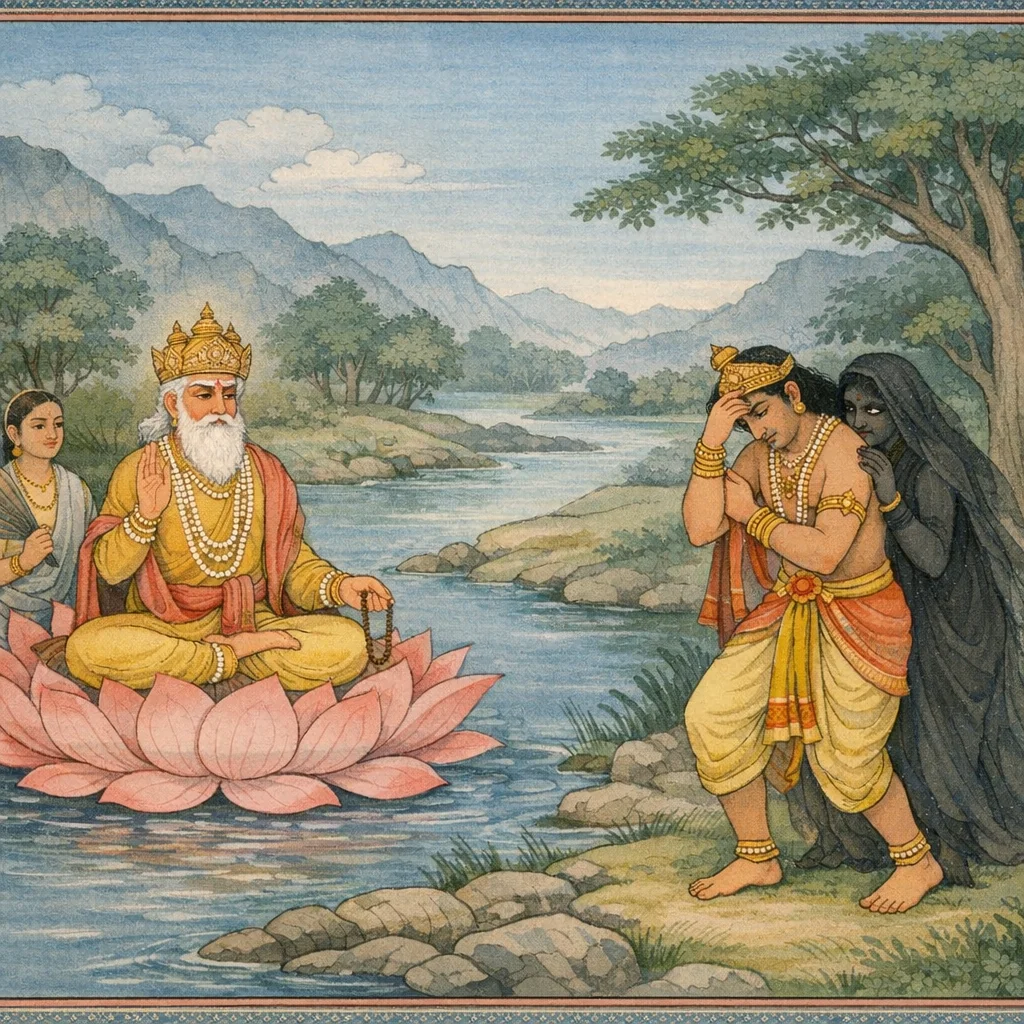
Chapter Arc: वृत्र-वध के बाद देवेन्द्र पर अदृश्य पाप का प्रहार होता है—मुख में दाह, देह में कम्प, श्वास का उच्छ्वास, और भयावह वैवर्ण्य; विजय का क्षण ही दण्ड का द्वार बन जाता है। → ब्रह्महत्या-जनित त्रास इन्द्र को जकड़ लेता है और वह शरीर से चिपककर वर्षों तक पीछा करता है; देव-लोक में भी आश्रय नहीं, इसलिए स्वयम्भू ब्रह्मा के पास अग्नि/देव-शक्ति के स्मरण और शरणागति का क्रम चलता है—‘देवेश, आप ही परम गति हैं; कौन हमें इस संकट से उबारे?’ → ब्रह्मा स्वयं ब्रह्महत्या (पाप-देवी) को संबोधित करते हैं—मधुर वाणी से उसे शांत करते हुए उसके ‘विभाग’ (वितरण/स्थानान्तरण) का विधान रचते हैं, ताकि इन्द्र का बन्धन टूटे और लोक-धर्म का संतुलन बना रहे। → ब्रह्महत्या का भार एक ही देह पर स्थिर न रहकर नियत भागों में विभक्त होने की व्यवस्था पाता है; इन्द्र को आश्वासन मिलता है कि जैसे शतक्रतु इन्द्र स्वर्ग में अपराजित रहे, वैसे ही कौन्तेय (युधिष्ठिर) भी पृथ्वी पर धर्म-आश्रित होकर अपराजित हो सकता है—पाप, प्रायश्चित्त और शासन-धर्म का सूत्र एक साथ जुड़ता है। → ब्रह्महत्या के विभाजन के जिन-किन आश्रयों/स्थानों में उसका अंश जाता है, और उससे लोक-व्यवहार में कौन-से स्थायी नियम जन्म लेते हैं—यह आगे के अध्यायों में विस्तार पाता है।
Shlokas
Verse 1
इस प्रकार श्रीमहाभारत शान्तिपर्वके अन्तर्गत गोक्षधर्मपर्वमें वृत्रायुरका वधविषयक दो सौ इक्यासीवाँ अध्याय पूरा हुआ ॥/ २८१ ॥। (दाक्षिणात्य अधिक पाठका ई श्लोक मिलाकर कुछ ४४ ३ “लोक हैं) मा जम (> दयशीर्त्याधिकद्विशततमो< ध्याय: वृत्रासुरका वध और उससे कह ई ब्रह्महत्याका ब्रह्माजीके द्वारा चार स्थानोंमें विभाजन भीष्म उवाच वृत्रस्थ तु महाराज ज्वराविष्टस्य सर्वश: । अभवन् यानि लिज्भनि शरीरे तानि मे शृणु,भीष्मजी कहते हैं--महाराज! ज्वरसे आविष्ट हुए वृत्रासुरके शरीरमें जो लक्षण प्रकट हुए थे, उन्हें मुझसे सुनो
Bhishma said: O great king, listen from me to the signs that appeared all over the body of Vṛtra when he was seized by fever.
Verse 2
ज्वलितास्यो5भवद् घोरो वैवर्ण्य चागमत् परम् | गात्रकम्पश्न सुमहान् श्वासश्लाप्पभवन्महान्,उसके मुखमें विशेष जलन होने लगी। उसकी आकृति बड़ी भयानक हो गयी। अंगकान्ति बहुत फीकी पड़ गयी। शरीर जोर-जोरसे काँपने लगा तथा बड़े वेगसे साँस चलने लगी
Bhīṣma said: “His mouth began to burn intensely; he became dreadful to behold. His complexion faded to an extreme pallor; his limbs shook violently, and his breathing grew rapid and forceful.”
Verse 3
रोमहर्षश्न तीव्रो5भूज्नि:श्वासश्च महान् नूप । शिवा चाशिवसंकाशा तस्य वक्त्रात् सुदारुणा
Bhīṣma said: “O king, a violent shudder seized him, and his breathing grew heavy and forceful. From his mouth there issued a dreadful cry—ominous in its very sound, though shaped like an auspicious ‘śivā’ call—signaling a grave turn in what was unfolding.”
Verse 4
उल्काश्ष् ज्वलितास्तस्य दीप्ता: पाश्वे प्रपेदिरे,उसके पार्श्चभागमें प्रज्वलित एवं प्रकाशित उल्काएँ गिरने लगीं। गीध, कंक, बगले आदि भयंकर पक्षी अपनी बोली सुनाने लगे और एक-दूसरेसे सटकर वृत्रासुरके ऊपर चक्रकी भाँति घूमने लगे
Bhīṣma said: “Blazing meteors, bright with fire, began to fall at his side. Terrifying birds—vultures, herons, and the like—cried out harshly, and, pressing close together, wheeled above Vṛtrāsura like a spinning disc.”
Verse 5
गृध्रा: कड़का बलाकाश्न वाचो5मुज्चन् सुदारुणा: । वृत्रस्योपरि संसृष्टा श्रक्रवत् परिब भ्रमु:,उसके पार्श्चभागमें प्रज्वलित एवं प्रकाशित उल्काएँ गिरने लगीं। गीध, कंक, बगले आदि भयंकर पक्षी अपनी बोली सुनाने लगे और एक-दूसरेसे सटकर वृत्रासुरके ऊपर चक्रकी भाँति घूमने लगे
Bhīṣma said: “Vultures, herons, and cranes uttered harsh and dreadful cries. Clustering together above Vṛtra, they wheeled in circles like Indra’s discus—an ominous sign that adharma and impending destruction were gathering overhead.”
Verse 6
ततस्तं रथमास्थाय देवाप्यायित आहवे । वज्नोद्यतकर: शक्रस्तं दैत्यं समवैक्षत,तदनन्तर महादेवजीके तेजसे परिपुष्ट हो वज्र हाथमें लिये हुए इन्द्रने रथपर बैठकर युद्धमें उस दैत्यकी ओर देखा
Then, mounting his chariot and strengthened by the gods for the battle, Śakra (Indra), with his hand raised holding the thunderbolt, fixed his gaze upon that Daitya.
Verse 7
अमानुषमथो नादं स मुमोच महासुर: । व्यजृम्भच्चैव राजेन्द्र तीव्रज्वरसमन्वित:,राजेन्द्र! इसी समय तीव्र ज्वरसे पीड़ित हो उस महान् असुरने अमानुषी गर्जना की और बारंबार जँभाई ली
Bhīṣma said: Then that mighty asura, seized by a burning fever, let out an inhuman roar; and, O king, he repeatedly yawned—his body and breath betraying a violent inner affliction.
Verse 8
अथास्य जृम्भत: शक्रस्ततो वज़्मवासृजत् | स वज्र: सुमहातेजा: कालाग्निसदृशोपम:,जँभाई लेते समय ही इन्द्रने उसके ऊपर वज्रका प्रहार किया। वह महातेजस्वी वज्र कालाग्निके समान जान पड़ता था
Bhīṣma said: “Just as he was yawning, Śakra (Indra) then hurled the thunderbolt at him. That thunderbolt, blazing with immense splendor, appeared like the fire of Time itself.”
Verse 9
क्षिप्रमेव महाकायं वृत्रं दैत्यमपातयत् । ततो नाद: समभवत् पुनरेव समन्ततः
Bhīṣma said: “In an instant he struck down Vṛtra, the colossal Daitya. Then, once again, a great roar arose on every side all around.”
Verse 10
वृत्रं विनिहतं दृष्टवा देवानां भरतर्षभ: । उसने उस महाकाय दैत्य वृत्रासुरको तुरंत ही धराशायी कर दिया-। भरतश्रेष्ठ) फिर तो वृत्रासुरको मारा गया देख चारों ओरसे देवताओंका सिंहनाद वहाँ “बारबार गूँजने लगा ।। ९ न ! वृत्रं तु हत्वा मघवा दानवारिमहायशा:
Bhīṣma said: “O bull among the Bharatas, when the gods saw Vṛtra slain, a triumphant roar resounded on all sides again and again. Having struck down Vṛtra, Indra—renowned and the foe of the Dānavas—became the instrument of the gods’ deliverance.”
Verse 11
अथ वृत्रस्यथ कौरव्य शरीरादभिनि:सृता
Bhīṣma said: “Then, O scion of the Kurus, from Vṛtra’s body there issued forth (something/someone), emerging outward.”
Verse 12
ब्रह्मवध्या महाघोरा रौद्रा लोकभयावहा । करालदशना भीमा विकृता कृष्णपिड्ूला
Bhīṣma said: “The sin of brahmin-slaying (Brahmahatyā) is exceedingly dreadful—fierce, terrifying, and a cause of fear for the whole world. It appears as a monstrous, formidable presence, with gaping, terrible teeth and a distorted form, dark and swollen—an image meant to warn how grievously dharma is violated when the sacred is harmed.”
Verse 13
कुरुनन्दन! तदनन्तर वृत्रासुरके मृत शरीरसे सम्पूर्ण जगत्को भय देनेवाली महाघोर एवं क्रूर स्वभाववाली ब्रह्महत्या प्रकट हुई। उसके दाँत बड़े विकराल थे। उसकी आकृति कृष्ण और पिंगल वर्णकी थी। वह देखनेमें बड़ी भयानक और विकृत रूपवाली थी ।। प्रकीर्णमूर्थजा चैव घोरनेत्रा च भारत । कपालमालिनी चैव कृत्येव भरतर्षभ,भरतनन्दन! उसके बाल बिखरे हुए थे, नेत्र बड़े भयावने थे। उसके गलेमें नरमुण्डोंकी माला थी। भरतश्रेष्ठ! वह कृत्या-सी जान पड़ती थी
Bhīṣma said: “O joy of the Kurus! After Vṛtrāsura’s body had fallen, there manifested the dread power called Brahmahatyā—terrible and cruel by nature—able to cast fear upon the whole world. Her teeth were frightfully protruding; her form was dark and tawny, and her very appearance was monstrous and distorted. Her hair was dishevelled, her eyes were terrifying, and around her neck hung a garland of human skulls. O scion of Bharata, she looked like a kṛtyā—an embodied curse—made visible.”
Verse 14
रुधिरार्द्रो च धर्मज् चीरवल्कलवासिनी । साभिनिष्क्रम्य राजेन्द्र तादूगूपा भयावहा
Bhīṣma said: “O lord of kings, she—soaked in blood, yet discerning of dharma—dwelling in bark-garments and rags, came forth; and in that very form she appeared terrifying, striking fear into all who beheld her.”
Verse 15
कस्यचित् त्वथ कालस्य वृत्रहा कुरुनन्दन,कुरुनन्दन! उस समय वृत्रविनाशक इन्द्र लोक-हितकी कामनासे स्वर्गकी ओर जा रहे थे। महातेजस्वी इन्द्रको युद्धभूमिसे निकलकर जाते देख ब्रह्महत्या कुछ ही कालमें उनके पास जा पहुँची
Bhīṣma said: “After some time, O joy of the Kurus, Indra—the slayer of Vṛtra—set out toward heaven, moved by a desire to secure the welfare of the worlds. But when the radiant Indra was seen leaving the battlefield, the sin of brahmin-slaying (Brahmahatyā) swiftly came and overtook him.”
Verse 16
स्वर्गायाभिमुख: प्रायाललोकानां हितकाम्यया । सा विनि:सरमाणं तु दृष्टवा शक्रं महौजसम्,कुरुनन्दन! उस समय वृत्रविनाशक इन्द्र लोक-हितकी कामनासे स्वर्गकी ओर जा रहे थे। महातेजस्वी इन्द्रको युद्धभूमिसे निकलकर जाते देख ब्रह्महत्या कुछ ही कालमें उनके पास जा पहुँची
Facing heaven, Indra set forth, desiring the welfare of the worlds. But when Brahmahatyā saw mighty Śakra departing, she rushed out in pursuit and quickly overtook him.
Verse 17
जग्राह वध्या देवेन्द्र सुलगना चाभवत् तदा । स हि तस्मिन् समुत्पन्ने ब्रह्म॒वध्याकृते भये
Bhīṣma said: “Then the Brahma-slaying curse (Brahmahatyā), destined to strike down its target, seized Indra and clung fast to him. For when that fear—born of the deed of Brahmin-slaying—arose, it took hold of him.”
Verse 18
अनुसृत्य तु यत्नात् स तथा वै ब्रह्महत्यया
Bhīṣma said: “Yet, having pursued it with earnest effort, he was still, in that very manner, followed and afflicted by the sin of brahmahatyā (the killing of a brāhmaṇa).”
Verse 19
तदा गृहीतः कौरव्य निस्तेजा: समपद्यत । परंतु उस ब्रह्महत्याने यत्नपूर्वक उनका पीछा करके वहाँ भी उन्हें जा पकड़ा। कुरुनन्दन! ब्रह्महत्याद्वारा पकड़ लिये जानेपर इन्द्र निस्तेज हो गये || १८ ई ।। तस्या व्यपोहने शक्र: पर॑ यत्नं चकार ह
Bhīṣma said: “Then, O Kauravya, when he was seized, he became bereft of radiance. Yet that sin of brahmahatyā pursued him with deliberate effort and caught him even there. O joy of the Kurus, once Indra was grasped by brahmahatyā, he lost his splendor.”
Verse 20
न चाशकत् तां देवेन्द्रो ब्रह्मवध्यां व्यपोहितुम् । देवेन्द्रने उसके निवारणके लिये महान् प्रयत्न किया; परंतु किसी तरह भी वे उसे दूर न कर सके ।। गृहीत एव तु तया देवेन्द्रो भरतर्षभ
Bhīṣma said: “Even Devendra (Indra) was unable to drive away that brahma-slaughter (the sin of killing a Brāhmaṇa). Though the lord of the gods made great efforts to ward it off, he could not remove it by any means; rather, he remained seized by it—O bull among the Bharatas.”
Verse 21
पितामहमुपागम्य शिरसा प्रत्यपूजयत् । भरतभूषण! ब्रह्महत्याने देवराज इन्द्रको अपना बंदी बना ही लिया। वे उसी अवस्थामें ब्रह्माजीके पास गये और मस्तक झुकाकर उन्होंने ब्रह्माजीको प्रणाम किया ।। ज्ञात्वा गृहीतं शक्रं स द्विजप्रवरवध्यया
Bhīṣma said: “Having approached the Grandfather (Brahmā), he bowed his head and paid him reverent homage. Knowing that Śakra (Indra) had been seized—on account of the slaying of a foremost Brāhmaṇa—he went to Brahmā in a humbled state.”
Verse 22
तामुवाच महाबाहो ब्रह्म॒वध्यां पितामह:
Bhīṣma said: “O mighty-armed one, the Grandsire addressed her—one who was not to be slain, being under the protection of Brahmanical sanctity.”
Verse 23
मुच्यतां त्रिदशेन्द्रोडयं मत्प्रियं कुरु भाविनि,'भाविनि! ये देवताओंके राजा इन्द्र हैं, इन्हें छोड़ दो। मेरा यह प्रिय कार्य करो। बोलो, मैं तुम्हारी कौन-सी अभिलाषा पूर्ण करूँ। तुम जिस किसी मनोरथको पाना चाहो उसे बताओ'
Bhīṣma said: “Release this Indra, the lord of the gods. Do what is dear to me, O noble lady. Set him free and fulfill this request of mine. Speak—what desire of yours shall I satisfy? Tell me whatever wish you seek to attain.”
Verse 24
ब्रृहि कि ते करोम्यद्य कामं॑ कि त्वमिहेच्छसि,'भाविनि! ये देवताओंके राजा इन्द्र हैं, इन्हें छोड़ दो। मेरा यह प्रिय कार्य करो। बोलो, मैं तुम्हारी कौन-सी अभिलाषा पूर्ण करूँ। तुम जिस किसी मनोरथको पाना चाहो उसे बताओ'
Bhīṣma said: “Tell me—what can I do for you today? What is it that you desire here? Leave aside Indra, the king of the gods. Do this act that is dear to me. Speak: which of your wishes shall I fulfill? Whatever aim you long to attain, declare it.”
Verse 25
ब्रह्मवध्योवाच त्रिलोकपूजिते देवे प्रीते त्रैलोक्यकर्तरि । कृतमेव हि मन्यामि निवासं तु विधत्स्व मे,ब्रह्महत्या बोली--तीनों लोकोंकी सृष्टि करने-वाले त्रिभुवनपूजित आप परमदेवके प्रसन्न हो जानेपर मैं अपने सारे मनोरथोंको पूर्ण हुआ ही मानती हूँ। अब आप मेरे लिये केवल निवासस्थानका प्रबन्ध कर दीजिये
Brahmahatyā said: “O supreme God, worshipped in the three worlds—when you, the maker of the three worlds, are pleased, I regard all my aims as already fulfilled. Now, please arrange only a place of residence for me.”
Verse 26
त्वया कृतेयं मर्यादा लोकसंरक्षणार्थिना । स्थापना वै सुमहती त्वया देव प्रवर्तिता,आपने सम्पूर्ण लोकोंकी रक्षाके लिये यह धर्मकी मर्यादा बाँधी है। देव! आपहीने इस महत्त्वपूर्ण मर्यादाकी स्थापना करके इसे चलाया है
Bhīṣma said: “It is you—seeking the protection of all the worlds—who established this boundary of dharma. O Divine One, you yourself set up this great ordinance and set it in motion, so that the world might be safeguarded.”
Verse 27
प्रीते तु त्वयि धर्मज्ञ सर्वलोकेश्वर प्रभो । शक्रादपगमिष्यामि निवासं संविधत्स्व मे,धर्मके ज्ञाता सर्वलोकेश्वर प्रभो! जब आप प्रसन्न हैं तो मैं इन्द्रको छोड़कर हट जाऊँगी; परंतु आप मेरे लिये निवास-स्थानकी व्यवस्था कर दीजिये
Bhishma said: “O knower of dharma, O Lord of all the worlds! If you are pleased with me, then I shall withdraw from Indra’s presence; but please arrange a dwelling-place for me.”
Verse 28
भीष्म उवाच तथेति तां प्राह तदा ब्रह्म॒वध्यां पितामह: । उपायत: स शक्रस्य ब्रह्म॒वध्यां व्यपोहत,भीष्मजी कहते हैं--युधिष्ठिर! तब ब्रह्माजीने ब्रह्महत्यासे कहा--“बहुत अच्छा, मैं तुम्हारे रहनेकी व्यवस्था करता हूँ” ऐसा कहकर उन्होंने उपायद्वारा इन्द्रकी ब्रह्महत्याको दूर किया
Bhīṣma said: “So be it.” Then the Grandfather (Brahmā) addressed the personified sin of brahma-slaughter (brahma-vadhyā) and said, “Very well; I shall arrange a dwelling for you.” Having spoken thus, he removed—by a deliberate expedient—the brahma-slaughter that had attached itself to Śakra (Indra).
Verse 29
ततः स्वयम्भुवा ध्यातस्तत्र वल्निर्महात्मना । ब्रह्माणमुपसंगम्य ततो वचनमत्रवीत्,तदनन्तर महात्मा स्वयम्भूने वहाँ अग्निदेवका स्मरण किया। उनके स्मरण करते ही वे ब्रह्माजीके पास आ गये और इस प्रकार बोले--
Bhishma said: Thereupon, the great-souled one meditated upon Vahni (Agni), the self-born. As soon as he was contemplated, Agni approached Brahmā and then spoke.
Verse 30
प्राप्तोडस्मि भगवन् देव त्वत्सकाशमनिन्दित । यत् कर्तव्यं मया देव तद् भवान् वक्तुमहसि,'भगवन्! अनिन्द्य देव! मैं आपके निकट आया हूँ। प्रभो! मुझे जो कार्य करना हो, उसके लिये आप मुझे आज्ञा दें!
Bhīṣma said: “O Blessed Lord, O divine one, blameless and worthy of reverence, I have come into your presence. Tell me, O Lord, what I ought to do; command me regarding the duty that now lies before me.”
Verse 31
ब्रह्मोवाच बहुधा विभजिष्यामि ब्रह्म॒वध्यामिमामहम् । शक्रस्थाघविमोक्षार्थ चतुर्भागं प्रतीच्छ वै,ब्रह्माजीने कहा--अग्निदेव! मैं इन्द्रको पापमुक्त करनेके लिये इस ब्रह्महत्याके कई भाग करूँगा। इसका एक चतुर्थाश तुम भी ग्रहण कर लो
Brahmā said: “I shall divide this sin of brahma-slaying into many portions. For the sake of freeing Indra from his guilt, you too must accept one fourth share of it.”
Verse 32
अग्निरुवाच मम मोक्षस्य कोडच्तो वै ब्रह्मन् ध्यायस्व वै प्रभो । एतदिच्छामि विज्ञातुं तत्तवतो लोकपूजित,अग्निने कहा--्रह्मन! प्रभो! मेरे लिये आपकी आज्ञा शिरोधार्य है, परंतु मैं भी इस ब्रह्महत्यासे मुक्त हो सकूँ, इसके लिये इसकी अन्तिम अवधि क्या होगी, इसपर आप विचार करें। विश्ववन्द्य पितामह! मैं इस बातको ठीक-ठीक जानना चाहता हूँ
Agni said: “O Brahmin, O revered lord, reflect and determine the true limit—the final term—of my release. I wish to know precisely, O one honored by the worlds, when and how I may be freed from this taint of brahma-slaughter (brahmahatyā).”
Verse 33
निष्पपात महाघोरा स्मृति: सा तस्य भारत । नरेश्वर! उसके सारे शरीरमें तीव्र रोमांच हो आया। वह लंबी साँस खींचने लगा। भरतनन्दन! वृत्रासुरके मुखसे अत्यन्त भयंकर अकल्याणस्वरूपा महाघोर गीदड़ीके रूपमें उसकी स्मरणशक्ति ही बाहर निकल पड़ी,ब्रह्मोवाच यस्त्वां ज्वलन्तमासाद्य स्वयं वै मानव: क्वचित् । बीजौषधिरसैर्वद्नले न यक्ष्यति तमोवृत: ब्रह्माजीने कहा--अग्निदेव! यदि किसी स्थानपर तुम प्रज्वलित हो रहे हो, वहाँ पहुँचकर कोई अधिकारी मानव तमोगुणसे आवृत होनेके कारण बीज, ओषधि या रसोंसे स्वयं ही तुम्हारा पूजन नहीं करेगा तो उसीपर तुरंत यह ब्रह्महत्या चली जायगी और उसीके भीतर निवास करने लगेगी; अतः हव्यवाहन! तुम्हारी मानसिक चिन्ता दूर हो जानी चाहिये
Bhishma said: O Bharata, his memory—terrible in its consequence—fell away from him. Then Brahma said: “O Fire-god, if in some place you are found blazing, and a qualified human, shrouded by darkness of mind (tamas), approaches you yet does not offer worship to you with seeds, herbs, or libations, then that very sin of brahma-slaughter (brahmahatyā) will at once pass onto him and take up residence within him. Therefore, O Carrier of oblations (Havyavāha), your inward anxiety should be set aside.”
Verse 34
तमेषा यास्यति क्षिप्रं तत्रैव च निवत्स्यति । ब्रह्मवध्या हव्यवाह व्येतु ते मानसो ज्वर:,ब्रह्माजीने कहा--अग्निदेव! यदि किसी स्थानपर तुम प्रज्वलित हो रहे हो, वहाँ पहुँचकर कोई अधिकारी मानव तमोगुणसे आवृत होनेके कारण बीज, ओषधि या रसोंसे स्वयं ही तुम्हारा पूजन नहीं करेगा तो उसीपर तुरंत यह ब्रह्महत्या चली जायगी और उसीके भीतर निवास करने लगेगी; अतः हव्यवाहन! तुम्हारी मानसिक चिन्ता दूर हो जानी चाहिये
Brahma said: “This (sin) will quickly go to that very person and dwell there. O Havyavāha (Fire), let the torment in your mind be dispelled: the burden of brahmahatyā is not to remain with you, but to pass to the one who, being veiled by tamas, fails to offer due reverence when you are kindled in a place.”
Verse 35
इत्युक्त: प्रतिजग्राह तद् वचो हव्यकव्यभुक् । पितामहस्य भगवांस्तथा च तदभूत् प्रभो,प्रभो! ब्रह्माजीके ऐसा कहनेपर हव्य और कव्यके भोक्ता भगवान् अग्निदेवने उन पितामहकी वह आज्ञा स्वीकार कर ली। इस प्रकार ब्रह्महत्याका एक चौथाई भाग अम्निमें चला गया
Bhishma said: Thus addressed, the blessed Agni—consumer of the oblations offered to the gods (havis) and to the ancestors (kavya)—accepted the command of the Grandfather (Brahmā). And so it came to pass, O lord: one quarter of the burden of brahma-hatyā (the sin of slaying a brāhmaṇa) passed into Fire.
Verse 36
ततो वृक्षौषधितृणं समाहूय पितामह: । इममर्थ महाराज वक्तुं समुपचक्रमे
Then the Grandsire summoned the trees, medicinal herbs, and grasses, and, O great king, began to speak on this matter—setting the stage for an instruction meant to clarify the point at hand and its rightful understanding.
Verse 37
महाराज! इसके बाद पितामह वृक्ष, तृण और ओषधियोंको बुलाकर उनसे भी वही बात कहने लगे ।। त्रह्मोगाच इयं वत्रादनुप्राप्ता ब्रह्म॒हत्या महाभया । पुरुहृतं चतुर्थाशमस्या यूय॑ प्रतीच्छथ ।।) ब्रह्माजी बोले--वृत्रासुरके वधसे यह महाभयंकर ब्रह्महत्या प्रकट होकर इन्द्रके पीछे लगी है। तुमलोग उसका एक चौथाई भाग स्वयं ग्रहण कर लो ।। ततो वृक्षौषधितृणं तथैवोक्ते यथातथम् | व्यथितं वह्लिवद् राजन् ब्रह्माणमिदमब्रवीत्,राजन! ब्रह्माजीने जब उसी प्रकार सब बातें ठीक-ठीक सामने रख दीं, तब अग्निके ही समान वृक्ष, तृण और ओषधियोंका समुदाय भी व्यथित हो उठा और उन सबने ब्रह्माजीसे इस प्रकार कहा--
Bhishma said: “O King, after this the Grandsire (Brahmā) summoned the trees, grasses, and medicinal herbs and addressed them in the same manner. Brahmā said: ‘This dread sin of Brahmin-slaying (brahmahatyā), arisen from the slaying of Vṛtra, has manifested and is pursuing Indra. You must accept one fourth share of it.’ When Brahmā had thus set forth the matter exactly as it was, the assemblage of trees, grasses, and herbs—agitated like fire—replied to Brahmā.”
Verse 38
अस्माकं ब्रह्म॒वध्याया: को5नन््तो लोकपितामह । देवेनाभिहतानस्मान् न पुनर्हन्तुमहिसि,“लोकपितामह! हमारी इस ब्रह्महत्याका अन्त कया होगा? हम तो यों ही दैवके मारे हुए स्थावर योनिमें पड़े हैं; अतः: अब आप पुन: हमें न मारें
Bhishma said: “O Lokapitāmaha, what end will there be to this sin of Brahmin-slaying (brahmahatyā) that has come upon us? Already struck down by fate, we lie fallen into the condition of immobile existence; therefore you should not strike us again.”
Verse 39
वयमर्ग्निं तथा शीतं वर्ष च पवनेरितम् । सहाम: सततं देव तथा च्छेदनभेदने
Bhishma said: “O King, we continually endure fire and cold, and the rains driven by the wind; likewise we bear, without ceasing, cutting and splitting as well.”
Verse 40
ब्रह्मवध्यामिमामद्य भवत: शासनाद् वयम् | ग्रहीष्यामस्त्रिलोकेश मोक्ष॑ चिन्तयतां भवान्
Bhishma said: “O Lord of the three worlds, today, in obedience to your command, we shall accept this burden of brahmahatyā. May you, who ponder the way to liberation, keep your mind fixed on moksha.”
Verse 41
“देव! त्रिलोकीनाथ! हमलोग सदा अग्नि और धूपका ताप, सर्दी, वर्षा, आँधी और अस्त्र-शस्त्रोंद्रारा भेदन-छेदनका कष्ट सहते रहते हैं। आज आपकी आज्ञासे इस ब्रह्महत्याको भी ग्रहण कर लेंगे; किंतु आप इनसे हमारे छुटकारेका उपाय भी तो सोचिये' ।। ब्रह्मोवाच पर्वकाले तु सम्प्राप्ते यो वै च्छेदन भेदनम् । करिष्यति नरो मोहात् तमेषानुगमिष्यति,ब्रह्माजीने कहा--संक्रान्ति, ग्रहण, पूर्णिमा, अमावास्या आदि पर्वकाल प्राप्त होनेपर जो मनुष्य मोहवश तुम्हारा भेदन-छेदन करेगा, उसीके पीछे तुम्हारी यह ब्रह्महत्या लग जायगी
Bhishma said: “O God, Lord of the three worlds! We continually endure the burning of fire and sun, cold, rain, storm-winds, and the pain of being cut and pierced by weapons. Today, by your command, we will even accept this burden of brahma-hatyā; but you must also devise a means for our release from it.” Brahmā replied: “When a sacred festival-time arrives—saṅkrānti, eclipses, the full moon, the new moon (amāvasyā), and the like—whichever man, deluded, performs the cutting and piercing (of you), this brahma-hatyā will follow after him.”
Verse 42
भीष्म उवाच ततो वृक्षौषधितृणमेवमुक्तं महात्मना । ब्रह्माणमभिसम्पूज्य जगामाशु यथागतम्
Bhishma said: Then the trees, herbs, and grasses—thus instructed by that great-souled one—paid due reverence to Brahmā and quickly departed, returning by the very path by which they had come.
Verse 43
भीष्मजी कहते हैं--राजन! महात्मा ब्रह्माजीके ऐसा कहनेपर वृक्ष, ओषधि और तृणका समुदाय उनकी पूजा करके जैसे आया था, वैसे ही शीघ्र लौट गया ।। आहूयाप्सरसो देवस्ततो लोकपितामह: । वाचा मधुरया प्राह सान्त्वयन्निव भारत,भारत! तत्पश्चात् लोकपितामह ब्रह्माजीने अप्सराओंको बुलाकर उन्हें मीठे वचनोंद्वारा सान्त्वना देते हुए-से कहा--
Bhishma said: O King, when the great-souled Brahmā had spoken thus, the host of trees, herbs, and grasses worshipped him and quickly returned as they had come. Then the divine Grandsire of the worlds, Brahmā, summoned the Apsarases and, with sweet words as though consoling them, spoke—
Verse 44
इयमिन्द्रादनुप्राप्ता ब्रह्म॒ुवध्या वराड़ना: । चतुर्थमस्या भागांशं॑ मयोक्ता: सम्प्रतीच्छत
Bhishma said: “This ordinance has come down from Indra—an inviolable rule, protected by Brahmā, a boon that wards off harm. Therefore accept now its fourth share, as I have declared.”
Verse 45
'सुन्दरियो! यह ब्रह्महत्या इन्द्रके पाससे आयी है। तुमलोग मेरे कहनेसे इसका एक चतुर्थाश ग्रहण कर लो” ।। अप्सरस ऊचु: ग्रहणे कृतबुद्धीनां देवेश तव शासनात् | मोक्ष समयतो<स्माकं चिन्तयस्व पितामह,अप्सराएँ बोलीं--देवेश पितामह! आपकी आज्ञासे हमने इस ब्रह्महत्याको ग्रहण कर लेनेका विचार किया है, किंतु इससे हमारे छुटकारेके समयका भी विचार करनेकी कृपा करें
Bhishma said: “O fair ones! This sin of brahma-slaughter has come from Indra’s side. At my word, take upon yourselves one quarter of it.” The Apsarases replied: “O Lord of the gods, revered Grandsire! In obedience to your command we have resolved to accept it; yet please also consider the time and means by which we may be released from it.”
Verse 46
ब्रह्मोवाच रजस्वलासु नारीषु यो वै मैथुनमाचरेत् । तमेषा यास्यति क्षिप्रं व्येतु वो मानसो ज्वर:,ब्रह्माजीनी कहा--जो पुरुष रजस्वला स्त्रियोंक साथ मैथुन करेगा, उसपर यह ब्रह्महत्या शीघ्र चली जायगी; अतः तुम्हारी यह मानसिक चिन्ता दूर हो जानी चाहिये
Brahmā said: “If a man engages in sexual intercourse with women who are in their menstrual period, this sin will swiftly come upon him. Therefore let your mental fever—your anxious worry—be dispelled.”
Verse 47
भीष्म उवाच तथेति हृष्टमनस इत्युकत्वाप्सरसां गणा: । स्वानि स्थानानि सम्प्राप्य रेमिरे भरतर्षभ
Bhīṣma said: Saying, “So be it,” the hosts of Apsarases, their hearts delighted, returned to their own abodes and sported there, O bull among the Bharatas.
Verse 48
भीष्मजी कहते हैं--भरतश्रेष्ठी] यह सुनकर अप्सराओंका मन प्रसन्न हो गया। वे “बहुत अच्छा" कहकर अपने-अपने स्थानोंमें जाकर विहार करने लगीं ।। ततस्त्रिलोककृद् देव: पुनरेव महातपा: । अप:संचिन्तयामास ध्यातास्ताश्चाप्पधागमन्,तब त्रिभुवनकी सृष्टि करनेवाले महातपस्वी भगवान् ब्रह्माने पुन. जलका चिन्तन किया। उनके स्मरण करते ही तुरंत जलदेवता वहाँ उपस्थित हो गये
Bhīṣma said: “O best of the Bharatas, on hearing this the Apsarases became delighted at heart. Saying, ‘Very well,’ they went each to her own place and began to sport there. Then the great ascetic Brahmā, the divine creator of the three worlds, once again turned his mind to the waters; and the moment he contemplated them, the deities of the Waters promptly appeared before him.”
Verse 49
तास्तु सर्वा: समागम्य ब्रह्माणममितौजसम् | इदमूचुर्वचो राजन् प्रणिपत्य पितामहम्
Bhīṣma said: Then all of them assembled together and approached Brahmā of immeasurable splendor. O King, having bowed down to the Grandsire, they spoke these words—
Verse 50
राजन्! वे सब अमित तेजस्वी पितामह ब्रह्माजीके पास पहुँचकर उन्हें प्रणाम करके इस प्रकार बोले-- ।। इमा: सम देव सम्प्राप्तास्त्वत्सकाशमरिंदम । शासनात् तव लोकेश समाज्ञापय न: प्रभो,'शत्रुओंका दमन करनेवाले प्रभो! देव! लोकनाथ! हम आपकी आज्ञासे सेवामें उपस्थित हुए हैं। हमें आज्ञा दीजिये, हम कौन-सी सेवा करें?”
Bhishma said: “O King, all those beings of immeasurable splendor approached the Grandsire Brahmā. Having bowed to him, they spoke thus: ‘O God, O subduer of foes, O Lord of the worlds! By your command we have come into your presence to serve. Command us, O Master—what service shall we perform?’”
Verse 51
ब्रह्मोवाच इयं वृत्रादनुप्राप्ता पुरुहृतं महाभया । ब्रह्मवध्या चतुर्थाशमस्या यूय॑ प्रतीच्छत,ब्रह्माजीने कहा--वृत्रासुरके वधसे इन्द्रको यह महाभयंकर ब्रह्महत्या प्राप्त हुई है। तुमलोग इसका एक चौथाई भाग ग्रहण कर लो
Brahmā said: ‘This dread and terrible burden of Brahmin-slaying (brahmahatyā), arising from the killing of Vṛtra, has come upon Indra, the slayer of many. Accept from it a fourth share.’
Verse 52
आप ऊचु: एवं भवतु लोकेश यथा वदसि न: प्रभो । मोक्ष समयतो<स्माकं संचिन्तयितुमरहसि,जलदेवताने कहा--लोकेश्वर! प्रभो! आप जैसा कहते हैं, ऐसा ही होगा; परंतु हम इस ब्रह्महत्यासे किस समय छुटकारा पायेंगे, इसका भी विचार कर लें
The Waters said: “So be it, O Lord of the worlds—exactly as you command, O Master. Yet you should also consider and determine for us the time when we shall be released from this burden of brahma-slaughter (brahmahatyā).”
Verse 53
त्वं हि देवेश सर्वस्य जगत: परमा गति: । को<न्य: प्रसादो हि भवेद् यन्नः कृच्छात् समुद्धरेत्,देवेश्वरर आप ही इस सम्पूर्ण जगतके परम आश्रय हैं। आप हमारा इस संकटसे उद्धार कर दें, इससे बढ़कर हम लोगोंपर दूसरा कौन अनुग्रह होगा
Bhishma said: “O Lord of the gods, you are indeed the supreme refuge and final resort of this entire world. What greater grace could there be than that you lift us out of this distress?”
Verse 54
ब्रह्मोवाच अल्पा इति मतिं कृत्वा यो नरो बुद्धिमोहित: । श्लेष्ममूत्रपुरीषाणि युष्मासु प्रतिमोक्ष्यति,ब्रह्माजीने कहा--जो मनुष्य अपनी बुद्धिकी मन्दतासे मोहित होकर जलमें तुच्छ बुद्धि करके तुम्हारे भीतर थूक, खँखार या मल-मूत्र डालेगा, तुम्हें छोड़कर यह ब्रह्महत्या तुरंत उसीपर चली जायगी और उसीके भीतर निवास करेगी। इस प्रकार तुमलोगोंका ब्रह्महत्यासे उद्धार हो जायगा, यह मैं सत्य कहता हूँ
Brahmā said: “If some man, his understanding deluded by dullness, forms the contemptuous notion that you are insignificant and then discharges phlegm, urine, or feces into you, the sin of brahmahatyā will at once leave you and fall upon him alone, taking up residence within him. Thus you will be freed from brahmahatyā—this I declare as truth.”
Verse 55
तमियं यास्यति क्षिप्रंं तत्रैव च निवत्स्यति । तथा वो भविता मोक्ष इति सत्यं ब्रवीमि व:,ब्रह्माजीने कहा--जो मनुष्य अपनी बुद्धिकी मन्दतासे मोहित होकर जलमें तुच्छ बुद्धि करके तुम्हारे भीतर थूक, खँखार या मल-मूत्र डालेगा, तुम्हें छोड़कर यह ब्रह्महत्या तुरंत उसीपर चली जायगी और उसीके भीतर निवास करेगी। इस प्रकार तुमलोगोंका ब्रह्महत्यासे उद्धार हो जायगा, यह मैं सत्य कहता हूँ
Bhishma said: “This (sin) will quickly depart from you and will take up residence right there (in that other person). Thus, you will attain release from it; this I declare to you as the truth.”
Verse 56
ततो विमुच्य देवेन्द्र ब्रह्म॒वध्या युधिष्ठिर । यथा विसृष्टं तं वासमगमद् देवशासनात्,युधिष्ठिर! तदनन्तर देवराज इन्द्रको छोड़कर वह ब्रह्महत्या ब्रह्माजीकी आज्ञासे उनके दिये हुए पूर्वोक्त निवास-स्थानोंको चली गयी
Bhīṣma said: “Then, O Yudhiṣṭhira, Indra—the lord of the gods—was released from the taint of brahmahatyā. In accordance with the divine ordinance, that sin departed and went to the previously assigned abodes.”
Verse 57
एवं शक्रेण सम्प्राप्ता ब्रह्मवध्या जनाधिप । पितामहमनुज्ञाप्य सो5श्वमेधमकल्पयत्,नरेश्वर! इस प्रकार इन्द्रको ब्रह्महत्या प्राप्त हुई थी, फिर उन्होंने ब्रह्माजीकी आज्ञा लेकर अश्वमेध यज्ञका अनुष्ठान किया
Bhishma said: “O lord of men, in this manner the sin of Brahmin-slaying (brahma-hatyā) came upon Indra. Thereafter, having obtained the permission of the Grandsire (Brahmā), he undertook the performance of the Aśvamedha sacrifice.”
Verse 58
श्रूयते च महाराज सम्प्राप्ता वासवेन वै । ब्रह्म॒वध्या ततः शुद्धि हयमेधेन लब्धवान्,महाराज! सुननेमें आता है कि इन्द्रको जो ब्रह्महत्या लगी थी, उससे उन्होंने अश्वमेध यज्ञ करके ही शुद्धि लाभ की थी
Bhishma said: “It is also heard, O great king, that Vāsava (Indra) incurred the taint of brahma-hatyā; and thereafter he obtained purification by performing the Aśvamedha sacrifice.”
Verse 59
समवाप्य श्रियं देवो हत्वारींश्व॒ सहस्रश: । प्रहर्षमतुलं लेभे वासव: पृथिवीपते,पृथ्वीनाथ! देवराज इन्द्रने सहस्रों शत्रुओंका वध करके अपनी खोयी हुई राजलक्ष्मीको पाकर अनुपम आनन्द प्राप्त किया
Bhishma said: “Having regained his royal fortune, the god Vāsava (Indra)—after slaying enemies by the thousands—attained an incomparable exhilaration, O lord of the earth.”
Verse 60
वृत्रस्य रुधिराच्चैव शिखण्डा: पार्थ जज्ञिरे । द्विजातिभिरभ क्ष्यास्ते दीक्षितैश्व तपोधनै:,कुन्तीनन्दन! वृत्रासुरके रक्तसे बहुतेरे छत्रक उत्पन्न हुए थे, जो ब्राह्मण, क्षत्रिय और वैश्यके लिये तथा यज्ञकी दीक्षा लेनेवालोंके लिये और तपस्वियोंके लिये अभक्षणीय हैं
Bhishma said: “O Pārtha, from the blood of Vṛtra there arose many śikhaṇḍa—mushrooms. They are forbidden as food for the twice-born (brāhmaṇa, kṣatriya, and vaiśya), and likewise for those under sacrificial consecration and for ascetics rich in austerity.”
Verse 61
सर्वावस्थं॑ त्वमप्येषां द्विजातीनां प्रियं कुरु । इमे हि भूतले देवा: प्रथिता: कुरुनन्दन
Bhishma said: “In every circumstance, you too should act in ways that are pleasing and beneficial to these twice-born, O joy of the Kurus. For these are renowned on earth as veritable gods.”
Verse 62
कुरुनन्दन! तुम भी इन ब्राह्मणोंका सभी अवस्थाओंमें प्रिय करो। ये इस पृथ्वीपर देवताके रूपमें विख्यात हैं |। एवं शक्रेण कौरव्य बुद्धिसौ क्ष्म्यान्महासुर: । उपायपूर्व निहतो वृत्रो ह्मिततेजसा,कुरुकुलभूषण! इस तरह अमित तेजस्वी देवराज इन्द्रने अपनी सूक्ष्म बुद्धिसे काम लेकर उपायपूर्वक महान् असुर वृत्रका वध किया था
Bhishma said: “O joy of the Kurus, you too should hold these Brahmins dear in every circumstance. On this earth they are renowned as embodiments of the gods. So also, O Kaurava—O ornament of the Kuru line—by employing subtle intelligence and acting through well-considered means, the exceedingly radiant king of the gods, Indra, once slew the great Asura Vritra.”
Verse 63
एवं त्वमपि कौन्तेय पृथिव्यामपराजित: । भविष्यसि यथा देव: शतक्रतुरमित्रहा,कुन्तीकुमार! जैसे स्वर्गलोकमें शत्रुसूदन इन्द्रदेव विजयी हुए थे, उसी प्रकार तुम भी इस पृथ्वीपर किसीसे पराजित होनेवाले नहीं हो
Bhishma said: “So you too, O son of Kunti, will be unconquered upon this earth—just as the god Indra, slayer of foes and performer of a hundred sacrifices, stood victorious in heaven.”
Verse 64
ये तु शक्रकथां दिव्यामिमां पर्वसु पर्वसु । विप्रमध्ये वदिष्यन्ति न ते प्राप्स्न्ति किल्बिषम्,जो प्रत्येक पर्वके दिन ब्राह्मणोंकी सभामें इस दिव्य कथाका प्रवचन करेंगे, उन्हें किसी प्रकारका पाप नहीं प्राप्त होगा
Bhishma said: “Those who, at each and every festival occasion, will recite this divine account concerning Śakra (Indra) in the midst of learned Brahmins—such people will not incur sin.”
Verse 65
इत्येतद् वृत्रमाश्रित्य शक्रस्यात्यद्भुतं महत् । कथितं कर्म ते तात कि भूय: श्रोतुमिच्छसि,तात! इस प्रकार वृत्रासुरके प्रसंगसे मैंने तुम्हें यह इन्द्रका अत्यन्त अद्भुत चरित्र सुना दिया। अब तुम और क्या सुनना चाहते हो?
Bhishma said: “Thus, taking the episode of Vṛtra as the occasion, I have narrated to you, dear child, the great and exceedingly wondrous deed of Śakra (Indra). Now tell me—what more do you wish to hear?”
Verse 106
वज्जेण विष्णुयुक्तेन दिवमेव समाविशत् | दानवशत्रु महायशस्वी इन्द्रने विष्णुके तेजसे व्याप्त हुए वज्जके द्वारा वृत्रासुरका वध करके पुनः स्वर्गलोकमें ही प्रवेश किया
Bhishma said: Armed with the thunderbolt empowered by Viṣṇu, the illustrious Indra—enemy of the Dānavas—pervaded by Viṣṇu’s divine energy, slew Vṛtrāsura with that vajra and then re-entered heaven.
Verse 142
वज़्िणं मृगयामास तदा भरतसत्तम | धर्मज्ञ राजेन्द्र! भरतसत्तम! उसके सारे अंग रक्तसे भींगे हुए थे। उसने चीर और वल्कल पहन रखे थे। ऐसे विकराल रूपवाली वह भयानक ब्रह्महत्या वृत्रके शरीरसे निकलकर तत्काल ही वज्रधारी इन्द्रको खोजने लगी
Bhishma said: “Then that dreadful embodiment of brahmahatyā—terrible to behold, its limbs smeared with blood and clad in rags and bark—having emerged from Vṛtra’s body, at once began to hunt for Indra, the wielder of the thunderbolt. O best of the Bharatas, O dharma-knowing king!”
Verse 173
नलिन्या बिसमध्यस्थ उवासाब्दगणान् बहून् उस ब्रह्महत्याने देवेन्द्रको पकड़ लिया और वह तुरंत ही उनके शरीरसे सट गयी। वह ब्रह्म हत्याजनित भय उपस्थित होनेपर इन्द्र उससे पिण्ड छुड़ानेके लिये भागे और कमलकी नालके भीतर घुसकर उसीमें बहुत वर्षोतक छिपे रहे
Bhishma said: Indra dwelt for many years hidden within the hollow of a lotus-stalk. For when the sin of brahmahatyā seized Devendra, it instantly clung to his very body. Struck by the fear born of that grievous transgression, Indra fled in order to shake it off, entered the lotus-stalk, and remained concealed there for a long span of years.
Verse 213
ब्रह्मा स चिन्तयामास तदा भरतसत्तम । भरतसत्तम! एक श्रेष्ठ ब्राह्मणके वधसे पैदा हुई ब्रह्महत्याने इन्द्रको पकड़ लिया है-- यह जानकर ब्रह्माजी विचार करने लगे
Bhishma said: “Then Brahmā began to reflect, O best of the Bharatas. Knowing that the sin of brahmin-slaying—born from the killing of an eminent Brāhmaṇa—had seized Indra, Brahmā turned his mind to finding a way forward.”
Verse 226
स्वरेण मधुरेणाथ सान्त्वयन्निव भारत । महाबाहु भारत! तब ब्रह्माजीने उस ब्रह्महत्याको अपनी मीठी वाणीद्वारा सान्त्वना देते हुए-से उससे कहा--
Bhishma said: “O Bharata, in a gentle and sweet tone, as though consoling her, Brahmā then addressed that Brahmahatyā—speaking to her with soothing words.”
Verse 282
इति श्रीमहाभारते शान्तिपर्वणि मोक्षधर्मपर्वणि ब्रह्महत्याविभागे द्रवशीत्यधिकद्धिशततमो<5 ध्याय:,इस प्रकार श्रीमहाभारत शान्तिपवके अन्तर्गत मोक्षधर्मपर्वमें ब्रह्महत्याका विभाजनविषयक दो सौ बयासीवाँ अध्याय पूरा हुआ
Thus, in the Śrī Mahābhārata, within the Śānti Parva—specifically in the Mokṣa-dharma section, in the topic concerning the classification of the sin of brahma-hatyā—this two-hundred-and-eighty-second chapter comes to its close.
Frequently Asked Questions
How to pursue prosperity and social relations without compromising dharma: the chapter contrasts lawful earning and disciplined preservation for ethical use against cruel or ignoble work pursued for mere expansion, and advises discernment in relationships lacking respect or affection.
Dharma is sustained through just means and reciprocal care: acquire wealth lawfully, give within capacity (even small offerings matter), honor guests and dependents, and settle one’s obligations through study, ritual duty, ancestral offerings, and respectful service to elders and teachers.
Rather than a formal phalaśruti, the chapter embeds fruit-claims as ethical metrology: even offering water to a guest or the hungry ‘yields fruit,’ and exempla (Rantideva, Śaibya; ascetics attaining siddhi through effort) function as narrative validation of the teaching’s soteriological and social efficacy.