Adhyaya 224
कालनिर्णयः, युगधर्मवर्णनम्, सृष्टिक्रमश्च (Time-Reckoning, Yuga-Dharma, and the Sequence of Creation)
Upa-parva: Mokṣa-dharma (Liberation Discourse) — Cosmology and Kāla (Time) Unit
Yudhiṣṭhira asks to hear the beginnings and endings of beings, the roles of meditation (dhyāna), action (karma), time (kāla), and lifespan across the ages, and the cause of creation and dissolution. Bhīṣma replies by presenting an ancient instructional account: Śuka questions Vyāsa, and Vyāsa explains an unoriginated, stable brahman as the metaphysical ground. The chapter then formalizes a hierarchy of temporal measures (nimeṣa, kāṣṭhā, kalā, muhūrta, day/night, month, year, and the two ayanas), extending the scheme to divine and pitṛ time and finally to Brahmā’s day and night (each spanning thousands of yugas). It describes yuga durations, the decline of dharma by quarters, and corresponding changes in lifespan and dominant religious practice (tapas in Kṛta, jñāna in Tretā, yajña in Dvāpara, dāna in Kali). A cosmogonic sequence follows: from awakened Brahmā arise mind and the great elements—ākāśa (sound), vāyu (touch), tejas (form), āpas (taste), and pṛthivī (smell)—with a doctrine of cumulative guṇas. The account proceeds to the assembling of principles into embodied persons, the generation of worlds and beings, and the recurrence of karmic dispositions across cycles. It closes by noting competing causal explanations (human effort, fate/daiva, and nature/svabhāva) as interdependent, and foregrounds tapas with restraint (dama, śama) as a means to approach the creative principle and mastery over one’s aims.
Chapter Arc: इन्द्र (शक्र) अपने वैभव-रथ, सहस्रों अनुचरों और प्रताप के स्मरण के साथ प्रश्न उठाते हैं—ऐसा सामर्थ्य और लोक-विजय होते हुए भी मनुष्य (और देव) शोक से क्यों नहीं बच पाता? → इन्द्र बलि की दयनीय अवस्था देखकर उलाहना-सा देते हैं—‘ज्ञाति-मित्रों से छूटकर, बलहीन होकर, तुम शोक क्यों नहीं करते?’ इस प्रश्न में सत्ता-वैभव की नश्वरता और पराजय की पीड़ा एक साथ उभरती है। → बलि का निर्णायक उत्तर: ‘कालचक्र स्वभावतः परिवर्तनशील है; सब कुछ अन्तवान है, इसलिए मैं शोक नहीं करता।’ वह आगे काल/विधि की अथाहता का चित्र खींचता है—न उसका द्वीप दिखता है, न पार, न अन्त—और बताता है कि गर्जना-प्रताप भी एक दिन काल के आगे झुकता है। → बलि इन्द्र को लक्ष्मी की चंचलता का उपदेश देता है—लक्ष्मी सहस्रों में किसी एक के पास टिकती है, फिर उसे छोड़कर दूसरे के पास चली जाती है; इसलिए इन्द्र को अहंकार, उन्माद और शोक—तीनों से मुक्त होकर शान्ति धारण करनी चाहिए।
Shlokas
Verse 1
(दाक्षिणात्य अधिक पाठके २ श्लोक मिलाकर कुल ३२ श्लोक हैं) अपन प्रात बछ। अर: - शम्याक्षेप कहते हैं शम्यापातको। “शम्या” एक ऐसे काठके डंडेको कहते हैं, जिसका निचला भाग मोटा होता है। उसे जब कोई बलवान पुरुष उठाकर जोरसे फेंके, तब जितनी दूरीपर जाकर वह गिरे, उतने भूभागको एक “शम्यापात” कहते हैं। चतुर्विशर्त्याधेकद्विशततमो<ध्याय: बलि और इन्द्रका संवाद, बलिके द्वारा कालकी प्रबलताका प्रतिपादन करते हुए इन्द्रको फटकारना भीष्म उवाच पुनरेव तु तं शक्र: प्रहसन्निदमब्रवीत् । निःश्वसन्तं यथा नागं प्रव्याहाराय भारत,भीष्मजी कहते हैं--भारत! ऐसा कहकर सर्पके समान फुफकारते हुए बलिसे इन्द्रने पुनः अपना उत्कर्ष सूचित करनेके लिये हँसते हुए कहा
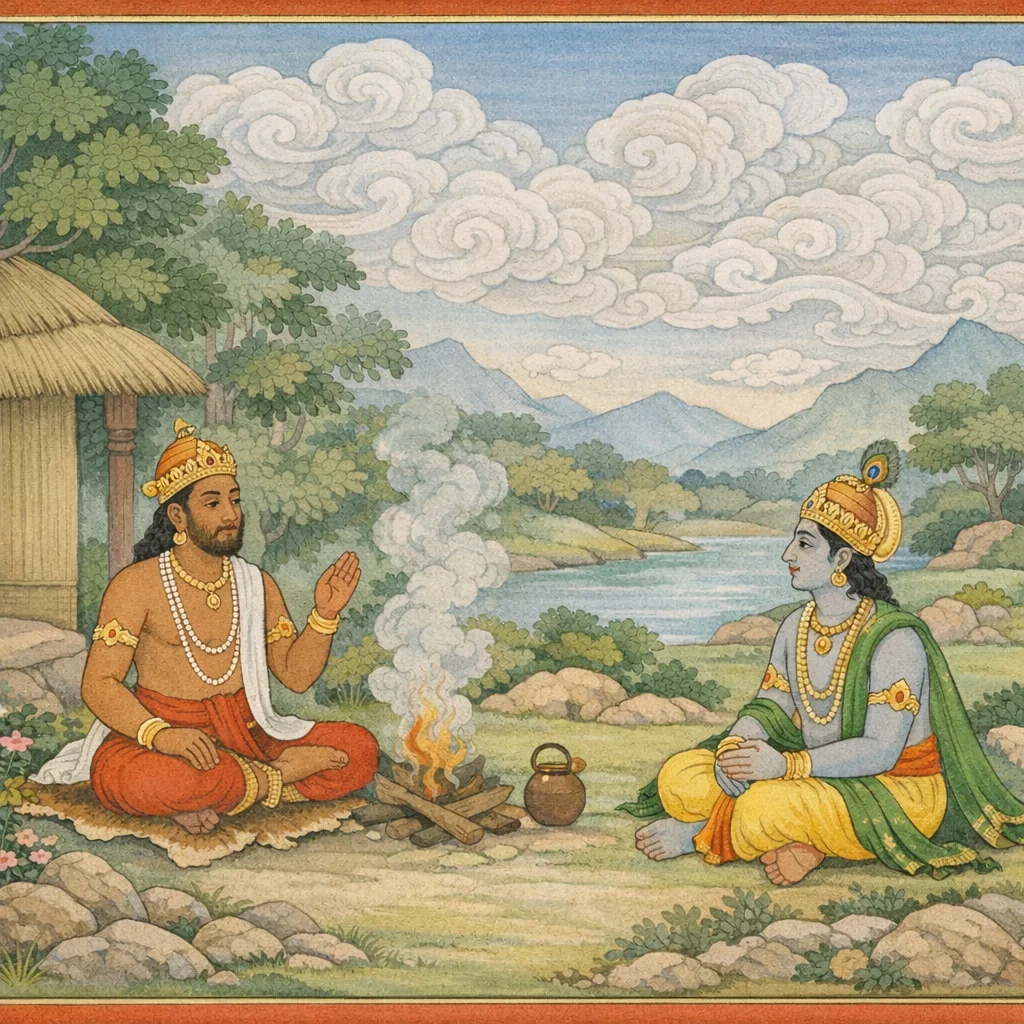
Bhishma said: O Bharata, then Indra (Shakra), smiling as if to display his own superiority, spoke again to Bali—who was hissing like a serpent, drawing breath in anger and preparing to reply. The scene frames a moral tension: pride and provocation on one side, and the restrained yet forceful assertion of truth and the power of Time on the other.
Verse 2
श॒क्र उवाच यत् तद् यानसहस्रेण ज्ञातिभि: परिवारित: । लोकान् प्रतापयन् सर्वान् यास्यस्मानवितर्कयन्
Śakra said: “That one who, surrounded by his kinsmen and attended by a thousand conveyances, was setting all the worlds in awe by his splendour—he will depart from us, without hesitation or second thought.”
Verse 3
दृष्टवा सुकृपणां चेमामवस्थामात्मनो बले । ज्ञातिमित्रपरित्यक्त: शोचस्याहो न शोचसि
Śakra said: “Seeing this pitiable condition of your own strength, abandoned by kinsmen and friends, you grieve—alas!—or do you not grieve?”
Verse 4
इन्द्र बोले--दैत्ययाज बलि! पहले जो तुम सहस्रों वाहनों और भाई-बन्धुओंसे घिरकर सम्पूर्ण लोकोंको संताप देते और हम देवताओंको कुछ न समझते हुए यात्रा करते थे और अब बन्धु-बान्धवों तथा मित्रोंसे परित्यक्त होकर जो अपनी यह अत्यन्त दीनदशा देख रहे हो, इससे तुम्हारे मनमें शोक होता है या नहीं? ।। प्रीति प्राप्पातुलां पूर्व लोकांश्चात्मवशे स्थितान् । विनिपातमिमं बाहां शोचस्याहो न शोचसि,पूर्वकालमें तुमने सम्पूर्ण लोकोंको अपने अधीन कर लिया था और अनुपम प्रसन्नता प्राप्त की थी; किंतु इस समय बाह्य जगतमें तुम्हारा यह घोर पतन हुआ है, यह सब सोचकर तुम्हारे मनमें शोक होता है या नहीं?
Śakra (Indra) said: “O childlike Bali, formerly you attained incomparable delight and held all the worlds under your sway. But now you have fallen into this ruin, abandoned by kinsmen and friends. Seeing this reversal, do you grieve—or do you not grieve at all?”
Verse 5
बलिरवाच अनित्यमुपलक्ष्येह कालपर्यायधर्मत: । तस्माच्छक्र न शोचामि सर्व होवेदमन्तवत्,बलिने कहा--इन््द्र! कालचक्र स्वभावसे ही परिवर्तनशील है, उसके द्वारा यहाँकी प्रत्येक वस्तुको मैं अनित्य समझता हूँ, इसीलिये कभी शोक नहीं करता हूँ; क्योंकि यह सारा जगत् विनाशशील है
Bali said: “O Śakra, Indra! Seeing that time, by its very nature, turns and changes, I regard all things here as impermanent. Therefore I do not grieve, for this whole world has an end and is destined to perish.”
Verse 6
अन्तवन्त इमे देहा भूतानां च सुराधिप । तेन शक्र न शोचामि नापराधादिदं मम,देवेश्वर! प्राणियोंके ये सारे शरीर अन्तवान् हैं; इसलिये मैं कभी शोक नहीं करता हूँ। यह गर्दभका शरीर भी मुझे किसी अपराधसे नहीं प्राप्त हुआ है (मैंने इसे स्वेच्छासे ग्रहण किया है)
“O lord of the gods, the bodies of all living beings are perishable. Therefore, O Śakra, I do not grieve. Nor has this donkey’s body come to me through any wrongdoing of mine; I have assumed it of my own will.”
Verse 7
जीवितं च शरीरं च जात्यैव सह जायते । उभे सह विवर्धेते उभे सह विनश्यत:,जीवन और शरीर दोनों जन्मके साथ ही उत्पन्न होते हैं, साथ ही बढ़ते हैं और साथ ही नष्ट हो जाते हैं
“Life and the body arise together at birth; they grow together, and they perish together.”
Verse 8
न हीदृशमहं भावमवश: प्राप्प केवलम् | यदेवमभिजानामि का व्यथा मे विजानतः,मैं इस गर्दभ-शरीरको पाकर भी विवश नहीं हुआ हूँ। जब मैं इस प्रकार देहकी अनित्यता और आत्माकी असंगताको जानता हूँ, तब यह जानते हुए मुझे क्या व्यथा हो सकती है?
“Even after obtaining such a condition, I have not become helpless merely because of it. Since I clearly understand—the impermanence of the body and the unattached nature of the Self (Ātman)—what suffering could there be for me, who knows?”
Verse 9
भूतानां निधन निष्ठा स्रोतसामिव सागर: । नैतत् सम्यग्विजानन्तो नरा मुहान्ति वज्धृक्,वज्रधारी इन्द्र! जैसे जलके प्रवाहोंका अन्तिम आश्रय समुद्र है, उसी प्रकार शरीरधारियोंकी अन्तिम गति मृत्यु है। जो पुरुष इस बातको अच्छी तरह जानते हैं, वे कभी मोहमें नहीं पड़ते हैं
“O Indra, wielder of the thunderbolt! As the ocean is the final resting place of all streams, so death is the final end of embodied beings. Those who understand this rightly never fall into delusion.”
Verse 10
ये त्वेवें नाभिजानन्ति रजोमोहपरायणा: । ते कृच्छूं प्राप्प सीदन्ति बुद्धिर्येषां प्रणश्यति,जो लोग रजोगुण (काम-क्रोध) और मोहके वशीभूत हो इस बातको भलीभाँति नहीं जानते हैं तथा जिनकी बुद्धि नष्ट हो जाती है, वे संकटमें पड़नेपर बहुत दुखी होते हैं
But those who, given over to passion (rajas) and delusion, do not truly understand this—whose discernment has perished—when adversity comes upon them, they sink into distress. The teaching underscores that ignorance fueled by desire, anger, and delusion collapses one’s inner guidance, making suffering in crisis inevitable.
Verse 11
बुद्धिलाभात् तु पुरुष: सर्व तुदति किल्बिषम् | विपाप्मा लभते सत्त्वं सत्त्वस्थ: सम्प्रसीदति
Śakra said: “By gaining true understanding, a person pierces through and dispels every stain of wrongdoing. Freed from sin, he attains the quality of sattva—purity of being; established in that purity, he becomes fully serene and clear-minded.”
Verse 12
जिसे सदबुद्धि प्राप्त होती है, वह पुरुष उस बुद्धिके द्वारा सारे पापोंको नष्ट कर देता है। पापहीन होनेपर उसे सत्त्वगुणकी प्राप्ति होती है और सत्त्वगुणमें स्थित होकर वह सात््विक प्रसन्नता प्राप्त कर लेता है ।। ततस्तु ये निवर्तन्ते जायन्ते वा पुन: पुनः । कृपणा: परितप्यन्ते तैरथैरभिचोदिता:,जो मन्दबुद्धि मानव सत्त्वगुणसे भ्रष्ट हो जाते हैं, वे बारंबार इस संसारमें जन्म लेते हैं तथा रजोगुणजनित काम, क्रोध आदि दोषोंसे प्रेरित होकर सदा संतप्त होते रहते हैं
Śakra said: “When a person attains right understanding, he destroys all sins by that very intelligence. Once free from sin, he gains the quality of sattva; established in sattva, he comes to a serene, sāttvic joy. But those who fall away from that higher state are born again and again. Wretched and small-souled, driven onward by those forces of passion and the like, they are continually scorched by suffering. Thus, people of dull understanding who slip from sattva return repeatedly to worldly birth, and, impelled by defects born of rajas—desire, anger, and the rest—remain perpetually afflicted.”
Verse 13
अर्थसिद्धिमनर्थ च जीवितं मरणं तथा । सुखदुःखफले चैव न द्वेष्मि न च कामये,मैं न तो अर्थसिद्धि, जीवन और सुखमय फलकी कामना करता हूँ और न अनर्थ, मृत्यु एवं दुःखमय फलसे द्वेष ही रखता हूँ
Śakra said: “I neither crave success and prosperity, nor do I harbor aversion toward misfortune; likewise, I neither long for life nor recoil from death. In the same way, I neither desire the fruits that are pleasant nor hate those that are painful.”
Verse 14
हतं हन्ति हतो होव यो नरो हन्ति कठ्चन । उभौ तौ न विजानीतो यश्न हन्ति हतश्ष यः,जो मनुष्य किसीकी हत्या करता है, वह वास्तवमें स्वयं मरा हुआ होते हुए मरे हुएको ही मारता है। जो मारता है और जो मारा जाता है, वे दोनों ही आत्माको नहीं जानते हैं (क्योंकि आत्मा हननक्रियाका न तो कर्म है, न कर्ता)
Śakra said: “The man who kills another is, in truth, himself already ‘slain’—he only strikes what is already slain. Both the killer and the killed fail to understand the Self; for the ātman is neither the agent nor the object of the act of killing.”
Verse 15
हत्वा जित्वा च मघवन् यः कश्ित् पुरुषायते । अकर्ता होव भवति कर्ता होव करोति तत्,मघवन्! जो कोई किसीको मारकर या जीतकर अपने पौरुषपर गर्व करता है, वह वास्तवमें उस पुरुषार्थका कर्ता ही नहीं है; क्योंकि जो जगत्का कर्ता, जो परमात्मा है, वही उस कर्मका भी कर्ता है
Śakra said: “O Maghavan, whoever, after killing or conquering, prides himself on his own manly prowess is in truth not the doer of that deed. For the real agent is the Maker of the world—the Supreme Lord—who alone brings that action to pass.”
Verse 16
को हि लोकस्य कुरुते विनाशप्रभवावुभौ । कृतं हि तत् कृतेनैव कर्ता तस्यापि चापर:,सम्पूर्ण जगत्का संहार और सृष्टि--इन दोनों कार्योको कौन करता है? वह सब प्राणियोंके कर्मोद्धारा ही किया गया है और उसका भी प्रयोजक कोई और (ईश्वर) ही है
Śakra said: “Who, indeed, brings about for the world both destruction and origination? In truth, that comes to pass through the deeds done by beings themselves; yet even for those deeds there is another instigator (the Lord) behind them.”
Verse 17
पृथिवी ज्योतिराकाशमापो वायुश्च॒ पठचम: । एतद्योनीनि भूतानि तत्र का परिदेवना,पृथ्वी, जल, अग्नि, वायु और आकाश--ये ही सम्पूर्ण प्राणियोंके शरीरोंके कारण हैं; अतः उनके लिये शोक और विलापकी क्या आवश्यकता है?
Śakra said: “Earth, fire (light), space, water, and wind as the fifth—these are the wombs (material sources) from which embodied beings arise. When all creatures are constituted from these elements and return to them, what ground is there for lamentation and wailing?”
Verse 18
महाविद्योउल्पविद्यश्न बलवान् दुर्बलश्ष यः । दर्शनीयो विरूपश्न सुभगो दुर्भगश्चन यः:,कोई बड़ा भारी विद्वान् हो या अल्पविद्यासे युक्त, बलवान् हो या दुर्बल, सुन्दर हो या कुरूप, सौभाग्यशाली हो या दुर्भाग्ययुक्त, गम्भीर काल सबको अपने तेजसे ग्रहण कर लेता है; अतः उन सबके कालके अधीन हो जानेपर जगतकी क्षणभंगुरताको जाननेवाले मुझ बलिको क्या व्यथा हो सकती है?
Śakra said: “Whether one is greatly learned or only slightly educated, strong or weak, handsome or ugly, fortunate or unfortunate—deep, all-consuming Time seizes everyone by its own power. Therefore, when all alike fall under Time’s dominion, what sorrow could there be for me, Bali, who understands the world’s momentary, perishable nature?”
Verse 19
सर्व काल: समादत्ते गम्भीर: स्वेन तेजसा । तस्मिन् कालवशं प्राप्ते का व्यथा मे विजानतः,कोई बड़ा भारी विद्वान् हो या अल्पविद्यासे युक्त, बलवान् हो या दुर्बल, सुन्दर हो या कुरूप, सौभाग्यशाली हो या दुर्भाग्ययुक्त, गम्भीर काल सबको अपने तेजसे ग्रहण कर लेता है; अतः उन सबके कालके अधीन हो जानेपर जगतकी क्षणभंगुरताको जाननेवाले मुझ बलिको क्या व्यथा हो सकती है?
Śakra said: “All are seized by Time—profound and irresistible—by its own inherent power. When one has come under the dominion of Time, what sorrow can there be for me, who understands the fleeting nature of the world?”
Verse 20
दग्धमेवानुदहति हतमेवानुहन्यते । नश्यते नष्टमेवाग्रे लब्धव्यं लभते नर:,जो कालके द्वारा दग्ध हो चुका है, उसीको पीछेसे आग जलाती है। जिसे कालने पहलेसे ही मार डाला है, वही किसी दूसरेके द्वारा मारा जाता है। जो पहलेसे ही नष्ट हो चुकी है, वही वस्तु किसीके द्वारा नष्ट की जाती है तथा जिसका मिलना पहलेसे ही निश्चित है, उसीको मनुष्य हस्तगत करता है
That which has already been burned is, as it were, burned again; that which has already been slain is slain again. What has already perished beforehand is what appears to be destroyed, and what is already destined to be obtained is what a man comes to possess. The teaching is that outcomes unfold according to Time and destiny; human agency operates within what has already been set in motion, so one should act without arrogance and without excessive grief.
Verse 21
नास्य द्वीप: कुतः पारो नावार: सम्प्रदृश्यते । नान्तमस्य प्रपश्यामि विधेर्दिव्यस्य चिन्तयन्,मैं बहुत सोचनेपर भी दिव्य विधाता कालका अन्त नहीं देख पाता हूँ। उस समुद्र-जैसे कालका कहीं द्वीप भी नहीं है, फिर पार कहाँसे प्राप्त हो सकता है? उसका आर-पार कहीं नहीं दिखायी देता है
For this mighty course of Time there is no island of refuge—so how could one ever reach a farther shore? No boundary is seen at all. Even when I ponder the divine ordinance that governs the world, I cannot perceive its end.
Verse 22
यदि मे पश्यत: कालो भूतानि न विनाशयेत् । स्यान्मे हर्षश्न दर्पश्ष क्रोधश्षेव शचीपते,शचीपते! यदि काल मेरे देखते-देखते समस्त प्राणियोंका विनाश नहीं करता तो मुझे हर्ष होता, अपनी शक्तिपर गर्व होता और उस क्रूर कालपर मुझे क्रोध भी होता
If, even as I watched, Time did not destroy living beings, then joy would arise in me; pride in my own power would arise; and anger too would arise against that ruthless Time. But Time does destroy all beings—therefore such exultation and self-conceit are checked, and one is compelled to recognize a higher, impartial order.
Verse 23
तुषभक्षं तु मां ज्ञात्वा प्रविविक्तजने गृहे बिभ्रतं गार्दभं रूपमागत्य परिगर्हसे,इस एकान्त गृहमें गर्दभका रूप धारण किये मुझे भूसी खाता जानकर तुम यहाँ आये हो और मेरी निन्दा करते हो
Knowing me to be one who eats only chaff, dwelling in a secluded house away from people, and wearing the form of a donkey, you have come here and now revile me.
Verse 24
इच्छन्नहं विकुर्या हि रूपाणि बहुधा55त्मन: । विभीषणानि यानीक्ष्य पलायेथास्त्वमेव मे,मैं चाहूँ तो अपने बहुत-से ऐसे भयानक रूप प्रकट कर सकता हूँ, जिन्हें देखकर तुम्हीं मेरे निकटसे भाग खड़े होओगे
If I so wished, I could indeed assume many forms at will—forms so terrifying that, on seeing them, you yourself would flee from me.
Verse 25
काल: सर्व समादत्ते काल: सर्व प्रयच्छति । कालेन विहितं सर्व मा कृथा: शक्र पौरुषम्,इन्द्र! काल ही सबको ग्रहण करता है, काल ही सब कुछ देता है तथा कालने ही सब कुछ किया है; अत: अपने पुरुषार्थका गर्व न करो
Śakra said: “Time takes everything away; Time also bestows everything. All that happens is ordained by Time. Therefore, O Śakra—O Indra—do not take pride in your own prowess.”
Verse 26
पुरा सर्व प्रव्यथितं मयि क्रुद्धे पुरंदर । अवैमि त्वस्य लोकस्य धर्म शक्र सनातनम्,पुरन्दर! पूर्वकालमें मेरे कुपित होनेपर सारा जगत् व्यथित हो उठता था। इस लोककी कभी वृद्धि होती है और कभी हास। यह इसका सनातन स्वभाव है। शक्र! इस बातको मैं अच्छी तरह जानता हूँ
“Formerly, O Purandara, whenever I became wrathful, the whole world would be thrown into distress. I know well the eternal law of this world, O Śakra: here there is at times increase and at times decline—such is its age-old nature.”
Verse 27
त्वमप्येवमवेक्षस्व मा55त्मना विस्मयं गम: । प्रभवश्च प्रभावश्च नात्मसंस्थ: कदाचन,तुम भी जगत्को इसी दृष्टिसे देखो। अपने मनमें विस्मित न होओ। प्रभुता और प्रभाव अपने अधीन नहीं हैं
Śakra said: “You too should look upon the world in this very way. Do not fall into self-directed astonishment or pride. Lordship and influence are never permanently lodged within oneself; they do not remain under one’s personal control.”
Verse 28
कौमारमेव ते चित्त तथैवाद्य यथा पुरा । समवेक्षस्व मघवनू् बुद्धि विन्दस्व नैपष्ठेकीम्,तुम्हारा चित्त अभी बालकके समान है। वह जैसा पहले था, वैसा ही आज भी है। मघवन्! इस बातकी ओर दृष्टिपात करो और नैषछ्लिक बुद्धि प्राप्त करो
Śakra (Indra) says: “Your mind is still childlike—today just as it was before. O Maghavan, look closely at this truth and gain steadfast, consummate understanding.”
Verse 29
देवा मनुष्या: पितरो गन्धर्वोरगराक्षसा: | आसन सर्वे मम वशे तत् सर्व वेत्थ वासव,वासव! एक दिन देवता, मनुष्य, पितर, गन्धर्व, नाग और राक्षस--ये सभी मेरे अधीन थे। वह सब कुछ तुम जानते हो
Śakra said: “The gods, human beings, the Pitṛs (ancestral spirits), Gandharvas, Nāgas, and Rākṣasas—all of them were once under my control. You, O Vāsava, know all of that.”
Verse 30
नमस्तस्यै दिशे<प्यस्तु यस्यां वैरोचनो बलि: । इति मामभ्यपद्यन्त बुद्धिमात्सर्यमोहिता:,मेरे शत्रु अपने बुद्धिगत द्वेषसे मोहित होकर मेरी शरण ग्रहण करते हुए ऐसा कहा करते थे कि विरोचनकुमार बलि जिस दिशामें हों, उस दिशाको भी हमारा नमस्कार है
Śakra (Indra) said: “Salutations even to that direction in which Bali, Virocana’s son, may be.” Thus my enemies—deluded by envy born of their own intellect—would come seeking my protection and speak in this manner.
Verse 31
नाहं तदनुशोचामि नात्मभ्रंशं शचीपते । एवं मे निश्िता बुद्धि: शास्तुस्तिष्ठाम्यहं वशे,शचीपते! मुझे अपने इस पतनके लिये तनिक भी शोक नहीं होता है, मेरी बुद्धिका ऐसा निश्चय है कि मैं सदा सबके शासक ईश्वरके वशमें हूँ
Śakra (Indra) said: “I do not grieve over that, nor over my own fall, O lord of Śacī. My understanding is firmly resolved: I remain always under the governance of the supreme Ruler.”
Verse 32
दृश्यते हि कुले जातो दर्शनीय: प्रतापवान् । दुःखं जीवन् सहामात्यो भवितव्यं हि तत् तथा,एक उच्चकुलमें उत्पन्न हुआ दर्शनीय एवं प्रतापी पुरुष अपने मन्त्रियोंके साथ दुःखपूर्वक जीवन बिताता देखा जाता है, उसका वैसा ही भवितव्य था
Indeed, one may be seen—though born in a noble lineage, handsome to behold and endowed with prowess—living a life of hardship together with his ministers. Such suffering, in that case, was simply what destiny had ordained; it had to be so.
Verse 33
दौष्कुलेयस्तथा मूढो दुर्जातः शक्र दृश्यते । सुखं जीवन सहामात्यो भवितव्यं हि तत् तथा,इन्द्र! एक नीच कुलमें उत्पन्न हुआ मूढ़ मनुष्य जिसका जन्म दुराचारसे हुआ है, अपने मन्त्रियोंसहित सुखी जीवन बिताता देखा जाता है। उसकी भी वैसी ही होनहार समझनी चाहिये
Śakra said: “Even a man born in a base lineage—foolish and ill-born—can be seen living happily, surrounded by his ministers. That too must be understood as destiny unfolding in that very way.”
Verse 34
कल्याणी रूपसम्पन्ना दुर्भगा शक्र दृश्यते । अलक्षणा विरूपा च सुभगा दृश्यते परा,शक्र! एक कल्याणमय आचार-विचार रखनेवाली सुरूपवती युवती विधवा हुई देखी जाती है और दूसरी कुलक्षणा और कुरूपा स्त्री सौभाग्यवती दिखायी देती है
Śakra said: “One sees a woman auspicious in conduct and thought and endowed with beauty, yet she appears unfortunate—bereft of marital good fortune. And one sees another woman, marked by inauspicious signs and lacking beauty, who nevertheless appears highly fortunate.”
Verse 35
नैतदस्मत्कृतं शक्र नैतच्छक्र त्वया कृतम् । यत् त्वमेवंगतो वज्िन् यच्चाप्येवंगता वयम्,वज्रधारी इन्द्र! आज तो तुम इस तरह समृद्धिशाली हो गये हो और हमलोग जो ऐसी अवस्थामें पहुँच गये हैं, यह न तो हमारा किया हुआ है और न तुमने ही कुछ किया है
O Śakra, this is not something done by us, nor is it something done by you. That you, O Vajrin, have come to such prosperity, and that we too have come to such a condition—this is not the result of our own making or your own effort. It is the working of destiny and the ripening of past deeds, tempering pride in success and blame in misfortune.
Verse 36
न कर्म भविताप्येतत् कृतं मम शतक्रतो । ऋद्धिर्वाउप्यथवा नर्द्धि: पर्यायकृतमेव तत्,शतक्रतो! इस समय मैं इस परिस्थितिमें हूँ और जो कर्म मेरे इस शरीरसे हो रहा है, यह सब मेरा किया हुआ नहीं है। समृद्धि और निर्धनता (प्रारब्धके अनुसार) बारी-बारीसे सबपर आती है
This action is not truly something I am the doer of, O Śatakratu. In the condition I am in now, whatever deeds occur through this body are not “done by me” in the sense of autonomous agency. Prosperity and poverty—abundance and lack—come to all beings in turn, according to the revolving order of destiny.
Verse 37
पश्यामि त्वां विराजन्तं देवराजमवस्थितम् । श्रीमन्तं द्युतिमन्तं च गर्जमानं ममोपरि
I behold you—radiant and firmly established as the king of the gods—endowed with majesty and blazing splendor, thundering above me.
Verse 38
मैं देखता हूँ, इस समय तुम देवराजके पदपर प्रतिष्ठित हो। अपने कान्तिमान् और तेजस्वी स्वरूपसे विराज रहे हो और मेरे ऊपर बारंबार गर्जना करते हो ।। एवं नैव न चेत् कालो मामाक्रम्य स्थितो भवेत् | पातयेयमहं त्वाद्य सवज्ञमपि मुष्टिना
Indeed, if Time (Kāla) were not standing over me, pressing upon me, then today I would strike you down with a single blow of my fist—even though you are all-knowing. As it is, I see you now established in the station of the lord of the gods, shining in a radiant and formidable form, repeatedly roaring over me.
Verse 39
परंतु यदि इस तरह काल मुझपर आक्रमण करके मेरे सिरपर सवार न होता तो मैं आज वज्ज लिये होनेपर भी तुम्हें केवल मुक्केसे मारकर धरतीपर गिरा देता ।। न तु विक्रमकालो<5यं शान्तिकालोडयमागतः । काल: स्थापयते सर्व काल: पचति वै तथा,किंतु यह मेरे लिये पराक्रम प्रकट करनेका समय नहीं है; अपितु शान्त रहनेका समय आया है। काल ही सबको विभिन्न अवस्थाओंमें स्थापित करके सबका पालन करता है और काल ही सबको पकाता (क्षीण करता) है
But this is not the time for displaying prowess; a time for restraint and peace has arrived. Time alone sets all beings in their respective conditions, and Time alone also “cooks” them—bringing them to ripeness, decline, and dissolution.
Verse 40
मां चेदभ्यागत: कालो दानवेश्वरपूजितम् । गर्जन्तं प्रतपन्तं च कमन्यं नागमिष्यति,एक दिन मैं दानवेश्वरोंद्वारा पूजित था और मैं भी गर्जता तथा अपना प्रताप सर्वत्र फैलाता था। जब मुझपर भी कालका आक्रमण हुआ है, तब दूसरे किसपर वह आक्रमण नहीं करेगा?
If Time has come upon even me—once honored by the lords of the Dānavas, roaring aloud and blazing with power—then whom else will it not come to? The point is clear: no might, fame, or former reverence can shield anyone from the inevitable reach of Time.
Verse 41
द्वादशानां तु भवतामादित्यानां महात्मनाम् | तेजांस्येकेन सर्वेषां देवराज धृतानि मे,देवराज! तुमलोग जो बारह महात्मा आदित्य कहलाते हो, तुम सब लोगोंके तेज मैंने अकेले धारण कर रखे थे
Śakra (Indra) said: “O Devarāja, you are the twelve great-souled Ādityas; yet I alone had borne the splendors of you all within myself.” In context, the statement underscores how concentrated power can be held by a single ruler, implying both the burden of stewardship and the ethical responsibility to wield collective brilliance without pride or misuse.
Verse 42
अहमेवोद्वहाम्यापो विसृजामि च वासव । तपामि चैव त्रैलोक्यं विद्योताम्पहमेव च,वासव! मैं ही सूर्य बनकर अपनी किरणोंद्वारा पृथ्वीका जल ऊपर उठाता और मेघ बनकर वर्षा करता था। मैं ही त्रिलोकीको ताप देता और विद्युत् बनकर प्रकाश फैलाता था
Śakra said: “I alone draw up the waters and I alone release them again, O Vāsava. I alone heat the three worlds, and I alone, as lightning, spread illumination.” In context, the speaker asserts cosmic stewardship—claiming responsibility for the cycles of rain, heat, and light—underscoring that power entails duty and that the order of the world is sustained through regulated, purposeful action rather than caprice.
Verse 43
संरक्षामि विलुम्पामि ददाम्यहमथाददे । संयच्छामि नियच्छामि लोकेषु प्रभुरीश्वर:,मैं प्रजाकी रक्षा करता था और लुटेरोंको लूट भी लेता था। मैं सदा दान देता और प्रजासे कर लेता था। मैं ही सम्पूर्ण लोकोंका शासक और प्रभु होकर सबको संयम-नियममें रखता था
Śakra said: “I protect, and I also plunder; I give, and then I take. I restrain and I regulate. As the sovereign Lord over the worlds, I keep beings within the bounds of discipline and rule.”
Verse 44
तदद्य विनिवृत्तं मे प्रभुत्वममराधिप । कालसैन्यावगाढस्य सर्व न प्रतिभाति मे,अमरेश्वर! आज मेरी वह प्रभुता समाप्त हो गयी। कालकी सेनासे मैं आक्रान्त हो गया हूँ; अत: मेरा वह सब ऐश्वर्य अब प्रकाशित नहीं हो रहा है
Today my sovereignty has come to an end, O lord of the immortals. Overwhelmed and engulfed by the army of Time, none of my former splendor shines forth to me anymore. This utterance places even divine power under the moral and metaphysical law that Time (kāla) subdues all conditioned authority, urging humility and detachment from dominion.
Verse 45
नाहं कर्ता न चैव त्वं नान्य: कर्ता शचीपते । पर्यायेण हि भुज्यन्ते लोका: शक्र यदृच्छया
Śakra said: “Neither am I the doer, nor are you; nor is anyone else the doer, O lord of Śacī. In due turn, beings in the worlds merely undergo and enjoy the results that come to them as if by chance, according to the order of time.”
Verse 46
शचीपति इन्द्र! न मैं कर्ता हूँ, न तुम कर्ता हो और न कोई दूसरा ही कर्ता है। काल बारी-बारीसे अपनी इच्छाके अनुसार सम्पूर्ण लोकोंका उपभोग करता है ।। मासमासार्धवेश्मानमहोरात्राभिसंवृतम् । ऋतुद्वारं वर्षमुखमायुर्वेदविदो जना:,वेदवेत्ता पुरुष कहते हैं कि मास और पक्ष कालके आवास (शरीर) हैं। दिन और रात उसके आवरण (वस्त्र) हैं। ऋतुएँ द्वार (मन-इन्द्रिय) हैं और वर्ष मुख है। वह काल आयुस्वरूप है
Śakra said: “O Indra, lord of Śacī! Neither I am the doer, nor are you the doer, nor is anyone else truly the doer. It is Time that, in due sequence and according to its own will, experiences and consumes all the worlds. The knowers of the Veda declare that months and fortnights are Time’s dwelling; day and night are its covering; the seasons are its doors; the year is its mouth. Time itself is the very form of life-span.”
Verse 47
आहु: सर्वमिदं चिन्त्यं जना: केचिन्मनीषया । अस्या: पज्चैव चिन्ताया: पर्येष्यामि च पञजचधा,कुछ विद्वान् अपनी बुद्धिके बलसे कहते हैं कि यह सब कुछ कालसंज्ञक ब्रह्म है। इसका इसी रूपमें चिन्तन करना चाहिये। इस चिन्तनके मास आदि उपर्युक्त पाँच ही विषय हैं। मैं पूर्वोक्त पाँच भेदोंसे युक्त कालको जानता हूँ
Śakra said: “Some thoughtful people, by the power of their intellect, declare that all this is to be contemplated as Brahman under the designation ‘Time’ (kāla). One should meditate upon it precisely in that form. This contemplation has five principal objects; I shall examine and set forth this fivefold contemplation.”
Verse 48
गम्भीरं गहन ब्रह्म महत्तोयार्णवं यथा । अनादिनिधनं चाहुरक्षरं क्षरमेव च
Śakra said: “Brahman is profound and unfathomable—like a vast ocean of mighty waters. The wise also declare it to be without beginning and without end, both the imperishable and, in a certain sense, the perishable as well.”
Verse 49
वह कालरूप ब्रह्म अनन्त जलसे भरे हुए महासागरके समान गम्भीर एवं गहन है। उसका कहीं आदि-अन्त नहीं है। उसे ही क्षर एवं अक्षररूप बताया गया है ।। सत्त्वेषु लिड्रमावेश्य निर्लिड्रमपि तत् स्वयम् । मन्यन्ते ध्रुवमेवैनं ये जनास्तत्त्वदर्शिन:,जो लोग तत्त्वदर्शी हैं, वे निश्चितरूपसे ऐसा मानते हैं कि वह कालरूप परबत्रह्म परमात्मा स्वयं निराकार होते हुए भी समस्त प्राणियोंके भीतर जीवका प्रवेश कराता है
Śakra said: “That Brahman, whose form is Time, is deep and unfathomable like a vast ocean filled with endless waters. It has no beginning and no end anywhere. It is described as both the perishable and the imperishable. Though itself without any mark or form, it causes the subtle living principle (jīva) to enter into beings; those who truly see reality hold this as certain.”
Verse 50
भूतानां तु विपर्यासं कुरुते भगवानिति । न होतावद् भवेद् गम्यं न यस्मात् प्रभवेत् पुन:,भगवान् काल ही समस्त प्राणियोंकी अवस्थामें उलट-फेर कर देते हैं। कोई भी व्यक्ति उनके इस माहात्म्यको समझ नहीं पाता। कालकी ही महिमासे पराजित होकर मनुष्य कुछ भी कर नहीं पाता
The Blessed Lord—Time—reverses and reshapes the conditions of all beings. None can fathom His greatness; conquered by the majesty of Time, a man is left powerless to do anything.
Verse 51
गतिं हि सर्वभूतानामगत्वा कक््व गमिष्यति । यो धावता न हातव्यस्तिष्न्नपि न हीयते
Śakra said: “Indeed, without reaching the destined course of all beings, where could one go? He who is not to be slain even by one who rushes upon him does not diminish even when he stands still.”
Verse 52
तमिन्द्रियाणि सर्वाणि नानुपश्यन्ति प्रड्चधा । आहुश्वैनं केचिदर्ग्निं केचिदाहु: प्रजापतिम्
Śakra said: “All the senses, each in its own limited way, do not truly perceive Him. Some declare Him to be Agni (Fire), while others proclaim Him to be Prajāpati (the Lord of creatures).”
Verse 53
देवराज! समस्त प्राणियोंकी गति जो काल है, उसको प्राप्त हुए बिना तुम कहाँ जाओगे? मनुष्य भागकर भी उसे छोड़ नहीं सकता--उससे दूर नहीं जा सकता और न खड़ा होकर ही उसके चंगुलसे छूट सकता है। श्रवण आदि समस्त इन्द्रियाँ मास-पक्ष आदि पाँच भेदोंसे युक्त उस कालका अनुभव नहीं कर पातीं। कुछ लोग इन कालदेवताको अग्नि कहते हैं और कुछ प्रजापति ।। ऋतून मासार्धमासांश्व दिवसांश्व क्षणांस्तथा | पूर्वाह्लमपराह्नंं च मध्याह्नमपि चापरे
Śakra said: “O king of the gods! Time is the course of all beings; without reaching Time, where could you go? A man cannot cast it off even by running—he cannot get away from it; nor, by standing still, can he escape its grasp. Hearing and all the other senses cannot truly experience that Time, distinguished as months, half-months, and fivefold divisions. Some call this deity of Time Agni, and some Prajāpati. Time measures and bears all beings onward—through the seasons, the months and half-months, the days and even the fleeting instants; through the forenoon, the afternoon, and the midday as well.”
Verse 54
मुहूर्तमपि चैवाहुरेक॑ं सन््तमनेकधा । त॑ कालमिति जानीहि यस्य सर्वमिदं वशे
Śakra said: “They speak of even a single muhūrta as one reality that appears in many forms. Know that to be Time—under whose dominion this entire world stands.”
Verse 55
दूसरे लोग उस कालको ऋतु, मास, पक्ष, दिन, क्षण, पूर्वाह्न, अपराह्न और मध्याह्न कहते हैं। उसीको विद्वान् पुरुष मुहूर्त भी कहते हैं। वह एक होकर भी अनेक प्रकारका बताया जाता है। इन्द्र! तुम उस कालको इस प्रकार जानो। यह सारा जगत् उसीके अधीन है ।। बहूनीन्द्रसहस्राणि समतीतानि वासव | बलवीर्योपपन्नानि यथैव त्वं शचीपते
Śakra said: “O Vāsava, countless thousands of Indras have already passed away—each endowed with strength and heroic power—just as you are, O lord of Śacī. Thus you should understand Time: though one, it is spoken of in many ways—as season, month, fortnight, day, moment, forenoon, afternoon, and midday; the wise also call it a muhūrta. All this world is under its dominion.”
Verse 56
शचीपति इन्द्र! जैसे तुम हो, वैसे ही बल और पराक्रमसे सम्पन्न अनेक सहस्र इन्द्र समाप्त हो चुके हैं ।। त्वामप्यतिबलं शक्र देवराजं बलोत्कटम् | प्राप्त काले महावीर्य: काल: संशमयिष्यति,शक्र! तुम अपनेको अत्यन्त शक्तिशाली और उत्कट बलसे युक्त देवराज समझते हो; परंतु समय आनेपर महापराक्रमी काल तुम्हें भी शान्त कर देगा
Indra, lord of Śacī, is told: “As you are, so too have many thousands of Indras—endowed with strength and valor—already met their end. O Śakra, you deem yourself exceedingly powerful, the king of the gods, fierce in might; yet when the appointed time arrives, mighty Time will bring even you to quietude.”
Verse 57
य इदं सर्वमादत्ते तस्माच्छक्र स्थिरो भव । मया त्वया च पूर्वैश्ष न स शक््यो5तिवर्तितुम्,इन्द्र! वह काल ही सम्पूर्ण जगत॒को अपने वशमें कर लेता है; अतः तुम भी स्थिर रहो। मैं, तुम तथा हमारे पूर्वज भी कालकी आज्ञाका उल्लंघन नहीं कर सकते
“He who takes away everything—therefore, O Śakra, remain steadfast. Neither I, nor you, nor even our forefathers can transgress him, O Indra; for Time brings the entire world under its control.”
Verse 58
यामेतां प्राप्प जानीषे राज्यश्रियमनुत्तमाम् | स्थिता मयीति तन्मिथ्या नैषा होकत्र तिषछतति,तुम जिस इस परम उत्तम राजलक्ष्मीको पाकर यह जानते हो कि यह मेरे पास स्थिरभावसे रहेगी, तुम्हारी यह धारणा मिथ्या है; क्योंकि यह कहीं एक जगह बँधकर नहीं रहती है
Śakra said: “Having attained this unsurpassed splendor of kingship, you imagine, ‘It will remain firmly with me.’ That belief is false, for royal fortune does not stay bound to any single place or person.”
Verse 59
स्थिता हीन्द्र सहस्रेषु त्वद्विशिष्टतमेष्वियम् । मां च लोला परित्यज्य त्वामगाद् विबुधाधिप,इन्द्र! यह लक्ष्मी तुमसे भी श्रेष्ठ सहस्रों पुरुषोंके पास रह चुकी है। देवेश्वर! इस समय यह चंचला मुझे भी छोड़कर तुम्हारे पास गयी है
Śakra (Indra) said: “O Indra, this Fortune (Śrī/Lakṣmī) has indeed dwelt among thousands who were even more distinguished than you. Yet, being fickle, she has now abandoned me and gone to you, O lord of the gods.”
Verse 60
मैवं शक्र पुनः कार्षी: शान्तो भवितुम्हसि । त्वामप्येवंविध॑ ज्ञात्वा क्षिप्रमन््यं गमिष्यति,शक्र! अब फिर तुम ऐसा बर्ताव न करना। अब तुमको शान्ति धारण कर लेनी चाहिये। तुम्हें भी मेरी-जैसी स्थितिमें जानकर यह लक्ष्मी शीघ्र किसी दूसरेके पास चली जायगी
“Do not behave like this again, O Śakra. You ought to become calm. Knowing you too to be in such a condition, this Fortune (Śrī/Lakṣmī) will quickly depart and go to someone else.”
Verse 224
इति श्रीमहाभारते शान्तिपर्वणि मोक्षधर्मपर्वणि बलिवासवसंवादे चतुर्विशत्यधिकद्विशततमो<ध्याय:
Thus ends the two-hundred-and-twenty-fourth chapter of the Mokṣadharma section within the Śānti Parva of the Śrī Mahābhārata, in the dialogue between Bali and Vāsava (Indra).
Frequently Asked Questions
Yudhiṣṭhira’s dilemma is epistemic and ethical: how to orient conduct when action (karma), contemplation (dhyāna), and time (kāla) govern changing lifespans and norms across yugas, and when creation and dissolution appear cyclical rather than linear.
The chapter teaches that ethical and spiritual orientation requires a cosmological literacy: time is structured, dharma varies by yuga, causal accounts are multi-factor, and disciplined tapas—rooted in restraint and calm—supports clarity and responsible agency.
A formal phalāśruti is not foregrounded in the provided portion; instead, the meta-commentary is methodological—Bhīṣma authorizes the teaching via an embedded Vyāsa–Śuka dialogue and frames the exposition as a comprehensive reply to the requested topics (sarga, kāla, kriyā, vedas, kartā, phala).