Adhyaya 49
Rājasūyābhiṣeka-darśana: Duryodhana’s Observation of the Consecration
Upa-parva: Rājasūyika Parva (Episode of the Rājasūya)
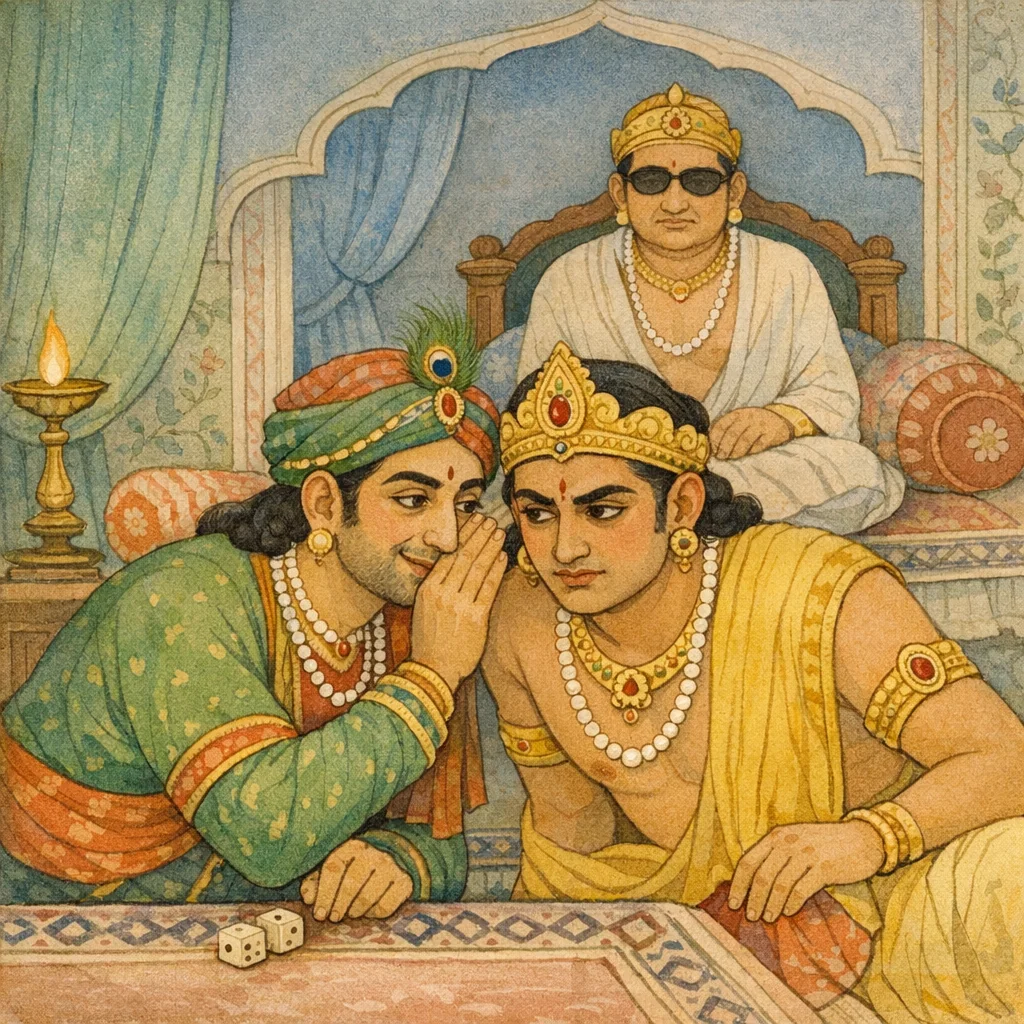
Duryodhana describes to Dhṛtarāṣṭra the scale and ceremonial precision of Yudhiṣṭhira’s consecration. He notes the attendance of “ārya” kings—truth-committed, learned, and ritually accomplished—who render homage to the newly consecrated ruler (1–2). He catalogs tributary wealth and ritual provisions: large herds of cattle brought for dakṣiṇā, varied vessels and goods for abhiṣeka, and specific gifts contributed by named rulers (3–9). Ritual authority is emphasized as Dhaumya and Vyāsa perform the consecration with eminent sages (Nārada, Devala, Asita, and others) attending in approval (10–12). Courtly service roles are highlighted: Sātyaki holds the royal parasol, while Arjuna and Bhīmasena perform fanning (13). A prestigious conch (śaṅkha) and consecration implements are referenced, and Duryodhana reports a personal onset of confusion/distress upon seeing Kṛṣṇa’s role in the anointing (14–15). Auspicious conches are blown; some rulers are depicted as overwhelmed, and the Pāṇḍavas with allies remain composed (16–19). The chapter closes with hyperbolic comparisons to legendary kings to underscore the exceptional prosperity of the event and culminates in Duryodhana’s explicit question about whether life remains worthwhile after witnessing such fortune—an early articulation of corrosive rivalry and status-injury (20–25).
Chapter Arc: धृतराष्ट्र के पूछने पर दुर्योधन अपने मन की जलन और चिंता प्रकट करता है—इन्द्रप्रस्थ में युधिष्ठिर के राजसूय-वैभव और अतिथि-सत्कार ने उसे भीतर से तोड़ दिया है। → वैशम्पायन के वर्णन में युधिष्ठिर के यज्ञ-वैभव की परतें खुलती जाती हैं—असंख्य स्नातकों का पालन, राजाओं द्वारा रत्न-उपहार, दूर देशों से दुर्लभ चर्म-कम्बल और ऐश्वर्य की धारा। इसी वैभव के सामने दुर्योधन का अभिमान चोट खाता है; शकुनि उसकी मनोदशा को पढ़कर उसे उपाय सुझाने के लिए आगे बढ़ता है। → शकुनि दुर्योधन की ईर्ष्या को नीति का मुखौटा पहनाकर उकसाता है—‘संतोष, दया, भय’ को उन्नति का शत्रु बताकर वह दुर्योधन के भीतर की आग को ‘उपाय’ में बदल देता है और द्यूत को निर्णायक अस्त्र के रूप में स्थापित करता है; वह स्वयं को द्यूतविद्या का परम ज्ञाता घोषित करता है। → शकुनि आश्वासन देता है कि द्यूत या युद्ध—किसी भी बहाने बुलाए जाने पर पाण्डव अवश्य आएँगे; दुर्योधन के मन में योजना स्पष्ट होने लगती है। धृतराष्ट्र के दरबार में यह विचार ‘दैव’ और ‘व्यवसाय’ के बीच झूलता हुआ आगे की घटना-श्रृंखला का बीज बन जाता है। → द्यूत-आह्वान की भूमिका बन चुकी है—अब प्रश्न केवल इतना है कि धृतराष्ट्र किस ओर झुकेगा: विदुर की चेतावनी की ओर या शकुनि-दुर्योधन की चाल की ओर?
Shlokas
Verse 1
(दाक्षिणात्य अधिक पाठका १ श्लोक मिलाकर कुल २४ श्लोक हैं) अपन बक। हक २ >> एकोनपज्चाशत्तमो<ड्ध्याय: धृतराष्ट्रके पूछनेपर दुर्योधनका अपनी चिन्ता बताना और द्यूतके लिये धृतराष्ट्रसे अनुरोध करना एवं धृतराष्ट्रका विदुरको इन्द्रप्रसश्थ जानेका आदेश वैशम्पायन उवाच अनुभूय तु राज्ञस्तं राजसूयं महाक्रतुम् । युधिष्ठिरस्य नृपतेर्गान्धारीपुत्रसंयुत:,वैशम्पायनजी कहते हैं--जनमेजय! गान्धारीपुत्र दुर्योधनके सहित सुबलनन्दन शकुनि राजा युधिष्ठटिरके राजसूय महायज्ञका उत्सव देखकर जब लौटा, तब पहले दुर्योधनके अपने अनुकूल मतको जानकर और उसकी पूरी बातें सुनकर सिंहासनपर बैठे हुए प्रज्ञाचक्षु महाप्राज्ञ राजा धृतराष्ट्रके पास जाकर इस प्रकार बोला
Vaiśampāyana said: After witnessing that great royal consecration sacrifice—the magnificent Rājasūya performed by King Yudhiṣṭhira—(Śakuni), accompanied by Gāndhārī’s son (Duryodhana), returned with his mind marked by what he had seen. The scene sets the ethical tension: the public triumph of dharma-backed sovereignty becomes the seed of envy and political scheming that will soon be carried to Dhṛtarāṣṭra’s court.
Verse 2
प्रियकृन्मतमाज्ञाय पूर्व दुर्योधनस्य तत् । प्रज्ञाचक्षुपमासीनं शकुनि: सौबलस्तदा,वैशम्पायनजी कहते हैं--जनमेजय! गान्धारीपुत्र दुर्योधनके सहित सुबलनन्दन शकुनि राजा युधिष्ठटिरके राजसूय महायज्ञका उत्सव देखकर जब लौटा, तब पहले दुर्योधनके अपने अनुकूल मतको जानकर और उसकी पूरी बातें सुनकर सिंहासनपर बैठे हुए प्रज्ञाचक्षु महाप्राज्ञ राजा धृतराष्ट्रके पास जाकर इस प्रकार बोला
Vaiśampāyana said: Having first ascertained Duryodhana’s agreeable intention, Śakuni, the son of Subala, then approached the wise Dhṛtarāṣṭra—who, though blind, was seated as one endowed with insight. The verse frames the coming counsel as calculated and partisan: Śakuni aligns himself with Duryodhana’s desire before addressing the elder king, setting in motion advice shaped more by expediency than by dharma.
Verse 3
दुर्योधनवच: श्रुत्वा धृतराष्ट्र जनाधिपम् । उपगम्य महाप्राज्ञं शकुनिर्वाक्यमब्रवीत्,वैशम्पायनजी कहते हैं--जनमेजय! गान्धारीपुत्र दुर्योधनके सहित सुबलनन्दन शकुनि राजा युधिष्ठटिरके राजसूय महायज्ञका उत्सव देखकर जब लौटा, तब पहले दुर्योधनके अपने अनुकूल मतको जानकर और उसकी पूरी बातें सुनकर सिंहासनपर बैठे हुए प्रज्ञाचक्षु महाप्राज्ञ राजा धृतराष्ट्रके पास जाकर इस प्रकार बोला
Vaiśampāyana said: Having heard Duryodhana’s words, Śakuni approached King Dhṛtarāṣṭra, the lord of men—wise though blind—and addressed him. The scene frames the beginning of a calculated counsel: after Duryodhana’s report, Śakuni moves to influence the elder king, setting in motion choices where attachment to one’s son and political expediency begin to eclipse impartial dharma.
Verse 4
शकुनिरुवाच दुर्योधनो महाराज विवर्णो हरिण: कृश: । दीनश्रिन्तापरश्वैव तं विद्धि मनुजाधिप,शकुनिने कहा--महाराज! दुर्योधनकी कान्ति फीकी पड़ती जा रही है! वह सफेद और दुर्बल हो गया है। उसकी बड़ी दयनीय दशा है। वह निरन्तर चिन्तामें डूबा रहता है। नरेश्वर! उसके मनोभावको समझिये
Śakuni said: “O great king, Duryodhana has grown pale and wan like a deer; he has become emaciated. He is miserable and wholly absorbed in anxious thought. O lord of men, understand his condition.”
Verse 5
न वै परीक्षसे सम्यगसहां शत्रुसम्भवम् | ज्येष्ठपुत्रस्य हृच्छोक॑ किमर्थ नावबुध्यसे,उसे शत्रुओंकी ओरसे कोई असहा वष्ट प्राप्त हुआ है। आप उसकी अच्छी तरह परीक्षा क्यों नहीं करते? दुर्योधन आपका उज्येष्ठ पुत्र है। उसके हृदयमें महान् शोक व्याप्त है। आप उसका पता क्यों नहीं लगाते?
Vaiśampāyana said: “You are not properly examining the source of this unbearable affliction that has arisen because of enemies. Duryodhana is your eldest son, and a great sorrow has seized his heart—why do you not understand it and inquire into its cause?”
Verse 6
धृतराष्ट्र रवाच दुर्योधन कुतोमूलं भृशमार्तो5सि पुत्रक । श्रोतव्यक्षेन्मया सो<र्थो ब्रूहि मे कुरुनन्दन,धृतराष्ट्र दुर्योधनके पास जाकर बोले--बेटा दुर्योधन! तुम्हारे दु:ःखका कारण क्या है? सुना है, तुम बड़े कष्टमें हो। कुरुनन्दन! यदि मेरे सुननेयोग्य हो तो वह बात मुझे बताओ
Dhṛtarāṣṭra said: “Duryodhana, my son, what is the root cause of your anguish? I hear you are suffering greatly. O joy of the Kurus, if the matter is fit for me to hear, tell it to me.”
Verse 7
अयं त्वां शकुनि: प्राह विवर्ण हरिणं कृशम् । चिन्तयंश्व॒ न पश्यामि शोकस्य तव सम्भवम्
Vaiśampāyana said: “Śakuni addressed you thus: ‘You have grown pale, like a gaunt deer. Though I reflect on it, I cannot see what could be the cause of your sorrow.’”
Verse 8
यह शकुनि कहता है कि तुम्हारी कान्ति फीकी पड़ गयी है। तुम सफेद और दुबले हो गये हो; परंतु मैं बहुत सोचनेपर भी तुम्हारे शोकका कोई कारण नहीं देखता ।। ऐश्वर्य हि महत् पुत्र त्वयि सर्व प्रतिष्ठितम् । भ्रातर: सुहृदश्चैव नाचरन्ति तवाप्रियम्,बेटा! इस सम्पूर्ण महान् ऐश्वर्यका भार तुम्हारे ही ऊपर है। तुम्हारे भाई और सुहृद् कभी तुम्हारे प्रतिकूल आचरण नहीं करते
Vaiśampāyana said: Śakuni remarked, “Your radiance has grown dim; you have turned pale and thin. Yet even after much reflection I cannot see any cause for your sorrow. For, my son, the whole weight of this great sovereignty rests upon you. Your brothers and your well-wishers never act against what you desire.”
Verse 9
आच्छादयसि प्रावारानश्रासि विशदौदनम् | आजानेया वहन्त्यश्वा: केनासि हरिण: कृश:,तुम बहुमूल्य वस्त्र ओढ़ते-पहनते हो, बढ़िया विशुद्ध भात खाते हो तथा अच्छी जातिके घोड़े तुम्हारी सवारीमें रहते हैं; फिर किस दुःखसे तुम सफेद और दुबले हो गये हो?
Vaiśampāyana said: “You clothe yourself in costly mantles, you eat fine, pure white rice, and well-bred horses of noble stock bear you in your riding. By what sorrow, then, have you become pale and emaciated like a deer?”
Verse 10
शयनानि महाहाणि योषितश्ष मनोरमा: । गुणवन्ति च वेश्मानि विहाराश्च यथासुखम्,बहुमूल्य शय्याएँ, मनको प्रिय लगनेवाली युवतियाँ, सभी ऋतुओंमें लाभदायक भवन और इच्छानुसार सुख देनेवाले विहारस्थान--देवताओंकी भाँति ये सभी वस्तुएँ नि:संदेह तुम्हें वाणीद्वारा कहनेमात्रसे सुलभ हैं। मेरे दुर्धर्ष पुत्र! फिर तुम दीनकी भाँति क्यों शोक करते हो?
Vaiśampāyana said: “Costly beds, charming women, well-appointed mansions, and pleasure-gardens that grant enjoyment as one wishes—like the gods, all these are surely within your reach merely by a word of command. O my unassailable son, why then do you grieve like a destitute man?”
Verse 11
देवानामिव ते सर्व वाचि बद्धं न संशय: । स दीन इव दुर्धर्ष कस्माच्छोचसि पुत्रक,बहुमूल्य शय्याएँ, मनको प्रिय लगनेवाली युवतियाँ, सभी ऋतुओंमें लाभदायक भवन और इच्छानुसार सुख देनेवाले विहारस्थान--देवताओंकी भाँति ये सभी वस्तुएँ नि:संदेह तुम्हें वाणीद्वारा कहनेमात्रसे सुलभ हैं। मेरे दुर्धर्ष पुत्र! फिर तुम दीनकी भाँति क्यों शोक करते हो?
Vaiśampāyana said: “All these things are as surely at your command by mere word as they are for the gods—there is no doubt. O my irresistible son, why then do you grieve like a helpless man?”
Verse 12
(उपस्थित: सर्वकामैस्त्रिदिवे वासवो यथा । विविधैरन्नपानैश्व प्रवरैः कि नु शोचसि ।। जैसे स्वर्गमें इन्द्रको सम्पूर्ण मनोवांछित भोग सुलभ हैं, उसी प्रकार समस्त अभिलषित भोग और खाने-पीनेकी विविध उत्तम वस्तुएँ तुम्हारे लिये सदा प्रस्तुत हैं। फिर तुम किसलिये शोक करते हो? निरुक्त निगमं छन््द: सषडड्जार्थशास्त्रवान् | अधीत: कृतविद्यस्त्वमष्टव्याकरणै: कृपात् ।। तुमने कृपाचार्यसे निरुक्त, निगम, छन्द, वेदके छहों अंग, अर्थशास्त्र तथा आठ प्रकारके व्याकरणशास्त्रोंका अध्ययन किया है। हलायुधात् कृपाद् द्रोणादस्त्रविद्यामधीतवान् । प्रभुस्त्वं भुञ्जसे पुत्र संस्तुत: सूतमागधै: ।। तस्य ते विदितप्रज्ञ शोकमूलमिदं कथम् | लोकेडस्मिज्ज्येष्ठ भागी त्वं तन््ममाचक्ष्व पुत्रक ।। हलायुध, कृपाचार्य तथा द्रोणाचार्यसे तुमने अस्त्रविद्या सीखी है। बेटा! तुम इस राज्यके स्वामी होकर इच्छानुसार सब वस्तुओंका उपभोग करते हो। सूत और मागध सदा तुम्हारी स्तुति करते रहते हैं। तुम्हारी बुद्धिकी प्रखरता प्रसिद्ध है। तुम इस जगत्में ज्येष्ठ पुत्रके लिये सुलभ समस्त राजोचित सुखोंके भागी हो। फिर भी तुम्हें कैसे चिन्ता हो रही है? बेटा! तुम्हारे इस शोकका कारण क्या है? यह मुझे बताओ। वैशम्पायन उवाच तस्य तद् वचन श्रुत्वा मन्द: क्रोधवशानुग: । पितरं प्रत्युवाचेदं स्वमतिं सम्प्रकाशयन् ।।) वैशम्पायनजी कहते हैं--पिताका यह कथन सुनकर क्रोधके वशीभूत हुए मूढ़ दुर्योधनने उन्हें अपना विचार बताते हुए इस प्रकार उत्तर दिया। दुर्योधन उवाच अश्षाम्याच्छादये चाहं यथा कुपुरुषस्तथा । अमर्ष धारये चोग्र॑ निनीषु: कालपर्ययम्,दुर्योधन बोला--पिताजी! मैं अच्छा खाता-पहनता तो हूँ, परंतु कायरोंकी भाँति। मैं समयके परिवर्तनकी प्रतीक्षामें रहकर अपने हृदयमें भारी ईर्ष्या धारण करता हूँ
Duryodhana said: “Father, I do eat and clothe myself, yet I do so like a base man—without true dignity. I carry within me a fierce, burning resentment, waiting only for the turn of time to change.”
Verse 13
अमर्षण: सवा: प्रकृतीरभिभूय परं स्थित: । क्लेशान् मुमुक्षु: परजान् स वै पुरुष उच्यते,जो शत्रुओंके प्रति अमर्ष रख उन्हें पराजित करके विश्राम लेता है और अपनी प्रजाको शत्रुजनित क्लेशसे छुड़ानेकी इच्छा करता है, वही पुरुष कहलाता है
Duryodhana said: “He is truly called a man who, keeping an unyielding resentment toward his enemies, overpowers all opposing forces and then stands firm in supremacy; and who seeks to free his own people from the sufferings inflicted by foes.”
Verse 14
संतोषो वै श्रियं हन्ति ह्भिमानं च भारत । अनुक्रोशभये चोभे यैर्व॒ृतो नाश्वुते महत्
Duryodhana said: “Contentment truly destroys prosperity, O Bhārata, and it also destroys ambition (self-assertive drive). And both compassion and fear—when a man is hemmed in by them—prevent him from attaining greatness.”
Verse 15
भारत! संतोष लक्ष्मी और अभिमानका नाश कर देता है। दया और भय--ये दोनों भी वैसे ही हैं। इन (संतोषादि)-से युक्त मनुष्य कभी ऊँचा पद नहीं पा सकता ।। नमां प्रीणाति मद्भुक्तं श्रियं दृष्टवा युधिष्ठिरे । अति ज्वलन्तीं कौन्तेये विवर्णकरणीं मम,कुन्तीनन्दन युधिष्ठिरकी वह अत्यन्त प्रकाशमान राजलक्ष्मी देखकर मुझे भोजन अच्छा नहीं लगता। वही मेरी कान्तिको नष्ट करनेवाली है
Duryodhana declares that contentment destroys both prosperity and pride; likewise, compassion and fear also undermine worldly ascent. A man who is governed by such qualities, he says, can never attain a high station. Then, turning to Yudhiṣṭhira, he confesses his envy: seeing Yudhiṣṭhira’s blazing royal fortune, his own food gives him no pleasure, for that splendor seems to drain the color from his face.
Verse 16
सपत्नानृध्यतो55त्मानं हीयमानं निशम्य च | अदृश्यामपि कौन्तेयश्रियं पश्यन्निवोद्यताम्
Duryodhana said: “When a man sees his rivals prosper while he himself declines, let him rise at once, as though he were beholding the Kaunteyas’ fortune—even if that fortune is not plainly visible—so that he may act without delay.”
Verse 17
अष्टाशीतिसहस्राणि स्नातका गृहमेधिन:
Duryodhana said: “Eighty-eight thousand—householders who have completed their Vedic studentship (snātaka) and returned home.”
Verse 18
दशान्यानि सहस्राणि नित्यं तत्रान्नमुत्तमम् । भुज्जते रुक्मपात्रीभिययुधिष्ठिरनिवेशने,इसके सिवा युधिष्ठिरके महलमें दस हजार अन्य ब्राह्मण प्रतिदिन सोनेकी थालियोंमें भोजन करते हैं
Duryodhana said: “In Yudhiṣṭhira’s residence, ten thousand more Brahmins daily partake of excellent food, eating from golden vessels.”
Verse 19
गजयोषिद्गवाश्व॒स्य शतशो5थ सहस्रश:,उन्हींकी भेजी हुई सैकड़ों हथिनियाँ, सहस्रों गायें और घोड़े तथा तीस-तीस हजार ऊँट और घोड़ियाँ वहाँ विचरती थीं। सभी राजालोग भेंट लेकर युधिष्ठिरके भवनमें एकत्र हुए थे
Duryodhana said: “There were hundreds of she-elephants, and thousands of cows and horses—along with herds of camels and mares counted in tens of thousands—moving about there. All the kings had assembled in Yudhiṣṭhira’s palace bearing gifts.”
Verse 20
त्रिशतं चोष्टवामीनां शतानि विचरन्त्युत । राजन्या बलिमादाय समेता हि नृपक्षये,उन्हींकी भेजी हुई सैकड़ों हथिनियाँ, सहस्रों गायें और घोड़े तथा तीस-तीस हजार ऊँट और घोड़ियाँ वहाँ विचरती थीं। सभी राजालोग भेंट लेकर युधिष्ठिरके भवनमें एकत्र हुए थे
Duryodhana said: “And there were also hundreds upon hundreds of she-camels roaming about. The kings and nobles, having brought tribute, had assembled there at the royal residence.”
Verse 21
पृथग्विधानि रत्नानि पार्थिवा: पृथिवीपते । आहरन् क्रतुमुख्ये5स्मिन् कुन्तीपुत्राय भूरिश:,पृथ्वीपते! उस महान् यज्ञमें भूपालगण कुन्तीपुत्र युधिष्ठिरके लिये भाँति-भाँतिके बहुत- से रत्न लाये थे
Duryodhana said: “O lord of the earth, at this foremost of sacrifices the kings brought, in great abundance, many kinds of precious treasures for Kuntī’s son (Yudhiṣṭhira).”
Verse 22
न क्वचिद्धि मया तादूग दृष्टपूर्वो न च श्रुत: । यादृग् धनागमो यज्ञे पाण्डुपुत्रस्य धीमत:,बुद्धिमान् पाण्डुकुमार युधिष्ठिरके यज्ञमें धनकी जैसी प्राप्ति हुई है, वैसी मैंने पहले कहीं न तो देखी है और न सुनी ही है
Duryodhana said: “Never before have I seen or even heard of such a thing anywhere—the kind of wealth that has flowed in at the sacrifice of the wise son of Pāṇḍu.”
Verse 23
अपर्यन्तं धनीघं त॑ दृष्ट्वा शत्रोरहं नृप । शमं नैवाभिगच्छामि चिन्तयानो विशाम्पते,महाराज! शत्रुकी वह अनन्त धनराशि देखकर मैं चिन्तित हो रहा हूँ; मुझे चैन नहीं मिलता
Duryodhana said: “O king, seeing that boundless flood of wealth belonging to the enemy, my mind finds no peace. As I brood over it, O lord of the people, I cannot attain calm.”
Verse 24
ब्राह्मणा वाटधानाश्न गोमन्त: शतसड्घश: । त्रिखर्व बलिमादाय द्वारि तिष्ठन्ति वारिता:,ब्राह्यणलोग तथा हरी-भरी खेती उपजाकर जीवन-निर्वाह करनेवाले और बहुत-से गाय-बैल रखनेवाले वैश्य सैकड़ों दलोंमें इकट्ठे होकर तीन खर्व भेंट लेकर राजाके द्वारपर रोके हुए खड़े थे
Brahmins, and Vaiśyas who lived by thriving agriculture and owned many cattle, gathered in hundreds of companies; bearing a tribute (bali) of three kharvas, they stood held back at the king’s gate.
Verse 25
कमण्डलूनुपादाय जातरूपमयाउ्छुभान् । एतद् धनं समादाय प्रवेशं लेभिरे न च
Duryodhana said: “Taking up auspicious water-pots (kamaṇḍalu) made of gold, and carrying away this wealth, they did not obtain entry at all.”
Verse 26
वे सब लोग सोनेके सुन्दर कलश और इतना धन लेकर आये थे, तो भी वे सभी राजद्वारमें प्रवेश नहीं कर पाते थे अर्थात् उनमेंसे कोई-कोई ही प्रवेश कर पाते थे ।। यथैव मधु शक्राय धारयन्त्यमरस्त्रिय: । तदस्मै कांस्यमाहार्षीद् वारुणं कलशोदधि:,देवांगनाएँ इन्द्रके लिये कलशोंमें जैसा मधु लिये रहती हैं, वैसा ही वरुणदेवताका दिया हुआ और काँसके पात्रमें रखा हुआ मधु समुद्रने युधिष्ठिरके लिये उपहारमें भेजा था
Duryodhana said that although all those kings arrived bearing beautiful golden jars and abundant wealth, they still could not all enter the royal gate at once—only some among them were able to gain entry. He added that, just as celestial maidens keep honey in jars for Indra, so too the Ocean, holding in a bronze vessel the honey bestowed by Varuṇa, sent it as a gift for Yudhiṣṭhira.
Verse 27
शैक्यं रुक्मसहस्रस्य बहुरत्नविभूषितम् । शड्खप्रवरमादाय वासुदेवो5भिषिक्तवान्,वहाँ छींकेपर रखकर लाया हुआ एक हजार स्वर्ण-मुद्राओंका बना हुआ कलश रखा था, जिसमें अनेक प्रकारके रत्न जड़े हुए थे। उस पात्रमें स्थित समुद्रजलको उत्तम शंखमें लेकर श्रीकृष्णने युधिष्ठिरका अभिषेक किया था
Duryodhana said: “Taking up an excellent conch, Vāsudeva performed the consecration—using the sea-water that had been kept in a splendid vessel fashioned from a thousand pieces of gold and adorned with many kinds of jewels.”
Verse 28
दृष्टवा च मम तत् सर्व ज्वरसरूपमिवा भवत् | गृहीत्वा तत् तु गच्छन्ति समुद्रौ पूर्वदक्षिणौ
Duryodhana said: “And when I saw all that, it seemed to me like a fever given form. Having seized it, they then went away toward the two seas—the eastern and the southern.”
Verse 29
तथैव पश्िमं यान्ति गृहीत्वा भरतर्षभ । उत्तरं तु न गच्छन्ति विना तात पतत्त्रिण:
Duryodhana said: “In the same way, O bull among the Bharatas, they proceed westward after taking (their prey). But they do not go to the northern quarter, dear sir, without birds.”
Verse 30
तत्र गत्वार्जुनो दण्डमाजहारामितं धनम् | तात! वह सब देखकर मुझे ज्वर-सा आ गया। भरतश्रेष्ठ! वैसे ही सुवर्णकलशोंको लेकर पाण्डवलोग जल लानेके लिये पूर्व, दक्षिण, पश्चिम समुद्रतक तो जाया करते थे, किंतु सुना जाता है कि उत्तर समुद्रके समीप, जहाँ पक्षियोंके सिवा मनुष्य नहीं जा सकते, वहाँ भी जाकर अर्जुन अपार धन करके रूपमें वसूल कर लाये ।। इदं चाद्भुतमत्रासीत् तन््मे निगदतः शूणु,युधिष्ठिरके राजसूययज्ञमें एक यह अद्भुत बात और भी हुई थी, वह मैं बताता हूँ; सुनिये
Duryodhana said: “Having gone there, Arjuna exacted tribute and brought back immeasurable wealth. Seeing all that, I was seized by a fever-like anguish. O best of the Bharatas, the Pāṇḍavas used to go with golden pitchers to fetch water even from the eastern, southern, and western oceans; and it is said that Arjuna went even near the northern ocean—where no humans can go, save birds—and returned after collecting boundless riches. And in Yudhiṣṭhira’s Rājasūya sacrifice there was yet another astonishing occurrence; I shall relate it—listen.”
Verse 31
पूर्णे शतसहस्त्रे तु विप्राणां परिविष्यताम् । स्थापिता तत्र संज्ञाभूच्छड्खो ध्मायति नित्यश:,जब एक लाख ब्राह्मणोंको रसोई परोस दी जाती, तब उसके लिये एक संकेत नियत किया गया था; प्रतिदिन लाखकी संख्या पूरी होते ही बड़े जोरसे शंख बजाया जाता था
Duryodhana said: “When the full count of a hundred thousand Brahmins had been served their meal, a fixed signal was established there; every day, the moment the lakh was completed, a conch was blown loudly.”
Verse 32
मुहुर्मुहु: प्रणदतस्तस्य शड्खस्य भारत । अनिशं शब्दमश्रौषं ततो रोमाणि मे5हृषन्,भारत! ऐसा शंख वहाँ बार-बार बजता था और मैं निरन्तर उस शंख-ध्वनिको सुना करता था; इससे मेरे शरीरमें रोमांच हो आता था
Duryodhana said: “O Bhārata, that conch kept sounding again and again. I heard its unbroken reverberation continually, and from it the hairs on my body stood on end.”
Verse 33
पार्थिवैर्बहुभि: कीर्णमुपस्थान दिदृक्षुभि: । अशोभत महाराज नक्षत्रैद्यौरिवामला,महाराज! वहाँ यज्ञ देखनेके लिये आये हुए बहुत-से राजाओंद्वारा भरी हुई यज्ञमण्डपकी बैठक ताराओंसे व्याप्त हुए निर्मल आकाशकी भाँति शोभा पाती थी
Duryodhana said: “O great king, the assembly-hall—crowded with many rulers who had come eager to behold the sacrifice—shone splendidly, like the spotless sky filled with stars.”
Verse 34
सर्वरत्नान्युपादाय पार्थिवा वै जनेश्वर । यज्ञे तस्य महाराज पाण्डुपुत्रस्य धीमत:,जनेश्वर! बुद्धिमान् पाण्डुनन्दन युधिष्ठिरके उस यज्ञमें भूपालगण सब रत्नोंकी भेंट लेकर आये थे
Duryodhana said: “O lord of men, the kings, bringing with them every kind of precious gem, came to the sacrifice of that wise son of Pāṇḍu, King Yudhiṣṭhira.”
Verse 35
वैश्या इव महीपाला द्विजातिपरिवेषका: । न सा श्रीर्देवराजस्य यमस्य वरुणस्य च । गुहाकाधिपतेर्वापि या श्री राजन् युधिष्ठिरे,राजालोग वैश्योंकी भाँति ब्राह्मणोंको भोजन परोसते थे। राजा युधिष्ठिरके पास जो लक्ष्मी है, वह देवराज इन्द्र, यम, वरुण अथवा यक्षराज कुबेरके पास भी नहीं होगी
Duryodhana said: “Those kings, as though they were mere vaiśyas, are serving food to the twice-born. O King, the splendor and prosperity that rest with Yudhiṣṭhira are not found even with Indra, nor with Yama, nor with Varuṇa, nor even with Kubera, lord of the Yakṣas.”
Verse 36
तां दृष्टवा पाण्डुपुत्रस्य श्रियं परमिकामहम् । शान्तिं न परिगच्छामि दहा[मानेन चेतसा,पाण्डुपुत्र युधिष्ठिरकी उस उत्कृष्ट लक्ष्मीको देखकर मेरे हृदयमें जलन पैदा हो गयी है; अतः मुझे क्षणभर भी शान्ति नहीं मिलती
Seeing that supreme prosperity and royal splendor of the son of Pāṇḍu, I find no peace at all; my mind burns with jealousy and inner torment.
Verse 37
(अप्राप्य पाण्डवैश्वर्य शमो मम न विद्यते । अवाप्स्ये वा रणं बाणै: शयिष्ये वा हत: परै: ।। एतादृशस्य मे कि नु जीवितेन परंतप । वर्धन्ते पाण्डवा राजन् वयं हि स्थितवृद्धय: ।।) पाण्डवोंका ऐश्वर्य यदि मुझे नहीं प्राप्त हुआ तो मेरे मनको शान्ति नहीं मिलेगी। या तो मैं बाणोंद्वारा रण-भूमिमें उपस्थित होकर शत्रुओंकी सम्पत्तिपर अधिकार प्राप्त करूँगा या शत्रुओंद्वारा मारा जाकर संग्राममें सदाके लिये सो जाऊँगा। परंतप! ऐसी स्थितिमें मेरे इस जीवनसे क्या लाभ? पाण्डव दिनों-दिन बढ़ रहे हैं और हमारी उन्नति रुक गयी है। शकुनिरुवाच यामेतामतुलां लक्ष्मी दृष्टवानसि पाण्डवे | तस्या: प्राप्तावुपायं मे शृणु सत्यपराक्रम,शकुनिने दुर्योधनसे पुनः कहा--सत्यपराक्रमी दुर्योधन! तुमने पाण्डुपुत्र युधिष्ठिरके यहाँ जो अनुपम लक्ष्मी देखी है, उसकी प्राप्तिका उपाय मुझसे सुनो
Duryodhana said: “If I do not obtain the sovereignty and splendor that belong to the Pāṇḍavas, there can be no peace for me. Either I shall win it on the battlefield with arrows, or, struck down by enemies, I shall lie there forever. O scorcher of foes, what use is life to me in such a state? The Pāṇḍavas grow stronger day by day, while our own advancement has come to a standstill.”
Verse 38
अहमक्षेष्वभिज्ञात: पृथिव्यामपि भारत । हृदयज्ञ: पणज्ञश्न विशेषज्ञश्न देवने
Duryodhana said: “O Bhārata, I am renowned on this earth as a master of dice. I know how to read the opponent’s heart, I understand wagers, and I am skilled in every subtlety of the game.”
Verse 39
आहृतश्रैष्यति व्यक्त द्यूतादपि रणादपि,द्यृत अथवा युद्ध किसी भी उद्देश्यसे यदि उन्हें बुलाया जाय, तो वे अवश्य पधारेंगे
Duryodhana said: “It is certain: if they are summoned—whether for a game of dice or even for battle—then, for whatever purpose, they will surely come.”
Verse 40
नियतं त॑ विजेष्यामि कृत्वा तु कपटं विभो । आनयामि समृद्धि तां दिव्यां चोपाह्दयस्व तम्,प्रभो! मैं छल करके युधिष्ठिरको निश्चय ही जीत लूँगा और उनकी उस दिव्य समृद्धिको यहाँ मँगा लूँगा; अतः तुम उन्हें बुलाओ
Duryodhana said: “I will certainly defeat him by resorting to deceit, O mighty one. I shall bring here that splendid, even divine, prosperity of his; therefore, O lord, summon him.”
Verse 41
वैशम्पायन उवाच एवमुक्त: शकुनिना राजा दुर्योधनस्तत: । धृतराष्ट्रमिदं वाक्यमपदान्तरमत्रवीत्,वैशम्पायनजी कहते हैं--जनमेजय! शकुनिके ऐसा कहनेपर राजा दुर्योधनने तुरंत ही धृतराष्ट्रसे इस प्रकार कहा--'राजन्! ये अक्षविद्याका मर्म जाननेवाले हैं और जूएके द्वारा पाण्डुपुत्र युधिष्ठिरकी राजलक्ष्मीका अपहरण कर लेनेका उत्साह रखते हैं; अतः इसके लिये इन्हें आज्ञा दीजिये”
Vaiśampāyana said: When Śakuni had spoken thus, King Duryodhana at once addressed Dhṛtarāṣṭra without delay. He urged the blind monarch to grant Śakuni permission—praising him as one who knows the innermost secret of dice-play and is eager, through gambling, to strip Yudhiṣṭhira, the son of Pāṇḍu, of his royal fortune. In that moment, calculated counsel and royal indulgence begin to displace dharma with expediency, preparing injustice under the guise of a lawful game.
Verse 42
अयमुत्सहते राजज्छियमाहर्तुमक्षवित् । द्यूतेन पाण्डुपुत्रस्य तदनुज्ञातुमहसि,वैशम्पायनजी कहते हैं--जनमेजय! शकुनिके ऐसा कहनेपर राजा दुर्योधनने तुरंत ही धृतराष्ट्रसे इस प्रकार कहा--'राजन्! ये अक्षविद्याका मर्म जाननेवाले हैं और जूएके द्वारा पाण्डुपुत्र युधिष्ठिरकी राजलक्ष्मीका अपहरण कर लेनेका उत्साह रखते हैं; अतः इसके लिये इन्हें आज्ञा दीजिये”
Vaiśampāyana said: “O King, this expert in dice is eager to seize the royal fortune of Pāṇḍu’s son through gambling. Therefore, you ought to grant him permission for it.”
Verse 43
धृतराष्ट उवाच क्षत्ता मन्त्री महाप्राज्ञ: स्थितो यस्यास्मि शासने । तेन संगम्य वेत्स्यामि कार्यस्यास्य विनिश्चयम्,धृतराष्ट्र बोले-महाबुद्धिमान् विदुर मेरे मन्त्री हैं, जिनके आदेशके अनुसार मैं चलता हूँ। उनसे मिलकर विचार करनेके पश्चात् मैं यह समझ सकूँगा कि इस कार्यके सम्बन्धमें क्या निश्चय किया जाय?
Dhṛtarāṣṭra said: “Vidura, the chamberlain, is my minister—great in wisdom—and I abide by his counsel. After meeting with him and deliberating, I shall be able to determine what decision ought to be made regarding this matter.”
Verse 44
स हि धर्म पुरस्कृत्य दीर्घदर्शी परं हितम् । उभयो: पक्षयोरयुक्तिं वक्ष्यत्यर्थविनिश्वयम्,विदुर दूरदर्शी हैं, वे धर्मको सामने रखकर दोनों पक्षोंके लिये उचित और परम हितकी बात सोचकर उसके अनुकूल ही कार्यका निश्चय बतायेंगे
Dhṛtarāṣṭra said: “For Vidura is one who places dharma in the forefront and sees far ahead. Keeping the highest welfare in view, he will declare the proper course for both sides and give a decisive judgment on what ought to be done.”
Verse 45
दुर्योधन उवाच निवर्तयिष्यति त्वासौ यदि क्षत्ता समेष्यति । निवत्ते त्वयि राजेन्द्र मरिष्पेडहमसंशयम्,दुर्योधनने कहा--विदुरजी जब आपसे मिलेंगे, तब अवश्य ही आपको इस कार्यसे निवृत्त कर देंगे। राजेन्द्र! यदि आपने इस कार्यसे मुँह मोड़ लिया तो मैं नि:संदेह प्राण त्याग दूँगा
Duryodhana said: “If the chamberlain Vidura comes to meet you, he will surely dissuade you from this course of action. O king, if you turn back from it, then I will, without doubt, give up my life.”
Verse 46
स त्वं मयि मृते राजन् विदुरेण सुखी भव । भोक्ष्यसे पृथिवीं कृत्स्नां कि मया त्वं करिष्यसि,राजन! मेरी मृत्यु हो जानेपर आप विदुरके साथ सुखसे रहियेगा और सारी पृथ्वीका राज्य भोगियेगा। मेरे जीवित रहनेसे आप क्या प्रयोजन सिद्ध करेंगे?
Duryodhana said: “O King, when I am dead, live happily with Vidura. Enjoy the sovereignty of the entire earth. What purpose will you accomplish by keeping me alive, O King?”
Verse 47
वैशम्पायन उवाच आर्तवाक्यं तु तत् तस्य प्रणयोक्त निशम्य सः । धृतराष्ट्रोडब्रवीत् प्रेष्पान् दुर्योधनमते स्थित:,वैशम्पायनजी कहते हैं--जनमेजय! अपने पुत्रका यह प्रेमपूर्ण आर्त वचन सुनकर राजा धृतराष्ट्र दुर्योधनके मतमें आ गये और सेवकोंसे इस प्रकार बोले--
Vaiśampāyana said: “O Janamejaya, hearing those anguished words spoken with affection by his son, King Dhṛtarāṣṭra came over to Duryodhana’s view and addressed his attendants as follows—”
Verse 48
स्थूणासहसैर्बृहतीं शतद्वारां सभां मम । मनोरमां दर्शनीयामाशु कुर्वन्तु शिल्पिन:,“बहुत-से शिल्पी लगकर एक परम सुन्दर दर्शनीय एवं विशाल सभाभवनका शीघ्र निर्माण करें। उसमें सौ दरवाजे हों और एक हजार खंभे लगे हुए हों
Vaiśampāyana said: “Let many craftsmen quickly build for me a vast assembly-hall—delightful and worthy to behold—furnished with a thousand pillars and provided with a hundred doors.”
Verse 49
ततः संस्तीर्य रत्नैस्तां तक्ष्ण आनाय्य सर्वशः । सुकृतां सुप्रवेशां च निवेदयत मे शनै:,“फिर सब देशोंसे बढ़ई बुलाकर उस सभाभवनके खंभों और दीवारोंमें रत्न जड़वा दिये जायँ। इस प्रकार वह सुन्दर एवं सुसज्जित सभाभवन जब सुखपूर्वक प्रवेशके योग्य हो जाय, तब धीरे-से मेरे पास आकर इसकी सूचना दो” इति श्रीमहाभारते सभापर्वणि द्यूतपर्वणि दुर्योधनसंतापे एकोनपड्चाशत्तमो< ध्याय: इस प्रकार श्रीमह्याभारत सभापरव॑के अन्तर्गत झ्यूतपर्वमें दुर्योधनसंतापविषयक उनचासवाँ अध्याय पूरा हुआ
Vaiśampāyana said: “Then, having spread jewels all over it and having summoned carpenters from every region, have the pillars and walls in that assembly-hall inlaid with gems. When that beautiful hall is well-finished and easy to enter in comfort, come quietly and inform me of it.”
Verse 50
दुर्योधनस्य शान्त्यर्थमिति निश्चित्य भूमिप: । धृतराष्ट्रो महाराज प्राहिणोद् विदुराय वै,महाराज! दुर्योधनकी शान्तिके लिये ऐसा निश्चय करके राजा धृतराष्ट्रने विदुरके पास दूत भेजा
Vaiśampāyana said: Having resolved that it was for the sake of bringing Duryodhana to peace, King Dhṛtarāṣṭra—O great king—dispatched a messenger to Vidura.
Verse 51
अपृष्टवा विदुरं स्वस्य नासीत् कश्रिद् विनिश्चय: । द्यूते दोषांश्न जानन् स पुत्रस्नेहादकृष्यत,विदुरसे पूछे बिना उनका कोई भी निश्चय नहीं होता था। जूएके दोषोंको जानते हुए भी वे पुत्रस्नेहहे उसकी ओर आकृष्ट हो गये थे
Vaiśampāyana said: Without first consulting Vidura, he could arrive at no firm decision. Yet, though he understood the faults inherent in gambling, he was drawn toward it by affection for his son.
Verse 52
तच्छुत्वा विदुरो धीमान् कलिद्वारमुपस्थितम् | विनाशमुखमुत्पन्नं धृतराष्ट्रमुपाद्रवत्,बुद्धिमानू विदुर कलहके द्वाररूप जूएका अवसर उपस्थित हुआ सुनकर और विनाशका मुख प्रकट हुआ जान धुृतराष्ट्रके पास दौड़े आये
Hearing of that, the wise Vidura—recognizing that the doorway to strife had now appeared and that the face of destruction had arisen—hurried at once to Dhṛtarāṣṭra, intent on warning and restraining him before calamity could unfold.
Verse 53
सो5भिगम्य महात्मानं भ्राता भ्रातरमग्रजम् । मूर्ध्ना प्रणम्य चरणाविदं वचनमत्रवीत्,विदुरने अपने श्रेष्ठ भ्राता महामना धृतराष्ट्रके पास जाकर उनके चरणोंमें मस्तक रखकर प्रणाम किया और इस प्रकार कहा
Vaiśampāyana said: Approaching the noble-hearted elder brother, Vidura bowed with his head at his feet and then spoke these words.
Verse 54
विदुर उवाच नाभिनन्दामि ते राजन् व्यवसायमिमं प्रभो | पुत्रैभेदो यथा न स्याद् द्यूतहेतोस्तथा कुरु,विदुर बोले--राजन्! मैं आपके इस निश्चयको पसंद नहीं करता। प्रभो! आप ऐसा प्रयत्न कीजिये, जिससे जूएके लिये आपके और पाण्डुके पुत्रोंमें भेदभाव न हो
Vidura said: O King, I do not approve of this resolve of yours. O lord, act in such a way that, for the sake of gambling, no division or discrimination arises between your sons and the sons of Pāṇḍu.
Verse 55
धृतराष्ट उवाच क्षत्त: पुत्रेषु पुत्रमें कलहो न भविष्यति । यदि देवा: प्रसादं न: करिष्यन्ति न संशय:,धृतराष्ट्रने कहा--विदुर! यदि हमलोगोंपर देवताओंकी कृपा होगी तो मेरे पुत्रोंका पाण्डुपुत्रोंके साथ नि:ःसंदेह कलह न होगा
Dhṛtarāṣṭra said: “O Kṣattṛ (Vidura), there will be no quarrel between my sons and the sons of Pāṇḍu—if the gods grant us their favor; of this there is no doubt.”
Verse 56
अशुभं वा शुभं वापि हित॑ वा यदि वाहितम् | प्रवर्ततां सुहृद्द्यूतं दिष्टमेतन्न संशय:,अशुभ हो या शुभ, हितकर हो या अहितकर, सुहृदोंमें यह द्यूतक्रीड़ा प्रारम्भ होनी ही चाहिये। नि:संदेह यह भाग्यसे ही प्राप्त हुई है
Dhṛtarāṣṭra said: “Whether it proves inauspicious or auspicious, beneficial or harmful, let this game of dice among kinsmen proceed. Without doubt, this has come about by destiny.”
Verse 57
मयि संनिहिते द्रोणे भीष्मे त्वयि च भारत । अनयो दैवविहितो न कथंचिद् भविष्यति,भारत! जब मैं, द्रोणाचार्य, भीष्मजी तथा तुम--ये सब लोग संनिकट रहेंगे, तब किसी प्रकार दैवविहित अन्याय नहीं होने पायेगा
Dhṛtarāṣṭra said: “So long as I am present—together with Droṇa, Bhīṣma, and you, O Bhārata—no wrong that is ‘ordained by fate’ will be allowed to occur in any way.”
Verse 58
गच्छ त्वं रथमास्थाय हयैर्वातसमैर्जवे । खाण्डवप्रस्थमद्यैव समानय युधिष्ठतिरम्,तुम वायुके समान वेगशाली घोड़ोंद्वारा जुते हुए रथपर बैठकर अभी खाण्डवप्रस्थको जाओ और युधिष्ठिरको बुला ले आओ
Dhṛtarāṣṭra said: “Go at once. Mount the chariot yoked with horses swift as the wind, proceed today itself to Khāṇḍavaprastha, and bring Yudhiṣṭhira here.”
Verse 59
न वाच्यो व्यवसायो मे विदुरैतद् ब्रवीमि ते । दैवमेव परं मन्ये येनैतदुपपद्यते
Dhṛtarāṣṭra said: “My resolve is not something to be spoken of, Vidura—this I tell you. I regard fate alone as supreme, by which all this comes to pass.”
Verse 60
विदुर! मेरा निश्चय तुम युधिष्ठिससे न बताना; यह बात मैं तुमसे कहे देता हूँ। मैं दैवको भी प्रबल मानता हूँ, जिसकी प्रेरणासे यह द्यूतक्रीड़ाका आरम्भ होने जा रहा है ।। इत्युक्तो विदुरो धीमान् नेदमस्तीति चिन्तयन् | आपपगेयं महाप्राज्ञमभ्यगच्छत् सुदु:खित:
Dhṛtarāṣṭra said: “Vidura, do not disclose my resolve to Yudhiṣṭhira; I am telling you this plainly. I also regard Fate as overpowering—by whose prompting this gambling match is about to begin.” Thus addressed, the wise Vidura—thinking, “This is not right”—approached the supremely prudent man (Yudhiṣṭhira), overwhelmed with sorrow.
Verse 69
धृतराष्ट्रके ऐसा कहनेपर बुद्धिमान् विदुरजी यह सोचते हुए कि यह द्यूतक्रीड़ा अच्छी नहीं है, अत्यन्त दुःखी हो महाज्ञानी गंगानन्दन भीष्मजीके पास गये
When Dhṛtarāṣṭra spoke thus, the wise Vidura reflected that this gambling match was neither wholesome nor right. Deeply distressed, he went to Bhīṣma, the supremely learned son of Gaṅgā, seeking counsel and restraint before the unfolding of moral wrong.
Verse 166
तस्मादहं विवर्णश्र दीनश्व॒ हरिण: कृश: । शत्रुओंको बढ़ते और अपनेको हीन दशामें जाते देख तथा युधिष्ठिरकी उस अदृश्य लक्ष्मीपर भी प्रत्यक्षकी भाँति दृष्टिपात करके मैं चिन्तित हो उठा हूँ। यही कारण है कि मेरी कान्ति फीकी पड़ गयी है तथा मैं दीन, दुर्बल और सफेद हो गया हूँ
Therefore I have grown pale, wretched, and gaunt as a deer. Seeing the enemies prosper while I myself sink into a lesser state—and casting my gaze, as though it were plainly visible, upon that unseen Lakṣmī of Yudhiṣṭhira—I have become troubled. For this reason my radiance has faded, and I have become poor, weak, and white-haired.
Verse 176
त्रिंशद्दासीक एकैको यान् बिभर्ति युधिष्ठिर: । राजा युधिष्ठिर अपने घरमें बसनेवाले अट्ठासी हजार स्नातकोंका भरण-पोषण करते हैं। उनमेंसे प्रत्येककी सेवाके लिये तीस-तीस दासियाँ प्रस्तुत रहती हैं
Duryodhana said: “Yudhiṣṭhira maintains such men that for each one he supports, thirty maidservants are kept ready to attend upon him.” In context, this is not praise but a barbed comparison, meant to display the extraordinary prosperity and largesse of Yudhiṣṭhira’s household—fueling Duryodhana’s envy and sharpening the moral tension between dharmic generosity and corrosive jealousy.
Verse 183
कदलीमृगमोकानि कृष्णश्यामारुणानि च । काम्बोज: प्राहिणोत् तस्मै परार्घ्यानपि कम्बलान् | काम्बोजराजने काले, नीले और लाल रंगके कदलीमृगके चर्म तथा अनेक बहुमूल्य कम्बल युधिष्ठिरके लिये भेंटमें भेजे थे
Duryodhana said: “The Kāmboja king sent to him (Yudhiṣṭhira) hides of the kadalī-mṛga in black, dark-blue, and reddish hues, and also exceedingly costly blankets.” In the rājasūya tribute narrative, this highlights how distant rulers display allegiance and seek favor through luxury gifts—an outward sign of political submission rather than an inner measure of dharma.
Verse 386
भारत! मैं इस भूमण्डलमें द्यूतविद्याका विशेष जानकार हूँ, द्यूतक्रीड़ाका मर्म जानता हूँ; दाव लगानेका भी मुझे ज्ञान है तथा पासे फेंकनेकी कलाका भी मैं विशेषज्ञ हूँ ।। द्यूतप्रियश्न॒ कौन्तेयो न च जानाति देवितुम् । कुन्तीनन्दन युधिष्ठिरको जुआ खेलना बहुत प्रिय है, परंतु वे उसे खेलना जानते नहीं हैं
Duryodhana said: “O Bhārata! In this world I am a singular knower of the science of dice; I understand the very heart of gambling, I know how stakes are laid, and I am an expert in the art of casting the dice. The son of Kuntī, Yudhiṣṭhira, is fond of gambling, yet he does not know how to play.” In context, Duryodhana weaponizes this weakness to ensnare Yudhiṣṭhira and undermine dharma through a contest that appears ‘lawful’.
Frequently Asked Questions
The tension lies between recognizing legitimate sovereignty validated by ritual and community consent versus responding through comparative resentment; the chapter frames how perceived inequality can distort judgment and duty.
It illustrates that prosperity and public honor (śrī) can become a psychological trial: without inner discipline, observation of another’s success may generate destabilizing emotions that undermine ethical decision-making.
Rather than an explicit phalaśruti, the chapter functions as narrative meta-commentary: it marks the causal seed of later disorder by documenting the moment when spectacle of legitimacy produces inner crisis in a rival observer.