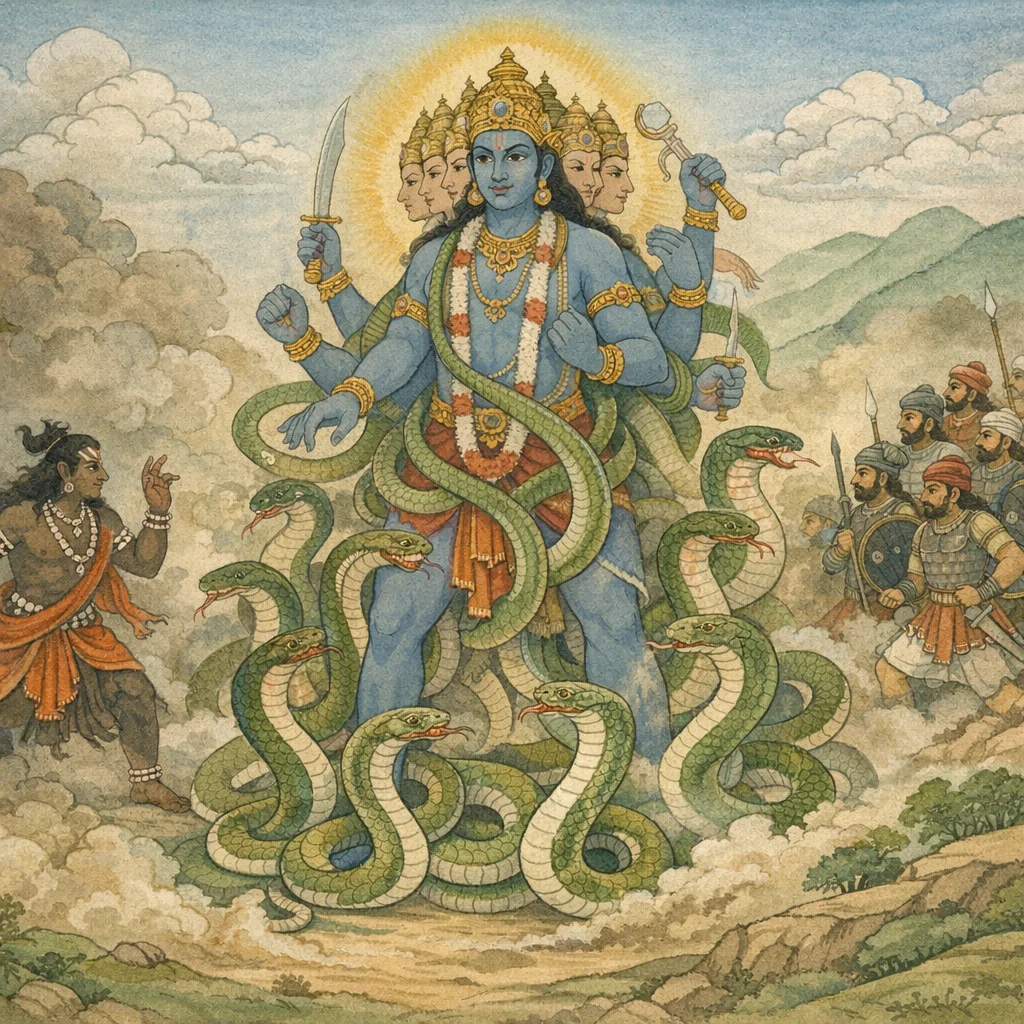
Adhyaya 93
भीष्मशिबिरगमनम् — Duryodhana’s Visit to Bhīṣma’s Camp and the Command Appeal
Upa-parva: Bhīṣma-vadha-prastāva (Command Council and the Proposal to Remove Bhīṣma)
Saṃjaya reports that Duryodhana convenes with Śakuni, Duḥśāsana, and Karṇa to deliberate how the Pāṇḍavas, with their allies, might be overcome. Duryodhana voices anxiety that eminent Kaurava commanders—Droṇa, Bhīṣma, Kṛpa, Śalya, and Saumadatti—are not decisively checking the Pārthas, and he interprets the ongoing attrition of his forces as evidence of an unresolved strategic constraint. Karṇa responds with reassurance but advances a conditional plan: Bhīṣma should be induced to withdraw from the great engagement or lay down weapons, after which Karṇa vows—before Bhīṣma’s eyes—to defeat the Pāṇḍavas and the Somakas. Karṇa attributes Bhīṣma’s limited aggression to compassion toward the Pāṇḍavas and questions whether Bhīṣma can defeat the assembled mahārathas. Duryodhana then orders Duḥśāsana to prepare the escort and proceeds, ceremonially adorned and surrounded by brothers, archers, and attendants with lamps and guards, to Bhīṣma’s residence. Upon arrival, he salutes Bhīṣma, sits on an honored seat, and tearfully petitions him for decisive action against the Pāṇḍavas; he further requests permission for Karṇa to fight if Bhīṣma’s stance remains restrained. The chapter closes with Duryodhana falling silent after presenting his appeal to the formidable elder.
Chapter Arc: संजय धृतराष्ट्र को रण के रौद्र वर्तमान का चित्र दिखाते हैं—घुड़सवार दलों की टक्कर, कृतवर्मा का पाण्डव-वरूथिनी पर वेग, और गान्धार-वीरों की उन्मत्त विजय-लालसा। → कम्बोज, सिन्धु, आरट्ट आदि देशों के श्रेष्ठ अश्वों और घुड़सवारों की धाराएँ युद्धभूमि में एक-दूसरे से भिड़ती हैं; दोनों पक्ष ‘विजय या स्वर्ग’ की आकांक्षा से परस्पर-वध का घोर चक्र रचते हैं। इसी उथल-पुथल में इरावान नाग-समूह से घिरा हुआ अग्रभाग में चमकता है, और शत्रु-पक्ष उसे लक्ष्य बनाता है। → अलम्बुष नामक राक्षस माया का आश्रय लेकर इरावान को पकड़ने/वश करने का प्रयत्न करता है; प्रत्युत्तर में इरावान क्रुद्ध होकर स्वयं भी माया रचता है और नागों से आवृत होकर शेषनाग-सम विशाल रूप धारण करता है—पर अंततः शकुनि के भाइयों (गान्धार-वीर) के साथ मिलकर अलम्बुष इरावान का वध कर देता है। → इरावान के पतन से पाण्डव-पक्ष को तीव्र आघात लगता है; रण में क्षणिक हर्ष-उत्साह कौरव-पक्ष में फैलता है, और गान्धार-वीर अपनी सफलता को ‘विजय-मार्ग’ मानकर आगे बढ़ते हैं। → इरावान-वध की खबर से पाण्डव-सेना की प्रतिक्रिया और प्रतिशोध की अग्नि अगले प्रसंग में किस पर टूटेगी—यह तनाव बना रहता है।
Shlokas
Verse 1
ऑपन--माजल बछ। अ-छऋाज नवतितमो< ध्याय: इरावानके द्वारा शकुनिके भाइयोंका तथा राक्षस अलम्बुषके द्वारा इरावानका वध संजय उवाच वर्तमाने तथा रौद्रे राजन् वीरवरक्षये । शकुनि: सौबल: श्रीमान् पाण्डवान् समुपाद्रवत्,संजय कहते हैं--राजन्! जिस समय बड़े-बड़े वीरोंका विनाश करनेवाला वह भयंकर संग्राम चल रहा था, उसी समय सुबलपुत्र श्रीमान् शकुनिने पाण्डवोंपर आक्रमण किया इति श्रीमहाभारते भीष्मपर्वणि भीष्मवधपर्वणि इरावद्धधे नवतितमो<5ध्याय: ।। ९० || इस प्रकार श्रीमहाभारत भीष्मपर्वके अन्तर्गत भीष्मवधपर्वमें इरावानुका वधविषयक नब्बेवाँ अध्याय पूरा हुआ ॥/ ९० ॥/ ऑपन--माज बक। जज: - रथके नीचे रहनेवाली लकड़ीको अनुकर्ष कहते हैं, जिसके सहारे पहिये रहते हैं। > यहाँ मूलमें 'पतौ” पाठ है। व्याकरणके अनुसार “पति” शब्दका सप्तमीके एक वचनमें 'पत्यौ" रूप होता है। अतः जहाँ “पतौ” पदका प्रयोग है, वहाँ मुख्य “पति"का वाचक पति शब्द नहीं है। 'पतिरिवाचरतीति पति:” इस व्युत्पत्तिके अनुसार आचारक्विबन्त “पति” शब्दका यहाँ प्रयोग है, जिसका अर्थ है--पतिसदृश। तात्पर्य यह कि जिसके लिये कन्याका वाग्दान किया गया है, वह मनोनीत पति ही विवाहके पहलेतक “पतितुल्य” है। विवाहके बाद साक्षात् “पति' होता है। इस नागकन्याके मनोनीत पतिको गरुड़ने मार डाला था, इसीलिये “नष्टे मृते प्रव्रजिते” इस पाराशर-वचनके अनुसार उसका अर्जुनके साथ सम्बन्ध हुआ और धर्मात्मा अर्जुनने उसे पत्नीरूपसे ग्रहण किया। एकनवतितमो<ध्याय: घटोत्कच और दुर्योधनका भयानक युद्ध ध्तराष्ट्र रवाच इरावन्तं तु निहतं दृष्टवा पार्था महारथा: । संग्रामे किमकुर्वन्त तन्ममाचक्ष्व संजय
Sanjaya said: O King, while that dreadful battle—bringing about the destruction of the foremost heroes—was raging, the illustrious Shakuni, son of Subala, launched an assault upon the Pandavas. The verse underscores how, amid the general ruin of war, individual choices and stratagems still drive the conflict forward, intensifying the moral weight of aggression in a time already steeped in slaughter.
Verse 2
तथैव सात्वतो राजन हार्दिक्य: परवीरहा । अभ्यद्रवत संग्रामे पाण्डवानां वरूथिनीम्,नरेश्वर! इसी प्रकार शत्रुवीरोंका विनाश करनेवाले सात्वतवंशी कृतवर्माने उस संग्राममें पाण्डवोंकी सेनापर आक्रमण किया
Sañjaya said: “In the same manner, O King, Hārdikya Kṛtavarmā—born of the Sātvata line and a slayer of enemy champions—charged in that battle against the Pāṇḍavas’ battle-array, O lord of men.”
Verse 3
ततः काम्बोजमुख्यानां नदीजानां च वाजिनाम् | आरट्टानां महीजानां सिन्धुजानां च सर्वश:,तत्पश्चात् काम्बोज देशके अच्छे घोड़े, दरियाई घोड़े, मही, स्विन्धु, वनायु, आरट्ट तथा पर्वतीय प्रान्तोंमें होनेवाले सुन्दर घोड़े--इन सबकी बहुत बड़ी सेनाके द्वारा सब ओरसे घिरा हुआ शत्रुओंको संताप देनेवाला पाण्डुनन्दन अर्जुनका बलवान पुत्र इरावान् हर्षमें भरकर रणभूमिमें कौरवोंकी उस सेनापर चढ़ आया। उसके साथ तित्तिर प्रदेशके शीघ्रगामी घोड़े भी मौजूद थे, जो वायुके समान वेगशाली थे। वे सब-के-सब सोनेके आभूषणोंसे विभूषित थे। उनके शरीरोंमें कवच बँधे हुए थे और उन्हें सुन्दर साज-बाजसे सजाया गया था। वे सभी घोड़े अच्छी जातिके तथा वायुके तुल्य शीघ्रगामी थे
Sañjaya said: Then there appeared, from every side, horses of many renowned breeds—foremost among them those from Kāmboja, along with river-bred horses, those from Ārāṭṭa, those bred on the plains, and those from Sindhu.
Verse 4
वनायुजानां शुभ्राणां तथा पर्वतवासिनाम् | वाजिनां बहुभि: संख्ये समन्तात् परिवारयन्,तत्पश्चात् काम्बोज देशके अच्छे घोड़े, दरियाई घोड़े, मही, स्विन्धु, वनायु, आरट्ट तथा पर्वतीय प्रान्तोंमें होनेवाले सुन्दर घोड़े--इन सबकी बहुत बड़ी सेनाके द्वारा सब ओरसे घिरा हुआ शत्रुओंको संताप देनेवाला पाण्डुनन्दन अर्जुनका बलवान पुत्र इरावान् हर्षमें भरकर रणभूमिमें कौरवोंकी उस सेनापर चढ़ आया। उसके साथ तित्तिर प्रदेशके शीघ्रगामी घोड़े भी मौजूद थे, जो वायुके समान वेगशाली थे। वे सब-के-सब सोनेके आभूषणोंसे विभूषित थे। उनके शरीरोंमें कवच बँधे हुए थे और उन्हें सुन्दर साज-बाजसे सजाया गया था। वे सभी घोड़े अच्छी जातिके तथा वायुके तुल्य शीघ्रगामी थे
Sañjaya said: Surrounded on every side in the press of battle by great numbers of splendid horses—those bred in the Vanāyu country as well as those reared in the mountain regions—he moved amid the encircling forces.
Verse 5
ये चापरे तित्तिरिजा जवना वातरंहस: । सुवर्णालंकृतैरेतैर्वर्मवद्धि: सुकल्पितै:,तत्पश्चात् काम्बोज देशके अच्छे घोड़े, दरियाई घोड़े, मही, स्विन्धु, वनायु, आरट्ट तथा पर्वतीय प्रान्तोंमें होनेवाले सुन्दर घोड़े--इन सबकी बहुत बड़ी सेनाके द्वारा सब ओरसे घिरा हुआ शत्रुओंको संताप देनेवाला पाण्डुनन्दन अर्जुनका बलवान पुत्र इरावान् हर्षमें भरकर रणभूमिमें कौरवोंकी उस सेनापर चढ़ आया। उसके साथ तित्तिर प्रदेशके शीघ्रगामी घोड़े भी मौजूद थे, जो वायुके समान वेगशाली थे। वे सब-के-सब सोनेके आभूषणोंसे विभूषित थे। उनके शरीरोंमें कवच बँधे हुए थे और उन्हें सुन्दर साज-बाजसे सजाया गया था। वे सभी घोड़े अच्छी जातिके तथा वायुके तुल्य शीघ्रगामी थे
Sañjaya said: “And there were also other horses—Tittiri-bred, swift, and moving with the speed of the wind—adorned with gold ornaments, fitted with protective armor, and excellently caparisoned.”
Verse 6
हयैर्वातजवैर्मुख्यै: पाण्डवस्य सुतो बली । अभ्यवर्तत तत् सैन्यं हृष्टरूप: परंतप:,तत्पश्चात् काम्बोज देशके अच्छे घोड़े, दरियाई घोड़े, मही, स्विन्धु, वनायु, आरट्ट तथा पर्वतीय प्रान्तोंमें होनेवाले सुन्दर घोड़े--इन सबकी बहुत बड़ी सेनाके द्वारा सब ओरसे घिरा हुआ शत्रुओंको संताप देनेवाला पाण्डुनन्दन अर्जुनका बलवान पुत्र इरावान् हर्षमें भरकर रणभूमिमें कौरवोंकी उस सेनापर चढ़ आया। उसके साथ तित्तिर प्रदेशके शीघ्रगामी घोड़े भी मौजूद थे, जो वायुके समान वेगशाली थे। वे सब-के-सब सोनेके आभूषणोंसे विभूषित थे। उनके शरीरोंमें कवच बँधे हुए थे और उन्हें सुन्दर साज-बाजसे सजाया गया था। वे सभी घोड़े अच्छी जातिके तथा वायुके तुल्य शीघ्रगामी थे
Sañjaya said: With foremost horses swift as the wind, the mighty son of the Pāṇḍava—radiant with exhilaration and a scorcher of foes—charged straight upon that army.
Verse 7
अर्जुनस्य सुत: श्रीमानिरावान् नाम वीर्यवान् | सुतायां नागराजस्य जात: पार्थेन धीमता,अर्जुनका पराक्रमी पुत्र श्रीमान् इरावान् नागराज कौरव्यकी पुत्रीके गर्भसे बुद्धिमान् अर्जुनद्वारा उत्पन्न किया गया था
Sanjaya said: Arjuna had a glorious and valiant son named Irāvān. He was born to the wise Pārtha (Arjuna) through the daughter of the king of the Nāgas.
Verse 8
ऐरावतेन सा दत्ता अनपत्या महात्मना । पतौ हते सुपर्णेन कृपणा दीनचेतना,नागराजकी वह पुत्री संतानहीन थी। उसके मनोनीत पतिको- गरुड़ने मार डाला था, जिससे वह अत्यन्त दीन एवं दयनीय हो रही थी। ऐरावतवंशी कौरव्यनागने उसे अर्जुनको अर्पित किया और अर्जुनने कामके अधीन हुई उस नागकन्याको भारयर्िपमें ग्रहण किया था। इस प्रकार यह अर्जुनपुत्र उत्पन्न हुआ था। वह सदा मातृकुलमें ही रहा
Sanjaya said: That noble descendant of Airāvata gave her in marriage—she was childless. When her chosen husband had been slain by Suparṇa (Garuḍa), she became pitiable, her mind sunk in grief and helplessness.
Verse 9
भार्यार्थ तां च जग्राह पार्थ: कामवशानुगाम् । एवमेष समुत्पन्न: परपक्षे&र्जुनात्मज:,नागराजकी वह पुत्री संतानहीन थी। उसके मनोनीत पतिको- गरुड़ने मार डाला था, जिससे वह अत्यन्त दीन एवं दयनीय हो रही थी। ऐरावतवंशी कौरव्यनागने उसे अर्जुनको अर्पित किया और अर्जुनने कामके अधीन हुई उस नागकन्याको भारयर्िपमें ग्रहण किया था। इस प्रकार यह अर्जुनपुत्र उत्पन्न हुआ था। वह सदा मातृकुलमें ही रहा
Sanjaya said: For the sake of taking her as a wife, Pārtha (Arjuna) accepted that Nāga maiden, who had come under the sway of desire. Thus was born this son of Arjuna, now standing on the opposing side—his loyalties shaped by the maternal lineage in which he was raised.
Verse 10
स नागलोके संवृद्धो मात्रा च परिरक्षित: । पितृव्येण परित्यक्तः: पार्थद्वेषाद् दुरात्मना,वह नागलोकमें ही माताद्वारा पाल-पोसकर बड़ा किया गया और सब प्रकारसे वहीं उसकी रक्षा की गयी थी। उस बालकके किसी दुरात्मा वयोवृद्ध सम्बन्धीने अर्जुनके प्रति द्वेष होनेके कारण इनके उस पुत्रको त्याग दिया था
Sanjaya said: He was brought up in the realm of the Nāgas, and his mother protected him there in every way. But a wicked paternal uncle, driven by hatred toward Pārtha (Arjuna), abandoned that child.
Verse 11
रूपवान् बलसम्पन्नो गुणवान् सत्यविक्रम: । इन्द्रलोक॑ जगामाशु श्रुत्वा तत्रार्जुनं गतम्,इरावान् भी रूपवान, बलवान, गुणवान् और सत्यपराक्रमी था, बड़े होनेपर जब उसने सुना कि मेरे पिता अर्जुन इस समय इन्द्रलोकमें गये हुए हैं, तब वह शीघ्र ही वहाँ जा पहुँचा
Sanjaya said: Handsome, endowed with strength, virtuous, and of unfailing valor, Irāvān—on hearing that Arjuna had gone to Indra’s world—quickly set out and reached that celestial realm.
Verse 12
सो5भिगम्य महाबाहु: पितरं सत्यविक्रम: । अभ्यवादयदव्यग्रो विनयेन कृताञज्जलि:,उस सत्यपराक्रमी महाबाहु वीरने अपने पिताके पास पहुँचकर शान्तभावसे उन्हें प्रणाम किया और विनयपूर्वक हाथ जोड़ महामना अर्जुनके समक्ष अपना परिचय देते हुए बोला--'प्रभो! आपका कल्याण हो। मैं आपका ही पुत्र इरावान् हूँ।/ उसकी माताके साथ अर्जुनका जो समागम हुआ था, वह सब उसने निवेदन किया। पाण्डुनन्दन अर्जुनको वह सब वृत्तान्त यथार्थ-रूपसे स्मरण हो आया
Sañjaya said: Approaching his father, the mighty-armed one of steadfast valor, calm and unperturbed, bowed respectfully with joined palms and greeted him with humility. The scene underscores filial duty and reverence: even amid the pressures of war, proper conduct toward one’s parent is upheld through disciplined speech and courteous salutation.
Verse 13
न्यवेदयत चात्मानमर्जुनस्य महात्मन: । इरावानस्मि भद्रं ते पुत्रश्चाहं तव प्रभो,उस सत्यपराक्रमी महाबाहु वीरने अपने पिताके पास पहुँचकर शान्तभावसे उन्हें प्रणाम किया और विनयपूर्वक हाथ जोड़ महामना अर्जुनके समक्ष अपना परिचय देते हुए बोला--'प्रभो! आपका कल्याण हो। मैं आपका ही पुत्र इरावान् हूँ।/ उसकी माताके साथ अर्जुनका जो समागम हुआ था, वह सब उसने निवेदन किया। पाण्डुनन्दन अर्जुनको वह सब वृत्तान्त यथार्थ-रूपसे स्मरण हो आया
Sañjaya said: Then he calmly introduced himself to the great-souled Arjuna, saying with respectful humility, “I am Irāvān—may welfare be yours, O lord—and I am your son.” In this moment, the ethos of dharma appears as truthful self-disclosure and reverent conduct toward one’s father even amid the pressures of war.
Verse 14
मातु: समागमो यश्च तत् सर्व प्रत्यवेदयत् । तच्च सर्व यथावृत्तमनुसस्मार पाण्डव:,उस सत्यपराक्रमी महाबाहु वीरने अपने पिताके पास पहुँचकर शान्तभावसे उन्हें प्रणाम किया और विनयपूर्वक हाथ जोड़ महामना अर्जुनके समक्ष अपना परिचय देते हुए बोला--'प्रभो! आपका कल्याण हो। मैं आपका ही पुत्र इरावान् हूँ।/ उसकी माताके साथ अर्जुनका जो समागम हुआ था, वह सब उसने निवेदन किया। पाण्डुनन्दन अर्जुनको वह सब वृत्तान्त यथार्थ-रूपसे स्मरण हो आया
Sañjaya said: He reported in full the union with his mother, and all the circumstances connected with it. Hearing this, the son of Pāṇḍu (Arjuna) remembered clearly and exactly how it had happened. The passage underscores the ethical weight of truthful self-disclosure and recognition of familial bonds even amid the pressures of war.
Verse 15
परिष्वज्य सुतं चापि आत्मन: सदृशं गुणै: । प्रीतिमाननयत् पार्थों देवराजनिवेशने,गुणोंमें अपने ही समान उस पुत्रको हृदयसे लगाकर अर्जुन बड़ी प्रसन्नताके साथ उसे देवराजके भवनमें ले गये
Sañjaya said: Embracing his son—who in virtues was like his very self—Arjuna, filled with affection and joy, led him into the palace of the Lord of the gods. The scene underscores a dharmic ideal of recognizing and nurturing virtue in one’s offspring, and of acting with tender responsibility even amid the larger pressures of heroic duty.
Verse 16
सो<र्जुनेन समाज्ञप्तो देवलोके तदा नूप । प्रीतिपूर्व महाबाहु: स्वकार्य प्रति भारत,नरेश्वरर भरतनन्दन! उन दिनों देवलोकमें अर्जुनने प्रेमपूर्वक अपने महाबाहु पुत्रको अपना सब कार्य बताते हुए कहा--
Sañjaya said: O king, at that time in the celestial realm, the mighty-armed one—having been instructed by Arjuna—lovingly conveyed to him the details of his own mission and duties, O descendant of Bharata. The verse frames the exchange as one grounded in affection and responsibility, emphasizing faithful execution of an entrusted task.
Verse 17
युद्धकाले त्वयास्माकं साहां देयमिति प्रभो । बाढमित्येवमुक्त्वा तु युद्धकाल इहागत:,'शक्तिशाली पुत्र! युद्धूके अवसरपर तुम हमलोगोंको सहायता देना।” तब बहुत अच्छा कहकर इरावान् चला गया और अब युद्धके अवसरपर यहाँ आया है
Sañjaya said: “O lord, at the time of battle you must render aid to us.” Having replied, “So be it,” he departed; and now, at the hour of war, he has come here—fulfilling the promised support when duty called.
Verse 18
कामवर्णजवैरश्वैरबहुभि: संवृतो नूप । ते हया: काञठ्चनापीडा नानावर्णा मनोजवा:,नरेश्वर! इरावानके साथ इच्छानुसार रूप-रंग और वेगवाले बहुत-से घोड़े मौजूद थे। वे सब-के-सब सोनेके शिरोभूषण धारण करनेवाले तथा मनके समान वेगशाली थे। उनके रंग अनेक प्रकारके थे
Sañjaya said: O king, he was surrounded by many horses, each with whatever color and speed one might desire. Those steeds, adorned with golden head-ornaments, were swift as the mind and of many different hues—an image of royal power and martial readiness being gathered for the coming conflict.
Verse 19
उत्पेतु: सहसा राजन् हंसा इव महोदधौ । ते त्वदीयान् समासाद्य हयसंघान् मनोजवान्,राजन! वे घोड़े महासागरमें उड़नेवाले हंसोंके समान सहसा उछले और आपके मनके समान वेगशाली अश्वोंके समुदायमें पहुँचकर छातीसे उनकी छातीमें तथा नासिकासे एक- दूसरेकी नासिकापर चोट करने लगे। वे सहसा वेगपूर्वक टकराकर पृथ्वीपर गिरते थे
Sañjaya said: O King, they suddenly sprang up like swans rising over the great ocean. Closing in upon your swift companies of horses, they began to strike—chest against chest and muzzle against muzzle—each colliding with the other. Again and again, in sudden, forceful impacts, they fell upon the earth.
Verse 20
क्रोडै: कोडानभिष्नन्तो घोणाभिश्न परस्परम् | निपेतु: सहसा राजन् सुवेगाभिहता भुवि,राजन! वे घोड़े महासागरमें उड़नेवाले हंसोंके समान सहसा उछले और आपके मनके समान वेगशाली अश्वोंके समुदायमें पहुँचकर छातीसे उनकी छातीमें तथा नासिकासे एक- दूसरेकी नासिकापर चोट करने लगे। वे सहसा वेगपूर्वक टकराकर पृथ्वीपर गिरते थे
Sañjaya said: O King, striking one another with their chests and butting nose to nose, the horses collided in close combat. Smitten by the force of their own swift rush, they suddenly fell upon the earth—an image of war’s uncontrolled momentum, where speed and pride turn into ruin in an instant.
Verse 21
निपतद्धिस्तथा तैश्व हयसंघै: परस्परम् । शुश्रुवे दारुण: शब्द: सुपर्णपतने यथा,वे अश्वोंके समुदाय परस्पर टकराकर जब गिरते थे, उस समय गरुड़के वेगपूर्वक उतरनेके समान भयंकर शब्द सुनायी देता था
Sañjaya said: As those masses of horses, colliding with one another, fell to the ground, a dreadful roar was heard—like the thunderous rush when Suparṇa (Garuḍa) swoops down. The verse heightens the moral gravity of battle by making the violence audible and overwhelming, underscoring how war turns living beings into crashing, suffering bodies.
Verse 22
तथैव तावका राजन् समेत्यान्योन्यमाहवे । परस्परवध॑ घोर चक्रुस्ते हपसादिन:,राजन! इसी प्रकार आपके और पाण्डवोंके घुड़-सवार युद्धमें एक-दूसरेसे भिड़कर आपसमें भयंकर मार-काट करते थे
Sañjaya said: “Even so, O King, your warriors and the Pāṇḍavas’ men met one another in battle; the horsemen among them wrought a dreadful mutual slaughter, striking each other down without restraint.”
Verse 23
तस्मिंस्तथा वर्तमाने संकुले तुमुले भूशम् । उभयोरपि संशान्ता हयसड्घा: समन्तत:ः,इस प्रकार अत्यन्त भयानक घमासान युद्ध छिड़ जानेपर दोनों पक्षोंके अश्वसमूह चारों ओर नष्ट हो गये
Sañjaya said: As the battle raged on in that manner—dense, tumultuous, and exceedingly fierce—the masses of horses on both sides were utterly quelled, perishing all around.
Verse 24
प्रक्षीणसायका: शूरा निहताश्चा: श्रमातुरा: । विलयं समनुप्राप्तास्तक्षमाणा: परस्परम्,शूरवीर योद्धाओंके पास बाण समाप्त हो गये। उनके घोड़े मारे गये। वे परिश्रमसे पीड़ित हो परस्पर घात-प्रतिघात करते हुए विनष्ट हो गये
Sañjaya said: The valiant warriors, their arrows spent and their horses slain, were worn down by exhaustion. Still striking and counter-striking one another, they met with destruction.
Verse 25
ततः क्षीणे हयानीके किंचिच्छेषे च भारत । सौबलस्यानुजा: शूरा निर्गता रणमूर्थनि,भारत! इस प्रकार जब घुड़सवारोंकी सेना नष्ट हो गयी और उसका अल्पभाग ही अवशिष्ट रह गया; उस अवस्थामें शकुनिके शूरवीर भाई युद्धके मुहानेपर निकले
Sañjaya said: Then, O Bhārata, when the cavalry formation had been exhausted and only a small remnant remained, the valiant younger brothers of Saubala (Śakuni) came forth to the very forefront of the battle.
Verse 26
वायुवेगसमस्पर्शाञ्चवे वायुसमांश्व ते । आरुह्य बलसम्पन्नान् वयःस्थांस्तुरगोत्तमान्,जिनका स्पर्श वायुवेगके समान दुःसह था, जो वेगमें वायुकी समानता करते थे, ऐसे बलसम्पन्न नयी अवस्थावाले उत्तम घोड़ोंपर सवार हो गज, गवाक्ष, वृषभ, चर्मवान्ू, आर्जव और शुक--ये छ: बलवान् वीर अपनी विशाल सेनासे बाहर निकले
Sañjaya said: Mounting excellent horses—strong, in the prime of youth, whose touch was as hard to endure as the rush of the wind and whose speed rivaled the wind—six mighty warriors rode out from their vast host.
Verse 27
गजो गवाक्षो वृषभश्चर्मवानार्जव: शुक: । षडेते बलसम्पन्ना निर्ययुर्महतो बलातू,जिनका स्पर्श वायुवेगके समान दुःसह था, जो वेगमें वायुकी समानता करते थे, ऐसे बलसम्पन्न नयी अवस्थावाले उत्तम घोड़ोंपर सवार हो गज, गवाक्ष, वृषभ, चर्मवान्ू, आर्जव और शुक--ये छ: बलवान् वीर अपनी विशाल सेनासे बाहर निकले
Sañjaya said: Gaja, Gavākṣa, Vṛṣabha, Carmavān, Ārjava, and Śuka—these six warriors, endowed with great strength, rode out from their vast host. Mounted on fine, newly trained horses whose touch was hard to endure and whose speed rivaled the wind, they advanced from the main force, signaling the surge of martial resolve that drives the battle onward.
Verse 28
वार्यमाणा: शकुनिना तैश्न योधैर्महाबलै: । संनद्धा युद्धकुशला रौद्ररूपा महाबला:,यद्यपि शकुनिने उन्हें मना किया, अन्यान्य महाबली योद्धाओंने भी उन्हें रोका, तथापि वे युद्धकुशल, महाबली रौद्ररूपधारी क्षत्रिय कवच आदिसे सुसज्जित हो युद्धके लिये निकल पड़े
Sañjaya said: Though Śakuni tried to restrain them, and other mighty warriors also held them back, they—armored and fully equipped, skilled in battle, of fierce aspect and great strength—still surged forth, intent on war.
Verse 29
तदनीकं महाबाहो भित्त्वा परमदुर्जयम् । बलेन महता युक्ता: स्वर्गाय विजयैषिण:
Sañjaya said: O mighty-armed one, having broken through that battle-array—most difficult to overcome—those warriors, endowed with great strength and intent on victory, pressed on with their minds set upon heaven.
Verse 30
तान् प्रविष्टांस्तदा दृष्टवा इरावानपि वीर्यवान्
Sañjaya said: Seeing them enter at that moment, Irāvān too—mighty in valor—took note of the situation, poised to act amid the unfolding battle.
Verse 31
अब्रवीत् समरे योधान् विचित्रान् दारुणायुधान् । यथैते धार्तराष्ट्रस्य योधा: सानुगवाहना:
Sañjaya said: In the midst of battle he addressed the warriors—varied in kind and bearing dreadful weapons—just as these fighters of Dhṛtarāṣṭra’s side stood there, accompanied by their followers and mounts.
Verse 32
हन्यन्ते समरे सर्वे तथा नीतिर्विधीयताम् । तब उन्हें सेनाके भीतर प्रविष्ट हुआ देख पराक्रमी इरावानने भी समरभूमिमें भयंकर अस्त्र-शस्त्रवाले अपने विचित्र योद्धाओंसे कहा--“वीरो! तुम सब लोग संग्राममें ऐसी नीति बना लो, जिससे दुर्योधनके ये समस्त योद्धा अपने सेवकों और सवारियोंसहित मार डाले जाये ।। ३०-३१ ह ।। बाढमित्येवमुक्त्वा ते सर्वे योधा इरावत:
Sañjaya said: “All are being slain in the battle; therefore let a sound strategy be put into effect.”
Verse 33
तदनीकमनीकेन समरे वीक्ष्य पातितम्,अपनी सेनाको समरभूमिमें शत्रुकी सेनाद्वारा मार गिरायी गयी देख सुबलके सभी पुत्र इसे सह न सके। उन्होंने इरावानूपर धावा करके उसे सब ओरसे घेर लिया
Sañjaya said: Seeing their own division struck down in battle—felled on the field by the enemy host—all the sons of Subala could not endure the sight. They rushed upon Irāvān and surrounded him on every side.
Verse 34
अमृष्यमाणास्ते सर्वे सुबलस्यात्मजा रणे । इरावन्तमभिद्रुत्य सर्वत: पर्यवारयन्,अपनी सेनाको समरभूमिमें शत्रुकी सेनाद्वारा मार गिरायी गयी देख सुबलके सभी पुत्र इसे सह न सके। उन्होंने इरावानूपर धावा करके उसे सब ओरसे घेर लिया
Sañjaya said: Unable to endure the sight of their own troops being cut down on the battlefield, all the sons of Subala, inflamed with wrath and wounded pride, rushed straight at Irāvān and surrounded him on every side.
Verse 35
ताडयन्तः शितै: प्रासैश्नोदयन्त: परस्परम् । ते शूरा: पर्यधावन्त कुर्वन्तोी महदाकुलम्,वे छहों शूर तीखे प्रासोंसे मारते और एक-दूसरेको बढ़ावा देते हुए इरावानपर टूट पड़े तथा उसे अत्यन्त व्याकुल करने लगे
Sañjaya said: Striking with sharp spears and urging one another on, those warriors surged about, creating great confusion in the battle and pressing their target with relentless force.
Verse 36
इरावानथ निर्भिन्न: प्रासैस्तीकणैर्महात्मभि: । स्रवता रुधिरेणाक्तस्तोत्रैविंद्ध इव द्विप:,उन महामनस्वी वीरोंके तीखे प्रासोंसे क्षत-विक्षत होकर इरावान् बहते हुए रक्तसे नहा उठा। अंकुशोंसे घायल हुए हाथीके समान व्याकुल हो गया
Sañjaya said: Then Irāvān, pierced and torn by the sharp spears hurled by great-souled warriors, became smeared with streaming blood. Like an elephant goaded and wounded by the driver’s hook, he grew distressed and unsteady—his valor meeting the brutal, impersonal force of battle.
Verse 37
पुरतोडपि च पृष्ठे च पार्श्वयोश्व भूशाहतः । एको बहुभिरत्यर्थ धैर्याद् राजन् न विव्यथे,राजन्! वह अकेला था और उसपर प्रहार करनेवालोंकी संख्या बहुत थी। वह आगे- पीछे और अगल-बगलमें अत्यन्त घायल हो गया था; तो भी धैर्यके कारण व्यथित नहीं हुआ
Sañjaya said: Though struck from the front and from behind, and wounded on both flanks, he—alone against many—did not falter, O King. By steadfast courage he endured the press of battle without yielding to distress.
Verse 38
इरावानपि संक्रुद्धः सर्वास्तान् निशितै: शरै: । मोहयामास समरे विद्ध्वा परपुरंजय:,अब इरावानको भी बड़ा क्रोध हुआ। शत्रुनगरीपर विजय पानेवाले उस वीरने समरमें तीखे बाणोंद्वारा बीधकर उन सबको मूर्च्छित कर दिया
Sañjaya said: Irāvān too, inflamed with anger, struck all those foes in the battle with sharp arrows and thereby bewildered and stunned them. That hero—renowned as a conqueror of enemy strongholds—cast the opposing warriors into confusion through his piercing shafts.
Verse 39
प्रासानुत्कृत्य तरसा स्वशरीरादरिंदम: । तैरेव ताडयामास सुबलस्यात्मजान् रणे,शत्रुओंका दमन करनेवाले इरावानने अपने शरीरसे वेगपूर्वक प्रासोंको निकालकर उन्हींके द्वारा रणभूमिमें सुबलपुत्रोंपर प्रहार किया
Sañjaya said: The foe-subduer Irāvān, wrenching the spears out of his own body with swift force, struck back in the battle with those very spears, smiting the sons of Subala.
Verse 40
विकृष्य च शितं खड्गं गृहीत्वा च शरावरम् । पदातिर्द्रतमागच्छज्जिघांसु: सौबलान् युधि,तत्पश्चात् तीखी तलवार और ढाल निकालकर इरावानने युद्धमें सुबलपुत्रोंको मार डालनेकी इच्छासे तुरंत उनके ऊपर पैदल ही धावा किया
Sañjaya said: Drawing his keen sword and taking up his shield, Irāvān—fighting on foot—rushed swiftly into the battle, intent on slaying the sons of Subala.
Verse 41
ततः प्रत्यागतप्राणा: सर्वे ते सुबलात्मजा: । भूय: क्रोधसमाविष्टा इरावन्तमभिद्रुता:,तदनन्तर सुबलपुत्रोंमें प्राणशक्ति पुन: लौट आयी। अत: वे सब-के-सब सचेत होनेपर पुनः क्रोधमें भर गये और इरावानपर दौड़े
Sañjaya said: Then, as life and strength returned to them, all those sons of Subala regained consciousness. Once more, seized by anger, they rushed straight at Irāvān.
Verse 42
इरावानपि खड्गेन दर्शयन् पाणिलाघवम् | अभ्यवर्तत तान् सर्वान् सौबलान् बलदर्पित:,इरावान् भी बलके अभिमानमें उन्मत्त हो अपने हाथोंकी फुर्ती दिखाता हुआ खड़्गके द्वारा उन समस्त सुबलपुत्रोंका सामना करने लगा
Sañjaya said: Irāvān too, displaying the swift dexterity of his hands with his sword, advanced to meet all those Saubalas. Intoxicated with the pride of strength, he pressed into the fray—an image of youthful valor that, in war, can easily slide from courage into overconfidence.
Verse 43
लाघवेनाथ चरत: सर्वे ते सुबलात्मजा: । अन्तरं नाभ्यगच्छन्त चरन्त: शीघ्रगै्हयै:,वह अकेला बड़ी फुर्तीसे पैंतरे बदल रहा था और वे सभी सुबलपुत्र शीघ्रगामी घोड़ोंद्वारा विचर रहे थे, तो भी वे अपनेमें उसकी अपेक्षा कोई विशेषता न ला सके
Sañjaya said: Though he moved with great agility, and all those sons of Subala ranged about on swift-going horses, they could not find an opening—nor gain any advantage over him. The scene underscores how mere numbers and speed, without superior skill and strategy, fail to overcome a resolute and adept warrior.
Verse 44
भूमिष्ठमथ तं संख्ये सम्प्रदृश्य तत: पुन: । परिवार्य भृशं सर्वे ग्रहीतुमुपचक्रमु:,तदनन्तर इरावान्को भूमिपर स्थित देख वे सभी सुबलपुत्र युद्धमें उसे पुन: भलीभाँति घेरकर बन्दी बनानेकी तैयारी करने लगे
Sañjaya said: Seeing him again lying on the ground in the thick of battle, all of them surrounded him tightly and began preparing to seize him alive. The scene underscores the harsh pragmatics of war—where even a fallen foe becomes an object of tactical capture rather than compassion.
Verse 45
अथाभ्याशगतानां स खड्गेनामित्रकर्शन: । असिहस्तापहस्ताभ्यां तेषां गात्राण्यकृन्तत,तब शत्रुसूदन इरावानने निकट आनेपर कभी दाहिने और कभी बायें हाथसे तलवार घुमाकर उसके द्वारा शत्रुओंके अंगोंको छिन्न-भिन्न कर दिया
Sañjaya said: Then that foe-subduer, as the enemies closed in, whirled his sword—now with the right hand, now with the left—and hewed their limbs apart. The scene underscores the grim immediacy of battle, where prowess and resolve are displayed through decisive action, even as the ethical weight of violence remains implicit in the epic’s war setting.
Verse 46
आयुधानि च सर्वेषां बाहूनपि विभूषितान् । अपतन्त निकृत्ताड़गा मृता भूमौ गतासव:,उन सबके आयुधों और भूषणभूषित भुजाओंको भी उसने काट डाला। इस प्रकार अंग-अंग कट जानेसे वे प्राणशून्य हो मरकर धरतीपर गिर पड़े
Sañjaya said: He hewed down their weapons as well, and even their ornamented arms. With their limbs severed, they fell upon the earth—lifeless and slain—showing the pitiless momentum of battle where prowess turns bodies and finery alike into ruin.
Verse 47
वृषभस्तु महाराज बहुधा विपरिक्षत: । अमुच्यत महारीौद्रात् तस्माद् वीरावकर्तनात्,महाराज! वृषभ बहुत घायल हो गया था तो भी वीरोंका उच्छेद करनेवाले उस महाभयंकर संग्रामसे उसने अपने-आपको किसी प्रकार मुक्त कर लिया
Sañjaya said: O King, though Vṛṣabha was wounded and battered in many ways, he somehow freed himself from that exceedingly fierce and dreadful battle—the slaughtering field that cut down heroes.
Verse 48
तान् सर्वान् पतितान् दृष्टवा भीतो दुर्योधनस्तत: । अभ्यधावत संक्रुद्धो राक्षसं घोरदर्शनम्,उन सबको मार गिराया गया देख दुर्योधन भयभीत हो उठा और वह अत्यन्त क्रोधमें भरकर भयंकर दीखनेवाले राक्षस ऋष्यशंगपुत्र (अलम्बुष)-के पास दौड़ा गया। वह राक्षस शत्रुओंका दमन करनेमें समर्थ, मायावी और महान धनुर्धर था। पूर्वकालमें किये गये बकासुरवधके कारण वह भीमसेनका वैरी बन बैठा था
Sañjaya said: Seeing all of them fallen, Duryodhana was seized with fear. Then, in a surge of anger, he rushed toward the terrifying-looking rākṣasa Alambuṣa, seeking a force capable of crushing the enemy.
Verse 49
आर्ष्यशद्धिं महेष्वासं मायाविनमरिंदमम् | वैरिणं भीमसेनस्य पूर्व बकवधेन वै,उन सबको मार गिराया गया देख दुर्योधन भयभीत हो उठा और वह अत्यन्त क्रोधमें भरकर भयंकर दीखनेवाले राक्षस ऋष्यशंगपुत्र (अलम्बुष)-के पास दौड़ा गया। वह राक्षस शत्रुओंका दमन करनेमें समर्थ, मायावी और महान धनुर्धर था। पूर्वकालमें किये गये बकासुरवधके कारण वह भीमसेनका वैरी बन बैठा था
Sañjaya said: Duryodhana, seeing them struck down, was seized by fear; then, burning with anger, he hurried to the fearsome rākṣasa Alambuṣa, the son of Ṛṣyaśṛṅga. That rākṣasa was a great archer, skilled in illusion and capable of crushing enemies. Because Bhīmasena had earlier slain Baka, Alambuṣa had become Bhīma’s sworn foe.
Verse 50
पश्य वीर यथा होष फाल्गुनस्य सुतो बली । मायावी विप्रियं कर्तुमकार्षीन्मे बलक्षयम्,उसके पास जाकर दुर्योधनने कहा--“वीर! देखो, अर्जुनका यह बलवान पुत्र बड़ा मायावी है। इसने मेरा अप्रिय करनेके लिये मेरी सेनाका संहार कर डाला है
Sañjaya said: “Look, O hero, how the mighty son of Phālguna (Arjuna) is acting—crafty and full of stratagems. Intending to do what is displeasing to me, he has brought about the destruction of my forces.”
Verse 51
त्वं च कामगमस्तात मायास्त्रे च विशारद: । कृतवैरश्न पार्थेन तस्मादेनं रणे जहि,“तात! तुम इच्छानुसार चलनेवाले तथा मायामय अस्त्रोंके प्रयोगमें कुशल हो। कुन्तीकुमार भीमने तुम्हारे साथ वैर भी किया है। अतः तुम युद्धमें इस इरावान्को अवश्य मार डालो”
Sañjaya said: “Dear one, you are able to move as you wish and are skilled in the use of illusory weapons. Since the son of Pṛthā (Bhīma) has also incurred enmity with you, therefore strike this Irāvān down in battle.”
Verse 52
बाढमित्येवमुक्त्वा तु राक्षसो घोरदर्शन: । प्रययौ सिंहनादेन यत्रार्जुनसुतो युवा,“बहुत अच्छा” ऐसा कहकर वह भयानक दिखायी देनेवाला राक्षस सिंहनाद करके जहाँ नवयुवक अर्जुन-कुमार इरावान् था, उस स्थानपर गया
Sañjaya said: “Very well.” Having spoken thus, the fearsome rākṣasa set out with a lion-like roar and went to the place where Arjuna’s youthful son, Irāvān, was.
Verse 53
आरूबढैरयुद्धकुशलैरविमलप्रासयोधिभि: । वीरै: प्रहारिभिरययुक्ति: स्वैरनीकै: समावृत:,उसके साथ निर्मल प्रास नामक अस्त्रसे युद्ध करनेवाले संग्रामकुशल तथा प्रहार करनेमें समर्थ वीरोंसे युक्त बहुत-सी सेनाएँ थीं। उसके सभी सैनिक सवारियोंपर बैठे हुए थे। उन सबसे घिरा हुआ वह समरभूमिमें महाबली इरावान्को मार डालनेकी इच्छासे युद्धस्थलमें गया। महाराज! मरनेसे बचे हुए दो हजार उत्तम घोड़े उसके साथ थे
Sañjaya said: He was surrounded by his own divisions—warriors mounted on their steeds, skilled in battle and adept at fighting with the spotless prāsa (a spear-like missile). With heroes able to strike decisive blows, he advanced onto the battlefield, intent on slaying the mighty Irāvān. O King, with him were two thousand excellent horses that had survived the carnage.
Verse 54
हतशेषैर्महाराज द्विसाहसैह्योत्तमै: । निहन्तुकाम: समरे इरावन्तं महाबलम्,उसके साथ निर्मल प्रास नामक अस्त्रसे युद्ध करनेवाले संग्रामकुशल तथा प्रहार करनेमें समर्थ वीरोंसे युक्त बहुत-सी सेनाएँ थीं। उसके सभी सैनिक सवारियोंपर बैठे हुए थे। उन सबसे घिरा हुआ वह समरभूमिमें महाबली इरावान्को मार डालनेकी इच्छासे युद्धस्थलमें गया। महाराज! मरनेसे बचे हुए दो हजार उत्तम घोड़े उसके साथ थे
Sañjaya said: “O King, accompanied by the finest two thousand who had survived the slaughter, he entered the battlefield intent on killing the mighty Irāvān in combat.”
Verse 55
इरावानपि संक्रुद्धस्त्वरमाण: पराक्रमी । हन्तुकामममित्रघ्नो राक्षसं प्रत्यवारयत्,शत्रुओंका नाश करनेवाला पराक्रमी इरावान् भी क्रोधमें भरा हुआ था। उसने उसे मारनेकी इच्छा रखनेवाले उस राक्षसका बड़ी उतावलीके साथ निवारण किया
Sañjaya said: Irāvān too, inflamed with anger and swift in action—a mighty warrior, a destroyer of foes—hurriedly checked the rākṣasa who was intent on killing him.
Verse 56
तमापततन्तं सम्प्रेक्ष्य राक्षस: सुमहाबल: । त्वरमाणस्ततो मायां प्रयोक्तुमुपचक्रमे,इरावानको आते देख उस महाबली राक्षसने शीघ्रतापूर्वक मायाका प्रयोग आरम्भ किया
Sañjaya said: Seeing him rushing in, the exceedingly powerful rākṣasa hastened and began to employ his māyā—his powers of illusion—amid the press of battle.
Verse 57
तेन मायामया: सृष्टा हयास्तावन्त एव हि । स्वारूढा राक्षसैघोरै: शूलपट्टिशधारिभि:,उसने मायामय दो हजार घोड़े उत्पन्न किये, जिनपर शूल और पट्टिश धारण करनेवाले भयंकर राक्षस सवार थे
Sañjaya said: By his power of māyā he conjured illusory horses—just so many indeed—each mounted by terrifying rākṣasas bearing spears and battle-axes.
Verse 58
ते संरब्धा: समागम्य द्विसाहस्रा: प्रहारिण: । अचिराद् गमयामासु: प्रेतलोक॑ परस्परम्,वे दो हजार प्रहारकुशल योद्धा क्रोधमें भरे हुए आकर इरावानके सैनिकोंके साथ युद्ध करने लगे। इस प्रकार दोनों ओरके योद्धाओंने परस्पर प्रहार करके शीघ्र ही एक-दूसरेको यमलोक पहुँचा दिया
Those two thousand skilled assailants, inflamed with wrath, rushed together into the fray; and before long, striking one another in turn, they swiftly sent each other to the realm of the dead.
Verse 59
तस्मिंस्तु निहते सैन्ये तावुभौ युद्धदुर्मदौ । संग्रामे समतिषछेतां यथा वै वृत्रवासवी,इस प्रकार जब दोनों ओरकी सेनाएँ मार डाली गयीं, तब युद्धमें उन््मत्त होकर लड़नेवाले वे दोनों वीर इरावान् तथा अलम्बुष राक्षस ही युद्धभूमिमें वृत्रासुर और इन्द्रके समान डटे रहे
When the armies on both sides had been slain, those two warriors, maddened by battle, held their ground in the fight like Vṛtra and Vāsava (Indra) facing each other in war.
Verse 60
आद्रवन्तमभिप्रेक्ष्य राक्षसं युद्धदुर्मदम् । इरावानथ संरब्ध: प्रत्यधावन्महाबल:,रणदुर्मद राक्षस अलम्बुषको अपने ऊपर धावा करते देख महाबली इरावान् भी क्रोधमें भरकर उसके ऊपर टूट पड़ा
Sañjaya said: Seeing the rākṣasa, maddened by the arrogance of battle, rushing toward him, mighty Irāvān too, filled with wrath, charged straight at him.
Verse 61
समभ्याशगतस्याजौ तस्य खडगेन दुर्मते: । चिच्छेद कार्मुकं दीप्तं शरावापं च सत्वरम्,एक बार जब वह दुर्बुद्धि राक्षस बहुत निकट आ गया, तब इरावानने अपने खड़्गसे उसके देदीप्यमान धनुष और भाथेको शीघ्र ही काट डाला
When that evil-minded rākṣasa came very close in the battle, Irāvān swiftly struck with his sword and cut down the foe’s blazing bow and his quiver as well.
Verse 62
स निकृत्तं धनुर्दृष्टया खं जवेन समाविशत् | इरावन्तमभिक्कुद्धं मोहयन्निव मायया,धनुषको कटा हुआ देख वह राक्षस क्रोधमें भरे हुए इरावानूको अपनी मायासे मोहित- सा करता हुआ बड़े वेगसे आकाशमें उड़ गया
Sañjaya said: Seeing his bow cut down, he swiftly rose into the sky. As though by sorcery, he bewildered the enraged Irāvān and, with great speed, flew aloft—an image of war’s shifting fortunes where prowess is matched by deception.
Verse 63
ततोअन्तरिक्षमुत्पत्य इरावानपि राक्षसम् । विमोहयित्वा मायाभिस्तस्य गात्राणि सायकै:
Sañjaya said: Then Irāvān sprang up into the sky; and by means of his illusory powers he bewildered that Rākṣasa, and pierced his limbs with arrows. In the moral texture of the battle narrative, the verse highlights how, amid war, victory may come not only from brute force but from skill, strategy, and the disciplined use of extraordinary abilities—yet always within the grim economy of violence that the Kurukṣetra conflict unleashes.
Verse 64
चिच्छेद सर्वमर्मज्ञ: कामरूपो दुरासद: । तथा स राक्षसश्रेष्ठ: शरै: कृत्त: पुन: पुन:
Sañjaya said: The assailant—skilled in striking every vital point, able to assume forms at will, and hard to overcome—kept cutting down (his foe). Yet that foremost of rākṣasas, again and again, was hewn by volleys of arrows.
Verse 65
सम्बभूव महाराज समवाप च यौवनम् | माया हि सहजा तेषां वयो रूपं च कामजम्
Sañjaya said: O King, he came into being and soon attained youth. For in their case illusion is innate; their age and even their beauty arise at will, born of desire rather than of ordinary growth.
Verse 66
तब इरावान् भी आकाशमें उछलकर उस राक्षसको अपनी मायाओंसे मोहित करके उसके अंगोंको सायकोंद्वारा छिन्न-भिन्न करने लगा। वह कामरूपधारी श्रेष्ठ राक्षस सम्पूर्ण मर्मस्थानोंको जानने-वाला और दुर्जय था। वह बाणोंसे कटनेपर भी पुनः ठीक हो जाता था। महाराज! वह नयी जवानी प्राप्त कर लेता था; क्योंकि राक्षसोंमें मायाका बल स्वाभाविक होता है और वे इच्छानुसार रूप तथा अवस्था धारण कर लेते हैं | ६३-- ६५ || एवं तद् राक्षसस्याजुं छिन्नं छिन्नं बभूव ह । इरावानपि संक्रुद्धों राक्षसं तं महाबलम्
Sañjaya said: Thus the limbs of that rākṣasa were severed again and again. Irāvān too, enraged, kept striking at that mighty demon. Yet the foe—skilled in illusion and in assuming forms at will—could restore himself even when cut down, for such māyā is natural to rākṣasas. The episode underscores how, in war, sheer force is often met by deception and uncanny resilience, demanding not only valor but discernment.
Verse 67
स तेन बलिना वीरश्छिद्यमान इरावता
Sañjaya said: That heroic warrior, though being cut down by the mighty Irāvata, continued to face the assault—an image of steadfast courage amid the brutal, duty-bound violence of war.
Verse 68
राक्षसो5प्यनदद् घोरं स शब्दस्तुमुलो5भवत् | बलवान् इरावानके फरसेसे छिन्न-भिन्न हुआ वह वीर राक्षस घोर आर्तनाद करने लगा। उसका वह शब्द बड़ा भयंकर प्रतीत होता था ।। ६७ ह ।। परश्वधक्षतं रक्ष: सुत्राव बहु शोणितम्,फरसेसे बारंबार छिदनेके कारण राक्षसके शरीरसे बहुत-सा रक्त बह गया। इससे राक्षस ऋष्यशृंगके बलवान पुत्र अलम्बुषने समरभूमिमें अत्यन्त क्रोध और वेग प्रकट किया। उसने युद्धस्थलमें अपने शत्रुको प्रबल हुआ देख अत्यन्त भयंकर एवं विशाल रूप धारण करके अर्जुनके वीर एवं यशस्वी पुत्र इरावानूको कैद करनेका प्रयत्न आरम्भ किया
Sañjaya said: Though a rākṣasa, he roared a dreadful cry, and that sound became a tumult, terrifying to hear. Wounded by the axe, the rākṣasa bled profusely; and, seeing his foe stand firm in battle, Alambuṣa—the powerful son of Ṛśyaśṛṅga—flared up with rage and speed, assumed a vast and fearsome form, and began to seize Irāvān, the valiant and renowned son of Arjuna.
Verse 69
ततश्लुक्रोध बलवांश्वक्रे वेगं च संयुगे । आर्ष्यशड्धिस्तथा दृष्टवा समरे शत्रुमूर्जितम्,फरसेसे बारंबार छिदनेके कारण राक्षसके शरीरसे बहुत-सा रक्त बह गया। इससे राक्षस ऋष्यशृंगके बलवान पुत्र अलम्बुषने समरभूमिमें अत्यन्त क्रोध और वेग प्रकट किया। उसने युद्धस्थलमें अपने शत्रुको प्रबल हुआ देख अत्यन्त भयंकर एवं विशाल रूप धारण करके अर्जुनके वीर एवं यशस्वी पुत्र इरावानूको कैद करनेका प्रयत्न आरम्भ किया
Sañjaya said: Then Śukra, filled with fierce wrath and strength, displayed great impetuosity in the battle. And Alambuṣa, the son of Ṛśyaśṛṅga, seeing his enemy grown powerful on the field, assumed a most dreadful and gigantic form and began striving to seize Irāvān, the valiant and renowned son of Arjuna.
Verse 70
कृत्वा घोरं महद् रूप॑ ग्रहीतुमुपचक्रमे । अर्जुनस्य सुतं वीरमिरावन्तं यशस्विनम्,फरसेसे बारंबार छिदनेके कारण राक्षसके शरीरसे बहुत-सा रक्त बह गया। इससे राक्षस ऋष्यशृंगके बलवान पुत्र अलम्बुषने समरभूमिमें अत्यन्त क्रोध और वेग प्रकट किया। उसने युद्धस्थलमें अपने शत्रुको प्रबल हुआ देख अत्यन्त भयंकर एवं विशाल रूप धारण करके अर्जुनके वीर एवं यशस्वी पुत्र इरावानूको कैद करनेका प्रयत्न आरम्भ किया
Sañjaya said: Having assumed a dreadful and enormous form, he set about to seize Irāvān, the valiant and renowned son of Arjuna.
Verse 71
संग्रामशिरसो मध्ये सर्वेषां तत्र पश्यताम् । तां दृष्टवा तादृशीं मायां राक्षसस्य दुरात्मन:
Sañjaya said: In the very midst of the battle’s forefront, while all those present looked on, seeing that kind of illusory display wrought by the wicked-souled Rākṣasa, the warriors were confronted with a deception meant to confound judgment and unsettle courage.
Verse 72
तस्य क्रोधाभिभूतस्य समरेष्वनिवर्तिन:
Sañjaya said: Overpowered by anger, and one who would not turn back in battles, he stood firm in the fight—his wrath driving him onward without retreat.
Verse 73
स नागैर्बहुभी राजन्निरावान् संवृतो रणे
Sañjaya said: O King, in the thick of battle Irāvān was surrounded on all sides by many Nāga warriors.
Verse 74
ततो बहुविधेनगिश्छादयामास राक्षसम्,तदनन्तर उसने बहुत-से नागोंद्वारा राक्षषको आच्छादित कर दिया। नागोंद्वारा आच्छादित होनेपर उस राक्षसराजने कुछ सोच-विचारकर गरुड़का रूप धारण कर लिया और समस्त नागोंको भक्षण करना आरम्भ किया
Sañjaya said: Then he covered the rākṣasa with many kinds of serpents. Thereafter, when the lord of the rākṣasas found himself enveloped by countless nāgas, he reflected for a moment, assumed the form of Garuḍa, and began to devour all the serpents.
Verse 75
छाद्यमानस्तु नागै: स ध्यात्वा राक्षसपुड़व: । सौपर्ण रूपमास्थाय भक्षयामास पन्नगान्,तदनन्तर उसने बहुत-से नागोंद्वारा राक्षषको आच्छादित कर दिया। नागोंद्वारा आच्छादित होनेपर उस राक्षसराजने कुछ सोच-विचारकर गरुड़का रूप धारण कर लिया और समस्त नागोंको भक्षण करना आरम्भ किया
But as he was being covered by the nāgas, that rākṣasa champion reflected, assumed the form of Sauparṇa—Garuḍa—and began to devour the serpents.
Verse 76
मायया भक्षिते तस्मिन्नन्वये तस्य मातृके । विमोहितमिरावन्त न््यहनद् राक्षसोडसिना,जब उस राक्षसने इरावानके मातृकुलके सब नागोंको भक्षण कर लिया, तब मोहित हुए इरावान्को तलवारसे मार डाला
Sañjaya said: When that rākṣasa, by māyā—deceptive stratagem—had devoured the entire maternal lineage connected with him, Irāvān, bewildered and overcome by delusion, was then struck down by the rākṣasa with a sword.
Verse 77
सकुण्डलं समुकुटं पद्मेन्दुसदृशप्रभम् । इरावत: शिरो रक्षा: पातयामास भूतले,इरावानके कमल और चन्द्रमाके समान कान्तिमान् तथा कुण्डल एवं मुकुटसे मण्डित मस्तकको काटकर राक्षसने धरतीपर गिरा दिया
Sañjaya said: The rākṣasa struck down to the earth Irāvān’s head—adorned with earrings and a crown, and radiant like a lotus and the moon. The verse underscores the grim cost of war: even the noble and splendid are not spared when violence is unleashed, and outward glory offers no protection against the consequences of battle.
Verse 78
तम्मिंस्तु विहते वीरे राक्षसेनार्जुनात्मजे । विशोका: समपद्यन्त धार्तराष्ट्रा: सराजका:,इस प्रकार राक्षसद्वारा अर्जुनके वीर पुत्र इरावानके मारे जानेपर राजा दुर्योधनसहित आपके सभी पुत्र शोकरहित हो गये
Sañjaya said: When that heroic son of Arjuna had been slain there by the Rākṣasa, the sons of Dhṛtarāṣṭra—together with their king—became free from grief. The verse underscores the hardening of hearts in war: one side’s loss becomes the other side’s relief, revealing how conflict can invert ordinary human sympathy and deepen moral blindness.
Verse 79
तस्मिन् महति संग्रामे तादृशे भैरवे पुन: । महान् व्यतिकरो घोर: सेनयो: समपद्यत,फिर तो उस भयंकर एवं महान संग्राममें दोनों सेनाओंका अत्यन्त भयंकर सम्मिश्रण हो गया
Sanjaya said: In that vast and dreadful battle, once again there arose a great and terrifying intermingling of the two armies—so close and confused that the clash became a single, fearsome mass of combat, where order and restraint were strained by the fury of war.
Verse 80
गजा हया: पदाताश्ष विमिश्रा दन्तिभिहता: । रथाश्वा दन्तिनश्वैव पत्तिभिस्तत्र सूदिता:,राजन्! आपके और पाण्डवोंके सैनिकोंके उस संकुल युद्धमें दोनों पक्षोंके मिले हुए हाथी, घोड़े और पैदल दन्तार हाथियोंद्वारा मारे गये। रथ, घोड़े और हाथियोंको पैदल योद्धाओंने मार गिराया तथा बहुत-से पैदल, रथियोंके समूह और घुड़सवार रथी योद्धाओंके द्वारा मार डाले गये
Sañjaya said: In that densely entangled battle between your forces and the Pāṇḍavas’, elephants, horses, and foot-soldiers—mingled together in confusion—were cut down by elephant-warriors. There, chariots, horses, and even elephants were also struck down by infantry. Thus, in the mutual slaughter, each arm of the army became the destroyer of another, revealing the grim, indiscriminate churn of war where strength and station offer no sure protection.
Verse 81
तथा पत्तिरथौघाश्र हयाश्ष बहवो रणे | रथिभिननिहता राजंस्तव तेषां च संकुले,राजन्! आपके और पाण्डवोंके सैनिकोंके उस संकुल युद्धमें दोनों पक्षोंके मिले हुए हाथी, घोड़े और पैदल दन्तार हाथियोंद्वारा मारे गये। रथ, घोड़े और हाथियोंको पैदल योद्धाओंने मार गिराया तथा बहुत-से पैदल, रथियोंके समूह और घुड़सवार रथी योद्धाओंके द्वारा मार डाले गये
Sañjaya said: “So too, in that confused and intermingled battle, many foot-soldiers, masses of chariots, and numerous horsemen were cut down—on your side as well as on theirs—by chariot-warriors. The fighting had become so entangled that each arm of the army struck down another, and the slaughter spread across both hosts without distinction.”
Verse 82
अजानन्नर्जुनश्वापि निहतं पुत्रमौरसम् । जघान समरे शूरान् राज्ञस्तान् भीष्मरक्षिण:,अर्जुनको अपने औरस पुत्र इरावानके मारे जानेका पता नहीं लगा था। वे समरांगणमें भीष्मकी रक्षा करनेवाले शूरवीर नरेशोंका संहार कर रहे थे
Sañjaya said: Unaware that his own legitimate son had been slain, Arjuna continued in the battle, cutting down those heroic kings who were guarding Bhīṣma.
Verse 83
तथैव तावका राजन् सूृंजयाश्व सहस्रश: । जुह्गबतः समरे प्राणान् निजघ्नुरितरेतरम्,राजन्! इसी प्रकार आपके पुत्र और सैनिक तथा सहस्रों सृंजय वीर समराग्निमें प्राणोंकी आहुति देते हुए एक-दूसरेको मार रहे थे
Sañjaya said: “In the same way, O King, your warriors and the Sṛñjayas—by the thousand—were as if offering their very lives as oblations into the fire of battle, striking down one another in mutual slaughter.”
Verse 84
मुक्तकेशा विकवचा विरथाश्कछिन्नकार्मुका: । बाहुभि: समयुध्यन्त समवेता: परस्परम्,कवच, रथ और धनुषके नष्ट हो जानेपर बाल बिखेरे हुए बहुतेरे योद्धा परस्पर भिड़कर भुजाओंद्वारा मल्लयुद्ध करने लगे
Sañjaya said: With their hair loosened, their armour gone, their chariots lost, and their bows broken, many warriors closed in upon one another and fought hand-to-hand, grappling with their own arms.
Verse 85
तथा मर्मातिगैर्भीष्मो निजघान महारथान् । कम्पयन् समरे सेनां पाण्डवानां परंतप:,दूसरी ओर शत्रुओंको संताप देनेवाले भीष्म समरांगणमें अपने मर्मभेदी बाणोंद्वारा पाण्डव-सेनाको कम्पित करते हुए उसके बड़े-बड़े रथियोंको मार रहे थे
Sañjaya said: In the same way, Bhīṣma—scorcher of foes—kept striking down the great chariot-warriors with arrows that pierced the vital points, and in the thick of battle made the Pāṇḍava army tremble.
Verse 86
तेन यौधिष्ठिरे सैन्ये बहवो मानवा हता: । दन्तिन: सादिनश्चैव रथिनो5थ हयास्तथा,उन्होंने युधिष्ठिरकी सेनाके बहुत-से पैदलों, सवारोंसहित हाथियों, रथारोहियों और घुड़सवारोंको मार डाला
Sañjaya said: By him, in Yudhiṣṭhira’s army many men were slain—elephant-warriors, horsemen, chariot-fighters, and horses as well.
Verse 87
तत्र भारत भीष्मस्य रणे दृष्टवा पराक्रमम् | अत्यद्भुतमपश्याम शक्रस्येव पराक्रमम्,भारत! हमने उस युद्धमें भीष्मका इन्द्रके समान अत्यन्त अद्भुत पराक्रम देखा था
Sañjaya said: There, O Bhārata, having beheld Bhīṣma’s prowess in battle, we witnessed a marvel—his valor was like that of Śakra (Indra) himself.
Verse 88
तथैव भीमसेनस्य पार्षतस्य च भारत । रौद्रमासीद् रणे युद्ध सात्यकस्य च धन्विन:,भरतनन्दन! इसी प्रकार उस रणक्षेत्रमें भीमसेन, धृष्टद्युम्न तथा धनुर्धर सात्यकिका भयानक युद्ध चल रहा था
Sañjaya said: “In the same way, O Bhārata, a fierce and dreadful battle was raging on that field—between Bhīmasena, Dhṛṣṭadyumna the son of Pārṣata, and the bowman Sātyaki.”
Verse 89
इस प्रकार श्रीमह्ााभारत भीष्मपर्वके अन्तर्गत भीष्यवधपर्वमें आठवें दिनके युद्धसे सम्बन्ध रखनेवाला नवासीवाँ अध्याय पूरा हुआ,दृष्टवा द्रोणस्य विक्रान्तं पाण्डवान् भयमाविशत् | एक एव रणे शक्तो निहन्तुं सर्वसैनिकान् द्रोणाचार्यका पराक्रम देखकर तो पाण्डवोंके मनमें भय समा गया। महाराज! वे युद्धस्थलमें द्रोणाचार्यसे पीड़ित होकर कहने लगे कि “रणभूमिमें अकेले द्रोणाचार्य ही समस्त सैनिकोंको मार डालनेकी शक्ति रखते हैं। फिर जब ये भूमण्डलके सुविख्यात शूरवीर योद्धाओंके समुदायोंसे घिरे हुए हैं, तब तो इनकी विजयके लिये कहना ही क्या है?”
Sañjaya said: Seeing Droṇa’s fierce and heroic advance, fear entered the hearts of the Pāṇḍavas. Distressed by Droṇa on the battlefield, they exclaimed that Droṇa alone had the power, in combat, to slay all the soldiers; and when he was further surrounded by companies of the earth’s renowned warriors, what need was there to speak of his victory?
Verse 90
कि पुनः पृथिवीशूरैयोंधव्रातैः समावृत: । इत्यब्रुवन् महाराज रणे द्रोणेन पीडिता:,द्रोणाचार्यका पराक्रम देखकर तो पाण्डवोंके मनमें भय समा गया। महाराज! वे युद्धस्थलमें द्रोणाचार्यसे पीड़ित होकर कहने लगे कि “रणभूमिमें अकेले द्रोणाचार्य ही समस्त सैनिकोंको मार डालनेकी शक्ति रखते हैं। फिर जब ये भूमण्डलके सुविख्यात शूरवीर योद्धाओंके समुदायोंसे घिरे हुए हैं, तब तो इनकी विजयके लिये कहना ही क्या है?”
Sañjaya said: “And what more need be said, O great king, when he is surrounded by companies of the earth’s renowned heroic warriors?” Thus, afflicted on the battlefield by Droṇa’s onslaught, the Pāṇḍavas spoke in fear—seeing Droṇa alone as able to destroy entire hosts, and his victory all the more assured with such famed fighters around him.
Verse 91
वर्तमाने तथा रौद्रे संग्रामे भरतर्षभ । उभयो: सेनयो: शूरा नामृष्यन्त परस्परम्,भरतश्रेष्ठ] उस भयंकर संग्राममें दोनों सेनाओंके शूरवीर एक-दूसरेका उत्कर्ष नहीं सह सके
Sañjaya said: O bull among the Bharatas, as that fierce battle raged on, the heroes of both armies could not endure one another’s ascendancy; each refused to tolerate the other’s superiority, and so the clash intensified.
Verse 92
आविष्टा इव युध्यन्ते रक्षोभूता महाबला: । तावका: पाण्डवेयाश्व संरब्धास्तात धन्विन:,तात! आपके और पाण्डवपक्षके महाबली धनुर्धर वीर भूतोंसे आविष्ट-से होकर राक्षसोंक समान बनकर क्रोधपूर्वक एक-दूसरेसे जूझ रहे थे
Sañjaya said: “O dear one, your mighty bowmen and the Pāṇḍava warriors fought as though possessed—changed in bearing like rākṣasas—wrathfully grappling with one another in the frenzy of battle.”
Verse 93
न सम पश्यामहे कंचित् प्राणान् यः परिरक्षति । संग्रामे दैत्यसंकाशे तस्मिन् वीरवरक्षये,बड़े-बड़े वीरोंका विनाश करनेवाले उस दैत्योंके तुल्य संग्राममें हमने किसीको ऐसा नहीं देखा जो अपने प्राणोंकी रक्षा कर रहा हो
Sañjaya said: “In that battle, dreadful as a clash of daityas and a destroyer of the greatest heroes, we saw no one who sought to preserve his own life. All were driven into the slaughter, choosing valor and duty over self-protection amid the ruin of warriors.”
Verse 296
विविशुस्ते तदा हृष्टा गान्धारा युद्धदुर्मदा: । महाबाहो! उस समय उन युद्धदुर्मद गान्धार-देशीय वीरोंने विजय अथवा स्वर्गकी अभिलाषा लेकर विशाल सेनाके साथ पाण्डव-वाहिनीके परम दुर्जयव्यूहका भेदन करके हर्ष और उत्साहसे परिपूर्ण हो उसके भीतर प्रवेश किया
Sañjaya said: “Then those Gandhāra warriors, intoxicated with the pride of battle, entered—exultant and eager—after breaking into the exceedingly hard-to-penetrate battle-formation (vyūha) of the Pāṇḍava host, driven by the desire for victory or for heaven.”
Verse 326
जघ्नुस्तेषां बलानीकं दुर्जयं समरे परै: । तब “बहुत अच्छा” ऐसा कहकर इरावानके समस्त सैनिकोंने उन छहों वीरोंके सैन्यसमूहको, जो समरांगणमें दूसरोंके लिये दुर्जय था, मार डाला
Sañjaya said: “Irāvān’s entire body of soldiers, acclaiming the moment as ‘well done,’ struck down the troop-formation of those six heroes—an array that had been hard for others to overcome in the press of battle.”
Verse 666
परश्चवधेन तीक्ष्णेन चिच्छेद च पुन: पुन: । इस प्रकार उस राक्षसका जो-जो अंग कटता, वह पुनः नये सिरेसे उत्पन्न हो जाता था। इरावान् भी अत्यन्त कुपित होकर उस महाबली राक्षसको बारंबार तीखे फरसेसे काटने लगा
Sañjaya said: “With a sharp battle-axe he kept cutting again and again. Yet, as each limb of that rākṣasa was severed, it sprang forth anew. Irāvān too, blazing with anger, repeatedly hewed at that mighty rākṣasa with his keen axe.”
Verse 716
इरावानपि संक्रुद्धों मायां स्रष्टूं प्रचक्रमे । युद्धके मुहानेपर समस्त योद्धाओंके देखते-देखते वह इरावान्को पकड़ना चाहता था। उस दुरात्मा राक्षसकी वैसी माया देखकर क्रोधमें भरे हुए इरावानने भी मायाका प्रयोग आरम्भ किया
Sañjaya said: Irāvān too, inflamed with anger, set about deploying his own power of illusion (māyā). Seeing the wicked rākṣasa’s deceptive stratagem on the battlefield—attempted in full view of the assembled warriors to seize him—Irāvān, filled with wrath, countered illusion with illusion, meeting treachery with a fitting tactical reply amid the demands of war.
Verse 726
यो5न्वयो मातृकस्तस्य स एनमभिपेदिवान् | संग्राममें पीठ न दिखानेवाला इरावान् जब क्रोधमें भरकर युद्ध कर रहा था, उसी समय उसके मातृकुलके नागोंका समुदाय उसकी सहायताके लिये वहाँ आ पहुँचा
Sañjaya said: His maternal lineage then came to his aid. At the very moment when Irāvān—one who would not turn his back in battle—was fighting in a surge of wrath, a host of Nāgas from his mother’s clan arrived there to support him.
Verse 736
दधार सुमहद् रूपमनन्त इव भोगवान् | राजन! रणभूमिमें बहुतेरे नागोंसे घिरे हुए इरावानने विशाल शरीरवाले शेषनागकी भाँति बहुत बड़ा रूप धारण कर लिया
Sañjaya said: “O King, on the battlefield, Irāvān—surrounded by many serpents—assumed an exceedingly vast form, like Ananta, the many-hooded Lord of serpents. In that moment he appeared like Śeṣa himself, enlarging his body to a colossal size, displaying awe-inspiring power amid the violence of war.”
Frequently Asked Questions
The dilemma concerns whether an elder commander’s restrained conduct—shaped by compassion and prior obligations—should be respected as dharmic moderation or treated as a strategic liability warranting pressure to withdraw for operational advantage.
The chapter highlights how intention, loyalty, and perceived impartiality affect legitimacy in leadership: strategic success is not only a function of force but also of trust in command, clarity of duty, and the ethical costs of instrumentalizing persons.
No explicit phalaśruti appears here; the chapter functions as narrative causation, clarifying the political-ethical pressures that frame subsequent command decisions within the Bhīṣma-led phase.