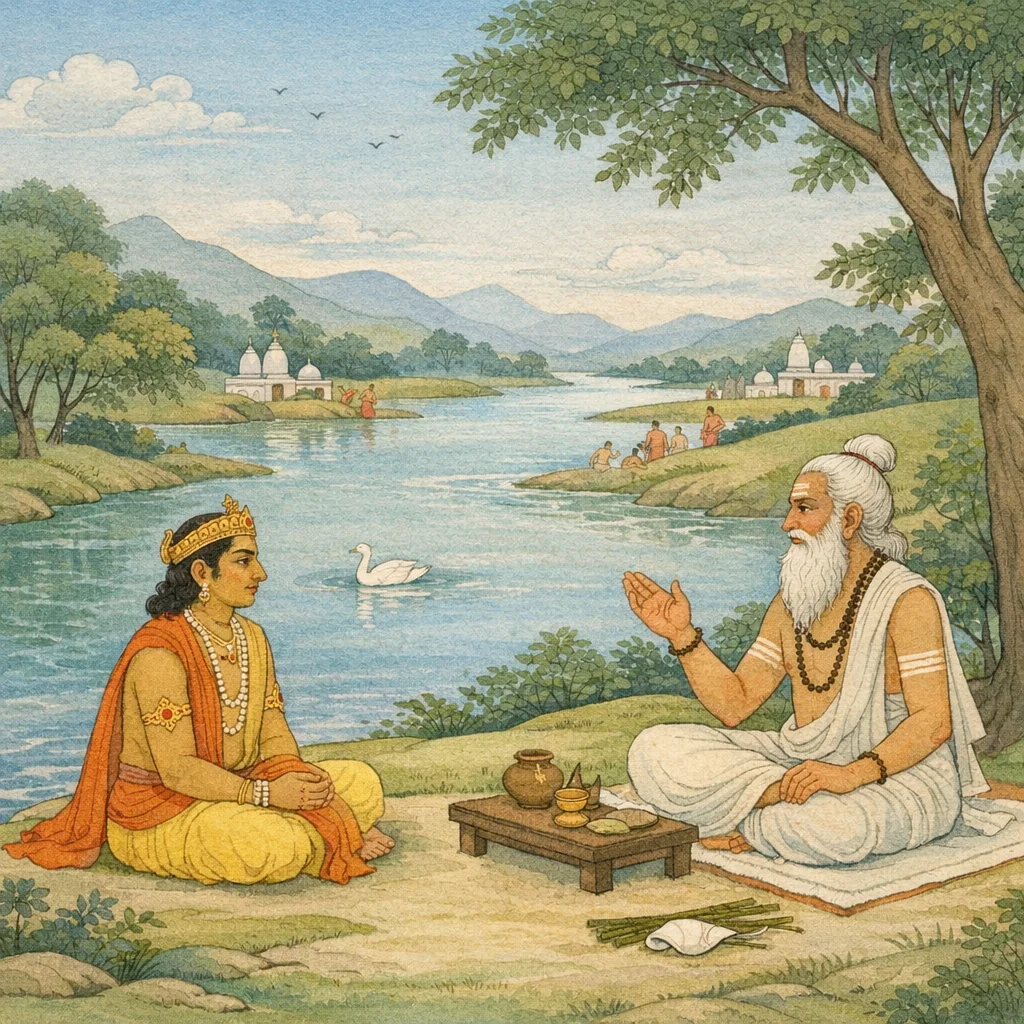
Adhyaya 28
Brāhmaṇya-प्रश्नः — The Inquiry into Attaining Brāhmaṇya (Mataṅga–Gardabhī Itihāsa)
Upa-parva: Varṇa–Brāhmaṇya Anuśāsana (Didactic unit on Brāhmaṇya, conduct, and eligibility)
Yudhiṣṭhira questions Bhīṣma regarding the means by which a kṣatriya, vaiśya, or śūdra might attain brāhmaṇya—through great austerity (tapas), action (karma), or learning (śruta). Bhīṣma responds that brāhmaṇya is extremely difficult for the three other varṇas to obtain and introduces an ancient illustrative narrative: the dialogue between Mataṅga and a she-donkey (gardabhī). Mataṅga, described as possessing qualities comparable to a dvija, travels for ritual work; he repeatedly strikes a young donkey, prompting the mother to accuse him of being a caṇḍāla and to contrast this cruelty with the expected friendliness of a brāhmaṇa. Mataṅga challenges the accusation and asks how he is known as a caṇḍāla and why brāhmaṇya is denied to him; the gardabhī attributes his status to his birth circumstances. Mataṅga returns, confronts his father, resolves to perform severe austerities, and undertakes prolonged tapas in a forest. Indra (Purandara/Hari-vāhana) offers a boon, but when Mataṅga requests brāhmaṇya, Indra denies it, asserting that what is considered supremely pure among gods, asuras, and humans is not attainable for one born in a caṇḍāla womb, as represented in this chapter’s received passage.
Chapter Arc: युधिष्ठिर, भरतभूषण, पृथ्वी के पुण्यतीर्थों का नाम-क्रम और उनके व्रत-नियम पूछते हैं—कौन-से तीर्थ किस पाप का क्षय करते हैं और किस साधना से स्वर्ग/ब्रह्मलोक का द्वार खुलता है। → भीष्म ‘तीर्थवंश’ का उपदेश आरम्भ करते हैं—स्नान, उपवास, निराहार-व्रत, देव-ऋषि-पूजन, और विशिष्ट काल (विशेषतः माघ-प्रयाग) की महिमा बताते हुए यह भी संकेत करते हैं कि ब्रह्महत्या जैसे महापापों का प्रायश्चित्त भी तीर्थ-आचरण से संभव है; श्रोता के मन में प्रश्न उठता है कि क्या केवल तीर्थ-सेवन से पाप कट सकता है या आचरण-शुद्धि अनिवार्य है। → प्रायश्चित्त की चरम घोषणा: भृगुतुङ्ग-क्षेत्र के ‘महाह्रद’ आदि तीर्थों में लोभ-त्याग सहित स्नान कर त्रिरात्र-उपवास करने से ब्रह्महत्या से मुक्ति; और माघ-मास में प्रयाग-स्नान को अन्नदान से भी अधिक फलदायी बताकर तीर्थ-धर्म की सर्वोच्चता स्थापित करना। → भीष्म तीर्थ-सेवन को केवल यात्रा नहीं, बल्कि नियम, संयम, उपवास, देवता-ऋषि-वंदन और वैराग्य से संयुक्त साधना बताते हैं; वेदान्त-ज्ञ द्विज के लिए ‘जीवन नाशवान’ जानकर पूजन-व्रत से सिद्धि और सनातन ब्रह्मलोक-गमन का फल भी जोड़ा जाता है। → तीर्थ-क्रम आगे भी चलता है—अगले प्रसंग में और तीर्थ, उनके विशिष्ट विधान तथा दान-धर्म के सूक्ष्म भेद विस्तार से आने का संकेत।
Shlokas
Verse 1
इस प्रकार श्रीमह्ाभारत अनुशासनपर्वके अन्तर्गत दानधर्मपर्वमें ब्रह्महत्यारोंका कथनविषयक चौबीसवाँ अध्याय पूरा हुआ ॥/ २४ ॥। ऑपनआक्राता (_ अर: 2 पञ्चविशो<€ ध्याय: विभिन्न तीर्थोंके माहात्म्यका वर्णन युधिषछिर उवाच तीर्थानां दर्शन श्रेय: स्नानं च भरतर्षभ । श्रवण च महाप्राज्ञ श्रोतुमिच्छामि तत्त्वतः,युधिष्ठिरने पूछा--महाज्ञानी भरतश्रेष्ठ! तीर्थोका दर्शन, उनमें किया जानेवाला स्नान और उनकी महिमाका श्रवण श्रेयस्कर बताया गया है। अतः मैं तीर्थोका यथावत् रूपसे वर्णन सुनना चाहता हूँ
Yudhiṣṭhira said: “O bull among the Bharatas, O great sage of wisdom—people declare that the sight of sacred fords, bathing in them, and hearing of their greatness are spiritually beneficial. Therefore I wish to hear, in accordance with the truth, a proper account of the tīrthas.”
Verse 2
पृथिव्यां यानि तीर्थानि पुण्यानि भरतर्षभ । वक्तुमहसि मे तानि श्रोतास्मि नियतं प्रभो,भरतभूषण! इस पृथ्वीपर जो-जो पवित्र तीर्थ हैं, उन्हें मैं नियमपूर्वक सुनना चाहता हूँ। आप उन्हें बतलानेकी कृपा करें
Yudhiṣṭhira said: “O bull among the Bharatas, whatever sacred and merit-bestowing pilgrimage places exist upon this earth—please tell them to me. O lord, I am resolved to listen with disciplined attention.”
Verse 3
भीष्म उवाच इममड्विरसा प्रोक्त तीर्थवंशं महाद्युते श्रोतुमर्हसि भद्रं ते प्राप्स्यसे धर्ममुत्तमम्,भीष्मजीने कहा--महातेजस्वी नरेश! पूर्वकालमें अंगिरामुनिने तीर्थसमुदायका वर्णन किया था। तुम्हारा भला हो, तुम उसीको सुनो। इससे तुम्हें उत्तम धर्मकी प्राप्ति होगी
Bhīṣma said: “O king of great splendor! In ancient times the sage Aṅgiras described the whole assemblage of tīrthas. May it be for your good—listen to that account. By hearing it, you will attain the highest dharma.”
Verse 4
तपोवनगतं विप्रमभिगम्य महामुनिम् । पप्रच्छाज्िरसं धीर॑ गौतम: संशितव्रत:,एक समयकी बात है, महामुनि विप्रवर धैर्यवान् अंगिरा अपने तपोवनमें विराजमान थे। उस समय कठिन व्रतका पालन करनेवाले महर्षि गौतमने उनके पास जाकर पूछा --
Once, the great sage Aṅgiras, foremost among Brahmins, was residing in his forest hermitage devoted to austerity. At that time the steadfast and disciplined sage Gautama approached him and respectfully questioned him—
Verse 5
अस्ति मे भगवन वक्षित्तीर्थेभ्यो धर्मसंशय: । तत् सर्व श्रोतुमिच्छामि तन्मे शंस महामुने,'भगवन्! महामुने! मुझे तीर्थोंके सम्बन्धमें कुछ धर्मविषयक संदेह है। वह सब मैं सुनना चाहता हूँ। आप कृपया मुझे बताइये
“O revered one, O great sage, I have a doubt concerning dharma as it relates to the tīrthas. I wish to hear the whole matter clearly. Please explain it to me.”
Verse 6
उपस्पृश्य फल कि स्यात्तेषु तीर्थेषु वै मुने । प्रेत्यभावे महाप्राज्ञ तद् यथास्ति तथा वद,“महाज्ञानी मुनीश्वर! उन तीर्थोंमें स्नान करनेसे मृत्युके बाद किस फलकी प्राप्ति होती है? इस विषयमें जैसी वस्तुस्थिति है, वह बताइये”
Bhīṣma said: “O sage, what fruit is gained by bathing in those sacred fords (tīrthas)? O greatly wise one, tell me the truth as it truly is—what result comes after death from such tīrtha-bathing?”
Verse 7
अजड्रिय उवाच सप्ताहं चन्द्रभागां वै वितस्तामूर्मिमालिनीम् | विगाहा वै निराहारो निर्मलो मुनिवद् भवेत्,अंगिराने कहा--मुने! मनुष्य उपवास करके चन्द्रभागा (चनाव) और तरंगमालिनी वितस्ता (झेलम)-में सात दिनतक स्नान करे तो मुनिके समान निर्मल हो जाता है
Ajaḍriya said: “If a man, fasting and taking no food, immerses himself in the rivers Candrabhāgā and the wave-garlanded Vitastā for seven days, he becomes purified—clean like a sage.”
Verse 8
काश्मीरमण्डले नद्यो या: पतन्ति महानदम् | ता नदी: सिन्धुमासाद्य शीलवान् स्वर्गमाप्तुयात्,काश्मीर प्रान्तकी जो-जो नदियाँ महानद सिन्धुमें मिलती हैं, उनमें तथा सिन्धुमें स्नान करके शीलवान् पुरुष मरनेके बाद स्वर्गमें जाता है
Ajadriya said: “In the region of Kashmir, whatever rivers flow down into the great river Sindhu, one who reaches those rivers and the Sindhu and bathes there—if he is a person of good conduct—attains heaven after death.”
Verse 9
पुष्करं च प्रभासं च नैमिषं सागरोदकम् | देविकामिन्द्रमार्ग च स्वर्णबिन्दूं विगाह्ू च
Ajaḍriya said: “(One should visit) Puṣkara, Prabhāsa, and Naimiṣa; the sea-water holy bathing-places; Devikā, Indramārga, and Svarṇabindu—and also the ford called Vigāhu.”
Verse 10
हिरण्यबिन्दुं विक्षोभ्य प्रयतश्नाभिवाद्य च
“Having stirred (or agitated) Hiraṇyabindu, and then—being self-controlled—having duly paid him reverent homage.”
Verse 11
इन्द्रतोयां समासाद्य गन्धमादनसंनिधौ,गन्धमादन पर्वतके निकट इन्द्रतोया नदीमें और कुरंग क्षेत्रके भीतर करतोया नदीमें संयतचित्त एवं शुद्धभावसे स्नान करके तीन रात उपवास करनेवाला मनुष्य अश्वमेध यज्ञका फल पाता है
Ajadriya said: One who goes to the river Indratoyā near Mount Gandhamādana, and also to the river Karatoyā within the Kuraṅga region, and bathes there with a disciplined mind and purified intention, then fasts for three nights—such a person attains the merit equal to that of performing the Aśvamedha sacrifice.
Verse 12
करतोयां कुरड्ले च त्रिरात्रोपोषितो नर: । अश्वमेधमवाप्रोति विगाहा[ प्रयत: शुचि:,गन्धमादन पर्वतके निकट इन्द्रतोया नदीमें और कुरंग क्षेत्रके भीतर करतोया नदीमें संयतचित्त एवं शुद्धभावसे स्नान करके तीन रात उपवास करनेवाला मनुष्य अश्वमेध यज्ञका फल पाता है
Ajadriya said: A man who, with self-restraint and purity, bathes in the river Karatoyā within the Kuraṅga region and then fasts for three nights attains merit equal to that of the Aśvamedha sacrifice.
Verse 13
गड्जद्वारे कुशावर्ते बिल्वके नीलपर्वते । तथा कनखले स्नात्वा धूतपाप्मा दिवं व्रजेत्,गंगाद्वार, कुशावर्त, बिल्वक तीर्थ, नील पर्वत तथा कनखलमें स्नान करके पापरहित हुआ मनुष्य स्वर्गलोकको जाता है
By bathing at these sacred fords—Gaṅgādvāra, Kuśāvarta, Bilvaka, Nīlaparvata, and likewise at Kanakhala—a person is cleansed of sin and attains heaven.
Verse 14
अपां हृद उपस्पृश्य वाजिमेधफलं लभेत् | ब्रह्मचारी जितक्रोध: सत्यसंधस्त्वहिंसक:,यदि कोई क्रोधहीन, सत्यप्रतिज्ञ और अहिंसक होकर ब्रह्मचर्यके पालनपूर्वक सलिलहद नामक तीर्थमें डुबकी लगाये तो उसे अश्वमेध यज्ञका फल मिलता है
By bathing in the sacred waters of the lake called Salilahada, one gains the merit of an Aśvamedha sacrifice—provided one lives as a brahmacārin, has conquered anger, is firmly vowed to truth, and is committed to non-violence.
Verse 15
यत्र भागीरथी गड्जा पतते दिशमुत्तराम् । महेश्वरस्य त्रिस्थाने यो नरस्त्वभिषिच्यते
Where the Bhāgīrathī (the Gaṅgā) flows northward—there, at Maheśvara’s sacred tri-junction (tristhāna), the man who receives the ablution (abhiṣeka) is purified and spiritually uplifted.
Verse 16
सप्तगड़े त्रिगड़े च इन्द्रमार्गे च तर्पपन्
Ajaḍriya said: “By offering tarpaṇa—libations of water—and performing rites of satisfaction at the sacred stations called the ‘seven-fort’ and the ‘three-fort,’ and likewise along Indra’s path, one seeks to please the divine powers.”
Verse 17
महाश्रम उपस्पृश्य योडग्निहोत्रपर: शुचि:
Ajaḍriya said: “He who, after bathing at the great hermitage, remains pure and is devoted to the daily Agnihotra sacrifice—such a one embodies disciplined purity and faithful observance of sacred duty.”
Verse 18
महाह्दद उपस्पृश्य भृगुतुज़ त्वलोलुप:
Ajaḍriya said: “Having ritually touched the great lake, Bhṛgu’s descendant—free from greed—(went onward).” The line underscores purification through sacred contact with water and the ethical ideal of non-covetousness as a mark of true ascetic conduct.
Verse 19
कन्याकूप उपस्पृश्य बलाकायां कृतोदक:,कन्याकूपमें स्नान करके बलाका तीर्थमें तर्पण करनेवाला पुरुष देवताओंमें कीर्ति पाता है और अपने यशसे प्रकाशित होता है
Ajaḍriya said: “One who bathes at Kanyākūpa and then performs the water-offering (tarpaṇa) at the Balākā sacred ford attains renown among the gods and becomes radiant through his own good fame.”
Verse 20
देवेषु लभते कीर्ति यशसा च विराजते,कन्याकूपमें स्नान करके बलाका तीर्थमें तर्पण करनेवाला पुरुष देवताओंमें कीर्ति पाता है और अपने यशसे प्रकाशित होता है
Ajaḍriya said: “He who bathes at Kanyākūpa and then offers tarpaṇa—libations for the ancestors—at the sacred ford called Balākā gains renown among the gods and shines forth through his own good fame.”
Verse 21
देविकायामुपस्पृश्य तथा सुन्दरिकाहदे । अश्रिन्यां रूपवर्चस्कं प्रेत्य वै लभते नर:,देविकामें स्नान करके सुन्दरिकाकुण्ड और अश्विनीतीर्थमें स्नान करनेपर मृत्युके पश्चात् दूसरे जन्ममें मनुष्यको रूप और तेजकी प्राप्ति होती है
Ajadriya said: Having performed the purificatory bath at Devikā, and likewise in the lake of Sundarikā and at the sacred ford of Aśvinī, a man, after death and in a later birth, indeed attains beauty of form and radiant splendor.
Verse 22
महागड़्मुपस्पृश्य कृत्तिकाड्रारके तथा | पक्षमेकं निराहार: स्वर्गमाप्रोति निर्मल:,महागड़ा और कृतिकाज्ञारक तीर्थमें स्नान करके एक पक्षतक निराहार रहनेवाला मनुष्य निर्मल--निष्पाप होकर स्वर्गलोकमें जाता है
Ajadriya said: “Having bathed at the sacred ford called Mahāgaḍa, and likewise at Kṛttikāḍrāraka, a person who then lives without food for a fortnight becomes purified—free from sin—and attains the heavenly world.”
Verse 23
वैमानिक उपस्पृश्य किडकिणीकाश्रमे तथा । निवासे>प्सरसां दिव्ये कामचारी महीयते,जो वैमानिक और किड्किणीकाश्रमतीर्थमें स्नान करता है, वह अप्सराओंके दिव्यलोकमें जाकर सम्मानित होता और इच्छानुसार विचरता है
Ajadriya said: One who performs the purificatory bath at the sacred ford called Vaimānika, and likewise at the Kiḍakiṇīkāśrama tīrtha, is honored after death in the radiant abode of the Apsarases and gains the freedom to move there according to one’s wish.
Verse 24
कालिकाश्रममासाद्य विपाशायां कृतोदक: । ब्रह्मचारी जितक्रोधस्त्रिसत्रं मुच्यते भवात्,जो कालिकाश्रममें स्नान करके विपाशा (व्यास) नदीमें पितरोंका तर्पण करता है और क्रोधको जीतकर ब्रह्मचर्यका पालन करते हुए तीन रात वहाँ निवास करता है, वह जन्म- मरणके बन्धनसे छूट जाता है
Having reached the Kālikā hermitage and performed the prescribed water-rites at the Vipāśā River, a disciplined celibate who has conquered anger and stays there for three nights is released from the cycle of worldly becoming—freed from the bondage of repeated birth and death.
Verse 25
आश्रमे कृत्तिकानां तु स्नात्वा यस्तर्पयेत् पितृन् । तोषयित्वा महादेवं निर्मला: स्वर्गमाप्तुयात्,जो कृत्तिकाश्रममें स्नान करके पितरोंका तर्पण करता है और महादेवजीको संतुष्ट करता है, वह पापमुक्त होकर स्वर्गलोकमें जाता है इति श्रीमहाभारते अनुशासनपर्वणि दानधर्मपर्वणि आड्धिरसतीर्थयात्रायां पज्चविंशो5 ध्याय: इस प्रकार श्रीमहाभारत अनुशासनपर्वके अन्तर्गत दानधर्मपर्वमें आड़िरसतीर्थयात्राविषयक पच्चीसवाँ अध्याय पूरा हुआ ॥/
Whoever bathes at the hermitage of the Kṛttikās and offers libations to the ancestors, and thereby pleases Mahādeva, becomes purified of sin and attains the heavenly world.
Verse 26
महापुर उपस्पृश्य त्रिरात्रोपोषित: शुचि: । त्रसानां स्थावराणां च द्विपदानां भयं त्यजेत्,महापुरतीर्थमें स्नान करके पवित्रतापूर्वक तीन रात उपवास करनेसे मनुष्य चराचर प्राणियों तथा मनुष्योंसे प्राप्त होनेवाले भयको त्याग देता है
Ajadriya said: “Having bathed at the sacred ford of Mahāpura and, remaining pure, having fasted for three nights, a person casts off fear arising from all beings—both the moving and the unmoving—and even from two-footed creatures (men).”
Verse 27
देवदारुवने स्नात्वा धूतपाप्मा कृतोदक: । देवलोकमवाप्रोति सप्तरात्रोषित: शुचि:
“Having bathed in the Devadāru forest and performed the prescribed water-rites, a person is cleansed of sin. If he dwells there in purity for seven nights, he attains the world of the gods.”
Verse 28
जो देवदारुवनमें स्नान करके तर्पण करता है, उसके सारे पाप धुल जाते हैं तथा जो वहाँ सात राततक निवास करता है, वह पवित्र हो मृत्युके पश्चात् देवलोकमें जाता है ।। शरस्तम्बे कुशस्तम्बे द्रोणशर्मपदे तथा । अपां प्रपतनासेवी सेव्यते सो5प्सरोगणै:,जो शरसाम्ब, कुशसाम्ब और द्रोणशर्मपदतीर्थके झरनोंमें स्नान करता है वह स्वर्गमें अप्सराओंद्वारा सेवित होता है
Ajadriya said: “Whoever bathes in the Devadāru forest and performs the rite of water-offerings (tarpaṇa) has all sins washed away. Whoever lives there for seven nights becomes purified and, after death, goes to the world of the gods. Likewise, one who bathes at the springs and sacred falls of the tīrthas called Śarastamba, Kuśastamba, and Droṇaśarmapada attains heaven and is attended by hosts of apsarases.”
Verse 29
चित्रकूटे जनस्थाने तथा मन्दाकिनीजले । विगाहा वै निराहारो राजलक्ष्म्या निषेव्यते,जो चित्रकूटमें मन्दाकिनीके जलमें तथा जनस्थानमें गोदावरीके जलमें स्नान करके उपवास करता है वह पुरुष राजलक्ष्मीसे सेवित होता है
Ajadriya said: “He who bathes at Citrakūṭa in the waters of the Mandākinī, and likewise at Janasthāna, and then observes a fast, becomes attended by royal fortune.”
Verse 30
श्यामायास्त्वाश्रमं गत्वा उषित्वा चाभिषिच्य च । एकपक्ष निराहारस्त्वन्तर्धानफलं लभेत्,श्यामाश्रममें जाकर वहाँ स्नान, निवास तथा एक पक्षतक उपवास करनेवाला पुरुष अन्तर्धानके फलको प्राप्त कर लेता है
Ajadriya said: “A man who goes to the hermitage of Śyāmā, stays there, bathes and performs the prescribed ablutions, and then observes a fast without food for a fortnight, attains the fruit of ‘disappearance’—the merit that grants the power to become unseen.”
Verse 31
कौशिकीं तु समासाद्य वायुभक्षस्त्वलोलुप: । एकविंशतिरात्रेण स्वर्गमारोहते नर:,जो कौशिकी नदीमें स्नान करके लोलुपता त्यागकर इक्कीस रातोंतक केवल हवा पीकर रह जाता है वह मनुष्य स्वर्गको प्राप्त होता है
Having reached the river Kauśikī, a person who is free from greed and lives only on air (fasting) for twenty-one nights is said to ascend to heaven.
Verse 32
मतड्वाप्यां यः स्नायादेकरात्रेण सिद्ध्यति । विगाहति हाुनालम्बमन्धकं वै सनातनम्,जो मतड़वापी तीर्थमें स्नान करता है, उसे एक रातमें सिद्धि प्राप्त होती है। जो अनालम्ब, अन्धक और सनातन तीर्थमें गोता लगाता है तथा नैमिषारण्यके स्वर्गतीर्थमें स्नान करके इन्द्रिय-संयमपूर्वक एक मासतक पितरोंको जलाञ्जलि देता है उसे पुरुषमेधयज्ञका फल प्राप्त होता है
Ajadriya said: “Whoever bathes in the sacred pool called Maṭadvāpī attains spiritual accomplishment within a single night. And whoever plunges into the ancient holy ford known as Ānālamba—also called Andhaka and Sanātana—likewise gains sanctifying merit through that immersion.”
Verse 33
नैमिषे स्वर्गतीर्थे च उपस्पृश्य जितेन्द्रिय: । फलं पुरुषमेधस्य लभेन्मासं कृतोदक:,जो मतड़वापी तीर्थमें स्नान करता है, उसे एक रातमें सिद्धि प्राप्त होती है। जो अनालम्ब, अन्धक और सनातन तीर्थमें गोता लगाता है तथा नैमिषारण्यके स्वर्गतीर्थमें स्नान करके इन्द्रिय-संयमपूर्वक एक मासतक पितरोंको जलाञ्जलि देता है उसे पुरुषमेधयज्ञका फल प्राप्त होता है
Ajadriya said: “At Naimiṣa, at the sacred ford called Svarga-tīrtha, one who performs the purifying bath and lives with mastery over the senses—offering the prescribed water-oblation for a full month—obtains the merit that is said to arise from the Puruṣamedha sacrifice.”
Verse 34
गड्राह्दद उपस्पृश्य तथा चैवोत्पलावने । अश्वमेधमवाप्नोति तत्र मासं कृतोदक:,जो गड़ाह्द और उत्पलावनतीर्थमें स्नान करके एक मासतक वहाँ पितरोंका तर्पण करता है, वह अश्वमेधयज्ञका फल पाता है
One who performs the ritual bath (touching the sacred waters) at the tīrtha called Gadāhrada, and likewise at Utpalāvana, and then for a full month performs the water-offering rites there, attains merit equivalent to that of the Aśvamedha sacrifice.
Verse 35
गड्ायमुनयोस्तीर्थे तथा कालग्जरे गिरौ । दशाश्वमेधानाप्रोति तत्र मासं कृतोदकः,गड़ा-यमुनाके सड्न्भमतीर्थमें तथा कालज्जरतीर्थमें एक मासतक स्नान और तर्पण करनेसे दस अश्वमेध-यज्ञोंका फल प्राप्त होता है
Ajadriya said: “At the sacred ford where the Gaḍā and Yamunā meet, and likewise on Mount Kālagjara, one who performs the prescribed bathing and water-offerings there for a full month attains the merit equal to ten Aśvamedha sacrifices.”
Verse 36
षष्टिहद उपस्पृश्य चान्नदानाद् विशिष्यते । दशतीर्थसहस्त्राणि तिसत्र: कोट्यस्तथा परा:
Having performed the rite of purification by touching water, one becomes especially meritorious through the gift of food (annadāna). Such an act is said to equal the merit of ten thousand sacred bathing-places (tīrthas), and even three crores more besides—thus extolling annadāna as a foremost dharmic charity.
Verse 37
माघमासं प्रयागे तु नियत: संशितव्रत:
“During the month of Māgha, at Prayāga, I remained disciplined and steadfast, observing a firm and well-defined vow (vrata).”
Verse 38
मरुद्गण उपस्पृश्य पितृणामाश्रमे शुचि:
Having performed the rite of purification by touching water, he remained pure and proceeded in the hermitage of the Pitṛs (the ancestral Fathers), in a sanctified state—signaling reverence for ancestral order and the ethical necessity of ritual cleanliness before sacred engagement.
Verse 39
वैवस्वतस्य तीर्थे च तीर्थभूतो भवेन्नर: । जो पवित्र भावसे मरुद्गण तीर्थ, पितरोंके आश्रम तथा वैवस्वततीर्थमें स्नान करता है, वह मनुष्य स्वयं तीर्थरूप हो जाता है || ३८ $ ।। तथा ब्रह्मसरो गत्वा भागीरथ्यां कृतोदक:,जो ब्रह्मसरोवर (पुष्करतीर्थ) और भागीरथी गड़ामें स्नान करके पितरोंका तर्पण करता और वहाँ एक मासतक निराहार रहता है उसे चन्द्रलोककी प्राप्ति होती है
A man who bathes at the sacred ford of Vaivasvata, and likewise at the holy Bhāvasa-tīrtha, the Marudgaṇa-tīrtha, and the hermitage of the Pitṛs, becomes himself a living tīrtha—one whose very presence purifies. Further, one who goes to the Brahma-lake (Puṣkara), bathes in the Bhāgīrathī (the Gaṅgā), offers libations to the ancestors there, and remains fasting for a month, attains the lunar world, Soma-loka.
Verse 40
एकमासं निराहार: सोमलोकमवाप्लुयात्,जो ब्रह्मसरोवर (पुष्करतीर्थ) और भागीरथी गड़ामें स्नान करके पितरोंका तर्पण करता और वहाँ एक मासतक निराहार रहता है उसे चन्द्रलोककी प्राप्ति होती है
Ajadriya said: “One who, after bathing at the sacred Brahma-saras at Puṣkara and in the Bhāgīrathī (the Gaṅgā), offers libations to the ancestors and then remains there for a full month without food, attains the realm of Soma—the lunar world.”
Verse 41
उत्पातके नर: स्नात्वा अष्टावक्रे कृतोदक: । द्वादशाहं निराहारो नरमेधफलं लभेत्,उत्पातक तीर्थमें स्नान और अष्टावक्र तीर्थमें तर्पण करके बारह दिनोंतक निराहार रहनेसे नरमेधयज्ञका फल प्राप्त होता है
Ajadriya said: “A man who bathes at the sacred ford called Utpātaka, then performs the water-offering rites at Aṣṭāvakra, and remains without food for twelve days, attains merit equal to the Naramedha sacrifice.”
Verse 42
अभ्मपृष्ठे गयायां च निरविन्दे च पर्वते । तृतीयां क्रौज्चपद्यां च ब्रह्म॒हत्यां विशुध्यते,गयामें अश्मपृष्ठ (प्रेतशिला)-पर पितरोंको पिण्ड देनेसे पहली, निरविन्द पर्वतपर पिण्डदान करनेसे दूसरी तथा क्रौज्चपदी नामक तीर्थमें पिण्ड अर्पित करनेसे तीसरी ब्रह्महत्याको दूर करके मनुष्य सर्वथा शुद्ध हो जाता है
Ajadriya said: “By offering piṇḍa-oblations to the ancestors at Aśmapṛṣṭha in Gayā, again on Mount Niravinda, and a third time at the sacred ford called Krauñcapadī, a person becomes purified even of the grave sin of brahmahatyā—the killing of a brāhmaṇa.”
Verse 43
कलविड्क उपस्पृश्य विद्याच्च बहुशो जलम् | अग्ने: पुरे नर: स्नात्वा अग्निकन्यापुरे वसेत्,कलविड्क तीर्थमें स्नान करनेसे अनेक तीर्थोमें गोते लगानेका फल मिलता है। अग्निपुर तीर्थमें स्नान करनेसे अग्निकन्यापुरका निवास प्राप्त होता है
Ajadriya said: “By performing ritual purification at Kalaviḍka and repeatedly taking water (ablutions), one gains the merit equivalent to bathing in many sacred fords. And a man who bathes at Agneḥ-pura (Agni’s sacred place) attains residence in Agnikanyāpura (the city/realm of Agni’s maiden).”
Verse 44
करवीरपुरे स्नात्वा विशालायां कृतोदकः । देवह्द उपस्पृश्य ब्रह्मभूतो विराजते,करवीरपुरमें स्नान, विशालामें तर्पण और देवह्दमें मज्जन करनेसे मनुष्य ब्रह्मरूप हो जाता है
Having bathed at Karavīrapura, offered the prescribed water-oblations at Viśālā, and performed ritual immersion at Devahṛda, a person is said to shine forth as one who has attained the state of Brahman—purified, elevated, and spiritually fulfilled.
Verse 45
पुनरावर्तनन्दां च महानन्दां च सेव्य वै | नन्दने सेव्यते दान्तस्त्वप्सरोभिरहिंसक:,जो सब प्रकारकी हिंसाका त्याग करके जितेन्द्रिय-भावसे आवर्तनन्दा और महानन्दा तीर्थका सेवन करता है उसकी स्वर्गस्थ नन्दनवनमें अप्सराएँ सेवा करती हैं
He who, having renounced every form of violence and living with self-control, duly resorts to the sacred fords named Āvartanandā and Mahānandā—such a harmless, disciplined person is attended upon by the Apsarases in Nandana, the celestial pleasure-grove.
Verse 46
उर्वशीं कृत्तिकायोगे गत्वा चैव समाहित: । लौहित्ये विधिवत् स्नात्वा पुण्डरीकफलं लभेत्,जो कार्तिककी पूर्णिमाको कृत्तिकाका योग होनेपर एकाग्रचित्त हो उर्वशी तीर्थ और लौहित्य तीर्थमें विधिपूर्वक स्नान करता है उसे पुण्डरीक यज्ञका फल मिलता है
If, on the auspicious conjunction of the Kṛttikā nakṣatra, a person goes with a collected and focused mind to the sacred ford called Urvāśī, and then bathes according to the prescribed rites at the Lauhitya-tīrtha, he gains merit equal to the fruit of the Puṇḍarīka sacrifice.
Verse 47
रामह्द उपस्पृश्य विपाशायां कृतोदकः । द्वादशाहं निराहार: कल्मषादू विप्रमुच्यते,रामहद (परशुराम-कुण्ड)-में स्नान और विपाशा नदीमें तर्पण करके बारह दिनोंतक उपवास करनेवाला पुरुष सब पापोंसे छूट जाता है
Having bathed for purification at Rāmahṛda and performed the prescribed water-offerings at the river Vipāśā, one who then keeps a twelve-day fast is freed from all taint of sin.
Verse 48
महाह्द उपस्पृश्य शुद्धेन मनसा नर: । एकमासं निराहारो जमदग्निगतिं लभेत्,महाहृदमें स्नान करके यदि मनुष्य शुद्ध चित्तसे वहाँ एक मासतक निराहार रहे तो उसे जमदग्निके समान सदगति प्राप्त होती है
Having bathed in the Great Lake (Mahāhṛda) with a purified mind, if a person remains there for one month without food, he attains a blessed destiny comparable to that of Jamadagni.
Verse 49
विन्ध्ये संताप्य चात्मानं सत्यसंधस्त्वहिंसक: । विनयात्तप आस्थाय मासेनैकेन सिध्यति,जो हिंसाका त्याग करके सत्यप्रतिज्ञ होकर विन्ध्याचलमें अपने शरीरको कष्ट दे विनीतभावसे तपस्याका आश्रय लेकर रहता है उसे एक महीनेमें सिद्धि प्राप्त हो जाती है
He who is devoted to truth and committed to non-violence, having gone to the Vindhya mountains and endured bodily hardship there, and who—out of humility—undertakes ascetic discipline, attains spiritual accomplishment within a single month.
Verse 50
नर्मदायामुपस्पृश्य तथा शूर्पारकोदके । एकपक्षं निराहारो राजपुत्रो विधीयते,नर्मदा नदी और शूर्परिक क्षेत्रके जलमें स्नान करके एक पक्षतक निराहार रहनेवाला मनुष्य दूसरे जन्ममें राजकुमार होता है
Having performed ritual purification by bathing in the Narmadā, and likewise in the waters at Śūrpāraka, a person who then observes a fortnight of fasting is ordained to be reborn as a prince.
Verse 51
जम्बूमार्गे त्रिभिमसि: संयत: सुसमाहित: । अहोरात्रेण चैकेन सिद्धि समधिगच्छति,साधारण भावसे तीन महीनेतक जम्बूमार्गमें स्नान करनेसे तथा इन्द्रिय-संयमपूर्वक एकाग्रचित्त हो वहाँ एक ही दिन स्नान करनेसे भी मनुष्य सिद्धि प्राप्त कर लेता है
Ajadriya said: “If a person, with senses restrained and mind well-collected, bathes in the Jambūmārga for three months, he attains spiritual accomplishment. Indeed, even by bathing there for a single day and night with such self-control and one-pointedness, a person can reach that same attainment.”
Verse 52
कोकामुखे विगाह्याथ गत्वा चाञज्जलिकाश्रमम् | शाकभक्षश्षीरवासा: कुमारीविन्दते दश,जो कोकामुख तीर्थमें स्नान करके अजञ्जलिकाश्रम-तीर्थमें जाकर सागका भोजन करता हुआ चीरवस्त्र धारण करके कुछ कालतक निवास करता है उसे दस बार कन्याकुमारी तीर्थके सेवनका फल प्राप्त होता है तथा उसे कभी यमराजके घर नहीं जाना पड़ता। जो कन्याकुमारी तीर्थमें निवास करता है वह मृत्युके पश्चात् देवलोकमें जाता है
After bathing at the sacred ford called Kokāmukha, and then going on to the holy hermitage-ford known as Añjalikāśrama, a person who lives there for some time—subsisting on leafy greens and wearing garments of bark or rags—obtains the merit of visiting Kanyākumārī ten times. Such disciplined pilgrimage and restraint are praised as a dharmic means of purification and uplift, leading away from the path of punishment after death and toward higher worlds.
Verse 53
वैवस्वतस्य सदनं न स गच्छेत् कदाचन । यस्य कन्याह्दे वासो देवलोक॑ स गच्छति,जो कोकामुख तीर्थमें स्नान करके अजञ्जलिकाश्रम-तीर्थमें जाकर सागका भोजन करता हुआ चीरवस्त्र धारण करके कुछ कालतक निवास करता है उसे दस बार कन्याकुमारी तीर्थके सेवनका फल प्राप्त होता है तथा उसे कभी यमराजके घर नहीं जाना पड़ता। जो कन्याकुमारी तीर्थमें निवास करता है वह मृत्युके पश्चात् देवलोकमें जाता है
One who resides at the sacred Kanyā-hrada (the maiden’s lake) never has to go to the abode of Vaivasvata (Yama). After death, such a person attains the world of the gods. The passage praises disciplined pilgrimage and holy residence as a dharmic means to purify one’s end and secure an auspicious post-mortem destiny.
Verse 54
प्रभासे त्वेकरात्रेण अमावास्यां समाहित: । सिध्यते तु महाबाहो यो नरो जायतेडमर:,महाबाहो! जो एकाग्रचित्त होकर अमावास्याको प्रभास-तीर्थका सेवन करता है उसे एक ही रातमें सिद्धि मिल जाती है तथा वह मृत्युके पश्चात् देवता होता है
O mighty-armed one, a man who, with a collected and focused mind, observes the new-moon night at Prabhāsa attains spiritual accomplishment in a single night; and after death he is born among the deathless ones (the gods).
Verse 55
उज्जानक उपस्पृश्य आर्टिषेणस्य चाश्रमे । पिड़ायाश्षाश्रमे स्नात्वा सर्वपापै: प्रमुच्यते,उज्जानकतीर्थमें स्नान करके आर्टिषिणके आश्रम तथा पिड़ाके आश्रममें गोता लगानेसे मनुष्य सब पापोंसे छुटकारा पा जाता है
Having performed the purificatory touch and bath at the sacred ford of Ujjānaka, and bathing again at the hermitage of Ārtiṣeṇa and at the hermitage of Piḍā, a person is released from all sins. The passage underscores the Mahābhārata’s ethic of purification through pilgrimage and disciplined observance: sacred places, approached with reverence and proper rites, are presented as supports for moral renewal and the removal of accumulated demerit.
Verse 56
कुल्यायां समुपस्पृश्य जप्त्वा चैवाघमर्षणम् | अश्वमेधमवाप्रोति त्रिरात्रोपोषितो नर:,जो मनुष्य कुल्यामें स्नान करके अघमर्षण मन्त्रका जप करता है तथा तीन राततक वहाँ उपवासपूर्वक रहता है उसे अश्वमेधयज्ञका फल मिलता है
Having bathed in a canal (or sacred watercourse) and recited the Aghamarṣaṇa mantra, a man who fasts there for three nights attains the merit of the Aśvamedha sacrifice.
Verse 57
पिण्डारक उपस्पृश्य एकरात्रोषितो नर: । अग्निष्टोममवाप्रोति प्रभातां शर्वरीं शुचि:,जो मानव पिण्डारक तीर्थमें स्नान करके वहाँ एक रात निवास करता है वह प्रात:काल होते ही पवित्र होकर अग्निष्टोमयज्ञका फल प्राप्त कर लेता है
A man who performs ritual ablution at the sacred ford of Piṇḍāraka and stays there for a single night becomes purified at dawn and attains the merit equivalent to the Agniṣṭoma sacrifice.
Verse 58
तथा ब्रह्मुसरो गत्वा धर्मारण्योपशोभितम् | पुण्डरीकमवाप्नोति उपस्पृश्य नर: शुचि:,धर्मारण्यसे सुशोभित ब्रह्मसर तीर्थमें जाकर वहाँ स्नान करके पवित्र हुआ मनुष्य पुण्डरीकयज्ञका फल पाता है
Likewise, a person who goes to the sacred pool called Brahmasaras—made beautiful by the presence of the Dharma-forest—and, having bathed there, becomes purified, attains the merit of the Puṇḍarīka sacrifice.
Verse 59
मैनाके पर्वते स्नात्वा तथा संध्यामुपास्य च | काम॑ जित्वा च वै मासं सर्वयज्ञफलं लभेत्,मैनाक पर्वतपर एक महीनेतक स्नान और संध्योपासन करनेसे मनुष्य कामको जीतकर समस्त यज्ञोंका फल पा लेता है
Having bathed at Mount Maināka and duly performed the Sandhyā worship, a person who, for a full month, conquers desire attains the merit equivalent to that of all sacrifices.
Verse 60
कालोदकं नन्दिकुण्डं तथा चोत्तरमानसम् | अभ्येत्य योजनशताद्ू भ्रूणहा विप्रमुच्यते,सौ योजन दूरसे आकर कालोदक, नन्दि-कुण्ड तथा उत्तरमानस तीर्थमें स्नान करनेवाला मनुष्य यदि भ्रूणहत्यारा भी हो तो वह उस पापसे मुक्त हो जाता है
Having gone a hundred yojanas to the sacred waters known as Kālodaka, Nandikuṇḍa, and Uttaramānasa, a person is released from sin—even if he is guilty of the grave crime of brahmaṇa-embryo killing.
Verse 61
नन्दीश्वरस्य मूर्ति तु दृष्टवा मुच्येत किल्बिषै: । स्वर्गमार्गे नरः स्नात्वा ब्रह्मलोक॑ स गच्छति,वहाँ नन्दीश्वरकी मूर्तिका दर्शन करके मनुष्य सब पापोंसे मुक्त हो जाता है। स्वर्गमार्गमें स्नान करनेसे वह ब्रह्मलोकमें जाता है
Ajaḍriya said: “By merely beholding the image of Nandīśvara, a person is said to be freed from sins. And by bathing at the tīrtha called the ‘path to heaven,’ that person proceeds to Brahmaloka.”
Verse 62
विख्यातो हिमवान् पुण्य: शड्करश्वशुरो गिरि: । आकर: सर्वरत्नानां सिद्धचारणसेवित:,भगवान् शंकरका श्वशुर हिमवान् पर्वत परम पवित्र और संसारमें विख्यात है। वह सब रत्नोंकी खान तथा सिद्ध और चारणोंसे सेवित है
The holy Himavān—renowned throughout the world—is the mountain who is Śaṅkara’s father-in-law. He is a mine of every kind of jewel and is frequented and revered by Siddhas and Cāraṇas.
Verse 63
शरीरमुत्सूजेत् तत्र विधिपूर्वमनाशके । अध्रुवं जीवित ज्ञात्वा यो वै वेदान्तगो द्विज:,जो वेदान्तका ज्ञाता द्विज इस जीवनको नाशवान् समझकर उस पर्वतपर रहता और देवताओंका पूजन तथा मुनियोंको प्रणाम करके विधिपूर्वक अनशनके द्वारा अपने प्राणोंको त्याग देता है वह सिद्ध होकर सनातन ब्रह्मलोकको प्राप्त हो जाता है
“There, having first observed the proper rites, he should relinquish the body by fasting. Knowing life to be impermanent, the twice-born who abides in Vedānta—one who truly understands the end of the Veda—regards this life as perishable, dwells upon that mountain, worships the gods, bows to the sages, and then, by a duly performed fast, gives up his vital breaths. Having attained spiritual accomplishment, he reaches the eternal world of Brahman.”
Verse 64
अभ्यर्च्य देवतास्तत्र नमस्कृत्य मुनींस्तथा । ततः सिद्धो दिवं गच्छेद् ब्रह्मलोक॑ सनातनम्,जो वेदान्तका ज्ञाता द्विज इस जीवनको नाशवान् समझकर उस पर्वतपर रहता और देवताओंका पूजन तथा मुनियोंको प्रणाम करके विधिपूर्वक अनशनके द्वारा अपने प्राणोंको त्याग देता है वह सिद्ध होकर सनातन ब्रह्मलोकको प्राप्त हो जाता है
Having worshipped the deities there and likewise bowed to the sages, he then—perfected through such disciplined practice—goes to heaven and attains the eternal world of Brahman, Brahmaloka.
Verse 65
काम॑ क्रोधं च लोभं च यो जित्वा तीर्थमावसेत् । न तेन किज्विन्न प्राप्त तीर्थाभिगमनाद् भवेत्,जो काम, क्रोध और लोभको जीतकर तीर्थोमें स्नान करता है उसे उस तीर्थयात्राके पुण्यसे कोई वस्तु दुर्लभ नहीं रहती
Whoever conquers desire, anger, and greed and then dwells at a tīrtha gains the true fruit of pilgrimage: for such a person, nothing remains unattainable through the merit born of visiting holy places.
Verse 66
यान्यगम्यानि तीर्थाणि दुर्गाणि विषमाणि च | मनसा तानि गम्यानि सर्वतीर्थसमीक्षया,जो समस्त तीर्थोंके दर्शनकी इच्छा रखता हो, वह दुर्गण और विषम होनेके कारण जिन तीर्थोमें शरीरसे न जा सके, वहाँ मनसे यात्रा करे
If a person longs to behold all tīrthas, then those pilgrimage-places that the body cannot reach—because the paths are hard or the ground is rugged—should be visited with the mind, by contemplatively reviewing all tīrthas. The teaching affirms that sincere intention and inner recollection can complete what the body cannot, without forsaking the ethical aim of pilgrimage.
Verse 67
इदं मेध्यमिदं पुण्यमिदं स्वर्ग्यमनुत्तमम् । इदं रहस्यं वेदानामाप्लाव्यं पावनं तथा
Ajadriya said: “This is purifying; this is meritorious; this is the unsurpassed means to heaven. This is the secret essence of the Vedas—an ablution-like cleansing that washes one through, and likewise a sanctifier.”
Verse 68
यह तीर्थ-सेवनका कार्य परम पवित्र, पुण्यप्रद, स्वर्गकी प्राप्तिका सर्वोत्तम साधन और वेदोंका गुप्त रहस्य है। प्रत्येक तीर्थ पावन और स्नानके योग्य होता है ।। इदं दद्याद् द्विजातीनां साधोरात्महितस्य च । सुहृदां च जपेत् कर्णे शिष्यस्यानुगतस्य च,तीर्थोका यह माहात्म्य द्विजातियोंके, अपने हितैषी श्रेष्ठ पुरुषके, सुह्दोंके तथा अनुगत शिष्यके ही कानमें डालना चाहिये
This teaching on the greatness of visiting tīrthas is supremely purifying, bestows merit, and is held to be an excellent means to attain heaven; every tīrtha is holy and fit for ritual bathing. It should be imparted only to the twice-born (dvija), to a virtuous person who seeks his own true good, to trusted friends, and to a devoted, disciplined disciple—whispered privately, as a guarded Vedic secret.
Verse 69
दत्तवान् गौतमस्यैतदड्लिरा वै महातपा: । अज्धिरा: समनुज्ञात: काश्यपेन च धीमता,सबसे पहले महातपस्वी अड्जिराने गौतमको इसका उपदेश दिया। अ्-िराको बुद्धिमान् काश्यपजीसे इसका ज्ञान प्राप्त हुआ था
The great ascetic Aṅgirā first imparted this teaching to Gautama. Aṅgirā himself had received authorization and understanding of it from the wise Kāśyapa—thus the instruction is presented as a carefully transmitted lineage of dharma.
Verse 70
महर्षीणामिदं जप्यं पावनानां तथोत्तमम् | जपंश्चाभ्युत्थित: शश्चन्निर्मल: स्वर्गमाप्रुयात्,यह कथा महर्षियोंके पढ़ने योग्य और पावन वस्तुओंमें परम पवित्र है। जो सावधान एवं उत्साहयुक्त होकर सदा इसका पाठ करता है वह सब पापोंसे मुक्त होकर स्वर्गलोकमें जाता है
This account is fit to be recited by the great ṛṣis, and among purifying things it is the most excellent. Whoever, attentive and full of ardor, recites it always becomes spotless, freed from all sins, and attains the heavenly world.
Verse 71
इदं यश्चापि शूणुयाद् रहस्यं त्वड्धिरोमतम् | उत्तमे च कुले जन्म लभेज्जातीश्व संस्मरेत्,जो अज्िरामुनिके इस रहस्यमय मतको सुनता है, वह उत्तम कुलमें जन्म पाता और पूर्वजन्मकी बातोंको स्मरण करता है
Whoever listens to this secret teaching—esteemed as the highest counsel—wins birth in a noble family and gains the power to remember former lives.
Verse 93
विबोध्यते विमानस्थ: सो5प्सतेभिरभिष्ठत: । पुष्कर, प्रभास, नैमिषारण्य, सागरोदक (समुद्रजल), देविका, इन्द्रमार्ग तथा स्वर्णविन्दु --इन तीर्थोमें स्नान करनेसे मनुष्य विमानपर बैठकर स्वर्गमें जाता है और अप्सराएँ उसकी स्तुति करती हुई उसे जगाती हैं
He is awakened while seated in a celestial chariot, attended by Apsarases. By bathing at the sacred fords—Puṣkara, Prabhāsa, Naimiṣāraṇya, the waters of the ocean, Devikā, Indramārga, and Svarṇavindu—a person ascends a heavenly car and goes to heaven; and the Apsarases, praising him, rouse him there.
Verse 106
कुशेशयं च देवं त॑ धूयते तस्य किल्बिषम् । जो मनुष्य मन और इन्द्रियोंको संयममें रखते हुए हिरण्यविन्दु तीर्थमें स्नान करके वहाँके प्रमुख देवता भगवान् कुशेशयको प्रणाम करता है, उसके सारे पाप धुल जाते हैं
Ajaḍriya said: “That person’s sin is washed away. Whoever, keeping mind and senses under restraint, bathes at the sacred ford called Hiraṇyavindu and there bows to the presiding deity, the Blessed Lord Kuśeśaya—of him all sins are cleansed.”
Verse 156
एकमासं निराहार: स पश्यति हि देवता: । जहाँ उत्तर दिशामें भागीरथी गंगा गिरती हैं और वहाँ उनका स्रोत तीन भागोंमें विभक्त हो जाता है, वह भगवान् महेश्वरका त्रिस्थान नामक तीर्थ है। जो मनुष्य एक मासतक निराहार रहकर वहाँ स्नान करता है, उसे देवताओं का प्रत्यक्ष दर्शन होता है
“One who remains without food for a month truly beholds the gods. In the northern region, where the Bhāgīrathī Gaṅgā descends and her current divides into three streams, there lies the sacred ford called Tristhāna, belonging to Lord Maheśvara. A person who fasts for a month and bathes there gains direct vision of the deities.”
Verse 166
सुधां वै लभते भोक्तुं यो नरो जायते पुनः । सप्तगड़, त्रिगड़ और इन्द्रमार्गमें पितरोंका तर्पण करनेवाला मनुष्य यदि पुनर्जन्म लेता है तो उसे अमृत भोजन मिलता है (अर्थात् वह देवता हो जाता है।)
Ajaḍriya said: “That man—if he is born again—attains the privilege of consuming sudhā (nectar). One who offers tarpana, libations to the Pitṛs, along the paths known as Saptagaḍa, Trigaḍa, and Indra’s road—if he should take birth once more—receives food of immortality; in other words, he rises to the status of a god.”
Verse 173
एकमासं निराहार: सिद्धि मासेन स व्रजेत् । महाश्रम तीर्थमें स्नान करके प्रतिदिन पवित्र भावसे अग्निहोत्र करते हुए जो एक महीनेतक उपवास करता है, वह उतने ही समयमें सिद्ध हो जाता है
One who goes without food for a full month attains spiritual accomplishment within that very month. Above all, whoever bathes at the sacred ford of Mahāśrama and, day after day, performs the Agnihotra with a purified intention while keeping a month-long fast becomes perfected in that same span.
Verse 186
त्रिरात्रोपोषितो भूत्वा मुच्यते ब्रह्म॒हत्यया | जो लोभका त्याग करके भृगुतुड्ग-क्षेत्रके महाहदद नामक तीर्थमें स्नान करता है और तीन राततक भोजन छोड़ देता है, वह ब्रह्महत्याके पापसे मुक्त हो जाता है
Ajaḍriya said: “By fasting for three nights, one is released from the sin of brahma-hatyā—the killing of a brāhmaṇa.” In the Anuśāsana’s ethical teaching, the verse upholds austerity (upavāsa) as a purifying discipline meant to restore moral order after grave wrongdoing.
Verse 366
समागच्छन्ति माध्यां तु प्रयागे भरतर्षभ । भरतश्रेष्ठ! षष्टिहदद नामक तीर्थमें स्नान करनेसे अन्नदानसे भी अधिक फल प्राप्त होता है। माघ-मासकी अमावास्याको प्रयागराजमें तीन करोड़ दस हजार अन्य तीर्थोंका समागम होता है
Ajaḍriya said: “O bull among the Bharatas, at Prayāga in the month of Māgha the sacred currents converge. O best of the Bharatas, bathing at the holy ford called ‘Ṣaṣṭihada’ yields a fruit even greater than the merit of giving food. On the new-moon day of Māgha at Prayāgarāja, three crores and ten thousand other tīrthas are said to assemble there.”
Verse 373
स्नात्वा तु भरतश्रेष्ठ निर्मल: स्वर्गमाप्तुयात् । भरतश्रेष्ठ) जो नियमपूर्वक उत्तम व्रतका पालन करते हुए माघके महीनेमें प्रयागमें स्नान करता है वह सब पापोंसे मुक्त होकर स्वर्गमें जाता है
O best of the Bharatas, one who bathes there becomes purified and attains heaven. In context, the verse praises the merit of keeping a disciplined vow and bathing at Prayāga in the month of Māgha, presenting such observance as a means of cleansing sin and gaining release from moral taint.
Frequently Asked Questions
The chapter stages a dharma-sankat between ethical character (e.g., compassion, restraint) and inherited status: whether brāhmaṇya should be accessible through tapas, conduct, and learning, or treated as categorically restricted by birth as the exemplum concludes.
The narrative uses a concrete incident of harm and accusation to argue that social identity claims are policed through both behavior and genealogy, while also preserving an ethical ideal that a brāhmaṇa ought to be maitri-oriented and non-cruel; the chapter records the tension rather than resolving it into a single universally applicable rule.
No explicit phalaśruti is present in the provided passage; the chapter’s meta-function is exemplificatory (itihāsa-udāharaṇa), positioning the Mataṅga story as interpretive evidence within Bhīṣma’s larger instructional archive on dharma.