Adhyaya 2
Chapter 2: Sudarśana Upākhyāna — Atithi-Dharma and the Conquest of Mṛtyu (Gṛhastha-Vrata)
Upa-parva: Ātithi-Dharma and Gṛhastha-Vrata Episode (Sudārśana Upākhyāna)
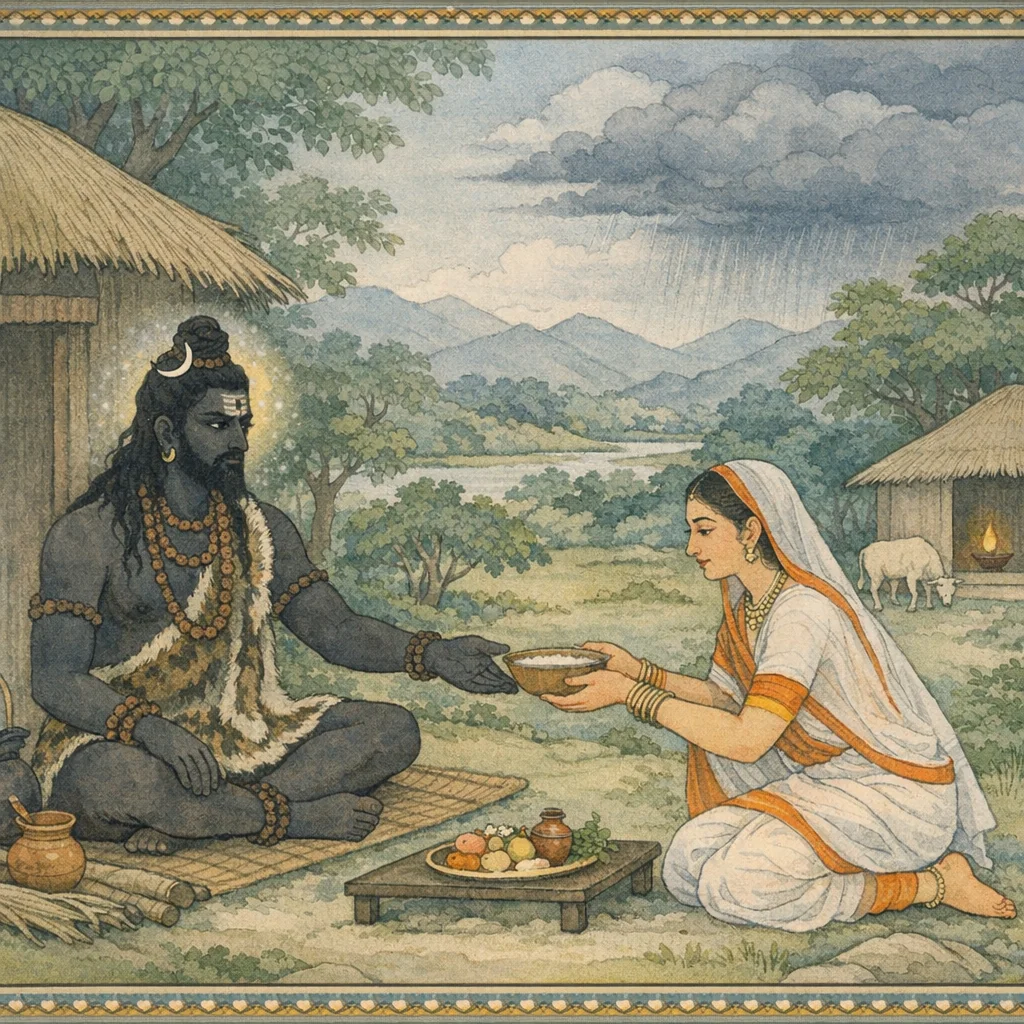
Yudhiṣṭhira requests further instruction that integrates Dharma with practical welfare, asking specifically how a householder can overcome death through righteous conduct. Bhīṣma responds by introducing an ancient exemplum. A lineage narrative culminates in King Duryodhana of Māhiṣmatī, whose daughter Sudarśanā is sought by Agni (in brāhmaṇa guise); after ritual disruption and disclosure, the marriage is granted, and their son Sudarśana is born. Sudarśana marries Oghavatī and undertakes a vow centered on hospitality: no guest is to be opposed, and satisfaction of the atithi is paramount. Mṛtyu follows Sudarśana, searching for a moral breach. When Sudarśana is away gathering fuel, a brāhmaṇa-guest arrives and requests hospitality that culminates in a demand for Oghavatī’s self-gift; she assents, remembering her husband’s prior command regarding guests. On Sudarśana’s return, the guest explains the situation; Sudarśana affirms atithi-pūjā as the highest gṛhastha-dharma, reiterates his vow that life, spouse, and wealth are for guests, and seals it with a satya-assertion (truth-act). A cosmic affirmation follows; the guest reveals himself as Dharma, declares that Mṛtyu has been subdued by Sudarśana’s steadfastness, and praises Oghavatī’s pativratā integrity. The chapter closes with Bhīṣma’s concluding maxim: for the householder, no deity is higher than the guest, and recitation of Sudarśana’s conduct is presented as merit-yielding (phalāśruti).
Chapter Arc: युधिष्ठिर पितामह से पुनः धर्म-अर्थ से संयुक्त एक विशेष रहस्य पूछते हैं—किस गृहस्थ ने केवल धर्म के आश्रय से मृत्यु को जीत लिया? → भीष्म प्रजापति-मनु-वंश की पृष्ठभूमि रखते हुए ‘अतिथि-सत्कार’ को गृहस्थ-धर्म का मेरुदण्ड बताते हैं और एक ऐसे गृहस्थ की कथा छेड़ते हैं जहाँ अतिथि स्वयं मृत्यु-रूप में परीक्षा लेने आता है। → अतिथि (मृत्यु-स्वरूप) पत्नी को स्पर्श कर भी उसकी पतिव्रता-निष्ठा और अतिथि-सत्कार से बँध जाता है; वह स्वीकार करता है कि तुम्हारी पत्नी के सत्कार-धर्म ने मुझे पराजित कर दिया—मैं इन्हीं अतिथि-सत्कारों से ‘वृता’ (वश) हो गया। → धर्म-पालन का फल तत्काल सामाजिक-राज्य-कल्याण के रूप में दिखता है—राज्य में समय पर वर्षा, समृद्धि, रत्न-धन-धान्य की वृद्धि, और प्रजा में रोग-दैन्य का अभाव; कथा यह स्थापित करती है कि गृहस्थ का अतिथि-धर्म मृत्यु-भय तक को क्षीण कर देता है। → अग्निदेव का आकर्षण और गर्भाधान का संकेत देकर कथा आगे के परिणामों (संतान/वंश-प्रभाव और धर्म-फल की विस्तृत परिणति) की ओर मोड़ देती है।
Shlokas
Verse 1
अत-४#-क+ द्वितीयो<5्ध्याय: प्रजापति मनुके वंशका वर्णन, अग्निपुत्र वकील अतिथिसत्काररूपी धर्मके पालनसे मृत्युपर पाना युधिछिर उवाच पितामह महाप्राज्ञ सर्वशास्त्रविशारद । श्रुतं मे महदाख्यानमिदं मतिमतां वर,युधिष्ठिरने कहा--बुद्धिमानोंमें श्रेष्ठ सर्वशास्त्र-विशारद महाप्राज्ञ पितामह! इस महत्त्वपूर्ण उपाख्यानको मैंने बड़े ध्यानसे सुना है
Yudhiṣṭhira said: “O grandsire, profoundly wise and skilled in all the śāstras—O best among the discerning—this great sacred narrative has been heard by me with attentive care.”
Verse 2
भूयस्तु श्रोतुमिच्छामि धर्मार्थसहितं नृप । कथ्यमानं त्वया किज्चित् तन्मे व्याख्यातुमहसि,नरेश्वर! अब मैं पुन: आपके मुखसे कुछ और धर्म तथा अर्थयुक्त उपदेश सुनना चाहता हूँ, अतः आप मुझे इस विषयको विस्तारपूर्वक बताइये इति श्रीमहाभारते अनुशासनपर्वणि दानधर्मपर्वणि सुदर्शनोपाख्याने द्वितीयो<5ध्याय:
Yudhiṣṭhira said: “O king, I wish to hear again some further instruction from you—teaching grounded in both dharma and practical welfare (artha). As you speak, please explain it to me in fuller detail, O lord of men.”
Verse 3
केन मृत्युर्गृहस्थेन धर्ममाश्रित्य निर्जित: । इत्येतत् सर्वमाचक्ष्व तत्त्वेनापि च पार्थिव,भूपाल! किस गृहस्थने केवल धर्मका आश्रय लेकर मृत्युपर विजय पायी है? यह सब बातें आप यथार्थरूपसे कहिये
Yudhiṣṭhira said: “By which householder, taking refuge solely in dharma, was Death overcome? O king, protector of the earth—tell me all this in accordance with the truth.”
Verse 4
भीष्म उवाच अत्राप्युदाहरन्तीममितिहासं पुरातनम् । यथा मृत्युर्गहस्थेन धर्ममाश्रित्य निर्जित:,भीष्मजीने कहा--राजन्! एक गृहस्थने जिस प्रकार धर्मका आश्रय लेकर मृत्युपर विजय पायी थी, उसके विषयमें एक प्राचीन इतिहासका उदाहरण दिया जाता है
Bhishma said: “Here too, they cite an ancient historical example—how a householder, taking refuge in dharma, overcame Death.”
Verse 5
मनो: प्रजापते राजन्निक्ष्वाकुरभवत् सुतः । तस्य पुत्रशतं जज्ञे नपते: सूर्यवर्चस:,नरेश्वर! प्रजापति मनुके एक पुत्र हुआ, जिसका नाम था इक्ष्वाकु। राजा इक्ष्वाकु सूर्यके समान तेजस्वी थे। उन्होंने सौ पुत्रोंकी जन्म दिया
Bhīṣma said: “O king, from Manu, the Prajāpati, there was born a son named Ikṣvāku. And to that Ikṣvāku—O lord of men, radiant like the sun—were born a hundred sons.”
Verse 6
दशमस्तस्य पुत्रस्तु दशाश्वो नाम भारत | माहिष्मत्यामभूद् राजा धर्मात्मा सत्यविक्रम:,भारत! उनमेंसे दसवें पुत्रका नाम दशाश्व था जो माहिष्मतीपुरीमें राज्य करता था। वह बड़ा ही धर्मात्मा और सत्यपराक्रमी था
Bhishma said: “O Bharata, the tenth son of him was named Daśāśva. He became king in Māhiṣmatī, a ruler devoted to dharma and steadfastly valorous in truth.”
Verse 7
दशाश्वस्य सुतस्त्वासीदू राजा परमधार्मिक: । सत्ये तपसि दाने च यस्य नित्यं रतं मन:
Bhīṣma said: “You were the son of Daśāśva, and you became a king of the highest righteousness. Your mind was ever devoted to truthfulness, austerity, and generosity.”
Verse 8
दशाश्वका पुत्र भी बड़ा धर्मात्मा राजा था। उसका मन सदा सत्य, तपस्या और दानमें ही लगा रहता था ।। मदिराश्च इति ख्यातः पृथिव्यां पृथिवीपति: । धनुर्वेदे च वेदे च निरतो यो5भवत् सदा,वह राजा इस भूतलपर मदिराश्वके नामसे विख्यात था और सदा वेद एवं धरनुर्वेदके अभ्यासमें संलग्न रहता था
Bhishma said: There was a king on this earth renowned by the name Madirāśva. Ever steadfast, he remained constantly devoted both to the Veda and to the science of archery—uniting sacred learning with disciplined martial training, as befits a righteous ruler.
Verse 9
इस प्रकार श्रीमह्याभारत अनुशासनपर्वके अन्तर्गत दानधर्मपर्वमें गौतमी ब्राह्मणी; व्याध, सर्प मृत्यु और कालका संवादविषयक पहला अध्याय पूरा हुआ,मदिराश्चस्य पुत्रस्तु द्युतिमान् नाम पार्थिव: । महाभागो महातेजा महासत्त्वो महाबल: मदिराश्वका पुत्र महाभाग, महातेजस्वी, महान् धैर्यशशाली और महाबली झद्युतिमान् नामसे प्रसिद्ध राजा हुआ
Vaiśampāyana said: Madirāśva’s son became a king renowned by the name Dyutimān—highly fortunate, radiant in splendor, great in inner strength and steadfastness, and mighty in power. The narration thus turns from the prior moral dialogue toward the lineage and character of a ruler, presenting royal excellence as grounded in virtue, vigor, and moral stature.
Verse 10
पुत्रो द्युतिमतस्त्वासीदू राजा परमधार्मिक: । सर्वलोकेषु विख्यात: सुवीरो नाम नामत:
Bhīṣma said: “Dyutimān had a son who became a king of supreme righteousness. He was renowned in all the worlds; by name he was called Suvīra.”
Verse 11
सुवीरस्य तु पुत्रो$भूत् सर्वसंग्रामदुर्जय:
Bhīṣma said: “Now, Suvīra had a son—one who was unconquerable in every battle.”
Verse 12
दुर्जयस्येन्द्रवपुष: पुत्रोडश्चिसदृशद्युति:
Bhīṣma said: “Of the unconquerable one, whose form was like Indra’s, there was also a tenth son, radiant with a splendor equal to his.”
Verse 13
तस्येन्द्रसमवीर्यस्य संग्रामेष्वनिवर्तिन:
Bhīṣma said: “Of him—whose prowess was equal to Indra’s—who, in battles, never turned back.”
Verse 14
रत्नैर्थनैश्व पशुभि: सस्यैश्वापि पृथग्विधै:
Bhīṣma said: “With jewels, with wealth, with cattle, and also with crops of various kinds…”
Verse 15
नगरं विषयश्चास्य प्रतिपूर्णस्तदा भवत् | उनका नगर और राज्य रत्न, धन, पशु तथा भाँति-भाँतिके धान्योंसे उन दिनों भरा-पूरा रहता था ।। न तस्य विषये चाभूत् कृपणो नापि दुर्गतः
Bhishma said: “In those days, his city and the whole realm were completely filled with prosperity. Within his dominion there was neither any miserly, mean-spirited person nor anyone fallen into distress or poverty.”
Verse 16
सुदक्षिणो मधुरवागनसूयुर्जितिन्द्रिय: । धर्मात्मा चानृशंसश्न विक्रान्तो5<थाविकत्थन:,वह राजा अत्यन्त उदार, मधुरभाषी, किसीके दोष न देखनेवाला, जितेन्द्रिय, धर्मात्मा, दयालु और पराक्रमी था। वह कभी अपनी प्रशंसा नहीं करता था
Bhishma said: “That king was exceedingly generous, sweet of speech, free from fault-finding and envy, master of his senses, devoted to dharma, compassionate, and valiant; and he never indulged in self-praise.”
Verse 17
यज्वा च दान्तो मेधावी ब्रह्माण्य: सत्यसड्र: | न चावमन्ता दाता च वेदवेदाड़्रपारग:,राजा दुर्योधन वेद-वेदाड़ोंका पारजड्गत विद्वान, यज्ञकर्ता, जितेन्द्रिय, मेधावी, ब्राह्मणभक्त और सत्यप्रतिज्ञ था। वह सबको दान देता और किसीका भी अपमान नहीं करता था
Bhishma said: “He was a performer of sacrifices, self-restrained, and intelligent; devoted to Brahmins and steadfast in truth. He did not insult anyone, was generous in giving, and was thoroughly learned in the Vedas and their auxiliary disciplines.”
Verse 18
त॑ नर्मदा देवनदी पुण्या शीतजला शिवा । चकमे पुरुषव्याप्रं स्वेन भावेन भारत,भारत! एक समय शीतल जलवाली पवित्र एवं कल्याणमयी देवनदी नर्मदा उस पुरुषसिंहको सम्पूर्ण हृदयसे चाहने लगी और उसकी पत्नी बन गयी
Bhishma said: “The Narmadā—holy, cool-watered, and auspicious, revered as a divine river—came, in her own nature and with full-hearted affection, to desire that tiger among men, O Bhārata, and in time accepted him as her husband. The episode frames the river not merely as a place but as a sacred, beneficent power whose union with a worthy man is portrayed as a providential and dharmic bond.”
Verse 19
तस्यां जज्ञे तदा नद्यां कन्या राजीवलोचना । नाम्ना सुदर्शना राजन् रूपेण च सुदर्शना
Bhīṣma said: “In that river, at that time, there was born a maiden with lotus-like eyes. O King, she was named Sudarśanā, and in her appearance too she was truly ‘Sudarśanā’—beautiful and auspicious to behold.”
Verse 20
राजन! उस नदीके गर्भसे राजाके द्वारा एक कमललोचना कन्या उत्पन्न हुई जो नामसे तो सुदर्शना थी ही, रूपसे भी सुदर्शना (सुन्दर एवं दर्शनीय) थी ।। तादूगूपा न नारीषु भूतपूर्वा युधिष्ठिर । दुर्योधनसुता यादूगभवद् वरवर्णिनी,युधिष्ठिर! दुर्योधनकी वह सुन्दर वर्णवाली पुत्री जैसी रूपवती थी, वैसी रूप- सौन्दर्यशालिनी स्त्री नारियोंमें पहले कभी नहीं हुई थी
Bhishma said: “O King, from the womb of that river there was born—through the agency of the king—a lotus-eyed maiden. In name she was Sudarśanā, and in appearance too she was truly ‘well-seen’: beautiful and worthy to behold. O Yudhiṣṭhira, among women such a form had never been seen before. Such was the fair-complexioned daughter of Duryodhana—of extraordinary beauty.”
Verse 21
तामग्निश्चकमे साक्षाद् राजकन्यां सुदर्शनाम् । भूत्वा च ब्राह्मणो राजन् वरयामास तं नृपम्,राजन! राजकन्या सुदर्शनापर साक्षात् अग्निदेव आसक्त हो गये और उन्होंने ब्राह्मणका रूप धारण करके राजासे उस कन्याको माँगा
Bhishma said: “Agni himself became enamored of the princess Sudarśanā. O King, assuming the guise of a brāhmaṇa, he approached that ruler and formally sought the maiden in marriage. The episode underscores how desire can move even a deity, yet the pursuit is framed through socially sanctioned procedure—approach, request, and consent—highlighting the ethical weight of rightful means in matters of marriage.”
Verse 22
दरिद्रश्चनासवर्णश्र॒ ममायमिति पार्थिव: । न दित्सति सुतां तस्मै तां विप्राय सुदर्शनाम्,राजा यह सोचकर कि एक तो यह दरिद्र है और दूसरे मेरे समान वर्णका नहीं है, अपनी पुत्री सुदर्शनाको उस ब्राह्मणके हाथमें नहीं देना चाहते थे
Bhīṣma said: The king, thinking, “This man is poor, and moreover not of my own social class,” was unwilling to give his daughter Sudarśanā in marriage to that brāhmaṇa.
Verse 23
ततो<सस््य वितते यज्ञे नष्टो5 भूद्धव्यवाहन: । ततः सुदुःखितो राजा वाक्यमाह द्विजांस्तदा,तब अग्निदेव रुष्ट होकर राजाके आरम्भ हुए यज्ञमेंसे अदृश्य हो गये। इससे राजाको बड़ा दुःख हुआ और उन्होंने ब्राह्मणोंसे कहा--
Then, while his sacrifice was being duly spread out and conducted, Havyavāhana (Agni, the bearer of oblations) vanished from it. Thereupon the king, overwhelmed with grief, addressed the Brahmins at that time—
Verse 24
दुष्कृतं मम कि नु स्याद् भवतां वा द्विजर्षभा: । येन नाशं जगामाग्नि: कृतं कुपुरुषेष्विव,विप्रवरो! मुझसे या आपलोगोंसे कौन-सा ऐसा दुष्कर्म बन गया है जिससे अग्निदेव दुष्ट मनुष्योंके प्रति किये गये उपकारके समान नष्ट हो गये हैं
Bhishma said: “O best of Brahmins, what wrongdoing could there be—on my part or on yours—by which Agni has come to ruin, as though a good deed performed for wicked men were destined to be wasted?”
Verse 25
न हाल्प॑ दुष्कृतं नो$स्ति येनाग्निनाशमागत: । भवतां चाथवा महां तत्त्वेनेतद् विमृश्यताम्,“हमलोगोंका थोड़ा-सा अपराध नहीं है जिससे अग्निदेव अदृश्य हो गये हैं। वह अपराध आपलोगोंका है या मेरा--इसका ठीक-ठीक विचार करें"
Bhīṣma said: “We have not committed some trifling wrongdoing by which Agni has vanished from sight. Consider carefully, in truth, whether this fault lies with you or with me.”
Verse 26
तत्र राज्ञो वच:ः श्रुत्वा विप्रास्ते भरतर्षभ । नियता वाग्यताश्वैव पावकं शरणं ययु:,भरतश्रेष्ठ] राजाकी यह बात सुनकर उन ब्राह्मणोंने शौच-संतोष आदि नियमोंके पालनपूर्वक मौन हो भगवान् अग्निदेवकी शरण ली
O bull of the Bharatas, hearing the king’s words there, those brāhmaṇas—disciplined in their observances and restraining their speech—fell silent and sought refuge in Pāvaka, the Fire-god.
Verse 27
तान् दर्शयामास तदा भगवान् हव्यवाहन: । स्वं रूप॑ दीप्तिमत् कृत्वा शरदर्कसमद्युति:,तब भगवान् हव्यवाहनने रातमें अपना तेजस्वी रूप प्रकट करके शरत्कालके सूर्यके सदृश द्युतिमान् हो उन ब्राह्मणोंको दर्शन दिया
Bhīṣma said: Then the blessed Havyavāhana (Agni) revealed himself to them. Assuming his own radiant form, blazing with a splendor like the sun in the autumn season, he granted those brāhmaṇas his vision—affirming the sanctity of their rite and the moral force of duty performed in truth.
Verse 28
ततो महात्मा तानाह दहनो ब्राह्मणर्षभान् | वरयाम्यात्मनोअर्थाय दुर्योधनसुतामिति,उस समय महात्मा अग्निने जन श्रेष्ठ ब्राह्मणोंसे कहा--“मैं दुर्योधनकी पुत्रीका अपने लिये वरण करता हूँ
Then Agni, the great-souled one, addressed those foremost of Brahmins and declared: “For my own purpose, I choose as my bride the daughter of Duryodhana.”
Verse 29
ततस्ते कल्यमुत्थाय तस्मै राज्ञे न्यवेदयन् । ब्राह्मणा विस्मिता: सर्वे यदुक्तं चित्रभानुना,यह सुनकर आश्वर्यचकित हुए सब ब्राह्मणोंने सबेरे उठकर, अग्निदेवने जो कहा था वह सब कुछ राजासे निवेदन किया
Then, rising in the morning, they reported everything to the king. All the brāhmaṇas were astonished, and they conveyed to the ruler exactly what Citrabhānu (Agni, the Fire-god) had spoken.
Verse 30
ततः स राजा तत् श्रुत्वा वचन ब्रह्म॒वादिनाम् । अवाप्य परम॑ हर्ष तथेति प्राह बुद्धिमान्,ब्रह्मगादी ऋषियोंका यह वचन सुनकर राजाको बड़ा हर्ष हुआ और उन बुद्धिमान् नरेशने “तथास्तु' कहकर अग्निदेवका प्रस्ताव स्वीकार कर लिया
Hearing the words of the Brahman-speaking sages, that wise king was filled with the highest joy and replied, “So be it,” thereby accepting the proposal.
Verse 31
अयाचत च त॑ शुल्क॑ भगवन्तं विभावसुम् । नित्यं सांनिध्यमिह ते चित्रभानो भवेदिति,तदनन्तर उन्होंने कन््याके शुल्करूपसे भगवान् अग्निसे याचना की--'चित्रभानो! इस नगरीमें आपका सदा निवास बना रहे”
Bhīṣma said: Then she asked the blessed Fire-god Vibhāvasu as the bride-price, saying, “O Citrabhānu, may your presence here in this city be constant.”
Verse 32
तमाह भगवानग्निरेवमस्त्विति पार्थिवम् । ततः सांनिध्यमद्यापि माहिष्मत्यां विभावसो:,यह सुनकर भगवान् अग्निने राजासे कहा, “एवमस्तु (ऐसा ही होगा)”। तभीसे आजतक माहिष्मती नगरीमें अग्निदेवका निवास बना हुआ है
Bhīṣma said: Hearing this, the blessed Fire-god addressed the king, “So be it.” From that time onward, even to this day, the presence of Vibhāvasu (Agni) is said to abide in the city of Māhiṣmatī—marking the enduring power of a divine promise granted to a righteous ruler.
Verse 33
दृष्टं हि सहदेवेन दिश॑ विजयता तदा । ततस्तां समलंकृत्य कन्यामाहृतवाससम्
Bhīṣma said: “Indeed, at that time Sahadeva, while conquering the quarters, saw her. Then, having her duly adorned and having brought garments for the maiden, (he proceeded accordingly).”
Verse 34
ददौ दुर्योधनो राजा पावकाय महात्मने । सहदेवने दक्षिण दिशाकी विजय करते समय वहाँ अग्निदेवको प्रत्यक्ष देखा था। अग्निदेवके वहाँ रहना स्वीकार कर लेनेपर राजा दुर्योधनने अपनी कन्याको सुन्दर वस्त्र पहनाकर नाना प्रकारके आभूषणोंसे अलंकृत करके महात्मा अग्निके हाथमें दे दिया |। ३३ *3॥ प्रतिजग्राह चाग्निस्तु राजकन्यां सुदर्शनाम्
Bhishma said: King Duryodhana gave (his daughter) to the great-souled Pavaka (Agni). When Sahadeva was conquering the southern quarter, he had directly seen the Fire-god dwelling there. After Agni accepted residence in that place, King Duryodhana dressed his daughter in fine garments, adorned her with many ornaments, and placed her into the hands of the noble Fire. And Agni, in turn, accepted the beautiful princess.
Verse 35
विधिना वेददृष्टेन वसोर्धारामिवाध्वरे । अग्निने वेदोक्त विधिसे राजकन्या सुदर्शनाको उसी प्रकार ग्रहण किया, जैसे वे यज्ञमें वसुधारा ग्रहण करते हैं ।। ३४ $ ।। तस्या रूपेण शीलेन कुलेन वपुषा श्रिया
Bhishma said: Following the procedure sanctioned by the Vedas, he accepted the princess Sudarshanā by the Vedic rite—just as, in a sacrifice, one duly takes the oblation called vasordhārā. Her beauty, conduct, noble lineage, bodily grace, and prosperity were all exemplary.
Verse 36
तस्या: समभवत् पुत्रो नाम्ना55ग्नेय: सुदर्शन:
Bhīṣma said: From her was born a son, named Sudarśana, who was known as Āgneya—one associated with Agni.
Verse 37
सुदर्शनस्तु रूपेण पूर्णेन्दुसद्शोपम: । शिशुरेवाध्यगात् सर्व परं ब्रह्म सनातनम्
Bhīṣma said: “Sudarśana, radiant in form like the full moon, though still only a child, came to realize everything—attaining the supreme, eternal Brahman.”
Verse 38
कुछ कालके पश्चात् उसके गर्भसे अग्निके एक पुत्र हुआ जिसका नाम सुदर्शन रखा गया। वह रूपमें पूर्ण चन्द्रमाके समान मनोहर था और उसे बचपनमें ही सर्वस्वरूप सनातन परब्रह्मका ज्ञान हो गया था ।। अथौघवान् नाम नृपो नृगस्थासीत् पितामह: । तस्याथौघवती कन्या पुत्रश्नौघरथो5भवत्,उन दिनों राजा नृगके पितामह ओघवान् इस पृथ्वीपर राज्य करते थे। उनके ओघवती नामवाली एक कन्या और ओघरथ नामवाला एक पुत्र था
Bhīṣma said: After some time, a son of Agni was born from her womb, and he was named Sudarśana. Beautiful like the full moon, he attained—while still a child—knowledge of the eternal Supreme Brahman, the source and essence of all. In those days, a king named Oghavān, the grandfather of Nṛga, ruled the earth. He had a daughter called Oghavatī and a son named Ogharatha.
Verse 39
तामोघवान् ददौ तस्मै स्वयमोघवतीं सुताम् । सुदर्शनाय विदुषे भार्यार्थे देवरूपिणीम्,ओघवती देवकन्याके समान सुन्दरी थी। ओघवानने अपनी उस पुत्रीको विद्वान् सुदर्शनको पत्नी बनानेके लिये दे दिया
Bhīṣma said: Oghavān gave him his own daughter, Oghavatī—beautiful like a celestial maiden—as a wife for the learned Sudarśana.
Verse 40
स गृहस्थाश्रमरतस्तया सह सुदर्शन: । कुरुक्षेत्रेसद् राजन्नोघवत्या समन्वित:,राजन! सुदर्शन उसके साथ गृहस्थ-धर्मका पालन करने लगे। उन्होंने ओधवतीके साथ कुरक्षेत्रमें निवास किया
Bhīṣma said: O King, Sudarśana, devoted to the householder stage of life, lived together with her. Endowed with Oghavatī, he took up residence in Kurukṣetra, faithfully maintaining the duties of household life.
Verse 41
गृहस्थश्वावजेष्यामि मृत्युमित्येव स प्रभो । प्रतिज्ञामकरोद् धीमान् दीप्ततेजा विशाम्पते,प्रजानाथ! प्रभो! उद्दीप्त तेजवाले उस बुद्धिमान सुदर्शनने यह प्रतिज्ञा कर ली कि मैं गृहस्थ-धर्मका पालन करते हुए ही मृत्युकोी जीत लूँगा
Bhīṣma said: “O lord, that wise and radiant one, the ruler of the people, made this very vow: ‘While remaining in the householder’s order and faithfully practicing its duties, I shall overcome death.’”
Verse 42
तामथौघवतीं राजन् स पावकसुतो<ब्रवीत् । अतिथे: प्रतिकूलं ते न कर्तव्यं कथंचन,राजन्! अग्निकुमार सुदर्शनने ओघवतीसे कहा--'देवि! तुम्हें अतिथिके प्रतिकूल किसी तरह कोई कार्य नहीं करना चाहिये”
Bhīṣma said: Then Pavaka’s son addressed Oghavatī: “O Queen, never—under any circumstance—do anything that runs against the welfare and honor of a guest (atithi).”
Verse 43
येन येन च तुष्येत नित्यमेव त्वयातिथि: । अप्यात्मन: प्रदानेन न ते कार्या विचारणा,“जिस-जिस वस्तुसे अतिथि संतुष्ट हो, वह वस्तु तुम्हें सदा ही उसे देनी चाहिये। यदि अतिथिके संतोषके लिये तुम्हें अपना शरीर भी देना पड़े तो मनमें कभी अन्यथा विचार न करना
Bhīṣma said: “Whatever it is by which your guest (atithi) is pleased, you should always give that to him. Even if, for the guest’s satisfaction, you must offer your own self, you should not entertain hesitation or second thoughts.”
Verse 44
एतद् व्रतं मम सदा हृदि सम्परिवर्तते । गृहस्थानां च सुश्रोणि नातिथेर्विद्यते परम्,'सुन्दरी! अतिथि-सेवाका यह व्रत मेरे हृदयमें सदा स्थित रहता है। गृहस्थोंके लिये अतिथि-सेवासे बढ़कर दूसरा कोई धर्म नहीं है
Bhīṣma said: “This vow of mine ever revolves within my heart: for householders (gṛhastha), O fair-hipped lady, there is no higher duty than the honoring and service of a guest (atithi).”
Verse 45
प्रमाणं यदि वामोरु वचस्ते मम शो भने । इदं वचनमव्यग्रा हृदि त्वं धारये: सदा,“वामोरु शोभने! यदि तुम्हें मेरा वचन मान्य हो तो मेरी इस बातको शान्त भावसे सदा अपने हृदयमें धारण किये रहना
Bhīṣma said: “O fair one with beautiful thighs, if my words carry authority for you, then keep this counsel always held in your heart, with an undistracted and composed mind.”
Verse 46
निष्क्रान्ते मयि कल्याणि तथा संनिहिते5नघे । नातिथिस्ते5वमन्तव्य: प्रमाणं यद्यहं तव,“कल्याणि! निष्पाप! यदि तुम मुझे आदर्श मानती हो तो मैं घरमें रहूँ या घरसे कहीं दूर निकल जाऊँ, तुम्हें किसी भी दशामें अतिथिका अनादर नहीं करना चाहिये'
Bhīṣma said: “O auspicious one, O sinless lady—whether I have departed or am still present nearby, you must never treat a guest (atithi) with contempt. If you regard me as your standard of conduct, let this be your rule: the guest is not to be dishonored in any circumstance.”
Verse 47
तमब्रवीदोघवती तथा मुर्धश्नि कृताञ्जलि: । न मे त्वद्गबचनात् किंचिन्न कर्तव्यं कथंचन,यह सुनकर ओघवतीने दोनों हाथ जोड़ मस्तकमें लगाकर कहा--“कोई भी ऐसा कार्य नहीं है जो मैं आपकी आज्ञासे किसी कारणवश न कर सकूँ”
Bhishma said: Hearing this, Oghavatī, with her hands joined in reverence and raised to her head, replied, “There is nothing—under any circumstance—that I am not bound to do in accordance with your command.”
Verse 48
जिगीषमाणस्तु गृहे तदा मृत्यु: सुदर्शनम् । पृष्ठतोडन्वगमद्ू राजनू् रन्ध्रान्वेषी तदा सदा,राजन! उन दिनों गृहस्थ-धर्ममें स्थित हुए सुदर्शनको जीतनेकी इच्छासे मृत्यु उनका छिद्र खोजती हुई सदा उनके पीछे लगी रहती थी
Bhishma said: “At that time, while Sudarśana was established in the householder’s way of life, Death—desiring to overcome him—followed close behind him, O king, constantly searching for a flaw.”
Verse 49
इध्मार्थ तु गते तस्मिन्नग्निपुत्रे सुदर्शने । अतिर्थित्राह्मण: श्रीमांस्तामाहौघवती तदा,एक दिन अम्निपुत्र सुदर्शन जब समिधा लानेके लिये बाहर चले गये, उसी समय उनके घरपर एक तेजस्वी ब्राह्मण अतिथि आया और ओघवतीसे बोला--
Bhishma said: When Sudarshana, the son of Agni, had gone out to gather firewood, a radiant Brahmin guest arrived at their home. At that moment he addressed Oghavati—setting in motion the duties of hospitality and the testing of household dharma.
Verse 50
आतिदथ्यं कृतमिच्छामि त्वयाद्य वरवर्णिनि । प्रमाणं यदि धर्मस्ते गृहस्थाभ्रमसम्मत:,“वरवर्णिनि! यदि तुम गृहस्थसम्मत धर्मको मान्य समझती हो तो आज मैं तुम्हारे द्वारा किया गया आतिथ्यसत्कार ग्रहण करना चाहता हूँ
Bhīṣma said: “O fair-complexioned lady of excellent beauty, today I wish to accept the hospitality you have offered. If, for you, the standard of right conduct is that dharma which is approved by the householders and accepted as proper, then let this act of hosting be taken as valid and fitting.”
Verse 51
इत्युक्ता तेन विप्रेण राजपुत्री यशस्विनी । विधिना प्रतिजग्राह वेदोक्तेन विशाम्पते,प्रजानाथ! उस ब्राह्मणके ऐसा कहनेपर यशस्विनी राजकुमारी ओघवतीने वेदोक्त विधिसे उसका पूजन किया
Bhishma said: Thus addressed by that brahmin, the illustrious princess accepted him with due rites; O lord of the people, she honored him according to the procedure enjoined in the Vedas. The episode underscores the ethic of receiving a worthy guest with scriptural propriety and respect.
Verse 52
आसन चैव पाद्यं च तस्मै दत्त्वा द्विजातये | प्रोवाचौघवती विप्रं केनार्थ: कि ददामि ते,ब्राह्मणको बैठनेके लिये आसन और पैर धोनेके लिये जल देकर ओघवतीने उससे पूछा--“विप्रवर! आपको किस वस्तुकी आवश्यकता है? मैं आपकी सेवामें क्या भेंट करूँ?”
Having offered that twice-born Brahmin a seat and water for washing his feet, Oghavatī addressed the learned man: “Revered Brahmin, what do you need? What gift may I offer you in service?”
Verse 53
तामब्रवीत् ततो विप्रो राजपुत्रीं सुदर्शनाम् । त्वया ममार्थ: कल्याणि निर्विशड्कैतदाचर,तब ब्राह्मणने दर्शनीय सौन्दर्यसे सुशोभित राजकुमारी ओघवतीसे कहा--“कल्याणि! मुझे तुमसे ही काम है। तुम नि:शंक होकर मेरा यह प्रिय कार्य करो
Then the brahmin addressed the princess, lovely to behold: “Auspicious lady, my purpose depends upon you alone. Therefore, carry out this request of mine without fear or hesitation.”
Verse 54
यदि प्रमाणं धर्मस्ते गृहस्थाअ्रमसम्मत: । प्रदानेनात्मनो राज्ञि कर्तुमरहसि मे प्रियम्,“रानी! यदि तुम्हें गृहस्थसम्मत धर्म मान्य है तो मुझे अपना शरीर देकर मेरा प्रिय कार्य करना चाहिये”
Bhīṣma said: “O Queen, if you accept as authoritative the dharma approved for the householder’s stage of life, then you ought to fulfill what is dear to me by offering your own person in gift.”
Verse 55
स तया छन््द्यमानो<न्यैरीप्सितैर्नूपकन्यया । नान्यमात्मप्रदानात् स तस्या वत्रे वरं द्विज:,राजकन्याने दूसरी कोई अभीष्ट वस्तु माँगनेके लिये उस अतिथिसे बारंबार अनुरोध किया, किंतु उस ब्राह्मणने उसके शरीर-दानके सिवा और कोई अभिलषित पदार्थ उससे नहीं माँगा
Bhīṣma said: Though the maiden repeatedly urged the guest to ask for some other desired boon, the brāhmaṇa asked for nothing else from her except the gift of her own person.
Verse 56
सा तु राजसुता स्मृत्वा भर्तुर्वचनमादित: । तथेति लज्जमाना सा तमुवाच द्विजर्षभम्,तब राजकुमारीने पहले कहे हुए पतिके वचनको याद करके लजाते-लजाते उस द्विजश्रेष्ठठे कहा--“अच्छा, आपकी आज्ञा स्वीकार है”
Bhīṣma said: The king’s daughter, recalling from the beginning her husband’s earlier words, and feeling shy, addressed that bull among the twice-born: “So be it; your command is accepted.”
Verse 57
ततो विहस्य विप्रर्षि: सा चैवाथ विवेश ह । संस्मृत्य भर्तुर्वचनं गृहस्थाश्रमकाड्क्षिण:,गृहस्थाश्रम-धर्मके पालनकी इच्छा रखनेवाले पतिकी कही हुई बातको स्मरण करके जब उसने ब्राह्मणके समक्ष 'हाँ' कर दिया, तब उस विप्र ऋषिने मुसकराकर ओघवतीके साथ घरके भीतर प्रवेश किया
Then the brahmin seer smiled and laughed softly, and she too assented. Remembering her husband’s words—he who longed to uphold the dharma of the householder’s life—she said “Yes” before the brahmin; and the sage, smiling, entered the house with Oghavatī.
Verse 58
अथेध्यानमुपादाय स पावकिरुपागमत् । मृत्युना रौद्रभावेन नित्यं बन्धुरिवान्वित:,इतनेहीमें अग्निकुमार सुदर्शन समिधा लेकर लौट आये। मृत्यु क्रूर भावनासे सदा उनके पीछे लगी रहती थी, मानो कोई स्नेही बन्धु अपने प्रिय बन्धुके पीछे-पीछे चल रहा हो
Then, taking the kindling in his hand, the son of Agni returned. Death, in a fierce and dreadful mood, followed him constantly—like a devoted kinsman walking close behind one he loves.
Verse 59
ततस्त्वाश्रममागम्य स पावकसुतस्तदा । तां व्याजहारौघवतीं क्वासि यातेति चासकृत्,आश्रमपर पहुँचकर फिर अग्निपुत्र सुदर्शन अपनी पत्नी ओघवतीको बारंबार पुकारने लगे--'देवि! तुम कहाँ चली गयी?”
Returning to the hermitage, Sudarśana—the son of Agni—called out again and again to his wife Oghavatī: “Lady, where have you gone?”
Verse 60
तस्मै प्रतिवच: सा तु भरत्रें न प्रददौ तदा । कराभ्यां तेन विप्रेण स्पृष्टा भर्तुव्॒ता सती,परंतु ओधवतीने उस समय अपने पतिको कोई उत्तर नहीं दिया। अतिथिरूपमें आये हुए ब्राह्मणने अपने दोनों हाथोंसे उसे छू दिया था। इससे वह सती-साध्वी पतिव्रता अपनेको दूषित मानकर अपने स्वामीसे भी लज्जित हो गयी थी; इसीलिये वह साध्वी चुप हो गयी। कुछ भी बोल न सकी
But then she gave no reply to her husband. For she—the chaste, husband-devoted wife—had been touched with both hands by that brahmin who had come as a guest; deeming herself thereby tainted, she felt ashamed even before her lord, and so remained silent, unable to speak.
Verse 61
उच्छिष्टास्मीति मन््वाना लज्जिता भर्तुरिव च । तूष्णी भूताभवत् साध्वी न चोवाचाथ किंचन,परंतु ओधवतीने उस समय अपने पतिको कोई उत्तर नहीं दिया। अतिथिरूपमें आये हुए ब्राह्मणने अपने दोनों हाथोंसे उसे छू दिया था। इससे वह सती-साध्वी पतिव्रता अपनेको दूषित मानकर अपने स्वामीसे भी लज्जित हो गयी थी; इसीलिये वह साध्वी चुप हो गयी। कुछ भी बोल न सकी
Thinking, “I have been rendered impure,” and feeling ashamed before her husband as though she had committed a fault, the virtuous, chaste wife became silent and spoke nothing at all.
Verse 62
अथ तां पुनरेवेदं प्रोवाच स सुदर्शन: । क्व सा साध्वी क््व सा याता गरीय: किमतो मम,अब सुदर्शन फिर पुकार-पुकारकर इस प्रकार कहने लगे--“मेरी वह साध्वी पत्नी कहाँ है? वह सुशीला कहाँ चली गयी? मेरी सेवासे बढ़कर कौन गुरुतर कार्य उसपर आ पड़ा। वह पतिव्रता, सत्य बोलनेवाली और सदा सरलभावसे रहनेवाली है। आज पहलेकी ही भाँति मुसकराती हुई वह मेरी अगवानी क्यों नहीं कर रही है?”
Then Sudarśana again spoke these words, calling out repeatedly: “Where is that virtuous woman? Where has my chaste wife gone? What task more weighty than serving me has suddenly fallen upon her?”
Verse 63
पतिव्रता सत्यशीला नित्यं चैवार्जवे रता । कथ्थ॑ न प्रत्युदेत्यद्य स्मपमाना यथा पुरा,अब सुदर्शन फिर पुकार-पुकारकर इस प्रकार कहने लगे--“मेरी वह साध्वी पत्नी कहाँ है? वह सुशीला कहाँ चली गयी? मेरी सेवासे बढ़कर कौन गुरुतर कार्य उसपर आ पड़ा। वह पतिव्रता, सत्य बोलनेवाली और सदा सरलभावसे रहनेवाली है। आज पहलेकी ही भाँति मुसकराती हुई वह मेरी अगवानी क्यों नहीं कर रही है?”
Bhishma said: “My wife—steadfast in wifely fidelity, devoted to truth, and ever delighting in straightforwardness—how is it that today she does not come forward to greet me, smiling as she used to before? What weightier duty than serving me has suddenly fallen upon her?”
Verse 64
उटजस्थस्तु तं॑ विप्र: प्रत्युवाच सुदर्शनम् । अतिथ्थिं विद्धि सम्प्राप्तं ब्राह्मणं पावके च माम्,यह सुनकर आश्रमके भीतर बैठे हुए ब्राह्मणने सुदर्शनको उत्तर दिया--“अग्निकुमार! तुम्हें ज्ञात होना चाहिये कि मैं ब्राह्मण हूँ और तुम्हारे घरपर अतिथिके रूपमें आया हूँ
Hearing this, the brahmin seated within the hermitage-hut replied to Sudarśana: “Know that I am a brahmin, and that I have come to your house as a guest; and know me also as Pāvaka, the sacred Fire.”
Verse 65
अनया हनन््द्यमानो*हं भार्यया तव सत्तम | तैस्तैरतिथिसत्कारैर््रेद्य॒न्नेषा वृता मया,'साधुशिरोमणे! तुम्हारी इस पत्नीने अतिथि-सत्कारके द्वारा मेरी इच्छा पूर्ण करनेका वचन दिया है। ब्रह्मन! तब मैंने इसे ही वरण कर लिया है
Bhishma said: “O best of men, though I was being pressed and urged by your wife, she pledged to fulfill my desire through the proper honoring of guests. Therefore, O foremost of the virtuous, I chose her as the one to be accepted, on account of those acts of hospitality.”
Verse 66
अनेन विधिना सेयं मामर्च्छति शुभानना । अनुरूप यदत्रान्यत् तद् भवान् कर्तुमहति,“इसी विधिके अनुसार यह सुमुखी इस समय मेरी सेवामें उपस्थित हुई है। अब यहाँ तुम्हें दूसरा जो कुछ उचित प्रतीत हो, वह कर सकते हो”
Bhishma said: “By this prescribed procedure, this fair-faced lady has now come to attend upon me. Whatever else seems fitting to be done here in accordance with propriety, you are competent to do.”
Verse 67
कूटमुद्गरहस्तस्तु मृत्युस्तं वै समन्वगात् । हीनप्रतिज्ञमत्रैनं वधिष्यामीति चिन्तयन्,इसी समय मृत्यु हाथमें लोहदण्ड लिये सुदर्शनके पीछे आकर खड़ी हो गयी। वह सोचती थी कि अब तो यह अपनी प्रतिज्ञा तोड़ बैठेगा। इसलिये इसे यहीं मार डालूँगी
Bhīṣma said: Death, holding a heavy iron club in hand, followed close behind him. Thinking, “Now he has fallen short of his vow; therefore I shall strike him down right here,” Death stood ready—watching for the moment when a broken promise would make him vulnerable to the moral consequence of his own lapse.
Verse 68
सुदर्शनस्तु मनसा कर्मणा चक्षुषा गिरा । त्यक्तेर्ष्यस्त्यक्तमन्युश्व॒ स्मयमानो<5ब्रवीदिदम्,परंतु सुदर्शन मन, वाणी, नेत्र और क्रियासे भी ईर्ष्या तथा क्रोधका त्याग कर चुके थे। वे हँसते-हँसते यों बोले--
Bhīṣma said: Sudarshana—having cast off envy and anger not only in thought but also in deed, in his gaze, and in speech—smiled and then spoke these words.
Verse 69
सुरतं ते<स्तु विप्राग्रय प्रीतिर्हि परमा मम । गृहस्थस्य हि धर्मो5ग्रय: सम्प्राप्तातिथिपूजनम्,“विप्रवर! आपकी सुरत कामनापूर्ण हो। इससे मुझे बड़ी प्रसन्नता है; क्योंकि घरपर आये हुए अतिथिका पूजन करना गृहस्थके लिये सबसे बड़ा धर्म है
Bhīṣma said: “O foremost of Brahmins, may your desire be fulfilled; it gives me the highest satisfaction. For the greatest duty of a householder is the honoring of a guest who has arrived at one’s home.”
Verse 70
अतिथि: पूजितो यस्य गृहस्थस्य तु गच्छति । नान्यस्तस्मात् परो धर्म इति प्राहुर्मनीषिण:,“जिस गृहस्थके घरपर आया हुआ अतिथि पूजित होकर जाता है उसके लिये उससे बढ़कर दूसरा कोई धर्म नहीं है--ऐसा मनीषी पुरुष कहते हैं
Bhīṣma said: For that householder from whose home a guest departs having been duly honored, there is no higher duty than this—so declare the wise.
Verse 71
प्राणा हि मम दाराश्न यच्चान्यद् विद्यते वसु । अतिथिभ्यो मया देयमिति मे व्रतमाहितम्,“मेरे प्राण, मेरी पत्नी तथा मेरे पास और जो कुछ धन-दौलत हैं, वह सब मेरी ओरसे अतिथियोंके लिये निछावर है, ऐसा मैंने व्रत ले रखा है
Bhīṣma said: “My very life-breaths, my wife, and whatever other wealth I possess—everything is, from my side, to be given over for the sake of guests. Such is the vow I have firmly undertaken.”
Verse 72
निःसंदिग्धं॑ यथा वाक्यमेतन्मे समुदाह्ृतम् । तेनाहं विप्र सत्येन स्वयमात्मानमालभे,“ब्रह्मन्! मैंने जो यह बात कही है, इसमें संदेह नहीं है। इस सत्यको सिद्ध करनेके लिये मैं स्वयं ही अपने शरीरको छूकर शपथ खाता हूँ
Bhishma said: “This statement of mine has been uttered without any doubt. Therefore, O brahmin, to establish its truth, I myself take an oath upon my own person.”
Verse 73
पृथिवी वायुराकाशमापो ज्योतिश्न पठचमम् । बुद्धिरात्मा मन: कालो दिशश्वैव गुणा दश,धर्मात्माओंमें श्रेष्ठ ब्राह्मण! पृथ्वी, वायु, आकाश, जल, नेत्र, बुद्धि, आत्मा, मन, काल और दिशाएँ--से दस गुण (वस्तुएँ) सदा ही प्राणियोंके शरीरमें स्थित होकर उनके पुण्य और पापकर्मको देखा करते हैं
Bhishma said: “Earth, wind, space, water, and light as the fifth; then intellect, the self, the mind, time, and the directions—these are the ten ‘witnessing principles’. Ever present within embodied beings, they observe a person’s meritorious and sinful deeds.”
Verse 74
नित्यमेव हि पश्यन्ति देहिनां देहसंश्रिता: । सुकृतं दुष्कृतं चापि कर्म धर्मभूतां वर,धर्मात्माओंमें श्रेष्ठ ब्राह्मण! पृथ्वी, वायु, आकाश, जल, नेत्र, बुद्धि, आत्मा, मन, काल और दिशाएँ--से दस गुण (वस्तुएँ) सदा ही प्राणियोंके शरीरमें स्थित होकर उनके पुण्य और पापकर्मको देखा करते हैं
Bhishma said: “For indeed, always, certain witnesses abiding in the bodies of embodied beings observe their deeds—both the meritorious and the sinful. O best of the righteous, these ever-present factors within the living body stand as constant testimony to one’s conduct.”
Verse 75
यथैषा नानृता वाणी मयाद्य समुदीरिता । तेन सत्येन मां देवा: पालयन्तु दहन्तु वा,“आज मेरी कही हुई यह वाणी यदि मिथ्या नहीं है तो इस सत्यके प्रभावसे देवता मेरी रक्षा करें, अथवा मिथ्या होनेपर मुझे जलाकर भस्म कर डालें”
Bhīṣma said: “If the words I have spoken today are not false, then by the power of that truth may the gods protect me; but if they are false, let them burn me to ashes.”
Verse 76
ततो नाद: समभवद् दिक्षु सर्वासु भारत । असकृत् सत्यमित्येवं नैतन्मिथ्येति सर्वतः,भरतनन्दन! सुदर्शनके इतना कहते ही सम्पूर्ण दिशाओंसे बारंबार आवाज आने लगी -- तुम्हारा कथन सत्य है। इसमें झूठका लेश भी नहीं है”
Bhishma said: “Then a sound arose in all directions, O Bharata. Again and again, from every side, came the proclamation: ‘This is truth indeed; there is not the least falsehood in it, O joy of the Bharatas.’”
Verse 77
उटजात् तु ततस्तस्मान्निश्लक्राम स वै द्विज: । वपुषा द्यां च भूमिं च व्याप्य वायुरिवोद्यत:,तत्पश्चात् वह ब्राह्मण उस आश्रमसे बाहर निकला। वह अपने शरीरसे वायुकी भाँति पृथ्वी और आकाशको व्याप्त करके स्थित हो गया
Bhishma said: Then that brahmin came out from that hermitage-cottage. Expanding his form, he seemed to pervade both earth and sky, poised like the wind in motion—an image of ascetic power that signals inner mastery and the extraordinary reach of disciplined dharma.
Verse 78
स्वरेण विप्र: शैक्षेण त्रील्लॉकाननुनादयन् । उवाच चैन धर्मज्ञ पूर्वमामन्त्रय नामत:,शिक्षाके अनुकूल उदात्त आदि स्वरसे तीनों लोकोंको प्रतिध्वनित करते हुए उस ब्राह्मणने पहले धर्मज्ञ सुदर्शनको सम्बोधित करके उससे इस प्रकार कहा--
Bhishma said: With a voice trained in phonetics and accent, the Brahmin made the three worlds resound. First, addressing the dharma-knowing one by name, he then spoke to him in this manner—setting a tone of disciplined speech and respectful approach before delivering his message.
Verse 79
धर्मोडहमस्मि भद्ठर ते जिज्ञासार्थ तवानघ । प्राप्त: सत्यं च ते ज्ञात्वा प्रीतिर्मे परमा त्वयि,“निष्पाप सुदर्शन! तुम्हारा कल्याण हो। मैं धर्म हूँ और तुम्हारी परीक्षा लेनेके लिये यहाँ आया हूँ। तुममें सत्य है--यह जानकर मैं तुमपर बहुत प्रसन्न हुआ हूँ
Bhishma said: “I am Dharma. O blameless one, I have come here to test you. Having recognized the truthfulness within you, I feel the highest joy and approval toward you.”
Verse 80
विजिततश्न त्वया मृत्युर्यो5यं त्वामनुगच्छति । रन्ध्रान्वेषी तव सदा त्वया धृत्या वशी कृत:,“तुमने इस मृत्युको, जो सदा तुम्हारा छिद्र ढूँढ़ती हुई तुम्हारे पीछे लगी रहती थी, जीत लिया। तुमने अपने धैर्यसे मृत्युको वशमें कर लिया है
Bhishma said: “You have conquered that Death which follows after you—ever seeking a flaw, ever searching for an opening. By your steadfast endurance and self-control, you have brought Death itself under your mastery.”
Verse 81
न चास्ति शक्तिस्त्रैलोक्ये कस्यचित् पुरुषोत्तम । पतिव्रतामिमां साध्वीं तवोद्वीक्षितुमप्युत,“पुरुषोत्तम! तीनों लोकोंमें किसीकी भी ऐसी शक्ति नहीं है जो तुम्हारी इस सती-साध्वी पतिव्रता पत्नीकी ओर कलुषित भावनासे आँख उठाकर देख भी सके'
Bhīṣma said: “O Puruṣottama, in all the three worlds there exists no one with the power even to raise a tainted glance toward your chaste, virtuous, husband-devoted wife. Such is the inviolable protection born of her fidelity and your righteousness.”
Verse 82
रक्षिता त्वदगुणैरेषा पतिव्रतगुणैस्तथा । अधृष्या यदियं ब्रूयात् तथा तन्नान्यथा भवेत्,“यह तुम्हारे गुणोंसे तथा अपने पातित्रत्यके गुणोंद्वारा भी सदा सुरक्षित है। कोई भी इसका पराभव नहीं कर सकता। यह जो बात अपने मुहसे निकालेगी वह सत्य ही होगी। मिथ्या नहीं हो सकती
She is ever protected by your virtues, and likewise by the virtues of her wifely fidelity (pativratā). None can overcome her. Whatever word she utters will be truth; it cannot be false.
Verse 83
एषा हि तपसा स्वेन संयुक्ता ब्रह्म॒वादिनी । पावनार्थ च लोकस्य सरिच्छेष्ठा भविष्यति,“अपने तपोबलसे युक्त यह ब्रह्मवादिनी नारी संसारको पवित्र करनेके लिये अपने आधे शरीरसे ओघवती नामवाली श्रेष्ठ नदी होगी और आधे शरीरसे यह परम सौभाग्यवती सती तुम्हारी सेवामें रहेगी। योग सदा इसके वशमें रहेगा
Bhishma said: “For she is endowed with the power of her own austerities and is a knower and speaker of Brahman. For the purification of the world she will become the foremost of rivers.”
Verse 84
अर्धेनौधवती नाम त्वामर्धेनानुयास्यति । शरीरेण महाभागा योगो हाुस्या वशे स्थित:,“अपने तपोबलसे युक्त यह ब्रह्मवादिनी नारी संसारको पवित्र करनेके लिये अपने आधे शरीरसे ओघवती नामवाली श्रेष्ठ नदी होगी और आधे शरीरसे यह परम सौभाग्यवती सती तुम्हारी सेवामें रहेगी। योग सदा इसके वशमें रहेगा
Bhīṣma said: “With one half of her being she will become the excellent river named Oghavatī, purifying the world; with the other half, that supremely fortunate and chaste woman will remain in your service. Yoga—spiritual discipline and mastery—will ever abide under her control.”
Verse 85
अनया सह लोकांश्व गन्तासि तपसार्जितान् । यत्र नावृत्तिमभ्येति शाश्वतांस्तानू सनातनान्,“तुम भी इसके साथ अपनी तपस्यासे प्राप्त हुए उन सनातन लोकोंमें जाओगे जहाँसे फिर इस संसारमें लौटना नहीं पड़ता
Bhishma said: “Together with her you will go to those eternal worlds that you have won through austerity—those ancient, everlasting realms from which one does not return again to this mortal existence.”
Verse 86
अनेन चैव देहेन लोकांस्त्वमभिपत्स्यसे । निर्जितश्च त्वया मृत्युरैश्वर्य च तवोत्तमम्,“तुम इसी शरीरसे उन दिव्य लोकोंमें जाओगे; क्योंकि तुमने मृत्युको जीत लिया है और तुम्हें उत्तम ऐश्वर्य प्राप्त है
Bhishma said: “With this very body you shall attain the heavenly worlds. For death has been conquered by you, and the highest sovereignty and prosperity are yours.”
Verse 87
पज्चभूतान्यतिक्रान्त: स्ववीर्याच्च मनोजव: । गृहस्थधर्मेणानेन कामक्रोधौ च ते जिती,“अपने पराक्रमसे पञ्चभूतोंको लाँधचकर तुम मनके समान वेगवान् हो गये हो। इस गृहस्थ-धर्मके आचरणसे ही तुमने काम और क्रोधपर विजय पा ली है”
Bhīṣma said: “By your own valor you have, as it were, overstepped the five great elements, and you have become swift like the mind. Through the practice of this householder’s dharma, you have conquered desire and anger.”
Verse 88
स््नेहो रागश्न तन्द्री च मोहो द्रोहश्च॒ केवल: । तव शुश्रूषया राजन् राजपुत्र्या विनिर्जिता:,'राजन्! राजकुमारी ओघवतीने भी तुम्हारी सेवाके बलसे स्नेह (आसक्ति), राग, आलस्य, मोह और द्रोह आदि दोषोंको जीत लिया है”
Bhīṣma said: “Affectionate attachment, passion, lethargy, delusion, and even sheer malice—these faults have been conquered by the princess through her devoted service to you, O King.”
Verse 89
भीष्म उवाच शुक्लानां तु सहस्रेण वाजिनां रथमुत्तमम् । युक्त प्रगृह्दा भगवान् वासवो5प्याजगाम तम्,भीष्मजी कहते हैं--युधिष्ठिर! तदनन्तर भगवान् इन्द्र भी श्वेत रंगके एक हजार घोड़ोंसे जुते हुए उत्तम रथको लेकर उनसे मिलनेके लिये आये
Bhishma said: “O Yudhiṣṭhira, thereafter the blessed Vāsava (Indra) himself came to meet him, bringing a splendid chariot yoked with a thousand white horses.”
Verse 90
मृत्युरात्मा च लोकाश्न जिता भूतानि पञ्च च । बुद्धि: कालो मनो व्योम कामक्रोधी तथैव च,इस प्रकार सुदर्शनने अतिथि-सत्कारके पुण्यसे मृत्यु, आत्मा, लोक, पञ्चभूत, बुद्धि, काल, मन, आकाश, काम और क्रोधको भी जीत लिया
Bhishma said: By the merit earned through honoring a guest, Sudarśana became victorious even over Death, the Self, the worlds, the five great elements, intellect, Time, mind, space, and likewise desire and anger.
Verse 91
तस्माद् गृहाश्रमस्थस्य नान्यद् दैवतमस्ति वै । ऋते5तिर्थिं नरव्यात्र मनसैतद् विचारय,पुरुषसिंह! इसलिये तुम अपने मनमें यह निश्चित विचार कर लो कि गृहस्थ पुरुषके लिये अतिथिको छोड़कर दूसरा कोई देवता नहीं है
Bhīṣma said: Therefore, for one who lives in the householder’s stage of life, there is truly no other deity—except the guest. Reflect on this firmly in your mind, O tiger among men, O lion-like hero.
Verse 92
अतिथि: पूजितो यद्धि ध्यायते मनसा शुभम् | न तत् क्रतुशतेनापि तुल्यमाहुर्मनीषिण:,यदि अतिथि पूजित होकर मन-ही-मन गृहस्थके कल्याणका चिन्तन करे तो उससे जो फल मिलता है उसकी सौ यज्ञोंसे भी तुलना नहीं हो सकती अर्थात् सौ यज्ञोंसे भी बढ़कर है। ऐसा मनीषी पुरुषों का कथन है
The sages declare: if an atithi, having been duly honored, turns his mind inward and thinks auspiciously of a householder’s welfare, the fruit of that is not equal even to a hundred sacrifices—it surpasses a hundred yajñas.
Verse 93
पात्र त्वतिथिमासाद्य शीलादढूयं यो न पूजयेत् । स दत्त्वा दुष्कृतं तस्मै पुण्यमादाय गच्छति,जो गृहस्थ सुपात्र और सुशील अतिथिको पाकर उसका यथोचित सत्कार नहीं करता, वह अतिथि उसे अपना पाप दे उसका पुण्य लेकर चला जाता है
Bhishma said: When a worthy atithi arrives—fit to receive honor and of good conduct—if a householder does not offer the proper welcome and respect, that guest departs taking away the householder’s merit and leaving behind his demerit.
Verse 94
एतत् ते कथित पुत्र मया55ख्यानमनुत्तमम् । यथा हि विजितो मृत्युर्गृहस्थेन पुराभवत्,बेटा! तुम्हारे प्रश्नके अनुसार पूर्वकालमें गृहस्थने जिस प्रकार मृत्युपर विजय पायी थी, वह उत्तम उपाख्यान मैंने तुमसे कहा
Bhishma said: “My son, as you asked, I have told you this unsurpassed tale—how, in ancient times, Death was overcome by a householder.”
Verse 95
धन्यं यशस्यमायुष्यमिदमाख्यानमुत्तमम् | बुभूषताभिमन्तव्यं सर्वदुश्चरितापहम्,यह उत्तम आख्यान धन, यश और आयुकी प्राप्ति करानेवाला है। इससे सब प्रकारके दुष्कर्मोंका नाश हो जाता है, अतः अपनी उन्नति चाहनेवाले पुरुषको सदा ही इसके प्रति आदरबुद्धि रखनी चाहिये
This supreme tale is a giver of wealth, fame, and long life. It destroys every kind of evil deed; therefore, one who seeks uplift should always hold it in reverent regard.
Verse 96
इदं यः कथयेद् विद्वानहन्यहनि भारत । सुदर्शनस्य चरितं पुण्याँलल्लोकानवाप्रुयात्,भरतनन्दन! जो विद्दान् सुदर्शनके इस चरित्रका प्रतिदिन वर्णन करता है वह पुण्यलोकोंको प्राप्त होता है-
Bhishma said: O Bhārata, the learned person who recounts, day after day, this sacred life-story of Sudarśana attains the meritorious worlds.
Verse 103
धर्मात्मा कोषवांश्षापि देवराज इवापर: । द्युतिमानका पुत्र परम धर्मात्मा राजा सुवीर हुआ जो सम्पूर्ण लोकोंमें विख्यात था। वह धर्मात्मा, कोश (धन-भण्डार)-से सम्पन्न तथा दूसरे देवराज इन्द्रके समान पराक्रमी था
Bhishma said: There was a king named Suvīra, the illustrious son of Dyutimānaka, renowned throughout all the worlds. He was righteous in spirit, rich in treasury, and in valor like a second Indra—an exemplar of kingship grounded in dharma, prosperity, and protective strength.
Verse 113
स दुर्जय इति ख्यातः सर्वशस्त्रभृतां वर: । सुवीरका पुत्र दुर्जय नामसे विख्यात हुआ। वह सभी संग्रामोंमें शत्रुओंके लिये दुर्जय तथा सम्पूर्ण शस्त्रधारियोंमें श्रेष्ठ था
Bhīṣma said: He became renowned by the name “Durjaya” (“the Unconquerable”). In battle he was hard for enemies to overcome, and among all who bore weapons he was counted the foremost—his fame resting on martial excellence and the fearlessness expected of a kṣatriya.
Verse 123
दुर्योधनो नाम महान् राजा राजर्षिसत्तम: | इन्द्रके समान शरीरवाले राजा दुर्जयके एक पुत्र हुआ जो अभश्विनीकुमारोंके समान कान्तिमान् था। उसका नाम था दुर्योधन। वह राजर्षियोंमें श्रेष्ठ महान् राजा था
Bhishma said: There was a great king named Duryodhana, foremost among royal sages. To King Durjaya—whose body was like Indra’s—was born a single son, radiant like the Aśvinī twins. His name was Duryodhana. He was a mighty king, counted as the best among royal seers—an account that highlights how outward splendor and exalted lineage can coexist with the moral tests that later define a ruler’s true worth.
Verse 136
विषये वासवस्तस्य सम्यगेव प्रवर्षति । इन्द्रके समान पराक्रमी और युद्धसे कभी पीछे न हटनेवाले राजा दुर्योधनके राज्यमें इन्द्र सदा ठीक समयपर और उचित मात्रामें ही वर्षा करते थे
Bhishma said: In that king’s realm, Vāsava (Indra) sent rain in a perfectly proper way—timely and in due measure. The statement presents Duryodhana’s kingdom as outwardly prosperous and well-ordered, implying that material well-being and regular rainfall can accompany strong rule, even while deeper questions of righteousness and moral conduct remain to be judged by dharma rather than by prosperity alone.
Verse 1536
व्याधितो वा कृशो वापि तस्मिन् नाभून्नर: क्वचित् । उनके राज्यमें कहीं कोई भी कृपण, दुर्गतिग्रस्त, रोगी अथवा दुर्बल मनुष्य नहीं दृष्टिगोचर होता था
Bhīṣma said: In that realm, one could not be found anywhere who was afflicted by disease or wasted by weakness; no miserly, destitute, or suffering person came into view. The statement presents an ideal of kingship in which governance is measured by the visible absence of poverty, neglect, and preventable misery among the people.
Verse 3536
अभवत् प्रीतिमानग्निर्गर्भे चास्या मनो दधे | सुदर्शनाके रूप, शील, कुल, शरीरकी आकृति और कान्तिको देखकर अग्निदेव बहुत प्रसन्न हुए और उन्होंने उसमें गर्भाधान करनेका विचार किया
Bhīṣma said: Agni, filled with delight, fixed his mind on placing a child in her womb. Seeing Sudarśanā’s beauty, character, noble lineage, well-formed body, and radiance, the Fire-god was greatly pleased and resolved upon conception—thus setting desire and procreation within the wider ethical discourse of lineage, virtue, and rightful intention.
Frequently Asked Questions
The dilemma is whether householders will prioritize personal security and social comfort over atithi-dharma when a guest’s request becomes maximally demanding; the narrative frames the decision as a direct measure of vow-integrity and truthfulness.
The chapter teaches that Dharma is operationalized through disciplined household conduct—especially hospitality and truth—where steadfast ethical practice can symbolically “conquer” death by eliminating the moral breach (randhra) that Mṛtyu seeks.
Yes. Bhīṣma states that the account is auspicious, fame- and longevity-supporting, removes misconduct, and that a learned person who regularly narrates Sudarśana’s conduct attains meritorious realms—positioning the episode as both instruction and merit-bearing recitation.