Adhyaya 2
कलौ धर्मसुलभता — व्यासोपाख्यानम् एवं संकीर्तन-प्रधानता
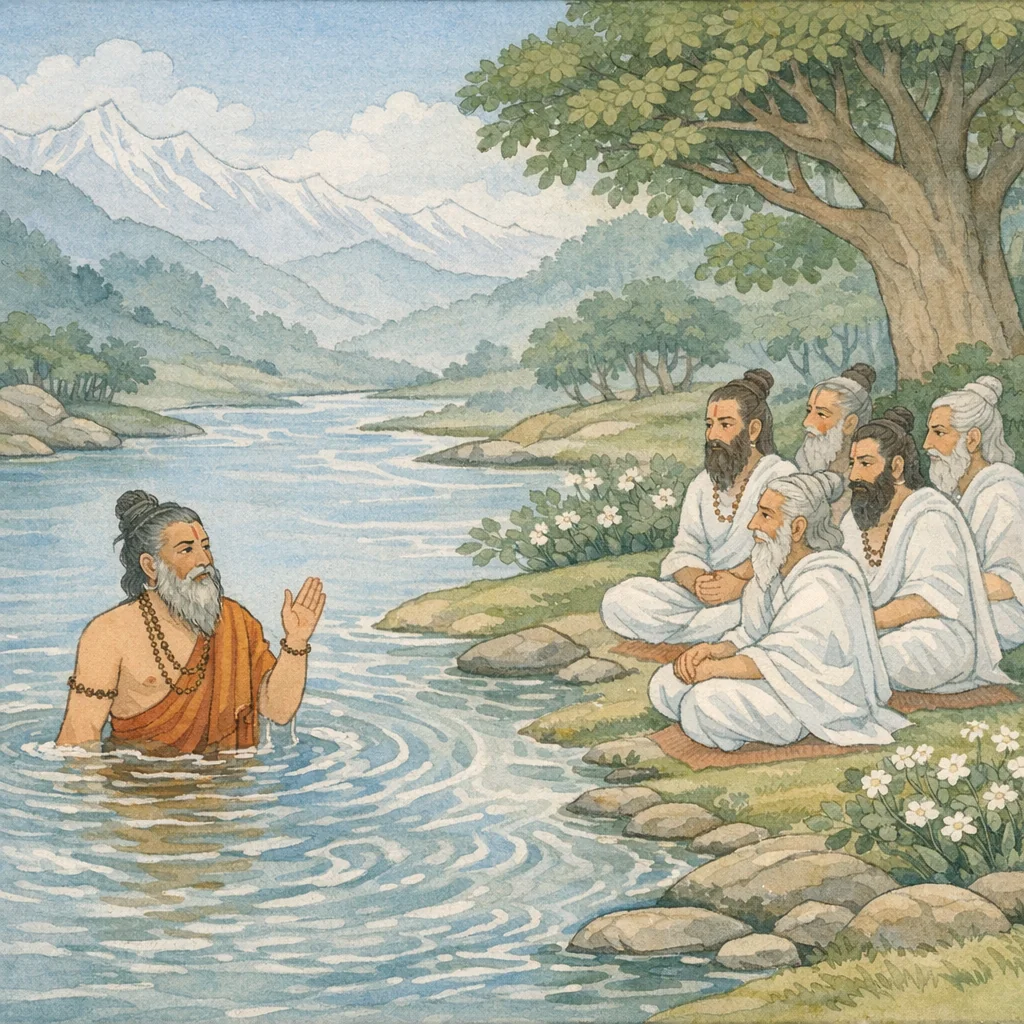
The narrative turns to a didactic Vyāsa episode. Sages meet Veda-Vyāsa on the Gaṅgā and ask when even small dharma yields great fruit, and by what easy means it is practiced. Parāśara recounts Vyāsa’s startling words—“Kali is good,” praising a Śūdra and then women—prompting inquiry into his intent. The paradox is explained: what takes ten years in Kṛta is gained in Kali in a single day and night; the fruits of tapas, brahmacarya, and japa become readily attainable. Yuga-dharma is affirmed: meditation in Kṛta, yajña in Tretā, arcana in Dvāpara, and in Kali the same fruit through Keśava’s saṅkīrtana. Parāśara also notes social paths—Śūdras gain merit by serving dvijas, women by devoted service to husbands—while warning dvijas that unrestrained living makes even speech, food, and sacrifice futile. The chapter closes by returning to Maitreya’s request: Parāśara will now explain the prākṛta and intermediate (naimittika) dissolutions.
Shlokas
Verse 1
व्यासश् चाह महाबुद्धिर् यद् अत्रैव हि वस्तुनि तच् छ्रूयतां महाभाग गदतो मम तत्त्वतः
And the great-minded Vyāsa said: “O highly fortunate one, listen to what pertains to this very matter; I shall declare it to you in accordance with the truth.”
Verse 2
कस्मिन् काले ऽल्पको धर्मो ददाति सुमहत् फलम् मुनीनाम् अप्य् अभूद् वादः कैश् चासौ क्रियते सुखम्
“In what age does even a small measure of dharma yield a very great fruit? Even among sages this has become a matter of debate: by whom, and by what means, is that dharma practiced with ease?”
Verse 3
संदेहनिर्णयार्थाय वेदव्यासं महामुनिम् ययुस् ते संशयं प्रष्टुं मैत्रेय मुनिपुंगवाः
To settle their uncertainty, those foremost among sages went to the great seer Veda-Vyāsa, to question him and have their doubt resolved, O Maitreya.
Verse 4
ददृशुस् ते मुनिं तत्र जाह्नवीसलिले द्विज वेदव्यासं महाभागम् अर्धस्नातं सुतं मम
There, O twice-born one, they beheld that sage in the waters of the Jahnavī (the Ganga)—the venerable Vedavyāsa, most illustrious, only half-bathed—my own son.
Verse 5
स्नानावसानं ते तस्य प्रतीक्षन्तो महर्षयः तस्थुस् तटे महानद्यास् तरुषण्डम् उपाश्रिताः
Awaiting the completion of his sacred bathing, the great sages stood upon the bank of the mighty river, taking refuge in a grove of trees.
Verse 6
मग्नो ऽथ जाह्नवीतोयाद् उत्थायाह सुतो मम व्यासः साधुः कलिः साधुर् इत्य् एवं शृण्वतां वचः तेषां मुनीनां भूयश् च ममज्ज स नदीजले
Then, having dipped into the waters of the Jāhnavī (Gaṅgā), my son Vyāsa rose and spoke—while those sages listened: “Kali is good—Kali is good indeed.” Saying this, he once again plunged into the river’s stream.
Verse 7
उत्थाय साधु साध्व् इति शूद्र धन्यो ऽसि चाब्रवीत्
Rising up, he exclaimed, “Excellent—excellent!” and said to the Śūdra, “You are truly blessed.”
Verse 8
निमग्नश् च समुत्थाय पुनः प्राह महामुनिः योषितः साधु धन्यास् तास् ताभ्यो धन्यतरो ऽस्ति कः
Then, rising again after being absorbed in contemplation, the great sage spoke once more: “Ah, those women are truly blessed—who indeed could be more blessed than they?”
Verse 9
ततः स्नात्वा यथान्यायम् आचान्तं तं कृतक्रियम् उपतस्थुर् महाभागा मुनयस् ते सुतं मम
Then, having bathed according to rule and sipped water for purification, when he had completed the prescribed observances, those greatly fortunate sages approached and attended upon him—him who is your son, my dear.
Verse 10
कृतसंवन्दनांश् चाह कृतासनपरिग्रहान् किमर्थम् आगता यूयम् इति सत्यवतीसुतः
Having received their salutations and offered them seats, the son of Satyavatī addressed them: “For what purpose have you all come here?”
Verse 11
तम् ऊचुः संशयं प्रष्टुं भवन्तं वयम् आगताः अलं तेनास्तु तावन् नः कथ्यताम् अपरं त्वया
They said to him: “We have come to ask about our doubt. But enough of that for now—tell us instead something further, something else, from your own lips.”
Verse 12
कलिः साध्व् इति यत् प्रोक्तं शूद्रः साध्व् इति योषितः यच् चाह भगवान् साधु धन्याश् चेति पुनः पुनः
In the age of Kali, whatever is proclaimed to be “good” is called good merely by assertion: the Śūdra is repeatedly hailed as “virtuous,” and a woman is repeatedly hailed as “virtuous”; and whatever the Lord declares again and again—“This is good; these are blessed”—that too is echoed and repeated, as though repetition itself were proof.
Verse 13
तत् सर्वं श्रोतुम् इच्छामो न चेद् गुह्यं महामुने तत् कथ्यतां ततो हृत्स्थं पृच्छामस् त्वां प्रयोजनम्
We wish to hear all of that, O great sage—if it is not secret. Therefore, please declare it; for we ask you the purpose that lies within our hearts.
Verse 14
इत्य् उक्तो मुनिभिर् व्यासः प्रहस्येदम् अथाब्रवीत् श्रूयतां भो मुनिश्रेष्ठा यद् उक्तं साधु साध्व् इति
Thus addressed by the sages, Vyāsa—smiling—then said: “Listen, O best of ascetics; what you have spoken is indeed right—truly, truly well spoken.”
Verse 15
यत् कृते दशभिर् वर्षैस् त्रेतायां हायनेन तत् द्वापरे तच् च मासेन अहोरात्रेण तत् कलौ
What is attained in the Kṛta age through ten years of sustained practice is gained in the Tretā age in a single year; in the Dvāpara age in a single month; and in the Kali age in a single day and night.
Verse 16
तपसो ब्रह्मचर्यस्य जपादेश् च फलं द्विजाः प्राप्नोति पुरुषस् तेन कलिः साध्व् इति भाषितम्
O twice-born ones, in this age a man attains—by that very means—the fruit of austerity, of brahmacarya discipline, and of prescribed japa; therefore it is said that Kali too is ‘good’ in this respect.
Verse 17
ध्यायन् कृते यजन् यज्ञैस् त्रेतायां द्वापरे ऽर्चयन् यद् आप्नोति तद् आप्नोति कलौ संकीर्त्य केशवम्
That very fruit attained in the Kṛta age by meditation, in the Tretā age by sacrifice, and in the Dvāpara age by worship, is attained in the Kali age simply by saṅkīrtana—singing the sacred praises of Keśava.
Verse 18
धर्मोत्कर्षम् अतीवात्र प्राप्नोति पुरुषः कलौ स्वल्पायासेन धर्मज्ञास् तेन तुष्टो ऽस्म्य् अहं कलेः
In this very age of Kali, a person attains an extraordinary rise in dharma with only a small effort. Knowing this principle of righteousness, I am therefore satisfied—even with Kali.
Verse 19
व्रतचर्योपहारैश् च ग्राह्यो वेदो द्विजातिभिः ततः स्वधर्मसंप्राप्तैर् यष्टव्यं विधिवद् धनैः
By vows, disciplined conduct, and fitting offerings, the twice-born should receive and safeguard the Veda. Thereafter, established in their own svadharma, they should perform sacrifice according to rule, supported by wealth gained in righteousness.
Verse 20
वृथा कथा वृथा भोज्यं वृथेज्या च द्विजन्मनाम् पतनाय तथा भाव्यं तैस् तु संयमिभिः सदा
For the twice-born, when severed from self-restraint, talk becomes futile, food becomes futile, and even sacrifice becomes futile; the disciplined should ever understand that such ungoverned living leads only to downfall.
Verse 21
असम्यक्करणे दोषस् तेषां सर्वेषु वस्तुषु भोज्यपेयादिकं चैषां नेच्छाप्राप्तिकरं द्विजाः
When actions are performed without due care and right method, fault taints everything they do; even their food and drink fail to yield the satisfaction they desire, O twice-born ones.
Verse 22
पारतन्त्र्यं समस्तेषु तेषां कार्येषु वै ततः जयन्ति ते निजांल् लोकान् क्लेशेन महता द्विजाः
Thus, in all their undertakings, dependence prevails; and therefore, O twice-born, they reach their destined worlds only through great hardship and strain.
Verse 23
द्विजशुश्रूषयैवैष पाकयज्ञाधिकारवान् निजाञ् जयति वै लोकाञ् शूद्रो धन्यतरस् ततः
By devoted service to the twice-born, this Śūdra becomes entitled to the pākayajñas, the domestic rites, and attains the worlds proper to him. Therefore, in this regard, the Śūdra is the more fortunate, for his path of merit is secured through humble service and right conduct.
Verse 24
भक्ष्याभक्ष्येषु नास्यास्ति पेयापेयेषु वै यतः नियमो मुनिशार्दूलास् तेनासौ साध्व् इतीरितम्
O tiger-like sages, in him there is no rule of restraint regarding what is fit or unfit to eat, and likewise what is fit or unfit to drink; therefore, by the warped measure of the Kali age, he is spoken of as a ‘sādhu’.
Verse 25
स्वधर्मस्याविरोधेन नरैर् लब्धं धनं सदा प्रतिपाद्यं च पात्रेषु यष्टव्यं च यथाविधि
Wealth gained by people without violating their own rightful duty should always be given in charity to worthy recipients, and it should also be employed in sacrifice, performed according to proper rule.
Verse 26
तस्यार्जने महान् क्लेशः पालने च द्विजोत्तमाः तथासद्विनियोगाय विज्ञेयं गहनं नृणाम्
In acquiring it there is great hardship, and in safeguarding it as well, O best of the twice-born; and then its wrongful expenditure—know this to be the deep snare that bewilders human beings.
Verse 27
एभिर् अन्यैस् तथा क्लेशैः पुरुषो द्विजसत्तमाः निजाञ् जयति वै लोकान् प्राजापत्यादिकान् क्रमात्
By these—and by other such disciplines of hardship—, O best of the twice-born, a person truly conquers (attains) the worlds that are rightfully his, progressing in due order from the Prajāpatya realm to higher spheres.
Verse 28
योषिच् छुश्रूषणं भर्तुः कर्मणा मनसा गिरा कुर्वती समवाप्नोति तत्सालोक्यं यतो द्विजाः
O twice-born ones, a wife who serves her husband with diligent care—through deed, through thought, and through speech—attains sālokya, the holy nearness within the Lord’s realm, for such devoted service becomes her sacred path.
Verse 29
नातिक्लेशेन महता तान् एव पुरुषो यथा तृतीयं व्याहृतं तेन मया साध्व् इति योषिताम्
With no great exertion—just as I did—a man wins over those very women merely by uttering the third vyāhṛti; and they will say, “Sādhu, sādhu—well spoken!”
Verse 30
एतद् वः कथितं विप्रा यन्निमित्तम् इहागताः तत् पृच्छत यथाकामं अहं वक्ष्यामि वः स्फुटम्
O Brahmin sages, I have told you the very reason for which you have come here. Now ask whatever you wish; I shall explain it to you clearly, without obscurity.
Verse 31
ततस् ते मुनयः प्रोचुर् यत् प्रष्टव्यं महामुने अन्यस्मिन्न् एव तत् प्रश्ने यथावत् कथितं त्वया
Then those sages said: “O great sage, what is to be asked has already been asked in another inquiry, and you have already explained it there completely and in proper order.”
Verse 32
ततः प्रहस्य तान् प्राह कृष्णद्वैपायनो मुनिः विस्मयोत्फुल्लनयनांस् तापसांस् तान् उपागतान्
Then, smiling, the sage Kṛṣṇa Dvaipāyana (Vyāsa) addressed those ascetics who had come to him, their eyes widened and blossoming with astonishment.
Verse 33
मयैष भवतां प्रश्नो ज्ञातो दिव्येन चक्षुषा ततो हि वः प्रसङ्गेन साधु साध्व् इति भाषितम्
I understood this question of yours through divine vision; therefore, in the course of our conversation, I replied to you with the words, “Sādhu, sādhu—well said.”
Verse 34
स्वल्पेन हि प्रयत्नेन धर्मः सिध्यति वै कलौ नरैर् आत्मगुणाम्भोभिः क्षालिताखिलकिल्बिषैः
In the Kali age, indeed, dharma is accomplished by human beings with but little effort; for those who, with the water of virtues cultivated within, have washed away every stain of sin become fit vessels for the dharmic order upheld by Śrī Viṣṇu.
Verse 35
शूद्रैश् च द्विजशुश्रूषातत्परैर् मुनिसत्तमाः तथा स्त्रीभिर् अनायासात् पतिशुश्रूषयैव हि
O best of sages, Śūdras devoted to serving the twice-born, and likewise women—without arduous exertion—readily attain merit through single-minded service to their husbands alone.
Verse 36
ततस् त्रितयम् अप्य् एतन् मम धन्यतमं मतम् धर्मसंसाधने क्लेशो द्विजातीनां कृतादिषु
Therefore, this triad of the earlier ages is, in my judgment, the most blessed state; for in the Kṛta and the succeeding yugas, the twice-born fulfill dharma only through strenuous effort and strict discipline.
Verse 37
भवद्भिर् यद् अभिप्रेतं तद् एतत् कथितं मया अपृष्टेनापि धर्मज्ञाः किम् अन्यत् क्रियतां द्विजाः
Whatever you revered ones intended to hear—that very matter I have declared. O knowers of dharma, O twice-born, even without further questioning, what else remains to be done?
Verse 38
ततः संपूज्य ते व्यासं प्रशशंसुः पुनः पुनः यथागतं द्विजा जग्मुर् व्यासोक्तिक्षतसंशयाः
Thereupon, having duly honored Vyāsa, the twice-born sages praised him again and again; and with their doubts cut away by Vyāsa’s words, they departed, each returning to his own place.
Verse 39
भवतो ऽपि महाभाग रहस्यं कथितं मया अत्यन्तदुष्टस्य कलेर् अयम् एको महान् गुणः
O greatly fortunate one, I have disclosed this secret to you as well: though Kali is exceedingly wicked, in this age there is one single, truly great excellence.
Verse 40
यच् चाहं भवता पृष्टो जगताम् उपसंहृतिम् प्राकृताम् अन्तरालां च ताम् अप्य् एष वदामि ते
And since you have asked me about the re-absorption of the worlds—both the elemental (prākṛta) dissolution and the intermediate dissolution—I shall now explain that to you as well.
Frequently Asked Questions
Because the spiritual fruits that require long practice in earlier yugas are attained with far less effort in Kali; Parāśara summarizes this as the unique “great excellence” of an otherwise degraded age.
Saṅkīrtana of Keśava—singing/chanting the Lord’s names and praises—yields the same fruit that meditation, sacrifice, and worship yield in the earlier yugas.