पापभेदवर्णनम् (Classification of Sins / Taxonomy of Pāpa)
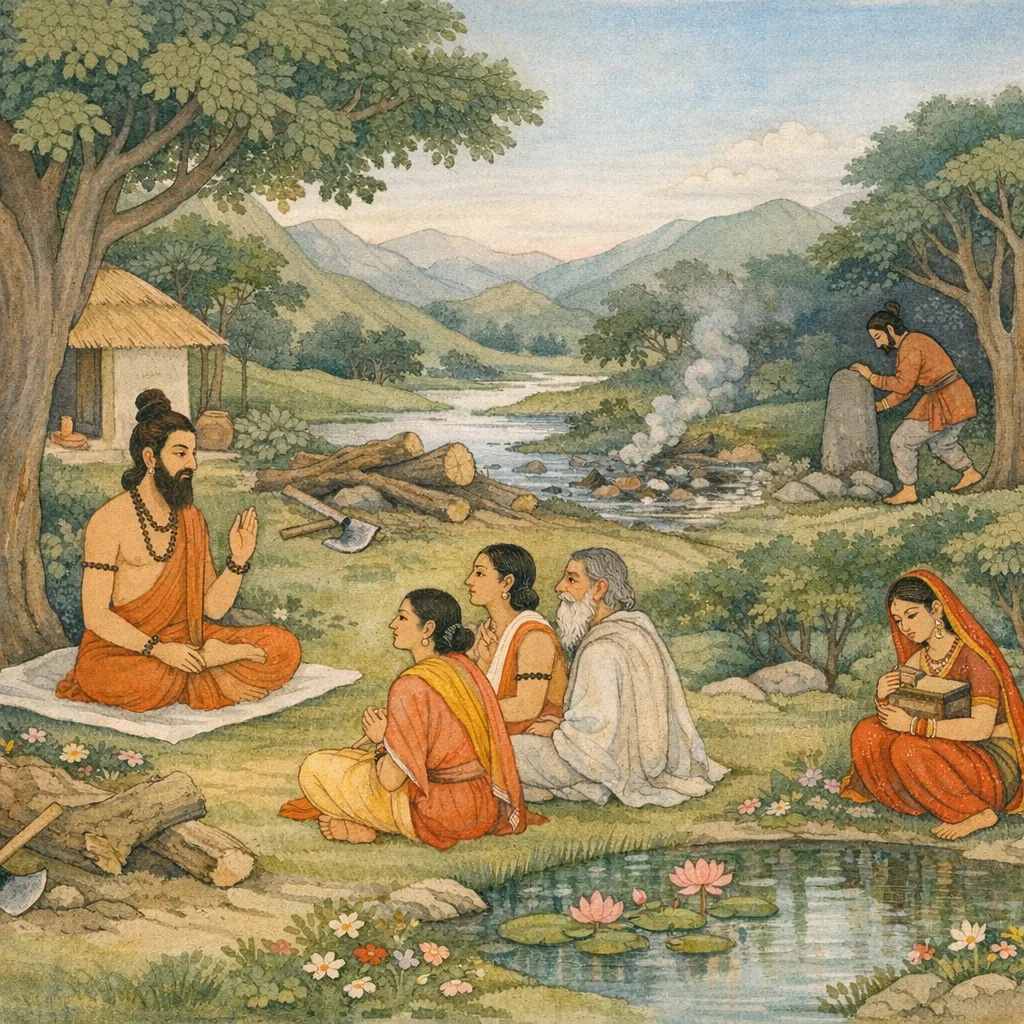
Adhyāya 6 is a technical catalogue of pāpa-bheda (types of sin), taught in a didactic tone as Sanatkumāra enumerates transgressions that injure dharma in social, ritual, and ascetic spheres. The cited verses note wrongs against Brahmins and property (such as seizing dvija wealth), violations of inheritance, and moral vices like excessive pride, anger, hypocrisy, and ingratitude. The chapter also lists socially destabilizing acts (marital and kinship irregularities such as parivitti/parivettā), harms to āśrama settings (destroying trees and gardens, harassing residents), theft of livestock, grain, and riches, and the pollution of water sources. It condemns the commercialization of sacred or protected domains (selling yajña gardens/ponds, selling one’s wife or children) and misconduct connected with pilgrimage, fasting, vows, and initiation (upanayana). Later passages include exploitation of women and women’s property, deceitful livelihoods, coercive or abhicāra practices, and performative religiosity driven by sense-desire or reputation. Overall, the chapter functions as a Shaiva ontology of moral risk, defining actionable categories for later expiation, vow-repair, and purification.
Shlokas
Verse 1
सनत्कुमार उवाच । द्विजद्रव्यापहरणमपि दायव्यतिक्रमः । अतिमानोऽतिकोपश्च दांभिकत्वं कृतघ्नता
Sanatkumāra said: “Stealing the wealth of a twice-born (brāhmaṇa) is indeed a grave transgression; so too is violating one’s rightful share or inheritance. Excessive pride, excessive anger, hypocrisy, and ingratitude—these are also faults that bind the soul.”
Verse 3
परिवित्तिः परिवेत्ता च यया च परिविद्यते । तयोर्दानं च कन्यायास्तयोरेव च याजनम्
‘Parivitti’ is the elder brother who remains unmarried, ‘parivettā’ the younger brother who marries first, and the woman by whom such a transgression is brought about. For those two brothers, the giving of a maiden in marriage is to be performed, and for those two alone priestly officiation (yājana) is enjoined.
Verse 4
शिवाश्रमतरूणां च पुष्पारामविनाशनम् । यः पीडामाश्रमस्थानामाचरेदल्पिकामपि
Whoever destroys the trees of a Śiva-āśrama and devastates its flower-gardens, or causes even the slightest harm to those dwelling in the hermitage, commits a grave offence against Śiva’s sacred domain.
Verse 5
सभृत्यपरिवारस्य पशुधान्यधनस्य च । कुप्यधान्यपशुस्तेयमपां व्यापावनं तथा
Stealing the livestock, grain, and wealth of a household together with its servants and family; stealing valuables, grain, and cattle; and likewise contaminating or spoiling water—these too are (grave) sinful acts.
Verse 6
इति श्रीशिवमहापुराणे पञ्चम्या मुमासंहितायां पापभेदवर्णनं नाम षष्ठोऽध्यायः
Thus, in the Śrī Śiva Mahāpurāṇa, within the Fifth Book—the Umā-saṃhitā—ends the sixth chapter entitled “The Description of the Types of Sin.”
Verse 7
स्त्रीधनान्युपजीवंति स्त्रीभिरप्यन्तनिर्जिताः । अरक्षणं च नारीणां मायया स्त्रीनिषेवणम्
They live off women’s wealth and are utterly subjugated even by women; they give no protection to women, and—deluded by māyā—indulge in the company of women.
Verse 8
कालागताप्रदानं च धान्यवृद्ध्युपसेवनम् । निंदिताच्च धनादानं पण्यानां कूट जीवनम्
Giving only when the proper time has already passed, pursuing profit by hoarding and manipulating grain, accepting gifts from the blameworthy, and making one’s livelihood by deceit in trade—these are censured ways of living that bind the soul in impurity and obstruct devotion to Śiva.
Verse 9
विषमारण्यपत्राणां सततं वृषवाहनम् । उच्चाटनाभिचारं च धान्यादानं भिषक्क्रिया
Using the leaves of poisonous forest plants, and by constantly directing rites toward the Bull-bannered Lord (Śiva), people engage in baneful acts such as driving others away and hostile sorcery; likewise they pursue gifts of grain and the practices of physicians—worldly pursuits that can become entangling when divorced from right devotion.
Verse 10
जिह्वाकामोपभोगार्थं यस्यारंभः सुकर्मसु । मूलेनख्यापको नित्यं वेदज्ञानादिकं च यत्
One who begins even righteous actions for the sake of indulging the tongue’s cravings—seeking the pleasures of taste—yet constantly proclaims, ‘I possess Vedic knowledge and the like,’ is in truth driven by desire and self-display rather than by devotion.
Verse 11
ब्राह्म्यादिव्रतसंत्यागश्चान्याचारनिषेवणम् । असच्छास्त्राधिगमनं शुष्कतर्कावलम्बनम्
To abandon sacred observances such as the Brahma-vrata, to take up alien and improper practices, to study false and misleading doctrines, and to cling to dry, merely contentious reasoning—these draw one away from the true Śaiva path.
Verse 12
देवाग्निगुरुसाधूनां निन्दया ब्राह्मणस्य च । प्रत्यक्षं वा परोक्षं वा राज्ञां मण्डलिनामपि
To censure the gods, the sacred fire (Agni), one’s teachers, and holy persons—and to revile a brāhmaṇa—whether openly or in secret, and likewise to speak ill of kings and rulers, is a grave fault that obstructs dharma and diminishes the fruit of Śiva-worship.
Verse 13
उत्सन्नपितृदेवेज्या स्वकर्म्मत्यागिनश्च ये । दुःशीला नास्तिकाः पापास्सदा वाऽसत्यवादिनः
Those who abandon the worship due to the Pitṛs and the Devas, who forsake their own ordained duties, whose conduct is corrupt, who are nāstikas (deniers), sinful, and ever given to false speech—such people fall away from righteous Śaiva life and become unfit for the path that leads to Śiva’s grace and liberation.
Verse 14
पर्वकाले दिवा वाप्सु वियोनौ पशुयोनिषु । रजस्वलाया योनौ च मैथुनं यः समाचरेत्
Whoever engages in sexual union during forbidden periods, in daytime, in water, in an improper place, with animals, or with a menstruating woman—acts contrary to dharma and increases bondage (pāśa) rather than moving toward Śiva’s liberating grace.
Verse 15
स्त्रीपुत्रमित्रसंप्राप्तावाशाच्छेदकराश्च ये । जनस्याप्रिय वक्तारः क्रूरा समयवेदिनः
Those who, having gained the company of women, sons, and friends, cut off the hopes of others; who speak what is displeasing to people; who are cruel though outwardly mindful of propriety—such persons are to be known as bound by pasha (bondage) and far from Śiva’s auspicious path.
Verse 16
भेत्ता तडागकूपानां संक्रयाणां रसस्य च । एकपंक्तिस्थितानां च पाकभेदं करोति यः
Whoever causes division and disorder—by breaking tanks and wells, by tampering with measures and exchanges, by adulterating substances and their taste, and by making unequal the cooking meant for those seated in a single line—commits a grievous wrong that violates righteous order.
Verse 17
इत्येतैः स्त्रीनराः पापैरुपपातकिनः स्मृताः । युक्ता एभिस्तथान्येऽपि शृणु तांस्तु ब्रवीमि ते
Thus, women and men tainted by these sins are declared to be ‘upapātakins’ (guilty of secondary transgressions). And there are others too who fall into the same class; listen—those also I shall now tell you.
Verse 18
ये गोब्राह्मणकन्यानां स्वामिमित्रतपस्विनाम् । विनाशयंति कार्य्याणि ते नरा नारकाः स्मृताः
Those men who ruin the rightful affairs and welfare of cows, brāhmaṇas, young maidens, one’s own master, one’s friends, and ascetics are declared to be hell-bound.
Verse 19
परस्त्रियाभितप्यंते ये परद्रव्यसूचकाः । परद्रव्यहरा नित्यं तौलमिथ्यानुसारकाः
Those who lust after another man’s wife, who covet and point out another’s property, who constantly steal the wealth of others, and who live by falsehood in weights and measures—such people are scorched by suffering, born of their own bondage.
Verse 20
द्विजदुःखकरा ये च प्रहारं चोद्धरंति ये । सेवन्ते तु द्विजाश्शूद्रां सुरां बध्नंति कामतः
Those who cause suffering to the twice-born (dvija) and those who strike or assail them; those twice-born who consort with a Śūdra woman; and those who, driven by desire, prepare and traffic in intoxicating liquor—such people are described as doers of adharma, binding themselves ever more tightly in the fetters of pāśa (bondage).
Verse 21
ये पापनिरताः क्रूराः येऽपि हिंसाप्रिया नराः । वृत्त्यर्थं येऽपि कुर्वंति दानयज्ञादिकाः क्रियाः
Even those men who are devoted to sin, who are cruel and delight in violence—and even those who perform acts such as charity and sacrifice merely for livelihood—remain bound, for such deeds lack true devotion and purity of intent.
Verse 22
गोष्ठाग्निजलरथ्यासु तरुच्छाया नगेषु च । त्यजंति ये पुरीषाद्यानारामायतनेषु च
Those who, whether in cattle-sheds, by fire, in water, on public roads, in the shade of trees, or upon mountains, refrain from acts such as excretion and the like—and likewise avoid doing so in gardens and sacred precincts—are regarded as observing purity and restraint, befitting devotees on the path of Śiva.
Verse 23
लज्जाश्रमप्रासादेषु मयपानरताश्च ये । कृतकेलिभुजंगाश्च रन्ध्रान्वेषणतत्पराः
And those who, in the mansions of Lajjā and Śrama, are absorbed in intoxicating drink; who, as part of their sport, play with serpents; and who remain intent on seeking out others’ weak points and openings—such indeed are they.
Verse 24
वंशेष्टका शिलाकाष्ठैः शृङ्गैश्शंकुभिरेव च । ये मार्गमनुरुंधंति परसीमां हरंति ये
Those who block the road with bamboo stakes, stones, and pieces of wood, and also with horns and pegs, overstep rightful bounds and unlawfully seize what belongs to others.
Verse 25
कूटशासनकर्तारः कूटकर्मक्रियारताः । कूटपाकान्नवस्त्राणां कूटसंव्यवहारिणः
They are makers of fraudulent decrees, absorbed in deceitful acts and practices; they trade in counterfeit cooked food and clothing, and they conduct every transaction through trickery and falsehood.
Verse 26
धनुषः शस्त्रशल्यानां कर्ता यः क्रयविक्रयी । निर्द्दयोऽतीवभृत्येषु पशूनां दमनश्च यः
He who manufactures bows and weapons and lives by buying and selling them; who is exceedingly merciless toward servants, and who also subdues and torments animals—such a one bears grievous sin.
Verse 27
मिथ्या प्रवदतो वाच आकर्णयति यश्शनैः । स्वामिमित्रगुरुद्रोही मायावी चपलश्शठः
He who listens to the words of those who speak falsely and is, little by little, tainted by their influence becomes a betrayer of his lord, friends, and teacher (guru)—deceitful, delusive, fickle, and crooked by nature.
Verse 28
ये भार्य्यापुत्रमित्राणि बालवृद्धकृशातुरान् । भृत्यानतिथिबंधूंश्च त्यक्त्वाश्नंति बुभुक्षितान्
Those who, though hungry themselves, eat after abandoning their wife, children, and friends—along with the young, the aged, the emaciated, the sick, their servants, guests, and kinsfolk—act against dharma and incur demerit, for they scorn the compassionate duty that pleases Lord Śiva.
Verse 29
यः स्वयं मिष्टमश्नाति विप्रेभ्यो न प्रयच्छति । वृथापाकस्स विज्ञेयो ब्रह्मवादिषु गर्हितः
He who eats sweet food himself yet does not offer it to the Brāhmaṇas should be known as one who cooks in vain; among the expounders of the Veda he is censured.
Verse 30
नियमान्स्वयमादाय ये त्यजंत्यजितेन्द्रियाः । प्रव्रज्यावासिता ये च हरस्यास्यप्रभेदकाः
Those who, though taking up disciplines of their own accord, abandon them while their senses remain unconquered—and those who merely assume the outward life of renunciation—become disturbers of this Lord Hara’s path and teaching.
Verse 31
ये ताडयंति गां क्रूरा दमयंते मुहुर्मुहुः । दुर्बलान्ये न पुष्णंति सततं ये त्यजंति च
Those cruel people who beat a cow, who repeatedly torment and subdue her again and again—those who do not nourish the weak and who constantly abandon them—such persons incur grave demerit and fall from the path of dharma.
Verse 32
पीडयंत्यतिभारेणाऽसहंतं वाहयंति च । योजयन्नकृताहारान्न विमुंचंति संयतान्
They oppress them with excessive burdens and even force them to carry what they cannot bear. They yoke those who have not been given food, and they do not release the restrained and bound.
Verse 33
ये भारक्षतरोगार्तान्गोवृषांश्च क्षुधातुरान् । न पालयंति यत्नेन गोघ्नास्ते नारकास्स्मृताः
Those who do not diligently protect cows and bulls afflicted by heavy burdens, wounds, or disease, and those tormented by hunger—such people are regarded as slayers of cattle and are remembered as bound for hellish states.
Verse 34
वृषाणां वृषणान्ये च पापिष्ठा गालयंति च । वाहयंति च गां वंध्यां महानारकिनो नराः
Those most sinful men who castrate bulls, who drive and torment them, and who make even barren cows labor as beasts of burden—such people are destined for dreadful hells.
Verse 35
आशया समनुप्राप्तान्क्षुत्तृष्णाश्रमकर्शितान् । अतिथींश्च तथानाथान्स्वतन्त्रा गृहमागतान्
Moved by hope, she received and cared for those who came seeking help—worn down by hunger, thirst, and fatigue—along with guests and the helpless who arrived at her house of their own accord.
Verse 36
अन्नाभिलाषान्दीनान्वा बालवृद्धकृशातुरान् । नानुकंपंति ये मूढास्ते यांति नरकार्णवम्
Those deluded people who show no compassion to the poor who long for food, or to children, the aged, the emaciated, and the sick—such hard-hearted ones fall into the ocean of hell.
Verse 37
गृहेष्वर्था निवर्तन्ते स्मशानादपि बांधवाः । सुकृतं दुष्कृतं चैव गच्छंतमनुगच्छति
Wealth turns back at one’s home, and even relatives return from the cremation ground; but one’s merit and demerit—good and evil deeds—follow the departing soul onward.
Verse 38
अजाविको माहिषिकस्सामुद्रो वृषलीपतिः । शूद्रवत्क्षत्रवृत्तिश्च नारकी स्याद् द्विजाधमः
A twice-born who lives by herding goats, by the trade of buffaloes, by sea-borne commerce, who becomes the husband of a śūdra woman, or who adopts the livelihood of a kṣatriya like a śūdra—such a degraded brāhmaṇa becomes fit for hell.
Verse 39
शिल्पिनः कारवो वैद्या हेमकारा नृपध्वजाः । भृतका कूटसंयुक्ताः सर्वे ते नारकाः स्मृताः
Artisans, craftsmen, physicians, goldsmiths, and those who bear the king’s banner—when they are allied with deceit and fraud—are all remembered as bound for hellish states.
Verse 40
यश्चोचितमतिक्रम्य स्वेच्छयै वाहरेत्करम् । नरके पच्यते सोऽपि योपि दण्डरुचिर्नरः
Any man who, transgressing what is proper, exacts a levy at his own whim—he too is cooked in hell; likewise, the man who delights in punishment (and rules by harsh penalties) is also tormented there.
Verse 41
उत्कोचकै रुचिक्रीतैस्तस्करैश्च प्रपीड्यते । यस्य राज्ञः प्रजा राष्ट्रे पच्यते नरकेषु सः
That king, in whose realm the people are oppressed by bribe-takers and by thieves bought over through favoritism, is himself cooked in the hells—because his subjects suffer within his kingdom.
Verse 42
ये द्विजाः परिगृह्णंति नृपस्यान्यायवर्तिनः । ते प्रयांति तु घोरेषु नरकेषु न संशयः
Those twice-born who accept the gifts and patronage of a king who walks in unrighteousness—such men surely go to dreadful hells; of this there is no doubt.
Verse 43
अन्यायात्समुपादाय द्विजेभ्यो यः प्रयच्छति । प्रजाभ्यः पच्यते सोऽपि नरकेषु नृपो यथा
He who amasses wealth through injustice and then gives it to the twice-born (brāhmaṇas) is still “cooked” in the hells for his offense against the people—just as a king who oppresses his subjects is punished.
Verse 44
पारदारिकचौराणां चंडानां विद्यते त्वघम् । परदाररतस्यापि राज्ञो भवति नित्यशः
Among seducers of others’ wives, thieves, and violent men, sin is indeed found; and even a king who is addicted to another man’s wife incurs that sin continually.
Verse 45
अचौरं चौरवत्पश्येच्चौरं वाचौररूपिणम् । अविचार्य नृपस्तस्माद्धातयन्नरकं व्रजेत्
If a king mistakes an innocent man for a thief, or fails to recognize a thief who comes disguised as a non-thief, then by ordering punishment without proper inquiry he falls into hell.
Verse 46
घृततैलान्नपानानि मधुमांससुरासवम् । गुडेक्षुशाकदुग्धानि दधिमूलफलानि च
Ghee and oil; cooked foods and drinks; honey, meat, liquor and fermented intoxicants; jaggery, sugarcane, vegetables and milk; as well as curd, roots and fruits—these are enumerated as items to be regulated or avoided in the course of Śaiva religious observance.
Verse 47
तृणं काष्ठं पत्रपुष्पमौषधं चात्मभोजनम् । उपानत्छत्रशकटमासनं च कमंडलुम्
Grass, wood, leaves, flowers, and healing herbs—together with food gained by one’s own simple means; sandals, an umbrella, a cart, a seat, and the kamaṇḍalu (water-pot)—these are the modest requisites of the self-restrained seeker.
Verse 48
ताम्रसीसत्रपुः शस्त्रं शंखाद्यं च जलोद्भवम् । वैद्यं च वैणवं चान्यद्गृहोपस्करणानि च
Weapons made of copper, lead, and tin; and items born of water such as the conch (śaṅkha) and the like; as well as medical implements, bamboo-made instruments, and other household furnishings too—all these are included.
Verse 49
और्ण्णकार्पासकौशेयपट्टसूत्रोद्भवानि च । स्थूलसूक्ष्माणि वस्त्राणि ये लोभाद्धि हरंति च
And those who, out of greed, steal garments—whether made of wool, cotton, silk, fine cloth, or thread, whether coarse or delicate—indeed commit a blameworthy act that binds the soul through karma.
Verse 50
एवमादीनि चान्यानि द्रव्याणि विविधानि च । नरकेषु ध्रुवं यान्ति चापहृत्याल्पकानि च
Likewise, those who steal various kinds of other goods—even small and seemingly insignificant items—certainly go to the hells, for the act of theft binds the soul to painful karmic retribution.
Verse 51
तद्वा यद्वा परद्रव्यमपि सर्षपमात्रकम् । अपहृत्य नरा यांति नरकं नात्र संशयः
Whether it be this or that—whoever steals another’s property, even if it is only the measure of a mustard seed, such people go to hell; of this there is no doubt.
Verse 52
एवमाद्यैर्नरः पापैरुत्क्रांतिसमनंतरम् । शरीरयातनार्थाय सर्वाकारमवाप्नुयात्
Thus, through such sins and the like, a person—immediately after departing from the body—assumes every kind of form, solely for undergoing bodily torment (as the fruit of those deeds).
Verse 53
यमलोकं व्रजंत्येते शरीरेण यमाज्ञया । यमदूतैर्महाघोरैनीयमानास्सुदुःखिताः
By Yama’s command, these beings depart—bearing the subtle sense of embodiment—and go to Yama’s realm, dragged along by Yama’s most fearsome messengers, overwhelmed by intense suffering.
Verse 54
देवतिर्यङ्मनुष्याणामधर्मनिरतात्मनाम् । धर्मराजः स्मृतश्शास्ता सुघोरैर्विविधैर्वधैः
For devas, animals, and human beings whose minds are absorbed in unrighteousness (adharma), Dharmarāja (Yama) is remembered as the chastiser, administering many kinds of exceedingly dreadful punishments.
Verse 55
नियमाचारयुक्तानां प्रमादात्स्खलितात्मनाम् । प्रायश्चित्तैर्गुरुश्शास्ता न बुधैरिष्यते यमः
For those established in vows (niyama) and right conduct, who slip only through inadvertence, the wise do not accept Yama as their chastiser; their correction is effected by the guru through prescribed expiations (prāyaścitta).
Verse 56
पारदारिकचौराणामन्यायव्यवहारिणाम् । नृपतिश्शासकः प्रोक्तः प्रच्छन्नानां स धर्म्मराट्
For those who violate another’s wife, for thieves, and for people who deal in unjust ways, the king is declared the chastiser. By restraining such hidden wrongdoers, he is truly a sovereign of Dharma.
Verse 57
तस्मात्कृतस्य पापस्य प्रायश्चित्तं समाचरेत् । नाभुक्तस्यान्यथानाशः कल्पकोटिशतैरपि
Therefore, for the sin that has been committed, one should duly perform prāyaścitta, the rite of expiation. Karma whose result has not yet been undergone is not destroyed by any other means—even across hundreds of crores of aeons.
Verse 58
यः करोति स्वयं कर्म्म कारयेच्चानुमोदयेत् । कायेन मनसा वाचा तस्य पापगतिः फलम्
Whoever performs an act himself, causes another to do it, or even consents to it—through body, mind, or speech—attains the fruit that leads to a sinful state of existence.
Frequently Asked Questions
Rather than a narrative episode, the chapter presents a normative-theological argument: dharma and Shaiva sādhana require an explicit taxonomy of pāpa, because transgressions against persons, property, āśrama spaces, and sacred institutions directly obstruct ritual efficacy and inner purification.
Its ‘rahasya’ is structural: tīrtha, vrata, upavāsa, and upanayana are treated as sacral systems whose power depends on ethical integrity. Pollution of water, commercialization of sacred assets, and hypocrisy are framed as subtle violations that degrade the invisible economy of merit (puṇya) and readiness for Śiva-jñāna.
No distinct Śiva or Umā iconographic manifestation is foregrounded in the sampled material; the chapter’s emphasis is ethical-ritual governance (pāpa classification) rather than a form-specific theology of Śiva/Devī.