देवस्तुतिवर्णनम् (Deva-stuti-varṇana) — “Description of the Gods’ Hymn/Praise”
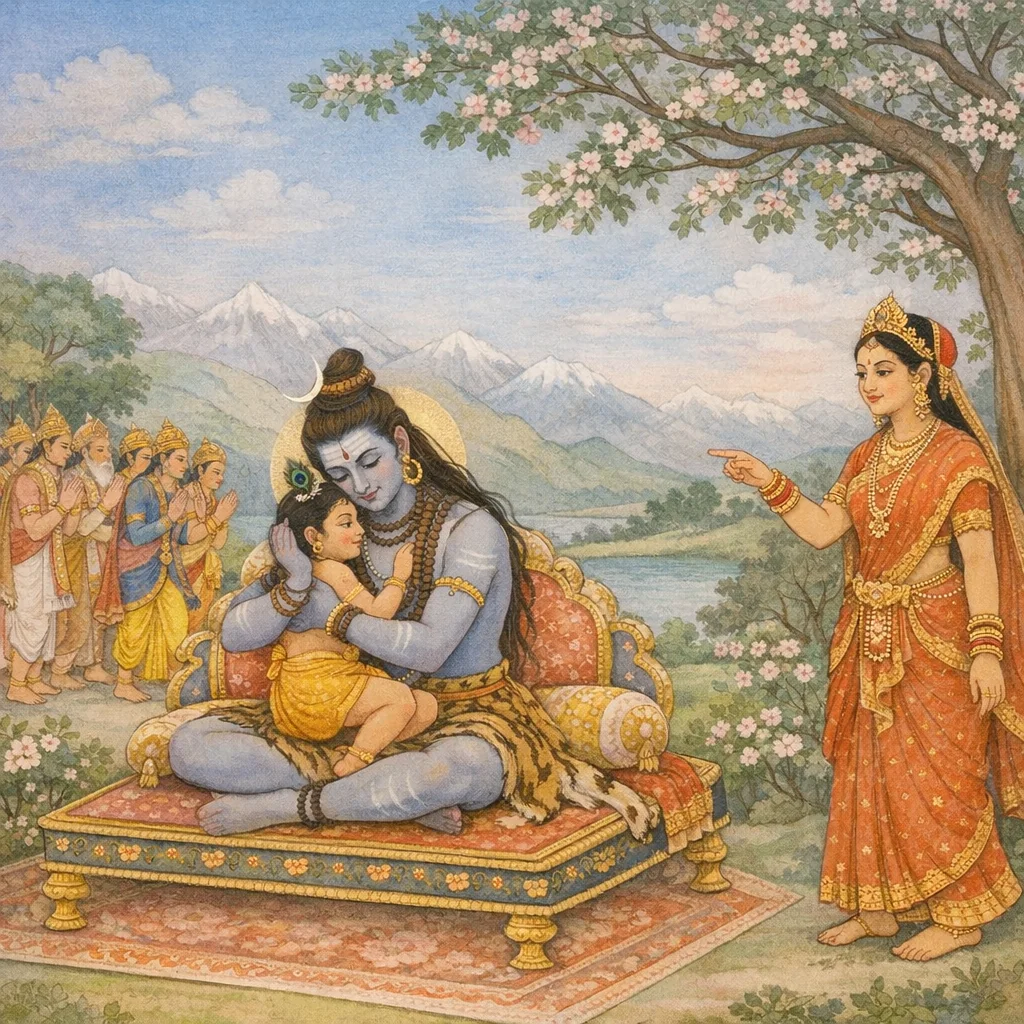
Adhyāya 7, narrated by Sanatkumāra, shows Śiva as śaraṇya (refuge) and bhaktavatsala (tender to devotees) accepting the devas’ pleas. Devī arrives with her sons; Viṣṇu and the divine assembly at once prostrate and offer auspicious praises, briefly silent about why she has come. Wonder-struck, Devī addresses Śiva and points to the playful Ṣaṇmukha/Skanda, sun-bright and splendidly adorned. Delighted, Śiva seems to “drink” the nectar of Skanda’s face, embracing and smelling him, and in this loving absorption forgets the daityas scorched by his own radiance. The chapter pivots between cosmic crisis and intimate līlā—hymn and refuge-seeking on one side, familial tenderness and aesthetic relish on the other. The closing colophon names it Devastuti-varṇana, marking a liturgical turning point within the Yuddhakhaṇḍa’s wider conflict narrative.
Shlokas
Verse 1
सनत्कुमार उवाच । एतच्छुत्वा तु सर्वेषां देवादीनां वचो हरः । अंगीचकार सुप्रीत्या शरण्यो भक्तवत्सलः
Sanatkumāra said: Hearing the words of all the gods and others, Hara—refuge of those who seek shelter and tender to His devotees—gladly consented, filled with great delight.
Verse 2
एतस्मिन्नंतरे देवी पुत्राभ्यां संयुता शिवा । आजगाम मुने तत्र यत्र देवान्वितो हरः
Meanwhile, O sage, the Goddess Śivā—accompanied by her two sons—came to that very place where Hara (Lord Śiva) stood in the company of the gods.
Verse 3
अथागतां शिवां दृष्ट्वा सर्वे विष्ण्वादयो द्रुतम् । प्रणेमुरतिनम्रास्ते विस्मिता गतसंभ्रमाः
Then, seeing Śivā arrive, all—beginning with Viṣṇu—quickly bowed down. With deep humility they offered obeisance, amazed, and their agitation and confusion entirely stilled.
Verse 4
प्रोचुर्जयेति सद्वाक्यं मुने सर्वे सुलक्षणम् । तूष्णीमासन्नजानंतस्तदागमनकारणम्
O sage, all of them uttered the auspicious words, “Victory! Victory!”—yet then they fell silent, not knowing the reason for his arrival.
Verse 5
अथ सर्वैः स्तुता देवैर्देव्यद्भुतकुतूहला । उवाच स्वामिनं प्रीत्या नानालीलाविशारदम्
Then the Goddess—praised by all the gods and filled with wondrous curiosity—lovingly addressed her Lord, the One fully adept in manifold divine plays (līlās).
Verse 6
देव्युवाच । क्रीडमानं विभो पश्य षण्मुखं रविसंनिभम् । पुत्रं पुत्रवतां श्रेष्ठ भूषितं भूषणैर्वरैः
The Goddess said: “O Lord, behold this six-faced One, playing—radiant like the sun—this supreme Son, the best among all who have sons, adorned with the finest ornaments.”
Verse 7
इति श्रीशिवमहापुराणे द्वितीयायां रुद्रसंहितायां पञ्चमे युद्धखंडे देवस्तुतिवर्णनं नाम सप्तमोऽध्यायः
Thus ends the seventh chapter, called “The Description of the Devas’ Hymn (to Lord Śiva),” in the fifth section, the Yuddha-khaṇḍa, of the second compilation (Rudra-saṃhitā) of the sacred Śrī Śiva Mahāpurāṇa.
Verse 8
न सस्मारागतान्दैत्यान्निजतेजोनिपीडितान् । स्कंदमालिंग्य चाघ्राय मुगोदाति महेश्वरः
Overwhelmed by His own blazing divine splendor, Maheśvara no longer even noticed the approaching Daityas. Embracing Skanda and smelling his head with affection, the Great Lord became silent—absorbed in inner joy.
Verse 9
जगदम्बाथ तत्रैव संमंत्र्य प्रभुणा च सा । स्थित्वा किञ्चित्समुत्तस्थौ नानालीलाविशारदा
Then Jagadambā, right there, after conferring with her Lord, remained for a short while; and that Mistress—skilled in many divine play-acts—rose up again.
Verse 10
ततस्सनंदी सह षण्मुखेन तया च सार्द्धं गिरिराजपुत्र्या । विवेश शम्भुर्भवनं सुलीलः सुरैस्समस्तैरभिवंद्यमानः
Then Śambhu, in graceful ease, entered His own abode together with Nandī, with Ṣaṇmukha, and with the daughter of the Lord of Mountains (Pārvatī), while all the gods bowed to Him in reverence.
Verse 11
द्वारस्य पार्श्वतः तस्थुर्देवदेवस्य धीमतः । तेऽथ देवा महाव्यग्रा विमनस्का मुनेऽखिलः
They stood to the side of the gate of that wise Lord—the Deva of devas. Then those gods, O sage, all became greatly distressed and despondent in mind.
Verse 12
किं कर्तव्यं क्व गंतव्यं कः स्यादस्मत्सुखप्रदः । किं तु किंत्विति संजातं हा हताः स्मेति वादिनम्
“What should be done? Where should we go? Who could grant us welfare and relief?”—thus, in their confusion, they kept repeating, ‘But what? what indeed?’ and lamented, crying, “Alas, we are struck down!”
Verse 13
अन्योन्यं प्रेक्ष्य शक्राद्या बभूवुश्चातिविह्वलाः । प्रोचुर्विकलवाक्यं ते धिक्कुर्वन्तो निजं विधिम्
Looking at one another, Indra and the other devas became utterly bewildered. In broken, faltering words they spoke, condemning their own course of action and reproaching their own policy.
Verse 14
पापा वयमिहेत्यन्ये ह्यभाग्याश्चेति चापरे । ते भाग्यवंतो दैत्येन्द्रा इति चान्येऽब्रुवन् सुराः
Some of the devas said, “Here we are sinners,” and others said, “Indeed, we are unfortunate.” Yet others among the gods declared, “Those Daitya lords are the truly fortunate ones.”
Verse 15
तस्मिन्नेवांतरे तेषां श्रुत्वा शब्दाननेकशः । कुंभोदरो महातेजा दंडेनाताडयत्सुरान्
Just then, hearing their many cries and tumultuous sounds, the mighty and radiant Kumbhodara struck the devas with his staff.
Verse 16
दुद्रुवुस्ते भयाविष्टा देवा हाहेति वादिनः । अपतन्मुनयश्चान्ये विह्वलत्वं बभूव ह
Overwhelmed by fear, those devas fled away, crying, “Alas! Alas!”; and other sages too fell down, becoming utterly distraught.
Verse 17
इन्द्रस्तु विकलोतीव जानुभ्यामवनीं गतः । अन्ये देवर्षयोतीव विकलाः पतिता भुवि
Indra, as though crippled and utterly weakened, sank down to the earth upon his knees; and the other gods and divine seers too, greatly enfeebled, fell upon the ground.
Verse 18
सर्वे मिलित्वा मुनयस्सुराश्च सममाकुलाः । संगता विधिहर्योस्तु समीपं मित्रचेतसोः
Then all the sages and the gods, gathered together in one anxious assembly, approached the vicinity of Brahmā and Viṣṇu—those two whose minds were friendly toward each other.
Verse 19
अहो विधिबलं चैतन्मुनयः कश्यपादयः । वदंति स्म तदा सर्वे हरि लोकभयापदम्
“Ah! Such is the overpowering force of Vidhi—the ordinance of destiny.” Then all the sages—Kāśyapa and the others—spoke together, addressing Hari, who had become the refuge in that fearful crisis threatening the worlds.
Verse 20
अभाग्यान्न समाप्तं तु कार्यमित्यपरे द्विजाः । कस्माद्विघ्नमिदं जातमित्यन्ये ह्यति विस्मिताः
Some of the twice-born said, “Through ill fortune the undertaking has not been completed.” Others, utterly astonished, asked, “From where has this obstacle arisen?”
Verse 21
इत्येवं वचनं श्रुत्वा कश्यपाद्युदितं मुने । आश्वासयन्मुनीन्देवान् हरिर्वाक्यमुपाददे
O sage, having thus heard the words spoken by Kaśyapa and the others, Hari (Viṣṇu), consoling the sages and the gods, then began to speak.
Verse 22
विष्णुरुवाच । हे देवा मुनयस्सर्वे मद्वचः शृणुतादरात् । किमर्थं दुःखमापन्ना दुखं तु त्यजताखिलम्
Viṣṇu said: “O gods and all sages, hear my words with reverence. For what reason have you fallen into sorrow? Cast away this grief entirely.”
Verse 23
महदाराधनं देवा न सुसाध्यं विचार्य्यताम् । महदाराधने पूर्वं भवेद्दुःखमिति श्रुतम् । विज्ञाय दृढतां देवाः प्रसन्नो भवति ध्रुवम्
“O Devas, reflect well: the great worship (ārādhana of the Supreme Lord) is not easily accomplished. Tradition says that before such exalted worship bears fruit, hardship arises first. Yet when the Lord recognizes steadfastness, He surely becomes pleased.”
Verse 24
शिवस्सर्वगणायक्षस्सहसा परमेश्वरः । विचार्यतां हृदा सर्वैः कथं वश्यो भवेदिति
Śiva, the Supreme Lord—attended by all his hosts and yakṣas—has come suddenly. Let all of you ponder in your hearts: by what means could he be brought under control?
Verse 25
प्रणवं पूर्वमुच्चार्य्य नमः पश्चादुदाहरेत् । शिवायेति ततः पश्चाच्छुभद्वयमतः परम्
First utter the Praṇava (Oṁ); then pronounce “namaḥ”. After that say “śivāya”, and finally add the two auspicious syllables thereafter—thus is the complete mantra formed.
Verse 26
कुरुद्वयं ततः प्रोक्तं शिवाय च ततः पुनः । नमश्च प्रणवश्चैव मंत्रमेवं सदा बुधाः
Then the two syllables “ku-ru” are uttered, and thereafter again “śivāya”. Along with “namaḥ” and the praṇava “oṃ”, the wise always declare the mantra to be in this very form.
Verse 27
अवर्तध्वं पुनर्यूयं यदि शंभुकृते तदा । कोटिमेकं तथा जप्त्वा शिवः कार्यं करिष्यति
“If it is indeed for Śambhu’s purpose, then turn back and return again. Having performed japa with one koṭi repetitions, Śiva will accomplish the task.”
Verse 28
इत्युक्ते च तदा तेन हरिणा प्रभविष्णुना । तथा देवाः पुनश्चक्रुर्हरस्याराधनं मुने
When those words were spoken by Hari—mighty Viṣṇu—O sage, the gods once again undertook the worship of Hara (Śiva), exactly as they had been instructed.
Verse 29
संजजाप हरिश्चापि सविधिश्शिवमानसः । देवानां कार्यसिद्ध्यर्थं मुनीनां च विशेषतः
Then Hari (Viṣṇu) too, observing the rite in full and the proper procedure—his mind absorbed in Śiva—performed intense japa, so that the gods’ purpose might be fulfilled, and especially for the welfare and accomplishment of the sages.
Verse 30
मुहुः शिवेति भाषंतो देवा धैर्यसमन्विताः । कोटिसंख्यं तदा कृत्वा स्थितास्ते मुनिसत्तम
O best of sages, the gods—steadfast in courage—repeatedly cried out “Śiva! Śiva!”, and then, forming themselves into a host numbering in crores, they stood firm.
Verse 31
एतस्मिन्नंतरे साक्षाच्छिवः प्रादुरभूत्स्वयम् । यथोक्तेन स्वरूपेण वचनं चेदमब्रवीत्
Just then, Śiva Himself manifested directly. Appearing in the very form that had been described, He spoke these words.
Verse 32
श्रीशिव उवाच । हे हरे हे विधे देवा मुनयश्च शुभव्रताः । प्रसन्नोऽस्मि वरं ब्रूत जयेनानेन चेप्सितम्
Śrī Śiva said: “O Hari, O Vidhā the Creator, O gods and sages of auspicious vows—I am pleased. Speak forth a boon; through this victory, obtain also the desired aim.”
Verse 33
देवा ऊचुः । यदि प्रसन्नो देवेश जगदीश्वर शंकर । सुरान् विज्ञाय विकलान् हन्यंतां त्रिपुराणि च
The gods said: “O Lord of the gods, O Śaṅkara, sovereign of the universe—if You are pleased, then, seeing that we devas have become helpless and afflicted, please destroy the three cities (Tripura) as well.”
Verse 34
रक्षास्मान्परमेशान दीनबंधो कृपाकर । त्वयैव रक्षिता देवास्सदापद्भ्यो मुहुर्मुहुः
Protect us, O Parameśāna—O compassionate refuge of the distressed. Again and again, it is by You alone that the gods have been saved from calamities and dangers.
Verse 35
सनत्कुमार उवाच । इत्युक्तं वचनं तेषां श्रुत्वा सहरिवेधसाम् । विहस्यांतस्तदा ब्रह्मन्महेशः पुनरब्रवीत्
Sanatkumāra said: Having heard those words spoken by them—by Hari (Viṣṇu) and Vedhas (Brahmā)—Mahādeva (Maheśa), smiling inwardly, again spoke, O Brahmin.
Verse 36
महेश उवाच । हे हरे हे विधे देवा मुनयश्चाखिला वचः । मदीयं शृणुतादृत्य नष्टं मत्वा पुरत्रयम्
Maheśa said: “O Hari, O Vidhe (Brahmā), O gods and all you sages—listen reverently to my words, deeming Tripura, the three cities, already destroyed.”
Verse 37
रथं च सारथिं दिव्यं कार्मुकं शरमुत्तमम् । पूर्वमंगीकृतं सर्वमुपपादयताचिरम्
Without delay he provided the chariot and the divine charioteer, the bow and the finest arrow; indeed, he supplied at once everything previously requested and accepted.
Verse 38
हे विष्णो हे विधे त्वं हि त्रिलोकाधिपतिर्ध्रुवम् । सर्वसम्राट्प्रकारं मे कर्तुमर्हसि यत्नतः
O Vishnu! O Vidhātṛ (Brahmā), you are indeed the steadfast lord of the three worlds. Therefore, with due effort, establish for me the full order and rank of universal sovereignty.
Verse 39
नष्टं पुरत्रयं मत्वा देवसाहाय्यमित्युत । करिष्यथः प्रयत्नेनाधिकृतौ सर्गपालने
“Deeming Tripura already destroyed, you will surely render aid to the gods; for you are duly appointed to the governance and preservation of creation, and by earnest effort you must uphold its order.”
Verse 40
अयं मंत्रो महापुण्यो मत्प्रीतिजनकश्शुभः । भुक्तिमुक्तिप्रदस्सर्वकामदश्शैवकावह
This mantra is supremely meritorious and auspicious, and it awakens My (Śiva’s) delight. It bestows both worldly enjoyment and liberation (moksha), grants every desired aim, and leads one into the state and path of the Śaivas, the devotees of Śiva.
Verse 41
धन्यो यशस्य आयुष्यः स्वर्गकामार्थिनां नृणाम् । अपवर्गो ह्यकामानां मुक्तानां भुक्तिमुक्तिदः
It is blessed, fame-giving, and life-prolonging for those who seek heaven and worldly attainments. For the desireless it becomes the very path of liberation; and for the already-liberated it bestows due enjoyment and final freedom—by the grace of Śiva, the Pati who severs the pāśa, the bond of bondage.
Verse 42
य इमं कीर्तयेन्मंत्रं शुचिर्भूत्वा सदा नरः । शृणुयाच्छ्रावयेद्वापि सर्वान्कामानवाप्नुयात्
Any person who, having become pure, regularly recites this mantra—or listens to it, or causes it to be heard by others—attains the fulfillment of all desired aims. In the Śaiva view, such mantra-sevā purifies the bound soul (paśu) and draws the grace of Lord Śiva (Pati), yielding both worldly well-being and the higher good.
Verse 43
सनत्कुमार उवाच । इति श्रुत्वा वचस्तस्य शिवस्य परमात्मनः । सर्वे देवा मुदं प्रापुर्हरिर्ब्रह्माधिकं तथा
Sanatkumāra said: Having thus heard the words of Śiva—the Supreme Self—all the gods attained great joy; and likewise Hari and Brahmā were filled with delight as well.
Verse 44
सर्वदेवमयं दिव्यं रथं परमशोभनम् । रचयामास विश्वार्थे विश्वकर्मा तदाज्ञया
By that command, Viśvakarmā fashioned—for the welfare of the universe—a divine chariot, supremely splendid, embodying the powers of all the gods.
Frequently Asked Questions
The devas’ acclamation and reverential praise of Śiva coincides with Devī’s arrival with her sons, centering on Skanda (Ṣaṇmukha) as Śiva embraces him and becomes absorbed in familial līlā.
It encodes divine rasa (aesthetic relish) and anugraha (grace): Śiva’s supreme power is shown as intimacy and bliss, implying that cosmic authority is grounded in beatific fullness rather than need-driven action.
Śiva is emphasized as śaraṇya (refuge-giver) and bhaktavatsala (devotee-loving); Skanda appears as Ṣaṇmukha, radiant and ornamented; Devī appears as Jagadambā, orchestrating the scene through affectionate address and presence.